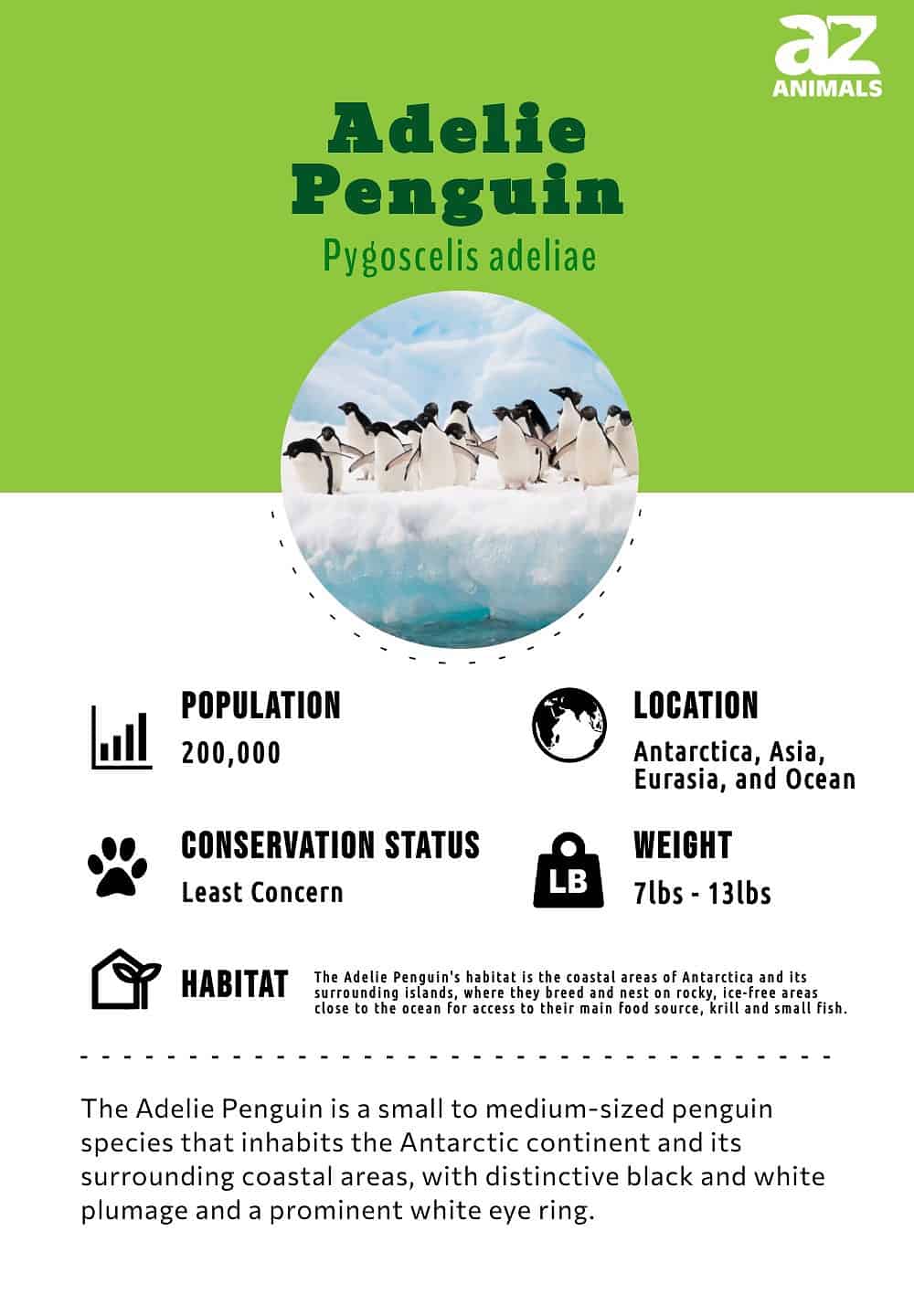
A
Species Profile

Adélie Penguin

Pygoscelis adeliae

The little penguin of the sea-ice edge
vladsilver/Shutterstock.com

Adélie Penguin Distribution

Click a location to explore more animals from that region

Endemic Species

This map shows coastal regions where Adélie Penguin are found.

Loading map...

Found in 1 country

Size Comparison

Human 5'8"
Adélie Penguin 1 ft 12 in

Adélie Penguin stands at 35% of average human height.

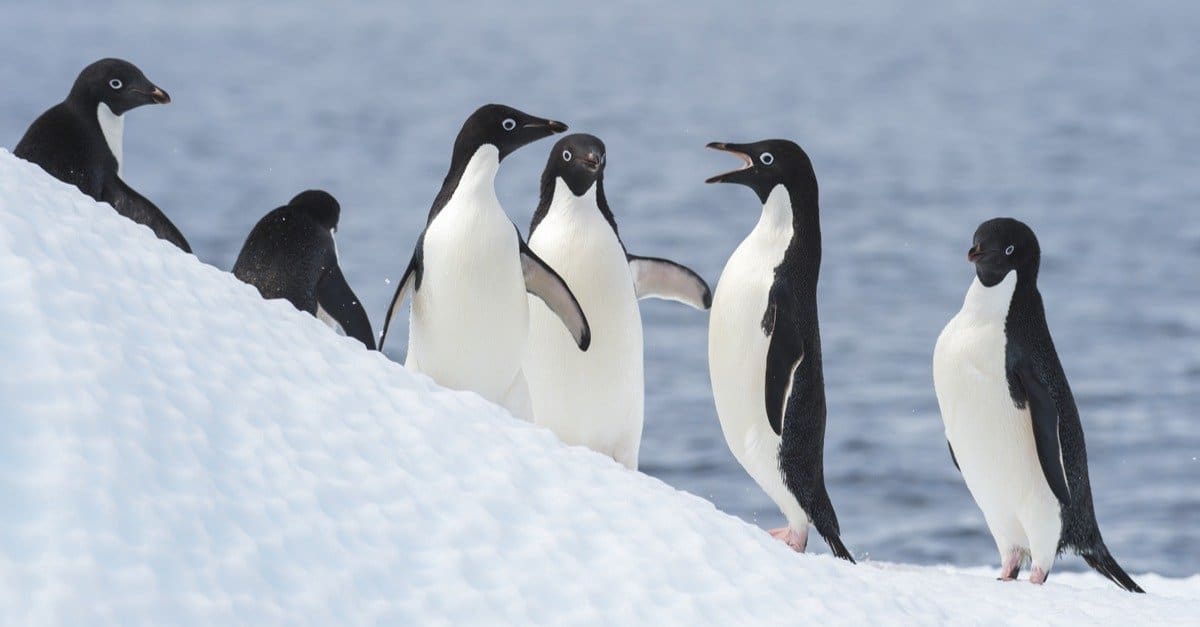
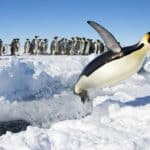
Adelie Penguins jump from iceberg in Antarcdtica

At a Glance

Wild Species
Also Known As Adélie
Diet Carnivore
Activity Diurnal+
Lifespan 12 years
Weight 6 lbs
Status Least Concern
Did You Know?

The species name adeliae refers to Adelie Land, Antarctica, which French explorer Jules Dumont d'Urville named in 1840 after his wife, Adele.

Scientific Classification

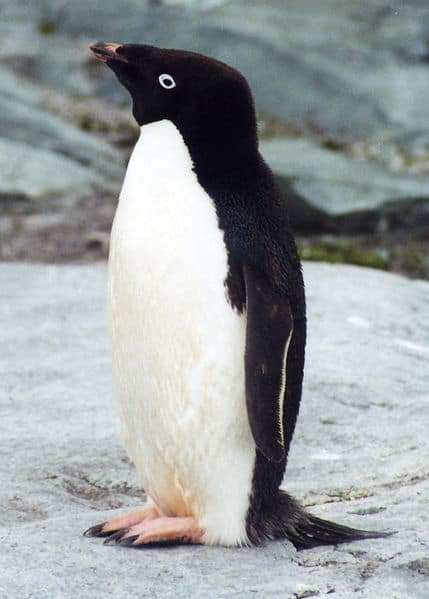
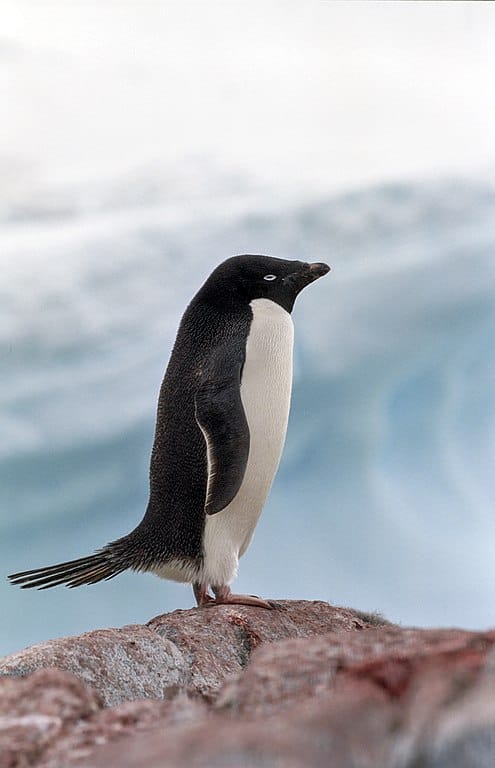
The Adélie Penguin is a small-to-medium Antarctic penguin species strongly associated with sea ice and coastal breeding colonies, recognizable by its black head, white eye-ring, and white underparts.

Kingdom
Animalia
Phylum
Chordata
Class
Aves
Order
Sphenisciformes
Family
Spheniscidae
Genus
Pygoscelis
Species
Pygoscelis adeliae

Distinguishing Features

  • White orbital eye-ring around a dark eye
  • Black head and back with clean white belly
  • Short, stout reddish-black bill
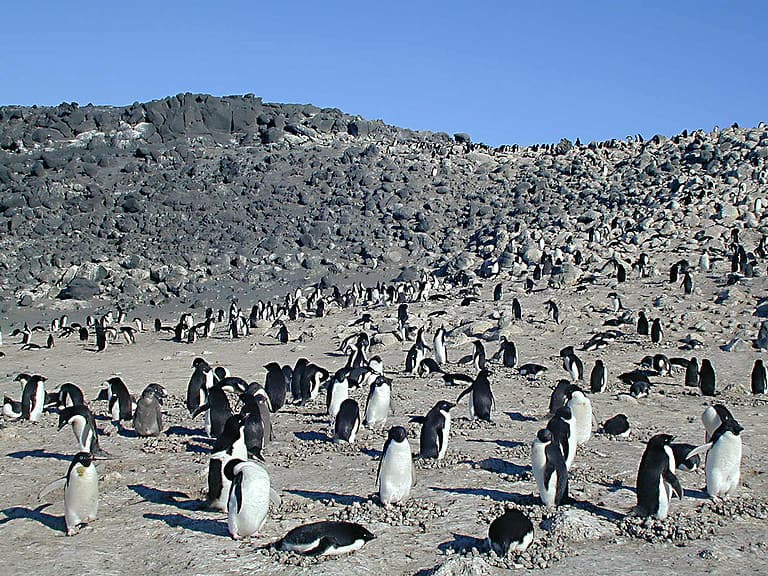
  • Breeds in dense colonies on rocky, ice-free coastal ground; builds pebble nests
  • Strong ecological association with Antarctic sea ice and krill-based food webs

Physical Measurements

Males and females differ in size

Height
2 ft 2 in (1 ft 12 in – 2 ft 4 in)
Length
2 ft 2 in (1 ft 12 in – 2 ft 4 in)
Weight
11 lbs (9 lbs – 13 lbs)
9 lbs (7 lbs – 11 lbs)
Tail Length
3 in (3 in – 4 in)
Top Speed
8 mph
Top swim speed 13 km/h

Appearance

Primary Colors
Secondary Colors
Skin Type Adelie Penguin (Pygoscelis adeliae) has dense, overlapping waterproof feathers, a bare bill, scaly skin on the feet, thick fat under the skin, and a compact body for life on Antarctic sea ice.
Distinctive Features
  • Prominent white orbital eye-ring encircling the dark eye; a key field mark distinguishing it from similar-sized Antarctic penguins at distance (Ainley 2002).
  • Size (adult): body length commonly reported ~46-71 cm and mass ~3.6-6.0 kg, varying by sex, season, and condition (Williams 1995; Ainley 2002).
  • Short, wedge-shaped tail and stiff flippers; upright stance on land with a compact, rounded head profile compared with larger Aptenodytes penguins (Williams 1995).
  • Breeding habitat is typically ice-free rocky coastal ground in Antarctica and nearby islands; builds pebble nests (stone/pebble 'mounds') that are actively maintained and defended within dense colonies (Ainley 2002).
  • Strong association with sea ice for access to foraging areas and as a habitat feature structuring colony attendance and timing; often described as a sea-ice-associated ('ice-dependent') Antarctic penguin (Ainley 2002).
  • Foraging ecology: pursuit diver feeding primarily on Antarctic krill (Euphausia superba) and also small fish (notably Antarctic silverfish, Pleuragramma antarcticum) and other euphausiids/copepods depending on region and year (Ainley 2002; Williams 1995).
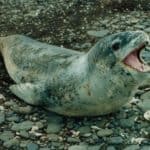
  • Key predators: leopard seals (Hydrurga leptonyx) are major marine predators; eggs/chicks are commonly taken by South Polar skuas (Stercorarius maccormicki) and other avian scavengers/predators near colonies (Ainley 2002).
  • Longevity: maximum recorded lifespan is commonly cited as ~20 years in the wild; many individuals breed for fewer years depending on survival and conditions (Ainley 2002; Williams 1995).

Sexual Dimorphism

Sexes are very similar in plumage (no distinct male/female color morphs). Dimorphism is mainly size/structure: males average slightly larger/heavier with longer/deeper bills; these differences are subtle in the field and are often confirmed by measurements or behavior at nests (Ainley 2002; Williams 1995).

  • Slightly larger average body size and mass within colonies/regions (Ainley 2002).
  • Bill tends to be longer and deeper (more robust) on average (Ainley 2002; Williams 1995).
  • Slightly smaller average body size/mass; bill typically shorter/less deep on average (Ainley 2002; Williams 1995).
  • Plumage coloration and eye-ring are otherwise essentially identical to males (Ainley 2002).

Did You Know?

The species name adeliae refers to Adelie Land, Antarctica, which French explorer Jules Dumont d'Urville named in 1840 after his wife, Adele.

Adults are typically 46-71 cm long and about 3.6-6.0 kg (sex and season vary; heavier pre-molt).

A normal clutch is 2 eggs; incubation lasts ~32-34 days, and chicks form crèches before fledging (classic Pygoscelis strategy).

They build pebble nests-and are notorious "stone thieves," stealing pebbles from neighbors during the breeding rush.

Diet is dominated by Antarctic krill (Euphausia superba) in many regions, with fish (e.g., Antarctic silverfish) and squid also taken (Ainley and others' Ross Sea studies).

Exceptional divers for their size: typical foraging dives are tens of meters, but maximum recorded dives reach ~175 m in some instrumented birds.

Some colonies exceed 100,000 breeding pairs, making rookeries among the densest bird breeding sites on Earth (regional colony surveys).

Unique Adaptations

  • Strong sea-ice association: wintering around pack ice and using predictable ice-edge productivity to access krill and fish.
  • Black-and-white countershading (dark back, white belly) reduces visibility to predators and prey in the water column.
  • Dense, overlapping feathers and a substantial fat layer provide insulation; frequent preening maintains waterproofing.
  • Salt-excreting glands above the eyes allow drinking seawater and eating salty prey; saline droplets can be seen at the bill tip.
  • High blood oxygen capacity (hemoglobin) and muscle myoglobin support breath-hold diving; streamlined body and rigid flippers power underwater "flight."
  • Prominent white eye-ring and strong vocal signatures help individual recognition in crowded colonies.
  • Seasonal body-mass cycling: adults build reserves before molt and fasting periods, then undergo a brief, energetically demanding annual molt on land.

Interesting Behaviors

  • Pebble-nest construction on ice-free, rocky ground; intense competition for stones (stealing and counter-stealing).
  • Stereotyped courtship: ecstatic displays (head/neck raised, loud calls) and mutual bowing to reinforce pair bonds.
  • Highly synchronized breeding: mass arrival, nest establishment, and egg-laying timed to summer access to open water.
  • Chick-rearing shift work: one parent guards and broods while the other forages; later, chicks gather into crèches for safety and thermoregulation.
  • Group commuting: birds often travel to/from the sea in lines, timing departures to reduce leopard-seal risk near shore leads.
  • Tobogganing (sliding on the belly) and "porpoising" (leaping through waves) to move efficiently and evade predators.
  • Aggressive colony boundary defense-bill-jabbing, flipper strikes, and loud vocal threats over nest sites.

Cultural Significance

Adelie Penguins (Pygoscelis adeliae) are key indicator species in Antarctic ecology. Scientists count colonies to track food webs, sea ice, and climate. Early explorers wrote about their busy rookeries and saw them as symbols of coastal Antarctica and Adelie Land.

Myths & Legends

Naming lore: French explorer Jules Dumont d'Urville named Adelie Land in 1840 for his wife Adele; the penguin later inherited the same name, tying the species to a romantic geographic origin story in exploration history.

Early Antarctic explorers and later scientists wrote that Adelie penguins often steal pebbles from other nests to build their own, a behavior often mentioned in stories about Adelie breeding colonies.

Polar travel lore held that seeing penguins near the pack-ice edge suggested open water (and sometimes nearby land), because Adelie penguins concentrate where sea ice meets accessible ocean for feeding.

Conservation Status

LC Least Concern

Widespread and abundant in the wild.

Population Decreasing

Protected Under

  • Antarctic Treaty System (Antarctic Treaty, 1959) - framework for environmental management and scientific activity in Antarctica.
  • Protocol on Environmental Protection to the Antarctic Treaty (Madrid Protocol, 1991) - establishes comprehensive environmental protection measures, including pollution control and protected areas.
  • CCAMLR (Convention on the Conservation of Antarctic Marine Living Resources, 1980) - ecosystem-based management of Southern Ocean fisheries (including krill), relevant to Adélie Penguin prey resources.
  • Protected areas tools under the Antarctic Treaty System (e.g., Antarctic Specially Protected Areas/ASPAs; Antarctic Specially Managed Areas/ASMAs) - can include or buffer important breeding/foraging sites.
  • Ross Sea Region Marine Protected Area (CCAMLR, in force 2017) - provides spatial protection in a key part of the species' range (benefits vary by colony distribution and foraging use).

Life Cycle

Birth 2 chicks
Lifespan 12 years

Lifespan

In the Wild
5–20 years
In Captivity
10–30 years

Reproduction

Mating System Monogamy
Social Structure Socially Monogamous
Breeding Pattern Seasonal
Fertilization Internal Fertilization
Birth Type Internal_fertilization

Behavior & Ecology

Social Colony Group: 20000
Activity Diurnal, Cathemeral
Diet Carnivore Krill (especially Antarctic krill Euphausia superba and/or ice krill Euphausia crystallorophias, depending on region/sea-ice conditions).
Seasonal Migratory 746 mi

Temperament

Highly gregarious during breeding and when rafting at sea; strong local social tolerance outside nest territories
Strongly territorial and often aggressive at the nest (bill-jabbing/pecking, flipper strikes), especially toward neighbors during nest building and incubation
Bold and persistent in nest-material stealing/defense (stone theft is common in dense colonies)
Behaviorally flexible across the 24-hour light regime of the austral summer (activity can extend throughout the day when chicks demand frequent provisioning)
High site fidelity and homing tendency to traditional breeding areas; social structure becomes more dispersed outside the breeding season

Communication

Ecstatic display call Long, loud, multi-syllabic call used in mate attraction, pair-bond advertisement, and territory signaling
Mutual display call between mates at the nest Pair-bond reinforcement
Contact calls between adults and between parent-chick during reunions/feeding Individual recognition is important in dense colonies
Agonistic/threat calls during territorial disputes and nest defense Often paired with forward posture and bill pointing
Visual displays: head/neck stretching, bill pointing, flipper waving, bowing, and synchronized mutual displays; used for courtship, recognition, and threat
Postural/spacing cues: tight nest-site defense and ritualized approach/retreat reduce escalated fights in high-density colonies
Tactile behaviors: billing and allopreening between mates; pecking/bill-fencing during disputes
Object-mediated signaling: nest-stone presentation and stone stealing are central to social interactions during nest building
Olfactory cues likely play a minor role compared with vocal/visual signaling, but may contribute to nest/partner context in close-range interactions General penguin finding; primary signaling in Adélies is vocal/visual

Habitat

Biomes:
Marine Desert Cold
Terrain:
Coastal Island Rocky Sandy
Elevation: Up to 820 ft 3 in

Ecological Role

Mid-upper trophic-level marine mesopredator linking Antarctic primary/secondary production (krill/copepod pathways) to higher predators and transferring marine-derived nutrients to terrestrial/coastal ecosystems at breeding colonies.

Regulates local abundance of key prey (krill and small pelagic fishes), influencing Antarctic food-web dynamics. Provides a major prey base for higher predators (e.g., leopard seals and killer whales), supporting top-predator populations. Biotransports nutrients from ocean to land via guano and carcasses, fertilizing Antarctic coastal soils and influencing microbial/plant communities near colonies. Acts as a bioindicator of sea-ice/ocean ecosystem change because diet composition and foraging effort track krill/fish availability and sea-ice conditions.

Diet Details

Main Prey:
Antarctic krill Ice krill Antarctic silverfish Small notothenioid fishes Antarctic squid Amphipods

Human Interaction

Domestication Status

Wild

Adélie Penguin (Pygoscelis adeliae) are not domesticated. Human contact comes from research at colonies, regulated tourism, and indirect effects of fisheries (krill), pollution, and sea-ice loss. They breed in sea-ice colonies, weigh ~3.6–6 kg, are aggressive at nests, live ~10–20 years, eat krill, fish, squid, and dive tens to >100 m. Key refs: Ainley; long-term monitoring.

Danger Level

Low
  • Bites/pecks and flipper strikes during handling or near nests (localized injuries such as punctures/bruising)
  • Zoonotic/enteric pathogen exposure from feces or contaminated surfaces (e.g., Salmonella/Campylobacter reported in seabirds; risk managed via hygiene/PPE)
  • Slip/fall hazards for people moving through guano-covered rocks/ice near colonies
  • Biosecurity risks run primarily in the opposite direction (humans introducing pathogens to penguin colonies), so human access is often restricted/managed

As a Pet

Not Suitable as Pet

Legality: Not legal or realistic as a private pet. Adélie Penguin (Pygoscelis adeliae) is an Antarctic species protected by the Antarctic Treaty and CITES. Only government permits for science or zoos allowed.

Care Level: Expert Only

Purchase Cost:
Lifetime Cost: $500,000 - $2,000,000

Economic Value

Uses:
Ecotourism (Antarctic wildlife viewing; tightly regulated landings) Scientific research value (indicator species for sea-ice/food-web change) Education/outreach (aquariums/zoos where legally held under permit) Ecosystem services (role as mid-trophic predator in Southern Ocean food webs)
Products:
  • non-consumptive tourism revenue (wildlife observation)
  • research outputs and monitoring data (long-term population and sea-ice indicators)

Relationships

Predators 5

Leopard Seal
Leopard Seal Hydrurga leptonyx
Killer Whale
Killer Whale Orcinus orca
South Polar Skua Stercorarius maccormicki
Snowy Sheathbill Chionis albus
Southern Giant Petrel Macronectes giganteus

Classification and Evolution
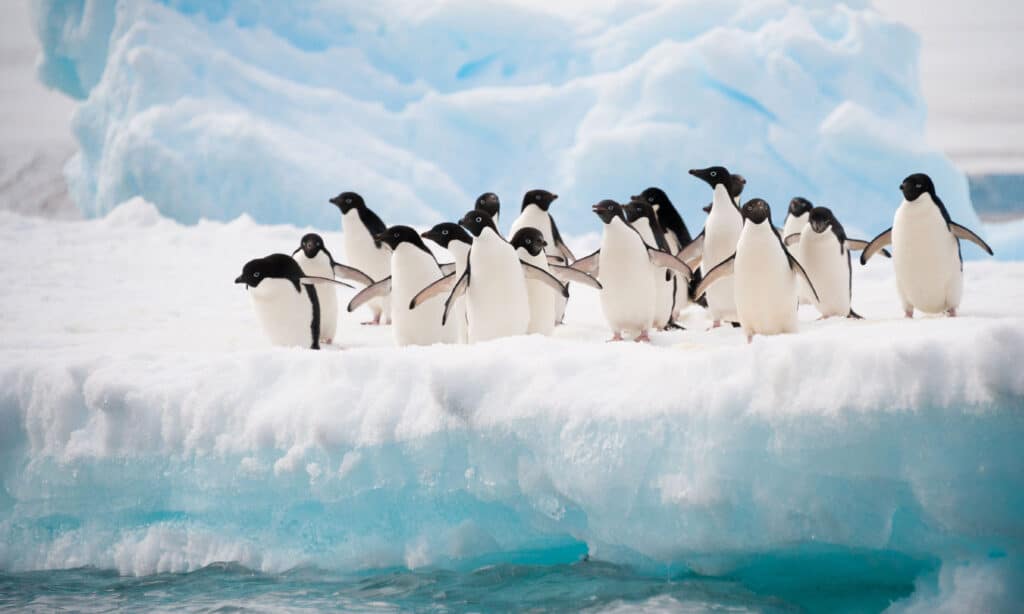
Adelie penguins colony on the iceberg Antarctica

Only two species of penguin call the continent of Antarctica home, the Adélie and the emperor.

French explorer Jules Dumont d’Urville discovered this penguin in 1840. The species received its name from Adélie Land in France, which d’Urville named after his wife, Adélie.

The Adélie penguin is the smallest and most widely distributed species of penguin in the Southern Ocean. It is one of only two species of penguin that live on the Antarctic mainland (the other being the much larger emperor penguin).

Adélie penguins have adapted well to life in the Antarctic, as these migratory birds winter in the northern pack ice before returning south to the Antarctic coast for the warmer summer months.

Anatomy and Appearance
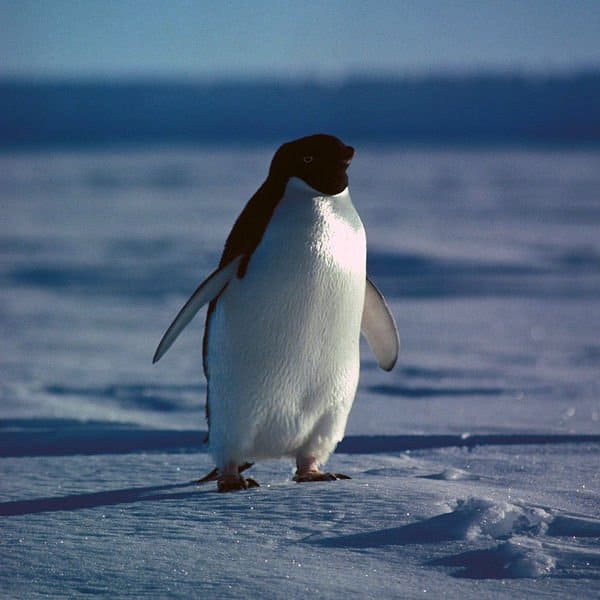
With its unique appearance, one can easily distinguish the Adélie from other species.

The Adélie penguin is one of the most easily identifiable penguin species. They have blue-black backs and completely white chests and bellies. Their heads and beaks are both black, with a distinctive white ring around each eye.

Their strong, pink feet are tough and bumpy, with nails that aid them in climbing rocky cliffs to reach their nesting grounds, while also helping to push them along when they are sliding (rowing) along the ice. These penguins also use their webbed feet along with their small flippers to propel them along when swimming in cold waters.

Distribution and Habitat
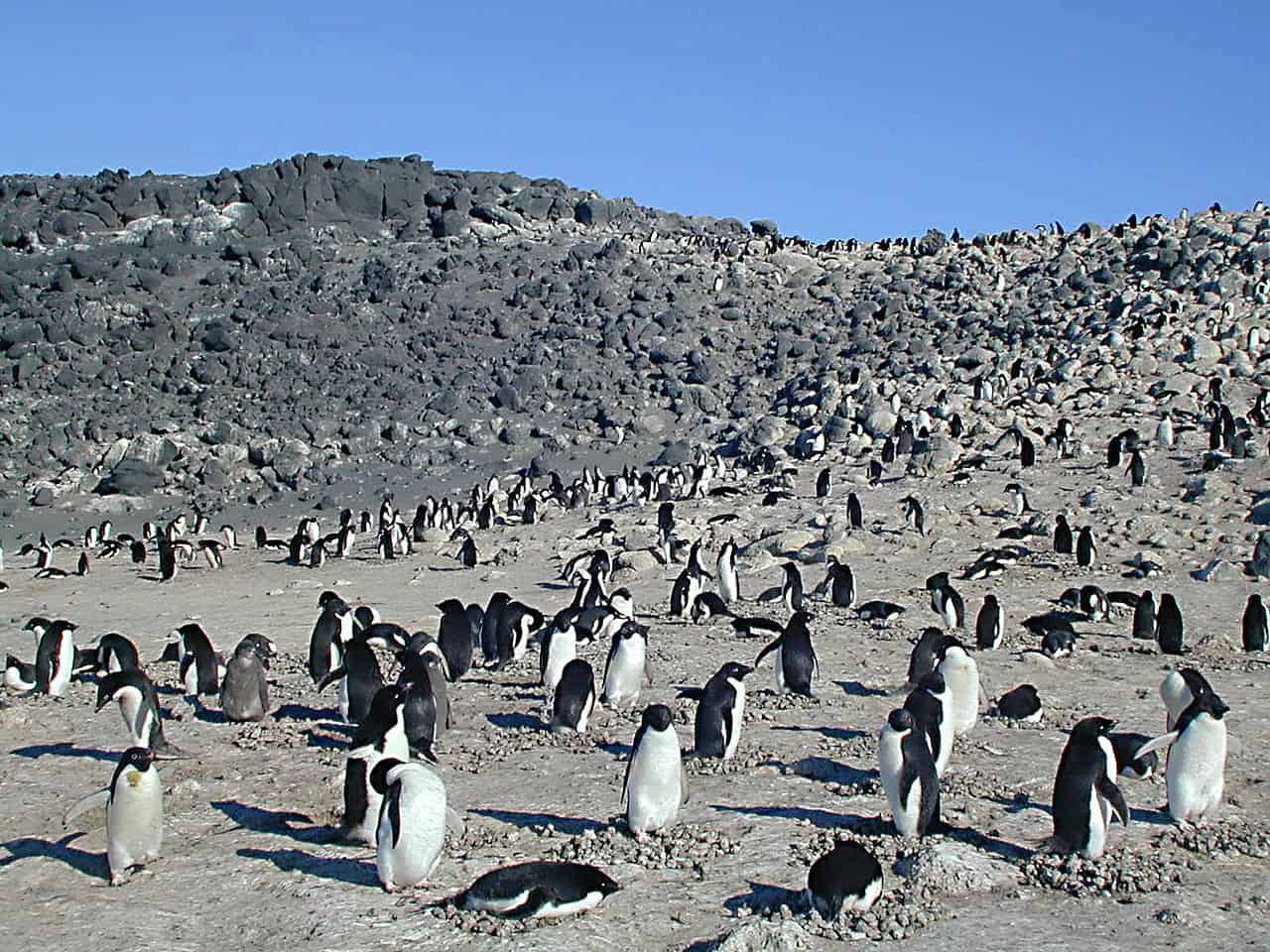
Over half a million Adélie penguins have formed on Ross Island one of the largest animal colonies in the world.

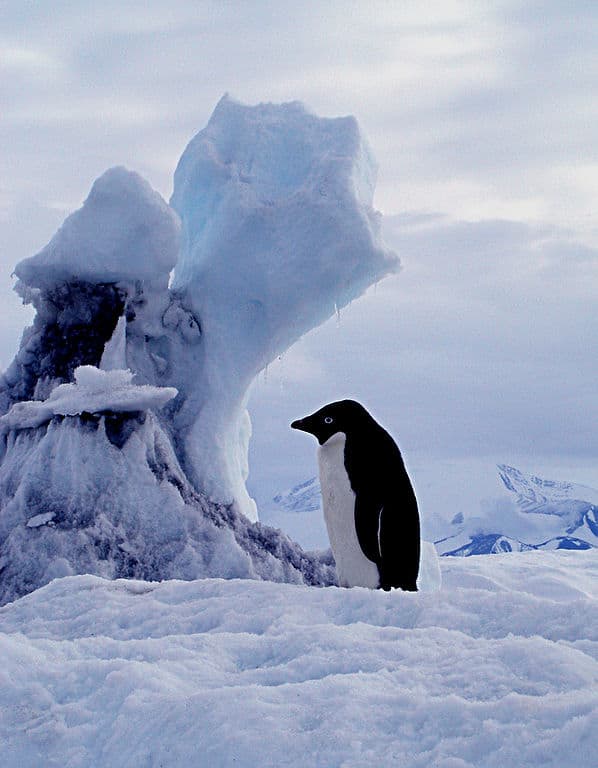
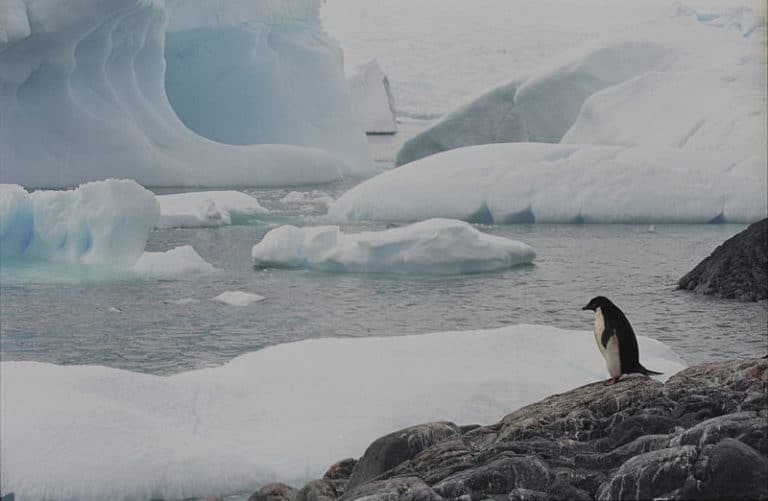
The Adélie penguin is one of the southernmost birds in the world, as it lives along the Antarctic coastline and on the islands close to it. During the winter months, they migrate north, where they inhabit large platforms of ice and have better access to food.

During the warmer summer months, they return south. There, they head for the coastal beaches in search of ice-free ground on the rocky slopes where they can build their nests. More than half a million Adélie penguins have formed one of the largest animal colonies in the world on Ross Island, an island formed by the activities of four monstrous volcanoes in the Ross Sea.

Behavior and Lifestyle
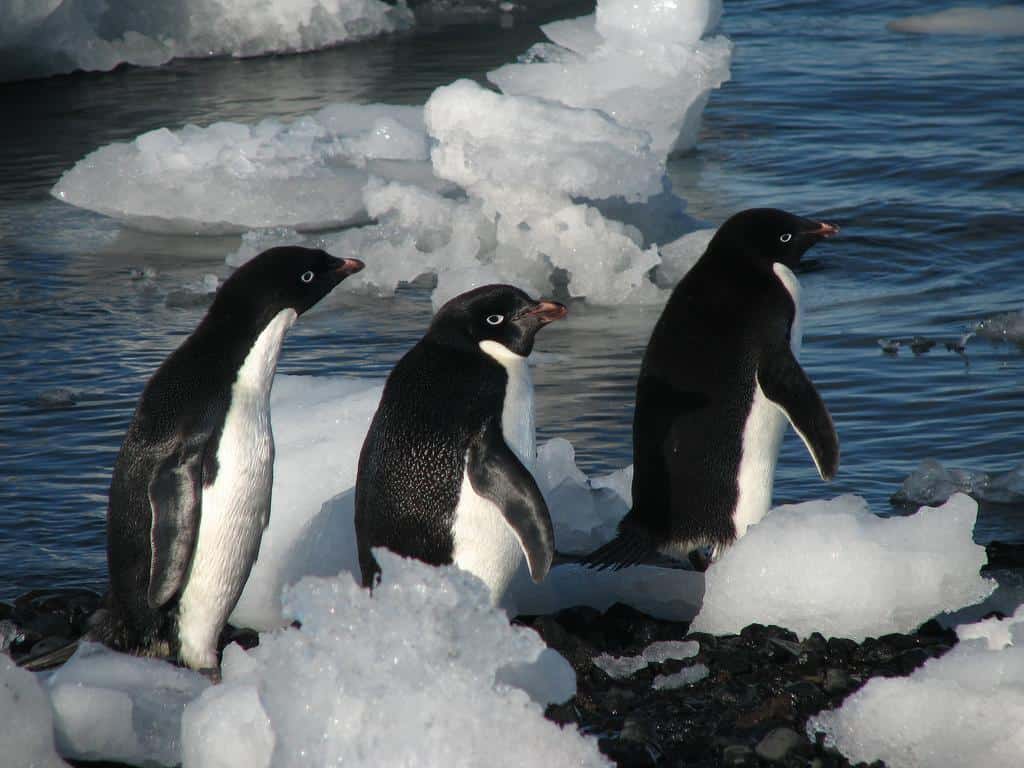
These penguins are as highly social as many other species of penguin.

Like all species of penguin, the Adélie penguin is a highly sociable animal, gathering in large groups known as colonies, which often number thousands of penguin individuals. Although Adélie penguins are not terribly territorial, it is not uncommon for adults to become aggressive over nesting sites. Sometimes, they even steal rocks from the nests of their neighbors.

Adélie penguins also hunt in groups, likely because it reduces the risk of hungry predators eating them. Adélie penguins are constantly interacting with one another, with body language and specific eye movements thought to be the most common forms of communication.

Reproduction and Life Cycles

Adélie penguins return to their breeding grounds during the Antarctic summer months of November and December. Their soft feet are well designed for walking on land, making the trek to their nesting ground much easier, as the penguin fasts during this time. Adélie penguin pairs mate for life in large colonies, with females laying two eggs a couple of days apart in a nest built from rocks.

Both the male and female take turns incubating their eggs while the other goes off to feed, for up to 10 days at a time. The Adélie penguin chicks have an egg tooth which is a bump on the top of their beaks, which helps them to break out of the egg.

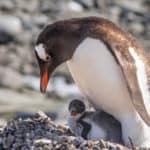
Once hatched, the parents still take turns looking after their young while the other goes off to gather food. After about a month, the chicks congregate in groups called crèches and are able to fend for themselves at sea when they are between 2 and 3 months old.

Diet and Prey

Adélie penguins are strong and capable swimmers, obtaining all of their food from the sea. These penguins primarily feed on krill, which live throughout the Antarctic Ocean. They also feed on mollusks, squid, and small fish. The record of fossilized eggshells accumulated in the Adélie penguin colonies over the last 38,000 years reveals a sudden change from a fish-based diet to krill, which evidently started about 200 years ago.

Researchers believe this is due to the decline of the Antarctic fur seal in the late 1700s and baleen whales in the twentieth century. The reduction of competition from these predators has resulted in there being an abundance of krill, which the Adélie penguins are now able to exploit as an easier source of food.

Predators and Threats
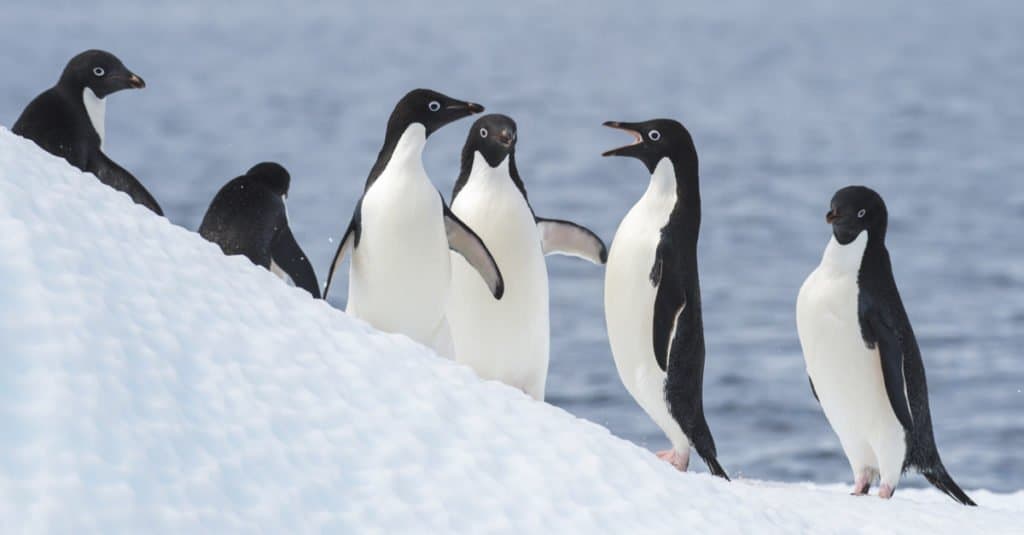
Adelie Penguins jump from iceberg in Antarcdtica

Adult Adélie penguins have no land-based predators due to the uncompromising conditions that they inhabit. In the water, however, the biggest threat to the Adélie penguin is the leopard seal, which is one of the southernmost species of seal and a dominant predator in the Southern Ocean.

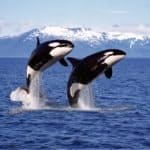
These penguins have learned to avoid these predators by swimming in large groups and not walking on thin ice. The killer whale is the other main predator of the Adélie penguin, although they normally hunt larger species of penguins further north. South Polar skuas prey on the Adélie penguin’s eggs if left unguarded, as well as chicks that have strayed from a group.

Interesting Facts and Features

Adélie penguins inhabit one of the coldest environments on Earth and so have a thick layer of fat under their skin helping to keep them warm.

Their feathers help to insulate them and provide a waterproof layer for extra protection. The Adélie penguin is a highly efficient hunter and is able to eat up to 2kg of food per day, with a breeding colony thought to consume around 9,000 tonnes of food over 24 hours.

The flippers of the Adélie penguin make them fantastic at swimming and they can dive to depths of 175 meters in search of food. Adélie penguins do not have teeth as such but instead have tooth-shaped barbs on their tongue and on the roof of their mouths. These barbs do not exist for chewing but instead to assist the penguin in swallowing slippery prey.

For interesting facts, Read “10 Incredible Adélie Penguin Facts.”

Relationship with Humans

A visit to the Adélie penguin colonies has long since been on the program for tourists to the Antarctic, who marvel at the vast numbers of them nesting on the beaches and hunting in the surrounding waters. This has made them one of the most well-known of all penguin species today. Early explorers, however, also hunted the penguins both for their meat and their eggs in order to survive in such uncompromising conditions.

Conservation Status and Life Today

Despite living strictly in coastal Antarctica, Adélie penguins are one of the most common and widespread penguins in the Southern Hemisphere. With more than 2.5 million breeding pairs found throughout southern Antarctica, this penguin has adapted well to its polar habitat. Scientists also use their nesting patterns as indicators of climate change, noticing that they are able to nest on beaches that were previously covered in ice. The Adélie penguin is listed as Least Concern.

View all 326 animals that start with A
How to say Adélie Penguin in ...
Czech
Tučňák kroužkový
Danish
Adeliepingvin
German
Adeliepinguin
English
Adelie Penguin
Esperanto
Adeliopingveno
Spanish
Pingüino de Adelia
Finnish
Jääpingviini
French
Manchot Adélie
Hungarian
Adélie-pingvin
Italian
Pinguino di Adelia
Japanese
アデリーペンギン
Dutch
Adéliepinguïn
English
Adeliepingvin
Polish
Pingwin Adeli
Portuguese
Pinguim de Adélia
Slovenian
Adelijski pingvin
Swedish
Adeliepingvin
Turkish
Adelie pengueni

Sources

  1. David Burnie, Dorling Kindersley (2011) Animal, The Definitive Visual Guide To The World's Wildlife / Accessed February 3, 2009
  2. Tom Jackson, Lorenz Books (2007) The World Encyclopedia Of Animals / Accessed February 3, 2009
  3. David Burnie, Kingfisher (2011) The Kingfisher Animal Encyclopedia / Accessed February 3, 2009
  4. Richard Mackay, University of California Press (2009) The Atlas Of Endangered Species / Accessed February 3, 2009
  5. David Burnie, Dorling Kindersley (2008) Illustrated Encyclopedia Of Animals / Accessed February 3, 2009
  6. Dorling Kindersley (2006) Dorling Kindersley Encyclopedia Of Animals / Accessed February 3, 2009
  7. Christopher Perrins, Oxford University Press (2009) The Encyclopedia Of Birds / Accessed February 3, 2009
  8. Animal Diversity Website / Accessed February 3, 2009
  9. About Antarctica / Accessed February 3, 2009
  10. Penguin World / Accessed February 3, 2009
  11. Antarctic Connection / Accessed February 3, 2009
  12. Animal Corner / Accessed February 3, 2009
  13. American Scientist / Accessed February 3, 2009
  14. National Geographic / Accessed February 3, 2009
Rebecca Bales

About the Author

Rebecca Bales

Rebecca is an experienced Professional Freelancer with nearly a decade of expertise in writing SEO Content, Digital Illustrations, and Graphic Design. When not engrossed in her creative endeavors, Rebecca dedicates her time to cycling and filming her nature adventures. When not focused on her passion for creating and crafting optimized materials, she harbors a deep fascination and love for cats, jumping spiders, and pet rats.
Connect:

Thank you for reading! Have some feedback for us?


Adélie Penguin FAQs (Frequently Asked Questions)

Adelie Penguins are Carnivores, meaning they eat other animals.