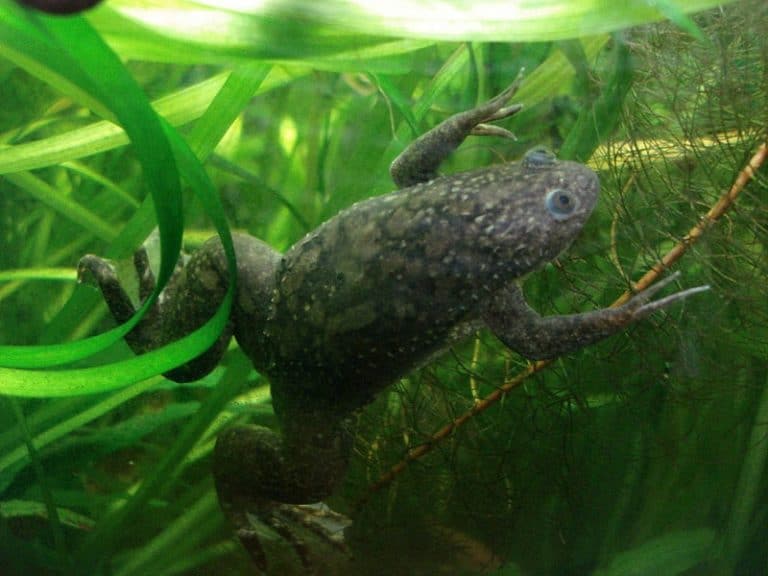

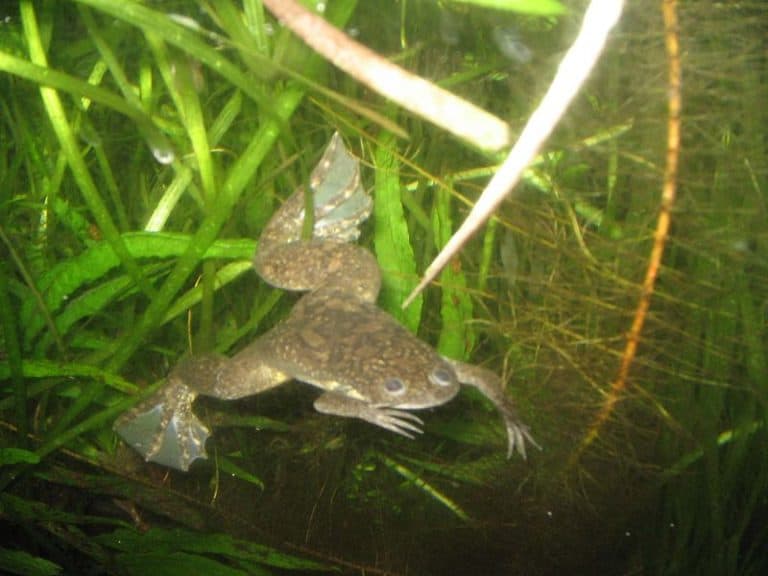

The African clawed frog has four sets of chromosomes, which is unusual as many organisms including humans have two sets.
The African clawed frog is a large frog mainly found dwelling at the bottom of lakes and rivers. Also called the platanna, it has a number of unique features that show its adaptation to its habitat. The African clawed frog is believed to have originated in South Africa, and its range is across Africa. It has also been introduced to the Americas and Europe.
4 Fascinating Facts About African Clawed Frogs!
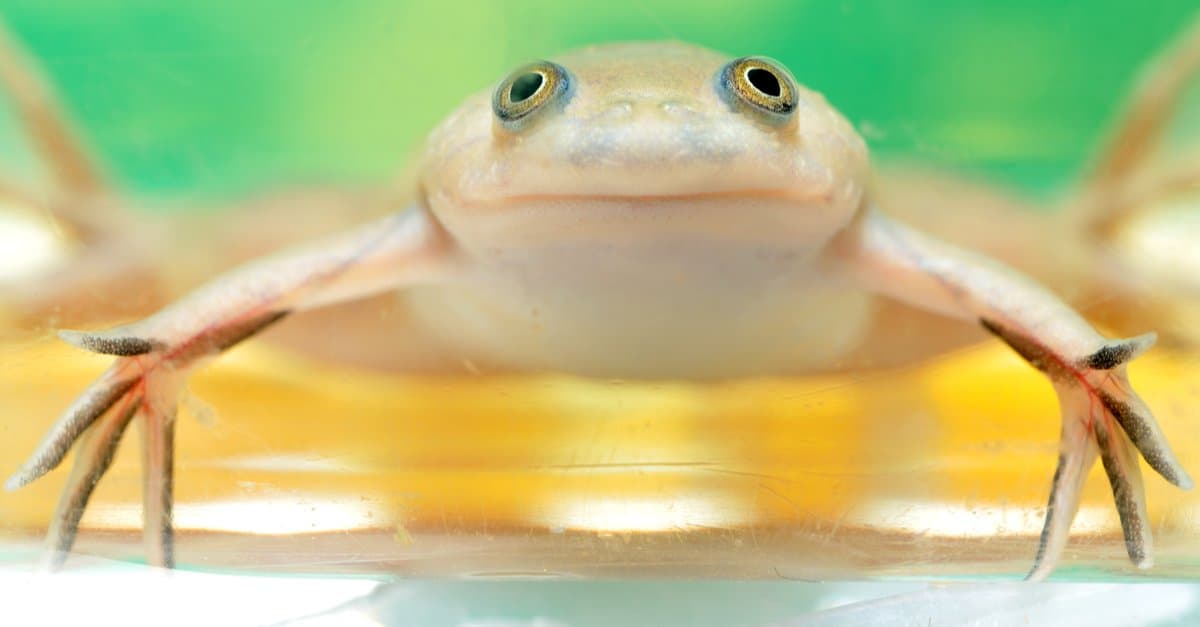
- The African clawed frog is named for its unique feet: while its hind feet are webbed, its front has clawed toes, which it uses to help move food into its mouth.
- From the 1930s to early 1960s, the African clawed frog was used as a way to test for pregnancy.
- The African clawed frog has been frequently used for many years by scientists conducting research.
- A group of African clawed frogs was onboard the 1992 Space Shuttle Endeavour so that scientists could study how zero gravity affected reproduction and development.

From the 1930s to the early 1960s, women’s pregnancy tests involved African clawed frogs.
©Natalia Deriabina/Shutterstock.com
Scientific Name
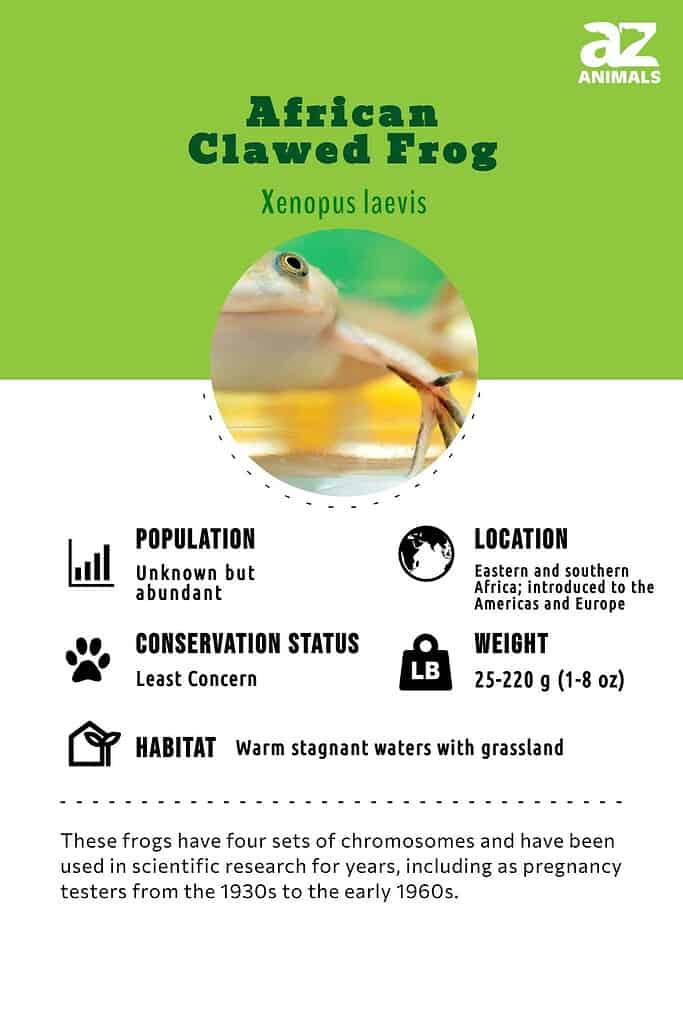
The African clawed frog’s scientific name is Xenopus laevis. It is named for its feet, with Xenopus meaning “strange foot” and laevis referring to “smooth.”
It is also commonly called platanna, xenopus, African clawed toad, and African claw-toed frog. It’s frequently mistaken for the African dwarf frog, which belongs to the same family but is a different genus, Hymenochirus.
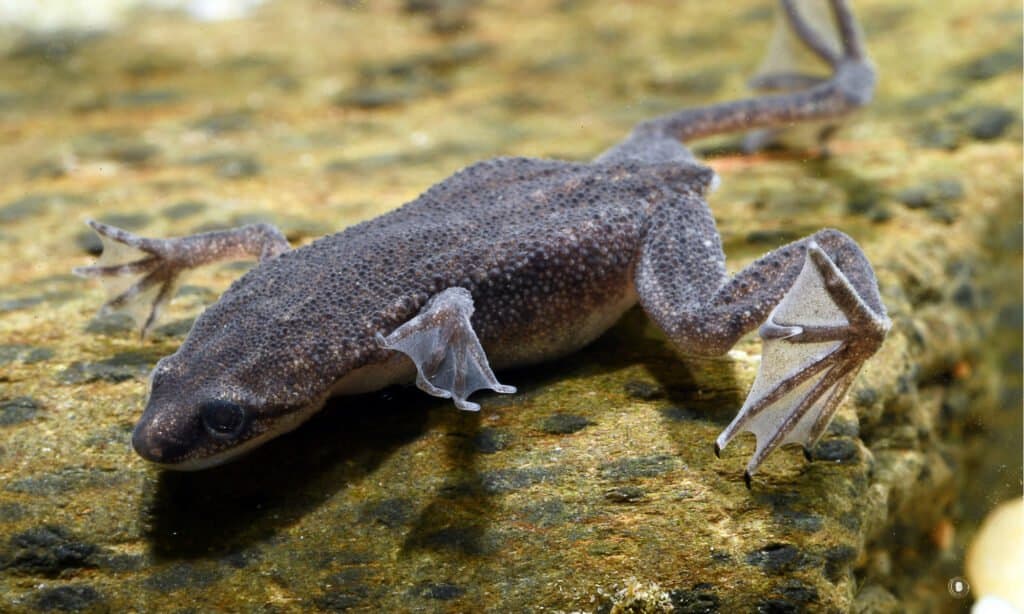
The African dwarf frog is often confused with the African clawed frog.
©Guillermo Guerao Serra/Shutterstock.com
Evolution and Origins
The African clawed frog belongs to the family Pipidae, which includes 41 species of tongueless frogs inhabiting tropical regions of South America and sub-Saharan Africa, such as Zaire dwarf clawed frogs, Suriname toads, and Merlin’s dwarf gray frog. It’s thought that the ancestors of Pipidae can be traced through fossil records to the Early Cretaceous period 145 million years to 100.5 million years ago.
Scientists reported in 2016 that they had sequenced the whole genome of the African clawed frog for the first time. They discovered that an ancestor of the frog doubled its entire genome around 18 million years ago, giving the frog four sets of chromosomes — which is unusual as many organisms including humans have two sets.
African clawed frogs have evolved to easily adapt to a range of natural and manmade environments, especially as they are capable of living in water of variable salinities, pH levels, and temperatures. Although completely aquatic, they are able to travel across land to find new habitats and can aestivate, or become dormant, during droughts or dry temperatures.
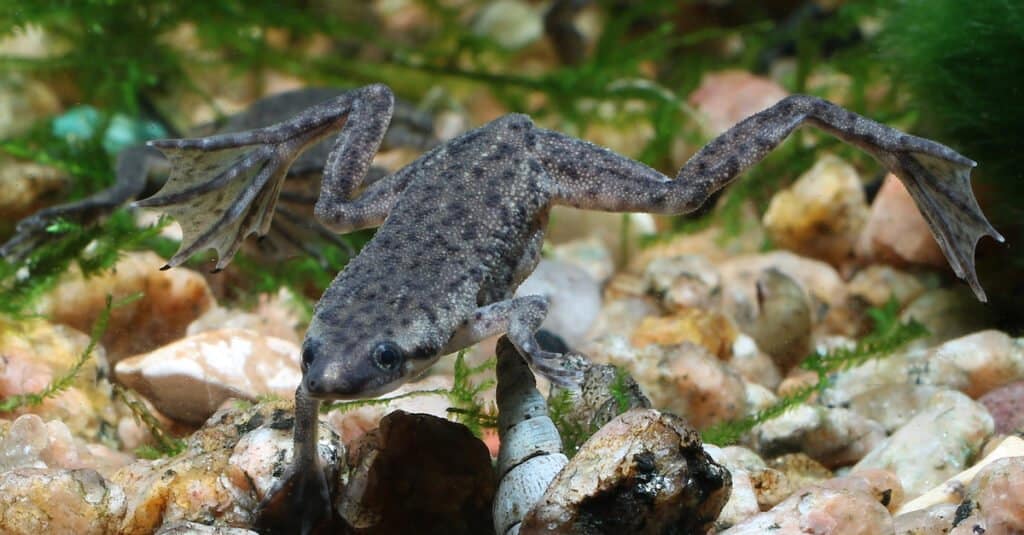
The Zaire dwarf clawed frog belongs to the same family as the African clawed frog.
©Dan Olsen/Shutterstock.com
Appearance
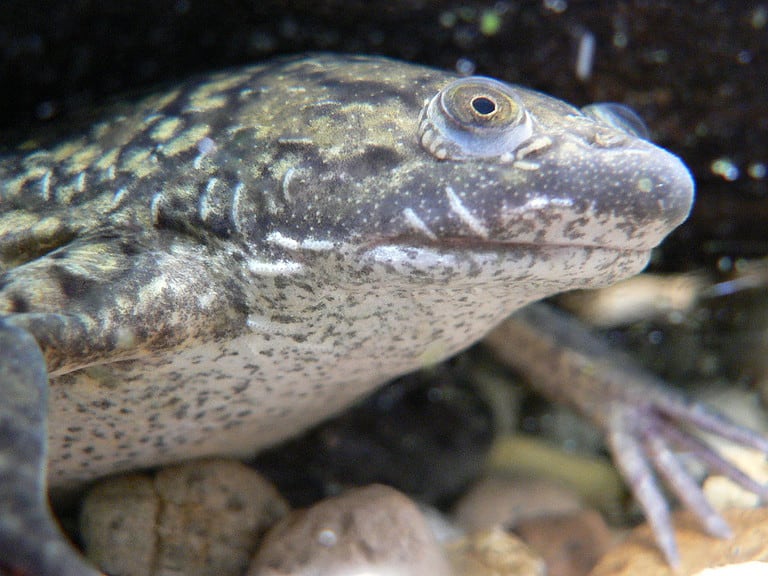
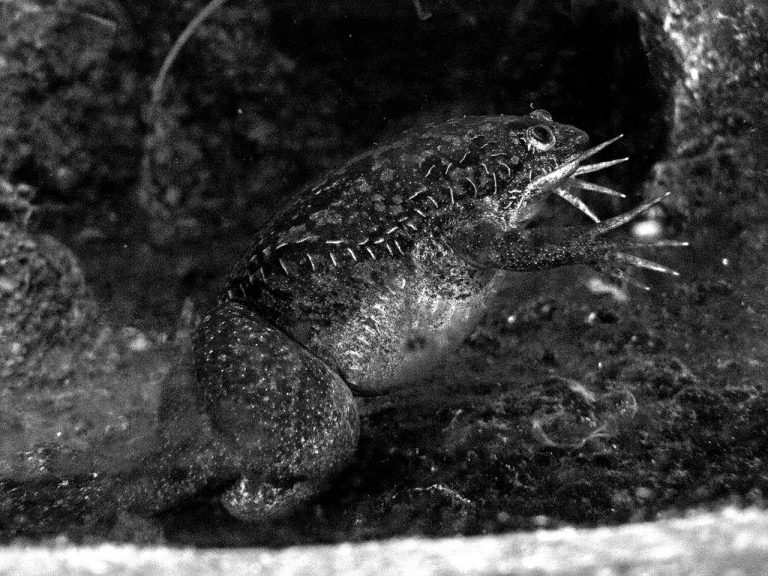
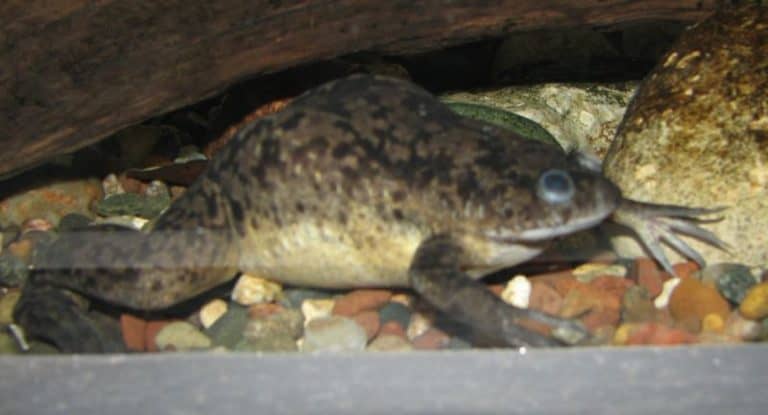
The African clawed frog’s most distinctive feature is the clawed toes on its front feet, which it uses to scoop smaller prey into its mouth and tear up larger prey. The frog is generally a greenish grey although it can take other colors and even be albino. The color and mottled appearance of its skin help it blend in with its environment and act as defensive camouflage. In addition, the frog’s eyes and nose are at the top of its head, enabling it to submerge the rest of its body to hide but still see and breathe.
These frogs have what looks like a line of stitch marks running the length of their bodies on both sides, which are sensors used to help them locate prey in the water.
On average, the African clawed frog can grow to be around 12 cm (4.7 in) long and weighs about 200g (7 oz).
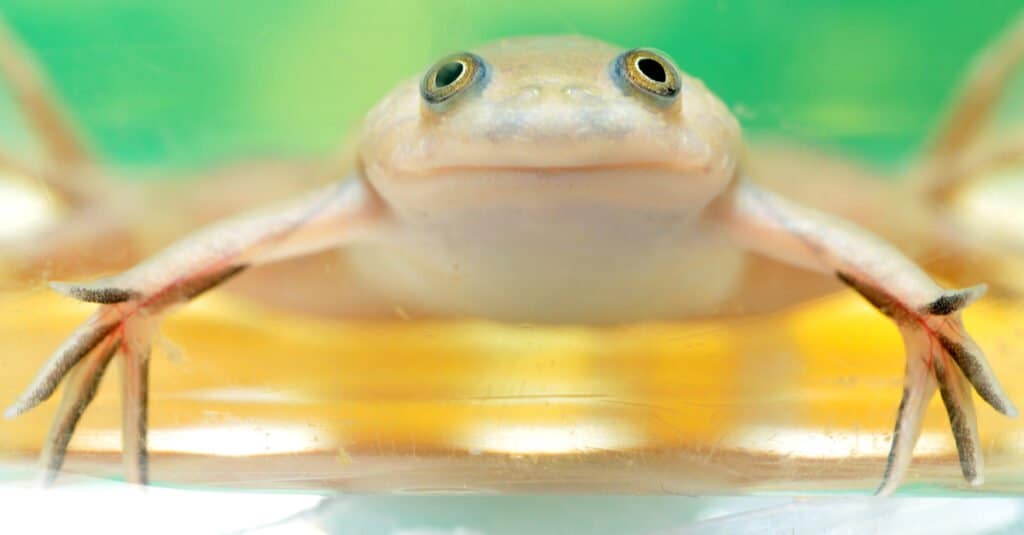
The African clawed frog can be found in a variety of colors, including as an albino.
©D. Kucharski K. Kucharska/Shutterstock.com
Habitat
The African clawed frog is most common in eastern and southern Africa, found along the African Rift Valley. These frogs live at the bottom of stagnant water sources, present in the summer in shallow creeks and rivers and migrating during the rainy season to flooded forest areas.
African clawed frogs began to be distributed around the world in the 1930s to laboratories where scientists used them to conduct Hogben pregnancy tests, and it’s thought that once modern pregnancy tests were invented in the 1960s, these frogs were released and became invasive species in freshwater habitats in many countries outside Africa.

African clawed frogs are native to eastern and southern Africa.
©wael alreweie/Shutterstock.com
Behavior
These frogs only live in water and are able to swim at fast speeds in all directions. They are fierce predators and use their claws to catch their prey and shovel it into their mouths. Spending time at the bottom of water sources offers the frogs a degree of protection from some species that might prey upon animals closer to the surface as well as increases its food resources.
African clawed frogs are carriers of an amphibian chytrid fungus called Batrachochytrium dendrobatidis, or Bd, which has been responsible for the decline and even extinction of around 500 species worldwide. A few of these include the southern gastric brooding frog, common midwife toad, and Costa Rican golden toad. While the fungus was first found in the frogs’ native South Africa in 1934, it was not until 2013 that a case was reported in the U.S. in frog populations in California. The African clawed frog can pass the fungus onto vulnerable amphibians that it encounters. It is fatal as it causes the skin to harden, and affects the flow of electrolytes across an animal’s skin, eventually causing heart failure.
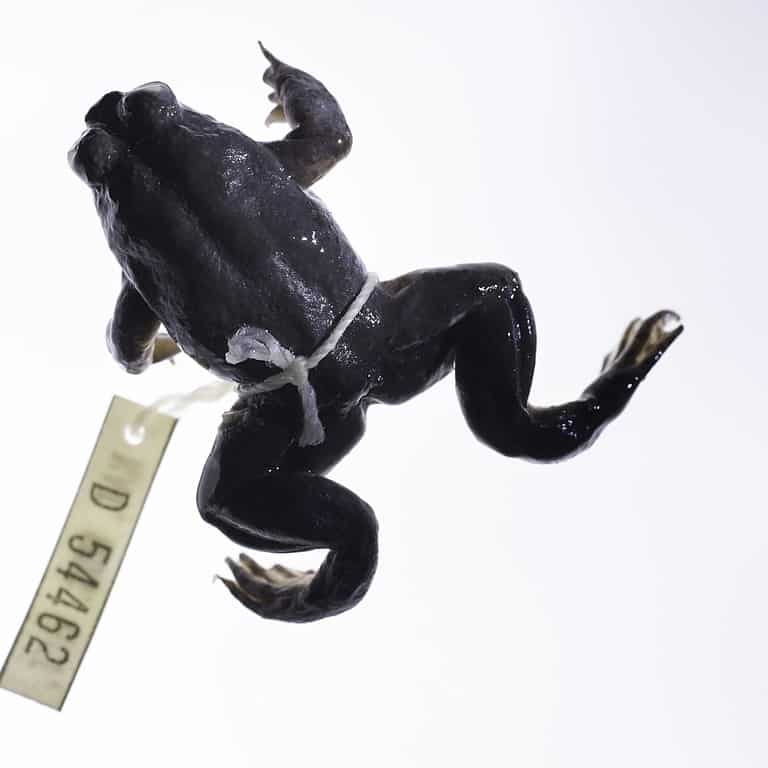
The African clawed frog carries a deadly fungus that has killed species such as the southern gastric brooding frog.
Diet
This carnivorous frog will eat whatever it can get its claws into and primarily eats water bugs and small fish, as well as insects, spiders, and worms. Once it sheds its skin every year, the frog will eat that, too. They will also eat their own or other frog’s tadpoles.
In captivity, the African clawed frog’s diet is more limited and generally will be mostly worms.
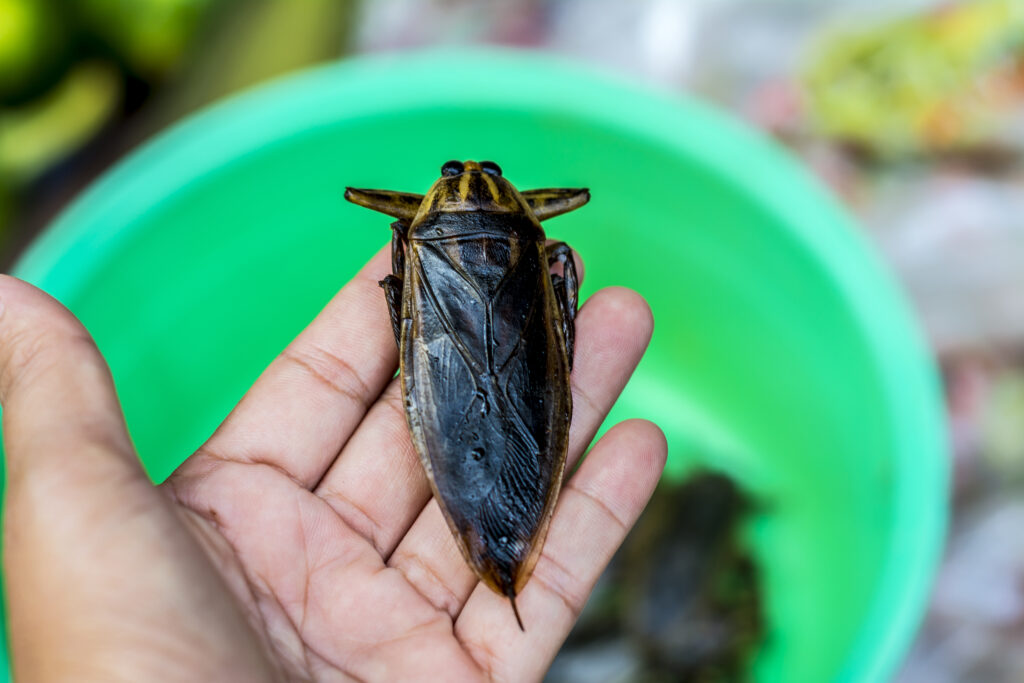
African clawed frogs eat water bugs.
©Pheobus/Shutterstock.com
Predators and Threats
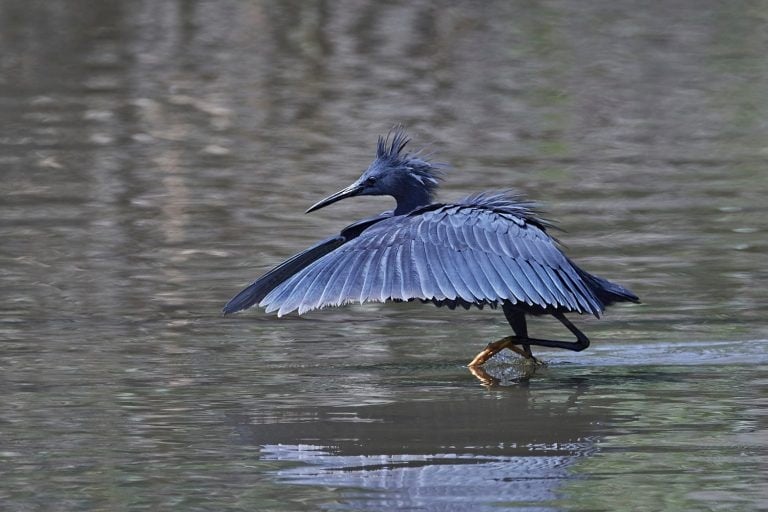
Since it dwells on the bottom of lakes and rivers, the muddy waters can provide some protection, but there are many, larger animals that prey upon the African clawed frog. Its biggest threat is herons, with other birds, reptiles including snakes, and small mammals such as rodents, cats, and dogs also predators.
Historically, humans have been a threat to this frog, with it being used in scientific research, teaching, and as a test subject, most notably as a way of determining pregnancy in Hogben tests. From the 1930s to early 1960s, frogs were injected with women’s urine samples and if the pregnancy hormone human chorionic gonadotropin was present in the sample, it would set off ovulation in frogs and eggs would be present in the water after 8-12 hours.
Some people living in sub-Saharan regions hunt out the frog for its meat and to use it as an aphrodisiac or a fertility treatment. Another human threat to the African clawed frog is habitat destruction through water pollution, although it is not as affected by it as some other amphibians.
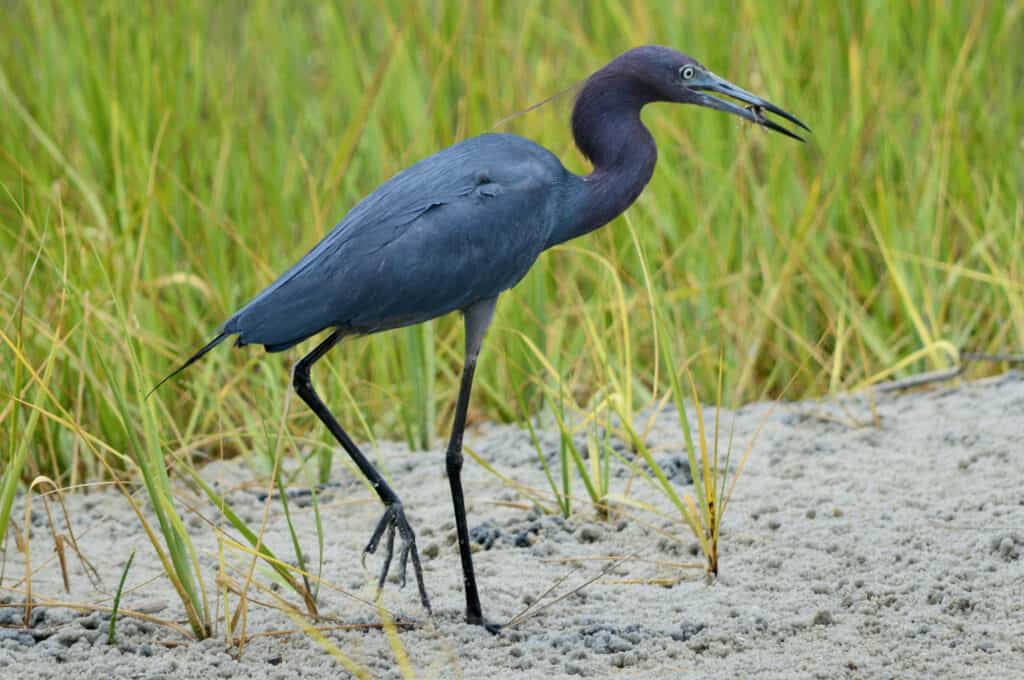
The heron is the African clawed frog’s biggest natural predator.
©iStock.com/Christina Stover
Reproduction, Babies, and Lifespan
The females of the species are typically much larger — frequently close to twice the size of the males — and can reproduce more than once per year. Following mating, the female will lay eggs in thousands at one time in the water, bound together by a substance similar to jelly. Once the tadpoles hatch, they remain in the water until sprouting legs, which allows them to explore river banks.
Somewhat surprisingly for a small aquatic species, the African clawed frog is able to live in the wild for about 5 years up to 15 years. In captivity, their lifespans are even longer, with some living for almost 30 years.
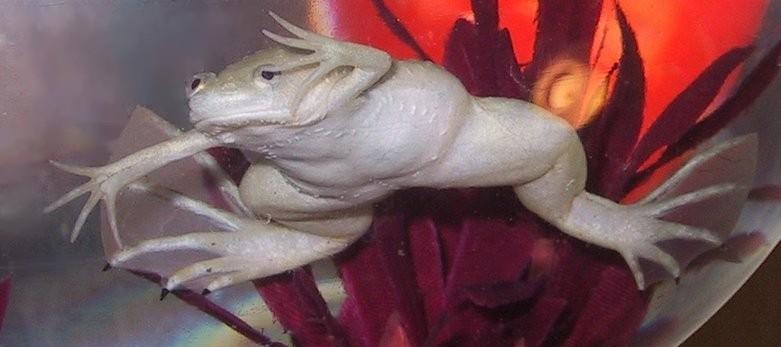
The female African clawed frog is much larger than the male.
©User Museoftheviolets. / CC BY-SA 3.0, from Wikimedia Commons, the free media repository – Original / License
Population and Conservation
Although the African clawed frog has been classified as being at Least Concern by the IUCN Red List, population numbers have fallen in certain areas due to deteriorating water quality.
African clawed frog populations around the world have often become an invasive species and a pest to the local plants and wildlife. In the U.S., some states including California, Louisiana, Oregon, and Virginia have made owning, transporting, or selling African clawed frogs illegal.

The IUCN’s Red List classifies the African clawed frog as Least Concern.
©Tobias Arhelger/Shutterstock.com
African Clawed Frog Pictures
View all of our African Clawed Frog pictures in the gallery.

How to say African Clawed Frog in ...
Sources
- David Burnie, Dorling Kindersley (2011) Animal, The Definitive Visual Guide To The World's Wildlife / Accessed December 30, 2008
- Tom Jackson, Lorenz Books (2007) The World Encyclopedia Of Animals / Accessed December 30, 2008
- David Burnie, Kingfisher (2011) The Kingfisher Animal Encyclopedia / Accessed December 30, 2008
- Richard Mackay, University of California Press (2009) The Atlas Of Endangered Species / Accessed December 30, 2008
- David Burnie, Dorling Kindersley (2008) Illustrated Encyclopedia Of Animals / Accessed December 30, 2008
- Dorling Kindersley (2006) Dorling Kindersley Encyclopedia Of Animals / Accessed December 30, 2008
- African Clawed Frog Threats / Accessed December 30, 2008
- African Clawed Frog Information / Accessed December 30, 2008
- African Clawed Frog Anatomy / Accessed December 30, 2008
- About Clawed Frogs / Accessed December 30, 2008
- African Clawed Frogs / Accessed December 30, 2008