African Elephant
L. africana
 Verified by: AZ Animals Staff
Both male and female African elephants have tusks. In Asian elephants, only the males have tusks.
Advertisement
African Elephant Scientific Classification
- Kingdom
- Animalia
- Phylum
- Chordata
- Class
- Mammalia
- Order
- Proboscidea
- Family
- Elephantidae
- Genus
- Loxodonta
- Scientific Name
- L. africana
Read our Complete Guide to Classification of Animals.
African Elephant Conservation Status
African Elephant Facts
- Name Of Young
- Calf
- Group Behavior
- Herd
- Fun Fact
- Both male and female African elephants have tusks. In Asian elephants, only the males have tusks.
- Estimated Population Size
- 415,000
- Biggest Threat
- poachers and loss of habitat
- Most Distinctive Feature
- prehensile trunk
- Distinctive Feature
- sail-like ears
- Other Name(s)
- African bush elephant, African savannah elephant, African forest elephant
- Gestation Period
- 22 months
- Temperament
- Normally peaceful, but aggressive in mating season, defending young, or when sick, injured, or provoked.
- Age Of Independence
- 8
- Litter Size
- 1
- Habitat
- savannas, forests
- Predators
- humans, lions, hyenas, crocodiles
- Diet
- Herbivore
- Average Litter Size
- 1
- Lifestyle
- Diurnal
- Herd
- terrestrial
- Favorite Food
- grasses, bark, twigs, roots, leaves, fruits
- Common Name
- Elephant
- Special Features
- prehensile trunk
- Location
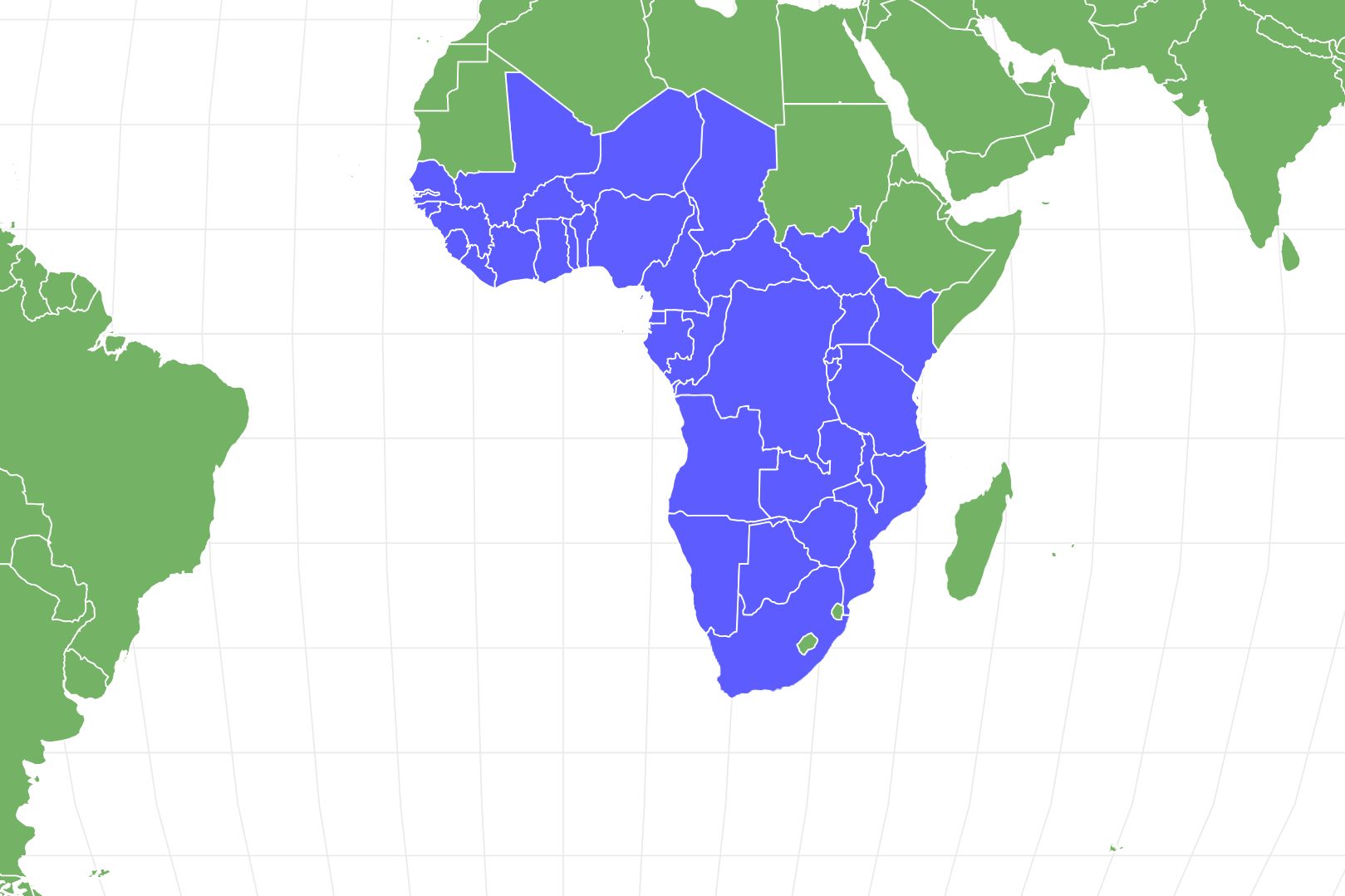
- Sub-saharan Africa
- Group
- herd
- Migratory
- 1
African Elephant Physical Characteristics
- Color
- Brown
- Grey
- Skin Type
- Bristled hairs
- Top Speed
- 25 mph
- Lifespan
- 60-70 years
- Weight
- 6,600-13,000 pounds
- Height
- 71-164 inches
- Length
- 120-288 inches
- Age of Sexual Maturity
- 120-204 months
- Age of Weaning
- 6-18 months
- Venomous
- No
- Aggression
- Low

 © Johann Mader/Shutterstock.com
View all of the African Elephant images!



How to Add Us to Google News


“The largest land animal on earth is the African elephant.”
African Elephant Summary
Many people consider the African elephant their favorite animal. After all, it’s the largest land animal in the world, so its size alone is awe-inspiring. Elephants use their trunks as an expressive and useful multipurpose tool. They are highly intelligent and emotionally expressive creatures. Based on genetic analysis, African elephants were reclassified in the year 2000 as two separate species: the African bush elephant (or savanna elephant) and the African forest elephant. This article compares and contrasts these species.
African Elephant Facts
- About 415,000 African elephants remain in the wild.
- There are two species of African elephant: the African bush elephant (or savanna elephant) and the African forest elephant.
- Forest elephants are smaller and have straighter tusks, which makes them more valuable and threatened in the illegal ivory trade.
- African elephants live in herds headed by females. Bull elephants live alone except during mating season.
- Elephants use their trunks to breathe, lift water and food to their mouths, move objects, and communicate. They can pick up a single grain of rice, or something as heavy as a horse.
- Elephant calves sometimes nurse from their mothers for up to 10 years.
- They are highly intelligent and emotional. They can solve complex problems, recognize themselves in a mirror, distinguish the threat levels of different tribes of people, and mourn their dead for years.
- The greatest threats to African elephants are poaching and habitat loss.
African Elephant Scientific Name
The scientific name of the African elephant is Loxodonta Africana. The genus name comes from the Greek loxo or “oblique-sided” and donta (tooth). (You’ll recognize the second Greek word from terms like “orthodontist.”) Therefore, this animal’s scientific name means “African oblique-toothed elephant.” There are two species in this genus with different genetics, physical characteristics, and habitat: L. africana (the African bush elephant or savannah elephant) and L. cyclotis (the African forest elephant). Moreover, based on fossil evidence, paleontologists have proposed another five species that are now extinct.
African Elephant Appearance
Common Characteristics of African Bush and Forest Elephants
Both species of African elephants have greyish-brown skin that is up to 1.2 inches thick and covered with sparse, bristly hair. The characteristic elephant features are columnar legs, a massive body, a thin tail with a brush at the end, massive sail-like ears, tusks, and a long prehensile trunk. Here are more details on its most unique features:
- Ears: Elephants flap their ears to radiate heat from the blood vessels on the inner side and to create air currents to fan their sides.
- Tusks: Elephant tusks are a type of overgrown tooth that can reach 5-8 feet long. Males and females use them to dig for roots, strip bark from trees, and fight rivals and predators.
- Trunks: An elephant’s most amazing and useful feature is its trunk. The trunk is a greatly extended nose and upper lip. The trunk has an extraordinary amount of nerves and muscles, making it highly sensitive, strong, and maneuverable. With its trunk, an elephant can pick up something as small as a grain of rice, or as heavy as a grizzly bear. Furthermore, it uses its trunk like a snorkel to breathe when it submerges itself in water or to slurp up water to drink or to spray itself. The trunk also manipulates air flow to let the animal trumpet, snarl, snort, roar, and even “purr.”
Differences Between African Bush and Forest Elephants
The genetic difference between African bush elephants and African forest elephants is about 50% as much as the difference between African and Asian elephants. Researchers say the genetic variation between the two African elephant species is comparable to the difference between lions and tigers.
Physically, African forest elephants are overall smaller and have smaller and rounder ears than African bush elephants. Forest elephants have a different skull shape and narrower and straighter tusks. Unfortunately, this characteristic makes them more desirable in the black market for ivory and more vulnerable to poachers.
African Elephant Evolution and History
Biologists believe that elephants split from primates in the evolutionary tree about 80 million years ago. The closest common ancestor between humans and elephants is the tree shrew. One of the primordial ancestors of elephants was the moeritherium, a hippo-like mammal the size of a large pig. Fossil evidence suggests elephants originated in Africa but the ancestors of both woolly mammoths and Asian elephants migrated out of Africa millions of years ago. African Bush Elephants and African Forest Elephants diverged into different species 2.6 million years ago. They can interbreed but rarely do so. In 1958, researchers discovered hybrids of the two in northeastern Belgian Congo (today, The Democratic Republic of the Congo).
African Elephant Behavior
Herd Behavior
African elephants live in herds headed by older females (cows). Family units can include approximately 10 elephants, but sometimes they join together in clans of 70 or so. Male elephants (bulls) live alone. Herds migrate with the changing seasons in search of food and water. They remember the location of water supplies from year to year. They typically walk but can run up to 25 miles per hour when necessary. African elephants enjoy submerging in watering holes both to cool off and to relieve the pressure of their immense weight on their joints.
Intelligence
Not only are African elephants the largest land animals, but they also have the largest brains of any terrestrial species. As a result, their brains weigh 11 pounds (comparable to the weight of a bucket of paint), whereas a human brain only weighs 3 pounds (as heavy as a laptop computer). It’s not surprising, then, that elephants of all species are extremely intelligent and express complex emotions. Here are some examples:
- The herd celebrates the birth of a calf by trumpeting and caressing the newborn with their trunks.
- They have self-awareness. They are one of the few animals that can recognize themselves in a mirror.
- They mourn the death of loved ones. In fact, years later, they will return to the remains, pause in silence, and caress the skull with their trunks.
- Elephants can recognize members of their herd or humans they have bonded with, after decades-long separations.
- They can manipulate tools in their environment and conceive of plans to achieve goals. For example, they will move objects to use as step-stools to reach food high in trees, work together to rescue a calf that has fallen into a hole, use logs to neutralize electric fences, and use branches or sticks to shoo insects away from themselves or remove ticks.
- Using their sense of smell, they can identify different tribal groups of humans and avoid those who are greater threats.
Interaction with People
People have never actually domesticated elephants but have tamed individuals. This means that as gentle as they may be when raised with humans, they still retain wild instincts just as a tiger or any other wild species held in captivity. Nevertheless, with positive training methods, they can become very affectionate to the humans who care for them. African elephants are wilder and more difficult to train than Asian elephants. Trainers choose females because they find males more stubborn and aggressive.
In ancient times, cultures such as Carthage and the kingdoms of India used elephants as war machines to barrel like tanks through enemy armies. Elephants were never predictable enough for this purpose, though, because when spooked they could run in any direction: often in the direction they came from, trampling friendly troops behind them. Their large dietary requirements and susceptibility to cold weather conditions also limited their range and usefulness. Up to the present day, people in the Indian subcontinent and southeast Asia still use elephants for cultural and ceremonial displays and for heavy lifting and dragging loads in the timber industry.
In the Western world, elephants were formerly star attractions in traveling circuses, but these have fallen out of favor in recent years over concerns for animal wellbeing. Elephants are still immensely popular in zoos, many of which work hard to display them in spacious habitats that are not as distressing for the animals or the guests who visit them.
African Elephant Habitat
All wild African elephants live in sub-Saharan Africa. They are able to live in a wide range of habitats because their large size enables them to store food and water. They serve a useful role in the environment by disbursing seeds and fertilizing land through their feces, excavating water holes, clearing paths, and establishing trails used by many other species. By knocking down trees before they can proliferate into forests, they help preserve savanna and grassland habitats and the many species that require those environments.
African Bush Elephant Habitat
African bush elephants live in eastern and southern Africa. Their range includes open savannas, which are grasslands with scattered trees and dry and rainy seasons. They also live in some forested areas and even deserts in some parts of the continent. Bush elephants live in the following countries: Angola, Botswana, Burundi, Chad, Eritrea, Ethiopia, Kenya, Malawi, Mozambique, Namibia, Rwanda, Somalia, South Africa, Sudan, Swaziland, Tanzania, Zambia, and Zimbabwe.
African Forest Elephant Habitat
African forest elephants live in central and western Africa. They are a more elusive species and not as well-known as their bush elephant cousins. They frequent dense tropical woodlands and forests with high rainfall. Forest elephants live in Benin, Burkina Faso, Cameroon, Central African Republic, Congo, Democratic Republic of Congo, C όte d’Ivoire, Equatorial Guinea, Gabon, Gambia, Ghana, Guinea, Guinea-Bissau, Liberia, Mali, Mauritania, Nigeria, Niger, Senegal, Sierra Leone, Togo, and Uganda.
African Elephant Diet
African elephants are herbivores that eat grass, leaves, bark, fruit, roots, and other foliage. With molars the size of bricks, elephants can even crush and eat the solid wood of a tree trunk. They need to eat about 350 pounds of food a day to maintain their massive weight. They will sometimes consume soil to supplement their diets with salt and other missing minerals. The diet of bush elephants is heavier in grass whereas the diet of forest elephants includes a higher percentage of fruit and tree foliage.
African Elephant Predators and Threats
Threats to Bush Elephants
Healthy adult elephants have no natural predators, but young, sick, or injured elephants may be prey for lions, hyenas, or crocodiles. Human beings are the greatest threat to elephants. People kill elephants for food (bushmeat), or to prevent them from trampling down fences and crops. The biggest poaching threat, though comes from the ivory trade. Elephant tusks are an ingredient of traditional medicine, a traditional material for piano keys, or for valuable sculptures, decorative items, or jewelry. A worldwide ban on the ivory trade took effect in 1989, but the demand in Asia in particular is still strong. Poachers kill an estimated 25,000-70,000 African elephants for their tusks every year. When poached tusks are confiscated by wildlife officials, they are burned to keep the ivory out of circulation. African bush elephants have an “endangered” classification.
Threats to Forest Elephants
African forest elephants are even worse off, with a “critically endangered” status. They are vulnerable not only to ivory poachers, but to human encroachment on their forest habitat for timber, firewood, and clearcutting land for farming. In the past 40 years, African elephants have lost about 50% of their habitat. Another threatening factor for African forest elephants is that they only reach sexual maturity at 14-17 years old, and in practice only successfully reproduce at 23 or so. As a result of all these factors, the population of forest elephants has declined 60% in the course of a single decade. Experts say if all poaching stopped today, it would take 81 years for the forest elephant population to recover from the loss of the past 10 years.
Conservation Efforts
Organizations seeking to protect African elephants from extinction use a variety of strategies. For instance, they monitor elephant numbers, the status of their habitats, and poaching numbers. They work with local communities to minimize negative human-elephant interactions. An example of this is to help local farmers establish bee colonies, which elephants are afraid of and will avoid. They work with authorities to protect elephant habitats. And they work energetically to curtail the ivory trade on both the supply and demand sides.
African Elephant Reproduction and Life Cycle
Mating
African elephant bulls roam the landscape living solitary lives, while cows and calves stay together in herds or clans of 10-70 individuals. African bush elephants reach sexual maturity at 10-12 years old, but forest elephants do so only at 14-17. During mating season, bulls fight with one another over desirable females clashing with their tusks and sometimes causing serious injury to one another. The gestation period is 22 months, the longest pregnancy of any mammal. Twins are born only 1% of the time and usually are too small and weak to survive.
Calves
A healthy newborn African elephant calf can weigh up to 364 pounds. They can stand up right after they are born, but are nearly blind and rely on their mother’s trunk to guide them. A baby elephant will soothe itself by sucking on its trunk like a pacifier. The weaning age for elephants is 6-18 months, but sometimes they continue nursing up to 10 years. Cows give birth every four to five years and will push off their older offspring to allow the younger one to nurse. Furthermore, they may push away an older child when its tusks grow too long or the frequent nursing causes abrasions. Calves that get separated from their herds are in danger from crocodiles, lions, hyenas, and other predators. The herd works together to fight off these kinds of threats.
Life Stages
African elephants go through different stages in their long lives:
- Calf – From birth to age 5-6, elephants depend on their mothers and other herd members for food, socialization, and protection.
- Juvenile – Up to their early teens, juvenile elephants learn skills from the rest of their family and spend a great deal of time building their strength and social skills by playing with each other.
- Sub-adults – From their early teens to their 20s, elephants are still growing but are becoming more independent. They start to explore and interact with wider social groups.
- Adult – Elephants reach adulthood sometime in their late teens to early 20s. At that time, they are full-grown and participate fully in the activities of their herd.
- Elderly – Elephants are elderly once they reach their 50s or so. They are less physically active and depend on the herd more. Moreover, they may start to have problems eating because of worn teeth.
Lifespan
When they are able to live out a full lifespan, African elephants can live up to 70 years old. The record oldest African elephant lived into its 80s. Researchers think the advanced emotions elephants express may be a result of their long lifespan, high intelligence, and the extended time they spend with their family groups.
African Elephant Population
Elephants in the Wild
The overall African elephant population today is about 415,000 individuals. Knowing the exact number is difficult because they have a fragmented habitat and range widely. In some areas, they are in decline, and in other areas, they have a stable population. Mauritania, for example, had an elephant population until they went extinct there around 1989. Southern and eastern Africa have the largest African elephant populations. Loss of habitat and poaching are the two greatest threats to elephants in the wild. Climate change is another factor, as elephants may not be able to adapt or migrate fast enough to new ranges as the climate in their old habitat becomes unsustainable.
Elephants in Captivity
An estimated 15,000-20,000 elephants of all species live in captivity. In the United States, about 393 elephants live in zoos, circuses, and private collections. Approximately 160 of these are African elephants. Elephants are social creatures that require a large amount of space for exercise and mental stimulation. Hence, keeping them singly or in enclosures that are not large enough is cruel to the animal.
Ways You Can Help Elephants
No matter where they live, elephant enthusiasts can help preserve the species.
- Learn about the species and their conservation status and share with others.
- Financially support an organization that helps elephants like the International Elephant Foundation.
- Refuse to visit circuses or zoos that do not properly source and care for their elephants.
- Never buy or sell ivory products. Destroy any that you own or donate valuable vintage pieces to a museum.
- Become an eco-tourist. Visit sanctuaries in Africa where you can see elephants in their habitat and provide tourist dollars that incentivize preserving elephant herds.
Related Animals
View all 194 animals that start with A How to Add Us to Google News


African Elephant FAQs (Frequently Asked Questions)
How long do African elephant calves drink milk?
African elephant calves can wean themselves from their mother’s milk at 6-18 months, but they may continue to nurse up to 10 years. Mothers will reject them from nursing when another calf is born or when she is getting annoyed by the baby’s tusks or abrasion from frequent nursing.
How many species of African elephants are there?
There are two species of African elephants: the smaller African forest elephant, and the larger African bush elephant (or savanna elephant).
Are African elephants endangered?
Of the two species of African elephants, African bush elephants are endangered and African forest elephants are critically endangered.
Thank you for reading! Have some feedback for us? Contact the AZ Animals editorial team.
Sources
- World Wildlife Fund, Available here: https://www.worldwildlife.org/species/african-elephant
- Encyclopedia Britannica, Available here: https://www.britannica.com/animal/elephant-mammal
- Wikipedia, Available here: https://en.wikipedia.org/wiki/African_elephant
- Illinois Public Media , Available here: https://will.illinois.edu/longerlisten/story/the-african-elephant-is-actually-two-separate-species-and-in-danger
- African Wildlife Foundation, Available here: https://www.awf.org/news/africas-forest-elephants-called-separate-species?gad=1&gclid=CjwKCAjwpJWoBhA8EiwAHZFzfoQXl8_lFpoj8K1A943w4AP14R6wWRvveNys67RvFzR3lj0OoHTLUBoCIhQQAvD_BwE
- Elephant Voices, Available here: https://www.elephantvoices.org/elephant-sense-a-sociality-4/elephants-are-intelligent.html