A
Species Profile

African Penguin

Spheniscus demersus

The braying penguin of the Cape
Mike Korostelev/Shutterstock.com

African Penguin Distribution

Click a location to explore more animals from that region

Endemic Species

This map shows coastal regions where African Penguin are found.

Loading map...

At a Glance

Wild Species
Also Known As Jackass penguin, Black-footed penguin, Cape penguin
Diet Piscivore
Activity Diurnal
Lifespan 11 years
Weight 3.5 lbs
Status Endangered
Did You Know?

Size: 60-70 cm long; adults typically 2.2-3.5 kg (varies seasonally, heavier pre-molt).

Scientific Classification

The African penguin is a medium-sized, black-and-white banded penguin endemic to southern Africa, breeding in colonies on islands and some mainland sites along the coasts of South Africa and Namibia.

Kingdom
Animalia
Phylum
Chordata
Class
Aves
Order
Sphenisciformes
Family
Spheniscidae
Genus
Spheniscus
Species
Spheniscus demersus

Distinguishing Features

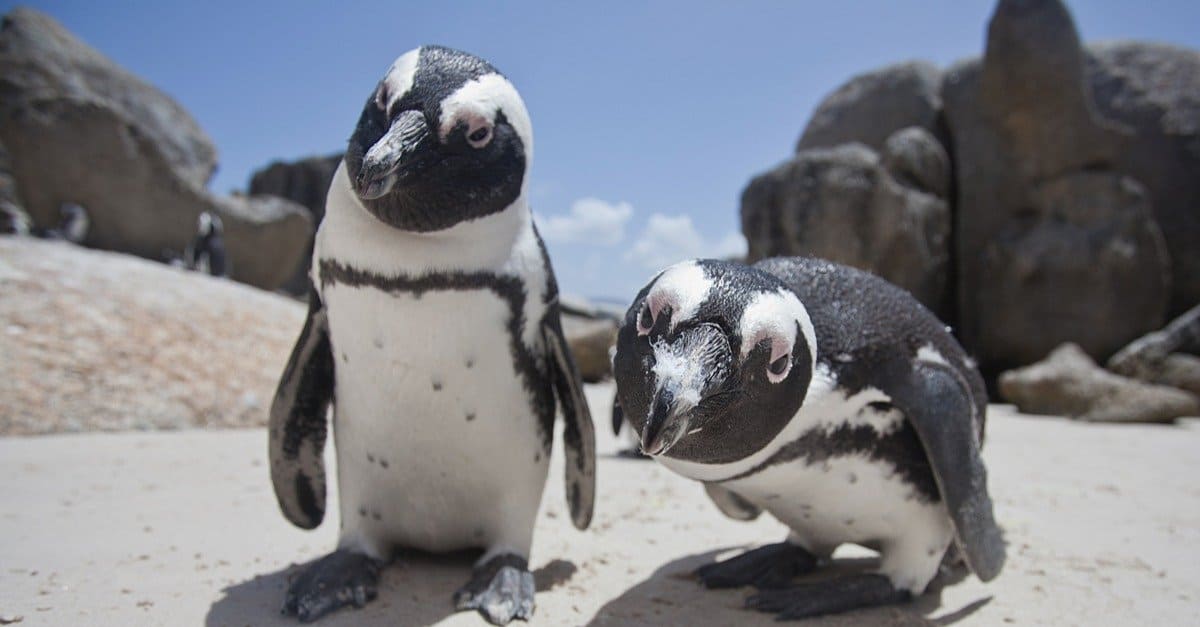
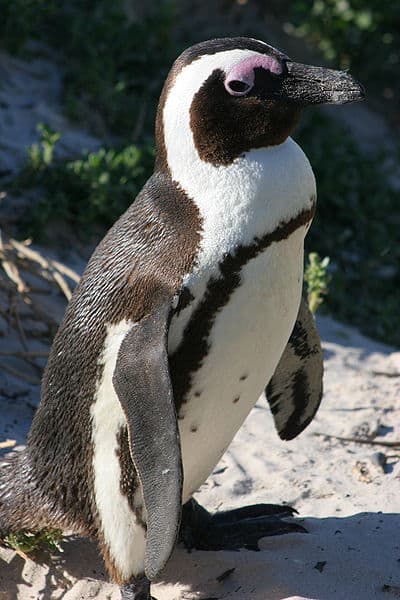
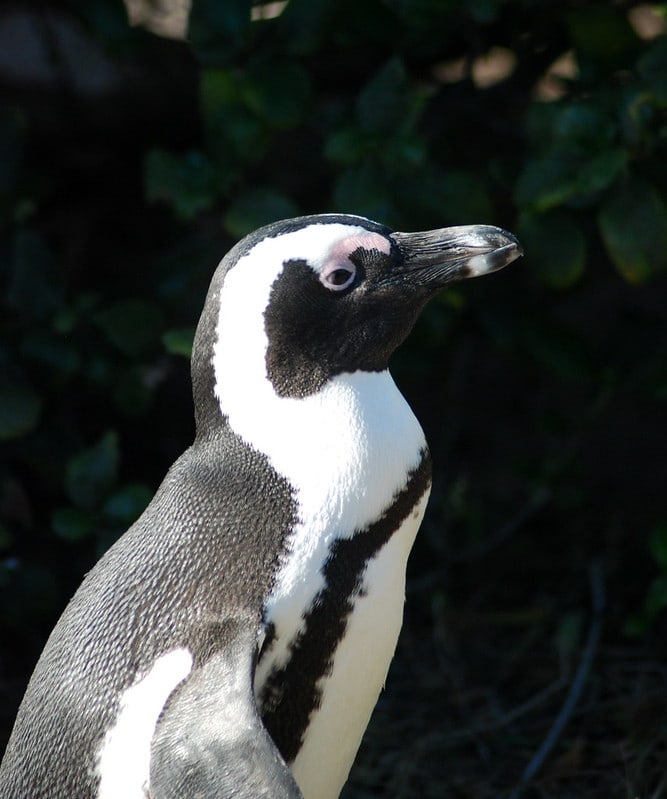
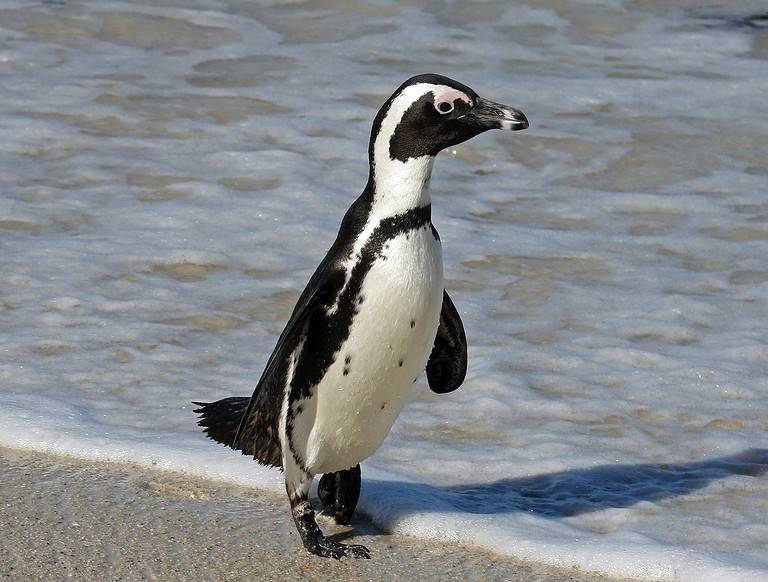
  • Black facial mask with a pale/pink bare-skin patch above the eye (thermoregulation)
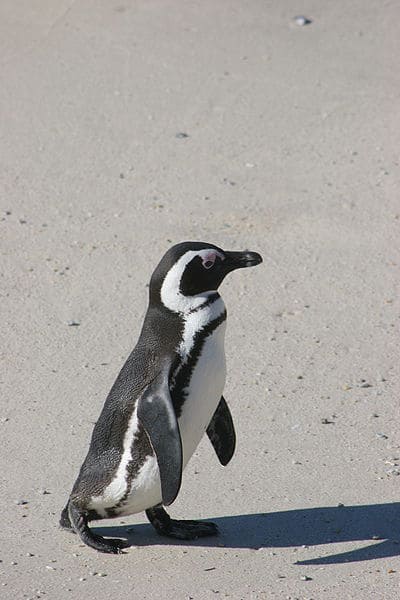
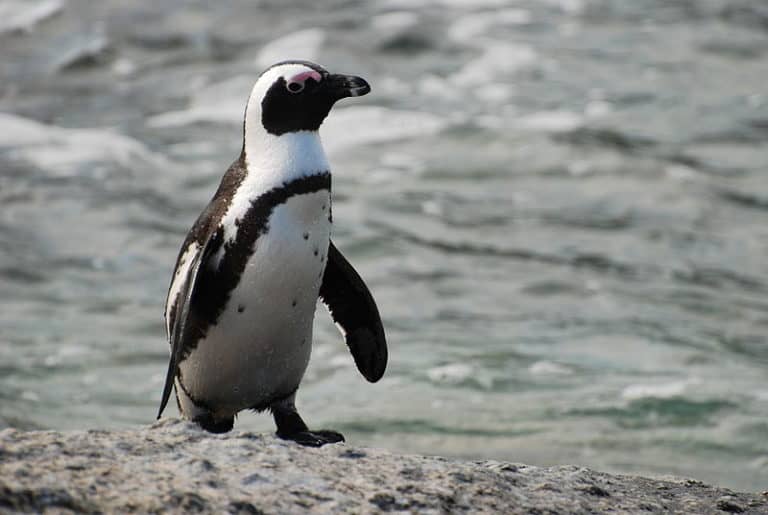
  • Bold black band(s) across the chest and spotting on the belly (pattern varies by individual)
  • Braying, donkey-like call typical of banded penguins (genus Spheniscus)
  • Stiff, flipper-like wings and upright stance; adapted for pursuit diving in coastal waters

Physical Measurements

Height
2 ft 2 in (1 ft 12 in – 2 ft 4 in)
Length
2 ft 2 in (1 ft 12 in – 2 ft 4 in)
Weight
7 lbs (6 lbs – 9 lbs)
Tail Length
4 in (3 in – 4 in)
Top Speed
12 mph
Burst swim speed ~20 km/h

Appearance

Primary Colors
Secondary Colors
Skin Type Dense, waterproof contour feathers over most of body; reduced feathering on parts of the face with exposed pink skin around the eyes (heat-exchange area).
Distinctive Features
  • Adult size: body length typically ~60-70 cm; adult mass commonly ~2.2-3.5 kg (values widely reported for Spheniscus demersus in major references such as IUCN/BirdLife species accounts and standard penguin monographs).
  • Banded penguin hallmark: a single black horseshoe-shaped band across the upper chest plus scattered black spots on the white belly; spot-and-band pattern is useful for individual recognition within colonies.
  • Braying vocalization: loud, donkey-like call (a key behavioral trait of Spheniscus penguins, especially evident at breeding colonies in South Africa and Namibia).
  • Distinct facial pattern: dark facial mask with a pale/white facial area and a black line across the cheek region; bare pink skin above the eyes often becomes more vivid in warm conditions.
  • Flipper shape: stiff, narrow, black-and-white flippers adapted for pursuit-diving; streamlined body suited to coastal foraging on schooling fish.
  • Typical prey association (behavioral ecology): coastal forager strongly associated with small pelagic schooling fish-especially sardine (Sardinops sagax) and anchovy (Engraulis encrasicolus)-with additional small fish/squid varying by locality and year (southern Africa: South Africa/Namibia).
  • Conservation context visible in the field: many colonies show signs of chronic stressors linked to Endangered status-prey limitation/distribution shifts, fisheries competition, oil pollution, disease/parasites, predation pressure, and human disturbance-rather than a single-cause decline.

Sexual Dimorphism

Sexual dimorphism is subtle: sexes are similarly patterned, but males average slightly larger with more robust heads/bills; field sexing by appearance alone is unreliable without measurements or behavior (e.g., vocal/territorial displays).

  • On average heavier/larger-bodied and with a longer, deeper bill (typical of African penguins; overlap with females is substantial).
  • Often gives more frequent/louder territorial braying and display behaviors at nest sites during breeding (behavioral cue rather than a plumage difference).
  • On average slightly smaller with a slimmer bill/head profile; plumage pattern otherwise matches males closely.
  • Often identifiable during breeding by pairing/nesting roles in combination with measurements or banding records, not by distinct coloration.

Did You Know?

Size: 60-70 cm long; adults typically 2.2-3.5 kg (varies seasonally, heavier pre-molt).

They're the only penguin endemic to southern Africa (breeding naturally in South Africa and Namibia).

Their loud, donkey-like contact call is why they're nicknamed the "jackass penguin" (banded penguins are known for braying).

Classic clutch is 2 eggs; incubation is ~38-42 days; chicks fledge in ~60-130 days (timing varies with food and conditions).

They can dive to about 60 m, with many foraging dives shallower; dives can last up to ~2.5 minutes.

Adults undergo a catastrophic molt once per year, becoming temporarily land-bound for ~2-3 weeks while replacing all feathers.

Main prey is small schooling fish-especially sardines and anchovies-plus other small fish and squid when available.

Unique Adaptations

  • Banded penguin patterning: a black chest band and unique spot patterns act like a visual ID-spot patterns are individually distinctive.
  • Pink bare skin above the eyes helps dump excess heat: increased blood flow makes the patch pinker in hot conditions, aiding thermoregulation in a warm coastal climate.
  • Streamlined body and stiff, flattened flippers generate efficient underwater propulsion for chasing schooling fish.
  • Dense, overlapping waterproof feathers plus a thick fat layer provide insulation in cold Benguela Current waters; preen oil maintains feather water-repellency.
  • Salt-excreting gland (supraorbital gland) lets them drink seawater; excess salt drains through the nasal passages.
  • Spiny, backward-facing mouth papillae help grip slippery fish underwater.

Interesting Behaviors

  • Colony breeding on islands and some mainland sites: nests are built in burrows, under bushes, or in scrapes; historically many burrowed into deep guano deposits.
  • Biparental care: both parents take turns incubating and feeding chicks; partners often coordinate shift changes with vocalizations and displays.
  • Strong site fidelity: many adults return to the same colony and often the same nesting area each year, which makes colony protection crucial.
  • Vocal repertoire typical of banded penguins: braying ("ecstatic") calls for mate/territory, plus contact calls between partners and parent-chick recognition calls.
  • Inshore, near-colony foraging: many trips target dense shoals of pelagic fish; birds may adjust routes and dive behavior rapidly when prey shifts location.
  • Thermoregulatory behavior on hot days: panting and extending flippers; they also orient bodies and seek shade to reduce heat load on land.
  • Annual catastrophic molt: adults fast and remain ashore while new waterproof plumage grows in; after molting they return to sea to rebuild body condition.

Cultural Significance

African penguin (Spheniscus demersus) is a coastal symbol in South Africa and Namibia that helps ecotourism, for example at Boulders Beach. Past guano scraping and egg taking hurt populations. Now used to teach about the Benguela ecosystem, overfishing, oil spills. Endangered (IUCN, BirdLife).

Myths & Legends

Naming lore among coastal communities and visitors: the "jackass penguin" nickname comes from its braying call, long compared to a donkey in local storytelling and travel accounts from the Cape coast.

Seafarers and early colonists at the Cape told of "penguin islands" so full of African penguins and eggs that people could collect them easily, and those tales became sea folklore about abundance.

During the guano era on South Africa's west coast, men lived for weeks on guano islands, gathering fertilizer and meeting large, noisy African penguin (Spheniscus demersus) colonies—a lasting local memory.

On the Cape Peninsula, tales say African Penguins (Spheniscus demersus) move onto the mainland and walk streets. Sparked by real wanderings, these stories show nature taking back space near the sea.

Conservation Status

EN Endangered

Facing a very high risk of extinction in the wild.

Population Decreasing

Protected Under

  • CITES Appendix II (international trade regulation for the African penguin).
  • South Africa: Protected under the National Environmental Management: Biodiversity Act (NEMBA) and associated Threatened or Protected Species (TOPS) Regulations (national legal protection; permitting controls).
  • Range-site protection through national/provincial protected areas and island nature reserves in South Africa and Namibia (key breeding colonies occur within formally protected or managed conservation areas; management commonly includes predator control, visitor regulation at mainland sites, and spill-response preparedness).
  • South Africa: National Environmental Management: Biodiversity Act, 2004 (Act No. 10 of 2004) - listed as Endangered under the Threatened or Protected Species (TOPS) Regulations.
  • Convention on International Trade in Endangered Species of Wild Fauna and Flora (CITES) Appendix II

Life Cycle

Birth 2 chicks
Lifespan 11 years

Lifespan

In the Wild
10–27 years
In Captivity
20–30 years

Reproduction

Mating System Monogamy
Social Structure Socially Monogamous
Breeding Pattern Long Term
Fertilization Internal Fertilization
Birth Type Internal_fertilization

Behavior & Ecology

Social Colony Group: 2000
Activity Diurnal
Diet Piscivore Small pelagic shoaling fish-especially Cape anchovy (Engraulis capensis) and sardine/pilchard (Sardinops sagax).

Temperament

Highly social and gregarious at colonies and in nearshore rafts; tolerant of close neighbors outside immediate nest territory
Strongly territorial/aggressive at the nest site (bill jabbing, chasing, biting) particularly during courtship, incubation, and early chick rearing
Pair-bond oriented (affiliative behaviors such as mutual preening and coordinated displays)
Foraging behavior flexible/opportunistic, tracking prey patches; can show competitive interactions around dense prey schools

Communication

Loud, donkey-like bray "ecstatic display song") used in mate attraction, territory advertisement, and individual signaling within colonies (classic descriptor in Spheniscus; Jouventin, 1982
Contact calls between mates and between adults and chicks at the nest; chicks produce begging calls that increase with hunger
Alarm/agitation calls given during conflicts and predator disturbance
Visual displays: head swinging, bowing, and flipper/wing postures; synchronous "ecstatic display" movements to advertise territory/pair status Jouventin, 1982
Allopreening (mutual preening) used to reinforce pair bonds and reduce aggression between partners
Agonistic signaling: bill pointing, open-bill threats, charging, and pecking to defend nest space
Chemical/olfactory cues are not primary compared with vocal/visual channels in this species, but individual recognition is strongly supported by vocal signature differences within dense colonies Seddon & van Heezik, 1993

Habitat

Coastal Beach Rocky Shore Kelp Forest Seabed/Benthic Open Ocean
Biomes:
Marine Mediterranean Desert Hot
Terrain:
Coastal Island Rocky Sandy
Elevation: Up to 164 ft 1 in

Ecological Role

Coastal marine mesopredator specialized on small pelagic fish; a sensitive indicator of small-pelagic prey availability and marine ecosystem change in the Benguela/Agulhas systems.

Top-down regulation of small pelagic fish/squid populations in nearshore ecosystems Energy transfer from pelagic fish schools to higher trophic levels (supports predators/scavengers that take penguins/eggs/chicks) Biological nutrient transport: guano inputs move marine-derived nutrients onto islands and coastal breeding sites, enriching local soils and nearshore productivity Sentinel/indicator function for fisheries-ecosystem management (diet and breeding success track anchovy/sardine availability)

Diet Details

Main Prey:
Cape anchovy Southern African pilchard Round herring Cape horse mackerel Small squid

Human Interaction

Domestication Status

Wild

African penguin (Spheniscus demersus) is not domesticated; birds in human care were taken from the wild or bred for zoos and conservation. Endemic to South Africa and Namibia, they breed in colonies. Humans removed guano, took eggs, disturbed colonies, competed with fisheries, and caused oil spills (big rehab efforts like SANCCOB). IUCN: Endangered.

Danger Level

Low
  • Bites and flipper strikes during handling (can break skin; risk increases during breeding/guarding chicks).
  • Zoonotic enteric bacteria exposure from feces (e.g., Salmonella/Campylobacter risk typical of wild birds) if hygiene is poor.
  • Occupational exposure risk in colonies/rehab settings (aerosols/ectoparasites); standard PPE and biosecurity are recommended.

As a Pet

Not Suitable as Pet

Legality: African penguin not legal to keep as a private pet in almost all places. International trade is under CITES Appendix II. National laws (e.g., South Africa) limit keeping to permitted zoos, aquaria, rehab centers, or researchers, not homes.

Care Level: Expert Only

Purchase Cost:
Lifetime Cost: $150,000 - $600,000

Economic Value

Uses:
Ecotourism (wild colony viewing) Captive display (zoos/aquaria) and education Conservation and wildlife rehabilitation sector Research value (marine ecology, fisheries interactions, climate/food-web indicators) Historical extractive use impacts (guano scraping; egg collection-now largely prohibited)
Products:
  • tourism revenue at accessible colonies (guiding, park fees, local hospitality)
  • zoo/aquarium visitation and educational programming
  • research outputs and monitoring data used in fisheries and marine spatial planning
  • jobs and services linked to rescue/rehabilitation after oil spills and strandings

Relationships

Predators 6

Cape fur seal Arctocephalus pusillus
Great white shark
Great white shark Carcharodon carcharias
Broadnose sevengill shark Notorynchus cepedianus
Kelp gull Larus dominicanus
Sacred ibis Threskiornis aethiopicus
Caracal
Caracal Caracal caracal

Ecological Equivalents 5

Animals that fill a similar ecological role in their ecosystem

Cape gannet Morus capensis Coastal, colony-breeding seabird in southern Africa that feeds over the Benguela upwelling, targeting small fish such as sardine (Sardinops sagax) and anchovy (Engraulis encrasicolus). Penguins dive to catch the fish while gannets plunge-dive from the air, but both hunt the same schools.
Cape cormorant Phalacrocorax capensis Pursuit-diving seabirds that commonly feed on anchovy and sardine in Benguela nearshore waters, competing for local prey. Both nest in colonies and have overlapping feeding areas near breeding sites.
Bank cormorant Phalacrocorax neglectus Nearshore benthic/reef-associated pursuit diver endemic to the Benguela region. Shares the same coastline and nesting habitat types (islands and sea-cliffs) and overlaps spatially with African penguins, though it targets more demersal fish while penguins have a more pelagic focus (Benguela seabird ecology literature).
Greater crested tern Thalasseus bergii Coastal colonial seabird that frequently forages on small schooling fish in the same nearshore zones. Although it captures prey at or near the surface, the prey assemblages (juvenile pelagics) can overlap with penguin prey fields around colonies (southern African seabird foraging studies).
Little penguin
Little penguin Eudyptula minor Small inshore pursuit-diving penguin from Australia and New Zealand that eats small fish and squid and is a good comparison for body size, dive behavior, and colony breeding (about 60–70 cm, dives to ~130 m).

African Penguin Classification


The African Penguin is a small to medium-sized Penguin species that is found along the coast of South Africa and on a number of its surrounding islands. The African Penguin is thought to be most closely related to the Humboldt and Magellanic Penguins found in southern South America, and the Galapagos Penguin found in the Pacific Ocean near the Equator. The African Penguin was named for the fact that it is the only species of Penguin that is found breeding on the African Coast, and it is believed to be one of the first Penguin species to be discovered by humans.
Evolution
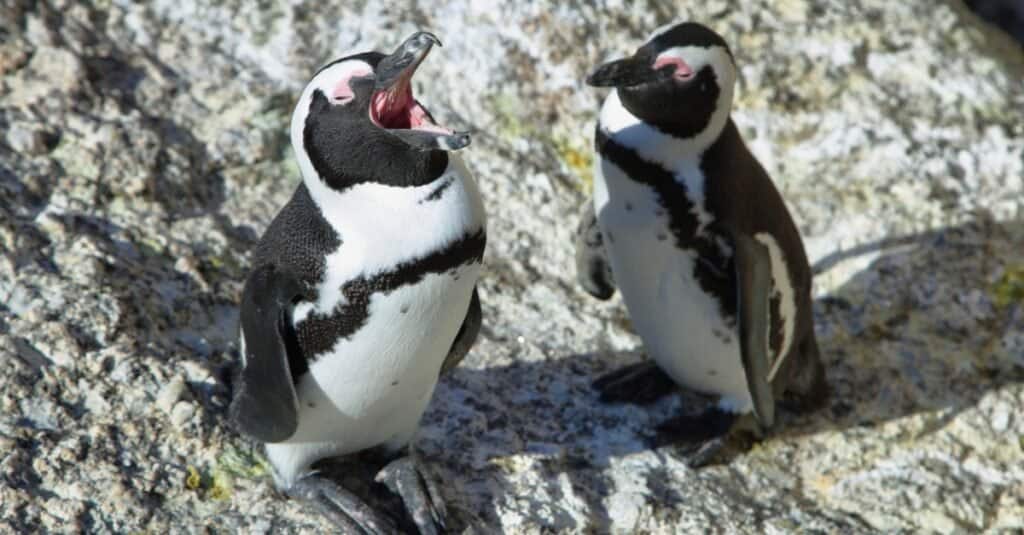
penguins with beaks open

African penguins have only been in Africa for around 300,000 years.

The third time was the charm for the African penguins after repeated attempts to settle the south African coasts. The first group went extinct millions of years ago – then another group made the trip. Those first penguin settlers came to Africa 30 million years after they had first spread to Australia, Antarctica, and South America. The fossil remains of four extinct species other than the black-footed African penguin have been found and dated.

Two of the extinct species, Inguza and Nucleornis, arrived in Africa after the current ocean system was in place – 20 million years ago. The fact that ocean currents didn’t flow toward the continent before being reorganized explains why penguins were late to arrive in Africa and never arrived in Madagascar. The oldest fossils of the black-footed African penguin are around 300,000 years old.

Anatomy and Appearance
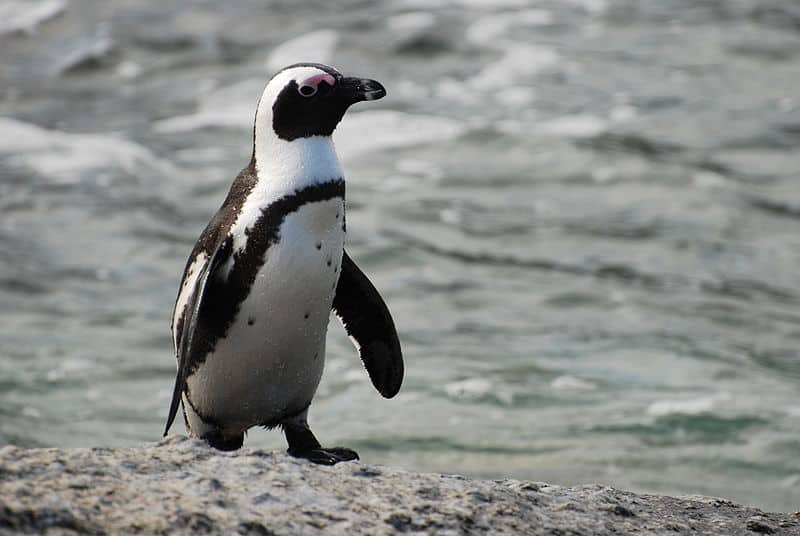
African penguins have pink glands over their eyes to help them to cope with the heat.


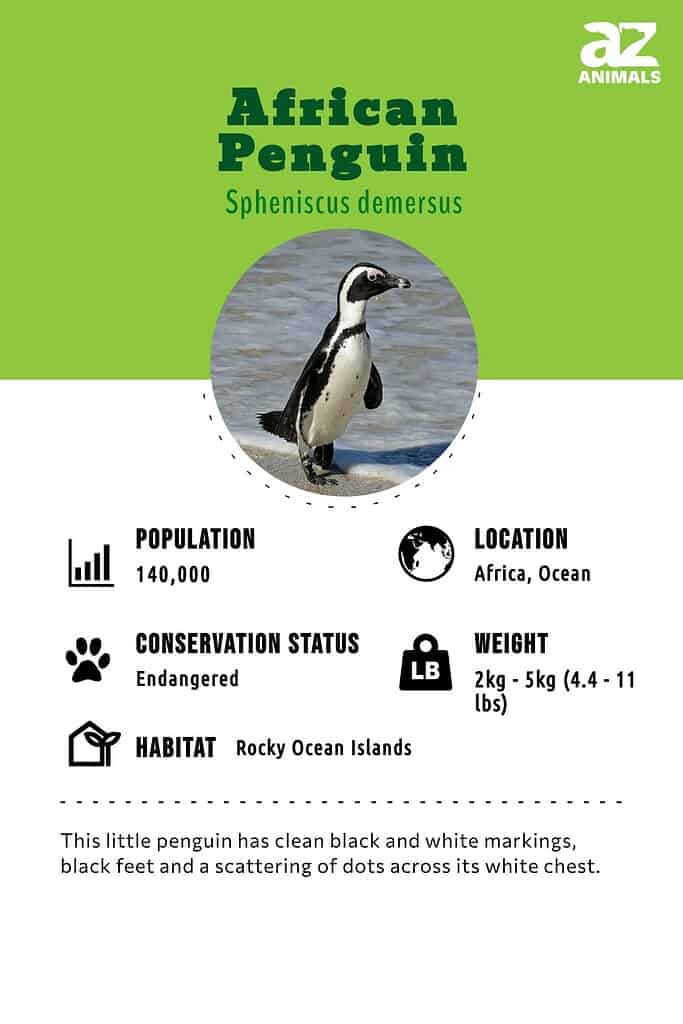
The African Penguin is a fairly distinctive species of a penguin with clean black and white markings and a sharply pointed black beak. The African Penguin also has black feet and a number of dot-like markings flecked across its white chest which are said to be as unique to the individual Penguin as a Human fingerprint is, along with a narrow black band. The male African Penguin is generally slightly larger than their female counterparts but both are fairly similar in appearance. One of the African Penguin’s most distinctive features is that they have pink glands above their eyes which help them to cope with temperate climates. The hotter the African Penguin gets, the more blood is sent to these glands so they may be cooled by the surrounding air, which in turn, makes these glands pinker.

Distribution and Habitat
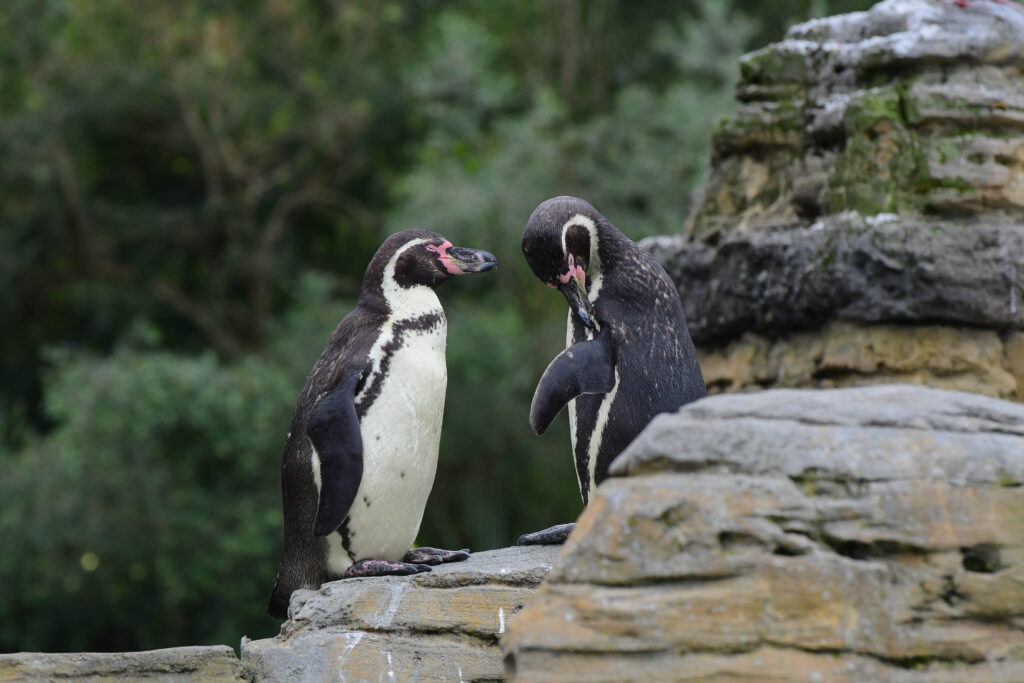
Penguins standing on a mound at the Woodland Park Zoo

African penguins nest on rocky islands off the western coast of South Africa.


The African Penguin is found on the southwestern coast of Africa, living in 27 colonies on 24 islands between Namibia and Algoa Bay, near Port Elizabeth, South Africa, with the largest colony found on Dyer Island, near Kleinbaai. African Penguins are most densely distributed around the cold, nutrient-rich waters of the Benguela Current where there is a plentiful supply of food. Although they spend much of their time at sea, African Penguins gather in nesting sites on rocky islands where they spend their days in sheltered burrows to avoid the hot sun. They are one of the only Penguin species to be found in non-freezing conditions and cope with this by burrowing, emerging at dusk and dawn, and using the pink glands above their eyes to cool the blood down.

Behavior and Lifestyle
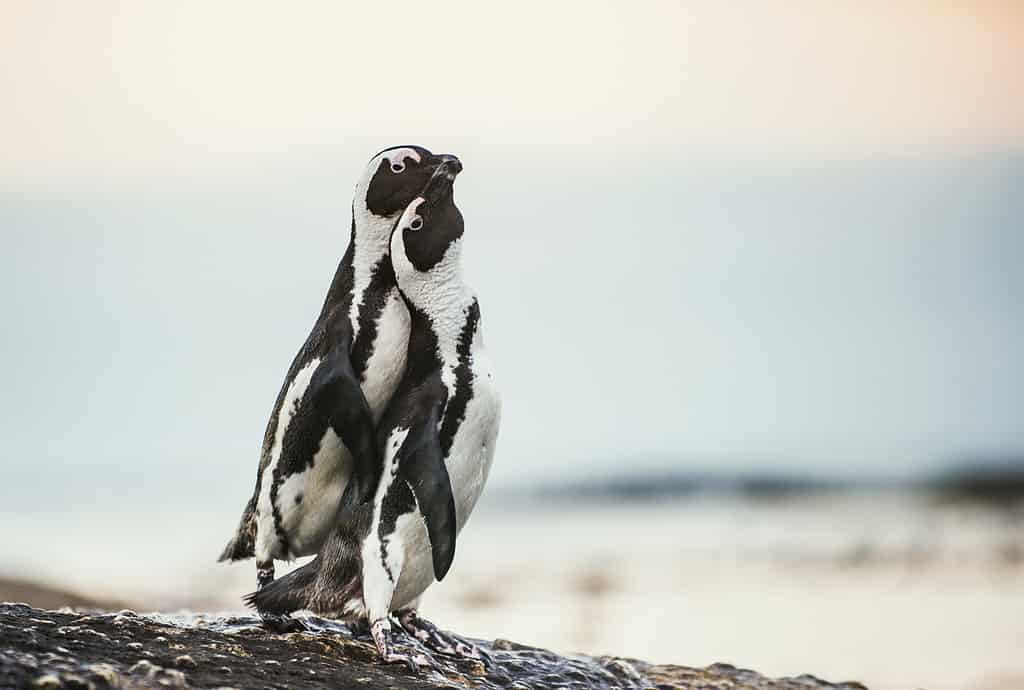
African penguins during mating season

African penguins mate for life and raise their chicks together.


Like many other Penguin species, African Penguins are incredibly sociable birds, with adults forming pair bonds that last for life (as long as 10 years). African Penguins can often be seen grooming one another, which is not only practical for cleaning purposes, but also for removing parasites and even just rearranging feathers, constantly strengthening the social bond between the pair. Their courtship displays are often very noisy as the male and female Penguin calls to each other using a series of donkey-like sounds. African Penguins are also known to submit to a spot of bathing only a few meters from the shore, which they are thought to do quite regularly to both clean and cool themselves down in the heat.

Reproduction and Life Cycles
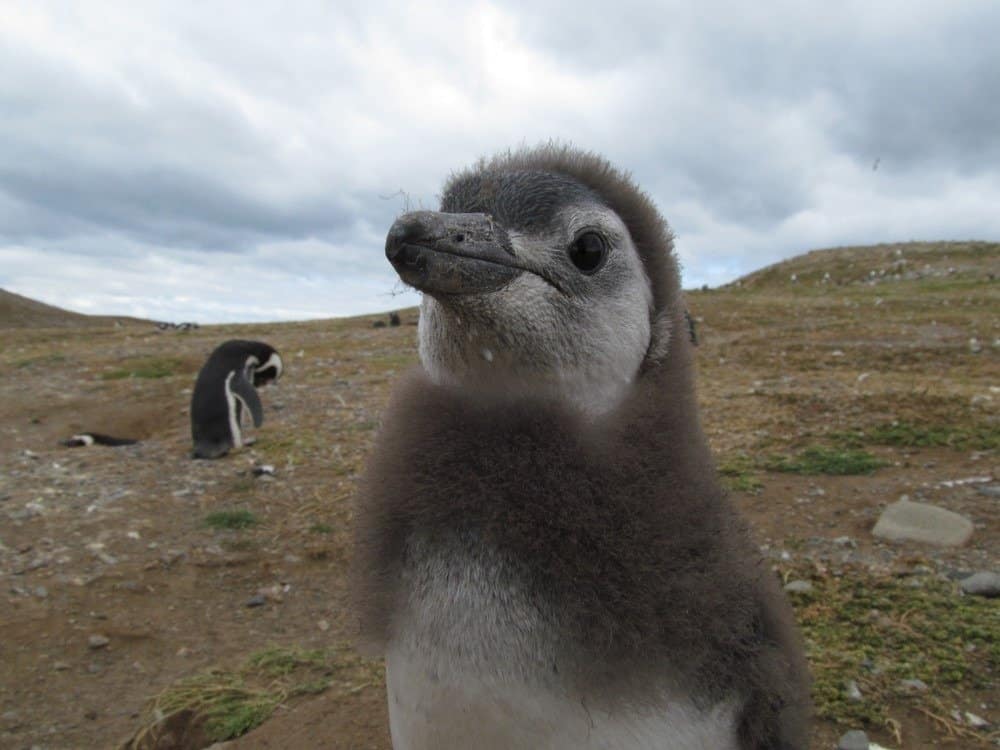
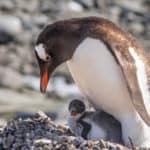
Magellanic Penguin chick

Penguin chicks are reared by both parents.


African Penguins begin to breed at the average age of four when a male and female will pair up and tend to breed together for the rest of their lives. The female African Penguin either digs herself a burrow or finds a dip beneath a rock or bush, in which she lays two eggs. The eggs are incubated by both parents for up to 40 days when only one of the eggs will usually hatch. The African Penguin chicks are fed and kept warm by their parents constantly until they are a month old when they begin to be left on their own, forming crèches with other chicks for protection from predators. They tend to remain with their parents until they are between 3 and 5 months old when they will leave the colony (this is dependent on the supply and quality of food in the area). The chicks return to the colony after a couple of years to molt into their adult plumage. African Penguins generally live for between 10 and 15 years.

Diet and Prey
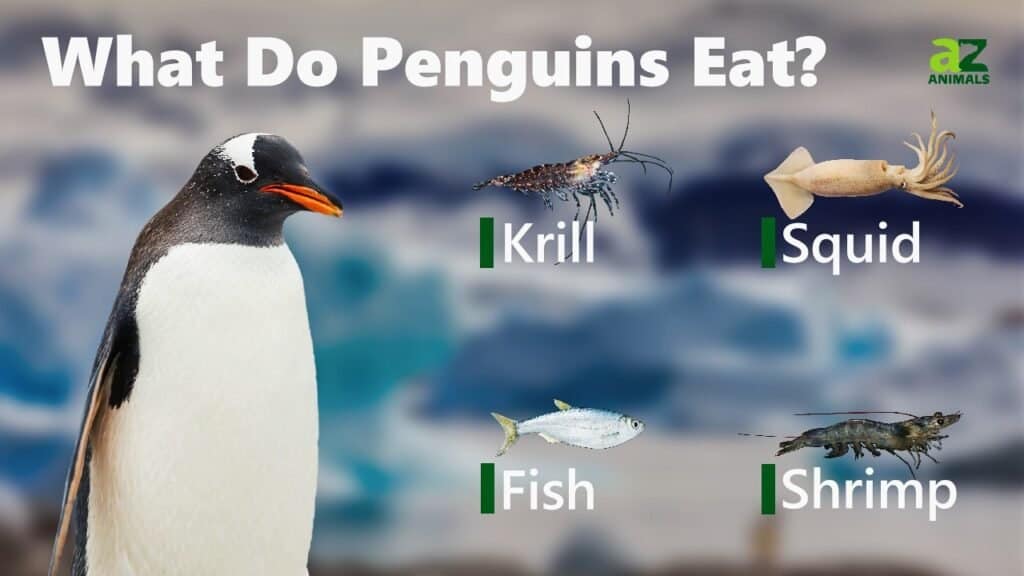
What Do Penguins Eat
Penguins primarily eat fish, with other seafood like crustaceans and krill added to the mix.


The African Penguin is a carnivore with a diet of fish including Anchovies, Sardines, Horse Mackerel, and Round Herrings. Fish make up the bulk of the African Penguin’s diet, along with the occasional Squid or Crustacean when normal food is in short supply. The streamlined body of the African Penguin allows it to move through the water like a rocket, capable of reaching a top speed of around 20 kph when hunting for food. African Penguins catch their prey by diving into the ocean depths for around 2 minutes at a time. Although they normally go to depths of around 30 meters, it is not uncommon for them to be found hunting more than 100 meters beneath the water’s surface.

Predators and Threats
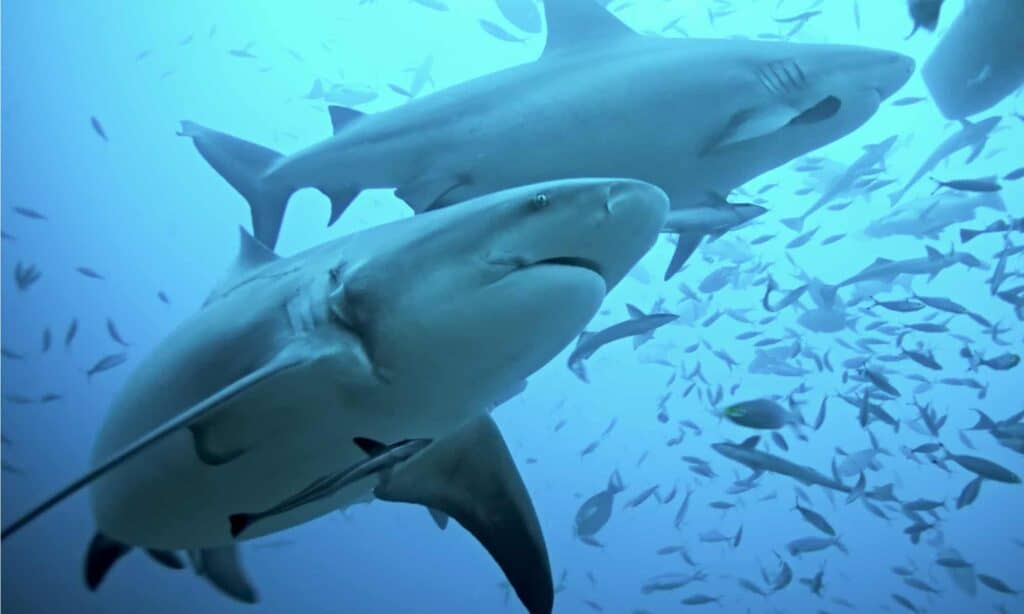
Bull Sharks Underwater

Sharks prey on African penguins.


The African Penguin’s smaller size means that it has many predators both in the water and also on dry land. Their marine predators are primarily Sharks and Cape Fur Seals, but the biggest threat to them on land is not just to the adult Penguins, but more to the vulnerable eggs and chicks. Kelp Gulls and Scared Ibises prey on them from the air and Mongooses, Snakes, and Leopards have been observed hunting them on the ground. The African Penguin has also been severely affected by Human activity in their native regions, with populations thought to have taken a drastic decline, mainly due to the exploitation of their eggs for food when they were first discovered. They are also severely affected by the disruption of their natural habitats.

Interesting Facts and Features
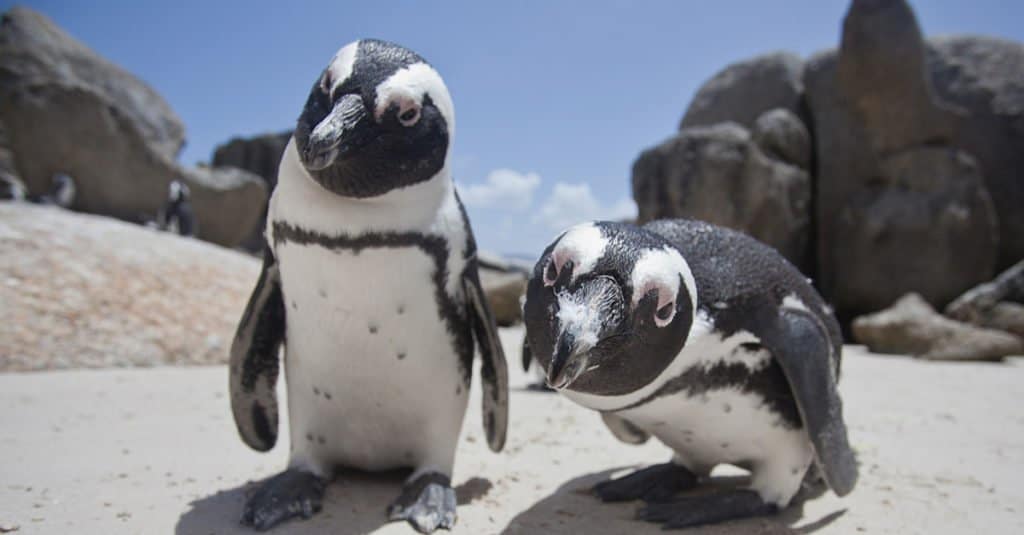
Penguins have more feathers than any other bird, acting as a waterproof layer to keep their skin dry.


Penguins have more feathers than any other bird, which act as a waterproof layer keeping their skin dry. African Penguins molt once a year which they do back in their colonies. The whole process lasts for about 20 days, in which time, the African Penguins cannot swim or eat, and can lose almost half of their body weight. African Penguins are known to spend long periods of time fishing out at sea, and depending on the area, can travel between 30 and 110 km in one trip. However, those African Penguins who have chicks to feed will rarely go that far, catching food closer to the shore, and as quickly as possible.
For more interesting facts, read ”10 Incredible African Penguin Facts.”

Relationship with Humans
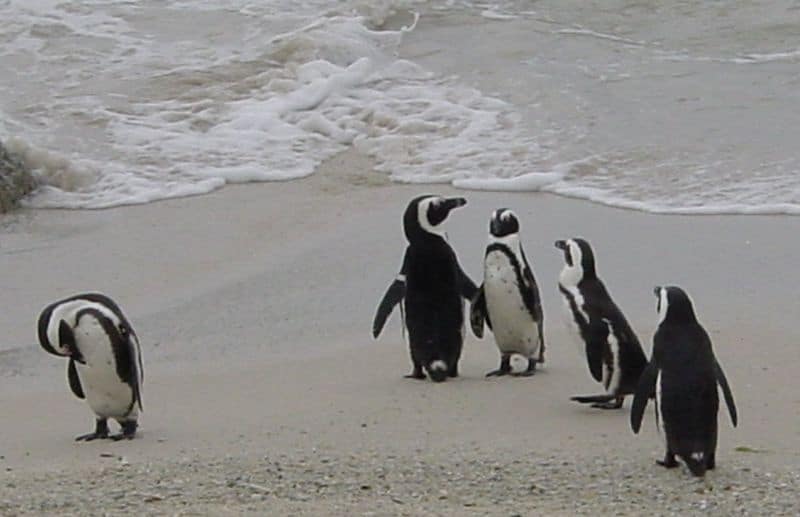
Five African penguins, four of them to the right in the frame and one toward the left.

African penguins were the first penguin species to come in contact with humans.


It is widely believed that African Penguins were one of the first Penguin species to come into contact with humans, due to the fact that they are found on the temperate South African coast rather than in the heart of Antarctica. This however, does not seem to have worked to the bird’s advantage as their eggs were stolen for food (slowing the rate of reproduction), and the guano used in nest building was harvested for fertilizer. Today, other threats face the African Penguin including competition for food from commercial fishing and oil pollution in the water. Only a small handful of nesting sites can be accessed by tourists, but the Penguin’s nervous nature of people means that these areas have to be strictly monitored.

Conservation Status and Life Today


Today, the African Penguin is considered to be a vulnerable animal and has been listed as Endangered by the IUCN. It is thought that today’s African Penguin population of approximately 22,000 breeding pairs, is less than 10% of the population that existed in 1900. By the 1950s, the African Penguin population had halved, and it had then halved again by 1980. There is an approximate 2% decline in the African Penguin population every year, mainly due to the human consumption of their eggs, competition for food, and habitat disruption.

View all 326 animals that start with A
How to say African Penguin in ...
Czech
Tučňák brýlový
Danish
Brillepingvin
German
Brillenpinguin
English
African Penguin
Spanish
Spheniscus demersus
Finnish
Afrikanpingviini
French
Manchot du Cap
Hebrew
פינגווין שחור רגל
Hungarian
Pápaszemes pingvin
Italian
Spheniscus demersus
Japanese
ケープペンギン
Dutch
Afrikaanse pinguïn
English
Kappingvin
Polish
Pingwin przylądkowy
Portuguese
Pinguim-africano
Chinese
黑脚企鹅

Sources

  1. David Burnie, Dorling Kindersley (2011) Animal, The Definitive Visual Guide To The World's Wildlife / Accessed August 3, 2010
  2. Tom Jackson, Lorenz Books (2007) The World Encyclopedia Of Animals / Accessed August 3, 2010
  3. David Burnie, Kingfisher (2011) The Kingfisher Animal Encyclopedia / Accessed August 3, 2010
  4. Richard Mackay, University of California Press (2009) The Atlas Of Endangered Species / Accessed August 3, 2010
  5. David Burnie, Dorling Kindersley (2008) Illustrated Encyclopedia Of Animals / Accessed August 3, 2010
  6. Dorling Kindersley (2006) Dorling Kindersley Encyclopedia Of Animals / Accessed August 3, 2010
  7. Christopher Perrins, Oxford University Press (2009) The Encyclopedia Of Birds / Accessed August 3, 2010
  8. African Penguin Information / Accessed August 3, 2010
  9. African Penguin Breeding / Accessed August 3, 2010
  10. African Penguin Appearance / Accessed August 3, 2010
  11. African Penguin Behaviour / Accessed August 3, 2010
  12. About African Penguins / Accessed August 3, 2010
Lisha Pace

About the Author

Lisha Pace

After a career of working to provide opportunities for local communities to experience and create art, I am enjoying having time to write about two of my favorite things - nature and animals. Half of my life is spent outdoors, usually with my husband and sweet little fourteen year old dog. We love to take walks by the lake and take photos of the animals we meet including: otters, ospreys, Canadian geese, ducks and nesting bald eagles. I also enjoy reading, discovering books to add to my library, collecting and playing vinyl, and listening to my son's music.

Thank you for reading! Have some feedback for us?


African Penguin FAQs (Frequently Asked Questions)

African Penguins are Carnivores, meaning they eat other animals.