A
Species Profile

African Tree Toad

Nectophryne

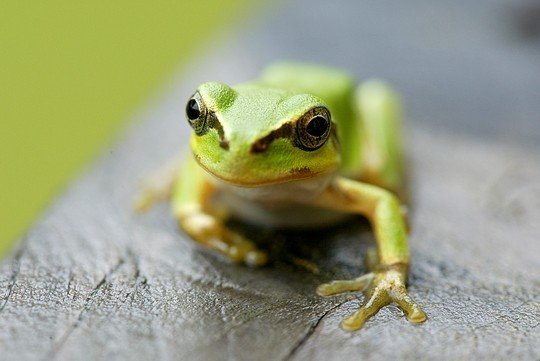
A toad that lives in the trees
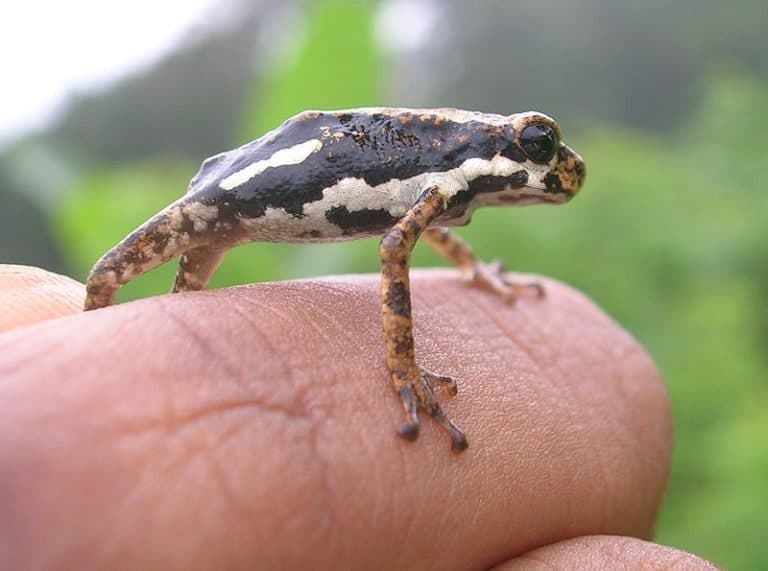
Kumon, CC BY 2.0, via Wikimedia Commons

African Tree Toad Distribution

Click a location to explore more animals from that region

Loading map...
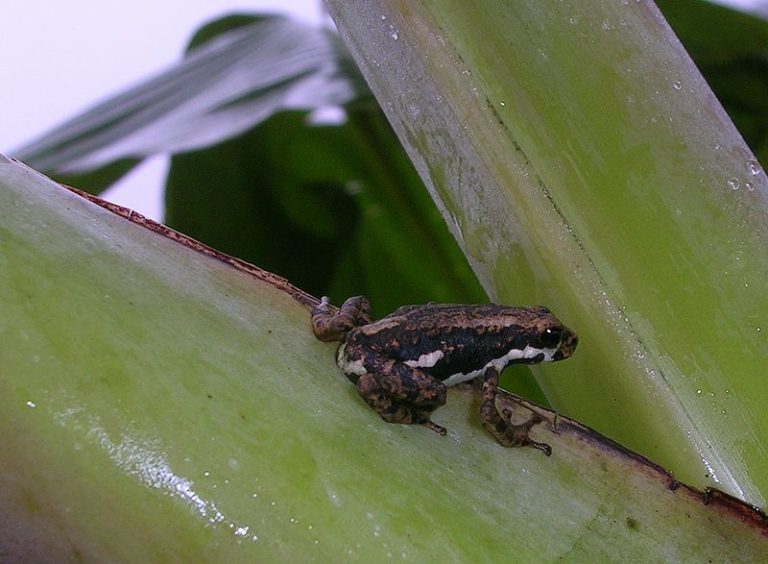
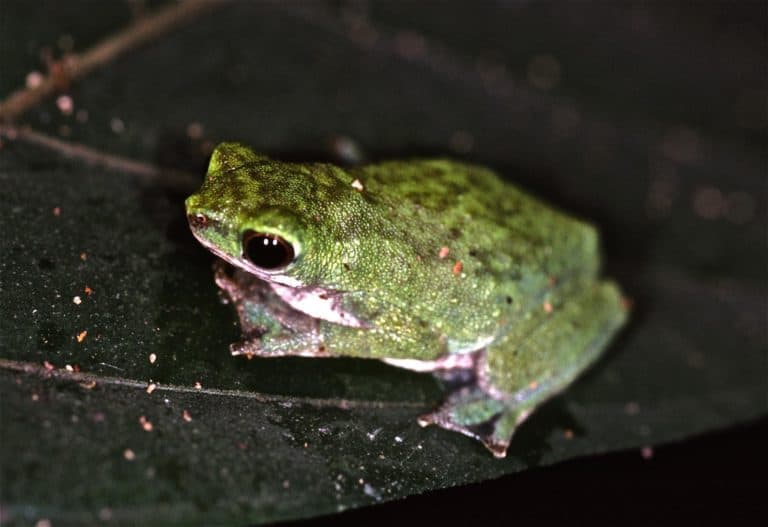
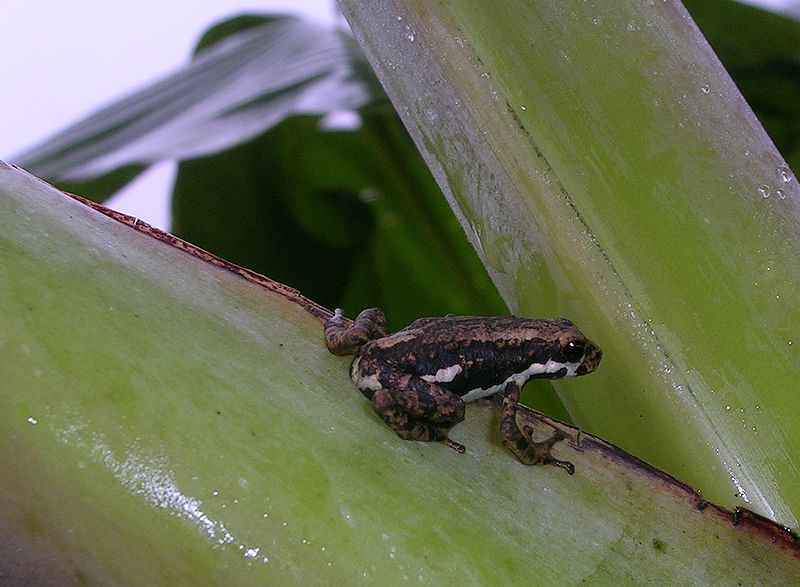
African Tree Toad on a leaf

At a Glance

Genus Overview This page covers the African Tree Toad genus as a group. Stats below are general traits shared across the genus.
Also Known As tree toads, tree toad, arboreal toads, arboreal toad, forest toads, forest toad
Activity Nocturnal+
Lifespan 5 years
Weight 0.012 lbs
Status Not Evaluated
Did You Know?

They're true toads (Bufonidae), yet many species spend much of their time on leaves, shrubs, and small trees.

Scientific Classification

Genus Overview "African Tree Toad" is not a single species but represents an entire genus containing multiple species.

African tree toads (genus Nectophryne) are small, largely forest-associated true toads adapted for life on vegetation (more arboreal than many other bufonids). They occur in parts of West and Central Africa.

Kingdom
Animalia
Phylum
Chordata
Class
Amphibia
Order
Anura
Family
Bufonidae
Genus
Nectophryne

Distinguishing Features

  • Small-bodied true toads with arboreal tendencies
  • Warty/granular skin typical of Bufonidae (varies by species)
  • Adaptations for climbing/vegetation use compared with more terrestrial toads
  • Generally associated with moist forest habitats

Physical Measurements

Males and females differ in size

Weight
0 lbs (0 lbs – 0 lbs)
Top Speed
4 mph
Nectophryne: short hops, ~3–8 km/h
Poisonous

Appearance

Primary Colors
Secondary Colors
Skin Type True-toad (Bufonidae) texture: generally granular to warty dorsum with glandular skin; ventral surfaces smoother. Parotoid glands are present but can be less prominent than in many terrestrial bufonids; degree of rugosity varies among species.
Distinctive Features
  • Genus-level size range (small bufonids): adult snout-vent length commonly ~1.8-5.5 cm across the genus (smallest to largest species); body mass typically only a few grams (often ~0.001-0.012 kg), varying with species and condition.
  • Arboreal/vegetation-associated build relative to many bufonids: frequent perching on leaves, twigs, and trunks; toe tips can be slightly expanded and climbing ability is generally better than in many ground-dwelling true toads (degree varies among species).
  • Head and body often compact with relatively short limbs; locomotion includes climbing and short hops rather than long-distance jumping.
  • Cryptic coloration is the norm (browns/tans/olives/gray) suited to West/Central African forest vegetation; some individuals show contrasting flecks or pale lines, but bold aposematic patterns are not typical at genus scale.
  • Eyes often appear prominent; tympanum visibility and cranial crest development can vary by species (not a consistent genus-wide diagnostic in appearance alone).
  • In West and Central African forests, Nectophryne tree toads are mostly active at night and dusk, living on low plants, shrubs, and small trees and eating small arthropods like ants and beetles.
  • Breeding in Nectophryne is tied to wet spots and small water bodies—small pools, slow water, seeps, tree holes, or near streams. Different species use different sites; no one strategy fits all.
  • Lifespan (range across the genus, generalized): often ~3-8 years in the wild for small forest bufonids; in favorable conditions and especially in captivity, some may reach ~10+ years (species- and husbandry-dependent).

Sexual Dimorphism

Sexual dimorphism in Nectophryne is usually present but subtle and differs by species. Differences appear most during breeding: males have calling parts and gripping pads, and females are often larger. How strong and visible these traits are varies.

  • Often slightly smaller and more slender on average than females (genus-level tendency; not universal).
  • Breeding-season traits may include nuptial pads (thickened, roughened skin on thumbs/forelimbs) for amplexus.
  • Vocal sac(s) and calling behavior typically present in males; calling often from vegetation near breeding microhabitats (exact calling sites vary by species).
  • Often slightly larger and more robust-bodied on average, especially when gravid.
  • Abdomen may appear fuller when carrying eggs; otherwise external differences can be minimal outside the breeding season.

Did You Know?

They're true toads (Bufonidae), yet many species spend much of their time on leaves, shrubs, and small trees.

Across the genus, adults are tiny: roughly 1.8-4.5 cm snout-vent length, with females often larger than males.

Their distribution is patchy-many populations are tied to intact rainforest blocks and mountain/foothill forests.

Like other toads, they have toxin-secreting skin glands (including parotoid glands), but rely heavily on camouflage and stillness too.

Common names like "African tree toad" are used for multiple species-so the same name can refer to different animals in different countries.

They're mainly nocturnal: activity and calling often peak on humid nights, especially in the rainy season.

As forest specialists, they're sensitive to habitat loss and drying microclimates-good indicators of forest health.

Unique Adaptations

  • Arboreal build in a "toad" lineage: compared with many bufonids, Nectophryne tend to be lightweight climbers with good grasping ability on vegetation.
  • Toe-tip enlargement and climbing traction: many have toe structures that aid grip on leaves and bark (extent varies by species).
  • Chemical defense: toxin-producing skin glands (including parotoid glands) provide a strong deterrent in predator-rich forests.
  • Camouflage for rainforest light: mottled browns/olive tones and textured skin help break up outlines against bark, leaf litter, and epiphyte-covered surfaces.
  • Moisture management: behaviorally maintain hydration by selecting humid perches and sheltered daytime refuges; dependence on stable, moist microclimates is a key genus-wide trait.

Interesting Behaviors

  • Arboreal perching: many Nectophryne rest and forage on leaves, twigs, and low branches rather than staying on the ground like many bufonids.
  • Nocturnal foraging: typically hunt small invertebrates at night, switching between still "sit-and-wait" and short active searches depending on prey availability.
  • Rain-linked activity: surface activity and calling intensity commonly increase with humidity and rainfall; during dry spells they may remain hidden in bark crevices, leaf axils, or under forest debris.
  • Calling and spacing: males call to attract females and may keep small calling distances from rivals; exact call structure and social spacing vary among species and habitats.
  • Microhabitat specialization (varies): some species are strongly tied to primary forest understory, while others tolerate secondary forest edges-yet most remain forest-associated overall.
  • Predator avoidance: cryptic posture (flattening against leaves/bark) plus skin toxins; when handled, many toads rely on immobility and chemical defense rather than long escapes.

Cultural Significance

Nectophryne tree toads are not often named in folktales, but as forest "toads" they join West and Central African stories: their rainy-night calls mark seasons, appear in sayings about patience or cleverness, and shape rainforest night sounds.

Myths & Legends

In many West and Central African traditions, the calls of frogs and toads are seen as signs that rain is coming or the rainy season has begun, linking frog and toad choruses to farming.

Many African folktales make the toad (African tree toads, genus Nectophryne) a plain-looking but persistent or clever hero, teaching lessons about pride, patience, and the value of steady effort.

Name origin (historical/naming tradition): the genus name Nectophryne is built from Greek roots referencing "toad" (phryne); scientific names like this reflect 19th-20th century natural history traditions of describing African forest fauna using classical-language compounds.

Conservation Status

NE Not Evaluated (genus-level); conservation status varies by species across the genus (commonly Least Concern where widespread, but including range-restricted forest endemics assessed as threatened, and some Data Deficient taxa).

Has not yet been evaluated against the criteria.

Population Unknown

Protected Under

  • Genus not assessed as a whole; conservation is primarily through site-based habitat protection for constituent species.
  • Some Nectophryne populations occur within protected areas (national parks, forest reserves) across parts of West and Central Africa, but coverage and enforcement effectiveness are uneven and many key forests remain outside strict protection.
  • Legal safeguards typically derive from national wildlife/forestry and protected-area statutes in range states rather than species-specific international listings; practical protection depends on habitat retention and management.

You might be looking for:

Cameroon Tree Toad

28%

Nectophryne afra

A small arboreal true toad from Cameroon and nearby regions; often cited under the general name “African tree toad.”

Bates’s Tree Toad

20%

Nectophryne batesii

Central African forest-dwelling arboreal toad in the genus Nectophryne.

Brown Tree Toad

18%

Nectophryne brunnea

A small African arboreal toad species; one of several that can be called “African tree toad.”

Thick-headed Tree Toad

17%

Nectophryne crassa

Another Central/West African Nectophryne species sometimes subsumed under broad “tree toad” phrasing.

Lamotte’s Tree Toad

17%

Nectophryne lamottei

A West African Nectophryne species; local/common-name overlap can lead to the generic label “African tree toad.”

Life Cycle

Birth 50 tadpoles
Lifespan 5 years

Lifespan

In the Wild
2–10 years
In Captivity
4–15 years

Reproduction

Mating System Polygynandry
Social Structure Aggregation Group
Breeding Pattern Seasonal
Fertilization Substrate Spawning
Birth Type Substrate_spawning

African tree toads (genus Nectophryne) are small forest toads. Mating is polygynandry—many males and females mate during breeding. They gather at water sites, spawn eggs with external fertilization in amplexus. No long-term pairs or cooperative care.

Behavior & Ecology

Social Breeding aggregation (chorus) Group: 1
Activity Nocturnal, Crepuscular, Cathemeral
Diet Insectivore Small ants and termites (commonly taken where locally abundant; degree of reliance varies among species and sites).
Seasonal Hibernates 1 mi

Temperament

Cryptic and wary; tends to remain motionless or retreat into cover when disturbed
Generally non-aggressive outside breeding contexts
Males may show spacing/short-range tolerance limits around calling sites, with intensity varying by local density and habitat constraints
Defensive rather than confrontational when handled (e.g., body inflation, toxin-mediated deterrence typical of many bufonids)

Communication

male advertisement calls used to attract females and/or space males during breeding Call structure and calling intensity vary among species
release calls when clasped inappropriately Common across many anurans, expected across the genus though not equally documented for all species
distress calls or squeaks when threatened or handled Variable and context-dependent
tactile signaling via amplexus and physical contact during mating
chemical cues likely important at close range (e.g., species/sex recognition or mate assessment), though details vary and are not uniformly studied across species
visual postures and movement (e.g., orientation/approach/avoidance) at close range in low light; reliance varies with habitat density and ambient light
defensive skin secretions and body inflation as anti-predator signaling/deterrence

Habitat

Biomes:
Tropical Rainforest Tropical Dry Forest Freshwater Wetland
Terrain:
Mountainous Hilly Plateau Valley Riverine Coastal Island +1
Elevation: Up to 9842 ft 6 in

Ecological Role

Small-arthropod predator in West/Central African forest understories; also a prey item for larger predators.

suppression of small arthropod populations (including ants/termites and other insects) energy transfer from invertebrates to higher trophic levels (birds, snakes, small mammals) nutrient cycling via fecal inputs and movement across vegetation/leaf-litter boundaries support of forest food webs by linking arboreal/understory invertebrate communities to vertebrate predators

Diet Details

Main Prey:
Ant Termite Small beetles Flies Moths, caterpillars and other small larvae True bugs Springtails Mites and other tiny arachnids Small spiders Small snails and other soft-bodied invertebrates +4

Human Interaction

Domestication Status

Wild

African tree toads (genus Nectophryne) are wild and have no domestication history. Human impacts are mostly indirect: forest loss, logging, farming, roads, and changed stream or leaf-litter water. Scientists study them and a few are kept in captivity without breeding. They need humid forest understory, so habitat drying and disturbance harm populations.

Danger Level

Low
  • Skin secretions (bufonid toxins) can irritate eyes/mucous membranes; risk increases if handled and then touching face.
  • Allergy/sensitivity reactions are possible in a small number of people.
  • Zoonotic risk is generally low, but standard amphibian hygiene applies (wash hands; avoid contact with broken skin; reduce cross-contamination).
  • Greater hazard is often to pets that mouth/ingest toads (oral irritation, drooling, vomiting).

As a Pet

Not Suitable as Pet

Legality: Laws for Nectophryne vary by country. Many West/Central African states ban or limit capture, possession, or export and need permits. Other countries may allow pets if legally imported with papers; check national, state, and import laws.

Care Level: Expert Only

Purchase Cost: Up to $150
Lifetime Cost: $600 - $4,000

Economic Value

Uses:
Ecosystem services (insect predation) Biodiversity/scientific research value Conservation and environmental education value Limited ecotourism value (specialist herpetofauna)
Products:
  • No routine commercial products; value is primarily non-consumptive (research, conservation) rather than harvest-based.

Relationships

Predators 5

Tree and bush snakes
Elapids
Elapids Elapidae
Frog-eating birds Halcyon spp.; Bucerotidae
Small carnivorous mammals
Large spiders and predatory arthropods
Large spiders and predatory arthropods Theraphosidae

Related Species 9

African tree toad
African tree toad Nectophryne afra Shared Genus
Bates' tree toad Nectophryne batesii Shared Genus
Brown tree toad Nectophryne brunnea Shared Genus
Thick-bodied tree toad Nectophryne crassa Shared Genus
Lamotte's tree toad Nectophryne lamottei Shared Genus
African viviparous toads Nectophrynoides Shared Family
African toads Sclerophrys Shared Family
Tome giant tree toad Didynamipus sjostedti Shared Family
Asian tree toads Pedostibes Shared Family

Ecological Equivalents 4

Animals that fill a similar ecological role in their ecosystem

Reed frogs Hyperolius spp. Small, vegetation-associated frogs of African forests and forest edges. They often use shrubs and the understory and breed in small water bodies, exhibiting similar vertical microhabitat use, though they are not true toads.
Forest tree frogs Leptopelis spp. Forest-associated, often arboreal or semi-arboreal amphibians that call from vegetation and forage on small invertebrates. They overlap in the nocturnal understory niche and are typically larger-bodied than Nectophryne.
African puddle frogs Phrynobatrachus spp. Frequently occur in the same West and Central African forest landscapes and consume similar small arthropod prey. They breed in small pools and streams, though many species are primarily ground-dwelling.
Forest-dwelling true toads Sclerophrys spp. These species share bufonid defenses (parotoid toxins) and may co-occur in some regions. They represent the more terrestrial end of the same family's forest amphibian community, highlighting Nectophryne's relatively arboreal specialization.

Types of African Tree Toad

5

Explore 5 recognized types of african tree toad

African tree toad
African tree toad Nectophryne afra
Bates' tree toad Nectophryne batesii
Brown tree toad Nectophryne brunnea
Thick-bodied tree toad Nectophryne crassa
Lamotte's tree toad Nectophryne lamottei

Like many other toads and frogs in the same family, the African Tree Toad’s toxins have medicinal uses.
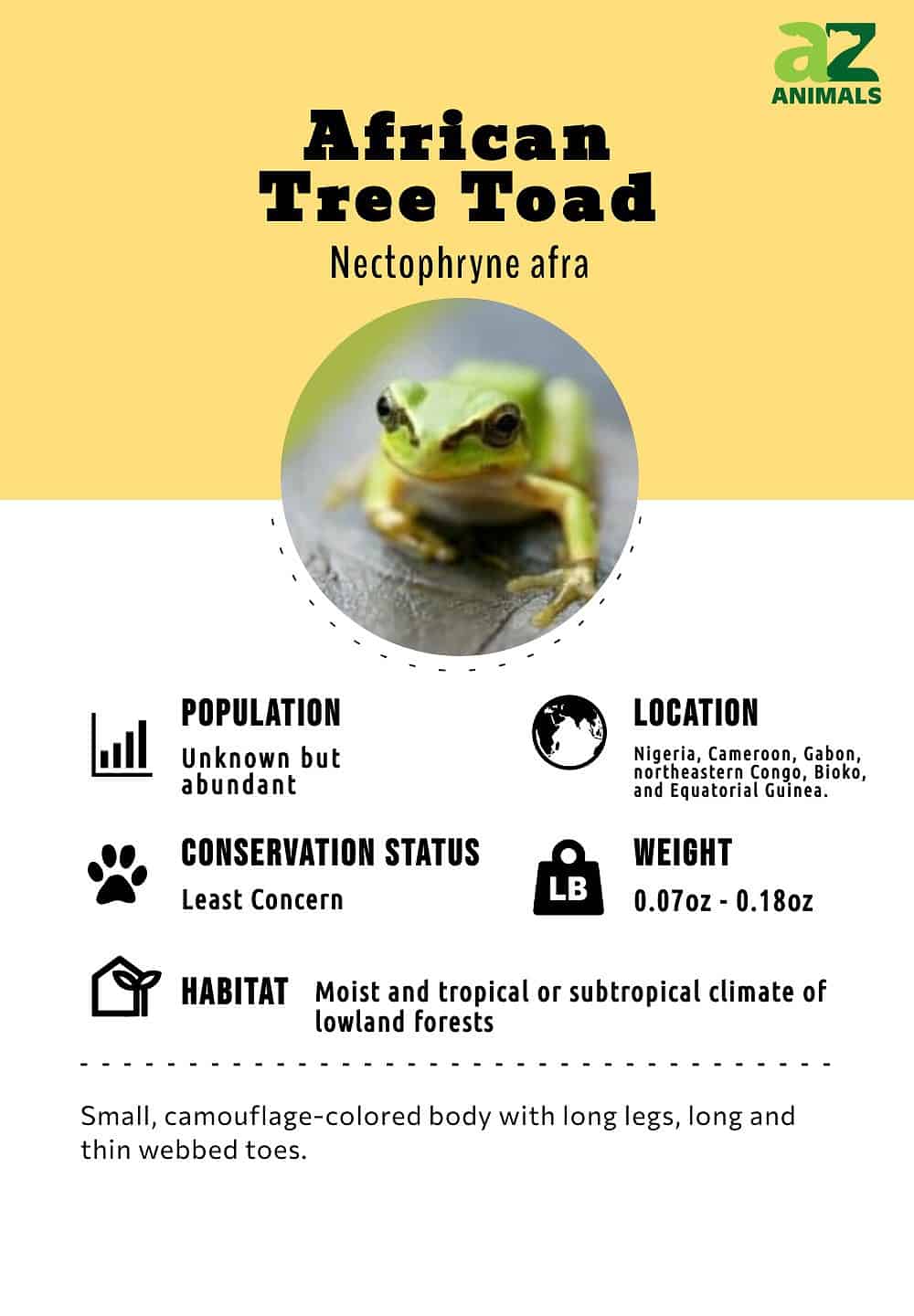
The African tree toad is a small toad in the family Bufonidae, in the order Anura. Its habitat is the tropical and subtropical lowland forests of West and Central Africa. Its color is a combination of brown, black, white, and tan. Although it is not a vulnerable species, it can suffer from local habitat loss.

4 Incredible Facts!

  • The African Tree Toad is a true toad, which means it is a tailless amphibian similar to a frog but more terrestrial and having drier warty skin.
  • It has long, thin, webbed feet for its semi-aquatic, tree-dwelling lifestyle.
  • It can shoot its long sticky tongue out to catch prey at lightning speed.
  • It can reach a top speed of 5mph.

Scientific Name

The scientific name of the African tree toad is Nectophryne afra. There are only two species in the Nectophryne genus: the African tree toad and the Bates’s tree toad (Nectophryne batesii).

This genus is part of the Bufonidae family in which all the members are true toads. There are 35 genera in the family Bufonidae.

It is the only family in the order Anura in which all members are toads, although some may be called frogs (e.g., the harlequin frog). Otherwise, the order Anura, an order of short-bodied tailless amphibians, has a mix of frogs and toads.

Appearance
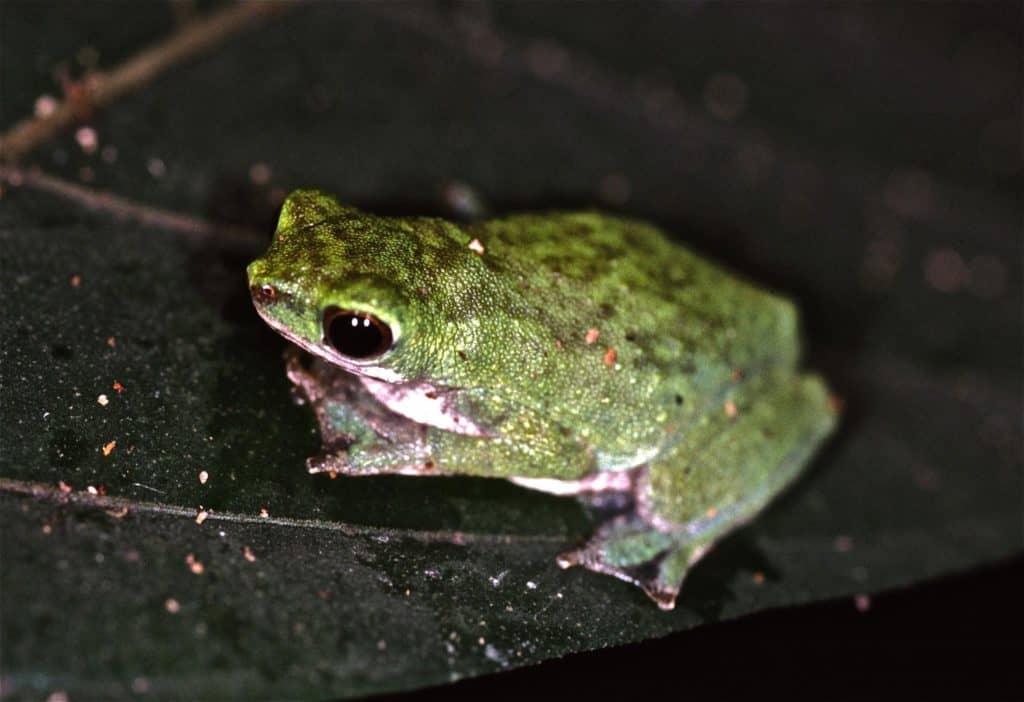
An African Tree Toad in Cameroon.

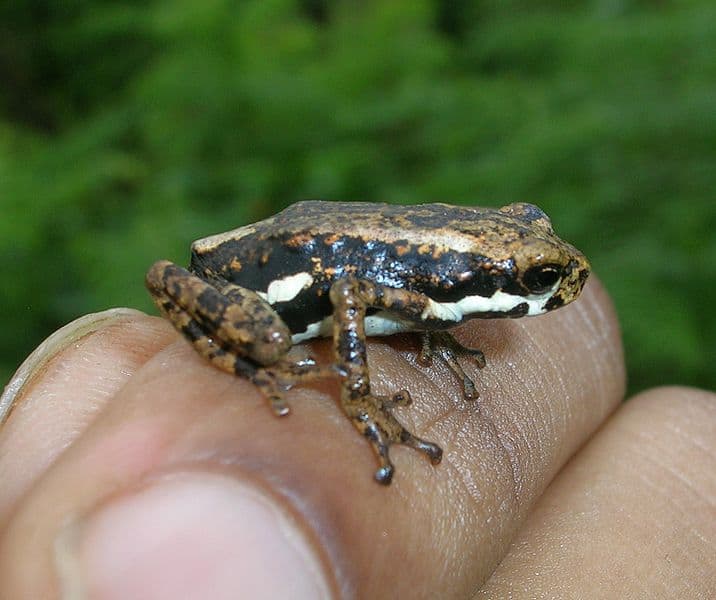
The small (one inch long) African tree toad has camouflage coloring for hiding in the trees.

These toads has a camouflaging array of colors: Brown, black, white, and tan. Its small body is generally dark to light brown, with patches of white on its belly. This combination allows it to hide from predators in the grass as well as in trees. It also has long legs with long-thin webbed toes with round discs at the ends to enable it to climb and hop, while the partial webbing and wide toe separation enables it to get a strong grip on wide surface areas. Size-wise it grows anywhere from 2.5cm – 3.8cm (1 inch-1.5 inches) in length and 2g – 5g (0.07oz – 0.18ozs) in weight. Classification of the two subspecies is based on geographic location; otherwise, they are of similar color and size.

Behavior

These toads are terrestrial (land-dwelling) and semi-aquatic by day, finding food and water on the ground and spending most of their time in water outside of the breeding season. Their tiny size and camouflage make them difficult to spot on the forest floor. They use their partially webbed feet to hop and climb. At night, they use their camouflage and climbing ability to hide up high in the trees away from predators. They have solitary lifestyles.

Habitat
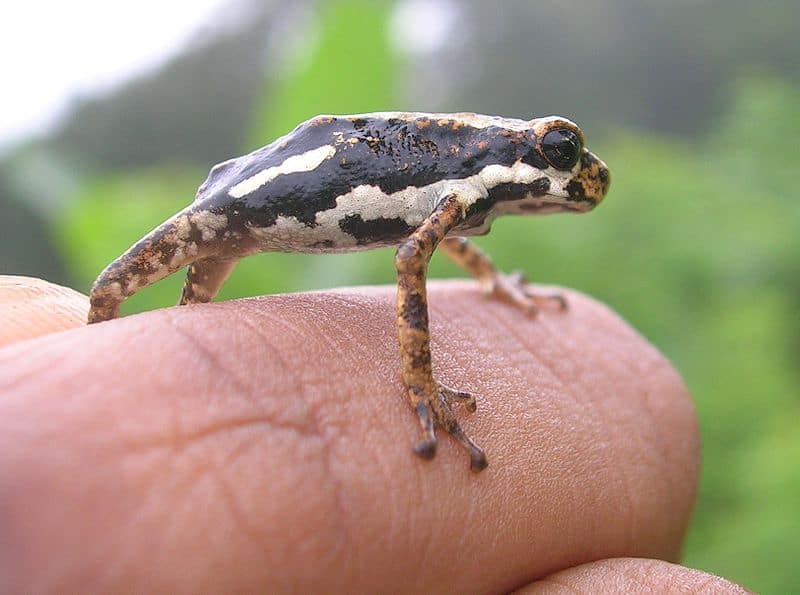
Both kinds of African tree toads have an amphibious, semi-aquatic lifestyle, so they prefer to live in the moist and tropical or subtropical climate of lowland forests or heavily degraded former forests with small bodies of freshwater. All members of the genus Nectophryne are native to Nigeria, Cameroon, Gabon, northeastern Congo, Bioko, and Equatorial Guinea.

The habitat range of the African tree toad is West and Central Africa, extending from southwestern Nigeria through Cameroon to Equatorial Guinea (including Bioko), Gabon, and the northeastern Democratic Republic of the Congo.

The Bates’s tree toad is found anywhere from southern Cameroon to southwestern Gabon through the southwestern Central African Republic to the northeastern Democratic Republic of the Congo.

Both species suffer from habitat loss due to deforestation and pollution of air and water, currently restricting them to tall forests.

Diet

The diet of these toads is carnivorous. It shoots out its long sticky tongue at lightning-fast speeds to catch its prey. Plus, it can move at a top speed of 5mph (8km).

Like other toads, African tree toads are predators. They lie quietly in wait to catch their prey. They then use their tongues to catch spiders, worms, snails, and other small invertebrates and insects.

Predators and Threats
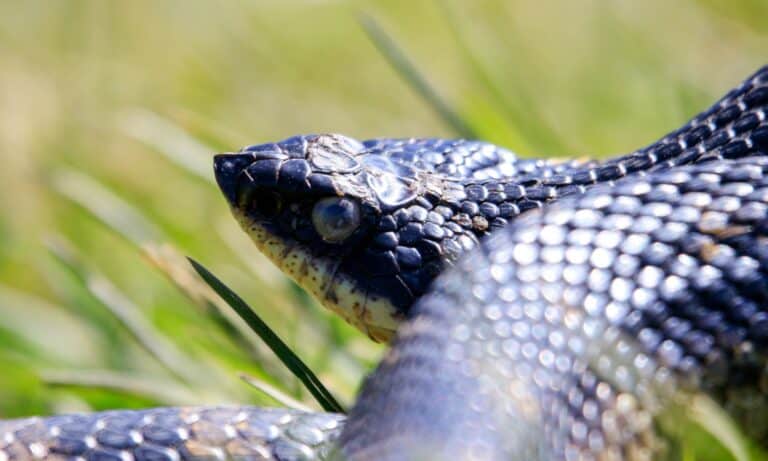
These toads are preyed upon by birds, fish, snakes, lizards, rodents, and larger toads and frogs.

Besides natural predators, these toads are sought after by humans for the exotic pet trade and for the toxins secreted by their permeable skin and parotid glands that, along with bone and muscle tissue, have medicinal uses. Therapeutic compounds from 15 of the 47 frog and toad species used in traditional medicine are from the family Bufonidae, serving as a variety of remedies ranging from infections, bites, allergies, and inflammation to pain, heart disorders, cancer, and AIDS. Preservation of the species means the preservation of their toxins as medicine.

Although it is listed as Least Concern in terms of conservation status by the IUCN, it suffers from habitat loss and may compete with other toad species for food. Currently, it is restricted to living in taller forests.

Reproduction, Babies, and Lifespan

These toads breed during the spring, either in tree cavities containing water or plant-filled water hollows. The female lays an average of 100 eggs, but possibly up to 200 eggs, after which the male guards the spawning site until the eggs hatch into tadpoles, which takes 6-21 days. After the tadpoles develop into young toads, they leave the nest to hunt on their own. Their lifespan is 3-5 years in captivity, while their lifespan in the wild is unknown.

Population

These toads are known to have a wide habitat range with groups of small populations throughout. While their exact numbers are unknown and they suffer from habitat loss, they are listed as Least Concern by the IUCN.

In the Zoo

These toads are present in a number of national parks, including the Korup National Park, which is on the border of Cameroon and Nigeria; Monte Alén National Park, which is near the center of Equatorial Guinea in central Africa; and Virunga National Park, which is in the eastern part of the Democratic Republic of the Congo. The national parks exist as reserved areas to provide natural biodiversity for several flora and fauna species, unlike zoos, which keep animals in special enclosures with artificial habitats. Korup National Park, for example, has never been logged, and so serves as a protected habitat for the African tree toad.

View all 326 animals that start with A
How to say African Tree Toad in ...
Catalan
Nectophryne afra
English
African Tree Toad
Spanish
Nectophryne afra
French
Nectophryne afra

Sources

  1. Wikipedia / Accessed January 15, 2021
  2. Animals Adda / Accessed January 15, 2021
  3. Kids Konnect / Accessed January 15, 2021
  4. Smithsonian Tropical Research Institute / Accessed January 15, 2021
  5. Reptile Guide / Accessed January 15, 2021
  6. Diffen / Accessed January 15, 2021
Thank you for reading! Have some feedback for us?


African Tree Toad FAQs (Frequently Asked Questions)

African Tree Toads are Carnivores, meaning they eat other animals.