





A
Species Profile

Airedale Terrier

Canis lupus familiaris

King of Terriers, heart of a worker
KajaHiis/Shutterstock.com

Airedale Terrier Distribution

Click a location to explore more animals from that region

Origin Location

This map shows the native origin of the Airedale Terrier. As a domesticated species, they are now found worldwide.

Loading map...

Found in 1 country

Size Comparison

Human 5'8"
Airedale Terrier 1 ft 11 in

Airedale Terrier stands at 34% of average human height.

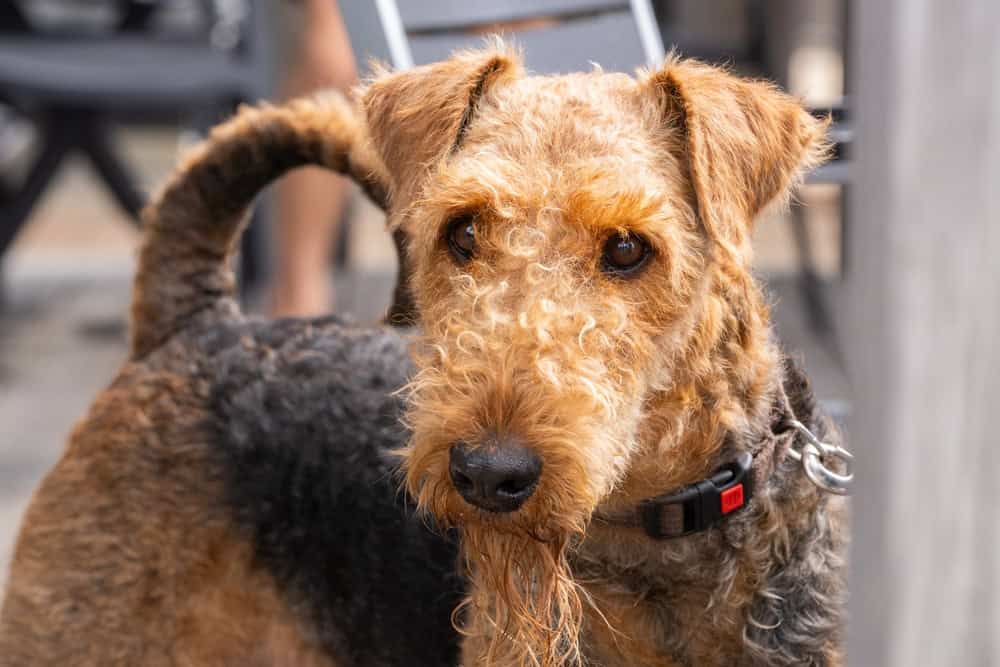
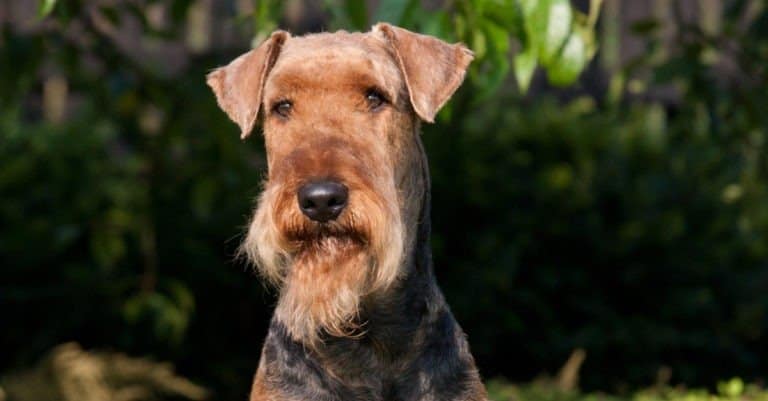
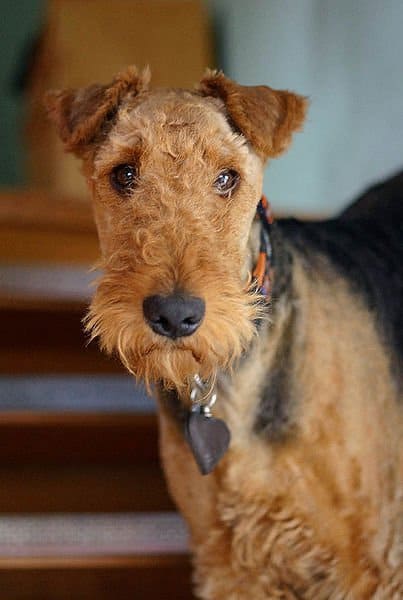
Closeup Portrait of Airedale Terrier Dog

At a Glance

Domesticated
Also Known As Airedale, King of Terriers
Diet Omnivore
Activity Diurnal+
Lifespan 5 years
Weight 29 lbs
Status Not Evaluated
Did You Know?

Named for England's River Aire and the Aire Valley in Yorkshire, where the breed was developed.

Scientific Classification

The Airedale Terrier is a recognized breed of domestic dog, historically developed in Yorkshire (England) and often called the “King of Terriers” due to its larger size among terriers. It is an active, intelligent, wire-coated breed originally used for hunting and versatile working roles.

Kingdom
Animalia
Phylum
Chordata
Class
Mammalia
Order
Carnivora
Family
Canidae
Genus
Canis
Species
Canis lupus familiaris

Distinguishing Features

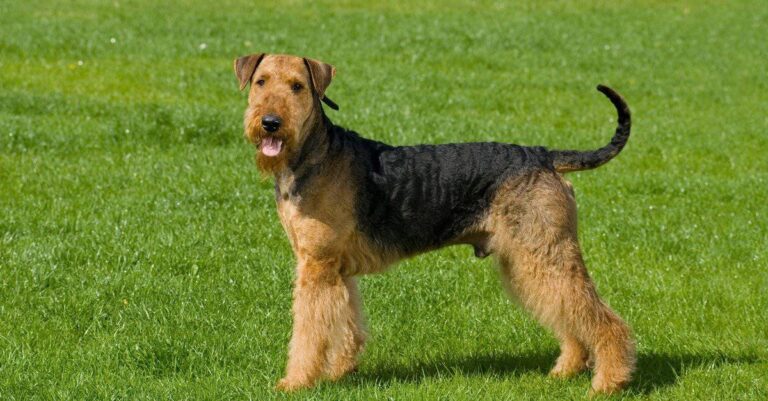
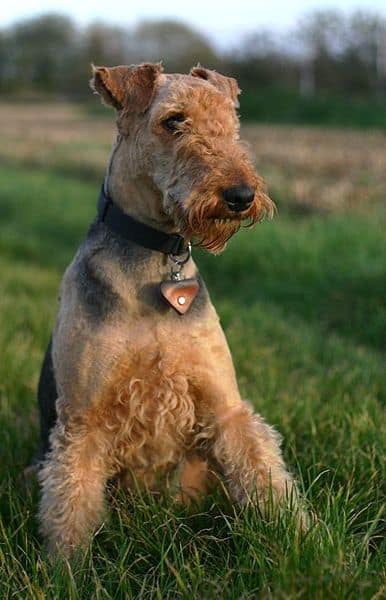
  • Largest of the terrier breeds (commonly characterized as such) with a sturdy, square build
  • Dense, wiry coat typically tan with a dark (black/grizzle) saddle
  • Long, flat skull with a pronounced beard/muzzle furnishings typical of wire-haired terriers
  • Traditionally has a high-set tail (docking historically practiced in some regions; now restricted/illegal in many places)
  • Alert, confident temperament; high exercise and mental stimulation needs

Physical Measurements

Males and females differ in size

Height
1 ft 11 in (1 ft 11 in – 2 ft)
1 ft 11 in (1 ft 10 in – 1 ft 11 in)
Length
3 ft 3 in (2 ft 11 in – 3 ft 7 in)
Weight
60 lbs (55 lbs – 64 lbs)
47 lbs (40 lbs – 55 lbs)
Tail Length
9 in (8 in – 11 in)
10 in (8 in – 12 in)
Top Speed
25 mph
moderate sprint speed

Appearance

Primary Colors
Secondary Colors
Skin Type Mammalian skin with a harsh, wiry outer coat and dense undercoat; low-shedding but high-maintenance jacket that benefits from stripping to preserve texture and color depth.
Distinctive Features
  • Domestic dog breed (Canis lupus familiaris) developed in the Aire Valley/Yorkshire, England; larger and more leggy than many terriers-often called the "King of Terriers."
  • Hard, wire-haired terrier coat with a crisp texture; coat is typically hand-stripped or clipped to maintain outline and reduce matting.
  • Characteristic facial furnishings: pronounced beard and mustache, bushy eyebrows; rectangular head with a strong muzzle.
  • V-shaped drop ears carried to the side; dark eyes with an alert, keen expression.
  • Athletic, square-to-slightly-rectangular build; deep chest and strong topline suited to versatile work (historically hunting, guarding, messenger/police/war-dog roles).
  • Breed-typical temperament profile vs the base domestic dog: intelligent, energetic, confident, and more independent/terrier-driven than many companion breeds; can be strong-willed and prey-driven.
  • Care requirements: frequent brushing/combing to prevent mats in the wiry jacket and furnishings; regular beard washing/drying (food/water debris), ear cleaning, and nail/foot care; structured exercise and training/enrichment are essential.
  • Common breed health issues include hip and elbow dysplasia, allergic skin disease, hypothyroidism, eye problems (cataracts, progressive retinal atrophy), and bloat (gastric dilatation-volvulus) in deep-chested dogs; screening and careful breeding lower risk.

Sexual Dimorphism

Males are typically larger and more robust; females are often slightly smaller with a lighter frame. Coat color/pattern is similar in both sexes; differences are mainly size and substance.

  • Heavier bone and broader head/neck; more muscular overall appearance.
  • Often shows more pronounced chest depth and overall mass within the breed standard range.
  • Slightly finer bone and narrower head/neck; generally a lighter, more streamlined build.
  • May appear more refined in outline while retaining the same wiry coat and furnishings.

Did You Know?

Named for England's River Aire and the Aire Valley in Yorkshire, where the breed was developed.

Often called the "King of Terriers" because it's the largest of the terrier breeds.

The classic look is tan on the head, ears, legs, and underside with a black (or grizzle) saddle on the back, plus a distinctive terrier beard.

Bred as an all-purpose working dog-hunting on land and near water, guarding, and later service roles.

The harsh, wiry outer coat helps shed dirt and water while the dense undercoat adds insulation.

Like many terriers, Airedales combine high intelligence with a stubborn, independent streak.

Unique Adaptations

  • Wire coat function (breed-specific): a tough, harsh topcoat plus insulating undercoat offers abrasion resistance in brush and better weather tolerance than many smooth-coated dogs.
  • Square, athletic build (breed-specific): longer legs and more substance than most terriers, supporting endurance for all-day work.
  • Facial furnishings (breed-specific): the beard/eyebrows help protect muzzle and eyes from brambles, dirt, and water splash during field work.
  • Domestic-dog versatility (species context): like other domestic dogs, Airedales are highly trainable and socially attuned to humans-traits amplified through selective breeding for multi-role work.

Interesting Behaviors

  • Terrier "inspect-and-investigate" mode: intensely curious sniffing, scanning, and quick pounces on moving objects-an echo of vermin-hunting roots.
  • Digging and "earthwork": many Airedales will excavate if bored or if scents collect along fences-typical terrier problem-solving.
  • Beard-and-muzzle collecting: the facial furnishings trap water, food, and debris; many Airedales will rub their faces on furniture or grass after drinking/eating.
  • Confident watchdog posturing: alert stance, forward carriage, and purposeful patrolling of property boundaries.
  • Object play with carry-and-shake: grabbing toys, shaking side-to-side, and parading prized items-common in many domestic dog working lines.
  • Selective listening: strong response to meaningful cues, but may test boundaries; consistent training and rewards matter.

Cultural Significance

The Airedale Terrier (Canis lupus familiaris) was developed in 1800s industrial Yorkshire and became a British working dog for hunting, town homes, and later service jobs. Called the "King of Terriers," it is known for its size, hard work, confident guarding, and lively companionship.

Myths & Legends

Yorkshire lore says early Airedales were shaped by local workers who crossed the now-extinct Old English Black and Tan Terrier with otter-hunting dogs like Otterhound to make a tough river-and-rat dog for the Aire Valley.

Airedale origin stories often feature the riverside "rat hunts" along the Aire-community contests where terrier-type dogs proved speed and courage, feeding the breed's legend as a hard, game worker.

The nickname "King of Terriers" persists as a kind of modern epithet-part boast, part folk-title-passed through dog-show culture and working-dog circles to capture the breed's stature and bold temperament.

Historical anecdotes from wartime service include Airedales used as messenger and guard dogs; accounts of dogs carrying messages under fire helped build a heroic public image around the breed in the early 20th century.

Conservation Status

NE Not Evaluated

Has not yet been evaluated against the criteria.

Population Stable

Life Cycle

Birth 7 pups
Lifespan 5 years

Lifespan

In the Wild
2–10 years
In Captivity
11–14 years

Reproduction

Mating System Polygynandry
Social Structure Managed Domestic
Breeding Pattern Serial
Fertilization Managed Selective
Birth Type Managed_selective

Airedale Terrier (Canis lupus familiaris): breeding is usually people-managed with chosen mates, health checks, and planned matings. Dogs mate internally; free-ranging dogs may have many partners, but Airedales are bred in controlled, short-term pairings.

Behavior & Ecology

Social Pack Group: 3
Activity Diurnal, Crepuscular
Diet Omnivore Meat-forward foods (e.g., beef/chicken/fish-based diets) and high-value training treats such as liver.

Temperament

Highly intelligent, quick-learning, and problem-solving; benefits from variety to prevent boredom-driven mischief
Confident and assertive; more independent and tenacious than many non-terrier breeds (distinguishing trait vs base domestic dog average)
Energetic with strong play/work drive; needs daily vigorous exercise plus mental enrichment (training games, scentwork, retrieving, agility)
Prey-driven and investigative (hunting/working heritage); may chase wildlife/cats if not trained and managed
Affectionate and loyal with household members; can be reserved or watchful with strangers, typically not shy
Can be dog-selective and may show same-sex intolerance without careful socialization; thrives with clear boundaries and reward-based structure
Care requirements: regular coat maintenance for a wiry double coat (brushing and periodic hand-stripping or clipping), consistent training, and appropriate chew outlets
Health concerns seen in the breed: hip dysplasia, elbow issues, allergies/atopy, hypothyroidism, ear infections, and risk of gastric dilatation-volvulus (bloat) in deep-chested individuals; responsible breeding and preventive care are important

Communication

Alert barking Often used as a watch/notification signal
Growls and grumbles during play or boundary-setting
Whining/whimpering for attention, anticipation, or frustration
Excited yips or short barks during arousal or chase/play
Canid body language: posture changes, tail carriage, ear set, direct/averted gaze, lip licking, and play bows
Physical contact and proximity seeking with family; leaning, pawing, and nudging to initiate interaction
Scent investigation and marking; strong interest in tracking/odor-based information Useful for scentwork enrichment
Mouthing/chewing and digging behaviors Terrier-typical outlets that increase when under-stimulated
Resource signaling: hovering, blocking, stiffening near valued items-managed through training and controlled access

Habitat

Biomes:
Temperate Forest Temperate Grassland Mediterranean Boreal Forest (Taiga) Tundra Alpine Desert Hot Desert Cold Tropical Rainforest Tropical Dry Forest Savanna Freshwater Wetland Marine +8
Terrain:
Hilly Valley Riverine Plains Coastal
Elevation: Up to 14763 ft 9 in

Ecological Role

Domesticated companion and working terrier-type predator-control generalist (human-associated omnivore).

local rodent and small-pest suppression (where allowed/managed) deterrence of nuisance wildlife around homes/farms participation in human-managed food webs (consuming human-provided diets and scraps) supporting human activities (working roles historically: hunting, guarding, patrol; modern: sport/service)

Diet Details

Main Prey:
Small mammals Birds Small game Invertebrates Carrion and food scraps
Other Foods:
Berries and fallen fruit Grasses and herbaceous plants Roots and tubers Vegetables Grains and starches

Human Interaction

Domestication Status

Domesticated

Canis lupus familiaris, domestic dog, came from gray wolves over thousands of years. The Airedale Terrier was developed in 19th-century Yorkshire (Aire Valley), England, by crossing local terriers with larger water hunting dogs (likely Otterhounds). A versatile hunter, farm and guard dog, it served police and military roles; large, wiry-coated, trainable yet independent, bred for endurance and water work.

Danger Level

Moderate
  • Bite risk exists, typically linked to poor socialization, fear, pain, guarding tendencies, or inadequate management/training; larger terrier size can make incidents more serious than with small terriers.
  • High prey drive can lead to chasing/rough interactions; supervision needed around small animals and sometimes around unfamiliar small children.
  • Terrier tenacity can escalate conflicts with other dogs if not well managed; fights can injure handlers attempting to break them up.
  • Allergic reactions in sensitive individuals (not hypoallergenic; wiry coat may reduce shedding for some but dander/saliva still present).

As a Pet

Suitable as Pet

Legality: Airedale Terrier (Canis lupus familiaris) is usually legal to own as a pet, but local rules (licenses, leash laws), housing or insurance limits may apply; check city/county and landlord/HOA rules.

Care Level: Experienced

Purchase Cost: $800 - $2,500
Lifetime Cost: $18,000 - $45,000

Economic Value

Uses:
Companion animal (pet) Working roles (historical and occasional modern use) Dog sports and trials Grooming and professional services economy Breeding and showing
Products:
  • Puppy sales and stud services (reputable breeding)
  • Veterinary care (routine + breed-linked conditions)
  • Professional grooming/hand-stripping services and tools
  • Training classes, behavior services, and sport entries (agility, obedience, tracking, scent work, barn hunt/earthdog where available)
  • Pet supplies (high-durability toys, leashes, crates, fencing, enrichment)
  • Boarding/daycare (high-activity dog premium)

Relationships

The Airedale’s origins date back to the mid-19th century in England.

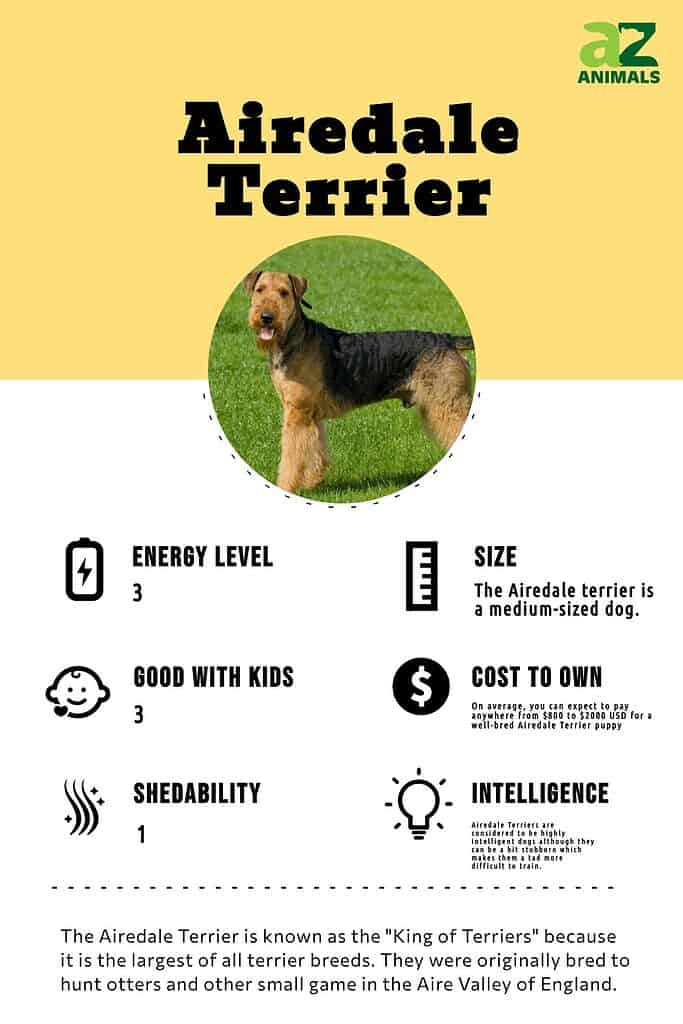
The Airedale Terrier, often called the ‘King of Terriers,’ is the largest terrier breed. Developed in the mid-19th century in the Aire Valley of Yorkshire, England, the breed was prized for its versatility, intelligence, and ability to hunt small game and assist in various working roles. The Airedale is a versatile working breed, an excellent family guard dog, and a loyal companion. 
Size, Weight, and Appearance

The Airedale terrier is a medium-sized dog that usually weighs between 50 and 65 pounds, though it can weigh up to 80 pounds. The height of males is usually about 24 inches, while that of females is slightly shorter at 22 to 23 inches.
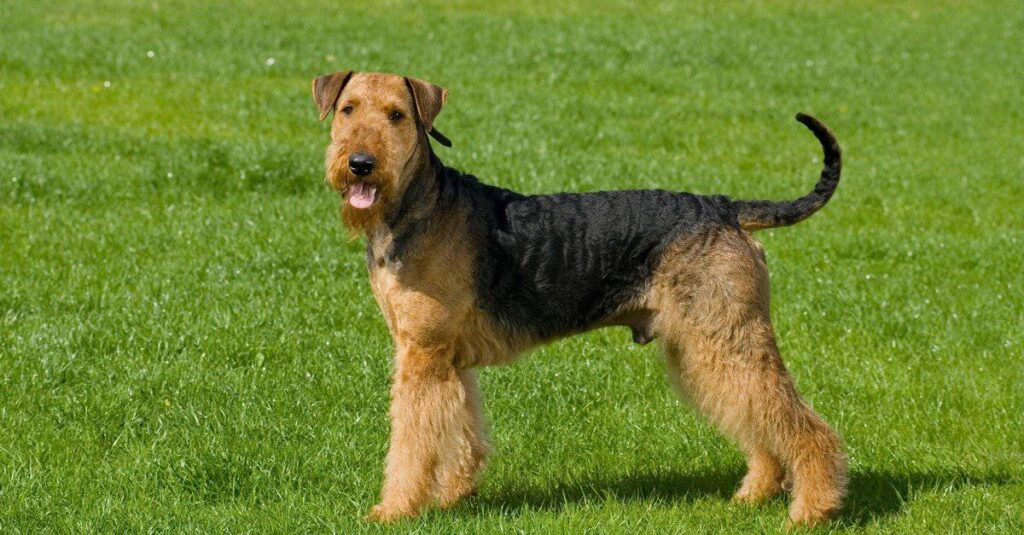
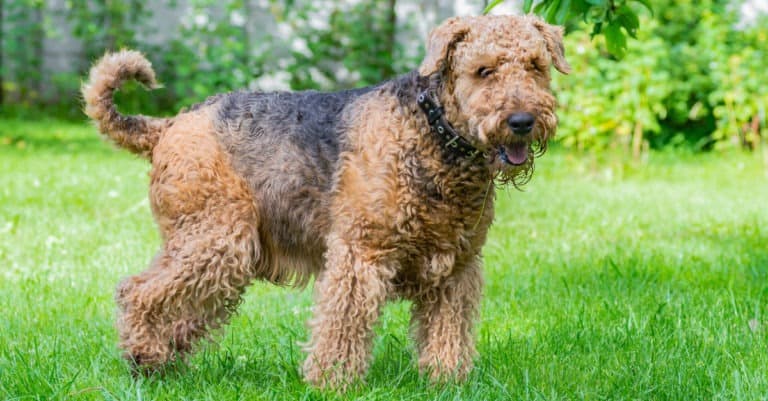
Airedale Terrier in the park

Airedale terriers are medium-sized dogs with wiry, dense coats.

An Oorang strain of Airedales weighs in the 80 to 120-pound range. This strain of the breed was developed back in the 1920s. Airedale puppies typically weigh about 10 pounds and are 10 inches tall at 8-10 weeks. Airedales don’t usually reach their full adult size until between one and two years of age.

Height (Male)24’ Tall
Height (Female)23’ Tall
Weight (male)65lbs, fully grown
Weight (female)55lbs, fully grown

Airedales are the largest of the terrier group. They have a well-proportioned, athletic build with a deep chest and straight back, which gives them a commanding presence. Their coats are dense, wiry, and usually tan with a darker saddle of black or grizzle on the back. The breed’s distinct appearance includes a broad head with a flat skull, a long, straight nose, and deep-set, dark eyes that give them an alert, confident expression. Their ears are medium-sized, V-shaped, and fold forward, enhancing their characteristic look.

Characteristics

The Airedale Terrier is a lively breed known for its intelligence, strength, and energy. These qualities make them excellent working dogs and loyal companions. Despite their exceptional size, they are agile and quick, initially bred for hunting and retrieving in rugged terrains. The breed is generally friendly and good-natured, though they can be independent and occasionally stubborn, reflecting their terrier instincts. Whether engaged in outdoor activities or relaxing with their family, Airedales exhibit a dignified bearing and a playful spirit.

History of the Breed
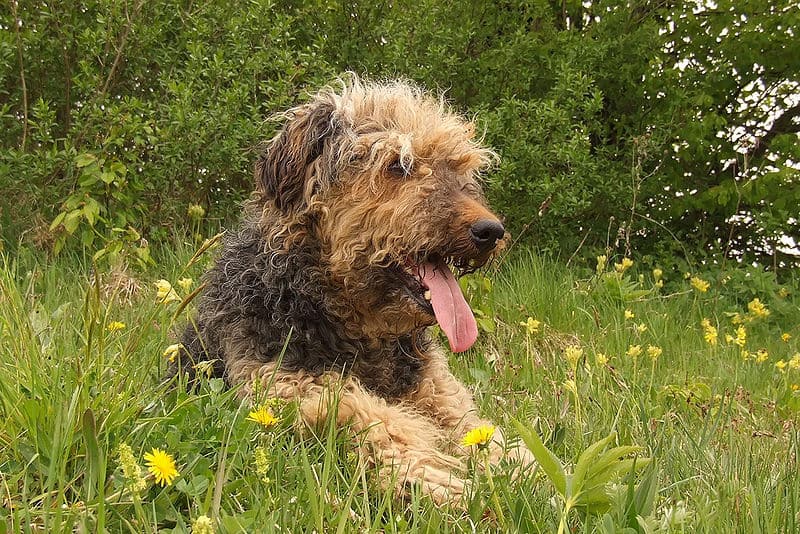
Airedale terriers were bred to hunt small game, like otters.

The Airedale Terrier is a dog breed originating in the Aire River valley in Yorkshire, England. The breed was developed in the 19th century by crossing the Otterhound and various terriers, including the Welsh Terrier, Irish Terrier, and other local terriers, to create a versatile hunting dog that could work on land and water. The Kennel Club (UK) officially recognized the breed in 1886.

The Airedale Terrier was used for hunting small game, including otters, and also served as a guard dog and a messenger dog during World War I. The breed is also known for its versatility; it has been trained as a police dog, messenger dog in World War I, guide dog for the blind, therapy dog, and loyal companion. 

Temperament and Behavior
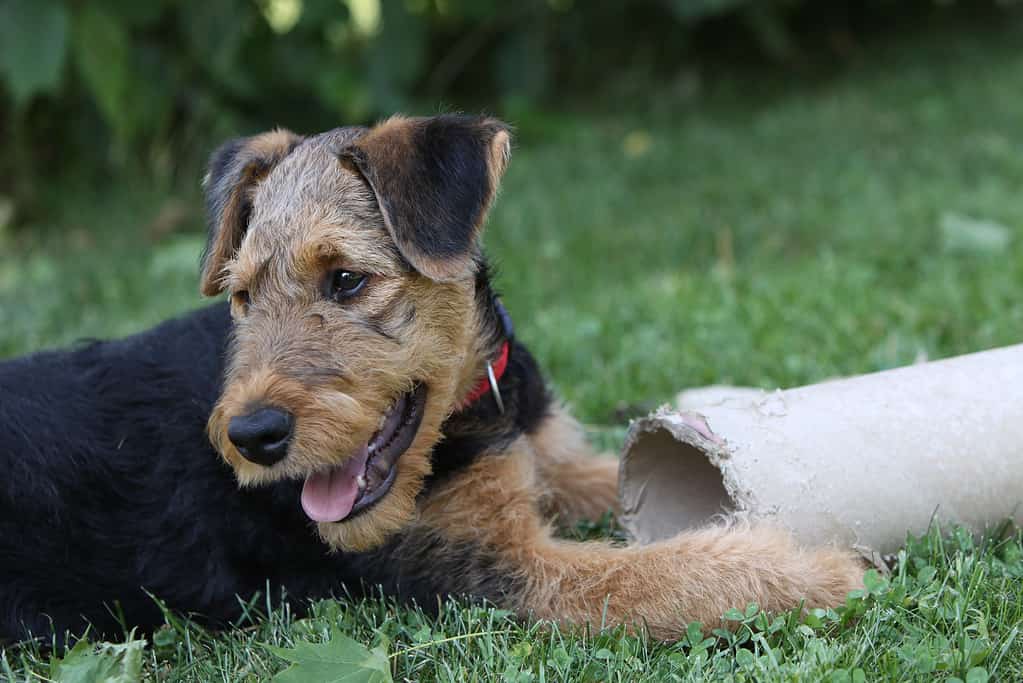
Airedale Terrier (Puppy)

Airedale terriers are great pets for a high-energy family with kids.

The Airedale’s most prevalent personality traits include independence, energy, and stamina. Airedales exhibit fun-loving and active behavior, making them great for a high-energy family with kids. Airedales don’t like to be bored. Bored Airedales often engage in destructive behavior like chewing, barking, and digging.

The Airedale’s personality is most affected by training, socialization, and genetics. Puppies displaying the most positive traits of the breed will be curious, playful, and friendly. As long as an Airedale is adequately socialized and trained, they can make good family dogs and reliable watchdogs.

Diet

The recommended amount for adult Airedale feeding is 1.5 to 2.5 cups of dry food per day. These amounts should be divided into two meals. Airedale puppies should be fed about one cup of dry puppy food daily, divided into two meals. You can also mix dry and wet food for your Airedale. Look for foods with fish oil and glucosamine, which help the Airedale’s coat and joints. You can also use supplements if necessary.
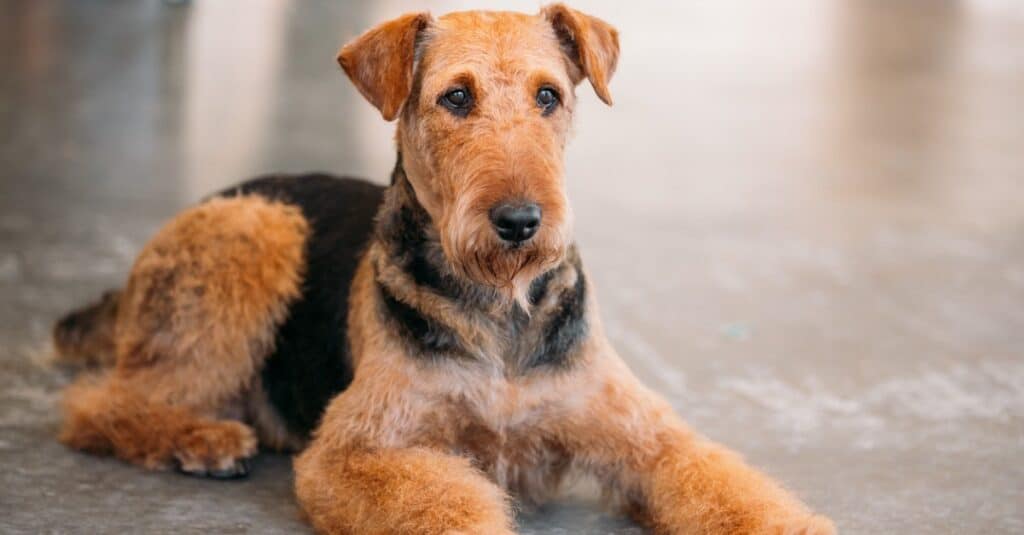
Types of terrier dogs

Airedales benefit from foods with fish oil and glucosamine to keep their coats and joints healthy.

There is a broad selection of dog foods for dogs that experience allergies, like Airedale Terriers. Many dog foods contain limited ingredients to eliminate the most common allergy-causing ingredients and additives irritating some dogs.

Airedale Terriers may have a better time eating Canidae PURE Goodness Limited Ingredient Dog Food.

This food’s primary protein source is salmon, so dogs that react badly to chicken or beef can still get a nutritious diet. Plus, there are no additives, fillers, mysterious by-products, or pesky soy, corn, or wheat that can also irritate sensitive dogs like Airedale Terriers. It only has high-quality ingredients offering plentiful vitamins, antioxidants, and probiotics for healthy joints, skin, coat, and stomach.

Maintenance And Grooming
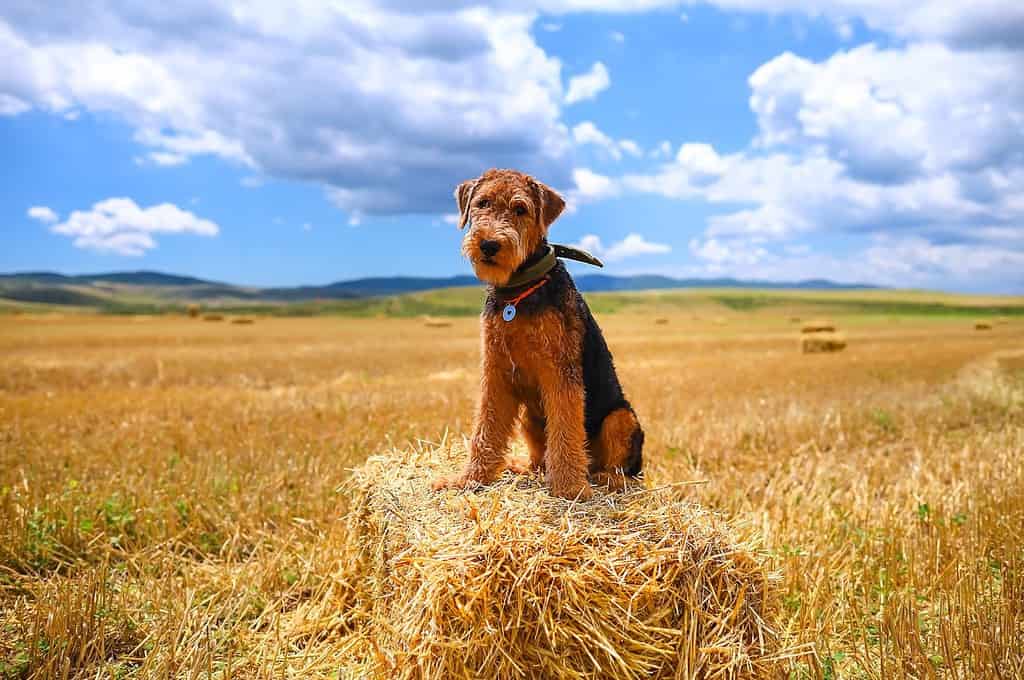
An Airedale terrier puppy sits in a field on a haystack.

Airedales are easy to care for and only require one trip to the groomer a year.

The Airedale is known as a hypoallergenic breed as they shed rarely to a few times yearly. Occasional brushing with a brush made for wiry coats can help remove these dead hairs and keep your Airedale looking civilized. Airedales only need to visit the groomer once per year. Too much bathing can make the Airedale’s coat too soft. The coat can be trimmed with clippers or with a stripping knife. Most groomers use a mix of both techniques.

Training

Compared to other breeds, the Airedale terrier is challenging to train. They are very independent and have a stubborn streak. They need plenty of positive reinforcement, and yelling or roughness doesn’t work well. However, Airedales are also very intelligent, responding to creative and stimulating training. Make sure to start training early to avoid any willfulness setting in.
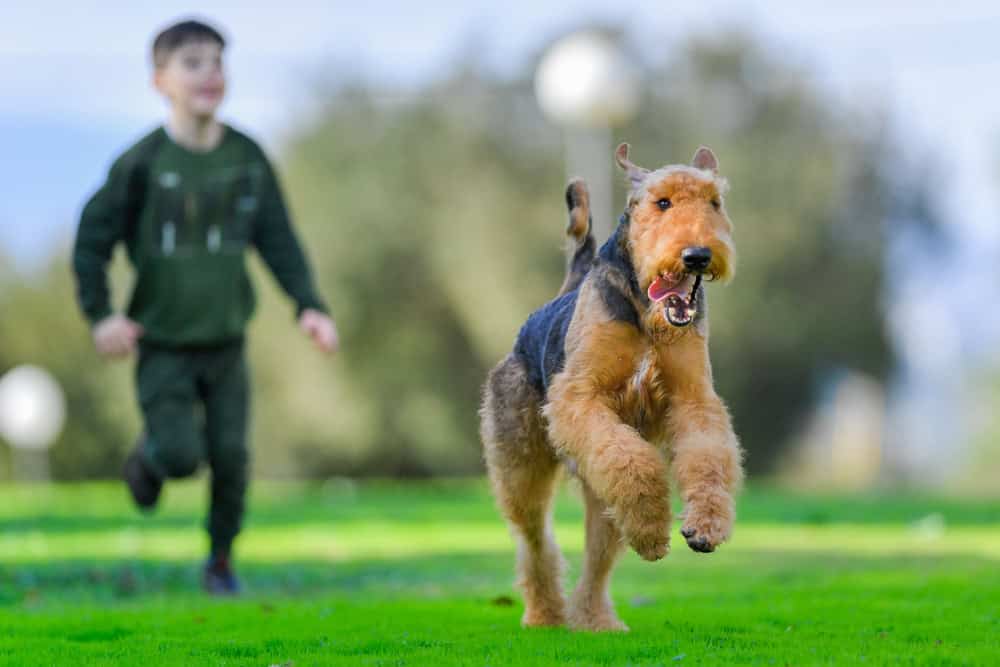
A two-year-old Airedale Terrier dog runs free

Airedale terriers are energetic dogs and require plenty of exercise.

Exercise

Airedales need plenty of exercise and entertainment. They were bred as working dogs and would get bored quickly if they had nothing to do. The best situation for an Airedale is a large property with a tall fence. Then, they can run and explore to their heart’s content. If you don’t have that, you’ll have to ensure that your Airedale gets daily walks and/or time at a park where he can run free.

Puppies

Airedale puppies need to be trained and socialized from a young age. They have a lot of energy and curiosity. They also like to chew, so it’s important that you provide plenty of approved chewing objects to keep them from finding shoes and furniture to chew on.
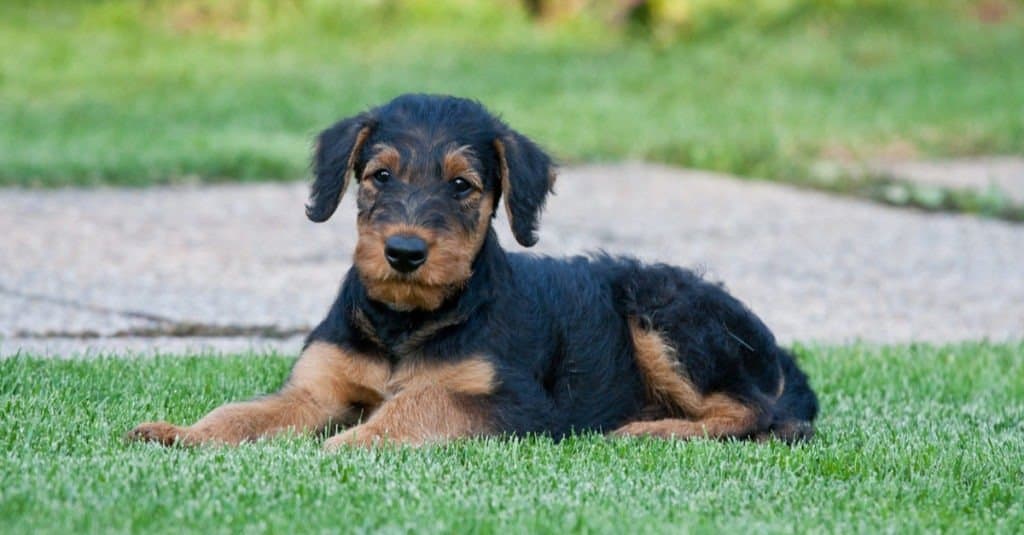
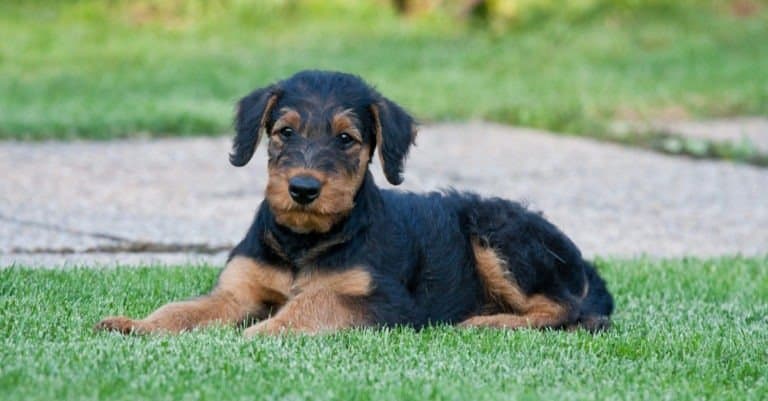
airedale terrier puppy laying the grass

Airedale Terrier puppies are great with children. They can be quite playful and rambunctious.

Airedale Terrier And Children

Airedales are typically good with children when socialized early. They have incredible protective instincts and can sense who is part of their family and who isn’t. They will often protect and guard their children when strangers are present. However, Airedale puppies are very rambunctious and larger than the average puppy, which sometimes can be too much for small children.

Common Health Issues
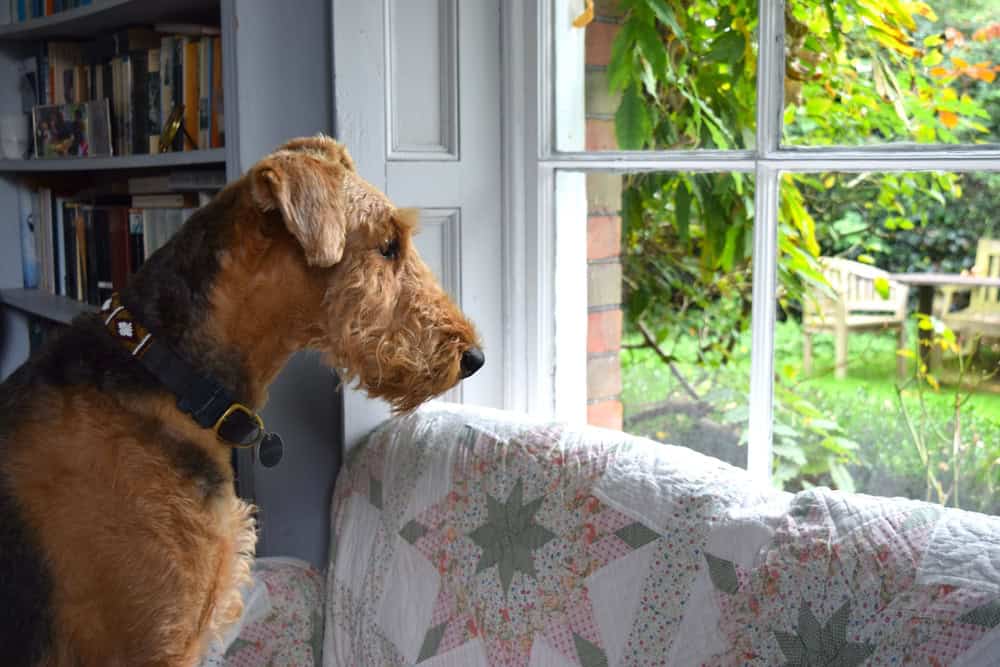
Airedale terrier dog in home interior

Airedale terriers are generally healthy but can suffer from hip dysplasia.

The Airedale is a generally healthy breed with a few common health issues. It’s important to be aware of the breed’s potential health issues before pursuing a purchase. A good breeder should be able to show you health clearances for hip dysplasia, elbow dysplasia, von Willebrand’s disease, and hypothyroidism.

The most common issues with Airedales are hip dysplasia and eye problems that result in vision loss. Hip dysplasia is a common problem in larger breeds and affects the dog’s ability to move around as they age. Another problem to look out for in Airedales is gastric dilatation-volvulus, also commonly called bloat. Bloat can occur if the dog exercises too soon after eating. Airedales may also suffer from food and contact allergies. Lastly, von Willebrand’s disease is a blood clotting disorder that may affect Airedales between three and five years of age.

Famous Airedale Terriers
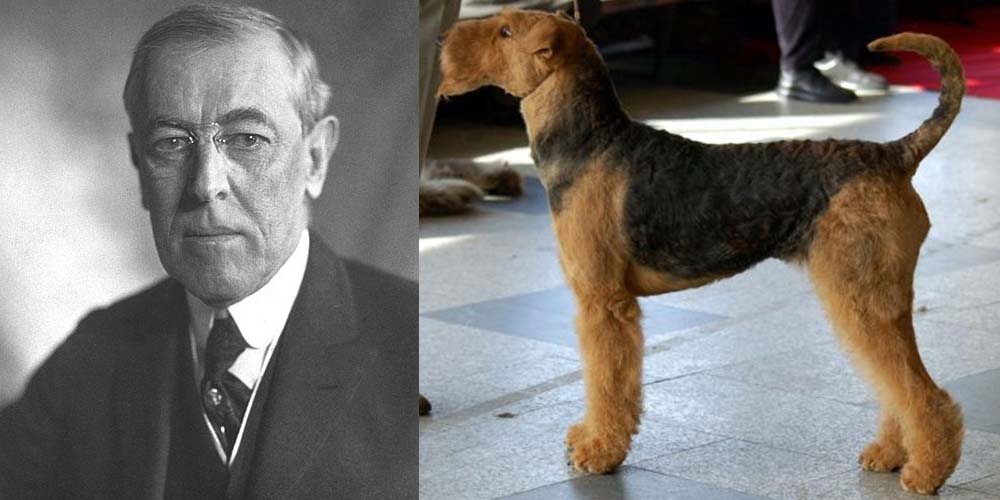
President Harding had an Airedale terrier named Laddie Boy.

Airedales have long been a popular dog in America, but they somewhat fly under the radar in terms of media coverage. However, there have been some famous examples of the breed through the years.

• President Warren G. Harding owned an Airedale named Laddie Boy
• Actor John Wayne owned an Airedale named Duke
• Various episodes of the cartoon Family Guy feature an unnamed Airedale

Laddie Boy was arguably the most famous Airedale and was doted on by an adoring country and press. “Letters” from the dog were published in the New York Times. President Harding loved his dog and had statues and portraits made of Laddie Boy.

John Wayne’s Airedale, the Duke, originated the actor’s famous nickname. The actor had the dog growing up, and people began calling Wayne Big Duke and the dog Little Duke.

View all 326 animals that start with A

Sources

  1. wikipedia / Published February 4, 2021
  2. wikipedia / Published February 4, 2021
  3. dogtime.com / Published February 4, 2021
  4. terriercenter.com / Published February 4, 2021
  5. doglime.com / Published February 4, 2021
  6. thepaws.net / Published February 4, 2021
  7. petbudget.com / Published February 4, 2021
  8. wagwalking.com / Published February 4, 2021
Abby Parks

About the Author

Abby Parks

Abby Parks has authored a fiction novel, theatrical plays, short stories, poems, and song lyrics. She's recorded two albums of her original songs, and is a multi-instrumentalist. She has managed a website for folk music and written articles on singer-songwriters, folk bands, and other things music-oriented. She's also a radio DJ for a folk music show. As well as having been a pet parent to rabbits, birds, dogs, and cats, Abby loves seeking sightings of animals in the wild and has witnessed some more exotic ones such as Puffins in the Farne Islands, Southern Pudu on the island of Chiloe (Chile), Penguins in the wild, and countless wild animals in the Rocky Mountains (Big Horn Sheep, Mountain Goats, Moose, Elk, Marmots, Beavers).
Connect:

Thank you for reading! Have some feedback for us?


Airedale Terrier FAQs (Frequently Asked Questions)

Airedale Terriers are Omnivores, meaning they eat both plants and other animals.