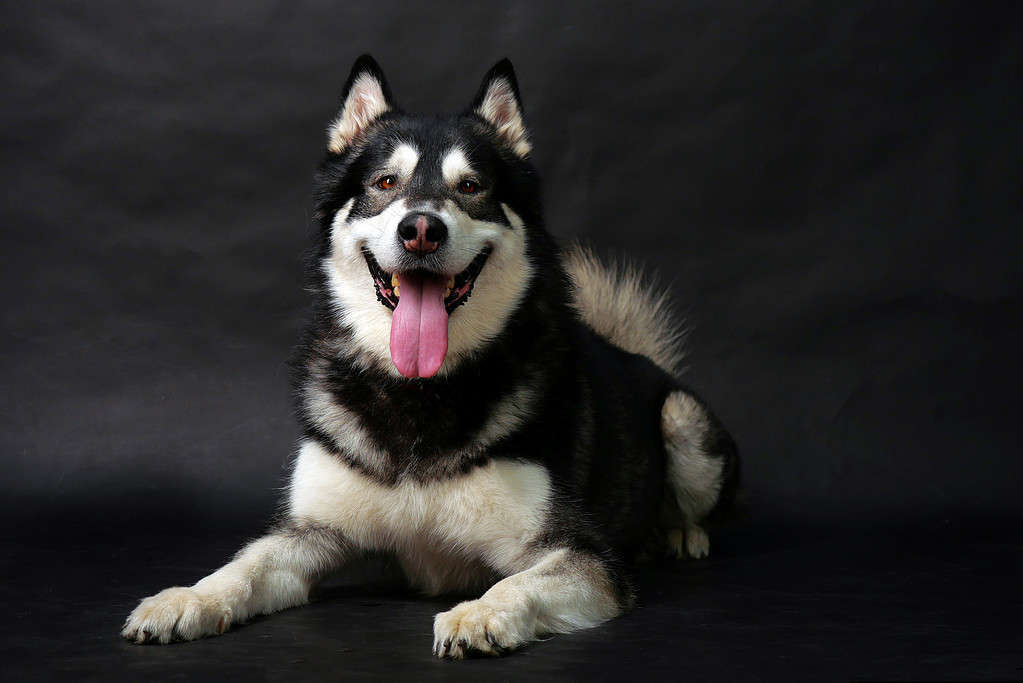


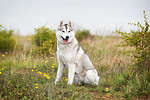
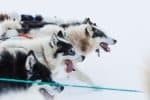
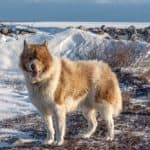

A member of the spitz family of dog breeds and bred by the Inuit people to pull their sleds, the Alaskan Malamute is similar in appearance to the Siberian husky, but when standing side by side, the giant, fluffy Malamute dwarfs the husky.
This friendly, intelligent, and energetic breed makes them the perfect pet for an active family, even one with small children. Their playful and affectionate nature ensures that they do well in such an environment. However, as with any animal — large or small — it is important to teach both dog and child how to safely interact with each other and to never leave children unsupervised with an Alaskan Malamute (or any dog, really), no matter how well-behaved it may be.
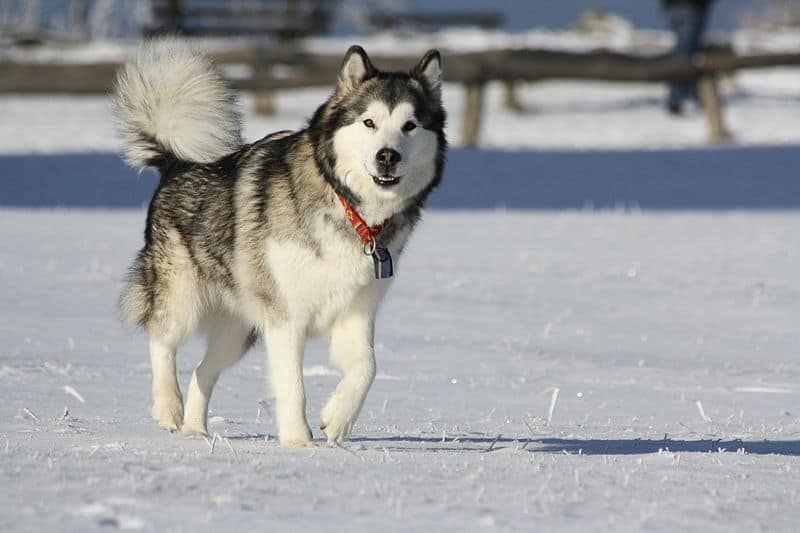
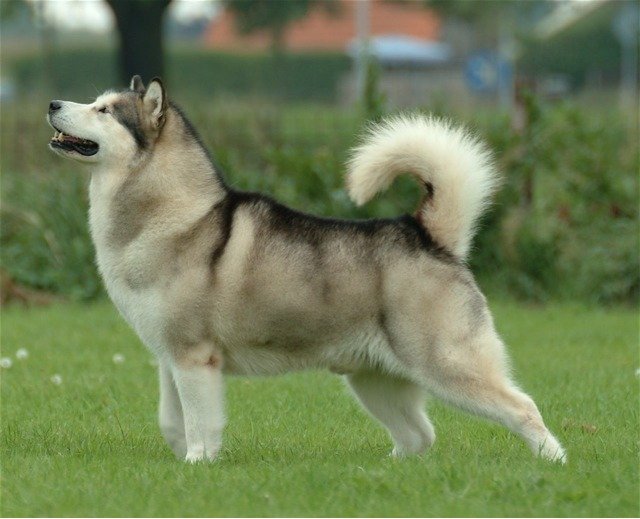
Alaskan Malamutes are highly intelligent, social, energetic, and highly affectionate.
©Carina Wicke Photographer, CC BY-SA 3.0, via Wikimedia Commons – Original / License
Alaskan Malamutes love spending their time around people, including with strangers, so they do not make the best guard dogs. And they do have a bit of a stubborn streak, so owners need to establish themselves as a leader at the start with gentle but consistent training. Furthermore, their highly energetic nature and near-constant need for attention can make them a handful, but with time and patience, this breed makes a wonderful companion for people of all ages.
Evolution and Origins
The Alaskan Malamute, one of the largest breeds of domestic dogs to originate in the Arctic region of Alaska, was bred by the Mahlemiut Inuit people as heavy freighting sled dogs. They were and are used for hunting and hauling heavy loads over long distances in harsh, arctic conditions. Considered one of the oldest Arctic sled dog breeds, the Alaskan Malamute is one of the most prominent Arctic sled dog breeds, alongside the Siberian Husky and the Samoyed, though the latter two originated in Siberia, not Alaska.
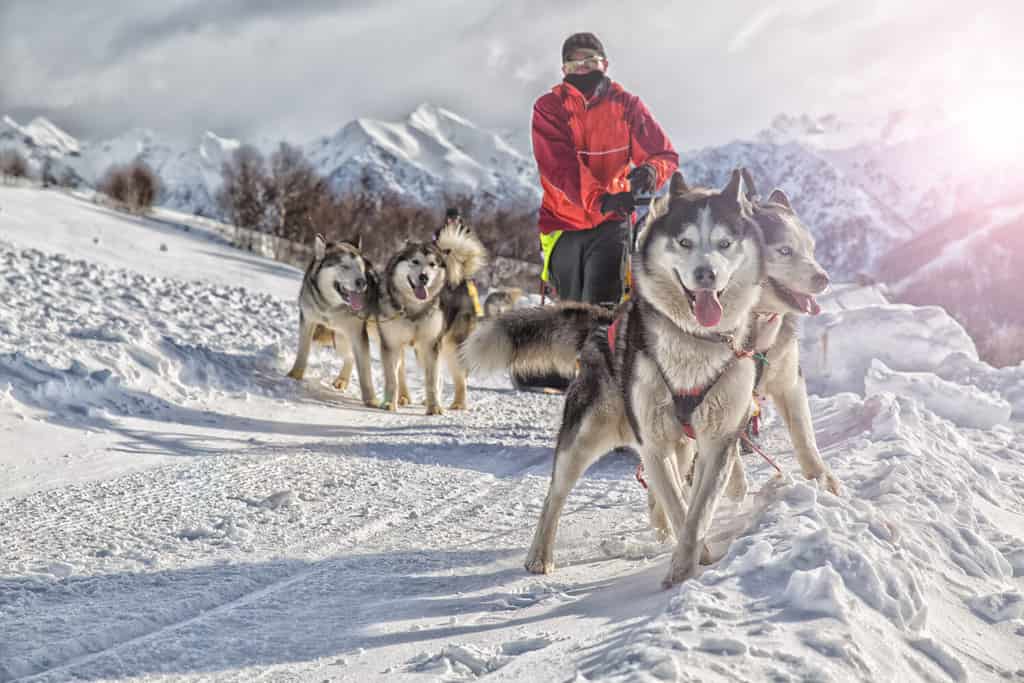
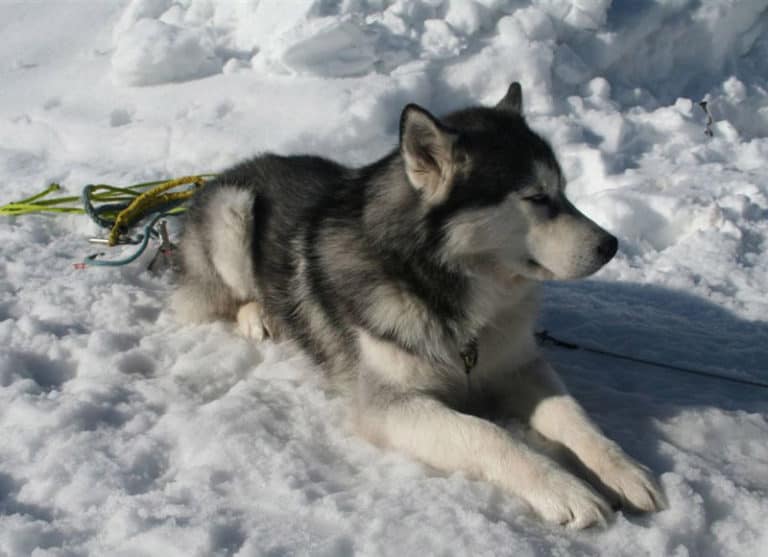
The Alaskan Malamute originated as Inuit-bred sled dogs.
©freevideophotoagency/Shutterstock.com
During the gold rush of the late 1800s, prospectors used the Alaskan Malamute to pull sleds loaded with supplies and equipment. The breed’s popularity grew as people began to recognize their strength, endurance, and loyalty. In 1935, the American Kennel Club recognized the Alaskan Malamute as a distinct breed, and while this dog is still used for sledding, carting, and pulling heavy cargo, it now enjoys a reputation as a great family dog.
Appearance
The Alaskan Malamute’s most striking feature is the distinctive markings on the face, creating a mask of sorts. The point where the colored or darker portion of the mask meets the white or lighter-colored fur creates the appearance of a sweetheart pattern above the eyes.
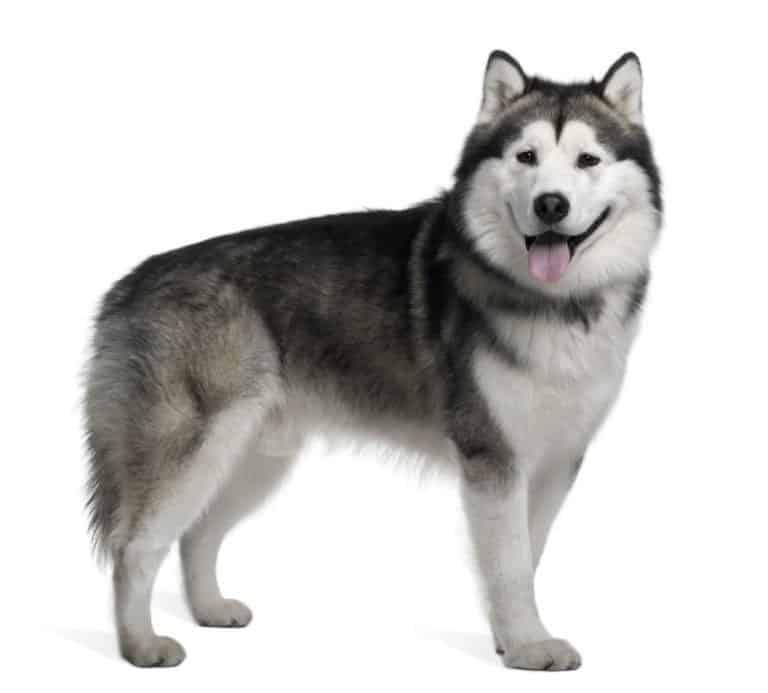
This breed is quite large, weighing between 75 and 100 pounds and standing between 23 and 25 inches in height at the shoulder. As is typical in the animal kingdom, males tend to be larger than females. Compared to the size of the Alaskan Malamute’s head, its ears seem small, albeit triangular in shape. Their eyes are medium in size, brown, and almond-shaped.
The breed’s double-coated fur comes in a variety of colors, but the most common color combinations are black and white, grey and white, and red and white. Their beautiful, fluffy tails curl gently over their backs.
While the Alaskan Malamute and the Siberian Husky share many similar qualities in both temperament and appearance, the differences are quite distinct. First, the Alaskan Malamute is significantly larger than the husky. Second, the husky’s head is smaller, and its ears are closer together. Third, huskies have bright blue eyes, a feature a Malamute will not have. And fourth, while they are often similar in color, only a Siberian husky can have agouti coloring, a feature of fur coloration in which single hairs have two and sometimes more bands of pigmentation.
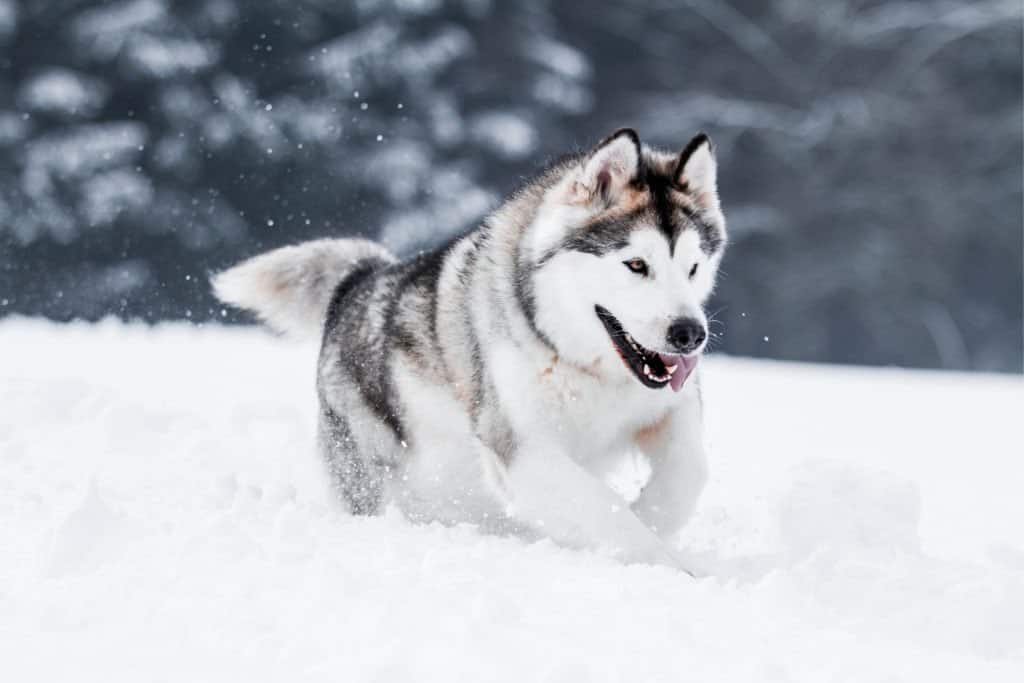
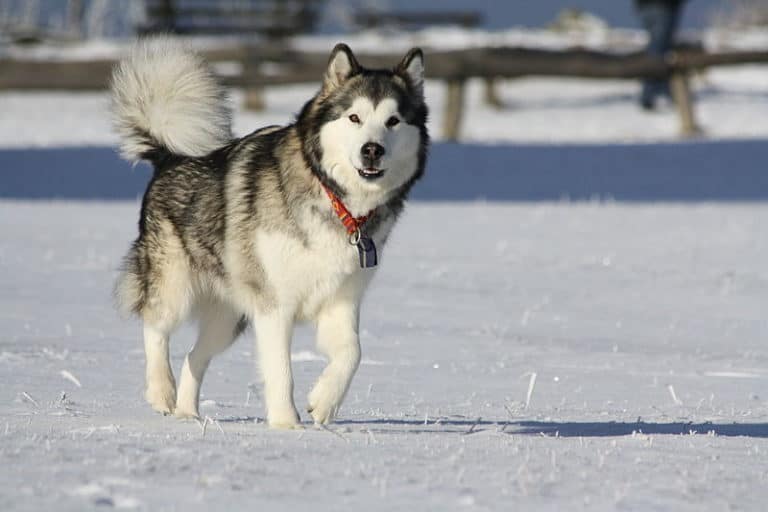
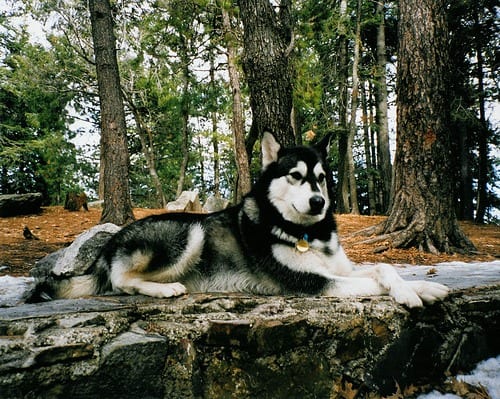
Focused and in its preferred habitat, this Alaskan Malamute runs through the snow with ease.
©Aneta Jungerova/Shutterstock.com
Common Health Issues
Like many other large dog breeds, Alaskan Malamutes are genetically predisposed to hip and elbow dysplasia — a skeletal condition that factors such as improper weight and unbalanced nutrition, among other things, can exacerbate. Other hereditary conditions this breed is prone to are thrombopathia, which creates clotting issues, and inherited polyneuropathy, which can cause nerve damage over time, as well as limb and facial paralysis, spatial disorientation, and a slowed heartbeat.
Malamutes are also known to suffer from chondrodysplasia (dwarfism), hypothyroidism, day blindness, and von Willebrand’s disease, a bleeding disorder.
As with any purebred animal, the key to reducing these complications is responsible breeding. Breeders can and should screen for many of these conditions. It will help both the owner and the dog if you screen breeders and have your new family member evaluated by a veterinarian.
One option for managing potential health issues in this breed, given its susceptibility to several debilitating conditions, is to consider purchasing pet insurance. The younger the dog is when you insure it, the less likely it is that a pre-existing condition will disqualify it from coverage.
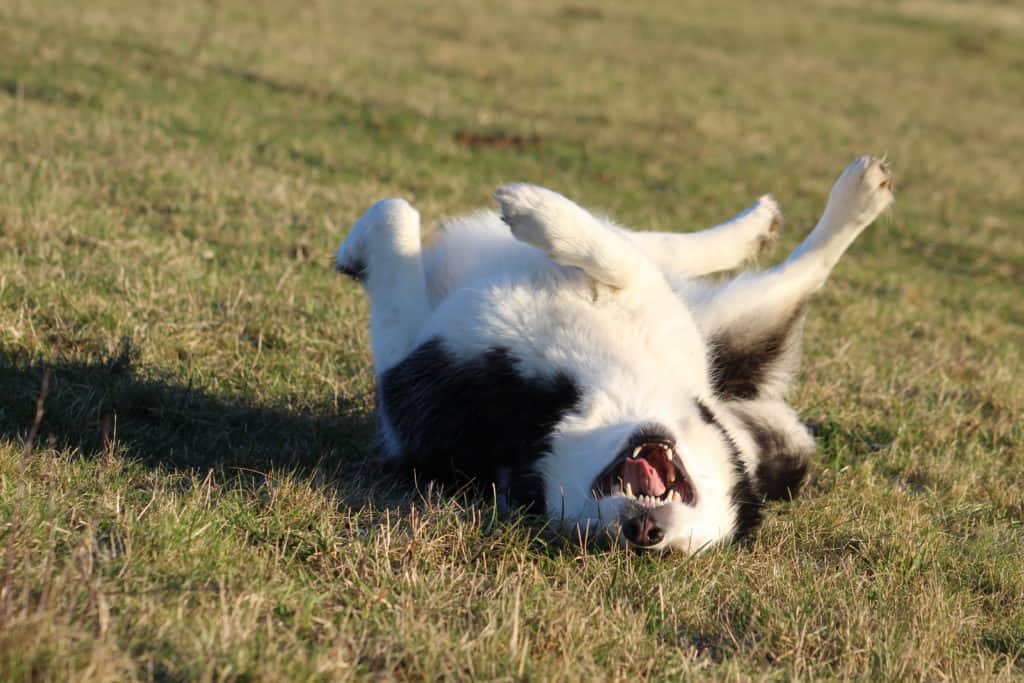
This Alaskan Malamute displays its playful side.
©Mythliss/Shutterstock.com
Temperament
The Alaskan Malamute leaves no human a stranger for long, so it is not advised to rely on them as a guard dog. And despite their being in the spitz family of dogs, many of the breeds of which are known for being nuisance barkers, the Malamute is comparatively quiet, so you’ll rarely, if ever, be alerted to the presence of a human newcomer — whether friend or foe. They do, however, like to “talk” with their owners, letting out an occasional howl.
This breed has a strong prey drive, so a home with small animals may not be suitable for the smaller creature’s survival. They also need to be secured at all times; even well-trained Malamutes have been known to run from their pack leader (i.e., you) if the mood strikes them. In that same vein, it is recommended that this breed be crate trained for both their safety and overall comfort.
As with most working dogs, frequent and engaging exercise is key to a happy, healthy Malamute. Veterinarians recommend a minimum of two hours of exercise daily for this breed. Without a proper outlet for this high-energy breed, your dog may turn to destructive behaviors to occupy his time.
The Best Dog Food for Alaskan Malamutes
Alaskan Malamutes have no particular dietary concerns and should be able to stay healthy on high-quality dog food. As with any breed, make sure you feed your Malamute according to its healthy weight maintenance requirements, taking care to include treats when calculating the dog’s daily caloric intake.
If your Alaskan Malamute’s shedding is becoming excessive, there are dog foods that can help manage shedding. Otherwise, you want extremely high-quality, nutrient-dense dog food for your Malamute to keep it full, energetic, and at a healthy weight.
Maintenance and Grooming
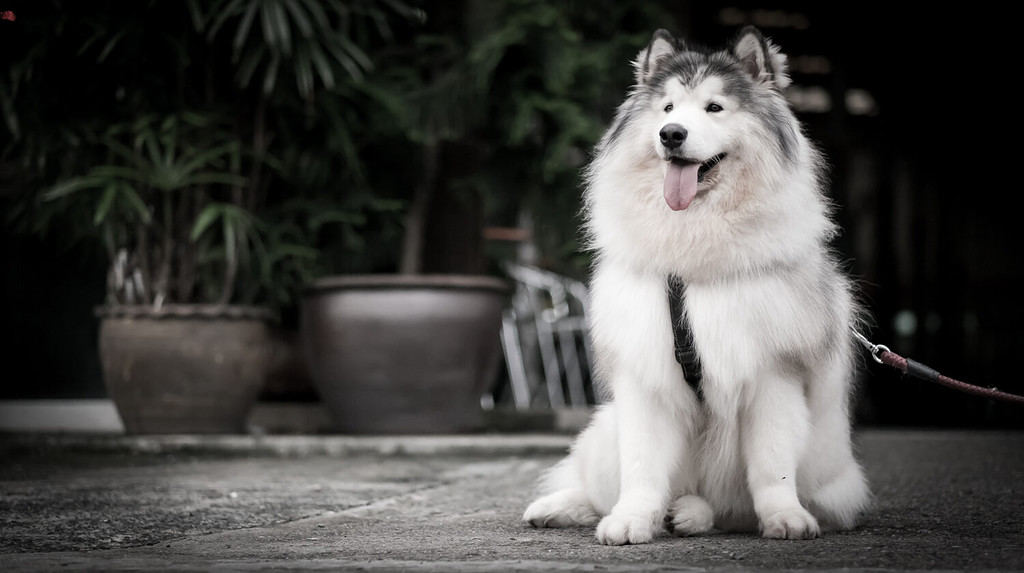
Alaskan Malamutes need to be brushed daily when they blow their coats, twice a year.
©Tatar CCube/Shutterstock.com
Alaskan Malamutes are fairly low-maintenance dogs in terms of their grooming needs. They do not have a strong odor and only need bathing every 6 to 8 weeks. Their coats do not require any special trimming, but they do need brushing a few times a week to cut down on hair fall. These dogs shed year-round and blow their coats twice a year. During the blowing period, it helps to brush these dogs daily to keep from finding tufts of their hair around your home.
Beyond coat care, grooming is simple and straightforward. All you need to do is brush their teeth, clean their ears often, and trim their nails each month to keep your Malamute groomed.
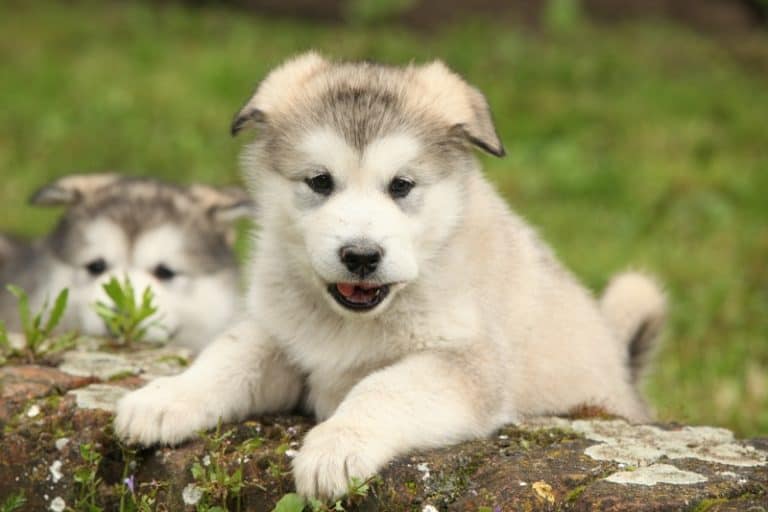
Puppies
©Zuzule/Shutterstock.com
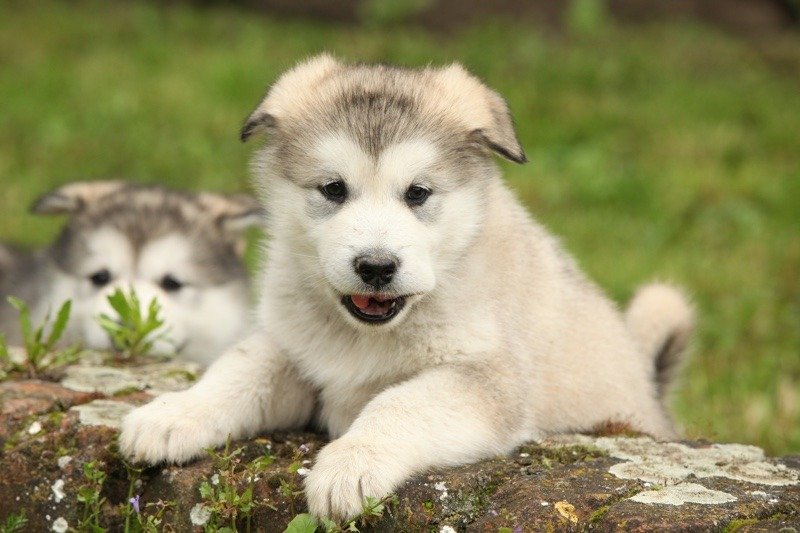
Before bringing home your Alaskan Malamute puppy, puppy-proof your home. This high-energy breed is notoriously destructive when bored. Toys dedicated to them are helpful in properly directing their attention, as is training, which should start early.
The Alaskan Malamute can begin learning basic commands, such as “sit” and “stay,” in a controlled environment as early as 8 to 9 weeks old. Light but consistent training also helps to form a bond between you and your Malamute and ensures that this dog knows you are the pack leader.
Once Alaskan Malamutes have their required vaccinations, consider enrolling them in obedience training or puppy kindergarten to help direct their energy and further socialize them.
Alaskan Malamute Pictures
View all of our Alaskan Malamute pictures in the gallery.

Carina Wicke Photographer, CC BY-SA 3.0, via Wikimedia Commons
Sources
- DogTime / Accessed January 23, 2025
- O'Mal Malamutes / Accessed January 23, 2025
- Vet Street / Accessed January 23, 2025
- American Kennel Club / Accessed January 23, 2025
- Embrace Pet Insurance / Accessed January 23, 2025
- PetMD / Accessed January 23, 2025
- PerfectDogBreeds.com / Accessed January 23, 2025
- Hello Bark / Accessed January 23, 2025