


A
Species Profile

American Alligator

Alligator mississippiensis

U-snout wetland engineer
GoodFocused/Shutterstock.com

American Alligator Distribution

Click a location to explore more animals from that region

Loading map...
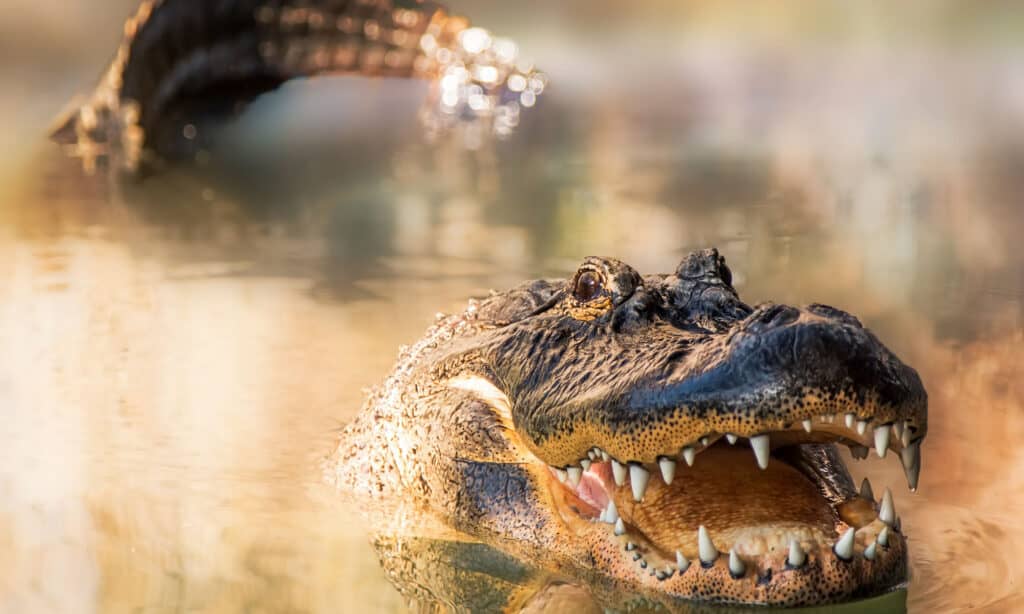
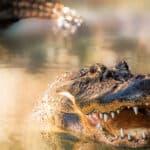
Alligator in Lake

At a Glance

Wild Species
Also Known As Gator, American gator, Mississippi alligator
Diet Carnivore
Activity Cathemeral+
Lifespan 40 years
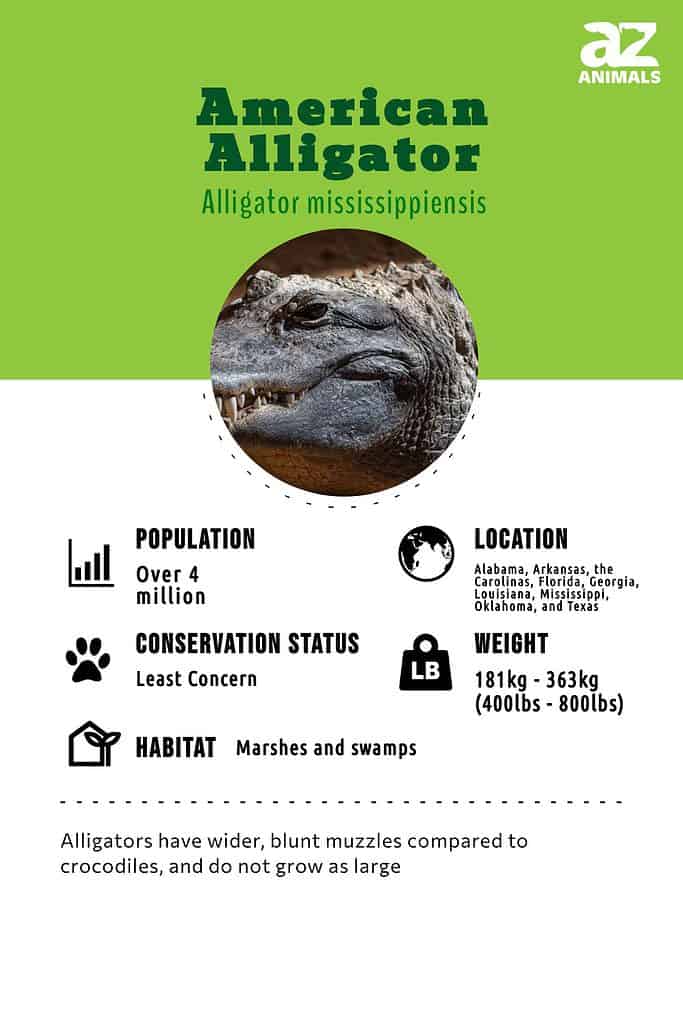
Weight 450 lbs
Status Least Concern
Did You Know?

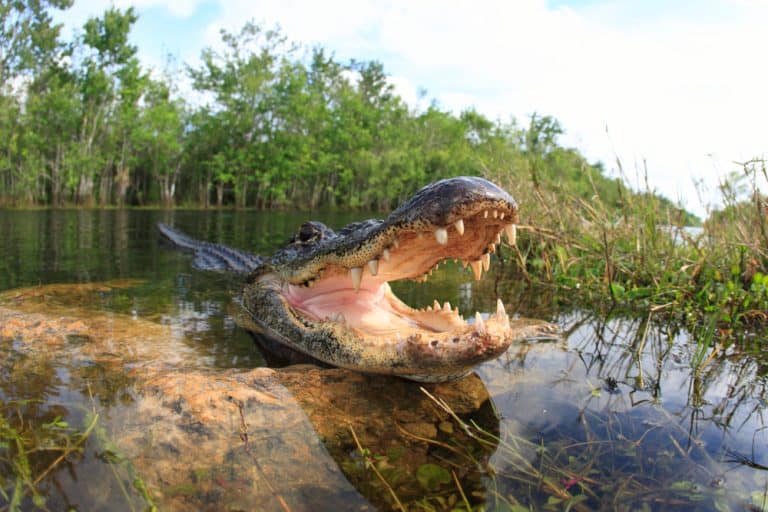
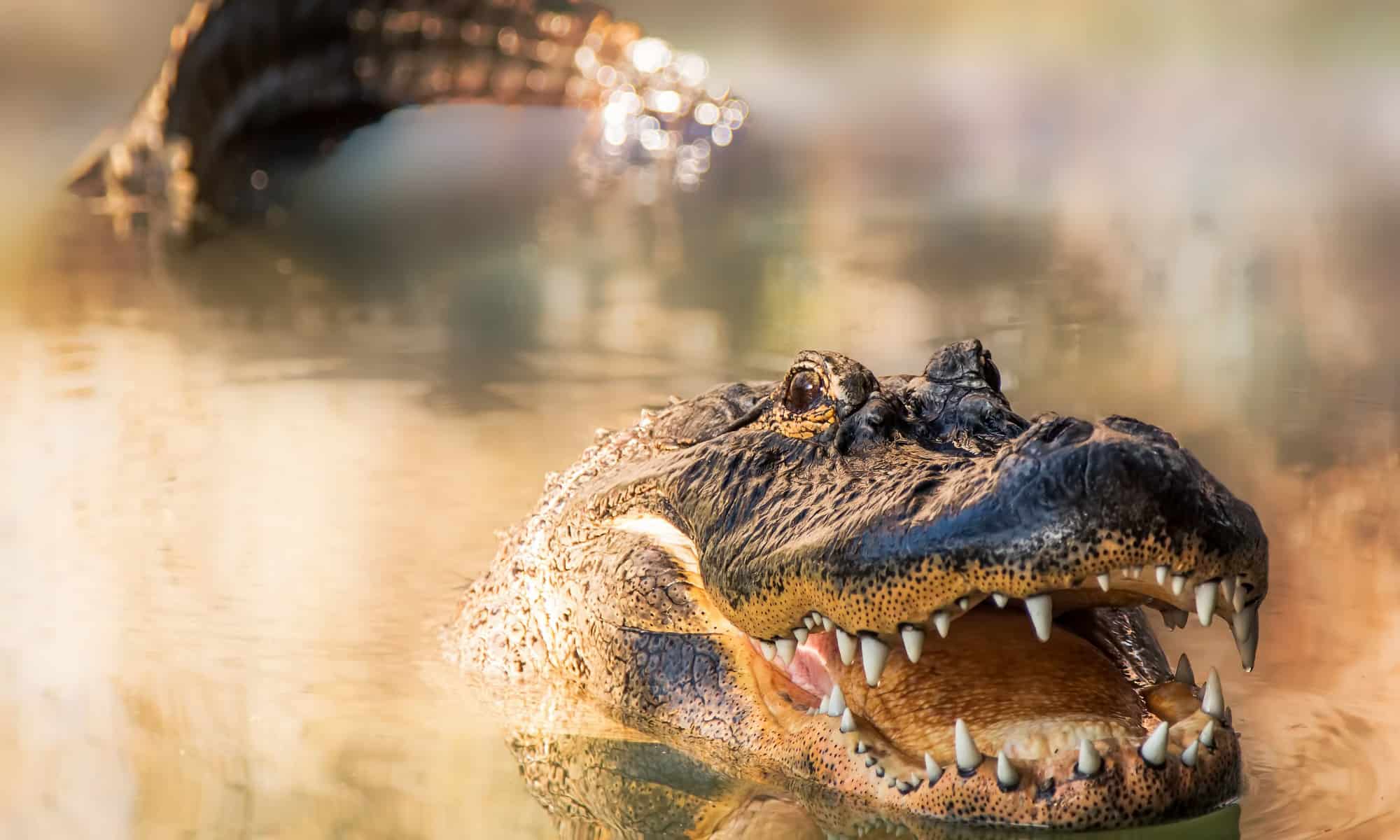
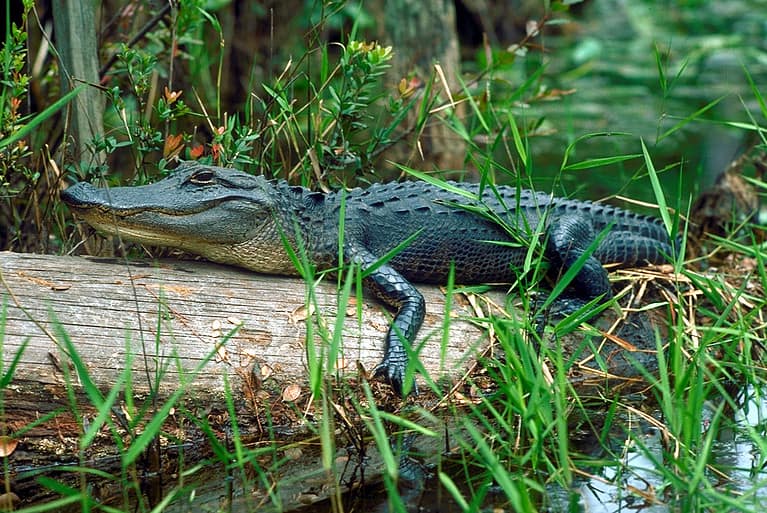
Snout & teeth ID: American alligators have a broad U-shaped snout; when the mouth is closed, the lower 4th tooth is typically hidden (unlike crocodiles, where it shows).

Scientific Classification

A large North American crocodilian and apex/keystone wetland predator, characterized by a broad U-shaped snout, dark armored body, and powerful tail. It is one of the most recognizable reptiles of the southeastern United States.

Kingdom
Animalia
Phylum
Chordata
Class
Reptilia
Order
Crocodylia
Family
Alligatoridae
Genus
Alligator
Species
Alligator mississippiensis

Distinguishing Features

  • Broad, rounded (U-shaped) snout compared with most crocodiles
  • Upper jaw largely hides the lower teeth when the mouth is closed (unlike crocodiles where teeth interlock visibly)
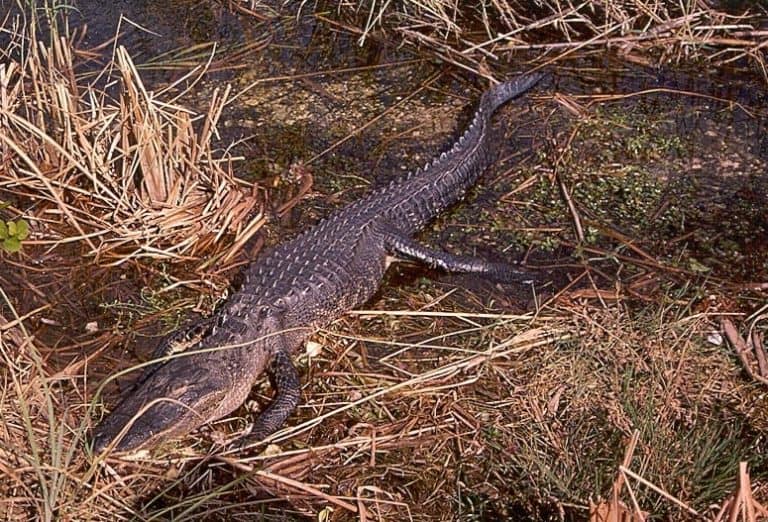
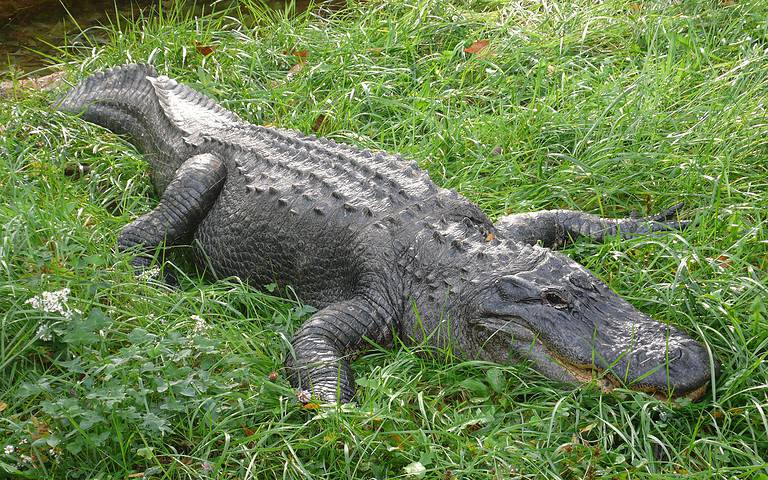
  • Dark gray to black coloration with heavy dorsal scutes (armor)
  • Primarily freshwater affinity; limited salt tolerance (uses salt glands less effectively than true crocodiles)
  • Large males commonly 3–4 m; females smaller; can produce low-frequency bellows and exhibit nest-guarding

Physical Measurements

Males and females differ in size

Length
11 ft 2 in (8 ft 10 in – 15 ft 1 in)
8 ft 6 in (5 ft 11 in – 9 ft 10 in)
Weight
507 lbs (198 lbs – 992 lbs)
198 lbs (55 lbs – 331 lbs)
Tail Length
5 ft 7 in (4 ft 3 in – 7 ft 7 in)
4 ft 5 in (2 ft 11 in – 5 ft 3 in)
Top Speed
20 mph
Swim 32 km/h; run 17–18

Appearance

Primary Colors
Secondary Colors
Skin Type Thick, heavily keratinized scaly skin with prominent dorsal scutes reinforced by bony osteoderms (armored back); rough, pebbled texture; sensory integumentary organs around jaws for detecting water movement; eyes and nostrils positioned dorsally for low-profile floating.
Distinctive Features
  • Broad, rounded U-shaped snout (diagnostic vs. the narrower, more V-shaped snout typical of many crocodiles).
  • Tooth-visibility difference vs. crocodiles: when the mouth is closed, the enlarged 4th lower tooth is generally not visible in American alligators (it fits into an upper-jaw socket), whereas it is typically visible in crocodiles.
  • Dark, heavily armored dorsal surface with raised scutes; powerful laterally flattened tail for propulsion.
  • Dorsal placement of eyes/nostrils plus a palatal valve enables breathing while most of the body remains submerged; a nictitating membrane protects the eye underwater.
  • Adult American alligators (Alligator mississippiensis): males are much larger than females; males commonly about 3.4 m, females about 2.5 m, with rare very large males about 4.6 m.
  • Longevity: often several decades in the wild (commonly ~30-50+ years) and can exceed 60 years under human care in documented husbandry records (reported in major zoological and wildlife-agency references).
  • Freshwater wetland ecology: predominantly associated with marshes, swamps, rivers, and lakes across the southeastern United States; tolerates some brackish water but is not primarily a saltwater species.
  • Keystone "ecosystem engineer": creates/maintains depressions known as "gator holes," which retain water during dry periods and concentrate prey, benefiting many wetland species (well documented in southeastern wetland ecology literature and agency syntheses).
  • Reproduction/behavior tied to appearance and habitat use: females build vegetation nest mounds; maternal care includes guarding nests and responding to hatchling vocalizations (commonly described in USFWS/state agency natural history accounts).
  • Conservation history: recovered from severe historical overharvest through protection and regulated management; now broadly stable under managed conservation and regulated harvest frameworks in much of its range (summarized by USFWS and state wildlife agencies).

Sexual Dimorphism

Strong sexual size dimorphism: males are substantially larger and more robust than females. Standard agency summaries commonly report adult males averaging around ~3.4 m and adult females around ~2.5 m, with males also developing proportionally broader heads and heavier neck/torso mass (as summarized in USFWS and state wildlife agency references).

  • Typically much larger total length and body mass than females of the same age class; very large adult males can approach ~4.6 m in rare, well-documented cases.
  • Broader, more massive head and snout; thicker neck and heavier trunk give a more blocky profile.
  • More pronounced jowl/temporal musculature and overall bulk, especially in mature territorial males.
  • Smaller average adult size (commonly ~2.5 m in many field summaries) and slimmer overall build.
  • Head and snout proportionally narrower and less massive than adult males.
  • Gravid females may show temporary abdominal distension during the nesting season; otherwise typically more streamlined than males.

Did You Know?

Snout & teeth ID: American alligators have a broad U-shaped snout; when the mouth is closed, the lower 4th tooth is typically hidden (unlike crocodiles, where it shows).

Size: adult males commonly reach ~3.4 m; adult females ~2.6 m (IUCN species accounts/Crocodile Specialist Group summaries). Very large males can exceed 4 m.

Longevity: commonly ~30-50 years in the wild; individuals can exceed 60 years in captivity (zoo longevity records; USFWS/CSG summaries).

Built wetlands: by excavating "gator holes," they create refuges that hold water in dry periods and concentrate fish, invertebrates, turtles, and birds-boosting local biodiversity (wetland ecology literature on alligator-engineered habitats).

Temperature decides sex: eggs exhibit temperature-dependent sex determination; incubation near ~33 °C tends to produce more males, while cooler (~30 °C) tends to produce more females (classic TSD work: Ferguson & Joanen).

Recovery milestone: protected under the U.S. Endangered Species Preservation Act/ESA-era listings, the species rebounded and was federally delisted in 1987; today it's widely managed via regulated harvest and habitat protections (USFWS).

Vocal powerhouse: males "bellow" and can do a head-slap/water dance during courtship-low-frequency sound and water vibrations carry far in marshes (behavioral studies; field observations).

Unique Adaptations

  • Broad, U-shaped snout with strong crushing bite-well-suited for hard prey like turtles (functional morphology studies).
  • Osteoderms (bony scutes) form armored skin that also aids heat exchange while basking.
  • Internal (palatal) valve lets them open the mouth underwater without flooding the throat-enabling stealth ambush and submerged handling of prey.
  • Integumentary sensory organs around the jaws detect water pressure changes-helpful for locating prey in dark or turbid water.
  • Four-chambered heart and specialized circulation allow efficient diving and selective blood shunting during prolonged submergence (crocodilian physiology literature).
  • Temperature-dependent sex determination links nesting microclimate (vegetation, mound height, moisture) to offspring sex ratios-an adaptation tied to mound nesting ecology.

Interesting Behaviors

  • Courtship displays: spring breeding includes bellowing, head-slaps, bubble streams, and "water dance" ripples; pairs may circle and rub snouts before mating.
  • Maternal care: females build a mound nest of vegetation/mud, guard it, respond to hatchling "yelps," and often help open the nest and escort young to water.
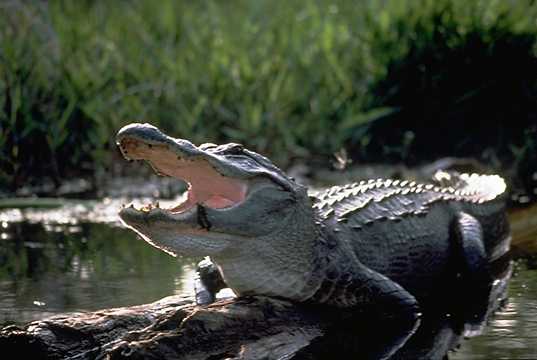
  • Basking & thermoregulation: frequent basking on banks/logs; they shuttle between sun and water to regulate body temperature.
  • Brumation (cold-season dormancy): in cooler months they reduce activity and may shelter in burrows; in icy conditions they can hold their snout at the surface ("icing") to breathe.
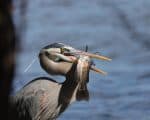
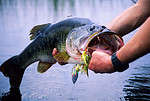
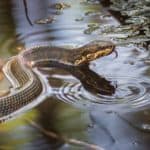
  • Sit-and-wait predation: ambush from cover at the water's edge; juveniles focus on insects/crustaceans, while large adults take fish, turtles, snakes, birds, and mammals (diet shifts documented in stomach-content studies).
  • Territoriality & spacing: adult males maintain breeding territories and use vocalizations and postures to signal size/strength; conflicts peak in breeding season.
  • Ecosystem engineering: repeated use of trails and wallows opens channels through vegetation, improving water flow and access for other animals.

Cultural Significance

American alligator (Alligator mississippiensis) is an icon of the southeastern US, key to wetlands, tourism, and folklore. Once hunted and losing homes, it was saved by laws and now supports regulated hunting, ranching, leather, and helps wetland life.

Myths & Legends

In Southern Br'er Rabbit tales from African American folklore, Br'er Alligator shows up at river crossings, where tricksters outsmart or bargain with him, showing real danger of waterways.

Southeastern Native American trickster river and swamp tales tell how smaller animals, often Rabbit, outsmart Alligator at the water's edge, teaching respect for wetlands and warning about the danger of crossing them.

In Gulf Coast and bayou storytelling, alligators are frequent omens and setting-definers-appearing in cautionary tales told to keep children away from deep water, hidden channels, and marsh edges where a 'big gator' might be waiting.

Early colonial and frontier travel narratives and local lore often framed the alligator as the emblematic 'guardian' of Southern swamps-an animal whose presence marked the boundary between safe dry ground and the wild wetland interior.

Conservation Status

LC Least Concern

Widespread and abundant in the wild.

Population Increasing

Protected Under

  • CITES Appendix II (regulated international trade in skins/meat and products)
  • U.S. Endangered Species Act: listed as Threatened due to Similarity of Appearance (trade regulation and enforcement tool; species recovered and was delisted from endangered/threatened status based on extinction risk in 1987)
  • State-level protection and regulated harvest programs across range states (e.g., FL, LA, TX, GA, AL, MS, SC, NC) including permits/quotas and nuisance-alligator control frameworks

Life Cycle

Birth 35 hatchlings
Lifespan 40 years

Lifespan

In the Wild
30–50 years
In Captivity
50–70 years

Reproduction

Mating System Polygynandry
Social Structure Aggregation Group
Breeding Pattern Seasonal
Fertilization Internal Fertilization
Birth Type Internal_fertilization

American alligator (Alligator mississippiensis) are seasonal, multi‑partner breeders (polygynandry). In spring adults gather; males bellow, slap, and compete; dominant males mate. Fertilization is internal, pair bonds end after mating. Clutches may have multiple fathers; care is mainly maternal.

Behavior & Ecology

Social Congregation Group: 1
Activity Cathemeral, Crepuscular, Nocturnal, Diurnal
Diet Carnivore Fish (commonly the dominant prey category in stomach-content studies; e.g., Delany & Abercrombie 1986, Florida Scientist)
Seasonal Hibernates

Temperament

Typically wary and avoidance-oriented toward humans when not habituated; can become bold where regularly fed/conditioned (management and field observations; Rodgers et al., 2021 IUCN CSG).
Seasonally heightened aggression/territoriality in adult males during breeding (spring-early summer), with threat displays and occasional combat; most conflicts are display-based rather than prolonged fights (Rootes & Chabreck, 1993 J. Herpetol.; Vliet, 1989 Copeia).
Females are strongly defensive at nest and with hatchlings/young-of-year; approach distance tolerated is markedly reduced during guarding, and defensive charges can occur (Deitz & Hines, 1980 J. Herpetol.; Joanen & McNease parental-care studies).
HUBS pattern: across the species' range, individuals show flexible tolerance-high at shared basking/thermal sites and deep-water refuges, low in close quarters during courtship/territorial contexts; tolerance increases with habituation and high resource predictability.

Communication

Adult male and female bellowing Very low-frequency, long-range advertisement/display) prominent in breeding season; often coordinated with water 'dance' ripples from infrasonic components (Vliet, 1989, Copeia; Garrick & Lang, 1977
Juvenile/hatchling distress calls High-pitched chirps/squeaks) that elicit adult defensive responses, especially from the female (Deitz & Hines, 1980, J. Herpetol.; Vliet, 1989, Copeia
Contact calls from hatchlings within pods to maintain cohesion; audible chirping increases during disturbance and movement Vliet, 1989, Copeia
Hisses/growls/grunts used at close range during agonistic encounters, handling, or threat displays Garrick & Lang, 1977; Vliet, 1989
Head-slaps on the water surface as a visual/acoustic signal during courtship and aggression; often precede or accompany bellowing Garrick & Lang, 1977; Vliet, 1989
Bubble streams and sub-surface vibrations during courtship displays; can produce visible surface ripples 'water dance') (Vliet, 1989
Visual postures: head-high stance, inflated body, open-mouth gaping, and tail-arching to signal size/threat; size-based spacing common in aggregations Rootes & Chabreck, 1993
Chemical cues: cloacal and mandibular gland secretions Musk) likely contribute to individual/sex recognition and reproductive signaling, as in other crocodylians; used in close-range contexts (reviewed in Crocodylia behavioral literature; see IUCN CSG species materials and comparative crocodylian communication reviews
Tactile communication within maternal groups: nudging/positioning of hatchlings and close-contact guarding around pods Deitz & Hines, 1980

Habitat

Terrain:
Coastal Plains Riverine Muddy
Elevation: Up to 1509 ft 2 in

Ecological Role

Apex/keystone wetland predator and ecosystem engineer in southeastern U.S. freshwater and estuarine systems.

Top-down regulation of fish, turtle, bird, and mammal populations (reducing overgrazing/overbrowsing pressure and stabilizing food webs) Creation and maintenance of "alligator holes" and trails that retain water during dry periods, providing drought refugia for fish and invertebrates and increasing habitat heterogeneity Nutrient redistribution and cycling via prey consumption, carcass scavenging, and movement between aquatic/terrestrial habitats Carrion removal (scavenging) that can reduce persistence of carcasses and locally concentrate nutrients Shaping prey behavior ("landscape of fear"), influencing habitat use by wading birds, mammals, and other wetland fauna

Diet Details

Main Prey:
Aquatic invertebrates Fish Frogs Reptiles Birds Mammals American alligator Carrion +2

Human Interaction

Domestication Status

Wild

American alligator (Alligator mississippiensis) is not domesticated but is farmed and ranched (eggs/hatchlings raised for meat and hides). Heavy hunting in late 1800s–mid 1900s caused big declines. Legal protection began with U.S. listing in 1967; recovery led to removal from the endangered list in 1987, but some protection remains. Today management includes regulated harvest, nuisance control, ecotourism, and wetland conservation.

Danger Level

High
  • Bite trauma and crushing injury from powerful jaws; highest risk when people swim/wade in occupied waters or approach the animal on shore
  • Drowning risk: attacks often occur at the water's edge; large individuals can pull victims into water
  • Seasonal/aggressive behavior: increased territoriality during breeding season (spring-early summer) and defensive behavior near nests (females guarding nest/young)
  • Habituation/food-conditioning: intentional or accidental feeding increases approach behavior and conflict probability
  • Documented severe outcomes: Florida's long-term records list 453 unprovoked alligator bite incidents with 26 fatalities (1948-2022; Florida Fish and Wildlife Conservation Commission)

As a Pet

Not Suitable as Pet

Legality: American alligator (Alligator mississippiensis): Keeping as a pet is often illegal or tightly regulated by state/local laws, needing permits, inspections, secure cages, and often no public contact. Trade needs CITES Appendix II and ESA paperwork.

Care Level: Expert Only

Purchase Cost: $50 - $300
Lifetime Cost: $10,000 - $150,000

Economic Value

Uses:
Commercial leather industry (luxury hides/skins) Meat production (farm/ranch and regulated harvest) Ecotourism and outdoor recreation value Ecosystem services (keystone wetland engineering via alligator holes; nutrient cycling) Nuisance-wildlife management and control services Research/education (zoological collections, conservation science)
Products:
  • Alligator leather (hides/skins) for boots, belts, handbags
  • Alligator meat (tail and other cuts)
  • Byproducts (skulls/teeth as regulated curios; taxidermy specimens where legal)
  • Tour services (guided swamp/airboat wildlife-viewing experiences)

Relationships

Related Species 7

Chinese alligator
Chinese alligator Alligator sinensis Shared Genus
Spectacled caiman Caiman crocodilus Shared Family
Broad-snouted caiman Caiman latirostris Shared Family
Yacare caiman Caiman yacare Shared Family
Black caiman Melanosuchus niger Shared Family
Cuvier's dwarf caiman Paleosuchus palpebrosus Shared Family
Schneider's dwarf caiman Paleosuchus trigonatus Shared Family

Ecological Equivalents 5

Animals that fill a similar ecological role in their ecosystem

American crocodile Crocodylus acutus Closest ecological analog in the southeastern US is the American alligator (Alligator mississippiensis): a large, semi-aquatic apex predator found in coastal South Florida. The alligator is primarily freshwater but can use brackish water via lingual salt glands; adults reach 3–4 m, build nests, and show strong maternal care.
Morelet's crocodile Crocodylus moreletii Freshwater wetland crocodilian occupying lakes, rivers, and marshes in Mesoamerica. Fulfills a similar trophic role—preying on fish, turtles, birds, and mammals—and exhibits similar behavior, including nocturnal ambush predation and nesting during the warm/wet season. Often used as a niche analog for temperate-to-subtropical freshwater crocodilian predation dynamics (per CSG/IUCN accounts).
Black caiman Melanosuchus niger Large-bodied alligatorid apex predator in extensive wetlands (Amazon floodplains). Functionally similar as a keystone predator influencing prey communities and scavenging carrion, with comparable life-history traits among large alligatorids (CSG/IUCN summaries).
North American river otter
North American river otter Lontra canadensis Not taxonomically close, but overlaps heavily in freshwater marsh and river food webs and consumes similar prey (fish, crustaceans, amphibians). Both can be major predators shaping aquatic community structure, with size-based partitioning (otters as mesopredators versus adult alligators as apex predators).
Snapping turtle
Snapping turtle Chelydra serpentina Occupies similar freshwater habitats and uses sit-and-wait (ambush) tactics; overlaps in prey (fish, amphibians, and carrion) and in scavenging role, but is smaller and has lower trophic dominance than adult alligators.

Key Facts

  • Alligators are found in 10 states with the highest populations found in Florida and Louisiana.
  • Their scales darken with age and may turn almost black.
  • Although they prefer to attack pets they may also attack humans if the latter wander too close.
Classification and Evolution
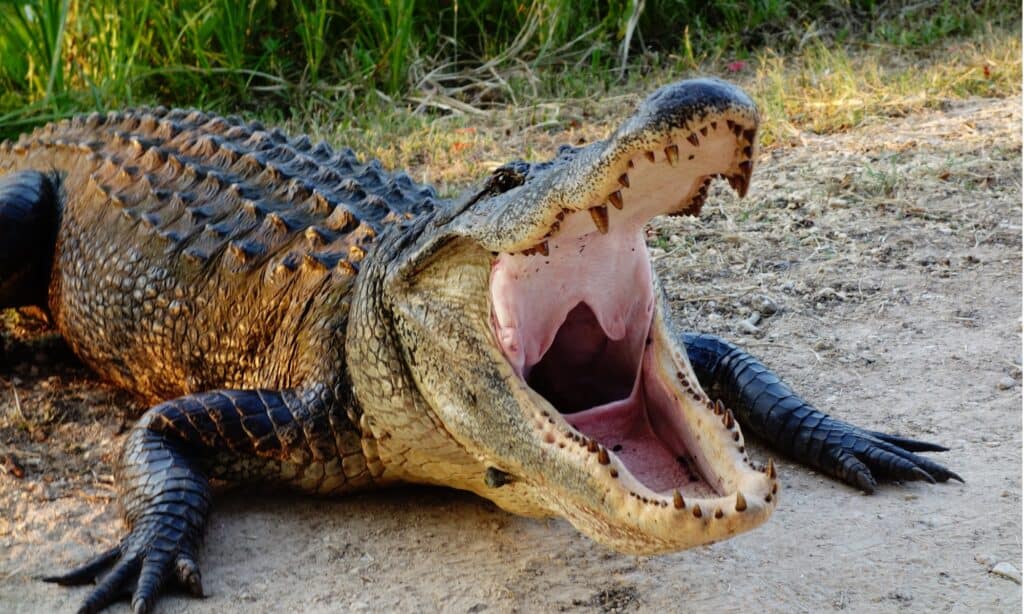
Gator from Lakeland Florida

Alligators are especially fast in spite of their size

Alligators are in the same family as other large reptiles like Crocodiles but are native to only two countries, which are the southern USA and China (where the Alligator is now nearly extinct). Alligators tend to be smaller than their Crocodile cousins but have been known to move at speeds of up to 15mph on land making them one of the fastest large reptiles in the world. Despite their size, there are a number of distinct differences between Alligators and Crocodiles as an Alligator’s snout is shorter than that of a Crocodile, and with their mouths shut, an Alligator’s teeth cannot be seen but a Crocodile’s can. Alligators are also commonly known as Gators in their native, southern North American habitats.

Anatomy and Appearance
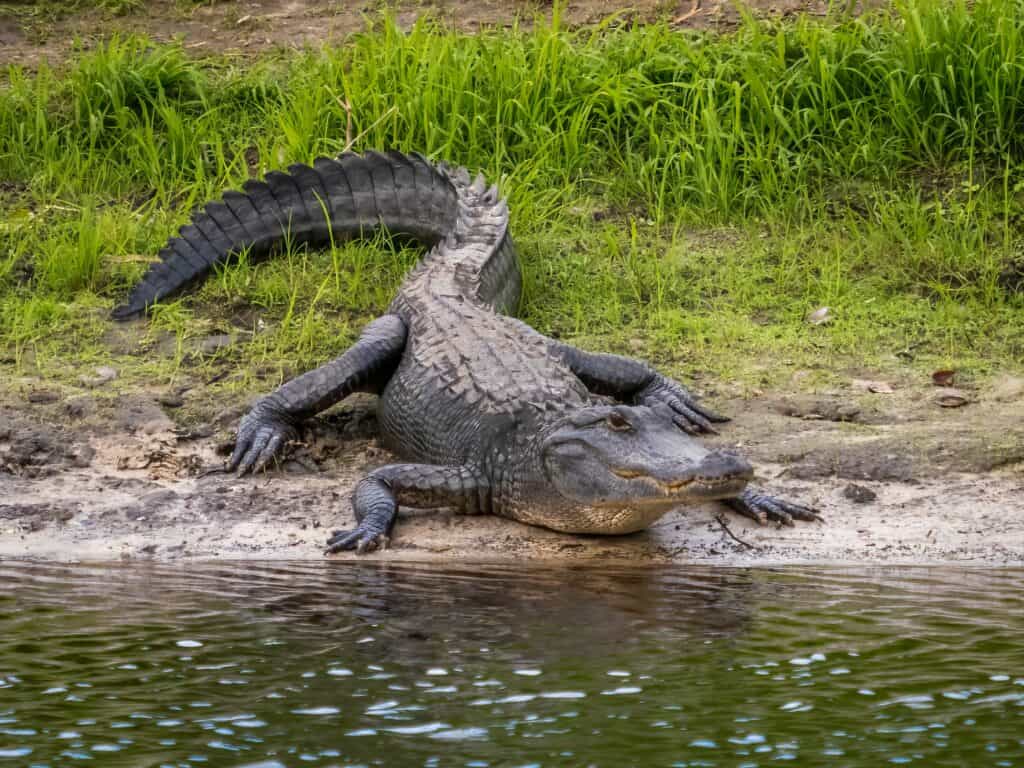
alligator

Alligators’ short stocky legs and webbed feet enable them to navigate muddy areas with ease

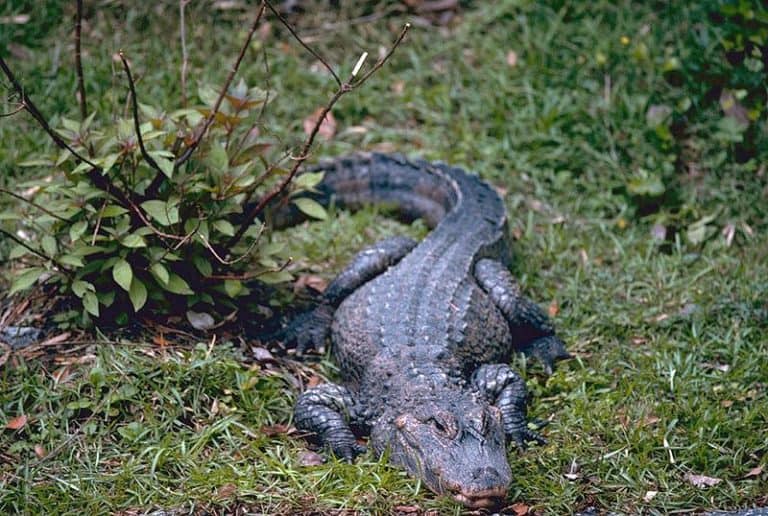
Alligators are very large reptiles, with males growing up to 4.5 meters in length. The female Alligator tends to be slightly smaller, with a total body and tail length of between 3 and 3.5 meters. The Chinese Alligator is a much smaller species, almost half the size of a female American Alligator. Alligators have an armour-plated body that varies in color from yellow to green, to brown, finally turning almost completely black in old age. The tail of the Alligator is incredibly muscular and is used to propel the animal when it is in the water. Alligators have short, stocky legs with webbing between their toes. This not only helps them when they are swimming but also means that they can negotiate muddy river banks with ease.

Alligators have multiple stomachs. The first part of their stomach contains stones to grind up food, while the second part is extremely acidic and aids in digestion.

Distribution and Habitat
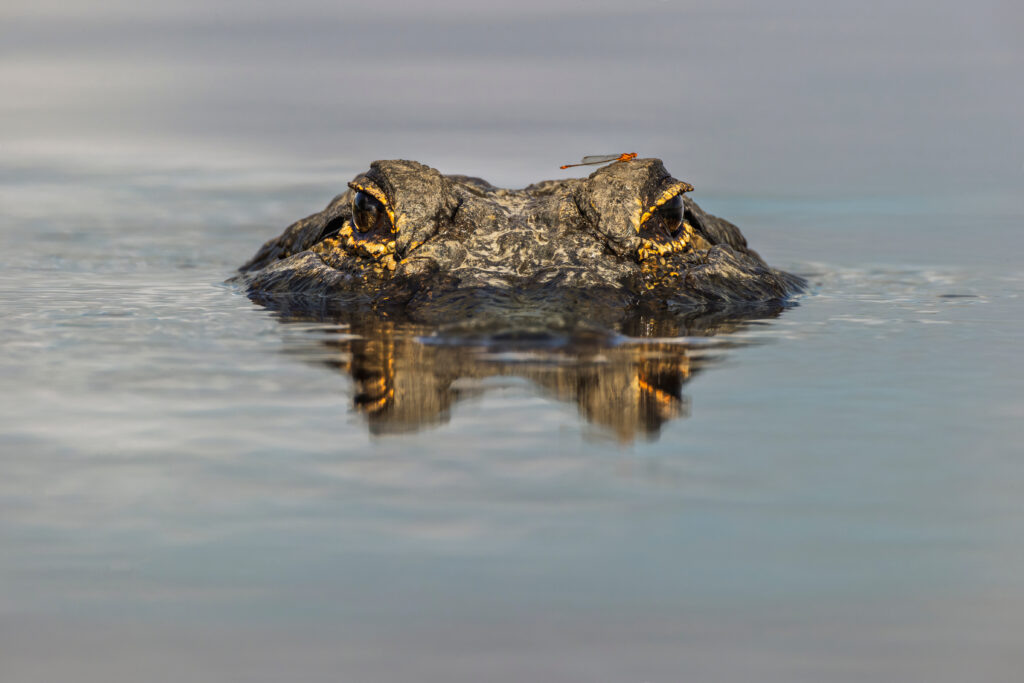
alligator

American alligators prefer freshwater and brackish environments

American Alligators are found in the south-eastern USA, throughout all of Florida and Louisiana, the southern parts of Georgia, Alabama, and Mississippi, coastal South and North Carolina, eastern Texas, the south-eastern corner of Oklahoma, and the southern tip of Arkansas. The majority of American Alligators inhabit Florida and Louisiana, with over a million alligators thought to be found between the two states. American Alligators live in freshwater environments, such as ponds, marshes, wetlands, rivers, lakes, and swamps, as well as brackish environments. Southern Florida is the only place in the world where both Alligators and Crocodiles are known to live in the same place.

Population By State

The population of American Alligators by state is estimated to be:

  • Louisiana: 2 million
  • Florida: 1.3 million
  • Texas: 400,000 to 500,000
  • Georgia: 200,000 to 250,000
  • South Carolina: 100,000
  • Alabama: 70,000
  • Mississippi: 32,000 to 38,000
  • Arkansas: 2,000 to 3,000
  • North Carolina: 1,000
  • Oklahoma: 100 to 200

Behavior and Lifestyle

American Alligators are clumsy on land

The Alligator is a solitary predator that is actually surprisingly clunky when moving about on land. They tend to be quite slow, moving by either crawling or sliding along the slippery banks on their bellies. They are highly territorial animals that are known to make a variety of noises to represent different things, including the declaration of territory, finding a mate, or the young warning their mother that they are in danger. Male alligators however do not appear to have such a prominent voice box and make very little noise outside of the breeding season, when they are known to growl and bellow to fend off competing males.

Reproduction and Life Cycles
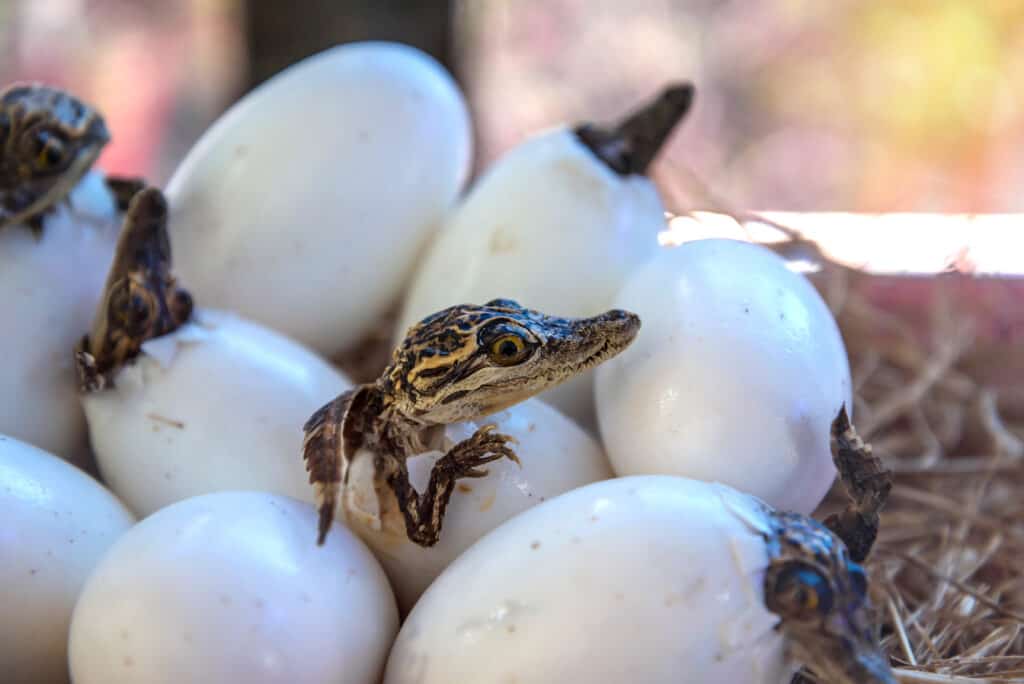
alligator eggs

Baby alligators hatch after an incubation period of 2 months

Alligators tend to breed during the spring when they come together in large groups to find a suitable partner. The female constructs a nest out of mud, leaves, and twigs on the ground where she lays up to 50 eggs. The hatchlings emerge after a 2-month incubation period which occurs in the nest’s rotting vegetation. Females do not incubate their eggs as they would break them but still guard their nest from hungry predators. The baby Alligators are between 15 and 20 long when they hatch and are vulnerable to predation from a number of species. They usually remain with their mother for the first 2 years. Alligators tend to live to about 50 years old or so but some have been known to live at least another 20 years when in captivity.

To know more about the alligator mating season, read here.

Diet and Prey
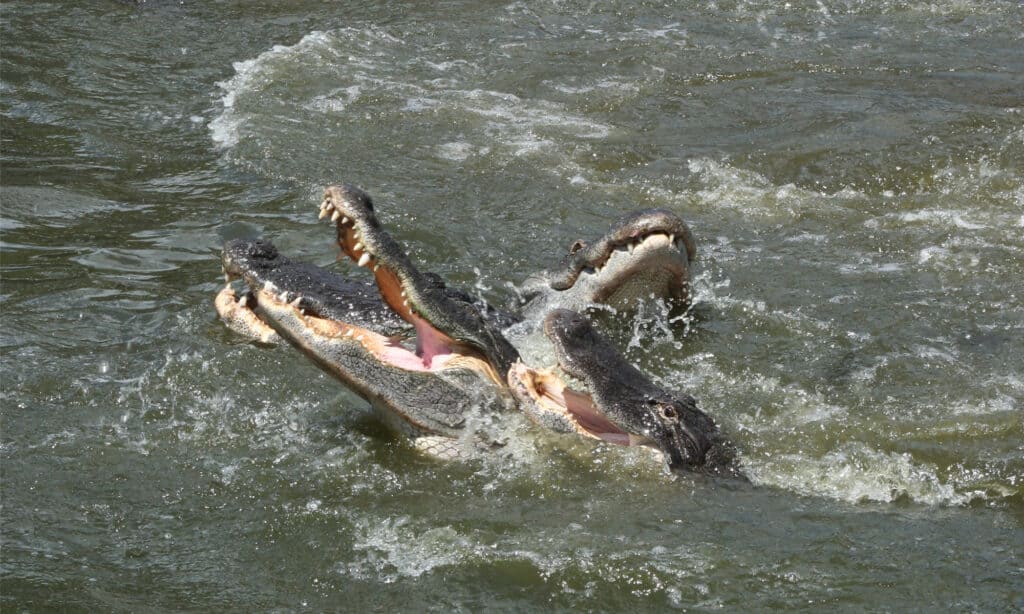
Alligators enjoy a varied diet which consists of birds, fish, and small mammals

The Alligator is generally a solitary predator, but smaller and younger individuals however are known to stay together in groups especially when hunting. The reptile eats fish, small mammals and birds, but has also been known to attack much larger animals. Adult alligators have been known to hunt Deer and are well known to kill and eat smaller Alligators. In some cases, larger individuals have been known to hunt the Florida Panther and Black Bears, making the alligator the dominant predator throughout their environment. Attacks on pets and even people are also not unknown.

Read here to know about the alligator’s death roll.

Predators and Threats
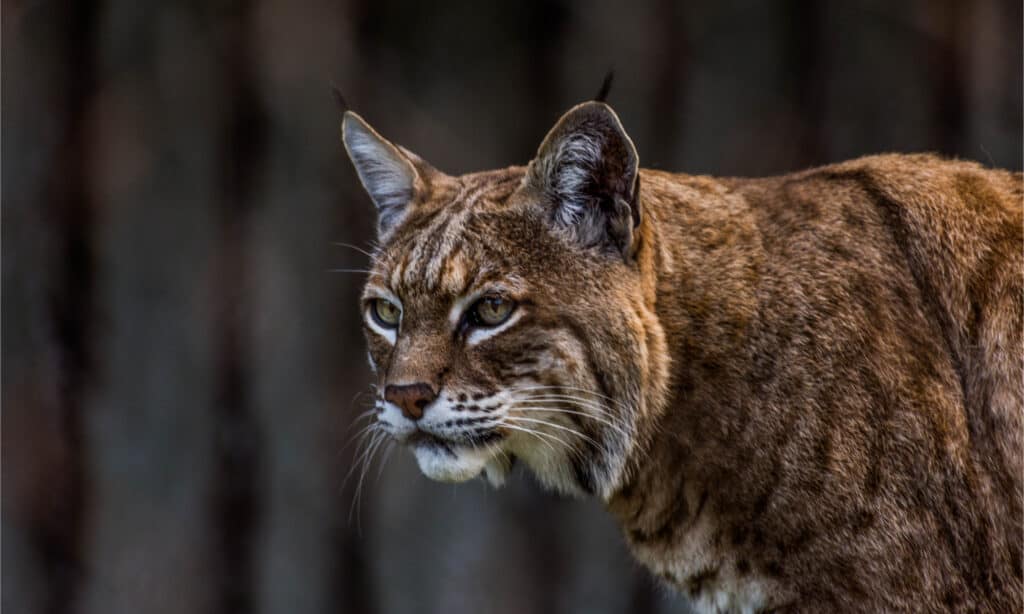
Head shot of a bobcat

Bobcats are partial to tender, succulent alligator hatchlings

The Alligator is an apex predator in its environment, known to even hunt animals that are much larger in size. Humans are the only predator of adult Alligators as they were hunted almost to extinction for their meat, and for their unique skin which was used in the manufacture of a variety of products. The smaller, baby Alligators however, are prey to a number of species including Raccoons, Birds, Bobcats, and even other Alligators. Despite being protected from hunting in much of its North American range today, Alligators are threatened by the loss of their natural habitats and high levels of pollution in the water.

Interesting Facts and Features

Alligator DNA is thought to date back to even before Dinosaur times meaning that the Alligators survived whatever it was that the dinosaurs didn’t, with the scientific estimates first dating the species 150 million years ago. The Chinese Alligator is currently found only in the Yangtze River Valley and the Chinese Alligator is now extremely endangered with less than 100 Chinese Alligators believed to be left in the wild. There are actually many more Chinese Alligators that live in zoos around the world than can be found in the wild today. Alligators are known to have up to 80 teeth which are perfectly shaped for biting down on prey. They are even able to regrow those teeth that are lost.

How do you tell the differences separating alligators vs. crocodiles? In general, alligators have a ‘U-shaped’ snout while crocodiles’ snouts are a ‘V-shape.’ In addition, alligators have webbed feet while crocodile feet are not webbed. Finally, alligators are normally a darker color.

Relationship with Humans
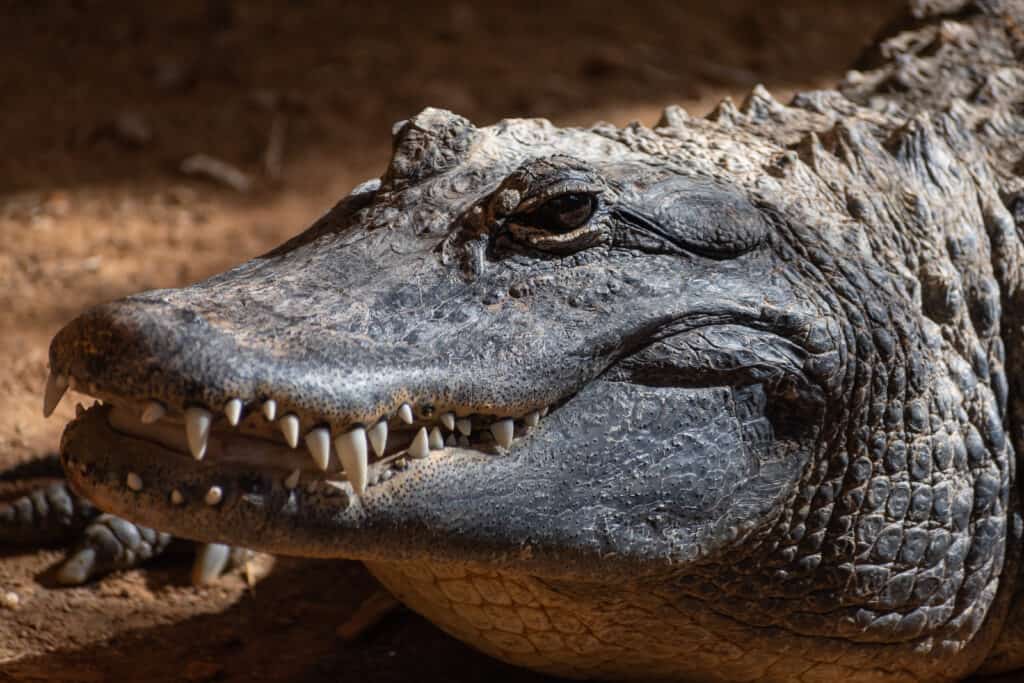
gator

Alligators love to sneak up on pets and will lash out at humans who get to close for comfort

Unlike large Crocodiles, Alligators do not immediately regard a Human upon encounter as prey, but the Alligator may still attack in self-defence if provoked. Alligator attacks are uncommon but they have definitely been known to attack Humans if they infringe on the reptile’s territory and particularly if the animal feels threatened. They are however known to commonly prey on domestic animals including pets and sometimes livestock when they are close to Human settlements. Hunting towards the end of the last century almost completely obliterated the entire American Alligator population (and has pretty much done so to the Chinese Alligator). Fortunately the gravity of the situation in the USA was realized before it was too late, with the protection of the species having led to an increase in population numbers now.

Conservation Status and Life Today

The American Alligator was once an Endangered species but thanks to habitat protection and federal laws protecting them, populations throughout Florida and Louisiana have recovered really well, with over four million Alligators thought to exist in the USA today. They are however now threatened by habitat degradation, mainly in the form of deforestation and pollution in the water. The story of the Chinese Alligator however is very different, with less than 100 individuals thought to be left in the Yangtze River Valley, this species is Critically Endangered in the wild and is sadly on the verge of extinction.

Read about:

  • history’s greatest shark vs alligator battle.
View all 326 animals that start with A
How to say American Alligator in ...
German
Echte Alligatoren
English
Alligators
Finnish
Alligaattorit
Croatian
Pravi aligatori
Japanese
アリゲーター属
Swedish
Alligatorer
Chinese
鼍属

Sources

  1. David Burnie, Dorling Kindersley (2011) Animal, The Definitive Visual Guide To The World's Wildlife / Accessed December 5, 2008
  2. Tom Jackson, Lorenz Books (2007) The World Encyclopedia Of Animals / Accessed December 5, 2008
  3. David Burnie, Kingfisher (2011) The Kingfisher Animal Encyclopedia / Accessed December 5, 2008
  4. Richard Mackay, University of California Press (2009) The Atlas Of Endangered Species / Accessed December 5, 2008
  5. David Burnie, Dorling Kindersley (2008) Illustrated Encyclopedia Of Animals / Accessed December 5, 2008
  6. Dorling Kindersley (2006) Dorling Kindersley Encyclopedia Of Animals / Accessed December 5, 2008
  7. Alligator Facts / Accessed December 5, 2008
  8. About Alligators / Accessed December 5, 2008
  9. Alligator Facts / Accessed December 5, 2008

Dana Mayor

About the Author

Dana Mayor

I love good books and the occasional cartoon. I am also endlessly intrigued with the beauty of nature and find hummingbirds, puppies, and marine wildlife to be the most magical creatures of all.
Connect:

Thank you for reading! Have some feedback for us?


American Alligator FAQs (Frequently Asked Questions)

Alligators are Carnivores, meaning they eat other animals.