



A
Species Profile

American Bulldog

Canis lupus familiaris

Farm-strong. Family-devoted.
OptimumCanine/Shutterstock.com

American Bulldog Distribution

Click a location to explore more animals from that region

Origin Location

This map shows the native origin of the American Bulldog. As a domesticated species, they are now found worldwide.

Loading map...

Size Comparison

Human 5'8"
American Bulldog 2 ft

American Bulldog stands at 35% of average human height.

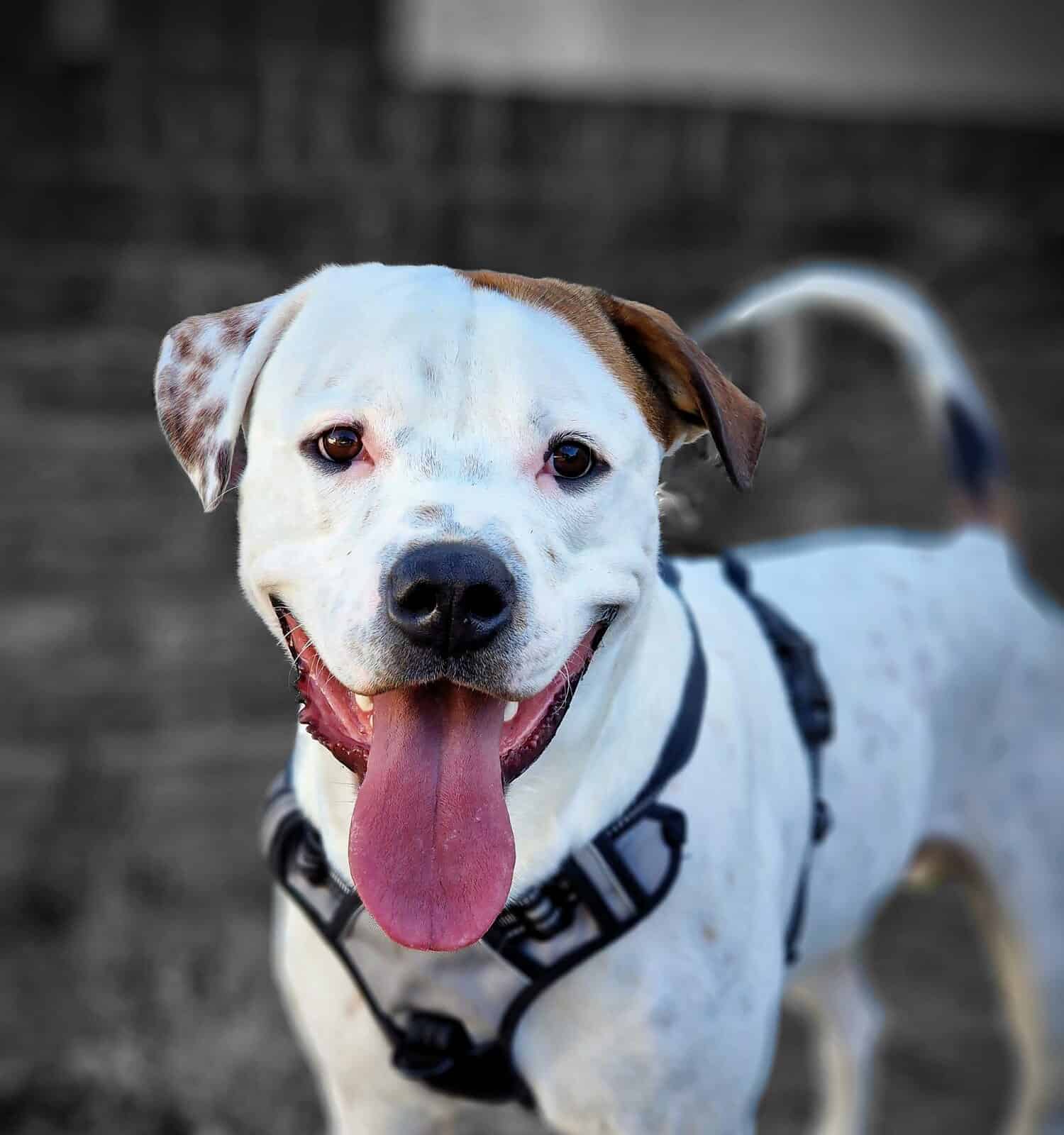
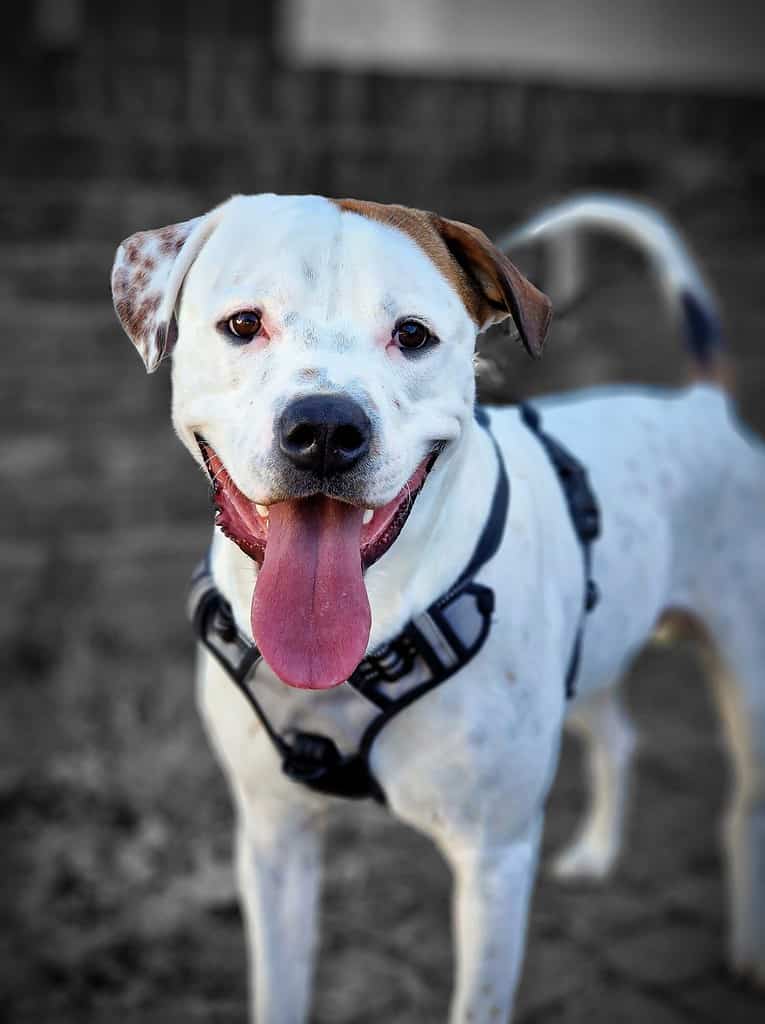
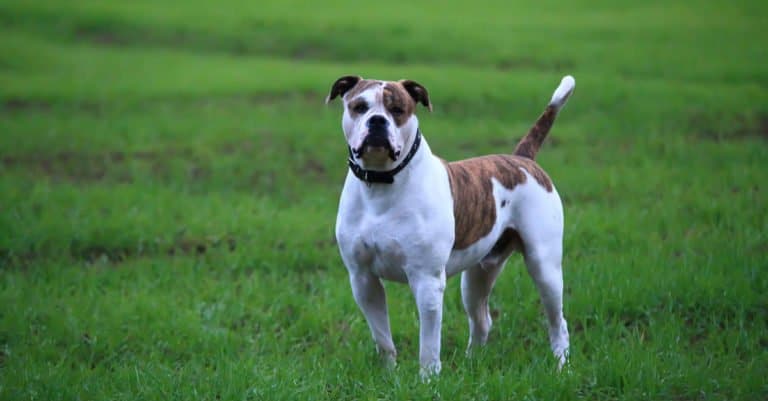
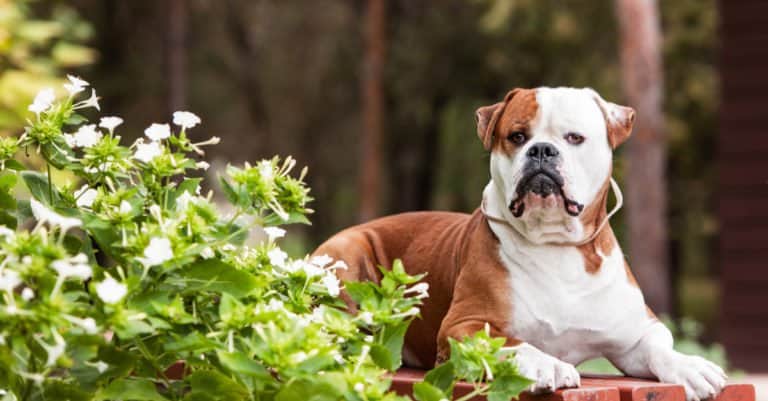
White and tan American bulldog standing in the street.

At a Glance

Domesticated
Also Known As Bulldog, AmBulldog, American Bull Dog, AB
Diet Omnivore
Activity Diurnal+
Lifespan 5 years
Weight 54 lbs
Status Not Evaluated
Did You Know?

The American Bulldog descends from working bulldog types brought to the American South by immigrants and kept for farm utility rather than show traits.

Scientific Classification

The American Bulldog is a medium-to-large, muscular domestic dog breed historically associated with working roles (e.g., farm utility, catch dog) and now also kept as a companion. It is a breed within the domestic dog (Canis lupus familiaris).

Kingdom
Animalia
Phylum
Chordata
Class
Mammalia
Order
Carnivora
Family
Canidae
Genus
Canis
Species
Canis lupus

Distinguishing Features

  • Robust, athletic build with broad head and strong jaws
  • Short coat; coloration commonly white or white with brindle/brown/black patches
  • Typically a longer muzzle than the English Bulldog (less brachycephalic overall)
  • Often described in working-line ‘types’ (e.g., Johnson/bully type vs. Scott/standard type), though not a separate taxonomy

Physical Measurements

Males and females differ in size

Height
2 ft 1 in (1 ft 10 in – 2 ft 4 in)
1 ft 11 in (1 ft 8 in – 2 ft 2 in)
Length
3 ft 4 in (2 ft 9 in – 3 ft 10 in)
Weight
97 lbs (75 lbs – 119 lbs)
75 lbs (60 lbs – 90 lbs)
Tail Length
11 in (9 in – 1 ft 1 in)
Top Speed
25 mph
short sprint speed

Appearance

Primary Colors
Secondary Colors
Skin Type American Bulldog has short, smooth single coat. Skin may be slightly loose at neck and face (less so than English). White areas can show pink skin, risking sun sensitivity and irritation; check folds, toes, ears.
Distinctive Features
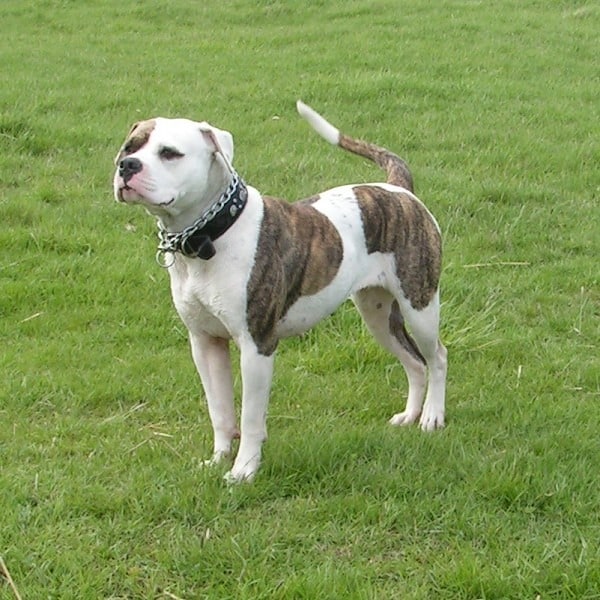
  • Powerful, athletic, well-muscled dog with a broad, square head and strong jaws; short, close-fitting coat.
  • Medium-to-large, heavily muscled, deep-chested frame with a strong, broad neck and substantial bone; overall silhouette is athletic and capable, not compact or excessively stocky.
  • Head is large and broad with pronounced cheek musculature; muzzle is short-to-moderate but typically longer and more functional (better airway potential) than the very short muzzle of an English Bulldog.
  • Compared with American Bully: generally leaner, more athletic, and less exaggerated in bulk and head-to-body proportion; movement is more working-dog/utility oriented than 'showy' mass.
  • Ears often rose, half-pricked, or drop; expression is alert and confident; tail is typically thick at the base and carried low-to-moderate (not tightly curled).
  • Coat is short and glossy; common coloration includes white with patches and/or brindle striping; pigment on nose and eye rims varies and may be incomplete in high-white dogs.
  • Temperament/role framing: typically confident, people-oriented with family, and protective/alert; requires responsible ownership with early socialization, reward-based training, and management around other animals when needed (individual variation is substantial).
  • Care requirements: needs regular physical exercise (strength + aerobic work) and mental enrichment; consistent training is important due to size/power; short coat is low-maintenance but benefits from weekly brushing and routine skin/ear care.
  • Breed-typical health considerations (not exhaustive): hip/elbow dysplasia risk, cranial cruciate ligament injury risk, skin allergies/dermatitis, some eye issues (e.g., entropion), and possible higher deafness risk in heavily white/piebald individuals; weight management helps reduce orthopedic strain.
  • Heat and airway: generally less heat- and breathing-compromised than more brachycephalic bulldog breeds, but can still overheat due to muscular build and short coat-avoid intense exertion in high heat/humidity.

Sexual Dimorphism

Sexual dimorphism is common in the American Bulldog: males are usually larger, with more muscle, broader heads, and thicker necks. Females are slightly smaller with a lighter build. Breed lines (bully vs working) can affect size more than sex.

  • Larger overall size; heavier bone and thicker neck/shoulder musculature.
  • Broader skull and more pronounced cheek/jaw musculature.
  • More substantial chest width and forequarter mass.
  • Slightly smaller and more refined outline with comparatively less massive head/neck.
  • Often more visibly athletic/streamlined waist and tuck-up while still muscular.
  • Typically a lighter overall build that may show endurance/quickness in movement more readily.

Did You Know?

The American Bulldog descends from working bulldog types brought to the American South by immigrants and kept for farm utility rather than show traits.

Two well-known line types are often discussed: "Johnson" (more bully/stocky, shorter muzzle) and "Scott" (more athletic/standard, longer muzzle).

Unlike the English Bulldog, the American Bulldog is typically taller, more athletic, and less extremely brachycephalic, built for endurance and work.

Historically, some were used as "catch dogs," gripping and holding feral hogs or unruly cattle until the handler arrived.

They're not AKC-recognized as a breed, but they are recognized by other registries (e.g., UKC), reflecting their working-dog roots.

A famous pop-culture American Bulldog is "Chance" from the film Homeward Bound (1993).

Many American Bulldogs have strong human-bonding tendencies and thrive when given a job-training, sports, or structured daily routines.

Unique Adaptations

  • Selective breeding emphasized a powerful, athletic build (broad chest, strong shoulders/hips) suited to farm work and gripping tasks-more function-first than many modern companion breeds.
  • Strong jaw/neck musculature and tenacity were historically favored for holding and controlling livestock; today this translates to notable strength that requires responsible handling.
  • Coat is short and easy to maintain, a practical trait for outdoor work-though it offers limited insulation in cold weather.
  • Heat tolerance varies by line: shorter-muzzled individuals can overheat faster, so owners should manage exertion in warm climates.
  • Compared with more extreme brachycephalic bulldog breeds, many American Bulldogs have better overall airway capacity-especially longer-muzzled lines-supporting higher activity levels.

Interesting Behaviors

  • "Velcro dog" attachment: often follows family members room-to-room, seeking proximity and reassurance.
  • Mouthy play style: many enjoy carrying toys, tug, and using their mouths gently-early training helps keep this appropriate.
  • Watchful body-blocking: may naturally place themselves between their person and a newcomer, a behavior that needs calm guidance.
  • Job-seeking persistence: can invent "tasks" (patrolling fences, herding kids, moving objects) if under-stimulated.
  • High arousal with rough play: some escalate quickly during wrestling; structured play and clear stop-cues are important.
  • Confident but sensitive learning: responds best to consistent rules, reward-based training, and early socialization with many people/dogs/places.

Cultural Significance

The American Bulldog (Canis lupus familiaris) comes from the rural Southern U.S. as a tough farm dog that guarded property, moved or caught livestock, and was a loyal companion. Today it shows hard work and toughness; owners should be experienced and provide training and socialization.

Myths & Legends

'Old Southern White' tales in the rural South tell of big white bulldogs kept on farms for generations as guardians and livestock helpers; pups were traded between farms as working dogs.

Stories say American Bulldogs from the American South nearly disappeared in the early 1900s, then were rebuilt after World War II by breeders like John D. Johnson and Alan Scott, shaping modern lines.

Catch-dog campfire tales: hunters and farmers pass down stories of bulldogs that could "hold a hog" long enough for people to secure it-tales that emphasize courage, stamina, and the deep trust between handler and dog.

The bulldog has long been a symbol of toughness and not giving up; American Bulldog (Canis lupus familiaris) owners often pass on and retell that identity as part of the breed's story.

Hollywood association: popular memory links the breed to the tough-but-good-hearted dog archetype-strength paired with loyalty-reinforced for many viewers by the American Bulldog character "Chance" in Homeward Bound (1993).

Conservation Status

NE Not Evaluated

Has not yet been evaluated against the criteria.

Population Stable

Life Cycle

Birth 6 pups
Lifespan 5 years

Lifespan

In the Wild
2–10 years
In Captivity
10–15 years

Reproduction

Mating System Polygynandry
Social Structure Managed Domestic
Breeding Pattern Serial
Fertilization Managed Selective
Birth Type Internal_fertilization

American Bulldog (Canis lupus familiaris) breeding is managed by humans and is polygynandry: male studs may father pups with many females, and females may mate with different males over time. Pairings are temporary and chosen by people; other dogs don't regularly help raise pups.

Behavior & Ecology

Social Pack Group: 2
Activity Diurnal, Cathemeral
Diet Omnivore Meat-forward meals (e.g., lean beef or poultry-based diets)

Temperament

Confident, people-oriented, and strongly bonded to family; often seeks close physical contact (leaning/"velcro" behavior).
Protective/territorial tendencies are common (a HUBS trait in many working guardian-capable breeds); early socialization and clear criteria for greetings reduce suspicion toward strangers.
High persistence/tenacity and strength (breed-distinguishing from average companion-line dogs); may be impulsive without structured training and outlets.
Can be dog-selective, particularly in adulthood; same-sex intolerance may occur-best outcomes come from early neutral exposure, supervised play, and careful multi-dog management.
Moderate-to-high prey/chase drive in some lines (historical catch-dog utility); requires leash reliability, secure fencing, and controlled introductions to small animals.
Trainability is good with motivation and consistency, but some individuals are stubborn/independent; responds well to reward-based methods with firm boundaries rather than harsh corrections.
Care requirements (behavior-linked): needs daily strength-appropriate exercise, tug/retrieve, nosework/food puzzles, and impulse-control training; avoid repetitive high-impact jumping in young dogs.
Health problems that affect behavior: hip/elbow dysplasia and cranial cruciate ligament injury (keep dogs lean, build muscle slowly); skin allergies can raise irritability; stocky, short-muzzled dogs can be heat sensitive; limit exercise and cool them.

Communication

Deep barking Alert/territorial and demand barking
Low growls/rumbling Distance-increasing or resource-related signals
Whining/whimpering Attention-seeking or stress
Howling Less common; may occur with sirens/owner absence
Grunts/snorts Common in short-muzzled individuals during play or exertion
Broad, forward body blocking/stance at thresholds (guarding space); important early cue for escalation prevention
Leaning/pawing/nudging for affiliative contact and attention
Mouthy play Breed-typical; requires early bite inhibition and clear toy-based outlets
Direct staring and stiff posture when uncertain (often seen in dog-dog tension); handlers should redirect before fixation builds
Tail carriage and whole-body wags: loose, wiggly posture indicates comfort; high, tight wag can signal arousal
Scent marking/ground sniffing as calming and information gathering; effective to use as decompression on walks
Play bows and shoulder bumps during friendly play; supervision recommended due to strength and intensity
Licking and facial softening toward trusted people; avoidance/turning away when overwhelmed Subtle stress signal

Habitat

Biomes:
Temperate Forest Temperate Grassland Mediterranean Desert Hot Desert Cold Boreal Forest (Taiga) Tundra Alpine Wetland Tropical Dry Forest Tropical Rainforest Marine +6
Terrain:
Plains Hilly Valley Riverine Coastal
Elevation: Up to 11482 ft 11 in

Ecological Role

Domestic companion and working farm utility dog; human-supported omnivore that functions as a controlled predator surrogate and occasional scavenger in managed environments.

Companionship and human social support Farm utility (property deterrence, general-purpose work) Assistance in feral hog control/management in some regions (working role) Localized pest deterrence (discouraging small mammal intrusions)

Diet Details

Main Prey:
Feral pig Beef Poultry Lamb or goat Fish Eggs Small mammals +1
Other Foods:
Cooked grains and starches Vegetables Fruits Dietary fiber sources

Human Interaction

Domestication Status

Domesticated

The American Bulldog (Canis lupus familiaris) comes from working bulldog-type dogs brought to North America. Bred for power, strong grip, broad head, toughness, guarding and high work drive. Common as family pets with training, also used for farm stock work, property guarding, and sports (weight pull, obedience, agility). Faces stigma and local laws.

Danger Level

Moderate
  • Bite injury risk is elevated relative to many breeds due to size, strength, and hold/grip tendency; risk increases with poor socialization, inadequate containment, or aversive/unsafe handling.
  • Dog-directed aggression/reactivity can occur in some individuals; fights can cause collateral injury to handlers attempting to separate dogs.
  • High prey drive in some lines may lead to chasing/biting small animals, creating conflict in public spaces.
  • Protective/territorial behavior may lead to threatening displays or bites toward perceived intruders without structured training and controlled introductions.
  • Physical risk from jumping/knocking over people (especially children/elderly) due to muscular build and exuberance.

As a Pet

Suitable as Pet

Legality: Generally legal as a pet in most U.S. jurisdictions, but may be restricted by local breed-specific legislation (sometimes grouped with 'bulldog/pit bull-type' rules), landlord/HOA policies, or insurance underwriting. Prospective owners should verify city/county ordinances, lease terms, and insurer requirements.

Care Level: Experienced

Purchase Cost: $800 - $2,500
Lifetime Cost: $15,000 - $35,000

Economic Value

Uses:
Companion animal market Working/farm utility Dog training and behavior services Veterinary and preventive healthcare Pet insurance and liability coverage Sport/competition participation
Products:
  • breeding and sale of puppies (companion or working lines)
  • training classes (obedience, socialization, impulse control)
  • professional handling services (behavior consults, boarding/daycare-often with breed screening)
  • equipment: secure collars/harnesses, crates, chew enrichment, heavy-duty leashes
  • veterinary services: vaccinations, parasite control, spay/neuter, orthopedic evaluation
  • working utility value on farms (deterrence/guarding; catch/hold roles where practiced)

Relationships

Ecological Equivalents 7

Animals that fill a similar ecological role in their ecosystem

American Pit Bull Terrier
American Pit Bull Terrier Canis lupus familiaris Has a similar human-directed role history (bull-baiting/catch-dog lineage influence and later general-purpose utility), a muscular build, a short coat, and a strong jaw and neck; these traits often mean they require experienced handling, structured socialization, and controlled dog-dog interactions depending on individual temperament.
American Staffordshire Terrier
American Staffordshire Terrier Canis lupus familiaris Comparable niche as a powerful companion/working-type dog; similar management needs (training, exercise, supervision around other animals), and overlapping public perception and legislative impacts.
Boxer
Boxer Canis lupus familiaris Shares a guardian/utility companion niche, with athleticism and a strong people-orientation; however, Boxers are typically more overtly bouncy/playful and have different common health risks (notably brachycephalic-related concerns) than most American Bulldogs.
Bullmastiff
Bullmastiff Canis lupus familiaris Large, protective, short-coated dog historically used for guarding and holding; shares needs for early training and joint-friendly conditioning, though Bullmastiffs are generally heavier, lower-energy, and more heat-sensitive.
Cane Corso
Cane Corso Canis lupus familiaris Comparable functional niche: property guardian and, in some contexts, a catch-and-hold working type. High trainability when given firm, consistent boundaries. Both benefit from extensive early socialization and ongoing mental stimulation/work to prevent problem behaviors.
Feral Hog Sus scrofa Represents a classic working context for American Bulldogs used as catch dogs: the breed's selective breeding emphasizes strength, pain tolerance, drive, and gripping/holding ability in close quarters, a niche that requires protective gear, skilled handlers, and strict safety protocols.
Domestic Dog
Domestic Dog Canis lupus familiaris American Bulldog (Canis lupus familiaris): medium-to-large, muscular farm dog with a strong grip. Loyal and protective; requires moderate to high exercise. Short coat makes it cold-sensitive. Monitor for hip and elbow dysplasia, cranial cruciate ligament (CCL) injuries, skin and heart conditions, and airway/heat issues; keep the animal lean, conditioned, trained, and vet-screened.

Quick Take

  • Athletic American Bulldogs must clear obstacles reaching 6 feet high to validate their elite status.
  • The Johnson type standard produces heavier-boned structures that lead to persistent skeletal constraints.
  • Counter-intuitively, these dogs utilize vocal huffs to express their deep-seated affectionate nature.
  • Executing a blood test for a rescue is mandatory to reveal genetic traits that dictate care.

When the first British colonists arrived in America, they brought their bulldogs with them. A few centuries of steady breeding later, the American bulldog was born. American bulldogs have stronger and longer legs than their British counterparts. This means that athletic American bulldogs can run faster and may be able to jump over obstacles that are 6 feet off the ground.

These strong and loyal pets are prized on farms and ranches across the country for their ability to scare off predators and keep other animals in line. As pets, they are known for being fun, sweet, and incredibly engaging.

Pictures of American bulldogs often portray them as fierce hunting dogs. However, these pets are also incredibly affectionate and are beloved by both their immediate owners and all members of the family.

Detailed infographic about American Bulldogs featuring sections on their athletic ability, evolution, pros and cons, and a health diagram.
Beyond their massive build lies an athlete capable of clearing a 6-foot obstacle—but their genetic history hides high-stakes health risks every owner needs to know. © A-Z Animals

3 Pros and Cons of Owning an American Bulldog

ProsCons
Loyal and strong: They are working pets that are trusted on farms across the country. Although they are a medium to large breed, these dogs are very attached and will never disappoint their owners.Health issues: As they get older, they become susceptible to several genetic conditions, including hip dysplasia, thyroid deficiency, and various eye problems. Take your bulldog to the vet regularly to make sure they’re getting the care they need.
Fun and friendly: They love to play and be involved in family activities. If you have one of these pups, you’ll never miss a moment of fun.Separation anxiety: They are family dogs that like to be with their humans at all times. If left alone, your bulldog is likely to bark, scratch, chew, and generally show signs of extreme distress. Luckily, these dogs are intelligent and can be taken with you to most places where companion animals are welcome.
Talkative personality: One of the primary behaviors that these dogs are known for is their tendency to growl, huff, and generally talk to their owners. If you can learn to understand your pet, you’ll be treated to a variety of adorable conversations.Aggressive tendencies: Because of their stubborn streak, some untrained bulldogs have been known to lash out at humans or other animals. Although many have gone their entire lives without an incident, this tendency may restrict the areas where your bulldog is allowed to live or travel.
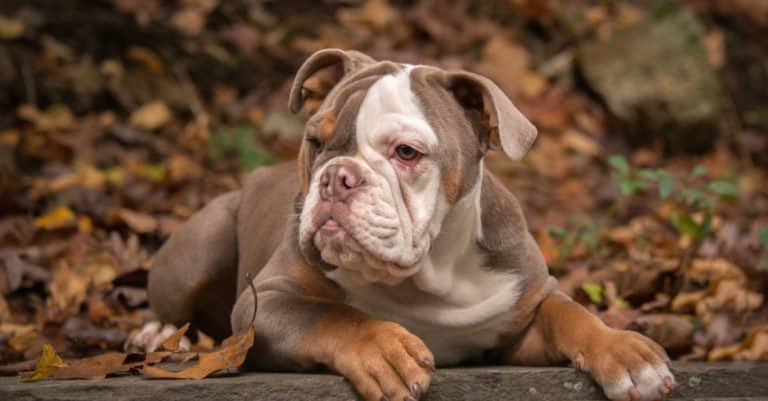
American bulldog laying on the ground

American Bulldogs have been known to lash out at humans or other animals. Although many bulldogs go their entire lives without an incident, this tendency may restrict the areas where your bulldog is allowed to live or travel.

Evolution and Origins

The American Bulldog is a descendant of the Old English Bulldog, which was brought to America by English immigrants in the 17th and 18th centuries. The Old English Bulldog was originally bred for bull-baiting, a popular sport in England at the time, but as this sport fell out of favor, the breed was used for other purposes, such as hunting, herding, and as a general farm dog.

In America, the Old English Bulldog was further developed and modified to suit the needs of American farmers, particularly in the southern states. This resulted in the development of two distinct types of American Bulldogs: the Johnson type and the Scott type.

The Johnson type, also known as the “Classic” American Bulldog, is larger and heavier-boned, with a wider head and more pronounced wrinkles. It is considered to be more closely related to the Old English Bulldog.

The Scott type, also known as the “Standard” American Bulldog, is smaller and more athletic, with a narrower head and less pronounced wrinkles. Both the Johnson and Scott types are descended from the Old English Bulldog, but the modern English Bulldog is a separate breed with different characteristics.

Over time, the American Bulldog became less popular as a working dog and more as a family pet. The breed was officially recognized by the United Kennel Club in 1999. Today, American Bulldogs are used as companions, show, and performance dogs.

Size and Weight
American Bulldogs are a medium to large-sized breed with muscular bodies, athletic builds, and broad, strong heads, but less brachycephalic faces than English Bulldogs.

These dogs are a medium to large-sized breed with muscular bodies, athletic builds, and broad, strong heads, but less brachycephalic faces than English Bulldogs. They are strong and muscular, which makes them popular working dogs on farms and ranches.

The average male American bulldog weighs between 66 and 130 pounds and stands between 20 and 28 inches tall. Female American bulldogs are significantly smaller; they seldom weigh more than 60 to 90 pounds, and they usually stand between 20 and 24 inches tall.

Common Health Issues
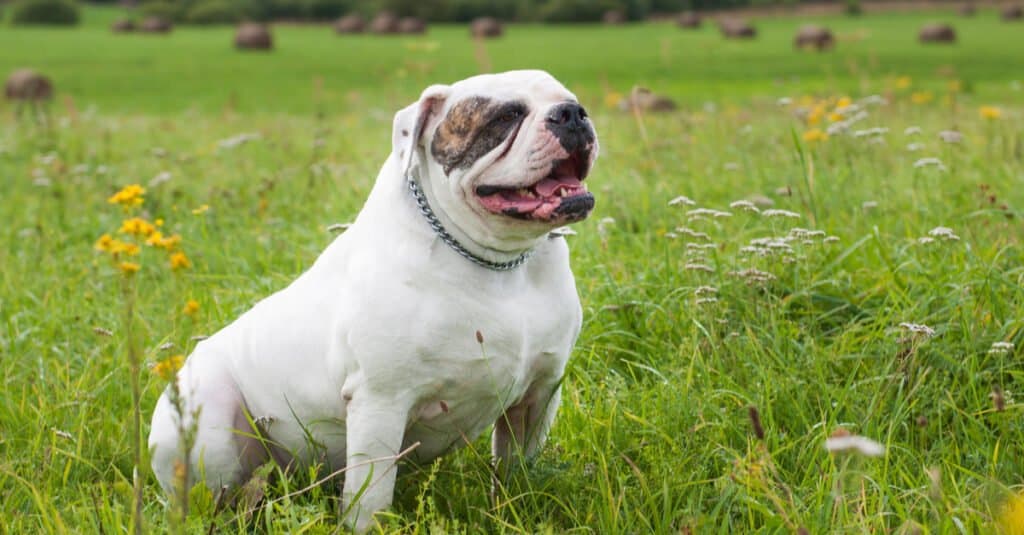
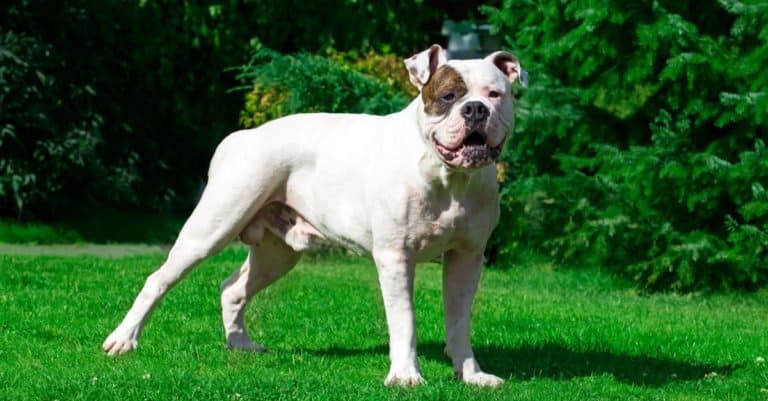
American bulldog sitting in grass with tongue out

The American bulldog has a stronger bite force than the English bulldog.

American Bulldogs are a large purebred breed that is known to be susceptible to several health issues. The problems that your American bulldog might face as he gets older include hip and elbow dysplasia, skin allergies, and a variety of eye conditions related to the bulldog’s signature saggy eyelids.

They are also particularly prone to bone cancer and thyroid deficiencies, especially when compared to other dogs.

Temperament and Behavior
American Bulldogs are sweet and loyal pups that love to spend time with their families.

American Bulldogs are sweet and loyal pups that love to spend time with their families. You can expect your bulldog to be engaging, excited, talkative, and generally involved with the activities of your daily life.

Most bulldogs exhibit extremely attached behaviors, even if they are a rescue that was previously part of a different family. Although this attachment can lead to separation anxiety, it also creates an incredibly strong bond between owner and pet.

Most bulldogs have a stubborn streak that can make them difficult to train. Luckily, this can be overcome with patience and a good understanding of bulldog psychology.

They love listening to their owners and want to be part of the family, but they may need multiple training sessions to get over some of their more difficult personality traits.

How to Take Care of an American Bulldog

These dogs carry a high price tag because they require a significant amount of care and attention. If you can’t afford to purchase a purebred American bulldog, you probably won’t be able to pay for the veterinary costs associated with this breed. That said, whether you rescue your bulldog or buy them from a breeder, you should still make sure that it receives the best care possible.
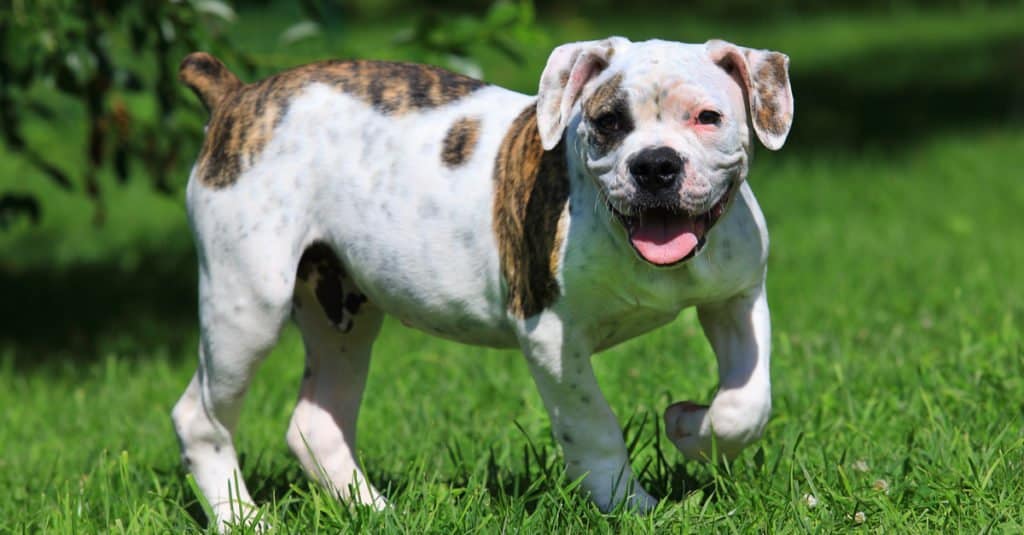
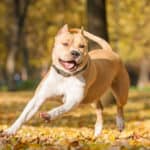
American bulldog playing in the park

American bulldogs become susceptible to several genetic conditions, including hip dysplasia, thyroid deficiency, and various eye problems.

The Best Dog Food

American bulldogs have incredibly sensitive stomachs and may need a specialized diet. In particular, bulldogs are susceptible to kidney stones, which can be caused by an excess of unhealthy proteins and calcium in the dog’s food. One of the best ways to avoid this issue is to feed either homemade food or high-quality kibbles that have been designed with bulldogs in mind.

Due to the shape of their snouts, these dogs have a tendency to ingest a lot of air while they eat. This can result in either minor flatulence or more serious stomach issues if too much air is ingested. Savvy owners avoid this problem by feeding smaller kibbles, hand-feeding their dog, or simply watching the contents of their dog’s diet to limit the amount of gas that their pet naturally creates.

Keep your American Bulldog healthy by feeding it food with high-quality ingredients. You may want to try dog food with limited ingredients to help prevent allergies. This type of food might also help keep American Bulldogs’ weight and thyroid under control.

Maintenance and Grooming

American bulldogs have short coats and do not require much more grooming than would be needed for another canine. Make sure to wash your bulldog at least once a month, and remember to trim their nails and clean their ears. You should also pay careful attention to the area around your bulldog’s eyes, as these pups are prone to skin infections and other eye problems.

Training

American Bulldogs are loyal but stubborn pets that may require a little extra training and patience. Start working with your bulldog as soon as you can, and keep working with them throughout their adult life. Try several short training sessions interspersed throughout the day, and pay attention to how exhausted your dog is. If you consistently make training a positive and successful activity, your bulldog is sure to respond.

Exercise

The American Bulldog is a high-energy breed that needs a lot of exercise to keep its anxiety down. However, due to the health issues that many bulldogs suffer, getting this exercise can be difficult as the dog gets older. The solution that most bulldog owners end up arriving at is taking their dog on a leisurely 40-minute stroll one to two times a day.

Puppies

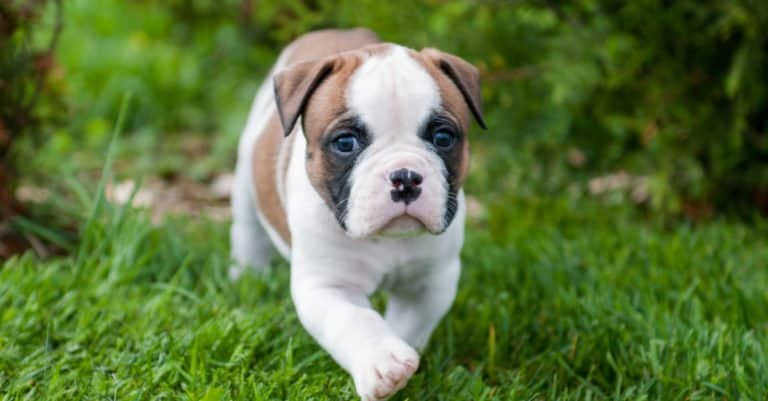
American bulldog puppies are sweet, loving, and eager to learn. Make sure to take your puppy to the vet right away to see if they have any outstanding health issues that will need to be treated throughout their life. If your dog is a rescue, you may also want to run a blood test to see if they are purebred or if they have different genetics that may require varied medical care.
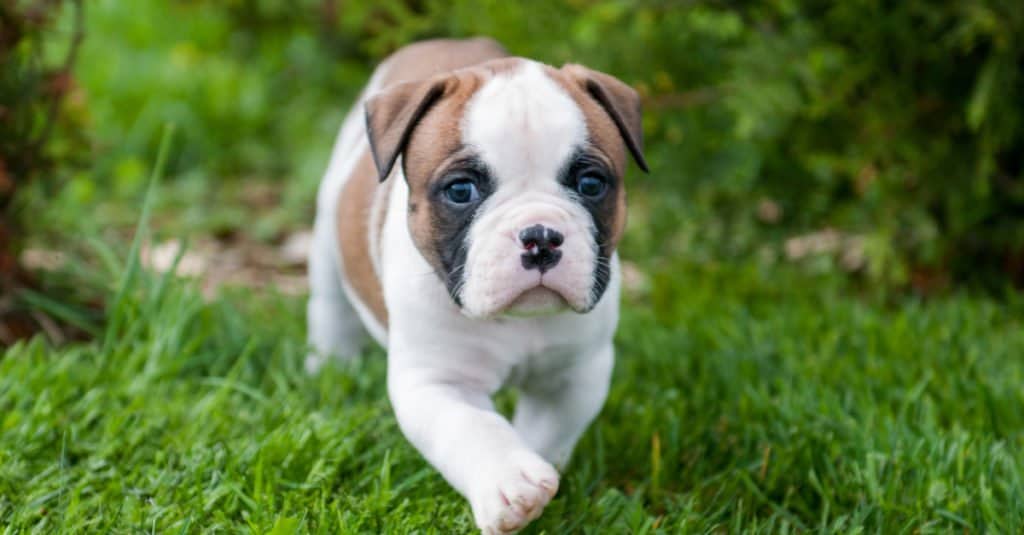
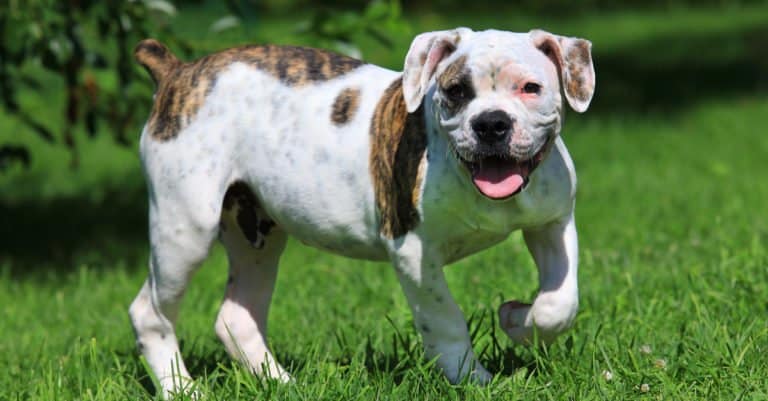
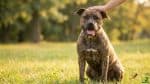
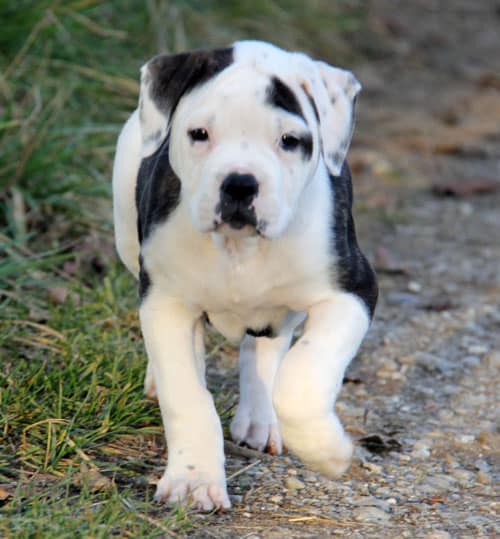
American bulldog puppy laying down

American Bulldogs are working pets that are trusted on farms across the country.

American Bulldogs and Children

American bulldogs are playful and engaging, which means that they can get along incredibly well with older children. However, due to their stubborn streak, leaving an American bulldog alone with small children is never recommended.

Dogs Similar to American Bulldogs

Bulldogs are the source breed for several different types of lovable pups. If you find the price of an American bulldog is too high, try adopting one of these breeds instead:

  • Bulldog: English bulldogs share many of the same traits as their American counterparts. Look for different types of bulldogs that have been curated by breeders over the centuries.
  • Boxer: Boxers are usually larger, taller, and healthier than most bulldogs. They still have the strong jaws, short faces, and stubborn streak that make bulldog descendants so distinct.
  • Pitbull: The American pitbull is an energetic breed that is often much cheaper than a purebred bulldog. In exchange, you’ll get a mix of personality traits and a dog that is more flexible to your family’s needs.
View all 326 animals that start with A

Sources

  1. AKC / Accessed February 21, 2021
  2. Dogtime / Accessed February 21, 2021
  3. Wikipedia / Accessed February 21, 2021
  4. Petfinder / Accessed February 21, 2021
  5. Dogcare / Accessed February 21, 2021
  6. Petcarerx / Accessed February 21, 2021
Rebecca Bales

About the Author

Rebecca Bales

Rebecca is an experienced Professional Freelancer with nearly a decade of expertise in writing SEO Content, Digital Illustrations, and Graphic Design. When not engrossed in her creative endeavors, Rebecca dedicates her time to cycling and filming her nature adventures. When not focused on her passion for creating and crafting optimized materials, she harbors a deep fascination and love for cats, jumping spiders, and pet rats.
Connect:

Thank you for reading! Have some feedback for us?


American Bulldog FAQs (Frequently Asked Questions)

American Bulldogs have small pendant-shaped ears and strong bodies.