












A
Species Profile

American Cocker Spaniel

Canis lupus familiaris

Silky ears, sporting heart
MVolodymyr/Shutterstock.com

American Cocker Spaniel Distribution

Click a location to explore more animals from that region

Origin Location

This map shows the native origin of the American Cocker Spaniel. As a domesticated species, they are now found worldwide.

Loading map...

Found in 1 country

Size Comparison

Human 5'8"
American Cocker Spaniel 1 ft 3 in

American Cocker Spaniel stands at 21% of average human height.

American Cocker Spaniel with long brown fur on a background of grass in sunny weather

At a Glance

Domesticated
Also Known As Cocker, American Cocker
Diet Omnivore
Activity Diurnal+
Lifespan 4 years
Weight 14 lbs
Status Not Evaluated
Did You Know?

The American Cocker Spaniel and English Cocker Spaniel were split into separate breeds (AKC: 1946) after diverging in size and head/coat style.

Scientific Classification

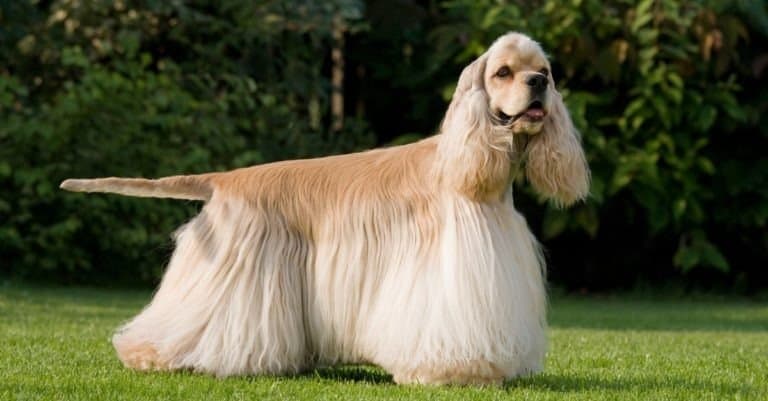
The American Cocker Spaniel is a small-to-medium companion and sporting dog breed developed in the United States from cocker-type spaniels, known for a rounded head, expressive eyes, long feathered ears, and a profuse silky coat.

Kingdom
Animalia
Phylum
Chordata
Class
Mammalia
Order
Carnivora
Family
Canidae
Genus
Canis
Species
Canis lupus

Distinguishing Features

  • Smaller and more compact than the English Cocker Spaniel
  • Rounder skull with a shorter muzzle and pronounced stop
  • Long, low-set, heavily feathered ears
  • Abundant, silky coat with heavy feathering on legs/chest/ears
  • Often seen in solid, parti-color, or roan coat patterns; tail commonly docked historically in some regions (practice varies/regulated)

Physical Measurements

Males and females differ in size

Height
1 ft 3 in (1 ft 3 in – 1 ft 4 in)
1 ft 2 in (1 ft 2 in – 1 ft 2 in)
Length
1 ft 10 in (1 ft 8 in – 1 ft 12 in)
2 ft (1 ft 11 in – 2 ft 2 in)
Weight
28 lbs (22 lbs – 31 lbs)
23 lbs (20 lbs – 26 lbs)
Tail Length
5 in (5 in – 6 in)
8 in (7 in – 10 in)
Top Speed
25 mph
short bursts of speed

Appearance

Primary Colors
Secondary Colors
Skin Type Domestic dog skin with a long, silky double coat (soft undercoat with a longer outer coat). Skin can get irritated under mats and in ear folds; more prone to allergies/dermatitis than many landrace breeds.
Distinctive Features
  • Domestic dog breed (not a wild species): selectively bred for companionability and sporting spaniel work rather than survival traits of wild canids.
  • Smaller, more compact frame than many domestic dogs; distinctly small-to-medium sporting dog size.
  • Breed hallmark rounded/domed head with pronounced stop and a shorter, more refined muzzle than the English Cocker Spaniel.
  • Large, dark, expressive eyes; "sweet" facial expression emphasized in the breed standard.
  • Very long, low-set, heavily feathered ears (ear leather and furnishings), increasing ear-canal humidity and debris retention.
  • Profuse, silky coat with heavy feathering on chest, belly, legs, and ears; requires substantially more grooming than the average domestic dog.
  • Tail historically docked in some regions/lines; modern practices vary by country and regulation.
  • Sporting heritage: originally developed in the U.S. from cocker-type spaniels; generally more companion-oriented in many lines while retaining a strong retrieving/flushing instinct.
  • Distinguished from English Cocker Spaniel: American type typically has a rounder skull, shorter muzzle, heavier coat/feathering, and a more "glamour" outline; English type is generally slightly taller with a longer muzzle and less profuse coat.

Sexual Dimorphism

Sexual dimorphism is moderate. Males are typically slightly larger and more heavily boned with fuller mane/feathering; females are often a bit finer and lighter in outline. Temperament differences are individual and line-dependent rather than strongly sex-linked.

  • Slightly greater height/weight on average; broader head and chest.
  • Often heavier coat furnishings (neck ruff and leg feathering).
  • Slightly finer bone and narrower head/foreface.
  • May carry a slightly lighter coat volume while retaining the same overall coat type.

Did You Know?

The American Cocker Spaniel and English Cocker Spaniel were split into separate breeds (AKC: 1946) after diverging in size and head/coat style.

It's the smallest of the AKC sporting group, originally valued for flushing game birds like woodcock (the "cocker" name).

The breed's hallmark look-rounded head, pronounced stop, shorter muzzle, and very heavy feathering-was shaped strongly by U.S. show standards.

Long, pendulous ears help funnel scent and protect ear canals in brush, but they also trap moisture-making routine ear care essential.

Coat colors span solids (e.g., black, ASCOB-"any solid color other than black"), and parti-colors; the silky texture mats easily without frequent brushing.

Lady, the dog in Disney's "Lady and the Tramp," is commonly depicted as a Cocker Spaniel, helping cement the breed's "sweet family dog" image.

Cocker Spaniels (including the American type) were once among the most popular U.S. breeds for decades, especially mid-20th century.

Unique Adaptations

  • Spaniel "drop ears" and facial feathering: historically protective in thick cover and helpful for scenting, though they increase ear-care and grooming demands in modern homes.
  • Compact sporting build: small-to-medium size with enough stamina for field work, yet easily suited to apartment life with daily exercise.
  • Silky, profuse coat: provides insulation and some abrasion protection, but requires regular brushing, trimming, and debris checks.
  • Expressive, forward-facing eyes and rounded skull: breed-typical head morphology selected for companion appeal; the prominent eyes also mean owners should watch for irritation or injury.

Interesting Behaviors

  • "Velcro dog" companionship: many prefer staying close to their people and may follow room to room.
  • Scent-first exploration: despite companion status, many retain strong sniffing and tracking interest on walks.
  • Feathering awareness: some learn to lift paws higher in wet grass or debris as coat/leg feathering picks up burrs.
  • Soft-mouth tendencies: spaniel heritage can show up as gentle carrying of toys (and sometimes socks).
  • Ear-shake routines: frequent head shaking after drinking or outdoor play-normal, but persistent shaking can signal ear irritation.
  • Springy "spaniel bounce": quick bursts of play and happy body wiggles, often paired with tail wagging and ear movement.
  • Alert barking at novelty: typically friendly, but may vocalize at unfamiliar sounds or visitors unless trained early.

Cultural Significance

The American Cocker Spaniel (Canis lupus familiaris) is a well-known American companion and sporting dog, bred smaller with a round head and heavy feathering. Mid-20th-century fame (like Lady and the Tramp) made it a symbol of a gentle house pet and shows how breeding made different dog types.

Myths & Legends

"Lady" of Disney's 1955 film is widely associated in popular memory with a Cocker Spaniel, turning the breed into a storybook symbol of loyal, well-mannered domestic life.

Old sporting anecdotes from cocker-type spaniels describe them as 'woodcock specialists,' celebrated in hunters' tales for their uncanny knack for finding birds in thick cover-stories that helped the 'cocker' name stick.

American dog-show lore often frames the breed as the 'little American sporting spaniel,' a national pride narrative that grew as U.S. lines diverged from the English Cocker and were formally recognized as separate.

In some households, long-eared spaniels were traditionally regarded as 'hearth dogs'-good-luck companions whose presence signaled a warm, welcoming home-an affectionate superstition tied to their gentle demeanor.

Conservation Status

NE Not Evaluated

Has not yet been evaluated against the criteria.

Population Stable

Life Cycle

Birth 5 pups
Lifespan 4 years

Lifespan

In the Wild
1–8 years
In Captivity
10–16 years

Reproduction

Mating System Polygynandry
Social Structure Managed Domestic
Breeding Pattern Serial
Fertilization Managed Selective
Birth Type Managed_selective

American Cocker Spaniel (Canis lupus familiaris): Breeding is human-managed. Dogs mate by internal fertilization; both sexes may have multiple mates over time. Matings are planned, temporary events; humans choose mates, timing, and care for puppies.

Behavior & Ecology

Social Pack Group: 3
Activity Diurnal, Crepuscular, Cathemeral
Diet Omnivore Animal-protein-rich foods (especially poultry-based meats)

Temperament

Affectionate, people-oriented companion; tends to seek close contact and reassurance from familiar humans.
Cheerful, playful, and socially friendly when well-socialized; commonly enjoys interactive games (retrieve, nose-work).
Sensitive/soft temperament: responds best to calm handling and positive reinforcement; harsh corrections can increase fearfulness or reactivity.
Alert and vocal as a household watchdog; may bark at novel sounds/visitors unless trained for quiet cues.
Moderate sporting drive (spaniel heritage): interested in scents and moving objects; may chase birds/squirrels without recall training.
Potential for shyness or defensive behavior if under-socialized; early, gentle exposure to people, dogs, grooming, and handling is protective.
Care requirement (breed-distinguishing): high grooming/coat maintenance needs (regular brushing, trimming) and can become stressed if grooming is infrequent or rushed; conditioning to grooming from puppyhood is important.
Health-linked behavior considerations: long, pendulous ears increase risk of otitis; ear discomfort can reduce tolerance for touch and may present as irritability-routine ear drying/cleaning and vet checks help maintain sociability.
Watch for eye diseases (cataracts, glaucoma) that make them more jumpy; joint problems (hip dysplasia, patellar issues) that reduce play; allergies or skin disease that raise scratching and touch sensitivity.

Communication

Bark Greeting, excitement, play solicitation
Alert bark Novel sounds/approaching people
Whine Attention-seeking, separation distress, anticipation
Growl Boundary-setting, discomfort, resource guarding
Yip/squeal High arousal play or frustration
Howl Infrequent; some individuals
Tail wagging and whole-body wiggles Affiliative greeting
Expressive facial/eye gaze behaviors; sustained eye contact to request help/attention
Ear and head movements Notable in the breed; may be subtle due to long ear leather/feathering
Pawing, nose nudges, and leaning for attention/comfort
Licking/"kiss" behavior as appeasement and bonding
Play bow, bouncy approach, and exaggerated retreat to initiate play
Body freezing/turning away as a low-level stress or discomfort signal Important during grooming/handling
Scent investigation and tracking with nose-down searching; may use scent-marking during walks

Habitat

Biomes:
Temperate Forest Temperate Grassland Mediterranean Boreal Forest (Taiga) Tundra Alpine Desert Hot Desert Cold Freshwater Wetland Marine +5
Terrain:
Plains Hilly Coastal Mountainous
Elevation: Up to 18044 ft 8 in

Ecological Role

Domesticated companion and sporting (flushing) dog; human-associated mesopredator/scavenging generalist

assists humans in locating/flushing birds in hunting contexts (historical sporting role) local rodent/pest deterrence when allowed to patrol yards (limited, context-dependent) resource recycling via consumption of human-provided food waste if unmanaged (scavenging tendency) social/therapeutic benefits to humans (companion animal role)

Diet Details

Main Prey:
Dog food Chicken, turkey, beef, lamb, fish, eggs Dog treats
Other Foods:
Starches and grains Starchy vegetables Non-starchy vegetables Fruits Grasses

Human Interaction

Domestication Status

Domesticated

American Cocker Spaniel (Canis lupus familiaris) is a U.S. cocker-type dog bred from domesticated wolves into a smaller, companion-focused form with a heavy coat. Once used to flush woodcock, now mainly a pet/show dog. Affectionate and people-oriented; needs socializing. Watch for ear disease, skin and eye problems, patellar luxation, immune disorders, obesity. Coat and ear care need regular hands-on care.

Danger Level

Low
  • Bite/scratch risk typical of domestic dogs, increased if poorly socialized, in pain (e.g., ear infections), startled, or mishandled
  • Allergy/asthma triggers from dander/saliva (not hypoallergenic; heavy coat can carry allergens)
  • Zoonotic/parasite risks common to dogs if not prevented (fleas, ticks, roundworms/hookworms) and secondary infections from bites
  • Risk to small children primarily from knocking over during play and resource-guarding if not trained/managed

As a Pet

Suitable as Pet

Legality: American Cocker Spaniel (Canis lupus familiaris) is generally legal where dogs are allowed, following local rules. Needs frequent grooming, ear care, gentle training, daily walks, play, and mental activity; may bark if bored.

Care Level: Moderate

Purchase Cost: $200 - $3,500
Lifetime Cost: $18,000 - $45,000

Economic Value

Uses:
Companion animal market (pet ownership, supplies, training) Professional grooming services (high recurring demand due to coat type) Veterinary care (ear/skin/eye issues can increase lifetime spend) Dog sports and show industry (conformation, handling, breeding) Working/utility roles in some lines (light sporting/field use, therapy/ESA potential)
Products:
  • Puppies from regulated breeders; adoption/rehoming services
  • Grooming (clipping/hand-scissoring, bathing, de-matting, ear care)
  • Veterinary products/services (vaccines, parasite control, ear/skin/eye treatments)
  • Training and behavior services (obedience, socialization, separation-anxiety management)
  • Pet supplies (quality diet, brushes/combs, ear cleaners, crates, enrichment toys)

Relationships

They are the smallest sporting dog that has gained recognition from the American Kennel Club. These dogs feature a rounded skull, squared lips, and long, low ears. The breed is separated into three different groups based on their coats, including black or black and tan, solid colors (aside from black), and parti-color. They have an average life expectancy of between 10 and 14 years.

Owning an American Cocker Spaniel: 3 Pros and Cons

ProsCons
Affectionate: These dogs are very loving and affectionate to their family members.Require frequent grooming: The coat of an American Cocker Spaniel will get tangled and matted if it is not brushed every day.
Easy to train: This breed aims to please its owners, which makes it relatively easy to train.Some bark a lot: Some American Cocker Spaniels may bark a lot.
Playful: American Cocker Spaniels can be very playful.Health concerns: When not purchased from a reputable breeder, these dogs can have a lot of potential health concerns.
American Cocker Spaniel dog running outdoors

American Cocker Spaniels love to run and play.

History and Origins

The beloved American Cocker Spaniel has long been one of the most popular dog breeds, topping the American Kennel Club’s rankings from the 1930s to the 1950s and again in the 1980s. This breed is descended from dogs that were once bred to hunt and provide food in Europe and the British Isles.

In 1884, a 23-pound son of Farrow’s Obo, named Obo II, was brought to the United States. By 1936, four varieties were being shown: Black, Parti, English, and a fourth that was added later. The two types of cockers were eventually separated into different breeds in 1947. The American version became known as the American Cocker Spaniel in the U.S., while the English type is known as the English Cocker Spaniel.
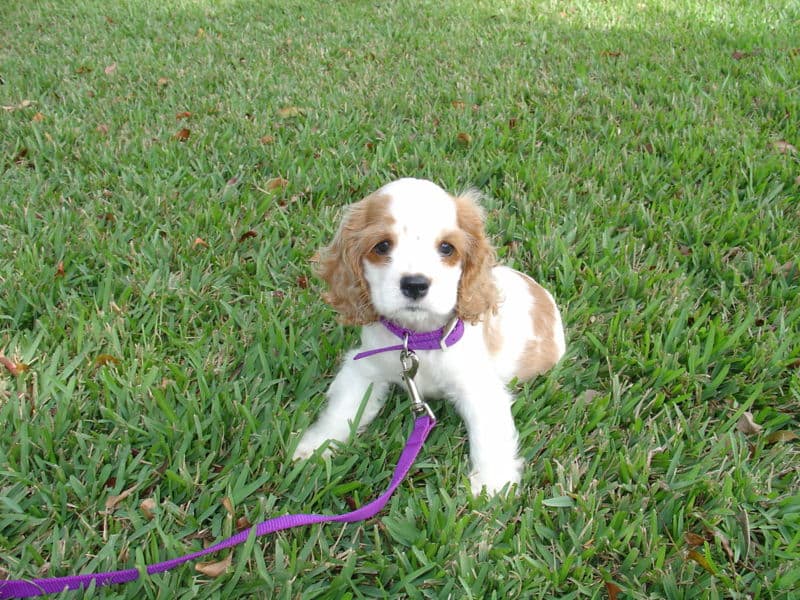
American Cocker Spaniels are descendants of the English Cocker Spaniel.

Size and Weight

These are small to medium-sized dogs. They are actually the smallest sporting dog. Males are between 14.5 and 15.5 inches tall and typically weigh between 25 and 30 pounds. Females are just a little smaller, standing between 13.5 and 14.5 inches tall and weighing between 20 and 25 pounds. Puppies typically weigh only 2 pounds when they are one month old. At four months, puppies weigh around 17 pounds. When the puppies are 12 months old, they will reach their maximum height, and when they are 24 months old, they will reach their full weight potential.

American Cocker Spaniel standing near lake

American Cocker Spaniels weigh between 20 and 30 pounds.

Lifespan and Reproduction

American Cocker Spaniels typically live between 10 and 14 years, according to surveys in the UK, USA, and Canada. This is at the lower end of the range for purebred dogs, with other breeds of similar size tending to live one or two years longer. It is important that owners be aware of this when considering adding a Cocker Spaniel to their family and take steps to ensure they are giving their beloved pet the best quality care possible throughout its life. Proper nutrition, exercise, veterinary checkups, parasite prevention, and dental hygiene can all help extend your American Cocker Spaniel’s lifespan.

Before the puppies are born, it is important to make sure the mother dog has a safe and comfortable environment. She should have plenty of soft bedding and be kept away from loud noises or any other potential stressors. During this period, her body will expand outwards as the puppies grow inside her belly. As delivery gets closer, gravity takes effect, and you may notice a sag in her stomach area. If there are lots of pups, this can be quite pronounced, with her belly practically dragging on the ground! It is common for American Cocker Spaniels to give birth to anywhere between three and twelve puppies at once. After their birth, they need to be monitored closely by an experienced vet or breeder who can provide them with any necessary care, such as vaccinations or deworming treatments.

Puppies are born 63 days after mating. Each puppy weighs between one and one and a half pounds when they are first born. During the initial 8 to 12 weeks, babies nurse from their mothers for nutrition while they continue to grow and develop. Puppies must stay with their mother until they naturally become weaned. When puppies reach two weeks old, their eyes open and begin to see the world around them. By three weeks old, hearing develops, so the puppies can start responding to sounds like barking.
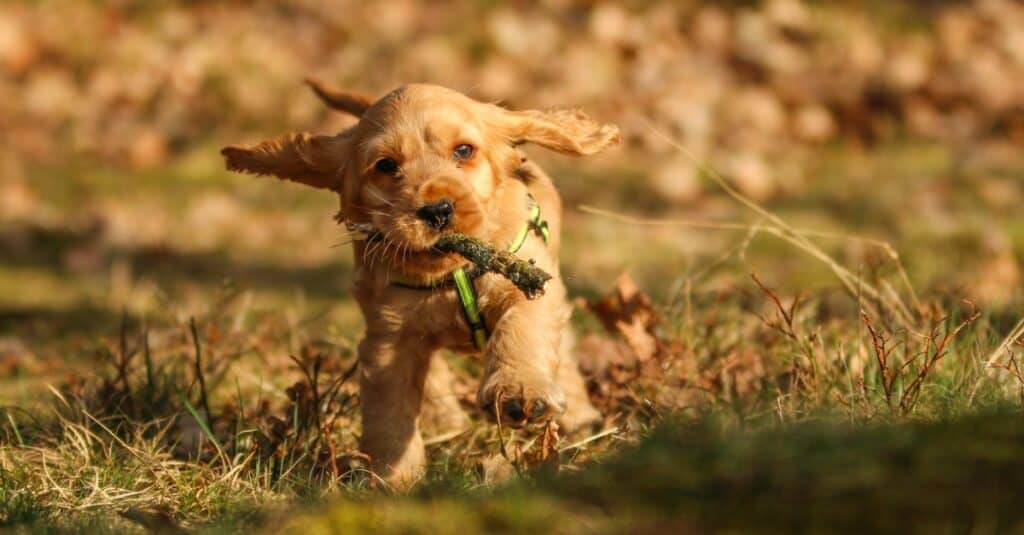
cocker spaniel puppy running with stick in mouth

Cocker spaniels should stay with their mothers for 8 to 12 weeks.

Common Health Issues

If you’re planning to adopt one of these dogs, it is important to be aware of some of the common health issues faced by this breed. While these health issues are not present in all dogs, knowing what to look for can help make sure you address any potential issues with your veterinarian right away.

Some of these dogs develop eye disorders as they age. These can include cataracts between the ages of 1 and 5, progressive retinal atrophy between the ages of 3 and 6, and glaucoma between the ages of 5 and 8. All three of these disorders may lead to blindness.

These dogs are also very prone to ear infections. They have a very narrow and long ear canal that can create a welcoming place for parasites and fungi, which can lead to ear infections.

Over 11% of these dogs also develop a luxating patella. This is a loose knee joint that can be very uncomfortable and may make it painful or difficult for the dog to walk. Often, surgery is required to address this issue.
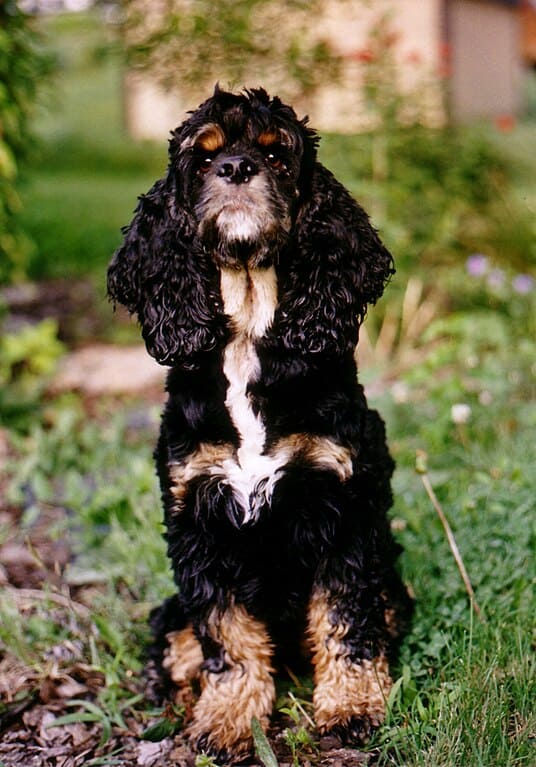
Cocker Spaniels are prone to ear infections.

Temperament and Behavior

These dogs have very happy and cheerful personalities. This breed also aims to please its owners, which can make it easier to train than other dog breeds. Since they were bred to be sporting dogs, they also can possess very inquisitive behaviors and enjoy accompanying their family on walks and trips. Some of these dogs may bark frequently, while others have more submissive personality traits.

The Best Dog Food

Always select high-quality food for puppies and adults. Many of these dogs do well with chicken and rice-based food, but since each dog has specific needs and dietary concerns, consult with your veterinarian to select the ideal food for your dog. It is important not to overfeed these dogs as it can lead to obesity.

Puppies have smaller stomachs than adult dogs. This means they will require smaller, more frequent meals throughout the day. Eight-week-old puppies need to be fed four times a day. Once the puppies reach the age of four months, three feedings a day should be sufficient. And, once the puppies are eight months old, two feedings each day are fine.

With their elevated risk of glaucoma, cataracts, and retinal atrophy, plus patellar luxation, owners should find their American Cocker Spaniels a dog food tailored to the breed’s health needs.

Maintenance and Grooming

These are not low-maintenance dogs. They will need to be brushed each day to prevent their hair from getting matted or too tangled. Use a medium-spaced professional comb to brush through their hair and effectively remove knots. You may also want to get a slicker brush.

When you bathe your dog, be sure to thoroughly rinse the shampoo residue away to prevent it from irritating their skin. Dry their coat with a warm, but not hot, blow-dryer. You’ll also want to be sure to properly clean and dry their ear canals. Since these dogs have such high grooming needs, many individuals opt to schedule regular appointments with a professional groomer.

Training

These dogs aim to please, which can make them easier to train than many other dog breeds. Most times, they respond well to more gentle corrections when they can tell that their owner is not pleased by their actions. They also enjoy agility and obedience competitions. Since they are so easy to train and have such amiable personalities, they also make good therapy dogs.
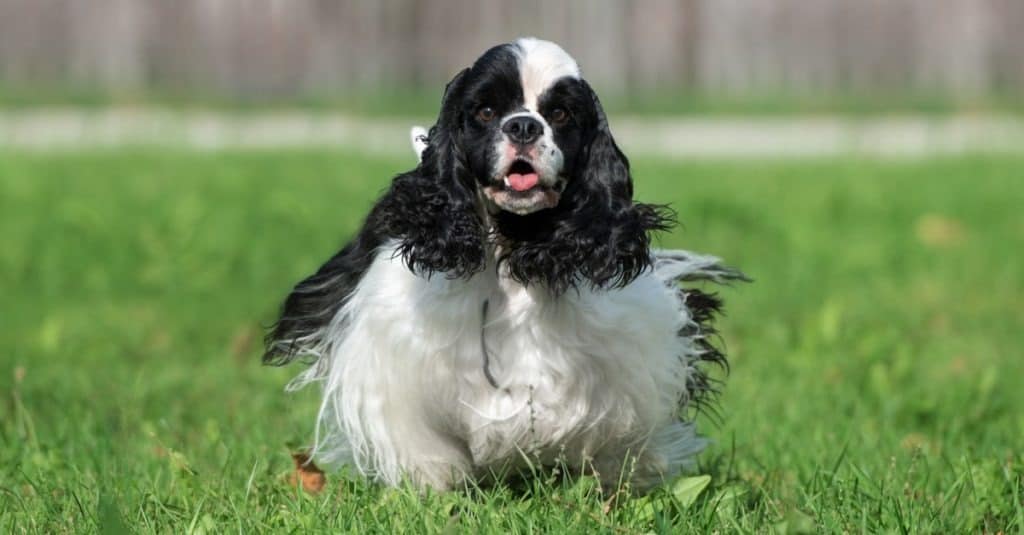
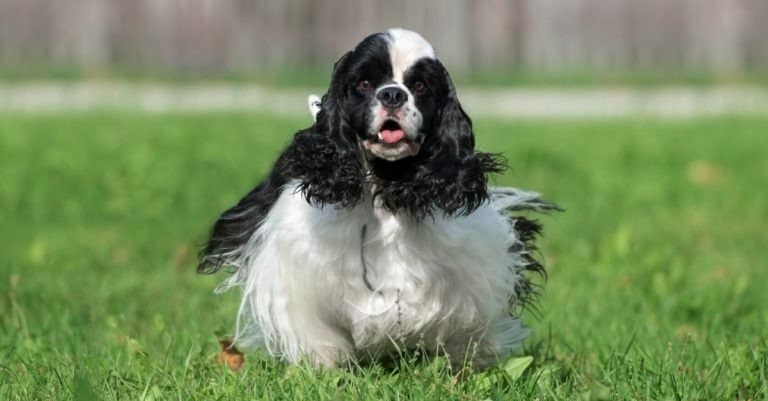
White and black American Cocker Spaniel dog

Cocker spaniels respond best to positive reinforcement.

Exercise

These dogs are sporting dogs and need regular exercise to keep their muscles toned. They are not very high-energy dogs, so they don’t need to expend energy, but they should still be given daily opportunities to play with their owners or go on a walk with them.

Puppies

If you’re bringing home a new puppy, be sure to puppy-proof your home first. Make sure there is nothing that the puppy could get into that could harm him or her. Also, be sure to move any belongings that you wouldn’t want to be damaged by a playful new pup.

Consider crate training your new puppy. Crate training can help your puppy see their crate as a safe place and help them feel more secure when they are left alone. Try developing a routine with your dog and getting them used to going into their crate after eating or playing.

Begin the process of training and potty training your puppy right away as well. This will help him learn expectations and begin responding to cues and commands. Socializing your puppy from a young age is also important to encourage proper interaction with children, adults, and other dogs in the future.

red and white american cocker spaniel puppy

Some pet owners prefer crate training, and some don’t. Both techniques are acceptable.

American Cocker Spaniels and Children

These dogs make excellent family dogs. The dogs’ gentle temperament makes them a good choice for families with children. However, you’ll want to make sure that children are taught how to appropriately interact with a dog and how to be gentle to avoid injuring the dog. These dogs are also pretty sensitive, so children, especially younger children, should always be closely supervised when they are with these dogs.

Dogs Similar to the American Cocker Spaniel

Three dog breeds that are similar to these dogs are English Springer Spaniels, American Water Spaniels, and Field Spaniels.

  • English Springer Spaniel: American Cocker Spaniels and English Springer Spaniels are both very intelligent and playful gun dogs. English Springer Spaniels are larger than American Cocker Spaniels. English Springer Spaniels weigh around 50 pounds, while American Cocker Spaniels weigh an average of 22 pounds.
  • American Water Spaniel: Both American Water Spaniels and American Cocker Spaniels are easy to train and affectionate. American Cocker Spaniels, however, are more intelligent and sensitive than American Water Spaniels.
  • Field Spaniel: Field Spaniels and American Cocker Spaniels are friendly and affectionate dogs that adapt easily to different situations. Field Spaniels have a dense and waterproof coat that is very easy to groom, whereas American Cocker Spaniels have a feathered coat that requires regular grooming by a professional.

Famous American Cocker Spaniels

These dogs remain a popular breed in the United States, so it shouldn’t be surprising that many are owned by celebrities. Here are a few famous ones:

  • Einstein was George Clooney’s dog.
  • Solomon was Oprah Winfrey’s dog.
  • Arthur was Elton John’s dog.
  • Lady, the animated dog in Disney’s Lady and the Tramp, is an American Cocker Spaniel.
View all 326 animals that start with A

Sources

  1. American Kennel Club / Accessed January 23, 2021
  2. Wikipedia / Accessed January 23, 2021
  3. Petfinder / Accessed January 23, 2021
  4. Dogtime / Accessed January 23, 2021
  5. Cuttin Blue Farms / Accessed January 23, 2021
  6. Embora Pets / Accessed January 23, 2021
  7. The Nest / Accessed January 23, 2021
  8. About Cocker Spaniels / Accessed January 23, 2021
  9. Dogell / Accessed January 23, 2021
  10. Your Pure Bred Puppy / Accessed January 23, 2021
Heather Hall

About the Author

Heather Hall

Heather Hall is a writer at A-Z Animals, where her primary focus is on plants and animals. Heather has been writing and editing since 2012 and holds a Bachelor of Science in Horticulture. As a resident of the Pacific Northwest, Heather enjoys hiking, gardening, and trail running through the mountains with her dogs.

Thank you for reading! Have some feedback for us?


American Cocker Spaniel FAQs (Frequently Asked Questions)

American Cocker Spaniels have long, dropped ears and feathered feet.