


A
Species Profile

American Eskimo Dog

Canis lupus familiaris

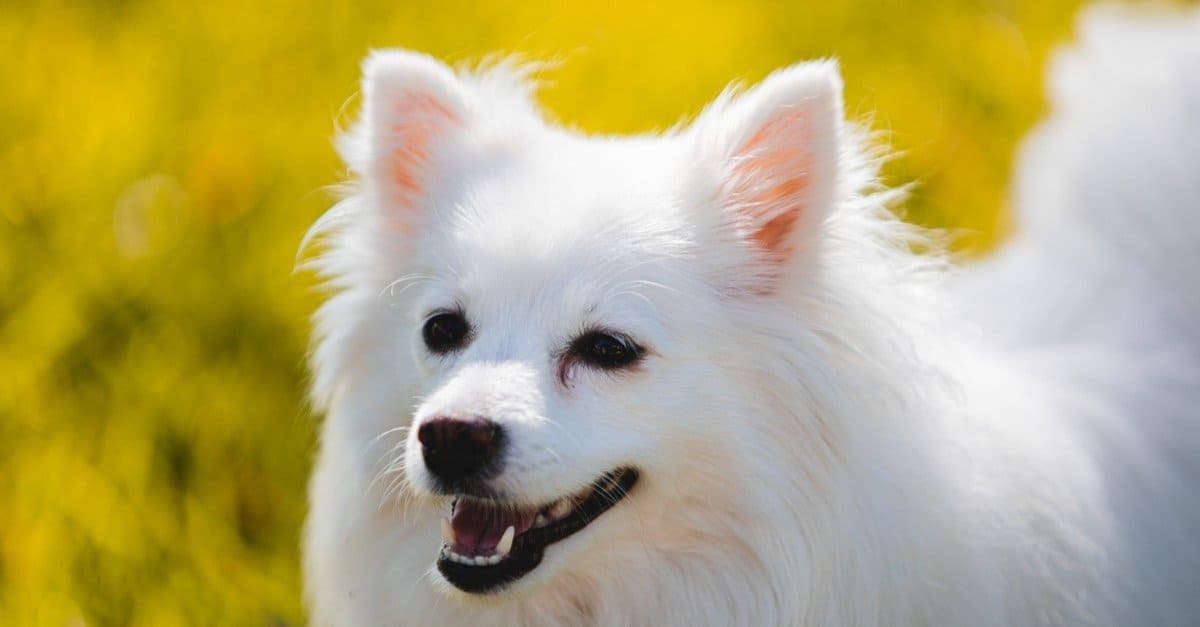
Brains in a Snow-White Coat
Scarlett Images/Shutterstock.com

American Eskimo Dog Distribution

Click a location to explore more animals from that region

Origin Location

This map shows the native origin of the American Eskimo Dog. As a domesticated species, they are now found worldwide.

Loading map...

Size Comparison

Human 5'8"
American Eskimo Dog 1 ft 4 in

American Eskimo Dog stands at 23% of average human height.

American Eskimo Dog

At a Glance

Domesticated
Also Known As Eskie, American Eskie, Eskimo Dog
Diet Omnivore
Activity Diurnal+
Lifespan 14 years
Weight 16 lbs
Status Not Evaluated
Did You Know?

Despite the name, the breed was developed in the United States and descends from European spitz-type dogs (especially German Spitz).

Scientific Classification

The American Eskimo Dog is a spitz-type domestic dog breed known for its white double coat, compact build, high intelligence, and strong trainability; it is commonly kept as a companion and performance (agility/obedience) dog.

Kingdom
Animalia
Phylum
Chordata
Class
Mammalia
Order
Carnivora
Family
Canidae
Genus
Canis
Species
Canis lupus

Distinguishing Features

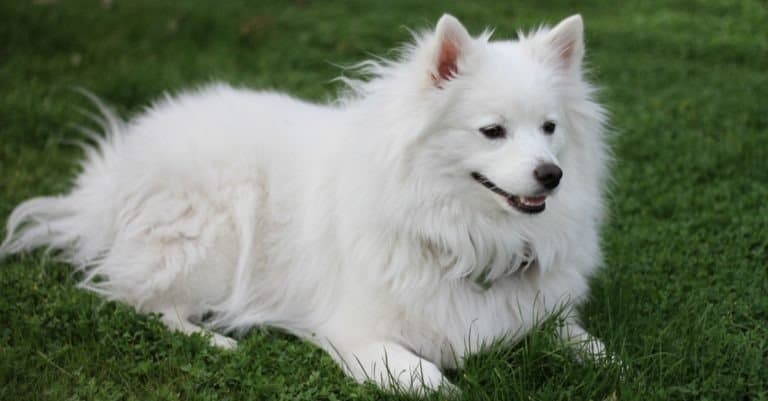
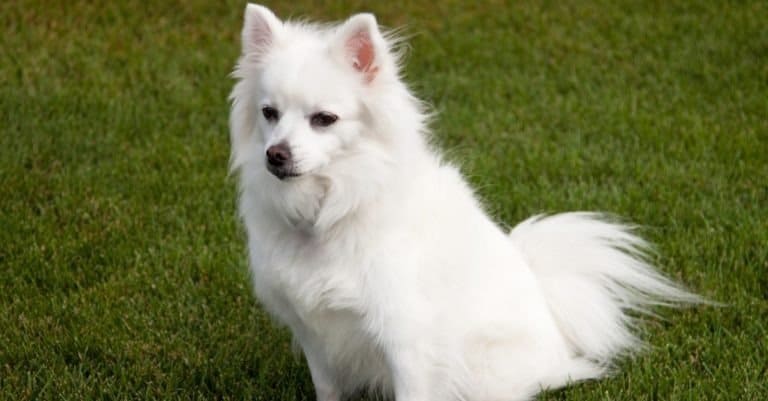
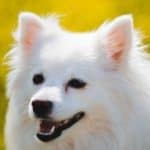
  • White (or white with biscuit/cream) dense double coat with pronounced ruff
  • Spitz-type wedge head, pointed upright ears, and plumed tail typically carried over the back
  • Small-to-medium size range depending on variety (Toy/Miniature/Standard)
  • Alert expression and high energy; often excels in obedience and agility

Physical Measurements

Males and females differ in size

Height
♂ 1 ft 5 in (9 in – 1 ft 7 in)
♀ 1 ft 2 in (9 in – 1 ft 7 in)
Length
♂ 1 ft 10 in (1 ft 4 in – 2 ft 2 in)
Weight
♂ 24 lbs (7 lbs – 35 lbs)
♀ 20 lbs (7 lbs – 35 lbs)
Tail Length
♂ 9 in (7 in – 12 in)
♀ 7 in (5 in – 10 in)
Top Speed
20 mph
American Eskimo Dog: quick sprinters

Appearance

Primary Colors
Secondary Colors
Skin Type Domestic dog skin with dense, weather-resistant double coat; typically well-pigmented skin and mucosa at points (nose/eye rims), though skin under the coat is often light.
Distinctive Features
  • Domestic dog breed (spitz-type) derived from Canis lupus familiaris; selectively bred for companionship and performance (obedience/agility) rather than wild survival traits seen in the base species (gray wolf).
  • Key identification traits: dense double coat with pronounced neck ruff, wedge-shaped head, small-to-medium erect triangular ears, and a high-set plumed tail carried curled over the back.
  • Compact, balanced build with a light, springy gait; typically smaller and more refined than wolf-type canids, with a distinctly 'spitz' silhouette.
  • Common sizes within the breed: Toy, Miniature, and Standard (breed variety by height/weight rather than separate breeds).
  • Face and expression: alert, keen, and intelligent; dark eyes with contrasting black pigmentation are typical and help distinguish it from some similarly white spitz breeds.
  • Breed vs base species context: compared with wolves, American Eskimo Dogs show greater sociability with humans, higher trainability for cued tasks, and reduced predatory/avoidance behaviors due to domestication and selection for companionship.
  • Temperament traits often associated with the breed: intelligent, highly trainable, energetic, and alert; may be vocal/watchful and benefits from early socialization to reduce nuisance barking or suspicion of strangers.
  • Smaller, more compact than a Samoyed with a different head, coat feel and shape. More size variation than Japanese Spitz. The American Eskimo Dog is a separate domestic breed with its own breed standard.
  • Coat/care requirements: heavy seasonal shedding ('blowing coat'); requires routine brushing (more frequent during sheds) to prevent matting and manage loose undercoat.
  • Coat management caution: avoid shaving the double coat except for medical necessity; it can impair thermoregulation and may affect coat regrowth/texture.
  • Exercise/mental needs: energetic and smart-thrives with daily walks plus training, puzzle work, and performance activities (obedience/agility) to prevent boredom-related behaviors.
  • Heat considerations: thick double coat can predispose to overheating in hot/humid weather; provide shade, water, and adjust exercise timing.
  • Watch for health problems: patellar luxation (often small sizes), hip dysplasia (more large dogs), progressive retinal atrophy/eye issues, dental crowding and gum disease in toy/mini, plus diabetes or hypothyroidism—regular vet checks advised.
  • Grooming specifics: regular ear checks (upright ears can still collect debris), nail trimming, and dental hygiene are important; white coats may show tear staining or discoloration more readily.

Sexual Dimorphism

Males are typically slightly larger and more robust with a broader head and heavier ruff; females are often a bit smaller and finer-boned, though both share the same spitz-type outline and coat characteristics.

♂
  • On average greater height/weight within the same size variety (Toy/Mini/Standard).
  • Broader skull/muzzle proportions and more substantial neck ruff in many individuals.
  • Heavier bone and more muscular appearance, especially through shoulders and chest.
♀
  • On average slightly smaller and lighter-boned within the same size variety.
  • Finer head and muzzle with a slightly more refined overall outline.
  • May carry a slightly less profuse ruff, though coat density varies by individual and season.

Did You Know?

Despite the name, the breed was developed in the United States and descends from European spitz-type dogs (especially German Spitz).

It comes in three sizes-Toy, Miniature, and Standard-yet all share the same hallmark look: white double coat, erect ears, and plumed tail.

The thick double coat insulates in cold weather and sheds heavily ("blows coat") seasonally.

American Eskimo Dogs were popular circus performers in the early 1900s, prized for intelligence and showy white coats.

They tend to excel in obedience, agility, rally, and trick training thanks to strong learning drive and responsiveness.

Their "spitz smile" and alert expression reflect a breed type shaped for attentiveness and quick reactions.

Like many spitz breeds, they can be vocal watchdogs, readily announcing unfamiliar sights and sounds.

Unique Adaptations

  • Dense double coat (soft insulating undercoat + longer guard hairs) that helps regulate temperature and repel moisture-useful for cold climates, but requires coat management indoors.
  • Compact spitz build with erect ears and curled/plumed tail-features common in northern spitz types that aid thermoregulation and protect extremities in cold/windy conditions.
  • High trainability and handler focus compared with the base species context: selectively bred domestic-dog traits favor cooperation with humans far beyond wild Canis lupus behavior.
  • Social flexibility: adapted to thrive as a family companion and performance dog, with strong responsiveness to human communication and structured tasks.
  • Efficient, springy movement: suited to quick directional changes in sports like agility, reflecting selective breeding for athleticism and show/trick work.

Interesting Behaviors

  • Vigilant "announce-and-check" guarding: often barks first, then watches closely for cues from family-more alarm dog than aggressive guardian.
  • Shadowing/velcro tendencies: follows people room-to-room and seeks engagement, especially in active households.
  • High pattern-learning: quickly anticipates routines (leash, treats, training sessions) and may "offer" behaviors for rewards.
  • Spitz-style tail and body signaling: tail carriage height and plume motion can telegraph confidence, excitement, or caution.
  • Dig-and-scratch nest behavior on bedding: a common canine comfort ritual, often seen before resting.
  • Quick footwork and bouncing turns during play: a compact, agile gait that suits agility and trick work.
  • Alert listening with head-tilts: frequent orienting to voices and environmental sounds, reflecting strong attention to cues.

Cultural Significance

The American Eskimo Dog (spitz-type, from German Spitz lines) rose in early 1900s with traveling circuses for its white coat and being easy to train. Today it is a bright, friendly companion in obedience and agility; a domestic dog (Canis lupus familiaris) shaped from the gray wolf (Canis lupus).

Myths & Legends

Circus lore from early 1900s America often celebrated the "snow-white spitz" as a clever performer that could learn complex tricks quickly-stories that helped cement the breed's reputation for showmanship and brains.

Naming lore ties the breed's identity to U.S. history: during periods of anti-German sentiment, owners and promoters favored the "American Eskimo" name over "German Spitz," a cultural rebranding story that persists in breed tradition.

In some families, the breed's bright white coat inspired household superstitions of a "good-luck white dog" that 'keeps watch' and warns of visitors before they arrive-an offshoot of broader European white-animal good-omen traditions.

Immigrant community anecdotes describe small white spitz dogs as steadfast household sentries-'little dogs with big alarms'-a traditional storytelling theme that highlights their vocal watchdog nature.

Conservation Status

NE Not Evaluated

Has not yet been evaluated against the criteria.

Population Stable

Life Cycle

Birth 4 pups
Lifespan 14 years

Lifespan

In the Wild
13–15 years
In Captivity
10–18 years

Reproduction

Mating System Polygynandry
Social Structure Managed Domestic
Breeding Pattern Serial
Fertilization Managed Selective
Birth Type Managed_selective

Domestic dog (Canis lupus familiaris), including American Eskimo Dog, shows polygynandry but in homes breeding is controlled by owners. Planned matings, internal fertilization, and temporary pairings during each heat are usual; pups mainly raised by mother with human help.

Behavior & Ecology

Social Pack Group: 4
Activity Diurnal, Crepuscular, Cathemeral
Diet Omnivore Meat-forward complete diet (high-quality kibble or fresh-cooked lean poultry/fish/beef) often paired with small amounts of pumpkin or berries as treats.

Temperament

Highly intelligent, fast to learn; excels in obedience/agility tricks and structured routines (distinguishes the breed from baseline 'average companion dog' expectations).
Alert, vigilant, and stimulus-sensitive; strong watchdog/"announce" tendency with frequent barking compared with many other domestic dog breeds.
Affectionate and people-oriented with family; can be reserved with strangers until properly introduced (socialization-dependent variation).
Playful and energetic with bursts of high activity; benefits from daily aerobic exercise plus mental work (puzzles, scent games, shaping).
Can be independent and opinionated (spitz influence) yet responsive when training uses clear criteria and positive reinforcement.
Potential for separation anxiety or frustration vocalization if under-enriched or inconsistently reinforced.
Breed-specific care requirements: heavy seasonal shedding from a dense double coat; needs frequent brushing/de-shedding to prevent mats and manage undercoat blow; avoid shaving as it can impair coat function.
Health concerns to monitor (breed-tilted risks): hip dysplasia, patellar luxation, progressive retinal atrophy/other eye disease, dental disease (small/medium sizes), diabetes mellitus, and hypothyroidism; maintain lean body condition and regular veterinary screening.

Communication

High-frequency alert barking at novel sounds/approaches; may escalate with excitement or anxiety Notable breed hallmark
Yips/short barks during play or anticipation; demand barking if inadvertently reinforced.
Whines/whimpers for attention, greeting, or mild stress; may intensify with isolation.
Growls as distance-increasing signals (resource guarding or discomfort) when thresholds are exceeded; typically preventable with training/management.
Occasional howling or 'talking' in response to sirens or household cues Variable by individual
Spitz-style expressive body language: tail carriage (plumed tail height/position), pricked ear orientation, and rapid posture shifts to signal arousal/interest.
Affiliative greeting rituals: face/hand licking, body leaning, soliciting touch; often increases toward bonded humans.
Play signals: play bow, bouncy approach, pawing; can become over-aroused-benefits from taught off-switch behaviors.
Scent-based behaviors typical of domestic dogs: sniff investigation, urine marking (more common in intact dogs), and information gathering on walks.
Visual attention and 'checking in' with handlers during work/sports; strong handler focus when reinforced, supporting advanced training.

Habitat

Biomes:
Temperate Forest Boreal Forest (Taiga) Tundra Alpine Temperate Grassland Mediterranean Desert Hot Desert Cold Savanna Tropical Dry Forest Wetland Freshwater Marine +7
Terrain:
Plains Hilly Mountainous Valley Coastal Island Riverine +1
Elevation: Up to 16404 ft 3 in

Ecological Role

Domestic companion canid; opportunistic omnivore whose ecological impact is mostly mediated by human care, with limited predation on small pests when allowed to roam.

Human companionship and working/performance roles (training, sport) Localized rodent deterrence/pest control (incidental predation) Nutrient cycling via waste in managed environments (minor) Potential negative impact if free-roaming: disturbance/predation of small wildlife-best mitigated by leashing and supervision

Diet Details

Main Prey:
Rodents Rabbits and hares Small birds and eggs Squirrels and chipmunks Invertebrates
Other Foods:
Berries Orchard fruits Vegetables Grains and starches Edible fungi and plant matter

Human Interaction

Domestication Status

Domesticated

Domestic dog (Canis lupus familiaris) was domesticated from gray wolves thousands of years ago. The American Eskimo Dog is a spitz-type companion breed developed in the US from German Spitz dogs and became popular around 1900. Not from Inuit sled dogs; the name changed during World War I. It is a companion, watchdog, and show/performance dog, and is trainable.

Danger Level

Low
  • Bites typically occur from fear, pain, resource guarding, or poor socialization; risk increases around unfamiliar handling (e.g., grooming) if under-trained
  • Vocal watchdog behavior can escalate neighbor conflicts (noise complaints)
  • Potential for nipping in exuberant play, especially with insufficient impulse control training

As a Pet

Suitable as Pet

Legality: American Eskimo Dog (Canis lupus familiaris) is usually legal to own. You must follow local rules like licenses, leashes, rabies shots, and noise limits. Rarely banned, but spitz-type lookalikes may face housing or insurance limits.

Care Level: Moderate

Purchase Cost: $800 - $3,000
Lifetime Cost: $15,000 - $35,000

Economic Value

Uses:
Companion animal industry Dog sports/performance Breeding and showing Pet services
Products:
  • companion/pet ownership value (adoption/purchase)
  • conformation showing and sport participation (agility, obedience, rally)
  • training services (pet manners, trick training)
  • grooming services (coat maintenance)
  • pet supplies and veterinary care expenditures

Relationships

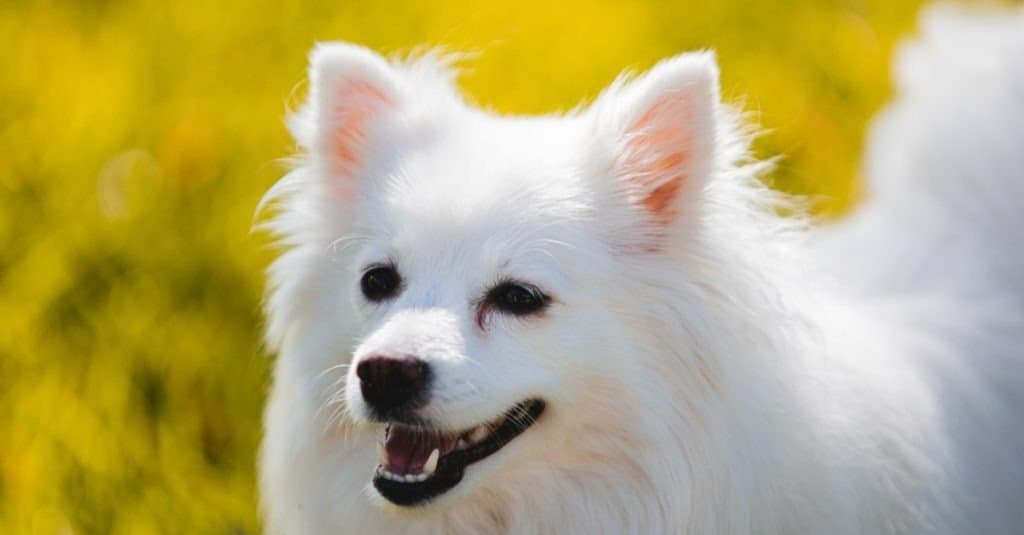
The American Eskimo dog is a lively and alert dog breed with an all-white or biscuit fur color, striking black eyes, and a highly curved and upturned tail that bends back over the body. Despite its name, this breed is not associated with the Inuit at all. Instead, it was bred from the German Spitz in the 19th century by immigrants who settled in the Midwest.

Although originally developed as a farm dog, this breed became a popular performer at circuses and road shows. After the United States entered World War I, the name was changed to the American Eskimo as a result of high anti-German sentiment running through the country. This breed is a great match for people who want a lovable, affable, and high-energy companion in their homes.

3 Pros and Cons of Owning an American Eskimo Dog

Pros!Cons!
Alert and Active
The American Eskimo has an inquisitive mind and loves to explore its surroundings.
Destructive Behavior
If this breed doesn’t receive enough attention or exercise, then it may seek out more destructive forms of activity.
Friendly and Social
The American Eskimo loves to be around people and other dogs.
Barking
The American Eskimo is very talkative, but not every owner may enjoy its tendency to bark, howl, or yap.
Healthy
This breed has an excellent lifespan and relatively few health issues.
Separation Anxiety
The flipside of its social personality is its high separation anxiety when left alone for long periods of time.
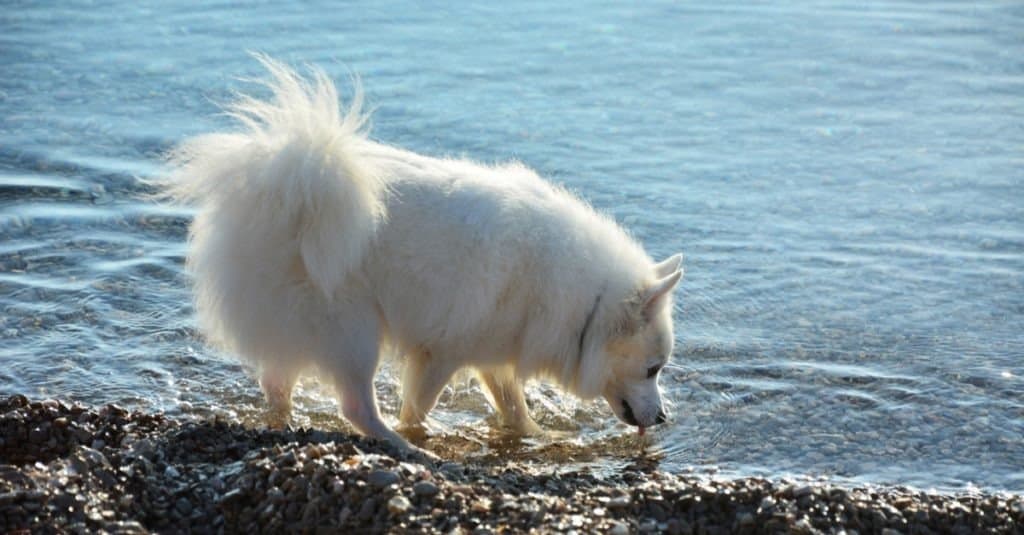
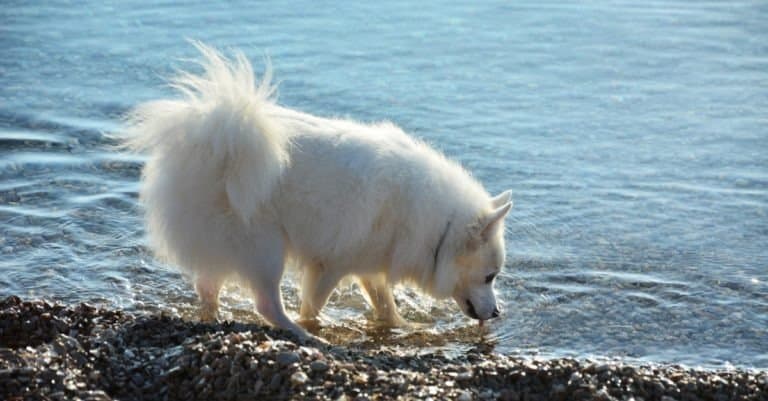
American Eskimo Dog on beach

The American Eskimo dog was developed by German immigrants.

History and Origins

The American Eskimo Dog’s name is a bit misleading, as the Indigenous people that are referred to as Eskimos had no part in the breed’s origin. German immigrants who arrived in the United States in the early 1800s had a great influence on the development of the Midwest. Not only did they bring Lutheranism, the brewing industry, and German-style food, but they also brought along a Nordic breed of dog known as the German Spitz. These dogs quickly became popular show dogs due to their intelligence and agility, with Pierre, an Eskie tightrope walker, being one of the most famous performing dogs of the 1930s.

When the United States joined World War I in 1917, a prejudice against German things was widespread. Thus, the name of the breed was changed to the “American Eskimo Dog,” based on the name used by a spitz breeding kennel in Ohio. Although the breed has a long and interesting history in America, it was not until 1995 that the American Kennel Club first registered an American Eskimo Dog. These little white dogs did various tasks on farms in the Midwest and later entertained audiences at the circus. Nowadays, pet owners love them because they are adaptable, fun-loving companions.
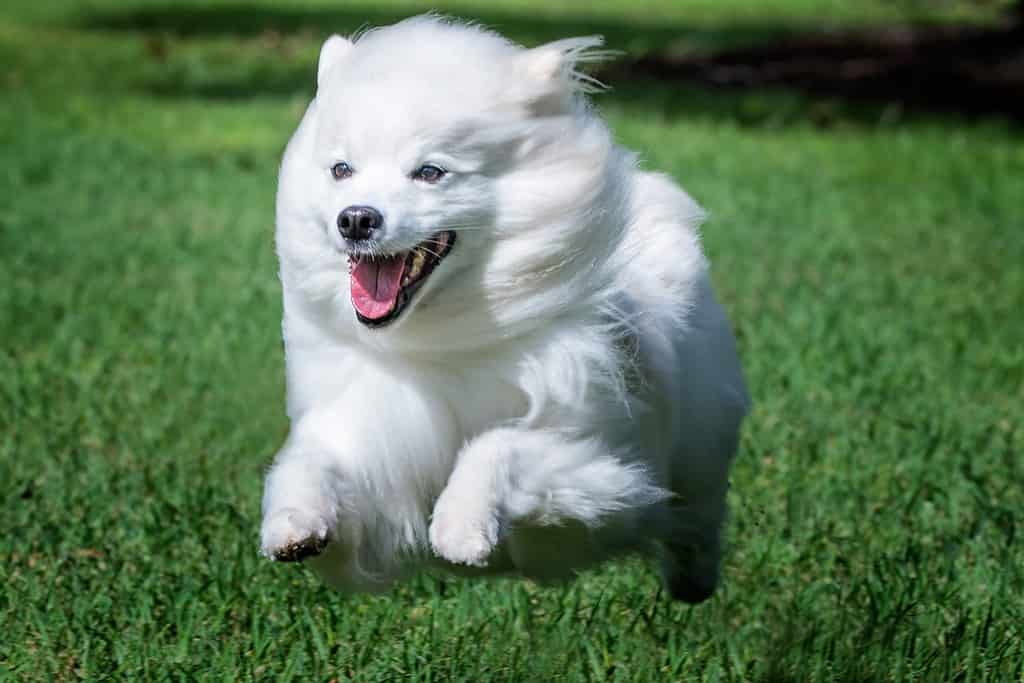
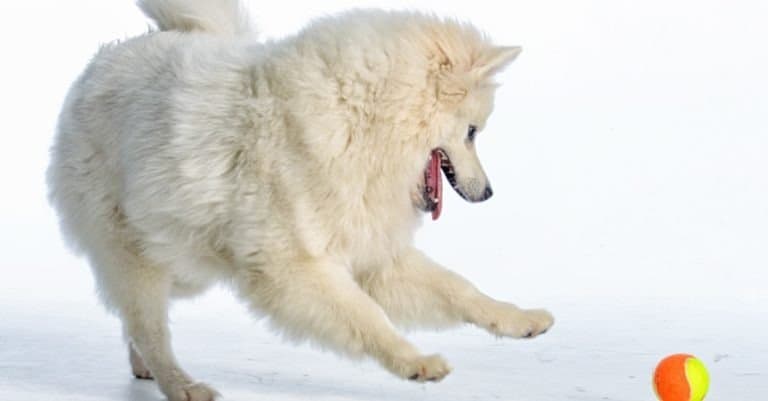
American Eskimo Dog running

American Eskimo Dogs are intelligent and loyal pets.

Reproduction

The American Eskimo Dog typically has a gestation period of 63 days. Puppies are usually around 8 ounces at birth and will grow quickly in the first few weeks after they are born. The average litter size for an American Eskimo is between three to five puppies, though litters can range from one to eight puppies depending on the mother’s health and age.

American Eskimo Dogs are known for their intelligence and loyalty, making them an ideal pet. They come in three sizes: Standard, miniature, and toy. These fluffy white dogs have a unique trait that sets them apart from other breeds — biscuit-colored fur! According to the official breed standard, American Eskimo Dogs should have a white or white with biscuit cream coat, with solid white being the most common. This adds an extra layer of cuteness that we just can’t resist! With these traits in mind, it’s no wonder that American Eskimo Dogs are such popular pets.
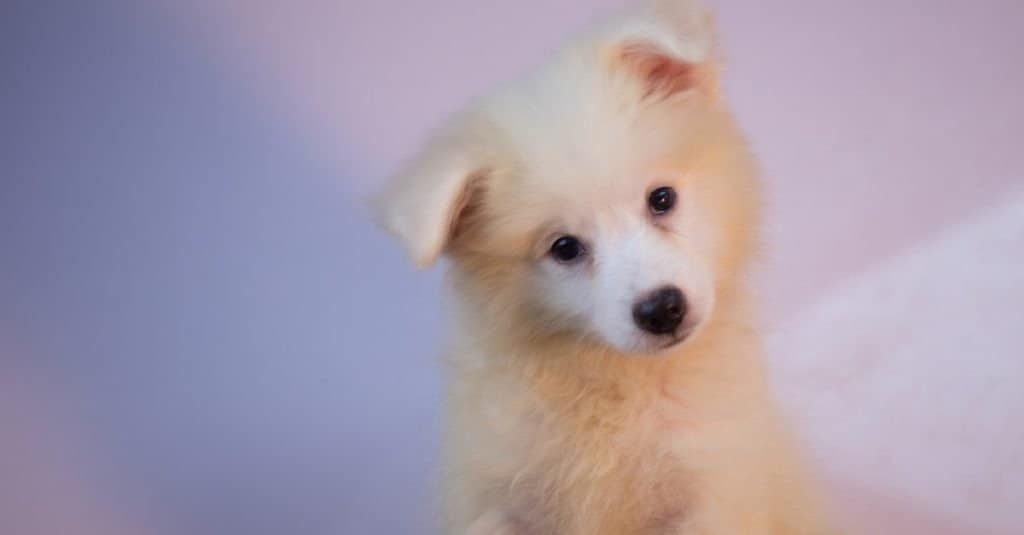
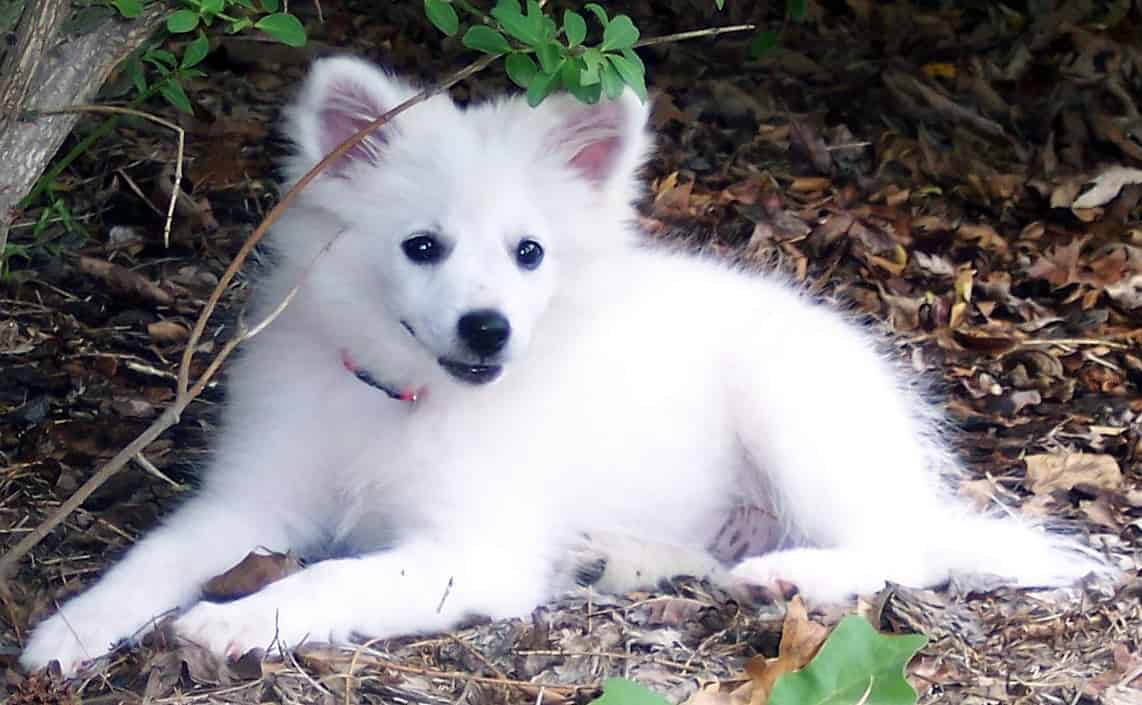
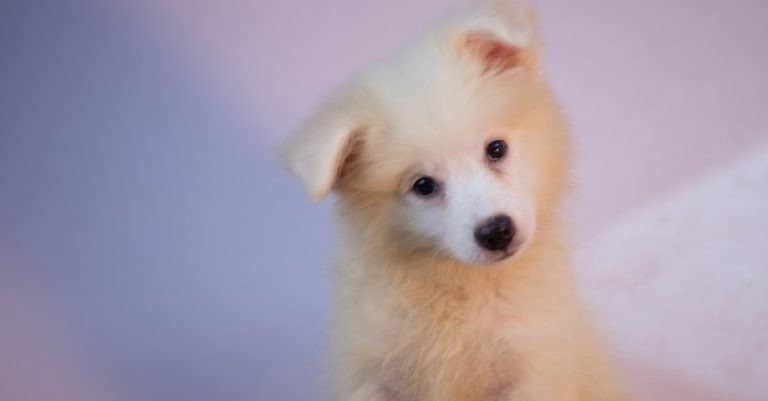
American Eskimo Dog puppy

Like all puppies, American Eskimo Dogs are born with their eyes and ears closed, making them temporarily deaf and blind at birth.

Size and Weight

The American Eskimo comes in three different sizes: standard, mini, and toy. In the chart below, the high number represents the standard size, while the smaller figure represents the typical size of the toy dog. The mini is somewhere in between.

Height (Male)9 to 19 inches
Height (Female)9 to 19 inches
Weight (Male)6 to 35 pounds
Weight (Female)6 to 35 pounds

American Eskimo Dogs weigh between 6 and 35 pounds.

Lifespan and Health

The American Eskimo is a healthy breed with a life expectancy of around 13 to 15 years. Some of the rarer conditions you should still nevertheless look out for include hip dysplasia (in which the thighbone doesn’t fit perfectly into the hip joint), progressive retinal atrophy (the deterioration of the retina), cataracts (the clouding of the lens in the black eye), and Legg-Calve-Perthes Disease (in which the blood supply to the femur is partly cut off).

Regardless of the dog’s health history, you should always look out for early signs of cancer, skin diseases, and ear problems, which may develop at any time. To ensure the best health results, you should buy your dog from a reputable breeder and have annual health checks at the vet.
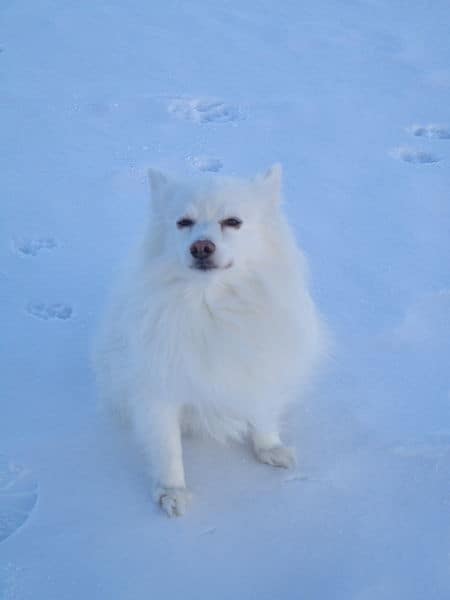
American Eskimo Dogs live for 13-15 years.

Temperament

The American Eskimo has a friendly personality that shines through in every way. Although not exactly a great hunting or working dog, its alert temperament and loud bark do make it well-suited as a watchdog. But more than anything, this breed is an excellent companion that loves to be around people who shower it with plenty of attention. The dog expresses its essential traits through barking, playtime, tricks, and its exuberant personality. It’s a little hesitant to make new friends, but this can be overcome with some effort.

Even though this highly active breed is always ready to exercise and play outdoors, the American Eskimo is very well-suited for an indoor environment. It is just content to have fun around the house and be with its owner. But it’s also important to set boundaries with this breed; take charge and give it plenty of guidance and activities to engage in. Otherwise, its roaming and energetic mind might find an outlet in rather destructive, annoying, or neurotic behavior.
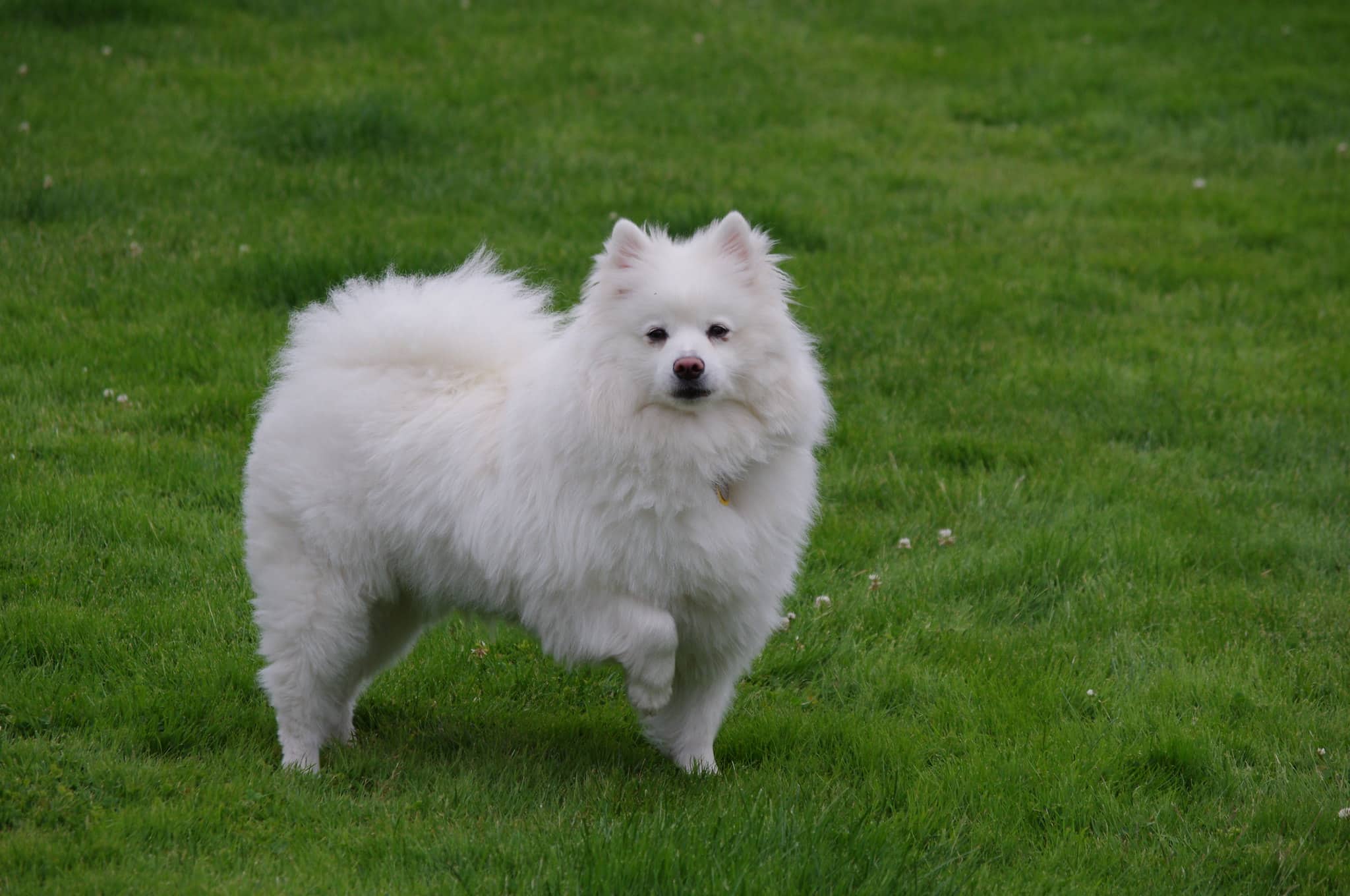
American Eskimo Dogs need plenty of daily exercise. They are an active breed.

Care

The American Eskimo is a high-maintenance dog that requires a lot of care and attention to satisfy its needs. If you’re not prepared to sacrifice time and expense on exercise, grooming, training, and nutrition, then this might not be the right dog breed for you. For best results, you should make sure the dog is fully trained as a puppy.

The Best Dog Food

The American Eskimo should be fed on half a cup to 1.5 cups of high-quality dry food divided into two separate meals (though the exact amount depends on the dog’s age, size, activity level, and metabolism). Dog treats are also a useful way to reinforce training. Obesity isn’t a significant problem for this highly energetic breed (at least until middle age), but you should nevertheless keep an eye on its weight and be prepared to adjust its calorie intake as needed.

Maintenance and Grooming

The American Eskimo has a thick, elegant double coat of fur, but with a tendency for shedding, it requires two or three brushing sessions per week to remove dead hairs and prevent matting. Because of the natural oils produced by its fur, this breed doesn’t require too much cleaning. It is okay to bathe the dog after a particularly dirty outside adventure, but doing so more than once every few months could cause dryness and irritation. In addition to all of this, the nails should be trimmed, and the ears cleaned out regularly to prevent health problems.
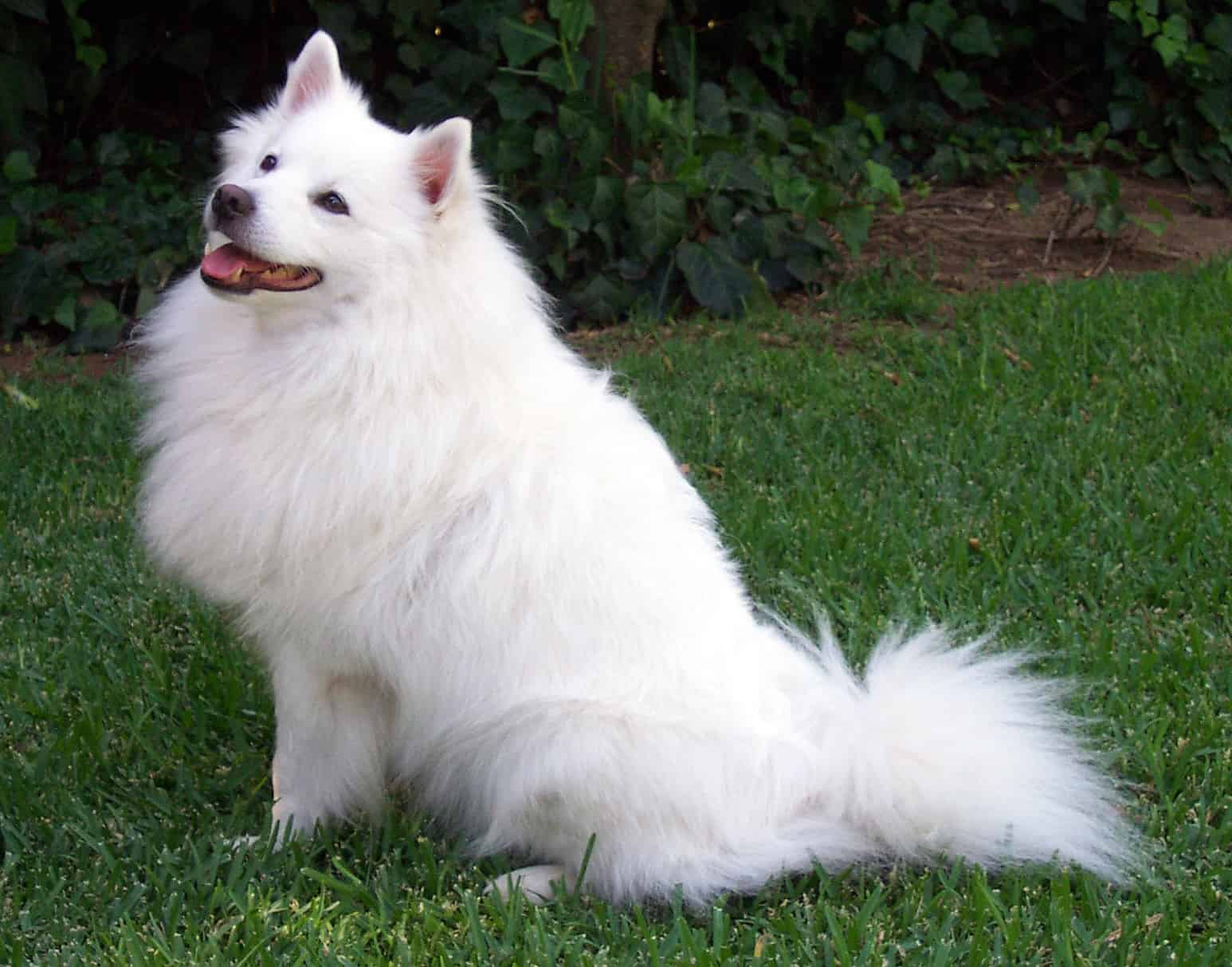
American Eskimo Dogs are high-maintenance breeds.

Training

The American Eskimo is one of the most eager and outgoing breeds you can find. As a regular performance dog, this breed will easily follow directions and quickly learn commands, sometimes just by watching and mimicking others. Early obedience training is a must for this breed. Otherwise, for all of its friendliness, the dog’s strong, independent personality may assert itself and exhibit some bad behavior. It’s not impossible to reverse this bad tendency as an adult, but you will need to put in some extra work.

Exercise

The American Eskimo is a high-energy breed that requires a large amount of mental and physical stimulation throughout the day. It is a good idea to give it a fenced yard in which to play and plenty of toys to divert its attention. It also enjoys long walks or runs outdoors and does well in both snowy environments and water, but in hot weather, you should make sure it is properly hydrated and has enough shade. Only after entering middle age will the American Eskimo slow down and become a lot more docile.
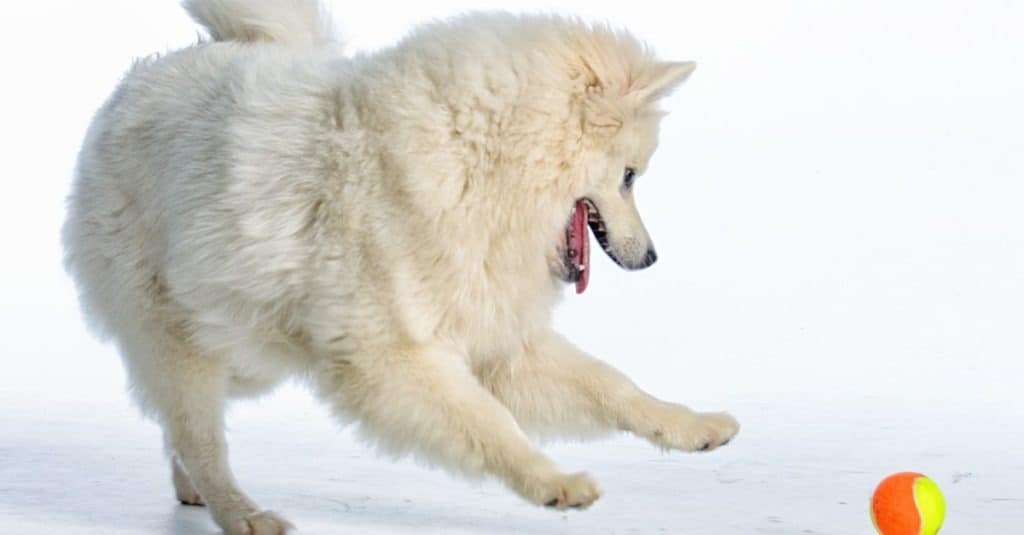
American Eskimo Dog isolated

The American Eskimo is a high-energy breed that requires a large amount of mental and physical stimulation throughout the day.

American Eskimo Puppies

Puppyhood is a very important time for the American Eskimo. It needs to be properly acclimated from an early age to obey human commands. If it is not properly trained and socialized as an adolescent, then this breed may experience significant behavioral problems later on in life, much more than the typical dog breed. Your puppy should also be subject to an early health screening from the vet to check for potential problems and administer all of the necessary shots.
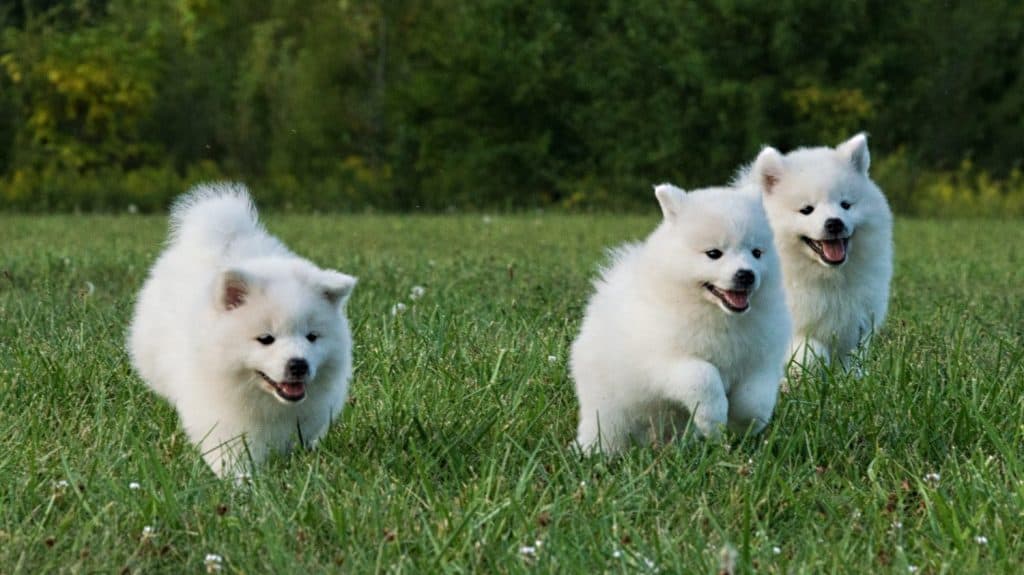
American Eskimo puppies running outdoors

American Eskimo puppies running outdoors.

American Eskimo Dogs and Children

With its friendly nature and playful personality, the American Eskimo loves to be around children. The standard American Eskimo is just the right size to interact with children. It isn’t large enough to intimidate them, but it isn’t small enough to be overly delicate. The only real problem is that the breed’s high energy and activity level might be startling to smaller children. That is why you should always supervise every interaction between your dog and your children and never leave them alone together.

Dogs Similar to the American Eskimo

If you enjoy the American Eskimo, then you might want to check out these similar breeds.

  • German Spitz: The German Spitz is the original breed from which the American Eskimo originated. Coming in five different varieties (the Wolfspitz, Giant Spitz, Medium Spitz, Mini Spitz, and the Pomeranian), this breed has a long double coat of fur with some variation of white, black, cream, brown, or red/orange coloration.
  • Samoyed: Originating from the frigid lands of Siberia, the Samoyed has a very similar appearance to the American Eskimo, with the white/biscuit fur and the curved tail. This all-around intelligent and hard-working breed was originally used for hauling sleds and protecting its owner.
  • Finnish Spitz: Another member of the Spitz family, the Finnish Spitz also has a similar appearance to the American Eskimo, but with a kind of brown-orange coat color. This alert and active breed was originally used as a type of bark pointer, which identified hunting game by barking loudly.
View all 326 animals that start with A

Sources

  1. American Kennel Club / Accessed January 21, 2021
  2. Dog Breed Info / Accessed January 21, 2021
Heather Hall

About the Author

Heather Hall

Heather Hall is a writer at A-Z Animals, where her primary focus is on plants and animals. Heather has been writing and editing since 2012 and holds a Bachelor of Science in Horticulture. As a resident of the Pacific Northwest, Heather enjoys hiking, gardening, and trail running through the mountains with her dogs.

Thank you for reading! Have some feedback for us?


American Eskimo Dog FAQs (Frequently Asked Questions)

The American Eskimo is a small or medium-sized dog with long, thick, white fur, short, upturned ears, a curved tail, and an alert personality. As a member of the Spitz family, this breed is well-adapted for harsher northern climates. Spitz dogs also retain some small wolf-life characteristics.