


A
Species Profile

American Foxhound

Canis lupus familiaris

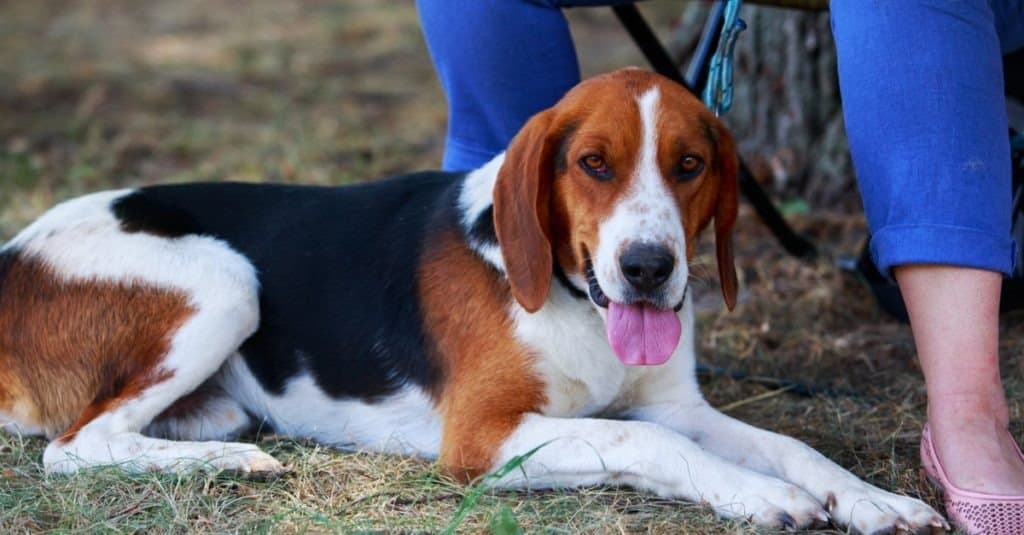
Built to bay, bred to endure.
iStock.com/DevidDO

American Foxhound Distribution

Click a location to explore more animals from that region

Origin Location

This map shows the native origin of the American Foxhound. As a domesticated species, they are now found worldwide.

Loading map...

Size Comparison

Human 5'8"
American Foxhound 1 ft 11 in

American Foxhound stands at 34% of average human height.

The dog breed American Foxhound a close-up

At a Glance

Domesticated
Also Known As Foxhound, Hound, Fox-hunting dog
Diet Omnivore
Activity Diurnal+
Lifespan 5 years
Weight 35 lbs
Status Not Evaluated
Did You Know?

The American Foxhound is the state dog of Virginia (designated in 1966).

Scientific Classification

The American Foxhound is a domesticated dog breed (a scenthound) developed in the United States for pursuing foxes and similar game by scent, typically working in packs. It is known for athletic endurance, a melodious baying voice, and a friendly, sociable temperament.

Kingdom
Animalia
Phylum
Chordata
Class
Mammalia
Order
Carnivora
Family
Canidae
Genus
Canis
Species
lupus

Distinguishing Features

  • Medium-to-large, leggy and athletic scenthound build optimized for stamina
  • Long ears and strong scenting ability typical of pack hounds
  • Short, hard coat; common tricolor and bicolor patterns
  • Characteristic baying/howling vocalizations used in pack hunting

Physical Measurements

Males and females differ in size

Height
1 ft 12 in (1 ft 10 in – 2 ft 1 in)
1 ft 11 in (1 ft 9 in – 2 ft 1 in)
Length
3 ft 5 in (3 ft 1 in – 3 ft 11 in)
Weight
71 lbs (66 lbs – 75 lbs)
64 lbs (55 lbs – 71 lbs)
Tail Length
1 ft 3 in (1 ft 1 in – 1 ft 5 in)
1 ft 1 in (11 in – 1 ft 2 in)
Top Speed
35 mph
about 56 km/h (short bursts)

Appearance

Primary Colors
Secondary Colors
Skin Type Short, hard, close-lying coat with moderate weather resistance; skin generally tight with slight looseness at neck/throat typical of scenthounds.
Distinctive Features
  • Breed context (vs. base species Canis lupus): fully domesticated, selectively bred for cooperative pack scent-trailing and endurance rather than solitary/pack predation; lighter frame, longer limbs, and more specialized nose/voice than the wild wolf phenotype.
  • Overall build: tall, lean, athletic scenthound with deep chest and strong, efficient stride for hours of running; more rangy and less heavily boned than many other hounds.
  • Head/ears: long, slightly domed skull with a straight muzzle; large, low-set, pendulous ears that help funnel scent toward the nose during tracking.
  • Tail: medium-to-long tail carried upright like a "flag" while trailing, aiding handlers/pack visibility in cover.
  • Voice: notable, melodious baying/howling vocalization used to communicate trail progress to the pack/handlers; more pronounced and frequent than many non-scent breeds.
  • Temperament tied to appearance/handling: friendly, sociable, pack-oriented; can be independent and nose-driven, often pulling/forging on leash when scenting.
  • Care requirements (breed-typical): very high daily exercise and mental enrichment needs (scent games, long runs, structured tracking); secure fencing recommended due to roaming/track-drive; consistent recall training is challenging when on scent.
  • Coat care: low-maintenance brushing; check and clean ears routinely because pendulous ears reduce airflow.
  • Health issues: risk of hip dysplasia, ear infections (otitis externa), and strains from exercise; can gain weight if not exercised; deep-chested bodies have higher bloat (GDV) risk—avoid hard exercise after large meals.

Sexual Dimorphism

Mild-to-moderate sexual dimorphism typical of medium-large domestic dogs: males tend to be larger and more robust, females slightly lighter and finer in head/neck.

  • Generally taller/heavier with more muscle mass and a slightly broader chest.
  • Broader head and thicker neck; more pronounced "houndy" topline and overall substance.
  • Slightly smaller, lighter-boned, and more refined through head and neck.
  • Often a narrower chest and a more streamlined outline while retaining the same long-legged endurance build.

Did You Know?

The American Foxhound is the state dog of Virginia (designated in 1966).

Bred to follow scent for hours, it's prized more for endurance and nose than for sprint speed.

Its classic "bay" is a long, ringing call designed to carry across miles so hunters and other hounds can track the chase.

Many lines trace to colonial-era English foxhounds, later shaped by American terrain and hunting style.

George Washington kept and bred foxhounds; records from his kennels are among the best-known early American references to the type.

Compared with many pet breeds, the American Foxhound is often more "pack social" and can do best with canine company and structured activity.

Its short coat is low-maintenance, but its exercise needs are high-think daily runs, hikes, or scent work.

Unique Adaptations

  • Enhanced olfactory capability typical of scenthounds (relative to the base species gray wolf, selective breeding emphasized sustained scent discrimination and trail persistence).
  • Long legs and efficient gait for economical, all-day movement over mixed American terrain.
  • Pendant ears and a broad nasal area typical of hounds, which can help channel scent toward the nose while tracking close to the ground.
  • Athletic, lean build tuned for endurance rather than the heavier power profile of wolves; selection favors stamina, heat dissipation, and steady pace.
  • Pack-hunting temperament: compared with the base species context (wolves hunting cooperatively for survival), this breed was selected to cooperate in large mixed packs under human direction.
  • A distinctive baying voice-selected as an audible "location system" during long pursuits where visual contact is limited.

Interesting Behaviors

  • Nose-to-ground "trailing" with intense focus; it may tune out distractions once a scent line is found.
  • Pack-oriented social behavior: many are happiest working or playing with other dogs and may be less handler-focused than some breeds.
  • Melodious baying and "giving tongue" when excited or on scent-vocal communication is part of its working heritage.
  • Range-and-return scouting: it may cast in widening arcs to relocate a lost scent, then rejoin the line.
  • Wanderlust tendencies: without secure fencing and training, it may follow a scent far beyond the yard.
  • High stamina play patterns: steady, long-duration activity rather than short bursts.
  • Scent-based problem solving: excels at tracking games, nose work, and puzzle trails more than repetitive obedience drills.

Cultural Significance

American Foxhound (Canis lupus familiaris) is tied to U.S. hunting—foxhunting on horseback and pack work in the Mid-Atlantic and South. As Virginia's state dog and an early American hound, it was bred for endurance, a strong nose, and a loud hunting voice.

Myths & Legends

George Washington's 'gentleman's hounds'—his kennel notes and breeding became part of American hunting lore. Stories of his carefully kept packs are often told as the origin of the American Foxhound.

The Lafayette gift story says the Marquis de Lafayette gave French hounds to George Washington in the 1780s. This old act of friendship is said, in local legend, to have helped shape American Foxhound breeding.

The 'cry of the hounds' in foxhunting tales is the baying of a foxhound pack, treated like a living instrument and a sign of the chase that guides riders through woods and fields.

In American field-trial lore, hound groups honor famous packs and trail dogs as near legends for marathon runs, strong scenting, and dogs that 'spoke' the line by how they bayed.

Colonial-to-frontier identity: regional narratives frame the foxhound as a symbol of early American self-sufficiency-an imported type reshaped by local landscapes, becoming 'the American hound' in tradition even as it retained deep ties to European ancestors.

Conservation Status

NE Not Evaluated

Has not yet been evaluated against the criteria.

Population Stable

Life Cycle

Birth 7 pups
Lifespan 5 years

Lifespan

In the Wild
3–8 years
In Captivity
10–13 years

Reproduction

Mating System Polygynandry
Social Structure Managed Domestic
Breeding Pattern Serial
Fertilization Managed Selective
Birth Type Managed_selective

American Foxhound (Canis lupus familiaris): by nature can mate with multiple partners (polygynandry). Humans usually control breeding with planned matings. They live well in packs but don't form long-term pair bonds or help raise others' pups.

Behavior & Ecology

Social Pack Group: 12
Activity Diurnal, Crepuscular
Diet Omnivore Meat-forward, high-protein meals (e.g., chicken or beef-based diets), often highly motivated by fatty meat scraps and strong-smelling treats

Temperament

Highly social with other dogs; generally friendly and non-territorial with people (often more "pack-oriented" than watchdog-oriented).
Strong scent-drive and prey-chase motivation; can appear independent or selectively attentive when on an odor trail compared with many pet-bred domestic dogs.
High endurance/athletic: thrives on sustained aerobic activity (running, hiking, structured scent work). Care requirement: needs substantial daily exercise and enrichment to reduce frustration, vocalizing, and escape-seeking.
Typically gentle and tolerant in groups; may be exuberant and mouthy as a youngster-benefits from early, consistent reward-based training and impulse-control games.
Escape/roam tendency when following scent; care requirement: secure fencing, leash/long-line management, and reliable recall training with high-value reinforcement.
Watch for hip dysplasia (less activity), ear infections/otitis from drop ears (more head shaking, irritability), and weight gain from too little exercise, which increases joint strain. Regular ear care and a lean body help.

Communication

Melodious baying (signature scenthound "voice"), often used to signal track status and location to packmates/handlers
Barking Alerting/excitement, especially at the start of a chase or during high arousal play
Howling Contact calling, pack cohesion; may be triggered by other dogs or siren-like sounds
Whining/whimpering Anticipation, frustration, social solicitation
Olfactory communication: heavy reliance on scent investigation, ground tracking, and scent-marking Urine; pawing at scent sources
Body language: tail carriage and rhythmic "air-scenting"/head-down posture to indicate scent intensity; play bows and loose posture for affiliation
Social facilitation in packs: "honoring" another hound's line by joining the track and matching speed/direction
Human-directed signals: sustained gaze and proximity seeking when bonded, but attention may shift rapidly outdoors when novel odors appear

Habitat

Biomes:
Temperate Forest Temperate Grassland Boreal Forest (Taiga) Tundra Alpine Mediterranean Tropical Dry Forest Savanna Desert Hot Desert Cold Temperate Rainforest Freshwater Wetland Marine +8
Terrain:
Plains Hilly Valley Plateau
Elevation: Up to 16404 ft 3 in

Ecological Role

Domesticated pack scenthound; in human-managed hunting contexts functions as a pursuit and tracking specialist rather than a primary predator, with ecological impacts mediated by people.

assists humans in locating and pursuing target game via scent tracking supports wildlife management/hunting programs where legally used (indirect population pressure on quarry) companionship and working-dog roles (exercise partner, sporting dog) search/tracking utility in some working contexts due to strong scenting ability

Diet Details

Other Foods:
Grasses Berries and fallen fruit Pumpkin and squash Cereal grains Legumes

Human Interaction

Domestication Status

Domesticated

Domestic dogs (Canis lupus familiaris) came from gray wolves by long human selection for tameness, cooperation, and work. The American Foxhound was bred in the US from 17th–18th‑century English and French hounds to hunt foxes by scent in packs, chosen for endurance, strong nose, pack friendliness, and a loud bay. They are used for hunting, sport, show, and pets.

Danger Level

Low
  • Accidental injury from exuberant jumping or knocking over people (especially adolescents/working-line dogs with high stamina)
  • Bites are uncommon but possible if frightened, in pain, or improperly handled; risk increases with poor socialization or resource-guarding in any dog
  • High prey drive and scent fixation can lead to bolting and leash-pulling, increasing risk of handler falls or traffic incidents
  • Noise (baying) can create human conflict (neighbors/ordinances), though not a physical danger

As a Pet

Suitable as Pet

Legality: Generally legal as a companion animal in the U.S. and most jurisdictions; subject to standard local dog regulations (licensing, leash laws, vaccination/rabies compliance). Some rentals/HOAs or municipal noise ordinances may restrict hounds due to frequent vocalization; check local rules.

Care Level: Moderate

Purchase Cost: $200 - $1,200
Lifetime Cost: $15,000 - $35,000

Economic Value

Uses:
Companion animal ownership Working/hunting dog services Sporting and field-trial participation Breeding and showing Veterinary, training, boarding, and pet-supply markets
Products:
  • hunting and tracking labor (pack hunting, trailing)
  • field-trial entries and related services
  • breeding stock and puppies
  • training services (recall, scent work, pack manners)
  • pet goods demand (food, preventive care, leashes/long-lines, crates/kenneling, enrichment toys)

Relationships

Ecological Equivalents 5

Animals that fill a similar ecological role in their ecosystem

English Foxhound
English Foxhound Canis lupus familiaris A pack scent hound bred for mounted and pack foxhunting. The American Foxhound is generally rangier and lighter-boned than the English Foxhound, with a longer stride, greater endurance and speed, musical baying, and a strong scent drive.
Beagle
Beagle Canis lupus familiaris Occupies the same scenthound niche—tracking by scent and vocal trailing. Beagles are smaller and commonly used for hunting rabbits and hares and as companion animals; American Foxhounds are larger, more pack-oriented, and generally require substantially more daily high-intensity exercise and space.
Treeing Walker Coonhound
Treeing Walker Coonhound Canis lupus familiaris A similar North American scent-trailing, high-stamina hound used for hunting game; it differs in typical quarry and in behavior at the end of the trail (treeing). This highlights shared care needs: heavy exercise, consistent recall training, and management of roaming instincts.
Harrier
Harrier Canis lupus familiaris Medium pack scenthound used for hunting hare and fox; shares a social, active temperament and a tendency to bay. Useful comparison for care: requires secure fencing, scent enrichment, and structured outlets to prevent nuisance vocalization and wandering.
Domestic dog
Domestic dog Canis lupus familiaris American Foxhounds (Canis lupus familiaris) are scenthounds bred for pack pursuit, with high endurance and loud baying. They require long daily exercise, secure containment, gentle training, regular ear care, and monitoring for hip dysplasia, ear infections, ticks, obesity, and gastric dilatation-volvulus (bloat).

American Foxhounds have a rather bony and tall figure, giving them a much larger size than the closely related English foxhound. They have an incredible sense of smell to pick up any scent, and they have a strong, prominent neck.

All these characteristics allow these dogs to have greater speed and agility, especially over rough terrain. These dogs are known to expressively vocalize everything that they want to communicate to their owners. Their coat is of medium length and is usually stiff. They usually have a pleading and gentle expression on their face, allowing their strong sense of smell to guide them to the scent that they pick up.

3 Pros and Cons of Owning an American Foxhound

Before you adopt any pet, you need to know what’s in store. The American foxhound is an incredible dog, but getting a clear perspective of what this dog is like can ensure that you make the right choice. Here are some pros and cons of owning American foxhounds:

Pros!Cons!
Gentle: These dogs are known for their gentle nature, making them excellent family dogs.Barking: These dogs have personalities that are a mix of gentle and loud. As nice as they can be, they tend to bark a lot to get attention, alert owners of danger, and more. If you want a dog who stays silent, this might not be the perfect choice for you.
Friendly: If you are looking for a dog that copes well with constant interactions with guests, the American Foxhound’s disposition is well-matched for it.Exercise: These dogs require a lot of exercise. This demand is not a positive match for anyone who likes a quieter or more relaxed lifestyle.
Hunter: These dogs are used for hunting activities and are commonly made to engage in foxhunting. Their strong sense of smell improves their ability to find their prey.Not for apartments: These dogs are not for apartment dwellers, as they need much more space just for themselves. Though a yard can help, they need room to roam.
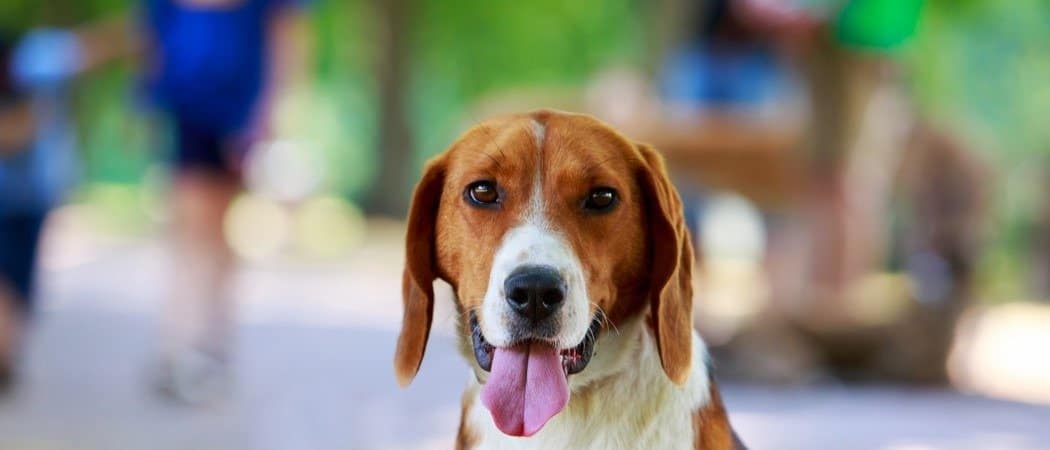
The dog breed American Foxhound in a public park

American Foxhounds are known for their friendly dispositions.

History and Origins

George Washington was a prominent figure of the American Revolution and was known to model his life at Mount Vernon after British elites. He hunted foxes with a pack of hounds he bred from British imports and refined with French breeding stock given by a friend. Other aristocratic families of the founding generation of America also enjoyed horse and hound activities. After the Revolutionary War, the American Foxhound was further developed until it was distinct from its English counterpart. Foxhunting was the primary sport of the gentry until the Civil War. Now, the American Foxhound is the official state dog of Virginia.
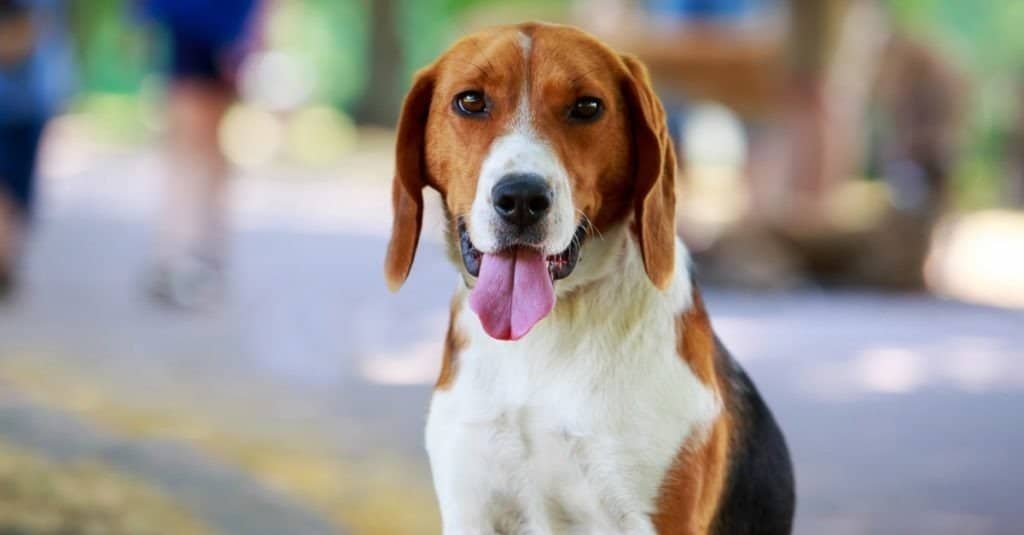
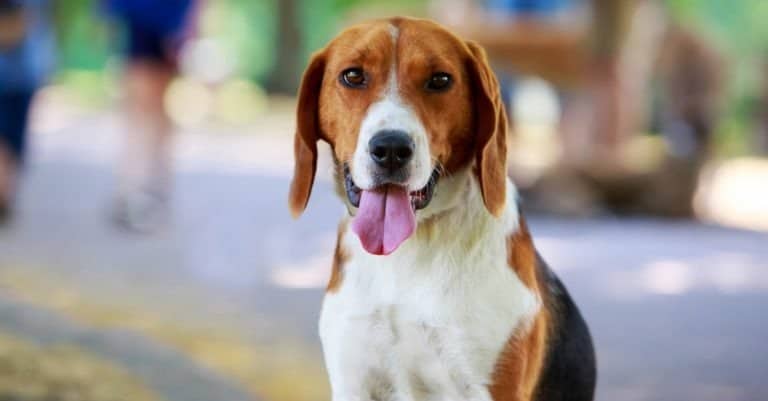
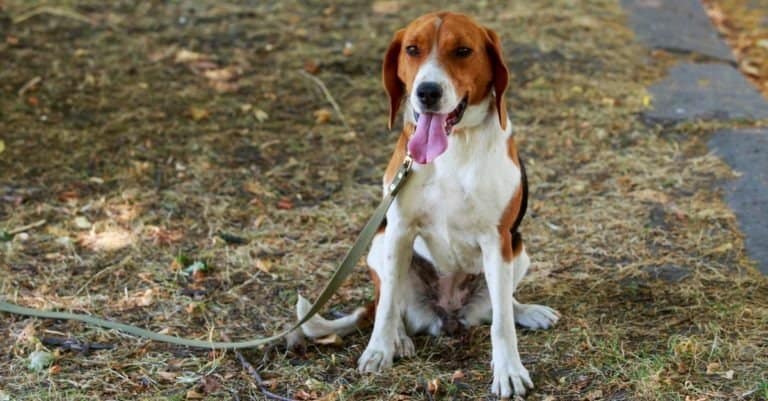
American foxhound sitting in park

President George Washington was the first person to start breeding American Foxhounds.

Reproduction and Puppies

The American Foxhound has a gestation period of approximately 57 to 65 days. On average, litters will contain between four and six puppies. Puppies are usually born weighing 10 to 12 ounces and reach an adult weight of around 40 to 65 pounds when fully grown. At birth, the puppies are both blind and deaf, but will start to develop their senses over the next few weeks. Weaning typically occurs around 8 to 12 weeks after birth. They will start experimenting in addition to nursing from their mothers when they are 3 to 4 weeks old, but should remain with their mothers until naturally weaned.

American Foxhound in a public park

American Foxhounds are pregnant for 57-65 days.

Size and Weight

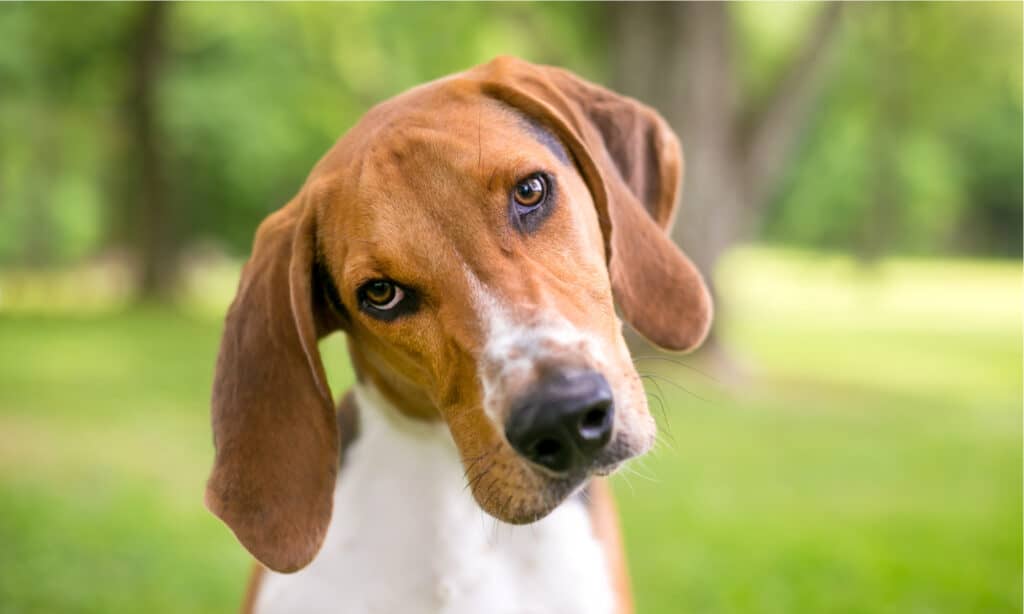
American foxhounds are taller than English foxhounds. The females are 21 to 24 inches in length and weigh about 40-60 pounds. The males are a little bigger, reaching 22-25 inches in length and weighing 45 to 65 pounds.
how far can dogs hear

An American foxhound weighs between 40-65 pounds.

Common Health Issues

American foxhounds are generally healthy and not prone to many diseases, saving tons of money on veterinary visits. Hip dysplasia is one of the most common issues that can arise with this type of dog, due to their long legs. This condition occurs when the hip joint doesn’t line up properly in growth, and it can be incredibly painful.

The issues that often plague these dogs have to do with their blood, including thrombocytopathy and Pelger–Huët. Thrombocytopathy covers a range of different blood disorders, impacting platelets in the blood. The Pelger–Huët anomaly impacts the white blood cells, though the issue is benign. American foxhounds are also prone to ear infections, which are easily treated.
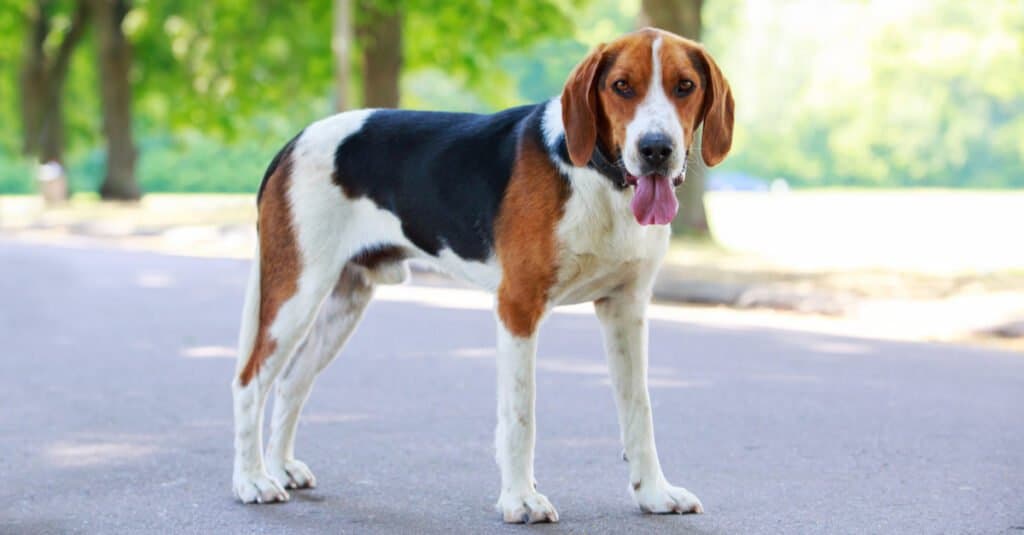
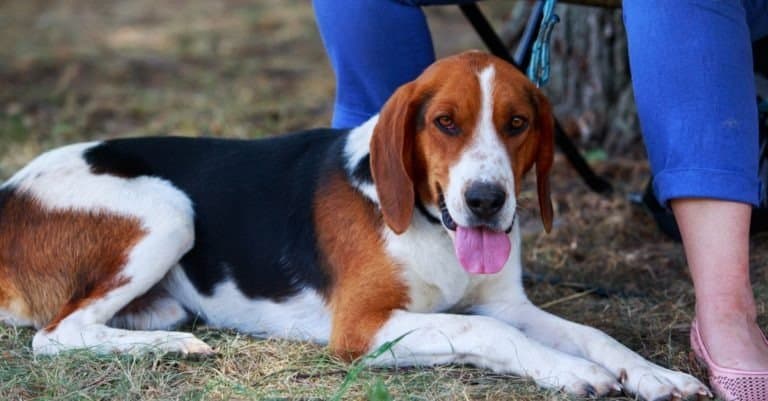
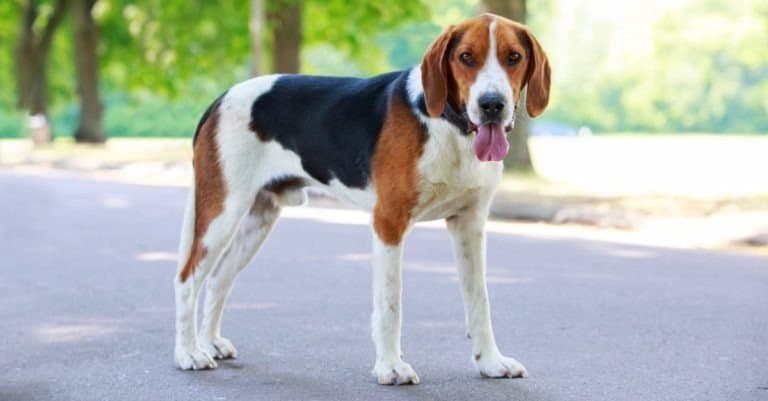
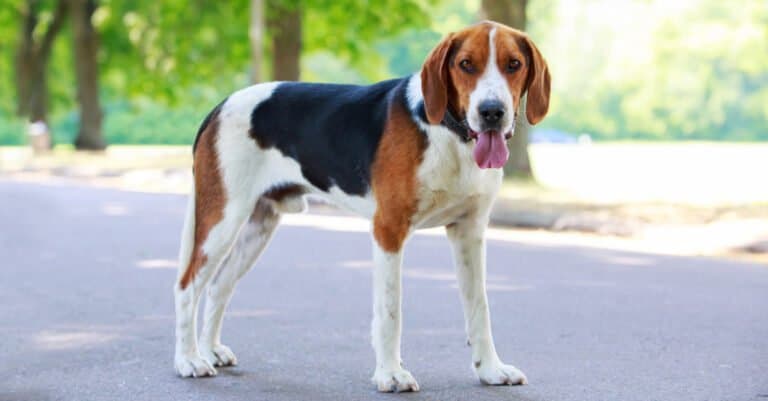
American Foxhound standing in road with tongue out

American foxhounds are one of the healthiest breeds, making them also one of the cheapest.

Temperament

These dogs have a friendly temperament with both the owner’s family as well as other pets. They are affectionate, kind, and intelligent, making them a faithful companion for a family. They love to act as playmates for the family’s kids. However, American foxhounds can sometimes be aggressive with strangers.

These dogs have personalities that are a mix of gentle and destructive. The trigger for the destructiveness seems to be alone time since this pup becomes anxious when its owner goes away. As a way to satisfy the separation anxiety, they will start to chew, eat, and ultimately destroy things in your home. They’ll also whine to get their owner’s attention when they leave the room.

American foxhounds have great stamina and can run several miles at a time. However, they require a lot of exercise and are not suitable for apartment life at all.
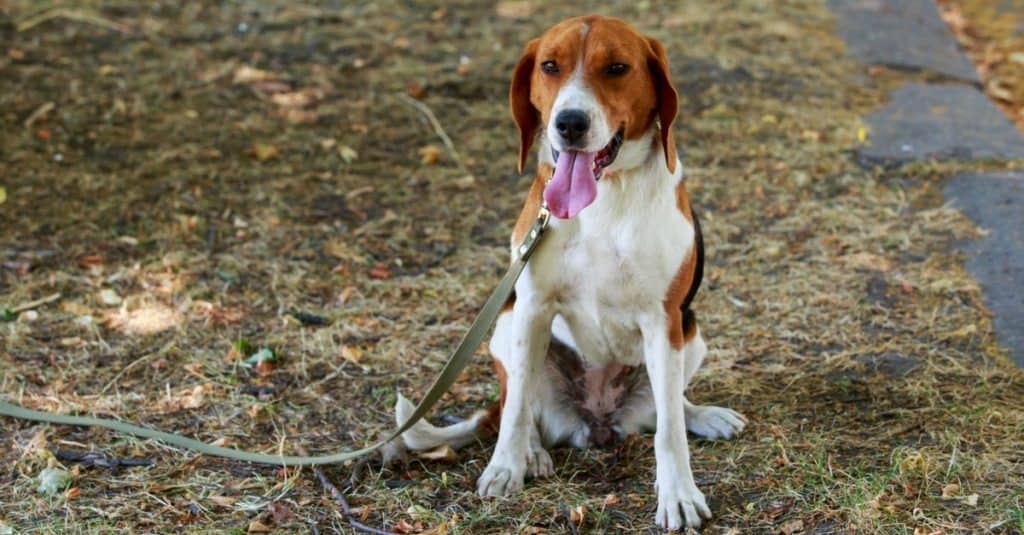
American Foxhound in a public park

American Foxhounds have a friendly temperament with both the owner’s family as well as other pets.

Care

Every dog is different, and the American Foxhound has a few things that you should consider before you adopt one. Their diet, daily behavior, and even their early care as puppies will vary. However, with a few tips, understanding what they need is simple.

The Best Dog Food

With the outdoorsy nature of the American foxhound, a steady diet of both high-quality meat and vegetables will keep their body strong. Historically, some hunting hounds may have been fed horsemeat due to its availability, but today, American Foxhounds thrive on high-quality commercial or home-prepared dog food that meets their nutritional needs. Cooked eggs and broccoli are favorites of the breed, though they should be given in moderation to avoid digestive upset or flatulence.

Because American Foxhounds can end up with blood disorders that impact the blood cells, namely Thrombocytopathy and Pelger–Huët anomaly, ensure that your American Foxhound gets complete nutrition.

Maintenance and Grooming

The American foxhound has a short and dense coat. For grooming purposes, you would need to brush the coat once every week to remove all the dead hair and help distribute skin oils. With moderate shedding, you can avoid excessive hair everywhere by brushing their coat frequently.

Bathing American foxhounds should be done on an as-needed basis. They’ll also need their nails and ears cleaned. Their teeth would need to be brushed for overall dental health, as well as to maintain fresh breath.

Training

Training these dogs is not very difficult, though they can be independent and stubborn. You will have to be stern and firm for these dogs to effectively follow your training commands, lest they get their own ideas.

Exercise

These dogs require plenty of exercise daily. They have great stamina and can run for several miles at a time. If you ride a bike, you could allow your dog to run along with you while you cycle around.

Another possible exercise could be to allow them to accompany you on your hiking trips. These dogs are also great jogging companions.
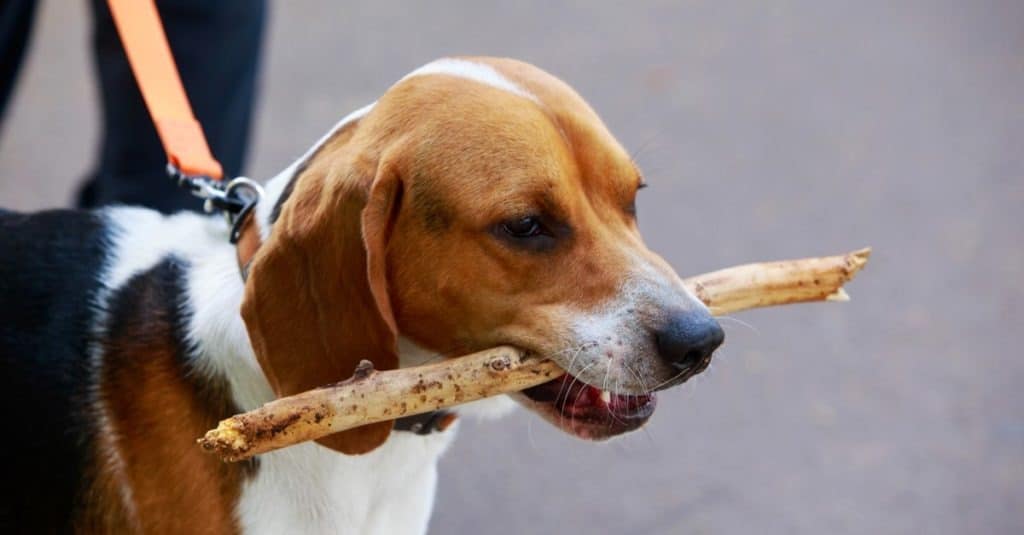
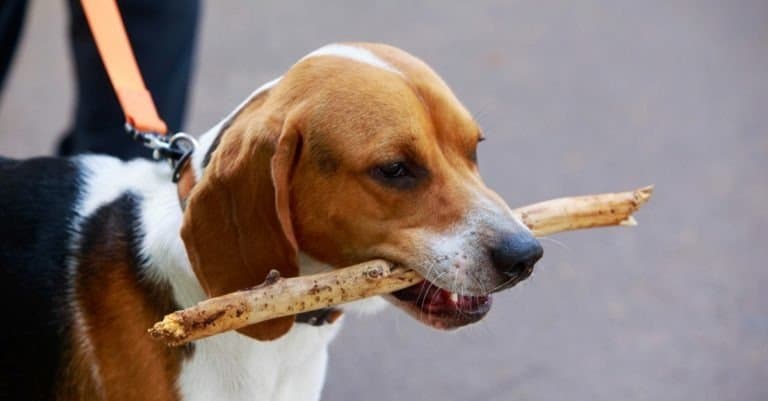
American Foxhound nibbles a stick

American Foxhounds are high-energy dogs and require daily vigorous exercise.

Puppies

Puppies need to be taken care of in the same way as you would take care of an adult dog. However, it would be great to start training the puppies earlier on so that they can develop good habits and can be trained easily.

The meals of the puppies should be broken into several small meals so that their little stomachs are able to digest the food.

American Foxhounds and Children

These dogs are known to be great with children. They absolutely love kids and are very tolerant towards them. They are gentle and tolerant with children, making them good playmates for kids of all ages. These dogs make great playmates.

Dogs Similar to American Foxhounds

If an American foxhound isn’t the right match for you, there are still many dog breeds that could find a happy place in your family. Here are some dogs that are similar to these dogs.

  • Bluetick Coonhound: Much like the American foxhounds, these dogs are also hunting dogs and are famous for picking up the scent with their “cold” nose. However, they are much larger, reaching approximately 80 lbs. when fully grown.
  • Beagle: These dogs are fun and loving and are very curious. They also have sweet faces and are very popular with families.
  • Basenji: These dogs are also hunting dogs and are advertised as “barkless dogs.” While they are not completely silent, they are much quieter than the American foxhounds.

Famous American Foxhounds

Some of the famous American foxhounds in history date back to the early formation of the United States. George Washington brought along two foxhounds, breeding them with French foxhounds.

View all 326 animals that start with A

Sources

  1. Petfinder / Accessed January 29, 2021
  2. Rocadog / Accessed January 29, 2021
  3. Petolog / Accessed January 29, 2021
  4. Dogtime / Accessed January 29, 2021
  5. Vetstreet / Accessed January 29, 2021
Heather Hall

About the Author

Heather Hall

Heather Hall is a writer at A-Z Animals, where her primary focus is on plants and animals. Heather has been writing and editing since 2012 and holds a Bachelor of Science in Horticulture. As a resident of the Pacific Northwest, Heather enjoys hiking, gardening, and trail running through the mountains with her dogs.

Thank you for reading! Have some feedback for us?


American Foxhound FAQs (Frequently Asked Questions)

Most breeders sell American foxhound puppies for $600 each.