

A
Species Profile

American Pit Bull Terrier

Canis lupus familiaris

Athletic heart, devoted companion.
A-Z Animals

American Pit Bull Terrier Distribution

Click a location to explore more animals from that region

Origin Location

This map shows the native origin of the American Pit Bull Terrier. As a domesticated species, they are now found worldwide.

Loading map...

Found in 1 country

Size Comparison

Human 5'8"
American Pit Bull Terrier 1 ft 7 in

American Pit Bull Terrier stands at 28% of average human height.

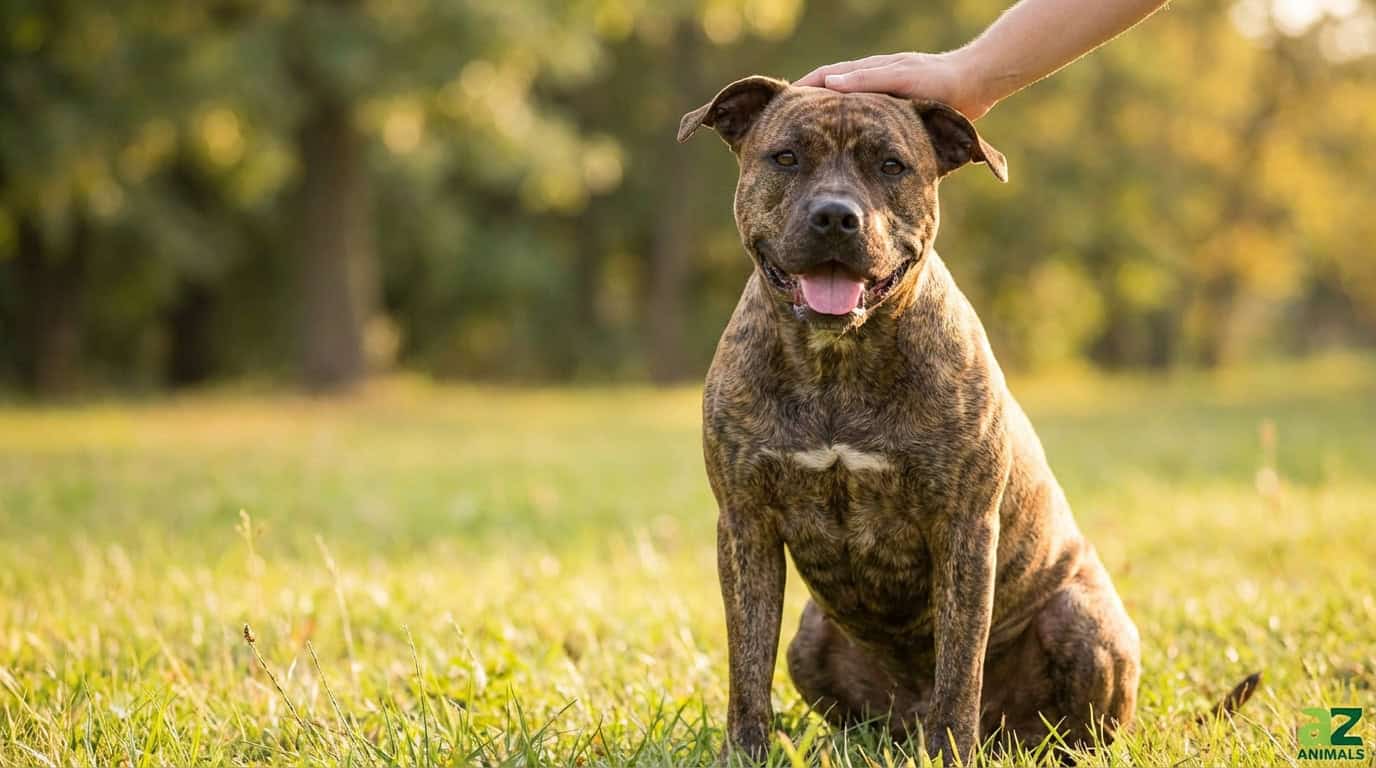
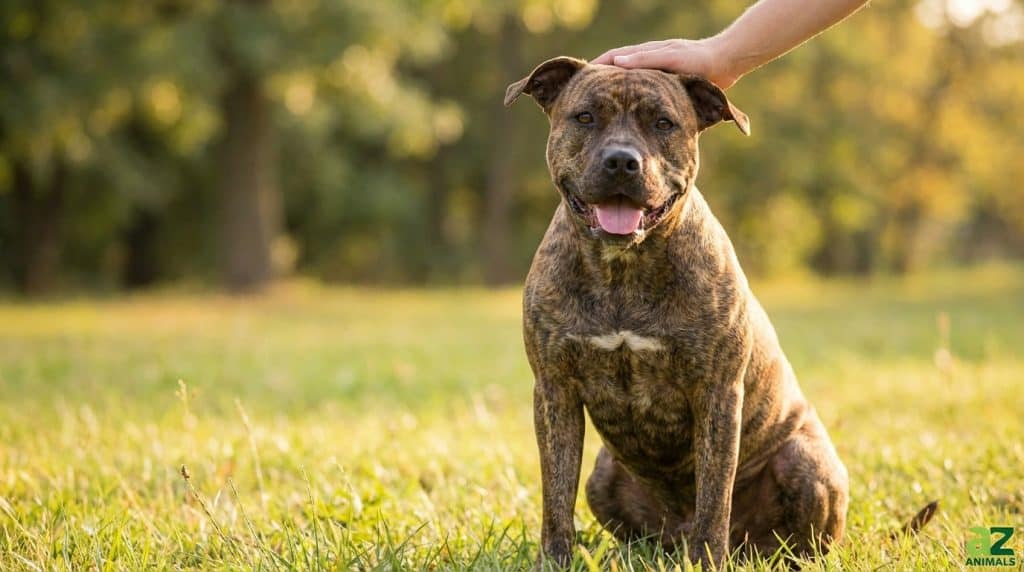
A brindle pit bull with brown and black striped fur sits in a green field while a person's hand reaches down to pet its head.

At a Glance

Domesticated
Also Known As Pit Bull, Pitbull, Pit, APBT, Nanny dog, Bully
Diet Omnivore
Activity Diurnal+
Lifespan 4 years
Weight 30 lbs
Status Not Evaluated
Did You Know?

"American Pit Bull Terrier" (APBT) is a specific breed/landrace; "pit bull" is often used as an umbrella for several bully-type dogs.

Scientific Classification

The American Pit Bull Terrier (APBT) is a domesticated dog breed/landrace within the domestic dog lineage, historically developed from bull-and-terrier type dogs. It is a medium-sized, muscular canid used today primarily as a companion animal and in various working/athletic roles.

Kingdom
Animalia
Phylum
Chordata
Class
Mammalia
Order
Carnivora
Family
Canidae
Genus
Canis
Species
Canis lupus (domestic dog: Canis lupus familiaris)

Distinguishing Features

  • Medium-sized, athletic, muscular build
  • Short coat; broad head with pronounced cheek muscles (varies by line)
  • High energy and strength; historically selected for athleticism
  • Commonly confused with other ‘pit bull’ type dogs and mixed-breed lookalikes

Physical Measurements

Males and females differ in size

Height
1 ft 8 in (1 ft 6 in – 1 ft 10 in)
1 ft 6 in (1 ft 5 in – 1 ft 7 in)
Length
2 ft 11 in (2 ft 6 in – 3 ft 5 in)
Weight
53 lbs (35 lbs – 66 lbs)
42 lbs (31 lbs – 51 lbs)
Tail Length
11 in (8 in – 1 ft 2 in)
12 in (10 in – 1 ft 2 in)
Top Speed
25 mph
About 35–45 km/h

Appearance

Primary Colors
Secondary Colors
Skin Type Mammalian skin with a short, smooth, close-lying single coat; generally low-to-moderate shedding. Skin pigmentation often matches coat color; short coat can make skin irritation, parasites, and minor injuries more noticeable.
Distinctive Features
  • Breed within the domestic dog lineage (Canis lupus familiaris) developed from historical bull-and-terrier types; distinct from 'pit bull' as an umbrella term that can include multiple breeds/types.
  • Medium-sized, athletic, muscular build with a deep chest, strong shoulders, and a compact, powerful frame compared with the average domestic dog.
  • Broad, wedge-shaped head with pronounced cheek musculature; medium-length muzzle; strong jaw structure (no unique bite mechanism compared with other dogs).
  • Natural ears may be rose or semi-pricked; ear cropping exists in some contexts but is not breed-defining and may be regulated/banned in some regions.
  • Short, glossy coat that lies close to the body, emphasizing muscle definition and body condition.
  • Tail is thick at the base and tapers ("pump-handle" style), carried low to level; not curled over the back as in some spitz-type dogs.
  • Movement typically shows drive and spring with strong rear propulsion; many individuals excel in athletic activities when conditioned appropriately.
  • Health considerations seen in the breed/population can include hip dysplasia, cranial cruciate ligament injury risk (active, muscular dogs), allergies/atopy (skin/ears), hypothyroidism, and some hereditary cardiac issues; responsible screening and veterinary guidance are important.
  • Needs regular exercise, mental play, reward-based training, and early socialization. Keep a lean body to lower joint strain. Check skin and ears for allergies; trim nails and clean teeth.
  • Human-associated habitat: primarily a companion/working-athletic dog adapted to living with people; thrives with consistent handling, predictable routines, and adequate physical/mental outlets.

Sexual Dimorphism

Sexual dimorphism is typically moderate: males tend to be larger overall with broader heads/necks and heavier musculature; females are often slightly smaller and more refined while remaining athletic and muscular.

  • Broader skull and more pronounced cheek/neck musculature
  • Heavier bone and overall mass; thicker neck/forequarters
  • Often a more imposing silhouette due to width through chest/shoulders
  • Slightly lighter frame and more refined head/neck
  • Comparable athleticism with less overall bulk
  • Often a narrower chest/shoulder profile while retaining muscular definition

Did You Know?

"American Pit Bull Terrier" (APBT) is a specific breed/landrace; "pit bull" is often used as an umbrella for several bully-type dogs.

Most APBT registries are working/field-oriented (notably UKC and ADBA); the AKC recognizes the closely related American Staffordshire Terrier instead.

APBTs descend from 19th-century bull-and-terrier dogs; in the U.S. many also worked as farm and family companions.

They commonly excel in canine sports emphasizing strength and stamina (weight pull, agility, obedience, dock diving), when trained and conditioned responsibly.

Coat colors and patterns are highly variable; "red nose" lines have a long-standing subculture and lore among fanciers.

Their reputation varies dramatically by era-once widely marketed as a symbol of American grit and loyalty, later often stigmatized in popular media.

Like all domestic dogs, APBT behavior is shaped more by individual genetics, early socialization, and training than by label alone.

Unique Adaptations

  • Selective breeding emphasized muscular build and athletic efficiency (powerful hindquarters, strong neck/shoulder assembly) compared with the average domestic dog.
  • Short, single coat can be easy to groom and tends to dry quickly, but offers less insulation in cold weather than double-coated breeds.
  • High work/play drive can make them quick learners for sport skills when reinforcement-based training channels energy appropriately.
  • Compact, balanced frame in many individuals supports bursts of speed, jumping, and pulling tasks when conditioned safely.
  • Strong social bonding with humans is common in many lines, reflecting long history living and working closely alongside people.

Interesting Behaviors

  • People-oriented "velcro dog" tendencies: following family members room to room and seeking close contact.
  • High-arousal play with enthusiastic tugging and toy engagement; many enjoy structured games like flirt-pole play when safely managed.
  • Strong persistence on tasks (training repetitions, scent games, problem-solving toys), often benefiting from short, focused sessions.
  • Expressive body language-whole-body wiggles, "smiles," and exuberant greetings are common in well-socialized individuals.
  • Some individuals show dog selectivity as maturity develops; many do best with careful introductions and managed, structured dog interactions.
  • Chewing and shredding behaviors, especially in adolescence, making durable enrichment and supervision important.

Cultural Significance

American Pit Bull Terrier (Canis lupus familiaris) has been a United States symbol of toughness and loyalty in ads and photos. It shows up in media and law debates about breed identity, welfare, and breed-specific rules, often blurred by “pit bull.”

Myths & Legends

The "nanny dog" story: a widely repeated early-to-mid 20th-century American saying and family lore portraying pit bull-type dogs as devoted child minders, often supported by nostalgic photographs and household anecdotes.

"Pete the Pup" of the Our Gang/Little Rascals comedies: a famous pit bull-type canine actor whose ringed eye became an enduring pop-culture image of the friendly American pit bull.

World War I-era patriotic imagery: pit bull-type dogs were sometimes depicted as national mascots embodying American determination, a cultural narrative that fanciers still cite as part of the breed's heritage.

The "Irish Old Family Red Nose" tradition: fanciers' origin lore surrounding red-nosed APBT lines-stories of old families, cherished bloodlines, and the symbolic meaning of the red nose within the community.

Farm-dog origin anecdotes: oral histories describing bull-and-terrier descendants in the U.S. as versatile farm helpers-catching vermin, moving livestock, and guarding property-often told as proud family or regional stories rather than formal records.

Naming lore around "pit": historical accounts connect the term to animal "pits" (fighting arenas) in 19th-century Britain; modern retellings often frame it as a cautionary origin story about how human uses shaped canine reputations.

Conservation Status

NE Not Evaluated

Has not yet been evaluated against the criteria.

Population Stable

Life Cycle

Birth 6 pups
Lifespan 4 years

Lifespan

In the Wild
1–10 years
In Captivity
8–16 years

Reproduction

Mating System Polygynandry
Social Structure Managed Domestic
Breeding Pattern Not Applicable
Fertilization Managed Selective
Birth Type Internal_fertilization

The American Pit Bull Terrier (Canis lupus familiaris) can mate with multiple partners (polygynandry), but breeding is usually controlled by humans. Owners choose mates, check health, and manage timing because of behavior, skin, joint, and heart concerns.

Behavior & Ecology

Social Pack Group: 2
Activity Diurnal, Crepuscular, Cathemeral
Diet Omnivore Meat-forward, high-protein meals (commonly chicken or beef-based commercial diets)

Temperament

Highly people-oriented/affiliative; commonly seeks physical closeness and interaction (breed-typical emphasis compared with many dogs).
Confident, driven, and persistent; can show high arousal and tenacity during play/work, requiring impulse-control training.
Athletic and energetic; benefits from daily vigorous exercise and structured outlets (tug, flirt pole with rules, agility foundations, scent work).
Playful and clownish with familiar people; may be exuberant-training for polite greetings is often needed.
Dog-directed sociability is variable (HUBS: ranges from very social to dog-selective); careful dog introductions and avoidance of uncontrolled off-leash dog crowds may be prudent.
Can have moderate prey/chase drive; management around small animals varies by individual and early exposure.
Generally responsive to consistent positive-reinforcement methods; harsh handling can increase stress/arousal and degrade social behavior.
Health-linked behavior considerations: skin/environmental allergies can increase irritability/itch-driven restlessness; orthopedic pain (e.g., cranial cruciate ligament injury, hip dysplasia) can reduce tolerance for handling-monitor comfort and adjust activity.

Communication

Alert barking Often shorter, sharper bursts in response to novel sounds/people
Play barks and excited vocalizations during high-arousal games.
Growls used in play and as distance-increasing signals; interpretation depends on accompanying body language.
Whining/whimpering for attention, greeting, or frustration.
Occasional howls or "talking" sounds Less common; individual variation
Rich body-language signaling: loose vs. stiff posture, weight shift forward, closed mouth vs. relaxed pant, and facial tension-important for reading arousal escalation.
Tail carriage and wag quality Broad/loose vs. high/fast/stiff) and ear position changes (breed-typical variation due to natural ear shape
Tactile communication: leaning, pawing, nudging, and full-body contact seeking Often prominent in APBTs
Play signals: play bow, exaggerated bouncy movement; needs structured rules to prevent over-arousal in powerful, athletic individuals.
Scent communication typical of dogs: sniffing, urine marking, ground scratching; may increase with stress or novelty.
Stress/appeasement signals: lip licking, yawning, head turns, shaking off; useful indicators for adjusting social exposure.
Care/health-related communication cues: scratching/chewing from allergies, head shaking (possible ear irritation), gait changes/reluctance to jump (possible orthopedic pain)-these can affect social tolerance and should prompt veterinary evaluation.

Habitat

Biomes:
Temperate Forest Boreal Forest (Taiga) Tundra Temperate Grassland Mediterranean Savanna Desert Hot Desert Cold Tropical Dry Forest Tropical Rainforest Wetland Freshwater Marine Alpine +8
Terrain:
Mountainous Hilly Plateau Plains Valley Coastal Island Riverine +2
Elevation: Up to 16404 ft 3 in

Ecological Role

Domesticated companion and working/athletic canid; not a natural predator in most modern contexts, but retains facultative predatory/scavenging tendencies typical of dogs.

Companionship and social support to humans Guarding/deterrence and property protection roles Working/athletic tasks (weight pull, sport, obedience) Search-and-rescue or service work in suitable individuals Localized pest control where roaming/hunting occurs (e.g., rodents)

Diet Details

Main Prey:
Domestic livestock Fish and eggs Small mammals
Other Foods:
Cooked grains and starches Vegetables Fruits Dietary fiber sources

Human Interaction

Domestication Status

Domesticated

Canis lupus familiaris: fully domesticated dog shaped by people. The American Pit Bull Terrier (APBT) was developed in the 19th–early 20th century from bull-and-terrier crosses for bull-baiting, fights, and farm work, later becoming companions. Today APBTs serve as family pets, sport and working dogs, therapy or service dogs, and are often re-homed or rescued because of a bad reputation.

Danger Level

Moderate
  • Bite/injury risk exists as with all dogs; potential injury severity can be higher due to strength and grip-and-hold fighting-dog ancestry (even though many individuals are social with people).
  • Higher risk scenarios: poor socialization, neglect/abuse, inadequate containment, intentionally trained aggression, unmanaged high arousal, or conflict during resource guarding.
  • Dog-to-dog conflict can escalate and indirectly injure humans attempting to separate fights.
  • Misidentification and stigma can lead to reduced access to training/vet/housing, increasing management failures in some cases.

As a Pet

Suitable as Pet

Legality: Legal in many U.S. jurisdictions, but often subject to breed-specific legislation (BSL) or restrictions (e.g., mandatory muzzling/leashing, special registration/insurance, or outright bans). Housing rules (landlords/HOAs) and some insurers may restrict 'pit bull-type' dogs. Always verify city/county/state regulations and lease/insurance terms.

Care Level: Experienced

Purchase Cost: Up to $3,000
Lifetime Cost: $20,000 - $50,000

Economic Value

Uses:
Companion animal sector Training and behavior services Canine sports and events Animal welfare/rescue ecosystem Pet products and veterinary services
Products:
  • adoption and rehoming services
  • professional training (obedience, reactivity management) and behavior consulting
  • sports participation (weight pull, agility, rally/obedience) and related event fees
  • specialized equipment (secure fencing/kennels, harnesses, chew-resistant toys, muzzles/leashes)
  • routine and specialty veterinary care (allergy management, orthopedic surgery/rehab when needed)
  • pet insurance policies (where available) and liability coverage (sometimes required)

Relationships

Ecological Equivalents 5

Animals that fill a similar ecological role in their ecosystem

American Staffordshire Terrier
American Staffordshire Terrier Canis lupus familiaris Shares a bull-and-terrier lineage and occupies a similar “power athlete” niche. Comparable strengths (muscular build, high drive) with overlapping training needs (structured exercise, impulse-control work, early socialization) and similar care considerations (susceptibility to skin allergies and need for joint/orthopedic monitoring).
Staffordshire Bull Terrier
Staffordshire Bull Terrier Canis lupus familiaris Similar historical selection for tenacity and strength-to-size. Tends to share companion and working versatility and requires comparable management, including positive reinforcement, clear boundaries, and careful dog–dog introductions.
Boxer
Boxer Canis lupus familiaris Medium-large, high-energy companion/working dog with athletic demands. Requires a similar owner workload (daily vigorous exercise and training). Shares common issues in active dogs—soft-tissue strains and risk of cruciate ligament (ACL/CCL) injury—and benefits from conditioning and weight management.
American Bulldog
American Bulldog Canis lupus familiaris Shares the 'bull-type' functional niche—historically used for strength and gripping/holding work; has comparable needs for experienced handling, structured enrichment, and attention to orthopedic health (hips, elbows) typical of muscular breeds.
Belgian Malinois
Belgian Malinois Canis lupus familiaris Different morphology but a similar high‑drive, training‑intensive working niche. A useful comparison for care requirements: American Pit Bull Terriers (APBTs) typically thrive with consistent mental work (obedience, nosework, agility) combined with controlled physical outlets to prevent frustration‑related behaviors.

Quick Take

  • Raising a high-performing puppy requires maintaining a strict 22% protein and 8% fat dietary threshold.
  • The 63-day gestation window creates a critical monitoring period where health risks significantly increase.
  • Despite modern reputations, these dogs historically earned the Nanny Dog title through their protective instinct.
  • After 1835, promoters initiated a specific terrier strain introduction to fundamentally alter the breed’s agility.

The American pit bull terrier is a dog breed that was originally bred in order to facilitate the baiting of bulls. Since then, they’ve become great family and companion dogs. In fact, they became a coveted breed to live with families because they love children and are just as loyal as they are protective. However, they are known to be slightly stubborn and widely clownish.

These terriers are known to be very intelligent. They have short hair all over their bodies, showing off a variety of colors like red, blue, brown, grey, black, and white, though some of them feature a brindle pattern.

An infographic titled 'American Pit Bull Terrier: Facts & Care' details the breed's history, traits, care needs, and health concerns across multiple sections with text and illustrative icons.
Labeled 'misunderstood,' the American Pit Bull Terrier reveals its surprising journey from a brutal past of bull baiting to earning the cherished 'Nanny Dog' title. © A-Z Animals

Despite their reputation as a ferocious breed, these dogs are not actually dangerous. They make great family dogs and only have a bad, dangerous reputation because they were originally bred to survive in fierce environments.

These dogs are very similar to American Staffordshire Terriers in size as well as appearance. However, they are more often referred to simply as a “pit bull.”

3 Pros and Cons of Owning an American Pit Bull Terrier

ProsCons
Loyal: These dogs make very loyal family pets.Not suitable for inexperienced children: While these dogs are great with children, it might not be a good idea to leave them alone with very young kids. Their playful nature can be problematic if provoked.
Active: These dogs are strong and active and are always up for a game.Require a lot of attention: American pit bull terriers require a lot of attention, which could be a hassle for the owner in the long run.
Good with children: American pit bull terriers are known to be very playful with and protective of children.Require a great deal of training time: American pit bull terriers often need ample time with owners to get into a comfortable routine of training. They are known to be slightly stubborn.
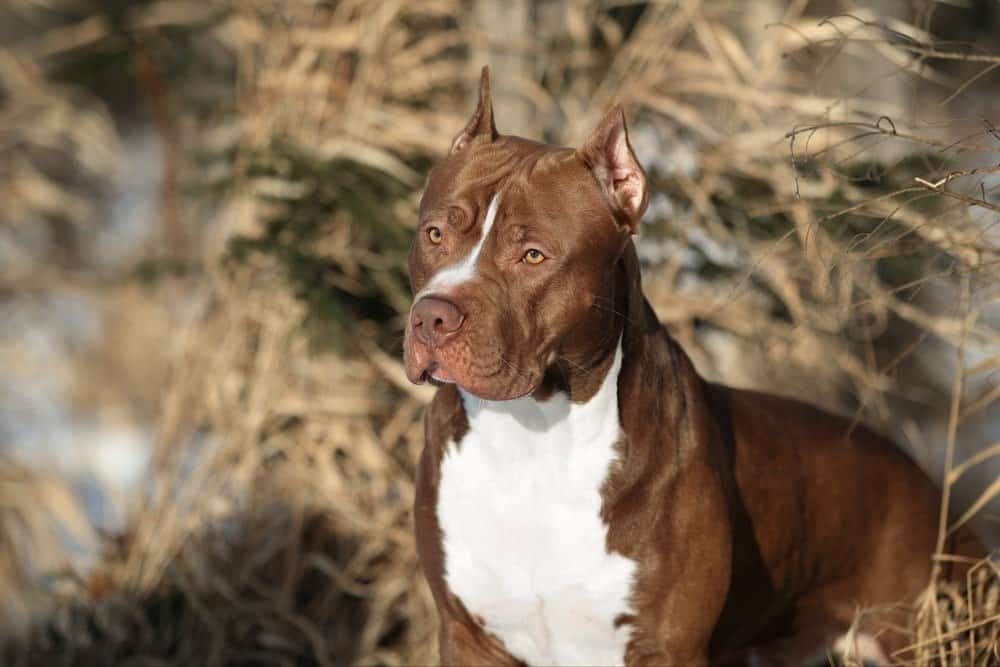
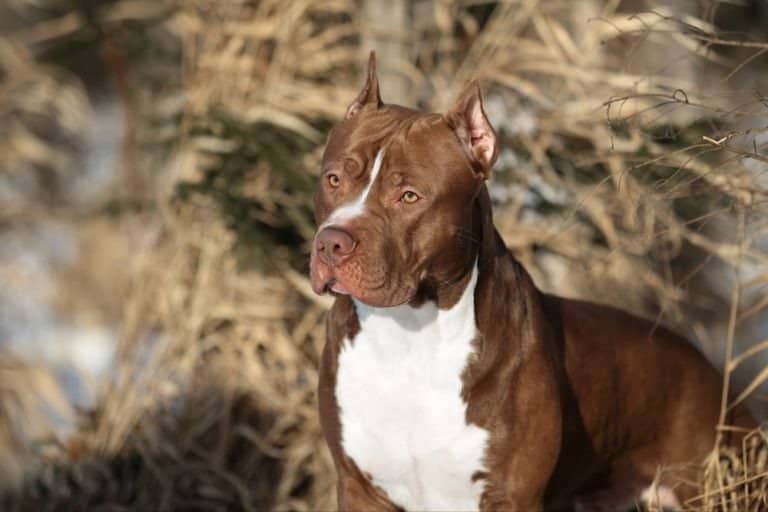
Beautiful dog American Pit Bull Terrier in nature

American Pit Bull Terriers are always up for a fun game of tug.

History and Origins

Historians debate the exact origins of the modern American Pit Bull Terrier, but it is clear that this breed has been around since at least the 1500s. Originally used for boar hunting and companionship, they were given the name “Bull Dogs” due to their popularity in the cruel sport of bull baiting. After this was outlawed in 1835, dog-fighting promoters looked for other ways to make money, introducing different terrier strains to improve their prey drive, aggression, size, and agility.

In the 19th century, a mix of both English and Irish dogs was brought to the US. These dogs had a strong instinct for catching prey but were gentle and loving with humans. Pit bulls became popular for their work as cattle dogs and “catch dogs” for pigs, although many were not used for fighting. Instead, they proved to be quick learners and eager companions, making them great family pets. By 1900, the American Pit Bull Terrier had earned a reputation for being courageous and loyal, leading to it being called the “nanny dog” in some areas.
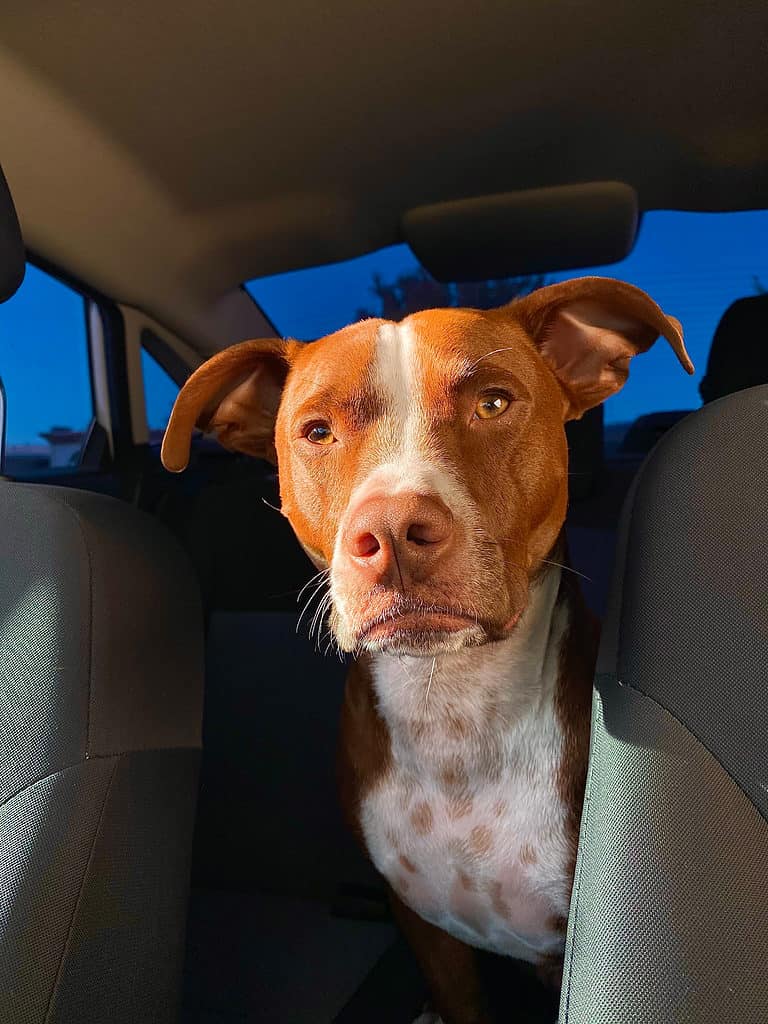
American Pit Bull Terriers descended from Irish pitties that were nicknamed “The Old Family Dog”.

Reproduction, Lifespan, and Babies

The American Pit Bull Terrier is a strong and sturdy breed known for its athleticism and adaptability. This hardiness contributes to their average lifespan of 12 to 14 years, which is longer than most similar-sized breeds.

When pregnant, the gestation period of an American Pit Bull Terrier is approximately 63 days from conception. However, this can vary by several days in either direction, so it’s important to monitor carefully during this time. When born, litters usually consist of 5-10 puppies who weigh 7-10 ounces each. At birth, they are both blind and deaf, but they quickly develop those senses. They stay with their mothers for 8-12 weeks while nursing, and it is important not to separate them until weaning occurs naturally.
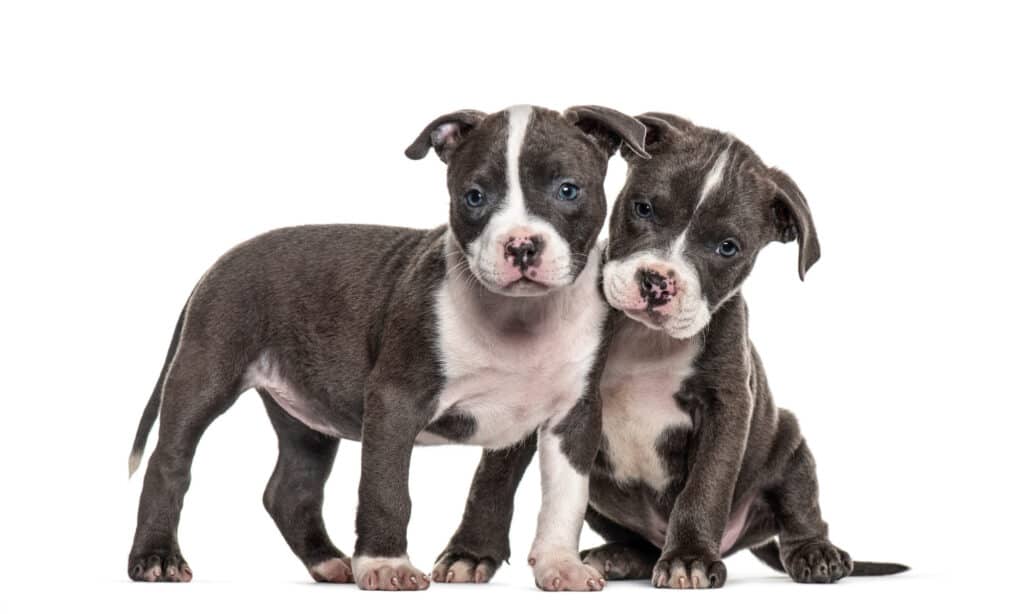
Two American Pit Bull puppies on a white background

Pit bulls weigh 7-10 ounces at birth.

Size and Weight

American pit bull terriers are medium-sized dogs that have a strong build. The female American pit bull terriers are about 17 to 20 inches in size, while the males are about 18 to 21 inches.

As far as their weight, the female pit bulls weigh around 30 to 50 pounds. Males only reach a slightly higher weight, averaging about 35 to 60 pounds.

They come in a host of colors like red, blue, brown, grey, black, and white, though they sometimes have a brindle pattern instead. Their physique and coloring are fairly close to those of an American Staffordshire Terrier.
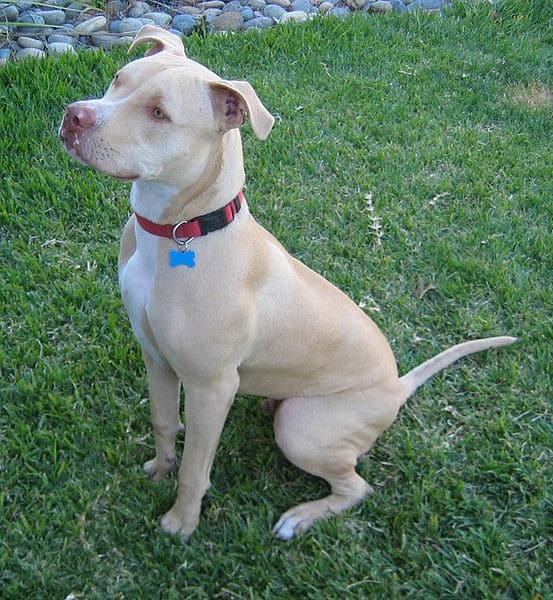
American pit bull terriers are between 35 and 60 pounds when full-grown.

Common Health Issues

American pit bull terriers tend to be at risk for many common issues that exist in dogs of their stature. One of the most common conditions is hip dysplasia, which occurs when there are abnormalities in the development of the hip bones and connecting muscles.

Obesity is a potential problem in these dogs as well. They need the opportunity to be active, and their breeding as a working dog puts them at a particular disposition for certain health concerns.

Pet owners need to be vigilant in the dental care of their pit bull, since they are also at risk for dental diseases that can impact the health of their teeth and gums. Thyroid disorders and other viral/bacterial diseases are also possible.
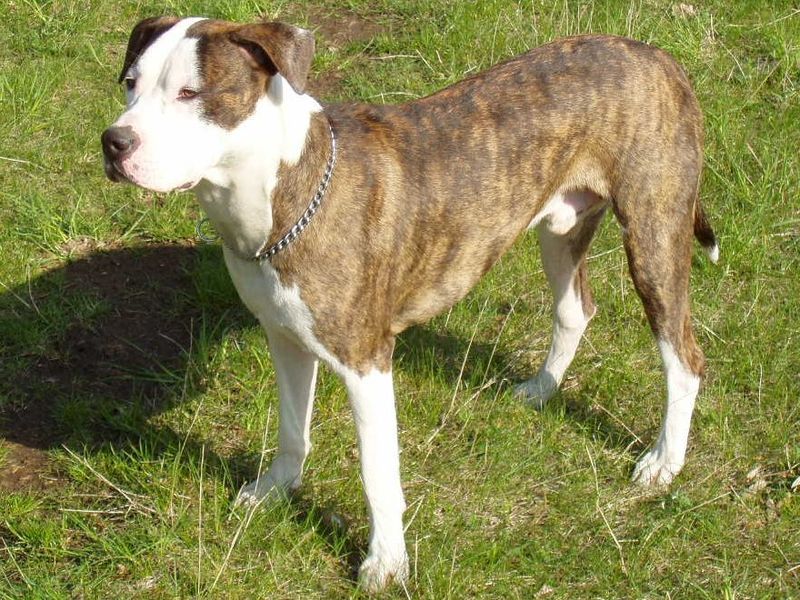
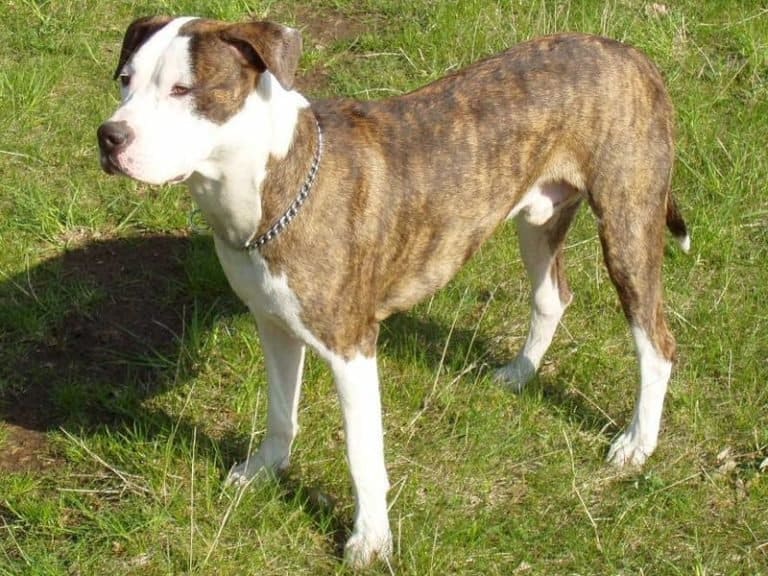
American Pitbull terrier standing on grass

American Pit Bull Terriers are prone to dental diseases. Owners need to start dental cleanings early.

Temperament

The American pit bull terrier is known to be protective in its temperament, especially towards children, and is also known for its playful nature. It makes a great and friendly family and companion dog. They are known for their courageous and clownish temperament, which is why so many owners push to make their peaceful nature more publicized. However, when provoked or when their owner is in danger, it is possible for them to show aggression.

These dogs are highly energetic and are often looking to please their owners. Even though some people believe they are dangerous, these dogs are naturally not aggressive and can be very affectionate. However, these dogs can get stubborn sometimes when they are having too much fun or are hyper-focused on the task at hand.

They can sometimes show aggressive behavior towards other dogs. However, with the right training, these dogs learn to control such behaviors.
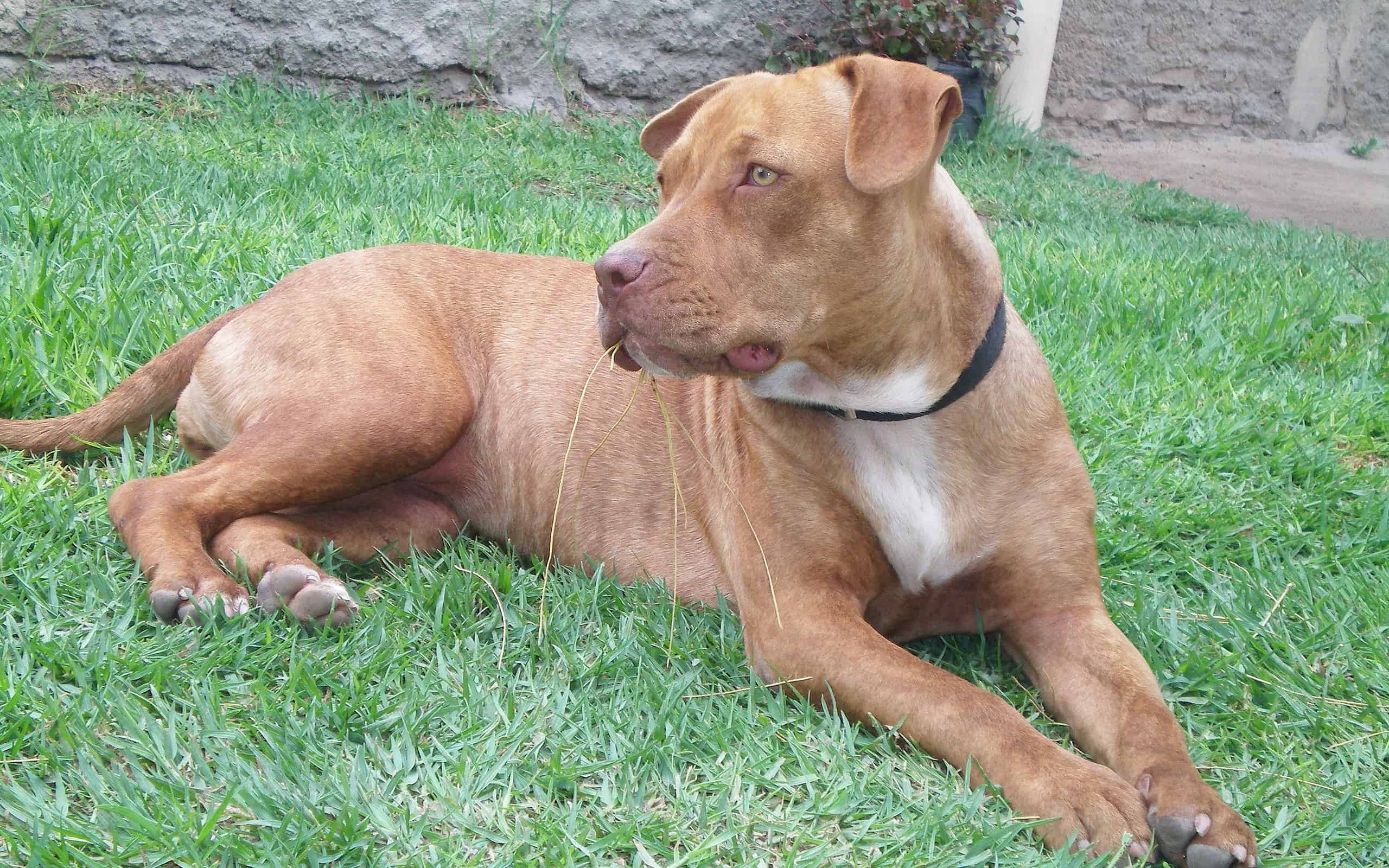
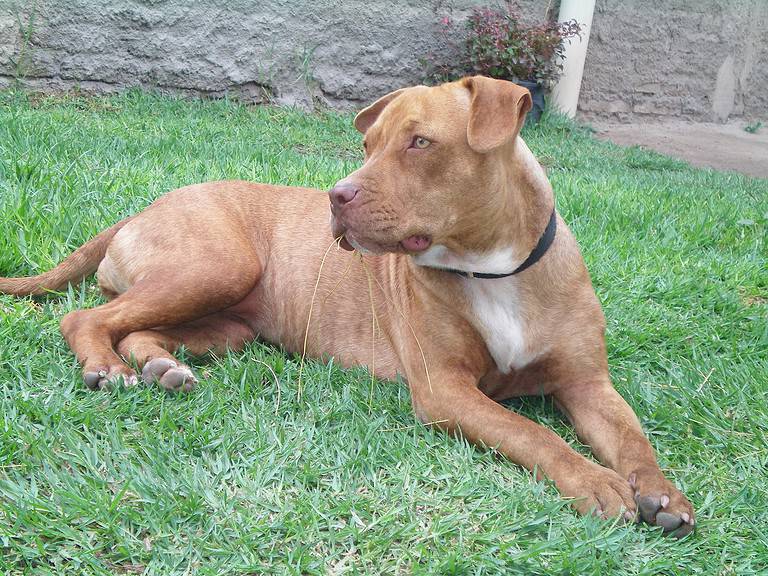
American Pitbull terrier lying down

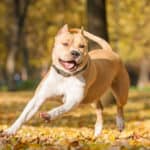
American Pit Bull Terriers are highly energetic and often looking to please their owners.

Care

For anyone who wants to own an American pit bull terrier, you need to be fully prepared for the road ahead. Regardless of whether you purchase a pup from a breeder or adopt one from a shelter, these dogs need some TLC, so here are some tips on the best ways to feed, groom, and train them.

The Best Dog Food

Like any other dog, always stay away from pork, grapes, onions, garlic, and similar foods. These foods can be incredibly dangerous for the digestive system.

An adult American pit bull terrier requires about 18% protein and 5% fat in the balance of their diet, which helps to keep up their muscle tone and prevent obesity. Chicken, duck, and salmon are excellent sources of protein, though it is best to cook them without oils or other fats before serving them. Protein is excellent for their energy levels, though owners can pair these meals with sweet potatoes, green beans, and some other vegetables.

The food and nutrition requirements of the American pit bull terrier puppies are different, as they require about 22% protein and 8% fat in their diets. However, the puppies should ideally be fed smaller amounts of food as they have smaller stomachs and can digest only small portions at once.

Maintenance and Grooming

American pit bull terriers require minimal grooming, though it can be soothing to their skin. You would need to brush your dog’s coat once a week to remove dead hair and allow the coat to straighten out. After you have brushed the coat, wipe the coat with a damp cloth, removing any excess hair that sticks to the body of the dog.

Besides that, you would also need to clean the ears and brush the teeth of this dog as they become dirty. The nails would also have to be trimmed twice a month.
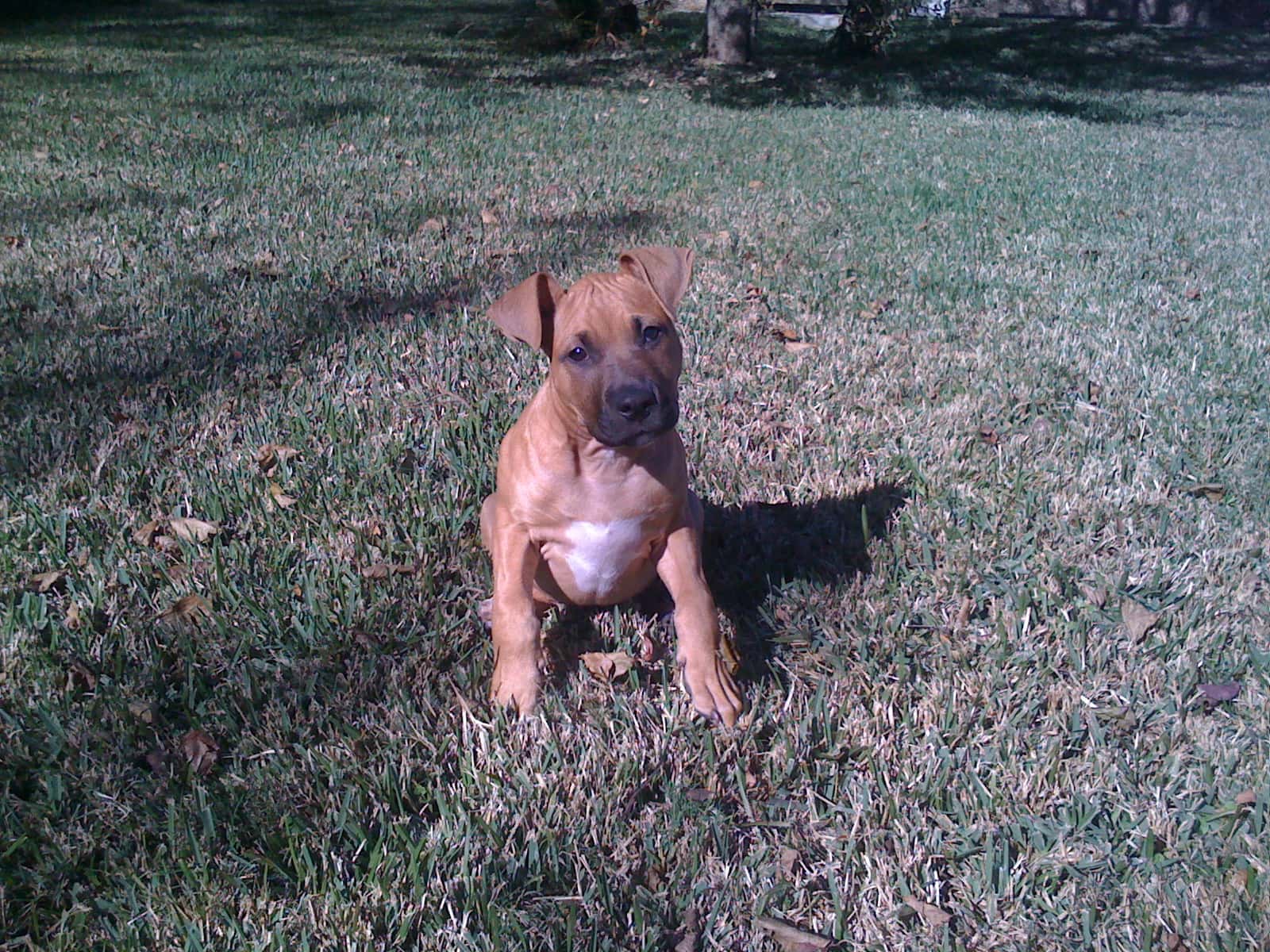
American Pitbull terrier puppies should be taught about teeth brushing early in life.

Training

These dogs are very energetic. It can, therefore, take time for them to settle into a comfortable training routine. You could start early with the puppies to acclimate them as soon as possible. The best way to train the American pit bull terrier is to use positive training techniques. Being aggressive towards them would hardly ever help, and they may only respond to this type of trigger in the future.

Consistency is the key with these dogs. You can and should allow them to have fun to make these training sessions more fun.
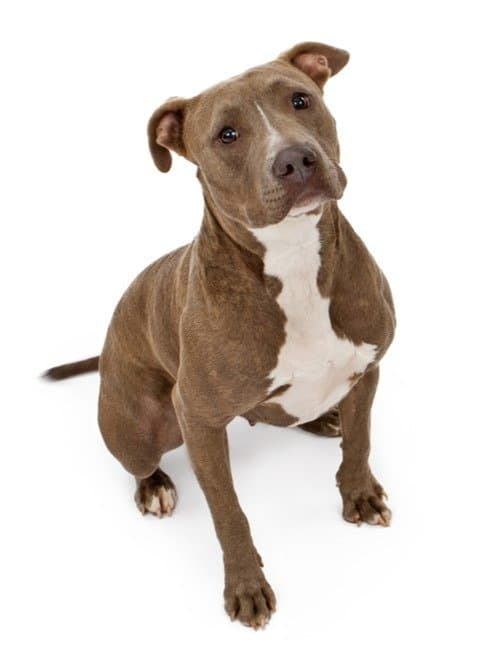
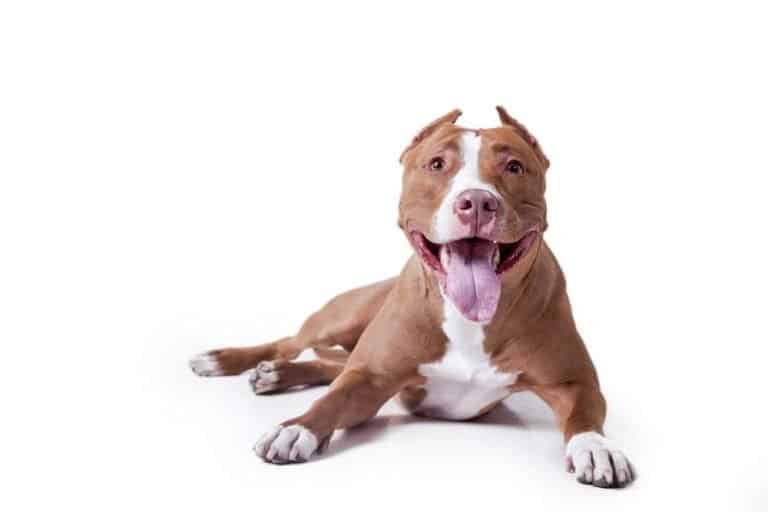
A friendly looking Pit Bull dog sitting on a white backdrop

Start training puppies as early as possible.

Exercise

These dogs are very energetic and require daily exercise. These are working dogs and are great at several dog sports. These dogs often require at least 1 to 2 hours of exercise per day to stay healthy and happy.

Puppies

American pit bull puppies are cared for in the same way as you would care for an adult dog. However, they require more nutrients than adult American pit bull terriers. As stated above, their meals require a little more protein, supporting their brain development and the health of their muscles as they get older.

Due to the small size of their stomach in puppyhood, they cannot digest the large bowls of food that adult pit bulls can. They will need to be fed multiple small meals throughout the day to prevent vomiting and obesity.
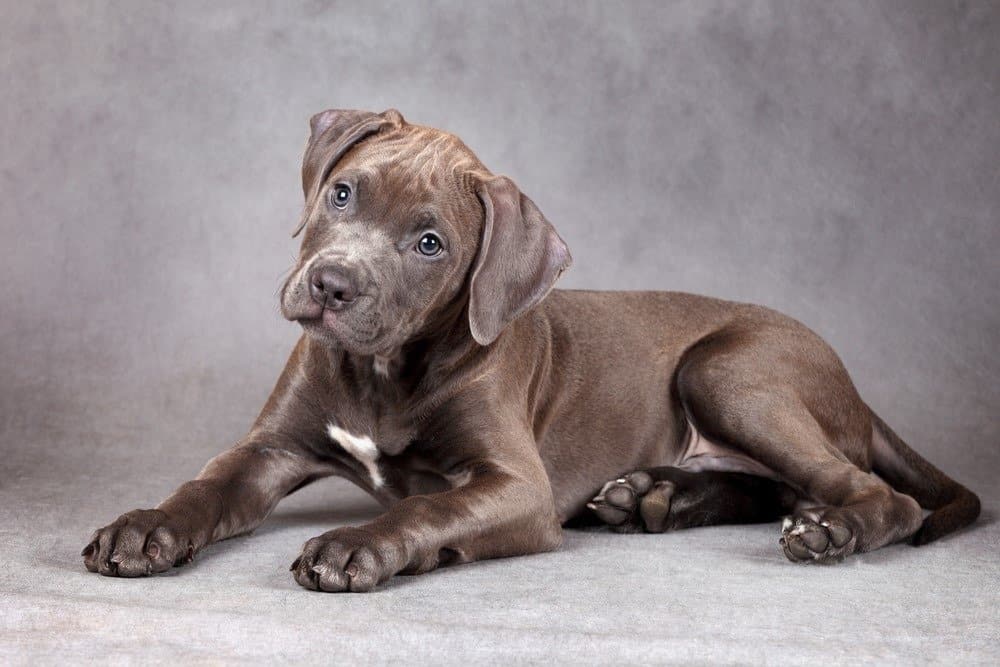
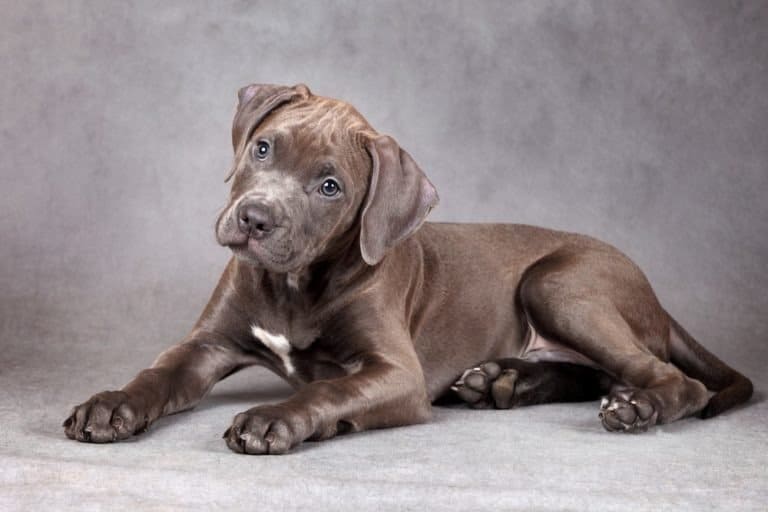
American Pit Bull Terrier puppy

Puppies and adult dogs have different nutritional requirements.

American Pit Bull Terriers and Children

American pit bull terriers are great with children, earning them the nickname “nanny dog” in the past. They tend to be relatively protective of children in their owner’s family, showing off their playful nature around them. Their clownish nature helps to engage children, which is why they make great family and companion dogs.

Dogs Similar to American Pit Bull Terriers

Since the American pit bull terrier is not for everyone, people who want to have a similar pet may be interested in one of the following dogs instead.

  • American Staffordshire Terrier: Affectionately known as a “staffie,” the American Staffordshire terrier is the closest it comes to the pit bull. Their behavior and even their look are the same, and they share the same brindle pattern in some dogs.
  • Boxer: With a slightly more social disposition, the boxer is one of the top watchdogs for any family. Their playful nature comes with significantly less risk of being bitten than the pit bull, but they are also much better suited to an apartment.
  • American Bulldog: The American Bulldog has a much meatier physique than the American pit bull terrier, but they also tend to get tired. For families that may not be able to keep up with the need for constant energy use, the American bulldog is a good match.
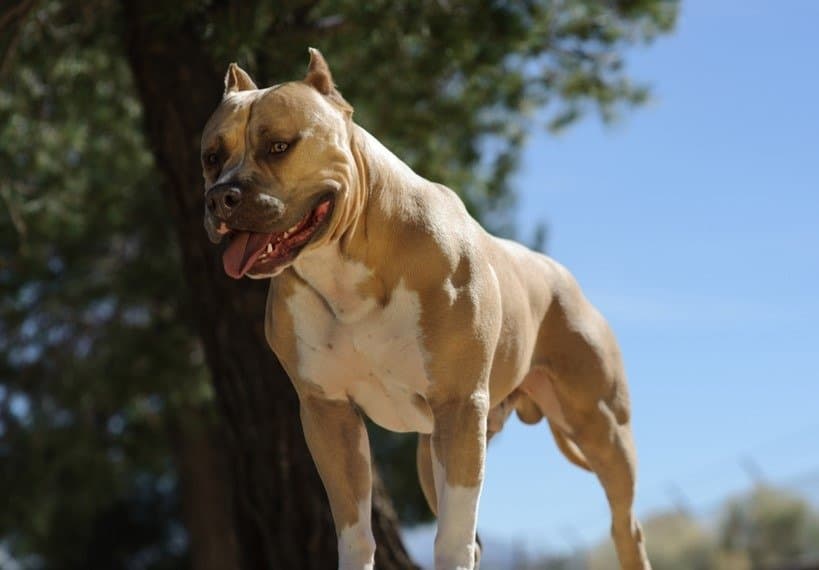
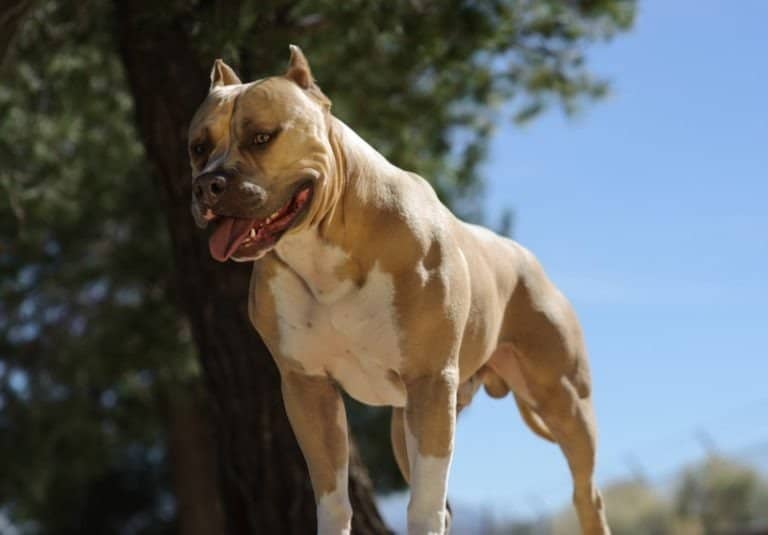
American pit bull terrier standing on ledge

American Pit Bull Terriers are called pitties or pit bulls for short.

Famous American Pit Bull Terriers

The lovable smile and disposition of the American pit bull terrier have given them a place in the hearts and homes of many celebrities. Kaley Cuoco, Jessica Alba, and Jennifer Aniston have all voiced their support for this breed by adopting American pit bull terriers of their own.

View all 326 animals that start with A

Sources

  1. Wikipedia / Accessed December 14, 2020
  2. Hill's Pet / Accessed December 14, 2020
  3. Mental Floss / Accessed December 14, 2020
  4. Dog Breeds 911 / Accessed December 14, 2020
  5. Animal Health Center / Accessed December 14, 2020
  6. Pet MD / Accessed December 14, 2020
  7. Breedsy / Accessed December 14, 2020
  8. WikiHow / Accessed December 14, 2020
Heather Hall

About the Author

Heather Hall

Heather Hall is a writer at A-Z Animals, where her primary focus is on plants and animals. Heather has been writing and editing since 2012 and holds a Bachelor of Science in Horticulture. As a resident of the Pacific Northwest, Heather enjoys hiking, gardening, and trail running through the mountains with her dogs.

Thank you for reading! Have some feedback for us?


American Pit Bull Terrier FAQs (Frequently Asked Questions)

You could get an American pit bull terrier for $500 to $1000. Additional costs come up to $1500 annually.