


A
Species Profile

American Water Spaniel

Canis lupus familiaris

Small boat dog, big water drive
Flickr user Noma's American Water Spaniels . Photo uploaded to commons by user ltshears, CC BY 2.0, via Wikimedia Commons

American Water Spaniel Distribution

Click a location to explore more animals from that region

Origin Location

This map shows the native origin of the American Water Spaniel. As a domesticated species, they are now found worldwide.

Loading map...

Size Comparison

Human 5'8"
American Water Spaniel 1 ft 5 in

American Water Spaniel stands at 24% of average human height.

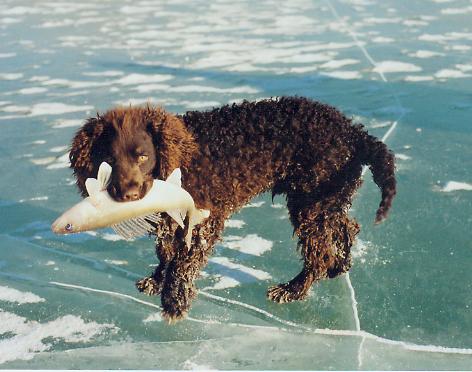
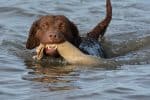
American Water Spaniel with a fish in its mouth

At a Glance

Domesticated
Also Known As AWS, Water Spaniel
Diet Omnivore
Activity Diurnal+
Lifespan 5 years
Weight 20 lbs
Status Not Evaluated
Did You Know?

It's one of the few gun-dog breeds developed in the United States, shaped for hunting along Midwestern rivers and marshes.

Scientific Classification

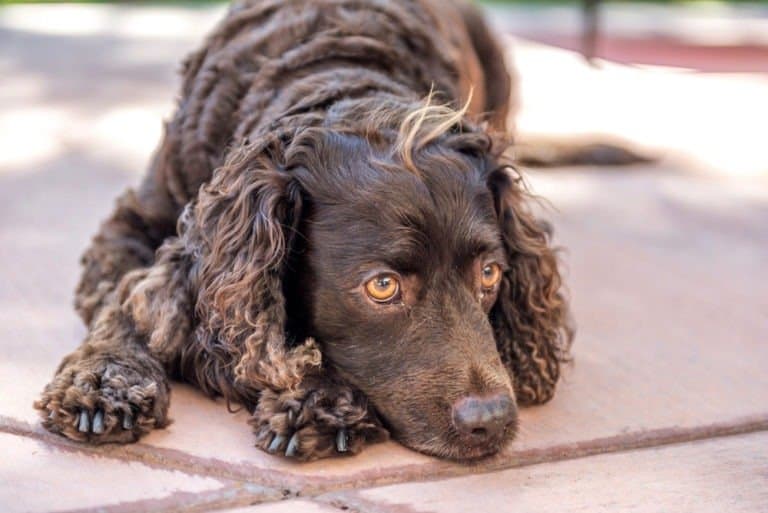
The American Water Spaniel is a rare U.S.-developed sporting dog breed historically used to hunt and retrieve game (especially waterfowl) in and around waterways; it is known for a curly or wavy, water-resistant coat and strong retrieving ability.

Kingdom
Animalia
Phylum
Chordata
Class
Mammalia
Order
Carnivora
Family
Canidae
Genus
Canis
Species
Canis lupus

Distinguishing Features

  • Small-to-medium, athletic gundog build
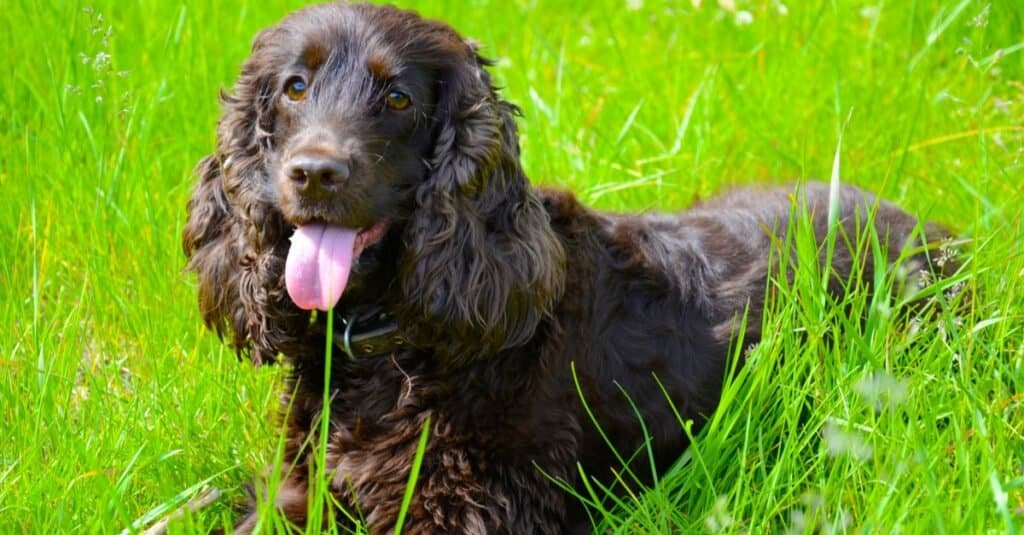
  • Curly or wavy, water-resistant coat (often liver/brown)
  • Webbed feet and strong swimming/retrieving drive
  • Drop ears; spaniel-like head and expression

Physical Measurements

Males and females differ in size

Height
♂ 1 ft 5 in (1 ft 4 in – 1 ft 6 in)
♀ 1 ft 3 in (1 ft 3 in – 1 ft 6 in)
Length
♂ 2 ft 8 in (2 ft 6 in – 2 ft 11 in)
Weight
♂ 37 lbs (31 lbs – 44 lbs)
♀ 30 lbs (24 lbs – 44 lbs)
Tail Length
♂ 11 in (10 in – 1 ft 1 in)
Top Speed
28 mph
Moderate speed, endurance

Appearance

Primary Colors
Secondary Colors
Skin Type American Water Spaniel (Canis lupus familiaris) has somewhat thick skin and an oily double coat that sheds water, with tight curls or waves over an undercoat. Needs regular grooming; ears hold moisture after swimming.
Distinctive Features
  • Domesticated dog (Canis lupus familiaris) selectively bred from the base species (gray wolf lineage) for cooperative retrieving, human-directed hunting work, and reduced wild-type wariness/aggression.
  • Curly or wavy, water-resistant double coat designed for cold and wet conditions; coat oils help repel water but can trap debris if not brushed.
  • Compact, muscular, medium-sized sporting build optimized for working from small boats and moving through brush and marsh edges.
  • Long, pendant ears typical of spaniel-type dogs; helps funnel scent but increases risk of ear infections, especially after water work.
  • Webbed or well-arched feet and strong hindquarters supporting swimming endurance and powerful water retrieves.
  • Tail carried as a moderate-length, tapering "rudder" while swimming; often with slight feathering.
  • Notable working temperament: alert, energetic, biddable, and strongly retrieving-oriented compared with the base species' independent hunting strategy.
  • Watch for ear infections from wet ears, skin irritation or hot spots if the coat stays damp or matted, hip dysplasia in active dogs, and occasional eye problems; regular vet checks and weight control help.
  • Care requirements: regular brushing/combing to prevent mats (especially behind ears, armpits, and feathering), periodic trimming for cleanliness, thorough ear drying/cleaning after swimming, and ample daily exercise plus retrieving/scent games to meet the breed's working-drive needs.

Sexual Dimorphism

Males are typically slightly larger and heavier with a more robust head/neck; females are usually a bit lighter and more refined while retaining the same coat type and working structure.

♂
  • Slightly taller and heavier overall frame
  • Broader skull and thicker neck/shoulder musculature common in working lines
♀
  • Slightly smaller, more refined build
  • Often a narrower head and lighter bone while maintaining athletic proportion

Did You Know?

It's one of the few gun-dog breeds developed in the United States, shaped for hunting along Midwestern rivers and marshes.

The American Water Spaniel is the official state dog of Wisconsin (designated in 1985).

Its coat can be tight-curly or wavy and is naturally water-resistant-built for repeated cold-water retrieves.

The breed is notably compact for a water retriever, a practical size for small boats and canoe-style hunting.

Many have webbed feet and strong rear drive, helping them swim efficiently and push through cattails and mud.

It remains rare compared with other sporting breeds, with small population numbers and dedicated fanciers preserving it.

Historically it worked as an all-around "meat dog": flushing upland birds and retrieving waterfowl from dense cover.

Unique Adaptations

  • Water-resistant coat (curly or wavy) that sheds water and helps insulate during repeated retrieves in cool conditions.
  • Webbed feet and strong swimming mechanics that support efficient propulsion and stability in current and shallow marsh.
  • Compact, muscular build optimized for hopping in/out of small boats and maneuvering through dense reeds and brush.
  • Spaniel-style drive paired with retriever steadiness: selective breeding emphasized flushing + reliable return-to-hand delivery.
  • Weather-tolerant sporting temperament: bred to work long days in variable Midwestern fall conditions (wind, cold water, mud).

Interesting Behaviors

  • Close-working quartering: tends to hunt within gun range and check back often, a trait valued in tight marsh cover.
  • "Soft mouth" retrieving: many naturally carry birds and training dummies gently, a classic spaniel/retriever trait.
  • Water-entry enthusiasm: frequently charges into reeds and cold water without hesitation when game is down.
  • Shake-and-reset routine: vigorous full-body shakes after swimming, then quickly returns to searching or retrieving.
  • High scent engagement: active nose use while weaving through shoreline vegetation, then switching to focused retrieval once an object is located.
  • People-oriented teamwork: commonly bonds closely to one handler and prefers cooperative work over independent ranging.
  • Vocal signaling in excitement: some individuals "talk" (whines/barks) when anticipating retrieves-manageable with training.

Cultural Significance

American Water Spaniel (Canis lupus familiaris) is a North American hunting dog people bred from wolves. In Wisconsin and the Upper Midwest it is small for boats, strong in cold water, and is Wisconsin’s state dog, prized and protected.

Myths & Legends

A long-running breed-origin tradition places the American Water Spaniel's development in Wisconsin's Fox and Wolf River region, where hunters favored a small, brown, curly-coated "river dog" that could retrieve waterfowl and also work upland cover.

Older historical anecdotes describe the breed (sometimes called the "American Brown Spaniel" in early references) as a market-hunter's companion-kept as a practical, unpretentious working dog rather than a showpiece.

Many breed histories say the American Water Spaniel came from mixes of local water dogs and spaniels, often naming the Irish Water Spaniel, Curly-Coated Retriever, or Field Spaniel, to make a tough wetland retriever.

In Wisconsin civic history, the story of becoming the state dog is tied to local advocacy and pride in a homegrown working breed-an emblem of the state's hunting-and-waterways heritage rather than an imported sporting fashion.

Conservation Status

NE Not Evaluated

Has not yet been evaluated against the criteria.

Population Stable

Life Cycle

Birth 5 pups
Lifespan 5 years

Lifespan

In the Wild
1–12 years
In Captivity
10–14 years

Reproduction

Mating System Polygynandry
Social Structure Managed Domestic
Breeding Pattern Serial
Fertilization Managed Selective
Birth Type Managed_selective

American Water Spaniel: breeding is mostly controlled by people with planned pairings and different mates across seasons. No stable pair bond is needed; the mother raises pups with human support. Rarity makes careful mate choice and health screening important.

Behavior & Ecology

Social Family Group: 3
Activity Diurnal, Crepuscular
Diet Omnivore Meat- and fish-based foods (especially poultry or fish)

Temperament

Handler-oriented and biddable sporting retriever; typically more cooperative with humans than the base wild-type canid social model
Energetic, athletic, and persistent; needs frequent vigorous exercise and mental work (retrieving drills, scent games, swimming) to prevent restlessness
Affectionate and loyal with household members; often forms a strong primary bond (can trend toward velcro-dog behavior)
Alert and sometimes reserved with unfamiliar people; early, positive socialization helps prevent shyness or over-watchfulness
Moderate prey drive (especially toward birds/small game); benefits from reliable recall and structured outlets
Intelligent but can be independent/stubborn; responds best to consistent, reward-based training rather than harsh corrections
Breed-specific care needs: water-resistant curly/wavy coat benefits from regular brushing/combing to prevent mats; routine ear drying/cleaning after swimming is especially important
Common health concerns seen in the breed context: increased risk of otitis/ear infections (water exposure, ear anatomy), hip dysplasia, eye disorders (e.g., cataracts/retinal issues), and skin/allergy issues-screening and preventive care are important

Communication

bark Alerting/attention-seeking
whine Arousal/appeasement/anticipation
growl Warning/boundary-setting
yip Excitement
howl Infrequent; some individuals
Tail carriage and wag patterns to signal arousal/affiliation
Ear position and facial tension (soft vs. hard eye) to indicate comfort, uncertainty, or guarding
Body posture Forward/leaning for engagement; lowered/crouched for appeasement
Mouth-based signaling Relaxed panting vs. closed mouth tension
Scent investigation and marking Typical domestic dog social information exchange
Pawing/nudging to initiate interaction or request activity
Retrieval-specific signals: carrying/"presenting" objects to solicit play/work; returning to hand when trained
Water-work behaviors: splash/entry behavior and shake-off as context signals; frequent check-ins with handler during searches

Habitat

Biomes:
Freshwater Wetland Temperate Forest Temperate Grassland Boreal Forest (Taiga) Tundra Alpine Desert Hot Desert Cold Marine +4
Terrain:
Riverine Valley Plains Muddy Coastal
Elevation: Up to 16404 ft 3 in

Ecological Role

Human-associated mesopredator/omnivore; in this breed specifically, a human-assisted hunting and retrieving dog that helps locate, flush, and retrieve game from wetlands and waterways.

supports regulated harvest and wildlife management through hunting/retrieval work reduces unrecovered game (improves retrieval efficiency) can contribute to localized rodent/pest control around homesteads and camps transfers nutrients via consumption and waste in human-dominated landscapes; if unmanaged, can also disturb wildlife near sensitive wetlands

Diet Details

Other Foods:
Berries and fallen fruit Grasses Aquatic plants and algae Starches and plant ingredients

Human Interaction

Domestication Status

Domesticated

Canis lupus familiaris (domestic dog) comes from gray wolves and was shaped by people for work and companionship. The American Water Spaniel is a rare U.S. sporting breed from Wisconsin (19th–early 20th century), bred to retrieve from boats and cold water, with a curly water-resistant coat, compact build, and friendly, eager nature used for hunting and companionship.

Danger Level

Low
  • Bite risk is generally low but possible if the dog is poorly socialized, fearful, in pain, or handled inappropriately (notably around food/toys or during rough play).
  • Higher risk of accidental scratches/knocks due to energetic jumping or exuberant retrieving behavior.
  • Field/water contexts can introduce indirect risks (e.g., handler falls, entanglement, hypothermia exposure) if activities are not managed safely.

As a Pet

Suitable as Pet

Legality: Generally legal to own as a pet in the United States and in most jurisdictions where dogs are permitted. Not commonly targeted by breed-specific legislation. Subject to standard local requirements (licensing, leash laws, vaccination/rabies compliance).

Care Level: Moderate

Purchase Cost: $1,200 - $2,500
Lifetime Cost: $18,000 - $45,000

Economic Value

Uses:
Companion animal Sporting/hunting (retrieving) Dog sports (obedience, agility, field work) Breeding and showing (rare-breed niche) Training and pet services
Products:
  • puppies from health-tested breeders
  • stud services
  • professional training (hunting/obedience)
  • grooming services (coat/ear care)
  • hunting-related services and equipment sales linked to sporting dogs

Relationships

Ecological Equivalents 6

Animals that fill a similar ecological role in their ecosystem

Domestic dog
Domestic dog Canis lupus familiaris American Water Spaniel: a rare U.S. hunting retriever, small-to-medium in size, bred for cold, wet marsh and boat work. Has a strong water drive, a curly, water-resistant coat, requires regular exercise and ear care, and should be monitored for hip, eye, and ear health.
Boykin Spaniel
Boykin Spaniel Canis lupus familiaris Shares a role as a compact U.S. hunting dog for waterfowl and upland game, used from small boats and in swampy water. Both retrieve and make good family dogs. Boykins are usually solid brown and are seen as a Southern retriever-spaniel.
Irish Water Spaniel
Irish Water Spaniel Canis lupus familiaris Ecological analog: a water-specialist retrieving spaniel with a curly, water-resistant coat and strong swimming ability. Generally larger and more rarefied in type, but selected for similar marsh and waterfowl work.
Chesapeake Bay Retriever
Chesapeake Bay Retriever Canis lupus familiaris Shares the waterfowl-retrieving niche (cold water, heavy cover) and emphasizes toughness and water performance. Differs by being a larger retriever breed with an oily, wavy coat and a typically more independent/protective temperament.
Nova Scotia Duck Tolling Retriever
Nova Scotia Duck Tolling Retriever Canis lupus familiaris Overlaps in water-retrieving behavior and high energy levels; historically used to lure and retrieve waterfowl along shorelines. Requires similar training and stimulation, and similar coat and ear care associated with frequent water exposure.
River otter
River otter Lontra canadensis Non-canine ecological parallel. An aquatic hunter occupying the same waterways and marsh habitats where AWS historically worked. Both are strong swimmers in cold water, but they differ in target prey and behavior: otters hunt for themselves rather than retrieve.

American Water Spaniels were bred in Wisconsin and Minnesota as hunting dogs that would be good at retrieving waterfowl. Wisconsin and Minnesota are cold, and the European immigrants were looking to create a dog that would fare well swimming in colder water to retrieve waterfowl.

Dogs from this medium-sized breed are very skilled swimmers like their likely ancestors, the English Water Spaniel, Curly-Coated Retriever, and Irish Water Spaniel. They can quickly retrieve waterfowl that have been shot down. Additionally, this breed is also used for bird flushing with different game birds such as pheasants, quails, and grouse. There are not many of this breed left; it is estimated that there are only about 3,000 still around.

This breed of dog is a pretty even-tempered dog. They are energetic and love playing. They can also be very affectionate and can be a great choice for a family pet, so long as they are given plenty of exercise.

3 Pros and Cons of Owning an American Water Spaniel

Pros!Cons!
Easy to train
These dogs are eager to please their owners. This makes them easier to train than other dogs.
Grooming
You will need to brush this breed two to three times a week to remove dead hair from their coat.
Even-tempered
This breed has been bred to be a friendly dog. They can make a great family pet.
Need a lot of exercise
As hunting dogs, they are very active and will require regular exercise every day.
Playful
American Water Spaniels are hunting dogs that were originally bred for retrieving waterfowl or flushing birds. Because of this background, they can be very playful and enjoy running around with their owners.
Vocal
These are vocal dogs, so they may bark more than some other breeds.
American Water Spaniel with a fish in its mouth

American Water Spaniels are bird-hunting dogs.

History and Origins

The American Water Spaniel is an example of the Americans’ ability to take European breeds and modify them for their own needs. Settlers in Wisconsin and Minnesota wanted a breed of dog that could help them hunt the waterfowl in and around the Great Lakes, so they created the American Water Spaniel. The exact origin of the breed is unknown, but it is thought to have been created from the Irish Water Spaniel, the Curly-Coated Retriever, and the English Water Spaniel (extinct). This illustrates the resourcefulness of Americans when faced with new problems.

The originators of the American Water Spaniel breed, whose identities have been lost, designed it as an all-purpose hunting dog. It is a skilled retriever of waterfowl and can also be used to hunt upland game birds, such as grouse, quail, and pheasant, as well as rabbits.

Throughout the years, the American Water Spaniel’s numbers decreased as a result of a decline in the duck population in the region, as well as a shift from hunting for sustenance to hunting for leisure. There are an estimated 3,000 of them left in the world.

The American Water Spaniel was officially accepted into the American Kennel Club in 1940 and was designated as the official state dog of Wisconsin in 1985.
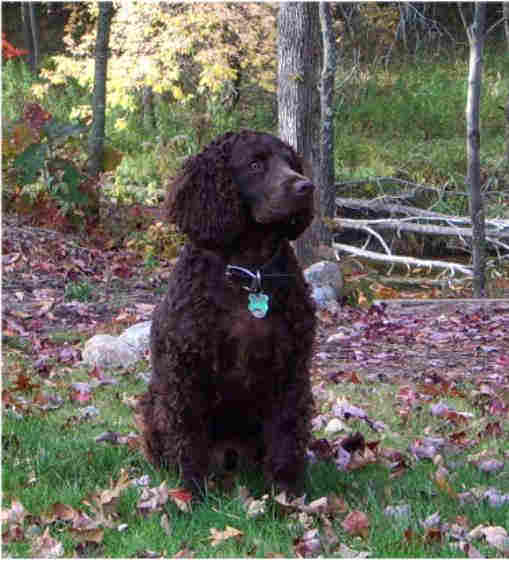
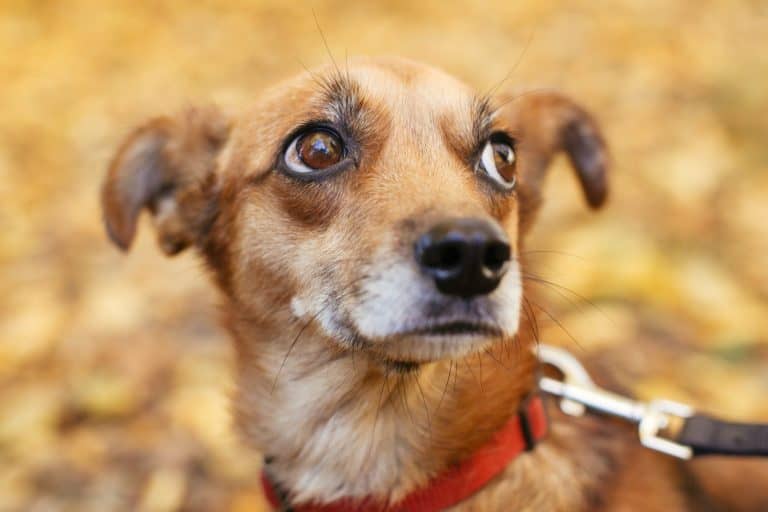
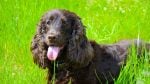
American Water Spaniel seated outside

American Water Spaniels are fun and easy to train.

Reproduction, Lifespan, and Babies

The American Water Spaniel has a lifespan of 10 to 12 years and usually has a litter size of 4 to 6 puppies. Female dogs usually go into heat every six months, which lasts 18 to 21 days and is divided into four portions. Once pregnant, the average gestation period lasts 58 to 65 days, with the puppies almost fully developed by the 58th day. At birth, newborn puppies have not yet developed an effective immune system, so they rely on their mother’s colostrum to gain passive immunity in the first 24 to 48 hours after delivery. This helps protect them from diseases in their early weeks of life. It is very important to protect them from illness during the first 4 months of life. They should be kept away from any other pets that are sick. They should also be quarantined from areas frequented by animals, like pet stores and dog parks, until they are fully vaccinated.
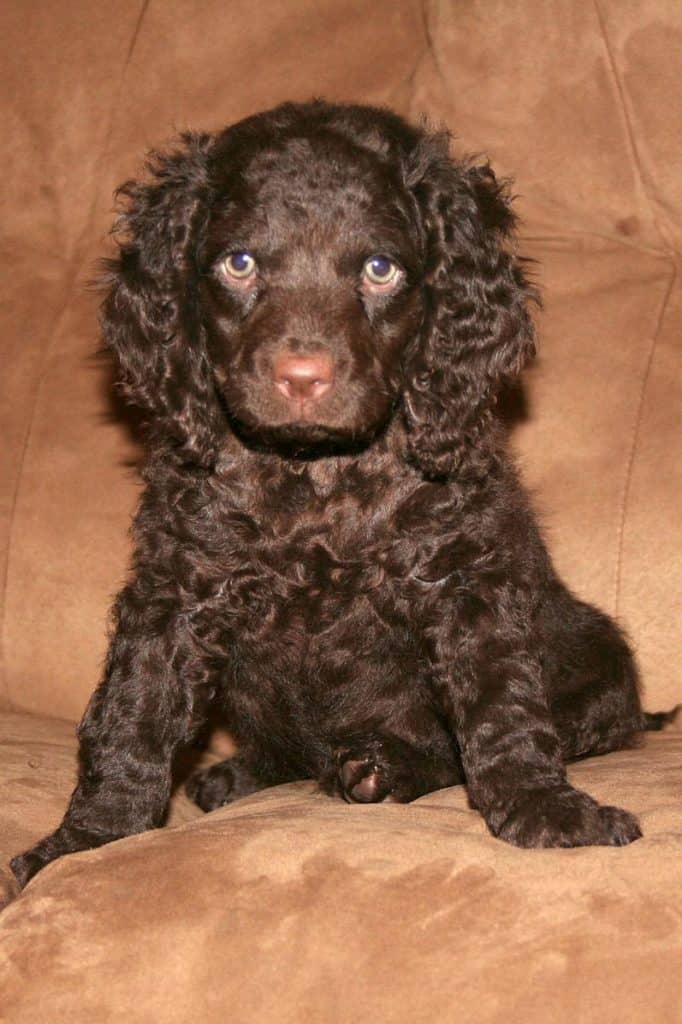
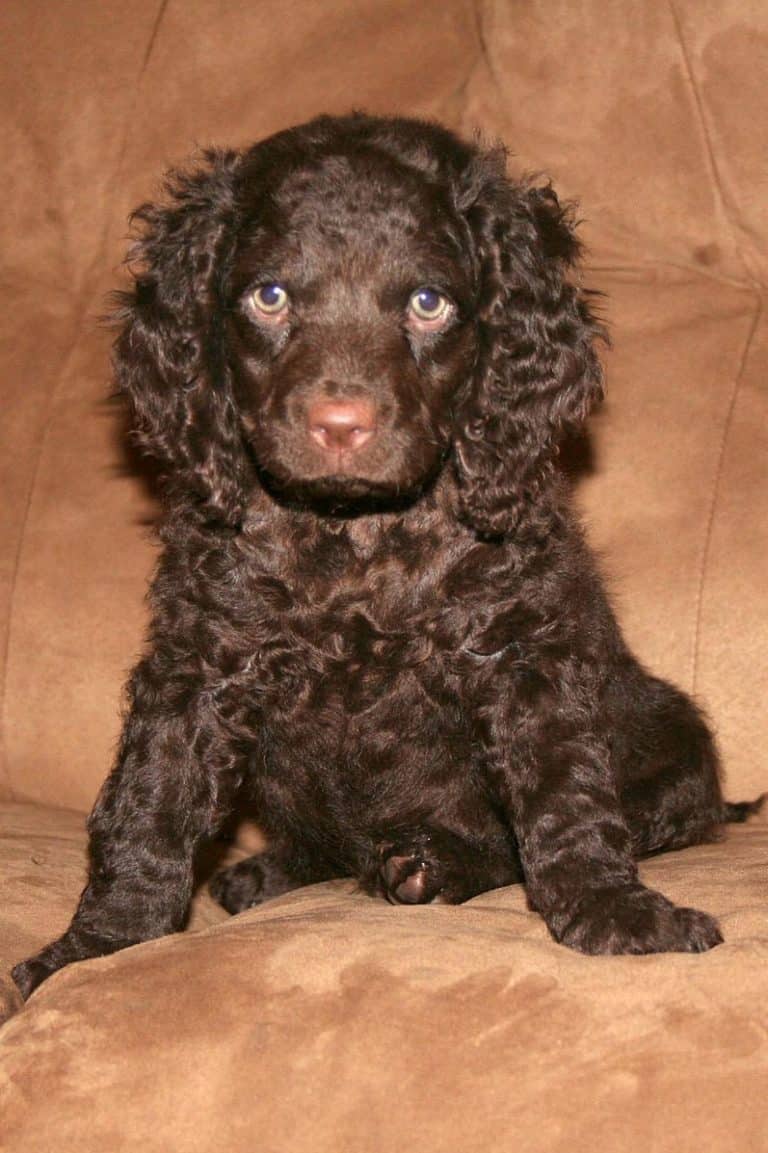
Brown American Water Spaniel puppy

Baby American Water spaniels should be kept away from high-traffic dog areas until fully vaccinated.

American Water Spaniel Size and Weight

These are medium-sized dogs. Both males and females are between 15 and 18 inches tall. Males, who are typically a bit heavier than their female counterparts, weigh between 30 and 45 pounds. Females weigh between 25 and 40 pounds. Three-month-old puppies weigh between 16 and 21 pounds, and six-month-old puppies weigh between 29 and 39 pounds. Both male and female puppies will be fully grown by the time they are 16 months old.
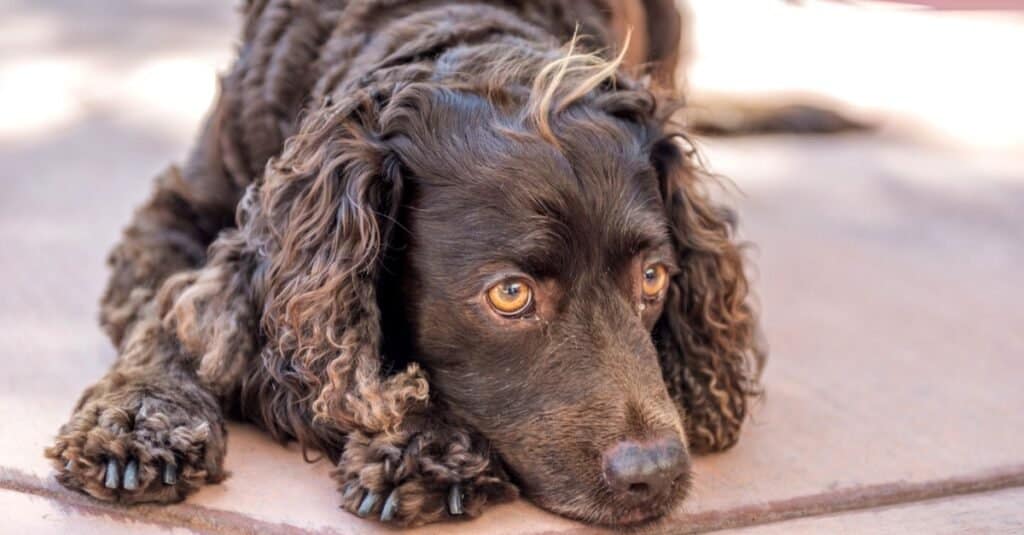
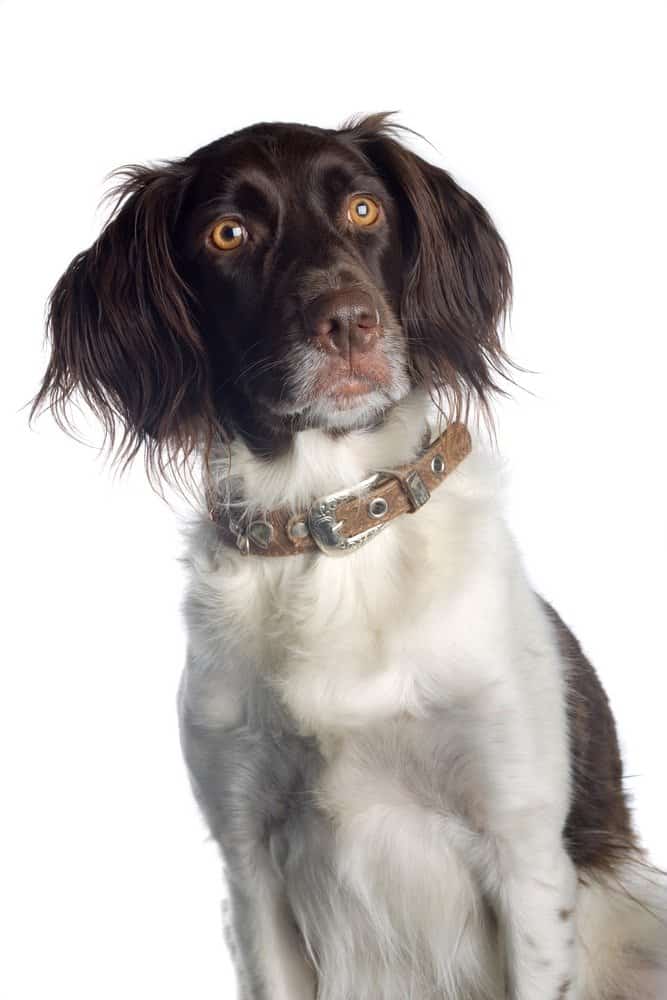
Types of water dogs - American Water Spaniel

American Water Spaniel is the state dog of Wisconsin.

Common Health Issues

There are a few key health concerns you should be aware of with this breed. One is hip dysplasia. With this condition, a dog’s hip does not form correctly, and there is a poor fit between the hip socket and the femur. The bones rub together, which can lead to pain and may make it more challenging for your dog to walk.

American Water Spaniels also sometimes suffer from Progressive Retinal Atrophy. Also called PRA, this is a condition in which the photoreceptor cells of the retina start to degenerate. This condition will eventually lead to blindness, and there is currently no cure or treatment for it.

Epilepsy is another possible problem. Epilepsy is a neurological disorder that causes recurring seizures. Approximately 1% of all dogs are affected by this disorder.

To review, some potential health issues may include:

  • Hip dysplasia
  • Progressive retinal atrophy (PRA)
  • Epilepsy
Types of water dogs - Irish Water Spaniel

American Water spaniels are known as the clowns of the spaniel family.

Temperament

American Water Spaniels were bred to be hunting dogs. As such, they are a very active breed that enjoys playing, hunting, and doing other types of work. When their activity needs are met, these dogs exhibit a variety of traits that allow them to make excellent family pets. They have affectionate and playful personalities and enjoy spending time with children and other family members.

This breed often develops a close bond with its family members, often with one family member in particular. In some instances, they may be stubborn or exhibit possessive behaviors, but breeders have been trying to breed dogs that are more even-tempered and well-suited for families.

How to Take Care of an American Water Spaniel

Knowing about this breed can help you provide the best care possible for your dog. Since all dog breeds are unique, caring for this breed, in particular, will look different from caring for other dog breeds.

The Best Dog Food

This dog breed should be fed a high-quality dog food that will meet their nutritional needs. You may choose to feed your adult dog or puppy bagged food, or you may choose to offer them a home-prepared diet.

Either way, it’s important for American Water Spaniels to get the specific nutrients they need to stave off the most common health complications.

When selecting or preparing food for your dog, you should consult with its veterinarian. The veterinarian can help you make sure that the food you are offering contains the essential vitamins and nutrients your dog will need. Taking your dog’s age, activity level, and health into consideration when planning their diet will also be important. Adult dogs typically eat between 1 and 2 cups of food a day, but your dog’s specific needs will help determine the amount of food they’ll need.

Since dogs can become overweight, it will be important to feed them the right amount of food. Also, because of this risk factor with this breed, you will want to split their food into two or three meals instead of offering the full amount all at once.

Water Spaniel puppies have smaller stomachs than adults. Puppies should eat smaller meals more frequently throughout the day.
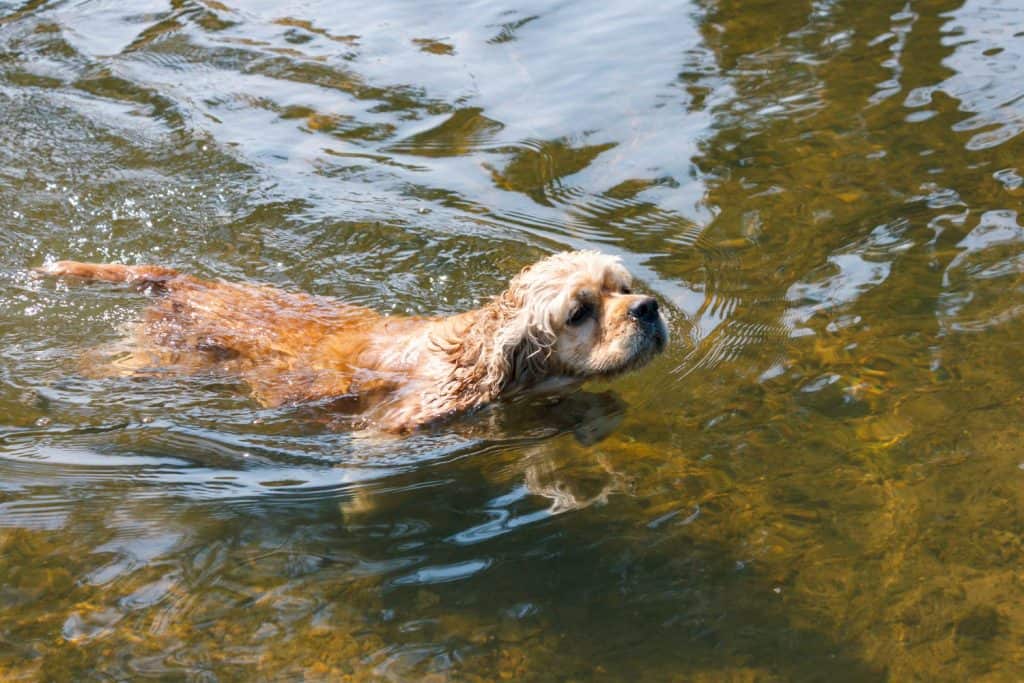
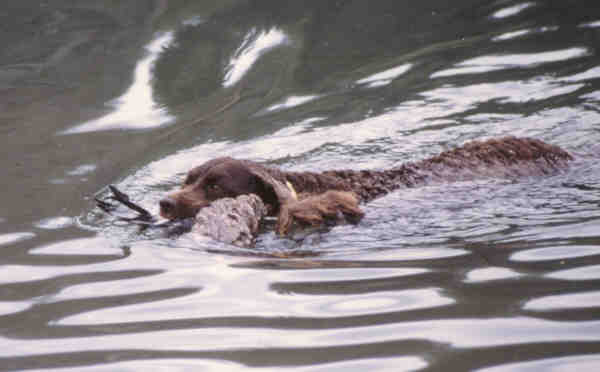
dog of breed American water Spaniel swimming in water

Spaniels absolutely love water.

Maintenance and Grooming

This type of dog’s coat should be brushed weekly, but the process is not too difficult. This breed has a double-layer coat that is designed to provide them with insulation against the cold water in Wisconsin and the Great Lakes region, where they were bred. For much of the year, especially during shedding season, you can use a slicker brush when brushing your dog. This brush type will help pull out the dead hair in the undercoat. Their coat will be less full during the summer, and most times, a rubber-tipped pin brush will be the best option to clean it up during these months.

In addition to brushing its coat, you’ll also want to keep its nails trimmed, so they do not get too long.

Training

Be ready to begin training and socializing your dog right away. Starting both of these from an early age will help your dog learn how to appropriately interact with other dogs, people, and situations.

While some American Water Spaniels may be a little stubborn, most are very eager to please. This trait will help make it easy to train your dog. Additionally, they can be very talented and agile and can do well in different sporting games, field events, or tracking agility.

Exercise

Making sure your dog gets enough exercise each day is important. This breed is very active and loves spending time outdoors swimming or hunting. They were originally bred for retrieving waterfowl and bird flushing, and do very well when they are given a job, taken on hunting trips, or given other forms of more vigorous exercise. However, they will also do fine when they are taken to a dog park or given time to play on their own in the backyard each day.

American Water Spaniels may become destructive or bark more when they aren’t provided with enough opportunities for exercise. This is another reason you’ll want to keep your dog active.

Puppies

If you are going to be purchasing or adopting an American Water Spaniel, the first thing you should do is prepare your home for the new puppy. Puppies can be very active and may chew on things or get into trouble, so you will want to be sure to remove any items that could be potentially dangerous to your new dog. Also, if you have personal belongings that you don’t want to see destroyed by a puppy, it would be a good idea to put them away.

Once you bring your puppy home, it will be important to make sure they get enough exercise. American Water Spaniels are very active dogs, and puppies should get plenty of playtime and other activities. Puppies between the ages of 6 and 18 months will need more activity than older dogs.

When planning your puppy’s diet, keep in mind that they have smaller stomachs than adults. Because of this, your puppy will need to eat smaller meals throughout the day. For example, puppies between the ages of 8 and 12 months should be fed four times a day, and puppies between the ages of 3 and 6 months should eat three times a day.
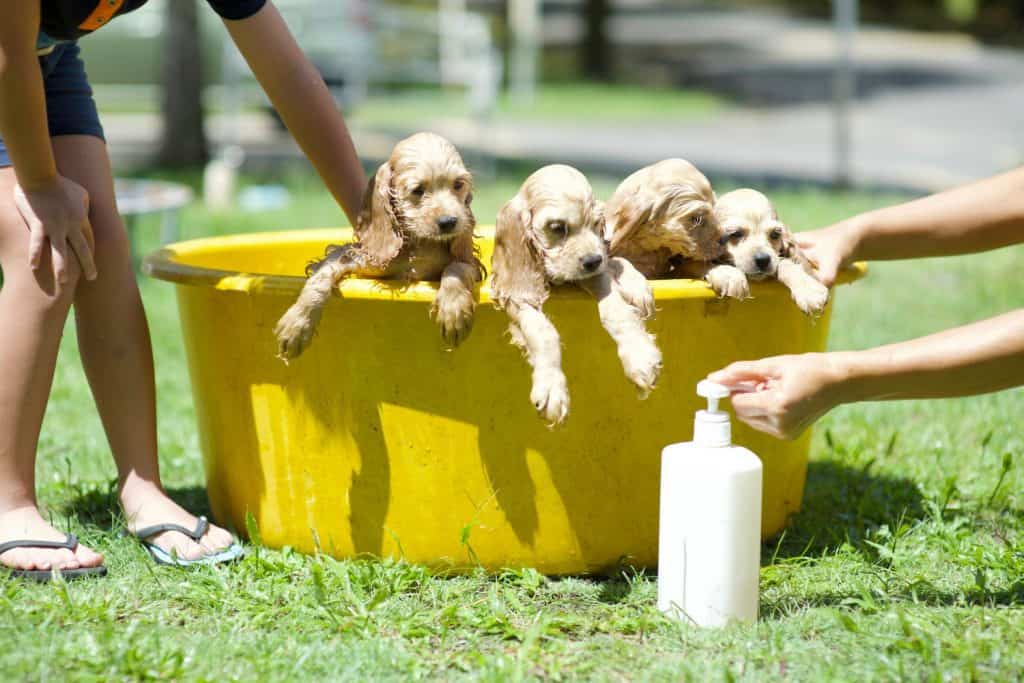
Puppies having a bath in a yellow basin.Little brown pups showering in outdoor.Summer baths.Dog hygiene care.Animal grooming.Pet bathtub.Young canine in tub.Bathing animals.Dogs with shampoo.

Puppies are having a bath in a yellow basin.

American Water Spaniels and Children

American Water Spaniels can make a good family pet. When properly trained, they are known for being very obedient. They are also very affectionate and can be very gentle with children. If you are bringing an American Water Spaniel home to be a family dog, you will still want to closely supervise your children when they are with the dog. This can help avoid either your children or the dog getting injured by accident.

Dogs similar to American Water Spaniels

Three dog breeds that are similar to the American Water Spaniel are the Curly Coated Retriever, English Springer Spaniel, and Field Spaniel.

  • Curly Coated Retriever: Curly Coated Retrievers, like American Water Spaniels, are gun dogs. Both breeds have average intelligence and are easy to train. Curly Coated Retrievers are much larger than American Water Spaniels, though. While an American Water Spaniel has an average weight of 35 pounds, a Curly Coated Retriever has an average weight of 72.5 pounds.
  • English Springer Spaniel: English Springer Spaniels are another gun dog breed. Their coat is more feather, while an American Water Spaniel has a curly coat. Grooming an American Water Spaniel is a bit easier than maintaining the coat of an English Springer Spaniel. Both of these breeds are very affectionate. They also do best when someone is home with them and may develop separation anxiety if left alone.
  • Field Spaniel: Field Spaniels are yet another gun dog breed. While they are slightly larger, a Field Spaniel is pretty close to the same size as an American Water Spaniel. Field Spaniels have an average weight of 42.5 pounds, and American Water Spaniels have an average weight of 35 pounds. American Water Spaniels are more territorial than Field Spaniels.

Famous American Water Spaniels

The American Water Spaniel is the state dog of Wisconsin. Since this is a relatively rare breed, there are not too many celebrities or other famous individuals who own an American Water Spaniel.

View all 326 animals that start with A

Sources

  1. American Kennel Club / Accessed November 8, 2019
  2. Dogtime / Accessed November 8, 2019
  3. American Water Spaniel Club / Accessed November 8, 2019
  4. Wikipedia / Accessed November 8, 2019
  5. Pet Finder / Accessed November 8, 2019
  6. Hill's / Accessed November 8, 2019
  7. Animal Care Tip / Accessed November 8, 2019
  8. Man's Best Friend / Accessed November 8, 2019
  9. Dog Breed Plus / Accessed November 8, 2019
  10. Dogell / Accessed November 8, 2019
Heather Hall

About the Author

Heather Hall

Heather Hall is a writer at A-Z Animals, where her primary focus is on plants and animals. Heather has been writing and editing since 2012 and holds a Bachelor of Science in Horticulture. As a resident of the Pacific Northwest, Heather enjoys hiking, gardening, and trail running through the mountains with her dogs.

Thank you for reading! Have some feedback for us?


American Water Spaniel FAQs (Frequently Asked Questions)

American Water Spaniels are a pretty rare breed, so it may be a bit challenging to find a breeder near you. If you do find a breeder, you should expect to pay around $1,000 for your American Water Spaniel. You may also be able to adopt an American Water Spaniel from a shelter. This will likely cost around $200 for application fees and the cost of spaying or neutering.

You will also need to be ready to pay for vaccinations, veterinarian bills, obedience training, food, toys, and supplies for your American Water Spaniel. These costs will likely be higher for your first year of ownership and may cost $1,000 or more. Each year after that, you should still budget between $500 and $1,000 for expenses for your dog.