A
Species Profile

Angelfish

Pomacanthidae

Reef royalty with a wardrobe change
Galina Savina/Shutterstock.com

Angelfish Distribution

Click a location to explore more animals from that region

This map shows coastal regions where Angelfish are found.

Loading map...
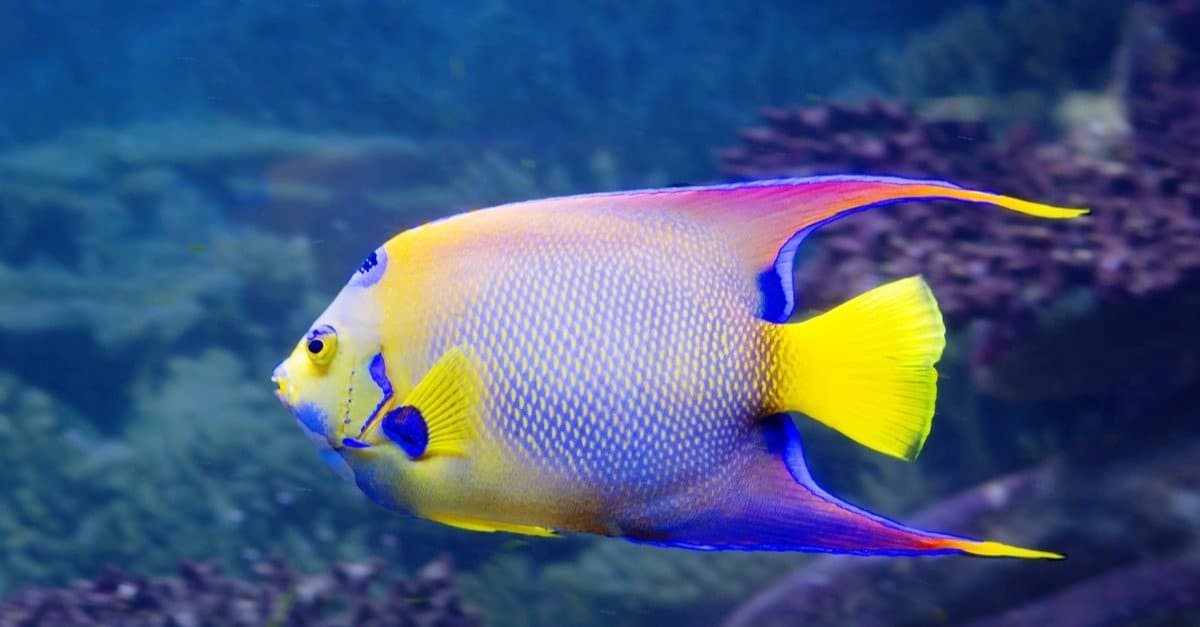
Queen angelfish

At a Glance

Family Overview This page covers the Angelfish family as a group. Stats below are general traits shared across the family.
Also Known As Sea angelfish, Pomacanthids, Blue angelfish, Queen angelfish, Emperor angelfish, French angelfish
Diet Omnivore
Activity Diurnal+
Lifespan 12 years
Weight 5 lbs
Status Not Evaluated
Did You Know?

Smallest dwarf angelfishes are about 7-8 cm long, while the largest species can reach roughly 60 cm.

Scientific Classification

Family Overview "Angelfish" is not a single species but represents an entire family containing multiple species.

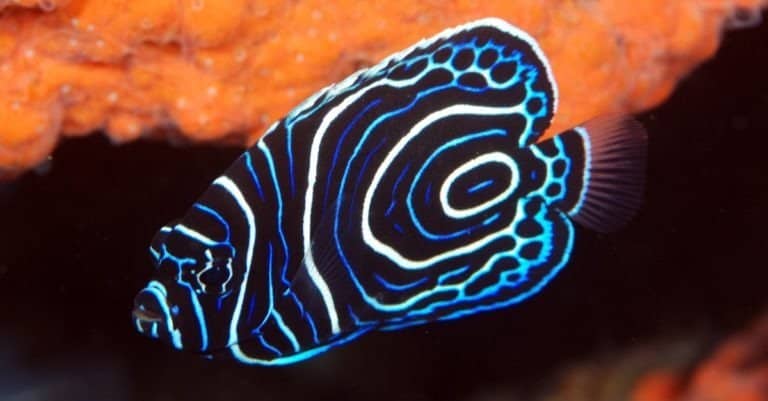
Marine angelfishes (Pomacanthidae) are colorful reef-associated ray-finned fishes found mainly in tropical Atlantic, Indian, and Pacific oceans. Many graze on sponges, algae, and other benthic invertebrates. They are known for laterally compressed bodies, ornate patterns, and frequent juvenile-to-adult color changes.

Kingdom
Animalia
Phylum
Chordata
Class
Actinopterygii
Order
Perciformes
Family
Pomacanthidae

Distinguishing Features

  • Bright, ornate coloration and patterns
  • Laterally compressed, deep-bodied shape
  • Preopercular spine near gill cover
  • Many species show dramatic juvenile-adult color change

Physical Measurements

Males and females differ in size

Length
10 in (3 in – 1 ft 12 in)
8 in (3 in – 1 ft 6 in)
Weight
3 lbs (0 lbs – 13 lbs)
1 lbs (0 lbs – 4 lbs)
Top Speed
12 mph
swimming

Appearance

Primary Colors
Secondary Colors
Skin Type Scaly
Distinctive Features
  • Body length ranges roughly 7-60 cm across dwarf to large angelfishes.
  • Typical lifespan ranges about 5-25+ years, varying strongly by species and conditions.
  • Laterally compressed, deep-bodied profile suited for maneuvering among reef structure.
  • Prominent preopercular spine ("cheek spine") is characteristic of the family.
  • Long continuous dorsal and anal fins, often with trailing edges in larger species.
  • Small mouth with brushlike teeth for grazing and picking benthic foods.
  • Juvenile and adult color patterns often differ dramatically; ontogenetic shifts are common.
  • Mostly tropical reef-associated across Atlantic, Indian, and Pacific, from lagoons to outer reefs.
  • Diet commonly includes sponges, algae, tunicates, and other benthic invertebrates; proportions vary by species.
  • Behavior ranges from solitary territorial adults to pairs and harems; some juveniles act as cleaners.

Sexual Dimorphism

Sexual dimorphism is often subtle and variable; many species look similar between sexes. In several lineages, social systems can include protogynous sex change, with dominant males sometimes larger and showing slightly stronger coloration or fin extension.

  • Often slightly larger in harems or territorial systems
  • May show more intense facial/fin edging in some species
  • Occasional longer trailing dorsal or anal fin tips
  • Often slightly smaller where harems occur
  • Coloration frequently similar to males, especially outside spawning
  • May show rounder profile when gravid

Did You Know?

Smallest dwarf angelfishes are about 7-8 cm long, while the largest species can reach roughly 60 cm.

Lifespan varies widely: many live about 5-15 years, while some large species can reach 25-30+ years.

They occur across tropical Atlantic, Indian, and Pacific reefs, with species richness especially high in the Indo-Pacific.

Many species specialize on sponges and tunicates, while others graze algae or pick small benthic invertebrates.

Juveniles often wear distinct patterns that reduce aggression from adults and can even function in "cleaning" roles.

Body shapes are strongly laterally compressed, helping them maneuver precisely through reef crevices and coral heads.

Several lineages show social sex change (often female-to-male), especially among smaller, harem-forming species.

Unique Adaptations

  • A stout preopercular spine and tough scales help deter predators when wedged into narrow reef refuges.
  • Brush-like teeth and strong jaws scrape and nip encrusting foods such as sponges, algae, and colonial invertebrates.
  • Ontogenetic color change reduces juvenile-adult conflict and supports different roles at different life stages.
  • Elongated guts in many species help process low-energy foods like sponges and algae efficiently.
  • Laterally compressed bodies enable tight turning, hovering, and precise station-keeping in complex reef structure.

Interesting Behaviors

  • Strong territoriality is common; individuals or pairs patrol feeding areas and chase similarly shaped intruders.
  • Diet strategies vary: some are sponge-focused grazers, others algae browsers, and some feed more on plankton.
  • Many species form long-term pairs, while others live in harems with one dominant male and multiple females.
  • Juveniles of some species act as cleaners, picking ectoparasites or dead tissue from larger fishes.
  • Daily routines are typically diurnal, with nighttime sheltering deep in crevices or under ledges.

Cultural Significance

Marine angelfishes are flagship reef animals-widely photographed by divers and central to the marine aquarium trade-making them both economic icons and ambassadors for reef conservation awareness.

Myths & Legends

The English name "angelfish" arose in early natural history writing for their bright, "angelic" colors and graceful fin shapes.

Victorian-era aquarium literature celebrated marine angelfishes as living "reef jewels," symbols of exotic tropical seas in popular culture.

Common names like "queen," "emperor," and "king" reflect a long tradition of describing their regal patterns as ocean royalty.

Conservation Status

NE Not Evaluated

Has not yet been evaluated against the criteria.

Population Unknown

Protected Under

  • Marine protected areas
  • National fisheries regulations

You might be looking for:

Emperor angelfish

18%

Pomacanthus imperator

Large Indo-Pacific reef angelfish; bold juvenile rings transform into adult horizontal stripes; common aquarium and snorkeler favorite.

View Profile

Queen angelfish

16%

Holacanthus ciliaris

Caribbean reef species with vivid blue-yellow colors and a crown-like spot; prominent on Western Atlantic reefs.

View Profile

French angelfish

14%

Pomacanthus paru

Western Atlantic species; juveniles are black with yellow bars and act as cleaner fish; adults dark with yellow edging.

View Profile

Blue angelfish

12%

Holacanthus bermudensis

Western Atlantic; blue body with yellow highlights; often confused with queen angelfish and can hybridize in overlap zones.

View Profile

Flame angelfish

10%

Centropyge loricula

Small, bright red-orange dwarf angelfish from the Pacific; popular aquarium fish; inhabits coral-rich reef slopes.

Life Cycle

Birth 50000 frys
Lifespan 12 years

Lifespan

In the Wild
5–25 years
In Captivity
5–30 years

Reproduction

Mating System Polygyny
Social Structure Harem Based
Breeding Season Year-round; often peaks in warmer months
Breeding Pattern Long Term
Fertilization Broadcast Spawning
Birth Type Broadcast_spawning

Across many pomacanthids, territorial males maintain harems and spawn repeatedly with resident females via paired ascents and broadcast release of pelagic eggs. Some species form stable pairs (social monogamy), and protogynous sex change is common.

Behavior & Ecology

Social Harem Group: 3
Activity Diurnal, Crepuscular
Diet Omnivore Sponges

Temperament

Territorial
Site-faithful
Bold
Aggressive
Shy

Communication

grunts
clicks
pops
color change displays
fin flaring
lateral body postures
chasing and circling
courtship ascent signaling
territory patrolling

Habitat

Coral Reef Rocky Shore Coastal Seabed/Benthic Cave Cliff/Rocky Outcrop Mangrove Estuary Open Ocean Kelp Forest +4
Biomes:
Terrain:
Coastal Island Rocky Sandy
Elevation: Up to 656 ft 2 in

Ecological Role

Reef mesoconsumers shaping sponge and algal communities

sponge population control algal grazing benthic community shaping reef nutrient cycling

Diet Details

Other Foods:
Filamentous turf algae Macroalgae Encrusting coralline algae Cyanobacteria mats Benthic diatoms and microalgae Detritus within algal films

Human Interaction

Domestication Status

Wild

Not domesticated. Wild-caught reef fishes entered the marine aquarium trade widely from the mid-20th century; captive breeding exists for a limited number of species, mainly to supply hobbyists and reduce wild collection.

Danger Level

Low
  • Fin spine punctures
  • Defensive bites from large adults
  • Ciguatera risk if eaten
  • Aquarium-related infections from wounds

As a Pet

Suitable as Pet

Legality: Generally legal; subject to local collection/import reef-protection rules.

Care Level: Expert Only

Purchase Cost: $20 - $2,500
Lifetime Cost: $2,000 - $30,000

Economic Value

Uses:
Aquarium Tourism Fisheries Research
Products:
  • ornamentals
  • food

Relationships

Predators 7

Great barracuda Sphyraena barracuda
Nassau grouper Epinephelus striatus
Giant grouper Epinephelus lanceolatus
Giant moray Gymnothorax javanicus
Grey reef shark
Grey reef shark Carcharhinus amblyrhynchos
Caribbean reef shark
Caribbean reef shark Carcharhinus perezi
Giant trevally
Giant trevally Caranx ignobilis

Related Species 10

Emperor angelfish
Emperor angelfish Pomacanthus imperator Shared Genus
French angelfish
French angelfish Pomacanthus paru Shared Genus
Queen angelfish
Queen angelfish Holacanthus ciliaris Shared Genus
Flame angelfish Centropyge loricula Shared Genus
Blue angelfish
Blue angelfish Holacanthus bermudensis Shared Genus
Rock beauty Holacanthus tricolor Shared Genus
Regal angelfish Pygoplites diacanthus Shared Family
Swallowtail angelfishes Genicanthus spp. Shared Family
Butterflyfishes
Butterflyfishes Chaetodontidae Shared Order
Moorish idol Zanclus cornutus Shared Order

Ecological Equivalents 4

Animals that fill a similar ecological role in their ecosystem

Threadfin butterflyfish Chaetodon auriga Diurnal reef forager; laterally compressed body; similar microhabitats
Surgeonfishes Acanthuridae Reef-associated grazers; territoriality and daylight activity often overlap
Parrotfishes
Parrotfishes Scaridae Day-active reef browsers; strong color patterns; habitat overlap
Damselfishes Pomacentridae Territorial reef fishes; defend feeding areas and shelter sites

Types of Angelfish

29

Explore 29 recognized types of angelfish

Emperor angelfish
Emperor angelfish Pomacanthus imperator
French angelfish
French angelfish Pomacanthus paru
Gray angelfish Pomacanthus arcuatus
Queen angelfish
Queen angelfish Holacanthus ciliaris
Blue angelfish
Blue angelfish Holacanthus bermudensis
Rock beauty Holacanthus tricolor
King angelfish Holacanthus passer
Regal angelfish Pygoplites diacanthus
Blue-ring angelfish Pomacanthus annularis
Semicircle angelfish Pomacanthus semicirculatus
Koran angelfish Pomacanthus semicirculatus
Asfur angelfish Pomacanthus asfur
Arabian angelfish Pomacanthus maculosus
Yellowbar angelfish Pomacanthus maculosus
Bicolor angelfish Centropyge bicolor
Flame angelfish Centropyge loricula
Coral beauty Centropyge bispinosa
Cherubfish Centropyge argi
Fisher's angelfish Centropyge fisheri
Potter's angelfish Centropyge potteri
Lemonpeel angelfish Centropyge flavissima
Multicolor angelfish Centropyge multicolor
Swallowtail angelfish Genicanthus melanospilos
Lamarck's angelfish Genicanthus lamarck
Watanabei angelfish Genicanthus watanabei
Bellus angelfish Genicanthus bellus
Flagfin angelfish Apolemichthys trimaculatus
Banded angelfish Apolemichthys arcuatus
Bluegirdled angelfish Pomacanthus navarchus

There are 86 species of marine angelfish. These omnivorous fish live in the Indian, Atlantic, and western Pacific oceans.

They have laterally depressed bodies and easily swim in and out of coral reefs in shallow water.

3 Incredible Angelfish Facts
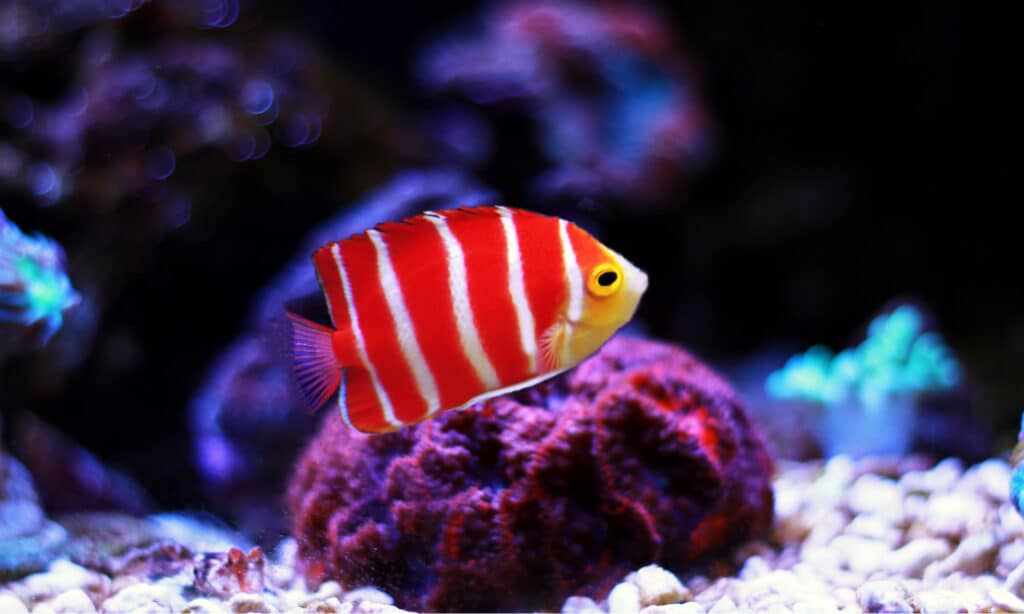
The Peppermint Angelfish's unique colors make it look like the candy for which it is named.

One of the most interesting facts about these fish is that they change colors as they get older.

  • Changing Colors: One of the most interesting facts about these fish is that they change colors as they get older. For instance, a young angelfish’s black stripes may fade into yellow ones as it ages. Health, nutrition, and breeding activities can also bring on changes in color.
  • Female Changes to Male: Angelfish are known as protogynous hermaphrodites. This means a female changes into a male at a certain point in her life.
  • A Pancake Shape: The body of an angelfish is flat and thin like a pancake. This allows them to slip through the crevices and narrow holes in a coral reef. They can escape a predator this way or access algae or other plant life for nourishment.

Classification and Scientific Name

Angelfish belongs to the Pomacanthidae family and the class Actinopterygii. The word Pomacanthidae is Greek, meaning ‘cover thorn.’ This refers to the spiny growth that all angelfish have on their bodies. The spiny growth may be on its head or near its tail fin.

Species
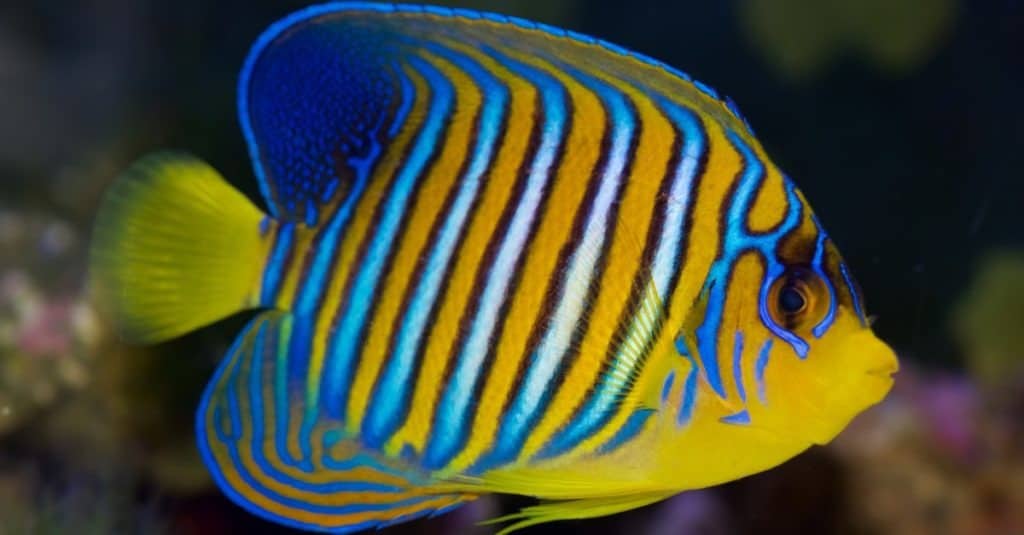
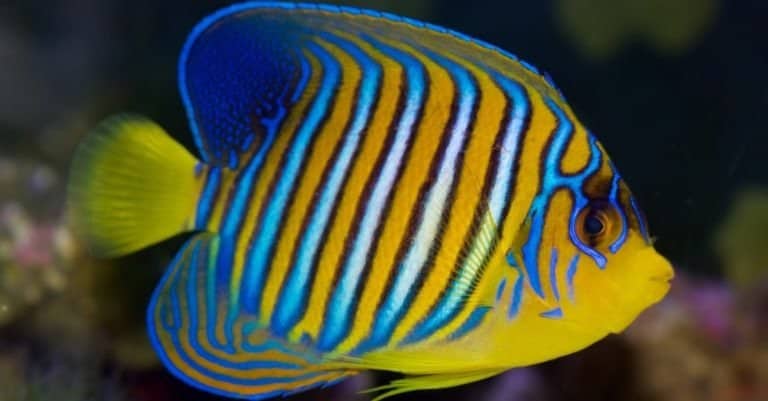
Regal Angelfish, Pygoplites diacanthus, a saltwater angelfish from the Indo-Pacific and Red Sea.

Many angelfish live near coral reefs. Lots of these coral reefs are located in the Caribbean Sea.

There are 86 species of these fish. Their family is divided into 7 genera.

Many angelfish live near coral reefs. Lots of these coral reefs are located in the Caribbean Sea.

Look at some of these fish that live near coral reefs in the Caribbean:

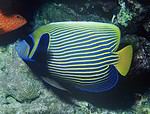
  • Emperor angelfish (Pomacanthus imperator): This fish is one of the bigger species at 15.75 inches long. Adults are easy to recognize due to their vibrant blue and yellow stripes. It eats sponges and algae from on and around coral reefs.
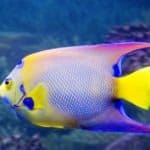
  • Queen angelfish (Holacanthus ciliaris): This fish, sometimes called the Blue Queen, is another large species measuring 18 inches in length. They can be blue or blue and yellow in color. Sponges are the main diet of this fish. It eats jellyfish as well.
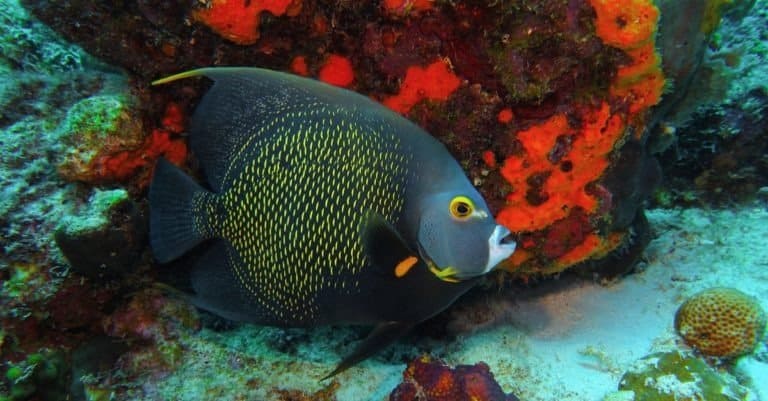
  • French angelfish (Pomacanthus paru): A French angelfish is black with distinctive rings of yellow around its eyes. It lives on coral reefs in the eastern region of the Caribbean. As with most species, sponges are the main diet of this fish.

Appearance
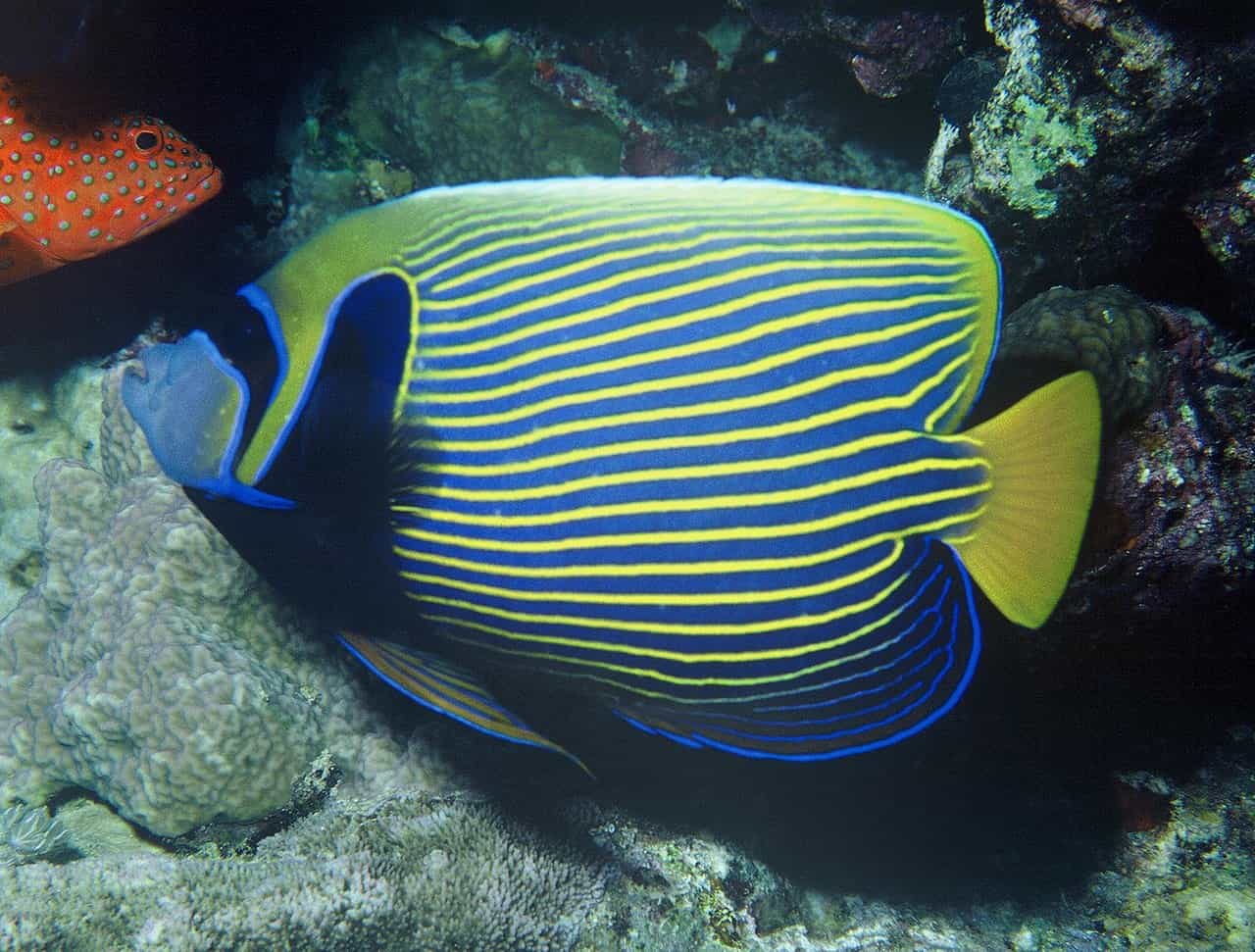
Angelfish can be red, blue, green, black, yellow, or a combination of these colors.

These fish can be red, blue, green, black, yellow, or a combination of these colors. Some marine angelfish have scales with swirling, colorful patterns, others have stripes, while others are mostly solid in color. They have thin, flat bodies with curved dorsal and anal fins.

They have feathery pectoral fins, dark eyes, and small mouths. All angelfish have a thorn or a spiny growth, somewhere on their body. In fact, their family name, Pomacanthidae, is Greek for cover thorn.

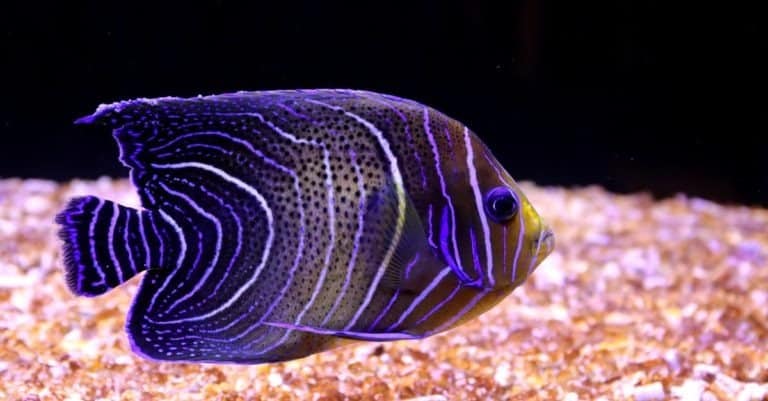
Most angelfish are 8 to 12 inches long and weigh up to 2 pounds. Of course, there are some species that are smaller or larger. For instance, koi angelfish grow to be just 6 inches long. The largest species is the gray angelfish. This fish measures 24 inches in length and can weigh up to 4 pounds!

The thin, flat body of the fish allows it to slip into hard-to-reach places which can help it to escape some of its predators. Plus, most of these fish feature brilliant colors so you would think they would be easy for predators to spot. However, they’re able to blend in with the brightly colored rocks, algae, and other features in their coral reef habitat.

Distribution, Population, and Habitat
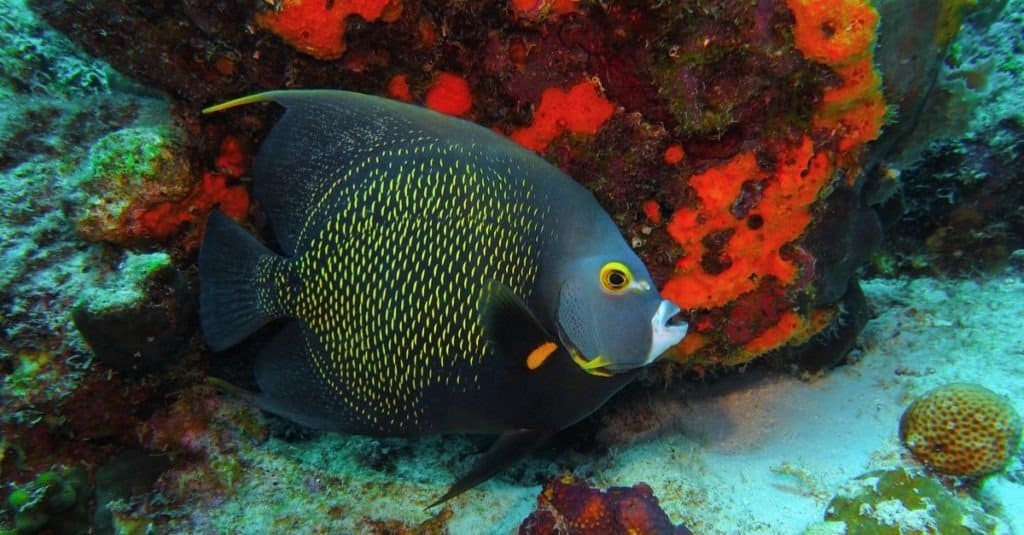
Swimming french angelfish (Pomacanthus paru) and red coral reef.

These fish are found in the Indian, Atlantic, and western Pacific Oceans.

These fish are found in the Indian, Atlantic, and western Pacific Oceans. They live in a warm, saltwater habitat and don’t migrate. You can find them in shallow water near coral reefs in the Caribbean.

The Belize Barrier Reef, the Great Barrier Reef, and the New Caledonian Barrier Reef are a few of the places where these fish live. They aren’t known to dive deeper than 160 feet.

The exact population of these fish is unknown. However, most species have a conservation status of Least Concern with a stable population. The Emperor, the Yellow, the French, and the Blueface angelfish are a few species with that designation.

The Bluespotted angelfish is one exception with a conservation status of Data Deficient. Habitat destruction is the reason for the low population of this fish.

Predators and Prey

These fish are omnivores. Sponges are their main diet. They also eat algae and small pieces of shrimp. Some larger species, such as the Queen angelfish, eat bigger types of prey like jellyfish. These fish hunt during the daytime and hide in the coral reef at night, where it’s safe.

What eats angelfish?

Some of their predators include larger fish, sharks, and barracudas. These are all animals that share a habitat with these fish.

What do angelfish eat?

Angelfish fish eat sponges, pieces of shrimp, and algae. The larger species of this fish are able to eat bigger types of prey.

Reproduction and Lifespan
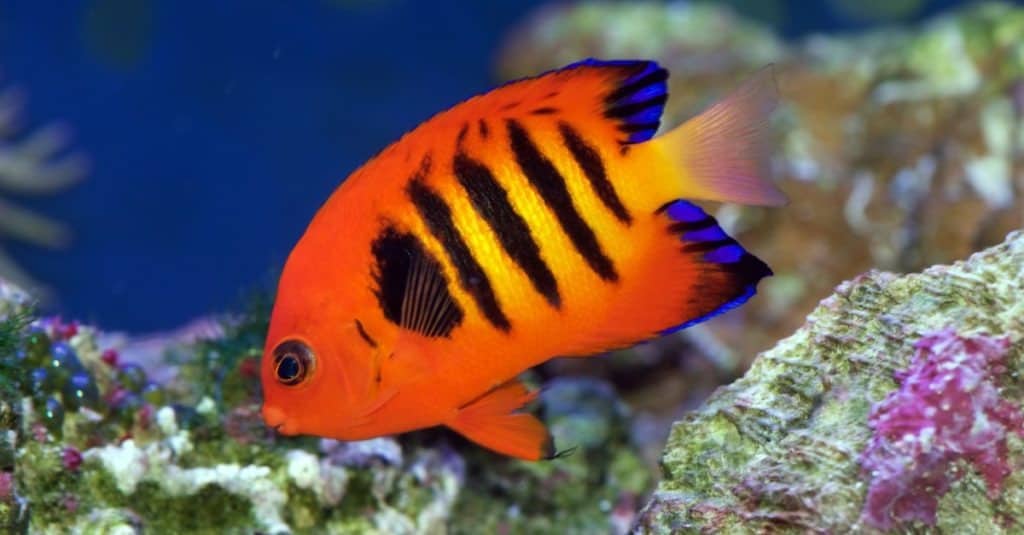
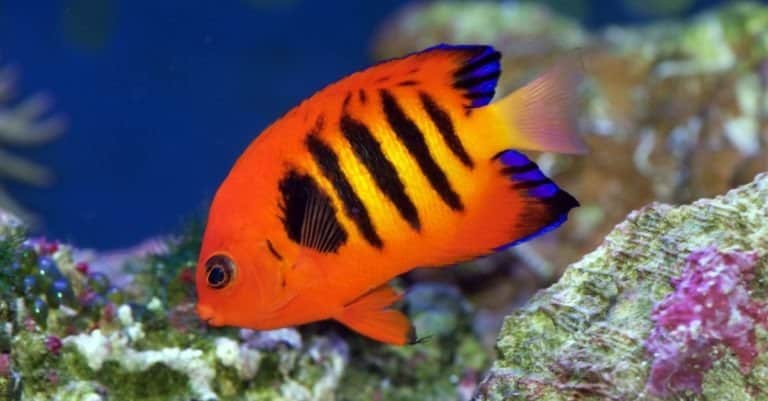
Flame Angelfish, Centropyge loricula, is a dwarf or pygmy marine angelfish from the tropical waters of the Pacific Ocean

These fish spawn in the winter season. They are polygynous (have multiple partners).

These fish spawn in the winter season. They are polygynous (have multiple partners). The male flaps its pectoral fins to attract females. A male usually has a group of 4 females, also called a harem, to mate with. One of the most amazing facts about an angelfish is that if a male leaves a harem of females, one of the females changes into a male and takes his role.

After mating, a female lays at least 500 eggs. Some species lay more. The Queen angelfish can release 75,000 eggs! The eggs float in the water for 1 to 3 days until they hatch into larvae. Larvae survive on algae and plankton as they grow into adult fish.

Though the larvae are clear, they are vulnerable to being eaten by small or large fish passing by. This is why angelfish have such a large number of eggs. So, at least some are likely to survive into adulthood. The mother and father are not involved with their young once they are released as eggs.

Sexual maturity is reached between 6 and 12 months of age. The lifespan of an angelfish is up to 15 years.

Fishing and Cooking
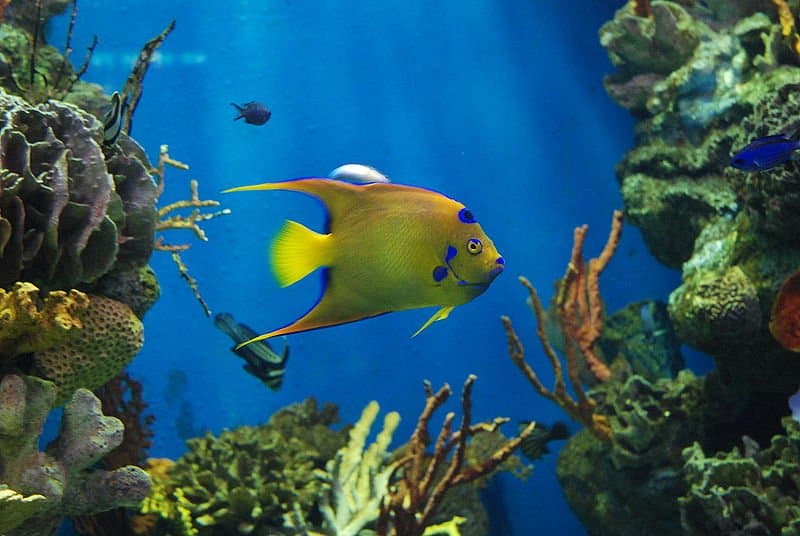
Angelfish are not a major target of commercial fishermen.

These fish are not a major target of commercial fishermen. However, they are sometimes caught and sold to pet stores and breeders. Some fish hobbyists like to put them in their tropical aquariums at home. They are colorful additions to aquariums in businesses, too.

These fish are not popular for eating, but some people do consume them. They are known to carry parasites and bacteria that could harm someone who eats them.

View all 326 animals that start with A
How to say Angelfish in ...
German
Kaiserfische
English
Marine angelfish group
Spanish
Pomacanthidae
Finnish
Keisarikalat
French
Pomacanthidae
Hungarian
Pomacanthidae
Indonesian
Injel
Italian
Pomacanthidae
Japanese
キンチャクダイ科
Dutch
Engel- of keizersvissen
English
Keiserfisker
Polish
Pomakantowate
Portuguese
Pomacanthidae
Swedish
Kejsarfiskar
Chinese
蓋刺魚科

Sources

  1. Wikipedia / Accessed December 24, 2020
  2. Animal Diversity Web / Accessed December 24, 2020
  3. Lamar University / Accessed December 24, 2020
Rebecca Bales

About the Author

Rebecca Bales

Rebecca is an experienced Professional Freelancer with nearly a decade of expertise in writing SEO Content, Digital Illustrations, and Graphic Design. When not engrossed in her creative endeavors, Rebecca dedicates her time to cycling and filming her nature adventures. When not focused on her passion for creating and crafting optimized materials, she harbors a deep fascination and love for cats, jumping spiders, and pet rats.
Connect:

Thank you for reading! Have some feedback for us?


Angelfish FAQs (Frequently Asked Questions)

Angelfish are found in the Indian, Atlantic, and western Pacific Oceans. They live in warm, saltwater habitats usually near coral reefs.