
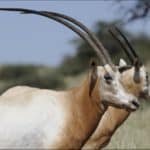
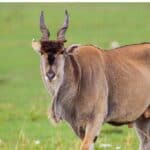
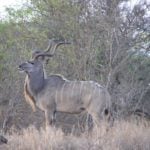
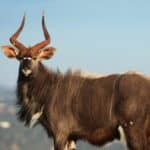
A
Species Profile

Antelope

Bovidae

Horns on, fleet feet, wild worlds
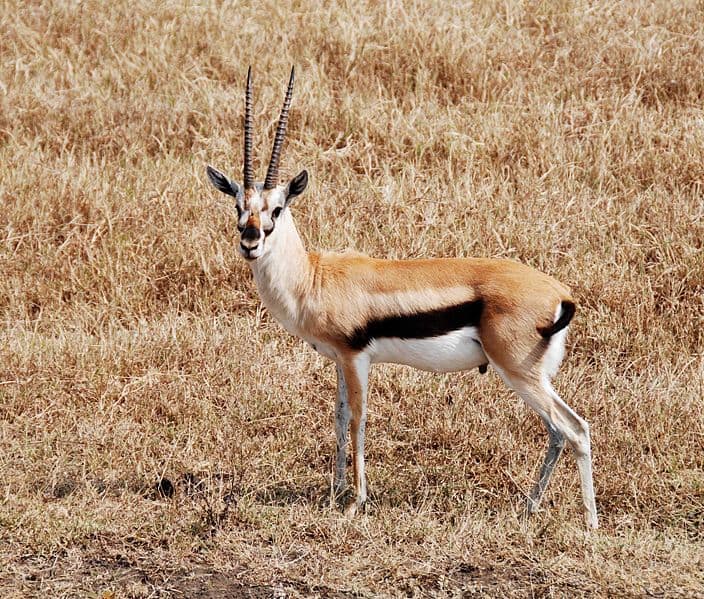
Alexandr Junek Imaging/Shutterstock.com

Antelope Distribution

Click a location to explore more animals from that region

Loading map...

Size Comparison

Human 5'8"
Antelope 2 ft 11 in

Antelope stands at 52% of average human height.

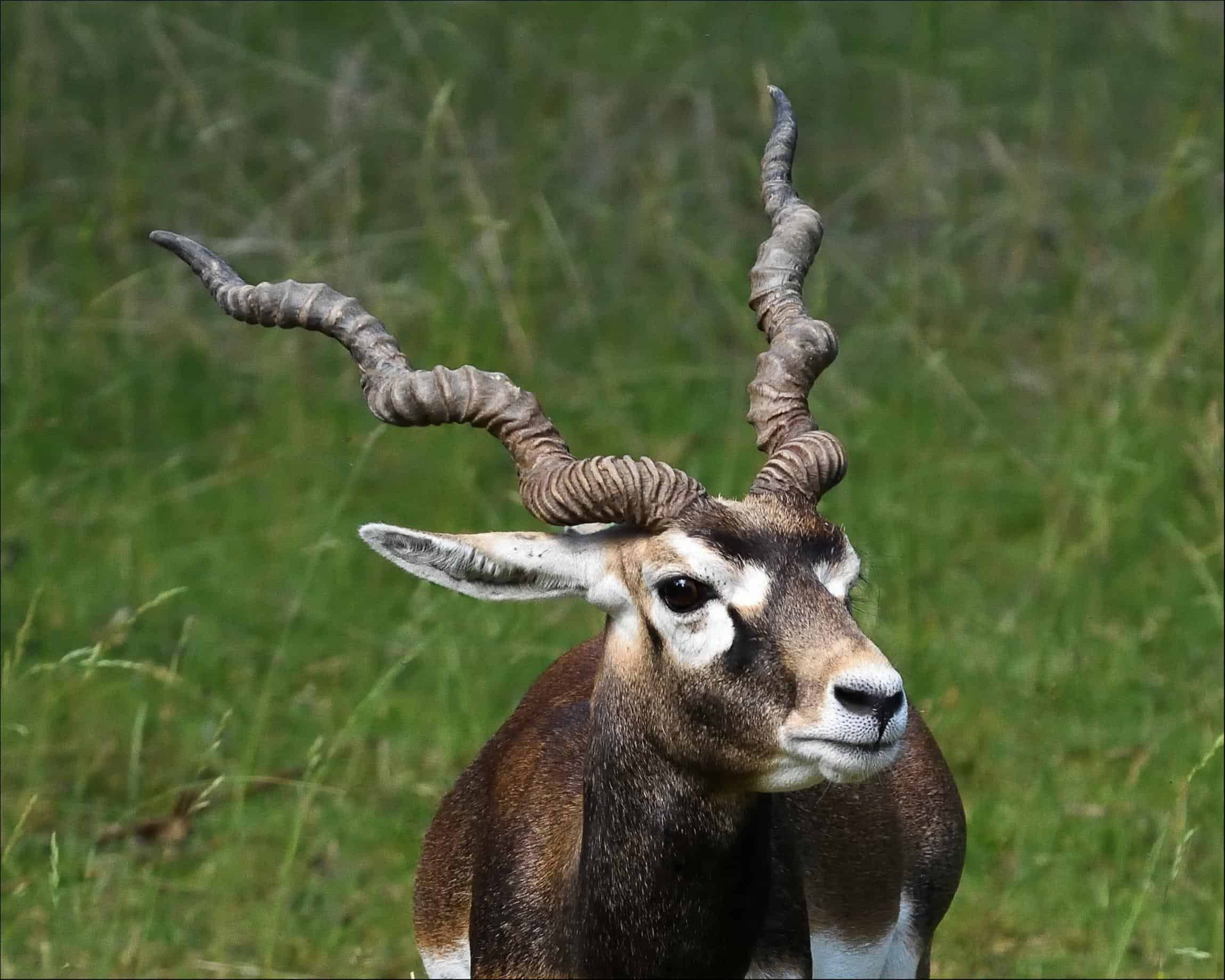
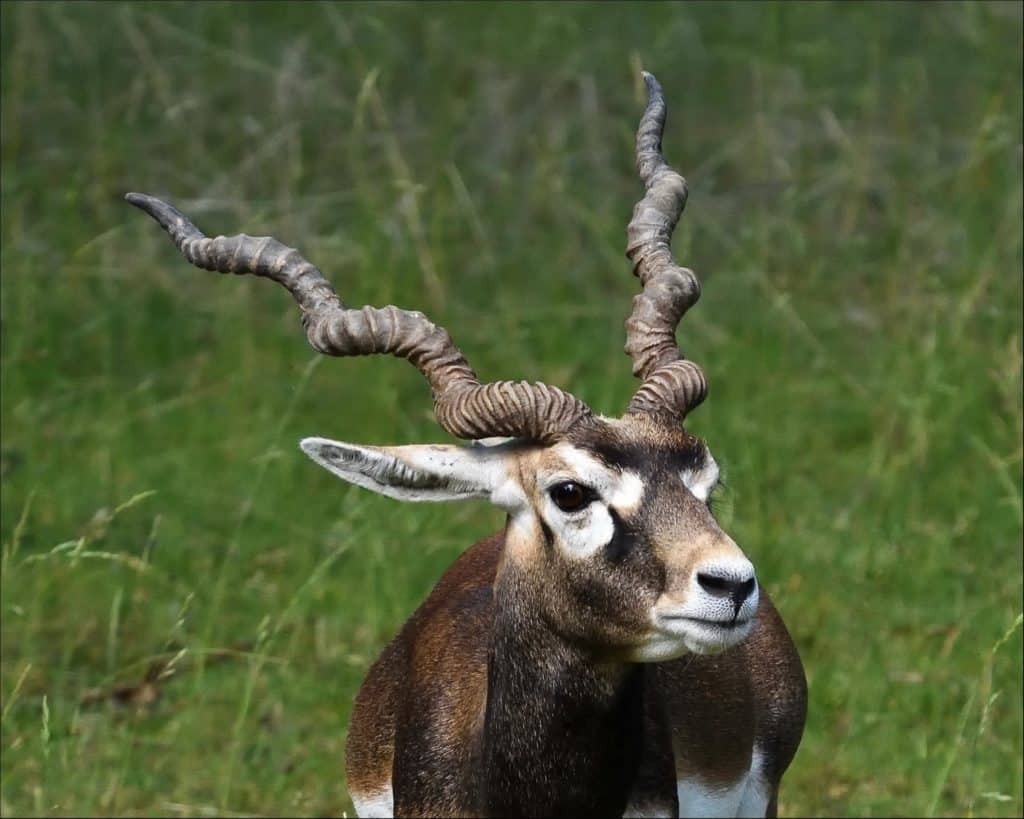
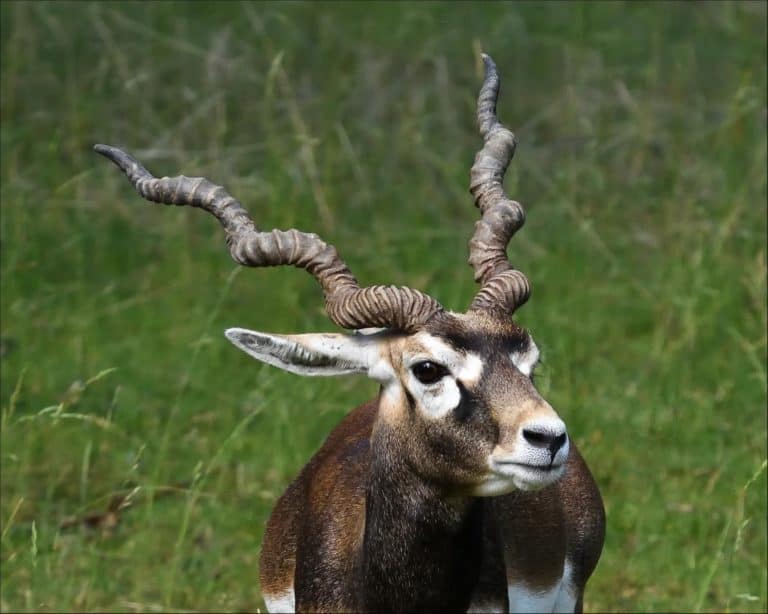
Black buck antelope

At a Glance

Family Overview This page covers the Antelope family as a group. Stats below are general traits shared across the family.
Diet Herbivore
Activity Diurnal+
Lifespan 12 years
Weight 1000 lbs
Status Not Evaluated
Did You Know?

"Antelope" isn't a formal taxon: it's a common-name catch-all for multiple bovid lineages (gazelles, oryx, impala, kudu, hartebeest, wildebeest, and more).

Scientific Classification

Family Overview "Antelope" is not a single species but represents an entire family containing multiple species.

"Antelope" is a broad common name typically applied to many slender, fast-running bovids (even-toed ungulates) with permanent, unbranched keratin horns. The term is not a single formal taxon: it informally covers multiple bovid lineages (e.g., gazelles, oryx, impala, hartebeest, kudu) and usually excludes cattle, sheep, and goats in everyday usage.

Kingdom
Animalia
Phylum
Chordata
Class
Mammalia
Order
Artiodactyla
Family
Bovidae

Distinguishing Features

  • Even-toed ungulate mammal (Artiodactyla)
  • Permanent, unbranched horns (Bovidae), often present in both sexes depending on species
  • Typically cursorial (adapted for running) with long legs and lightweight build
  • Many species show sexual dimorphism (horn size, body size, coloration)
  • Herbivorous; grazing, browsing, or mixed-feeding depending on species and season

Physical Measurements

Males and females differ in size

Height
0 in (0 in – 1 in)
2 ft 9 in (10 in – 6 ft 1 in)
Length
1 in (0 in – 2 in)
5 ft 5 in (1 ft 6 in – 12 ft 6 in)
Weight
154 lbs (4 lbs – 1.1 tons)
121 lbs (4 lbs – 1,543 lbs)
Tail Length
1 ft 4 in (2 in – 2 ft 11 in)
10 in (2 in – 2 ft 11 in)
Top Speed
56 mph
Up to 70–90 km/h

Appearance

Primary Colors
Secondary Colors
Skin Type Fur over tough ungulate skin, often short and sleek for staying cool and running fast, but longer in cold seasons. Many have scent glands (preorbital, interdigital, inguinal) and hard hooves for varied ground.
Distinctive Features
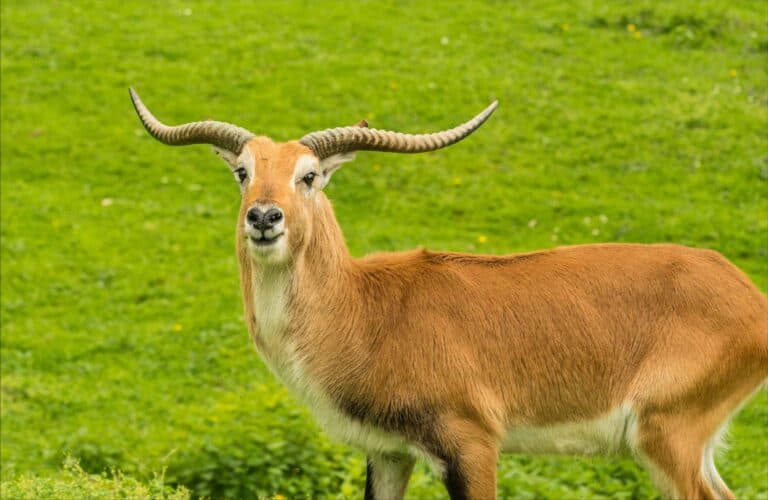
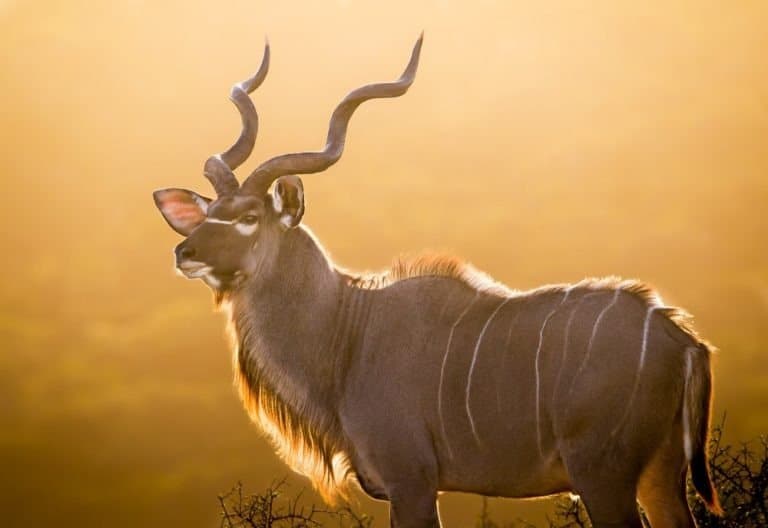
  • Key bovid trait: permanent, unbranched keratin horns (over a bony core) rather than deciduous, branched antlers (as in deer). Horn shape varies tremendously: straight 'spears' (oryx-like), ringed/lyrate (gazelle-like), tightly spiraled (kudu-like), heavy/curved (wildebeest/hartebeest-type).
  • Common mislabel: the pronghorn ('American antelope') is not a bovid (family Antilocapridae) and differs in horn structure and shedding; it is outside Bovidae.
  • Antelopes vary: many are built for running with long legs and light bodies, while some are heavy and tall (eland-type) or short and compact for thick cover; shoulder height about 30–180+ cm.
  • Mass range (smallest to largest among 'antelope' bovids in everyday usage): roughly ~3-~900+ kg (from tiny dwarf antelope to eland-type giants).
  • Body length usually about 60–300+ cm. Horns vary: under 10 cm in small species to about 100–150 cm in some oryx-like types. Shape and curve differ by group and sex.
  • Lifespan range across species (wild vs managed): commonly ~8-~25 years; smaller species and high-predation, high-turnover populations tend toward the lower end, while larger species and managed-care individuals can reach the upper end.
  • Diet/ecology (shared theme with wide variation): most are primarily herbivorous, with species spanning grazers (grass-dominant), browsers (leaf/shrub-dominant), and mixed feeders; many shift seasonally with rainfall and plant availability.
  • Habitat breadth: includes deserts and semi-deserts, savannas and open plains, montane grasslands, woodland mosaics, and some forest-edge/forest specialists-no single habitat characterizes all 'antelope.'
  • Social systems (variable): ranges from solitary/paired territorial species to small family groups to very large herds; some lineages form massive seasonal aggregations and undertake long-distance movements, while others are sedentary and strongly territorial.
  • Predator evasion generalizations: reliance on vigilance, speed/endurance, stotting/pronking in some gazelle-like species, coordinated flight in herds, and use of cover in more forest-adapted forms; anti-predator strategies vary with habitat and body size.
  • Communication: visual signals (rump patches, head markings), scent marking via glands, and vocalizations; importance and form vary across lineages.

Sexual Dimorphism

Males and females often differ across antelopes (Bovidae). Many males are larger, with thicker necks or manes and bigger horns; in some species sexes look alike. Horns may be only on males or on both. Coat color can differ.

  • More frequently bear horns (or larger/thicker/more strongly curved horns) than females; horn size/shape is often a key male trait used in dominance and mate competition.
  • Often larger body mass and heavier forequarters/neck (especially in larger, herd-living lineages); may develop manes or darker 'boss'/facial features in some groups.
  • In some species, males show darker or more contrasting coloration/markings and more pronounced scent-gland activity/territorial marking behaviors.
  • In many lineages, females are smaller/lighter with slimmer necks; in numerous species females are hornless, though in others (e.g., several oryx-like and some gazelle-like species) females also carry horns, typically slimmer/less massive on average.
  • May show subtler coloration/markings in species where males are more ornamented; in many species females are similar in color to males, reflecting the broad diversity within 'antelope.'

Did You Know?

"Antelope" isn't a formal taxon: it's a common-name catch-all for multiple bovid lineages (gazelles, oryx, impala, kudu, hartebeest, wildebeest, and more).

Size range across animals commonly called antelopes: ~2-3 kg and ~25-30 cm at the shoulder (royal antelope) up to ~400-1,000 kg and ~150-180 cm at the shoulder (eland).

Horns are permanent, unbranched keratin sheaths over bone (unlike deer antlers, which are bone and shed yearly). Horn length ranges from absent in some females/species to ~1.5-1.8 m in the longest-horned antelopes (e.g., large spiral-horned forms).

Lifespan varies widely: roughly ~6-12 years for many small antelopes, and ~15-25+ years for larger species (often longer in captivity than in the wild).

"Antelope" is often (incorrectly) used for the pronghorn of North America-pronghorns are not bovids and have a different horn structure (a shed keratin sheath over a bony core).

Ecology spans extremes: desert specialists that can go long periods without free water, to floodplain antelopes adapted to marshy ground, to forest-dwelling species built for maneuvering in dense cover.

Some of the world's biggest wildlife migrations feature antelope relatives in the broad sense (notably wildebeest/hartebeest-types), with tightly timed calving that swamps predators with more prey than they can catch.

Unique Adaptations

  • Permanent horns used for both defense and ritualized combat; shape diversity (straight, scimitar, spiral, ringed) reflects different fighting styles and habitat constraints.
  • Cursorial (running) design in many open-country forms: long limbs, light distal bones, and efficient gaits for speed and endurance; top speeds vary widely across species.
  • Water and heat management in arid-land antelopes: highly efficient kidneys, dry feces, behavioral heat avoidance, and in many bovids a carotid rete system that can help protect the brain from overheating.
  • Specialized feeding flexibility across the informal group: dedicated grazers, dedicated browsers, and mixed feeders-often shifting seasonally with rainfall and plant quality.
  • Hoof and limb specializations match habitat: broader, splayed hooves in wetland/floodplain species versus compact, hard hooves in rocky or desert species.
  • Cryptic coloration and bold signaling both occur: some rely on camouflage in woodland/shrub, while others use high-contrast rumps or facial markings for herd cohesion and alarm signaling in open plains.
  • Reproductive timing as an adaptation: synchronized birthing in some large-herd species reduces individual predation risk; in more concealed habitats, hidden "hider" young reduce detection.

Interesting Behaviors

  • Herding styles vary from solitary or paired living to huge herds; many species form sex-segregated groups outside breeding seasons, while others mix year-round.
  • Migration and nomadism occur in some grassland species (tracking rains and fresh grazing), while other antelopes maintain small home ranges in stable habitats.
  • Territoriality is common but expressed differently: some males defend resource territories (good forage or water access), others defend "display" areas, and some rely more on roaming dominance.
  • Spectacular anti-predator displays are widespread: stotting/pronking (springy leaps), zig-zag sprinting, coordinated flocking, and "freezing" or hiding by fawns in cover.
  • Mixed-species associations occur in open country, where different grazers/browsers share vigilance benefits and exploit slightly different foods.
  • Breeding systems are diverse: monogamy in a few, harem defense in others, and lek-like or clustered mating arenas in certain antelopes.
  • Communication blends posture, scent, and sound: many use preorbital/hoof glands or urine/feces marking; alarm snorts and tail flags are common-yet some forest species stay unusually quiet and cryptic.

Cultural Significance

Antelopes matter to many herding and hunting people in Africa and parts of Asia for meat, hides, and horns. They support wildlife tourism and appear in art and symbols—gazelles in poetry, spiral-horned antelopes and eland in rock art and emblems.

Myths & Legends

San (Bushmen) traditions of southern Africa give the eland profound spiritual importance; eland feature prominently in rock art and in stories tied to trance, healing dances, and the potency of the animal's life force.

Classical and medieval "unicorn" lore was influenced by real antelopes such as the oryx: when seen in profile with one horn obscured, travelers and writers sometimes described a one-horned beast of the deserts.

In South Asian cultural traditions, antelope hides are associated with ascetic practice and sacred learning; antelopes (notably the blackbuck) appear in enduring religious and literary symbolism tied to purity, restraint, and the wilderness.

Ancient Egyptian art frequently depicts gazelle hunting and gazelle offerings; over time the gazelle became a recognizable cultural motif of the Nile-adjacent deserts and royal sport.

Across many African folktale cycles, "the antelope" appears as a stock character-swift, alert, and difficult to trap-often paired with hunters or trickster figures in stories that explain why certain animals survive by speed and caution.

Conservation Status

NE Not Evaluated (informal group; not a single IUCN-assessed taxon)

Has not yet been evaluated against the criteria.

Population Unknown

Protected Under

  • CITES listings apply to multiple antelope species (varies by species; some in Appendix I or II).
  • Many countries protect native antelope species via hunting regulations, protected-species acts, and national park/reserve frameworks (coverage and enforcement vary).
  • Regional and site-based protections (protected areas, conservancies, community reserves) are central to antelope conservation, but effectiveness varies with funding, connectivity, and governance.

You might be looking for:

Impala

14%

Aepyceros melampus

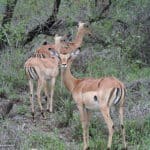
Medium-sized African antelope known for leaping; common in savannas and woodlands.

View Profile

Thomson's Gazelle

12%

Eudorcas thomsonii

Small, very fast gazelle of East African grasslands; classic 'antelope' in popular media.

Springbok

10%

Antidorcas marsupialis

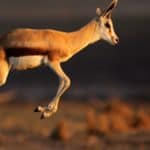
Southern African gazelle-like antelope famous for pronking displays.

View Profile

Gemsbok

9%

Oryx gazella

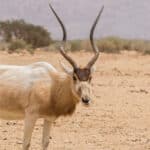
Large, striking desert antelope with long straight horns (oryx).

Saiga

7%

Saiga tatarica

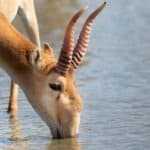
Eurasian steppe antelope with distinctive enlarged nose; critically threatened in parts of range.

View Profile

Pronghorn (often mistakenly called an antelope)

6%

Antilocapra americana

North American species in its own family (Antilocapridae), not a true bovid.

View Profile

Life Cycle

Birth 1 calf
Lifespan 12 years

Lifespan

In the Wild
3–25 years
In Captivity
8–28 years

Reproduction

Mating System Polygyny
Social Structure Harem Based
Breeding Pattern Seasonal
Fertilization Internal Fertilization
Birth Type Internal_fertilization

Behavior & Ecology

Social Herd Group: 20
Activity Diurnal, Crepuscular, Nocturnal, Cathemeral
Diet Herbivore Fresh, nutrient-rich new growth (often young grasses and/or tender forbs; varies from grazer-leaning to browser-leaning lineages)
Seasonal Migratory 932 mi

Temperament

Generally vigilant and wary; strong flight response is common, especially in open-country taxa exposed to cursorial predators.
Temperament varies with ecology: dense-cover/forest species may freeze and rely on stealth, while open-plains species tend to flee early and use endurance running.
Rutting males can be highly assertive/territorial and aggressive toward rivals; in some species males tolerate one another more outside the breeding season (notably in bachelor groups).
Many species show flexible risk-taking: increased boldness near water/limited forage or in very large herds, but heightened skittishness in small groups or heavy hunting pressure.

Communication

Alarm snorts, coughs, and nasal blows used to warn conspecifics and sometimes signal detection to predators.
Contact calls between mothers and young (bleats/meows/grunts), varying from soft close-range calls to loud separation calls.
Male rut vocalizations in some taxa (grunts, groans, bellows/roars) associated with display and competition.
Distress calls from young or captured individuals; intensity and audibility vary by species and habitat.
Scent marking is widespread (preorbital/face glands, interdigital glands, urine/feces middens in some), used for territory boundaries, mate assessment, and individual identity.
Visual signals: stotting/pronking in some open-habitat antelopes, head-high postures, horn presentation, lateral displays, and tail-flagging/white-rump flashing as alarm cues.
Ritualized sparring and horn/neck wrestling to assess rivals and reduce injury relative to full fights; escalates during rut or high-density conditions.
Tactile interactions: grooming, nose-to-nose contact, and mother-young nudging; frequency tends to increase in stable family/pair systems versus highly fluid herds.

Habitat

Biomes:
Savanna Temperate Grassland Tropical Dry Forest Tropical Rainforest Temperate Forest Mediterranean Desert Hot Desert Cold Alpine Tundra Wetland Freshwater +6
Terrain:
Mountainous Hilly Plateau Plains Valley Coastal Island Riverine Rocky Sandy Muddy +5
Elevation: Up to 18044 ft 8 in

Ecological Role

Primary consumers (grazers/browsers) and major prey base across savannas, grasslands, shrublands, and woodlands; collectively shape plant communities and energy flow, with strong variation by habitat (open-plains grazers vs woodland browsers vs arid-adapted mixed feeders).

Regulation of vegetation structure via grazing and browsing (maintaining grassland-shrub balance, influencing fire regimes through fuel consumption) Nutrient cycling and soil fertilization via dung and urine; localized enrichment at resting/latrine sites Support of food webs as key prey for large carnivores and scavengers (indirectly supporting predator populations) Seed dispersal and seed predation (via ingestion of fruits/pods and transport; some seeds pass through digestive tracts) Creation of habitat heterogeneity (grazing lawns, trampled patches) benefiting insects, birds, and other herbivores Water and mineral redistribution through movement and use of mineral licks, affecting nutrient hotspots

Diet Details

Other Foods:
Grasses Herbaceous forbs and wildflowers Leaves from shrubs and trees Young shoots and buds Legumes Fruits and pods Seeds and grain-like grass seeds Bark and twigs Succulents Cultivated crops +4

Human Interaction

Domestication Status

Wild

Antelopes (informal group in Bovidae, e.g., gazelles, impala, oryx, kudu, hartebeest, eland) are mostly wild. People interact by hunting, capturing and trading (historically for zoos, now regulated), game ranching and managed breeding (common in southern Africa), and limited taming—some eland are kept for milk/meat. Escaped non-native antelope can become feral.

Danger Level

Moderate
  • Horn-related injury (goring) during handling, rut, or when animals are cornered
  • Kicks, trampling, and crush injuries (especially from large species or in confined handling facilities)
  • Vehicle collisions in regions where antelope cross roads or occur at high densities
  • Zoonotic and livestock diseases (risk varies by region and management), and parasite transmission at the wildlife-livestock interface
  • Handling/chemical immobilization risks for people (sedation accidents, capture myopathy management complexities)

As a Pet

Not Suitable as Pet

Legality: Antelopes (Bovidae) are usually tightly controlled. Many places treat them as wildlife or exotic hoofstock—needing permits, licensed facilities, inspections. Cross-border moves need CITES, vet checks, and quarantine. Usually allowed only on farms or game ranches, not as household pets.

Care Level: Expert Only

Purchase Cost: $500 - $25,000
Lifetime Cost: $10,000 - $250,000

Economic Value

Uses:
Game ranching and live animal sales Subsistence and commercial meat production (species- and region-dependent) Trophy hunting and regulated sport hunting Ecotourism/safari wildlife viewing Hides/leather and byproducts Conservation breeding and reintroduction programs
Products:
  • venison/game meat
  • hides/leather
  • live animals for managed herds, zoos, and conservation programs
  • hunting permits/trophy fees (where legal and managed)
  • tourism revenue (park entry, guiding, lodging)

Relationships

Related Species 5

Ecological Equivalents 4

Animals that fill a similar ecological role in their ecosystem

Pronghorn
Pronghorn Antilocapra americana Often called an antelope in North America. It occupies a similar open-country grazing/browsing and high-speed cursorial niche, but is not a bovid (family Antilocapridae) and has different horn structure.
Deer
Deer Odocoileus virginianus Occupy similar herbivorous niches (browsing and grazing) and avoid predators through vigilance and flight; they typically have deciduous antlers rather than permanent keratin horns.
Wild horses and asses Equus spp. Overlap in grassland grazing, herd structure, and migration in open habitats; differ taxonomically (perissodactyls vs ruminant artiodactyls) and in digestion (hindgut fermentation vs foregut rumination).
Kangaroos and wallabies Macropodidae In some regions, they play a functionally similar role as medium-to-large grazing/browsing herbivores in open habitats. They differ strongly taxonomically (marsupials) and in locomotion (hopping).

Types of Antelope

31

Explore 31 recognized types of antelope

Springbok
Springbok Antidorcas marsupialis
Blackbuck (Indian antelope) Antilope cervicapra
Saiga antelope
Saiga antelope Saiga tatarica
Chiru (Tibetan antelope) Pantholops hodgsonii
Impala
Impala Aepyceros melampus
Thomson's gazelle Eudorcas thomsonii
Grant's gazelle Nanger granti
Dama gazelle Nanger dama
Dorcas gazelle Gazella dorcas
Mountain gazelle Gazella gazella
Addax
Addax Addax nasomaculatus
Scimitar-horned oryx
Scimitar-horned oryx Oryx dammah
Gemsbok (South African oryx) Oryx gazella
Arabian oryx Oryx leucoryx
Common eland
Common eland Taurotragus oryx
Giant eland Taurotragus derbianus
Greater kudu
Greater kudu Tragelaphus strepsiceros
Lesser kudu Tragelaphus imberbis
Sitatunga Tragelaphus spekii
Nyala
Nyala Tragelaphus angasii
Bushbuck Tragelaphus sylvaticus
Wildebeest (blue wildebeest) Connochaetes taurinus
Wildebeest (black wildebeest) Connochaetes gnou
Hartebeest
Hartebeest Alcelaphus buselaphus
Topi Damaliscus lunatus
Bontebok Damaliscus pygargus
Gerenuk Litocranius walleri
Dik-dik (Kirk's dik-dik) Madoqua kirkii
Duiker (blue duiker) Philantomba monticola
Klipspringer
Klipspringer Oreotragus oreotragus
Steenbok Raphicerus campestris

“The antelope is one of the fastest land animals in the world”

With its elegant, bounding leap, the antelope is an animal that roams the forests and plains of Africa and Asia, relying on its incredible speed and agility to elude the most fearsome predators.

However, it is important to explain that ‘Antelope’ is a blanket name that covers around 91 different subspecies around the globe. Most of these species are native to Africa. In East Africa alone, there are around 40 different subspecies of antelope.

Antelopes are revered and much appreciated even by ancient cultures, due to their speed, their long horns that are capable of causing much damage, and their beauty, eyes, and lashes that are exceptionally large.

Although very common and widespread, it still faces enormous dangers from excessive hunting and poaching.

Incredible Antelope Facts!
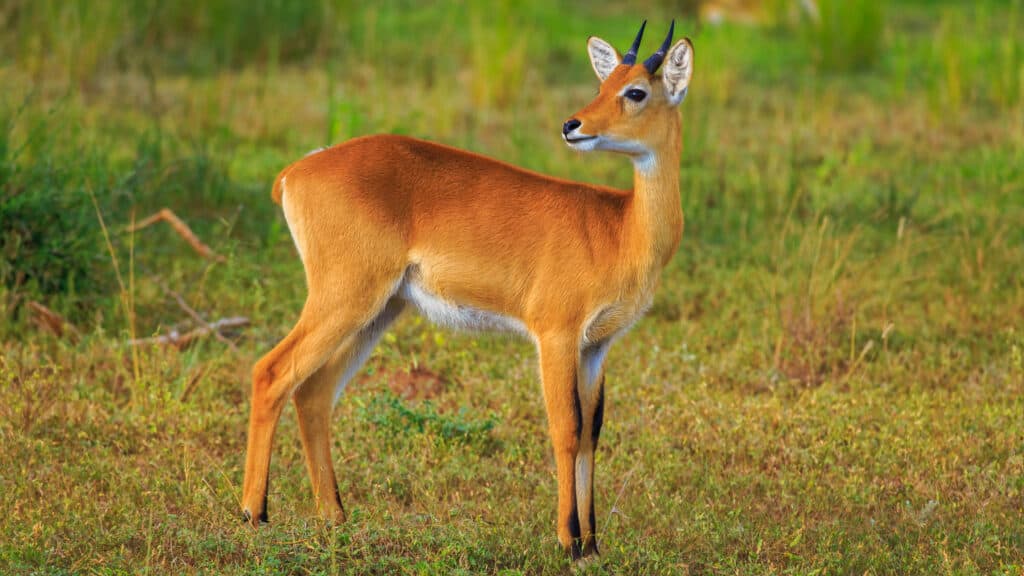
Oribi

The oribi antelope is small, with reddish fur.

  • The antelope is an animal that has played an important role in human medicine and culture. In some African traditions, it is commonly associated with the wind.
  • The antelope’s horns are composed of keratin. This is the same substance found in nails, hair, claws, and hooves. However, as opposed to deer, which the antelope is often compared to, antelopes keep the same horns for their entire lives instead of shedding them every year.
  • The structure and shape of antelope horns vary widely. Some horns form spirals, others are curved, and yet others have ridges. Experts can often distinguish antelope species based merely on the appearance of their horns.

Evolution and Origins

Antelopes are a diverse group of mammals that belong to the family Bovidae, which also includes cattle, goats, sheep, and buffalo. The first known antelopes appeared in the Miocene epoch, around 20 million years ago, in Africa and Asia.

Over time, they evolved into a wide variety of forms adapted to different environments and ecological niches, such as savannas, deserts, and mountains. Today, there are over 90 species of antelopes found throughout Africa, Asia, and parts of Europe and North America.

The horns of male antelopes are used for fighting and display, while females typically do not have horns.

Scientific Name
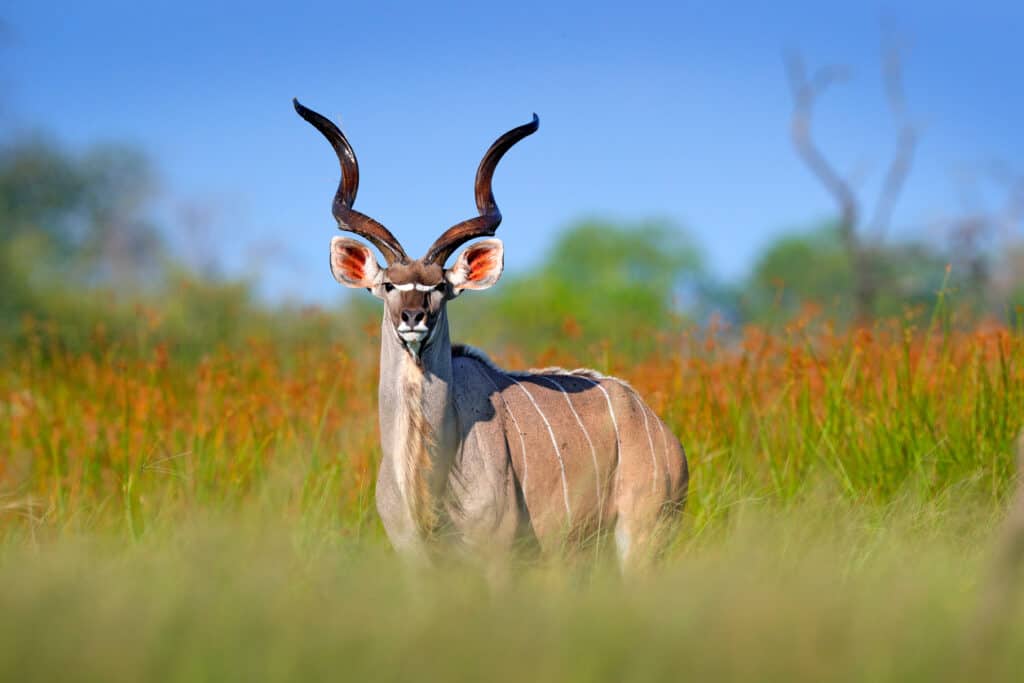
Antelope is more an informal classification than a scientific one. There is no single scientific name that includes all these animals. Instead, the name antelope describes any deer-like animal within the family Bovidae that has a similar appearance and physiology.

It is generally accepted that there are several distinct subfamilies that fall within the general term of antelope, but this is still a matter of scientific debate.

Due to the lack of precise scientific criteria, there are many different edge cases. For instance, the pronghorn, or the American antelope, is not actually a true antelope at all. The giraffe is more closely related to the pronghorn than the antelopes.

Antelopes are incredibly widespread animals. They make up approximately 91 of the 140 or so known species of the Bovidae family, which also includes sheep, goats, and domesticated cattle. More distantly, they belong to the order Artiodactyla with giraffes and pigs.

The most distinctive feature of this order is the even number of hooves. The name antelope came to us from the original Greek via Medieval Latin, but the actual meaning of the word is currently unknown.

Different Types of Antelope

Appearance and Behavior

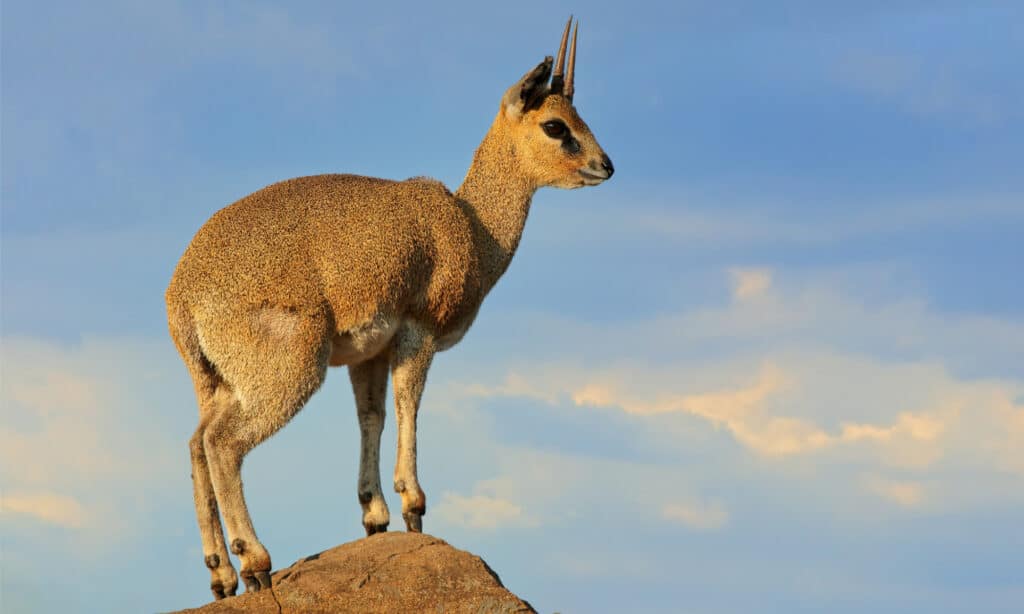
A klipspringer antelope standing on a rock

Klipspringers are 2 feet tall and weigh between 20-40 pounds.

Because of its massive diversity, it is difficult to talk about a single characteristic or appearance of the antelope. Most tend to have a deer-like appearance with spikes or corkscrew horns, but the largest members of the group almost resemble a cross between a deer and cattle.

There are generally two types of antelope, which vary by habitat. Small to medium animals such as the duikers and reedbucks are more adapted to concealed cover in forests and wetlands.

Thanks to their short legs, round back, and large rear end, they are capable of fast, sporadic movements to elude predators. These animals have camouflaged colorings or markings to provide an extra layer of defense. They tend to forage on foliage by themselves but then pair together with mates monogamously during the breeding season.

The larger antelopes, on the other hand, are built for deserts, open plains, and savannas. They graze on the grass and rely on pure speed to help them avoid predators. They tend to congregate into large herds in which a dominant male will mate with multiple females.

The size of the herd can vary quite a bit. Some herds consist of no more than 10 or 20 individuals, while other antelopes have herds of thousands, which can make for quite the spectacle on the open plains. These herds may undertake large migrations during certain parts of the year in search of new food reservoirs and grazing land.

Antelopes vary dramatically in size between the small royal antelope, which weighs a mere 4 pounds, and the truly gigantic eland, which weighs up to 1,800 pounds, or about as much as some cattle. The topi is perhaps the longest, reaching nearly 9 feet. Males tend to have larger bodies and horns than females, but in a few species, the females may lack horns altogether, or they will have smaller horns than the males.
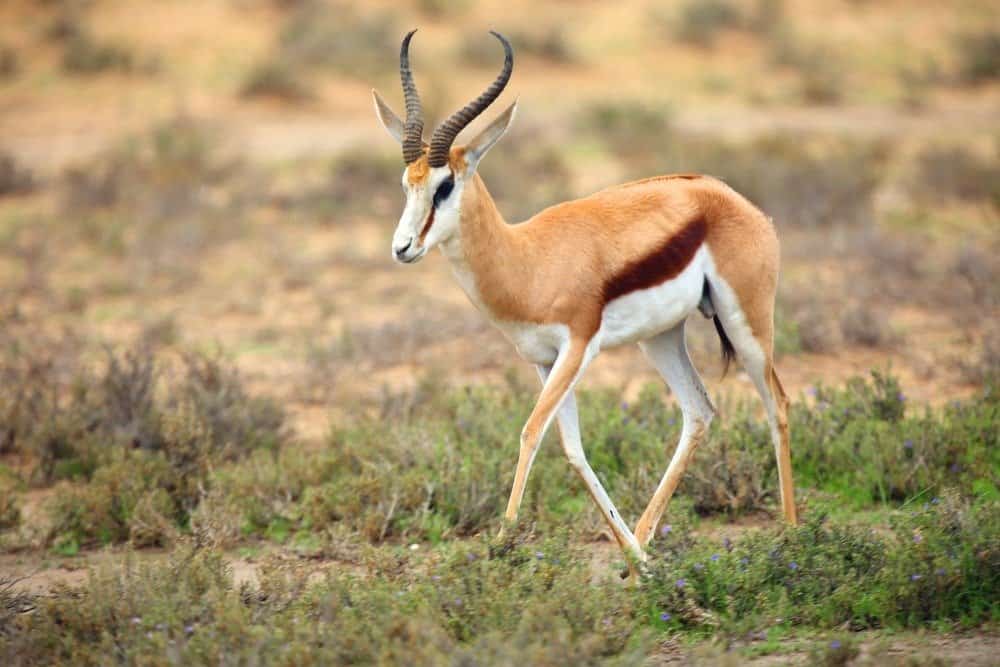
The springbok adult male in the desert. Antelope on the sand

Like many other bovids, the entire body of the antelope is remarkably well adapted for the consumption and digestion of vegetation. It has a multi-chambered stomach filled with specialized bacteria to ferment and break down the tough cellulose of the plant matter. The antelope will also regurgitate the food as cud and chew it again with its well-developed molar teeth to aid in digestion.

Another important feature is the antelope’s visual acuity. They have horizontal pupils located on the side of the head that enable them to see predators coming from the periphery of their vision. The acute sense of smell also aids in communication.

Specialized fluids secreted from scent glands around the face, knees, and hooves allow them to mark territory and communicate with other members. Antelopes also have a suite of whistles, barks, bleats, grunts, and moos. These vocalizations serve as a means of alarm calls, warnings, or greetings.

Habitat
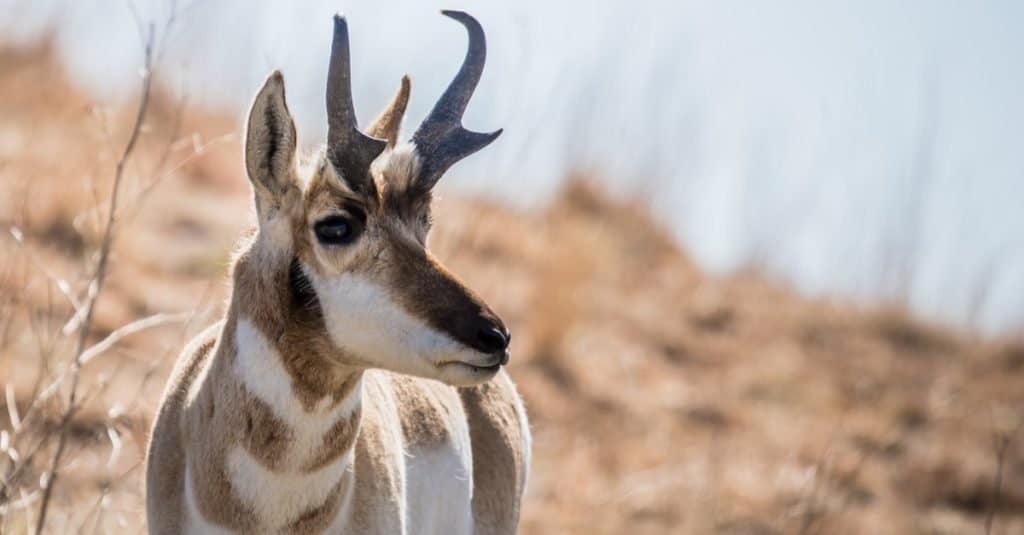
Pronghorn antelope grazing in grasslands.

Pronghorn antelope grazing in grasslands.

Approximately 71 species of antelopes inhabit the African continent. Most of the remaining antelopes are found in Asia, including the Middle East, Central Asia, and the Russian steppes. These animals were once prevalent across Europe and the Americas before going extinct there. No known antelopes have ever evolved in Australia.

As mentioned previously, antelopes tend to live exclusively in either forests or open plains, rarely mixing the two. Habitation dictates the survival strategies of each species, from body size to diet to social organization.

Diet
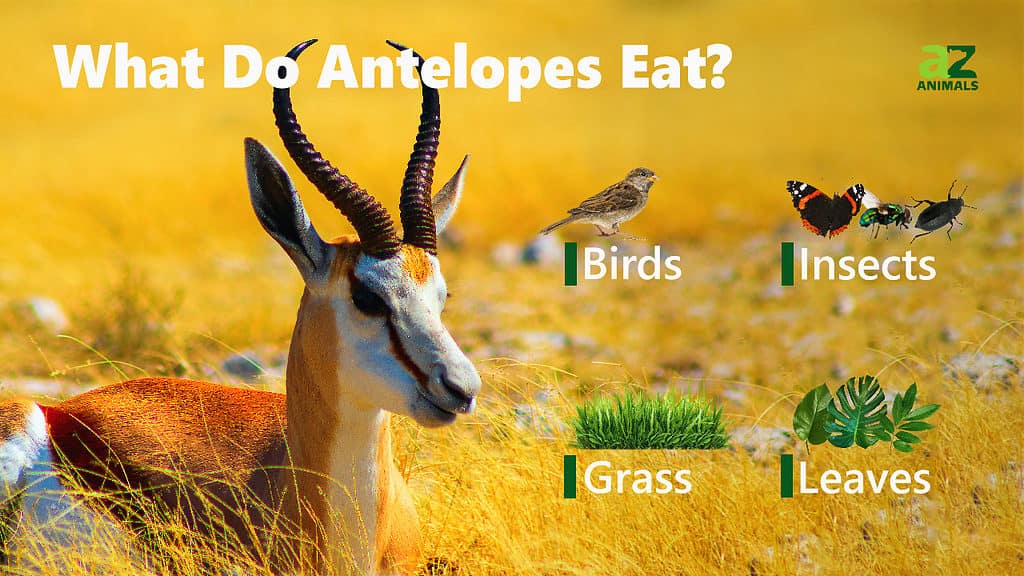
The antelopes feed almost exclusively on vegetation. The only exception is the duiker (a small- or medium-sized antelope located in forests), which supplements its herbivorous diet with small amounts of meat from mammals, insects, and birds.

There are generally two types of foraging strategies: browsers and grazers. Browsers tend to feed on leaves, seeds, fruits, flowers, and bark close to the ground. Grazers tend to consume grasses and similar vegetation.

The gerenuk and dibatags have a unique strategy of standing on their hind legs to reach leaves in tall trees. It takes an enormous amount of time to break down the plant matter into a usable form, but this strategy is highly beneficial since foliage and grazing land can support a large number of antelopes at a single time.

These animals spend a great deal of their time searching for and feeding on food. In order to find adequate sources, some antelopes have cleverly offloaded the work to other animals. They will actively follow bird flocks, monkey troops, or migrating zebras in search of prime foraging grounds.

For a complete analysis of antelope diets, make sure to read ‘What Do Antelopes Eat?’

Predators and Threats
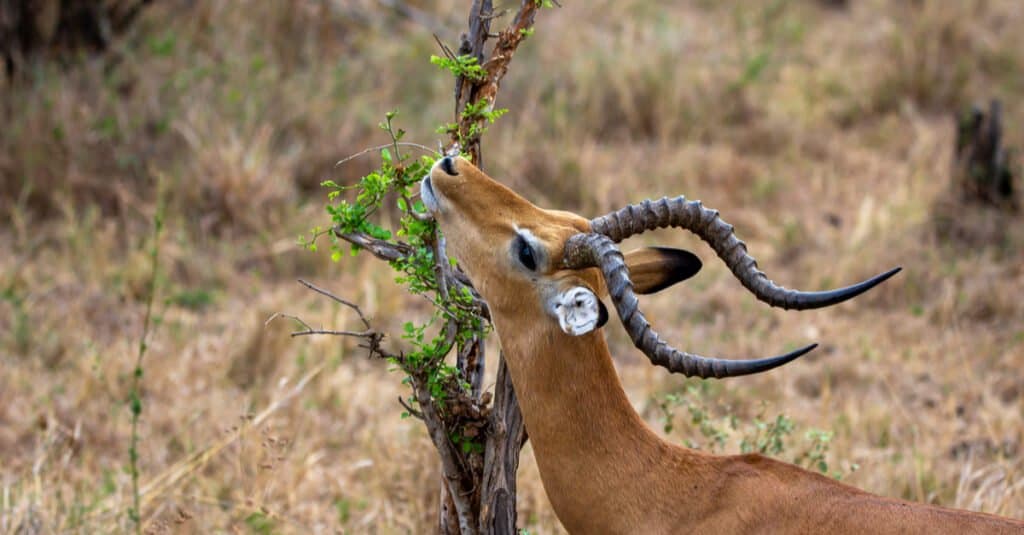
What Do Antelopes Eat - Gazelle Eating

Antelopes are some of the most common prey animals in Africa. They make a tempting meal for cheetahs, lions, hyenas, civets, pythons, and large birds. Because of the antelope’s incredible speed, many predators prefer to sneak up on them and pick off individual stragglers. The cheetah, as one of the few animals fast enough to catch them, relies on its pure speed. These chases often make for spectacular footage in nature documentaries.

These animals have a number of strategies to deal with a dangerous predators, the most important of which is their speed and agility. If the animal cannot evade its pursuer outright, then it may try to hide in water or foliage. Some species will actually freeze in place to avoid being noticed. If everything else fails, then the antelope may stand its ground and defend itself with its sharp horns.

Antelopes are hunted by humans for both their horns and their meat. Some cultures have local taboos against antelope hunting. However, the animal can still become accidentally ensnared in traps. Habitat loss is another significant threat to many types of antelopes.

Reproduction, Babies, and Lifespan

Antelopes pursue so many different courtship and mating rituals that it is difficult to discuss all of them in detail. Breeding strategies can vary between full monogamy and a dominant breeding pair within a herd. In other species, males compete with each other every season for the right to breed with females.

Once the female is impregnated, gestation lasts anywhere between four and nine months. The mother produces only a single calf at a time, while twins are relatively rare. Because the calf is highly vulnerable at birth, they generally have two different strategies to protect the young. Most antelopes prefer to hide the calf in a concealed location, while the mother rejoins the herd or hunts on its own.

In the second strategy, the calf is expected to begin traveling immediately with the herd from almost the moment it is born. In exchange, the herd provides additional protection for the young calf.

The age of maturity varies widely between species. Some of these animal species come of age in as little as six months. Some take as long as eight years to fully develop. Females usually mature faster than males on average. Lifespan likewise can vary between three years and 28 years based on the species.

Population

According to the IUCN Red List, around a quarter of antelope species are currently threatened by extinction, and several have already gone extinct in the 19th and 20th centuries. But even among those groups in good health, many appear to be in decline and could face pressure in the future due to hunting and declining habitats. The exact population numbers are not known.

Antelopes in the Zoo

The San Diego Zoo Safari Park has perhaps the largest collection of these animals in the United States, including springboks, lechwes, waterbucks, sables, roan antelope, gazelles, white-bearded gnu (a type of wildebeest), blesboks, and many more.

One of the most important denizens is a breeding herd of saigas, a critically endangered antelope that inhabits the Eurasian steppe. The zoo has bred more than 100 saiga calves in captivity and also assists with conservation efforts across Russia.

If you don’t live near San Diego, then there are still several ways to see live antelopes. The Little Rock Zoo in Arkansas contains three species of antelopes: the yellow-backed duiker, the greater kudu, and the dik-dik. The Buffalo Zoo contains the roan antelope and the addax. The Saint Louis Zoo has the addax, the lesser kudu, Speke’s gazelle, and the gerenuk. Finally, the Smithsonian’s National Zoo contains the dama gazelle and the scimitar-horned oryx.

Antelopes and Humans

Antelope hunting is very popular in regions that are their natural habitat. In fact, many people have made antelope hunting into business by creating farms. Some claim to have adapted sustainable practices and conscious hunting practices.

It is essential to note that out of 91 species of antelope 25 are in various stages of conservation by the IUCN; 9 Species have been classified as endangered, 9 as vulnerable, and 5 as critically endangered. IUCN also says that 70% of the species are under threat of extinction and 62% of species are rapidly declining in numbers.

Meat

Although not as popular as venison, deer, or buffalo, the meat of antelope is known for being lean and healthy. The taste of the meat largely depends upon how fast the hunter can skin, remove the entrails and cook the meat. According to seasoned hunters, if too much time passes before the animal is processed, the meat does not taste good.

Antelope meat has a mild sage-like flavor and is granular and sweet in taste. It is almost the same as venison and just as lean. The best way to cook antelope meat is to cook it over the fire, like grilling, roasting, or medium-rare in the oven. Overcooked meat becomes dry and tough to chew.

Horn

Antelope are killed more for the pursuit of their horns than as a game. In many cultures, the horns have been used for medicinal and mystical purposes. In ancient times natives of Africa, America, and Asia used the horns for various purposes. In India and China, deadly weapons were fashioned by tipping the horns with metal, parrying shields were reinforced, and they can also be turned into knives and other striking weapons.

Some cultures believed that the antelope horns are an effective aphrodisiac. They were hunted down for the sole purpose of collecting the horns, which were ground into powder form and consumed. The Saiga males have fallen prey to this belief and are now termed critically endangered with around 50,000 of them left in the world.

Antelope and Heraldry

Antelopes are widely used in heraldry, however, their forms are altered from their natural form. They are seen to have the body of a stag, the tail of a lion, and serrated horns. They have also been given small tusk which is placed with a snout. The heraldry was designed by Europeans during the middle-ages, who had no idea what an antelope really looked like and imagined it as a monster hunter.

View all 326 animals that start with A
How to say Antelope in ...
Danish
Alcelaphinae
German
Kuhantilopen
English
Alcelaphinae
Spanish
Alcelaphinae
French
Alcelaphinae
Dutch
Koeantilopen
Portuguese
Alcelafíneos

Sources

  1. David Burnie, Dorling Kindersley (2011) Animal, The Definitive Visual Guide To The World's Wildlife / Accessed December 5, 2008
  2. Tom Jackson, Lorenz Books (2007) The World Encyclopedia Of Animals / Accessed December 5, 2008
  3. David Burnie, Kingfisher (2011) The Kingfisher Animal Encyclopedia / Accessed December 5, 2008
  4. Richard Mackay, University of California Press (2009) The Atlas Of Endangered Species / Accessed December 5, 2008
  5. David Burnie, Dorling Kindersley (2008) Illustrated Encyclopedia Of Animals / Accessed December 5, 2008
  6. Dorling Kindersley (2006) Dorling Kindersley Encyclopedia Of Animals / Accessed December 5, 2008
  7. David W. Macdonald, Oxford University Press (2010) The Encyclopedia Of Mammals / Accessed December 5, 2008
  8. Britannica / Accessed October 26, 2020
Rebecca Bales

About the Author

Rebecca Bales

Rebecca is an experienced Professional Freelancer with nearly a decade of expertise in writing SEO Content, Digital Illustrations, and Graphic Design. When not engrossed in her creative endeavors, Rebecca dedicates her time to cycling and filming her nature adventures. When not focused on her passion for creating and crafting optimized materials, she harbors a deep fascination and love for cats, jumping spiders, and pet rats.
Connect:

Thank you for reading! Have some feedback for us?


Antelope FAQs (Frequently Asked Questions)

An antelope is one of many horned herbivorous deer-like species with even-toed hooves. There is no single scientific classification of antelopes, but rather multiple distinct groups.