
A
Species Profile

Appenzeller Dog

Canis lupus familiaris

Ring-tailed Swiss farm guardian
Vince Scherer/Shutterstock.com

Appenzeller Dog Distribution

Click a location to explore more animals from that region

Origin Location

This map shows the native origin of the Appenzeller Dog. As a domesticated species, they are now found worldwide.

Loading map...

Size Comparison

Human 5'8"
Appenzeller Dog 1 ft 9 in

Appenzeller Dog stands at 31% of average human height.

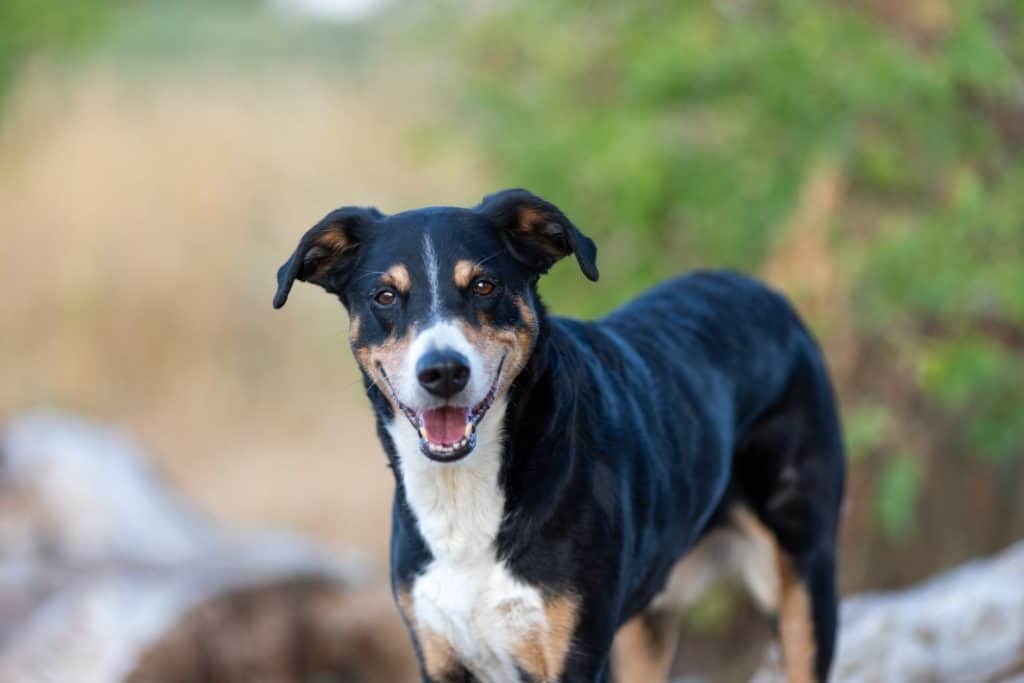
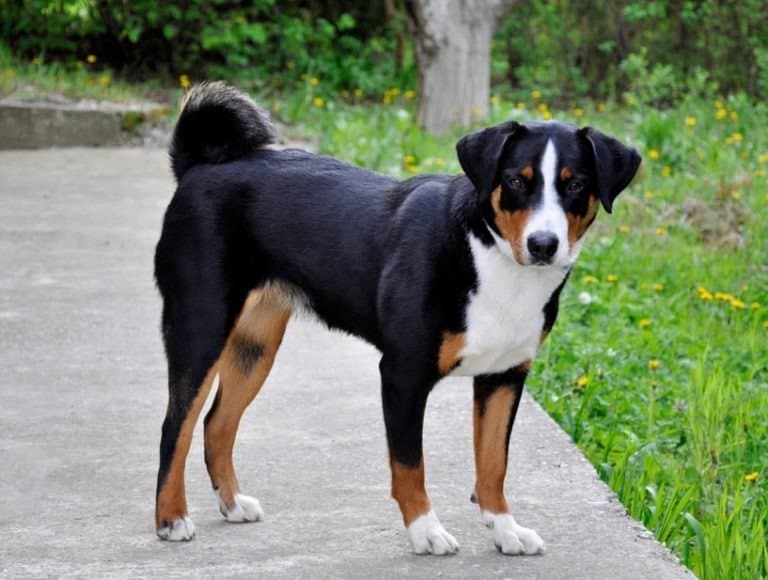
Appenzeller Sennenhund. The dog is standing in the park in spring. Portrait of a Appenzeller Mountain Dog

At a Glance

Domesticated
Also Known As Appenzeller, Appenzeller Sennen, Appenzell Cattle Dog, Appenzeller Cattle Dog, Bouvier d'Appenzell
Diet Omnivore
Activity Diurnal+
Lifespan 5 years
Weight 32 lbs
Status Not Evaluated
Did You Know?

One of Switzerland's four Swiss mountain dog breeds, alongside the Bernese Mountain Dog, Entlebucher Mountain Dog, and Greater Swiss Mountain Dog.

Scientific Classification

The Appenzell Mountain Dog is a breed of the domestic dog, classified as Canis lupus familiaris (a domesticated form of the gray wolf, Canis lupus).

Kingdom
Animalia
Phylum
Chordata
Class
Mammalia
Order
Carnivora
Family
Canidae
Genus
Canis
Species
Canis lupus familiaris

Distinguishing Features

  • Medium-sized, athletic build; agile herding-type working dog
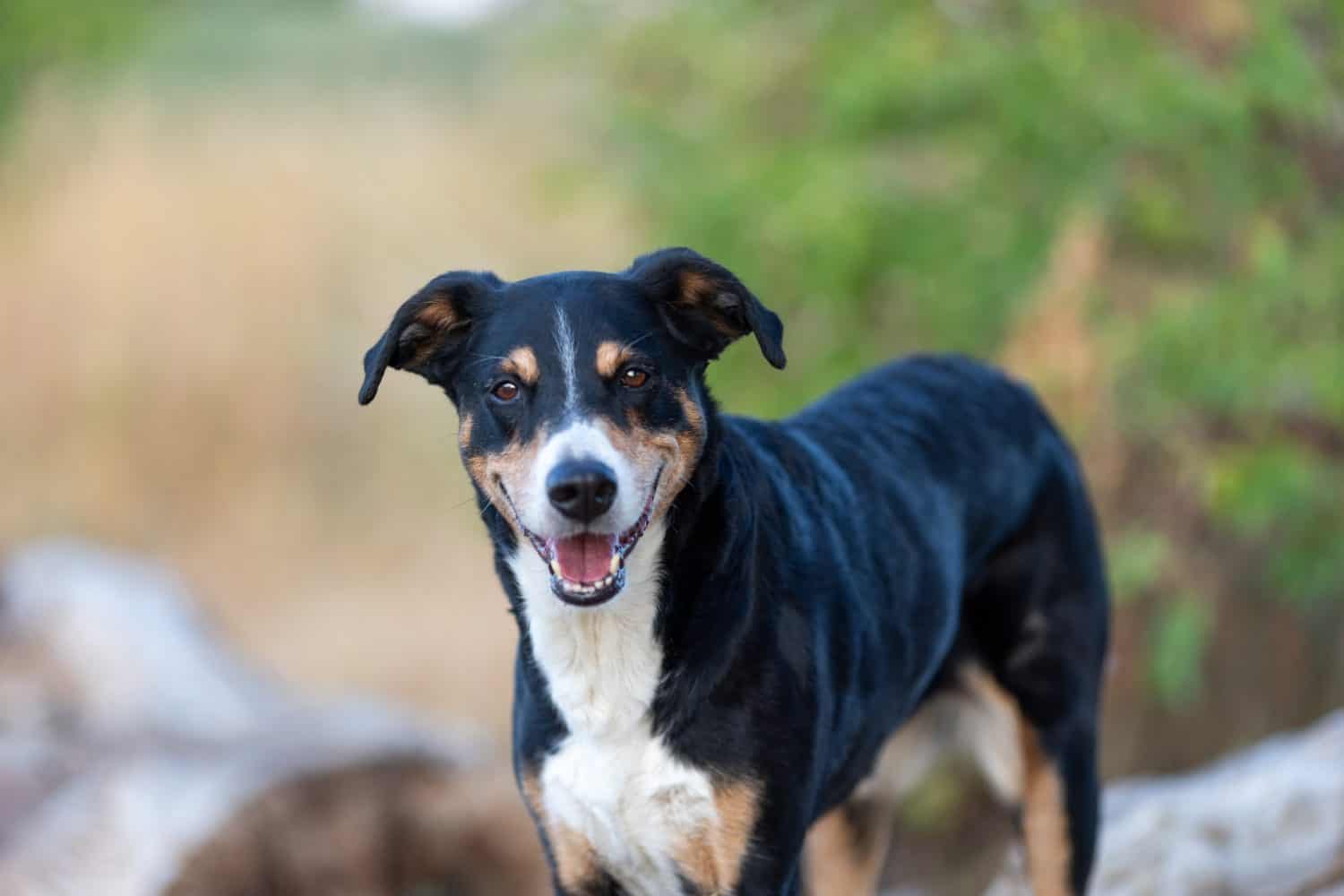
  • Short, dense double coat; typically tricolor (black or brown with tan markings and white)
  • High-set, tightly curled tail carried over the back (ring tail)
  • Alert, energetic temperament; traditionally used as a cattle driver and farm guardian

Physical Measurements

Males and females differ in size

Height
♂ 1 ft 9 in (1 ft 8 in – 1 ft 10 in)
♀ 1 ft 8 in (1 ft 8 in – 1 ft 9 in)
Length
♂ 3 ft 2 in (3 ft – 3 ft 5 in)
Weight
♂ 66 lbs (55 lbs – 77 lbs)
♀ 55 lbs (49 lbs – 62 lbs)
Tail Length
♂ 1 ft 2 in (1 ft 1 in – 1 ft 4 in)
Top Speed
30 mph
quick, agile, not a sprinter

Appearance

Primary Colors
Secondary Colors
Skin Type Canine skin with a short, dense double coat (weather-resistant topcoat with insulating undercoat). Skin is generally tight and well-pigmented; routine checks recommended due to active working lifestyle.
Distinctive Features
  • Distinctive tricolor coat (black or brown base with tan markings and white blaze/chest/feet), plus a high-set tail carried curled in a ring over the back.
  • Swiss origin (Appenzell) and one of the four Swiss mountain dog breeds; historically used for cattle driving/herding and farm guarding (alert, vocal watchdog tendency).
  • Key identifier vs many other domestic dog breeds: a high-set, tightly curled 'ring tail' carried over the back, especially when alert or moving.
  • Short coat distinguishes it from the Bernese Mountain Dog (which has a longer, silkier coat) while sharing the tricolor Swiss mountain dog look.
  • Athletic, agile, medium-sized working build with strong drive for movement and tasks; typically confident, lively, and quick-reacting.
  • Care requirements (breed-typical): high daily exercise needs and structured mental work (herding-style games, obedience, scentwork); bored individuals may become noisy or destructive.
  • Grooming: low-to-moderate coat maintenance-weekly brushing is usually sufficient; expect heavier seasonal shedding due to the undercoat.
  • Training/management: benefits from early socialization and consistent training; strong guarding/herding instincts may lead to nipping/heel-chasing or territorial alerting if not channeled.
  • Common health concerns seen in the breed (not universal): hip dysplasia, elbow dysplasia, patellar luxation, and eye disorders (e.g., progressive retinal atrophy in some lines).
  • General large/active-dog risk management: maintain lean body condition, use joint-friendly conditioning, and monitor for bloat/GDV risk signs (deep-chested dogs can be susceptible; discuss feeding strategy with a veterinarian).

Sexual Dimorphism

Typical for domestic dogs: males are usually slightly taller/heavier with more robust head/neck; females often appear a bit finer-boned. Coat color/pattern is similar in both sexes.

♂
  • Slightly larger overall frame; broader head and chest are common.
  • More pronounced neck/forequarters musculature in well-conditioned working males.
♀
  • Slightly smaller, more refined build on average.
  • May appear lighter in bone and narrower through chest/neck while retaining the same tricolor patterning.

Did You Know?

One of Switzerland's four Swiss mountain dog breeds, alongside the Bernese Mountain Dog, Entlebucher Mountain Dog, and Greater Swiss Mountain Dog.

Best-known identifier: a high-set tail carried tightly curled over the back ("ring tail").

Traditionally used as a "drover" dog-moving cattle along roads and between pastures-plus farm guarding.

The classic coat is short, dense, and tricolor: black (or Havana-brown) with rust and white markings.

Compared with many mountain dogs, it's notably agile and quick, built for steep terrain and all-day work.

A famously vocal, alert breed-its barking historically served as an early-warning system on isolated farms.

In Switzerland it's considered a regional Appenzell symbol of hardy rural life and mountain farming.

Unique Adaptations

  • Compact, athletic build suited to rugged Alpine foothills-more nimble than heavier mountain-dog relatives, reflecting its droving role.
  • Short, dense double coat balances weather resistance with freedom of movement for active work; less prone to snow clumping than long coats.
  • Ring tail carriage may help with balance and signaling during movement; also a distinctive breed hallmark used in identification.
  • High stamina and efficient gait for sustained trotting-useful for road droving and farm-to-pasture travel.
  • Domestic dog flexibility: highly responsive to human cues compared with its gray wolf ancestor, enabling complex farm tasks and household integration.

Interesting Behaviors

  • High alertness and "patrol loops": many will naturally circle property boundaries, checking gates and sightlines.
  • Confident driving style with livestock: tends to use quick flanking movements and assertive forward pressure rather than slow gathering.
  • Watchdog vocalizing: frequent "announce and assess" barking-often followed by moving closer to investigate.
  • Shadowing and task-seeking: thrives when given jobs (carrying, learning routines, structured herding-style games).
  • Strong motion sensitivity: may instinctively chase moving objects (bikes, runners) without training outlets.
  • Socially bold with familiar people, reserved with strangers-often positioning itself between family and newcomers.
  • Problem-solving persistence: will test barriers, doors, and routines to reach a goal (typical of working dogs).

Cultural Significance

Appenzeller Sennenhund (Appenzell Mountain Dog) (Canis lupus familiaris) comes from Appenzell in northeastern Switzerland. It works in Alpine farming—herding cattle, helping dairy farms, guarding remote homes—and is part of herding culture, valued as smart, alert, and reliable in mountains.

Myths & Legends

Traditional accounts of the Appenzeller Mountain Dog emphasize its role as an all-purpose Swiss farm dog-especially a vigilant watchdog that barks readily to alert to strangers and a capable cattle herder used in Alpine farming.

The name "Swiss mountain dog" is told as coming from Alpine herdsmen: the Appenzeller Sennenhund (Appenzell Mountain Dog) was the herdsman's dog, moving cattle up to high pastures in summer and back in autumn.

In Appenzell stories, the Appenzeller Sennenhund (Canis lupus familiaris) is praised for a loud bark and brave farm guarding, called 'the dog that never let the farm be surprised.'

Conservation Status

NE Not Evaluated

Has not yet been evaluated against the criteria.

Population Stable

Life Cycle

Birth 6 pups
Lifespan 5 years

Lifespan

In the Wild
3–8 years
In Captivity
11–14 years

Reproduction

Mating System Monogamy
Social Structure Managed Domestic
Breeding Pattern Serial
Fertilization Internal Fertilization
Birth Type Managed_selective

For Appenzeller Sennenhund (Appenzell Mountain Dog), people usually choose and pair a sire and dam for each litter. Breeding uses internal fertilization, is planned and temporary, with care focused on the mother; health screens guide mate choice.

Behavior & Ecology

Social Pack Group: 4
Activity Diurnal, Crepuscular
Diet Omnivore High-protein meat-based foods (commonly beef or chicken).

Temperament

Energetic, athletic, high work-drive; thrives with daily vigorous exercise plus structured tasks (obedience, herding-style games, scent work).
Alert, watchful, and vocal; predisposed to guarding/territorial barking-requires training for a reliable "quiet" cue and controlled greetings.
Intelligent, fast-learning, can be independent and willful; best with consistent, fair handling and clear boundaries (may test limits if bored).
Generally loyal and affectionate with family; can be reserved with strangers-early, positive socialization is important to reduce suspicion/reactivity.
Herding-influenced behaviors: may chase moving objects, try to gather/steer children or other pets; needs impulse-control training.
Can get injuries from too much exercise without conditioning. Watch for hip dysplasia, other orthopedic and eye problems (progressive retinal atrophy), and bloat—feed measured meals, avoid hard exercise after eating, keep lean, vet checks.

Communication

Sharp alert barking (notable breed trait); may escalate when perceiving movement near territory.
Growls/woofs used for boundary-setting with strangers or other dogs.
Whines and high-pitched yips during excitement, frustration, or anticipation Work/play
Body blocking/circling to control movement (herding-style communication); may use light heel-nipping if not trained out.
Intense stare, forward posture, and quick directional feints to influence people/animals.
Tail/ear carriage and facial tension to signal arousal level; often transitions rapidly from neutral to alert.
Scent investigation and marking during patrol-like behavior around home/yard.
Mouth-based carrying and gentle grabbing during play; needs appropriate outlets (tug, retrieve) and bite-inhibition training.

Habitat

Mountain Alpine Meadow Agricultural/Farmland Suburban Urban Woodland Deciduous Forest Coniferous Forest Shrubland Steppe Prairie Wetland Lake Coastal +8
Biomes:
Temperate Forest Alpine Temperate Grassland Boreal Forest (Taiga) Mediterranean Desert Hot Desert Cold Wetland Freshwater Marine Tropical Rainforest Tropical Dry Forest Savanna +7
Terrain:
Mountainous Hilly Valley Plateau
Elevation: Up to 11482 ft 11 in

Ecological Role

Domesticated commensal omnivore and human-managed working dog (herding/guarding).

Herding and livestock management support (reduces losses, improves grazing control) Property/farm guarding and deterrence of wildlife predators Incidental pest control of small mammals around human settlements Scavenging of human-associated food waste when unmanaged (a role that is beneficial in some contexts but can be harmful to wildlife if it promotes roaming/feral behavior) Companionship and working partnership that enables human land-use practices

Diet Details

Main Prey:
Poultry Cattle Lamb and goat Fish Small mammals Eggs
Other Foods:
Cooked grains and starches Vegetables Fruits Dietary fiber sources Grasses

Human Interaction

Domestication Status

Domesticated

Domestic dogs came from gray wolves long ago. The Appenzeller Mountain Dog is a Swiss landrace from the Appenzell region, made a breed in the late 19th to early 20th century. It was an all-purpose farm dog for herding cattle, guarding home and livestock, and pulling small carts, and still has strong work drive.

Danger Level

Moderate
  • Potential for defensive/territorial aggression if under-socialized, especially toward strangers entering the home/yard (guard breed tendencies).
  • Herding behaviors (chasing, nipping at heels) can cause minor injuries, particularly with running children or pets if not trained.
  • High energy and strength can lead to accidental knocks/strains during play or leash pulling.
  • Vocal alerting/barking can create nuisance conflicts with neighbors if needs aren't met.

As a Pet

Suitable as Pet

Legality: Generally legal to own as a pet in most jurisdictions; subject to standard dog ownership rules (licensing, leash laws, vaccination, nuisance/barking ordinances, housing/insurance restrictions, and rare breed-specific rules that can vary by city/country).

Care Level: Experienced

Purchase Cost: $1,200 - $3,000
Lifetime Cost: $18,000 - $45,000

Economic Value

Uses:
Working livestock management Property and livestock guarding Companion animal market Dog sport and training services Breeding and show/club activities
Products:
  • Herding/droving labor (farm utility)
  • Guarding/deterrence value (home/yard)
  • Stud services and puppy sales (limited, regionally variable)
  • Training, sport participation, and related services (classes, trials)

Relationships

Related Species 6

Ecological Equivalents 6

Animals that fill a similar ecological role in their ecosystem

Entlebucher Mountain Dog
Entlebucher Mountain Dog Canis lupus familiaris Closest Swiss Sennenhund-type in role: a cattle-driving and farm utility dog. Generally smaller and often more intense/quick, whereas the Appenzeller is typically more all-around in watch/drive duties with strong vocal guarding.
Bernese Mountain Dog
Bernese Mountain Dog Canis lupus familiaris Shares a Swiss farm niche as draft animals, guardians, and family farm companions. The Bernese is heavier, more draft-oriented and less agile, while the Appenzeller is typically lighter, faster, and more reactive and vigilant as a farm watchdog and drover.
Greater Swiss Mountain Dog
Greater Swiss Mountain Dog Canis lupus familiaris Shared heritage as Swiss mountain farm dogs. The Greater Swiss is more massive and focused on draft work and guardianship, whereas the Appenzeller is more athletic, higher-drive, and commonly used for active herding and property alerting.
Rottweiler
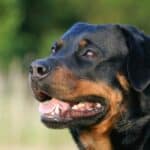
Rottweiler Canis lupus familiaris Comparable drover/guardian working niche: historically moved livestock and protected goods. The Appenzeller tends to be more agile, more vocal, and often more environmentally sensitive and alert on a farmstead.
Australian Cattle Dog
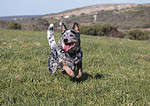
Australian Cattle Dog Canis lupus familiaris Occupies a similar high-drive stock-working niche: both breeds are energetic and intelligent. The Appenzeller is typically more watch-oriented and biddable for multi-purpose farm tasks, while the Australian Cattle Dog is specialized for sustained heeling work and has greater heat-tolerant endurance.
Domestic dog
Domestic dog Canis lupus familiaris Appenzeller Sennenhund (Appenzell Mountain Dog) is a Swiss alpine farm dog used for cattle driving and guarding. It is tri-colored with a curled tail, very energetic, and barks a lot. Requires daily exercise, training, and socialization. Watch for hip, knee, and eye problems, and for bloat.

The Appenzeller Sennenhund, also called an Appenzeller, is a colorful, energetic dog originally bred to herd cattle. In fact, they are categorized by the American Kennel Club as herding dogs. They are bright, affectionate canines with a strong instinct to protect their territory. Appenzellers are known as mountain dogs. So, it’s no surprise they are part of rescue teams that search for travelers who become lost or injured in the Swiss Alps.

The pronunciation of the Swiss word Appenzeller is easy because it sounds just like it’s spelled. Sennen sounds just like its spelling, while the pronunciation of hund sounds like ‘wound.’

The history of this breed dates back to 1853, when these dogs were in charge of herding cattle on farms in Appenzell, Switzerland. They ran along, nipping at the heels of cows that strayed from the herd to get them back with the group. The intelligence, agility, and strength of the Appenzeller combined to make it a loyal worker and companion for a farmer.

An Appenzeller that’s socialized as a puppy is going to be a fun, devoted member of a family’s household.

3 Pros and Cons of Owning an Appenzeller Sennenhund

Pros!Cons!
A great watchdog
An Appenzeller has a loud bark and is always on alert for strangers on the property.
Lots of exercise
This dog is high-energy and needs vigorous exercise every day to keep it in good health.
Easy to train
The intelligence of this mountain dog allows it to learn obedience lessons fairly quickly.
Wary of visitors
Appenzeller takes a bit of time to warm up to people visiting the household. This may be inconvenient for a family that has lots of friends and relatives over.
A long life
These mountain dogs have a lifespan of 12 to 15 years, but have been known to live much longer.
A loud bark
If a family likes a quiet household, the booming bark of an Appenzeller may mean this dog is not the right fit for their home.
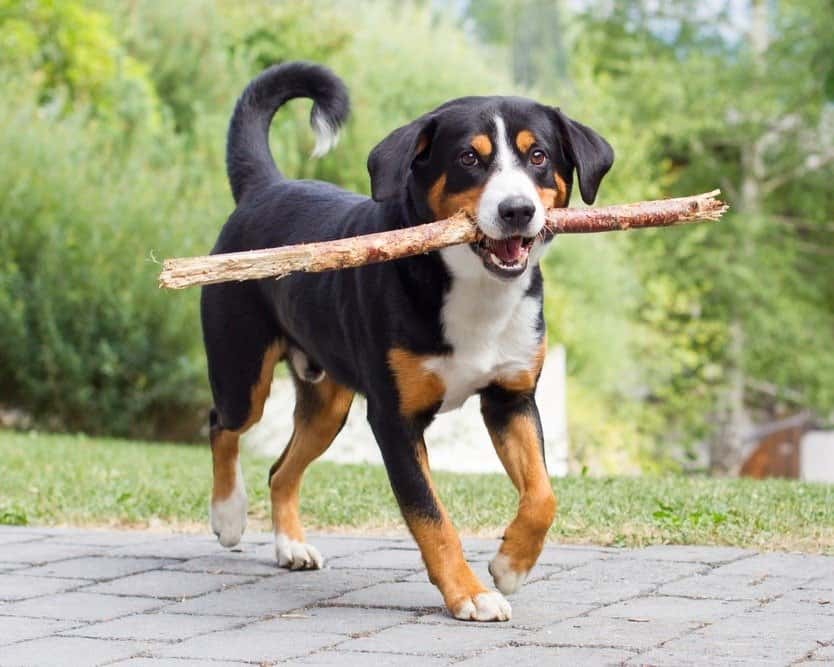
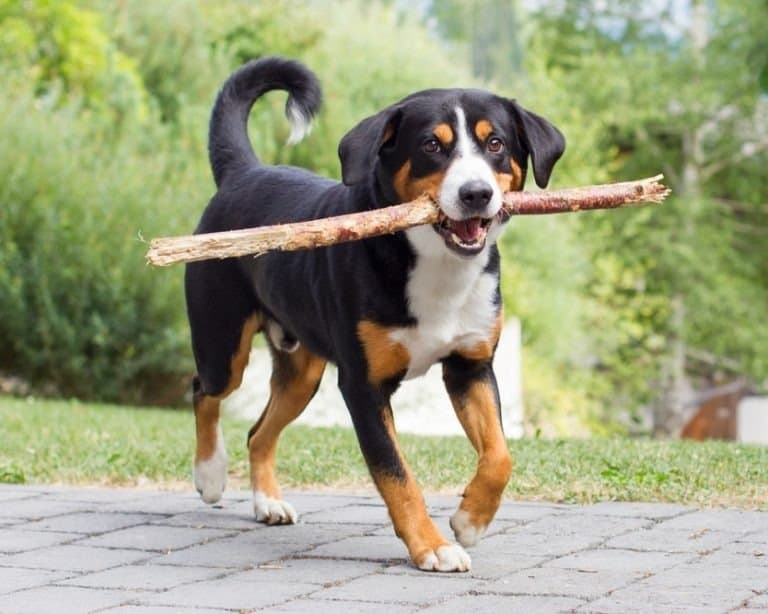
Young Appenzeller Sennenhund, playing with long branch.

Young Appenzeller Sennenhund, playing with a long branch.

Size and Weight

An Appenzeller is a large dog with a double coat of fur. Males and females grow as tall as 22 inches at the withers. Both male and female Appenzeller Sennenhunds typically weigh between 49 and 70 pounds. A 9-week-old puppy weighs around 10 pounds. These mountain dogs are not fully grown until they reach 2 to 3 years old.
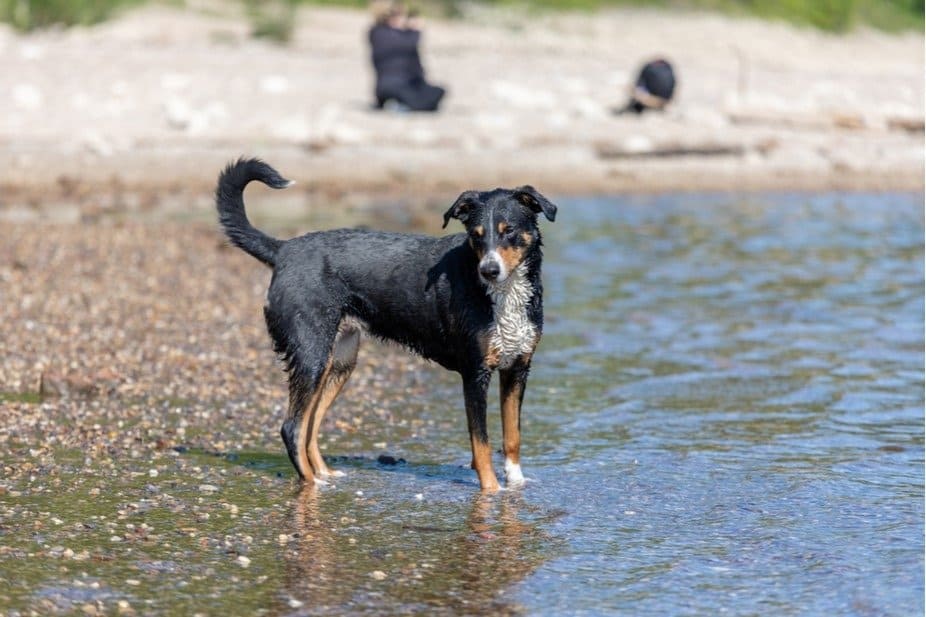
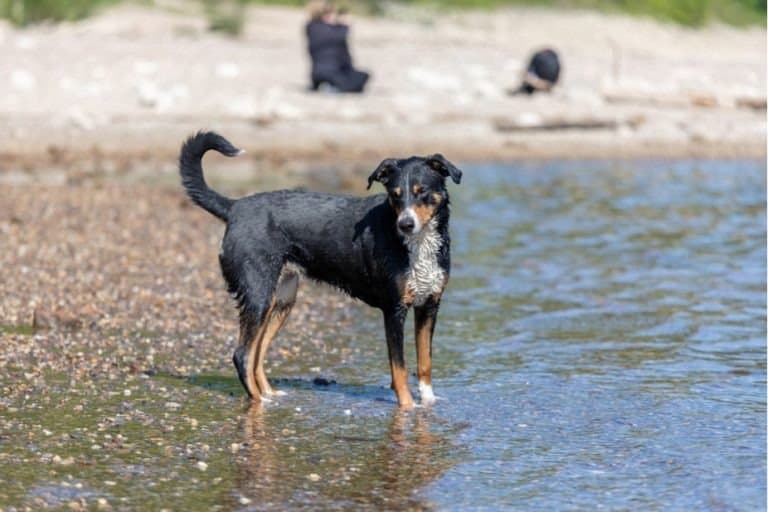
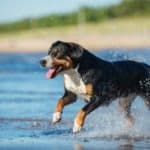
Appenzeller Sennenhund playing at the lake

Appenzeller dogs weigh between 48-70 pounds.

Origins

The Appenzell Cattle Dog, as it was called in 1853, has a high-pitched bark and short hair. It is a multi-colored dog that was originally bred to guard homes and herd cattle in its native Switzerland. Breed promoter Max Siber helped the Appenzeller become its own breed in 1898, and Professor Dr. Albert Heim established the Appenzeller Sennenhund Club the following year to promote and preserve the species. Dr. Heim also set up the first valid breed standard in 1914 and officially registered puppies in the Appenzeller Dog Stud Book. The Appenzellers can now be found all over Switzerland, Europe, and North America, though the breeding stock is still small. It is only through careful and responsible breeding that it can maintain its natural and outstanding hereditary qualities.

Common Health Issues

The Appenzeller has a few health issues common to their breed. Hip dysplasia occurs when the ball and socket of a dog’s hip joint don’t develop or work properly. A dog can experience pain and lameness as a result of hip dysplasia. Cataracts are another health challenge common to these cattle dogs. Cloudy eyes are a sign of cataracts. Cataracts can lead to reduced vision or even blindness. Epilepsy is a third issue for the Appenzeller. This is an inherited condition that causes seizures.

The most common health issues of this cattle dog include:

  • Hip dysplasia
  • Cataracts
  • Epilepsy
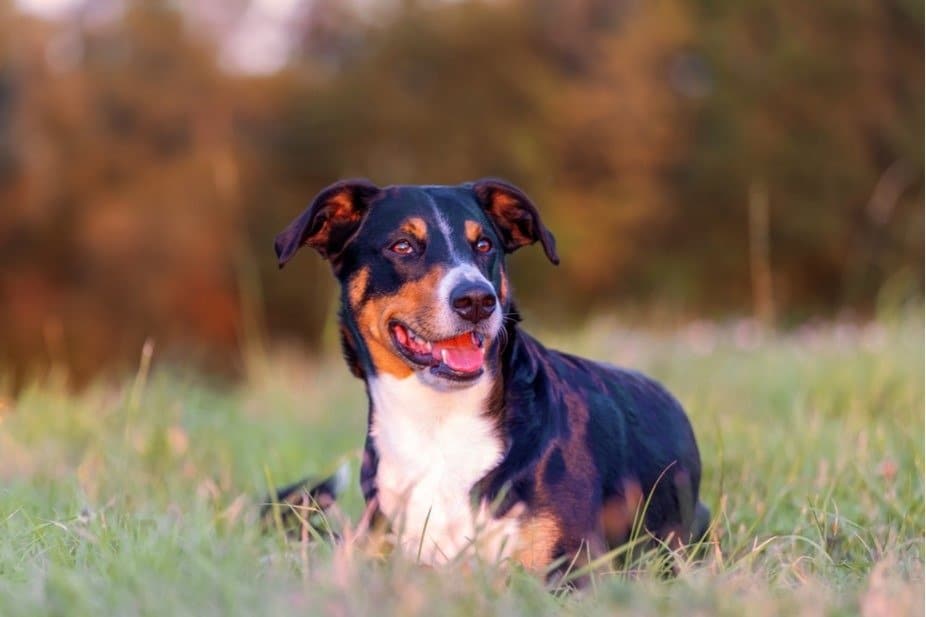
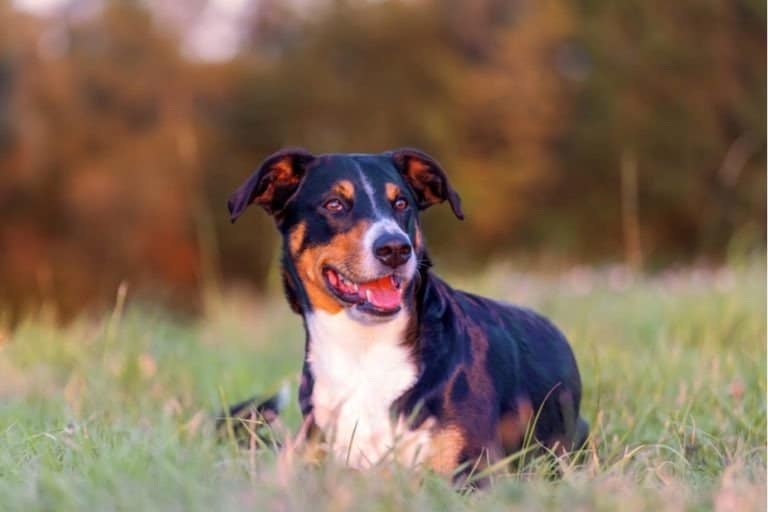
Portrait of Appenzeller Sennenhund, lying on the Autumn field, natural light

Appenzeller dogs are prone to hip dysplasia.

Temperament and Behavior

Appenzeller Sennenhunds are known for their energetic behavior. They love to run, jump, and play! Mix together a friendly personality and an affectionate nature, and you have a great addition to a family with kids. Keep in mind that because this dog was bred as a cattle dog, it has a strong instinct for protecting its territory and herding. So, giving this dog the socialization training while it’s young can teach it the proper way to interact with kids and adults in a household.

Loyalty is one of this dog’s most prominent traits. Its loud bark will alert a household of someone at the door or elsewhere on the property. Intelligence is another trait that makes an Appenzeller easy to train.
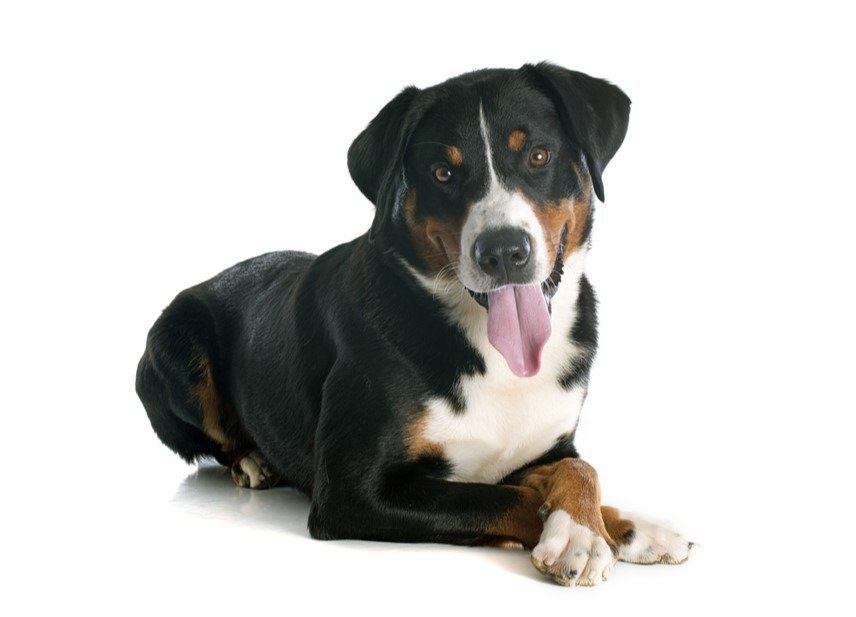
Appenzeller Sennenhund in front of white background

Appenzeller dogs are high-energy and need lots of daily activity.

How to Take Care of Appenzeller Sennenhund

Learning as much as possible about the dietary needs, exercise requirements, and grooming routine of Appenzeller Sennenhunds allows an owner to provide the best level of care for a puppy or an adult dog. Taking into account the unique needs of this dog from the Swiss Alps can help an owner establish a daily routine that boosts the health of their pet.

The Best Dog Food

When establishing a daily diet, it’s a good idea to take this breed’s common health issues into account. Adult and puppy Appenzellers each have their own nutritional needs. One of the healthiest options for feeding your Appenzeller Sennenhund is a high-protein and nutrient-dense dog food to fuel their constant activity while helping them develop lean muscle mass.

Appenzeller adult dog food: Fat in an adult Appenzeller’s dog food provides Omega-6 and Omega-3 fatty acids that contribute to healthy skin and coat. Protein supports the healthy growth of muscle and tissue. The right amount of protein can keep joints in good condition, which can head off hip dysplasia. Vitamin A contributes to good vision for a dog. Good eye health can go a long way to preventing cataracts. Vitamin C is an antioxidant and supports a dog’s immune system. Fiber supports proper digestion.

Appenzeller puppy food: Calcium is an essential ingredient in an Appenzeller puppy’s food. It strengthens developing bones and teeth. Vitamin D also contributes to strong bones. Calcium and vitamin D can help in the fight against hip dysplasia. Fat supplies energy to these fast-moving puppies. Protein builds strong muscles that this dog will use every day as an adult. Vitamin C strengthens a puppy’s immune system so it can fight off illness. Giving a puppy the right amounts of protein, fat, etc., allows it to maintain the proper weight. An obese puppy is more likely to develop heart issues, hip dysplasia, and other ailments.

Maintenance and Grooming

How much does an Appenzeller shed? This dog is a frequent shedder. It has a double coat of short hair that needs to be groomed once per week. An owner can use a hairbrush with boar’s hair bristles to work over this mountain dog’s coat to remove dead or loose hair. A grooming glove is also effective, especially when brushing the dog’s legs, tail, and face. The best way to go about brushing this dog is to begin at its head and move in the natural direction of its hair toward its tail.

Part of this dog’s grooming routine should include cleaning dirt and debris from its ears. There are cleaning solutions designed to safely clean a dog’s ears. A soft, clean cloth is perfect for removing debris from its ears to prevent the development of ear infections. If an owner is not sure about how to clean this dog’s ears, they can check with a veterinarian for guidance on the process.
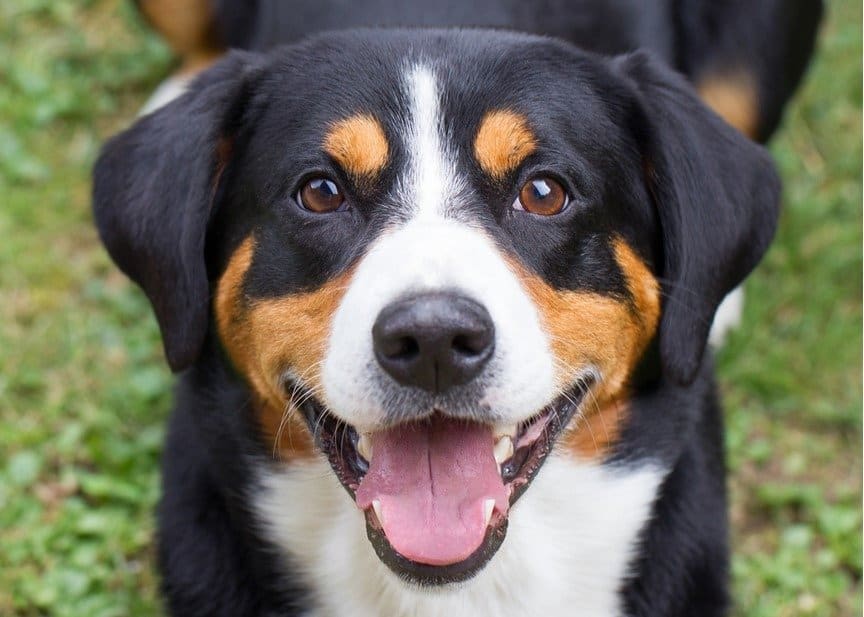
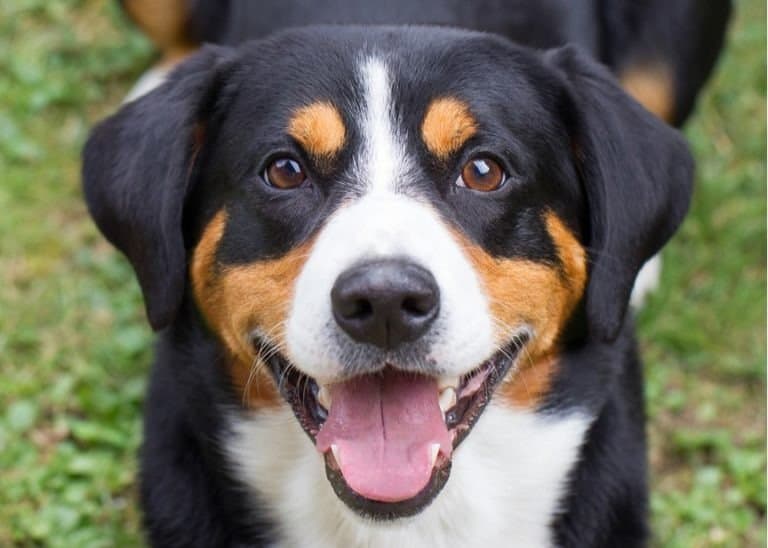
Young Appenzeller Sennenhund, close-up, playful look in the eyes

Appenzeller dogs shed a lot. They have a double coat that needs regular grooming.

Training

This cattle dog is very intelligent and alert, which makes it easy to train. The best way to approach training is to issue short commands in an even voice. Lots of treats and words of praise for learned lessons are effective when training an Appenzeller. These dogs can be sensitive and don’t respond well to harsh voices.

Exercise

Just think. An Appenzeller Sennenhund was bred in Switzerland to chase cattle and bring wanderers back into the herd. Not surprisingly, these dogs love to run, jump, and otherwise stretch their legs outdoors. They need at least one hour of exercise per day to keep them in good physical condition. The exercise also helps to keep their stress level down and stops destructive behavior due to feeling pent-up.

Running in fields and woods, playing ball, and fetching toys are all great activities for this large dog. Taking it to a dog park may be a good idea, depending on how well an owner’s particular dog gets along with other breeds.

An Appenzeller is not a good choice for someone who lives in an apartment. It’s a large dog, which means it’s going to need a larger space to move around in or risk bumping into things. A home with a medium to large backyard would be a better option for this mountain dog. Even with a backyard, an owner should take the dog out for exercise each day. The dog and owner will both be happier!

Puppies
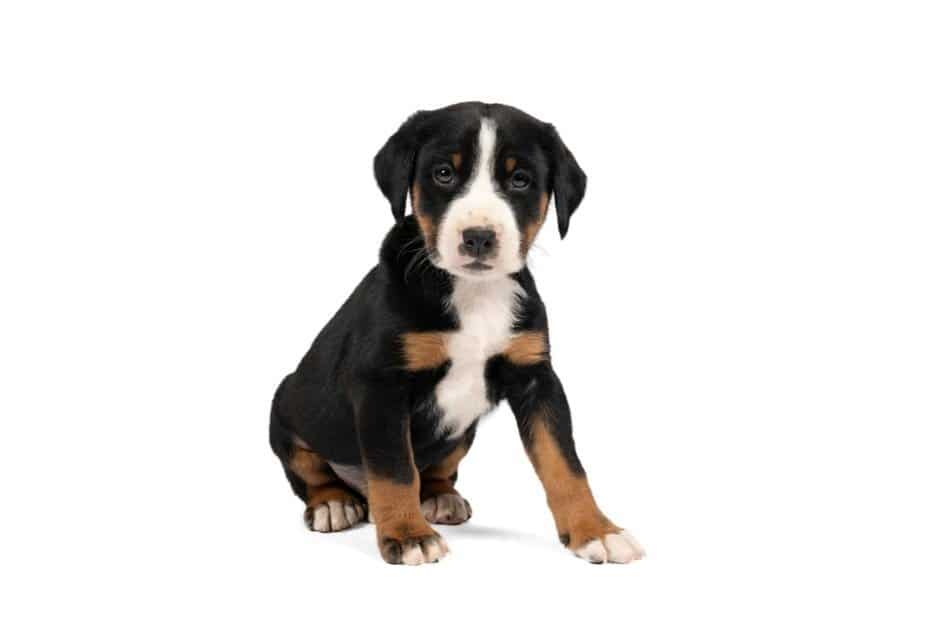
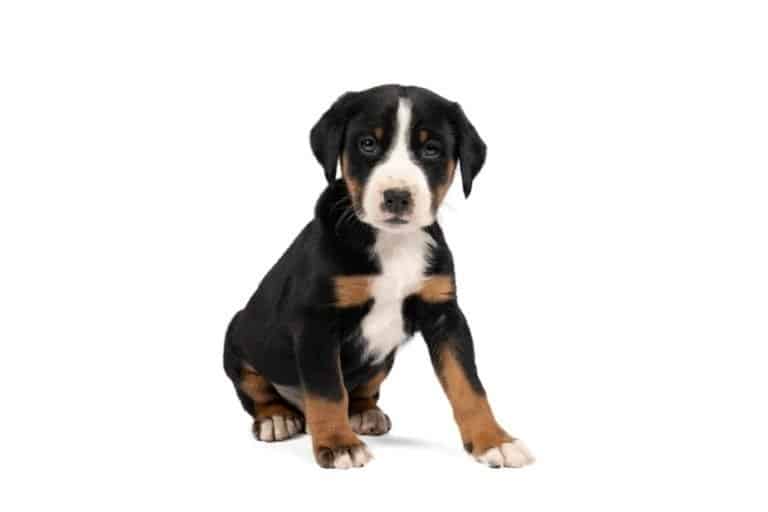
Portrait of a Appenzeller Sennenhund pup sitting isolated against a white background

Feeding Appenzeller Sennenhund puppies the proper amount of food prevents obesity. Obesity in large dog breeds can bring on health issues.

With Children

An Appenzeller that has been socialized from puppyhood is going to enjoy being around children. Keep in mind, this is a large dog of substantial weight. An Appenzeller that’s running around and having fun may knock into a small child, causing him or her to fall. The dog didn’t intend to run into the child, but its energy and size sometimes create a mix that causes accidents.

Dogs Similar to Appenzeller Sennenhund

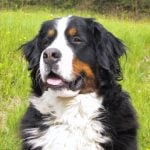
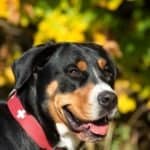
Other dogs that are similar to the Appenzeller include the Bernese Mountain Dog, the Entlebucher Mountain Dog, and the Greater Swiss Mountain Dog.

  • Bernese Mountain dog: This is another Swiss mountain dog, aka a Sennenhund, with the same brown, black, and white color mix as the Appenzeller. However, the Bernese Mountain dog is much larger and a member of the working group.
  • Entlebucher Mountain dog: This canine is also from the Swiss Alps and was bred to move cattle. But this dog is more appropriate for families with older children, not young kids.
  • Greater Swiss Mountain dog: Greater Swiss Mountain dogs grow to be much taller and heavier than Appenzellers. Both dogs are from Switzerland, bred for herding, and full of energy!
View all 326 animals that start with A

Sources

  1. American Kennel Club / Accessed December 19, 2020
  2. Kidskonnect / Accessed December 19, 2020
  3. The Spruce Pets / Accessed December 19, 2020
Heather Hall

About the Author

Heather Hall

Heather Hall is a writer at A-Z Animals, where her primary focus is on plants and animals. Heather has been writing and editing since 2012 and holds a Bachelor of Science in Horticulture. As a resident of the Pacific Northwest, Heather enjoys hiking, gardening, and trail running through the mountains with her dogs.

Thank you for reading! Have some feedback for us?


Appenzeller Dog FAQs (Frequently Asked Questions)

The initial cost of an Appenzeller Sennenhund is about $1000. This can be more or less depending on the particular breeder and the bloodlines of the dog being sold.

The veterinary costs for this cattle dog range from $500 to $1000. The fees vary according to the specific healthcare services needed for the dog.

The food costs for this dog range from $100 to $150 a month. This is a large dog that needs a certain amount of food to maintain its energy and good health.