
A
Species Profile

Asian Giant Hornet

Vespa mandarinia

Big hornet. Bigger impact.
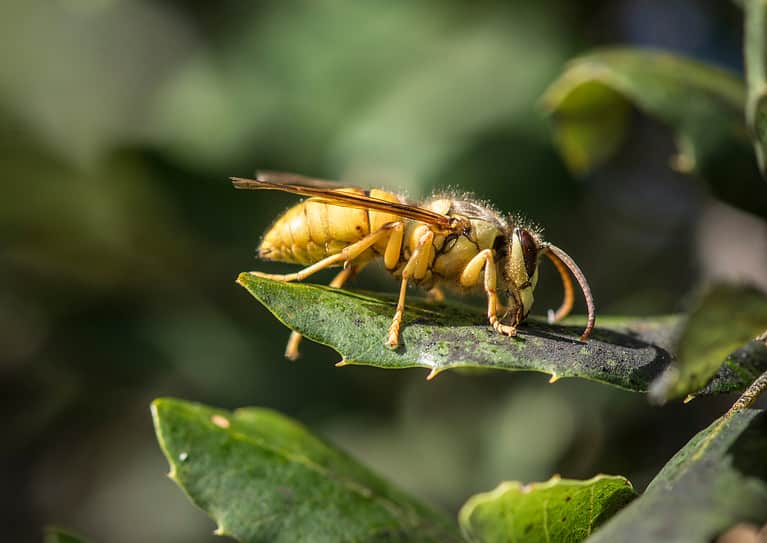
田中利秋 / CC BY-SA 2.5

Asian Giant Hornet Distribution

Click a location to explore more animals from that region

Invasive Species
Loading map...
Oosuzumebati

At a Glance

Wild Species
Also Known As Giant hornet, Japanese giant hornet, Murder hornet, Suzumebachi, Oosuzumebachi
Activity Diurnal+
Lifespan 1.5 years
Weight 0.0012 lbs
Status Not Evaluated
Did You Know?

Adults are huge: workers typically ~35-40 mm long; queens can reach ~45-50 mm.

Scientific Classification

A very large social hornet native to parts of East and Southeast Asia, known for powerful predation on other insects (including honey bees) and for its medically significant sting.

Kingdom
Animalia
Phylum
Arthropoda
Class
Insecta
Order
Hymenoptera
Family
Vespidae
Genus
Vespa
Species
Vespa mandarinia

Distinguishing Features

  • Very large body size for a hornet (notably large workers/queens)
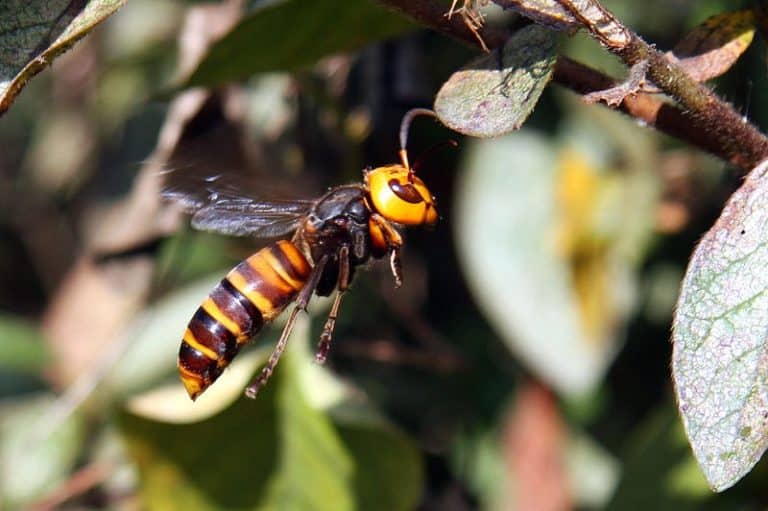
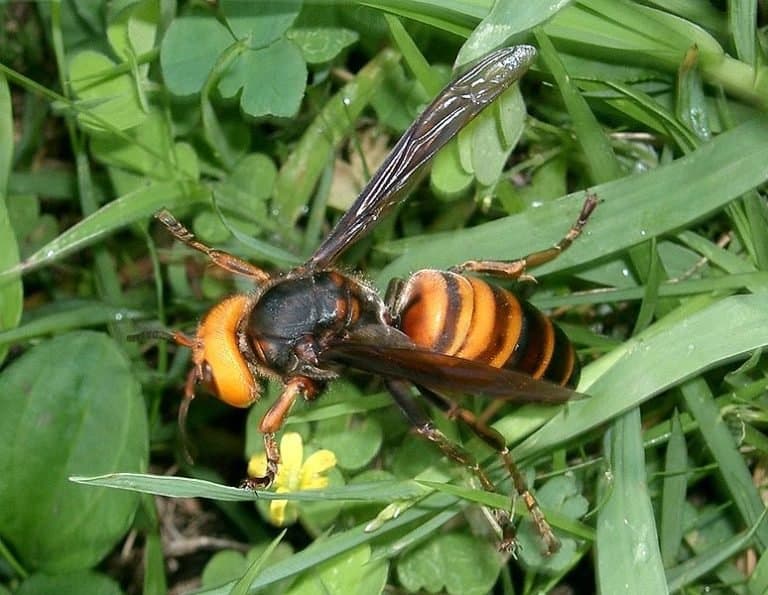
  • Orange/yellow head with prominent mandibles
  • Broad brown-and-yellow banded abdomen
  • Social colonies with underground/cavity nests
  • Capable of coordinated attacks on other social insects (e.g., honey bee colonies)

Did You Know?

Adults are huge: workers typically ~35-40 mm long; queens can reach ~45-50 mm.

Their wingspan can be about 70-75 mm, giving them a very fast, powerful flight.

Nests are usually underground (often in abandoned burrows), unlike many paper wasps that build exposed aerial nests.

A single colony is annual: a mated queen overwinters, founds a nest in spring, and the colony peaks in late summer-autumn before dying out.

They are apex insect predators-hunting beetles, other wasps, and especially other social insects when protein demand is high.

Japanese honey bees (Apis cerana japonica) can defend by forming a "heat ball" around a hornet and heating it to ~46 °C, a temperature the bees tolerate better than the hornet.

The stinger is long (about ~6 mm), allowing deep delivery of venom-one reason stings can be medically serious, especially if multiple occur.

Unique Adaptations

  • Extreme body size in a true hornet (genus Vespa): Large head and powerful flight musculature support long-distance foraging and subduing robust prey.
  • Massive mandibles: Built to seize, cut, and dismember hard-bodied insects and to kill defenders during raids on social insect colonies.
  • Deep-injection sting apparatus: A long stinger (~6 mm) helps deliver venom into thicker tissues, increasing defensive effectiveness against mammals and other threats.
  • Venom optimized for defense and tissue damage: Hornet venoms (including V. mandarinia) contain peptides and enzymes that cause intense pain and local tissue injury; risk rises sharply with multiple stings.
  • Thermal/collective combat ecology: The species' interactions with Asian honey bees have selected for specialized counter-defenses (notably heat-balling by bees) and the hornet's persistence in targeting rich brood resources.

Interesting Behaviors

  • Seasonal colony cycle (annual eusociality): A single queen starts the nest in spring, rears the first workers, and later produces reproductive males and new queens; only new queens overwinter.
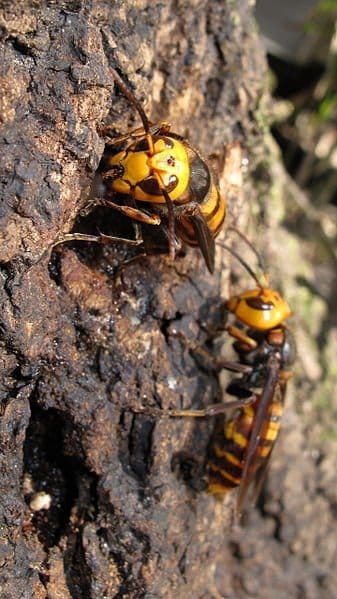
  • Underground nesting & site choice: Frequently occupies pre-existing cavities such as rodent burrows; workers expand chambers as the colony grows.
  • Protein-driven hunting: Foragers capture and butcher large insects, carrying meat back to larvae; larvae convert it into nutrient-rich secretions fed back to adults (a common Vespa/wasp nutrient loop).
  • Coordinated attacks on social insect colonies: When raiding, they can shift from solitary hunting to group predation on other wasp/bee nests, rapidly killing defenders to access brood.
  • Scent-marking and recruitment: Individuals can use chemical cues to mark profitable prey sites/targets and recruit nestmates for mass foraging or raids.
  • Threat display and defense: Near the nest they can escalate from warning flights to stinging; defensive behavior is strongest close to the underground entrance, where accidental disturbance (digging, mowing, stepping near an opening) is a common trigger.
  • Human-safety relevance (behavioral guidance): Avoid approaching or probing ground cavities, watch for large orange-headed hornets repeatedly entering/exiting one spot, back away calmly if encountered, and get professional removal-do not attempt to excavate nests. Seek urgent medical care for multiple stings, facial/neck stings, or any signs of allergy.

Cultural Significance

Vespa mandarinia, called the "giant sparrow hornet" in Japan, is warned about in rural late-summer and autumn safety messages. In parts of East Asia people eat hornet brood, make hornet spirits, and use hornets in media as a strong symbol.

Myths & Legends

Japan (folk name): It is commonly known in Japan by a name that translates to "giant sparrow bee" or "sparrow hornet," referring to its large size being likened to a sparrow.

In Japan, Asian giant hornet (Vespa mandarinia) colonies fiercely defend nests, so rural safety warnings and stories warn people to avoid unknown ground nests when hiking or working in forests.

In parts of East Asia, people use Asian Giant Hornet (Vespa mandarinia) preparations—like hornet-infused alcohol or soaked dried hornets—as folk remedies for energy or pain, despite no modern medical proof.

The English media nickname "murder hornet" became a modern folk name that spread fast and shaped how people see the Asian giant hornet (Vespa mandarinia), making it seem more scary than it is.

Conservation Status

NE Not Evaluated

Has not yet been evaluated against the criteria.

Population Unknown

Life Cycle

Birth 500 larvas
Lifespan 2 years

Lifespan

In the Wild
1–12 years
In Captivity
1–12 years

Reproduction

Mating System Polyandry
Social Structure Eusocial
Breeding Pattern Seasonal
Fertilization Internal Fertilization
Birth Type Internal_fertilization

Vespa mandarinia is eusocial with one queen and many workers. New queens, called gynes, and males mate in autumn; gynes store sperm to start colonies next year, while males die after mating. As haplodiploid, fertilized eggs become females and unfertilized eggs become males. Workers rear brood.

Behavior & Ecology

Social Colony Group: 300
Activity Diurnal, Matutinal, Vespertine
Diet Insectivore Honey bee brood (larvae and pupae) harvested from Apis colonies and fed to larvae (protein-rich prey source)
Seasonal Hibernates

Temperament

Highly defensive at and near the nest entrance; capable of rapid, coordinated mass-attacks once alarmed (eusocial vespine pattern; V. mandarinia noted for strong nest defense in Matsuura & Yamane, 1990).
Generally not persistent-aggressive away from the nest unless handled or disturbed, but predatory and bold when attacking prey (including social bees).
Seasonally variable risk profile: defensiveness and guard activity increase as worker population and brood value increase (mid-late season).

Communication

Loud wing-buzzing/audible flight tone used in close-range intimidation and during arousal/defensive escalation Typical for large Vespa; summarized in Matsuura & Yamane, 1990
Pheromonal alarm communication: stinging and alarm release recruit nestmates and escalate colony defense; response intensity varies with colony size and season Matsuura & Yamane, 1990
Pheromonal marking/recruitment to rich prey sources: foragers can recruit nestmates to mass-attack targets Notably social bee colonies) via chemical marking cues; described for V. mandarinia group predation behavior in the Japanese literature (e.g., Matsuura & Yamane, 1990; Ono et al., 1995
Tactile/antennal signaling and contact interactions inside the nest Worker-worker and worker-queen) for task coordination (eusocial Vespinae pattern; Matsuura & Yamane, 1990
Vibrational cues transmitted through comb/envelope during agitation Rapid movement/wing vibration that increases arousal of nestmates; reported generally for social wasps and vespines, including Vespa, in Matsuura & Yamane, 1990

Habitat

Biomes:
Temperate Forest Temperate Rainforest Tropical Dry Forest Boreal Forest (Taiga)
Terrain:
Mountainous Hilly Valley Plains Riverine Rocky
Elevation: Up to 4921 ft 3 in

Ecological Role

Apex predatory social wasp in forest-edge and rural ecosystems; strong top-down regulator of other insect populations, with occasional high-impact predation on honey-bee colonies.

Biological control: reduces abundances of large insects and other eusocial wasps via predation (documented prey capture and provisioning behavior in Vespa spp., incl. V. mandarinia) Energy/nutrient transfer: concentrates animal biomass into nests and redistributes nutrients locally via larval feeding and waste deposition Pollination (minor/secondary): adults visit flowers for nectar, potentially moving pollen while foraging (incidental compared with specialist pollinators)

Human Interaction

Domestication Status

Wild

Vespa mandarinia (Asian giant hornet) is wild and has no domestication history. People remove nests and protect beehives. In parts of Japan people eat larvae and pupae. Scientists study its venom. Each year one queen starts a nest in spring; workers build the colony; new queens and males appear in autumn; old wasps die and mated queens overwinter.

Danger Level

High
  • Medically significant envenomation: the sting can cause intense pain and substantial local tissue injury; multiple stings can produce systemic toxicity (reported outcomes include hemolysis/rhabdomyolysis, acute kidney injury, and shock in severe cases in the clinical literature from Japan/China).
  • Anaphylaxis risk: like other vespids, stings can trigger life-threatening allergic reactions in sensitized individuals.
  • Mass-attack potential when a nest is threatened: V. mandarinia is not typically aggressive at a distance, but can defend nests vigorously; risk rises sharply during nest disturbance/removal.
  • Exposure pathways in human settings include forestry/agricultural work, hiking, and apiary management; in invaded/non-native contexts, public health concern is elevated because people may not recognize nests and because response systems may be unprepared.

As a Pet

Not Suitable as Pet

Care Level: Expert Only

Purchase Cost:
Lifetime Cost: $500 - $5,000

Economic Value

Uses:
Negative impact: apiculture losses Pest management services (predation on large insects) Food/insect harvest (regional, limited) Biomedical/toxinology research
Products:
  • In parts of Japan, hornet larvae and pupae are eaten as insect larvae dishes, and adults may be used in local preparations such as infused liquor in some locales.
  • Venom components are studied in toxinology and pharmacology (bioactive peptides/proteins), supporting research value rather than a standardized commercial product.
  • Major negative economic value comes from predation pressure on honey bees (especially managed colonies lacking effective defensive behaviors), including colony damage during coordinated attacks (well documented in apiculture literature for V. mandarinia interactions with Apis spp.).

Relationships

Predators 5

Oriental honey-buzzard Pernis ptilorhynchus
Japanese badger Meles anakuma
Asian black bear
Asian black bear Ursus thibetanus
Japanese giant salamander Andrias japonicus
Human
Human Homo sapiens

Related Species 8

Yellow-legged hornet Vespa velutina Shared Genus
Greater banded hornet Vespa tropica Shared Genus
European hornet Vespa crabro Shared Genus
Large brown hornet Vespa analis Shared Genus
Southern giant hornet Vespa soror Shared Genus
Yellowjackets
Yellowjackets Vespula spp. Shared Family
Aerial yellowjackets Dolichovespula Shared Genus
Paper wasps Polistes Shared Family

Ecological Equivalents 5

Animals that fill a similar ecological role in their ecosystem

Yellow-legged hornet Vespa velutina Both are social vespine hornets that hunt at hive entrances, recruit nestmates, and make repeated raids on apiaries. Vespa mandarinia is much larger (workers ~35–40 mm; queens ~45–55 mm) and can cause mass attacks.
Southern giant hornet Vespa soror Very similar ecological role: a large, highly predatory, colony-forming Vespa with a bee-hunting strategy that includes group recruitment to attack honeybee colonies. Often discussed alongside Vespa mandarinia as a major predator of Apis species in Asia, exhibiting comparable scouting and recruitment behavior at apiaries.
European beewolf Philanthus triangulum Solitary wasp that specializes on honey bees, capturing adult Apis and provisioning its larvae with them. It is a functional ecological analog for bee predation despite not being a social hornet and not conducting colony-level raids.
Cicada killer wasps Sphecius spp. Large-bodied predatory wasps that provision nests with sizable insect prey; ecologically comparable as high-trophic-level insect hunters in warm-season habitats, though they are solitary and target cicadas rather than engaging in social raids.
Giant hornet robber fly Promachus spp. Predatory aerial insect hunters that capture large flying insects; occupy a similar functional niche (diurnal predation on insects in open and edge habitats), but belong to a completely different lineage and do not engage in eusocial colony foraging.

The Asian giant hornet has reached fame thanks to its nickname online, the “murder hornet.” While the species’ stings can be quite painful, it’s estimated that hornets kill less than 40 people a year in countries across Asia.

For perspective, 89 people in the U.S. died in 2017 from native hornets, wasps, and bees, per the CDC.

The hornets are native to the Asian seaboard, stretching from Russia’s Far East to the tropics. However, in 2019 and 2020 sightings of these “murder hornets” began appearing in the Pacific Northwest, raising fears they could decimate local bee populations due to their signature decapitation of large honey bee populations with their large mandibles. The hornets then carry the thorax from their victims to feed their young.

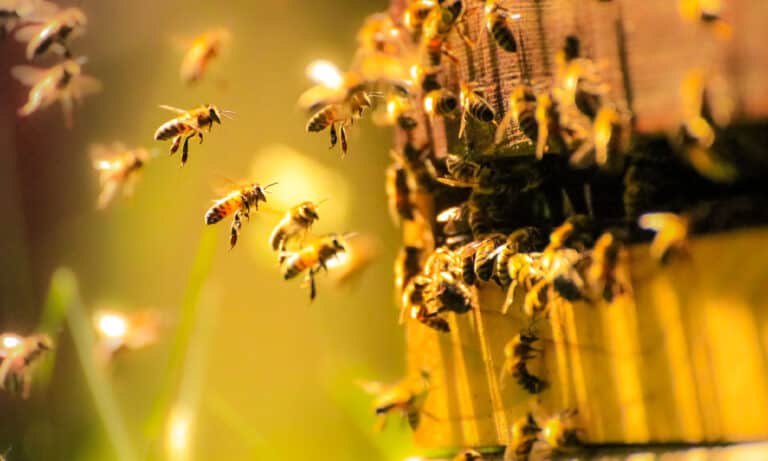
Because a single murder hornet can kill up to 40 honey bees a minute, it only takes a few hornets to completely decimate an entire colony of honey bees in short order.

On October 23, 2020, the first U.S. “murder hornet” nest was found near Blaine, Washington, further raising fears the species could become invasive and threaten bee populations that are integral to pollinating many crops.
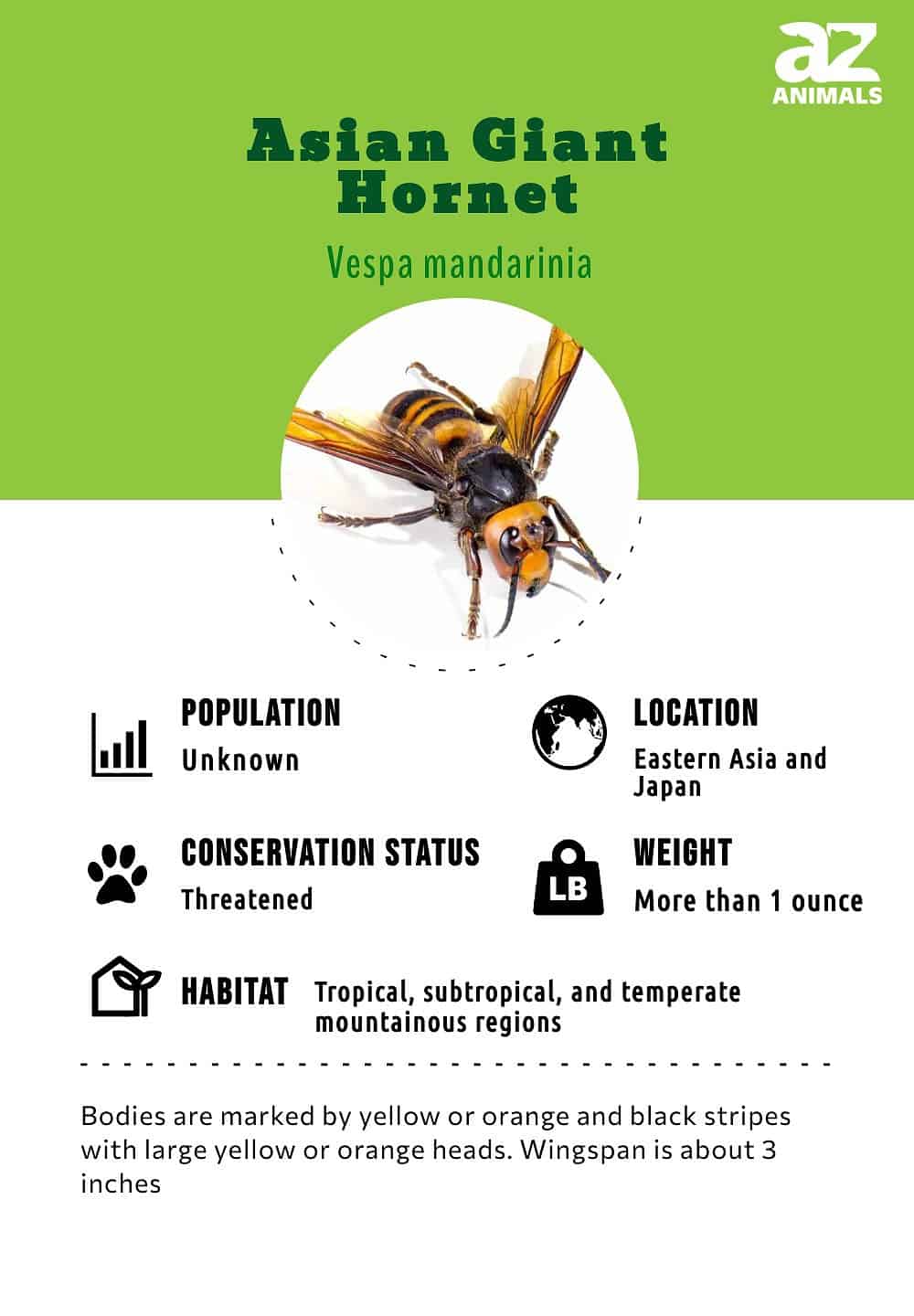
Incredible Asian Giant Hornet Facts!

  • Murder hornets: The Asian giant hornet has attracted significant attention online thanks to its nickname of the “murder hornet.” Why the dramatic nickname? For one, the species can grow quite large, with queens reaching more than 2 inches in length.
  • Voracious Predators: In addition to their large size, giant hornets received their “murder hornet” nickname from their voracious predatory habits. A single Asian giant hornet can kill more than 40 bees per minute by rapidly using its large mandibles to decapitate beer after bee!
  • But Asian bees have evolved to face this threat! With Asian bees continually facing off against “murder hornets,” they’ve evolved a unique adaptation to fight hornets invading their nest. Bees swarm around the hornets and vibrate their flight muscles, raising their temperature to 117 degrees. Bees can withstand a temperature of 118 degrees, while hornets can only support internal temperatures of 115 degrees. They use this very slight difference to effectively “cook” murder hornets alive!

Classification and Evolution

The Asian giant hornet is the largest hornet species in the world with some queens reaching more than 2 inches in length. They can be found throughout Eastern Asia, particularly in Japan where they are commonly known as the Giant Sparrow Bee. It is not to be confused with the more placid Asian hornet which arrived in France in 2005 and, although similar in appearance to the Asian giant hornet, the Asian Hornet is thought to be no more dangerous than the European hornet. The Asian giant hornet was first classified in 1852 by a British entomologist called Frederick Smith, who worked in the zoology department of the British Museum. He later became the president of the Entomological Society of London from 1862 – 1863.

The earliest wasps have been around for as long as 240 million years, during the mid-Triassic era. Entomologist Andrey Martynov suggested that they came from snakefly-like ancestors. According to more recently discovered fossils, that are 260-270 million years old, this belief may be supported.

Different Types of Wasps

The Asian giant hornet belongs to the family Hymenoptera, of which there are more than 30,000 different species of insects. The hornet species, in the genus Vespa, contains 22 different species. Some of those are:

  • Asian Hornet (Vespa velutina) – also known as the Asian predatory wasp
  • Black-bellied Hornet (Vespa basalis)
  • Greater Banded Hornet (Vespa tropica)
  • Lesser Banded Hornet (Vespa affinis)
  • Oriental Hornet (Vespa orientalis)
  • Yellow Hornet (Vespa simillima)
  • European Hornet ((Vespa crabro) – also referred to as the Old World hornet

Anatomy and Appearance
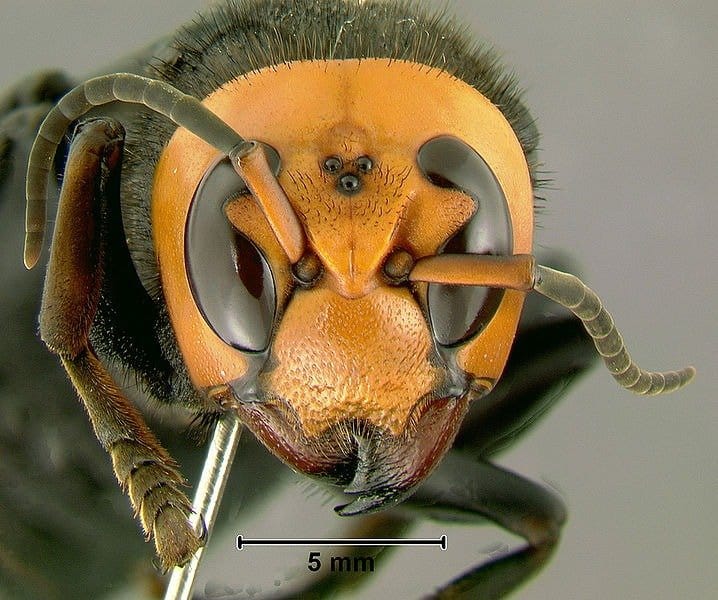
Vespa mandarinia is larger than any other wasp species.

As the largest of the wasp species, the average Asian giant hornet grows to between 1.06 inches and 1.77 inches in length, with a wingspan of around 2.75 inches. A queen can grow to 2.16 inches but is similar in appearance to the worker hornets with an orange head, black mandibles, and a black and golden body. The Asian giant hornet has two sets of eyes, one compound and one ocelli, both of which are brown in color along with their legs. Unlike other species of wasps, as well as bees, the stinger of the Asian giant hornet is not barbed and therefore remains attached to its body once used. Therefore, Asian Giant Hornets are able to sting their victims over and over again, injecting a complex venom that is known to contain eight different chemicals.

“Murder Hornet” Nickname

The Asian giant hornet has received widespread media attention since it was first spotted in the United States in 2019. Most of this coverage refers to the hornets as “murder hornets.”

The first use of this name came from Japan in 2008. Its use exploded after a New York Times profile on the hornets on May 2020 adopted the “murder hornet” moniker.

While Asian giant hornets have stingers that can be quite painful to humans, they kill very few people across Asia every year. Instead, the greatest threat of this invasive species is to bee populations across the United States.

Distribution and Habitat
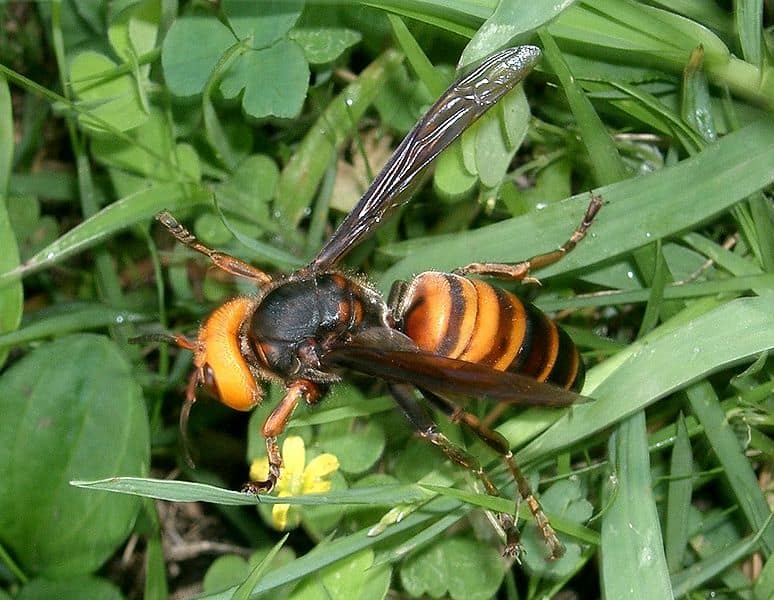
Vespa mandarinia japonica1

The Asian giant hornet is located throughout Eastern Asia but is commonly found in the mountains of Japan.

The Asian giant hornet is found throughout Eastern Asia in Korea, Taiwan, China, Indochina, Nepal, India, and Sri Lanka, but they are most commonly found in the mountains of Japan. They are found inhabiting higher altitude forests in both temperate and tropical areas, where there is plenty of food and suitable places to build a nest. The nest is founded by a fertilized female (known as the queen) who selects a suitably sheltered site such as the hollow trunk of a tree, where she begins to build herself a nest out of chewed-up bark. Wasp nests contain a series of single cells that together create the well-known honeycomb effect.

Behavior and Lifestyle
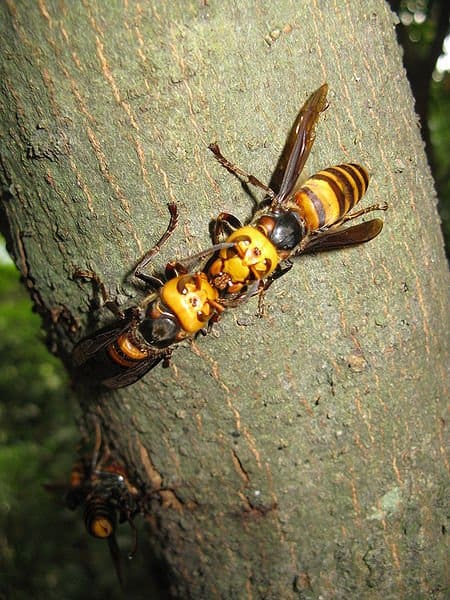
Asian giant hornets are known for their fearless and extremely aggressive attitudes, and they seem to favor one animal in particular, the honey bee. Asian giant hornets like to feed the honey bee larvae to their own young and are known to completely destroy whole bee hives in the process. Rather than using their stinger, Asian giant hornets, kill the guarding bees using their strong mandibles with extreme force and agility. One hornet is said to be able to tear up to 40 honey bees in half every minute just to get at what it wants (which once again, leads to its “murder hornet” nickname). Asian giant hornets are sociable insects, working together within the colony to forage for food, growing the size of the nest, and caring for the young. They are known as workers but they do not reproduce, as that is the job of the queen.

Reproduction and Life Cycles
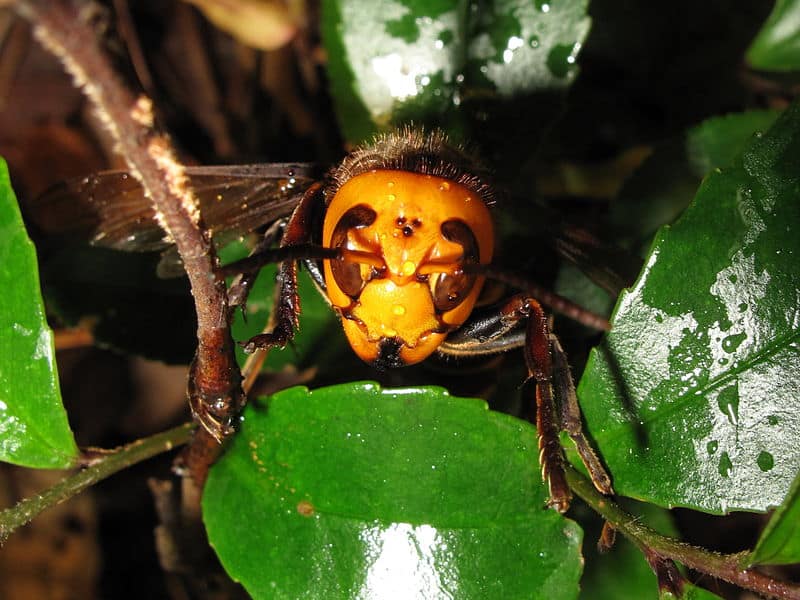
Vespa mandarinia japonica

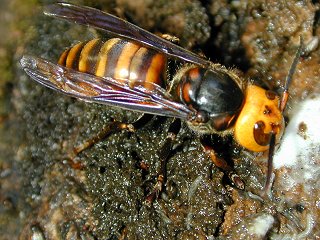
Female Asian giant hornet. A fertilized queen, after building her nest, will lay a single egg in each cell that will hatch within one week.

Once having built her nest in the spring, the fertilized queen lays a single egg in each cell which hatches within a week. Asian giant hornet larvae undergo a five-stage changing process known as metamorphosis, in order to get to their adult form. This takes around 14 days by which point the hive has its first generation of workers that ensure that the colony as a whole is well-maintained. By the late summer, the population of the colony is at its peak with around 700 workers, most of which are female. The queen then begins to produce fertilized (female) and non-fertilized (male) eggs. The males leave the hive once they have reached their adult form and usually die once mated. The workers and current queens tend to die out in the autumn leaving the young fertilized queens to survive the winter and begin the process again the next spring.

Diet and Prey

The Asian giant hornet is a dominant predator within its environment, mainly hunting other insects, particularly bees. Asian giant hornets are also commonly known to kill larger Insects such as praying mantises and even other wasps and hornets. Adult Asian giant hornets are unable to digest solid proteins and instead only eat the fluids from their victims. They are also known to feed their catch to their larvae (particularly the honey bee larvae) in the form of a regurgitated paste. The larvae then secrete a clear liquid which the adults consume and are thought to give them a bit of an energy boost. Asian giant hornets predominantly use their mandibles rather than their powerful stingers in order to secure their prey.

Predators and Threats
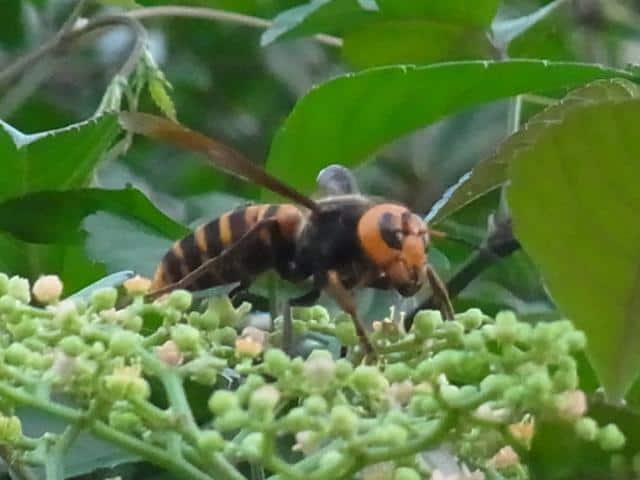
Due to the fact that the Asian giant hornet is an apex predator within its environment, it has no real natural predators within its native habitats. Humans pose the biggest threat to the world’s largest wasp, mainly as they are consumed as part of normal diets in the areas where they are found. This is particularly common in the mountains of Japan where the Asian giant hornet populations are in the highest abundance. Despite its size and bad temper, numbers of the Asian giant hornet are declining in certain areas. This is mainly due to habitat loss in the form of deforestation. Honey bees in Eastern Asia are also starting to develop their own defense again the hornets, trapping them in their nest until it becomes too hot for this giant wasp and it dies.

Interesting Facts and Features

The stinger of the Asian giant hornet is 1/4 inch long and because it has no barb, the Asian giant hornet is able to sting its victims multiple times. The venom injected by the stinger is incredibly potent and contains eight different chemicals, each with a specific purpose. These range from tissue degeneration and breathing difficulties, to making the sting more painful and even attracting other hornets to the victim.

Experts have compared the pain of the sting as similar to that inflicted by a red-hot needle. This winged arthropod’s sting has a ranking of 2 on the Schmidt Pain Index. Phospholipase and mastoparan cause extensive inflammation by breaking down the cells in the skin, while histamine and acetylcholine aided by kinins are responsible for that awful pain.

Getting rid of all those toxins can prove taxing for the kidneys and can possibly lead to kidney damage.

The Asian giant hornet is a relentless hunter and only a few are said to be able to completely wipe out a 30,000+ Honeybee colony in a couple of hours. The saliva produced by the larvae of the Asian giant hornet is said to give them their renowned energy and stamina when consumed on a regular basis. When chasing their prey, they have been reported to travel distances of up to 60 miles, at a top speed of 25 mph.

Relationship With Humans

Oddly enough, these incredibly large and indeed dangerous insects, are actually eaten by people who share the habitat of the Asian giant hornet. The Asian giant hornet is consumed by some as a regular source of food and is most commonly deep-fried or served as hornet sashimi. Despite the fact that the venom of the Asian giant hornet is incredibly potent, it is only in rare cases when the person is more vulnerable, that it is actually the poison that has caused them to die. In Japan alone, an estimated 40 people are killed annually by stings from Asian giant hornets but fatalities are mainly caused by allergic reactions, often from multiple stings.

Conservation Status and Life Today

The Asian giant hornet is today listed as a species that is Threatened with extinction in the near future, should the circumstances surrounding its survival not change. Despite their dominance in their natural environments, the Asian giant hornet populations are being severely affected by habitat loss in certain areas, predominantly in the form of deforestation.

View all 326 animals that start with A
How to say Asian Giant Hornet in ...
English
Asian giant hornet
Japanese
オオスズメバチ
Polish
Szerszeń azjatycki

Sources

  1. David Burnie, Dorling Kindersley (2011) Animal, The Definitive Visual Guide To The World's Wildlife / Accessed February 2, 2011
  2. Tom Jackson, Lorenz Books (2007) The World Encyclopedia Of Animals / Accessed February 2, 2011
  3. David Burnie, Kingfisher (2011) The Kingfisher Animal Encyclopedia / Accessed February 2, 2011
  4. Richard Mackay, University of California Press (2009) The Atlas Of Endangered Species / Accessed February 2, 2011
  5. David Burnie, Dorling Kindersley (2008) Illustrated Encyclopedia Of Animals / Accessed February 2, 2011
  6. Dorling Kindersley (2006) Dorling Kindersley Encyclopedia Of Animals / Accessed February 2, 2011
  7. Asian Giant Hornet Nests / Accessed February 2, 2011
  8. About Asian Giant Hornets / Accessed February 2, 2011
  9. Asian Giant Hornet Attacks / Accessed February 2, 2011
  10. Asian Giant Hornet Information / Accessed February 2, 2011
  11. Science Daily / Published December 4, 2013 / Accessed March 30, 2023
Melissa Bauernfeind

About the Author

Melissa Bauernfeind

Melissa Bauernfeind was born in NYC and got her degree in Journalism from Boston University. She lived in San Diego for 10 years and is now back in NYC. She loves adventure and traveling the world with her husband but always misses her favorite little man, "P", half Chihuahua/half Jack Russell, all trouble. She got dive-certified so she could dive with the Great White Sharks someday and is hoping to swim with the Orcas as well.
Connect:

Thank you for reading! Have some feedback for us?


Asian Giant Hornet FAQs (Frequently Asked Questions)

Asian Giant Hornets are Carnivores, meaning they eat other animals.