
A
Species Profile

Australian Cattle Dog

Canis lupus familiaris

Built to drive cattle all day
Madelein_Wolf/iStock via Getty Images

Australian Cattle Dog Distribution

Click a location to explore more animals from that region

Origin Location

This map shows the native origin of the Australian Cattle Dog. As a domesticated species, they are now found worldwide.

Loading map...

Size Comparison

Human 5'8"
Australian Cattle Dog 1 ft 7 in

Australian Cattle Dog stands at 27% of average human height.

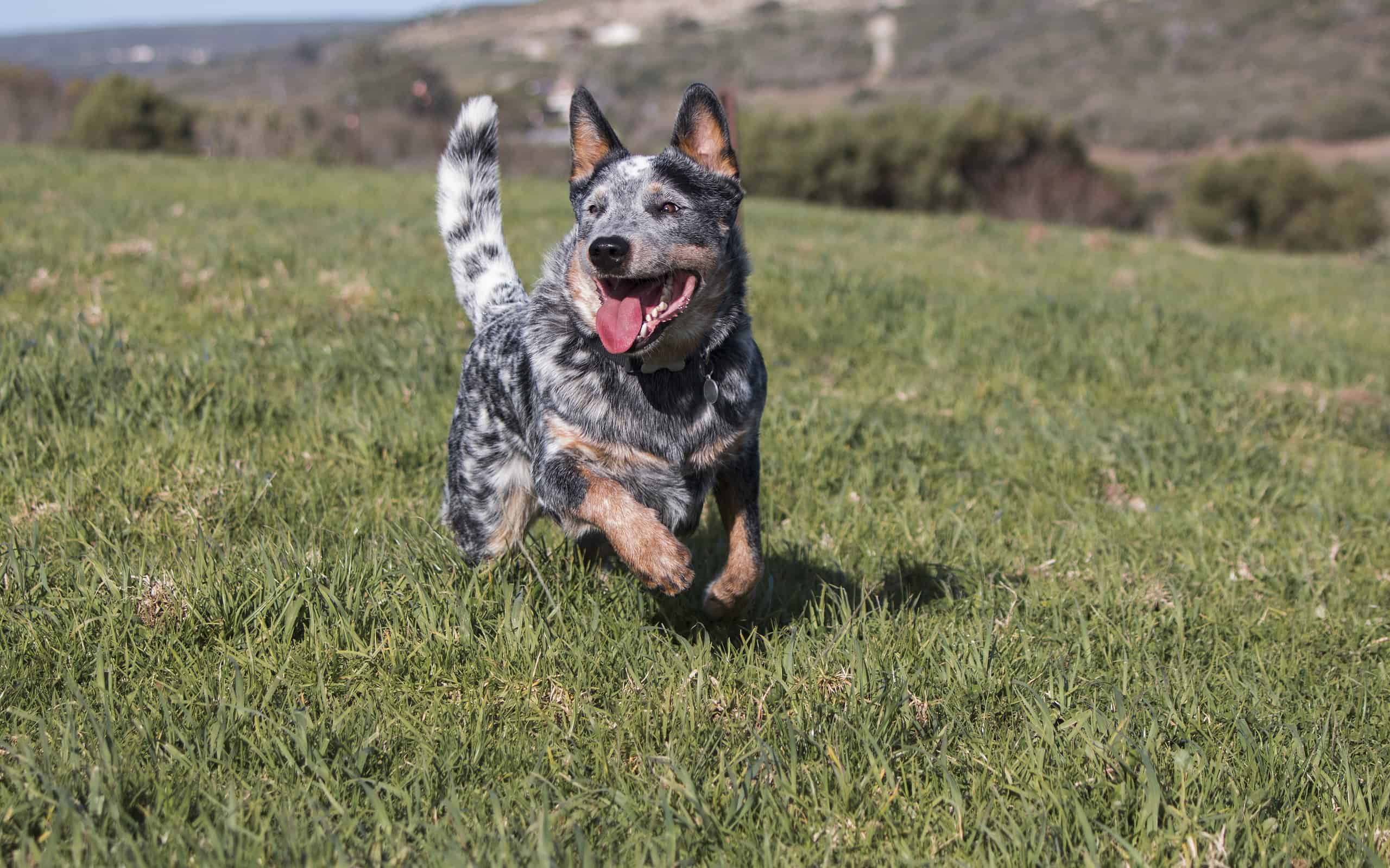
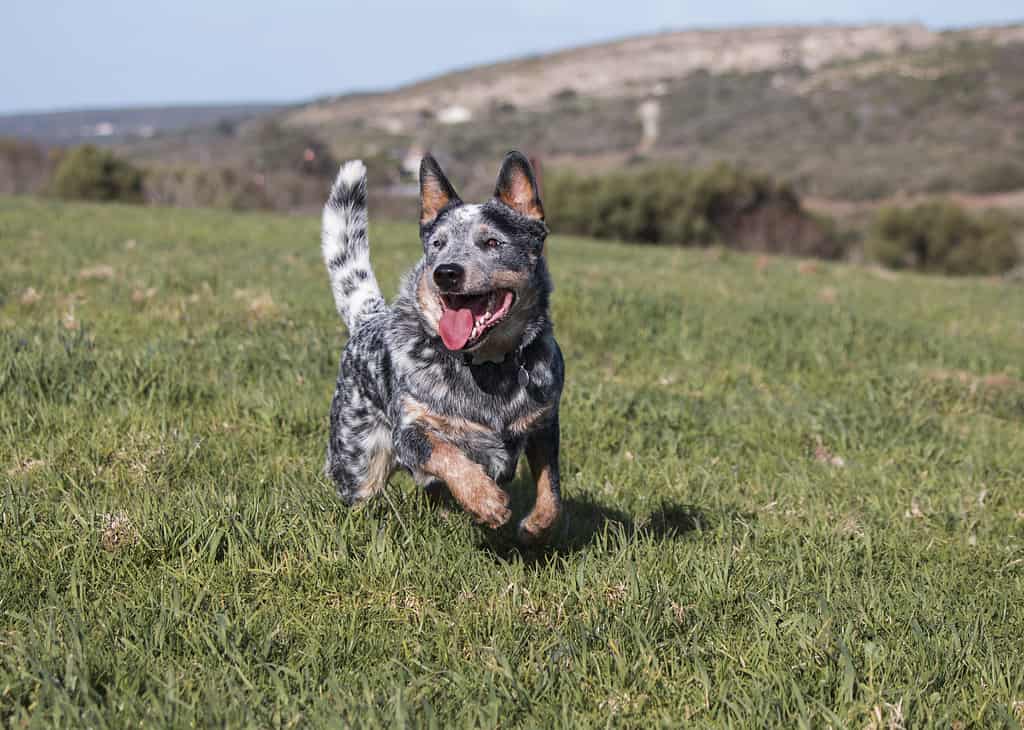
Australian Cattle Dog (blue heeler) running on lush green grass

At a Glance

Domesticated
Also Known As Blue Heeler, Red Heeler, Heeler, Queensland Heeler, Australian Heeler, ACD
Diet Omnivore
Activity Diurnal+
Lifespan 14 years
Weight 23 lbs
Status Not Evaluated
Did You Know?

Also called the Blue Heeler or Queensland Heeler-names tied to its signature heeling herding style.

Scientific Classification

A medium-sized, muscular herding dog breed developed in Australia for driving cattle over long distances; known for high intelligence, endurance, and strong working drive.

Kingdom
Animalia
Phylum
Chordata
Class
Mammalia
Order
Carnivora
Family
Canidae
Genus
Canis
Species
lupus

Distinguishing Features

  • Compact, athletic build with strong endurance
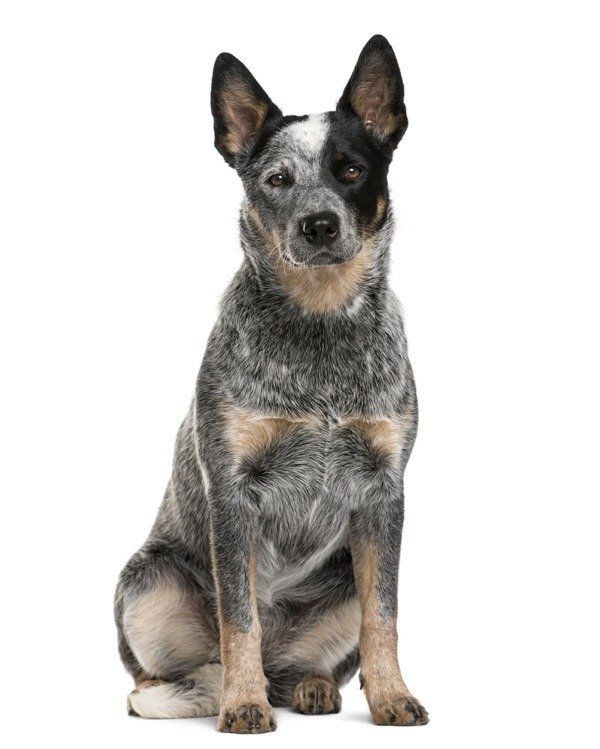
  • Short double coat often blue mottled/speckled or red speckled
  • Pricked ears, alert expression
  • Bred for cattle herding/heeling behavior (nipping at heels)
  • Highly trainable but needs substantial mental and physical exercise

Physical Measurements

Males and females differ in size

Height
♂ 1 ft 7 in (1 ft 6 in – 1 ft 8 in)
♀ 1 ft 6 in (1 ft 5 in – 1 ft 7 in)
Length
♂ 2 ft 9 in (2 ft 6 in – 3 ft 1 in)
Weight
♂ 43 lbs (35 lbs – 51 lbs)
♀ 40 lbs (31 lbs – 49 lbs)
Tail Length
♂ 12 in (10 in – 1 ft 2 in)
♀ 12 in (9 in – 1 ft 3 in)
Top Speed
30 mph
quick bursts, long endurance

Appearance

Primary Colors
Secondary Colors
Skin Type Domestic dog (Canis lupus familiaris) haired skin with a dense, weather-resistant double coat: short-to-medium, straight, hard outer coat over a thick undercoat; skin typically well-pigmented and resilient for outdoor work.
Distinctive Features
  • Domestic dog breed (not a wild canid): purpose-bred in Australia for cattle droving/heeling; compact, muscular, and highly agile compared with the base species' broader variation.
  • Medium-sized, powerful working build with strong forequarters and well-developed hindquarters; built for endurance over long distances.
  • Pricked, triangular ears; alert, intense expression; oval, dark eyes.
  • Characteristic heeler coat pattern: blue or red speckle/mottle (ticking/roaning) rather than solid coloration; common alternative names: Blue Heeler/Queensland Heeler.
  • Low-maintenance but functional coat: sheds seasonally; resists weather and brush typical of stock work.
  • Behavioral/working traits that influence "appearance in motion": quick, low-to-ground bursts, sharp turns, and a heeling style that can include ankle-nipping.
  • Breed-associated health concerns to monitor: congenital sensorineural deafness (screen with BAER testing), progressive retinal atrophy and other eye diseases (regular ophthalmic exams), hip/elbow dysplasia (orthopedic screening), and occasional hereditary lens issues.
  • Care requirements consistent with a high-drive herding breed: substantial daily exercise (running, structured play, sport/work), significant mental stimulation (training, scent/skill games), early socialization, and clear boundaries to prevent boredom-related destructiveness.
  • Grooming/care: weekly brushing (more during seasonal shed), routine nail/ear/dental care; coat generally does not require trimming.
  • Work-role context that distinguishes it from similar Australian breeds: specifically developed for cattle droving/heeling (not to be confused with Australian Shepherd or Kelpie).

Sexual Dimorphism

Sexual dimorphism is moderate: males are typically slightly larger, heavier, and more broad-headed/chested; females are often a bit smaller and more refined while maintaining the same athletic, compact heeler build.

♂
  • Slightly larger overall frame and heavier bone
  • Broader skull and more pronounced musculature through neck/shoulders
  • Often a deeper chest and more substantial head/cheek definition
♀
  • Slightly smaller, lighter frame with a more refined head
  • Muscular but often leaner through neck/shoulders
  • Same coat type/pattern and working proportions, typically with a more streamlined silhouette

Did You Know?

Also called the Blue Heeler or Queensland Heeler-names tied to its signature heeling herding style.

Coat colors are "blue" (mottled/speckled, often with tan points) or "red" (red speckle); puppies are born mostly white, with ticking/speckling developing as they grow.

The breed was developed in 19th-century Australia to drive cattle long distances through heat, scrub, and rough terrain-more of a drover than a flock herder.

Many Australian Cattle Dogs show a distinct forehead spot called the "Bentley mark," a well-known breed hallmark in working lines.

They're famous for intense problem-solving and independence-traits selected for managing stubborn cattle with minimal direction.

An Australian Cattle Dog named "Bluey" is widely cited in Australia as an exceptional longevity case (often reported at 29 years), becoming part of breed lore.

The breed's compact, muscular build and dense double coat are optimized for endurance work rather than sprinting or ornamental traits.

Unique Adaptations

  • Endurance-focused anatomy: medium size, strong forequarters/hips, and efficient gait support all-day trotting typical of droving work.
  • Weather-resistant double coat: short, dense outer coat with insulating undercoat helps in heat, cold nights, rain, and scrub contact.
  • High pain tolerance and grit (working selection): historically favored dogs that would keep working around large livestock-requires modern owners to watch for "silent" injuries.
  • Fast lateral movement and tight turns: built to "hit and get out," minimizing the risk of being kicked by cattle.
  • Cognitive flexibility: selected to make independent decisions at distance from the handler-useful for work, but needs structured training in pet homes.
  • Speckled/mottled patterning: ticking creates a broken-color coat that can blend in dusty, sunlit landscapes-an incidental but common working-dog look.

Interesting Behaviors

  • Heeling: darts in to nip at cattle heels, then pivots away quickly to avoid kicks-often paired with a low, springy crouch.
  • "Shadowing" their person: many attach closely to one handler and monitor movement constantly, anticipating tasks.
  • Controlled intensity: can switch from calm waiting to instant full-speed work when cued, reflecting a strong working "on/off" pattern when trained well.
  • Nudging and body-blocking: uses shoulder and chest to pressure stock (or people) to move, a herding behavior that needs guidance in homes.
  • Patrolling and perimeter checks: naturally scans fences/doors and may circle the yard, a byproduct of guarding and stock-management instincts.
  • Vocal variety: communicates with sharp barks, grumbles, and alert "chuffs," especially when frustrated or under-stimulated.
  • Object fixation: strong attraction to moving targets (bikes, running kids, balls), which can become chasing/herding without training and outlets.

Cultural Significance

The Australian Cattle Dog (Canis lupus familiaris) stands for Australia's bush past. Bred for cattle work, it appears as the "Blue Heeler" in family media, seen as tough, loyal, clever, and very energetic.

Myths & Legends

Hall's Heelers origin yarns: 19th-century drover Thomas Hall is widely credited with developing the foundation "Hall's Heeler" dogs-stories describe carefully guarded breeding and highly valued working pups changing hands among cattlemen.

The "Bentley mark" tale says an early sire named Bentley passed a small forehead star to pups; many working-dog people still call that spot a sign of classic heeler lineage.

Drovers' campfire stories praise heelers (Australian Cattle Dog, Canis lupus familiaris) as dogs that could lead a stubborn mob, stand their ground against kicks, then return to the swag at night—part history, part legend.

Name-and-identity legend: the term "Queensland Heeler" persists in popular storytelling as a regional badge of pride, linking the breed to Queensland cattle country and the heeler's rough-and-ready reputation.

Modern cultural story: the "Blue Heeler" has become a contemporary folk icon in Australia through family storytelling and media, where the breed symbolizes hardworking, resilient, humorously stubborn 'bush' practicality.

Conservation Status

NE Not Evaluated

Has not yet been evaluated against the criteria.

Population Stable

Life Cycle

Birth 6 pups
Lifespan 14 years

Lifespan

In the Wild
12–16 years
In Captivity
10–17 years

Reproduction

Mating System Polygynandry
Social Structure Managed Domestic
Breeding Pattern Serial
Fertilization Managed Selective
Birth Type Internal_fertilization

Australian Cattle Dog (Canis lupus familiaris): by nature polygynandrous but in practice managed domestic. Humans control mate choice, timing, and access. Breeders plan serial matings and screen for hip, eye and hearing problems.

Behavior & Ecology

Social Pack Group: 4
Activity Diurnal, Crepuscular, Cathemeral
Diet Omnivore Meat-forward meals (e.g., beef or chicken-based diets; high-protein working-dog kibble or balanced fresh/raw formulations when properly managed)

Temperament

Highly intelligent, fast learner; thrives on complex tasks and problem-solving (more intense working drive than many domestic-dog breeds).
High endurance and persistence; needs substantial daily physical exercise plus mental work (training, scent work, structured herding-style games) to prevent frustration-driven behaviors.
Loyal, handler-focused, often reserved with strangers; can be protective/watchful-benefits from early, ongoing socialization to prevent excessive suspicion or reactivity.
Strong herding instincts: may control movement via staring, blocking, and heel-nipping; requires clear bite inhibition training and appropriate outlets.
Independent and resilient; can be stubborn if under-motivated or repetitively trained-responds best to consistent rules, reward-based training, and meaningful 'jobs'.
Potential for dog selectivity or same-sex aggression; management may include careful introductions, supervision, and avoidance of overcrowded dog-park settings if arousal is high.
Care requirements: secure fencing, durable enrichment, structured routine, and ample recovery time; short double coat is generally easy-care but benefits from regular brushing during seasonal shed.
Health concerns (not exhaustive): hereditary deafness (especially in dogs with heavy white patterning), hip/elbow dysplasia, progressive retinal atrophy/other eye disease risks; maintain healthy weight and appropriate conditioning to reduce orthopedic strain.

Communication

Sharp alarm/alert bark Often used for perimeter notifications
Low growl/rumble for warning or resource defense; should be addressed with behavior modification rather than punishment.
Whines/high-pitched yips during anticipation, frustration, or to solicit engagement.
Occasional howl/bay, typically context-dependent Excitement, isolation, social facilitation
Herding-specific motor signals: intense eye, crouch/approach pressure, body-blocking, and controlled heel-nips to move stock-more pronounced than in many breeds.
Postural communication: forward weight shift, stiffened body, raised hackles, and direct stare can signal rising arousal; relaxed curves and soft eyes signal de-escalation.
Human-directed checking-in: frequent orientation to handler, 'shadowing,' and proximity seeking; may use nudging or pawing to initiate work/play.
Scent marking and investigative sniffing typical of domestic dogs; can be used productively via scent-work games.
Mouthing/carrying behaviors (often utilitarian/working-context driven); requires clear boundaries and reinforcement of appropriate toys/targets.

Habitat

Biomes:
Temperate Grassland Savanna Mediterranean Temperate Forest Desert Hot Desert Cold Alpine Tundra Freshwater Wetland +4
Terrain:
Plains Hilly Plateau Valley Riverine Coastal
Elevation: Up to 16404 ft 3 in

Ecological Role

Domestic herding/companion canid within human-managed ecosystems; not a wild apex predator like the gray wolf but an omnivorous, human-provisioned mesopredator/scavenger analogue. In rural settings, may opportunistically hunt small vertebrates and scavenge, while primarily consuming formulated diets provided by humans.

Rodent/pest reduction where allowed and supervised Supports livestock handling (cattle driving), indirectly influencing grazing patterns and farm efficiency Nutrient cycling via scavenging/consumption of leftovers (managed settings) Human social/working partnership services (behavioral enrichment, security, herding labor)

Diet Details

Main Prey:
Small mammals Birds Reptiles and amphibians Invertebrates Fish and carrion
Other Foods:
Fruits and berries Vegetable matter Grasses Cooked grains and starches

Human Interaction

Domestication Status

Domesticated

Australian Cattle Dog (Canis lupus familiaris), made in 19th-century Australia to drive cattle, was bred for toughness, heat tolerance, high endurance and a strong herding style (heel-nipping). Unlike average pet dogs, they need lots of daily exercise and training, bond closely to one person, and are careful around strangers.

Danger Level

Moderate
  • Heel-nipping/herding of children, runners, cyclists, or visitors if under-exercised or under-trained
  • Bites can occur with fear, guarding, pain, or mishandling; risk increases with poor socialization or rough play
  • Protective/territorial behavior may lead to reactivity toward strangers or unfamiliar dogs
  • High chase drive can create safety hazards around fast-moving stimuli without reliable recall and secure containment

As a Pet

Suitable as Pet

Legality: Generally legal as a companion animal in the U.S. and most jurisdictions; may be subject to local leash laws, nuisance/dangerous-dog ordinances based on behavior, and housing/insurance breed restrictions depending on landlord/insurer policies.

Care Level: Experienced

Purchase Cost: $300 - $2,500
Lifetime Cost: $15,000 - $40,000

Economic Value

Uses:
Working livestock management Dog sports and competitions Breeding and companion animal market Training and behavior services Veterinary and preventive healthcare
Products:
  • herding and ranch work (cattle driving/stock handling)
  • competitive titles (herding trials, obedience, agility)
  • professional training/handling services
  • companionship and property alerting
  • associated goods/services (food, gear, enrichment toys, veterinary care)

Relationships

Quick Take

Australian cattle dogs are loyal, energetic, and friendly. This dog, also known as a red or blue heeler, is intelligent with a curious mind. Their intelligence makes them easy to train. These are just a few of the reasons why this breed is a popular family dog.

These herding dogs were first bred in Australia in the 1800s. The Australian Cattle Dog was developed in Australia by crossing Smithfield dogs, Dingoes, Collies (including blue merle types), Dalmatians, and Kelpies to create a hardy herding breed.

The large, pointed ears and dark eyes of this dog make it an endearing addition to any household. Keep in mind that these are social dogs that enjoy being with family members or other pets at all times.

An infographic detailing the characteristics, history, and care of the Australian Cattle Dog, featuring an illustration of the breed and icons representing its traits.
Part Dingo, part record-breaker, and all energy. Discover the high-stakes reality of owning the breed that survived 29 years and conquered the Australian Outback. © A-Z Animals

3 Pros and Cons of Owning an Australian Cattle Dog

Pros!Cons!
A very loyal dog
Australian cattle dogs become very attached to their families. This makes them welcome companions.
Unhappy when left alone
These dogs are social and don’t like to be left alone for long periods of time. In fact, they can become destructive if left by themselves.
Very little barking
These dogs don’t bark a lot. So, a family that wants a quiet dog (but not completely silent) most of the time is going to appreciate a red or blue heeler.
Needs daily exercise
Whether it’s a red or blue heeler, these dogs need exercise every day.
Pet friendly
They are known for getting along with other dogs in a household.
Not an apartment dog
The high energy level of these dogs means they need a lot of space to move around in. They aren’t a good choice for apartment life.

History and Origins

The Australian Cattle Dog played an important role in the development of the beef industry in Australia, which was a significant part of the economy. In the early 1800s, people from Britain began to move away from the original settlements along the coast and into the grassy plains of the western inland. This area was ideal for raising cattle, so herding dogs were needed to help make it possible.

In the beginning, Australian livestock owners imported British Smithfield dogs, but these breeds were not suitable for the hot weather, rough terrain, and long travel times to market in their new homes. Therefore, ranchers began a lengthy effort to create a herding dog that could handle the conditions of the Australian outback. To do this, Smithfields were bred with Dingoes and other breeds like Scottish Highland Collies. As a result, farmers developed the strong and reliable herding dogs they desired.

George Elliot from Queensland was a major contributor to the development of the Australian Cattle Dog, as he bred Dingoes with Collies and sold the puppies to farmers. This created a dog that was close to being the ideal herding dog for Australia. Later, Jack and Harry Bagust refined the breed even more by mixing in Dalmatians and a sheepdog called the Black and Tan Kelpie. This combination of breeds produced the ACD that we know today.

The Australian Cattle Dog was accepted into the American Kennel Club in 1980 and became a founding member of the Herding Group when it was established in 1983.
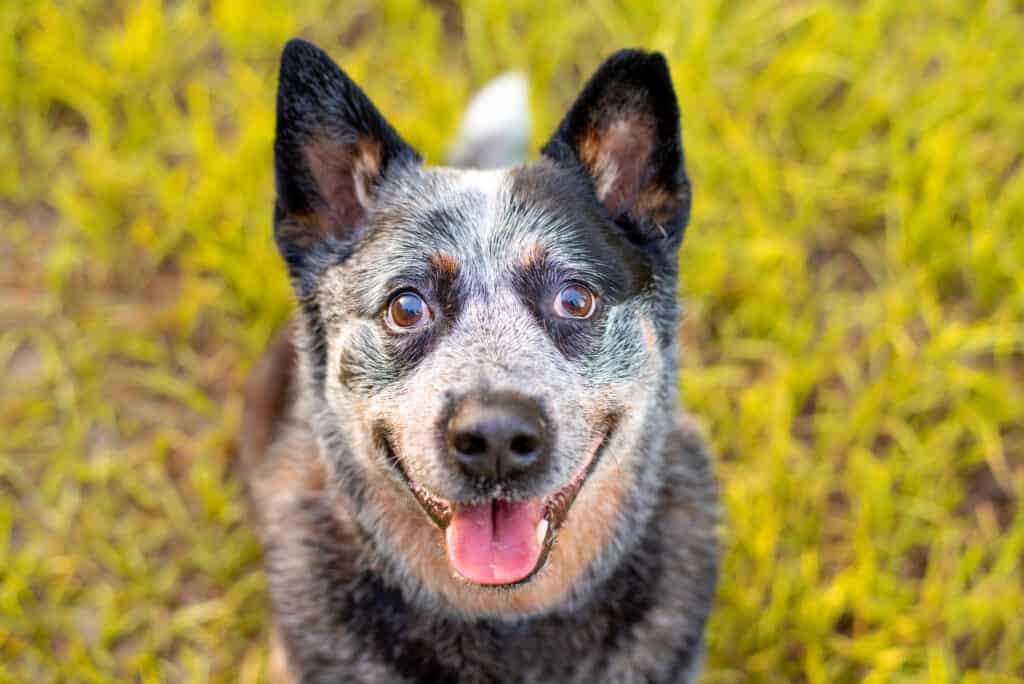
Blue heeler looking up

The Australian Cattle Dog was accepted into the AKC in 1980.

Size and Weight

This is a medium-sized breed with short hair. The average height of a male is 19 inches, while a female is 18 inches tall at the withers. Both males and females weigh 45 pounds when fully grown, typically at 16 months. An 8-week-old puppy should weigh 10.5 pounds.

The record for the oldest Australian cattle dog is held by Bluey, who lived to be 29 years old.
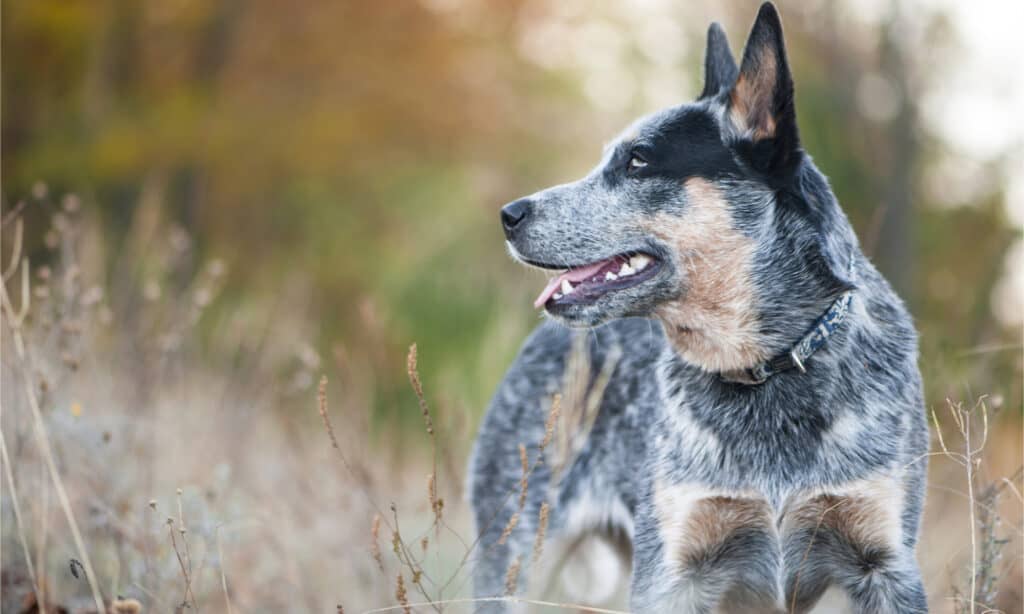
australian cattle dog

Australian cattle dogs weigh about 45 pounds when fully grown.

Common Health Issues

Progressive retinal atrophy is a common health issue in this dog. This is a degenerative disease that affects the photoreceptor cells in the eye. It is a genetic condition and can lead to blindness. Hip dysplasia is another common health issue. The hip joint consists of a ball and a socket. When a dog develops hip dysplasia, the ball and socket don’t fit together in the right way. Over time, this inherited condition causes deterioration of the hip joint. A third common health issue is elbow dysplasia. This genetic condition involves abnormal cell growth. It causes malformation of the elbow joint. Elbow dysplasia may not appear in a dog until it’s at least 4 months old.
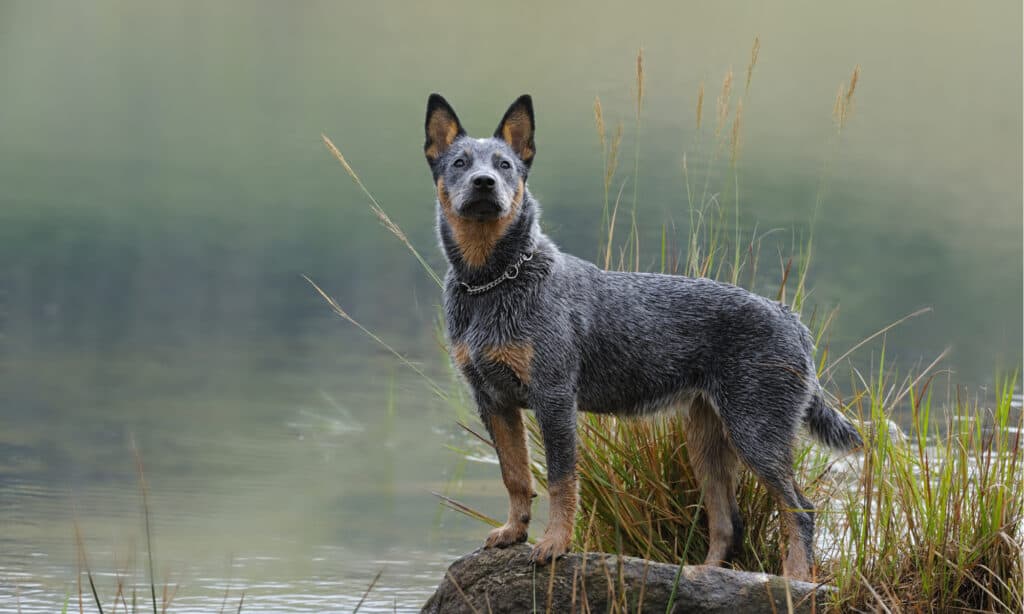
food for blue heelers

Australian cattle dogs are prone to eye health issues and blindness.

Temperament and Behavior

Energetic is the best word to describe the behavior of this breed. This is a working dog bred to herd cattle, sheep, or any other livestock.

This dog has a friendly personality and loves to be around humans and other pets. A family with children is going to have a loyal, entertaining pet.

One of its most notable traits is its intelligence. They were bred to handle herding responsibilities. Their intelligence makes obedience training relatively simple.
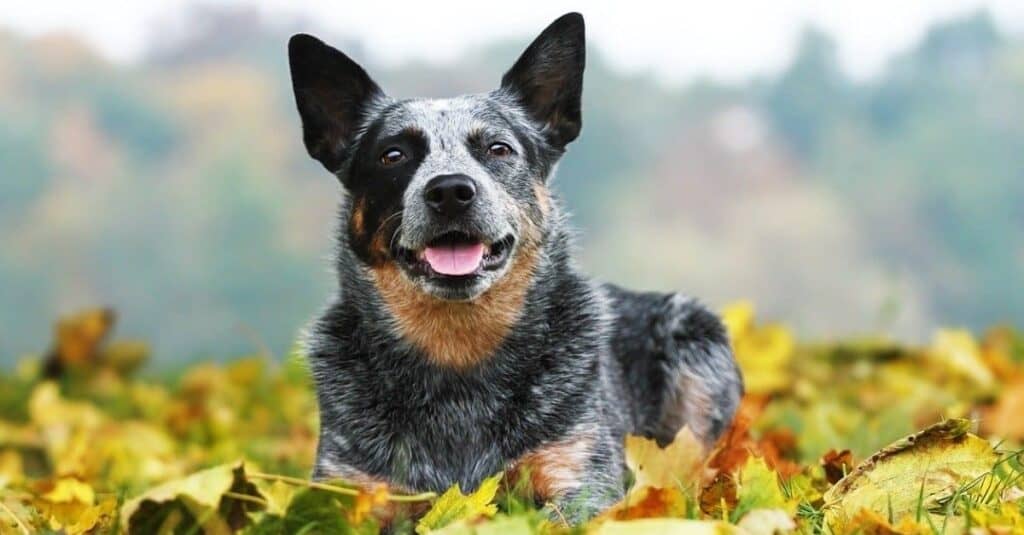
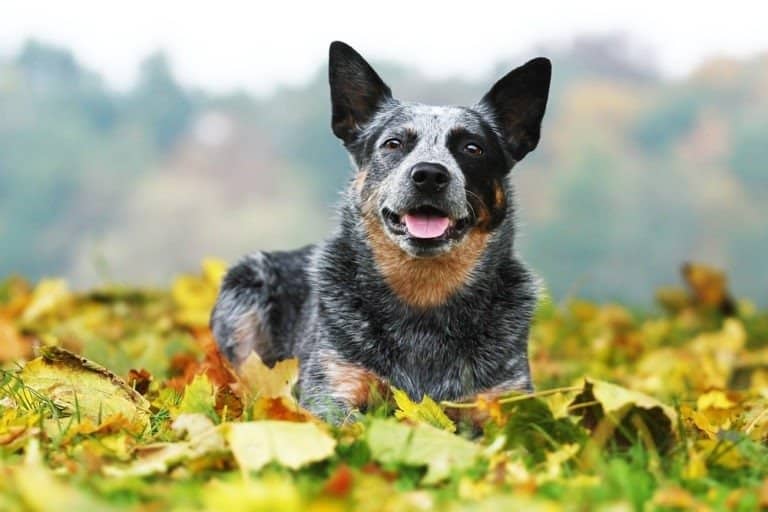
Australian cattle dog laying in leaves

The Australian cattle dog is also known as a blue heeler.

How to Take Care of an Australian Cattle Dog

When caring for this breed, there are certain things to keep in mind. Giving a red or blue heeler the proper diet, grooming, exercise, etc., can help to keep it in good health. Factoring common health issues into its care can also contribute to the well-being of a puppy or adult dog.

The Best Dog Food

Not surprisingly, puppies need a different type of care than adult dogs.

Puppy food: This breed of puppy needs food high in protein. This ingredient supports the activity of this highly energetic dog. Fiber contributes to a puppy’s digestive health, and fatty acids support skin and coat health. Vitamin A supports healthy retinal function, which can protect against progressive retinal atrophy. Calcium and vitamin D are nutrients that help a puppy guard against hip dysplasia.

Adult food: Just as puppies need protein, so do adults. This nutrient contributes to a dog’s muscle health. Food with a small percentage of carbohydrates gives an adult dog energy while not causing excess weight gain. Vitamins A and C support eye health and provide antioxidants to guard against disease. Calcium keeps bones and joints strong, which can help to prevent hip and elbow dysplasia.

Maintenance and Grooming

How much does a red or blue heeler shed? These dogs have short-haired double coats, so they’re moderate to heavy shedders. A proper grooming routine can reduce the amount of loose dog hair around a home.

This dog requires weekly brushing. A soft brush with boar hair bristles is a great tool to use. Start at the dog’s head and brush toward its tail, following the natural direction of its coat. A grooming glove is an effective tool for the dog’s legs and tail.

It’s a good idea to bathe this dog once per month to remove odors and dirt from its coat. The hair of an Australian cattle dog’s coat resists moisture, so it will dry quickly.

Fur loss and irritated skin caused by fleas or mites are also common afflictions.
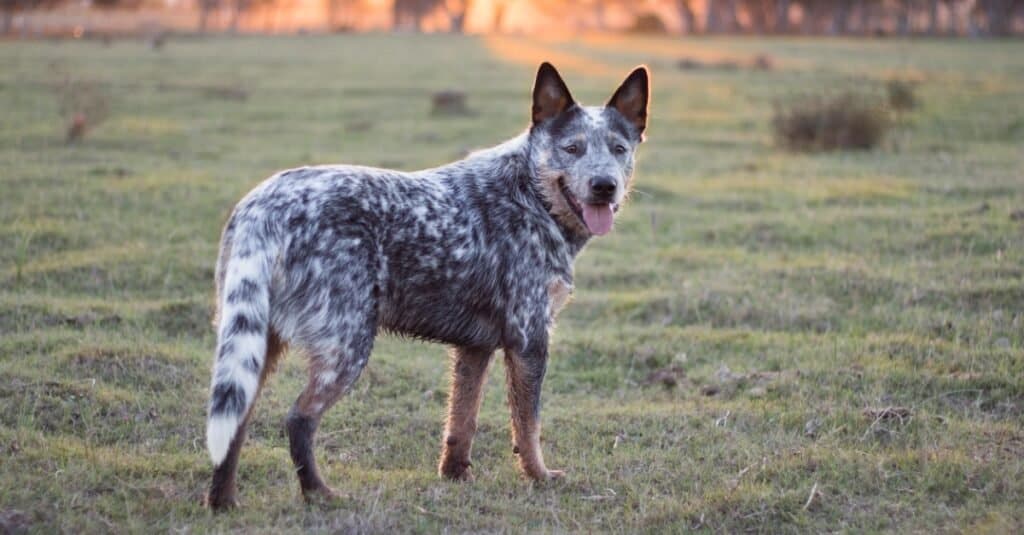
Australian cattle dog in field at sunset

The Australian cattle dog has a double coat that requires regular grooming.

Training

This herding dog is smart and a quick learner. So, training is a relatively easy process. One thing to keep in mind is that these dogs can have an independent streak. Australian cattle dogs are bred to be in charge of the herds they move. So, sometimes, they try to be the boss of a household. This makes it all the more important for an owner to establish authority during training. As with any other lesson, these dogs are quick to catch on! Using treats during training helps make sure lessons are effective.

Exercise

These dogs have a lot of energy. So, they need to exercise for at least one hour per day. It’s best to give them a lot of space to run and play. After all, this working dog was bred to run through acres of fields following herds of sheep or cattle. They need space to stretch their legs. This is part of the reason why they are not appropriate pets for people who live in apartments. A large yard, a big, enclosed field, or a park are all good places to take this dog. Exercise is not a luxury for this breed—it is essential to their overall health.

Fetch, tug-of-war, frisbee, ball, or chase are just a few of the games these dogs enjoy. A large dog park is another fun place to take an Australian cattle dog.
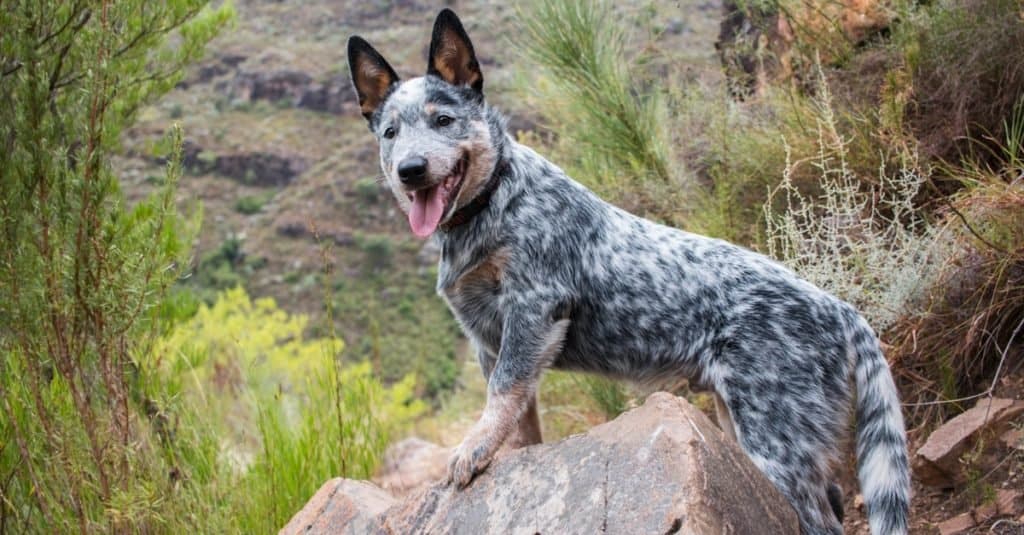
Oldest Dog: Bluey

An Australian Cattle Dog has a high need for exercise daily.

Puppies

Puppies of this breed grow to be fairly large in a short amount of time. They weigh 10.5 pounds at eight weeks. So, these puppies need a lot of space for exercising and growing right from the start. Plus, they are the ideal choice for a family. These are social dogs that like to be with family members.
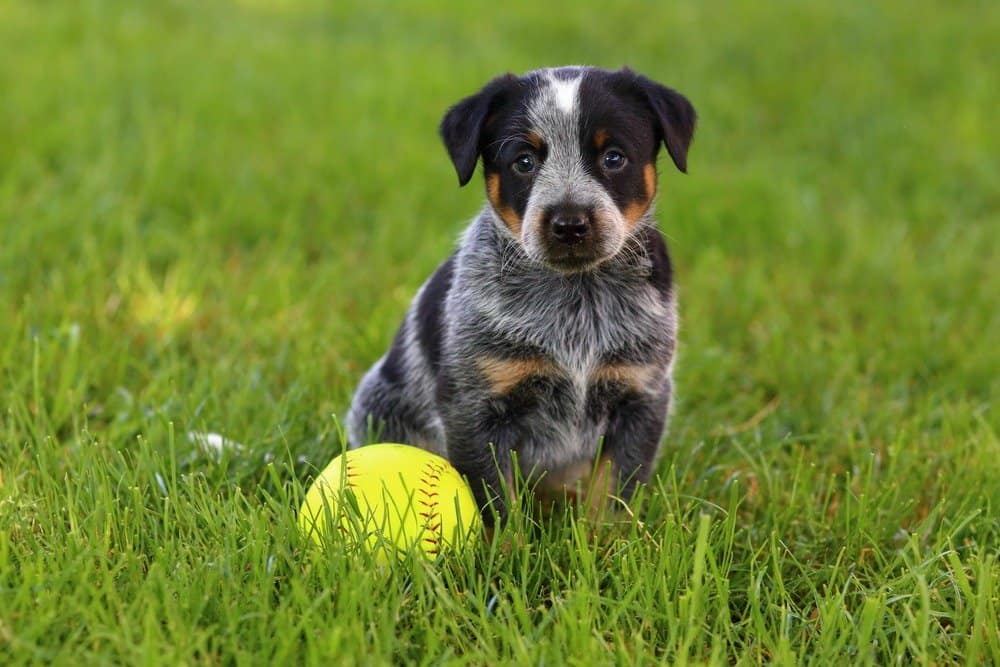
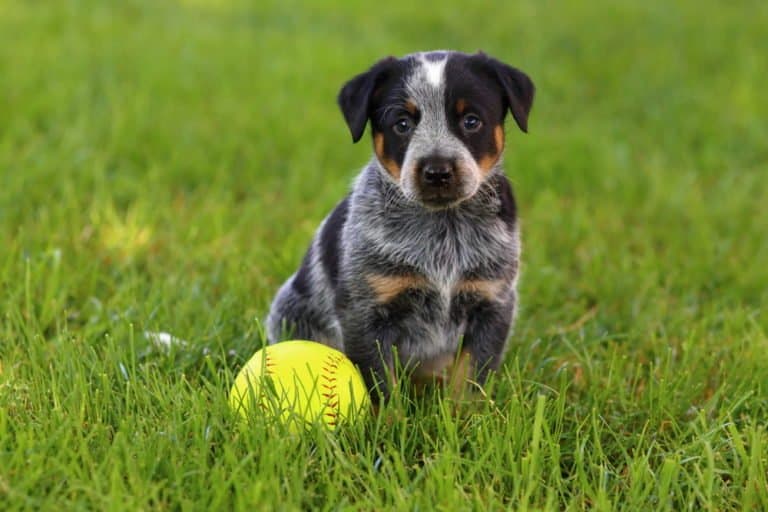
Australian Cattle Dog puppy

Australian Cattle Dog puppies need a lot of space to play.

With Children

Though this dog is a good choice for families with children, there are some things to bear in mind. This is a working dog at heart. They were bred for herding. So, it’s in their DNA to herd things even if there are no cattle or sheep around. Part of their herding behavior is to nip at the heels of the livestock. Some Australian cattle dogs may try this with children as they run through the yard. Training can help with this behavior. Also, if a family can get an Australian cattle dog puppy, it’ll grow up knowing how to behave around young children.
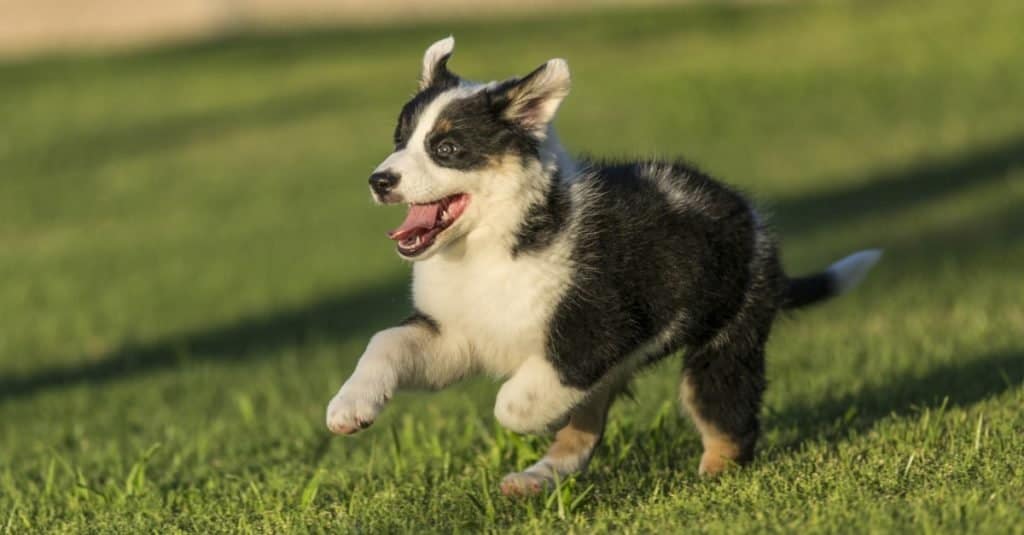
Cute Texas Blue Heeler puppy running in the park at sunset.

Australian Cattle Dogs are herding dogs. They will often herd children playing in the yard.

Dogs Similar to the Australian Cattle Dog

Some dogs that are similar to Australian cattle dogs include Border collies, Welsh Corgis, and German Shepherds.

  • Border collies: This is another herding dog with the same intelligence and alertness as an Australian cattle dog. It’s also easy to train.
  • Welsh Corgis: The body of a Welsh Corgi is muscular and compact, like that of the Australian cattle dog. It’s also known for its intelligence and focus.
  • German Shepherd: Another energetic dog with intelligence and loyalty. Both this dog and the Australian cattle dog have pointed ears that are always listening.
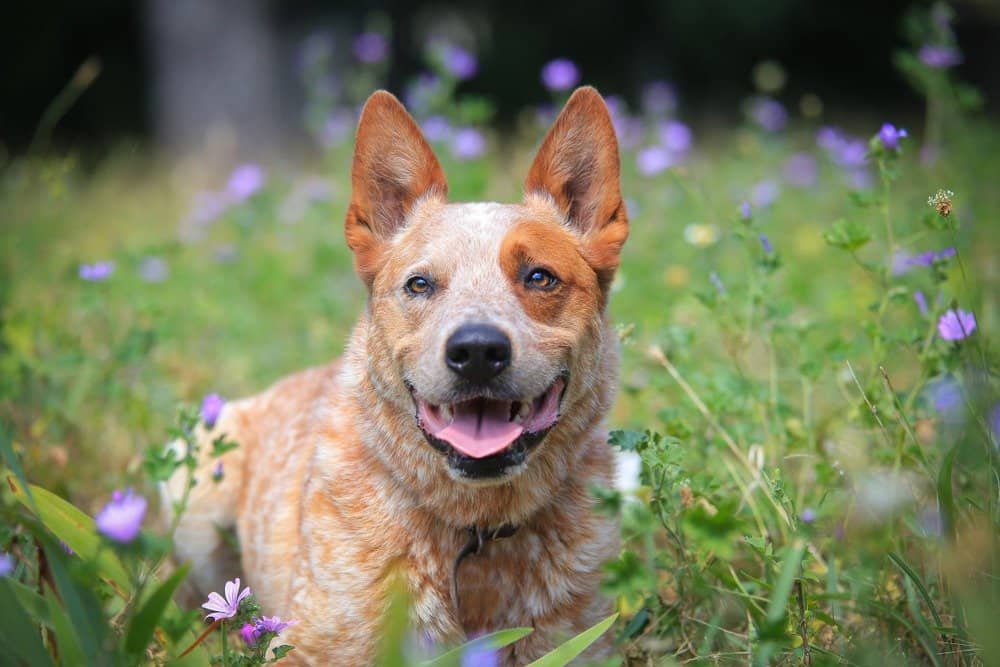
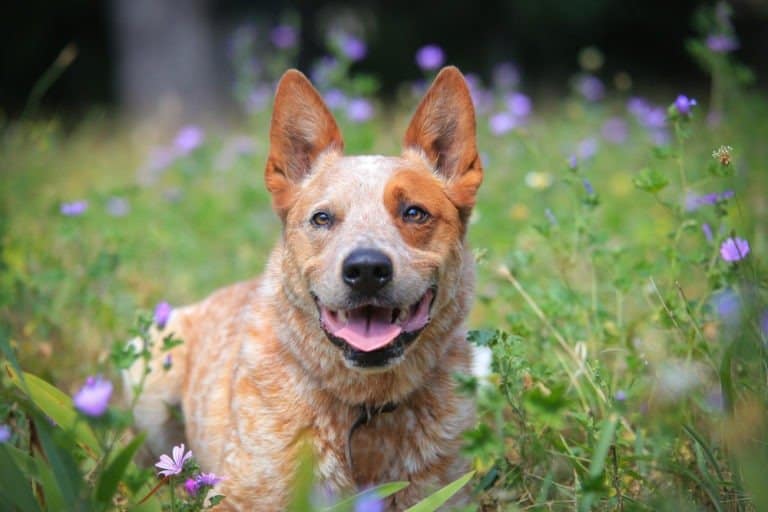
Australian Cattle Dog

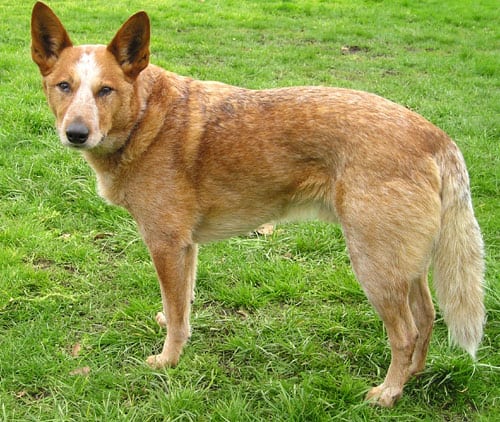
Australian cattle dogs are not always blue. They also come in red and red-speckled.

Australian Cattle Dogs vs the Blue Heeler

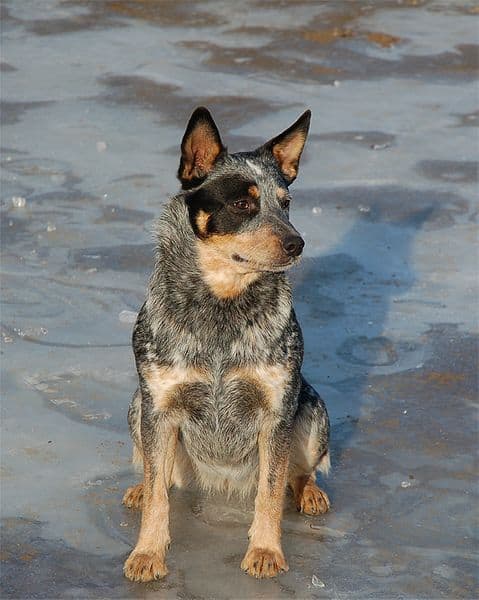
The red and blue heelers are the two types of Australian cattle dog. The blue heeler got its name from the blue tone of its coat, while a red heeler has a reddish tint to its fur. Both red and blue heelers are color variations of the Australian Cattle Dog, a breed developed from a mix of Dingoes, Collies, Dalmatians, and Kelpies. The primary difference between the red and blue heeler is their coat color.

Famous Australian Cattle Dogs

Australian cattle dogs are a favorite pet of some famous individuals, whether they’re native to Australia or not.

  • Actor Matthew McConaughey owns one
  • Actor Owen Wilson owns one named Garcia
View all 326 animals that start with A

Sources

  1. Vet Street / Accessed November 8, 2019
  2. American Kennel Club / Accessed November 8, 2019
  3. Cattle Dog World / Accessed November 8, 2019
Heather Hall

About the Author

Heather Hall

Heather Hall is a writer at A-Z Animals, where her primary focus is on plants and animals. Heather has been writing and editing since 2012 and holds a Bachelor of Science in Horticulture. As a resident of the Pacific Northwest, Heather enjoys hiking, gardening, and trail running through the mountains with her dogs.

Thank you for reading! Have some feedback for us?


Australian Cattle Dog FAQs (Frequently Asked Questions)

The average cost of a purebred Australian cattle dog is $600. Vet costs range from $200 to $600 annually depending on its overall health. The food bill for this dog ranges around $100 per month depending on the brand of dog food.