A
Species Profile

Australian Shepherd

Canis lupus familiaris

Built for brains, built for work
otsphoto/Shutterstock.com

Australian Shepherd Distribution

Click a location to explore more animals from that region

Origin Location

This map shows the native origin of the Australian Shepherd. As a domesticated species, they are now found worldwide.

Loading map...

Size Comparison

Human 5'8"
Australian Shepherd 1 ft 9 in

Australian Shepherd stands at 31% of average human height.

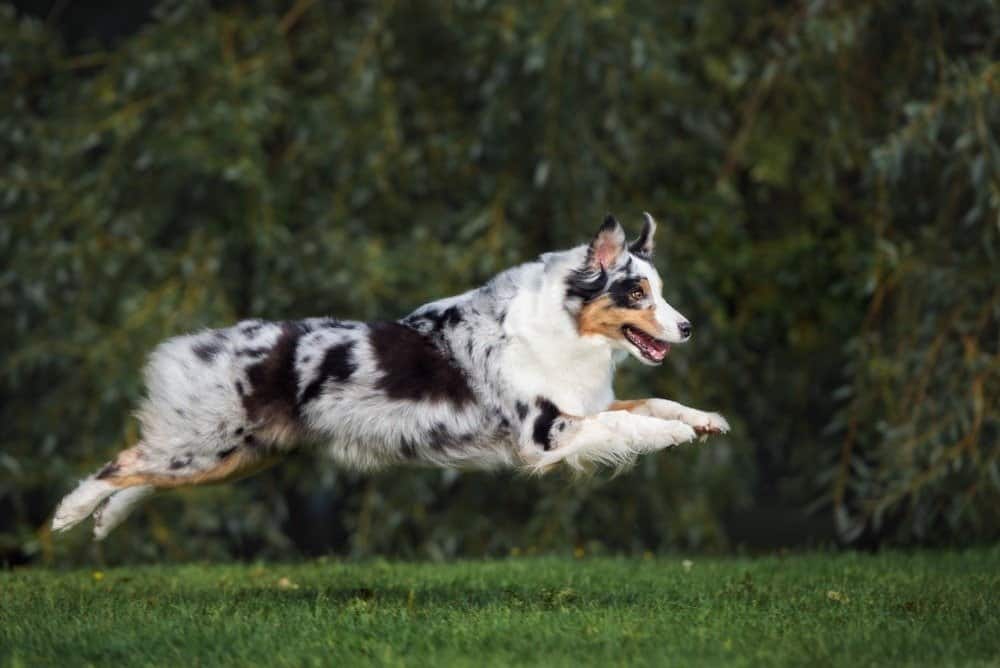
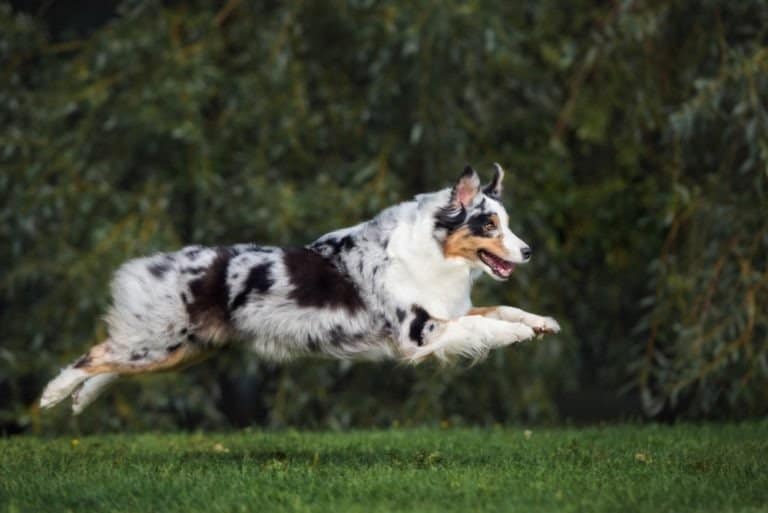
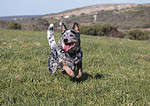
Happy Australian Shepherd dog running outdoors in summer

At a Glance

Domesticated
Also Known As Aussie
Diet Omnivore
Activity Diurnal+
Lifespan 13 years
Weight 32 lbs
Status Not Evaluated
Did You Know?

Despite the name, the breed was developed largely in the United States for ranch and stock work.

Scientific Classification

The Australian Shepherd is a domesticated herding dog breed, historically developed in the United States as a versatile stock-working and ranch dog. Despite its name, it is not an Australian wild animal or separate species.

Kingdom
Animalia
Phylum
Chordata
Class
Mammalia
Order
Carnivora
Family
Canidae
Genus
Canis
Species
lupus

Distinguishing Features

  • Medium-sized, athletic herding dog with strong working drive
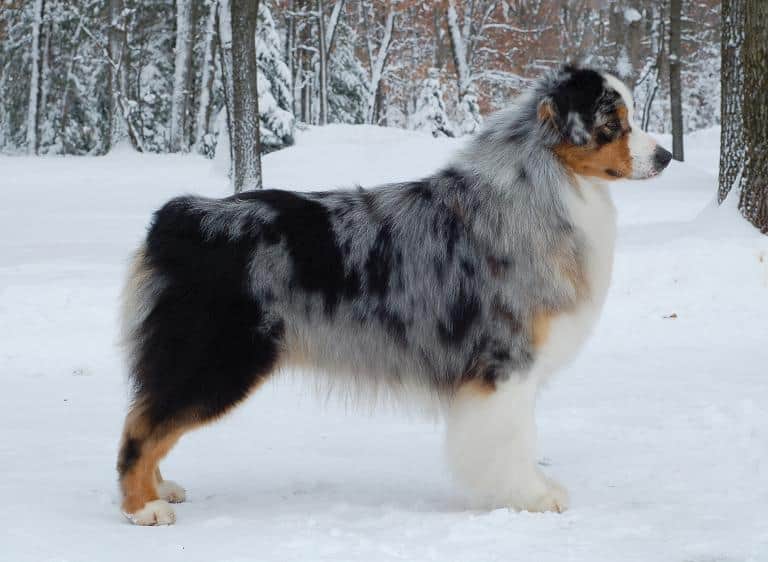
  • Common coat colors include blue merle, red merle, black, and red, often with white/tan trim
  • Often has a naturally bobbed tail or docked tail (where legal)
  • Highly trainable and energetic; bred for stock work and agility

Physical Measurements

Males and females differ in size

Height
1 ft 9 in (1 ft 8 in – 1 ft 11 in)
1 ft 7 in (1 ft 6 in – 1 ft 9 in)
Length
2 ft 10 in (2 ft 6 in – 3 ft 3 in)
Weight
62 lbs (55 lbs – 71 lbs)
44 lbs (35 lbs – 55 lbs)
Tail Length
Up to 1 ft 2 in
Up to 12 in
Top Speed
30 mph
Top speed about 45–50 km/h

Appearance

Primary Colors
Secondary Colors
Skin Type Fully furred domestic dog skin with a weather-resistant double coat (moderate-length outer coat with insulating undercoat); skin pigmentation often matches coat areas and can show mottling in merle dogs.
Distinctive Features
  • Domestic dog breed (Canis lupus familiaris) within Canidae/Canis; not a wild species and not Australian endemic wildlife-developed in the United States as a stock-working ranch herder.
  • Medium-sized, athletic, slightly longer-than-tall outline; built for agility, quick turns, and endurance herding work rather than the leaner, more uniform 'wild-type' canid build.
  • Moderate-length double coat; feathering on legs and tail/ruff; sheds seasonally-regular brushing (often 1-3x/week, more during blow) helps prevent matting and reduces shedding.
  • Head: wedge-shaped with semi-erect or rose ears; almond-shaped eyes; eye color can be brown, blue, or heterochromia-blue/odd eyes are especially common in merle individuals.
  • Tail: naturally bobbed tail occurs in the breed; some individuals have full tails (tail docking may be seen historically/regionally).
  • Working-dog temperament and care needs: high exercise and mental stimulation requirements; thrives with training, structured work, and enrichment (herding, agility, obedience).
  • Breed-linked health considerations: MDR1 drug-sensitivity mutation is relatively common; hip/elbow dysplasia risk; hereditary eye diseases (e.g., cataracts, PRA, CEA), epilepsy reported in some lines.
  • Merle-related cautions: avoid merle-to-merle breeding due to elevated risk of hearing/vision defects; excessive white around ears/eyes can correlate with higher deafness/eye-anomaly risk. Regular veterinary eye screening and genetic testing are common best practices.

Sexual Dimorphism

Sexual dimorphism is moderate: males are typically larger and more robust with a fuller ruff, while females are usually slightly lighter and more refined in head/neck while retaining the same overall herding-athletic structure.

  • Typically taller/heavier with broader head and chest.
  • Often a more pronounced neck ruff/coat fullness (especially in intact males).
  • Typically slightly smaller and more refined through head/neck and bone.
  • Often a slightly sleeker outline while maintaining the same coat types and patterns.

Did You Know?

Despite the name, the breed was developed largely in the United States for ranch and stock work.

Many Aussies have naturally bobbed tails; historically, tails were also docked on working ranch dogs.

The merle pattern can produce striking "glass" (blue) eyes or two different eye colors.

They're famous for "wiggle butt" body language-expressive rear-end wags when excited.

Aussies excel in modern dog sports (agility, obedience, herding trials, disc) thanks to speed and biddability.

Two merle parents can produce "double-merle" puppies with a much higher risk of deafness and vision problems-responsible breeding avoids this.

They're part of the domestic dog (Canis lupus familiaris) lineage within Canidae-specialized by humans for cooperative herding rather than wild hunting.

Unique Adaptations

  • Selective breeding emphasized cooperative work with humans (high biddability) rather than the more independent survival behaviors seen in wild canids like wolves (Canis lupus).
  • Athletic build and efficient gait support long days of trotting, sprinting, and turning on uneven ranch terrain.
  • Strong orientation to motion: heightened tendency to track and control moving animals-an adaptation of domestic dog prey-chase components into herding.
  • Coat variety (double coat in many lines) offers weather tolerance for outdoor work; seasonal shedding is common.
  • Problem-solving and trainability are especially pronounced-useful for complex stock work and modern canine sports.
  • Common genetic consideration: MDR1 (ABCB1) drug sensitivity occurs in the breed; this "adaptation" matters medically because it changes how some drugs are safely processed.

Interesting Behaviors

  • Gathering and "checking" behavior: circling livestock (or family members) to keep the group together.
  • Heel-nipping or ankle-chasing when under-stimulated-an instinctive herding tactic that needs training redirection.
  • Intense focus and rapid responsiveness to cues; many offer behaviors quickly during training sessions.
  • Shadowing a favorite person ("velcro dog") and monitoring movement around the home or yard.
  • Crouch-and-burst movement with quick lateral cuts-useful for turning stock and common in play.
  • Vocal alerts (barks/woofs) when something changes in their environment; many are natural watchdogs without being guard dogs.

Cultural Significance

The Australian Shepherd is tied to North American ranching and the American West working-dog culture. Bred as a versatile stock dog, it became a symbol of trainable partnership in rodeos, agility, obedience, service work, and family life, showing the need for much exercise and training.

Myths & Legends

Naming lore persists that the dogs were "from Australia," tied to stories of shepherds and sheep routes connected with Australia; the breed's true development is American, but the name's folklore remains part of its identity.

Ranch storytelling often credits a "good Aussie" with near-mythic stock sense-dogs said to anticipate a cow's break or read a rider's intent before any visible cue, a common campfire tale in working-dog country.

Aussies gained folk-hero status through rodeo and trick-dog traditions, where tales of dogs performing daring leaps, complex cues, and lifesaving stock work were passed along as local legends.

The breed entered popular storytelling through the film title and legend of a famed cow dog in *Stub: The Best Cowdog in the West* (1965), reinforcing the archetype of the loyal, canny ranch partner.

"Ghost-eye" and "two-colored eye" superstitions appear in some local traditions, casting merle-eyed dogs as unusually perceptive or uncanny-an example of how distinctive traits invite folklore.

Conservation Status

NE Not Evaluated

Has not yet been evaluated against the criteria.

Population Stable

Life Cycle

Birth 6 pups
Lifespan 13 years

Lifespan

In the Wild
12–15 years
In Captivity
9–17 years

Reproduction

Mating System Polygynandry
Social Structure Managed Domestic
Breeding Pattern Serial
Fertilization Managed Selective
Birth Type Internal_fertilization

Australian Shepherd (Canis lupus familiaris) breeding is human-managed. At the population level it's polygynandry (multiple males and females father litters). Reproduction uses internal fertilization and live birth; pairings are planned, not long-term.

Behavior & Ecology

Social Pack Group: 4
Activity Diurnal, Crepuscular, Cathemeral
Diet Omnivore meat-forward diets (e.g., beef or chicken-based complete dog food)

Temperament

Highly intelligent and quick-learning; thrives on complex tasks and pattern-based training (more intense and handler-focused than many general companion dogs).
Energetic, athletic, and endurance-oriented; under-stimulation commonly leads to nuisance behaviors (excessive barking, pacing, destructive chewing).
Strong herding/controlling drive: may stalk, "eye," circle, and nip at heels-especially toward running children, cyclists, or other pets if not redirected.
Affectionate and loyal with family; often shadowing household members and preferring proximity over independence.
Alert, vigilant, and sometimes vocal; can be reserved with strangers (watchdog-like) without being inherently aggressive when properly socialized.
Sensitive and biddable; responds best to consistent, reward-based training-harsh handling can increase anxiety/reactivity.
MDR1 mutation (drug sensitivity) needs careful medicine use. Hip/elbow dysplasia and eye diseases (cataracts, PRA, CEA) can lower activity. Epilepsy affects training. Use conditioning, joint-friendly exercise, eye checks, and mental enrichment.

Communication

Alert barking Often triggered by novelty, movement, or perceived boundary violations
Demand/attention barking when under-exercised or anticipating work/play.
Whining/whimpering to solicit interaction or express frustration/excitement.
Growling Play, resource guarding, or discomfort-interpret with body language
Occasional howling/"talking" in response to sirens, excitement, or social contagion.
Intense gaze/"eye" and body blocking to influence movement-distinctive herding-style communication compared with baseline canid social signaling.
Circling, crouching, and quick directional feints to control other animals' motion; may escalate to heel-nipping if arousal is high.
Physical contact signals: leaning, pawing, nudging, and following closely to maintain handler connection.
Highly expressive ear/tail/posture changes; rapid shifts with arousal are common in high-drive individuals.
Scent marking and investigation (normal canid behavior), though typically less territory-driven than free-ranging canids due to human-managed routines.
HUBS pattern: strong responsiveness to human gesture/voice (hand signals, whistles, clicker) with individual variation-some lines produce more vocal, higher-arousal dogs requiring deliberate impulse-control training.

Habitat

Biomes:
Temperate Grassland Temperate Forest Mediterranean Temperate Rainforest Savanna Tropical Rainforest Tropical Dry Forest Desert Hot Desert Cold Boreal Forest (Taiga) Tundra Alpine Freshwater Wetland Marine +9
Terrain:
Mountainous Hilly Plateau Plains Valley Riverine
Elevation: Up to 14763 ft 9 in

Ecological Role

Human-associated working/companion canid; functional mesopredator where free-roaming, but primarily a managed, provisioned omnivore in modern settings.

livestock herding and stock management (reduces stress/injury and improves grazing efficiency) property/ranch guardian presence and alarm barking localized rodent/pest suppression when allowed/able to hunt opportunistically human companionship and assistance roles (sport, service/therapy potential depending on training)

Diet Details

Main Prey:
Small rodents Rabbits and hares Squirrel Ground-nesting birds and eggs Insects and other small invertebrates
Other Foods:
Berries and other fruits Grasses Roots, tubers and other starchy plant matter Vegetables Fungi

Human Interaction

Domestication Status

Domesticated

The Australian Shepherd (Canis lupus familiaris) is a modern herding breed made in the United States (not Australia) in the 19th–20th centuries. Bred from domestic dogs, originally wolves, Aussies were bred for herding work: strong herding drive, quick response to cues, stamina, and problem solving. They work on farms, in sports, training, service, or as family pets.

Danger Level

Moderate
  • nipping/heel-biting or mouthing behaviors linked to herding instinct (especially in under-exercised or poorly socialized dogs)
  • reactivity toward strangers or other dogs if inadequately socialized; may escalate to bites
  • high arousal and chase behaviors around running children, cyclists, or pets
  • protectiveness/territorial barking; potential bite risk when guarding space or resources
  • injuries from jumping/collisions during play due to athleticism and intensity

As a Pet

Suitable as Pet

Legality: Australian Shepherd (Canis lupus familiaris) is generally legal as a pet where dogs are allowed. It may need local dog licenses, leashes, HOA rules, or dangerous-dog rules, and local laws can vary.

Care Level: Experienced

Purchase Cost: $300 - $2,500
Lifetime Cost: $18,000 - $45,000

Economic Value

Uses:
Livestock production support (herding/stock management) Companion animal industry Dog sports and events Working services (therapy/service candidates, detection/search in limited contexts) Breeding and training services Veterinary and pet care services
Products:
  • herding labor (stock movement, sorting, penning)
  • training and handling services
  • sport competition participation (agility, obedience, rally, disc)
  • therapy visits and community programs (individual-dependent)
  • consumer spending on food, grooming, equipment, boarding/daycare

Relationships

The Australian Shepherd is a natural herding dog that excels at whatever task it’s asked to perform. The history of the breed dates back to the early 19th century, when Basque people from northern Spain emigrated to the wide-open lands of Australia with their faithful companions, the Pyrenean Shepherds. These dogs were then crossed with several British imports (such as the Border Collie) to create an entirely new breed. After Basque people arrived in California, American ranchers took a liking to the breed and called it the Australian Shepherd.

The breed is truly an international success story, but it has a special place in American hearts since it became famous in the West. According to the American Kennel Club, it is still one of the more popular breeds in the United States. Mini and toy versions, along with the Aussie mix, have also become very popular. Other breeds with which it’s mixed include the golden retriever, poodle, corgi, and husky.

3 Pros and Cons of Owning an Australian Shepherd

Pros!Cons!
Fiercely loyal
The Australian Shepherd develops a strong bond with its owner that won’t easily break.
Destructive behavior
If this breed doesn’t have an outlet for its bundled up energy, then it may start destroying objects around the home.
Intelligent and hard-working
This breed will complete any task or job you give it.
Territorial
This breed can be a little overprotective of its owner.
Good exercise dog
If you spend a lot of time outdoors every day, then the Australian Shepherd is an excellent companion.
Medium to high maintenance
The Aussie requires a lot of time and effort to care for.

History and Origins

why do dogs hump

Australians Shepherds are medium to high-maintenance dogs.

The Australian Shepherd is a descendant of Europe’s most successful herders, hailing from the Pyrenees Mountains on the border of France and Spain. The Basque people, who lived in the area centuries ago, were renowned for their herding skills and used the Pyrenean Shepherd as their go-to canine for the job.

In the early 1800s, people from England moved into the Australian interior, looking for land to raise cattle. A number of Basque shepherds also made their way to Australia, bringing their dogs with them. To improve their dogs, the Basque shepherds selectively bred them with British Collies and Border Collies. After building up their flocks, the Basque shepherds left Australia for California.

In the late 1800s, California ranchers became enamored with the herding dogs the Basques brought over, which they mistakenly thought were Australian-bred. Since then, Aussies have become a staple of the American Wild West and are now used in numerous roles, from therapy dogs to rodeo performers. The Australian Shepherd was officially recognized as an AKC breed in 1991.
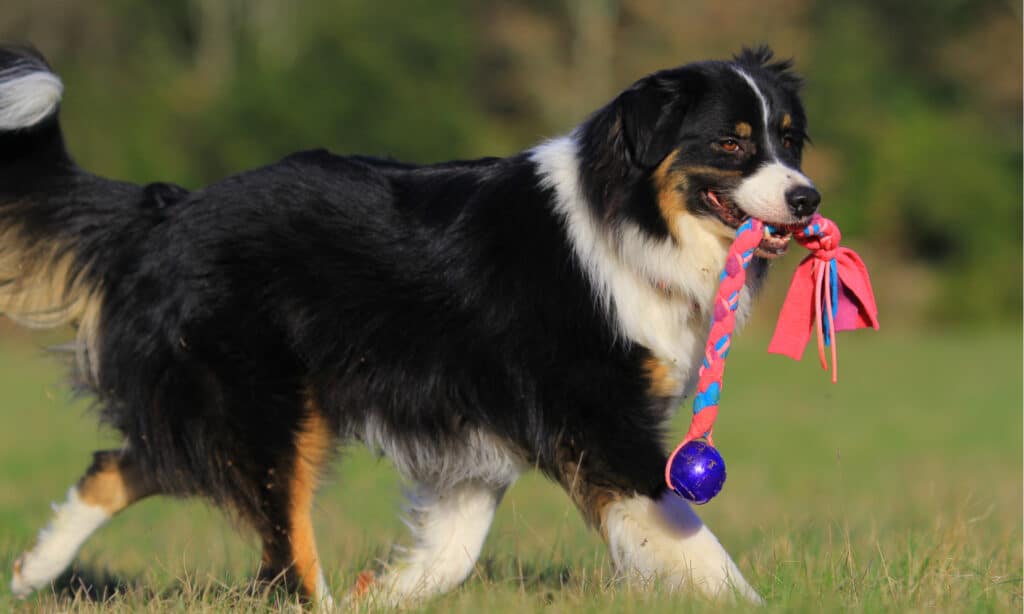
why do dogs get the zoomies

The Australian Shepherd is a descendant of Europe’s most successful herders, hailing from the Pyrenees Mountains on the border of France and Spain.

Size and Weight

The Australian Shepherd is a medium-sized dog with a strong build. By comparison, the mini version is around 20 to 35 pounds smaller than the standard Aussie breed, while a toy Aussie weighs about 12 to 17 pounds. Here is a breakdown of the standard sizes:

Height (Male)20 to 23 inches
Height (Female)18 to 21 inches
Weight (Male)50 to 65 pounds
Weight (Female)40 to 55 pounds
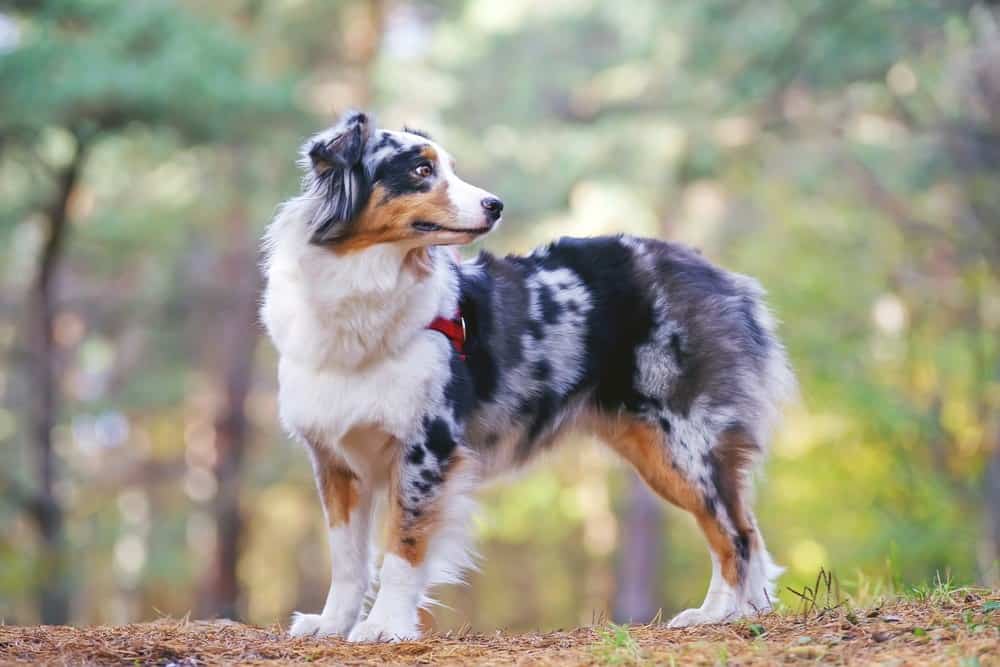
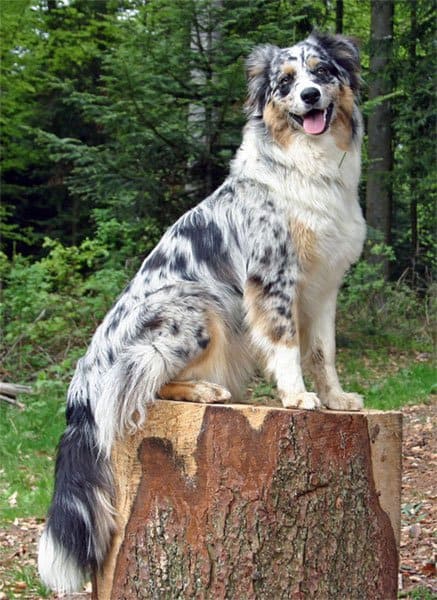
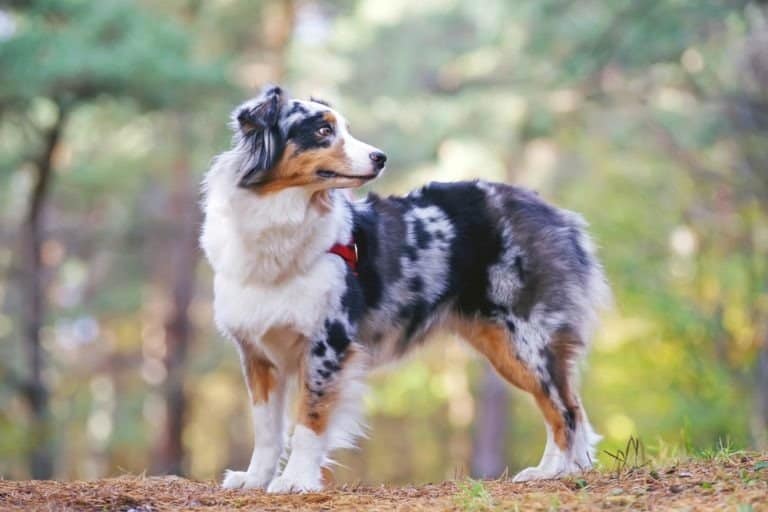
Blue merle Australian Shepherd dog with a red harness staying in the forest

Blue merle Australian Shepherd dog with a red harness standing in the forest.

Common Health Issues

The Australian Shepherd is a generally healthy breed, but there are a few big health issues to look out for. It is prone to several types of eye diseases, the most common of which is cataracts. This is a disease that causes a cloudy appearance in the eye. Other common health issues include hip or elbow dysplasia (a genetic abnormality that causes development problems in the joint), distichiasis (in which additional eyelashes grow around the lid and irritate the eye), deafness, hypothyroidism, allergies, drug sensitivities, and cancer.

The Aussie is among several breeds that are prone to epilepsy. Unfortunately, these health issues can reduce the lifespan of your pet. Because some of these health conditions arise from genetic abnormalities (particularly in merle-to-merle breeding), it is a good idea to buy the dog from a breeder who screens for these kinds of problems early. To sum things up briefly, these are the most common health problems for this breed:

  • Eye Diseases
  • Cancer
  • Epilepsy
  • Deafness
  • Hip Dysplasia
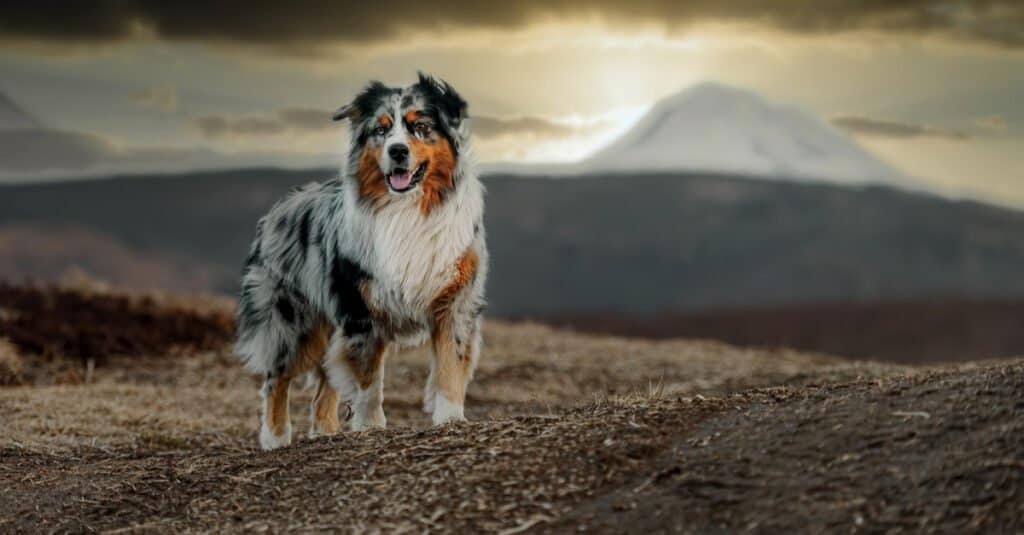
Australian shepherd at sunset

The Australian shepherd is prone to several eye disorders.

Temperament

The Australian Shepherd exhibits many excellent traits that should appeal to a highly engaged owner. An ideal member of this breed has a very outgoing and friendly personality that’s keen to express itself. It should also be attentive to its owner’s commands and desires. As long as its energetic and loyal behavior is put to good use, this breed is a model dog with a good sense of self-control and diligence. Its patient demeanor also makes it a great therapy dog, drug detector, and search and rescue dog. Toy and Mini Aussies both exhibit similar behaviors to the standard breed.
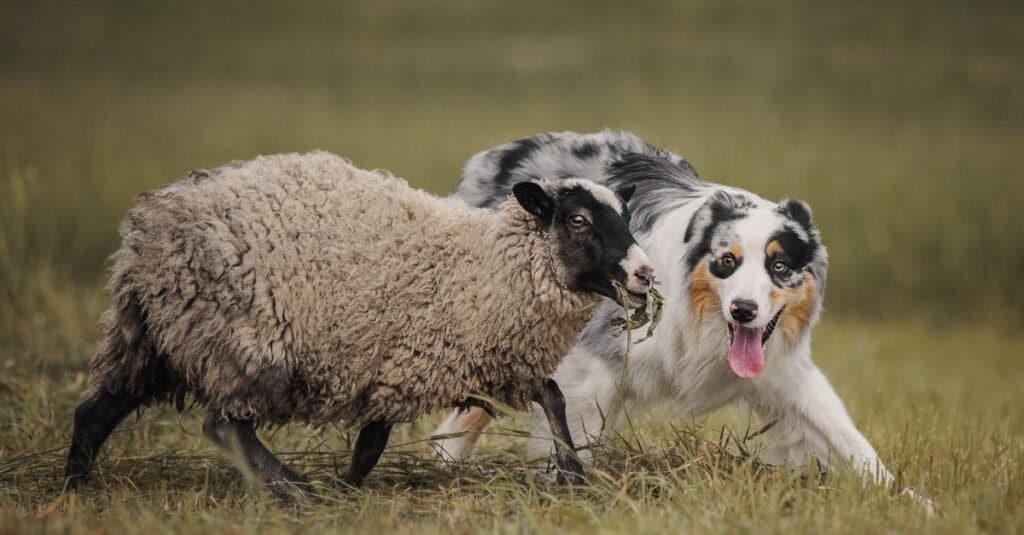
Best farm animals

An Australian Shepherd is a natural herding dog.

How to Take Care of Australian Shepherds

The Australian Shepherd is a moderate to high-maintenance breed that requires quite a lot of grooming, exercise, and attention. You should only buy this breed if you have the time, inclination, and ability to fully take care of it. You will get the best results if you train and socialize this breed early, as a puppy.

The Best Dog Food

A fully grown adult Aussie thrives on around 1.5 to 2.5 cups of high-quality dog food split into two separate meals every single day. It is a good idea to find specialized food for the dog’s appropriate age (puppies, adults, or seniors). Because it tends to gain weight, you should carefully monitor the dog’s calorie consumption and give treats only sporadically to support its training. Considering their propensity for allergies and sensitivities, Australian Shepherds may do better eating a limited-ingredient or allergy care dog food.

Maintenance and Grooming

The Australian Shepherd has a thick double-layered coat that does require some attention. For most of the year, this breed only requires weekly brushing. But in the shedding season, the fur needs to be raked once every two or three days, followed by a quick cleanup with a wire brush. Because of its frequent outdoor adventures, the dog may require frequent baths to prevent dirt from accumulating. You should also try to keep their nails trimmed regularly.

Training

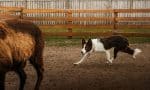
The Australian Shepherd is a highly trainable and obedient dog that easily takes to various skills, commands, sports competitions, jobs, and almost any other task you can imagine. Perhaps no other breed is quite as eager to please. One of the things you should look out for is the dog’s herding instincts. If you don’t want it herding, then you should spot the signs (such as chasing and heel sniffing) before they become more serious.

You can eliminate undesirable behavior by gently telling your dog no or walking away. You can also redirect its behavior toward more acceptable activities. Do not punish your dog by yelling at it or lashing out, even if it’s stubborn. This may discourage it or make it more distrustful of you. You can reinforce the dog’s behavior with treats or clickers. Professional training is also recommended for more serious owners.
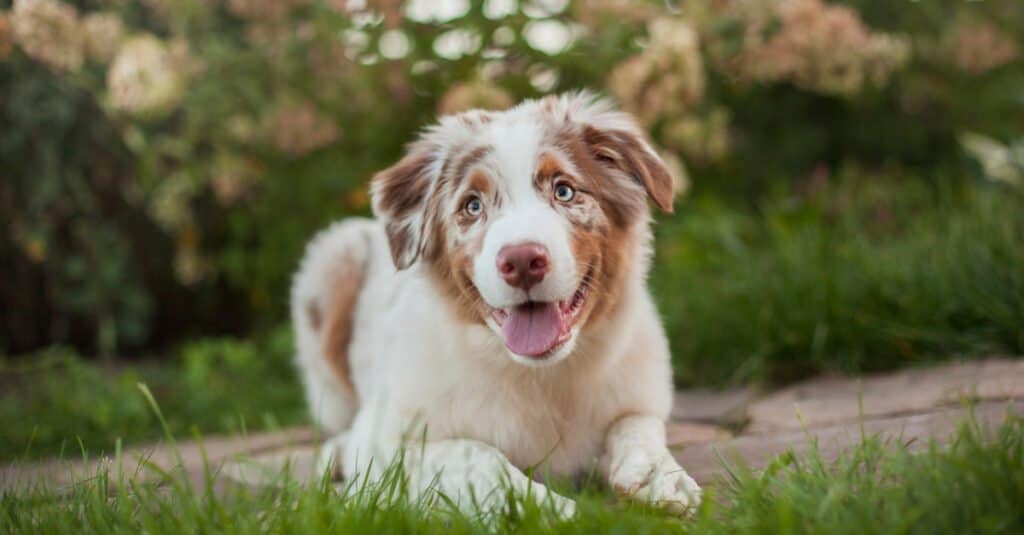
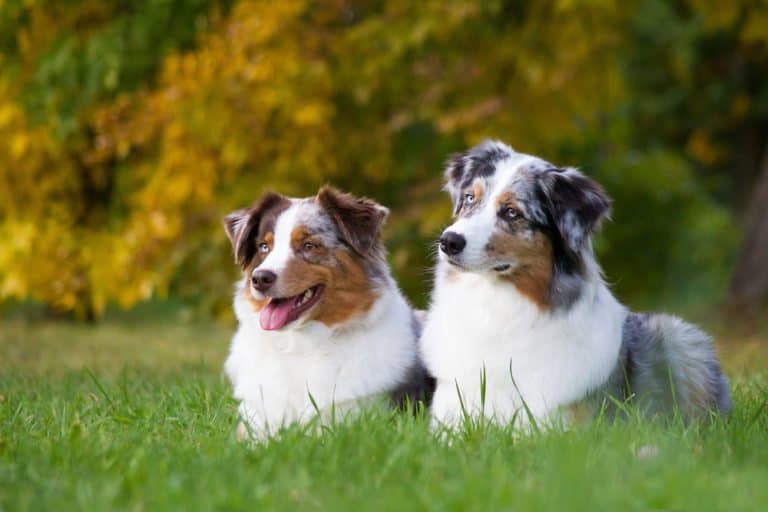
merle Australian shepherd laying in grass

Australian shepherds are loving and highly intelligent.

Exercise

The Australian Shepherd is a high-energy breed that requires at least an hour or two of exercise every single day. If you already have a large yard, then you should be set, but any wide open space should suffice, and the dog should be overjoyed to come with you on walks, hikes, or biking trips. It also loves to perform tricks, agility competitions, and herding tests. The dog’s long double coat should insulate it from heat and cold, but it can become rather uncomfortable in extreme temperatures. On an exceptionally warm day, you should make sure the dog is comfortable and has enough to drink.

Puppies

There are a few things to keep in mind with your new dog. Puppies should be exposed to as many different situations and people as possible. If it’s not properly socialized from an early age, the Australian Shepherd may become wary of strangers. You should also give it an exam at the vet as soon as possible to screen for any early health problems.
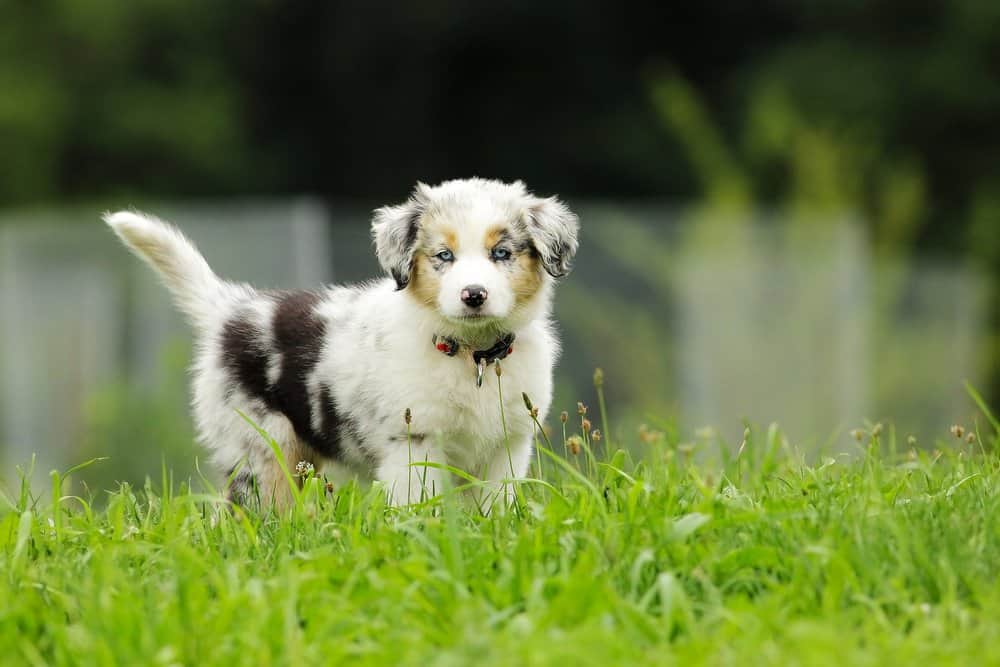
Australian Shepherd (Canis familiaris) - australian shepherd puppy

Australian Shepherd puppies should be socialized early.

With Children

The Australian Shepherd is a loyal companion and excellent playmate, but the first introductions with your children should be carefully thought out and managed. Because of its herding instinct, the Australian Shepherd may at first tend to chase or nip new people it encounters. Once the dog grows accustomed to your children, though, they will get along very well with each other. In fact, this breed may become quite protective of your children. But you should teach your children never to tug at the dog’s fur or disturb it while it’s trying to eat. The Australian Shepherd can tolerate rough play, but it doesn’t want to be annoyed or harassed. It is also never a good idea to leave the dog alone with young children in case interactions go poorly.

Dogs Similar to the Australian Shepherd

The Australian Shepherd is just one of many different types of herding dogs. Here are some of the closest breeds in terms of appearance, behavior, and temperament. Some of these breeds also have their own Aussie mix.

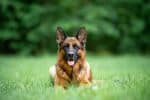
  • German Shepherd – This very large working dog, which originated from Germany, is one of the most popular breeds in the world. Like the Australian Shepherd, it is diligent, smart, loyal, and hard-working, but also requires some work to fully meet its needs.
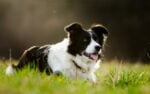
  • Border Collie – Hailing from Northern England and Scotland, the Border Collie is another herding dog with a loyal personality, diligent work ethic, and energetic behavior. Its unique mixture of colors also resembles the appearance of the Australian Shepherd.
  • English Shepherd – Descended from various collie breeds, the English Shepherd is a medium-sized dog with some combination of black, white, tan, or sable colors. It shares ancestry with both the Border Collie and the Australian Shepherd. This is reflected in the excellent work ethic, high intelligence, and fierce loyalty.
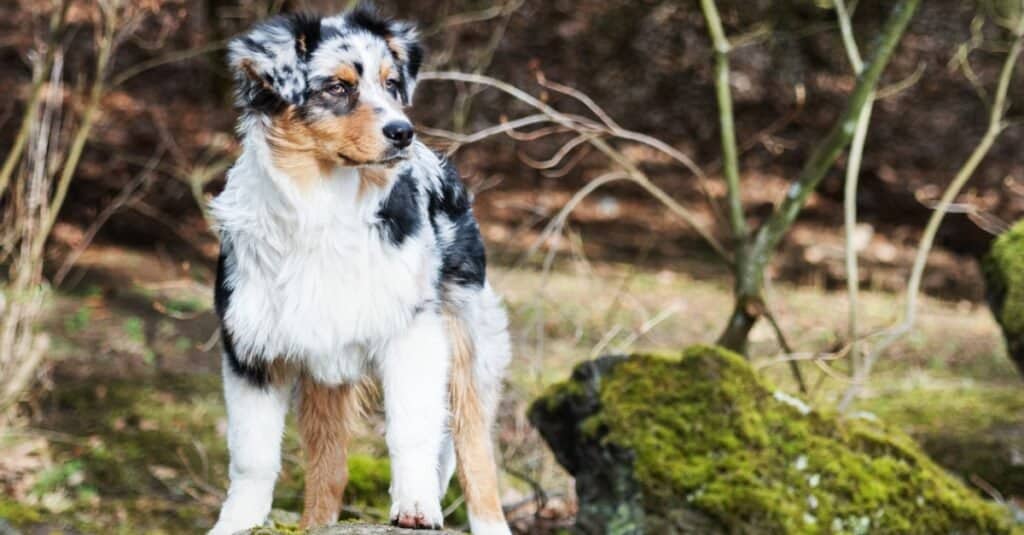
Australian Shepherd standing on a moss covered rock

The Australian Shepherd is one of many types of herding dogs.

Famous Australian Shepherds

The Australian Shepherd is one of the most famous breeds in the world. It makes frequent appearances in both fiction and popular culture.

  • A blue merle Australian Shepherd named Bunk was the sidekick of the cowboy actor Jack Hoxie and appeared in several films throughout the 1920s and 1930s.
  • Jay Sisler, an Idaho rancher and rodeo competitor, toured the country with his popular trick-performing Australian Shepherds in the middle of the 20th century. Some of them even appeared in the Disney films Run, Appaloosa, Run, and Stub: The Best Cow Dog in the West.
  • Stephen Spielberg, the famous director of E.T. and Schindler’s List, once owned an Australian Shepherd called Harlow.
  • Apple co-founder Steve Wozniak owned an Australian Shepherd (along with llamas, donkeys, and Siberian Huskies) in the 1980s. Steve Jobs supposedly owned the breed, too.
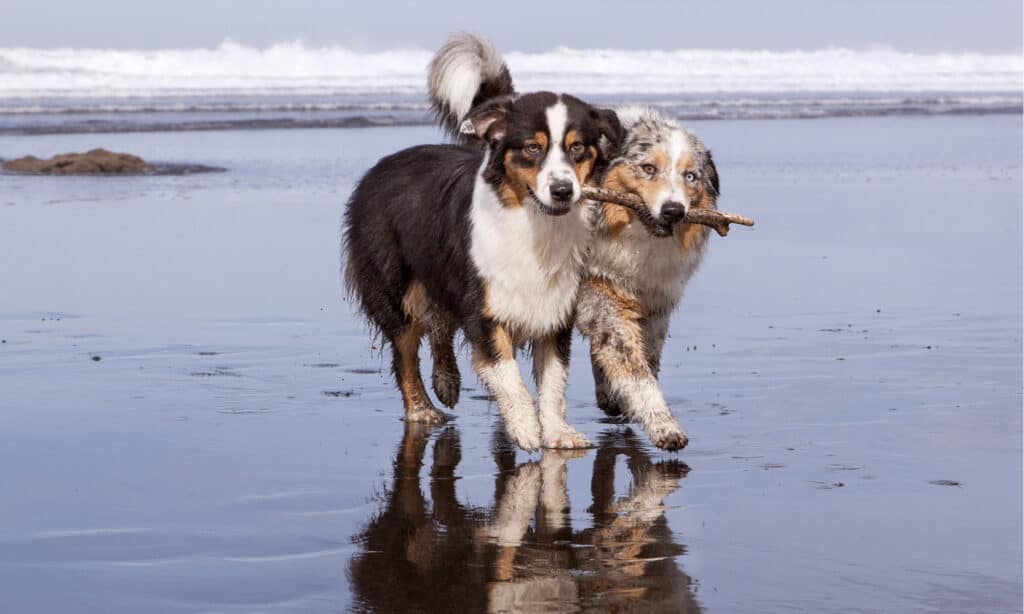
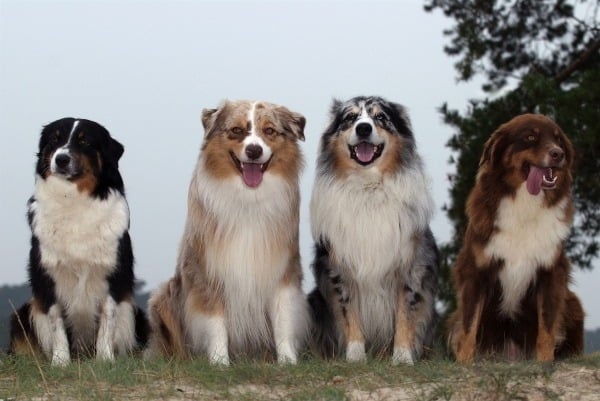
Group of Australian Shepherd dogs

A lot of celebrities have Australian Shepherds as pets.

View all 326 animals that start with A

Sources

  1. American Kennel Club / Accessed December 7, 2020
Heather Hall

About the Author

Heather Hall

Heather Hall is a writer at A-Z Animals, where her primary focus is on plants and animals. Heather has been writing and editing since 2012 and holds a Bachelor of Science in Horticulture. As a resident of the Pacific Northwest, Heather enjoys hiking, gardening, and trail running through the mountains with her dogs.

Thank you for reading! Have some feedback for us?


Australian Shepherd FAQs (Frequently Asked Questions)

The Aussie is a loyal and playful companion, but it may take some time for the dog to become accustomed to your family. Introduce the dog to your children gradually and let it know through gentle disapproval where the boundaries are.