
A
Species Profile

Avocet

Recurvirostra

Curved bill, clean sweep.
Mike Baird / CC BY 2.0, Flickr

Avocet Distribution

Click a location to explore more animals from that region

Loading map...

Size Comparison

Human 5'8"
Avocet 1 ft 3 in

Avocet stands at 22% of average human height.

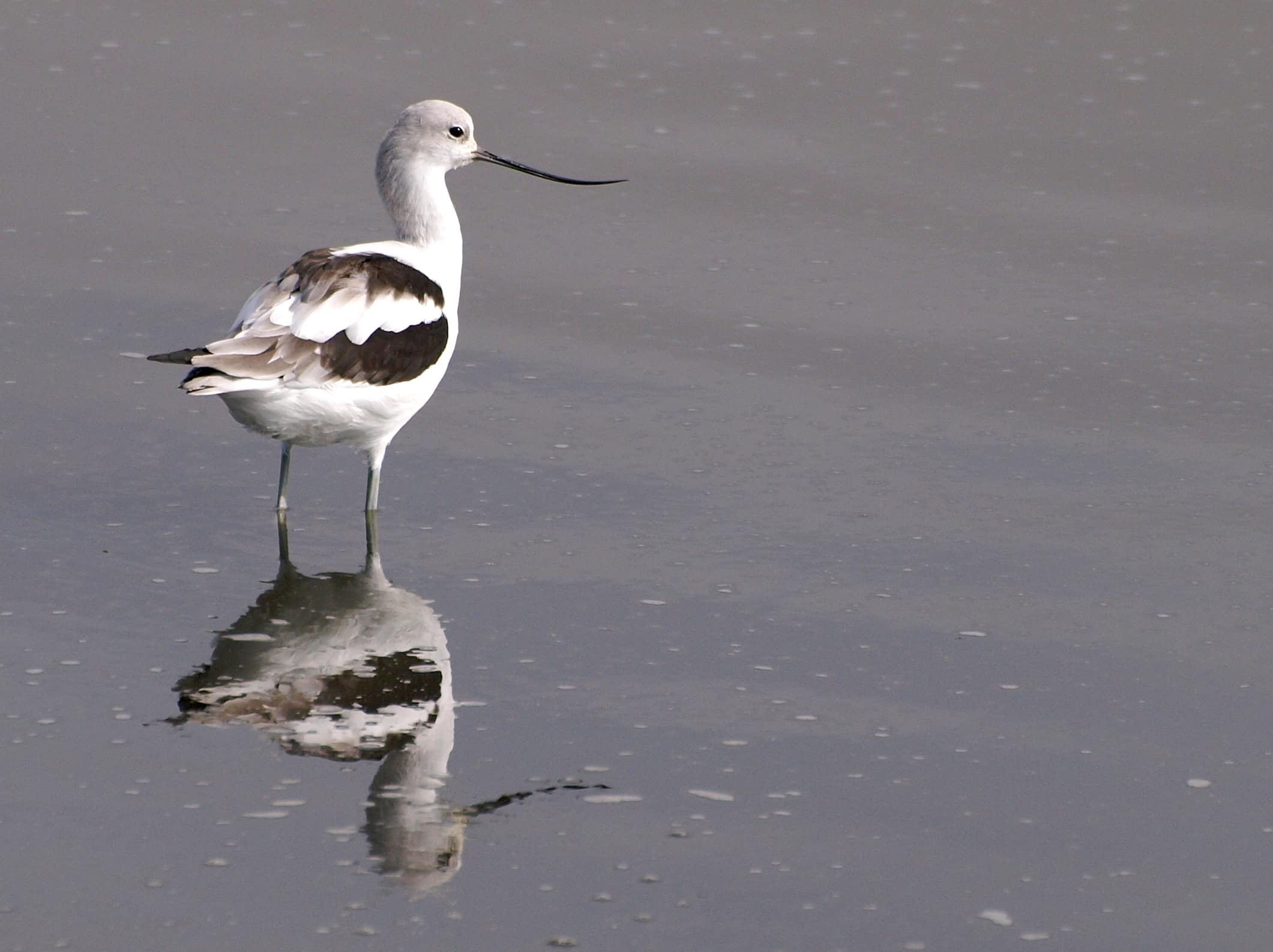
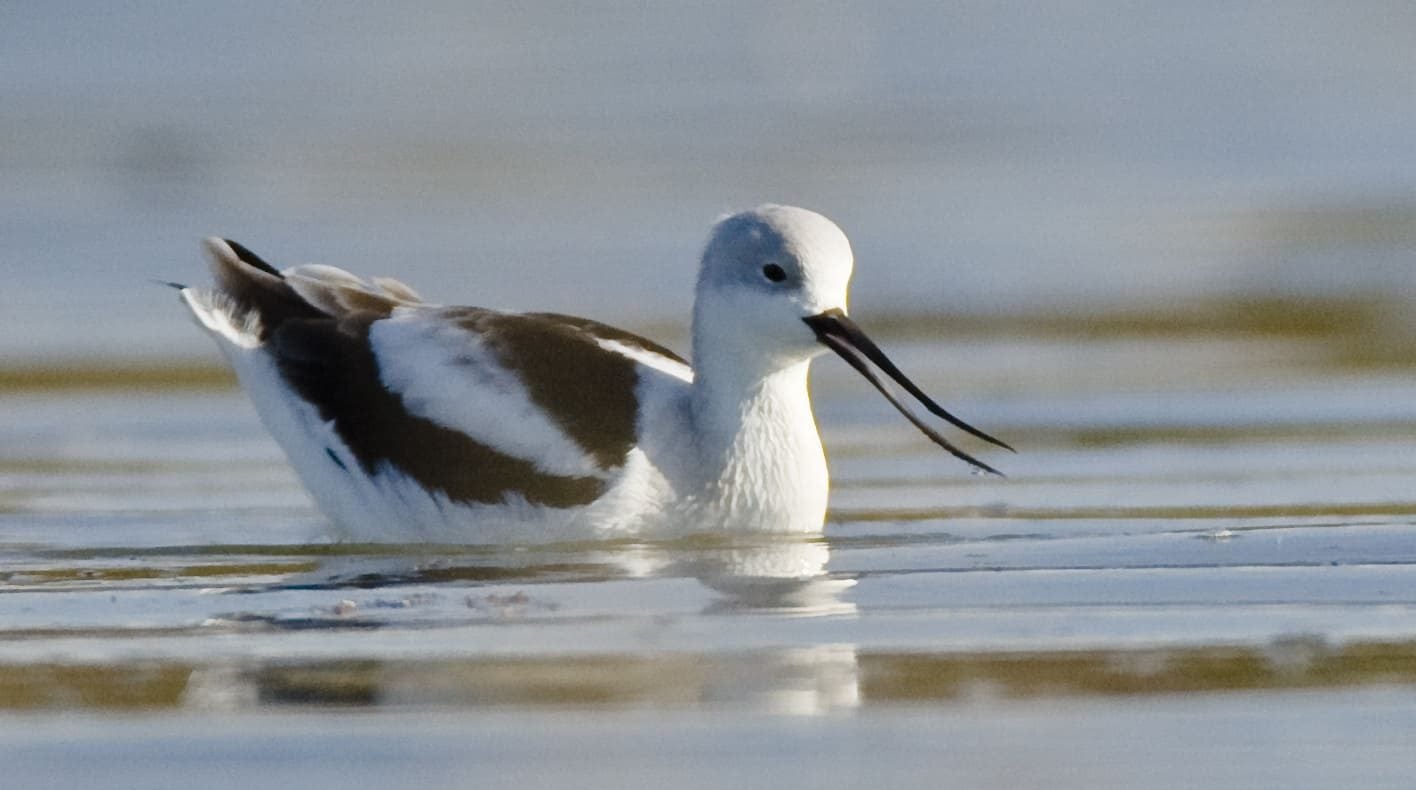
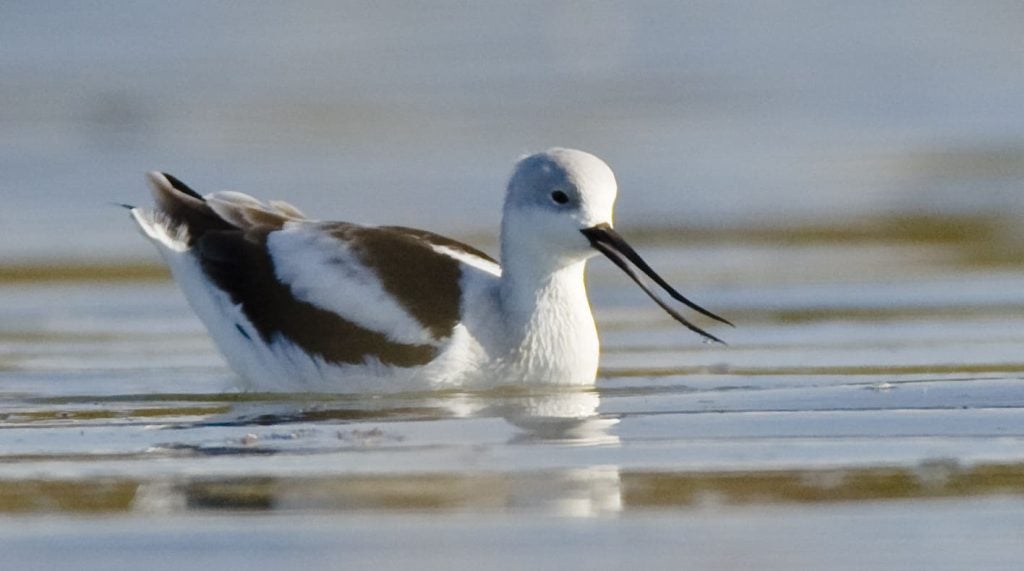
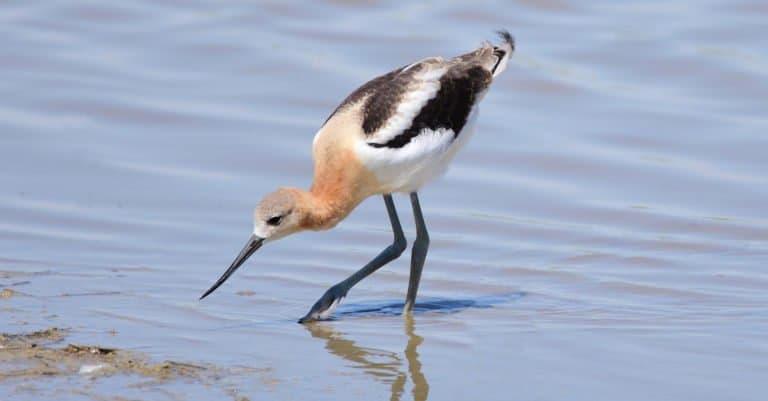
American Avocet (Recurvirostra americana) in Morro Bay, CA at extreme high tide which forced birds to the shore, 24 Dec 2007 24dec2007 https://commons.wikimedia.org/wiki/File:American_Avocet_winter_plumage.jpg?uselang=en

At a Glance

Genus Overview This page covers the Avocet genus as a group. Stats below are general traits shared across the genus.
Activity Diurnal+
Lifespan 12 years
Weight 0.45 lbs
Status Not Evaluated
Did You Know?

All avocets share an upcurved bill, but the degree of upturn and bill length vary among species and even with age/sex.

Scientific Classification

Genus Overview "Avocet" is not a single species but represents an entire genus containing multiple species.

Avocets are slender wading birds known for long bluish-to-gray legs and a characteristically upcurved bill (especially pronounced in Recurvirostra). They forage by probing and by sweeping the bill side-to-side through shallow water to capture aquatic invertebrates.

Kingdom
Animalia
Phylum
Chordata
Class
Aves
Order
Charadriiformes
Family
Recurvirostridae
Genus
Recurvirostra

Distinguishing Features

  • Long legs adapted for wading in shallow water
  • Slender, often distinctly upcurved bill used for sweep-feeding
  • Typically forage in open, shallow flats; often gregarious
  • Bold black-and-white patterning in some species; seasonal breeding plumage in others

Physical Measurements

Males and females differ in size

Height
♂ 1 ft 3 in (1 ft 1 in – 1 ft 5 in)
Length
♂ 1 ft 5 in (1 ft 4 in – 1 ft 7 in)
♀ 1 ft 5 in (1 ft 4 in – 1 ft 7 in)
Weight
♂ 1 lbs (0 lbs – 1 lbs)
♀ 1 lbs (1 lbs – 1 lbs)
Tail Length
♂ 4 in (3 in – 5 in)
Top Speed
43 mph
Fast in long flapping flight

Appearance

Primary Colors
Secondary Colors
Skin Type Avocet (Recurvirostra) has a feathered body, bare scaly legs and partly webbed toes for wading soft wetlands. Long, thin keratin bill curves upward to feed in shallow water.
Distinctive Features
  • Genus-level size range (smallest to largest members): roughly 40-50 cm total length; wingspan about 70-91 cm; mass approximately 0.26-0.72 kg (varies by species, season, and condition).
  • Lifespan across the genus (general range): commonly ~5-15 years in the wild, with potential to reach roughly 15-20+ years in long-lived individuals (records vary by species/population and study).
  • Signature bill morphology: a long, slender, distinctly upcurved bill (curvature typically more pronounced than in many other waders), specialized for shallow-water foraging.
  • Core foraging mode: sweep-feeding-bill swept side-to-side through shallow water to detect/capture aquatic invertebrates; also probes and pecks depending on prey type and water depth.
  • Wading adaptations: long bluish-to-gray legs for foraging in shallow water; body posture and gait optimized for mudflats, salt pans, lagoons, estuaries, and other open wetlands.
  • Wetland/shoreline ecology: strongly associated with open, unvegetated or sparsely vegetated shores and shallow basins; many populations favor saline/alkaline wetlands as well as coastal habitats (degree varies by species and region).
  • Sociality: often gregarious outside breeding, forming flocks; breeding can involve loose to dense colonies depending on habitat availability, predation pressure, and local conditions.
  • Breeding/nesting generalization: nests are typically ground scrapes on open shorelines or flats, sometimes with minimal lining; adults show conspicuous distraction/defense behaviors (intensity and strategies vary).
  • Seasonal and geographic variation: plumage contrast and head/neck tones can shift with breeding vs non-breeding condition; migratory tendency ranges from strongly migratory to more resident/nomadic depending on species and region.
  • Compared to stilts (Himantopus): avocets have an upturned bill and a sturdier body, while stilts have straighter bills and even longer legs; both are long-legged waders but feed differently and differ in shape.

Sexual Dimorphism

Sexual dimorphism is generally subtle in Recurvirostra. Sexes are usually similar in overall plumage patterning; differences, where present, tend to be in size and bill shape rather than striking color. The degree of difference varies among species and populations.

♂
  • Often slightly larger/heavier on average (overlapping ranges with females are typical).
  • Bill may average longer and/or show slightly more pronounced upcurvature in some species/populations (not universally diagnostic).
♀
  • Often slightly smaller/lighter on average (substantial overlap with males).
  • Bill may be marginally shorter and/or less strongly upcurved on average in some species/populations (variation is common; field separation by sex is frequently unreliable).

Did You Know?

All avocets share an upcurved bill, but the degree of upturn and bill length vary among species and even with age/sex.

Their signature feeding style is "scything": sweeping the partly open bill side-to-side to snag tiny aquatic prey by touch and sight.

They often forage in loose flocks, sometimes coordinating movements so multiple birds sweep the same shallows.

Across the genus, habitats skew salty or alkaline-estuaries, lagoons, saltpans, and inland saline lakes-though some populations use fresher wetlands too.

Compared with their close relatives the stilts (Himantopus), avocets have more strongly upcurved bills and generally feed more by sweeping than by straight pecking.

The Pied Avocet became a major conservation symbol in the UK after naturally recolonizing as a breeder in the mid-20th century and later appearing as the RSPB emblem.

Avocet chicks are downy and mobile soon after hatching, but families still rely on vigilant adults and open visibility to detect predators on the nesting flats.

Unique Adaptations

  • Upcurved, slender bill optimized for lateral sweeping through water; shape helps maintain contact with prey items and reduces drag during side-to-side motions.
  • Long bluish-to-gray legs for wading and for keeping the body above shallow, often saline water while feeding and nesting on exposed flats.
  • High-contrast plumage patterns in several species (especially black-and-white) that may aid recognition in flocks and colonies; the extent of contrasting coloration varies among species and seasons.
  • Well-developed sensory and visual foraging: effective at capturing small aquatic invertebrates in turbid shallows by combining touch-based detection with visual cues.
  • Physiological tolerance typical of many shorebirds for using salty/alkaline wetlands, supported by specialized salt-excreting glands found in numerous marine-associated birds.
  • Ground-nesting camouflage and site choice: eggs and nest scrapes blend into sand/salt-crust substrates; many nests are placed to maximize visibility and reduce surprise predator approaches.

Interesting Behaviors

  • Sweep-feeding: walking in shallow water while sweeping the bill side-to-side; the emphasis on sweeping vs. pecking varies by site, water depth, and prey type.
  • Probing and pick-feeding: besides sweeping, avocets also probe soft mud or pick prey from the surface-more common where prey is larger or more visible.
  • Group foraging and spacing: birds often feed in loose lines or clusters; flock density can shift quickly with tide levels, wind, and disturbance.
  • Colony-associated nesting: many populations nest in colonies or semi-colonies on open shorelines/islets; colony size varies widely by region and water availability.
  • Distraction and defense: adults may give intense alarm calls, mob intruders, or perform diversion displays to draw predators away from nests/chicks.
  • Movement strategies differ across the genus: some populations are strongly migratory, others are more resident, and Australian populations can be notably nomadic in response to changing water conditions.
  • Shallow-water "wading economy": they choose depths that keep the body high and legs efficient, adjusting stride and sweep width with depth and wave action.

Cultural Significance

Avocets (Recurvirostra) are symbols of wetland health. They need shallow shorelines and saline lagoons. The Pied Avocet's return in Britain and its use as the RSPB emblem made it a conservation icon that stands for protecting estuaries, saltmarshes, and saline lakes.

Myths & Legends

The 'return of the avocet' is a famous British nature story: the Pied Avocet disappeared as a breeding bird in the 19th century, then returned mid-20th century, celebrated in conservation stories and people's memory.

The avocet's name has a linguistic story: English "avocet" came into English via French from Italian, where it was a traditional vernacular name used in natural-history writing; the genus name Recurvirostra means "curved beak."

In European nature history, the avocet (Recurvirostra) was famous for its upturned bill. People and scientists used this noticeable shape in folk stories, guides, and museum labels to show how it eats.

Avocets (Recurvirostra) are seen as 'guardians of the marsh' in wetland conservation: their loud calls, group mobbing, and open, flat nests make them symbols in reserve guides and local lagoon stories.

Conservation Status

NE Not Evaluated (genus-level). Recurvirostra species assessed individually; statuses span Least Concern (LC) to Endangered (EN), with at least one high-risk Andean specialist driving the upper end of concern.

Has not yet been evaluated against the criteria.

Population Unknown

Protected Under

  • Ramsar Convention on Wetlands (site-based protection across many key wetlands used by Recurvirostra species)
  • Convention on Migratory Species (CMS/Bonn Convention) (relevant to migratory populations)
  • AEWA (Agreement on the Conservation of African-Eurasian Migratory Waterbirds) (relevant to Palearctic populations)
  • EU Birds Directive (relevant where Recurvirostra occurs within the EU)
  • Migratory Bird Treaty Act (United States) (relevant to American Avocet)
  • Environment Protection and Biodiversity Conservation (EPBC) Act 1999 (Australia) (relevant to Red-necked Avocet)
  • National protected-areas laws and wetland reserve designations across range states (varies by country/region)

You might be looking for:

American Avocet

28%

Recurvirostra americana

North American avocet; cinnamon head/neck in breeding plumage; upturned bill used for sweep-feeding.

Pied Avocet

27%

Recurvirostra avosetta

Black-and-white Eurasian avocet; iconic upcurved bill; common in coastal lagoons and estuaries.

Red-necked Avocet

23%

Recurvirostra novaehollandiae

Australasian avocet; chestnut/red neck and head in breeding season; saline wetlands.

Andean Avocet

12%

Recurvirostra andina

High-Andes specialist; pale body with contrasting markings; saline lakes and altiplano wetlands.

Red Avocet

10%

Recurvirostra erythrorhyncha

Southern Africa; reddish bill and legs; shallow lakes and pans.

Life Cycle

Birth 4 chicks
Lifespan 12 years

Lifespan

In the Wild
7–27 years
In Captivity
10–30 years

Reproduction

Mating System Monogamy
Social Structure Socially Monogamous
Breeding Pattern Seasonal
Fertilization Internal Fertilization
Birth Type Internal_fertilization

Recurvirostra avocets are mainly socially monogamous: male and female form a pair that share nesting and chick care. Both parents sit on eggs. Pairs usually last one breeding season; occasional polygyny, polyandry, or extra-pair matings are rare.

Behavior & Ecology

Social Flock Group: 50
Activity Diurnal, Crepuscular, Nocturnal
Diet Insectivore Aquatic insect larvae and small crustaceans (notably brine shrimp where available)
Seasonal Migratory 1,243 mi

Temperament

Measurements (typical adult): length about 43-50 cm; wingspan about 72-77 cm; mass commonly about 0.28-0.36 kg (varies by species, sex, season, and condition).
Lifespan (genus-wide): often ~8-15 years in the wild; banding/mark-recapture records in some populations can exceed 20 years (occasionally into the mid-20s).
Generally social and tolerant in flocks away from nests; can become conspicuously territorial and aggressive near nest sites, with intensity varying from mild spacing to active chasing.
Alert, vigilant, and often 'bold' in groups; relies on early detection of predators and coordinated responses.
Anti-predator behavior commonly includes alarm calling, distraction, and group mobbing; strength of mobbing/defense varies with colony density, predator community, and breeding stage.
Avocets in genus Recurvirostra look for food same way: sweep their upcurved bill side-to-side in shallow water and probe. Individuals and populations differ in diet (aquatic invertebrates, small crustaceans) and wetland use (fresh to hypersaline).

Communication

Sharp alarm calls (yelp/bark-like notes) used in predator detection and nest defense
Contact calls maintaining cohesion in flocks and during flight
Courtship-related calls during pair formation and display flights
Agitated scolding/chatter during territorial disputes Varies by species and context
Visual courtship displays (posturing, head-bobbing, bill-up displays) that vary in elaboration among species
Aerial display flights and chasing used in territorial defense and pair interactions
Group mobbing/approach flights toward predators; coordinated movement serves as social signaling
Postural signals at roost/foraging sites Spacing, threat postures
Parent-chick cohesion maintained by leading behavior and proximity; precocial chicks respond to adult movement and calls

Habitat

Biomes:
Wetland Freshwater Marine Temperate Grassland Mediterranean Desert Hot Desert Cold Savanna Alpine +3
Terrain:
Coastal Plains Riverine Island Muddy Sandy
Elevation: Up to 15091 ft 10 in

Ecological Role

Shallow-wetland invertebrate predator (mesopredator) and key link in aquatic-terrestrial food webs

Regulates populations of aquatic invertebrates in marshes, lagoons, salt pans, and estuaries Transfers energy from aquatic invertebrate production to higher trophic levels (supports predators via avocets as prey/biomass) Contributes to nutrient cycling and sediment bioturbation through wading, probing, and repeated sweep-feeding Serves as an indicator of wetland condition and invertebrate availability across variable salinity regimes

Diet Details

Main Prey:
Aquatic insect Small crustaceans Worms Small mollusks Small fish and fish fry
Other Foods:
Algae, diatoms and other biofilm Aquatic plant seeds and vegetative fragments

Human Interaction

Domestication Status

Wild

Danger Level

Low
  • Defensive behavior near nests/chicks (pecking, wing-flapping, dive displays); minor injury risk primarily to eyes/face if handled improperly
  • Zoonotic/occupational exposure risks for handlers (e.g., avian influenza surveillance concerns, Salmonella/Campylobacter in fecal contamination)-mainly relevant to rehab staff, researchers, and poultry/wetland workers
  • Indirect risks in shared wetland environments (slips/falls in mudflats, waterborne pathogens) rather than from the birds themselves

As a Pet

Not Suitable as Pet

Legality: Avocet (Recurvirostra) are usually illegal to keep as pets. They are protected by wildlife and migratory bird laws. Permits are needed for injured-bird care, science, education, or zoos. Taking them from the wild can bring fines or jail.

Care Level: Expert Only

Purchase Cost:
Lifetime Cost: $15,000 - $80,000

Economic Value

Uses:
Ecotourism and birdwatching Conservation and wetland management (indicator/flagship species) Scientific research and monitoring (migration, wetland ecology, contaminants) Environmental education and zoological display (licensed institutions) Ecosystem services (predation on aquatic invertebrates; role in wetland food webs)
Products:
  • non-consumptive recreation value (birding tours, wildlife photography interest)
  • biodiversity/monitoring data supporting wetland conservation policy and site designation
  • educational programming in licensed zoos and nature centers
  • historical/legacy use in some regions: hunted for meat/feathers (now widely restricted/illegal)

Relationships

Related Species 4

Black-winged Stilt Himantopus himantopus Shared Family
Black-necked Stilt Himantopus mexicanus Shared Family
White-backed Stilt Himantopus leucocephalus Shared Family
Banded Stilt Cladorhynchus leucocephalus Shared Family

Ecological Equivalents 5

Animals that fill a similar ecological role in their ecosystem

American Flamingo Phoenicopterus ruber Uses saline, shallow wetlands and specializes in filter-feeding/sieving small aquatic invertebrates. Overlaps with avocets in habitat type and reliance on brackish-saline invertebrate productivity, though feeding mechanics differ.
Northern Shoveler Spatula clypeata Forages in shallow water using sweeping/filtering motions to capture small aquatic invertebrates, and often shares marshes, lagoons, and lake shallows with avocets.
Black-tailed Godwit Limosa limosa Long-legged wader of shallow wetlands that probes for aquatic invertebrates; similar habitat use and wading-foraging niche, though the emphasis on probing versus sweeping varies.
Red-necked Phalarope Phalaropus lobatus Feeds heavily on small aquatic invertebrates at the water surface in shallow and nearshore waters; overlaps in prey base and wetland use, though phalaropes are more pelagic and surface-oriented.
Eurasian Spoonbill Platalea leucorodia Employs lateral bill-sweeping in shallow water to capture prey, a behavior analogous to avocet side-to-side feeding but typically targeting larger prey.

Types of Avocet

5

Explore 5 recognized types of avocet

American Avocet Recurvirostra americana
Pied Avocet Recurvirostra avosetta
Red-necked Avocet Recurvirostra novaehollandiae
Andean Avocet Recurvirostra andina
Red Avocet Recurvirostra erythrorhyncha

Quick Take

  • Reversing the 20th century extinction of Pied Avocets in Britain required a 1940s environmental achievement.
  • The 9-year life expectancy creates a critical population replacement problem for American Avocets.
  • These birds demonstrate a surprising preference for saltwater habitats over freshwater ecosystems.
  • Constructing a 1-foot mound nest is vital for offspring survival during sudden environmental shifts.

The avocet is a genus of wading birds that reside close to freshwater and saltwater bodies all over the world. Their long, sinewy legs make them appear as if they’re walking on stilts!

The name avocet is thought to come from a local Italian name avosetta. They are most closely related to other birds that live and feed near bodies of water.

An educational infographic about Avocets featuring illustrations of the bird, a world map showing their distribution, and icons representing their diet, predators, and conservation status.
Defying a 20th-century extinction and battling a 60-acre-per-hour habitat loss, the avocet is a master of survival in a rapidly changing world. © A-Z Animals

An Amazing Bird: 3 Avocet Facts

The avocet bird appears to prefer saltwater settings over freshwater ones if given the chance, but both types of habitats are appropriate for its needs.

  • If given the choice, the avocet bird seems to prefer salty habitats over freshwater ones, but both types of habitats are suitable for its needs.
  • A drawing of the pied avocet graces the emblem of the Royal Society for the Protection of Birds, a charitable organization in England and Wales. This species was actually extinct in Britain by the early 20th century, but the reclamation of marshland in the 1940s brought it back.
  • The avocet bird is sometimes confused with the closely related stilt. The main difference is that stilts have longer legs with red or orange colors, while avocets have more subdued colors like gray or black on their shorter, but still very long, legs.

Where to Find Avocet Birds
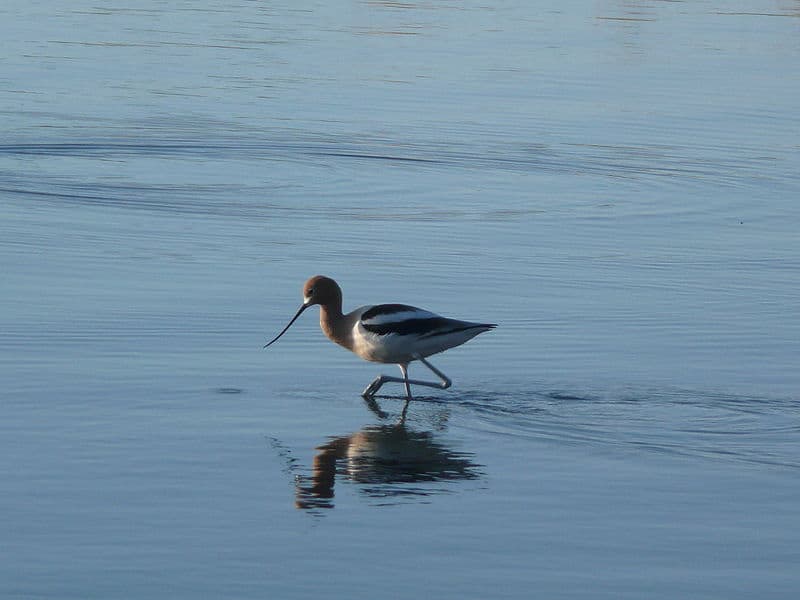
The avocet bird can be found all over the world, around beaches, flatlands, lakes, and ponds.

The avocet bird has a wide distribution near beaches, flats, lakes, and ponds around the world. The genus contains four species, each with its own geographical distribution. The American Avocet (Recurvirostra americana) is endemic to Mexico, the Western United States, and parts of the Atlantic Coast.

The Andean avocet (Recurvirostra andina) is endemic to much of Pacific South America. The pied avocet (Recurvirostra avosetta) has an extensive range in coastal Europe, Africa, and Central and parts of South Asia. Finally, the red-necked avocet (Recurvirostra novaehollandiae) is native to Australia.

Nests

The avocet prefers to nest in loosely organized colonies near the shore of large bodies of water. Built within small depressions, the nest is composed of little more than basic soil, pebbles, and other debris. If the water level rises, then the birds can build up the nest into a foot-tall mound.

Classification and Scientific Name

The avocet is classified in the genus Recurvirostra. Although this word appears difficult to pronounce at first glance, it’s actually a combination of two simpler Latin words: recurves, meaning curved backward, and rostrum, meaning bill. The Avocet is closely related to the long-legged stilts in the family of Recurvirostridae.

Evolution and Origins
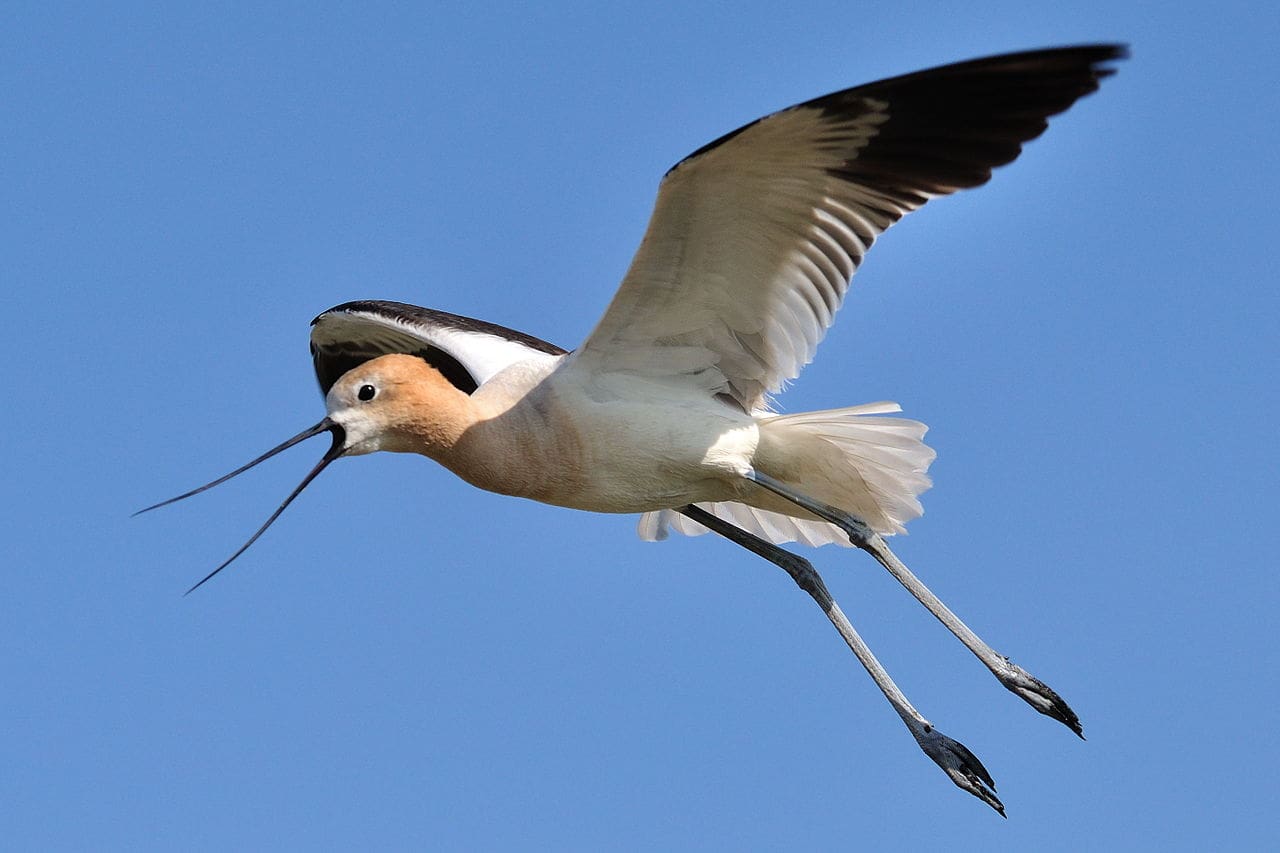
In his 1758 book Systema Naturae, the Swedish naturalist Carl Linnaeus gave the genus Recurvirostra its name.

The Swedish naturalist Carl Linnaeus named the genus Recurvirostra in his book Systema Naturae, which was published in 1758.

The pied avocet, now known as Recurvirostra avosetta, was the sole species in this new genus. Recurvus and rostrum, two Latin terms that imply twisted or curved backward and bill or beak, are combined to form the name of the genus.

Avocets are extremely defensive in large groups and will drive away any other species of birds that attempt to set up nests close to them.

Additionally, the pied avocet nests in groups on the ground and can be found in estuaries where they feed on mudflats. The Royal Society for the Protection of Birds has adopted the pied avocet as its symbol.

Appearance
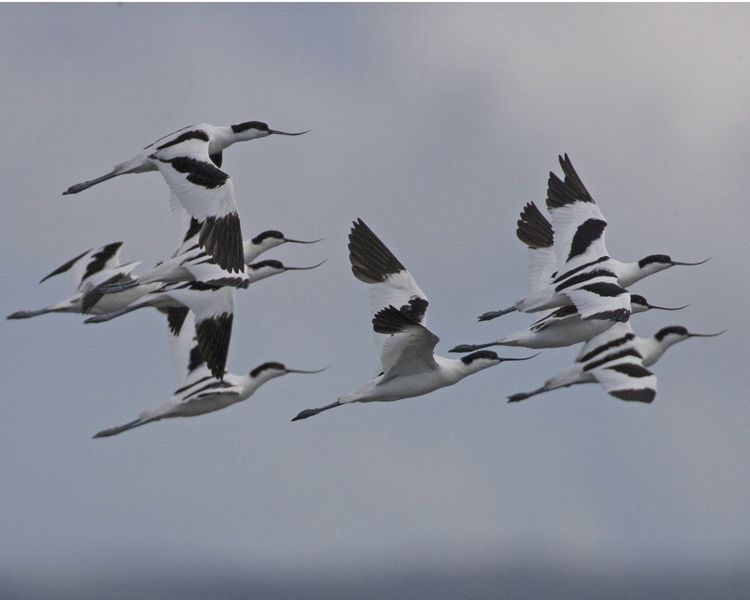
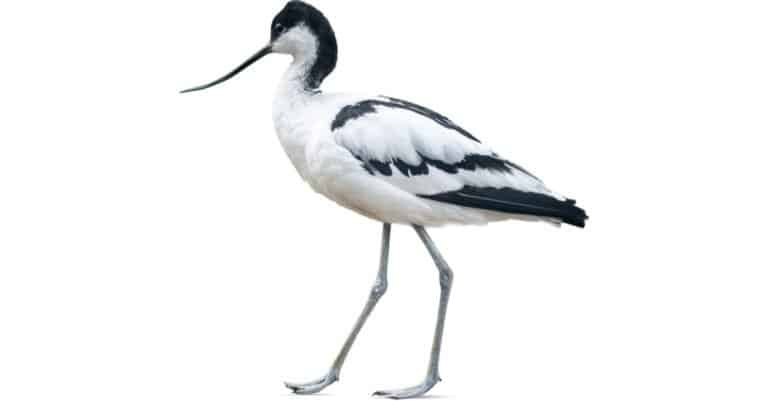
Pied Avocet measures 20 inches or more from head to tail.

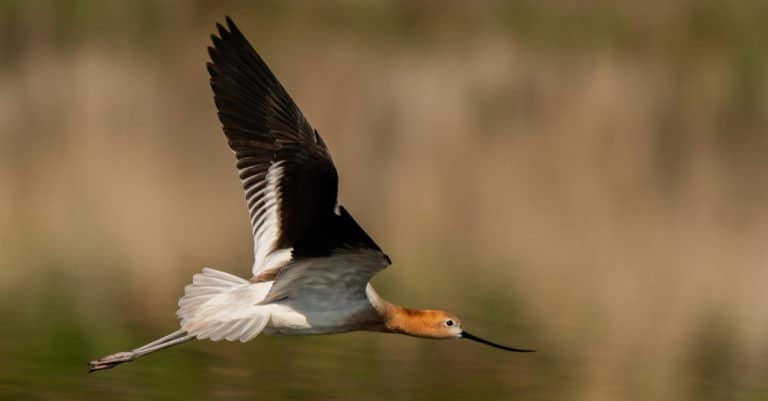
Measuring up to 20 inches from head to tail (with a wingspan of around 30 inches from one tip to another), the avocet is a long, sinewy bird with a suite of distinctive features. The long, bluish, or grayish legs are adapted for wading into the water.

The webbed feet enable them to become proficient swimmers. And the long bill is a very well-adapted instrument for feeding. The feathers are a combination of black, white, red, and brown.

Curved Beak

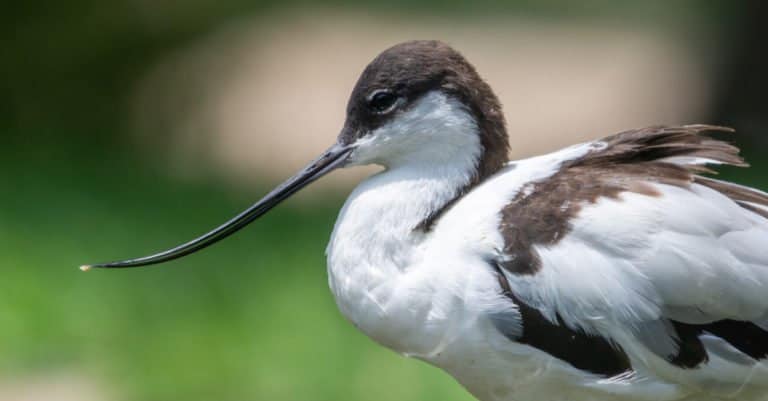
Perhaps the most distinctive feature (apart from the long legs) is the long, slender bill with an upturned tip at the end. In order to feed, the avocet will wade into the shallow waters, lean forward, and place the slightly open tip of its bill on the bottom.

By sweeping the head from side to side, the avocet can stir up tiny prey hiding in the soil and then filter out food bits with the bill. Females and males are generally similar in appearance, but in some species, the bill is the giveaway. The female has a shorter and more upturned bill compared with the longer and straighter bill of the male.
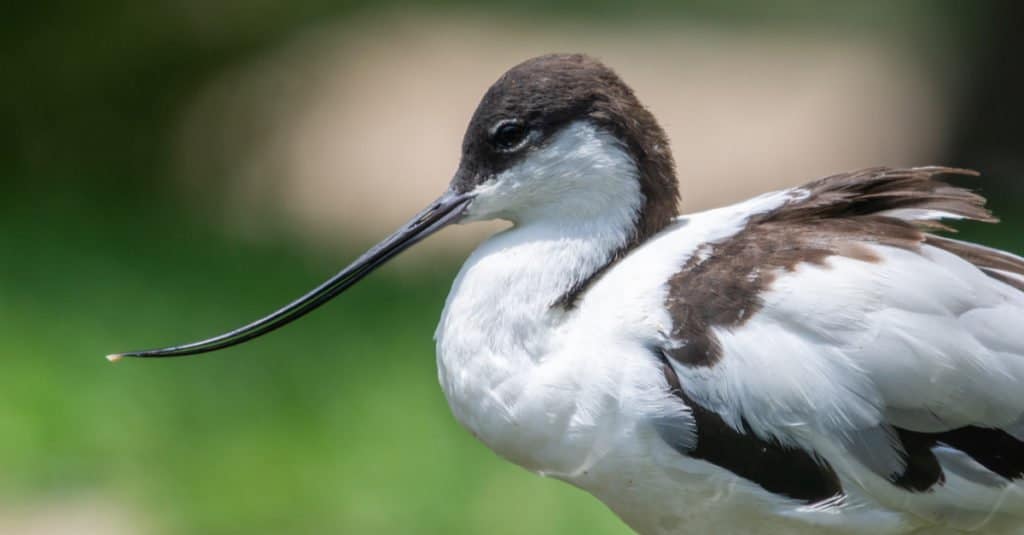
Avocet profile

In contrast to the male’s longer and straighter bill, the female’s is shorter and more upturned.

Behavior

Outside of their normal breeding season, avocets occupy large, raucous colonies of hundreds. Although not exactly a cooperative animal, they will band together to aggressively defend the colony from predators and threats (though they will sometimes allow stilts to congregate with them).

These intelligent birds have all kinds of strategies to deal with predators. Sometimes they will make loud, irritating sounds to provide a distraction. Or they will pretend to be hurt to draw the predator away. They may also dive-bomb the predator to scare it off.

In order to communicate with each other, the avocets make loud and repetitive sounds, rising in intensity over time. Each of these calls conveys certain information to teach others about the identity of the individual or the presence of an invader. To attract a mate, the male avocets will combine their calls with complex displays of crouching, dancing, and bowing.

The avocet is a crepuscular bird, meaning that it’s most active during the dawn and dusk hours. With their webbed feet, avocets are excellent swimmers. In addition to its standard feeding behavior with its bill, avocets will sometimes “tip up” like ducks in deeper waters. This is when the lower half is submerged in water as it reaches down to feed. They are also very proficient flyers that travel very long distances.

Migration Pattern and Timing

The avocet demonstrates distinctive migrating patterns throughout the year. The American avocet, for instance, prefers to breed in a large stretch of territory between New Mexico and southern Canada. In the winter season, it travels south to Mexico or east toward Florida and the Atlantic Coast. The pied avocet, by contrast, breeds in Europe and Central Asia. Some populations travel as far south as Africa to winter, though other populations remain far closer to their breeding grounds.

Prey and Predators
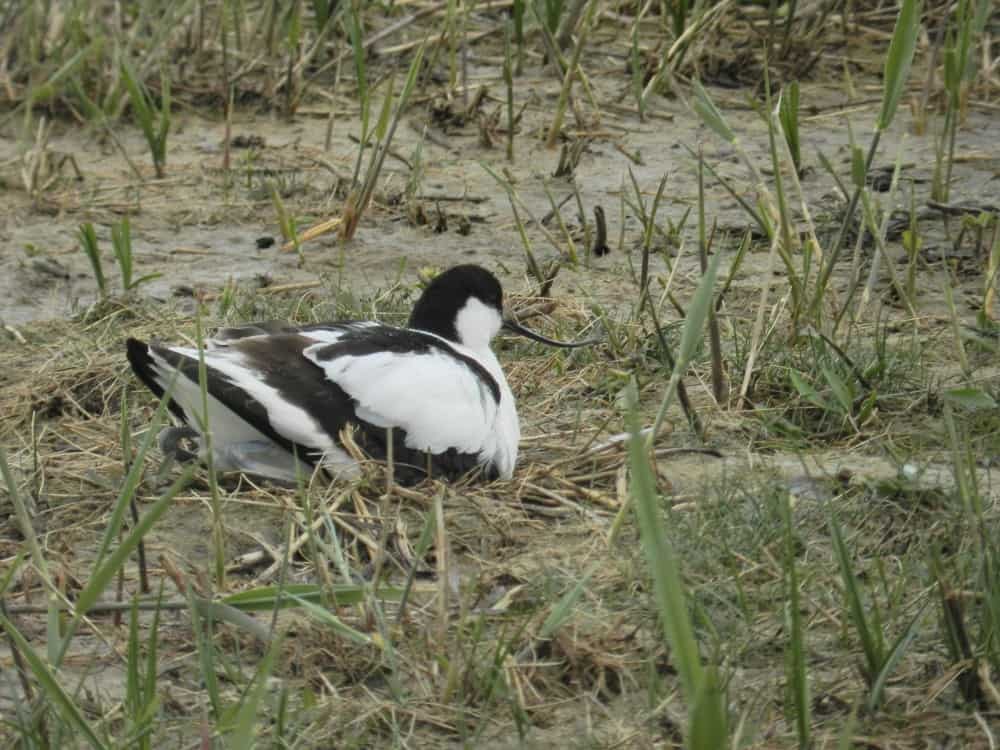
By controlling prey numbers, this bird contributes significantly to the ecosystem’s regulating functions.

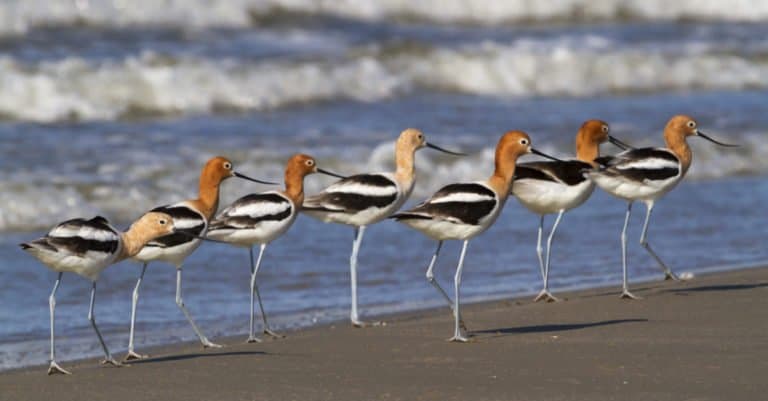
This bird plays an important regulatory role in the ecosystem by keeping prey populations in check. During the foraging hours, entire groups will line the shore looking for food in a rather fascinating display.

What does the avocet eat?

They consume all types of small crustaceans, insects, and fish larvae. The diet is sometimes supplemented with seeds.

What eats the avocet?

Some of the more common predators include foxes, skunks, and weasels, but avocets prefer to nest where access for most other animals is difficult.

Reproduction, Young, and Molting

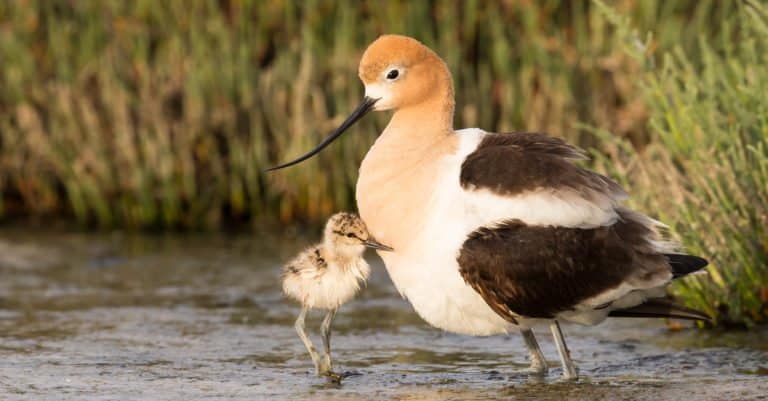
Based on studies of the American avocet, it’s known that this species, at least, likes to form a strong monogamous bond with its mate. It will demonstrate an interest in a mate by exhibiting a series of elaborate courtship rituals, like crouching and bowing. This is the only species of the four to grow breeding plumage, almost pink or red in color when it’s time to mate.

The American avocet produces an average of four eggs per clutch. Both parents will take turns incubating the eggs for some three to four weeks. Born with downy feathers, the young chicks are ready to begin an independent life soon after emerging from the egg, because they can hunt and swim on their own. They will develop feathers quickly enough to make their first flight at around four to five weeks of age.

This bird can live up to 15 years in the wild, but the American avocet has a life expectancy of about nine years on average. Since it takes about a year to reach sexual maturity, the avocet has relatively fewer breeding seasons to successfully raise offspring.

Population

The IUCN Red List has determined that all four species merit the classification of least concern, which means they are in no danger of extinction.

The bird was once widely hunted in the 19th and early 20th centuries, but according to population estimates from Partners in Flight, there may be up to 460,000 mature American avocets in the wild, thanks in part to the protection of the US Migratory Bird Treaty Act. Reports indicate it is becoming more common again in the Eastern United States as well.

The biggest threat to this bird today is the loss of habitat. It is estimated that some 60 acres of wetlands were lost every hour in the first 200-year history of the United States.

Scientists have finally begun to recognize and appreciate the importance that wetlands play in the ecosystem, and numerous reclamation projects are underway to restore environments to their original condition. Besides environmental degradation, another threat to the avocet is that their nests are sometimes destroyed by flooding, pollution, and trampling.

View all 326 animals that start with A
How to say Avocet in ...
German
Säbelschnäbler
English
Avocet
Spanish
Recurvirostridae
French
Avocette
Finnish
Avosetit (suku)
Turkish
Kılıçgaga

Sources

  1. Brittanica / Accessed November 8, 2019
  2. Animal Diversity Web / Accessed November 8, 2019
  3. Audubon / Accessed November 8, 2019
Rebecca Bales

About the Author

Rebecca Bales

Rebecca is an experienced Professional Freelancer with nearly a decade of expertise in writing SEO Content, Digital Illustrations, and Graphic Design. When not engrossed in her creative endeavors, Rebecca dedicates her time to cycling and filming her nature adventures. When not focused on her passion for creating and crafting optimized materials, she harbors a deep fascination and love for cats, jumping spiders, and pet rats.
Connect:

Thank you for reading! Have some feedback for us?


Avocet FAQs (Frequently Asked Questions)

An avocet is a long-legged wading bird in the genus Recurvirostra, known for its slender body and distinctive upturned bill used for feeding in shallow water.