


A
Species Profile

Axolotl

Ambystoma mexicanum

Forever young, forever regrowing
Pmalkowski Przemysław Malkowski, CC BY 3.0, via Wikimedia Commons

Axolotl Distribution

Click a location to explore more animals from that region

Endemic Species
Loading map...

Found in 1 country

Axolotl moving among rocks under water

At a Glance

Wild Species
Also Known As Mexican walking fish, Ajolote, Axolote, Mexican salamander, water monster
Diet Carnivore
Activity Nocturnal+
Lifespan 6 years
Weight 0.25 lbs
Did You Know?

Adult size is typically ~15-30 cm total length; exceptionally large individuals up to ~45 cm have been reported in captivity/historical records.

Scientific Classification

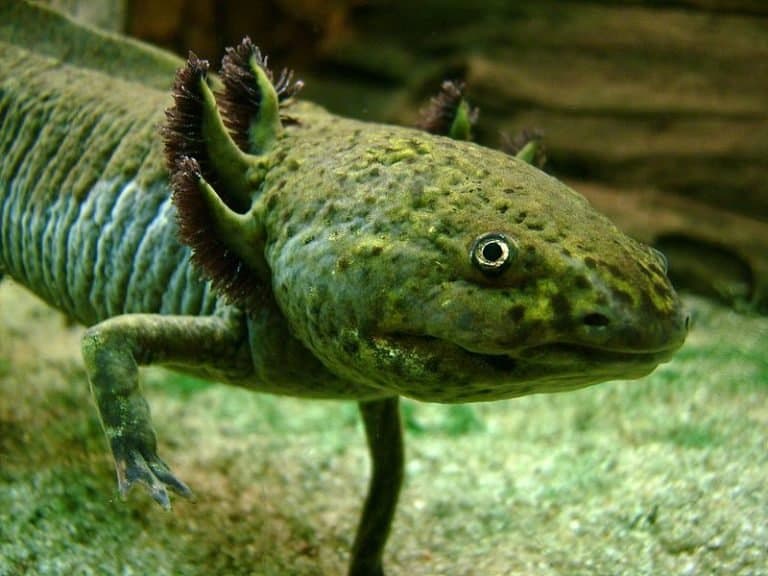
The axolotl (Ambystoma mexicanum) is a permanently aquatic, neotenic salamander famous for retaining larval features (external gills) into adulthood and for exceptional regenerative abilities.

Kingdom
Animalia
Phylum
Chordata
Class
Amphibia
Order
Urodela
Family
Ambystomatidae
Genus
Ambystoma
Species
mexicanum

Distinguishing Features

  • External feathery gills and fully aquatic lifestyle in adults (neoteny)
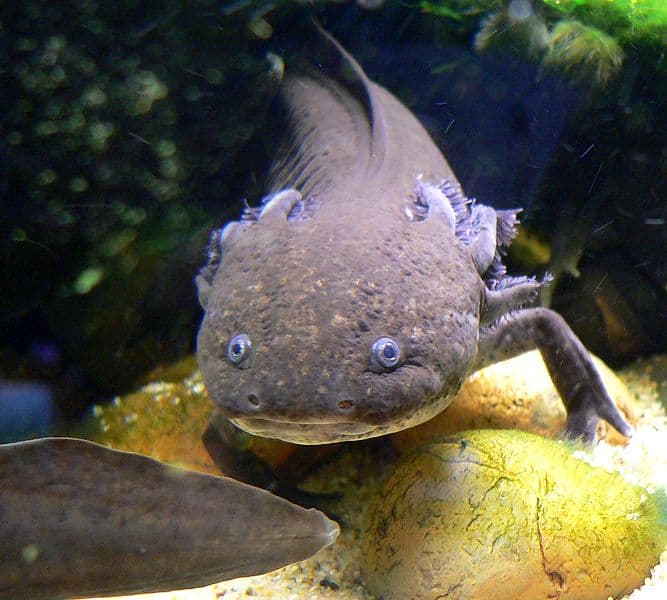
  • Broad, flat head with lidless eyes and wide mouth
  • Dorsal fin running along the back and tail
  • Typically four limbs with long toes; tail laterally compressed for swimming
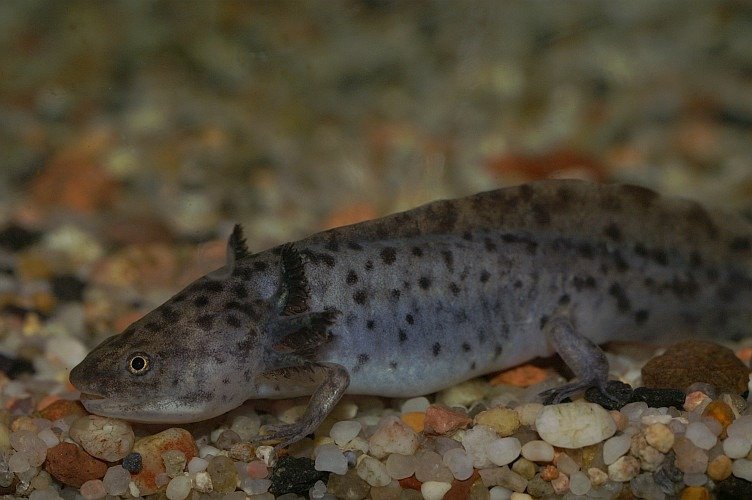
  • Common captive color morphs (e.g., leucistic, albino) though wild type is darker mottled

Physical Measurements

Males and females differ in size

Length
9 in (6 in – 11 in)
10 in (6 in – 12 in)
Weight
0 lbs (0 lbs – 0 lbs)
Tail Length
4 in (3 in – 6 in)
Poisonous

Appearance

Primary Colors
Secondary Colors
Skin Type Smooth, scaleless, mucus-coated amphibian skin; highly permeable (cutaneous respiration contributes alongside gill respiration). Permanently aquatic and typically neotenic: retains larval skin/fin morphology into sexual maturity rather than developing a terrestrial adult integument.
Distinctive Features
  • Neotenic salamander: the Axolotl (Ambystoma mexicanum) adults keep larval traits like external gills and a dorsal fin while able to breed; thyroid-driven metamorphosis is rare.
  • External gills: three pairs of feathery, branched external gills projecting laterally from behind the head; gill filaments can appear longer/'fluffier' in well-oxygenated water and shorter in poor conditions (appearance varies with environment and health).
  • Dorsal fin: a finfold begins behind the head/trunk and continues along the tail to the tail tip (a key visual trait of the aquatic, larval-like body plan).
  • Head/eyes: broad, flattened head with lidless eyes; wide mouth with small, fine teeth adapted to grasping prey rather than chewing.
  • Limbs/digits: four digits on each forelimb and five digits on each hind limb (typical salamander digit formula for this group).
  • Adult axolotls (Ambystoma mexicanum) are usually 15–25 cm long, often about 23 cm. In captivity some reach about 30 cm; rare individuals may grow up to 45 cm.
  • Mass: body mass varies strongly with age and feeding; captive adults are often reported around 0.06-0.2 kg depending on size/condition (not a fixed species constant).
  • Longevity: commonly ~10-15 years in captivity; maximum documented/claimed captive ages can exceed this (reports up to ~20 years exist). Wild longevity is generally lower and is impacted by habitat degradation and introduced predators.
  • Axolotl (Ambystoma mexicanum) can regrow lost limbs and its tail, restoring outer shape and markings. It also regrows parts of the spinal cord and some organs, though ability varies with age and injury.
  • Axolotl (Ambystoma mexicanum) live in high-altitude freshwater canals and wetlands of Xochimilco, Mexico City. Water clarity, temperature, oxygen, and diet affect body and gill filaments. Critically Endangered in wild; common in captivity.

Sexual Dimorphism

Sexual dimorphism is present but subtle in overall coloration; it is expressed mainly in cloacal morphology and body shape, especially during breeding condition.

  • Enlarged, swollen cloaca (most reliable external sexing trait in adults).
  • Often relatively longer tail and more streamlined body profile compared with females of similar age/size (reported in husbandry and morphological descriptions).
  • Smaller, less swollen cloaca.
  • Often broader/rounder abdomen, especially when gravid (egg-laden), giving a stockier appearance than males of similar length.

Did You Know?

Adult size is typically ~15-30 cm total length; exceptionally large individuals up to ~45 cm have been reported in captivity/historical records.

They remain aquatic and keep larval traits (3 pairs of feathery external gills and a dorsal fin) into adulthood-classic neoteny/paedomorphosis.

Wild range is now restricted to the high-altitude freshwater canals/wetlands of Xochimilco (Mexico City area, ~2,200 m above sea level); they are endemic to this basin.

IUCN Red List status: Critically Endangered (wild populations declined severely), yet they are common in captivity and in research colonies worldwide.

Females can lay roughly 100-1,000 eggs in a breeding event (often several hundred), attaching them to plants/substrate; development depends strongly on water temperature.

They are a major model organism in regeneration and development research (e.g., limb, tail, spinal cord, and portions of heart/brain tissue can regenerate).

Axolotls can breathe three ways: gills + skin (cutaneous respiration) + air-gulping with simple lungs when oxygen is low.

Unique Adaptations

  • Obligate paedomorphosis/neoteny in most individuals: retains external gills, larval skin, and fully aquatic lifestyle instead of undergoing typical salamander metamorphosis.
  • Extreme regenerative ability: can regrow complex structures (limbs with bones/muscles/nerves, tail, spinal cord; and regenerate portions of organs such as heart tissue and parts of the central nervous system) with functional restoration.
  • Thyroid-hormone pathway can be experimentally triggered to induce metamorphosis in some axolotls, showing unusual developmental plasticity among vertebrates.
  • Feathery external gills with high surface area plus cutaneous respiration allow survival in variable-oxygen canal habitats.
  • Dorsal fin running along the back and tail improves efficient swimming in slow-moving canals and wetlands.

Interesting Behaviors

  • Nocturnal/crepuscular hunting: often lies still as an ambush predator, then strikes with rapid suction feeding to pull prey into the mouth.
  • Courtship involves a "dance" and pheromone cues; the male deposits a spermatophore that the female picks up with her cloaca (internal fertilization without copulation).
  • Frequent "air-gulps" at the surface in warm or low-oxygen water, supplementing gill and skin respiration.
  • Uses mechanosensory cues (including a lateral-line system) to detect vibrations/movement of prey in turbid canal water.
  • Can show cannibalism-especially toward smaller tankmates or larvae-when crowded, stressed, or underfed (a known husbandry and ecological behavior in ambystomatid larvae/paedomorphs).

Cultural Significance

In Mexico, the axolotl is an iconic species tied to Xochimilco's chinampa landscape and to pre-Hispanic heritage; it is also a global scientific symbol of regeneration and developmental biology. Today it represents both Mexico City's unique wetland biodiversity and the urgency of urban freshwater conservation.

Myths & Legends

Aztec stories link the axolotl (Ambystoma mexicanum) to the god Xolotl, who changed into a water creature to avoid sacrifice; the animal's name comes from Nahuatl roots tied to Xolotl.

In some retellings of the mythic "flight" of Xolotl, the deity changes forms multiple times before taking an aquatic form that becomes the axolotl, making the animal a lasting reminder of transformation and escape.

The Nahuatl word "axolotl" is widely cited as the source of the English name, embedding the animal in Indigenous language history and Mexico's cultural memory of the Valley of Mexico's lakes and canals.

Conservation Status

CR Critically Endangered

Facing an extremely high risk of extinction in the wild.

Population Decreasing

Protected Under

  • Mexico: NOM-059-SEMARNAT-2010 (listed as "En Peligro de Extinción", i.e., endangered under national law)
  • CITES: Appendix II (international trade regulated by permit)

Life Cycle

Birth 500 larvas
Lifespan 6 years

Lifespan

In the Wild
3–10 years
In Captivity
8–20 years

Reproduction

Mating System Promiscuity
Social Structure Aggregation Group
Breeding Pattern Transient
Fertilization Internal Fertilization
Birth Type Internal_fertilization

Axolotl (Ambystoma mexicanum) mate with many partners in short breeding groups. Males leave spermatophores; females pick up sperm for internal fertilization. No parental care. Wild breeding is seasonal; captivity can be induced. Females lay hundreds to ~1,000 eggs.

Behavior & Ecology

Social No standard group name (typically solitary; temporary aggregations occur) Group: 1
Activity Nocturnal, Crepuscular
Diet Carnivore Earthworms (and similarly sized soft-bodied worms), which are readily accepted and nutritionally robust in captive feeding; in the wild, large aquatic worm and insect larvae prey are commonly taken (as reported in species natural-history accounts such as AmphibiaWeb and the IUCN Red List account for Ambystoma mexicanum).

Temperament

Generally non-social; does not form stable groups
Opportunistic predator; feeding interactions can be competitive
Can be aggressive toward conspecifics at close range (biting/nipping), especially juveniles or when crowded/food-limited
Courtship-specific tolerance: brief, directed interaction during mating

Communication

None documented as a normal signaling channel in Ambystoma mexicanum; communication is dominated by chemical and tactile/behavioral cues rather than audible calls Armstrong & Malacinski, 1989
Chemical Water-borne) cues/pheromones during reproduction: male courtship involves close following/leading and spermatophore deposition; females respond by following and picking up spermatophores (Armstrong & Malacinski, 1989
Tactile cues during courtship: nudging/contact and close-body positioning are used in the mating sequence associated with spermatophore transfer Armstrong & Malacinski, 1989
Hydrodynamic/mechanosensory cueing: detection of water movement Via the lateral-line system retained in neotenic adults) supports close-range orientation to moving animals and may mediate conspecific detection at short distances, though not a specialized 'social' signal (general axolotl biology summarized in Armstrong & Malacinski, 1989
Visual/postural cues at close range: orientation, approach/avoidance, and spacing behavior; most relevant in courtship and competitive feeding contexts rather than group coordination Armstrong & Malacinski, 1989

Habitat

Terrain:
Valley Riverine Muddy
Elevation: 7316 ft 3 in – 7381 ft 11 in

Ecological Role

Aquatic mesopredator in the historically lacustrine/canal habitats of the Valley of Mexico (notably Xochimilco), functioning primarily as a benthic invertebrate predator with opportunistic predation on small vertebrates.

Top-down control of benthic and nektonic invertebrates (e.g., insect larvae and oligochaete worms), influencing community structure Energy transfer from detritus-based/benthic food webs to higher trophic levels (as prey for wading birds and larger aquatic predators where present) Contribution to nutrient cycling through consumption, digestion, and excretion in shallow-water sediments

Diet Details

Main Prey:
Chironomid larvae Oligochaete worms Aquatic insect larvae Small freshwater crustaceans Small mollusks Fish fry and small fish Tadpoles and small amphibians +1

Human Interaction

Domestication Status

Semi domesticated

Axolotl (Ambystoma mexicanum) is a wild Mexican salamander now widely captive-bred (not fully domesticated). Wild animals live only in Xochimilco, Mexico City, and are Critically Endangered from habitat loss, pollution, and invasive fish. Exported to Europe in the 1800s, captive lines became research and pet stocks; lab lines trace to those founders, with some tiger salamander mix.

Danger Level

Low
  • Minor bite risk (small puncture; generally not medically significant) if mishandled
  • Zoonotic pathogen risk typical of amphibians in captivity (e.g., Salmonella) via poor hygiene
  • Allergic/irritant reactions possible from skin mucus in sensitive individuals
  • Indirect ecological risk if released: potential to introduce pathogens or genes into local amphibian communities (where relevant and legal restrictions exist)

As a Pet

Suitable as Pet

Legality: Laws for axolotls (Ambystoma mexicanum) differ by country and area. Some U.S. states (like California, New Jersey) ban or limit them; permits may be needed. International trade is CITES-listed; check rules first.

Care Level: Moderate

Purchase Cost: $30 - $150
Lifetime Cost: $800 - $3,500

Economic Value

Uses:
Pet/aquarium trade Biomedical and developmental research model Education and public outreach Conservation breeding and ecotourism/heritage value (Mexico City region)
Products:
  • live captive-bred animals (various color morphs, primarily for aquaria)
  • research animals and genetically characterized laboratory lines
  • scientific outputs and IP enabled by regeneration biology (tools, assays, comparative models)
  • educational displays and materials (public aquaria, classrooms)

Relationships

Related Species 7

Tiger salamander
Tiger salamander Ambystoma tigrinum Shared Genus
Anderson's salamander Ambystoma andersoni Shared Genus
Taylor's salamander Ambystoma taylori Shared Genus
Lake Patzcuaro salamander Ambystoma dumerilii Shared Genus
Plateau tiger salamander Ambystoma velasci Shared Genus
Spotted salamander Ambystoma maculatum Shared Genus
Marbled salamander Ambystoma opacum Shared Genus

Ecological Equivalents 5

Animals that fill a similar ecological role in their ecosystem

Types of Axolotl

7

Explore 7 recognized types of axolotl

Anderson's salamander Ambystoma andersoni
Lake Patzcuaro salamander Ambystoma dumerilii
Axolotl
Axolotl Ambystoma mexicanum
Taylor's salamander Ambystoma taylori
Tiger salamander
Tiger salamander Ambystoma tigrinum
Spotted salamander Ambystoma maculatum
Marbled salamander Ambystoma opacum

“The axolotl is the rarest species of salamander.”
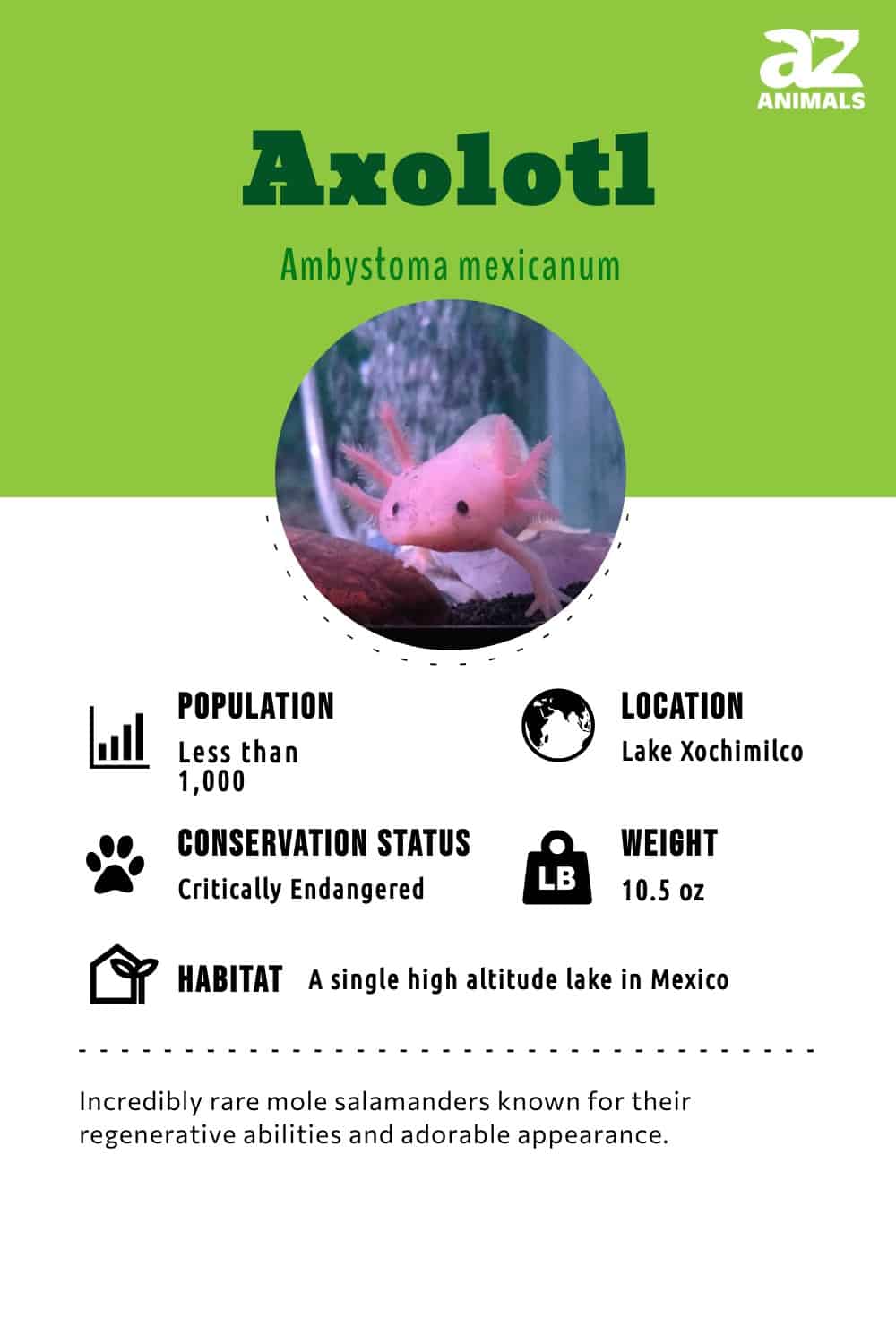
Axolotls are often referred to as “Mexican walking fish,” but they are actually amphibians that prefer to live their entire lives underwater. These remarkable creatures can regenerate almost every part of their bodies if necessary, including their spines, internal organs, and even some parts of their brains. They have a very unique appearance and are extremely popular as exotic pets, but they can also be found in captivity at zoos, laboratories, and breeding facilities. There are almost none of these creatures left in the wild.

Incredible Axolotl Facts
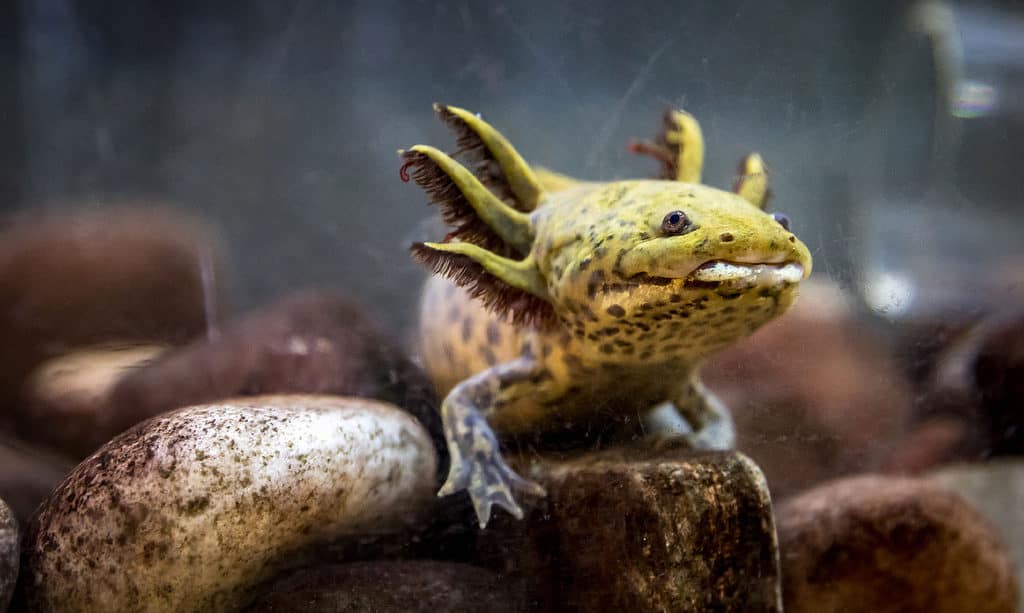
Axolotl, Animal, Horizontal, No People, Pacific Northwest

Axolotls are one of the only salamanders to spend most of their lives underwater.

  • Axolotls can regenerate their limbs as well as their spines, brains, and nearly every other body part.
  • They exhibit a trait called neoteny, which means that they never outgrow their juvenile characteristics like other salamanders. For example, they have both gills and lungs.
  • The name “axolotl” means “water monster.”
  • They are commonly called “Mexican walking fish” even though they are not fish at all.
Watch on YouTube

Scientific Name

axolotl (Ambystoma mexicanum)

Some believe axolotls get their scientific name from their distinct mouths.

The axolotl’s scientific name is Ambystoma mexicanum. There is some debate regarding the origin of the name, however. The genus was named by Johann Jakob von Tschudi in 1839, and he did not provide information regarding the derivation of the name.

Some believe that he meant for the name to be Amblystoma, which means “blunt mouth” and is derived from the Latin ambly, or “dull,” and stoma, or “mouth.” Because it’s unclear whether or not Tschudi made an error, the genus name remains unchanged.

Appearance

black melanoid axolotl
Axolotls come in a wide array of colors, from black to vibrant yellow and pink.

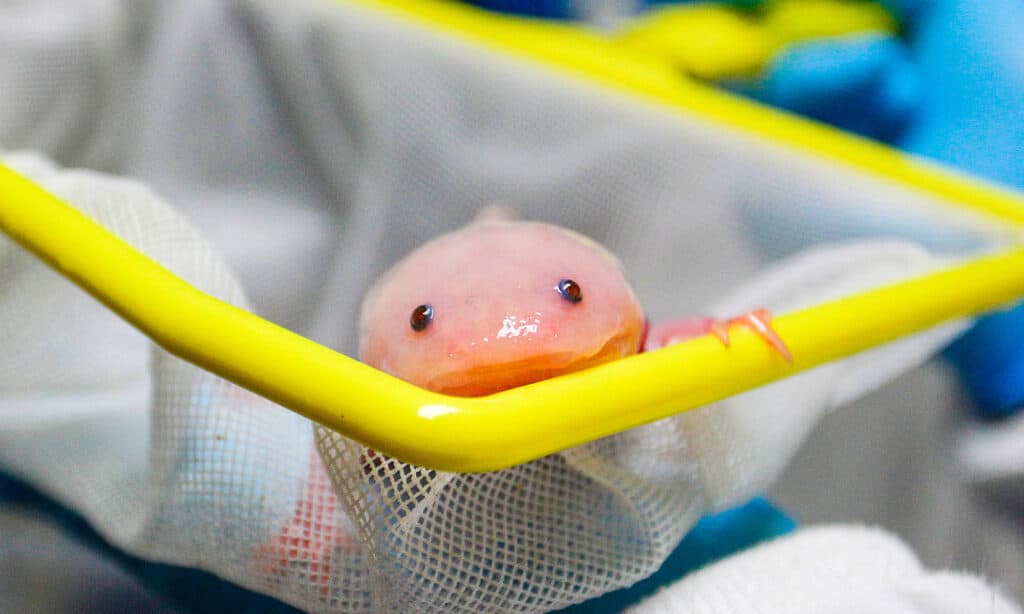
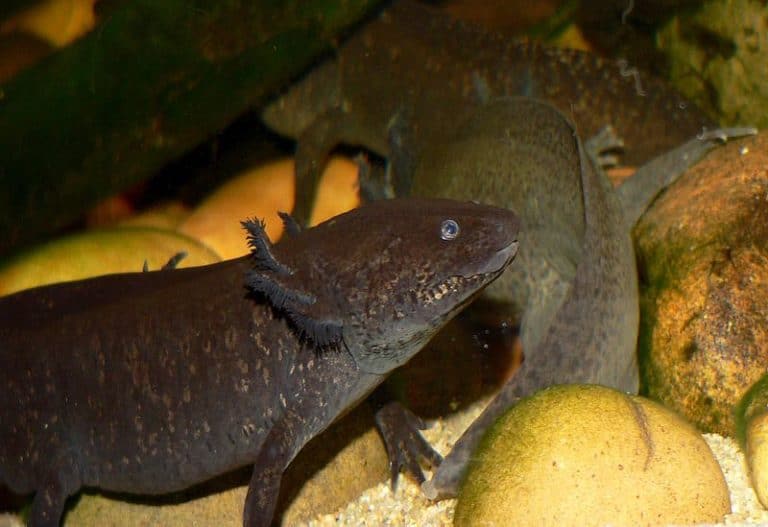
Axolotls can have a variety of different color variations. Normal axolotls are an olive-tan color with gold speckles, but there are genetic mutations that can cause different coloring. Leucistic axolotls display pale white or pink skin with black eyes. Albinos have vibrant gold skin and matching eyes. Axanthic types are gray with black eyes. And melanoids are solid black with no other coloring. In addition to these natural mutations, exotic pet breeders will also intentionally cross-breed certain variants to produce new and interesting color combinations for novelty purposes.

Male and female axolotls can grow to be up to 18 inches long, but the average size is typically around 9 inches. They can also weigh up to 8 ounces. They have wide, somewhat flat heads with lidless eyes and thin mouths that appear to be smiling. They both have three branched gills that protrude from either side of the head, and they retain their larval dorsal fin throughout their lives. In addition, their limbs are small and underdeveloped, and they feature long, slender digits that resemble fingers.

Once they reach sexual maturity, both males and females are easy to tell apart. Males develop a large, swollen cloaca, and their tails typically grow longer. Females develop much wider bodies because they can carry anywhere from 300 to 1,000 eggs at a time.
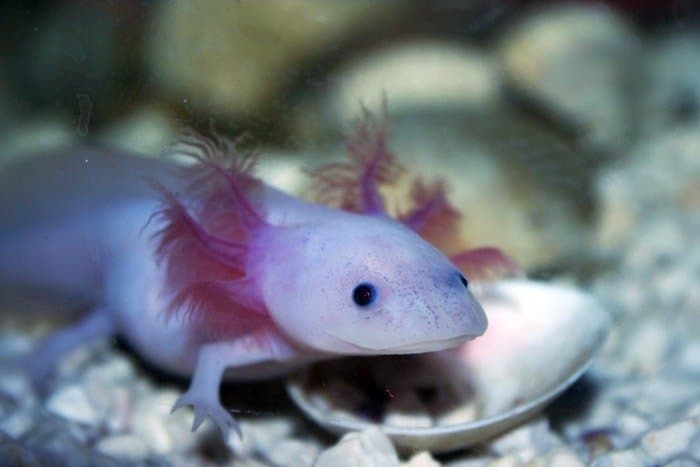
An albino axolotl among rocks underwater

Axolotls are easy to spot from their bristled gills on the side of their head.

Behavior

Axolotl moving among rocks under water

Axolotls are relatively shy creatures.

In general, axolotls are solitary creatures. They prefer not to interact with humans, and they live by themselves in the wild unless they are mating, often hiding among plants and rocks at the bottom of the lakes in which they live.

Evolution
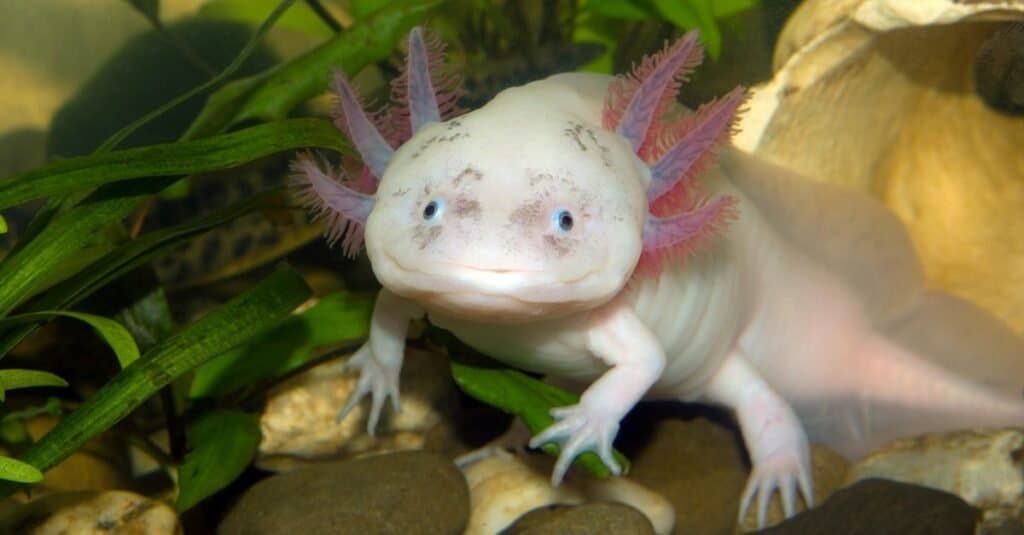
Coolest Animals: Axolotl

From an evolutionary perspective, axolotls are comparatively extremely young in contrast to other Mexican salamanders. Scientists estimate that they have only been in their native habitat for about 10,000 years. These creatures did not have long to flourish, for around the thirteenth century their home began to be settled by humans. After the land was claimed by Spain in the 1500’s urbanization began to rapidize until the area became modern day Mexico City, leaving but a tiny fraction of the axolotl’s biome for them to dwell. Biologists have taken note of how axolotls express traits in adulthood that other amphibians only show during adolesence, like breathing underwater, and hypothesize that this could be because of their incredibly brief chance to evolve before their populations became seriously threatened.

Habitat

Salix bonplandiana

Lake Xochimilco is the only place in the world where axolotl can be found in the wild.

Axolotls are native to the Valley of Mexico and can only be found in the Lake Xochimilco region. In the past, they could also be found in Lake Chalco, but every acre of land in that area is now dry in order to prevent flooding, so these creatures had to migrate.

Despite the fact that they are part of the salamander family, they live entirely in the water. The waters of Lake Xochimilco are usually about 65 degrees Fahrenheit, which is right at the edge of the 60-65 degree comfort zone that these creatures prefer to live in. They can be found at the bottom of the lake surrounded by plants and rock structures in which to hide.

Population
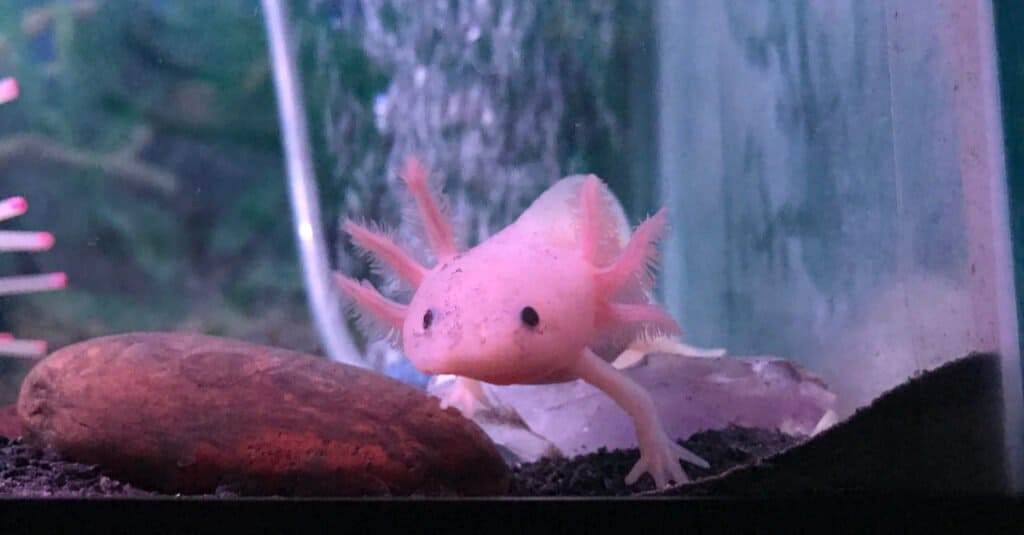
leucistic axolotl

Axolotls are almost extinct in the wild.

Currently, the IUCN has currently listed the axolotl as a critically endangered species, and this means that they are on the brink of becoming extinct in the wild. The price of Mexico City’s urban sprawl has caused a severe decline in the population, and as the demands of Mexico City have steadily increased, more of this creature’s native surroundings in the Lake Xochimilco area has been drained or contaminated, and this habitat loss is a major contributing factor to their population decline.

Researchers are not sure exactly how many axolotls exist in the wild currently, but the most optimistic estimate is in the hundreds. The most recent count showed fewer than 30 axolotls per acre in their natural habitat, so their numbers are incredibly low. They are bred extensively in captivity as pets and food, however, so their conservation status is complicated.

Diet
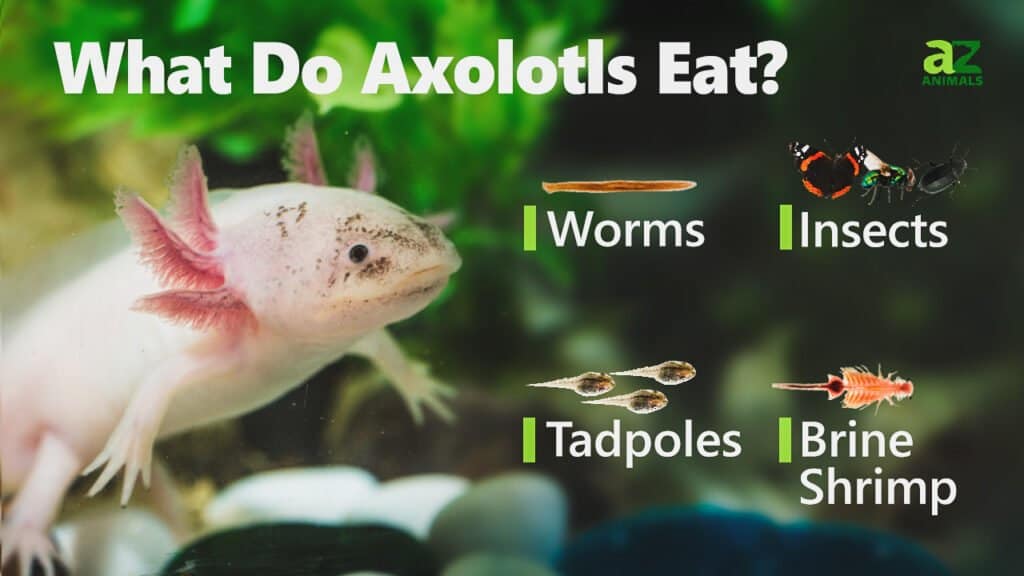
What Do Axolotls Eat
Axolotls eat worms, insects, tadpoles, and brine shrimp.

The axolotl is carnivorous, and in the wild, it will typically eat worms, crustaceans, small fish, mollusks, insects, and insect larvae. The ones that live in captivity are usually fed a diet that consists of salmon pellets, black worms, bloodworms, white worms, and Daphnia. Anyone keeping one of these creatures as a pet should be sure to feed it a protein-rich diet in order to keep it healthy. For a complete list of foods axolotls eat, check out our “What Do Axolotls Eat?” page.

Predators
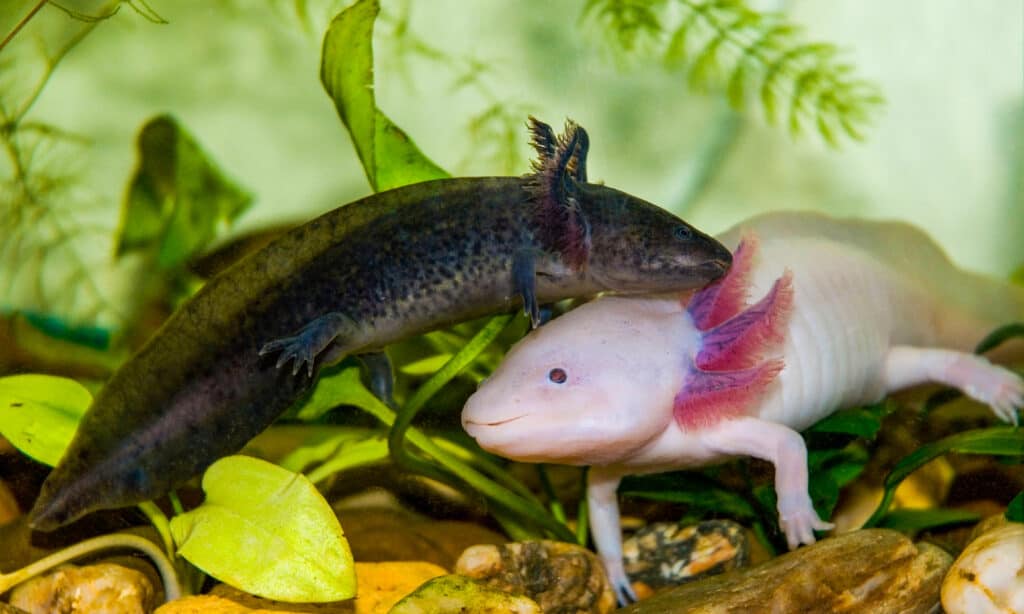
Axolotl, Fish, Pets, Salamander, Albino

Humans have been the biggest detriment to axolotl’s habitat.

Axolotls face a number of threats from both human and animal predators. Roasted axolotl is considered a delicacy to many, and there are also huge numbers of people who capture them to sell for profit.

The introduction of non-native species such as the Asian carp and African tilapia has also hurt the wild axolotl population because these fish will eat their young as well as the small prey that they survive on.

Reproduction, Babies and Lifespan
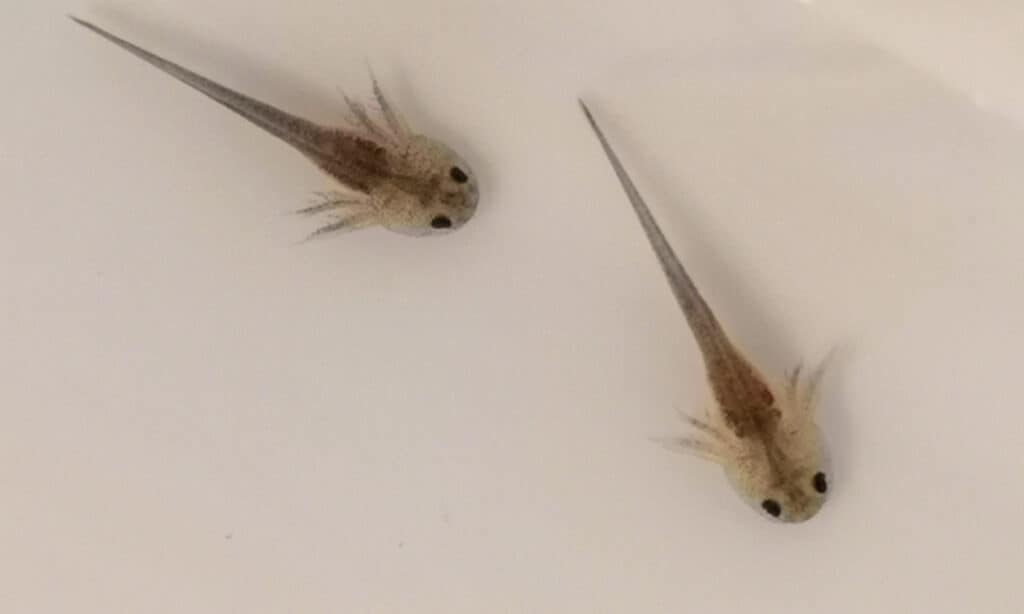
baby​ axolotl​

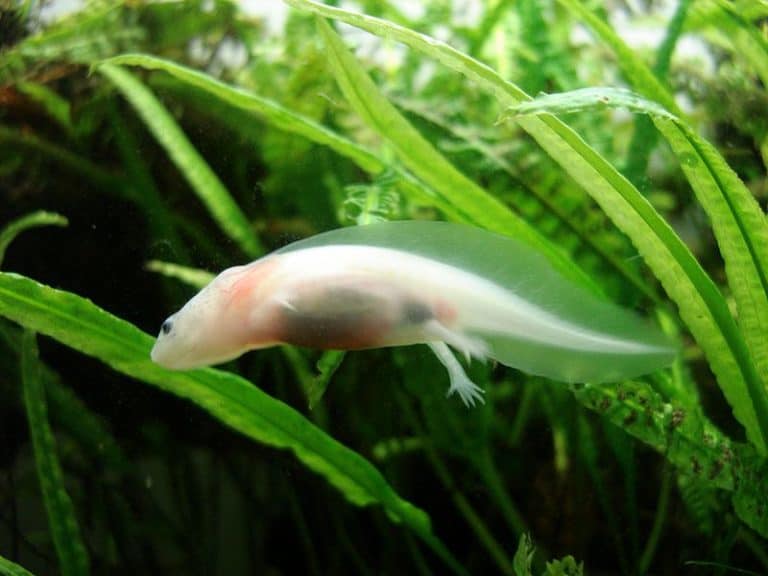
Baby axolotls look a lot like tadpoles, though you can already distinguish them by their branched gills.

In the wild, axolotls typically live up to 15 years. In captivity, their lifespan is usually longer, and they can live up to 25 years. These creatures generally reach sexual maturity around 18 months. Some may take up to 24 months to reach full maturity, but they are always still in their larval form when maturation happens.

Axolotls breed in late winter or early spring, and their mating rituals involve a courtship dance that relies on a combination of visual and chemical signals that allow the female to find and insert the sperm capsules that the male deposits for her.

Females can lay anywhere from 100 to 1,000 eggs in a single spawning. Each egg is laid individually, and females prefer to lay their eggs on plants when possible. The eggs will hatch after incubating for 14 days at 75 degrees Fahrenheit, and the larvae will begin eating within their first few hours of life. Baby axolotls will remain larvae even as they reach sexual maturity, that’s because axolotls never leave their larvae stage! In fact, if you inject an axolotl with iodine it will force a metamorphosis that sees them lose their gills and turn into a type of salamander.

Axolotl parents do not care for their larvae. In fact, they are not averse to eating their own eggs or their own babies. This is something that breeders and pet owners must carefully account for.

Keeping an Axolotl as a Pet
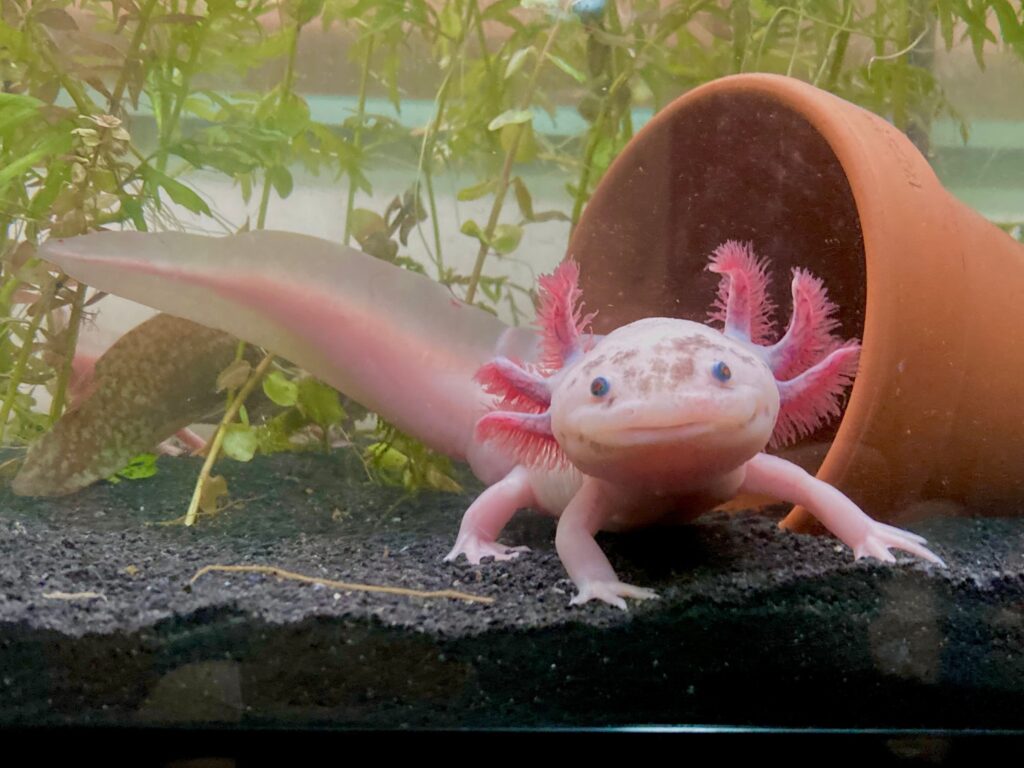
Speckled Leucistic Axolotl front-facing full body shot with tail visible.The axolotl is flesh colored with wide set round black eyes. It has a long tail. It has three pink-to-ornge appendages on each side of its head.

Axolotls are becoming increasingly popular aquarium pets.

Axolotls have become popular in the exotic pet trade. They can make great pets, but be aware that they can be challenging for beginning pet owners who haven’t previously cared for amphibians. Axolotls require large water tanks and relatively uniform water temperatures that accommodate their sensitive skin. Purchasing an axolotl generally costs about $20 to $70 but the real expense will come from tank set-ups, keeping an axolotl fed, and potential vet check-ups. Keep in mind that axolotls can live over 10 years in captivity, so purchasing one as a pet can be a long-term commitment.

Axolotl in Zoos
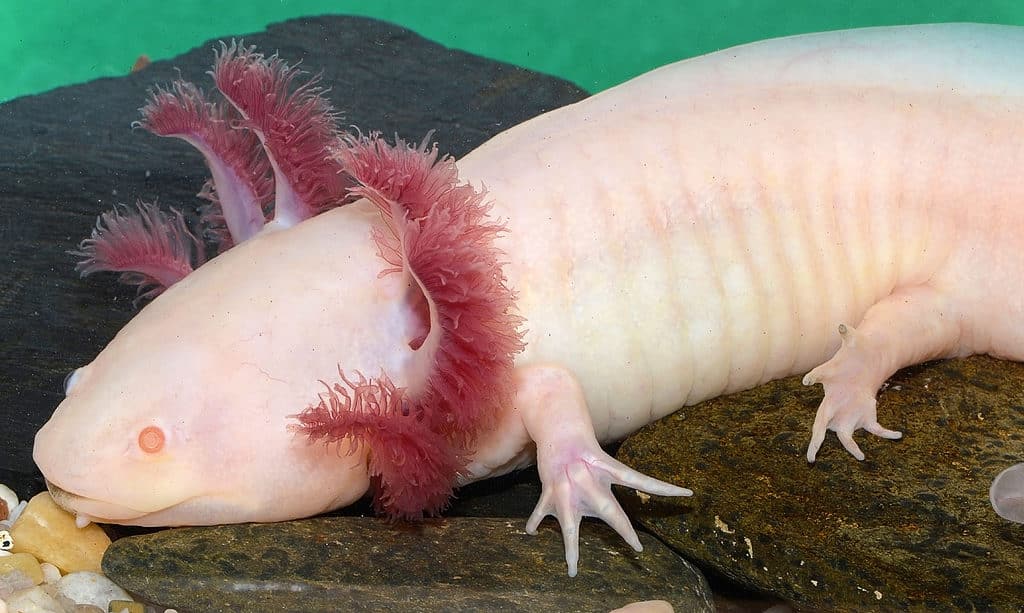
axolotl, albino variant

You don’t have to travel to Mexico City in order to meet a real life axolotl.

There are many zoos across the United States that feature axolotl exhibits so that you can see these fascinating creatures up close and learn more about them. A few of the most well-known exhibits can be seen at the San Diego Zoo, the Lincoln Park Zoo and the Detroit Zoo.

Types of Axolotl

While axolotl are but one species of mole salamander, they can display a wide spectrum of genetic variation visible in a variety of gorgeous colors. Breeders have sought to accentuate these traits by manipulating the chromatosphores, or pigment cells, so that they can be sold as a recognizable specimen of their kind. New and unique types of axolotl are being discovered and bred all the time. Below you can find a list of all of the most popular varieties of axolotl.

  • Wild Axolotl
  • Leucistic Axolotl
  • White Albino Axolotl
  • Golden Albino Axolotl
  • Melanoid Axolotl
  • Axanthic Axolotl Morph
  • Copper Axolotl Morph
  • GFP (Green Flourescent Protein) Axolotl Morph
  • Chimera Axolotl Morph
  • Mosaic Axolotl Morph
  • Silver Dalmation Axolotl Morph
  • Enigma Axolotl Morph
  • Firefly Axolotl Morph
View all 326 animals that start with A
How to say Axolotl in ...
Bulgarian
Ашолотъл
Danish
Axolotl
German
Axolotl
English
Axolotl
Spanish
Ambystoma mexicanum
Finnish
Aksolotli
French
Axolotl
Hebrew
אקסולוטל מקסיקני
Croatian
Aksolotl
Italian
Ambystoma mexicanum
Japanese
アホロートル
Latin
Ambystoma mexicanum
Dutch
Axolotl
English
Axolotl
Polish
Ambystoma meksykańska
Portuguese
Ambystoma mexicanum
Swedish
Axolotl
Turkish
Aksolotl
Chinese
墨西哥钝口螈

Sources

  1. Zenodo
  2. Aquarium Industries
  3. National Geographic
  4. Animals.net
  5. Erik Vance for Scientific American
  6. Dallas World Aquarium
  7. https://www.gbif.org/species/144098111
Corinna Cybele

About the Author

Corinna Cybele

My name is Corinna! In my profile photo you can see me with one of my two cats, Bisky! The other's name is Yma and she's a beautiful black Bombay kitty. I'm 24 years old and I live in Birmingham, AL with my partner Anastasia and like to spend my free time making music, collecting records and reading. Some other animals I've owned were a hamster, 2 chihuahuas and many different kinds of fish.

Thank you for reading! Have some feedback for us?


Axolotl FAQs (Frequently Asked Questions)

In general, axolotls make good pets. They are resilient creatures that are cute, easy to care for and interesting to watch. Their needs are fairly simple and straightforward, and they don’t require expensive equipment or complicated care routines like many other exotic pets. The price of an axolotl is also fairly low, which makes it a good choice for beginners.