





B
Species Profile

Balinese

Felis catus

Silky points, big brains, blue eyes.
iStock.com/Natalie Herzer

Balinese Distribution

Click a location to explore more animals from that region

Origin Location

This map shows the native origin of the Balinese. As a domesticated species, they are now found worldwide.

Loading map...

Found in 1 country

Size Comparison

Human 5'8"
Balinese 9 in

Balinese stands at 13% of average human height.

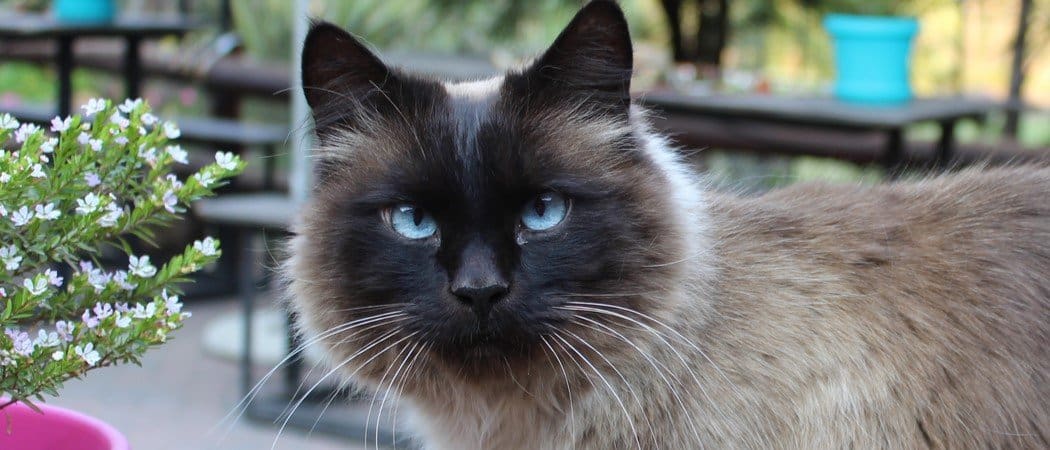
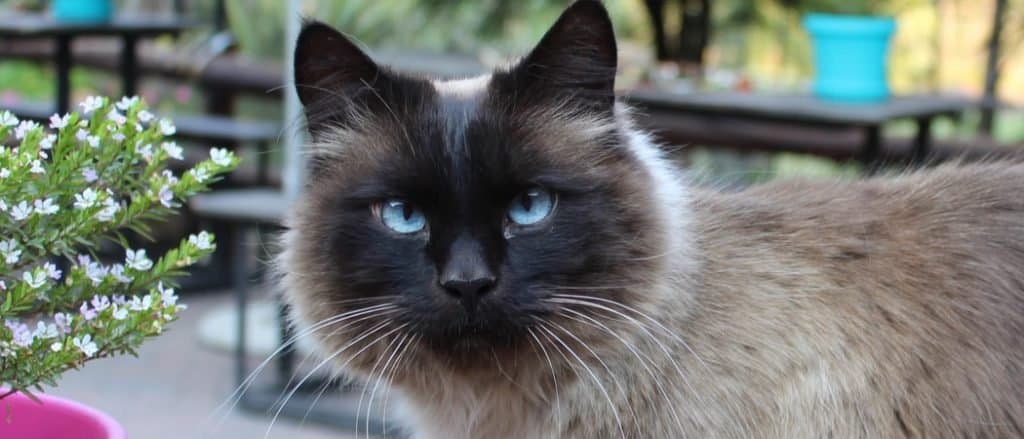
Balinese Cat with Blue Eyes, close-up.

At a Glance

Domesticated
Also Known As Longhaired Siamese, Long-haired Siamese, Siamese Longhair, Semi-longhaired Siamese
Diet Carnivore
Activity Crepuscular+
Lifespan 4 years
Weight 5.8 lbs
Status Not Evaluated
Did You Know?

The Balinese is essentially a long-haired variety within the Siamese/Oriental-type family, arising from naturally occurring longhair in Siamese lines.

Scientific Classification

The Balinese is a long-haired variety closely related to (and often described as a long-haired form of) the Siamese cat. It is a domestic cat breed known for a slender body, wedge-shaped head, large ears, blue eyes, and a silky single coat with colorpoint patterning.

Kingdom
Animalia
Phylum
Chordata
Class
Mammalia
Order
Carnivora
Family
Felidae
Genus
Felis
Species
Felis catus

Distinguishing Features

  • Long, silky coat with minimal undercoat (often less matting than many long-haired cats)
  • Colorpoint pattern (darker extremities) with blue eyes
  • Slim, athletic ‘oriental-type’ build and large ears
  • Often vocal, social, and highly interactive temperament (breed-typical)

Physical Measurements

Males and females differ in size

Height
9 in (8 in – 10 in)
9 in (8 in – 10 in)
Length
2 ft 9 in (2 ft 6 in – 3 ft 1 in)
2 ft 2 in (1 ft 10 in – 2 ft 6 in)
Weight
10 lbs (8 lbs – 12 lbs)
8 lbs (6 lbs – 10 lbs)
Tail Length
1 ft 1 in (12 in – 1 ft 3 in)
12 in (10 in – 1 ft 2 in)
Top Speed
30 mph
Balinese: 45–50 km/h

Appearance

Primary Colors
Secondary Colors
Skin Type Furred; silky, fine single coat (minimal undercoat) characteristic of Siamese/Oriental-type cats; coat lies close but is medium-long with feathering and a plumed tail.
Distinctive Features
  • Domestic cat (Felis catus) breed; essentially the long-haired variety closely related to the Siamese/Oriental-type lineage.
  • Slender, elegant, fine-boned body with long legs and a tubular silhouette; typically a medium-sized cat rather than a heavy or cobby type.
  • Wedge-shaped head with a long, straight profile; very large ears set wide, enhancing the triangular outline.
  • Almond-shaped, vivid blue eyes (a key identifier paired with colorpoint patterning).
  • Medium-long, silky coat with minimal undercoat; notable feathering on the tail (plume) and often on the hind legs/ruff depending on line.
  • High social/interactive temperament common in Siamese-related breeds: people-oriented, vocal, and energetic; benefits from daily play, climbing space, and puzzle feeding.
  • Coat care: regular gentle brushing (often 1-2×/week; more during seasonal shedding) to prevent tangles and reduce loose hair; minimal undercoat usually means fewer mats than many long-haired breeds.
  • Balinese cats may have higher risk of dental and gum disease, breathing sensitivity (like asthma), and inherited problems such as amyloidosis, heart muscle disease, or retinal degeneration, so health screening and responsible breeding matter.
  • General domestic-cat care: maintain healthy weight (lean breed but can still gain), provide dental hygiene, routine veterinary checks, and environmental enrichment to reduce stress-related behaviors.

Sexual Dimorphism

Sexual dimorphism is usually mild to moderate: males tend to be slightly larger and more muscular, while females are typically finer-boned; overall breed type remains slender in both sexes.

  • Often slightly larger overall size and weight within the breed's medium range.
  • Broader head/neck and more noticeable facial/jowl development in some males (especially if neutered later).
  • Typically lighter, more refined bone structure and a narrower head/neck.
  • Often appears more delicately built while retaining the same long, athletic proportions.

Did You Know?

The Balinese is essentially a long-haired variety within the Siamese/Oriental-type family, arising from naturally occurring longhair in Siamese lines.

Unlike many long-haired cats, the Balinese typically has a silky single coat (often with little undercoat), so it tends to mat less than fluffier breeds.

Kittens are born mostly pale; their colorpoint markings develop and darken with age, influenced by cooler body temperatures.

All Balinese have vivid blue eyes-tied to the colorpoint gene-while their bodies remain lighter than the "points" (ears, face, legs, tail).

They're known for being highly people-oriented and vocal, often "chatting" with their humans like their Siamese relatives.

Because they're athletic and slender, many Balinese excel at climbing, jumping, and learning tricks or leash walking.

Common point colors historically included seal, chocolate, blue, and lilac; some registries also recognize additional point colors/patterns depending on organization.

Unique Adaptations

  • Colorpoint temperature-sensitive pigmentation (a form of partial albinism): pigment concentrates in cooler areas (points), producing the signature pattern and blue eyes.
  • Silky, longer coat with reduced undercoat in many individuals: provides a long-haired look while often requiring less de-matting than double-coated longhairs.
  • Lean, tubular "Oriental-type" body and long tail: built for agility and jumping, distinguishing it from many sturdier domestic cat body types.
  • Strong human-directed social bonding: selectively bred temperament that amplifies the domestic cat's natural flexibility and affiliative behavior with people.
  • Colorpoint coat pattern is temperature-sensitive: cooler body regions develop darker fur while warmer areas stay lighter, so seasonal or ambient temperature differences can affect point intensity over time.

Interesting Behaviors

  • "Conversation" behavior: frequent meows, trills, and chirps directed at people, often used to solicit play, attention, or follow you room-to-room.
  • High sociability: tends to shadow family members, greet at the door, and seek lap time-often preferring company over being alone.
  • Problem-solving play: enjoys puzzle feeders, clicker training, and learning to open doors or locate hidden toys.
  • Vertical living: strong preference for tall cat trees and high perches; many will patrol the home from above.
  • Gentle but persistent attention-seeking: paw taps, head-butting, and sitting on your work surface to re-engage you.
  • Interactive hunting style: likes wand toys and fetch-like games, reflecting the domestic cat's predatory play sequence.

Cultural Significance

Balinese Cat (Felis catus) rose with mid-1900s Oriental-type purebred cats in North America and Europe. Its name links to Balinese dance, not the island. It shows one gene for long hair made a new show breed with Siamese look and temperament.

Myths & Legends

A popular origin tale says the Balinese cat (Felis catus) was named because its graceful movement and slim lines reminded early breeders of Balinese dancers, giving it a theatrical air despite not coming from Bali.

Breed-history anecdotes in Siamese circles tell of occasional long-haired kittens appearing unexpectedly in Siamese litters-treated at first as charming anomalies-before fanciers intentionally developed them into a recognized breed.

In Western stories about Siamese lore, colorpoint cats are tied to temple magic and old Siam royal courts. Balinese cats (Felis catus), close relatives, are often included in these romantic tales of "royal" pet cats.

In many cultures, cats are seen as watchful home guardians who notice visitors and changes first. Owners of social, vocal Balinese Cat (Felis catus) tell stories of them announcing arrivals and sensing moods early.

Conservation Status

NE Not Evaluated

Has not yet been evaluated against the criteria.

Population Stable

Life Cycle

Birth 4 kittens
Lifespan 4 years

Lifespan

In the Wild
2–8 years
In Captivity
10–22 years

Reproduction

Mating System Polygynandry
Social Structure Managed Domestic
Breeding Pattern Transient
Fertilization Internal Fertilization
Birth Type Internal_fertilization

Balinese (Felis catus) mates follow the species' polygynandrous pattern: no long-term pair bonds, internal fertilization, induced ovulation, and possible multiple fathers. In practice matings are controlled by breeders; males rarely help raise kittens.

Behavior & Ecology

Social Colony (informally: clowder) Group: 2
Activity Crepuscular, Cathemeral
Diet Carnivore High-protein, meat-based wet food (e.g., poultry such as chicken or turkey)

Temperament

Breed-distinguishing vs. base species: notably people-oriented, 'Velcro' tendency (seeks proximity, follows caregivers), and often more persistent in initiating interaction than many domestic cats.
Highly intelligent, curious, and trainable (often enjoys fetch, clicker training, leash/harness work); needs daily mental enrichment to prevent boredom-related behaviors (excess vocalizing, attention-seeking, destructive scratching).
Playful and athletic with strong jumping/climbing drive; benefits from vertical space (cat trees, shelves) and interactive play that mimics prey sequence.
Social and affiliative: frequently solicits petting, lap time, and interactive play; commonly compatible with other pets when introductions are structured.
Sensitive/attentive temperament: can be startled by chaos or prolonged solitude; thrives with predictable routines and regular engagement.
Balinese cats (Felis catus) are very social and talkative. Early contact with people, home crowding, and stress shape them—some are outgoing with strangers, others shy but very bonded to one person.
Balinese cats may get progressive retinal atrophy, hypertrophic cardiomyopathy, amyloidosis, dental disease/gingivitis, and asthma or bronchial sensitivity; regular vet checks and low-dust homes help keep behavior and activity steady.
Balinese have a silky single coat that needs weekly brushing (more when shedding) and regular nail and teeth care. They really need company; another pet or more human attention helps.

Communication

Meow Often frequent and conversational in this breed, with varied tones
Trill/chirp Common greeting/attention sound
Purr Affiliative/soothing; also can occur with discomfort
Yowl/howl Distress, separation, or territorial arousal; can increase with boredom or medical issues
Growl/hiss Boundary-setting when overstimulated or during introductions
Tail and ear posture signaling Highly expressive; quick shifts during play or overstimulation
Slow blink and soft eye contact Affiliative bonding; Balinese often use this in close human interaction
Head-butting/bunting and cheek rubbing Scent marking; strong social bonding behavior
Kneading and body leaning Comfort/affiliation
Scent marking via facial pheromones and scratching; provide multiple scratching posts to reduce conflict in multi-cat homes
Proximity seeking and 'following' behavior A common Balinese attention/request strategy

Habitat

Biomes:
Temperate Forest Tropical Rainforest Tropical Dry Forest Savanna Desert Hot Desert Cold Mediterranean Temperate Grassland Temperate Rainforest Boreal Forest (Taiga) Tundra Alpine Wetland Freshwater Marine +9
Terrain:
Plains Hilly Valley Coastal Island Mountainous Riverine +1
Elevation: Up to 19685 ft 1 in

Ecological Role

Domestic mesopredator/commensal carnivore; human-associated predator of small vertebrates and invertebrates

Rodent population suppression in human settlements May reduce some pest insects (incidental) Can impact native wildlife (bird/small reptile predation), so indoor living or supervised outdoor time is often recommended to reduce ecological harm

Diet Details

Main Prey:
Small rodents Small birds Lizards and small reptiles Amphibians Insects and other invertebrates

Human Interaction

Domestication Status

Domesticated

Balinese Cat (Felis catus) comes from the fully domesticated cat, originally from the Near Eastern/African wildcat (Felis lybica). Domestication grew with early farming and rodent control. The Balinese is not a separate domestication. In the mid-20th century breeders made a breed from long-haired Siamese kittens with a silky single long coat and Siamese body and colorpoint pattern.

Danger Level

Low
  • scratches/bites during play, restraint, or fear responses
  • allergic reactions to dander/saliva (not hypoallergenic despite some marketing)
  • zoonotic risks common to domestic cats if hygiene/vet care are poor (e.g., ringworm, toxoplasmosis exposure from litter handling)
  • fall/trip hazards from an active, underfoot cat

As a Pet

Suitable as Pet

Legality: Generally legal worldwide where domestic cats are permitted; may be subject to local pet licensing, microchipping, vaccination, breeding regulations, and housing/HOA rules. Not typically restricted like wild/ hybrid felids.

Care Level: Moderate

Purchase Cost: $600 - $2,000
Lifetime Cost: $15,000 - $35,000

Economic Value

Uses:
Companion animal Pedigree breeding Cat shows/competitive exhibition Pet services (grooming, boarding, veterinary care) Pet products (food, litter, enrichment items)
Products:
  • sale of pedigree kittens
  • stud services (where legal/ethical)
  • show participation and titles that increase breeding value
  • routine veterinary services (vaccination, sterilization, dental care)
  • specialty grooming and shedding-control products

Relationships

Related Species 8

European wildcat
European wildcat Felis silvestris Shared Genus
African wildcat Felis lybica Shared Genus
Jungle cat Felis chaus Shared Genus
Sand cat
Sand cat Felis margarita Shared Genus
Black-footed cat Felis nigripes Shared Genus
Chinese mountain cat Felis bieti Shared Genus
Bobcat
Bobcat Lynx rufus Shared Family
Canada lynx
Canada lynx Lynx canadensis Shared Family

Ecological Equivalents 5

Animals that fill a similar ecological role in their ecosystem

Siamese cat
Siamese cat Felis catus Domestic cat breed. Balinese is the long-haired form of the Siamese, sharing a slim body, wedge-shaped head, large ears, blue eyes, and a colorpoint coat. It has a silky single coat and a plumed tail, shares similar health characteristics, and typically needs brushing one to two times weekly.
Oriental Longhair Felis catus Similar to Oriental/Siamese-type body plan and temperament (athletic, people-oriented, talkative), but not typically restricted to a blue-eyed colorpoint; coat is longer, like the Balinese. Ecological/household niche: an active indoor companion that benefits from environmental enrichment, climbing space, and social interaction.
Colorpoint Shorthair Felis catus Shares the colorpoint patterning and the sleek, athletic companion-cat niche, differing mainly by its short coat and accepted color range standards. Like the Balinese, it tends to be highly interactive and benefits from daily play and puzzle feeding to prevent boredom-related behaviors.
Turkish Angora
Turkish Angora Felis catus Long-haired, athletic, human-focused companion cat. Similar care requirements for regular grooming and environmental enrichment; differs from the Balinese in head/body type and typically lacks the Siamese-type colorpoint/blue-eye package.
Ragdoll
Ragdoll Felis catus Shares a blue-eyed colorpoint appearance and indoor companion role with the Balinese, but is larger, heavier, calmer, and often requires more grooming because its coat is denser.

Named after the mysterious eyes, regal, graceful movements, and flowing, lean lines of Balinese dancers, it is commonly believed its coat was simply a natural mutation of the Siamese, although some people believe the Siamese was outcrossed with the Angora. There are two body type standards of Balinese, as with the Siamese: traditional (old style) or modern (American).

Today, the Javanese, which was initially a Balinese crossed with a Colorpoint Shorthair to get other colorpoints, is considered a type of Balinese or a modern colorpoint Balinese. The loving, chatty, playful, high-energy, tolerant cat is also one of the most intelligent breeds around and makes an excellent family pet and companion animal.

Breed History

It is now scientific knowledge that some Siamese cats carry a long-haired recessive gene. When Siamese cats were introduced into America in the late 19th century, some litters were born with long-haired versions, which were viewed by breeders in a negative light, as they didn’t meet the breed standards at that time, which required Siamese cats to have short hair.

Breeders soon discovered that if they bred long-haired males and females together, who in turn would produce long-haired offspring, these cats were pure in their own right and could be considered a new breed. Only in 1928 is there a record of a long-haired Siamese being registered with the Cat Fanciers Federation.

In the United States, three separate breeders helped develop the Balinese breed: In 1955, Marion Dorsey of California began separating long-haired Siamese kittens from litters produced at her Rai-Mar Cattery to produce more. Later in the 60s, Helen Smith of New York not only bred long-haired Siamese, but she was also responsible for the new breed’s name — Balinese. Inspired by the graceful movements of these gorgeous cats, the name she chose gave a nod to Asian Balinese dancers.

Thirdly, Sylvia Holland bred long-haired Siamese after encountering them at a show called “The Jewel City Cat Show” in California in 1956. She later purchased Marion Dorsey’s cattery Rai-Mar and set about getting Balinese established as its own breed. She worked tirelessly to gain its acceptance, as well as develop and preserve its own pure lineage. Balinese cats were accepted by the CFA in 1967 and accepted for Championship status in 1970.

Traits: What to Know Before You Buy

The Balinese cat breed has unique traits:

  • It is not hypoallergenic, but close enough. Although it’s not immune from causing reactions in cat allergy sufferers, its fur has far fewer allergens than most other breeds.
  • The breed adapts well to indoor life but needs plenty of exercise to avoid becoming overweight with its athletic, muscular but fine-boned build.
  • The silky coat is less prone to tangles and only needs grooming once or twice a week. It also sheds far less than you’d think due to there being only a single coat.
  • Cat trees and high perches are a must for this breed, which enjoys jumping and being agile.

Personality

Its personality is chatty, playful, and intelligent, with a loving, high-energy, and tolerant temperament that gets along well with children, other pets, and other cats.

This highly active cat also has a social and attention-demanding personality. It meows like the Siamese but not as loudly. Often becoming attached to one person, it nonetheless enjoys high places, including people’s shoulders.
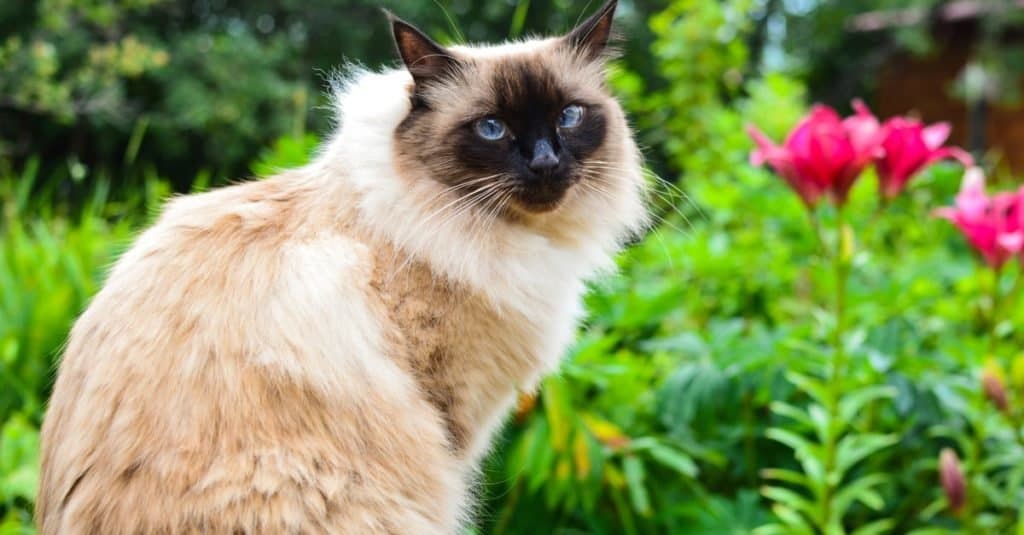
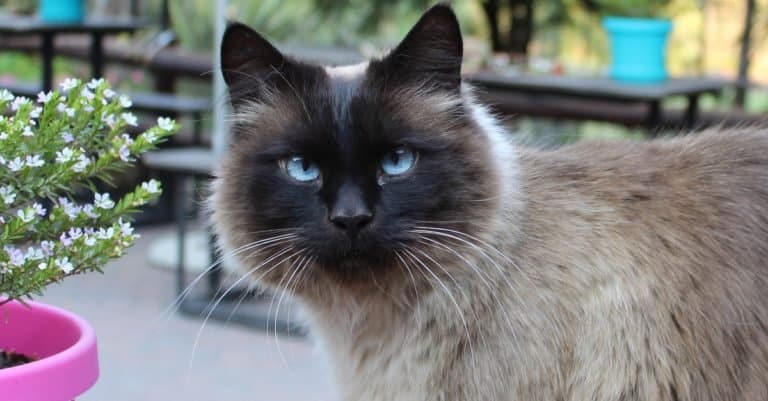
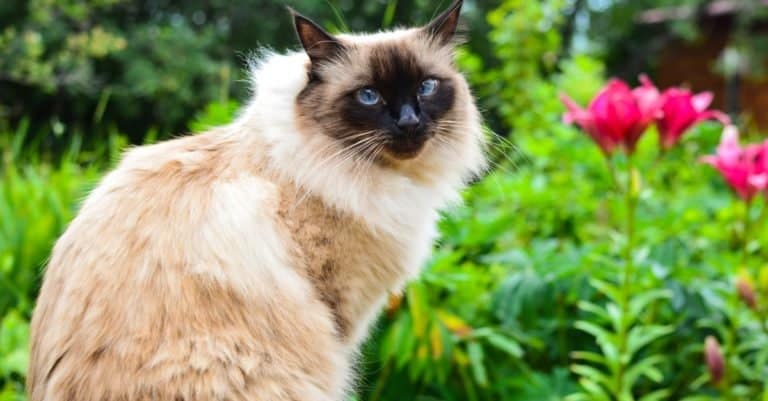
Balinese cat sitting outside in the garden.

The Balinese is a highly active cat that also has a social and attention-demanding personality.

Size and Weight

The Balinese is a medium size, medium-long-haired domestic cat breed also known as the purebred longhaired Siamese, although slightly larger in size. Males weigh 8 to 15 pounds, with an average of 12 pounds and females weigh 7 to 12 pounds, with an average of 10 pounds. Both grow up to 1.5 feet in length, not including the tail, and measure 8 to 13 inches in height. Balinese kittens weigh 1.4 to 2.6 pounds at 8 weeks of age and reach maturity at 15 to 18 months.
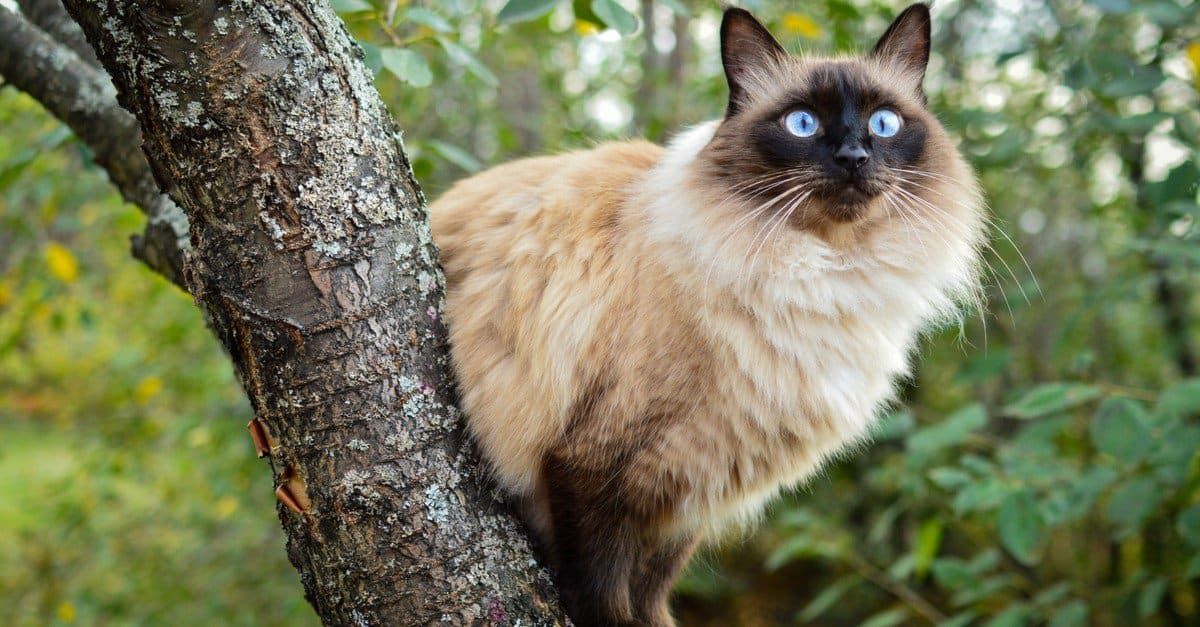
How Old is My Cat

The Balinese is a medium to large-sized cat, typically weighing from 7 to 15lbs.

Price

The price of a Balinese depends on several factors, such as where you’re buying it from. The cost of a Balinese adoption from a shelter is $75 to $100. On the other hand, the price is considerably more expensive if you purchase a Balinese from a breeder, with the cost ranging from $1,000 to $1,500.
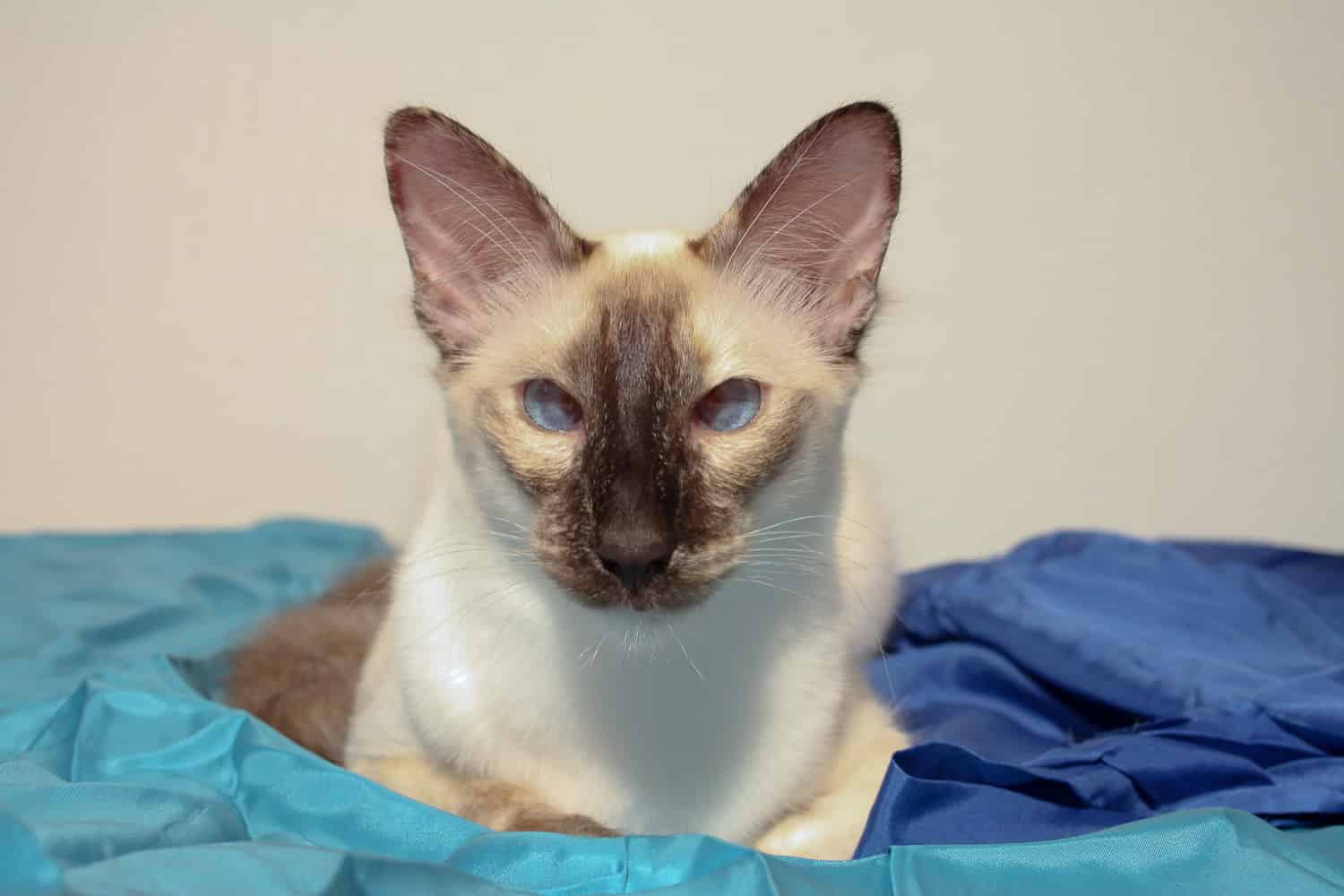
A well-bred Balinese cat can cost from 00-00 on average.

Kittens

Early on in life, Balinese kittens show their playfulness. It is necessary to have scratching posts, toys, high perches, and games for their mental stimulation. While still a kitten, the coat tends to be cream or white before developing color points later on. To identify the color point of your Balinese kitten, you can look at its paw pads. Lilac and chocolate points have pink pads, while the seal and blue points have dark pads.
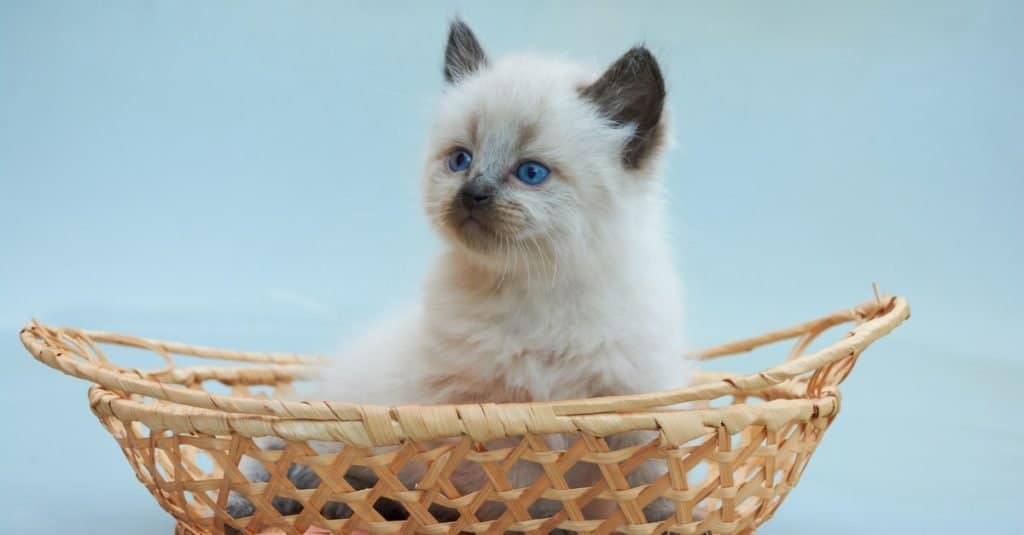
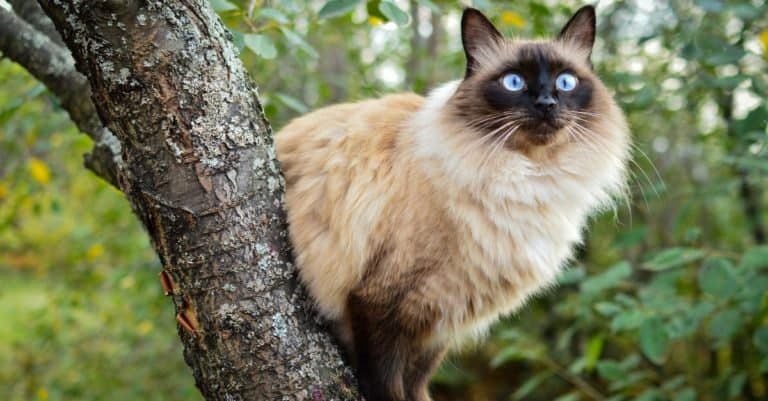
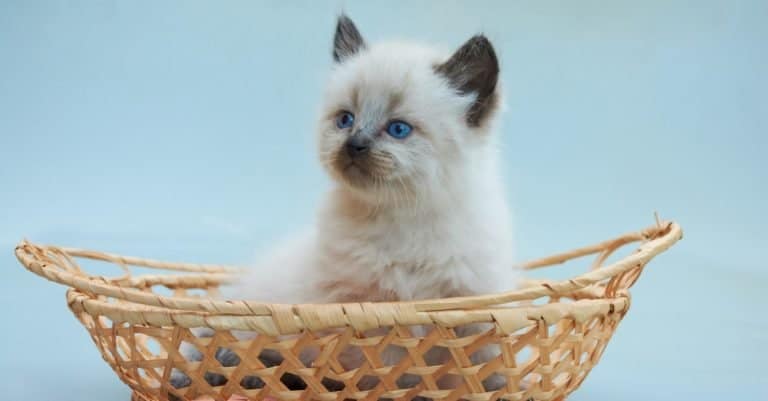
Balinese kitten playing in the basket.

A Balinese kitten’s coat tends to be white when it’s firstborn, developing colorpoints later on.

Lifespan

These cats tend to have a very long lifespan. At the very minimum, its lifespan ranges from 12 to 15 on average but can even be 18 to 22 years. With cat fanciers tending to have very small breeding circles with the occasional outcrossing, various unknown and genetic health issues are a possibility. You can ensure greater health and a longer lifespan by purchasing from a reputable breeder who has done health screenings on the kitten’s parents.
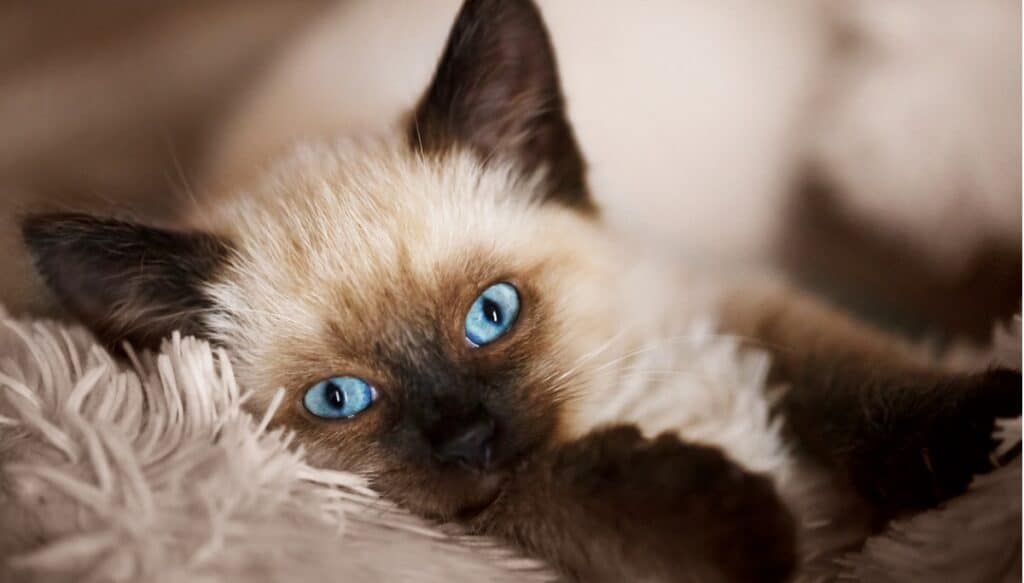
Balinese hypoallergenic cats

The Balinese cat has a lifespan of 12 to 15 years, with a maximum of up to 22 years.

Breed vs. Mixed

There are two body types of these purebred cats: traditional or old-style and modern or American. Both have sapphire blue eyes, long, graceful, slender, athletic, and fine-boned bodies, large ears, oval paws, long tails, and almond-shaped eyes. Males tend to be larger in weight and height than females. Due to the development of the longhaired Siamese as a distinct breed, the Balinese is slightly larger than its short-haired Siamese ancestor.

The Javanese originated from crossing Balinese with Colorpoint Shorthairs to obtain additional colorpoints. As of 2008, the Cat Fanciers’ Association (CFA) merged the Javanese into the Balinese breed, so it is now considered a color variation of the Balinese by the CFA, though some other associations may still list it separately. It encompasses all other colorpoints besides the Balinese standard of blue, seal, lilac, and chocolate points per the Cat Fanciers’ Association and the lilac, chocolate, red, cream, tortoiseshell, and lynx points per most other associations, including the Cat Fanciers’ Federation.

These cats can be outcrossed to other breeds such as Colorpoint Shorthairs, Oriental Longhairs, Siamese, and Javanese. A Balinese cross with a Siamese will have a shorter coat than the Balinese.
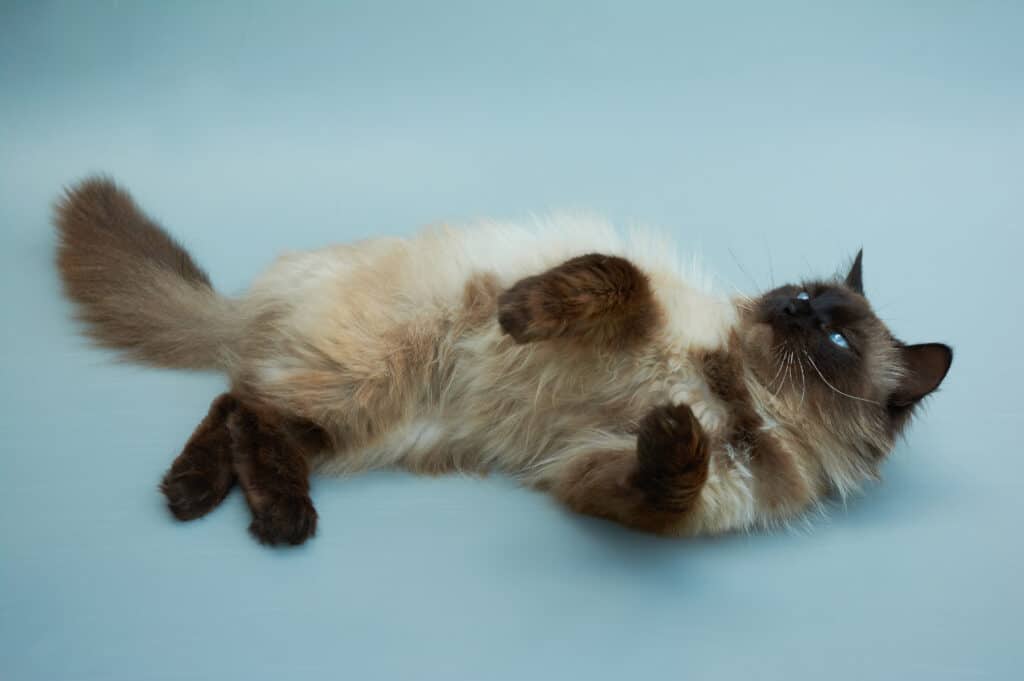
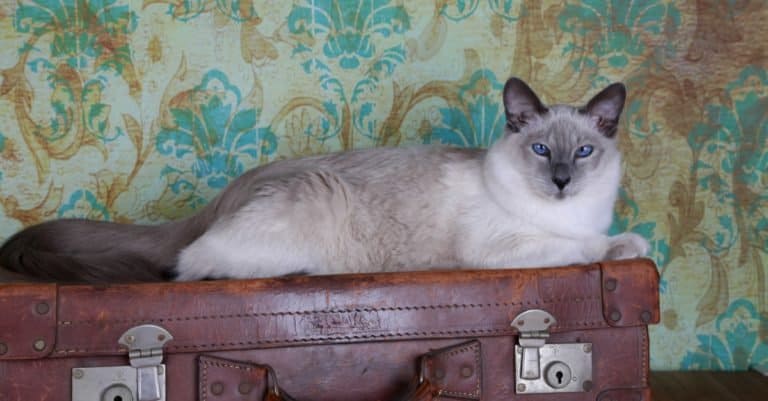
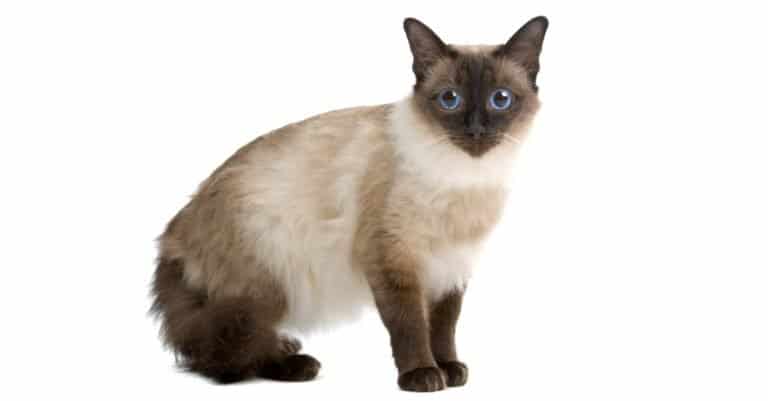
Balinese cat

Balinese cats are very similar to Siamese cats in body shape and coloring, but they have longer hair and plumed tails.

Types of Balinese Cats and Colors

The traditional (old-style) Balinese build has a more robust body and wider head, whereas the modern (American) Balinese build has a more triangle-shaped head, wider, longer ears, and a longer and more slender body.

The description of the “point” in the Balinese, Siamese, and other cats with such coloring refers to having darker colors on the colder areas of their bodies, such as the ears, face, paws, and tail. The inclusion of the Javanese breed expanded the color palette of the Balinese to include over 40 different colors and patterns, including the torbie (tortoiseshell tabby) with several color variations, and various colors of lynx and tortie points.

There are also other eye colors ranging from darker blue to violet. Although there are differences in what is considered standard colorpoints for the Balinese depending on the association, here is the list that was the most inclusive before the uniting of the Balinese and Javanese:

  • Chocolate: Also called brown or cinnamon, it is a brown shade that is a mutation of black.
  • Lilac: Also called lavender, lilac is diluted chocolate or chocolate with cream. Diluted colors are recessive traits, even in pure breeds.
  • Seal: Dark brown point on a cream, beige or fawn-colored body.
  • Blue: A diluted seal point.
  • Red: A shade of light to dark red-orange.
  • Cream: Light brown points on an off-white coat.
  • Tortoiseshell: A point with random patches of red, black, and cream. It can also have variations such as seal tortie, which is predominated by dark brown and black patches
  • Lynx: Also called Snow Tiger or Wildcat Points, this is either one of the four original points (lilac, chocolate, blue, or seal) with stripes.

View all 453 animals that start with B

Sources

  1. Wikipedia / Accessed June 26, 2021
  2. Ask The Cat Docter / Accessed June 26, 2021
  3. Siamese Royalty / Accessed June 26, 2021
  4. Meowingtons / Accessed June 26, 2021
  5. Azureys Cats / Accessed June 26, 2021
  6. Life With Siamese Cats / Accessed June 26, 2021
  7. Fandom / Accessed June 26, 2021
Abby Parks

About the Author

Abby Parks

Abby Parks has authored a fiction novel, theatrical plays, short stories, poems, and song lyrics. She's recorded two albums of her original songs, and is a multi-instrumentalist. She has managed a website for folk music and written articles on singer-songwriters, folk bands, and other things music-oriented. She's also a radio DJ for a folk music show. As well as having been a pet parent to rabbits, birds, dogs, and cats, Abby loves seeking sightings of animals in the wild and has witnessed some more exotic ones such as Puffins in the Farne Islands, Southern Pudu on the island of Chiloe (Chile), Penguins in the wild, and countless wild animals in the Rocky Mountains (Big Horn Sheep, Mountain Goats, Moose, Elk, Marmots, Beavers).
Connect:

Thank you for reading! Have some feedback for us?


Balinese FAQs (Frequently Asked Questions)

They are not considered officially hypoallergenic but are tolerated by most cat allergy sufferers because they produce less of the fel d1 protein that causes allergic reactions.