
B
Species Profile

Basenji Dog

Canis lupus familiaris

The yodeling hunter of Africa
Verbitskaya Juliya/Shutterstock.com

Basenji Dog Distribution

Click a location to explore more animals from that region

Origin Location

This map shows the native origin of the Basenji Dog. As a domesticated species, they are now found worldwide.

Loading map...

Size Comparison

Human 5'8"
Basenji Dog 1 ft 4 in

Basenji Dog stands at 24% of average human height.

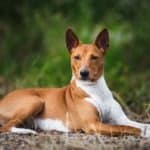
Basenji dog lying on the grass

At a Glance

Domesticated
Also Known As Congo dog, Congo terrier, barkless dog, African barkless dog
Diet Omnivore
Activity Diurnal+
Lifespan 5 years
Weight 12 lbs
Status Not Evaluated
Did You Know?

Basenjis are famous for a unique "baroo" yodel-caused by their larynx shape, not true silence.

Scientific Classification

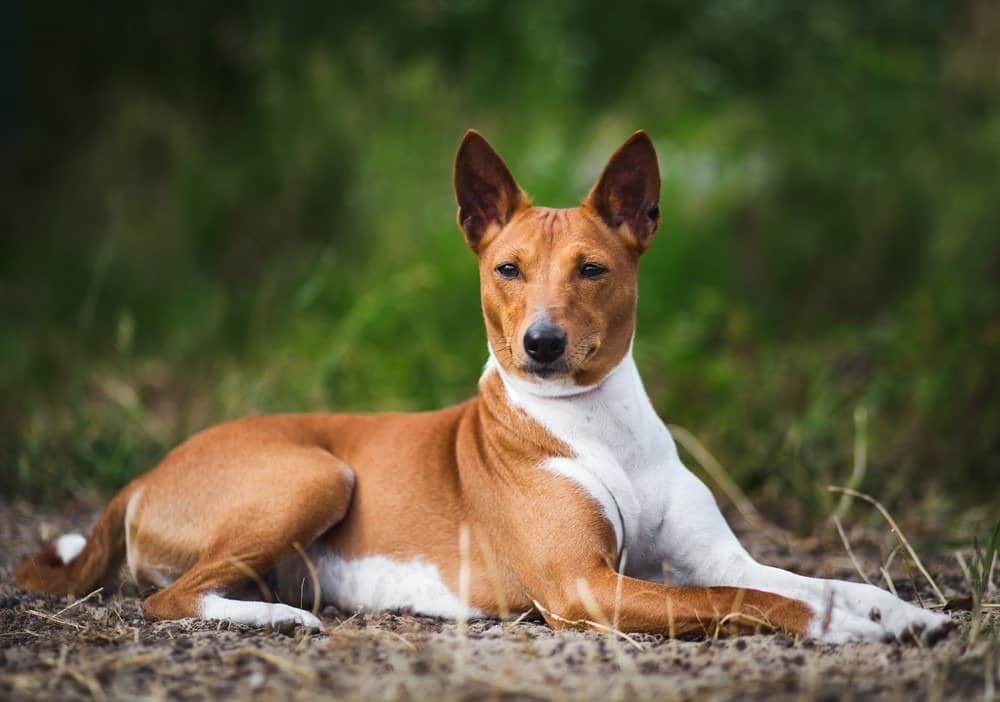
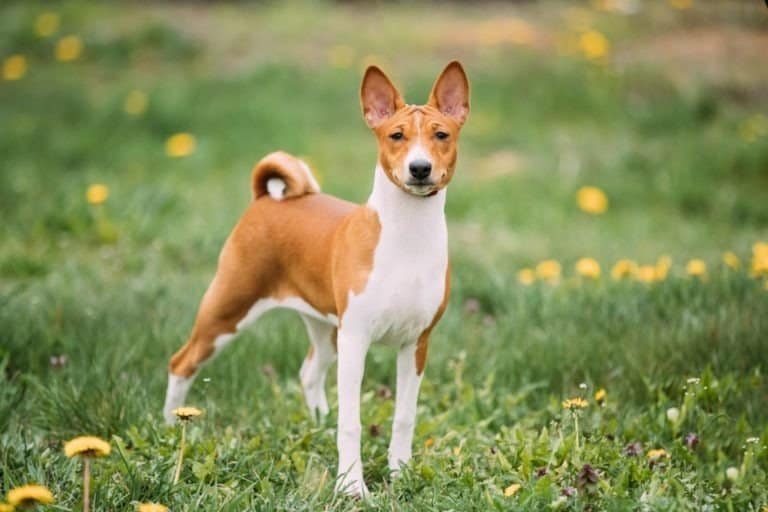
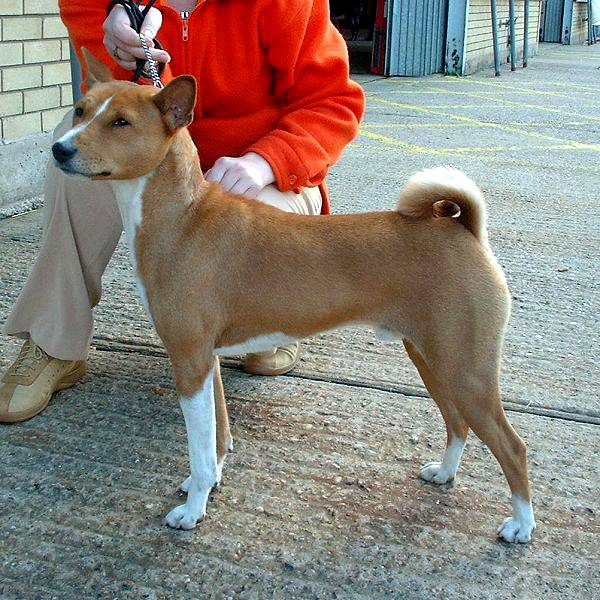
The Basenji is a small, short-coated domestic dog breed originating from Central Africa, historically used for hunting. It is often noted for its tightly curled tail, erect ears, and relatively quiet vocalization (including the characteristic ‘yodel’).

Kingdom
Animalia
Phylum
Chordata
Class
Mammalia
Order
Carnivora
Family
Canidae
Genus
Canis
Species
Canis lupus

Distinguishing Features

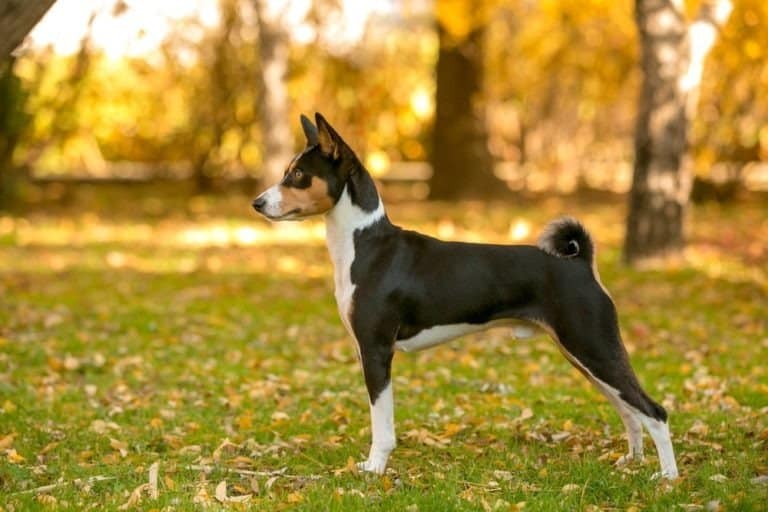
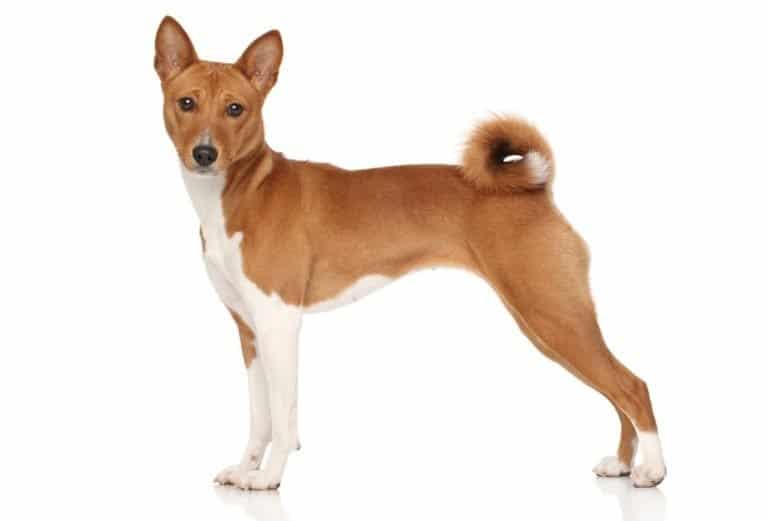
  • Small, athletic hound-type dog with erect ears and a tightly curled tail
  • Short, fine coat; often red/white, black/white, tricolor, or brindle/white patterns
  • Characteristic yodel-like vocalization and generally less frequent barking
  • Wrinkled forehead, especially when alert
  • High energy and strong prey drive; keen scent/sight hunter traits

Physical Measurements

Males and females differ in size

Height
♂ 1 ft 5 in (1 ft 4 in – 1 ft 6 in)
♀ 1 ft 4 in
Length
♂ 2 ft 4 in (2 ft 2 in – 2 ft 6 in)
Weight
♂ 24 lbs (22 lbs – 26 lbs)
♀ 21 lbs (20 lbs – 23 lbs)
Tail Length
♂ 9 in (7 in – 10 in)
♀ 9 in (7 in – 10 in)
Top Speed
25 mph
Sprint speed on level ground

Appearance

Primary Colors
Secondary Colors
Skin Type Mammalian skin with a short, fine, close-lying coat and relatively low doggy odor; skin is typically well-pigmented (notably a dark nose and dark eye rims are common). Not hairless; not hypoallergenic.
Distinctive Features
  • Domesticated dog breed (Canis lupus familiaris) originating in Central Africa; a small, athletic sighthound/primitive-type hunting dog compared with many other domestic dog breeds.
  • Tightly curled tail set high over the back, often forming one or more tight loops; a signature breed trait compared with the wider range of tail carriage in the base domestic dog population.
  • Erect, forward-facing ears with a compact, fine-boned build; forehead wrinkling is common, especially when alert.
  • Very short, fine coat and a notably "clean" grooming style (often described as catlike), with minimal coat maintenance needs relative to many breeds.
  • Vocalization is distinctive: may be relatively quiet and often produces a yodel-like sound ("baroo"); should not be described as absolutely barkless-individuals can bark or make other sounds.
  • Temperament/behavioral tendencies that stand out among many domestic dogs: independent, strong prey drive, quick and agile; commonly requires secure fencing/leash reliability and structured mental stimulation.
  • Care requirements: regular exercise with safe containment, enrichment to reduce boredom-related destruction/escape behaviors, and cold-weather protection due to the short coat and low insulation.
  • Watch for Fanconi syndrome (inherited kidney disease), progressive retinal atrophy (PRA), hip dysplasia, pyruvate kinase deficiency/hemolytic anemia, and occasional thyroid or gut problems. Responsible breeders use genetic and health tests.

Sexual Dimorphism

Mild sexual dimorphism typical of many domestic dogs: males are often slightly taller/heavier with more overall muscle, while females are typically a bit finer-boned; coat color/patterns are not sex-linked.

♂
  • Often marginally larger and more muscular through the shoulders and neck.
  • May show a broader head/foreface in some lines (subtle).
♀
  • Often slightly smaller with a more refined overall outline.
  • May appear lighter in build while retaining the same athletic proportions.

Did You Know?

Basenjis are famous for a unique "baroo" yodel-caused by their larynx shape, not true silence.

They were traditionally used in Central Africa to hunt and flush game, often working in packs with hunters.

The tightly curled tail and wrinkled forehead are hallmark breed features used in breed identification.

Compared with many dogs, Basenjis are notably fastidious-often grooming themselves in a cat-like way.

They're among the more ancient-looking domestic dog lineages, resembling early pariah-type hunting dogs.

The breed became widely known outside Africa after 20th-century imports to Europe and North America.

Unique Adaptations

  • Central African hunting specialization: athletic build, efficient gait, and keen senses suited to forest-savanna edges and village hunting.
  • Relatively quiet hunting style: less repetitive barking can be advantageous when stalking or moving game toward nets.
  • Short, tight coat: low grooming needs and quick drying in warm climates; limited insulation in cold weather (needs coats in winter).
  • Erect ears and compact, curled tail: classic spitz/pariah-type traits that aid communication, balance, and body language signaling.
  • Strong heat tolerance compared with many heavy-coated breeds, though still vulnerable to overheating during intense exercise.

Interesting Behaviors

  • Yodeling, chortling, and other unusual vocalizations instead of frequent barking; may "scream" when startled or excited.
  • Cat-like self-grooming and a strong preference for cleanliness; many dislike wet weather.
  • High prey drive: instinct to chase squirrels, rabbits, and fast-moving objects-leash/secure fencing is important.
  • Independent, problem-solving temperament; can test boundaries and become "selectively deaf" if training is inconsistent.
  • Climbing/jumping aptitude: some will scale fences or use objects as steps, especially when bored.
  • Scent-and-sight hunting behaviors: intense tracking, scanning, and sudden bursts of speed when something triggers pursuit.

Cultural Significance

Basenji (Canis lupus familiaris) were valued in Central Africa as hunting partners for small game and village life. Abroad they became the well-known "barkless dog," praised in clubs and media; bred by people but keeping an independent, old hunting-dog nature.

Myths & Legends

"The barkless dog" lore: early European accounts and kennel-club histories often framed Basenjis as mysterious forest dogs that didn't bark, a reputation that helped cement their exotic image when first imported.

Pharaonic association stories: long-standing anecdotes link Basenji-like dogs to ancient Egypt (sometimes called "Congo terriers" or compared to dogs in Egyptian art), reinforcing a romantic "ancient origins" narrative in breed history writings.

Central African hunting tales praise Basenjis (Canis lupus familiaris) as small, fast village dogs that quietly drive game into nets, shown as clever hunting partners instead of noisy followers.

Naming-and-origin anecdotes: early Western fanciers popularized the idea of a singular "Basenji" type from the Congo Basin, turning diverse local landraces into one recognized breed through selective importing and standardization.

Conservation Status

NE Not Evaluated

Has not yet been evaluated against the criteria.

Population Stable

Life Cycle

Birth 4 pups
Lifespan 5 years

Lifespan

In the Wild
2–8 years
In Captivity
10–16 years

Reproduction

Mating System Polygynandry
Social Structure Managed Domestic
Breeding Pattern Serial
Fertilization Managed Selective
Birth Type Internal_fertilization

Basenji (Canis lupus familiaris) females usually come into heat once a year. Naturally polygynandrous, but humans usually manage selective, short-term pairings. Not cooperative breeders. Screen for Fanconi syndrome and PRA; secure containment to prevent accidental matings.

Behavior & Ecology

Social Pack Group: 3
Activity Diurnal, Crepuscular
Diet Omnivore High-protein animal-based foods (e.g., cooked lean meats or meat-forward complete dog diets)

Temperament

Independent, curious, intelligent; tends to problem-solve and may be less handler-pleasing than many breeds (breed-specific vs. general domestic dog sociability).
Affectionate and playful with trusted family; typically reserved or cautious with strangers, benefiting from early, positive social exposure.
High prey drive and strong chase instinct (hunting heritage); may be unreliable off-leash without secure areas and recall training.
Alert, agile, and energetic in bursts; needs daily exercise plus mental work (scent games, puzzle feeders, training sessions) to reduce frustration behaviors.
Can be vocal in non-bark ways and expressive; may be sensitive to harsh corrections-responds best to reward-based training and clear boundaries.
Care requirements: secure fencing/escape-proof management (climbing/jumping/digging potential), consistent enrichment, and routine grooming (short coat, cat-like self-cleaning but still needs nail/teeth/ear care).
Health concerns to monitor (breed-linked): Fanconi syndrome, progressive retinal atrophy (PRA), possible hip dysplasia, hypothyroidism; prioritize reputable breeder health testing and regular veterinary screening.

Communication

Yodel/baroo Breed-characteristic
Whine/whimper
Growl
Chortle/roo-like sounds
Bark Infrequent compared with many breeds
Highly visual body language Erect ears, curled tail carriage changes, freeze-and-stare during prey focus
Scent investigation and marking; strong use of olfaction during exploration
Grooming/self-cleaning behaviors; social grooming with bonded partners
Play signals (play bow, bounce/feint) and mouthy play
Domestic dogs broadly communicate via posture, facial expression, and scent; Basenjis often bark less and use yodel/roo vocalizations, with substantial individual variation based on socialization and environment.

Habitat

Biomes:
Savanna Tropical Dry Forest Tropical Rainforest Temperate Grassland Temperate Forest Mediterranean Desert Hot Desert Cold Temperate Rainforest Boreal Forest (Taiga) Tundra Alpine Freshwater Wetland Marine +9
Terrain:
Plains Hilly Riverine
Elevation: Up to 18044 ft 8 in

Ecological Role

Human-associated mesopredator/omnivorous scavenger (domestic companion breed) with retained hunting behavior; in historical context, Basenjis functioned as small-game hunting dogs.

Assists humans in small-game hunting/tracking (historical/working role) Pest control by deterring or capturing small rodents (situational) Scavenging of human food waste (opportunistic, generally discouraged in modern care) Companionship and human well-being benefits (indirect societal service)

Diet Details

Main Prey:
Small mammals Ground birds Lizards and other small reptiles Insects
Other Foods:
Berries and other fruits Grasses and plant matter Starchy plant foods Vegetables

Human Interaction

Domestication Status

Domesticated

Domestic dogs (Canis lupus familiaris) come from gray wolves and were shaped by people for work and companionship. The Basenji, from Central Africa (Congo Basin), is a small sighthound used for flushing and coursing game. It has a short coat, curled tail, erect ears and often yodels instead of barking. Now Basenjis are mostly pets and sport dogs.

Danger Level

Low
  • Bite risk exists as with any dog, typically associated with fear, resource guarding, pain, or mishandling; early socialization reduces risk.
  • High prey drive can lead to chasing/sprinting toward small animals or moving targets; can cause accidental collisions or leash-related injuries if not managed.
  • Escape/roaming tendency (climbing, slipping collars) can create traffic hazards and lead to defensive encounters if cornered.
  • Not generally selected for human aggression, but can be aloof with strangers; poor socialization may increase reactivity.

As a Pet

Suitable as Pet

Legality: Generally legal as a pet in most jurisdictions where domestic dogs are permitted. Typically subject to standard local requirements (licensing/registration, vaccination-especially rabies, leash laws, and breed-neutral nuisance/at-large ordinances). Import rules vary by country/state (quarantine or documentation may apply).

Care Level: Experienced

Purchase Cost: $800 - $2,500
Lifetime Cost: $15,000 - $35,000

Economic Value

Uses:
Companion animal (pet industry) Sport/competition (lure coursing, agility, conformation showing) Breeding (registered purebred market) Veterinary services and preventive care Pet goods and services (food, grooming, training, boarding)
Products:
  • Puppy sales (registered/unregistered)
  • Stud services and breeding contracts
  • Show and sport participation fees
  • Training services (behavior management, recall, enrichment)
  • Pet supplies tailored to short-coated, high-energy breeds (harnesses, long lines, puzzle feeders)

Relationships

Predators 6

Bred to be hunting dogs in central Africa, Basenjis are believed to be one of the first domesticated dogs. The name “Basenji” means dog of the bush — referring to the African bush of their origin. These unusual, graceful canines are medium-sized with shiny coats and curly tails. Their foreheads are cute and wrinkly, and their eyes are uniquely almond-shaped.

They are known as “barkless” dogs, but they aren’t exactly quiet either. Instead, they express themselves through various noises, like yodeling. In fact, these dogs can be quite vocal, ensuring that their owner always knows what is on their mind. They are known as a “cult” breed and are usually low in numbers. Basenjis are considered to be hypoallergenic, which means that they do not shed at all, due to their breeding.

3 Pros and Cons of Owning Basenji Dogs

Pros!Cons!
Elegant: These dogs are very elegant and poised. Their graceful figure is aesthetically beautiful, featuring a strong and smooth build.Separation anxiety: You can’t leave a Basenji alone for too long as it can result in very destructive behaviors in this dog. Basenjis long to be with and to defend their owner, so they may need to come along as much as possible.
Hypoallergenic: Their coat is incredibly short, making it easy for any owner to beat the allergies that can be common with other animals. They won’t shed, protecting the furniture that they play and sit on.Separation anxiety: You can’t leave a Basenji alone for too long, as it can result in very destructive behaviors in this dog. Basenjis long to be with and to defend their owner, so they may need to come along as much as possible.
Good watchdog: If you are looking for a dog that is alert and keen, you could definitely go for a Basenji dog. Basenjis may not be able to bark, but they have impressive hearing and sight, paying attention to anything that may seem amiss.Aggressive: These dogs can turn very aggressive around strangers or other animals. This could be a problem in the long run, though it can be an advantage for anyone who wants protection.
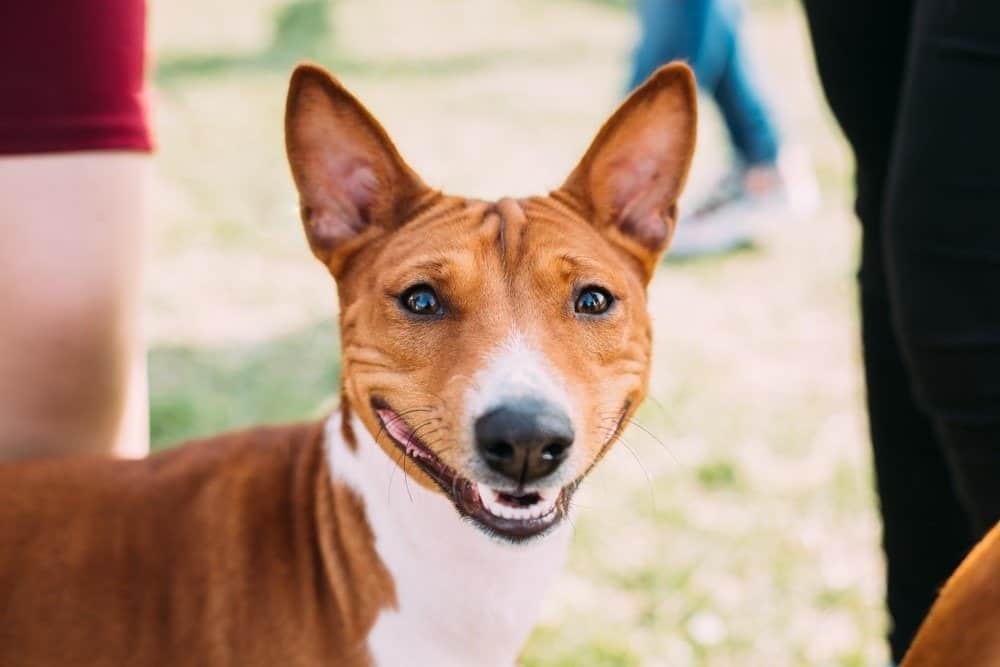
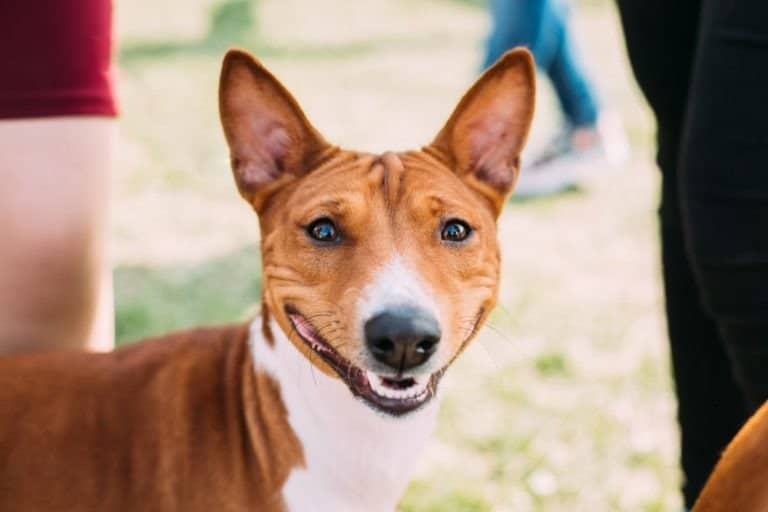
Basenji dog smiling at the camera

Basenjis don’t bark but they do vocalize — sometimes sounding like they are yodeling.

Evolution

Most often cited as the inspiration for the image of Anubis, (along with the jackal and greyhound) a principal Egyptian God of the dead, Basenjis have been around for quite a long time. As a matter of fact, the Dingo and Basenji are both considered to be basal members of the dog clade. The Basenji is still a favorite hunting dog of tribesmen in the African Congo, where it was, perhaps, the first dog to be domesticated by humans. Its DNA shows it to be a very old breed at the base of the dog family tree.

Size and Weight

Basenjis are medium-sized dogs. The male Basenjis are about 17 inches tall, while the females are about 16 inches tall. Males and females are about the same size — the male Basenji dogs weigh about 24 pounds while the females weigh around 22 pounds.

Common Health Issues

Though Basenjis are bred to be hypoallergenic and defensive dogs, their DNA puts them at risk for many conditions. Hip dysplasia, which occurs when the hip muscles don’t form properly, is one of the most common issues. However, this is a common issue in dogs with longer legs.

Basenji dogs have a history of corneal dystrophy, which is an eye disease that occurs when too much fluid goes into the cornea. Admittedly, it is rare that this issue will arise, but it can be rather severe in Basenji puppies if both the male and female parents have it.
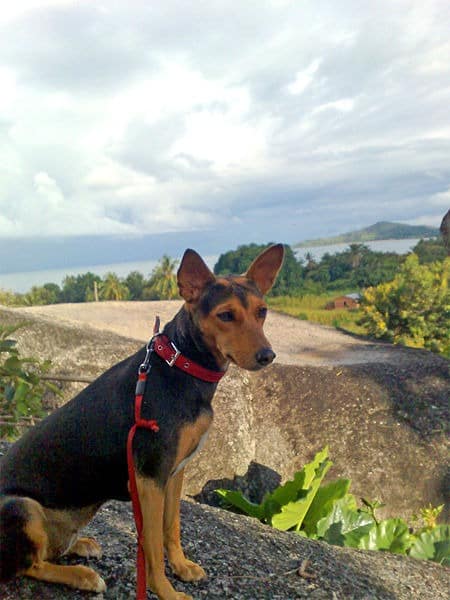
Basenjis are prone to hip dysplasia and patellar luxation, which affects the kneecaps.

Patellar luxation may also occur in Basenjis. This condition causes the kneecaps of the dog to move from where they are meant to be. A big sign that the dog is going through this problem is if they start hopping for a few strides, holding one of its back legs off of the ground.

Some of the other diseases that these dogs suffer from include progressive retinal atrophy (degeneration in the retina), enteropathy (inflammation in the bowels that reduces protein absorption), and Fanconi syndrome (the inability of the kidneys to use water, causing frequent urination).

Therefore, the health issues that the Basenji dogs face include:

  • Hip dysplasia
  • Corneal dystrophy
  • Patellar luxation
  • Progressive retinal atrophy
  • Basenji enteropathy
  • Fanconi syndrome
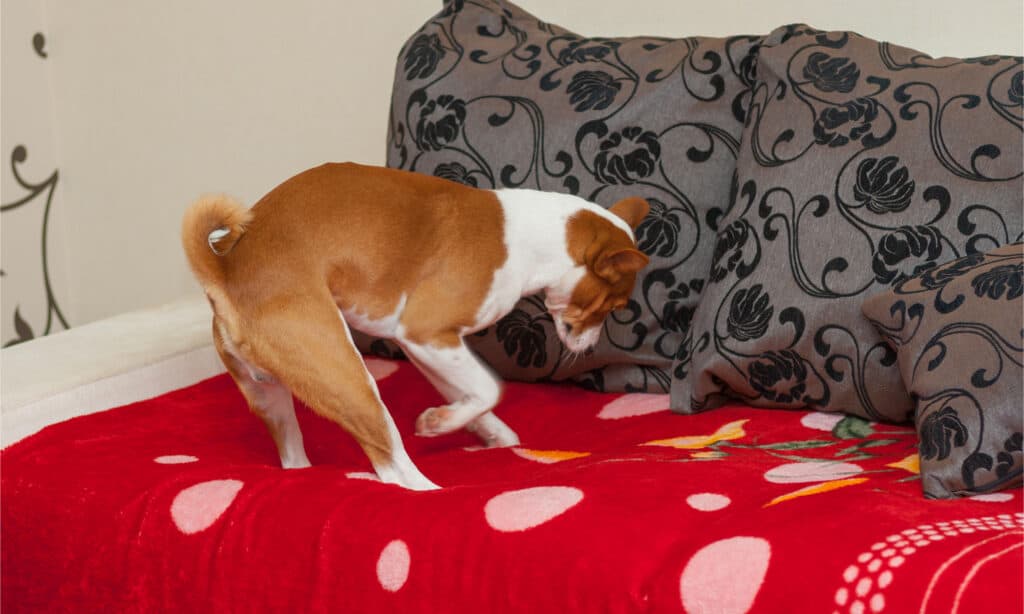
A basenji scratching and digging bed

Basenjis can get bored and resort to destructive behavior if not exercised enough.

Temperament

These dogs have a history of being relatively reserved in nature. They are clever and inquisitive and also known to be very stubborn. These dogs are intelligent and strong decision-makers.

They can be nice to other dogs but may get aggressive towards strangers and also other dogs of the same breed. Basenjis do not bark much and are known to make a mix of other sounds as an expression of communication.

Basenji dogs may develop destructive behaviors when left alone for extended periods.

How to Take Care of a Basenji Dog

In order to own a Basenji dog, you would want and need to know how to properly take care of it. The dog was specially bred for individuals who want a more sinus-friendly pup, but it also comes with some special needs. Here are some things that you should know about the breed:
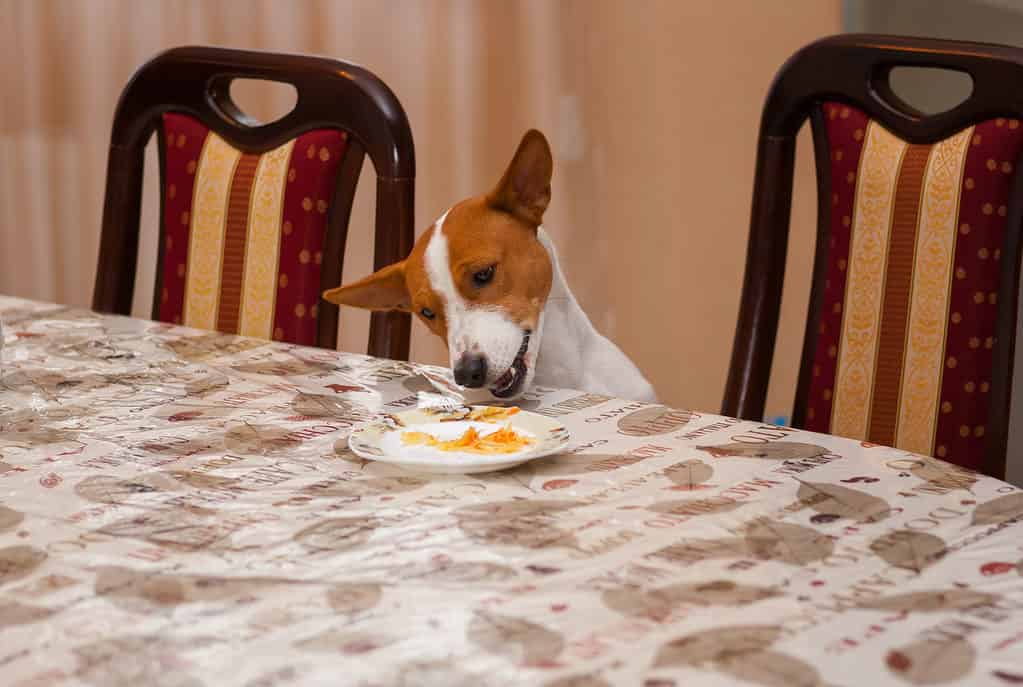
Sauerkraut

Like most dogs, Basenjis love meat.

The Best Dog Food for Basenjis

Basenji dogs should ideally have meat as the core ingredient in their diet. These dogs are not known to be lovers of dry food. You can also add some raw vegetables or canned pumpkin to your Basenji’s food.

If you want to cook vegetables, blanching and pureeing them is best. Avoid pork at all costs and provide variations from day to day to ensure that they have broad nutrition that keeps them healthy.

When dogs like Basenjis exhibit kidney problems, some vets steer owners towards low-phosphorus dog food, so get in touch with your vet about your dog’s kidney health and the ideal food.

Maintenance

Basenji dogs do not need a lot of grooming. They are tidy and like to keep themselves very clean. They only need to be bathed every four to six months.
Basenjis are highly intelligent but can be difficult to train.

Training

This dog breed is highly intelligent which means that these dogs are quick at picking up commands. However, it could be difficult to obedience train your Basenji dog, but they can learn with a lot of dedication and hard work.

These dogs always want to please their owner, however, what would make the training easier would be to somehow make your Basenji dog believe that every task was his or her idea. They don’t like to be bossed around.

Exercise

Basenji dogs are very energetic and require a lot of physical activity each day. However, they are good climbers, so if you want your dog to remain inside an area, you should have tall and strong fencing around it. Swimming is not an option for them as they do not like being around water at all.

Basenji puppy putting paw on owners face

Basenji puppies are much easier to train than adult dogs.

Puppies

Basenji puppies eat the same food as adults except for the fact that they eat more often since their small stomachs cannot digest a lot of food at once. They are also easier to train and would develop habits much more quickly, so it is better to start training these dogs as young as possible.
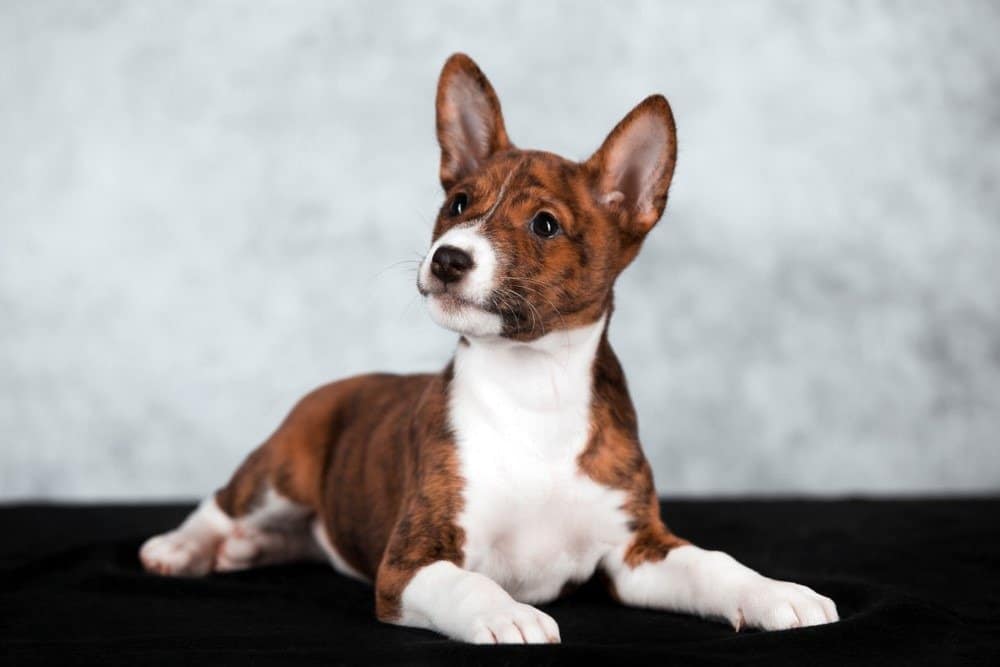
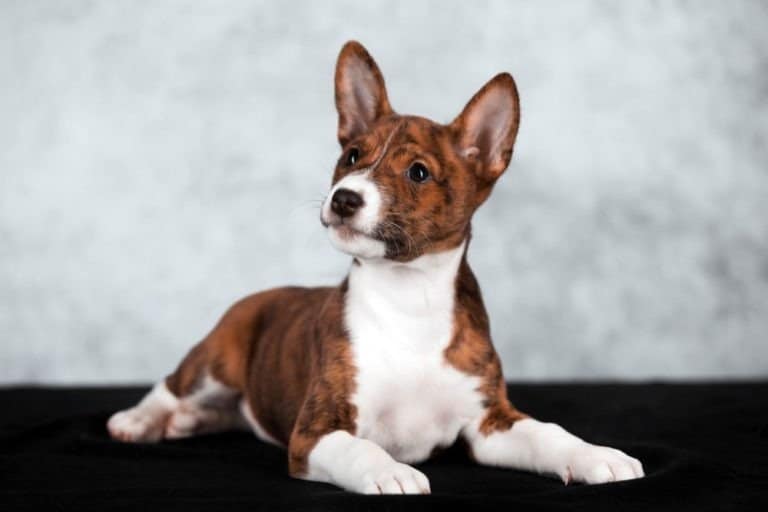
Basenji puppy lying on a table

Basenji’s are great with children.

Basenji Dog and Children

This breed is affectionate and energetic and is very playful, especially with the children in the family. These dogs are safe with children, offering protection when strangers are around. Though they experience some separation anxiety, they are loyal companions to their families.
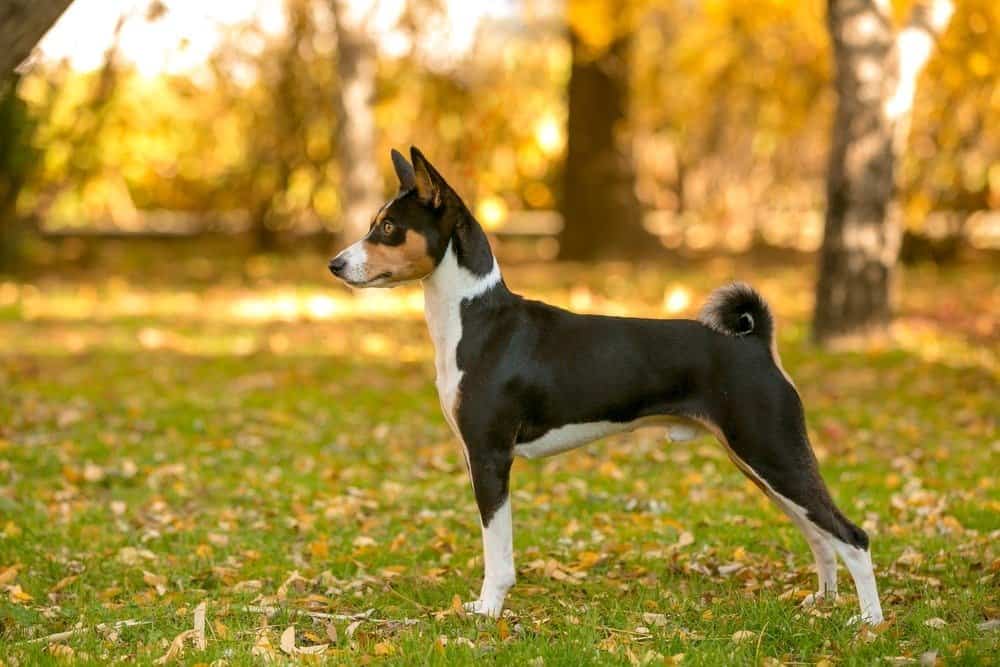
Basenji dog in the Autumn forest

Basenjis have been featured in television and movies.

Famous Basenji Dogs

Basenji dogs have been owned by several famous people in the past. Both the queen of the Netherlands and the king of Thailand owned Basenji dogs. Several TV stars also have owned these dogs, like Kelsey Grammer.

Apart from their owners, Basenjis are famous in their own right. Animated movies and television shows seem to adore this type of dog. They have appeared in episodes of The Wild Thornberrys and Pound Puppies, and films like Soulmate and Tales of Halloween. Though the footage didn’t make the cut, Basenjis made an appearance in Ace Ventura: Pet Detective.

These dogs are even in books. Ever read Goodbye, My Lady by James H. Street? The main character that the book is named for is a female Basenji, and it eventually became a movie with Sidney Poitier and Brandon de Wilde. In fact, Brandon de Wilde even kept the dog when filming was over.
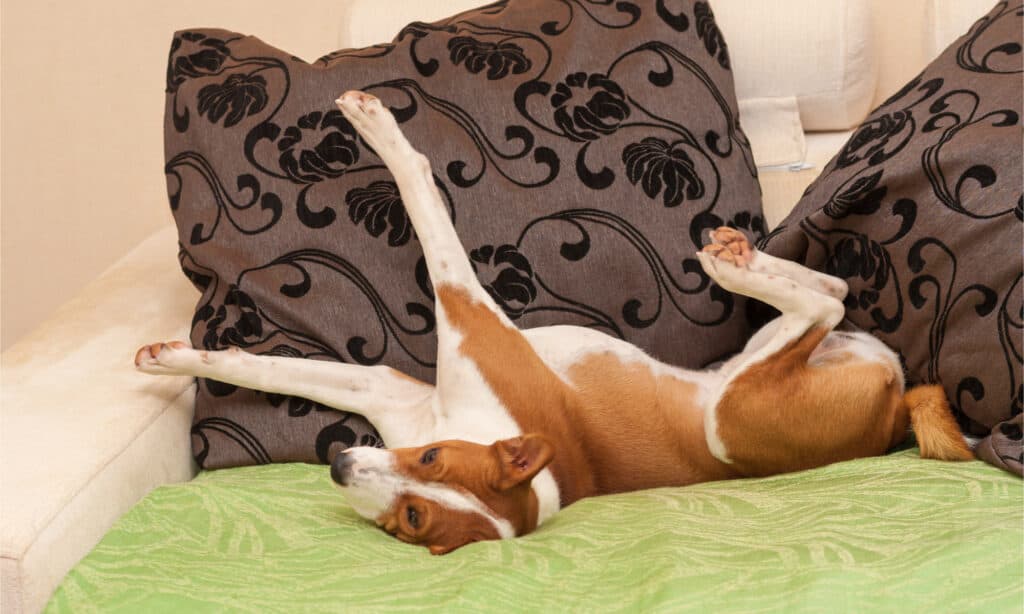
Basenji rolling on couch

Basenjis don’t shed and have no smell — making them perfect for people with allergies.

Dogs Similar to Basenji Dogs

As strong and caring as Basenjis can be, they aren’t the right match for everyone. Here are some dogs that are similar to the Basenji dog, to help make it a little easier to make a choice.

  • Harrier: These dogs are great with children and are cheerful, tolerant, and affectionate. Harriers are often found in the United Kingdom, and their coat is a much thicker texture than a Basenji’s coat. However, if you can take the shedding, this hound is quite likable.
  • Beagles: These dogs are loving and affectionate and make everyone fall in love with them. Sometimes found as a mix with the Harrier, the beagle is incredibly social, though this quality makes it hard for them to be a good watchdog.
  • American Foxhound: This hound is also known to be loyal and affectionate. However, like many other hound breeds, it can also turn out to be stubborn and aggressive in some cases. Much like the Basenji, it barely sheds.
View all 453 animals that start with B

Sources

  1. American Kennel Club / Accessed December 8, 2020
  2. Michele Welton's Honest Advice about Dogs / Accessed December 8, 2020
  3. Pet MD / Accessed December 8, 2020
  4. Pet ID Register / Accessed December 8, 2020
  5. Wikipedia / Accessed December 8, 2020
Lisha Pace

About the Author

Lisha Pace

After a career of working to provide opportunities for local communities to experience and create art, I am enjoying having time to write about two of my favorite things - nature and animals. Half of my life is spent outdoors, usually with my husband and sweet little fourteen year old dog. We love to take walks by the lake and take photos of the animals we meet including: otters, ospreys, Canadian geese, ducks and nesting bald eagles. I also enjoy reading, discovering books to add to my library, collecting and playing vinyl, and listening to my son's music.

Thank you for reading! Have some feedback for us?


Basenji Dog FAQs (Frequently Asked Questions)

It is a type of hunting dog and is very intelligent and smart.