





B
Species Profile

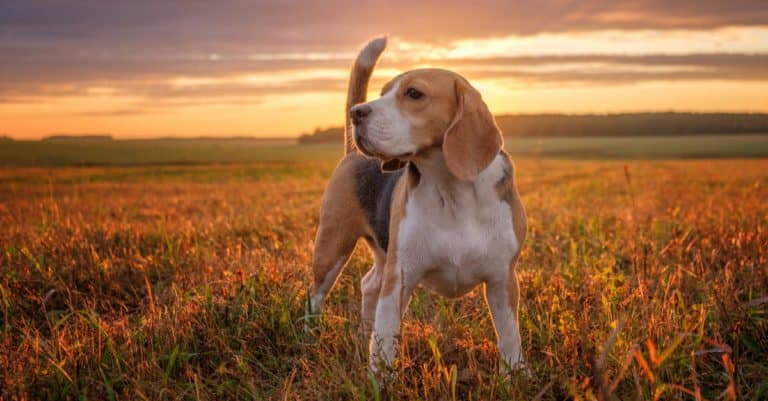
Beagle

Canis lupus familiaris

Big Nose, Big Heart, Beagle
Przemek Iciak/Shutterstock.com

Beagle Distribution

Click a location to explore more animals from that region

Origin Location

This map shows the native origin of the Beagle. As a domesticated species, they are now found worldwide.

Loading map...

Found in 1 country

Size Comparison

Human 5'8"
Beagle 1 ft 3 in

Beagle stands at 22% of average human height.

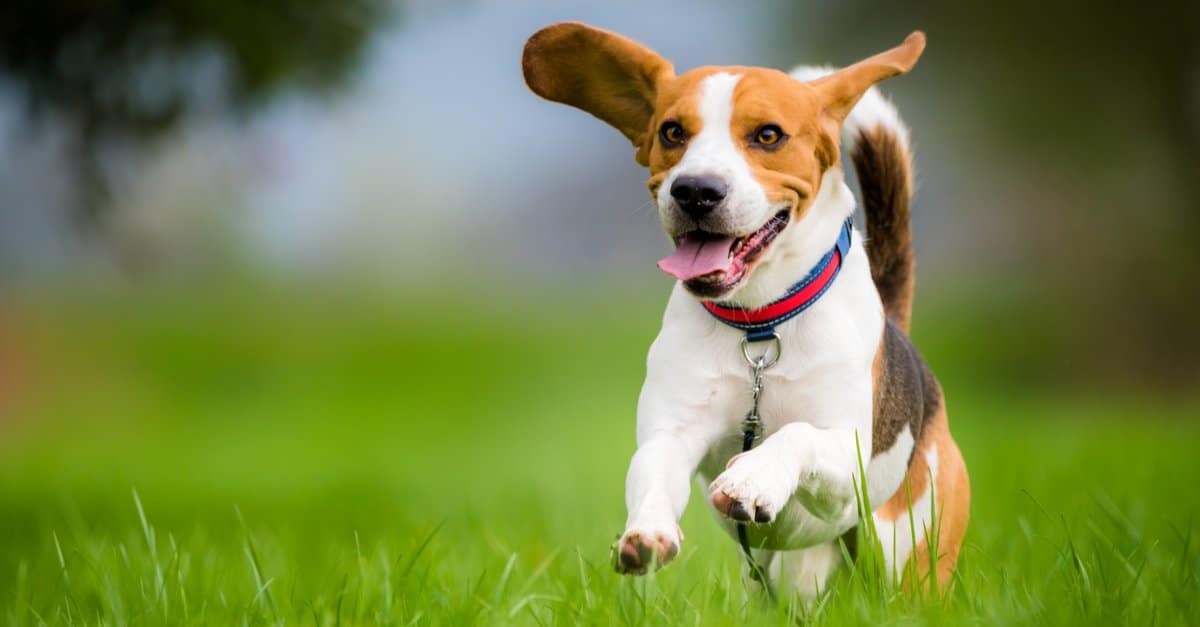
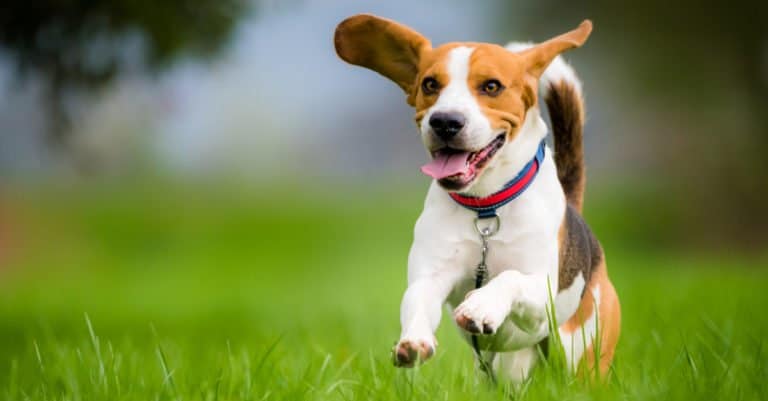
Beagle running and playing

At a Glance

Domesticated
Diet Omnivore
Activity Cathemeral+
Lifespan 4 years
Weight 16 lbs
Status Not Evaluated
Did You Know?

Beagles are scent hounds-bred to follow ground scent for hours, not to run by sight like many sighthounds.

Scientific Classification

The Beagle is a small-to-medium domestic dog breed developed as a scent hound, widely known for tracking by smell and for an even-tempered, social disposition.

Kingdom
Animalia
Phylum
Chordata
Class
Mammalia
Order
Carnivora
Family
Canidae
Genus
Canis
Species
Canis lupus

Distinguishing Features

  • Compact scent hound build; strong olfactory ability
  • Long, pendulous ears and a pronounced muzzle suited to scenting
  • Typically tri-color (black/tan/white) or bi-color coats; white-tipped tail common
  • Vocal, often with a characteristic bay when trailing scent

Physical Measurements

Males and females differ in size

Height
1 ft 3 in (1 ft 1 in – 1 ft 4 in)
1 ft 2 in (1 ft 1 in – 1 ft 3 in)
Length
1 ft 9 in (1 ft 7 in – 1 ft 11 in)
2 ft 4 in (2 ft 2 in – 2 ft 7 in)
Weight
29 lbs (22 lbs – 35 lbs)
20 lbs (18 lbs – 23 lbs)
Tail Length
9 in (8 in – 11 in)
9 in (8 in – 10 in)
Top Speed
22 mph
Long-distance trotter

Appearance

Primary Colors
Secondary Colors
Skin Type Short, dense, weather-resistant double coat (smooth hound coat) with little feathering, made for brush work. Moderate year-round shedding, more seasonally. Regular brushing and checks for droopy ears and scent work prevent trapped moisture and debris.
Distinctive Features
  • Beagle (Canis lupus familiaris) is a small-to-medium scent hound bred to track by smell; smaller and more compact than gray wolves, with a strong nose and friendly pack behavior over wild survival traits.
  • Rounded, moderately domed skull with a defined stop; square-ish muzzle; large brown/hazel eyes with a soft, pleading expression.
  • Long, low-set, rounded drooping ears that sweep close to the cheeks-classic scenthound feature aiding scent retention near the nose.
  • Short, sturdy body with a level topline; deep chest for stamina; strong forequarters for long-duration tracking at a steady trot.
  • White-tipped tail carried upright when working ("flag"), a hallmark field trait for handler visibility.
  • Notable baying/howling vocalization ("hound voice"), especially when excited or on scent; more pronounced than many other domestic dog breeds.
  • Common health issues: ear infections from droopy ears; obesity from high food drive; intervertebral disc disease in some lines; hypothyroidism; allergies/atopy; occasional epilepsy; eye problems (glaucoma, cherry eye).
  • Beagles need measured food and weight control, daily exercise and scent games, secure fence or leash because they roam, regular ear cleaning and drying, nail trims, dental care, and seasonal brushing.

Sexual Dimorphism

Sexual dimorphism is mild (typical for many domestic dog breeds within Canis). Males tend to be slightly larger and heavier-boned with a broader head and neck; females are often a bit lighter and more refined in build. Coat type and color patterns are not sex-linked in a consistent way.

  • Slightly greater height/weight on average; more robust bone and chest.
  • Broader skull and thicker neck/shoulders may be evident in mature males.
  • Slightly lighter, more refined head and body on average.
  • May appear a bit narrower through the chest/neck while retaining the same overall Beagle proportions.

Did You Know?

Beagles are scent hounds-bred to follow ground scent for hours, not to run by sight like many sighthounds.

The AKC recognizes two Beagle size varieties: 33 cm and 38 cm (measured at the shoulder).

Their long ears and loose facial skin help trap and waft scent molecules toward the nose while tracking.

A white tail tip ("flag") is common and historically helped hunters spot a Beagle in tall grass.

Beagles are widely used as detection dogs (e.g., agriculture/food screening) because they're motivated, compact, and social around people.

The breed's signature voice is a bay (a ringing, sustained call) that lets handlers locate a hound at distance.

Beagles typically have a short, dense coat in patterns like tricolor, red & white, or lemon, requiring relatively low grooming compared with long-coated breeds.

Unique Adaptations

  • Highly developed olfaction compared with many breeds: selectively bred for scent discrimination and trail endurance (a specialization within Canis lupus familiaris).
  • Long, low-set ears that help funnel scent toward the nasal passages while the dog tracks close to the ground.
  • Compact, athletic build for steady, all-day trotting behind a scent line rather than short sprinting.
  • Resonant baying voice adapted for pack hunting-audible communication across distance and cover.
  • Short, weather-resistant coat that sheds dirt and dries quickly, supporting outdoor work.
  • Common white tail tip (a functional "signal flag") aiding visibility for handlers in brush or fields.

Interesting Behaviors

  • Nose-to-the-ground "tracking mode": they may ignore distractions once a scent trail is found.
  • Baying and "talking" vocalizations, especially when excited, bored, or following scent.
  • Pack-oriented social behavior: often thrive with canine companionship and can develop separation-related stress if left alone too long.
  • Food-driven scavenging: counter-surfing and opportunistic eating are common without management.
  • Roaming/escape attempts: if they catch an interesting scent, they may dig, slip collars, or test fences.
  • Playful persistence: they can problem-solve for treats but may appear "stubborn" when scent is more rewarding than commands.

Cultural Significance

Beagle (Canis lupus familiaris) began in Britain as pack hounds for hunting hares. Now known worldwide as friendly family dogs, they still work in scent detection (like farm and biosecurity checks). Snoopy made them iconic, curious, loyal, nose-led.

Myths & Legends

At the Tudor court, Queen Elizabeth I was said to keep tiny 'pocket Beagles' (Canis lupus familiaris) that rode in saddlebags or on a glove and whose lively voices amused guests, mixing history and legend.

Name-origin tale: a commonly repeated tradition links the name 'Beagle' to a French phrase meaning 'open throat,' evoking the breed's famous bay; the exact etymology is debated, but the story persists among hunters and fanciers.

Hunting-field lore in Britain: Beagles were celebrated as the 'merry' little hounds whose music could be followed even when the pack vanished into hedgerows-an oral tradition among beaglers about reading the chase by sound.

The ship-name association: HMS Beagle's fame through Charles Darwin led many to connect the breed's name with exploration and discovery, a cultural echo that reinforces the Beagle's curious, investigative reputation.

Modern working legend: "Beagle Brigade" teams (detector Beagles used in airports) are often described in news and public storytelling as friendly guardians of borders-an evolving contemporary legend of the breed as an approachable sniffer hero.

Conservation Status

NE Not Evaluated

Has not yet been evaluated against the criteria.

Population Stable

Life Cycle

Birth 6 pups
Lifespan 4 years

Lifespan

In the Wild
2–10 years
In Captivity
10–15 years

Reproduction

Mating System Polygynandry
Social Structure Managed Domestic
Breeding Pattern Serial
Fertilization Managed Selective
Birth Type Managed_selective

Beagle (Canis lupus familiaris): Breeding is usually managed by people. If free-ranging, dogs show multiple mating (polygynandry). Matings are arranged, short-term with no lasting pair bonds. Females cycle one to two times yearly. Keep strict containment.

Behavior & Ecology

Social Pack Group: 6
Activity Cathemeral, Diurnal, Crepuscular
Diet Omnivore Meat- and fat-rich foods and high-value scent-driven treats (e.g., meat-based kibble/wet food; peanut-butter or liver-style training treats).

Temperament

Even-tempered, friendly, and highly social with people and dogs; typically lower tendency toward human-directed aggression than many guard-oriented breeds.
Strong scent-drive and tracking persistence (breed distinction): may ignore recall when on odor; requires secure fencing, leash/long-line work, and reward-based recall training.
Curious, food-motivated, and trainable but can be independently minded; responds best to short, varied sessions with high-value rewards and scent-based games.
Playful and often good with children; can be boisterous and mouthy as adolescents-benefits from early impulse-control training.
Prone to nuisance vocalization (baying) when excited, frustrated, or following scent; management includes enrichment, exercise, and reinforcing quiet behavior.
Care requirements: daily physical exercise plus nose-work (sniff walks, tracking games, puzzle feeders) to prevent boredom-related behaviors (chewing, digging, escaping).
Beagles often overeat—watch diet; floppy ears need regular cleaning; hypothyroidism can lower energy; seizures and joint problems (patellar luxation/hip dysplasia) can limit exercise; rare Beagle pain syndrome (SRMA) causes fever or neck pain—see a vet.
HUBS (scent-hound group pattern): many scent hounds share strong olfactory focus, high persistence, and vocal tracking; individual variation ranges from highly biddable, handler-focused lines to more independent working lines.

Communication

Baying Distinctive hound call used during scenting/tracking
Barking Alerting, excitement, demand
Howling Social contact, arousal
Whining Appeasement, frustration, attention-seeking
Growling Warning during resource guarding or discomfort
Scent communication: frequent sniffing, scent-trailing, urine marking; may linger on odor sources and use ground-scenting as primary information gathering.
Body language: tail carriage and wag patterns, play bows, freezing/pointing posture when catching scent, lip-licking and head turns for appeasement.
Physical contact: pawing, leaning, jumping up, and nose-bumping for attention; may follow closely (shadowing) when socially attached.
Environmental signaling: scratching/digging at scent sources or doors/fences when motivated to pursue odors or seek social contact.

Habitat

Biomes:
Temperate Forest Temperate Grassland Mediterranean Boreal Forest (Taiga) Tundra Alpine Desert Hot Desert Cold Savanna Tropical Dry Forest Tropical Rainforest Wetland Freshwater Marine +8
Terrain:
Plains Hilly Valley Coastal Island
Elevation: Up to 11482 ft 11 in

Ecological Role

Human-associated mesopredator/scavenger and scent-tracking companion (domesticated form of Canis lupus).

pest reduction via deterrence/occasional predation on small mammals scent-based tracking and detection work (e.g., search, detection, trailing) human companionship and behavioral enrichment roles can contribute to scavenging of human food waste when unmanaged

Diet Details

Main Prey:
Rabbit Hare Cottontail Small rodents Ground-nesting birds
Other Foods:
Berries and other fruits Root vegetables Leafy vegetables Grains and starches Grass

Human Interaction

Domestication Status

Domesticated

Domestic dog (Canis lupus familiaris) came from wolves long ago when people bred them for calm, teamwork, and useful work. The Beagle is a small-to-medium scent hound that tracks hare and rabbit by ground scent. Beagles have a very strong nose, are social, love food, are vocal, sturdy, need little grooming, and often work in detection or are pets.

Danger Level

Low
  • Bites can occur with fear, pain, resource guarding, or poor handling/socialization (risk is generally lower than many larger guarding breeds).
  • Chasing/wandering behavior can lead to indirect hazards (traffic incidents, lost dog recovery situations).
  • Noise/nuisance issues (baying) can create conflict in dense housing.
  • Zoonotic risks common to dogs if unvaccinated or poorly managed (e.g., parasites), mitigated by routine veterinary care.

As a Pet

Suitable as Pet

Legality: Beagles (Canis lupus familiaris) are usually legal as pets. Owners must follow local rules like dog licensing, rabies shots, and leash laws. Some places set broad limits or import and quarantine rules, but breed bans are rare.

Care Level: Moderate

Purchase Cost: Up to $2,000
Lifetime Cost: $15,000 - $35,000

Economic Value

Uses:
Companion animal (pet industry) Working scent hound (hunting/field activities) Detection and screening roles (odor detection tasks) Breeding and showing (conformation/sport) Training, boarding, grooming, and veterinary services demand
Products:
  • puppy/adoption placement and breeding services
  • veterinary care (preventive care; chronic management like ear/skin and weight control)
  • training services (recall, leash skills, scent-work outlets)
  • pet supplies (food, enrichment toys, tracking leashes/harnesses, crates, fencing)
  • working-dog value in scent-based tasks (where trained and employed)

Relationships

Related Species 6

Beagles are energetic, friendly dogs known for their loyalty. These hounds are popular with families due to their curiosity, fun-loving personality, and, of course, their sweet faces.

Evolution

The history of the beagle is believed to date all the way back to the 5th century Greece. These dogs hunted alongside their owners in search of foxes, rabbits, and other small prey. In the 1500s, beagles became well-known in England as they traveled out in packs with English gentlemen in search of deer, rabbits, and foxes. This dog’s persistence, excellent sense of smell, and loud howling bark made it a helpful companion for hunters. 

They are popular dogs for families who can give them lots of exercise and space to run.
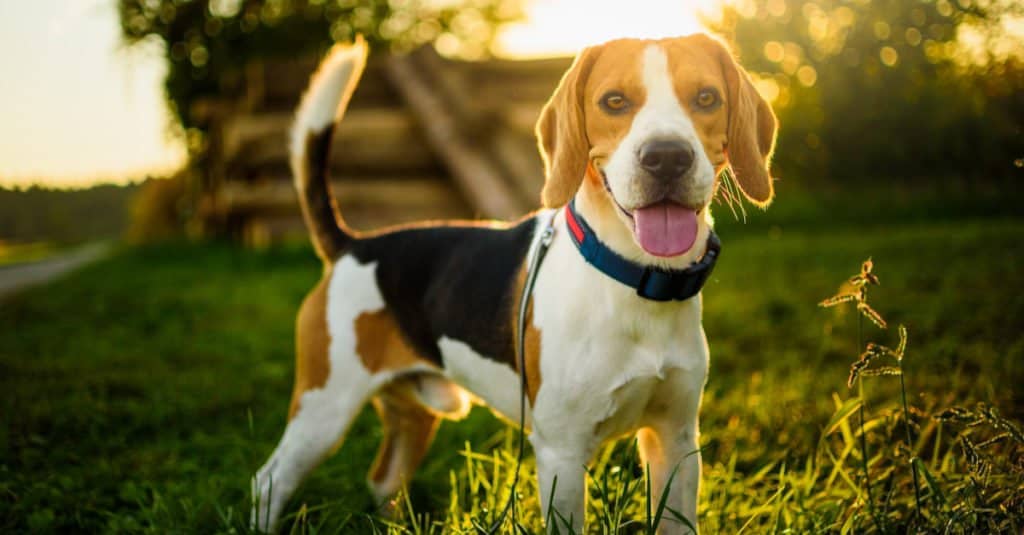
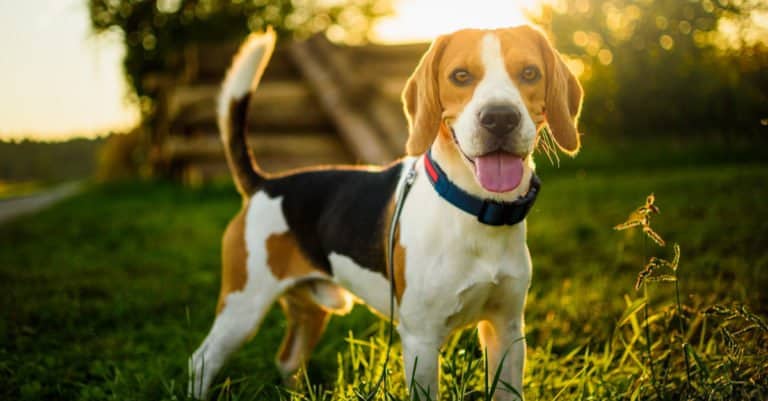
Beagle adult standing in a park

Beagles are adorable dogs with beautiful faces, long silky ears, and sweet, happy personalities.

The Different Types of Beagles and Beagle Mixes

According to the American Kennel Club, there are two types of beagles: those standing under 13 inches at the shoulder and those between 13 and 15 inches. They come in lemon, red, and white, and tricolor. Beagles are adorable dogs with beautiful faces, long silky ears, and sweet, happy personalities.

Animal, Beagle, Dog, Horizontal, No People

Beagles are one of the most playful dog breeds — always ready for adventure.

3 Pros and Cons of Owning a Beagle

ProsCons
An adaptable breed thanks to its small size: They rarely grow to more than 30 pounds. This small size provides versatility for a number of living conditions.
Loud: The name beagle is believed to come from the French word for “open throat,” and it’s easy to see why. They can be very loud and ‘howl’ much more than other dog breeds.
Playful and kid-friendly: They are one of the most playful dog breeds in the world. They’re affectionate, kid-friendly, play well with other dogs, and are generally welcoming to strangers.
Challenging to train: They are a bit stubborn, and this makes them challenging to train. The most difficult part is keeping the dog’s attention on you during training and not on the scents flowing around them.
(Relatively) easy to groom:
While all dogs have grooming needs, the beagle’s short coat makes grooming much less complicated than other dog breeds.
Exercise needed: If left alone without exercise, beagles can begin acting out and destroying homes. If you’re unable to provide ample training for your dog, you may want to consider alternative breeds.

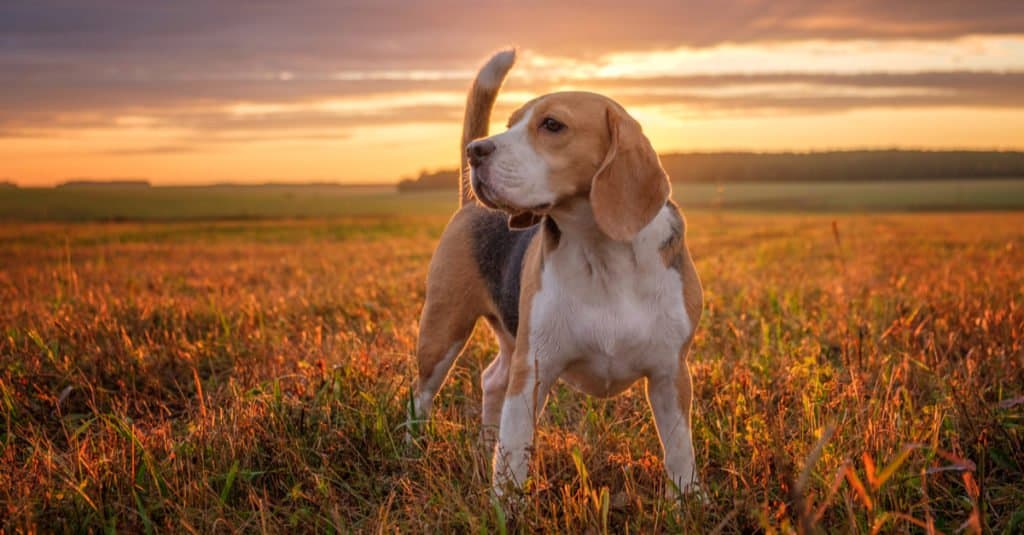
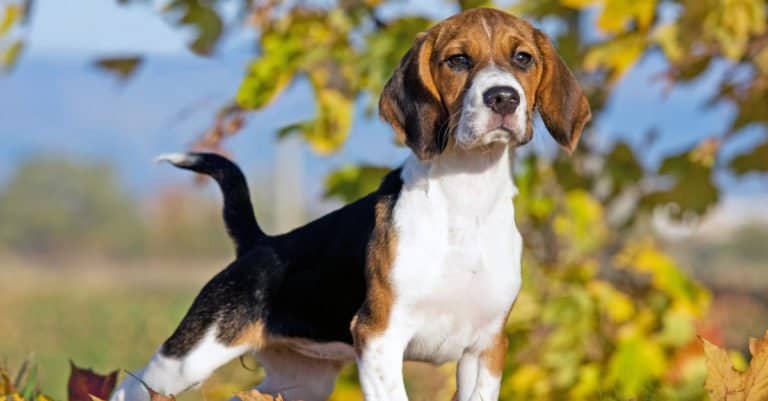
Beagle standing in a field

The most challenging part is keeping a beagle’s attention on you during training and not on the scents flowing around them.

Size and Weight

A beagle is a small to medium-sized dog with short hair. Male beagles grow to be about 15 inches tall, while a female reaches a height of 14 inches. As an adult, a male weighs 22 to 30 pounds, and an adult female weighs 20 to 28 pounds. Puppies at 7 weeks old weigh around 4 pounds. A beagle is considered fully grown at 18 months old.

Beagles are voracious eaters and can become overweight if diets aren’t tightly controlled.

Common Health Issues

Like all dog breeds, beagles have a few common health issues that include:

  • Hypothyroidism
  • Cherry eye
  • Pulmonic stenosis
  • Mange

We’ll explore each common health issue in more detail.
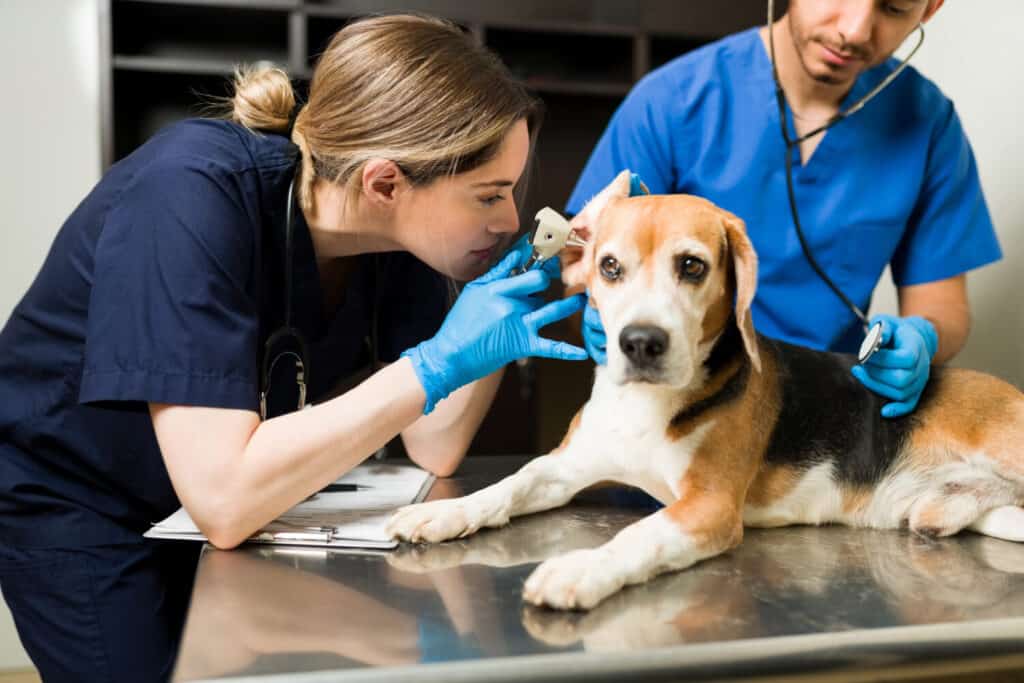
Female vet using an otoscope to examine the ear of a beautiful beagle dog. Sick cute pet sitting at the examination table at the animal clinic

A veterinarian examines a beagle.

First is hypothyroidism. This condition causes an imbalance in a beagle’s metabolism. Fast weight gain, loss of fur, and a lack of energy are all possible signs pointing to hypothyroidism. This condition is most common in older dogs and can shorten their lifespan. 

Cherry eye is another common health issue for beagles. When the tissue containing the tear gland of this dog moves out of place, it takes on a cherry-like appearance at one edge of the dog’s eye. It’s important to get your beagle’s cherry eye treated because it can lead to infection. Beagles of any age can get cherry eye. 

Pulmonic stenosis, or heart disease, is another health issue faced by some older beagles. Difficulty breathing, lack of energy, and a bloated abdomen are all symptoms. This condition can shorten its lifespan. 

Mange is a skin condition common to beagles. It causes bald spots on a dog’s coat, especially near its head.
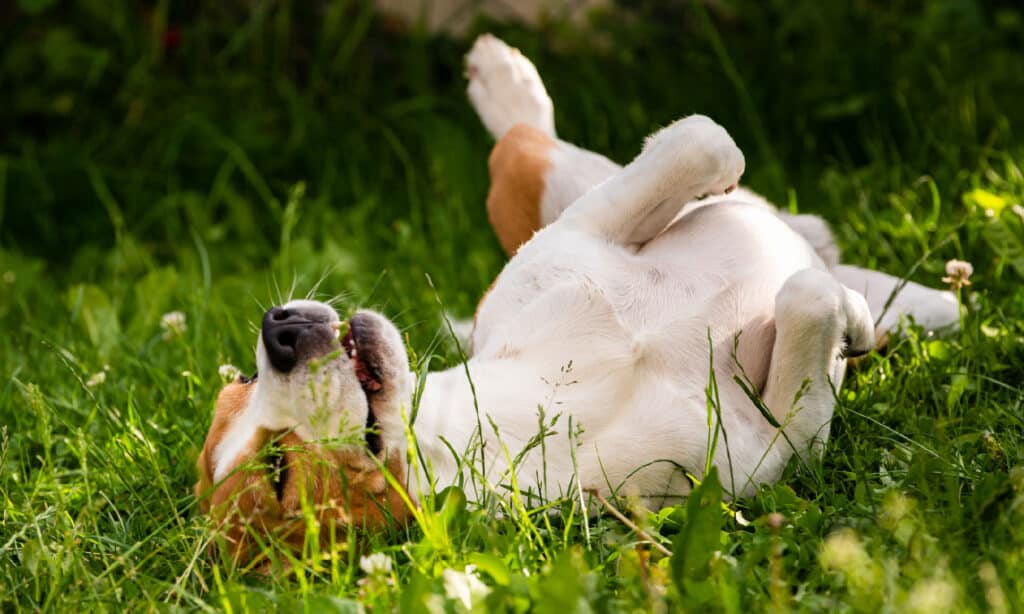
Tricolor beagle dog Rolling In Grass on summer day

Beagles are friendly and enjoy being petted and fussed over.

Temperament

Beagles have friendly personalities. A constantly wagging tail is one way a beagle shows love for its family. This dog enjoys being petted and fussed over by adults and kids alike. An energetic temperament means it’s always up for a rowdy playtime.

One of the most notable traits of this breed is the ability to chase a scent. These dogs seem to pick up all of the scents around them and sometimes can’t decide which one to follow first. This trait ties into the overflowing curiosity that’s a hallmark of this dog’s personality. A typical behavior of a beagle is to put its nose down and push it along the ground to follow a scent.

No list of beagle traits is complete without mentioning its loud, echoing bark. This is how they alerted a group of hunters when they found a rabbit, deer, or other prey in the woods. They can also use this bark to alert owners of a stranger on the property. This makes beagles excellent watchdogs. However, the amount of howling can be a concern for families sensitive to noise or with nearby neighbors. If you’re looking to own this dog, be prepared for training to minimize howling if noise is a concern.
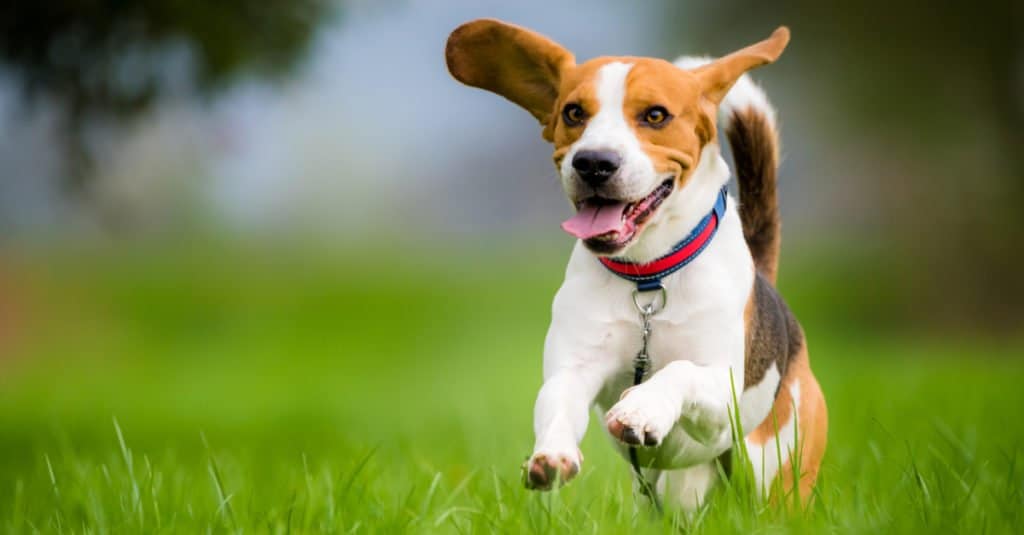
Beagle running and playing

Beagles are energetic and require lots of exercise and playtime.

How to Take Care of a Beagle

A pet owner who takes in a beagle needs to understand that getting plenty of exercise is a big part of this dog’s care. They are energetic and need to stretch their legs for at least an hour each day to maintain good health. 

In addition, beagles from their puppy years to adulthood are social creatures. So, playing with them, spending time with them, and taking them to the dog park to visit other dogs are important aspects of their care.
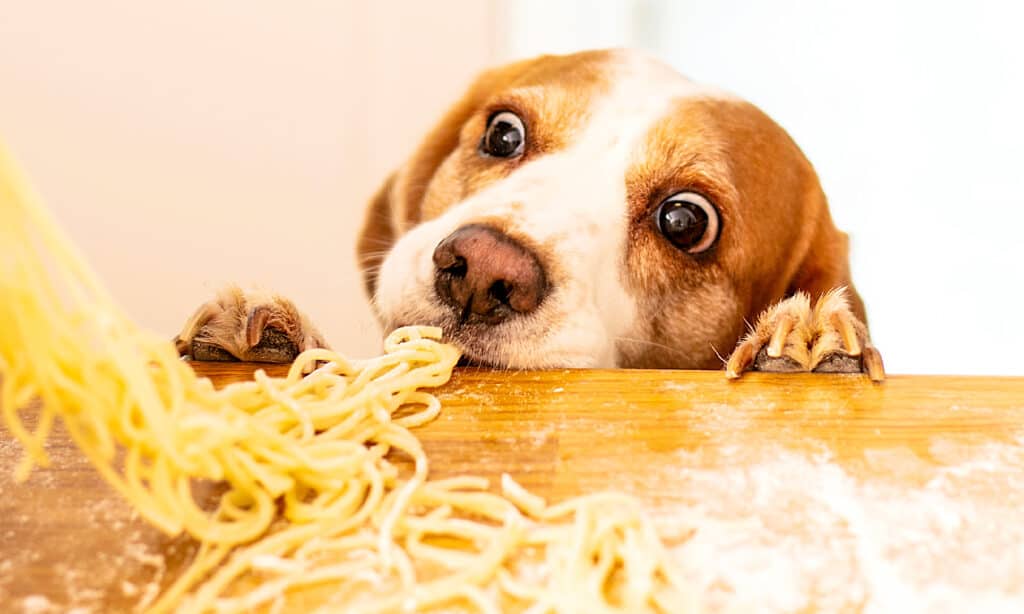
Dog, Pasta, Eating, Spaghetti, Food

Beagles will eat anything and are prone to being overweight if not fed and exercised properly.

The Best Dog Food for Beagles

Not surprisingly, the nutritional needs of a puppy are different from an adult beagle. Small to medium-sized dogs like beagles can easily take on too much weight when they’re fed the wrong food, too much food, or both. Dry dog food is appropriate for both puppies and adult beagles. 

Puppy beagle diet: Puppies need dry food containing calcium and phosphorus to help develop strong teeth, bones, and joints. DHA is an essential fatty acid that helps a puppy to develop good eyesight and increase brainpower. Healthy fats also help in maintaining a beagle’s coat, which can prevent skin issues such as mange. Fish, whole meats, and poultry provide protein, helping puppies gain the right amount of weight and develop muscle. Puppies should eat 2 cups of dry food per day (one cup in the morning and one in the evening).

Adult beagle diet: A poor diet high in fat can contribute to hypothyroidism and Pulmonic stenosis (heart disease) in aging dogs. Food for adult pets should contain a balance of protein and essential fatty acids such as fish oil and sunflower oil. Brown rice in adult dog food contributes fiber to an adult beagle’s diet. Avoid dog foods with cereal and meat by-products. These are fillers that contain little to no nutrients and can add excessive weight to your growing dog. Adding grated carrots or pumpkin to your adult pet’s mix of dry food is enticing and can help to prevent eye issues such as cherry eye. An adult dog should eat one cup of dry food per day (½ cup in the morning and ½ cup in the evening).

Best Apartment Animals

Beagles need to be brushed every other day to help with shedding.

Maintenance and Grooming

How much do beagles shed? They shed an average to an above-average amount of hair. Plus, they shed more during certain seasons. Maintaining a good grooming routine can help a family reduce the amount of hair on the sofa in their house.

Brush your pet every other day using a pet brush with natural bristles. Be sure to press firmly with the brush to remove loose and dead hair from your beagle’s coat. Start at your beagle’s head and brush in the natural direction of your dog’s coat, ending up at its tail. A grooming glove is another item that’s effective at removing loose hair. Most grooming gloves and brushes are available for an inexpensive price. Grooming your dog every other day can help to keep its coat healthy while preventing skin conditions like mange. As a note, most beagles love to be brushed, and it’s a chance to build trust with your new pet. 

Cleaning a beagle’s ears should be included in its grooming routine. Use a cotton ball to apply an ear-cleaning solution made for dogs to the inside of each ear. Be sure to get a fresh cotton ball for each ear to avoid spreading bacteria. 

Brushing a beagle’s teeth should be another step in its grooming routine. A regular toothbrush can be used, but it’s necessary to purchase toothpaste designed for dogs. Toothpaste used by people has ingredients harmful to dogs. Many dogs are uncertain about this process, but if you talk softly to your dog while gently brushing its teeth, it is likely to become accustomed to the process. There are dental chews you can give your pet to clean its teeth. Most beagles like them because they’re tasty.
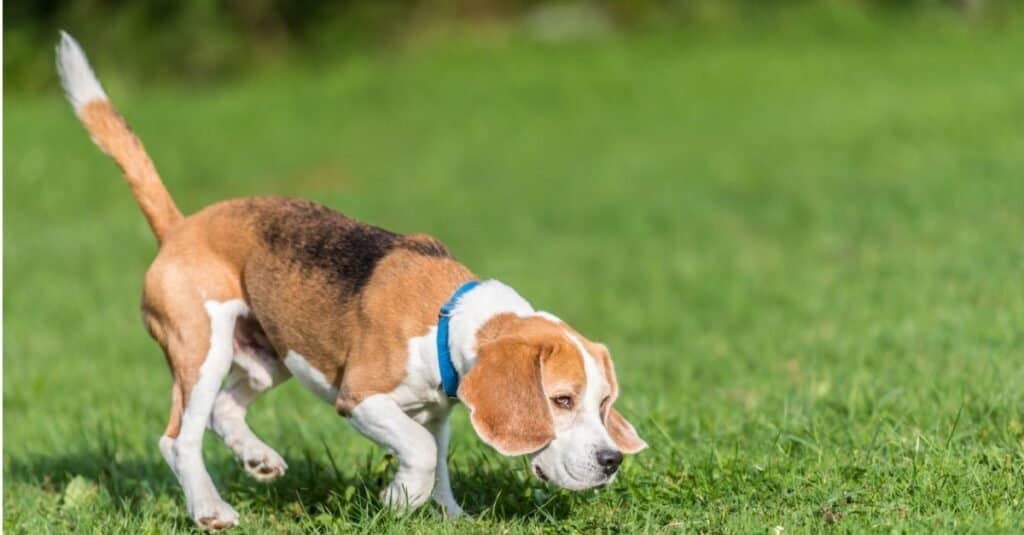
Types of Hunting Dogs

Beagles are one of the best tracking dogs in the world.

Training

Beagles are smart dogs, but they can be challenging to train. The challenge is keeping a beagle’s attention on you during training and not on the scents flowing around them. They can be stubborn during training if they are focused on a scent. Using delicious treats as an incentive during training can help keep your beagle’s attention. Finding something that keeps your beagle’s attention is going to make obedience training a lot easier.

Exercise

Your dog needs a lot of exercise to stay healthy. They should receive at least an hour of outdoor exercise time each day. These social dogs can be taken to dog parks to run around with other dogs. They are ideal dogs for families with a fenced-in yard. A fenced-in yard is important because this breed of dog tends to wander, especially while following an interesting scent.

They can live in an apartment, but it’s not an ideal living arrangement. An owner would have to take their pet out to walk or to a park to run instead of simply letting it outside in a fenced yard. Plus, beagles tend to bark loudly and even howl. This could present an issue with neighbors in other apartments. 

Beagles are happy to romp and play all sorts of games with family members. They like to play chase, fetch, and go for walks in the woods.

Beagle Puppy

A beagle puppy should be socialized early.

Beagle Puppies

Puppies need exercise just as adult beagles do. Puppies are even more curious than adult beagles, so it’s best to allow them to exercise in a fenced-in area where you can monitor their activities to ensure their safety.

Getting your puppy on a regular feeding schedule, as well as feeding them in the same place, can create a foundation for continued obedience training.
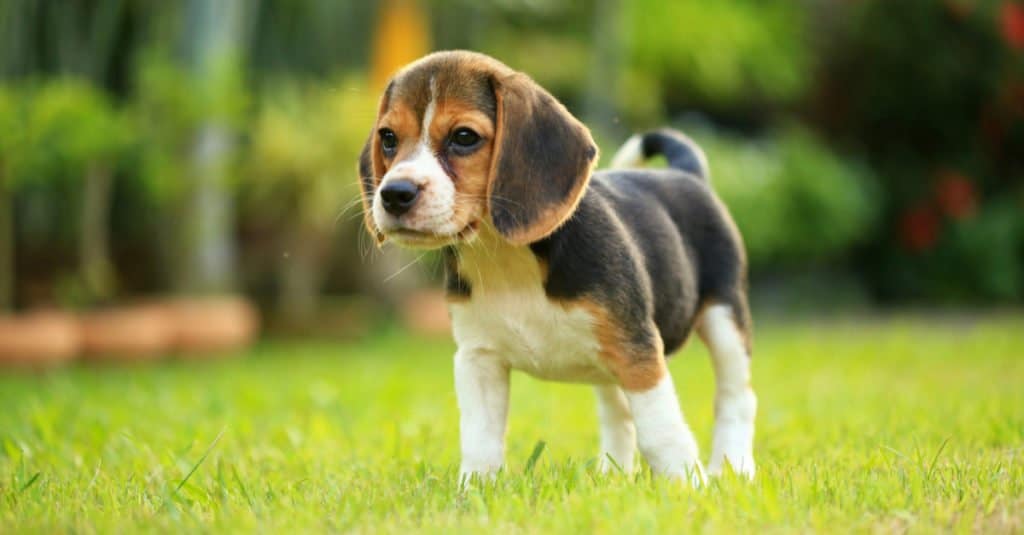
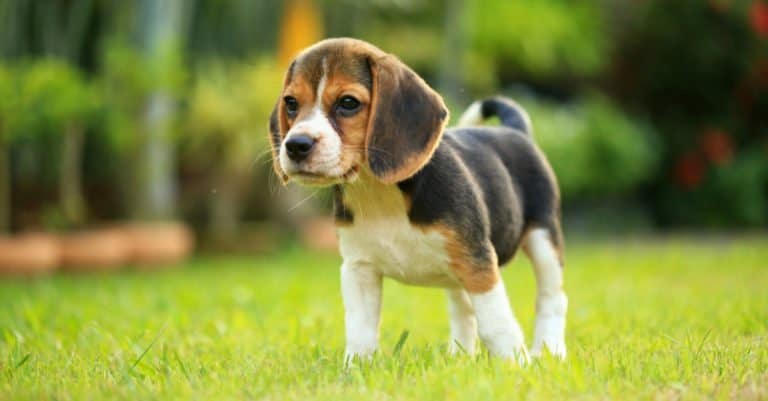
Beagle puppy standing in the grass

Beagles are one of the most playful dog breeds in the world. They’re affectionate, kid-friendly, play well with other dogs, and are generally welcoming to strangers.

Beagle and Children

Beagles are considered to be good dogs for families with or without children. They are friendly and energetic, so they make great playmates for active children. Of course, there are always exceptions, but for the most part, they are good with kids of all ages. 
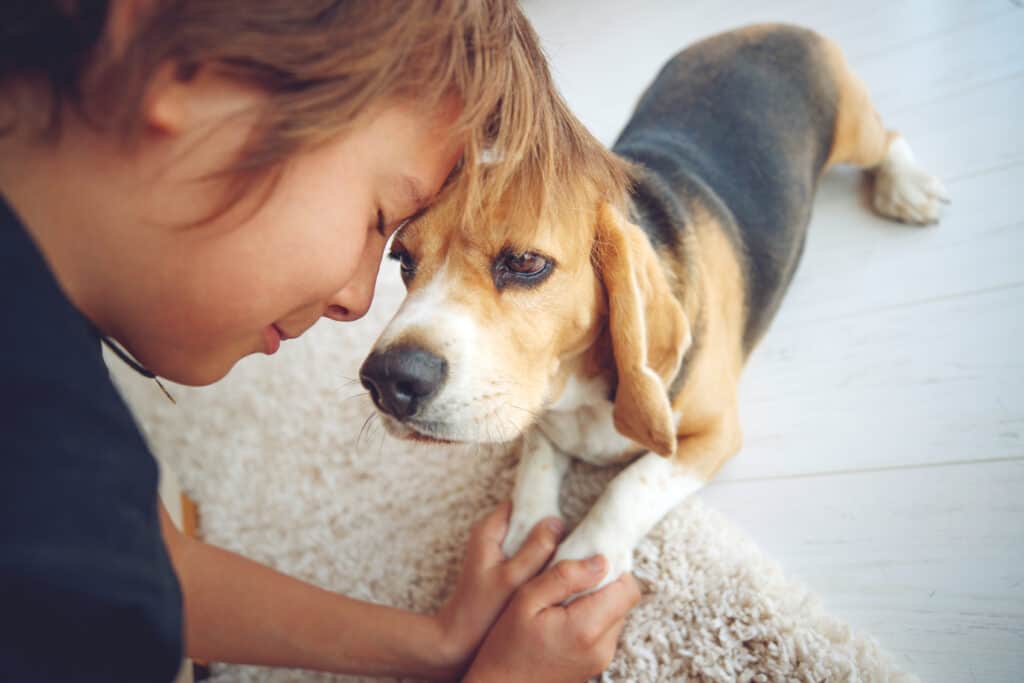
beagle and owner

Beagles make great playmates for children.

Dogs Similar to Beagles

Dogs that are similar to this breed include the Basset Hound, Bloodhound, and Afghan Hound. 

  • Basset Hound: Basset Hounds share a lot of the same colors as beagles. They can be a mix of black, brown, and white, though beagles usually have three colors, while Basset Hounds have two. Basset Hounds also have an excellent sense of smell. 
  • Bloodhound: Bloodhounds are loyal and affectionate, like beagles. Also, they are social dogs and have a loud, echoing bark.
  • Afghan Hound: Look at an Afghan Hound and a beagle, and it’s difficult to see any similarities. But both of these dogs are similar in temperament because they can be difficult to train due to a lack of focus and stubbornness. Afghan Hounds can be effectively trained with the help of incentives (treats) just like beagles can. 
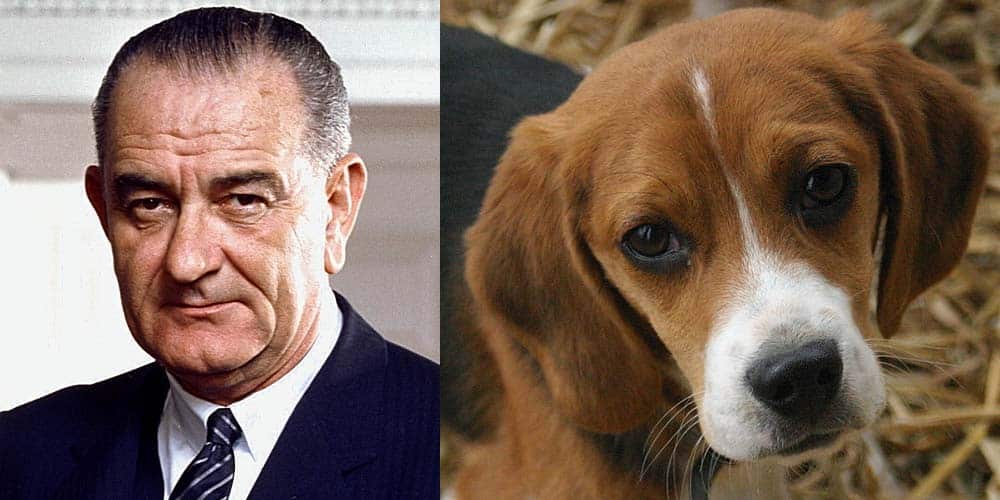
President Lyndon Johnson owned two popular pet beagles named His and Her.

Famous Beagles

Beagles are one of the most popular dog breeds in America, routinely ranking in the 10 most popular breeds tracked by the American Kennel Club. Thanks to that popularity, there have been several “famous” beagles through the years.

U.S. President Lyndon Johnson kept two beagles named “his” and “her.” The beagle duo became well-known throughout America in the 1960s as they were featured in pictures with LBJ throughout the press!

The most famous non-living beagle was none other than Snoopy! While Snoopy may not look entirely like the breed, he was inspired by one named ‘Spike’ that was the pet of Peanuts creator Charles M. Schulz.

View all 453 animals that start with B

Sources

  1. AKC Breed information: Beagle / Accessed October 18, 2020
  2. Dog Groomers Beagle Grooming Guide / Accessed October 18, 2020
Lisha Pace

About the Author

Lisha Pace

After a career of working to provide opportunities for local communities to experience and create art, I am enjoying having time to write about two of my favorite things - nature and animals. Half of my life is spent outdoors, usually with my husband and sweet little fourteen year old dog. We love to take walks by the lake and take photos of the animals we meet including: otters, ospreys, Canadian geese, ducks and nesting bald eagles. I also enjoy reading, discovering books to add to my library, collecting and playing vinyl, and listening to my son's music.

Thank you for reading! Have some feedback for us?


Beagle FAQs (Frequently Asked Questions)

The initial price of a beagle ranges from $500 to $850. But it’s a good idea to check your local animal shelter to see if it has any beagles or perhaps a beagle mix up for adoption. This would mean a less expensive initial price.

The food cost for a beagle is about $10 a week. The price of the brand you buy affects the total cost. Vaccinations and yearly checkups at the veterinarian cost between $200 and $400 for beagles. Of course, vets differ in what they charge for these medical services.