


B
Species Profile

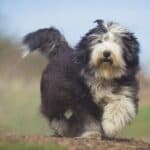
Bearded Collie

Canis lupus familiaris

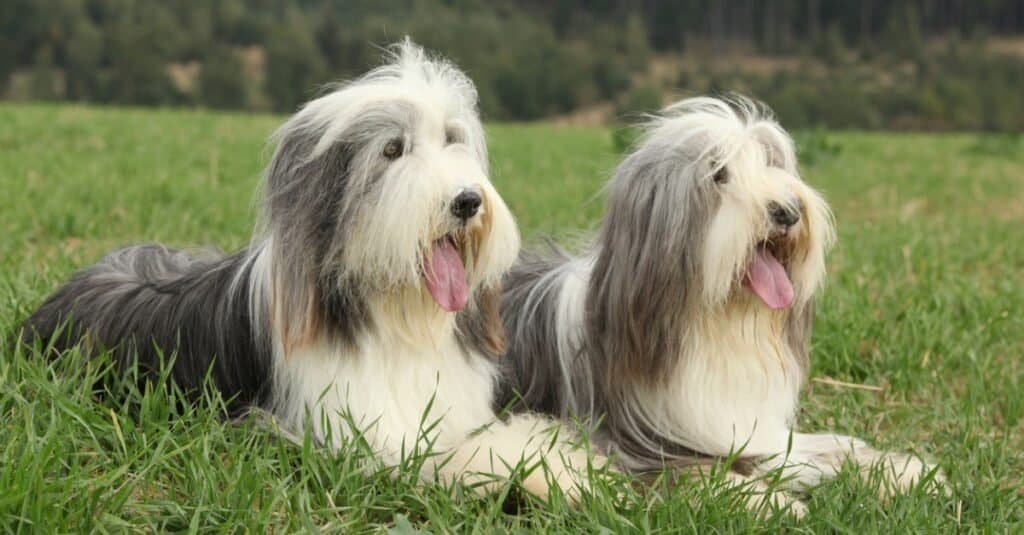
Shaggy coat, sharp herding heart
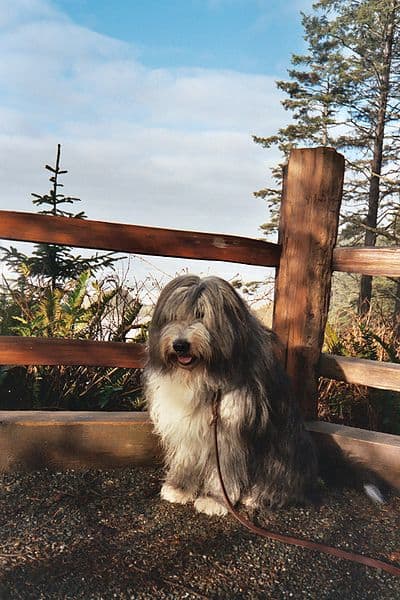
ja, CC BY-SA 3.0, via Wikimedia Commons

Bearded Collie Distribution

Click a location to explore more animals from that region

Origin Location

This map shows the native origin of the Bearded Collie. As a domesticated species, they are now found worldwide.

Loading map...

Found in 1 country

Size Comparison

Human 5'8"
Bearded Collie 1 ft 9 in

Bearded Collie stands at 31% of average human height.

Bearded Collie lying on ground mój pies

At a Glance

Domesticated
Also Known As Beardie, Beardies
Diet Omnivore
Activity Diurnal+
Lifespan 13 years
Weight 27 lbs
Status Not Evaluated
Did You Know?

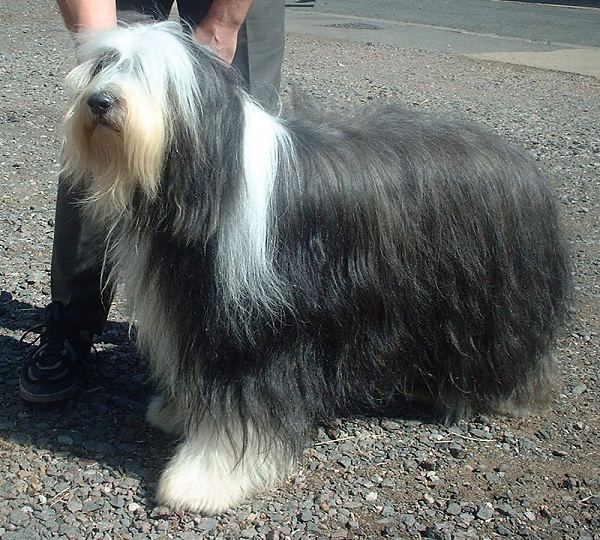
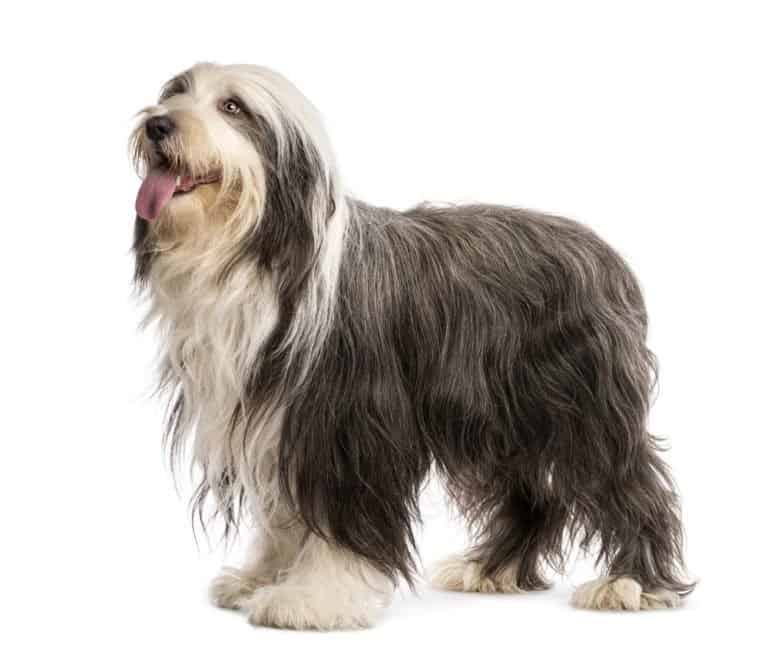
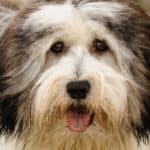
Nicknamed the "Beardie," it's defined by a long, shaggy double coat and distinct facial "beard."

Scientific Classification

The Bearded Collie is a domesticated dog breed (herding type) traditionally used for driving and managing sheep and cattle, known for its long, shaggy coat and ‘bearded’ facial hair.

Kingdom
Animalia
Phylum
Chordata
Class
Mammalia
Order
Carnivora
Family
Canidae
Genus
Canis
Species
Canis lupus familiaris

Distinguishing Features

  • Medium-to-large herding dog with a long, shaggy double coat that parts along the back
  • Distinct ‘beard’ and mustache-like facial furnishings
  • Athletic, lightly built collie-type frame with an energetic gait
  • Typically carried tail; coat colors often include combinations of gray/blue, brown, black, and fawn with white markings

Physical Measurements

Males and females differ in size

Height
1 ft 9 in (1 ft 9 in – 1 ft 10 in)
1 ft 8 in (1 ft 8 in – 1 ft 9 in)
Length
3 ft 1 in (2 ft 10 in – 3 ft 4 in)
Weight
50 lbs (44 lbs – 55 lbs)
45 lbs (40 lbs – 51 lbs)
Tail Length
1 ft (11 in – 1 ft 2 in)
Top Speed
30 mph
High 40s km/h

Appearance

Primary Colors
Secondary Colors
Skin Type Domestic dog skin under a dense double coat; skin is typically well-pigmented (especially on nose/lips/eye rims) and protected by a harsh, weather-resistant outer coat with a soft insulating undercoat.
Distinctive Features
  • Breed context vs. base species (Canis lupus familiaris): selectively bred Scottish herding dog with collie-type outline and efficient, ground-covering movement; markedly longer, shaggy coat and pronounced facial furnishings ('beard') compared with the average domestic dog.
  • Shaggy, double coat: long, flat/straight to slightly wavy harsh outer coat over a soft undercoat; coat naturally parts and frames the face, creating the hallmark 'beard' and eyebrow furnishings.
  • Head/face: strong muzzle with abundant facial hair; expressive eyes partially framed by hair but not meant to be fully obscured; moderate stop and collie-like proportions.
  • Body and movement: athletic, slightly longer-than-tall silhouette; flexible topline and free, smooth stride suited to all-day herding and driving stock.
  • Tail and ears: low-set tail carried with a gentle curve (not tightly curled); medium ears carried close to the head, often blending into the coat.
  • How it differs from similar shaggy breeds: lighter, more agile and typically less bulky than the Old English Sheepdog; more distinctly collie-shaped and longer-lined than Tibetan Terrier-type companion breeds (which are not herding collies).
  • Temperament/working trait emphasis (appearance-adjacent): alert, biddable herding type with an 'always moving' outline; coat and build reflect function for wet, windy Scottish conditions.
  • Needs frequent brushing and line-combing to stop mats reaching the skin, ear checks and cleaning because hair traps moisture, regular trimming of feet and sanitary areas, and full drying after baths.
  • The breed is likely to have hip dysplasia, hypothyroidism, autoimmune issues (including Addison's), eye problems like progressive retinal atrophy and cataracts, and MDR1 drug sensitivity; owners should get vet screening and be careful with medicines.

Sexual Dimorphism

Sexual dimorphism is moderate: males are typically taller, heavier-boned, and carry more overall coat volume (especially around the mane/ruff), while females are often slightly finer and lighter in build; both sexes retain the same shaggy, bearded outline.

  • Slightly larger frame and heavier bone; broader head/neck impression.
  • Often appears more 'mane-like' through the neck/shoulder furnishings due to overall mass and coat volume.
  • Slightly smaller, finer-boned, and more streamlined outline.
  • May show a slightly less bulky ruff, though coat length and beard remain typical.

Did You Know?

Nicknamed the "Beardie," it's defined by a long, shaggy double coat and distinct facial "beard."

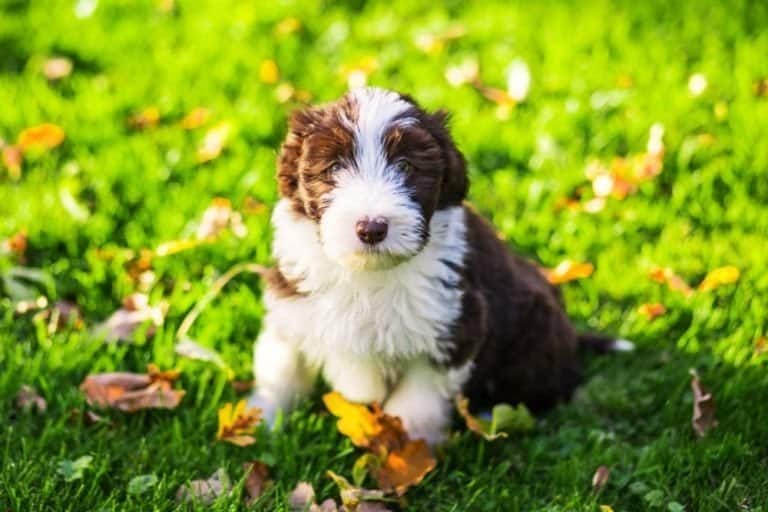
Puppies are often born much darker and gradually lighten as they mature (a well-known Beardie trait).

Known for the "Beardie bounce"-a springy hop used while herding to keep sheep in view over tall grass or heather.

Historically worked as a driving and gathering dog for both sheep and cattle in Scotland.

Compared with many collie-type herders, Beardies tend to work more "upright" and bouncy rather than with an intense crouch-and-stare style.

Their coat comes in several shades (commonly black, blue, brown, or fawn), typically with white markings.

Unique Adaptations

  • Weather-ready double coat: a harsh outer coat helps shed rain and wind, while a soft undercoat insulates-useful in cool, wet Scottish conditions.
  • Shaggy facial furnishings (the "beard" and brows) help channel water away and provide some protection from brush and weather.
  • Athletic, ground-covering trot: collie-type proportions support efficient movement over long distances while driving or gathering stock.
  • Strong problem-solving in motion: selected to make rapid, independent decisions while still responding to human direction (a hallmark of many herding dogs).
  • Domestic-dog specialization vs. the base species (wolf): bred for cooperation with humans, reduced predatory sequence (more control/drive without the final bite), and strong responsiveness to cues-traits emphasized in herding breeds.

Interesting Behaviors

  • "Beardie bounce" while excited or when trying to see/communicate in tall cover-often shows up in play and herding-style games.
  • Loose-eyed herding: more body movement, bouncing, and lively presence to influence stock, rather than an intense fixed "eye."
  • Shadowing and "checking in": many Beardies naturally circle back to monitor their people-an echo of managing a flock while staying responsive to the shepherd.
  • Vocal herding tendencies: some will use barks or grumbles during play or when trying to move family members like a "flock."
  • High social sensitivity: thrives on interaction and cooperative tasks; can become restless if under-stimulated.
  • Joyful, busy movement: quick direction changes and buoyant gait are common, especially outdoors.

Cultural Significance

The Bearded Collie (Canis lupus familiaris) is tied to Scottish farm life. As a hardy working collie-type herder from the Highlands and Borders, it herded sheep and cattle, later becoming a show and companion dog while keeping its lively working character.

Myths & Legends

A common origin tale says a Polish trader brought Polish Lowland Sheepdogs to Scotland in the 1500s. Traded for livestock, those dogs were bred with local herding dogs to form the Bearded Collie.

Old Scottish farm stories say shaggy herding dogs could 'vanish into the heather' and suddenly reappear, an image used to explain why the springing, visible working way—the famous 'bounce'—was prized on open hills.

Traditional rural naming lore frames the "beardie" as a badge of wisdom and hard work-stories of the "wise bearded dog" guiding stubborn cattle back to the drove road appear in farming recollections and local retellings.

Shepherding communities say the shaggy Bearded Collie (Canis lupus familiaris) worked all day in sleet and wind, coming home with crusted coats—a common folk tale that shows their great hardiness, not one author's story.

Conservation Status

NE Not Evaluated

Has not yet been evaluated against the criteria.

Population Stable

Life Cycle

Birth 7 pups
Lifespan 13 years

Lifespan

In the Wild
12–14 years
In Captivity
10–16 years

Reproduction

Mating System Polygynandry
Social Structure Managed Domestic
Breeding Pattern Serial
Fertilization Managed Selective
Birth Type Internal_fertilization

Canis lupus familiaris can be polygynandrous (many males and females mate). Bearded Collie breeding is breeder-managed: selective, serial pairings per heat with internal fertilization. Health and pedigree screening guide mate choice in closed registries.

Behavior & Ecology

Social Pack Group: 4
Activity Diurnal, Crepuscular
Diet Omnivore Cooked, lean animal protein (commonly chicken or beef) with added omega-3-rich fats (e.g., fish oil) to support skin/coat.

Temperament

Highly social, people-oriented; typically friendly with familiar humans and dogs when well-socialized
Herding-driven responsiveness: attentive to movement, quick to orient and 'manage' group motion; may try to control running children/pets without guidance
Energetic and work-motivated; benefits from daily aerobic exercise plus structured tasks (herding-style games, agility, obedience, scent games) to prevent frustration behaviors (barking, pacing, mouthing)
Bright, independent problem-solver; can be distractible outdoors and may test boundaries-does best with consistent positive reinforcement and clear routines
Playful, bouncy interaction style; can be exuberant and may overwhelm timid dogs unless taught impulse control
Can show sensitivity/shyness to harsh handling or chaotic environments; early, gentle exposure to varied people/places helps stabilize adult confidence
Breed-distinguishing care-linked trait: long, shaggy coat and facial 'beard' require frequent grooming; discomfort from mats/skin irritation can reduce tolerance for handling and increase irritability
Breed-associated health considerations that can affect behavior/handling: possible hip dysplasia/orthopedic discomfort, hypothyroidism (lethargy/weight gain), autoimmune disease risk, and eye issues (e.g., cataracts/PRA in lines); regular veterinary screening and appropriate exercise load support stable temperament

Communication

Barking: alert/attention-seeking, excitement during play or herding-like arousal; can become habitual without enrichment
Whining: solicitation (attention, access to people), mild stress, anticipation
Growling: boundary-setting during resource guarding or discomfort Often preventable with training and pain assessment
Howls/'talking' sounds: occasional expressive vocal play, varies by individual
Body posture and movement: bouncing gait, play bows, approach/retreat patterns; herding-style circling to influence group motion
Facial signals: intense gaze/'eye' toward moving targets; beard and hair can obscure subtle facial cues-handlers should watch body posture closely
Tail and ear signals (varies with coat length and docking status): broad wagging for affiliation/excitement; stiffened tail/body for arousal or uncertainty
Mouthing/nipping at heels or clothing as a herding-derived control behavior-managed via impulse-control training and appropriate outlets
Pawing/leaning and close-following to maintain social contact with humans
Scent investigation and marking typical of domestic dogs; used to assess strangers/dogs and orient in new environments
Touch-based affiliation: nudging, leaning, seeking petting/grooming; cooperative grooming handling improves welfare
HUBS (group-wide dog patterns with Bearded Collie variation): domesticated dogs commonly use ritualized greetings (sniffing, curved approaches), play signals, and human-directed gaze/point-following; Beardies often show above-average social playfulness and handler-check-ins, but individuals vary from outgoing 'greeters' to more reserved, environment-sensitive dogs depending on genetics and early socialization

Habitat

Biomes:
Temperate Grassland Temperate Forest Boreal Forest (Taiga) Tundra Alpine Mediterranean Desert Hot Desert Cold Savanna Tropical Dry Forest Tropical Rainforest Temperate Rainforest Freshwater Wetland Marine +9
Terrain:
Hilly Plains Valley Coastal
Elevation: Up to 18044 ft 8 in

Ecological Role

Human-associated omnivorous mesocarnivore/companion herding dog; impacts ecosystems primarily through human-mediated food webs and interactions with livestock and wildlife.

Herding and livestock management support (reduces human labor, improves flock movement/containment) Deterrence of predators/strays around farms (protective presence) Rodent and small pest control (localized, opportunistic) Companionship and working partnership with humans (cultural and social utility)

Diet Details

Main Prey:
Complete commercial dog food Balanced home-prepared diet formulated by a veterinary nutritionist Lean meats Fish Eggs
Other Foods:
Grasses Berries and other fruits Vegetables Cooked grains and starches Fungal and plant matter

Human Interaction

Domestication Status

Domesticated

Bearded Collie (Canis lupus familiaris) is a herding dog breed from Scotland, bred to drive sheep and cattle in rough weather. Athletic, eager to please, protective yet friendly, with a long harsh double coat and a distinct beard. Strong herding instinct, high grooming needs, lively and likes people; needs daily exercise, training, and mental work.

Danger Level

Low
  • Bites or nips (often linked to fear, rough handling, inadequate socialization, or over-arousal; herding breeds may nip at heels)
  • Knock-down risk from exuberant jumping/boisterous play, especially around small children or frail adults
  • Resource guarding or dog-dog conflict in some individuals if not managed
  • Allergic reactions in sensitive people (dander/saliva; not a hypoallergenic breed)

As a Pet

Suitable as Pet

Legality: Generally legal to own as a companion animal in most jurisdictions. Subject to standard local dog regulations (licensing, leash laws, vaccination/parasite control, noise ordinances). Breed-specific bans are uncommon for Bearded Collies, but owners should verify municipal and housing/insurance rules.

Care Level: Experienced

Purchase Cost: $800 - $2,500
Lifetime Cost: $20,000 - $45,000

Economic Value

Uses:
Companion animal (pet ownership) Working livestock management (herding/droving) Dog sports and competition Breeding and stud services Grooming and coat-care services Training/behavior services Rescue and rehoming networks
Products:
  • Livestock herding labor (farm/ranch utility)
  • Puppy sales/adoption fees
  • Stud fees and breeding services
  • Professional grooming (regular brushing, de-matting, trimming)
  • Training classes (obedience, herding, agility)
  • Competition participation (entries, handling)
  • Pet supplies and veterinary services (vaccines, preventives, dental care)

Bred in Scotland to herd sheep and cattle, the Bearded Collie is a purebred dog that is trained to herd cattle in any weather or terrain.

Despite being purebred dogs, bearded collies can be found in shelter homes and/or rescue centers. These dogs are extremely energetic and participate in different kinds of dog sports like rallies or agility.

Evolution

Shaggy-haired herding dogs have been working in Scotland for so long that it is difficult to pinpoint exactly when the beardie came to be. Most believe the dogs to be the result of the breeding of Polish Sheepdogs with Scottish herding dogs as early as 1514.

Three Pros and Cons of Owning a Bearded Collie

If you are looking to own a bearded collie, here are some things to keep in mind.

ProsCons
Intelligent
Bearded collies are known to be intelligent dogs and are often used for watchdog purposes due to their vigilant nature.
High maintenance
Bearded collies are high-maintenance and are often difficult to groom. You would need to do a lot of work on the dog to keep it in decent condition.
Adaptable
Bearded collies are also very adaptable and can easily adjust to new environments — making them a desirable pet option.
Excessive shedding
These dogs are known to shed a lot, which oftentimes becomes a tedious task to clean after for the dog owner.
Easy to train
Bearded collies are easy to train and are known to pick up commands faster, which is another desirable characteristic for this dog breed.
A great demand for social interaction
Bearded collies demand a great deal of company. They can often feel lost and have behavior issues if left alone for a long time.
Types of heeler dogs - Bearded Collie

Bearded collies come in several colors with eyes that tone with or complement the color of their coats.

Size and Weight

The breeding of the bearded collie in Scotland has led the breed to reach a medium size with a rectangular body shape. The bearded collie has a shaggy coat that comes in different colors like fawn, blue, brown, and black. Sometimes, the fur also has some white markings. These dogs typically have eye colors that tone with or complement the color of their coats.

MaleFemale
Height21 to 22 inches20 to 21 inches
Weight45 to 55 lb45 to 55 lb

Common Health Issues

Much like other animals, the bearded collie suffers from some health complications — including hip dysplasia, which is the abnormal formation of the hip bone. They can suffer from this same developmental issue in the elbow bone as well.

Beardies are prone to eye diseases as well, like progressive retinal atrophy (PRA). While this heritable condition is not painful, it eventually causes the dog to go blind and is incurable. In fact, bearded collies are more likely to see this genetic decline than most other breeds.

Autoimmune hypothyroidism is another major risk to a beardie, affecting the thyroid gland. The condition prevents the body from creating the hormones that this gland ordinarily would, leading to behavior changes, i.e., aggression or fearfulness, weight gain, and hair loss.
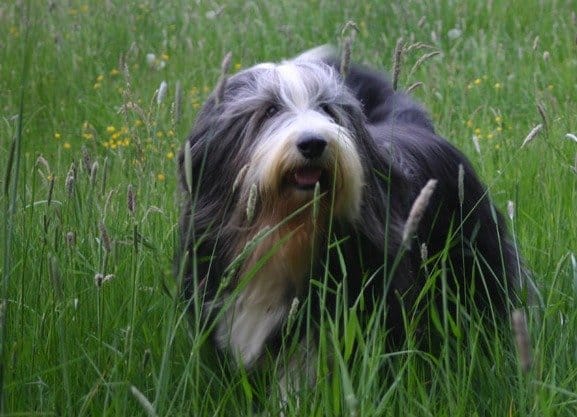
Bearded Collie standing in grass

Bearded collies are prone to eye problems.

The adrenal glands can also have problems, leading to a condition known as Addison’s disease. The endocrine disorder can lead to a lack of appetite, depression, weakness, and sometimes increased water intake. Most often, this condition will occur as the immune system attacks the adrenal glands, which are supposed to release cortisol to calm the dog during stress.
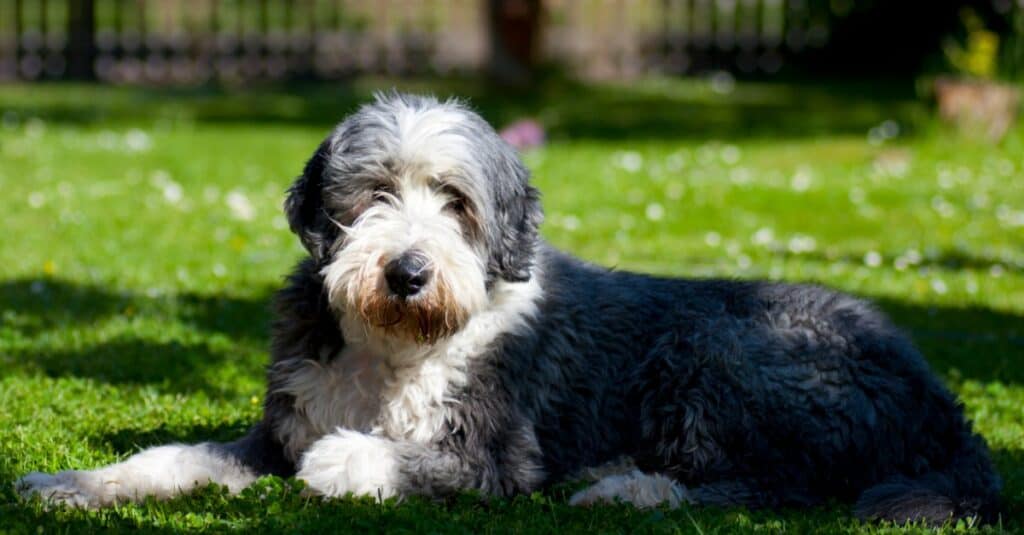
bearded collie laying in the grass

The bearded collie is a type of cattle dog that has a heavy coat developed to adapt to unpredictable weather.

Temperament

These dogs are very lively. Bearded collies are smart and active dogs. However, they can be very stubborn and independent.

They are extremely athletic and intelligent, and are very easy to train. These dogs are usually friendly with other dogs and are known to be very hard-working. Beardies also enjoy competing with other dogs in various dog sports.

However, because these dogs are very active, they need a fair amount of exercise every day; the lack of which can cause bad behavioral issues in these dogs. Such issues can also occur in these dogs due to a lack of attention.

They are usually great with children. However, sometimes, these dogs can be too active for young kids.

How to Take Care of Bearded Collies

Here are a few things to consider concerning care for the bearded collie:
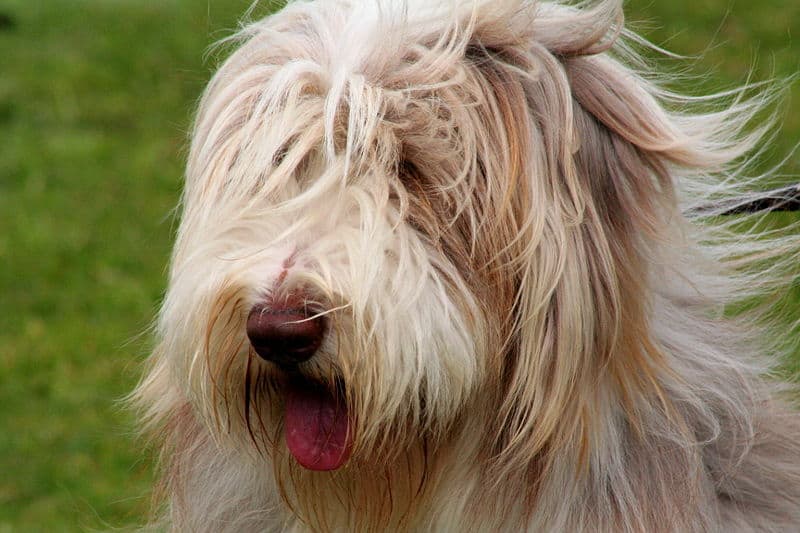
Bearded collies require a lot of grooming.

The Best Dog Food for Bearded Collies

The usual diet of the bearded collie includes meat, quinoa, shrimp, eggs, bread, and salmon. It is best that you feed your bearded collie about 1.5 to 2 cups of high-quality dog food per day. The quantity, however, can be split into two meals.

However, how much your bearded collie eats also depends on its age, size, and physical capabilities. Bearded Collie puppies usually eat three to four times a day in comparison to adults, as they can’t digest a lot of food in one go.

Some foods are very harmful to your bearded collie, which include chocolates, raisins, grapes, garlic, and onions. You should avoid feeding these to your dog.

Many owners of dogs prone to adrenal/endocrine disorders have better results from organic dog food.

Maintenance and Grooming

Bearded collies are high-maintenance dogs, which means that these dogs require a lot of grooming and maintenance. This need arises especially due to its long coat, which makes grooming a costly task.

The hair often collects a lot of dirt, which must be removed with a hairbrush. It has been said that brushing a bearded collie’s fur could take up to an hour sometimes, and that it takes at least three sessions a week. These dogs also have high shedding capabilities.

Bearded collies should get baths every 6 to 8 weeks with dog shampoo. Dog shampoos are available at many pet shops.
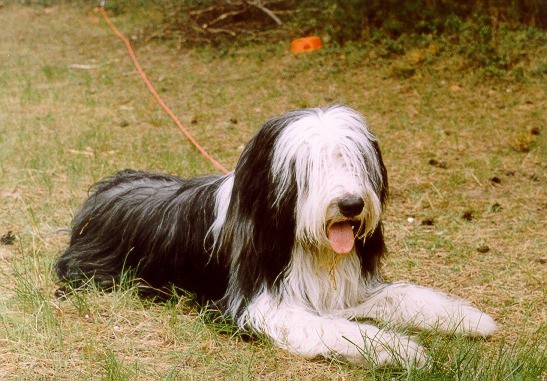
Bearded Collie lying on ground

Bearded collies are easy to train and are quick to pick up commands.

Training

Since these dogs are physically very active, it is often easy to train them. They work best with human company and often help humans herd sheep. Bearded collies can quickly pick up commands. However, they do require proper training and attention.

These dogs, however, can be shy and therefore need to interact socially early on in their life. To start training your bearded collie puppy, you should first set a particular time and place and let the puppy get familiar with it.

After the connection builds, you can start introducing simpler training commands before shifting to more complex ones over time so that the dog can easily pick them up.
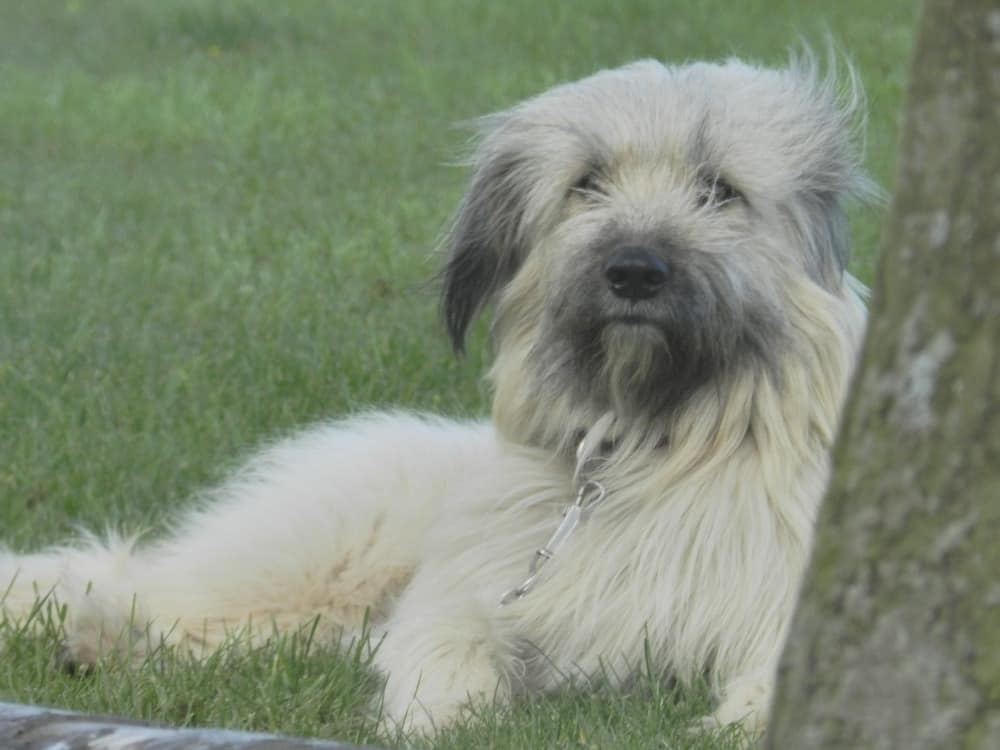
Bearded collies love to play and make great family pets.

Exercise

These dogs have high energy levels and usually need about one to two hours of daily exercise. Bearded collies are active dogs and often enjoy playing games. They enthusiastically join in while playing, which also makes them great family companions.

Puppies

While taking care of a bearded collie puppy is mostly the same as taking care of an adult bearded collie, you would have to be very careful with feeding the puppy.

The adults must be fed twice a day. However, bearded collie puppies have to be fed around three to four times a day as they are unable to digest so much food in one go.
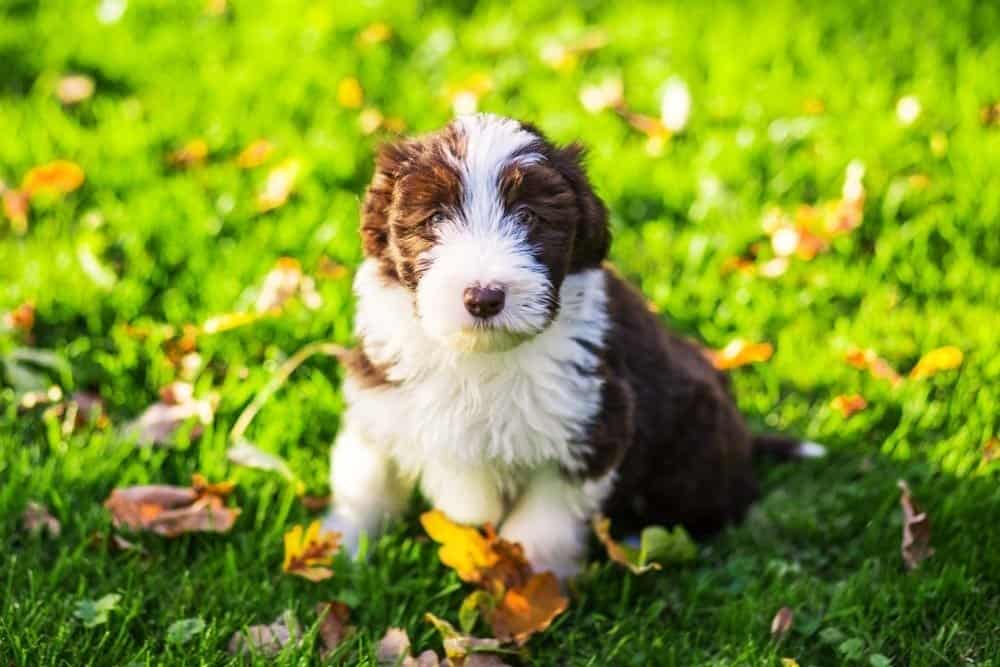
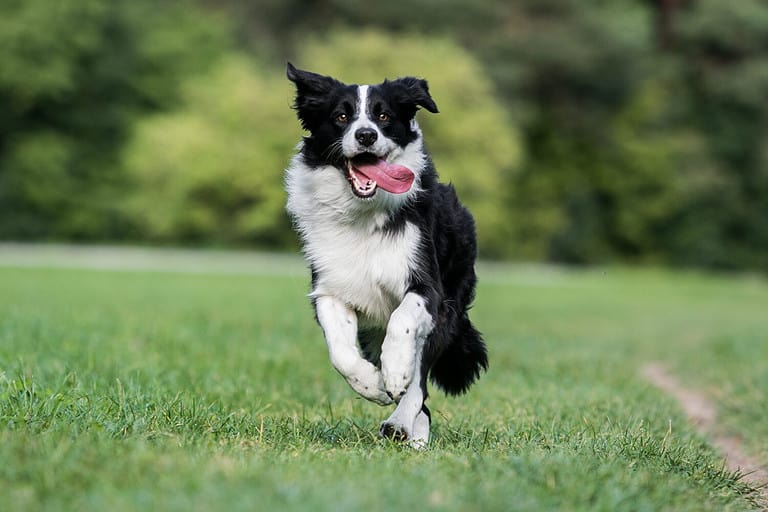
A bearded collie puppy running around in the grass

Bearded collie pups need to be fed three or four times a day.

Bearded Collie and Children

Bearded collies are very active and are especially playful around children. They are also very fond of warm hugs and enjoy a lot of attention. However, their energy levels could also prove a little harmful around young children.

Dogs Similar to Bearded Collies

Some dogs that are very similar to the bearded collie are:

  • Australian Cattle Dog: These dogs are also herding dogs and are medium-sized, much like the bearded collie. They are also intelligent and can efficiently handle cattle herds on their own.
  • Border collies: These dogs excel at helping humans in herding sheep and livestock. They are intelligent as well as athletic and participate in a lot of dog sports activities, like the bearded collie.
  • Australian Shepherd: These dogs are medium-sized and are common in the United States. They are highly intelligent and make great family and herding dogs.

Famous Bearded Collies

Bearded collies have often appeared on screens for their fluffy physique and ability to learn proper training. Some of the characters involve Chiffon, Wilby’s pet in the 2006 Walt Disney classic The Shaggy Dog.

A bearded collie appears in the 2001 film Agent Cody Banks to walk alongside the main character. You can also find one of these dogs in the old television show Please Don’t Eat the Daisies. One of the most famous beardies to ever grace the stage was in the original production of Peter Pan, playing the role of the family dog Nana.

View all 453 animals that start with B

Sources

  1. David Burnie, Dorling Kindersley Animal, The Definitive Visual Guide To The World's Wildlife / Accessed November 10, 2008
  2. Tom Jackson, Lorenz Books The World Encyclopedia Of Animals / Accessed November 10, 2008
  3. David Burnie, Kingfisher The Kingfisher Animal Encyclopedia / Accessed November 10, 2008
  4. David Burnie, Dorling Kindersley Illustrated Encyclopedia Of Animals / Accessed November 10, 2008
  5. Dorling Kindersley Dorling Kindersley Encyclopedia Of Animals / Accessed November 10, 2008
  6. Dogtime / Accessed November 16, 2020
  7. American Kennel Club / Accessed November 16, 2020
  8. Aubrey Animal Medical Center / Accessed November 16, 2020
  9. Dog-Learn / Accessed November 16, 2020
  10. Michelle Welton's Honest Advice about dogs / Accessed November 16, 2020
  11. PDSA / Accessed November 16, 2020
Lisha Pace

About the Author

Lisha Pace

After a career of working to provide opportunities for local communities to experience and create art, I am enjoying having time to write about two of my favorite things - nature and animals. Half of my life is spent outdoors, usually with my husband and sweet little fourteen year old dog. We love to take walks by the lake and take photos of the animals we meet including: otters, ospreys, Canadian geese, ducks and nesting bald eagles. I also enjoy reading, discovering books to add to my library, collecting and playing vinyl, and listening to my son's music.

Thank you for reading! Have some feedback for us?


Bearded Collie FAQs (Frequently Asked Questions)

Yes. Bearded Collies are friendly, energetic, and affectionate, making them great family companions, though their high energy may overwhelm very young children.