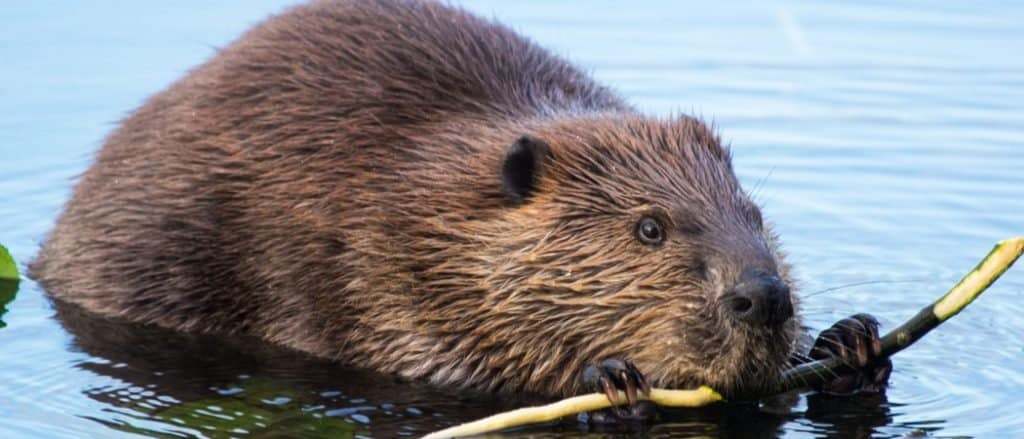
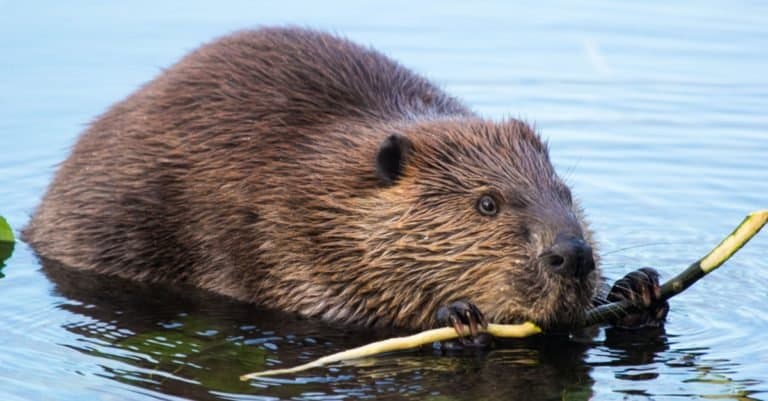













The beaver dam is one of the great natural wonders of the animal kingdom.
A symbol of industry and work ethic, this semi-aquatic rodent can alter its surrounding landscape in order to shield itself from dangerous predators. Because the dam has beneficial effects on the rest of the environment, the beaver is considered to be a keystone species wherever it resides. That is why beaver populations have needed to recover after having been overhunted in previous centuries.
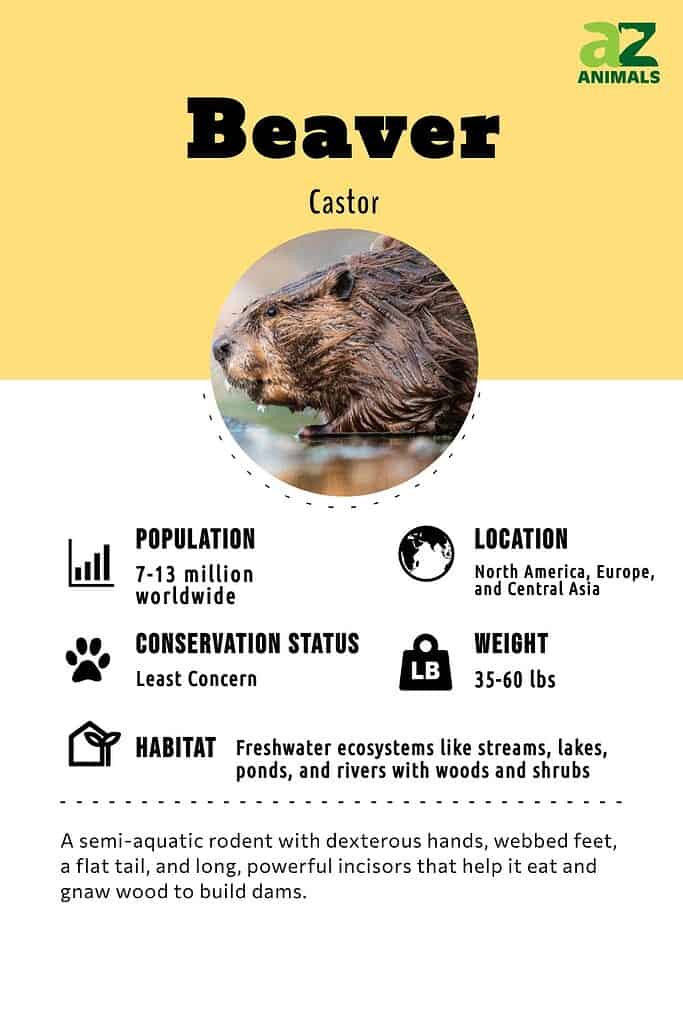
5 Incredible Beaver Facts!
- The name “beaver,” which entered the English language from early Germanic, can trace its roots back to a word meaning brown.
- The largest beaver dam ever found was about half a mile long in Alberta’s Wood Buffalo Park. It was thought to be a multi-generational project.
- The beaver first appears in the fossil record some 10 to 12 million years ago from Germany. It reached America from across the Bering Strait at least seven million years ago.
- The beaver is the national symbol of Canada.
- Beavers mate for life.
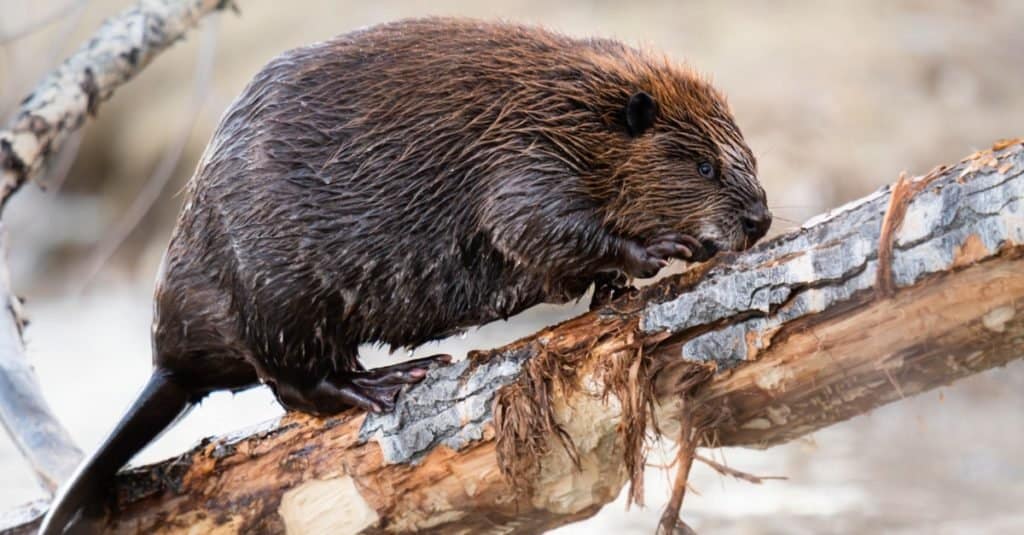
Beavers are the second-largest rodent in the world and can grow to be up to 4 feet long!
©Ghost Bear/Shutterstock.com
The 2 Types of Beavers
There are two main types of beavers inhabiting most parts of the Northern Hemisphere, which include:
- North American Beaver – The North American beaver (Castor canadensis) is also referred to as the American beaver or Canadian beaver (of which it’s the national animal symbol). The American beaver has been introduced into Patagonia in South America and parts of Europe like Finland.
- Eurasian Beaver – The Eurasian (or European) beaver (Castor fiber) almost became extinct due to hunting for its fur and castoreum. Thanks to its being reintroduced in central Europe, Great Britain, Spain, Scandinavia, and parts of China and Mongolia, its population has bounced back.
Scientific Name
All living species of beavers belong to the genus Castor. This scientific name simply means beaver in Ancient Greek. There are two current species in the genus: the Eurasian beaver and the North American beaver, each of which can be further divided into various subspecies. Two more extinct species of this genus are known from the fossil record. One of these is Castor californicus, which lived in western North America and probably went extinct at some point in the Pleistocene (2.58 million years to 11,700 years ago). The second genus of beaver, known as the giant beaver, probably went extinct during the last Ice Age. As the name suggests, this massive creature grew up to 8 feet long and weighed 200 pounds. The beaver is the only living member of its family (scientific name Castoridae) and also belongs to the rodent order.
Evolution and History
The modern beaver is believed to have originated during the late Eocene Period in North America and crossed over the Bering Land Bridge in the early Oligocene Period, thus colonizing Eurasia. This would have happened 33 million years ago at a time when many animal species were going through changes. This time in history is referred to as the Eocene-Oligocene transition, or Grande Coupure, where mass amounts of life became extinct, mostly aquatic.
It was in the early Miocene period, approximately 24 million years ago, that castorids developed a semi-aquatic lifestyle. There were two types–giants like the Castoroidinae of North America and Trogontherium of Eurasia. From fossil evidence, researchers believe that Castoroidinae and modern beavers shared an ancestor which was a bark-eating animal. Bark-eating probably led to dam and lodge building so that these pre-historic beavers could survive winters in the subarctic.
Appearance
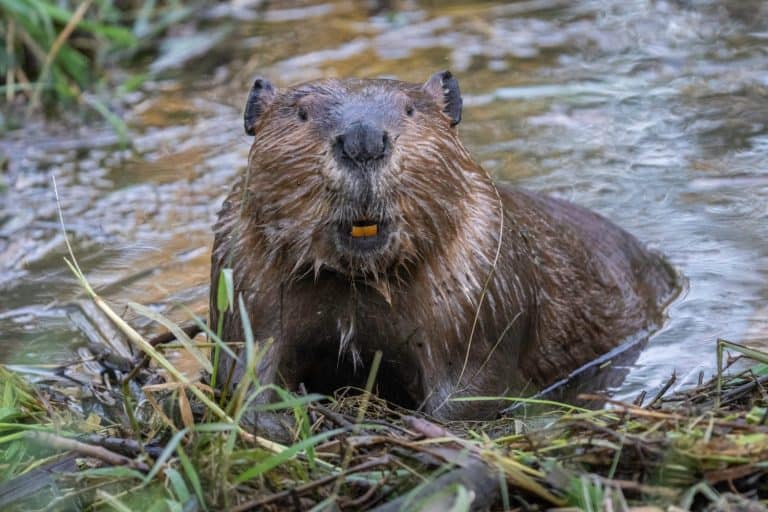
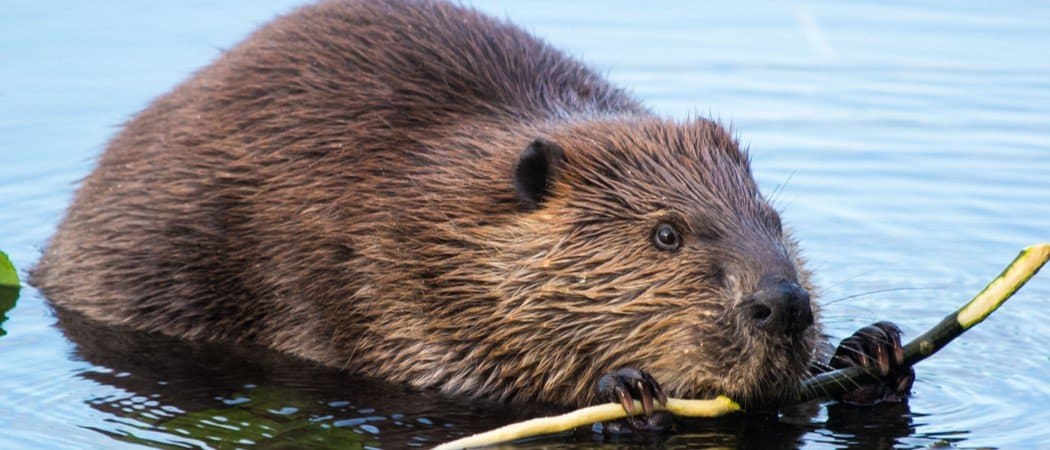
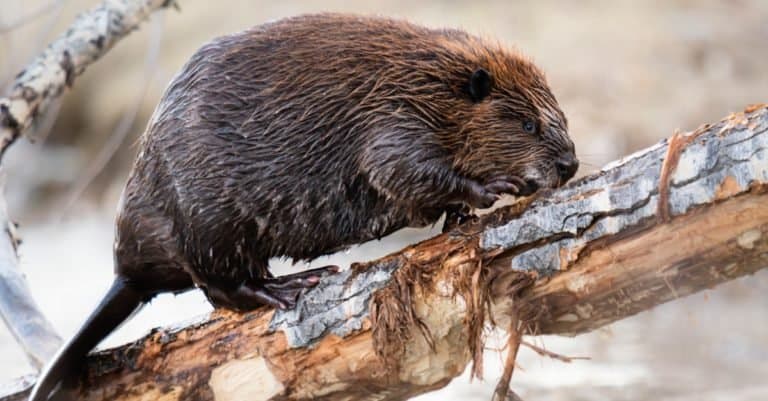
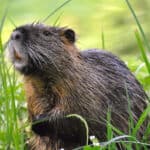
The beaver has a stout body, strong neck, oversized head, short and rounded ears, dexterous hands, webbed feet, and a flat tail. Its reddish dark brown waterproof fur is composed of two layers: a soft lower layer and stiffer protective upper layer. The beaver’s back foot has a specialized claw that functions as a comb for cleaning its fur.
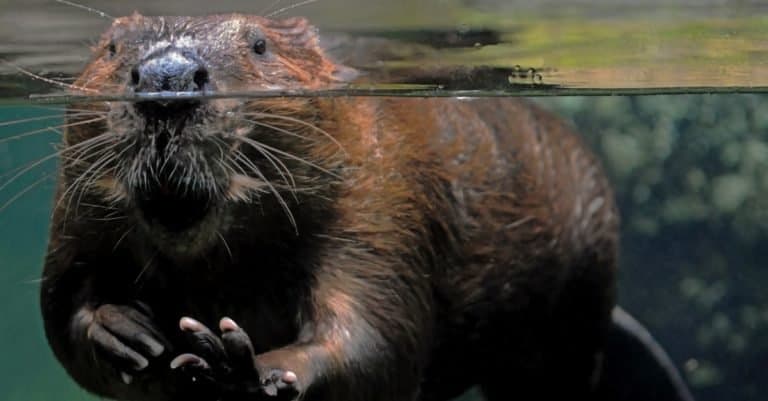
The beaver has a unique adaptations to help it survive in its natural habitat. Its sharp incisors, which are fortified with iron and trace minerals (giving it an orange color), have a slight backward curve to aid it in cutting down trees. Its large, flat, leathery tail serves multiple purposes: it stores excess fat for the winter, provides a useful warning to others when slapped in the water, and braces the body against the ground as it chews into trees. When it’s submerged, the beaver’s ears, nose, nictitating membrane (an additional eyelid), and lips behind the teeth can all be closed off to prevent water from entering its body. Propelled by their hind feet, beavers can swim through the waters at around 5 mph.
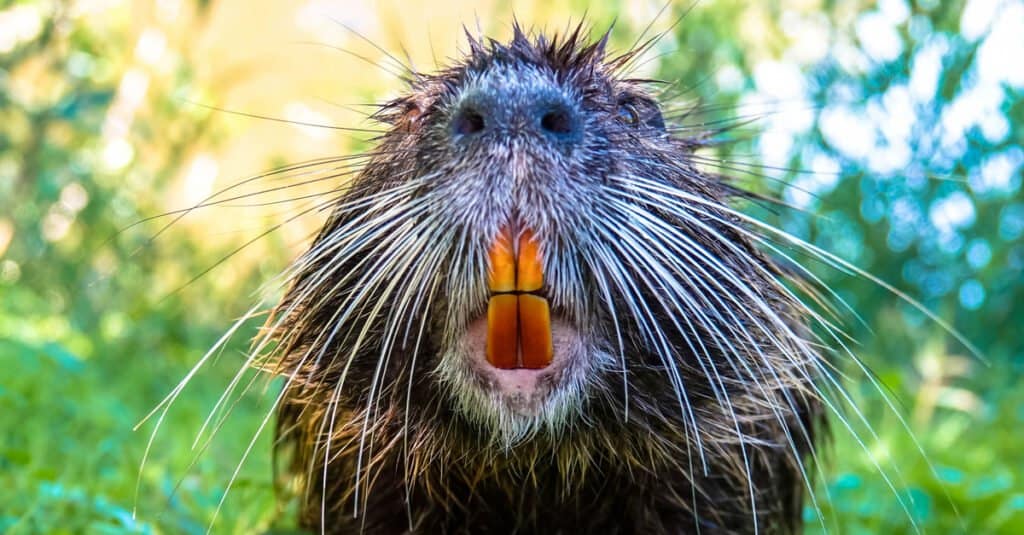
The beaver’s sharp, orange incisors, fortified with iron and trace minerals, help it cut down trees with ease.
©U. Eisenlohr/Shutterstock.com
The beaver is the second-largest rodent in the world, the largest being the capybara. Head to rump, it can grow up to 4 feet long, with an additional 10 to 20 inches comprising the tail. The beaver is about the same size as a medium dog, weighing between 24 and 66 pounds.
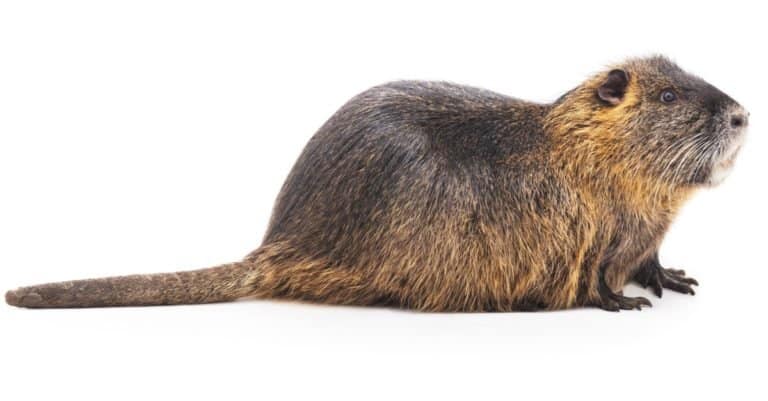
The Eurasian and North American beavers are quite similar in appearance, but you can definitely notice some subtle differences between them. The North American species is slightly smaller in size. It also has a narrower head and a more oval-shaped tail. Despite people’s best efforts, the two species cannot be hybridized together, perhaps because they carry a different number of chromosomes.
Behavior
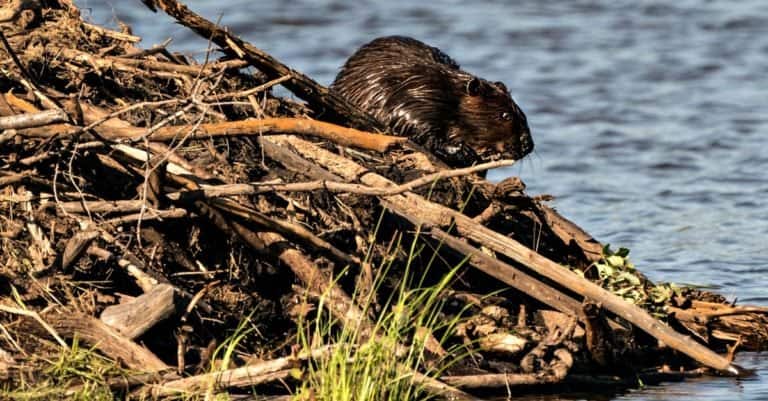
Like no other animal on the planet, the beaver marshals enormous resources to construct its signature dam. This engineering project usually takes place in the summer or early fall, when the beavers cut down trees and shrubs with their teeth and then transport the material in their mouths to the site of their house. They pile up the sticks in the direction of the water flow and then stuff them with grass and mud. Whenever there’s a leak or structural problem, the beaver will strive to repair it as quickly as possible.
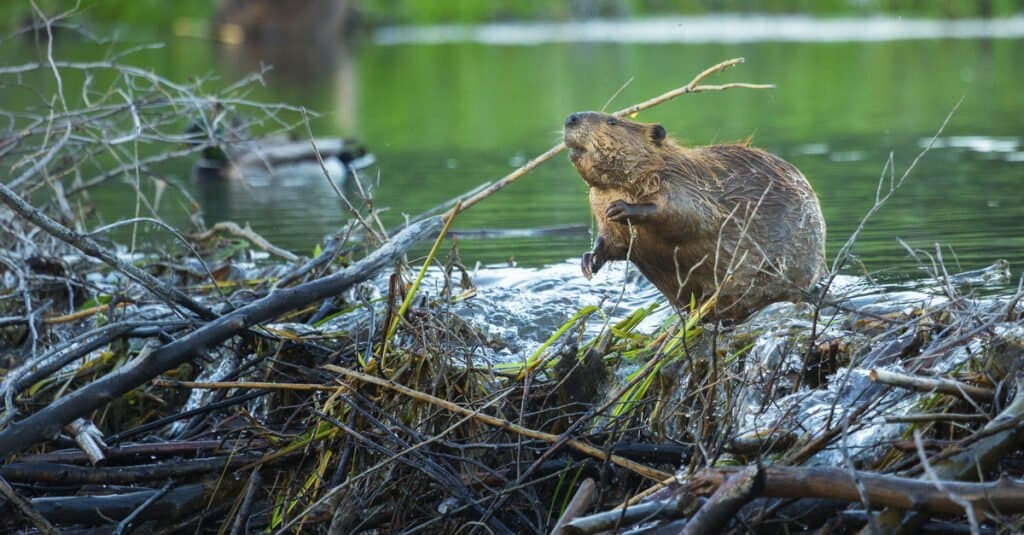
Beavers build dams to create a sustainable aquatic environment in which they can build a lodge.
©Chase Dekker/Shutterstock.com
The purpose of the dam is to create a sustainable aquatic environment in which they can build a lodge. These elaborate homes serve as a kind of island fortress on the water. They have a central chamber and two underwater entrances that predators cannot access. But if for whatever reason, the beaver is unable or unwilling to construct a dam on the water, it still can live in a den near the bank for protection.
One of the more remarkable facts about these lodges is the way that they alter the flow and level of the surrounding water. According to National Geographic, they can increase the amount of open water, which reduces droughts and improves the viability of wetlands by up to 600%. Unfortunately, the beaver can become a nuisance by accidentally damming up human-made streams, which can cause unwanted flooding.
The life of the beaver revolves around small family groups of about eight closely related individuals (called colonies) that forage, build dams, and raise the young together. These family bonds are reinforced and strengthened by grooming and play. But beavers are as equally intolerant to outsiders as they are friendly toward family members. These territorial animals will aggressively defend their land from outside intruders. They mark their territories by creating conspicuous mud piles laced with secretions. Once a threat approaches, the beavers will slap their tails on the water, which serves as a warning to interlopers and a signal to family members nearby. If they are in particular danger, then the beavers will escape into the water and hide in their lodges.
Scent is an integral part of the beaver’s communication skills. They produce urine-based castoreum oil from their anal gland (which some say smells like musky vanilla) for the purpose of marking territory and identifying other beavers. They also mix this oil with their fur to make it waterproof. Verbal calls are not a huge part of their communicative repertoire, but they do make low groaning noises.
Beavers are rarely seen during the day except around the dusk hours. They accomplish almost everything at night when predators are less likely to spot them. Unlike many other mammals, beavers do not hibernate for the winter but instead prepare meticulously for the sparse winter months by building up fat stores and food caches.
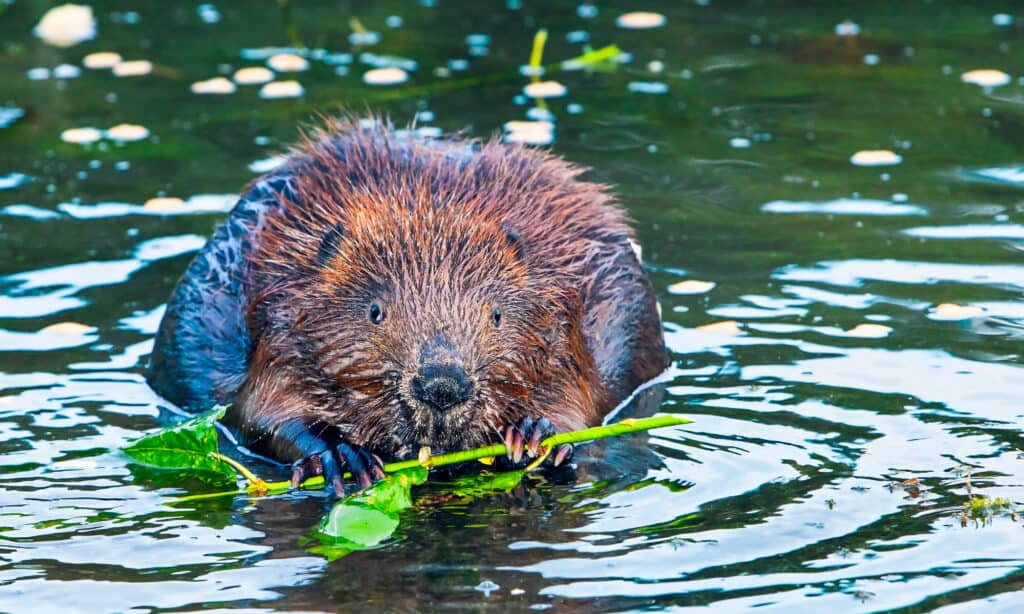
Rather than hibernate, beavers prepare meticulously for the sparse winter months by building up fat stores and food caches.
©SERGEI BRIK/Shutterstock.com
Habitat
As the name suggests, the North American beaver has a massive range that extends through most of Canada, the United States, and parts of Mexico (it was also later introduced into Finland), while the range of the Eurasian beaver extends through parts of Europe (including the UK) and into Central Asia. They are found exclusively in freshwater ecosystems such as streams, lakes, ponds, and rivers with heavy woods and shrubs.
Diet
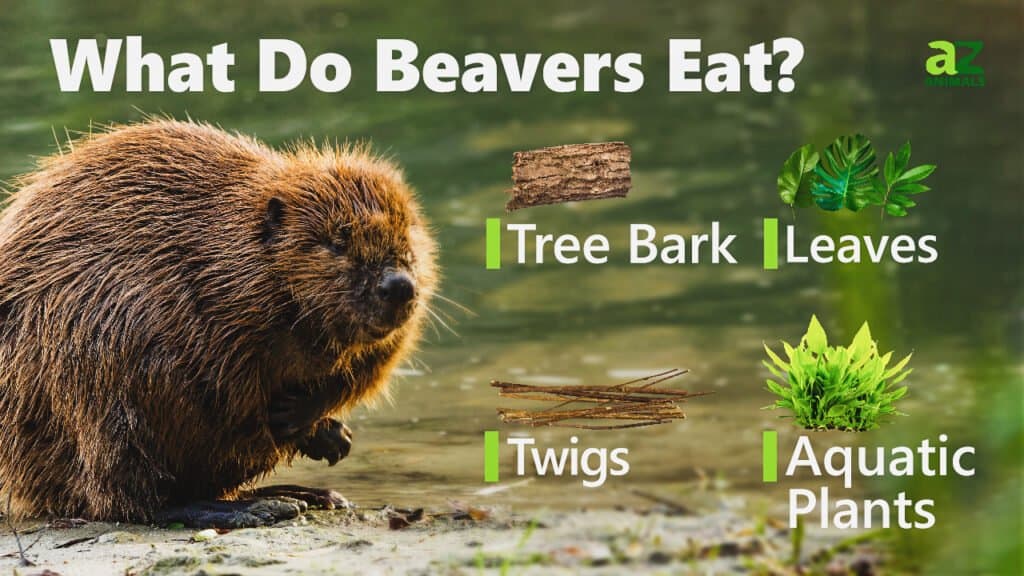
Beavers are herbivorous foragers that have specialized microorganisms in their gut to break down very tough cellulose from plant matter. To cope with the coldest parts of the year, the beaver may store their food below their lodge to last through the winter. Even if the water is frozen over, the beaver can still access the food stores without any problems.
What does the beaver eat?
The beaver’s diet varies by season. In the spring and summer months, the beaver feeds on leaves, grasses, sedges, roots, and herbs. During the fall and winter months, they switch primarily to bark and wooded plants. The North American beaver seems to favor poplar, beech, alder, maple, and aspen trees. This clever creature can create a canal leading from the food source back to the dam.
Predators and Threats
The beaver has been historically threatened by habitat loss and trapping. For many centuries they were hunted on an enormous scale for their fur, meat, and oil. After numbers declined in Europe, the beaver fur trade became an integral part of the colonial economy in the Americas and reached its height at some point in the 19th century, when more than 150,000 pelts were hunted a year. Since then, the decline of the fur trade has removed an enormous source of population pressure from the beaver, which has enabled it to recover.
What eats the beaver?
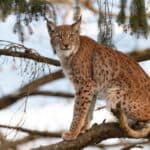
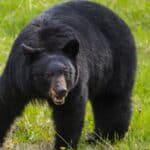
The beaver is commonly preyed upon by mountain lions, wolves, coyotes, foxes, eagles, and even sometimes bears. But the loss of some predator populations has made it easier for the beaver to survive in the wild.
Reproduction, Babies, and Lifespan
The beaver is known as a faithful partner that will form exceptionally strong long-term monogamous relationships with a single mate. If its mate dies, only then will the surviving mate seek out another partner. However, a 2009 genetic study revealed some unusual facts about the beaver’s reproductive strategy. Much like humans, they may also engage in promiscuous short-term relationships whenever the opportunity arises. Beavers mate once every year between January and March in northern climates and between November and December in warmer climates. The female will prepare to give birth by creating a soft bed in the lodge, where she uses her tail as a birthing mat.
After a gestation period of around three months, the mother produces a litter of one to four kits at a time. These kits are born with a full coat of fur, open eyes, and the ability to swim. They receive thorough education (as well as protection) from both parents to prepare them for the rigors of adulthood. After about three more months, they are weaned by their mother and begin to rely fully on solid food. Most young stay with their parents for the first two years of life (to help with infant care and dam building) and then become sexually mature the year after. Beavers have a life expectancy of about 10 to 20 years in the wild.
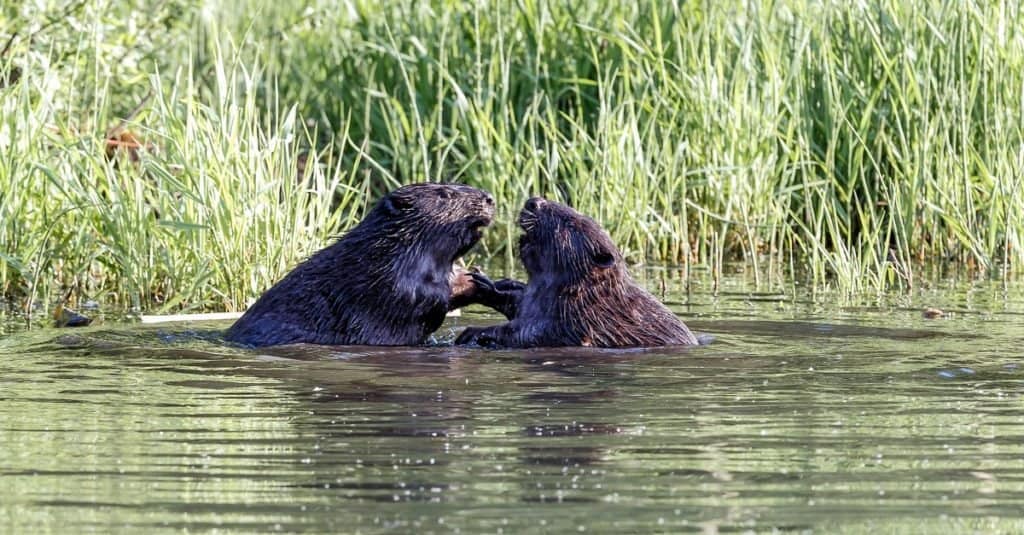
By nature, the beaver is a faithful partner that will form a strong long-term monogamous relationship with a single mate.
©Telly/Shutterstock.com
Population
According to the IUCN Red List, both the Eurasian beaver and the North American beaver are considered to be species of least concern. It is estimated that six to 12 million beavers live in North America and another million in Europe. By the turn of the 20th century, after many years of heavy hunting, the beaver had disappeared from many parts of its former territory. Numbers have improved since hunting ceased, but they are not yet back to their former height.
Beavers in the Zoo
The beaver can be found at the Detroit Zoo, the Oregon Zoo, the Smithsonian’s National Zoo in Washington DC, the Lincoln Park Zoo in Chicago, the Minnesota Zoo, and elsewhere throughout the country.
Beaver Pictures
View all of our Beaver pictures in the gallery.

CHRISTINA RADCLIFFE/Shutterstock.com
How to say Beaver in ...
Sources
- National Geographic / Accessed February 6, 2021
- Animal Diversity Web / Accessed February 6, 2021
- Science Focus / Accessed February 6, 2021