






B
Species Profile

Bedlington Terrier

Canis lupus familiaris

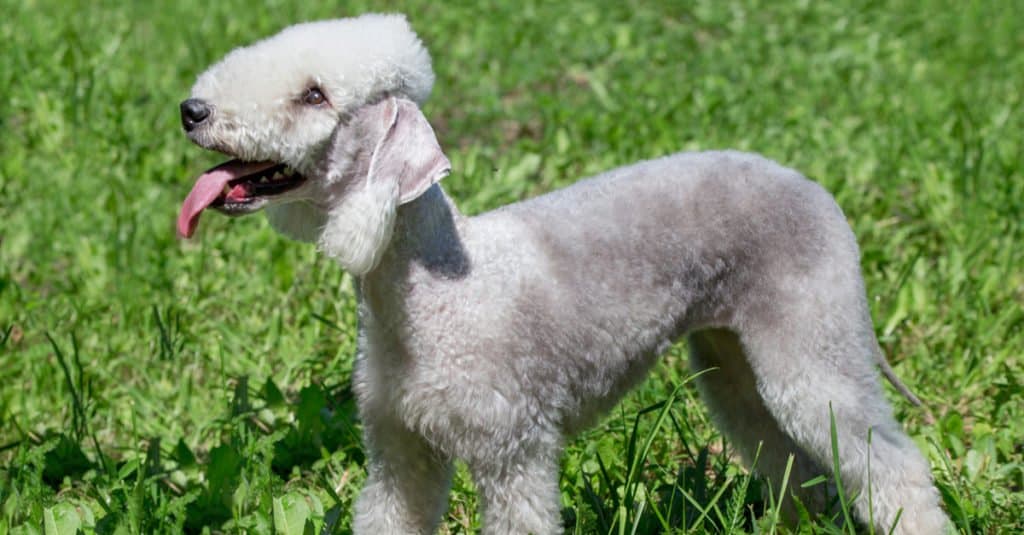
Looks like a lamb, hunts like a terrier
Terhi Kolehmainen/Shutterstock.com

Bedlington Terrier Distribution

Click a location to explore more animals from that region

Origin Location

This map shows the native origin of the Bedlington Terrier. As a domesticated species, they are now found worldwide.

Loading map...

Found in 1 country

Size Comparison

Human 5'8"
Bedlington Terrier 1 ft 4 in

Bedlington Terrier stands at 24% of average human height.

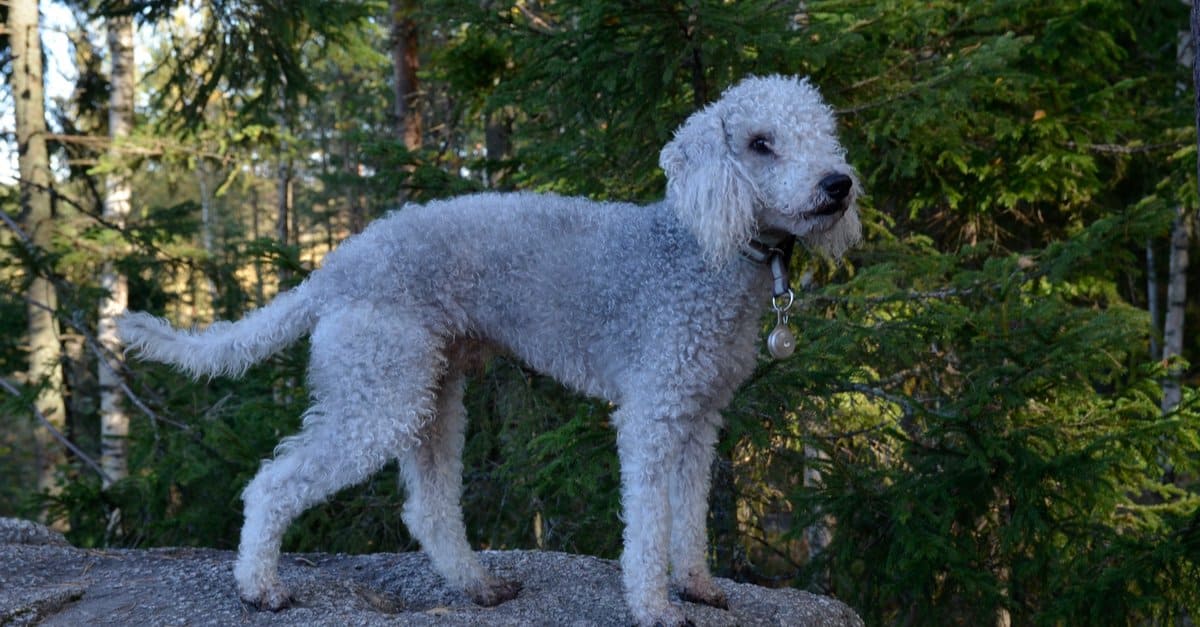
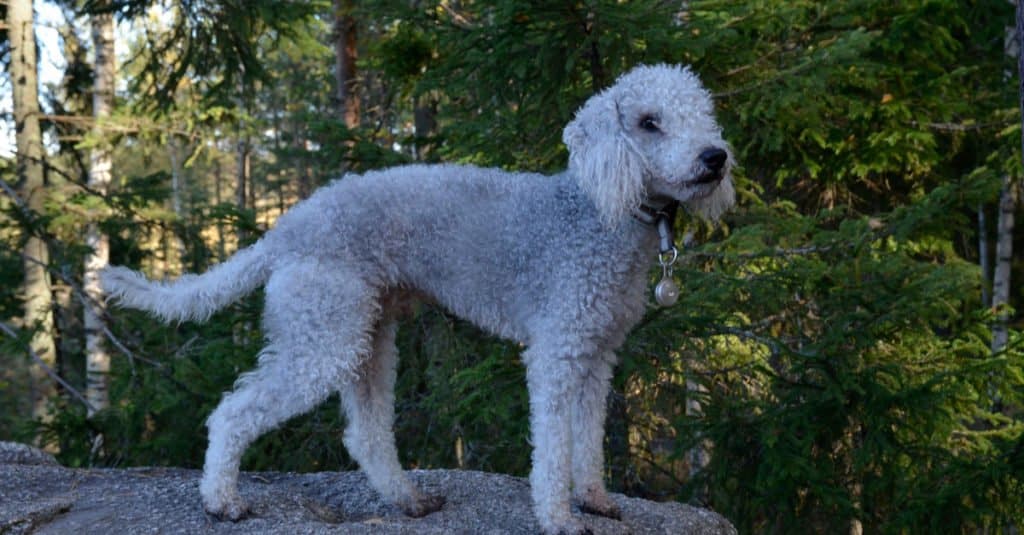
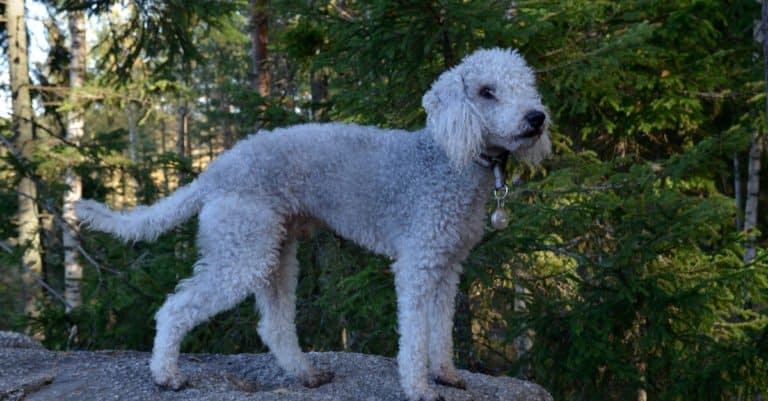
Bedlington Terrier standing on a rock

At a Glance

Domesticated
Also Known As Bedlington, Lamb Dog
Diet Omnivore
Activity Diurnal+
Lifespan 4 years
Weight 11 lbs
Status Not Evaluated
Did You Know?

The breed's signature "lamb" silhouette is largely created by skilled grooming of its naturally crisp, linty coat.

Scientific Classification

The Bedlington Terrier is a small-to-medium terrier breed of domestic dog developed in northern England, historically used for vermin control and later as a companion and show dog. It is known for its distinctive “lamb-like” appearance and agile, energetic temperament.

Kingdom
Animalia
Phylum
Chordata
Class
Mammalia
Order
Carnivora
Family
Canidae
Genus
Canis
Species
Canis lupus

Distinguishing Features

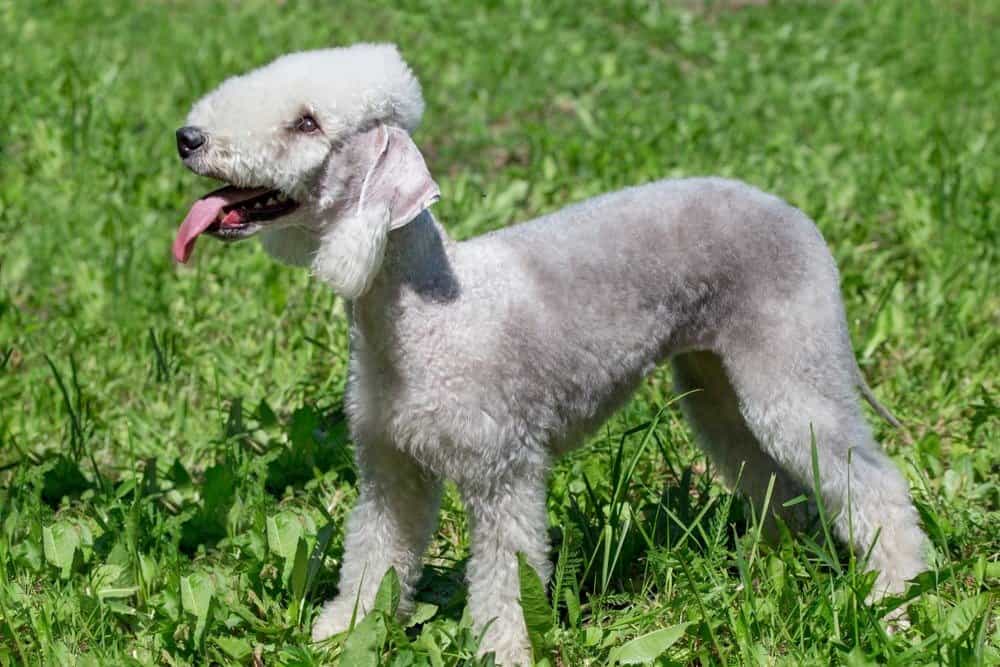
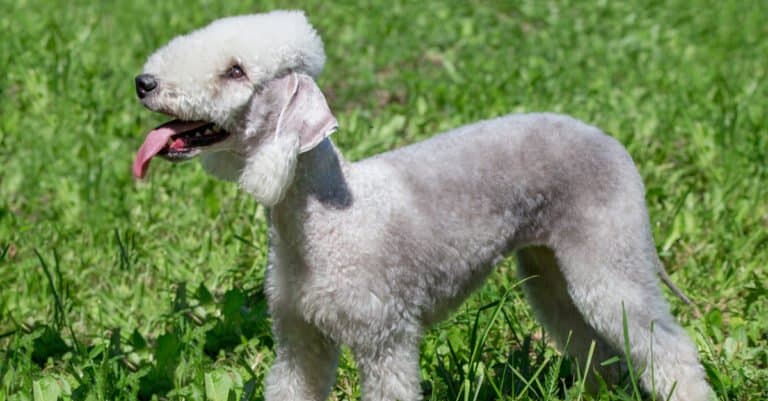
  • Curly, woolly coat often groomed to a lamb-like outline with a distinctive head “topknot”
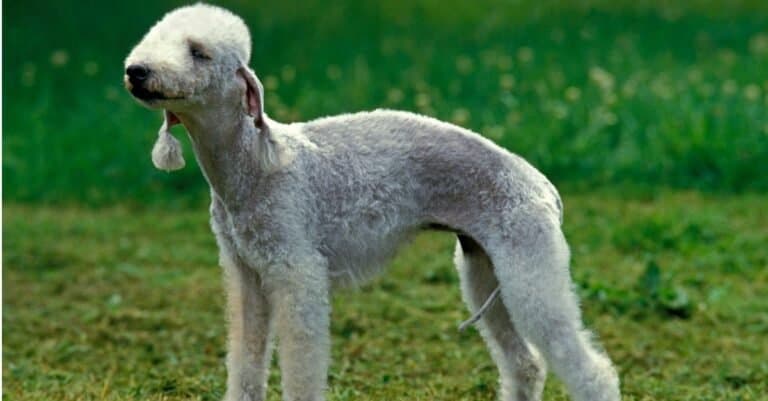
  • Arched back and athletic, racy build compared with many terriers
  • Narrow, pear-shaped head with tassel-like ear tips
  • Typically blue, liver, or sandy coat colors (often with lighter topknot)
  • Originally a working terrier type: alert, fast, and tenacious

Physical Measurements

Males and females differ in size

Height
1 ft 4 in (1 ft 3 in – 1 ft 5 in)
1 ft 3 in (1 ft 2 in – 1 ft 4 in)
Length
2 ft 3 in (2 ft 1 in – 2 ft 6 in)
2 ft 2 in (1 ft 11 in – 2 ft 4 in)
Weight
20 lbs (18 lbs – 23 lbs)
19 lbs (15 lbs – 22 lbs)
Tail Length
9 in (8 in – 10 in)
9 in (8 in – 11 in)
Top Speed
25 mph
Short play sprints

Appearance

Primary Colors
Secondary Colors
Skin Type Domestic dog (Canis lupus familiaris) skin with a distinctive Bedlington coat: a mix of soft and harsh hair forming a crisp, linty, curly texture. Low-shedding but not 'no-maintenance'; prone to matting without regular grooming.
Distinctive Features
  • Domestic dog breed (not a wild species): a selectively bred terrier from Bedlington/Northumberland, England, developed for vermin control and later refined for companion/show roles.
  • Iconic 'lamb-like' outline: pear-shaped/arched (roached) topline, narrow head with a pronounced silky topknot, and a gently tapered muzzle.
  • Curly, crisp, springy coat texture; typically hand-scissored/clipped into a breed-specific silhouette (shorter on body, longer furnishings on legs and head).
  • Long, hare-like feet and a racy, athletic build for speed and agility despite the soft-looking coat.
  • Ears are triangular with rounded tips and distinctive silky tassels.
  • Tail is low-set, thick at the base and tapering to a point, carried in a gentle curve (not curled over the back).
  • Breed-typical temperament (context): energetic, intelligent, often independent; retains terrier prey-drive tendencies despite a gentle expression.
  • Health concern (breed-specific): copper-associated hepatopathy (copper toxicosis) is a known risk; responsible breeding/testing and periodic liver monitoring may be recommended.
  • Other common concerns: patellar luxation, some eye issues (e.g., retinal problems), and skin/coat issues if grooming/skin care is neglected.
  • Care requirement (coat): routine brushing to prevent mats plus regular professional grooming/clipping; coat does not shed heavily but will felt/mat if left unmanaged.
  • Care requirement (activity): needs daily exercise and mental enrichment; can become destructive/barky if under-stimulated.

Sexual Dimorphism

Mild sexual dimorphism typical of domestic dogs: males are generally slightly larger/heavier with more muscle; coat type and grooming silhouette are the same in both sexes.

  • Typically a bit taller and heavier with a broader chest/neck.
  • May appear more muscular through the shoulders and loin, though still 'racy' rather than bulky.
  • Typically slightly smaller and finer-boned.
  • Often a more refined head/neck appearance, but overall outline remains the same with proper grooming.

Did You Know?

The breed's signature "lamb" silhouette is largely created by skilled grooming of its naturally crisp, linty coat.

Originated around Bedlington, Northumberland (northern England) and was prized for dispatching rats and other vermin.

Early Bedlingtons were used in poaching-era countryside work and could run with sighthounds, reflecting their speed and stamina.

Despite the soft look, it's a true terrier: bold, energetic, and often game to chase small animals.

The coat is low-shedding for many households, but it can mat easily and needs consistent grooming.

A famous Bedlington named Piper reportedly followed British troops into battle and became a celebrated regimental mascot story.

The breed is closely associated with "working terrier" roots yet is now most commonly a companion and show dog.

Unique Adaptations

  • Distinctive coat type: a crisp, curly, "linty" texture that can be more allergy-friendly for some people; it requires regular brushing and professional trimming to maintain the hallmark topknot and arched outline.
  • Built for speed among terriers: long-legged, flexible, and athletic-often described as having a touch of sighthound-like agility compared with many stockier terrier breeds.
  • Efficient vermin-hunter traits: tenacity, quick reflexes, and willingness to enter tight spaces-behavioral adaptations shaped by selection for pest control in northern England.
  • Heat/cold considerations: the coat insulates but isn't a heavy double coat; many need weather-appropriate management (shade in heat, jackets in cold/wet).

Interesting Behaviors

  • High prey drive behaviors: quick "lock-on" focus, sudden sprints, and persistent digging typical of terriers (a contrast to the broader, more generalist behavior of the domestic dog species).
  • Play style often mixes terrier pounce-and-shake games with surprising speed and springiness-many Bedlingtons love lure-style chasing.
  • Alert watchdog tendencies: they notice changes and may vocalize, yet many are friendly once introduced.
  • Independent problem-solving: will test boundaries, invent games, and may ignore cues if under-stimulated-best managed with short, varied training sessions.
  • Strong scent-and-search interest: enjoys nosework, finding hidden treats, and exploring hedges/edges on walks.
  • Some individuals show "selective sociability" with unfamiliar dogs; early socialization helps prevent pushy terrier manners.

Cultural Significance

Bedlington Terrier (Canis lupus familiaris) is a symbol of northern England's working-dog past (especially Northumberland), once used for catching rats and mice. Later a show-ring star known for its sculpted look, now a lively family and performance dog.

Myths & Legends

In Northumberland and nearby border country, Bedlington Terrier (Canis lupus familiaris) long had "poacher's dog" stories: small, quiet working terriers that slipped through hedges, chased out rabbits, and kept farms free of rats quietly.

A frequently repeated early-name tale links the breed to the "Rothbury Terrier," said to come from the Rothbury area before "Bedlington" became the established name-an origin story often told in local breed histories.

Regimental-mascot anecdotes tell of a Bedlington named Piper, celebrated in stories of courage alongside British soldiers; the tale helped cement the breed's reputation for fearless devotion despite its gentle appearance.

Old sporting stories describe Bedlingtons astonishing onlookers by "looking like a lamb" yet outworking larger, rougher dogs in ratting pits and coursing fields-an oft-retold contrast that became part of the breed's legend.

Conservation Status

NE Not Evaluated

Has not yet been evaluated against the criteria.

Population Stable

Life Cycle

Birth 4 pups
Lifespan 4 years

Lifespan

In the Wild
2–8 years
In Captivity
11–16 years

Reproduction

Mating System Polygynandry
Social Structure Managed Domestic
Breeding Pattern Transient
Fertilization Managed Selective
Birth Type Managed_selective

Bedlington Terrier (Canis lupus familiaris): Humans control mating. Breeding is planned and timed to the female’s heat. No lasting pair bond; males may sire many litters, and assisted breeding methods are sometimes used.

Behavior & Ecology

Social Pack Group: 4
Activity Diurnal, Crepuscular, Cathemeral
Diet Omnivore High-quality animal protein (e.g., chicken or turkey), offered in a complete, balanced dog diet; avoid frequent liver/organ-meat treats due to copper content.

Temperament

Breed distinction vs base species (gray wolf): markedly reduced fear/aggression toward humans through domestication; Bedlington is additionally selected for companionability and vermin-chasing, yielding a people-oriented but prey-driven small-to-medium terrier.
Affectionate, loyal, and often strongly bonded to household members; can be cuddly at home while still energetic outdoors.
Alert watchdog tendency: quick to notice novel sounds/movement; may bark at door/yard stimuli unless trained.
Terrier-style boldness and persistence; may be independent-minded-responds best to consistent, reward-based training and structured routines.
Prey drive/chasiness: may pursue squirrels/cats/fast-moving small animals; requires reliable recall training, leash management, and secure fencing.
Dog sociability varies: many play well, but some show dog-selectivity (especially with unfamiliar dogs). Early, positive socialization and continued supervised exposure improve outcomes.
Exercise/care requirement: needs daily aerobic outlets (brisk walks plus short sprints, lure/toy chase, agility-type play) and mental work (scent games, training) to prevent boredom behaviors.
Grooming/care requirement: distinctive curly coat needs regular brushing to prevent mats and routine clipping/hand-scissoring; ears and paws can collect debris-check/clean as needed.
Bedlington Terriers have a risk of copper-associated hepatopathy (copper toxicosis); line screening, proper diet, and vet checks help. Also watch for retinal problems, cataracts, and patellar luxation.
Handling style: typically sensitive to harsh corrections; thrives with calm guidance, enrichment, and predictable boundaries.

Communication

Sharp alert bark Stranger/door/novel sounds
Play barks during chase games
Growl/grumble as a distance-increasing warning if uncomfortable
Whine/whimper for attention, anticipation, or mild stress
Occasional howl-like vocalization Less common than in northern breeds
Terrier-style intense staring/pointing and stalking posture before chasing Prey-oriented signaling
Bouncy play bows, quick darts, and chase invitations; may escalate to fast, athletic pursuit play
Body stiffness/freezing as a precursor to reaction around triggers Important early cue
Tail carriage and wag speed changes to signal arousal vs friendliness; ears and facial tension used heavily in close-range signaling
Muzzle licking, head turns, and avoidance as calming signals during handling or social pressure
Scent investigation and occasional urine marking; less territory-driven than wolves but still uses olfactory cues
Pawing/nudging and leaning against people to seek contact/attention High human-directed communication

Habitat

Biomes:
Temperate Forest Temperate Grassland Mediterranean Boreal Forest (Taiga) Tundra Alpine Desert Hot Desert Cold Tropical Rainforest Tropical Dry Forest Savanna Wetland Freshwater Marine +8
Terrain:
Plains Hilly Valley Coastal Island
Elevation: Up to 16404 ft 3 in

Ecological Role

Human-associated mesopredator/companion animal; historically a small-game/rodent control terrier rather than a wild apex predator.

Rodent and vermin suppression in human environments (historical working role) Companionship and social support to humans Guard/alert function (barking/sentinel behavior) Potential ecological impact awareness: may prey on local wildlife if unsupervised; responsible containment reduces pressure on native species

Diet Details

Main Prey:
Other Foods:
Cooked grains and starches Vegetables Fruit Dietary fiber sources

Human Interaction

Domestication Status

Domesticated

Domestic dogs (Canis lupus familiaris) come from the gray wolf (Canis lupus) after long human breeding for work and companionship. The Bedlington Terrier was bred in northern England for rat and small-game work, later for show and pets. It has a lamb-like head, curly low-shed coat, strong chase instinct, and copper-linked liver disease risk.

Danger Level

Low
  • Bites or nips can occur if startled, in pain, poorly socialized, or during resource guarding-risk comparable to other small-to-medium terriers.
  • High prey drive may lead to chasing behavior; human injury risk is usually indirect (falls/leash accidents) rather than predatory aggression toward people.
  • Terrier tenacity can escalate dog-dog conflict if unmanaged; humans can be injured when intervening in fights.
  • Poorly maintained coat/ears/skin can contribute to discomfort and irritability, increasing reactivity risk.

As a Pet

Suitable as Pet

Legality: Bedlington Terrier (Canis lupus familiaris) is usually legal where pet dogs are allowed. Owners must follow local rules (licenses, leashes, shots, sometimes breeder/kennel rules). Breed bans rarely include it, but laws vary.

Care Level: Moderate

Purchase Cost: $1,200 - $3,500
Lifetime Cost: $20,000 - $50,000

Economic Value

Uses:
Companion animal ownership Selective breeding and kennel operations Dog shows and conformation Grooming services (breed-specific clipping) Training services (manners, recall, sport work) Veterinary care and genetic testing Pet products and insurance
Products:
  • puppies from health-tested lines
  • stud services and breeding rights
  • breed-specific grooming (clip/coat maintenance packages)
  • conformation entries and handling
  • training classes (obedience, agility, scentwork)
  • genetic screening/testing services (e.g., copper toxicosis-related testing where offered)
  • pet insurance policies and wellness plans

Relationships

Quick Take

  • This breed started as a coal mine hunter and pit fighter, but somehow became one of the gentlest family dogs around. The transformation is wilder than you'd expect. See the gentle temperament →
  • Bedlington Terriers carry a genetic health risk that doesn't show up until a very specific window of their life. Missing that window can be fatal. Learn about Copper Toxicosis →
  • Their coat looks low-maintenance, but there's a hidden grooming demand most first-time owners completely underestimate. Explore the grooming demands →
  • A Whippet helped shape this breed's DNA, and that ancestry explains a behavioral quirk that could make off-leash time a serious mistake. Understand the prey drive risk →

Bedlington Terriers are compact, yet energetic little dogs. Originating from Bedlington, England, they were originally used in hunting rats, mice, and other small animals in coal mines, factories, and other similar environments. The earliest reference to the Bedlington Terrier is in 1825, when a terrier named Piper was bred and used to hunt badgers. Piper was so tenacious that local workmen became fond of the breed and began using these dogs for pit fighting. Although they were used in pit fighting, their sweet and lovable temperaments soon led them to become beloved family companions.

An infographic titled Bedlington Terriers: The Lamb-Like Lion-Heart, featuring sections on origin, key facts, health issues, and care maintenance with icons and text.
Don’t let those gentle curls fool you—this breed was forged in the gritty coal mines of England. Discover why the Bedlington Terrier is the ultimate hypoallergenic warrior for modern families. © A-Z Animals

3 Pros and Cons of Owning a Bedlington Terrier

ProsCons
Their small size makes them versatile: Since Bedlington Terriers are typically between 17 and 23 pounds, they are able to thrive in a number of different living situations.Their coats require a lot of grooming: While their coats virtually don’t shed, they do grow quickly. Most Bedlington Terriers need to be professionally clipped once every two months. In addition to this, their coat needs to be brushed or combed at least twice a week.
Hypoallergenic and low shedding: Bedlington Terriers don’t shed that much. This makes them the ideal dog for owners who don’t want to deal with dog hair or who have allergies.They can be loud: Like many terriers, they can bark a lot. This means they may not be ideal living companions in an apartment.
Playful, yet generally calmer than other terriers: With a Bedlington Terrier, you get the same lovable personality traits that are inherent in other types of terriers, but with a less rowdy energy level.They are stubborn: While Bedlington Terriers are smart and eager to please, they do tend to have that stubborn terrier streak. This can make it somewhat difficult to train them.

Bedlington Terriers are hypoallergenic pets and great for those with allergies.

Appearance and Disposition

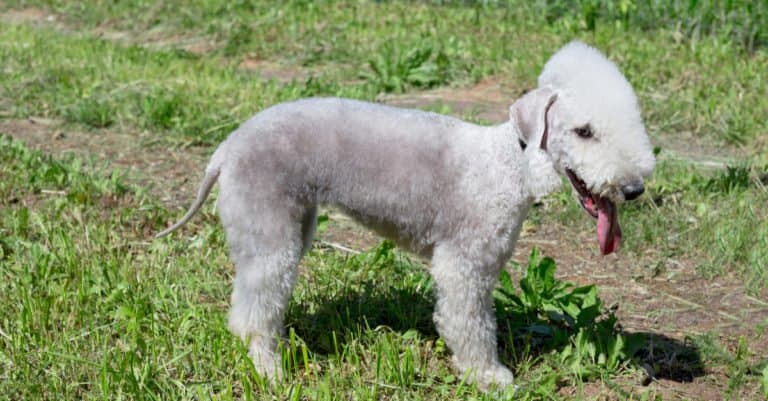
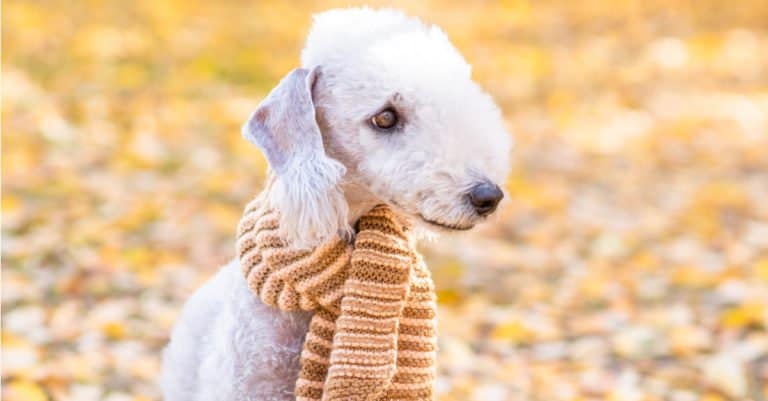
Their hypoallergenic curly coats are reminiscent of sheep’s wool, while their compact, uniquely shaped heads make them distinctive in appearance. Since their designation as a breed, these plucky little terriers have been used in racing, hunting, and other dog sports. This highly intelligent, active, athletic, loving, non-shedding dog is an excellent choice for families with an active lifestyle.
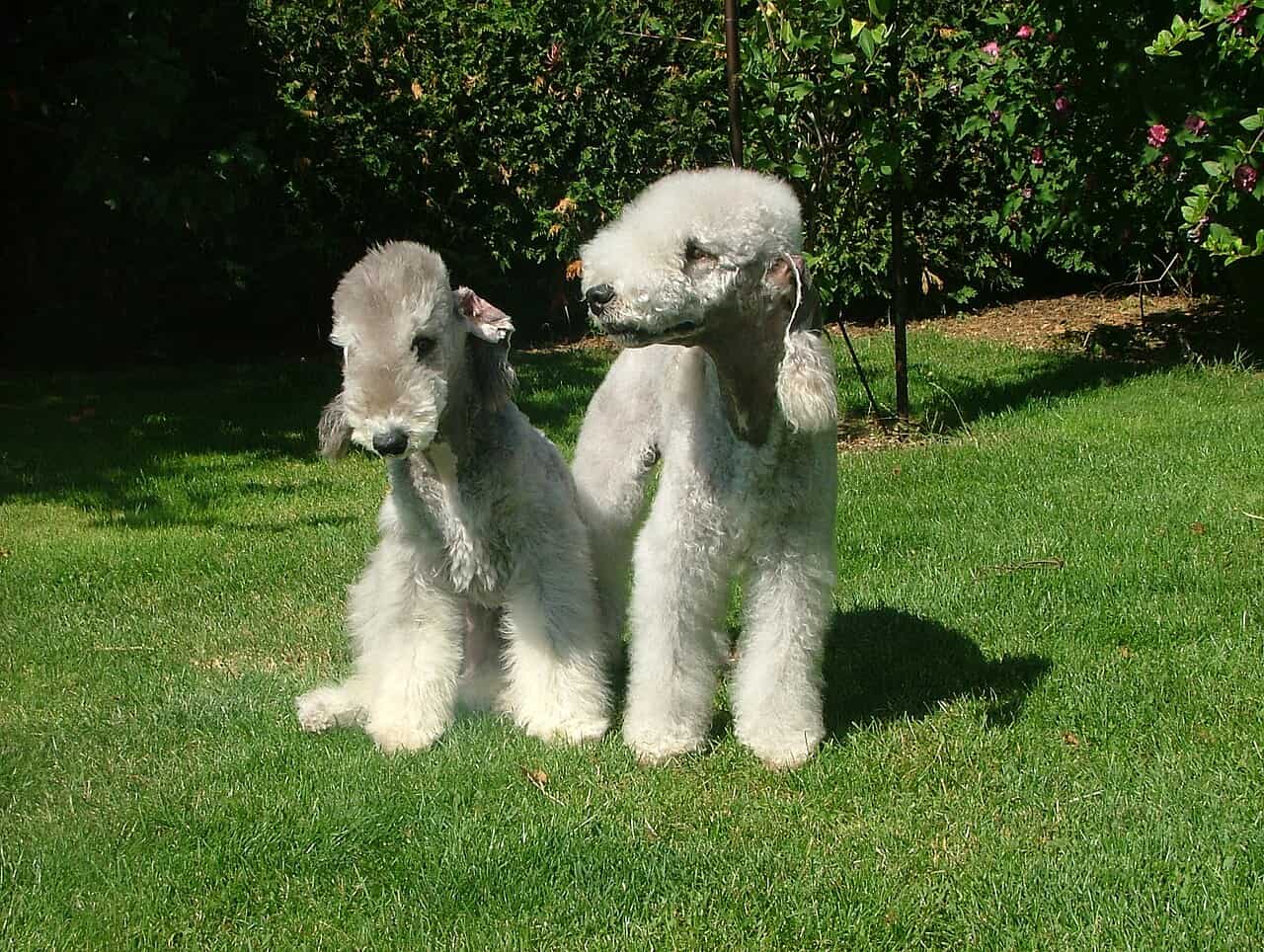
Bedlington Terriers are calmer and better with children than other terriers.

Size and Weight

The Bedlington Terrier is a small, short-haired dog with an average height of 16 to 18 inches for males and 15 to 17 inches for females. Both males and females tend to weigh between 17 and 23 pounds when fully grown. Bedlington Terrier puppies usually weigh around three pounds at the age of two months. Puppies generally reach their adult weight and size at nine months of age.

Common Health Issues

Like every dog breed, Bedlington Terriers have a few health issues that tend to be common within the breed. Many breeders have their breeding stock tested for these conditions. These problems include:

  • Copper Toxicosis
  • Progressive Retinal Atrophy (PRA)
  • Exocrine Pancreatic Insufficiency
  • Hyperadrenocorticism (Cushing’s)

Copper Toxicosis is a genetic disorder (although it can also develop non-genetically) that causes copper to accumulate within the liver and bloodstream. This can lead to the dog experiencing liver failure. This potentially fatal disease usually appears between the ages of two and four.

Bedlington Terriers are also more prone to developing a variety of eye conditions. Among these is Progressive Retinal Atrophy (PRA). This is an inherited condition that leads to blindness. While there is no cure for this condition, it isn’t painful. This means your dog may develop night blindness between three and five years of age and will eventually become fully blind.

Exocrine Pancreatic Insufficiency is a disorder that causes the dog’s pancreas to develop too few of the digestive enzymes that are used to digest food and absorb nutrients. This leads to the dog losing weight, having skin problems, and having frequent bouts of diarrhea. It is easily treated with dietary supplements.

Hyperadrenocorticism (also called Cushing’s) is a condition that is more likely to be found in Bedlington Terriers than in other dogs. It causes the adrenal glands to malfunction and produce too many steroid hormones. This condition can be treated with medications.

Bedlington Terriers are both plucky and gentle.

Temperament

Bedlington Terriers are intelligent, plucky little dogs who are also gentle and mild in behavior. While they enjoy getting lots of exercise, they also enjoy hanging out on the couch with their owners. Their gentle personality and active nature make them a good choice for active families who want the best of both worlds when it comes to their dog’s personality. Originally bred in Bedlington, England, in the 1800s, the Bedlington Terrier was used for hunting vermin. It was also used for dog racing and other dog sports.

The Bedlington Terrier is part of the Terrier Group. As such, Bedlington Terriers tend to have the same spunky and independent personality traits as other terriers. While they enjoy being active and are very athletic dogs, their behavior is usually calmer than that of other terriers included in this group.

How to Take Care of a Bedlington Terrier

Potential pet owners searching for how to care for a new dog, especially Bedlington Terrier puppies, will need to consider a variety of factors. Taking care of a Bedlington Terrier, whether a puppy or a rescue, requires consideration of grooming requirements, potential health issues, the dog’s size, a family’s lifestyle, the dog’s temperament, and many other needs.
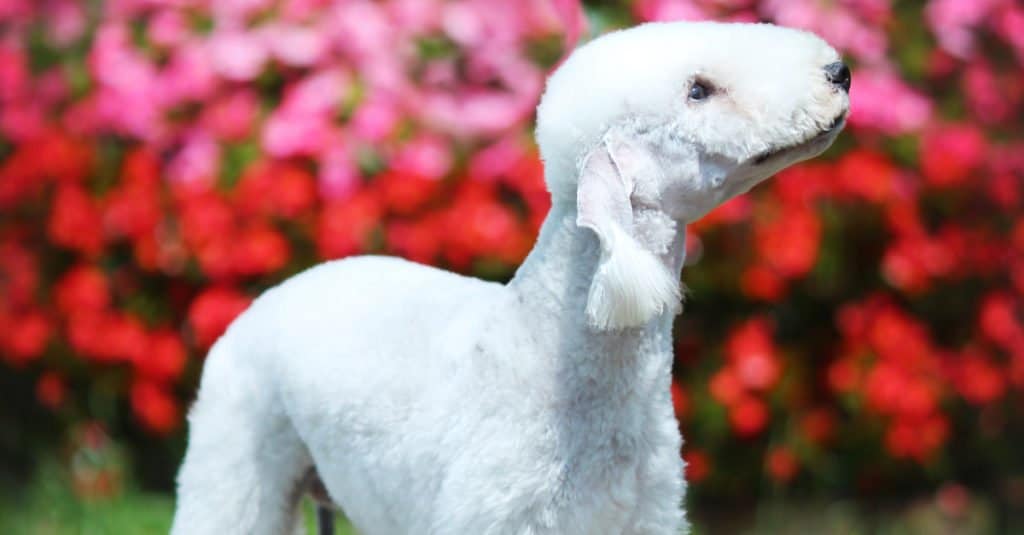
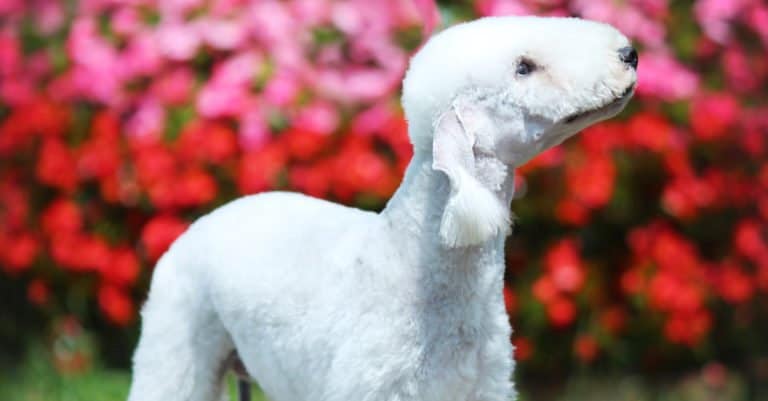
Bedlington Terrier with flowers in the background

Bedlington Terriers rarely shed, but their fur grows fast and needs trimming often.

The Best Dog Food

Just like all dog breeds, Bedlington Terriers have individual dietary needs. Smaller dog breeds need different diets than large dogs do. Energetic breeds also have special needs. To ensure that your Bedlington Terrier lives a healthy life, it needs to have a balanced diet. One way to be sure that this happens is to feed high-quality dog food. Dry dog food is considered to be appropriate for puppies and adult dogs.

Because the breed experiences such a unique set of potential health conditions, discuss your dog’s diet with your vet at regular appointments.

Diet for Bedlington Terrier Puppies: Bedlington Terrier puppies need to be fed four meals a day at first. As the puppy grows older, it will be able to eat just three times a day. The dog food you choose should be specifically formulated for puppies, with plenty of calcium and phosphorus.

Diet for Adult Bedlington Terriers: Adult Bedlington Terriers should be fed just twice a day. If your dog is active and enjoys frequent vigorous exercise, their portions at meals will be larger than if the dog is inactive. Supplements such as glucosamine, omega-3 fatty acids, probiotics, antioxidants, and digestive enzymes can also be fed to your dog.

Maintenance and Grooming

While this breed doesn’t shed a lot, Bedlington Terriers have extensive grooming needs. They will need their hair professionally clipped (or you can purchase the tools and learn to do it yourself). In addition to this, they need to be brushed or combed at least twice a week. If you choose to learn how to clip your dog’s hair on your own, you will need to purchase electric clippers and scissors. You will also need to trim your dog’s nails regularly.

Nutrition

The Bedlington Terrier does well on any high-quality dog food, whether commercially manufactured or home-prepared. Any diet should, however, be appropriate to the age of the dog, such as a puppy, adult, or senior. Some dogs are naturally prone to being overweight, so it’s important to monitor their calorie consumption and weight. Treats are important to aid in training, but giving too many can cause health problems. Check with your vet for any additional information.
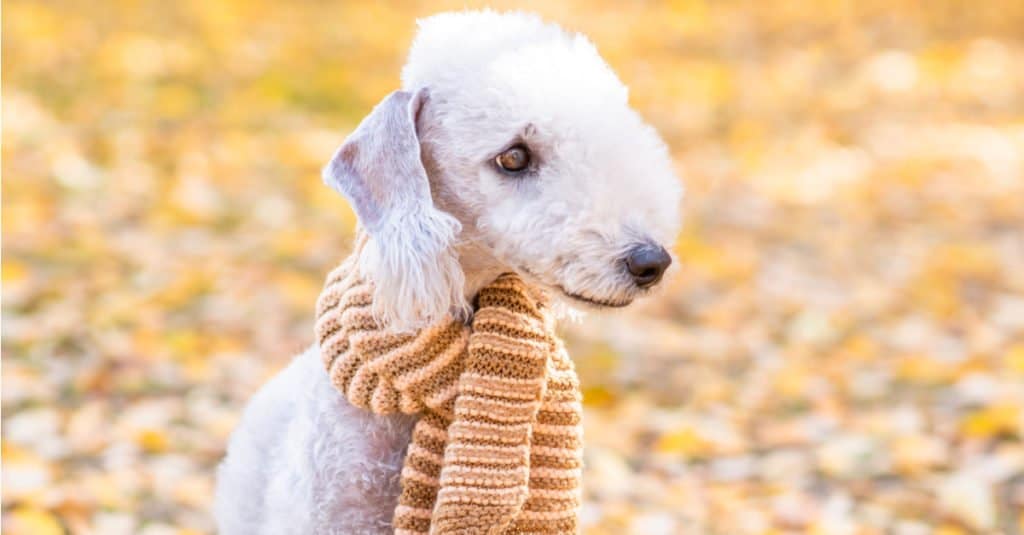
Bedlington Terrier

Bedlington Terriers are highly intelligent and relatively easy to train.

Training

Bedlington Terriers are relatively easy to train. They are eager to please and highly intelligent. However, they do tend to get bored easily, so you will need to work at keeping their attention. They can also be somewhat stubborn.

Exercise

Bedlington Terriers are small in size, so they can do well in apartments or smaller living spaces as long as they are given an adequate amount of exercise. These dogs can be pretty energetic, meaning you will need to take them for long walks or runs on a regular basis. Games of fetch are also an excellent way to help the Bedlington Terrier get plenty of exercise. You should always keep your Bedlington Terrier in a fenced-in yard or on a leash while in open spaces. This is because they were bred to hunt small animals and will typically chase one as soon as they spot it.

Bedlington Terrier Puppies

Since Bedlington Terrier puppies are small dogs, you will need to be sure that you are feeding them at least four times a day when they first come home. You will gradually reduce this to three and then two times a day. Other than that, you will need to work on house training, socialization, and basic obedience training for your Bedlington Terrier puppy. Once your puppy is old enough and has gone through obedience training, you may want to get it involved in dog sports such as racing or agility.
Bedlington Terrier Puppy

Bedlington Terrier puppies are great with children. They are playful and friendly.

Bedlington Terriers and Children

The gentle demeanor of the Bedlington Terrier makes it an ideal family dog for households with children who are gentle and respectful toward the dog and its space. Families with small children may want to wait on getting a Bedlington Terrier until the children are older.

Dogs Similar to Bedlington Terriers

Dogs that are similar to the Bedlington Terrier breed are the Norfolk Terrier, the Airedale Terrier, and the Whippet.

  • Norfolk Terrier: Norfolk Terriers are small, plucky, playful, and intelligent. If you’re looking for a watchdog with a lot of energy that can be great with kids, the Norfolk Terrier could be a good choice for you.
  • Airedale Terrier: If you’d like a larger version of a terrier breed that is also hypoallergenic, the Airedale Terrier could be right for you. Airedale Terriers are great with kids and rarely shed.
  • Whippet: While not a terrier, the Whippet is believed to have been used to develop the Bedlington Terrier breed. Much like Bedlington Terriers, Whippets are relatively laid back and affectionate, and enjoy lots of exercise.

Famous Bedlington Terriers

Actor Boris Karloff owned and raised Bedlington Terriers when he wasn’t working on his films. Additionally, Mr. and Mrs. William A. Rockefeller owned a Bedlington Terrier, Ch. Rock Ridge Night Rocket, who won Best in Show at Westminster in 1948.

View all 453 animals that start with B

Sources

  1. AKC / Accessed February 12, 2021
  2. Bedlington America / Accessed February 12, 2021
  3. UKC Dogs / Accessed February 12, 2021
  4. Chewy / Accessed February 12, 2021
  5. Dogtime / Accessed February 12, 2021
  6. Your Pure Bred Puppy / Accessed February 12, 2021
  7. Small Dog Place / Accessed February 12, 2021
  8. Hypoallergenic Dog / Accessed February 12, 2021
Lisha Pace

About the Author

Lisha Pace

After a career of working to provide opportunities for local communities to experience and create art, I am enjoying having time to write about two of my favorite things - nature and animals. Half of my life is spent outdoors, usually with my husband and sweet little fourteen year old dog. We love to take walks by the lake and take photos of the animals we meet including: otters, ospreys, Canadian geese, ducks and nesting bald eagles. I also enjoy reading, discovering books to add to my library, collecting and playing vinyl, and listening to my son's music.

Thank you for reading! Have some feedback for us?


Bedlington Terrier FAQs (Frequently Asked Questions)

The price of a Bedlington Terrier will depend on the breeder or rescue that you purchase or adopt your puppy or adult dog from. The average purchase price from a breeder is $1500. However, the price can be as high as $2300. Breeders selling show dog quality puppies will charge more than breeders with pet quality puppies. The potential price of veterinary care for a Bedlington Terrier averages $3700. You will also need to factor in the cost of food, training, grooming, and dog boarding.