


B
Species Profile

Beetle

Coleoptera

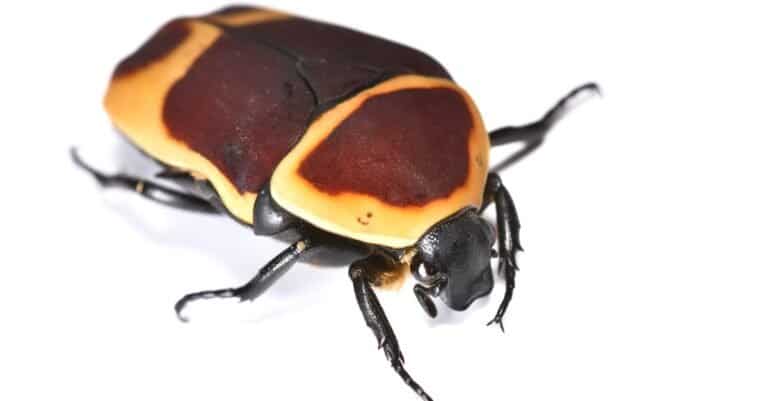
Elytra on, world conquered.
Mark Brandon/Shutterstock.com

Beetle Distribution

Click a location to explore more animals from that region

Loading map...
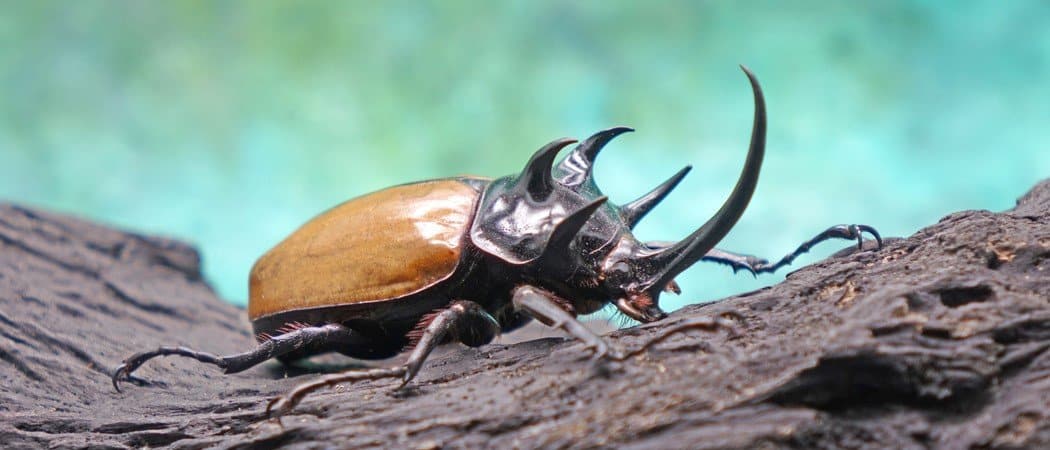
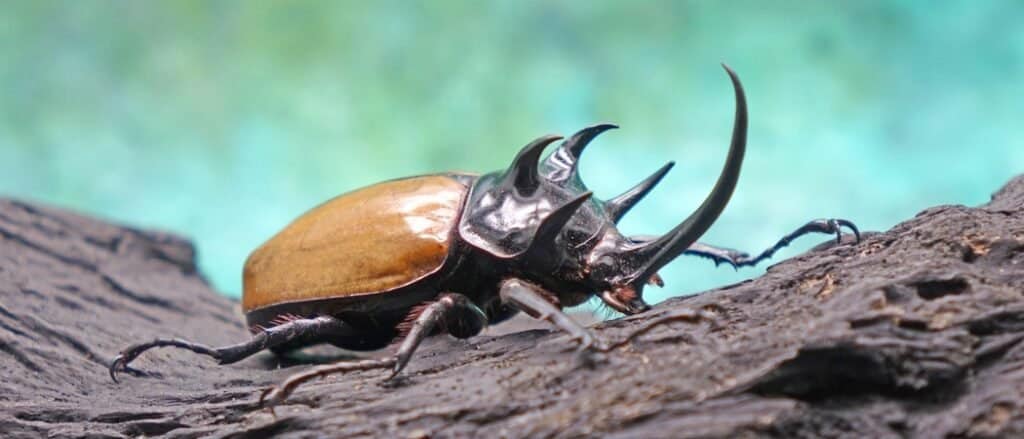
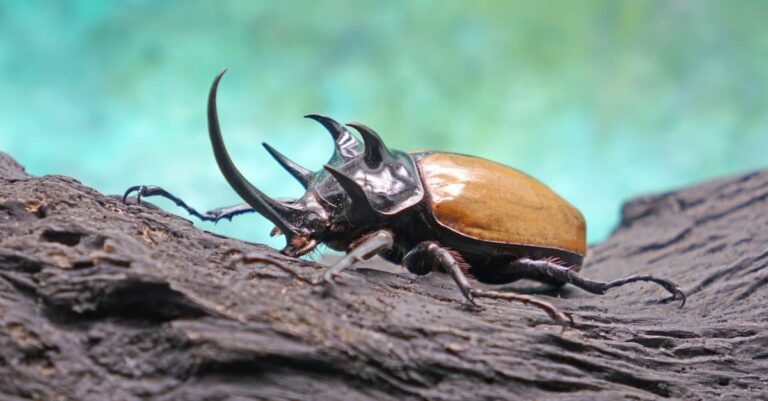
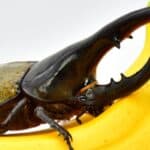
The Five-horned rhinoceros beetle

At a Glance

Order Overview This page covers the Beetle order as a group. Stats below are general traits shared across the order.
Diet Omnivore
Activity Diurnal+
Lifespan 1 years
Weight 0.1 lbs
Status Not Evaluated
Did You Know?

Coleoptera is the most species-rich animal order: ~400,000 described species, with many more likely undescribed.

Scientific Classification

Order Overview "Beetle" is not a single species but represents an entire order containing multiple species.

Beetles are insects of the order Coleoptera, characterized by hardened forewings (elytra) that cover and protect the hindwings and abdomen. They are the most species-rich order of animals, occupying nearly all terrestrial and many freshwater habitats.

Kingdom
Animalia
Phylum
Arthropoda
Class
Insecta
Order
Coleoptera

Distinguishing Features

  • Forewings modified into hardened elytra that meet along a straight midline on the back
  • Chewing mouthparts; diverse diets (herbivory, predation, scavenging, fungivory, wood-boring)
  • Complete metamorphosis (egg → larva → pupa → adult)
  • Enormous diversity in size and form; many species have horned or enlarged mandibles (sexual dimorphism in some groups)

Physical Measurements

Males and females differ in size

Height
0 in (0 in – 2 in)
Length
0 in (0 in – 7 in)
1 in (0 in – 7 in)
Weight
0 lbs (0 lbs – 0 lbs)
Top Speed
6 mph
Top ~9 km/h (tiger beetles)
Poisonous

Appearance

Skin Type Hard chitinous exoskeleton with the typical beetle body: hardened forewings (elytra) meet at a midline, protecting folded hindwings and abdomen. Surfaces can be smooth, grooved, punctured, tuberculate, hairy, or scale-covered; elytra may be fused, causing flightlessness.
Distinctive Features
  • Adults range from 0.3–0.5 mm in tiny featherwing beetles (Ptiliidae) to 150–170+ mm in giant longhorns (Cerambycidae, e.g., Titanus giganteus) and big rhinoceros beetles (Scarabaeidae). Body mass and shape vary from dust-like to heavy.
  • Beetle lifespans vary: many species grow from egg to adult in weeks or months, while some larvae (especially wood-borers and soil-dwellers) take 1–3 or more years. Adults live days to months; some live about a year.
  • Complete metamorphosis: egg → larva → pupa → adult. Larvae vary: C-shaped scarab grubs; wireworms (click beetles); flattened predatory larvae (ground beetles); aquatic larvae; wood-boring larvae with strong jaws in longhorns and many weevils.
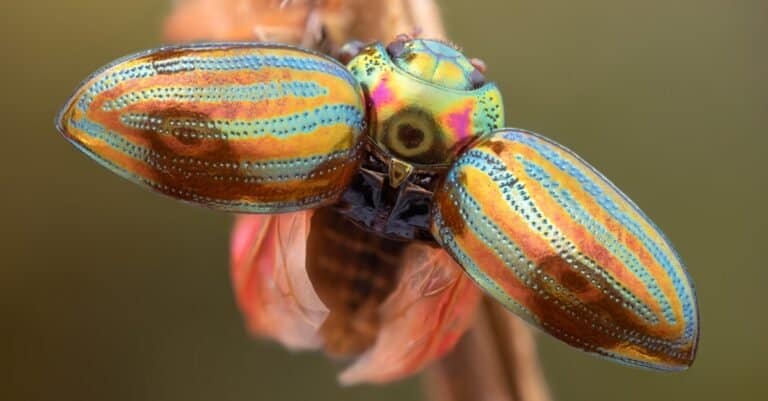
  • Elytra are hard wing covers that protect the body and reduce water loss; they often open in flight to let out hindwings. Some are short or fused, causing flightlessness in ground-dwelling, island, or alpine species.
  • Antennae can be threadlike, clubbed (scarabs), elbowed (weevils), or very long (longhorn beetles). Beetles have chewing mouthparts and often strong mandibles for eating prey, wood, or fighting (stag beetles).
  • Major body-plan diversity across lineages: streamlined runners (ground beetles, tiger beetles), compact domed forms (many lady beetles), robust dung/flower scarabs, rostrate forms with snouts (weevils), elongated long-antenna forms (longhorns), and many cryptic bark/soil specialists.
  • Beetles live in nearly all land and many freshwater habitats. They are predators (ground, tiger beetles), decomposers (dung, carrion), plant or fungus feeders, and some pollinate; many are nocturnal.
  • Habitat breadth: from deserts and dunes (often pale/tan, sand-adapted runners) to forests (wood- and bark-associated borers), grasslands and agricultural systems (many herbivores/pests), and freshwater margins or submerged environments (aquatic beetle families).
  • Beetles often have hard armor (elytra), chemical sprays, warning colors, mimicry, thanatosis (playing dead), stridulation, strong grip, and sometimes bioluminescence in some families, but not all species.
  • Human relevance: includes major beneficial predators (biocontrol), important decomposers, and significant pests (stored-product beetles; wood-boring and crop-feeding species), reflecting the order's exceptional ecological and functional diversity.

Sexual Dimorphism

Sex differences in Coleoptera are common but vary a lot: many beetles look alike, while others show strong differences—especially where males fight or use antennae/rostra for mating. Horned scarabs, stag beetles, some weevils and longhorns often differ.

  • Enlarged horns or head/pronotal projections in many scarabs (used in combat); size can be condition-dependent.
  • Enlarged mandibles in many stag beetles and some other taxa; often used in male-male competition.
  • Longer or more elaborate antennae in some groups (including some longhorn beetles) for locating mates.
  • Modified forelegs or tarsi (e.g., broadened pads or increased adhesion) in some families for grasping females during mating.
  • More vivid metallic sheen or higher-contrast patterning in some species, though color dimorphism is not consistent across the order.
  • Often larger abdomen or overall body size in some species, associated with egg production; not universal.
  • More robust ovipositor/abdominal tip adaptations in taxa that insert eggs into soil, wood, or plant tissues (external visibility varies).
  • In some horned/mandibulate lineages, females may have reduced or absent horns/mandible enlargement relative to males.
  • In some weevils and related groups, females may have a longer or differently proportioned rostrum for oviposition into plant tissues.

Did You Know?

Coleoptera is the most species-rich animal order: ~400,000 described species, with many more likely undescribed.

Size spans extremes: tiniest featherwing beetles (Ptiliidae) ~0.3-0.5 mm long; giants like the titan beetle (Titanus) reach ~16-17 cm.

Beetles succeed largely thanks to elytra-armor-like forewings that protect the body and folded hindwings, letting many species squeeze into soil, leaf litter, bark, and crevices.

They occupy nearly every terrestrial habitat and many freshwater ones-everything from deserts and dunes to mountain forests, caves, and ponds.

Life cycles vary widely: some species complete egg-to-adult in ~1-2 months, while wood- or root-feeding larvae in some lineages can develop for several years (sometimes 5-10+ years) before pupating.

Larvae can look nothing like adults: "grubs," "wireworms," and predatory larvae all belong to beetles, reflecting many independent ecological strategies.

Not all beetles are plant-eaters-major groups include predators (ground beetles, lady beetles), decomposers (many scarabs), wood-borers (some longhorns), pollinators (various flower-visiting beetles), and aquatic hunters (diving beetles).

Unique Adaptations

  • Elytra (hardened forewings): a defining Coleoptera trait-protects hindwings and abdomen, reduces water loss, and supports life in abrasive microhabitats (soil, wood, litter).
  • Complete metamorphosis: egg → larva → pupa → adult allows larvae and adults to specialize on different foods/habitats, reducing competition within a species (patterns vary widely).
  • Extraordinary mouthpart and head specializations: weevil snouts (rostra) for drilling/oviposition, powerful mandibles in predatory or wood-chewing groups, and pollen/nectar-feeding modifications in flower visitors.
  • Structural weaponry and display: horns, enlarged mandibles, and armored body forms appear repeatedly (e.g., rhinoceros and stag beetles) for combat or mating competition.
  • Defense beyond armor: chemicals, reflex bleeding in some groups, startle colors, and mimicry (including wasp/bee mimicry in some longhorns) are widespread.
  • Bioluminescence (in some lineages): light production used for mate signaling and warning displays (best known in Lampyridae and a few relatives), while most beetles are non-luminous.
  • Micro-scale engineering: some tiny beetles have fringed wings and body forms adapted to moving through boundary-layer air and tight spaces, enabling life in leaf litter and fungi.

Interesting Behaviors

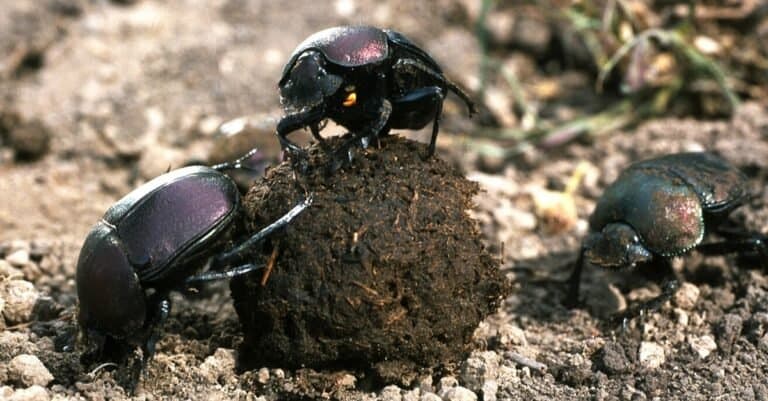
  • Dung processing and burial: many scarabs roll, bury, or tunnel dung, shaping soil nutrients and seed dispersal (while other scarabs feed on roots or foliage).
  • Predation with specialized tactics: ground beetles and lady beetles commonly hunt other invertebrates; some larvae and adults are highly specialized on aphids, snails, or other prey.
  • Chemical warfare: defensive sprays are widespread; bombardier beetles famously eject hot, noxious chemicals in rapid pulses to deter predators.
  • Playing dead (thanatosis): common in several families (e.g., many weevils and leaf beetles), sometimes combined with dropping from vegetation to vanish into leaf litter.
  • Parental care and "undertaking": burying beetles (Nicrophorus) can bury small carcasses and tend larvae-an unusually elaborate insect parenting strategy (not universal across beetles).
  • Social living and symbioses: some species live with ants or termites (myrmecophiles/termite associates), ranging from tolerated guests to integrated nest specialists.
  • Aquatic habits: predaceous diving beetles and others trap air under the elytra for underwater breathing; some lineages are strong swimmers, while many beetles avoid water entirely.
  • Seasonal mass appearances: some species emerge in synchronized pulses (often tied to rains, temperature, or host-plant timing), while others are solitary and cryptic year-round.

Cultural Significance

Beetles (Coleoptera) appear in many cultures: scarabs in ancient Egypt, lady beetles seen as crop helpers that eat aphids, fireflies celebrated for their light, and rhinoceros and stag beetles kept as pet insects in Japan. Beetles can help or harm farming.

Myths & Legends

Ancient Egypt: the scarab is linked with Khepri, a solar deity associated with the rising sun and renewal; scarab imagery and amulets expressed rebirth and protection.

European Christian folklore: the "ladybird/ladybug" name is tied to "Our Lady" (the Virgin Mary); traditions describe the beetle as a welcomed helper in fields and gardens, reinforcing its reputation as a bringer of good luck.

Japan: fireflies are woven into folklore as lights connected with souls and memory; some traditions link certain fireflies with the spirits of fallen warriors.

Classical-era and later European folk practices: stag beetles and other large beetles were sometimes treated as charms or curiosities, appearing in traditional beliefs about protection and potency, reflected in historical writings and collections.

Folk rhyme tradition (Europe and elsewhere): children's verses addressed to ladybirds (e.g., asking them to fly home) function as small, living pieces of oral tradition that echo the insect's friendly cultural status.

Conservation Status

NE Not Evaluated (order-level). Coleoptera is too diverse for a single conservation status; individual beetle species assessed by the IUCN range from Least Concern (LC) to Critically Endangered (CR), with many Data Deficient (DD) or not yet evaluated. Notable at-risk examples include several saproxylic and freshwater taxa (e.g., some stag, hermit/flower chafer, and large diving beetles in parts of Europe).

Has not yet been evaluated against the criteria.

Population Unknown

Protected Under

  • Protection is highly species- and region-specific; there is no single, order-wide legal status for Coleoptera.
  • Examples of formal protection frameworks that include select beetle species: EU Habitats Directive (Annex II/IV) listings for certain saproxylic and freshwater beetles (e.g., Lucanus cervus, Osmoderma eremita, Dytiscus latissimus, Graphoderus bilineatus).
  • Many threatened beetles occur within protected areas (national parks, reserves) and are covered indirectly through habitat protection and management plans; numerous countries also protect particular species via national endangered-species laws and red-list-based regulations.

You might be looking for:

Seven-spotted Lady Beetle

16%

Coccinella septempunctata

A common ladybird/ladybug; small, dome-shaped beetle and important aphid predator.

Stag Beetle

13%

Lucanus cervus

Large beetle (males with enlarged mandibles) associated with dead wood habitats.

View Profile

Hercules Beetle

12%

Dynastes hercules

Very large rhinoceros beetle with prominent horns; Neotropical forests.

View Profile

Japanese Rhinoceros Beetle

9%

Trypoxylus dichotomus

Famous horned beetle commonly referenced in East Asia.

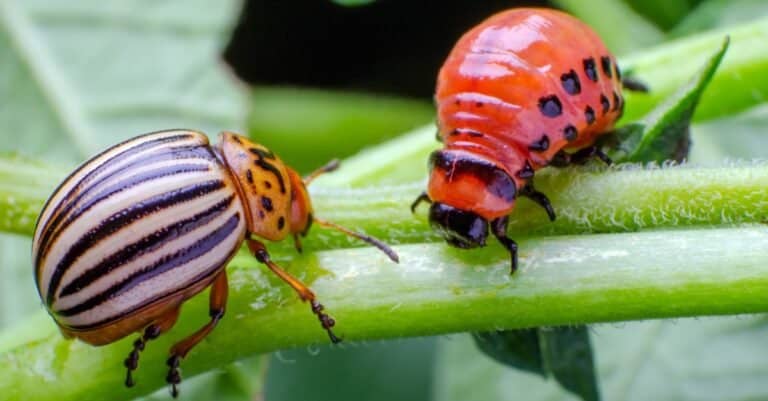
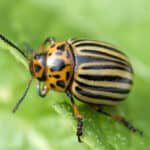
Colorado Potato Beetle

8%

Leptinotarsa decemlineata

Notorious agricultural pest of potato and related crops.

View Profile

Firefly (Lightning Bug)

6%

Lampyridae

Bioluminescent beetles; often thought of separately as "fireflies" though they are beetles.

View Profile

Life Cycle

Birth 50 larvas
Lifespan 1 year

Lifespan

In the Wild
14–10 years
In Captivity
1–15 years

Reproduction

Mating System Polygynandry
Social Structure Transient
Breeding Pattern Transient
Fertilization Internal Fertilization
Birth Type Internal_fertilization

Most beetles (Coleoptera) are polygynandrous: both sexes mate with many partners. They usually find mates by pheromones or at resources, mate briefly, and have internal fertilization. Some groups (burying beetles, passalids) show parental care or monogamy; parthenogenesis is rare.

Behavior & Ecology

Social Aggregation Group: 1
Activity Diurnal, Nocturnal, Crepuscular, Cathemeral, Matutinal, Vespertine
Diet Omnivore Varies widely across beetles; common diet patterns by major groups include other insects and larvae (predatory beetles), living plant tissues (leaf and root feeders), seeds, fungi, and decomposing organic matter (including dung and carrion).
Seasonal Hibernates

Temperament

Extremely diverse across Coleoptera: many species are docile/cryptic when undisturbed, while others are highly predatory and actively aggressive toward prey and competitors (e.g., many ground and water beetles).
Defensive strategies are widespread but vary greatly: armor (elytra), thanatosis (playing dead), biting/pinching (notably in some large taxa), chemical defenses (irritant sprays/secretions), and reflex bleeding in some groups.
Social tolerance ranges from low (territoriality or strong resource competition at carcasses/dung/host plants) to moderate in dense aggregations where individuals largely ignore one another except for mating or competition.
Beetles range from 0.3 mm to over 170 mm long. Life cycles range 1–2 months to many years; some wood-associated larvae last decade. Adults usually live weeks to months, sometimes over a year.

Communication

Stridulation (rubbing body parts to produce squeaks/chirps) occurs in multiple beetle lineages and can function in courtship, alarm, or disturbance response.
Tapping/clicking sounds in some groups (including some 'clicking' defenses or substrate tapping) that can also serve as signals at close range.
Pheromones are a dominant communication mode across the order: sex pheromones, aggregation pheromones (including mass-attack/host-location contexts), trail/resource-marking cues, and alarm/repellent chemicals depending on ecology.
Chemical contact cues (cuticular hydrocarbons and other surface chemicals) used in mate recognition, species recognition, and sometimes in assessing rivals or host suitability.
Visual signaling varies widely: many beetles rely little on vision in dark microhabitats, while others use conspicuous coloration/patterns; bioluminescent signaling occurs in some lineages (notably fireflies) for mate attraction and species recognition.
Substrate-borne vibrations transmitted through plants, wood, soil, or the water surface are used in courtship and localization in some groups, especially where visibility is low.
Tactile communication (antennation, nudging, mounting, grappling) is common during courtship, mating, and competitive interactions at concentrated resources.

Habitat

Biomes:
Tropical Rainforest Tropical Dry Forest Savanna Desert Hot Desert Cold Mediterranean Temperate Grassland Temperate Forest Temperate Rainforest Boreal Forest (Taiga) Tundra Alpine Freshwater Wetland Marine +9
Terrain:
Mountainous Hilly Plateau Plains Valley Coastal Island Riverine Volcanic Karst Rocky Sandy Muddy +7
Elevation: -15748 in – 18044 ft 8 in

Ecological Role

Highly diverse consumers spanning primary consumers (herbivores), secondary/tertiary consumers (predators), and decomposer-associated guilds (scavengers/detritivores), occurring in most terrestrial and many freshwater food webs.

Biological control of pest insects via predatory beetles (for example, ground beetles and lady beetles/ladybugs) Pollination/flower visitation in some groups (pollen/nectar feeders) Decomposition and nutrient recycling through dung-, carrion-, and detritus-associated feeding (for example, dung beetles and many deadwood-associated beetles) Soil turnover and aeration via burrowing/dung burial behaviors in some lineages Wood decomposition processes via saproxylic communities (facilitating nutrient release and habitat creation) Serving as key prey for birds, mammals, reptiles, amphibians, fish (aquatic beetles), and other invertebrates, supporting broader food webs

Diet Details

Main Prey:
Insects and their larvae Mites and other small arthropods Soft-bodied invertebrates Beetles and larvae Aquatic invertebrates Carrion and animal remains
Other Foods:
Plant tissues Roots and tubers Seeds and grains Pollen and nectar Fruits and plant sap/juices Wood, bark and cambium Fungi and moldy plant material Algae, periphyton and aquatic plant matter Detritus +3

Human Interaction

Domestication Status

Wild

Coleoptera (beetles) are mostly wild but some are made semi-domesticated by breeding in large numbers for feed (mealworms/darkling beetles), biological control (ladybird and predatory beetles), pasture health (moved dung beetles), or the pet trade (scarabs, stag beetles). They vary hugely in size (0.3–170 mm), lifespan, habitats (terrestrial, freshwater), diet, and behaviors.

Danger Level

Moderate
  • Most beetles are harmless, but some can bite or pinch (painful but usually minor).
  • Chemical defenses in some groups can irritate skin/eyes; blister beetles can cause dermatitis from cantharidin exposure.
  • Allergic reactions/asthma can occur from dust, frass, or contact in households, labs, or insect-rearing settings.
  • Indirect human risk via economic/food-security impacts: agricultural pests, stored-product pests, and forest pests (including invasive species).
  • Handling wild beetles carries general hygiene risks (contact with decay/dung-associated microbes), though beetles are not major direct vectors compared with some other insects.

As a Pet

Suitable as Pet

Legality: Beetle (Coleoptera): Laws differ by country and state. Keeping common, not protected native beetles is often legal, but protected species, collecting in protected areas, importing or exporting, or pest species may need permits.

Care Level: Moderate

Purchase Cost: Up to $300
Lifetime Cost: $20 - $1,000

Economic Value

Uses:
Agriculture (major pests and major beneficials) Forestry (wood-borers and ecosystem roles in deadwood cycling) Biological control (predatory beetles used against pests) Food/feed and industrial insect protein Research, biotechnology, and education Pet/insect hobby trade and ecotourism Ecosystem services (decomposition, dung burial, nutrient cycling)
Products:
  • biological pest control services (e.g., predatory beetles reducing aphids/other pests)
  • insect-protein production and live feeder insects (e.g., mealworm farming) and derived frass fertilizer
  • chitin/chitosan and other insect-derived biomaterials (from beetle exoskeletons, including farmed species)
  • biotechnology reagents (e.g., luciferase from bioluminescent beetles used in research assays)
  • ecosystem services with direct economic impact (dung removal, soil aeration, nutrient recycling)
  • economic losses from crop/forest pests (defoliation, root feeding, stored-product infestations, wood damage)
  • education/collection value (museums, teaching colonies, citizen science, hobbyist breeding)

Relationships

Related Species 6

Seven-spot ladybird Coccinella septempunctata Shared Family
European stag beetle Lucanus cervus Shared Family
Hercules beetle
Hercules beetle Dynastes hercules Shared Family
Colorado potato beetle
Colorado potato beetle Leptinotarsa decemlineata Shared Family
Yellow mealworm beetle
Yellow mealworm beetle Tenebrio molitor Shared Family
Ground beetles Carabidae Shared Family

Ecological Equivalents 5

Animals that fill a similar ecological role in their ecosystem

True bugs Hemiptera Overlap strongly with beetles as plant feeders and predators in the same terrestrial habitats; many fill similar roles on crops and wild plants but use piercing-sucking mouthparts rather than chewing.
Butterflies and moths
Butterflies and moths Lepidoptera Like many beetles, numerous species of Lepidoptera have herbivorous larvae that specialize on particular host plants. Both groups include major defoliators and agricultural pests.
Flies Diptera Many fly larvae occupy decomposer, scavenger, and aquatic niches that are also common in beetles (e.g., rotting organic matter, dung, carrion, and freshwater habitats).
Ants, wasps, and bees Hymenoptera Overlap as predators, scavengers, and wood-associated insects. Hymenopteran parasitoids also commonly interact with beetles by attacking their larvae or eggs.
Termites
Termites Isoptera They share wood- and soil-based decomposer roles with many beetle lineages, especially wood-borers and detritivores, contributing to nutrient cycling.

Types of Beetle

10

Explore 10 recognized types of beetle

Seven-spot ladybird Coccinella septempunctata
European stag beetle Lucanus cervus
Hercules beetle
Hercules beetle Dynastes hercules
Colorado potato beetle
Colorado potato beetle Leptinotarsa decemlineata
Yellow mealworm beetle
Yellow mealworm beetle Tenebrio molitor
Sacred scarab Scarabaeus sacer
Goliath beetle
Goliath beetle Goliathus goliatus
Emerald ash borer Agrilus planipennis
Asian longhorned beetle
Asian longhorned beetle Anoplophora glabripennis
Firefly (common European glow-worm beetle) Lampyris noctiluca

“The beetle form the largest order of animals on Earth”

According to biologists, there are at least 400,000 species or types of beetle, all belonging to the Coleoptera order, the Endopterygota suborder, and a great variety of lower classifications. These insects make up one-quarter of all animal lifeforms, and most insects. They are found all over the world save in the oceans, Antarctica and the Arctic even though there are species built to withstand intense cold and others are at least semi-aquatic.

Some are terrible pests, and some are beneficial. Though many are black or brown, others sport beautiful colors and patterns, with metallic or iridescent carapaces. They range from the smallest, Scydosella musawasensis to the largest, the Hercules beetle, which can grow to over 7 inches long.
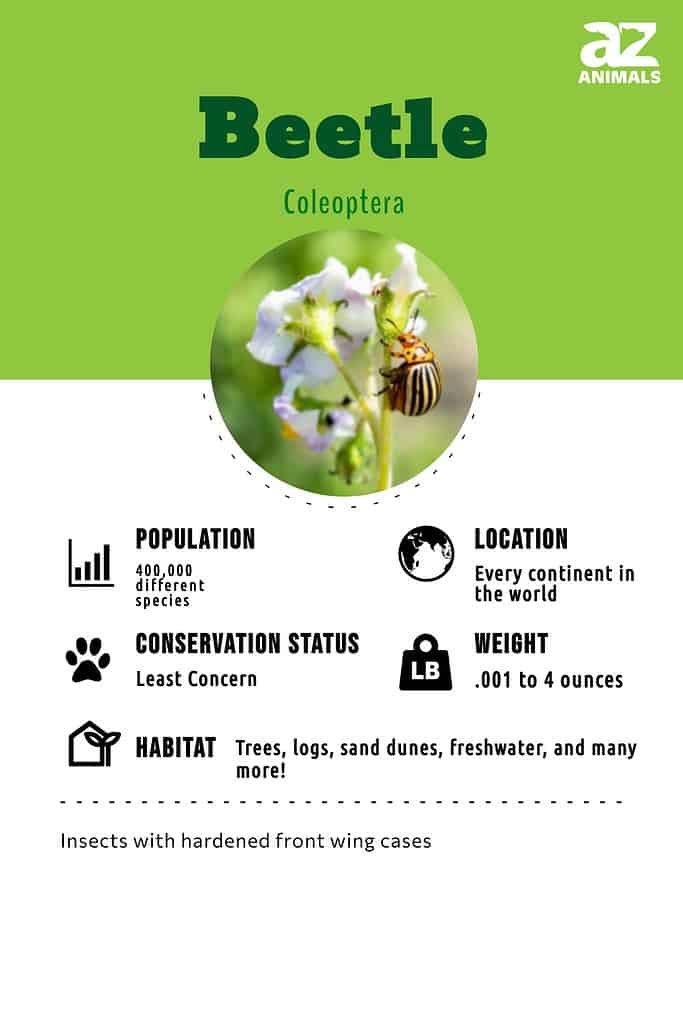
Beetle infographic

4 Incredible Beetle Facts!

  • There are about 300 types of beetles that are eaten by humans, usually in the larval stage.
  • These insects evolved around 270 million years ago.
  • Though bug is the generic name for all kinds of insects; beetles, and bugs are different. Beetles have hard forewings or elytra, and their mouthparts are made for chewing. The exception to this is the blister beetles, which also have sucking tubes. The mouthparts of bugs are made for sucking and piercing.
  • The larvae of beetles can be told by other insect larvae because their heads are hard and often black. They have chewing mouthparts and spiracles, or tiny holes that allow them to breathe along their sides. Some are called grubs. Grubs eat organic material and are the root of grasses and plants.

Species, Types, and Scientific Name
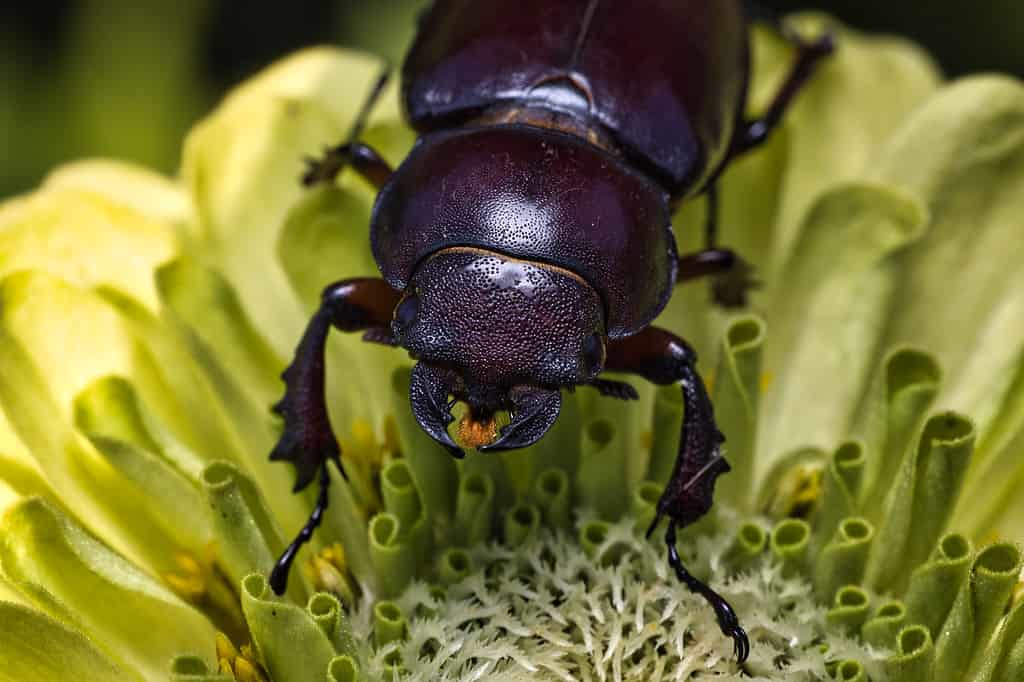
Reddish-brown stag beetle on zinnia flower

This lovely fellow is a stag beetle.

Coleoptera comes from the Greek words for “sheath” and “wing” because of the insect’s tough forewings. The lower classifications for Coleoptera are not only very numerous but complicated, with families and superfamilies and suborders based on what the animal eats and even tiny structures on its head, its mouthparts, or its hind legs. Here are some of the more populous families, superfamilies, suborders, infraorders, and tribes:

Adephaga, whose lower classifications include Hydradephaga and Geadephaga, with 5560 and 35,000 species, respectively, and include the diving and ground beetles. The Polyphaga order has the most species. Families in Polyphaga include Staphylinidae, with 48,000 species, and Scarabaeoidea, with 35,000 species, including those that encompass scarabs. Other families include the Elateroidea, with 23,000 species, and the Tenebrionoidea, with 35,000 species. The superfamily Chrysomeloidea contains the Chrysomelidae, Cerambycidae, and Curculionoidea families. These families have 35,000, 25,000, and 97,000 species, respectively, and include the weevils.

The scientific name for some popular beetles are:

  • Asian lady beetle: One of the most familiar ladybugs, Harmonia axyridis, belongs to the Coccinellidae family.
  • Hercules beetle: Dynastes hercules is a member of the Scarabaeidae family.
  • Giant stag beetle: Lucanus elaphus belongs to the Lucanidae family.
  • Green June bug: This large insect with the bright green carapace is not a bug, but a beetle. Its scientific name is Cotinis nitida, and it belongs to the Scarabaeidae family and the Cetoniinae subfamily.
  • Common eastern firefly: This insect is a beetle, not a fly, and its scientific name is Photinus pyralis. It belongs to the Lampyridae family and the Photinini tribe.
  • Arizona golden tortoise beetle: This little insect, Physonota arizonae, looks like it’s made out of a drop of molten gold. It belongs to the Polyphaga suborder.

Evolution and Origins
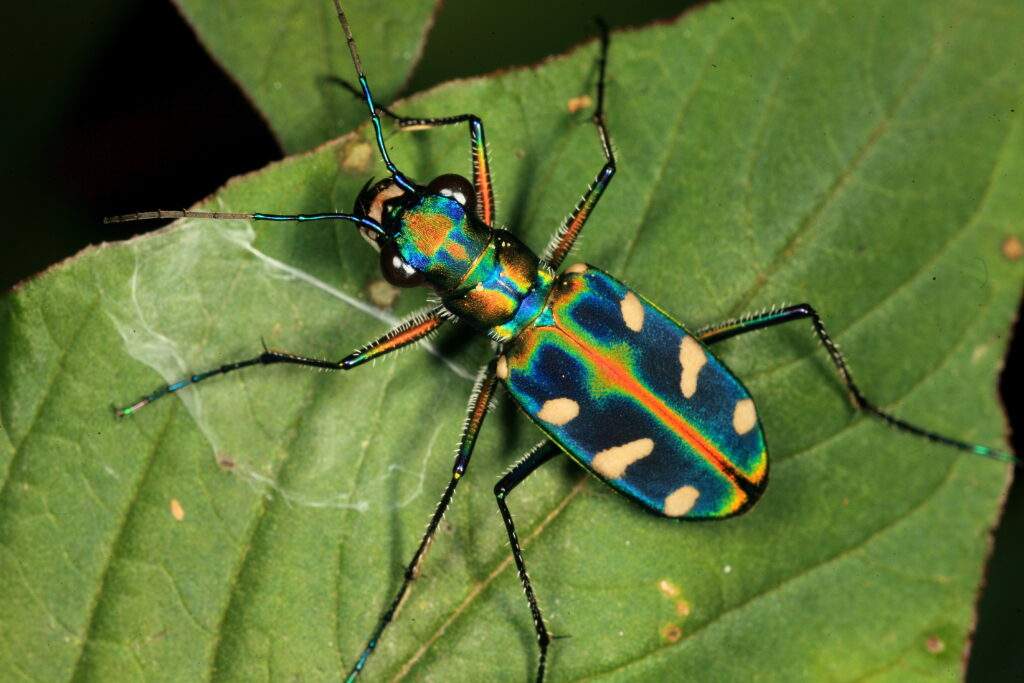
Tiger Beetle

Tiger beetles live in sandy areas near the beach.

People can find beetles in many different habitats, from parks to rainforests and tundra. There are almost 400 thousand species of beetles, making them the most varied animal species on earth. This abundance has perplexed scientists for a long time. Charles Darwin and Alfred Russel Wallace were two of the many to use beetles to develop theories about evolution. However, understanding the evolution and origins of beetles is difficult. A research team used a 68-gene dataset and 57 fossils to construct an evolutionary tree of beetles. The results indicate that various beetle groups expanded as new ecological opportunities became available.

It appears that the success of beetles is due to their remarkable adaptability, as there was not one single moment in which their evolution began. A new timeline of beetle development will provide a better understanding of how this species has become so successful. Recent research and analysis have identified 193 existing and extinct beetle families, with the oldest fossils being 295 million years old – before dinosaurs even roamed the earth.

In order to gain insight into the huge variety of beetles in the world today, researchers have studied their genetics, physical features, and rare fossils to trace back their evolutionary history. It has been concluded that beetles first appeared during the Carboniferous period and later diversified alongside dinosaurs during the Triassic and Jurassic periods.

Appearance: How To Identify Them
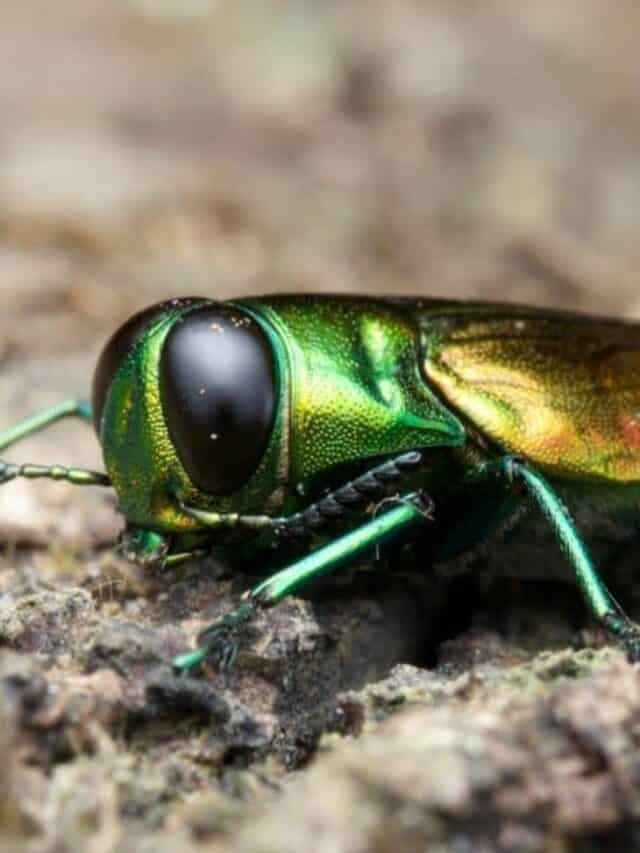
Types of beetles - Emerald Ash Borer
The Emerald Ash Borer, a type of beetle, eats tissue under the bark of ash trees.

Adults always have wings, and their front wings are hard and are not used for flying. Instead, they are used to cover the hind wings, which are used for flying. When they close, they form a straight line down the back. The forewings extend all the way to the back of the abdomen. If they don’t extend to the back of the abdomen, the insect is considered a true bug.

The body can be long, cylindrical, round, half-round, or flat with chewing mouthparts. They can come in shades of black or brown, but many are brilliantly colored. Their antennae almost always have 11 segments but can be short or longer than the body. They have large and well-developed compound eyes, and their legs have evolved for the insect to run, jump, swim, grasp, and dig.

The larvae live in the ground or bore into dead or live wood, roots, or seeds. Some eat other invertebrates, carrion, rotting vegetation, or fungi and pupate in the soil, in wood, or under decaying bark. Most don’t spin a cocoon. Some larvae are parasitic and live on or in a live host.

Most beetles don’t live more than a year, but some can take more than a year to pupate. Adults are attracted to lights at night and can be easily found on plants during the day.

Population and Distribution
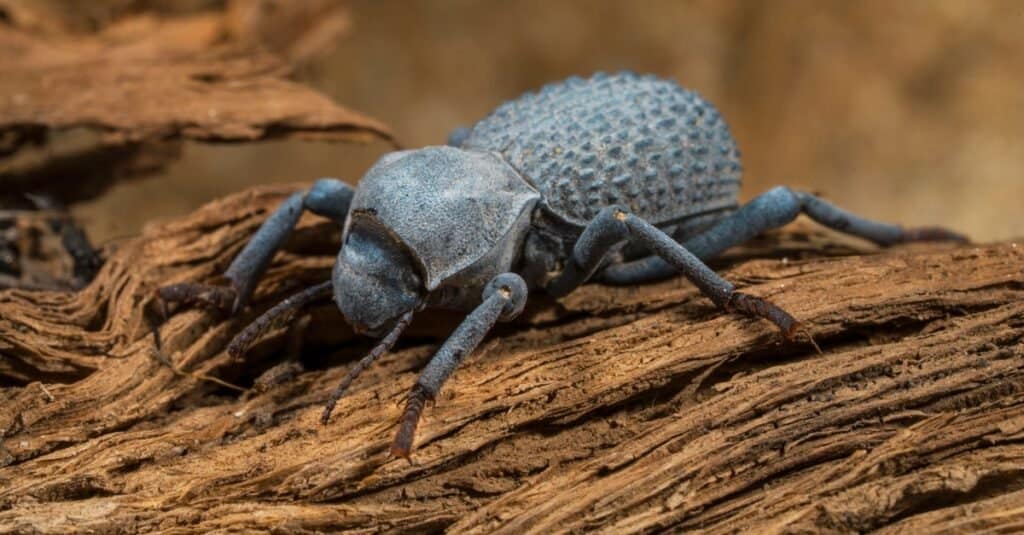
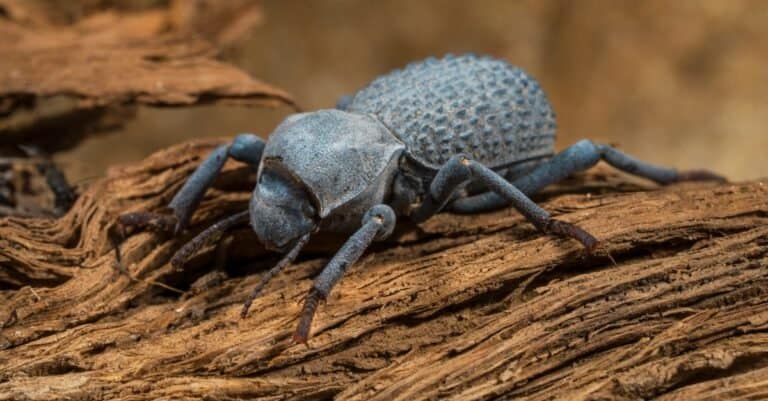
Asbolus verrucosus (desert ironclad beetles or blue death feigning beetles) beetle on desert driftwood.

Asbolus verrucosus (desert ironclad beetles or blue death-feigning beetles) beetle on desert driftwood.

Beetles are actually the largest order of insects. In fact, around 400,000 different species make up about 40% of all insect species. A study in 2015 states that four independent estimates of the number of beetle species give it around 1.5 million, with a narrow range spanning all four estimates. There are an estimated 2.1 million different types of beetles. Which, in layman’s terms, means there are more beetles than any other species of insect.

Beetles are found in almost all habitats, including freshwater and coastal areas. Anywhere where there is vegetation, you will find beetles living in bark, flowers, and leaves. The heaviest of beetles in the insect stage is the larva of the goliath beetle, which can attain a mass of just over 4 oz with a length of about 5 inches long.

Habitat
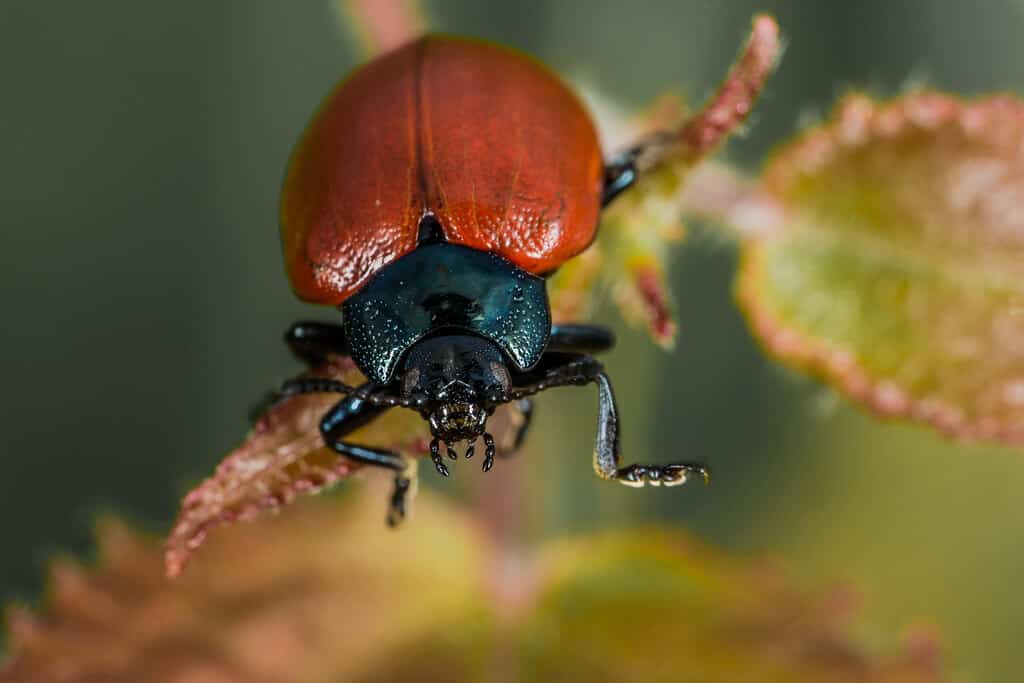
cottonwood leaf beetle

Of all the beetles native to Arizona, the cottonwood is one of the more visually stunning.

These insects can be found just about anywhere. Even a cursory glance at a tree or a shrub or plant will disclose some kind of beetle, which may be actively eating the plant or simply resting on it. They are found under rocks, under old bark, in rotting logs, and in dung heaps. They are found in and around food, clothing, rugs, carpets, and upholstery. If a porch light is turned on, they will come flying to it.

Aquatic beetles are mostly found in freshwater, though some of them do live in shallow waters near the shore. The adults often carry an air bubble or have a modification to their exoskeleton to allow them to breathe underwater.

Diet
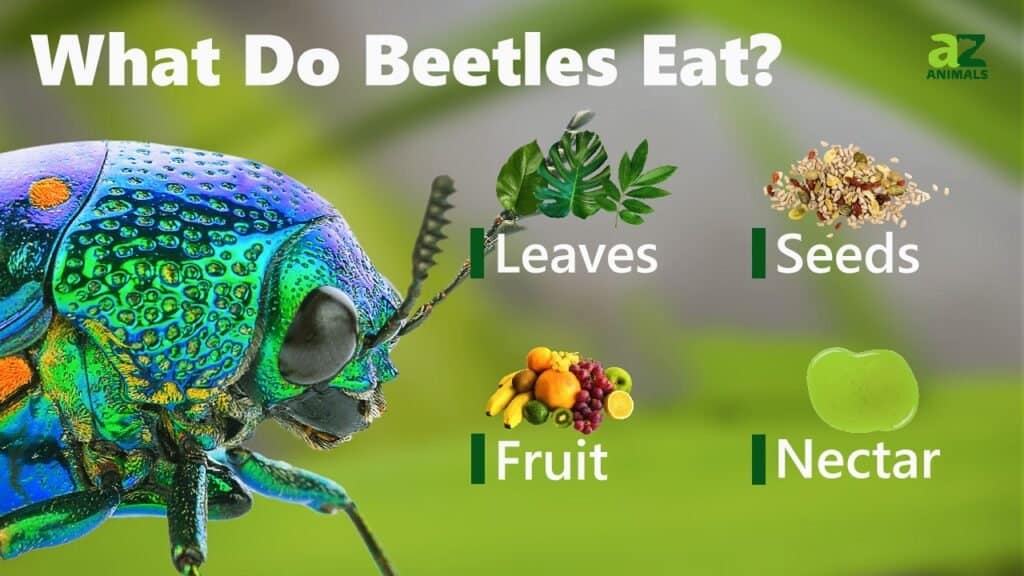
What Do Beetles Eat
Beetles eat a very wide variety of food, ranging from carrion to plants.

The materials these insects eat nearly defy listing. Some only eat plant materials. Others are scavengers, and some are omnivores. Some restrict themselves to only one type of plant, while others are hunters that prey on other insects, spiders, snails, and earthworms. Others eat dung and carrion, while others eat beetles that eat dung and carrion. Many beetles rely on the presence of fungi in their gut to help them digest their food. Weevils eat plant parts, flour, and grains.

Prevention: How to Get Rid of Them
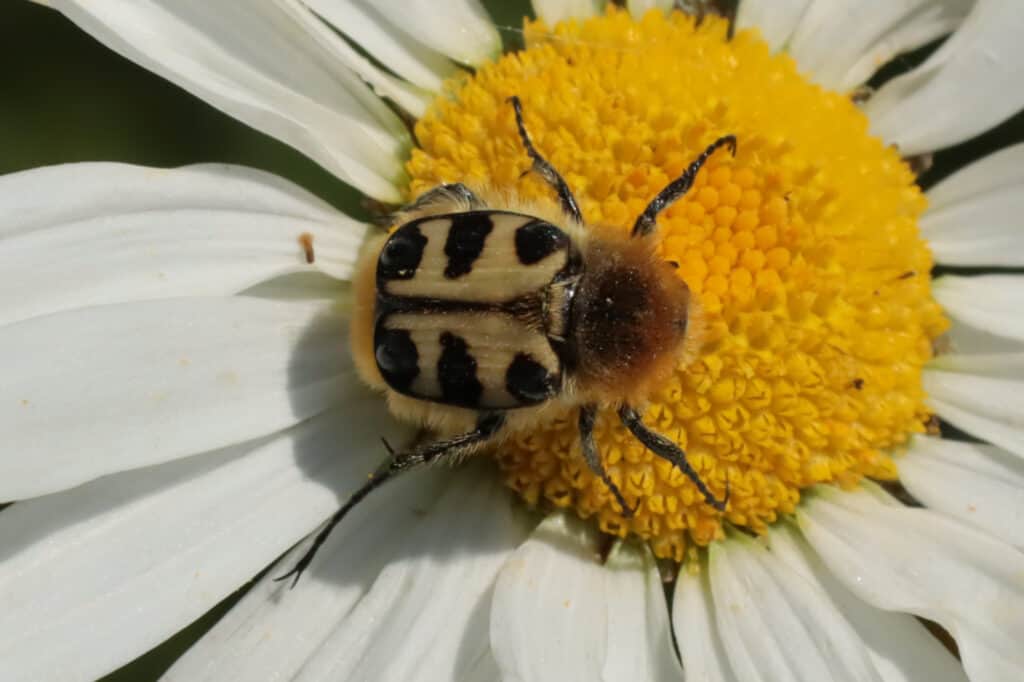
Bee beetle

Bee beetles are found in gardens, meadows, and flowery areas, particularly around roses and thyme flowers.

There are many ways of getting rid of beetle pests. They can simply be plucked from host plants and squashed or dropped into soapy water. They can be dusted with insecticidal powder, even though this will cause some collateral damage to insects such as butterflies and ladybugs. Their grubs can be exposed to nematodes or parasitic wasps. Sometimes controlling beetles is drastic. Lumber may need to be quarantined and treated with insecticide if it’s feared it is harboring pests. Sometimes forests full of trees need to be cut down and burnt to stop an invasion of a wood-boring beetle.

View all 453 animals that start with B
How to say Beetle in ...
Bulgarian
Твърдокрили
Catalan
Coleòpter
Czech
Brouci
Danish
Biller
German
Käfer
English
Beetle
Esperanto
Koleopteroj
Spanish
Coleoptera
Estonian
Mardikalised
Finnish
Kovakuoriaiset
French
Coleoptera
Galician
Escaravello
Hebrew
חיפושיות
Hungarian
Bogarak
Indonesian
Kumbang
Italian
Coleoptera
Japanese
甲虫類
Latin
Coleoptera
Malay
Kumbang
Dutch
Kevers
English
Biller
Polish
Chrząszcze
Portuguese
Besouro
English
Coleopteră
Slovenian
Hrošči
Swedish
Skalbaggar
Turkish
Kın kanatlılar
Chinese
鞘翅目

Sources

  1. Bon Vila / Accessed August 11, 2021
  2. Discover / Accessed August 11, 2021
  3. Science Direct / Accessed August 11, 2021
  4. Wikipedia / Accessed August 11, 2021
  5. Texas A & M Agrilife Extension / Accessed August 11, 2021
Heather Hall

About the Author

Heather Hall

Heather Hall is a writer at A-Z Animals, where her primary focus is on plants and animals. Heather has been writing and editing since 2012 and holds a Bachelor of Science in Horticulture. As a resident of the Pacific Northwest, Heather enjoys hiking, gardening, and trail running through the mountains with her dogs.

Thank you for reading! Have some feedback for us?


Beetle FAQs (Frequently Asked Questions)

Beetles are Omnivores, meaning they eat both plants and other animals.