
B
Species Profile

Bengal Tiger

Panthera tigris tigris

Stripes of the subcontinent
Paul Mannix / CC BY 2.0, Flickr

Bengal Tiger Distribution

Click a location to explore more animals from that region

Loading map...

Size Comparison

Human 5'8"
Bengal Tiger 3 ft 3 in

Bengal Tiger stands at 58% of average human height.

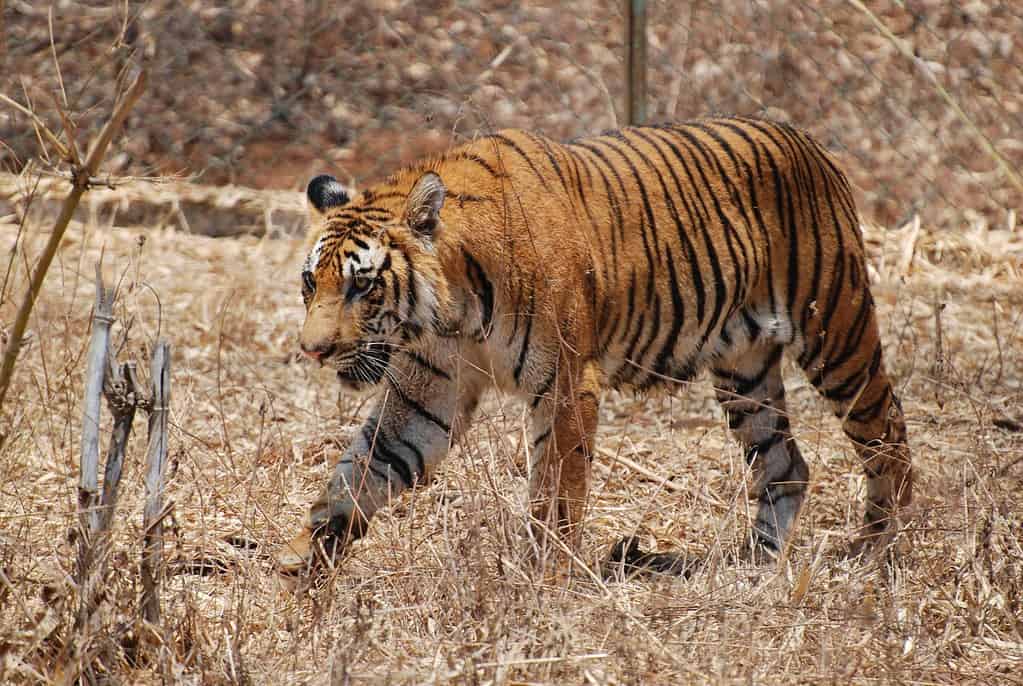
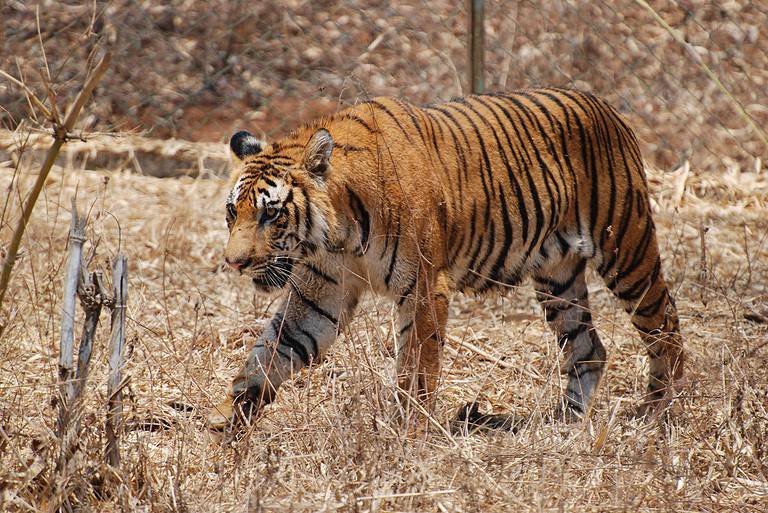
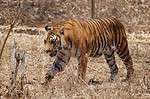
https://commons.wikimedia.org/wiki/File:Bengal_Tiger_Karnataka.jpg?uselang=en Bengal Tiger in Karnataka, India

At a Glance

Wild Species
Also Known As Indian tiger, Bagh, Vyaghra
Diet Carnivore
Activity Crepuscular+
Lifespan 11 years
Weight 258 lbs
Status Endangered
Did You Know?

Scientific name and taxonomy: Bengal tigers are part of the continental tiger subspecies Panthera tigris tigris, which also includes several other mainland populations; it is distinct from the Amur tiger (Panthera tigris altaica) and the Sunda island tigers (Panthera tigris sondaica, including the Sumatran tiger).

Scientific Classification

The Bengal tiger (Panthera tigris tigris) is a tiger subspecies native primarily to the Indian subcontinent and is the most numerous living tiger subspecies. It is a large apex predator and an iconic big cat associated with a range of habitats from forests to grasslands and mangroves.

Kingdom
Animalia
Phylum
Chordata
Class
Mammalia
Order
Carnivora
Family
Felidae
Genus
Panthera
Species
Panthera tigris

Distinguishing Features

  • Large tiger with orange coat and bold black striping (pattern highly individual)
  • White underside and facial markings; prominent cheek ruff in some individuals
  • Typically very large-bodied among tiger subspecies (though size varies by region and prey base)
  • Adaptable across diverse habitats, including mangrove forests in the Sundarbans

Physical Measurements

Males and females differ in size

Height
3 ft 3 in (2 ft 11 in – 3 ft 7 in)
3 ft 1 in (2 ft 11 in – 3 ft 3 in)
Length
1000 ft 8 in (902 ft 3 in – 1082 ft 8 in)
8 ft 3 in (7 ft 10 in – 8 ft 8 in)
Weight
487 lbs (397 lbs – 569 lbs)
287 lbs (220 lbs – 353 lbs)
Tail Length
3 ft 3 in (2 ft 11 in – 3 ft 7 in)
2 ft 11 in (2 ft 7 in – 3 ft 3 in)
Top Speed
37 mph
about 60 km/h

Appearance

Primary Colors
Secondary Colors
Skin Type Fur (dense, short-to-medium length pelage over thick skin; seasonal thickening occurs but P. t. tigris is not the long-furred cold-adapted form typical of Amur tigers).
Distinctive Features
  • Large, strong cat; size varies by region. Adult Bengal tigers (Panthera tigris tigris): males ~180–260 kg, 270–310 cm long; females ~100–160 kg, 240–265 cm long; shoulder height ~90–110 cm.
  • Bengal tigers in the Sundarbans mangrove often have smaller bodies and lighter weight than mainland tigers due to limited prey and habitat. Values vary by site—use local capture or tracking data.
  • Cranio-dental adaptation for large prey: enlarged canines and powerful jaw musculature; forelimbs with large paws and retractile claws for grappling prey; tail long and ringed for balance during turning and short pursuits.
  • Characteristic facial markings: strong black facial stripes; pale/white cheek ruffs; amber-brown eye appearance is typical (eye color varies subtly and is not a primary diagnostic character).
  • A top predator in the Indian subcontinent (including the Sundarbans). Mainly hunts medium to large hooved animals like chital, sambar, wild boar, and gaur, but will take other prey; ambush hunter using stripes and cover.
  • Usually live alone except when mating or when mothers have cubs. Strongly territorial, mark scent and make loud calls. Home range and overlap change with prey numbers and habitat quality.
  • Lifespan: commonly ~8-10 years in the wild, with some individuals reaching ~15+ years; in captivity often ~20+ years (commonly cited in mammal husbandry and tiger ecology syntheses; Sunquist & Sunquist 2002; zoo demographic summaries).
  • Bengal tiger (Panthera tigris tigris) faces habitat loss and breaking up, prey loss, and poaching; protection relies on areas like India’s Project Tiger reserves, landscape links, and Sundarbans forests (IUCN Red List).

Sexual Dimorphism

Clear sexual dimorphism: male Bengal Tigers (Panthera tigris tigris) are much larger and heavier than females, with broader skulls, stronger forequarters and thicker necks. Males hold larger territories and often take bigger prey; size varies by region and prey.

  • Heavier and longer-bodied on average (commonly cited: ~180-260 kg; ~270-310 cm total length, incl. tail, depending on population).
  • More massive head/neck and forequarters; wider zygomatic arches and more robust cranial proportions.
  • Often exhibits a more pronounced neck ruff/cheek ruff appearance due to heavier musculature and fur distribution.
  • Smaller and lighter on average (commonly cited: ~100-160 kg; ~240-265 cm total length, incl. tail, depending on population).
  • More gracile head/neck profile compared with males; overall slimmer frame.
  • Primary caregiver: females rear cubs alone; appearance may be leaner during late lactation in the wild due to energetic demands (behavioral/condition-related variation).

Did You Know?

Scientific name and taxonomy: Bengal tigers are part of the continental tiger subspecies Panthera tigris tigris, which also includes several other mainland populations; it is distinct from the Amur tiger (Panthera tigris altaica) and the Sunda island tigers (Panthera tigris sondaica, including the Sumatran tiger).

Adult size (typical): males ~180-258 kg; females ~100-160 kg; total length commonly ~2.7-3.1 m (males) and ~2.4-2.65 m (females), including tail (reported in field monographs such as Sunquist & Sunquist).

Reproduction is tightly timed: gestation ~93-112 days; litters usually 2-4 cubs (documented range 1-6).

They can swim strongly and readily cross rivers; Sundarbans tigers are famous for frequent swimming between mangrove islands.

A Bengal tiger's roar can carry for kilometers; they also "chuff" (a friendly, non-threatening exhalation) in close-range social contexts.

India's 2022 national estimate reported 3,167 wild tigers-predominantly Bengal tigers-making the Indian subcontinent the global stronghold for the subspecies.

Unique Adaptations

  • Camouflaging stripe pattern: vertical stripes break up body outline in tall grass, forest shade, and mangrove shadows; stripe patterns are individually unique.
  • Powerful forelimbs and retractile claws: enable grappling large prey and hauling carcasses; claw-scrapes also serve as long-lasting territorial signals.
  • Low-light vision and hearing tuned for hunting: large eyes and sensitive ears support crepuscular/nocturnal ambush success typical of Panthera tigris.
  • Water tolerance in a big cat: unlike most felids, Bengal tigers frequently bathe and swim; this is especially pronounced in the Sundarbans mangrove ecosystem.
  • Flexible habitat use: within the subspecies' range, individuals persist from Himalayan foothill forests and alluvial grasslands to mangroves-so long as cover, prey, and space remain.

Interesting Behaviors

  • Solitary territorial living: adults usually live alone, with overlapping home ranges that are defended most strongly by resident males; territory marking includes urine spraying, scraping, and claw-raking trees.
  • Crepuscular-to-nocturnal hunting: often most active at dawn/dusk and night, shifting activity to avoid humans in heavily used landscapes.
  • Ambush predation: stalks using cover, then a short burst to seize prey; typical kill method is a throat bite (small/medium prey) or a powerful neck bite (larger prey).
  • Prey choice in the subcontinent: commonly targets chital (spotted deer), sambar, wild boar, and sometimes larger ungulates like gaur; diet varies by region and prey availability.
  • Caching and guarding kills: may drag carcasses into cover and feed over multiple days, especially on large prey; can be displaced by dholes or large groups of scavengers.
  • Cub rearing: females raise cubs alone; cubs start following the mother to kills at a few months old and may remain with her ~18-24 months before dispersing.

Cultural Significance

Bengal Tiger (Panthera tigris tigris) is India's and Bangladesh's national animal, a symbol of power and wild nature. It appears in South Asian art, Hindu religion, and Sundarbans forest beliefs. Project Tiger (1973) and reserves in India, Nepal, Bangladesh use it to protect forests and prey.

Myths & Legends

Durga and the tiger: In many Hindu traditions, the goddess Durga rides a tiger (or lion) into battle-an image of controlled power and righteous strength often associated with the forests where tigers live.

In Sundarbans folklore, Bonbibi is the mangrove guardian who calms conflicts between people and Dakkhin Rai, a Bengal tiger spirit; woodcutters and honey gatherers call on Bonbibi for safety in tiger areas.

Waghoba (Western India): In parts of Maharashtra and nearby regions, Waghoba is a tiger or leopard god. Villagers keep shrines and rituals ask the big cat spirit to protect people and livestock and keep peace.

"Tiger kings" of the mangroves: Sundarbans oral traditions describe tigers as rulers of the forest islands-enforcers of boundaries that humans must respect when gathering resources.

In South Asia, the Bengal tiger (Panthera tigris tigris) appears in royal and warrior culture—titles, flags, and cloth—seen as a sign of kingship and fighting strength tied to wild lands.

Conservation Status

EN Endangered

Facing a very high risk of extinction in the wild.

Population Decreasing

Protected Under

  • CITES: Appendix I (international commercial trade prohibited except under very limited circumstances)
  • India: Wildlife (Protection) Act, 1972 - Schedule I (highest legal protection)
  • Nepal: National Parks and Wildlife Conservation Act, 1973 (protected within national parks/reserves; legal protections for listed wildlife)
  • Bangladesh: Wildlife (Conservation and Security) Act, 2012 (national legal protection; key protection in the Sundarbans)
  • Bhutan: Forest and Nature Conservation Act (national legal protection; protected area network coverage in tiger range)

Life Cycle

Birth 3 cubs
Lifespan 11 years

Lifespan

In the Wild
8–15 years
In Captivity
16–26 years

Reproduction

Mating System Polygynandry
Social Structure Solitary
Breeding Pattern Transient
Fertilization Internal Fertilization
Birth Type Internal_fertilization

Bengal tiger (Panthera tigris tigris) mating is solitary polygynandry: males' ranges overlap several females. Females are in heat ~3–6 days and mate many times; they ovulate after mating. No pair bond; females raise cubs. Gestation ~103 days; litters 2–4; maturity 3–5 years.

Behavior & Ecology

Social Streak Group: 1
Activity Crepuscular, Nocturnal, Cathemeral
Diet Carnivore Medium-to-large wild ungulates-especially chital (Axis axis) and sambar (Rusa unicolor)-which commonly dominate Bengal tiger diets where sympatric and abundant.

Temperament

Strongly territorial (scent-marking and boundary patrol common)
Bengal tigers usually avoid people but may get used to them in busy protected areas. Conflict risk rises when prey is low or habitat is fragmented.
High intraspecific aggression toward same-sex intruders; vocal/olfactory warnings often precede physical confrontation
Maternal and highly protective when cubs are present; female vigilance and concealment behaviors increase during early cub-rearing
Opportunistic ambush predator; social tolerance may increase temporarily at abundant kills (e.g., mother sharing with cubs; occasional scavenging overlap by multiple individuals without stable grouping)

Communication

roar Long-distance advertisement and agonistic signaling
growl/snarl Close-range threat
hiss Defensive/agonistic
moan Contact/solicitation reported in tigers
chuff/prusten Friendly/appeasement greeting in Panthera; commonly reported in captive and wild-context observations
caterwaul/mating call Female estrus advertisement; male response vocalizations
scent marking: urine spraying and ground urination along travel routes and territory edges; often combined with scraping Sunquist & Sunquist 2002
fecal marking and latrine-like deposition at prominent sites Visual + olfactory signal
scrape marks (hind-foot scrapes, sometimes with urine) used as durable territorial signposts
tree scratching/claw marks and cheek rubbing Visual + scent via facial glands
visual/body signals: erect posture, tail/ear positions, direct staring or avoidance; charge/bluff displays during territorial disputes
chemical communication supporting mate finding and spacing Sex, reproductive condition, and individual identity conveyed via scent; summarized in Sunquist & Sunquist 2002

Habitat

Biomes:
Tropical Dry Forest Tropical Rainforest Savanna Temperate Forest Wetland Freshwater
Terrain:
Mountainous Hilly Plateau Plains Valley Riverine Coastal Muddy +2
Elevation: Up to 10383 ft 10 in

Ecological Role

Apex predator and keystone species in Indian subcontinent ecosystems (forests, grasslands, mangroves), exerting top-down regulation on large herbivores and mesopredators.

Regulates ungulate populations and can reduce overbrowsing/overgrazing pressure, helping maintain vegetation structure and regeneration (trophic effects). Shapes prey behavior and space use (landscape-of-fear effects), influencing habitat use patterns by deer and boar. Provides carrion subsidies to scavenger guilds (vultures, jackals, hyenas where present, corvids), increasing nutrient cycling. Functions as an umbrella species: conserving viable Bengal tiger populations typically protects large, connected habitats and many co-occurring species.

Diet Details

Main Prey:
Chital Sambar deer Wild boar Gaur Barasingha Nilgai Barking deer Wild water buffalo Primates Porcupine Livestock +5

Human Interaction

Domestication Status

Wild

Bengal tiger (Panthera tigris tigris) is not domesticated. People captured tigers for royal collections, zoos, and circuses for centuries, but they were never bred over generations to be tame. There was no domestication like for dogs or cats. Captive Bengal tigers stay dangerous wild animals.

Danger Level

High
  • Potentially fatal attacks: adult Bengal tigers are capable of killing humans; risk increases with surprise encounters at close range, defensive behavior near kills/cubs, or habituation in human-dominated mosaics.
  • Conflict-driven encounters: livestock depredation can draw people into close proximity (guarding animals, carcass retrieval), increasing attack risk.
  • Habitat/interface effects: in mangrove/riverine systems (e.g., Sundarbans), visibility is low and travel corridors are narrow, contributing to historically higher human-tiger conflict in some localities.
  • Captive risk: privately held or poorly managed captive tigers pose severe public-safety risk through escape, handling incidents, and barrier failures.
  • Indirect risks: zoonoses and injury from snares/poisoning can increase unpredictable behavior in injured/conflict individuals.

As a Pet

Not Suitable as Pet

Legality: Bengal Tiger (Panthera tigris tigris) is not suitable and is usually illegal or highly restricted as a pet. Listed in CITES Appendix I and protected by laws (India's Wildlife Act, ESA, Captive Wildlife Safety Act); permits and accredited facilities required.

Care Level: Expert Only

Purchase Cost: $2,000 - $15,000
Lifetime Cost: $150,000 - $600,000

Economic Value

Uses:
Ecotourism and wildlife tourism Conservation flagship value (funding and habitat protection) Zoo/safari park exhibition (regulated) Human-wildlife conflict costs (livestock loss, injury/death, management) Illegal wildlife trade
Products:
  • tourism revenue (park entry fees, guides, lodging tied to tiger viewing)
  • employment in protected-area management and tourism services
  • conservation grants/donations leveraging tiger flagship status
  • costs for conflict mitigation (fencing, compensation, rapid-response teams)
  • illicit products: skins, bones, teeth/claws (trade prohibited under CITES/most national laws)

Relationships

Predators 6

Human
Human Homo sapiens
Leopard
Leopard Panthera pardus
Dhole
Dhole Cuon alpinus
Sloth bear Melursus ursinus
Mugger crocodile Crocodylus palustris
Saltwater crocodile Crocodylus porosus

Ecological Equivalents 7

Animals that fill a similar ecological role in their ecosystem

Asiatic lion Panthera leo persica Closest large sympatric or near-sympatric big-cat analog on the Indian subcontinent: an apex predator that ranges from solitary to pride-forming and preys on medium to large ungulates (e.g., chital, sambar, nilgai, and livestock). Occupies a similar prey-mass niche and exhibits comparable competitive interactions where ranges approach. General ecology syntheses: Nowell & Jackson 1996; Sunquist & Sunquist 2002.
Leopard
Leopard Panthera pardus Primary competitor across much of India; occupies forests, scrub, and edge habitats and hunts by stalking or ambush. They partition prey by size, space, and time, and in tiger-rich areas tigers sometimes kill leopards.
Dhole
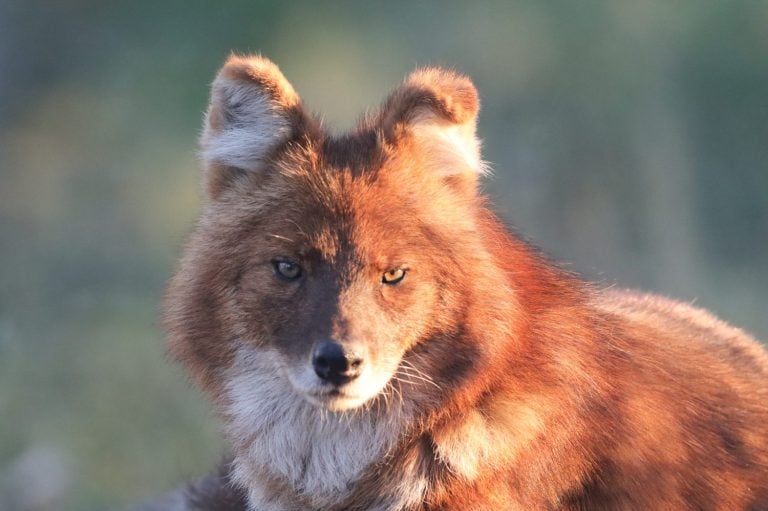
Dhole Cuon alpinus Both Bengal tigers and dholes hunt large ungulates. Dholes hunt in packs, using coursing tactics, while Bengal tigers typically ambush. They interact competitively: tigers may kill dholes, while dholes sometimes mob tigers and steal their kills. Both often feed on chital and sambar.
Mugger crocodile Crocodylus palustris Acts as a similar top predator in rivers, lakes, and marshes where Bengal tigers hunt; takes similar prey near water and may fight with or kill tigers when they are swimming or crossing water.
Indian wolf Canis lupus pallipes Large terrestrial predator in adjacent open habitats (semi-arid grasslands) that overlaps the Bengal tiger's range; both prey on medium-sized ungulates and livestock, but wolves hunt cooperatively in packs and pursue prey, whereas tigers ambush from cover.
Jaguar
Jaguar Panthera onca Not found together but a close ecological analog: a solitary Panthera forest apex predator that often hunts near water and preys on animals of many sizes. Has a similar body shape and ambush-hunting strategy; useful for comparing Panthera.
Bengal tiger
Bengal tiger Panthera tigris tigris Adults: males approximately 180–258 kg, females approximately 100–160 kg; body length approximately 140–220 cm, tail approximately 90–110 cm. Lifespan approximately 8–20+ years. Solitary, territorial ambush predator, primarily active at dawn, dusk, or night. Typical litter size 2–4 cubs; gestation approximately 100–105 days.

Bengal tigers are the national animal of both Bangladesh and India.

One of the most beautiful and iconic animals to walk the Earth, Bengal tigers are both regal and rare. They’re one of the biggest cat species in the world. Bengals are larger than other tiger species, second only to the Siberian.
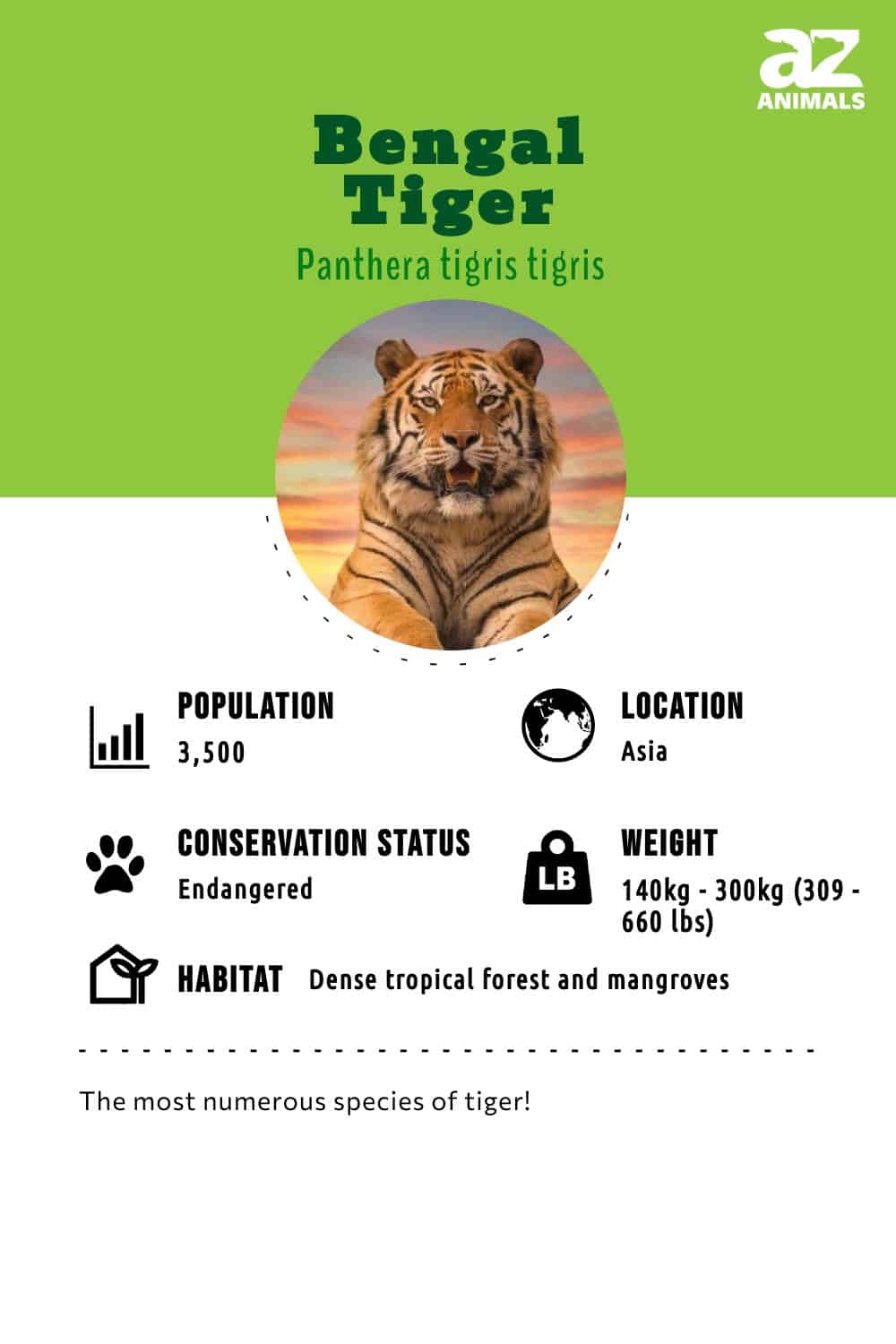


Today, wild Bengal tigers only live in Bangladesh, Bhutan, India, and Nepal. And while there are more Bengals than any other tiger subspecies on the Indian subcontinent, the populations are endangered.

Conservation efforts are working to some degree, but they’re not outpacing the poaching, deforestation, and human encroachment that has devastated wild tiger habitats over the past 50 years.

Fascinating Facts About Bengal Tigers
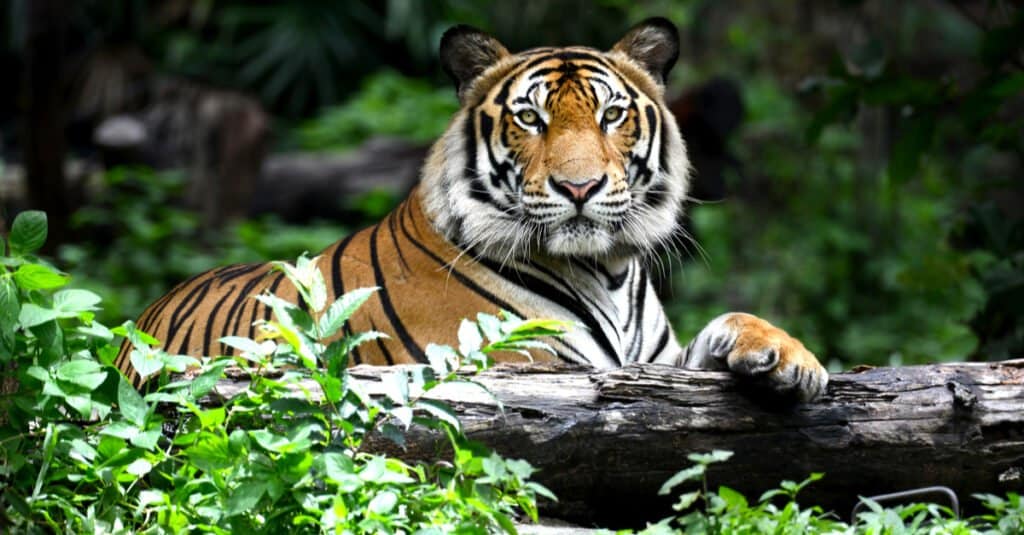
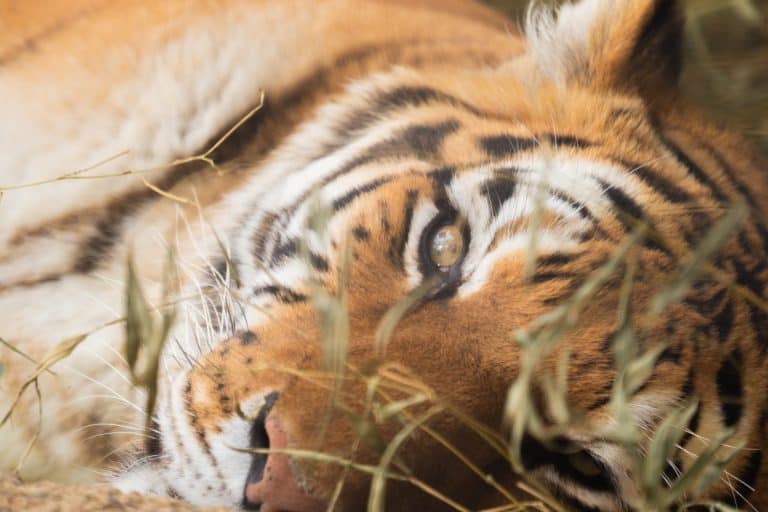
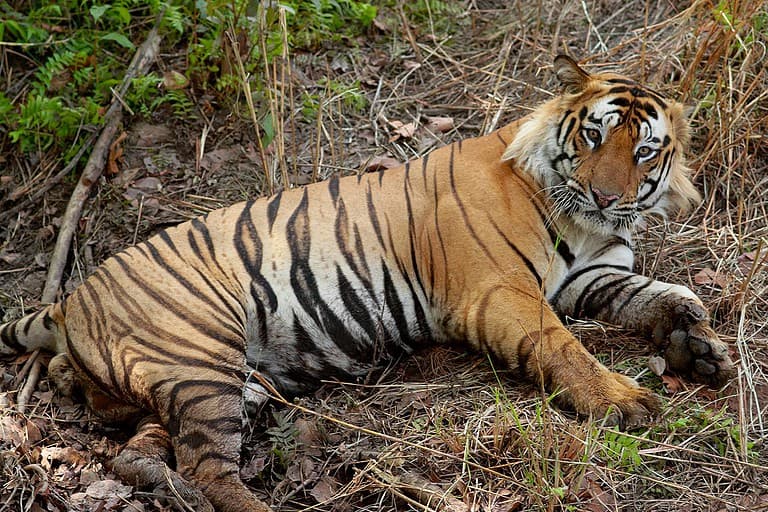
Bengal tiger laying in brush

The Bengal tiger has been known to attack and kill humans.

  • Human residents of jungle villages that share space with large cats wear face masks on the back of their heads because tigers prefer to attack from behind. If the felines think a person is looking directly at them, they typically find another target.
  • Between the late 1800s and early 1900s, a female Bengal tiger known as the ‘Champawat tiger’ killed 436 people around Nepal and Kumaun. After an autopsy, scientists realized her canine teeth were damaged, which prevented her from catching normal prey.
  • Scientists believe Bengal tigers arrived in India between 12,000 to 15,000 years ago.
  • In 2019, a Bengal tiger named Ming, a 19-year-old tiger that sadly spent most of his life living in a New York City apartment passed away. It was discovered that Ming’s human companion, Mr. Yates, fed him about 20 pounds of chicken meat a day and turned one room in the apartment into a sandpit for his “best friend.”

Scientific Name
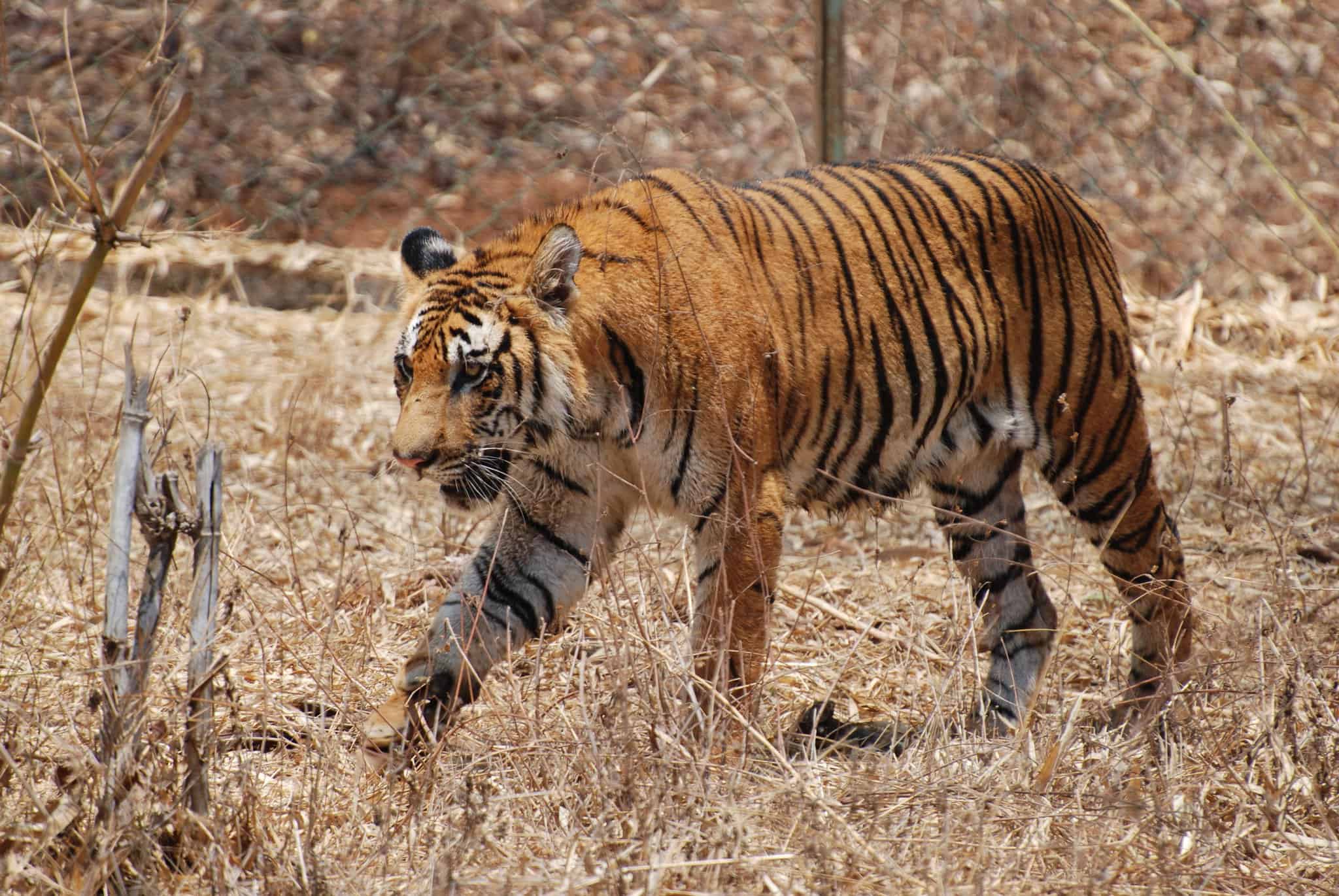
Bengal Tiger in Karnataka, India

Bengal tigers were once known as Royal Bengal tigers.

During the 19th century, these tigers were known as Royal Bengal tigers. Somewhere along the taxonomic line, however, the royal was dropped. Today, the animals are simply known as Bengal tigers, a population of the subspecies Panthera tigris tigris.

Panthera derives from the Lain word “panthēra” and the Greek word “pánthēr,” which both roughly translate to “that which is hunted.” The Sanskrit word “pând-ara,” meaning “pale yellow, whitish, white,” is also thought to play a role in how the animal got its name.

Evolution
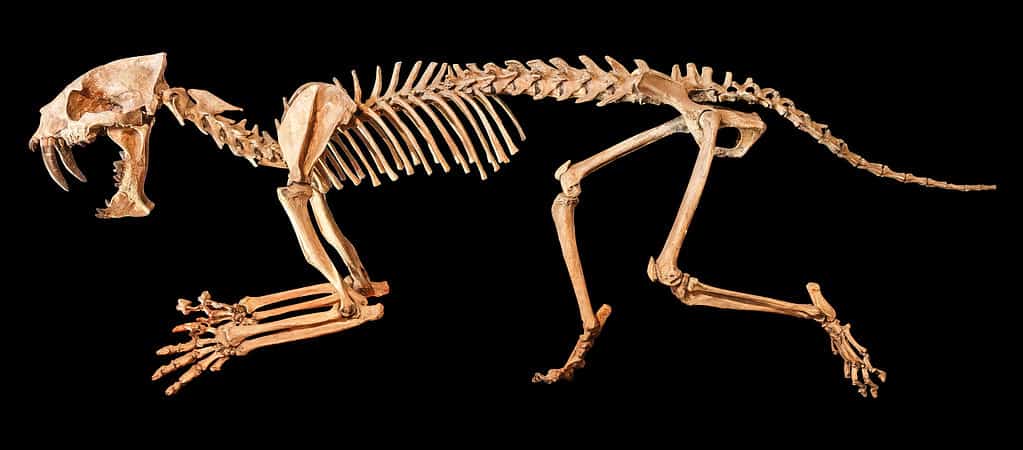
Saber - toothed tiger ( Hoplophoneus primaevus ) skeleton . Isolated background .

Sabertooth tigers were one of the early ancestors of Bengal tigers.

The oldest ancestors to the tiger are Miacoids, among the first mammal carnivores. This group was divided into two groups called Feliformia and Caniformia around 40 million years ago. Feliformia was more cat-like and eventually evolved into cats, hyenas, civets, and mongooses.

Like other tigers, the Bengal evolved from ancient cats like the Smilodon, or sabertooth tiger that lived 35 million years ago. The family Felidae came into Asia ten million years ago, where it split into the genus, Panthera. The Bengal tiger adapted to its habitat to form its own species.

Appearance
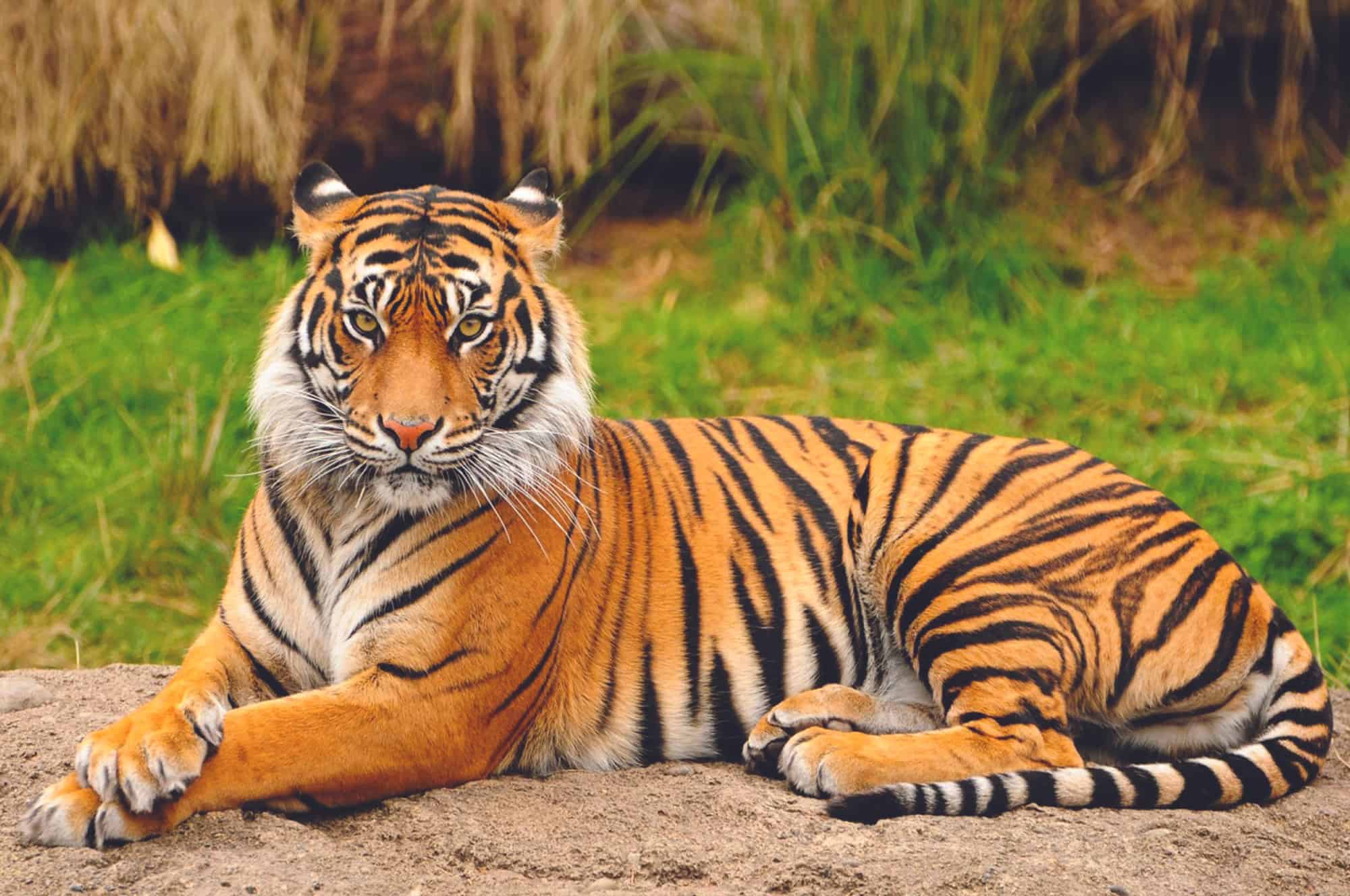
Bangladesh, Bengal Tiger, Tiger, West Bengal, Animal

Male Bengal tigers can weigh up to 569 pounds.

Bengal tigers are one of the biggest subspecies of cats roaming the Earth today.

The majority of these tigers sport yellow to light orange coats with brown to black stripes, but their bellies and the inward-facing sides of their limbs are white.

How Big are Bengal Tigers?

Male tigers are typically between 9 to 10 feet long, including the tail, and about 3 to 3.5 feet tall from the ground. On average, male Bengals tip the scale between 397 and 569 pounds — which is about the same weight as a pig and half as heavy as a polar bear!

Females are slightly smaller than their male counterparts. They’re usually between 7.5 to 8.5 feet long, and while the same height as the males, only weigh about 220 to 350 pounds, about the same size as a reindeer.

Compared to other tiger species, Bengals are usually slightly larger.
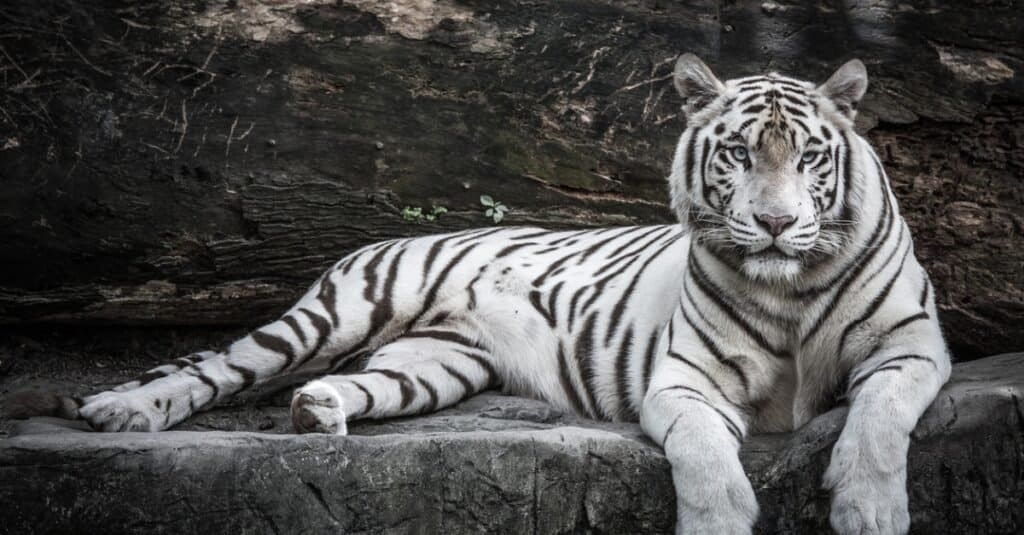
White Tiger

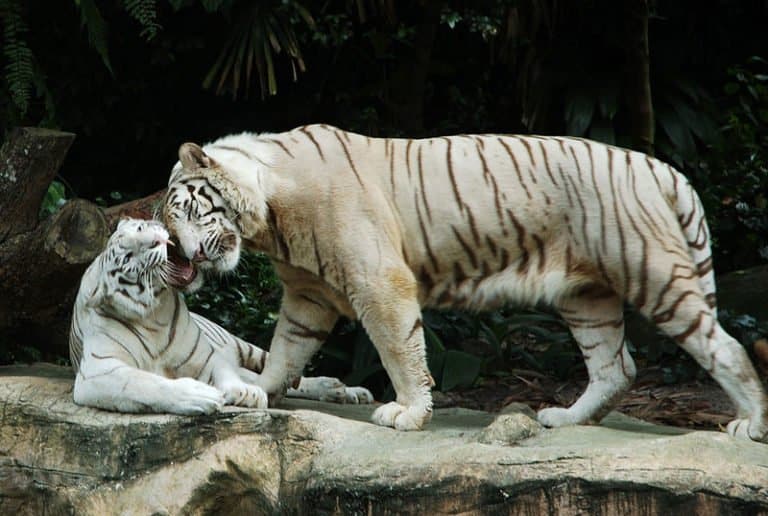
The white tiger is not a subspecies, but a product of a genetic mutation.

What is a White Bengal Tiger?

Every so often, a Bengal tiger is born with an all-white coat with brown to black stripes. These “white Bengal tigers” tend to grow faster and larger than their yellow and orange peers.

What Was the Biggest Bengal Tiger Ever Recorded?

In November 1967, hunters in Uttar Pradesh, India, shot a Bengal tiger that was around 11 feet long. The behemoth tiger weighed a whopping 857 pounds. To date, that is the largest Bengal tiger ever recorded.

How Big are Bengal Tiger Teeth?

Bengal tigers have very large, sharp teeth. They fall between 3 and 3.9 inches from the gum line, making them the biggest canine teeth of all cat species.

Behavior
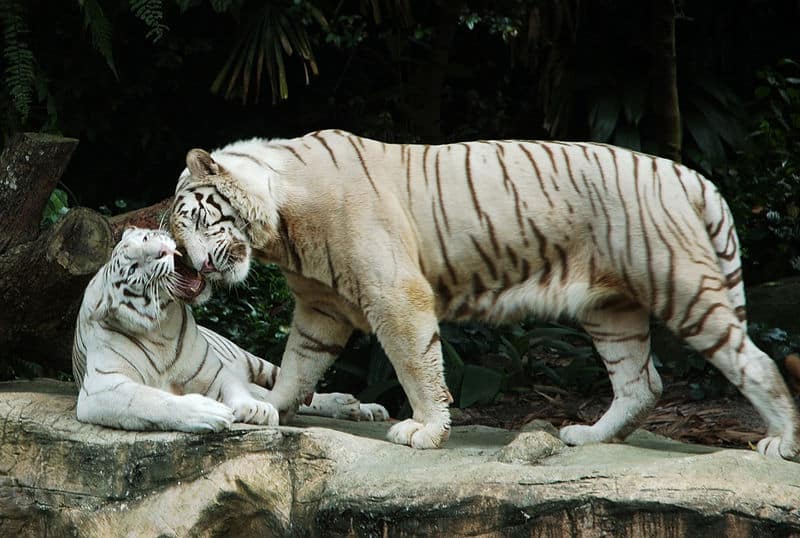
Two white Bengal Tigers from the Singapore Zoo

Bengal tigers are mostly solitary except for mother-cub groups.

The primary traveling unit of these tigers is a mother and her offspring. Besides the early-development period, which lasts about two to three years, Bengal tigers are solitary creatures. On rare occasions, a group of tigers will converge in the same area, usually because of a plentiful food source. When such gatherings happen, the group of tigers is called an ambush or streak.

These tigers, like nearly all other tiger species, have home territories that they rarely leave. When children go out on their own, females typically stick close to their mother’s area. During their first year living alone, adolescent cubs visit their mothers’ territories — females more often than males.

Habitat
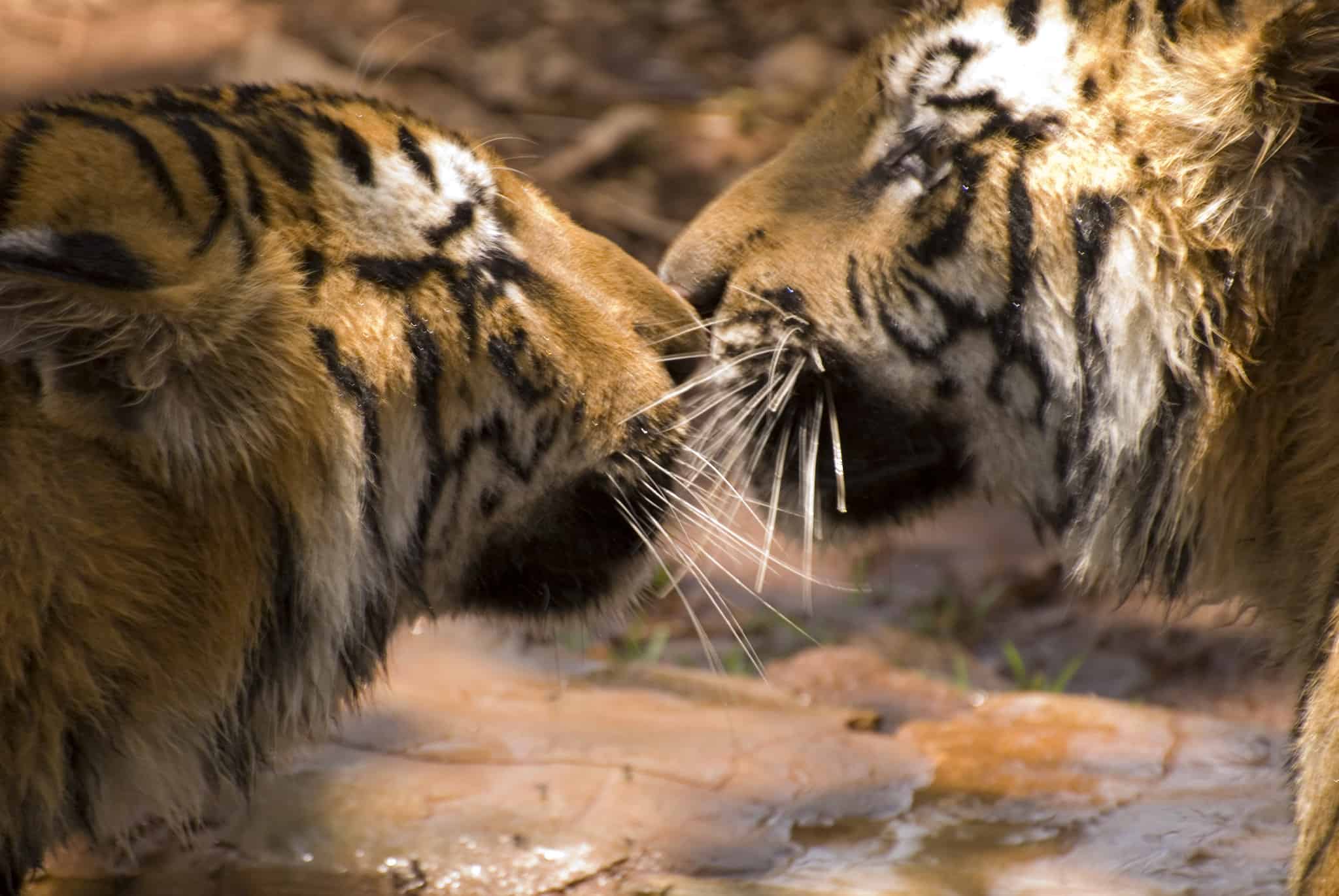
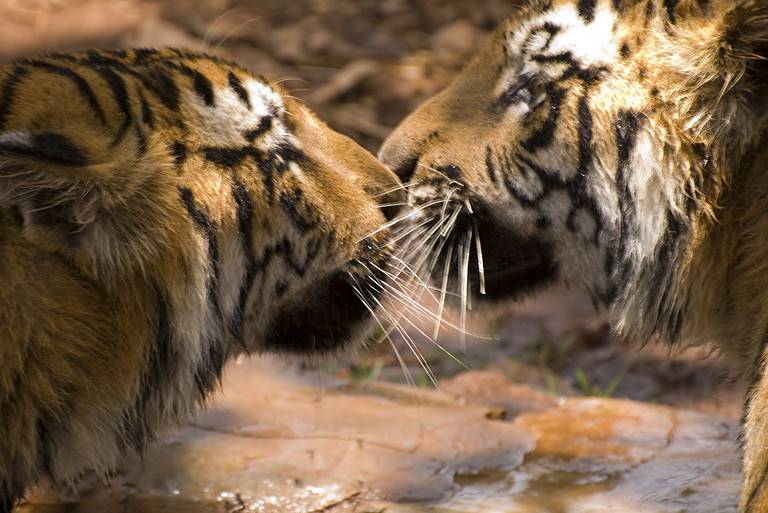
Two Bengal tigers, Karnataka, India

Bengal tigers thrive in tropical forests and mangroves.

Generally speaking, Bengals live in tropical, subtropical, and temperate forests with access to water. Altitude-wise, they typically stay between 660 and 9,800 feet above sea level. However, that may be changing. In 2008, a Bengal tiger in Bhutan was caught on camera at 13,800 feet!

Today, these tigers live in India, Bangladesh, Nepal, and Bhutan. In India, they stick to tropical forests, subtropical deciduous forests, certain grasslands, and mangroves. Bangladesh has seen a thinning of the tiger population. The animals are now only found in the Sundarbans, which are mangrove forests, and the Chittagong Hill Tracts. Nepal is home to three small and isolated tiger populations in Chitwan National Park, Parsa National Park, and Bardiya National Park. In Bhutan, Bengals live in 17 of the country’s 18 districts.

Diet
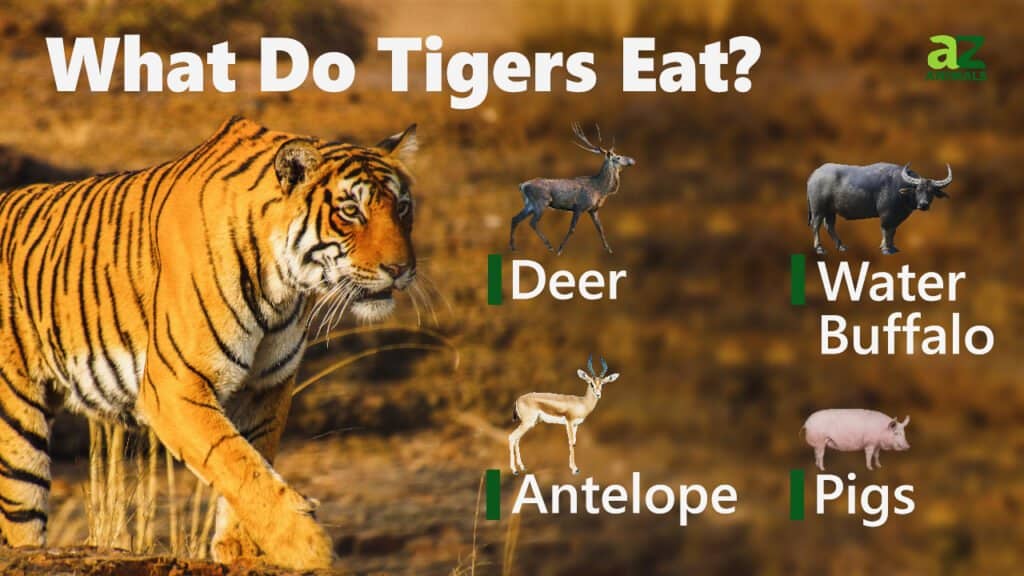
What Do Tigers Eat image
Tigers eat deer, water buffalo, antelope, and pigs.

Bengal tigers, like all tigers, are carnivores. Their favorite meat comes from large, hooved mammals, including chital, gaur, and sambar. In a pinch, they’ll also prey on barasingha, water buffalo, nilgai, serow, takin, wild boar, hog deer, Indian muntjac, porcupines, hares, leopards, wolves, crocodiles, dhole, and peafowl. Increasing evidence also suggests that these tigers will coordinate attacks against rhinoceros and elephants.

Rural farmers must remain vigilant against Bengals because tigers also attack domesticated livestock. And though history is littered with stories of man-eating tigers, it’s a rare occurrence that typically only happens if the animal has a disability and can no longer catch other prey.

When making a kill, tigers approach from the back or side and immediately go for their victims’ throats. They then drag the carcass somewhere covered to eat.

In one sitting, tigers may consume up to 100 pounds of meat! But keep in mind that only one in 20 hunts is successful, and they only average one big meal a week.

Predators and Threats
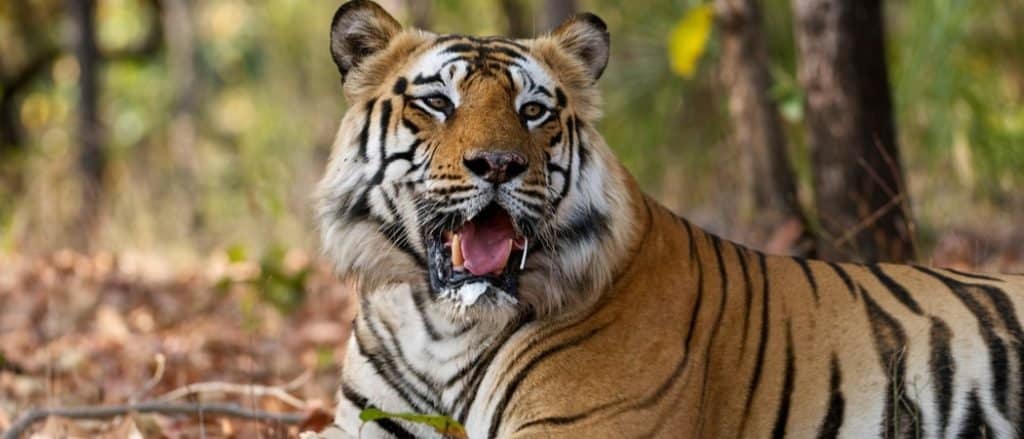
Animals in Bangladesh

Poaching and habitat destruction have led to the Bengal tiger’s endangered status.

Poaching and habitat destruction, which cause population fragmentation, are the main threats to these tigers. Though lawmakers have implemented anti-poaching laws to protect big game, it remains a huge problem. A thriving and lucrative black market for skins and body parts — which pays a year’s salary for one kill — unfortunately encourages people to break the laws and hunt tigers.

Moreover, on account of India’s 2006 Forest Rights Act, more people are moving into jungle regions and encroaching on tiger territory. While the statute is a much-needed boon for indigenous human communities, it’s terrible for the subcontinent’s cat population.

The Indian government has established tiger Conservation Units, known as TCUs, in the foothills of the Himalayan Mountains. Encouragingly, populations appear to be rising in these areas. However, the International Union for the Conservation of Nature (IUCN) still lists these tigers as endangered. Much more work is still needed to ensure their survival in the wild.

Reproduction, Babies, and Lifespan
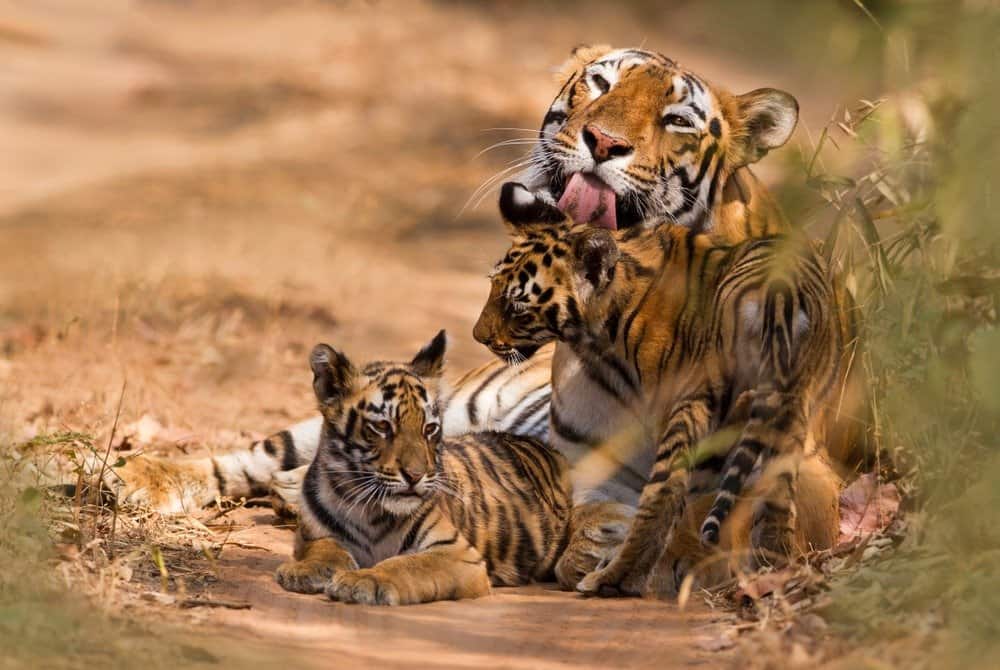
Bengal tiger with cub

Young tiger cubs stay with their mothers for two or three years.

These tigers mate throughout the year, but many baby tigers are born in April and December. The pregnancy gestation period for female Bengals is about 3.5 months, and mothers usually have litters of up to six. Births happen in sheltered areas like tall grass, caves, and thick bush.

Baby tigers are called cubs and weigh between 1.7 and 3.5 pounds at birth. When they first come into the world, their eyes and ears are shut, and they’re covered in wooly fur that sheds between the ages of 3.5 and 5 months.

Like humans, Bengals’ first set of teeth isn’t permanent. They’re called “milk teeth” and are replaced with an adult set about 2.5 months after birth. Newborn tigers suckle their mothers for about three to six months and start trying solid foods at two months old.

Young tigers stay with their mother for about two to three years, and during that time, she doesn’t go into heat. But once her babies move away, she starts the reproductive cycle again. In other words, female Bengal tigers give birth every two to three years, depending on how many cubs they have per litter and how long their cubs stick with their mother.

In the wild, a Bengal tiger’s lifespan is approximately 15 years. The older they get, the weaker they get, and catching prey becomes more and more difficult. In captivity, Bengal tigers, barring disease and unforeseen accidents, usually live for 20 to 25 years.

Population
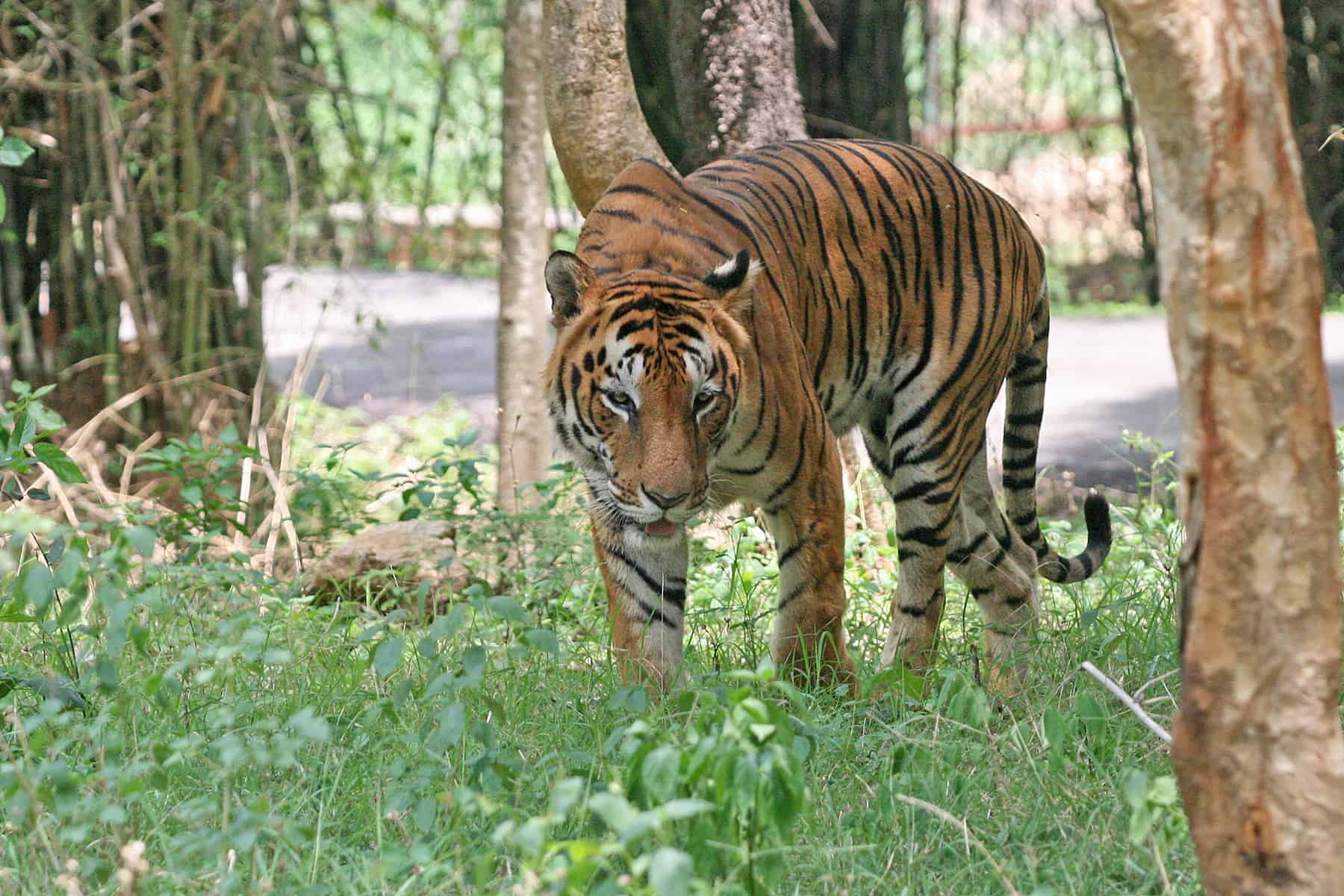
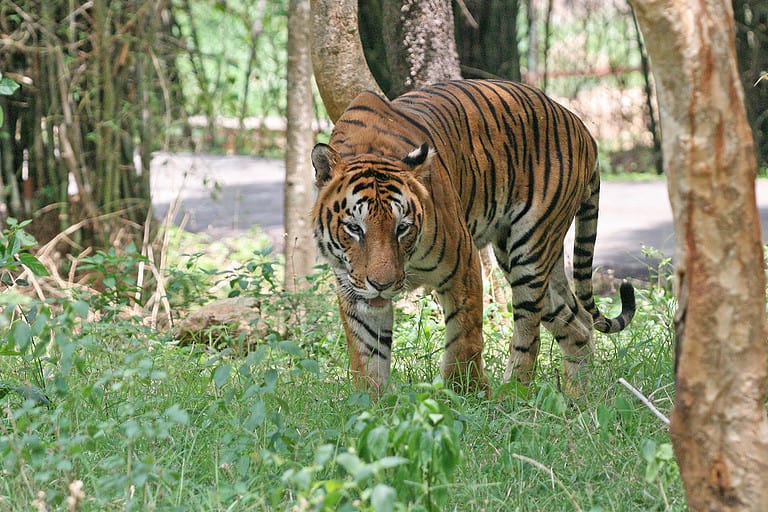
A Bengal tiger in Bannerghatta National park in Bangalore

Bengal tiger populations are slowly improving.

How many Bengal tigers are thriving in the wild today? The Bengal tiger population is precarious though on the rise. In 2011, only about 2,500 lived in the wild. By 2018, that number had increased by a few hundred.

In 2010, the World Wildlife Fund for Nature launched the “Save Tigers Now” campaign, which works towards its stated goal of doubling the wild tiger population by 2022. They didn’t succeed – but numbers have increased to 3,500.

Private Big Cat Zoos Don’t Help the Tiger Population
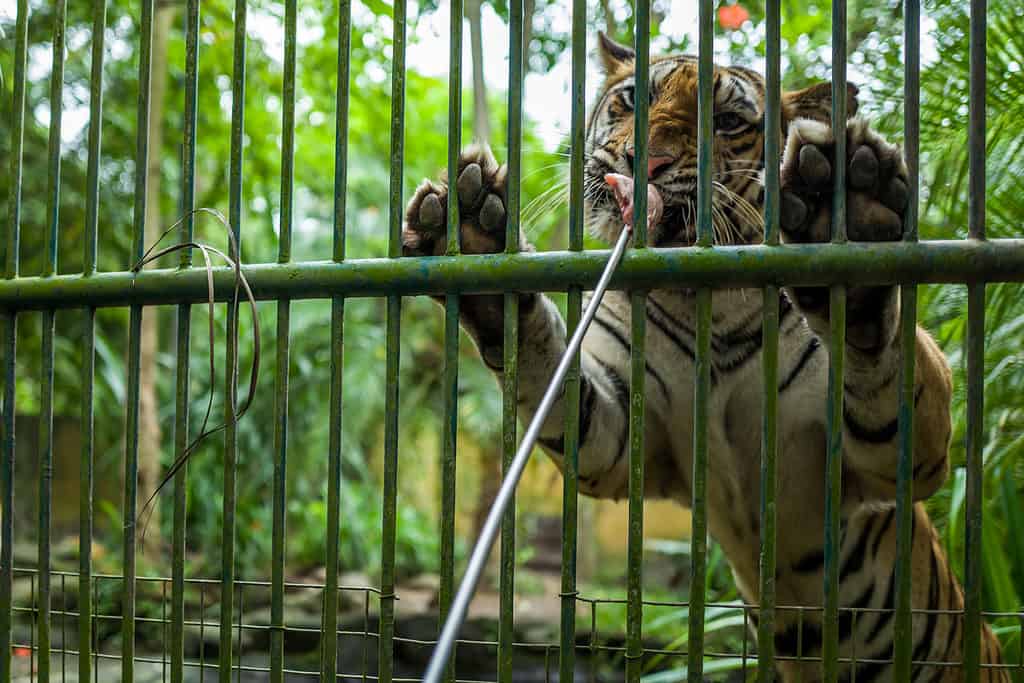
Tiger leans up against cage while being fed from the other side

Tigers bred in captivity can not survive in the wild.

Unfortunately, over the past three decades, tiger breeding has become popular worldwide, especially in the United States. People open private zoos and breed tigers to exhibit. And while a patchwork of laws prevents some undesirable activity, the system isn’t foolproof.

What’s the problem with breeding tigers in captivity? For starters, the animals born in captivity are not genetically equipped to survive in the wild. Secondly, many of these tiger zoo keepers end up murdering animals when they get too large and can no longer participate in pet-a-tiger exhibits and shows.

View all 453 animals that start with B
How to say Bengal Tiger in ...
Bulgarian
Бенгалски тигър
German
Königstiger, Bengalischer Tiger
English
Bengal Tiger
Spanish
Tigre de Bengala
Finnish
Intiantiikeri
French
Tigre du Bengale
Hebrew
טיגריס בנגלי
Croatian
Bengalski tigar
Japanese
ベンガルトラ
Dutch
Bengaalse tijger
English
Bengaltiger
Polish
Tygrys bengalski
Portuguese
Tigre de Bengala
English
Tigru Bengalez
Swedish
Bengalisk tiger
Turkish
Bengal Kaplanı
Chinese
孟加拉虎

Sources

  1. David Burnie, Dorling Kindersley (2011) Animal, The Definitive Visual Guide To The World's Wildlife / Accessed May 27, 2010
  2. Tom Jackson, Lorenz Books (2007) The World Encyclopedia Of Animals / Accessed May 27, 2010
  3. David Burnie, Kingfisher (2011) The Kingfisher Animal Encyclopedia / Accessed May 27, 2010
  4. Richard Mackay, University of California Press (2009) The Atlas Of Endangered Species / Accessed May 27, 2010
  5. David Burnie, Dorling Kindersley (2008) Illustrated Encyclopedia Of Animals / Accessed May 27, 2010
  6. Dorling Kindersley (2006) Dorling Kindersley Encyclopedia Of Animals / Accessed May 27, 2010
  7. David W. Macdonald, Oxford University Press (2010) The Encyclopedia Of Mammals / Accessed May 27, 2010
Lisha Pace

About the Author

Lisha Pace

After a career of working to provide opportunities for local communities to experience and create art, I am enjoying having time to write about two of my favorite things - nature and animals. Half of my life is spent outdoors, usually with my husband and sweet little fourteen year old dog. We love to take walks by the lake and take photos of the animals we meet including: otters, ospreys, Canadian geese, ducks and nesting bald eagles. I also enjoy reading, discovering books to add to my library, collecting and playing vinyl, and listening to my son's music.

Thank you for reading! Have some feedback for us?


Bengal Tiger FAQs (Frequently Asked Questions)

Wild tigers are carnivores, meaning they feed on meat. In an extreme pinch, you may catch a Bengal tiger chewing on grass and berries, but they cannot survive on vegetation alone.