


Quick Take
- Bloodhounds and sleuth hounds were long thought to be the same breed, though the difference between them reveals something unexpected about each dog's nature. Compare similar breeds →
- Medieval monks are responsible for shaping one of law enforcement's most trusted tools today, and the name they gave these dogs hints at why. Explore bloodhound history →
- One bloodhound police dog racked up 650 confirmed finds, with one of them starting from a trail over a week old. Find out how. Meet Nick Carter →
- Bloodhounds can outlast even the most patient trainer, and the trick to actually getting through to them is not what most dog owners expect. See training tips →
Bloodhound dogs are very intelligent and have an extremely good sense of smell, which has also helped them earn a high reputation in the search and rescue department and the law enforcement arena. They are also known to be highly active and have a unique appearance. They are also kind and affectionate. These dogs are usually purebred and can often be found in adoption shelters and rescue groups.
Initially, there was confusion over whether bloodhounds and sleuth hounds were the same. However, while bloodhounds are known to be swift, sleuth hounds are known to be slow and lazy. Sleuth hounds were known to be the Scottish counterparts of bloodhounds.

Three Pros and Cons of Owning a Bloodhound
If you are considering adopting this breed, you should know that these animals come with a range of pros and cons — much like any other animal. Some of them are:
| Pros | Cons |
|---|---|
| Affectionate in nature Bloodhounds are known to have an affectionate and gentle nature, which makes them even more desirable to people. They are very loving and friendly towards their owners. | Clumsy These dogs are very clumsy, and owning them could cause problems as they can create chaos around the house. |
| Tracker dogs Bloodhounds are best known as tracker dogs and were used in earlier times to track down people and hunt deer and wild boars. They have a heightened sense of smell. | Not fit for young children and older adults These dogs are usually only suitable for physically fit people who can handle large-sized dogs and the energy that usually comes with them. They are known to knock down very small children, accidentally, of course. |
| Tracking companion They are an amazing tracking companion. Hunters, fishermen, and other outdoorsy families would be an ideal match for a bloodhound. | Stubborn This breed is stubborn, and it can sometimes be difficult for the owners to maintain control over them. |
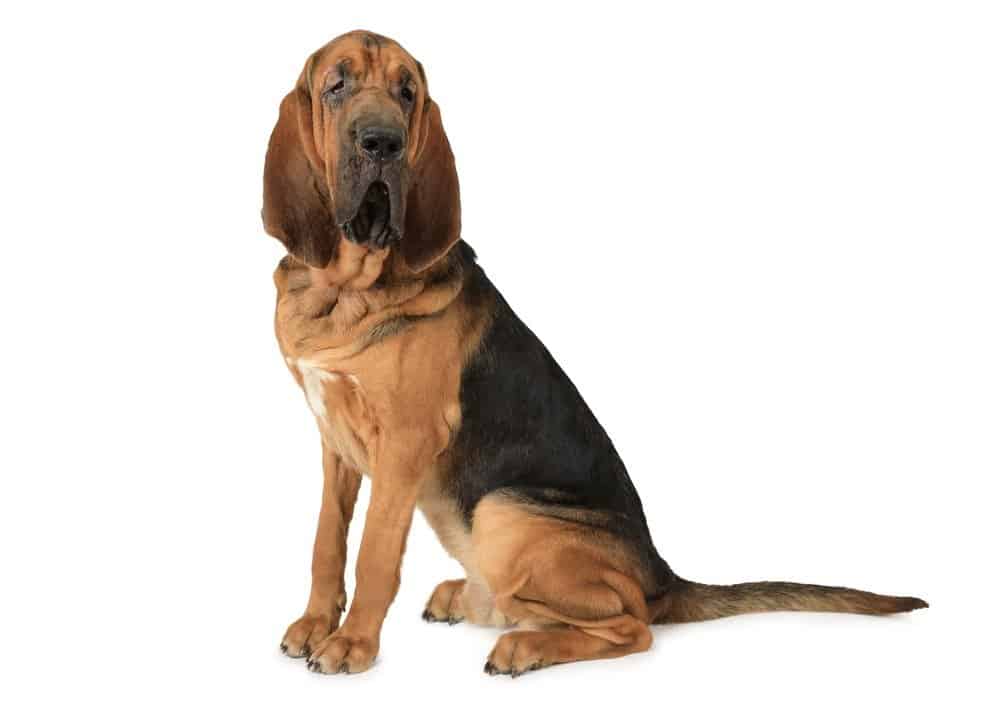
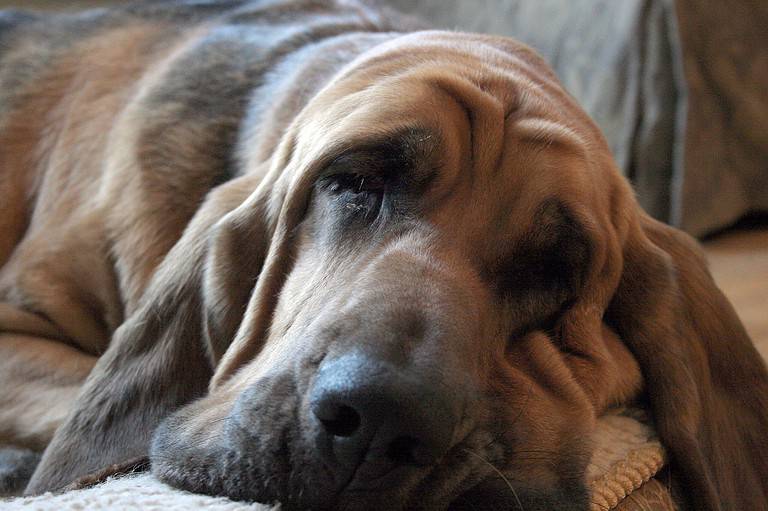
Bloodhounds can be very stubborn, so it is important to establish authority early on.
©Kuznetsov Alexey/Shutterstock.com
History and Origins
It is uncertain when the bloodhound breed originated, but some experts believe it was present in the ancient Mediterranean. Aelian, a third-century scholar, wrote in his “Historia Animalium” of a hound with an impressive sense of smell, so focused on its task that it could not be pulled away from the trail until the target was found. The bloodhound is thought to be the oldest hound still around that utilizes scent to hunt and is seen as a predecessor to breeds like the black and tan coonhound and related coonhound varieties.
Around one thousand years ago, bloodhounds were developed in Western Europe, and the credit for their careful breeding is given to high-ranking members of the pre-Reformation church. During medieval times, many influential members of the church kept packs of hounds on the grounds of monasteries in England and France. The monks in charge of the breeding program were so diligent that their hounds were referred to as “blooded hounds,” indicating that they were of noble descent.
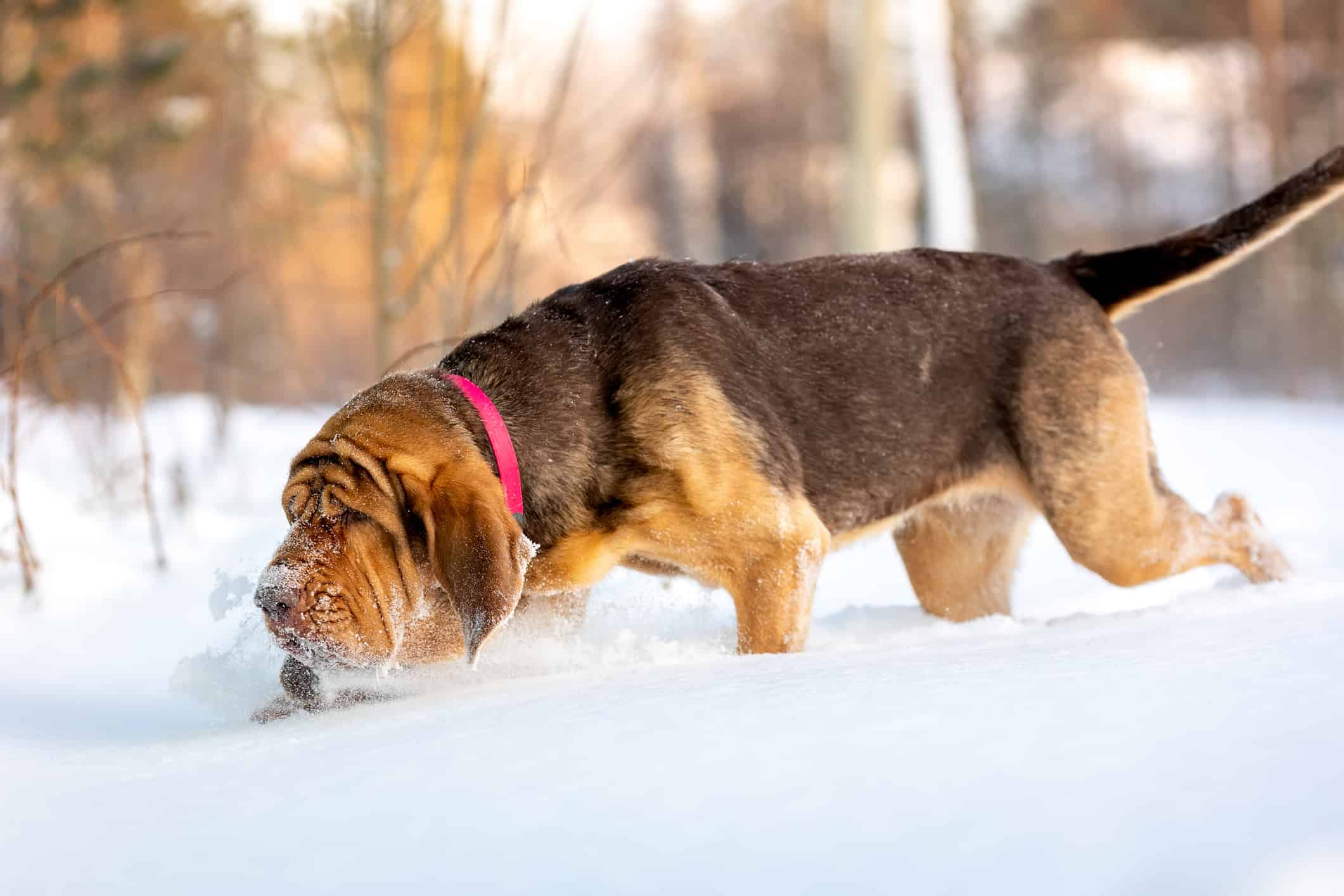
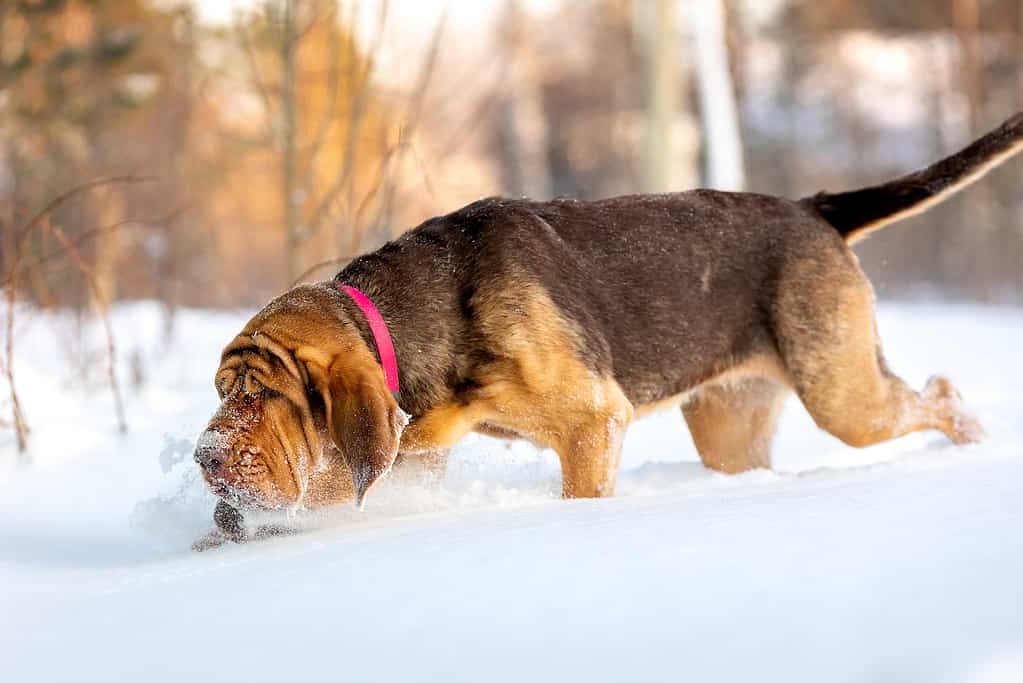
Throughout the years, bloodhounds have earned a strong reputation for their unmatched ability to track humans. Law enforcement agencies have been relying on these strong-willed dogs to follow scents that could lead to a criminal, a missing child, or a lost hiker. The assignment could go on for days, regardless of the terrain, and bloodhounds will never give up until the trail ends. Despite advances in scent detection technology, bloodhounds remain among the most accurate trackers for human scent, and their abilities are still highly valued in search and rescue and law enforcement.
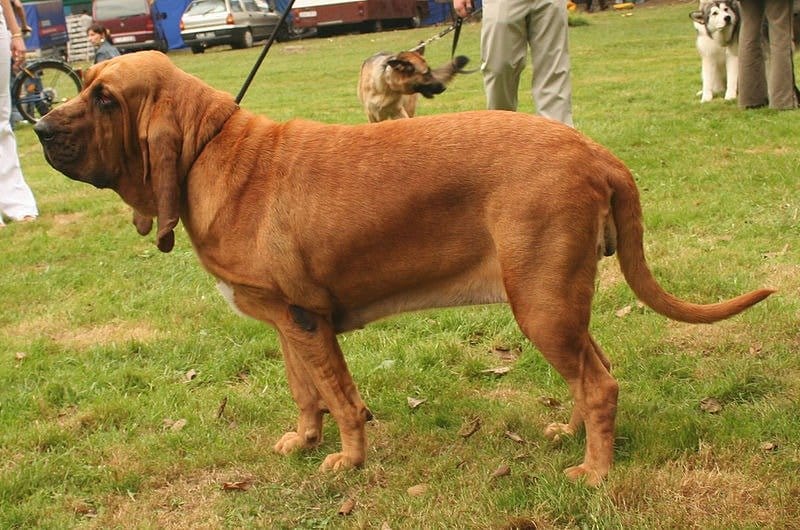
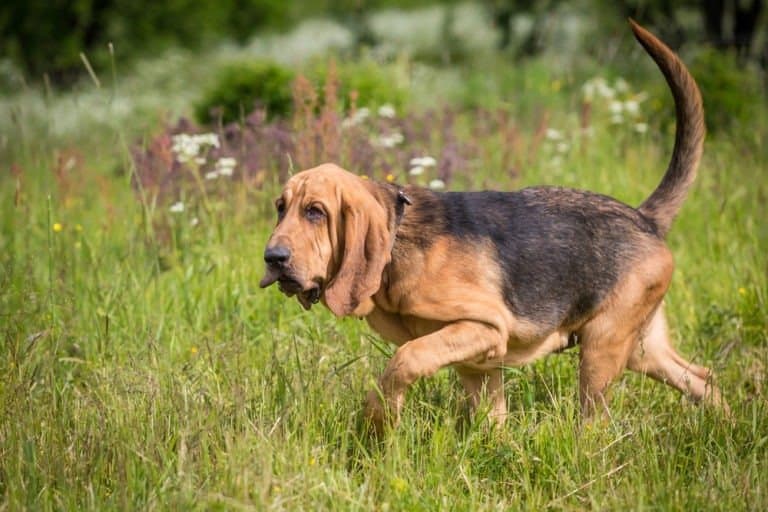
Bloodhounds will never give up on a scent.
©Pleple2000, CC BY-SA 3.0, via Wikimedia Commons – Original / License
Size and Weight
Bloodhounds are large and sturdy dogs and were originally bred for hunting deer and wild boar. They can also detect scents very keenly and are often used to track people.
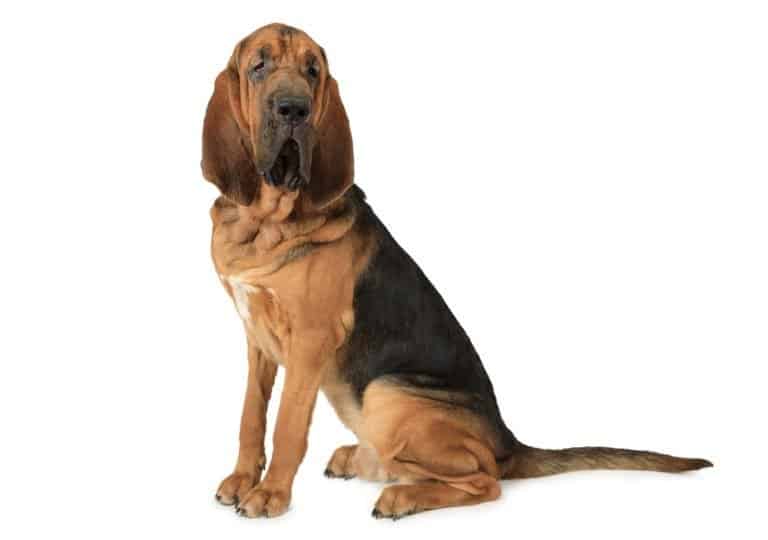
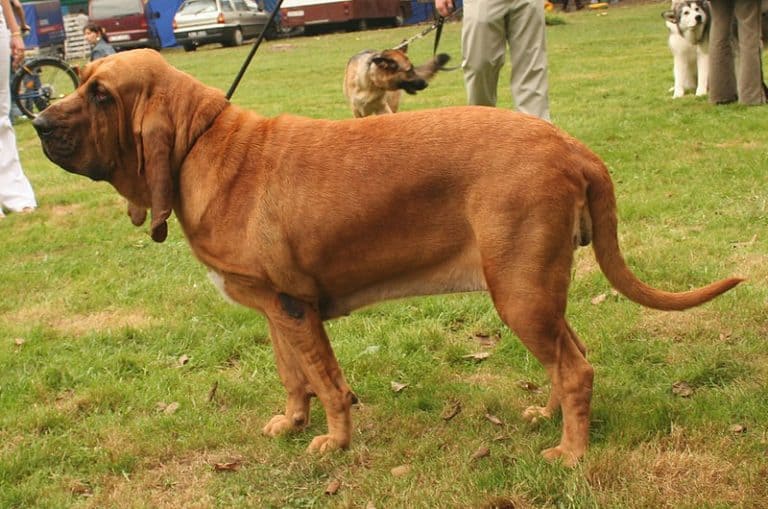
The females of the species are usually 23 to 25 inches in height, while the males are 25 to 27 inches. Females weigh about 79 to 99 lbs., while males weigh 90 to 110 lbs.
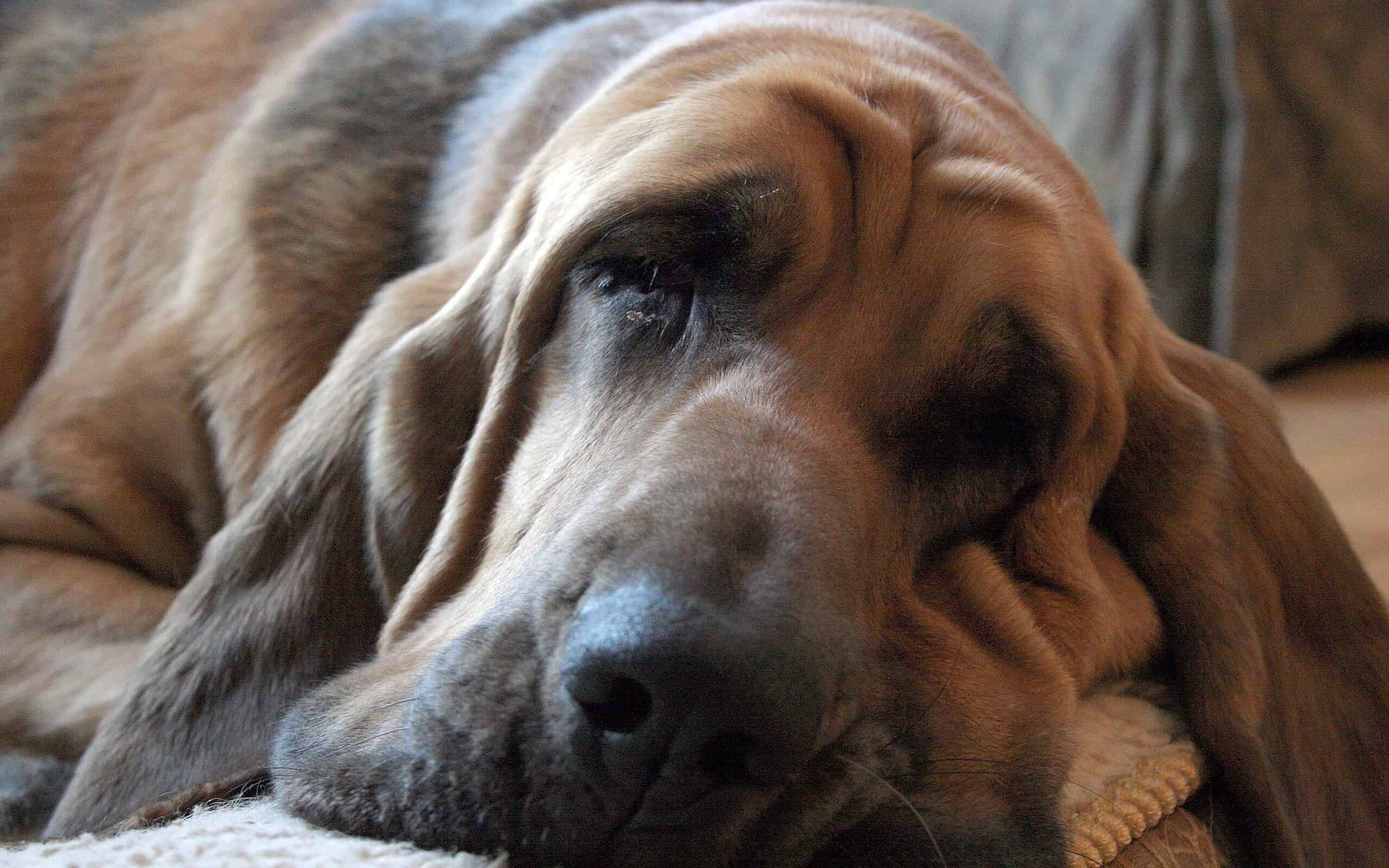
Bloodhounds weigh between 79 and 110 pounds.
©Bruce, CC BY 2.0, via Wikimedia Commons – Original / License
Common Health Issues
Bloodhounds are generally known to be a very healthy breed of dog. They usually have a lifespan of around 10 to 12 years. However, like any other living creature, they are not completely safe from diseases.
These dogs can suffer from hip dysplasia, which is an abnormal formation of the hip socket, or elbow dysplasia, which is the abnormal formation of the elbow bones. They are also susceptible to bloating, which might lead to stomach-related conditions and could be due to indigestion or other underlying conditions.
They also suffer from other problems such as heart conditions and eye conditions like cataracts and persistent pupillary membranes.
The common health problems that bloodhounds suffer from include the following:
- Hip dysplasia
- Elbow dysplasia
- Bloating
- Heart conditions
- Eye conditions
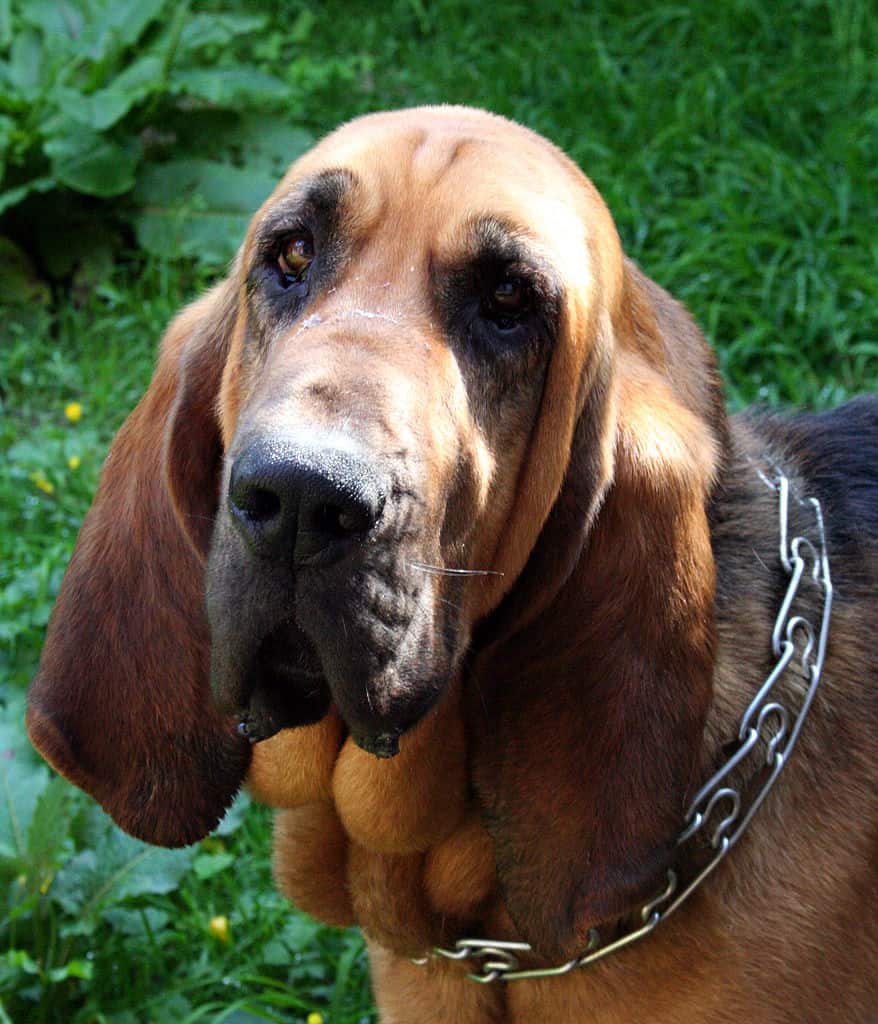
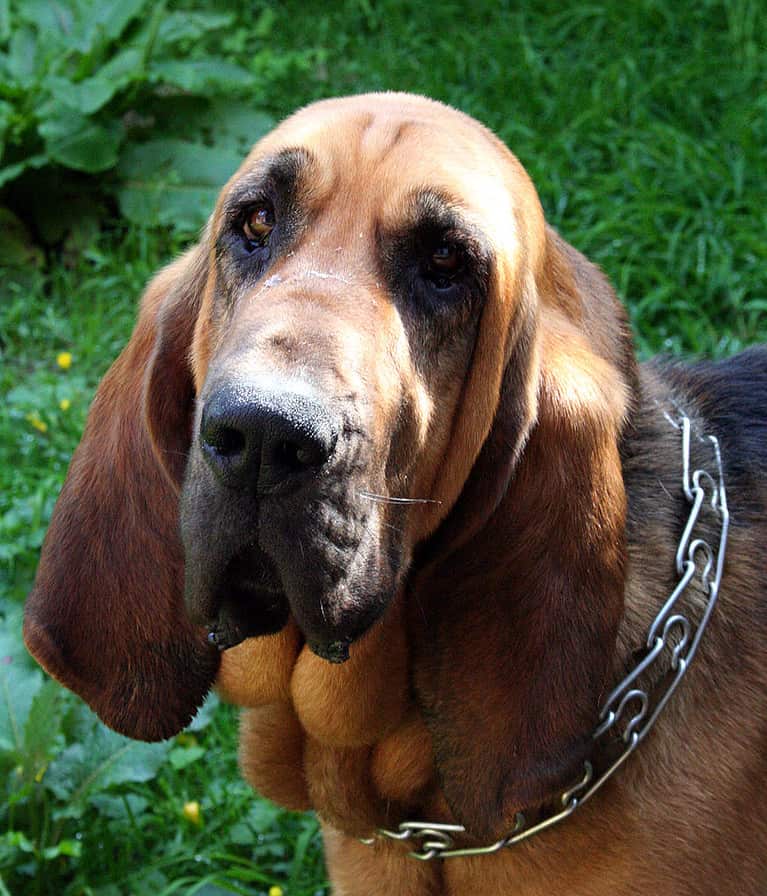
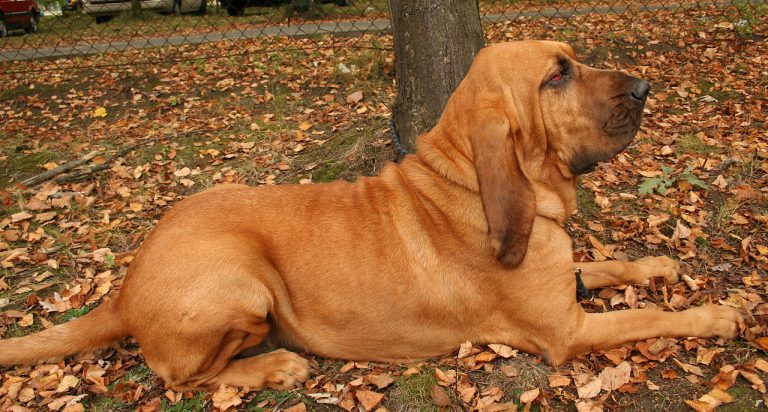
Bloodhounds are prone to dysplasia of the hips and elbows.
©Pypaertv, CC BY-SA 3.0, via Wikimedia Commons – Original / License
Temperament
Bloodhounds are gentle and patient and are known to be noble dogs. These dogs are also known to be especially great with children and are also patient enough to let young children get all over them. They don’t seem to realize that they are gigantic dogs and have been known to accidentally knock small children over, so supervision is recommended.
Even though the bloodhounds are very well-mannered, they are independent and very determined. These dogs are also known to make independent decisions when they sense a particular scent. They must follow their nose!
They are also known for making melodious noises, such as howling and whining, and are considered one of the most vocal dog breeds. If you don’t like a talkative dog, a bloodhound is not for you.
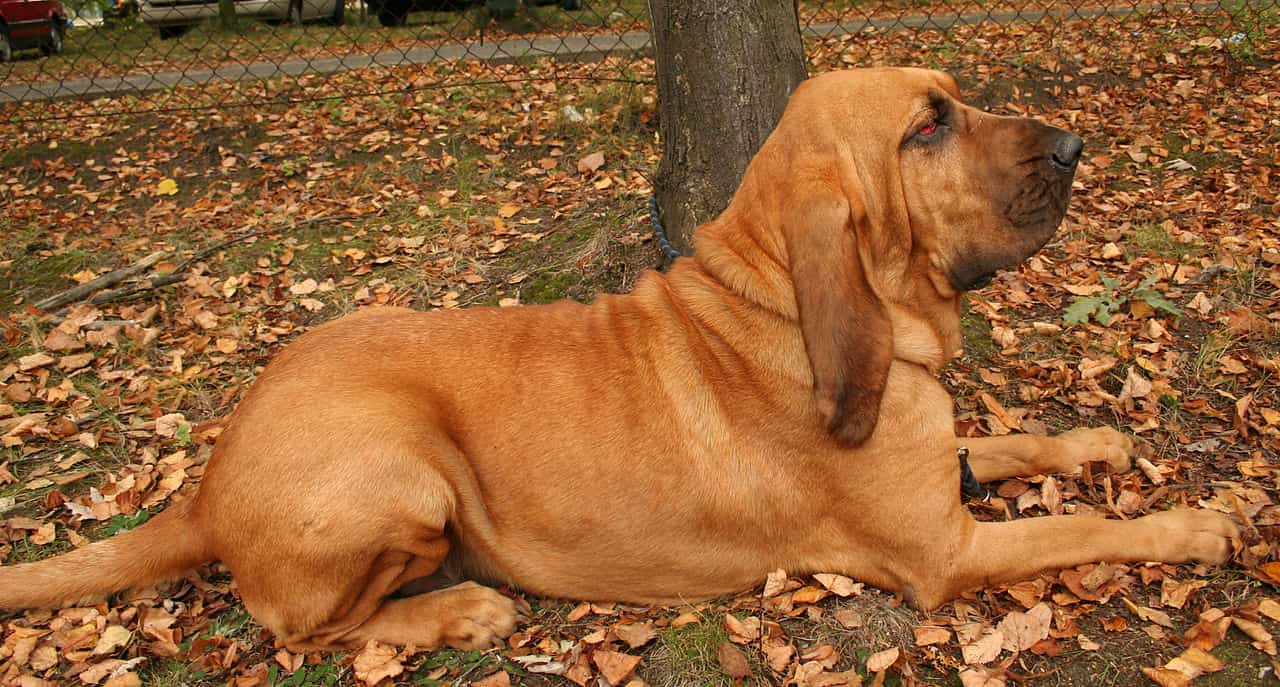
Bloodhounds are well-mannered dogs that are good around children.
How to Take Care of a Bloodhound
To be able to own a pet, it is important to know how to take care of them. Here are a few things you should take care of with Bloodhounds.
The Best Dog Food
Adult bloodhounds usually need about 18 percent protein and five percent fat. The common foods that you can feed to your bloodhound include chicken, salmon, vegetables, fish, and brown rice.
However, bloodhound puppies should usually be fed dry dog food, chicken, sweet potato, and other large-breed puppy foods, which ultimately help in their overall growth and development.
Maintenance and Grooming
Bloodhounds usually do not require much maintenance and grooming except for regular cleaning of their ears and coat. They need to be bathed only three to four times a year. However, when bathing them, it is advisable to do so outside, as they may slip and hurt themselves indoors.
Their ears need regular grooming. It is best to clean your bloodhound’s ears once a week, as they can become a breeding ground for bacteria and other infections. Other than that, you should also brush your bloodhound’s fur once a week to remove the dead hair.
Training
Even though bloodhounds are known to be tracker dogs and engage in a lot of physical exercise, they will often test you while training.
They are intelligent and stubborn and can outlast even the most patient trainer. Training requires time, patience, and lots of snacks to reach your goals.
However, once they start following their owner’s lead, they just need gentle reminding until the behaviors become commonplace.
Exercise
Bloodhounds require a good amount of exercise. These dogs typically need between 45 and 90 minutes of physical activity each day to keep them fit and satisfied, though some individuals may require more.
For the sake of the bloodhound’s mental peace, they need to be taken outside for walks, which helps them keep destructive and aggressive behaviors at bay.
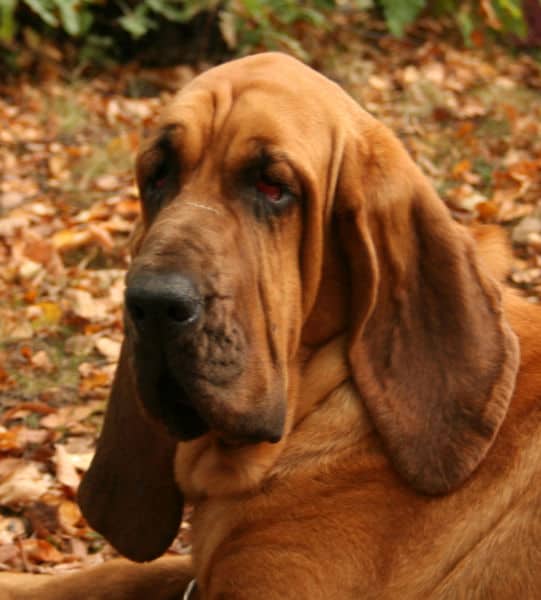
Bloodhounds require 2 hours of physical activity per day.
©Pleple2000, CC BY-SA 3.0, via Wikimedia Commons – Original / License
Puppies
Bloodhound puppies need extra care since they are fragile during their first weeks and months. However, as they grow up, a more relaxed care routine can be put in place.
Bloodhound puppies usually need to be fed chicken, sweet potatoes, and other large-breed puppy food that helps in their growth and development.
It is recommended to start training and grooming early in life to give your puppy time to become accustomed to those routines.
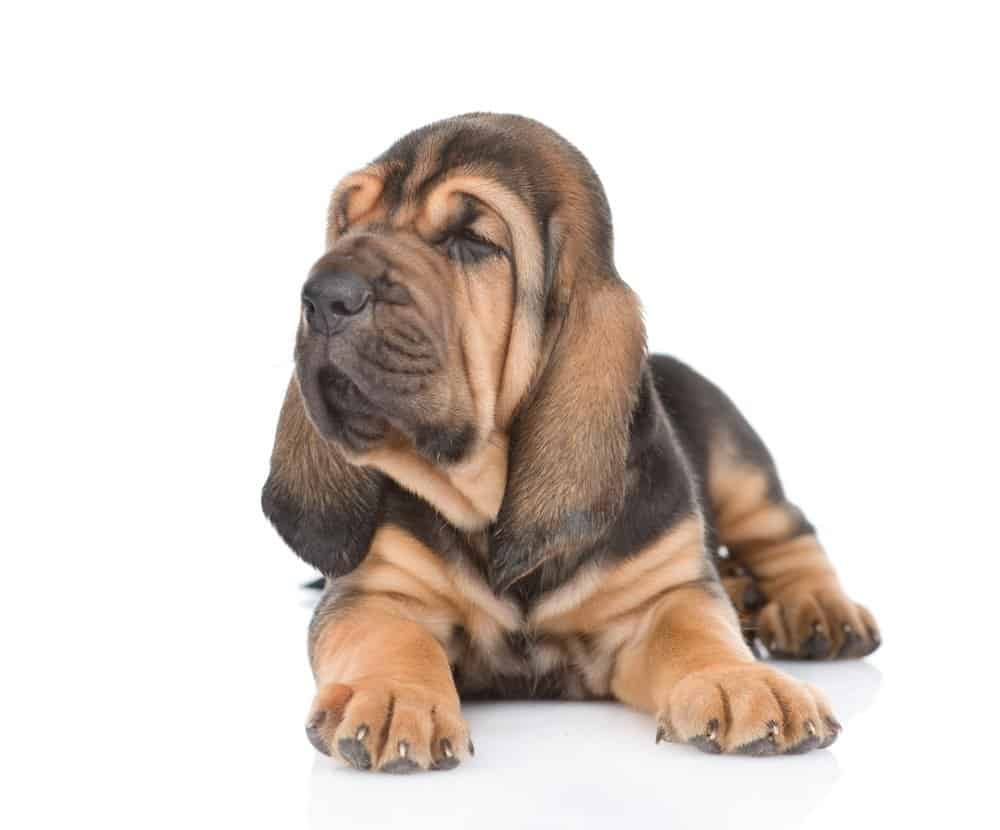
Start training your bloodhound puppy early.
©Ermolaev Alexander/Shutterstock.com
With Children
Bloodhounds are known to be very affectionate and loving and are especially great with children. They are also very patient and often allow young children to climb and get all over them.
Dogs Similar to Bloodhounds
Several dogs are like Bloodhounds. Some of them are:
- Greyhound: While the Greyhound has a much slimmer body, they both can reach an average of two feet tall. Both are excellent companions for children and families, and they are even friendly with strangers.
- Beagle: Beagles have about the same lifespan as a bloodhound, and both are gentle enough to be around children. While the bloodhound requires a little more attention and care during grooming, the beagle is much easier to groom. Both are incredibly vocal, acting as an alarm system with their bark to protect the home.
- American Foxhound: These dogs are used for hunting foxes based on their scent, using their heightened sense of smell to get the job done, much like bloodhounds.
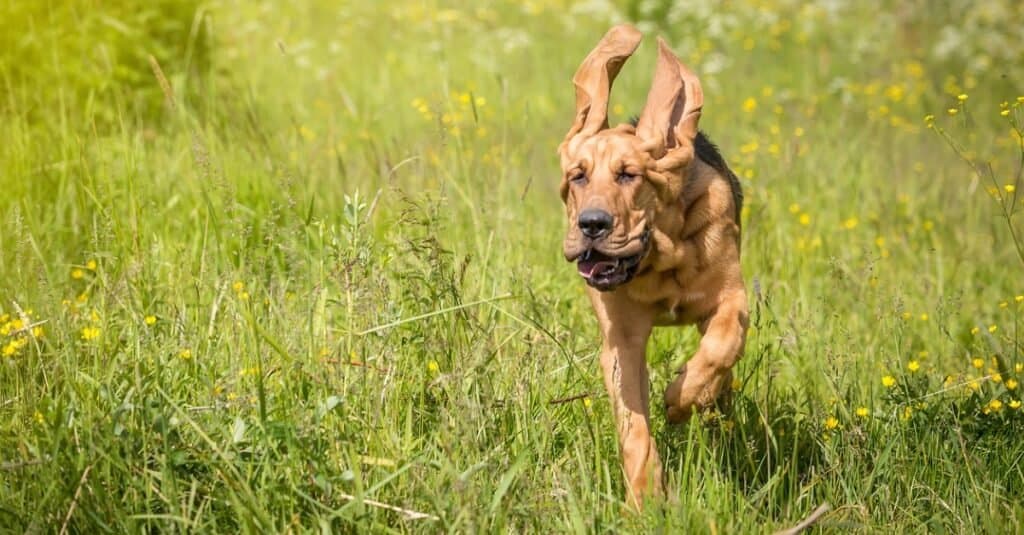
The bloodhound was originally bred to follow the scent of deer and wild boar.
©iStock.com/Edoma
Famous Bloodhounds
There are many famous bloodhound dogs. Disney has integrated the floppy-eared dog as some of their most popular characters, like Pluto, Trusty (from Lady and the Tramp), Bruno (from Cinderella), and Copper (from The Fox and the Hound). Disney has even used the bloodhound as the character Bumpus Hounds in their holiday film A Christmas Story.
On television, the bloodhound found its way onto the set of “The Beverly Hillbillies.” Duke, the dog of the character Jed Clampett, was played by a bloodhound named Stretch.
Thanks to the bloodhound’s ability to track scents, the bloodhound’s most important role has been that of a police dog, and they are commonly used in France. Nick Carter, owned and handled by Captain G. V. Mullikin, is commonly considered the epitome of trailing for these dogs and is credited with 650 finds. One of these discoveries occurred after following a 12-day-old trail.
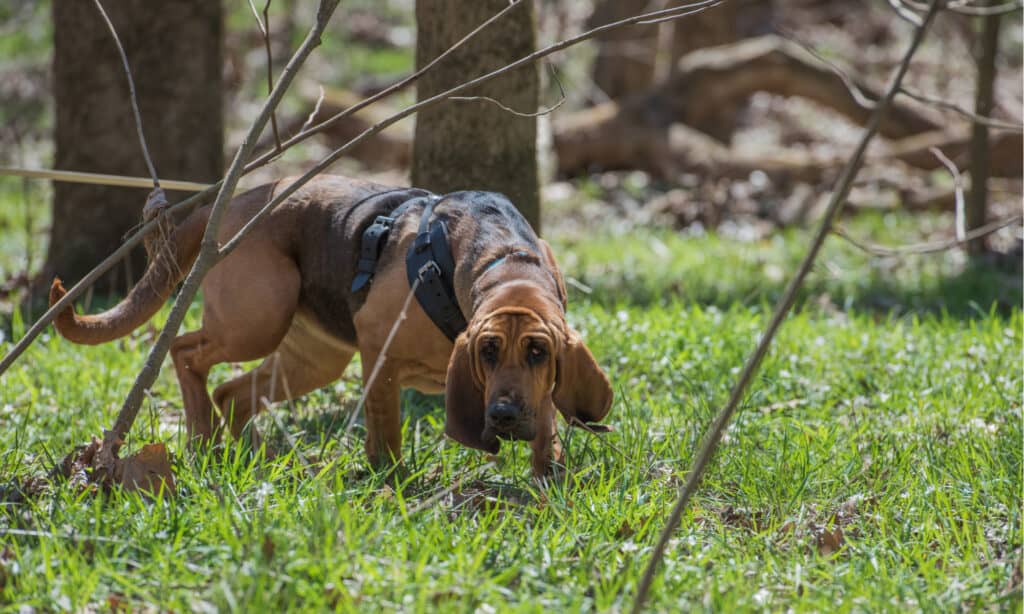
Bloodhound tracking is used today by many police and rescue groups.
©NSC Photography/Shutterstock.com
Bloodhound Pictures
View all of our Bloodhound pictures in the gallery.

Sources
- Dogtime / Accessed November 8, 2019
- Wikipedia / Accessed November 8, 2019
- Wikipedia / Accessed November 8, 2019
- DogBreeds911 / Accessed November 8, 2019
- Embrace Pet Insurance / Accessed November 8, 2019
- Hill's Pet / Accessed November 8, 2019
- Purina / Accessed November 8, 2019
- Bloodhound Information UK / Accessed November 8, 2019
- The Nest / Accessed November 8, 2019
- Bloodhound Man Trackers / Accessed November 8, 2019
- Borrow My Doggy / Accessed November 8, 2019
- Care / Accessed November 8, 2019
- The Paws / Accessed November 8, 2019