





B
Species Profile

Blue Lacy Dog

Canis lupus familiaris

Texas grit in a blue coat
Jessica Lobsinger/Shutterstock.com

Blue Lacy Dog Distribution

Click a location to explore more animals from that region

Origin Location

This map shows the native origin of the Blue Lacy Dog. As a domesticated species, they are now found worldwide.

Loading map...

Size Comparison

Human 5'8"
Blue Lacy Dog 1 ft 8 in

Blue Lacy Dog stands at 29% of average human height.

Blue Lacy dog running

At a Glance

Domesticated
Also Known As Lacy, Lacy Dog, Texas Lacy, Blue Lacey
Diet Omnivore
Activity Diurnal+
Lifespan 5 years
Weight 23 lbs
Status Not Evaluated
Did You Know?

Developed in Texas in the 1800s and closely tied to ranch work-herding, tracking, and catching livestock.

Scientific Classification

The Blue Lacy is a working dog breed developed in Texas, commonly used for herding and hunting tasks and known for high drive, agility, and endurance. It is considered a color variety within the Lacy Dog breed.

Kingdom
Animalia
Phylum
Chordata
Class
Mammalia
Order
Carnivora
Family
Canidae
Genus
Canis
Species
Canis lupus

Distinguishing Features

  • Short, smooth coat often in a blue/gray coloration (the 'blue' variant)
  • Athletic, lean working-dog build with high stamina
  • Strong prey/work drive; commonly associated with herding/stock work and hunting roles
  • Domestic dog breed (not a separate wild species)

Physical Measurements

Males and females differ in size

Height
♂ 1 ft 9 in (1 ft 8 in – 1 ft 10 in)
♀ 1 ft 7 in (1 ft 5 in – 1 ft 9 in)
Length
♂ 2 ft 11 in (2 ft 7 in – 3 ft 1 in)
Weight
♂ 45 lbs (40 lbs – 51 lbs)
♀ 35 lbs (24 lbs – 44 lbs)
Tail Length
♂ 1 ft 2 in (12 in – 1 ft 4 in)
♀ 1 ft 2 in (12 in – 1 ft 4 in)
Top Speed
31 mph
Fast, long-distance runner

Appearance

Primary Colors
Secondary Colors
Skin Type Short, smooth, tight coat over elastic skin; low-maintenance grooming; coat is close-fitting and athletic rather than plush.
Distinctive Features
  • Blue Lacy (Canis lupus familiaris) is a Texas ranch dog bred for work. It has a compact body, short coat, and a people-focused, trainable behavior with strong drive and stamina, not wild traits.
  • Athletic, rangy, 'built to work' outline: deep chest, tucked-up waist, long legs, and efficient, ground-covering gait for endurance herding/hunting tasks.
  • Head typically wedge-shaped with a moderately long muzzle; ears commonly medium and drop/rose-set; expression alert and intense (high working focus).
  • Coat is a defining identifier for the Blue variant: short, sleek blue-gray that highlights musculature; designed for heat tolerance and all-day ranch work (not a heavy insulating coat).
  • High drive/energy and strong prey/working instincts; needs substantial daily exercise (running, structured work, scent games, herding-style outlets) and consistent training to prevent frustration behaviors.
  • Care requirements: best suited to active homes/working placements; benefits from early socialization, impulse-control training, and jobs (retrieving, tracking, stock work) to channel intensity; coat care is minimal (occasional brushing and bathing).
  • Blue Lacy may have orthopedic problems like hip dysplasia and skin allergies. Keep them lean, use joint-friendly exercise, get hip checks and vet help for itching or dermatitis.
  • Blue Lacy (Canis lupus familiaris) has a short coat that gives little cold or brush protection. May need a coat when cold and paw/skin checks after field work. Built as a Texas working dog.

Sexual Dimorphism

Sexual dimorphism is moderate: males are typically larger and more robust; females are often slightly smaller and more refined while maintaining the same athletic working build.

♂
  • Slightly broader head and chest; heavier bone and more muscular neck/shoulders.
  • Often presents a more substantial overall frame while retaining a lean, endurance-oriented physique.
♀
  • Slightly lighter, more refined frame and narrower chest while remaining strongly muscled and agile.
  • Often appears more streamlined through the neck and head without reduced working drive.

Did You Know?

Developed in Texas in the 1800s and closely tied to ranch work-herding, tracking, and catching livestock.

"Blue" refers to the slate-gray/blue coat color variety within the Lacy Dog breed (alongside red and tri).

It's known for "cold-nose" tracking ability (following older scent trails) compared with many sight-leaning sprinters.

The Blue Lacy is the State Dog of Texas (recognized by the Texas Legislature in 2005).

Many Lacys are naturally bobtailed; others have full tails-both occur in the breed population.

Compared with the base species (gray wolf), the Blue Lacy is smaller, lighter-framed, and selectively bred for handler-focused work and rapid response to cues.

The breed's short, tight coat is practical for brushy, hot environments-less burr pickup than longer-coated dogs.

Unique Adaptations

  • Heat-and-brush utility: short coat, lean build, and efficient gait suit hot Texas climates and dense scrub.
  • Endurance-oriented athleticism: built for sustained work (hours of ranch tasks) rather than short bursts alone.
  • Versatile "all-purpose" working style: selectively bred to switch between herding, trailing, and baying/catching roles depending on need.
  • High trainability under structure: responds well to consistent cues, job-based reinforcement, and clear boundaries-traits selected for ranch handling.
  • Scent + speed balance: a functional compromise between strong olfaction (Canis lupus familiaris trait) and the speed/agility demanded by ranch work.

Interesting Behaviors

  • Intense work focus: quickly "locks on" to a job (herding pressure, trailing, or pursuit) and can appear single-minded until released.
  • Wide-ranging quartering: while hunting or searching, often fans out and sweeps back in, using nose and eyes to cover ground efficiently.
  • Natural herding drive: uses body position and motion to control livestock; may circle and "push" rather than bark constantly.
  • Problem-solving in motion: adept at navigating brush, fences, and uneven terrain at speed, adjusting route without stopping.
  • High handler engagement: tends to check in for direction once trained, but can become frustrated or vocal if under-stimulated.
  • Chase/drive behaviors: may pursue squirrels, rabbits, or moving objects-requires controlled outlets and reliable recall training.

Cultural Significance

The Blue Lacy is a symbol of Texas ranching. A practical, hardworking dog that herds cattle and hogs, tracks wounded game, and works rough land. Named the State Dog of Texas in 2005.

Myths & Legends

Blue Lacy (Canis lupus familiaris) origin: Texas story says the Lacy brothers in the mid-1800s bred these dogs to do hard work, mixing herding and hunting on Hill Country ranches.

Old ranch tales describe "blue" Lacys as dogs that could work sunup to sundown-herd in the morning, trail at midday, and help catch feral hogs by evening-becoming a yardstick for an ideal Texas working dog.

Old stories say Blue Lacy dogs were made by mixing ranch dogs with wild canids seen in Texas, often coyote or wolf, a frontier tale about borrowing wild toughness.

After the Blue Lacy was named the State Dog of Texas, people told stories at trials and ranch gatherings about standout dogs that saved the day by finding lost livestock or holding a dangerous hog.

Conservation Status

NE Not Evaluated

Has not yet been evaluated against the criteria.

Population Stable

Life Cycle

Birth 6 pups
Lifespan 5 years

Lifespan

In the Wild
3–7 years
In Captivity
12–16 years

Reproduction

Mating System Polygynandry
Social Structure Managed Domestic
Breeding Pattern Serial
Fertilization Managed Selective
Birth Type Internal_fertilization

Blue Lacy (Canis lupus familiaris): Matings are planned by humans to keep working traits. Both males and females may have multiple mates across seasons (polygynandry); pairings are temporary per litter. Helpers are uncommon; humans provide most care and females rear pups.

Behavior & Ecology

Social Pack Group: 4
Activity Diurnal, Crepuscular, Cathemeral
Diet Omnivore Meat-forward foods (e.g., beef or chicken), often best tolerated as a high-protein working-dog diet.

Temperament

High-drive, high-stamina working temperament; notably more intense and task-oriented than the base species average pet dog, reflecting selection for herding, trailing, and hunting work in Texas.
Strong handler focus and biddability when trained; may be less tolerant of inconsistent cues or under-stimulating routines than many breeds.
Alert and watchful; can be reserved with unfamiliar people or dogs without early, positive socialization (HUBS variation: confidence ranges from bold/forward to cautious/observant).
High prey drive and chase motivation are common; careful management around small animals is often needed compared with lower-drive companion breeds.
Generally social with known dogs but can become pushy or reactive in crowded/high-arousal settings if under-exercised or poorly socialized (variation depends on lines and early experiences).
Care requirements: requires substantial daily aerobic exercise plus structured mental work (scent games, obedience, agility, herding-style tasks); boredom often leads to destructiveness or nuisance behaviors.
Care requirements: benefits from reward-based training with clear boundaries; strong recall training and impulse control are important due to speed and chase drive.
Care requirements: secure fencing and supervision recommended; many individuals will roam or pursue wildlife if given opportunity.
Blue Lacy (Canis lupus familiaris) can have common dog health issues: hip dysplasia and sometimes elbow problems, skin allergies, and coat problems like hair loss (color dilution alopecia) in dilute-coated dogs.

Communication

bark Alerting, demand, play
whine/whimper Arousal, frustration, attention-seeking
growl Warning, resource negotiation, play-context growls
howl Less frequent; can occur with sirens/novel stimuli or social facilitation
body language: ear set, tail carriage, weight shift, direct/averted gaze; Blue Lacy often shows high-intensity stalking/chase postures during work or play
facial expressions and panting rate changes associated with arousal and heat management during exertion
scent investigation and marking (urine/feces) for territorial and social information; strong tracking/trailing tendencies align with frequent ground-scent checking
tactile signals: muzzle nudges, shoulder bumps, pawing; can be more persistent when highly motivated
play signals: play bow, bounce, exaggerated chase arcs; may escalate quickly without structured outlets due to working-line energy

Habitat

Biomes:
Temperate Grassland Temperate Forest Savanna Mediterranean Desert Hot Boreal Forest (Taiga) Tundra Alpine Wetland Freshwater +4
Terrain:
Plains Hilly Riverine
Elevation: Up to 14763 ft 9 in

Ecological Role

Domesticated, human-managed omnivorous mesopredator/scavenger; in working contexts functions as a hunting/herding assistant rather than an independent apex predator.

varmint and nuisance-animal control (reducing rodent/rabbit pressure) livestock herding/handling support (indirectly shaping grazing patterns) assists human hunting/tracking (especially in brush country) scavenging of edible waste/carrion in free-ranging contexts (localized nutrient cycling) companion/working partnership that reduces need for lethal wildlife control in some settings

Diet Details

Main Prey:
Rabbits and hares Rats and mice Squirrel Ground-nesting birds and eggs Small reptiles and amphibians
Other Foods:
Wild fruits and berries Grasses Roots and tubers Human-provided plant foods

Human Interaction

Domestication Status

Domesticated

Domestic dogs (Canis lupus familiaris) come from gray wolves and were shaped by people over many years. The Blue Lacy, a Texas working breed developed by the Lacy brothers in the mid-1800s, was bred for ranch work: herding, hog work, speed, heat tolerance, and handler focus. High energy, lean, loyal; needs lots of exercise.

Danger Level

Low
  • Mouthiness or bite risk if under-socialized, poorly managed around strangers, or handled roughly-especially in adolescent high-drive dogs
  • Injury risk during high-arousal working scenarios (e.g., hog work) where redirected bites can occur
  • Knock-down/collision risk due to speed and intensity during play or work
  • Higher likelihood of chasing behavior; may cause accidents if off-leash near roads without strong recall
  • Not typically human-aggressive, but protective/territorial behaviors can emerge without structure and training

As a Pet

Suitable as Pet

Legality: Generally legal to own as a domestic dog in the U.S. and most jurisdictions; typically not targeted by breed-specific legislation. Ownership is still subject to local leash, licensing, vaccination, and nuisance/working-dog ordinances. (Always verify city/county rules and HOA restrictions.)

Care Level: Expert Only

Purchase Cost: $400 - $1,500
Lifetime Cost: $18,000 - $45,000

Economic Value

Uses:
Working/ranch labor (herding, stock handling, hog baying/holding) Hunting and wildlife damage management support Sport/performance (agility, obedience, tracking, scent work) Companionship for highly active households Breeding/registrations and related services Veterinary, training, boarding, and equipment markets
Products:
  • Working services on ranches (livestock gathering/penning, hog control assistance)
  • Performance competition participation and training services
  • Stud services/puppies (responsible working-line breeding)
  • Related goods: crates, tracking collars/GPS, durable leashes, protective gear, high-calorie working-dog diets

Relationships

As a Texas native, it’s no surprise that the Blue Lacy is most popular in this southern US state. While the breed, which is also known as the Lacy Dog, isn’t currently recognized by major kennel clubs, it has been accepted as the official dog breed of Texas by the state’s legislature. Despite their reputation as athletic working animals, they are also typically family-friendly and are a good fit for households with children. They respond well to verbal commands and have been used to manage animals on farms and ranches since their introduction in the mid-1800s.

Despite its low international profile, the Blue Lacy breed has slowly been spreading outside its native state due to its friendly, obedient, and energetic nature. Their short and often uniquely-colored hair lends them an interesting aesthetic with relatively little maintenance required.

3 Pros and Cons of Owning a Blue Lacy Dog

Pros!Cons!
Easy to Train
Lacy Dogs were bred to herd, drive, and hunt, so they are very receptive to training and interaction with humans. They are typically obedient and responsive by nature, so owners rarely struggle to instill basic commands and desirable behaviors.
Craves Exercise
As dedicated working dogs, owners should fully expect to provide ample exercise to their Blue Lacy. These animals can spend hours upon hours running around and assisting in physically demanding outdoor activities, so they need opportunities to get their energy out.
Observant and Intelligent
The breed is also known for its observation and intelligence, which are both necessary for the complex activities it was bred for. This means owners don’t need to worry so much about their pet running out into the road or making other silly blunders, although it’s still a good idea to keep your eye on your canine whenever possible.
Prefers Open Space
As you may expect, their high energy level and desire for participation in activity mean they are better suited for open spaces. Small yards with little open space or opportunity for ranging aren’t ideal for the breed.
Sleek and Clean Coat
Another big advantage of this breed is its low-maintenance coat. Their short, sleek hair requires minimal brushing or grooming compared to many of the other dog breeds out there. They also have good personal hygiene habits.
Sensitive to Scolding
Lacy Dogs are very owner-oriented, which means they can be overly sensitive to verbal scolding. Soft and stern commands are preferred. Yelling can be demoralizing and frightening for the animals, even if it isn’t directed at them.

History and Origins

The breed is named after the Lacy family, who traveled from Kentucky to Marble Falls, Texas, in a covered wagon in 1858. From that time, the Blue Lacy Game Dog has been an essential part of life on ranches in the US Southwest for over a hundred years, living up to the image of a true pioneer.

When the three-wheeled ATV was first developed, it almost caused the total disappearance of the Blue Lacy Dog breed. Even though its herding skills were becoming less important, its ability to track down and hunt wild hogs or find wounded prey using its acute sense of smell was being utilized more and more in the commercial hunting world.

The Blue Lacy dog is described by its owners as being an all-around ideal pet, having the knack for being in the right place at the right time. The Lacy family claims that the breed is a mix of scent hound and coyote and was bred to possess herding and droving abilities. There are many theories as to what type of scent hound was used, with some speculating that it was either a Redbone Hound or an Italian Greyhound, while others suggest it was a July Hound. Whatever hound was bred in, the combination worked, and the Lacy brothers established the standards for the breed.
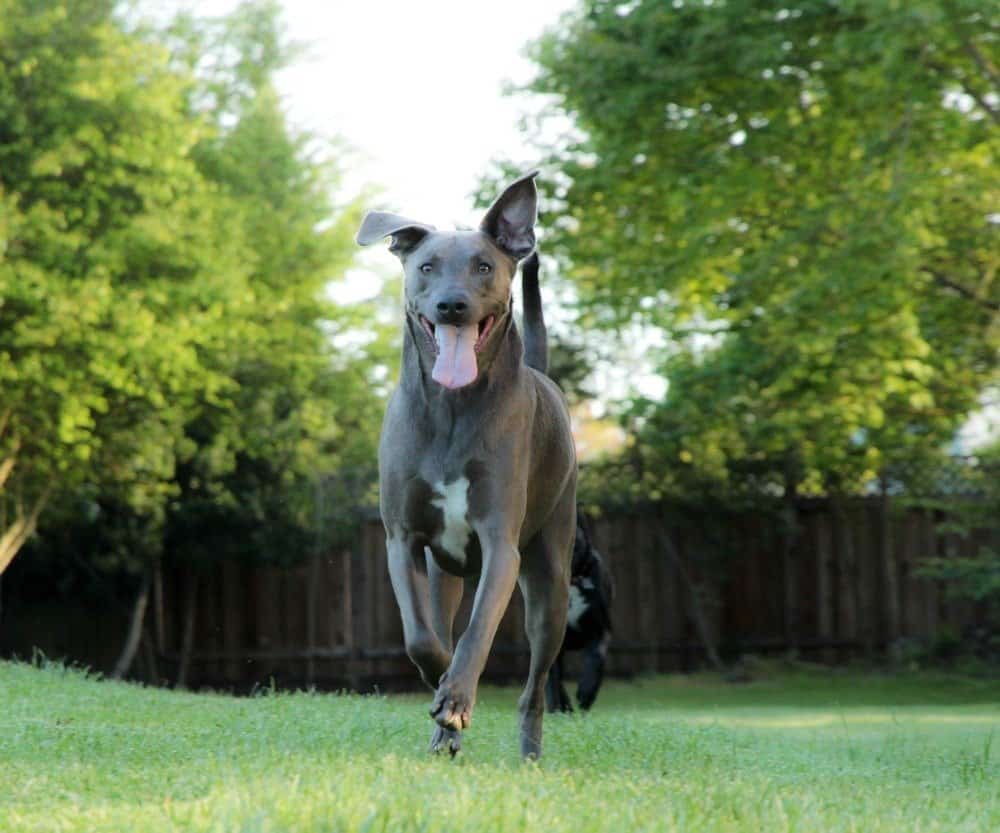
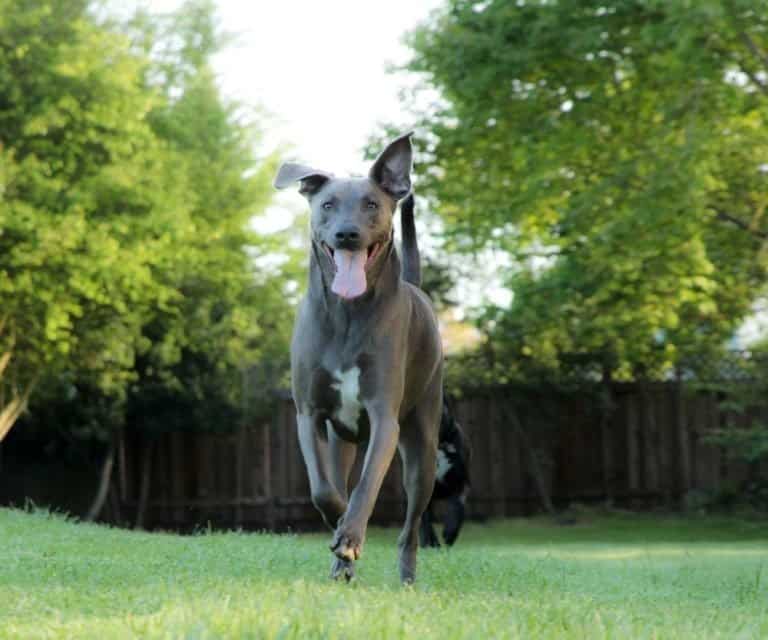
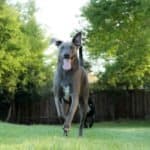
Blue Lacy dog running

Blue Lacy dogs were bred as herding and scenting dogs.

Size and Weight

Lacy Dogs have balanced and athletic frames, so their weight is ideally distributed into muscle with little fat. Their target adult weight ranges between 25 and 50 pounds, with a typical height of 18 to 24 inches.

MaleFemale
Height22’ Tall20’ Tall
Weight45lbs, fully grown35lbs, fully grown

Common Health Issues

Compared to many other modern breeds, the Blue Lacy is remarkably healthy and does not have any major health issues associated with its heritage. As a working breed with a stable genetic pool, emerging health issues are typically discovered quickly and aren’t passed down into future generations. The breed’s hardy reputation does not guarantee freedom from medical issues, and there are a few common issues that owners may face.

The distinct blue color of the coat of some Lacy Dogs is associated with some types of skin problems, including demodex mange, allergies, and other causes of patchy hair loss. It’s also important to note that sensitivity to anesthesia is a recognized and serious problem in Blue Lacy Dogs. Skeletal and vision issues can also emerge in these dogs, although they are relatively rare.
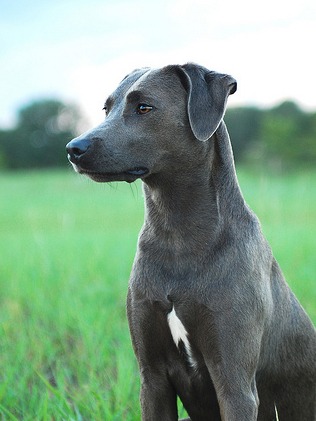
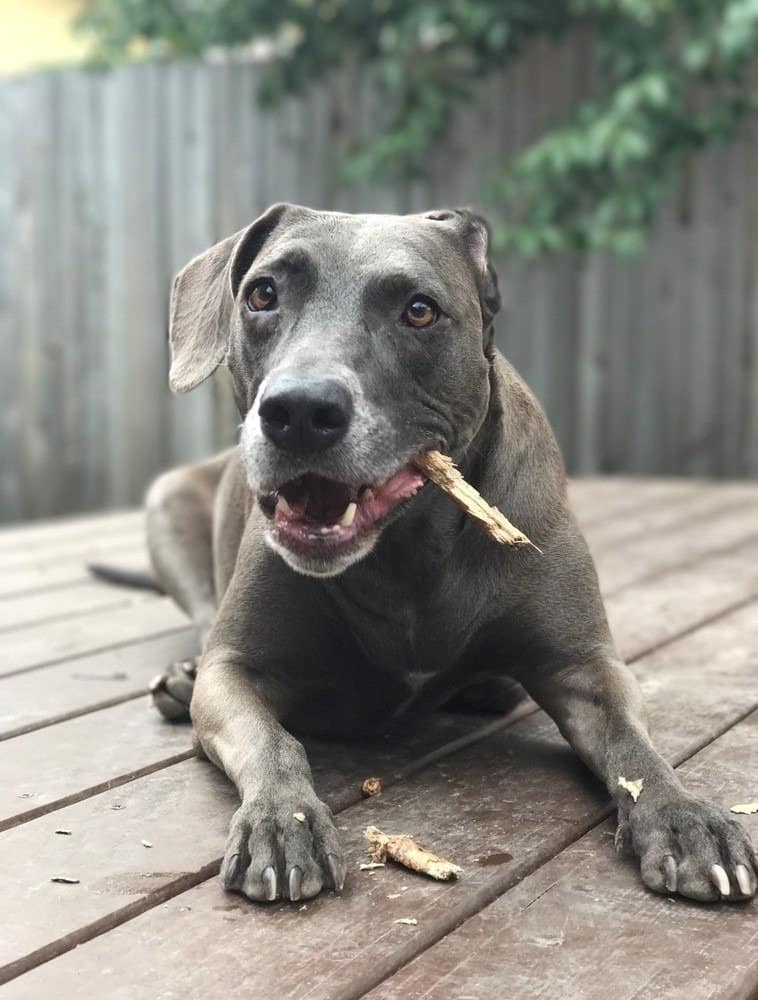
Blue Lacy Dog sitting in grass

Blue Lacy dogs have few health problems.

Temperament

Lacy Dogs have a strong personality that is characterized by a strong motivation to perform, participate, and please their owners. Their ability to be quickly trained is one of their hallmark traits that earns them a reputation as fantastic working animals. They also exemplify loyalty, diligence, and alert behavior, so they are desired as watchdogs for property or family protection.

Despite their energetic and ambitious personality, the Blue Lacy can also be unusually sensitive to discipline. This temperament means that they tend to react poorly to yelling and other forms of social or physical punishment that other dogs would shrug off. While the breed is relatively calm and suited towards people, they aren’t known for being particularly friendly to strange people or animals in the home.

Blue Lacy Dog standing on grass

Blue Lacy dogs have strong personalities.

How To Take Care of a Blue Lacy Dog

Maintaining activity is the biggest consideration for owners, since the breed is very exercise and work-oriented compared to most pets. If herding animals or chasing game isn’t an option, it’s a good idea to provide ample opportunities for outdoor excursions that test endurance and agility. Puppies should receive plenty of encouragement, socialization, and training as soon as they enter the household.

The Best Dog Food

Blue Lacy Dogs don’t have any particular or pressing dietary requirements. Managing food intake and nutrition is best done with the assistance of a veterinary professional, especially if owners prefer to give their pet homemade meals. If your Blue Lacy experiences allergies, look into the selection of allergy-friendly dog food.

Blue Lacy puppy food: Lacy Dog puppies wean onto wet and solid food at about the same rate as other breeds. Balanced nutrition with portions according to weight and age is fine. Natural, vet-approved supplements that encourage bone strength can be an asset for animals that are destined as assistants in herding or game pursuits.

Blue Lacy adult dog food: Feeding an adult Lacy dog can be a bit more of a challenge due to their high activity levels. Adults should have access to clean water at all times, especially when they spend a lot of time outdoors performing high-energy exercise. Their food intake should also reflect exercise levels, with balanced nutrition, protein, and enough calories to maintain their activities.

Maintenance And Grooming

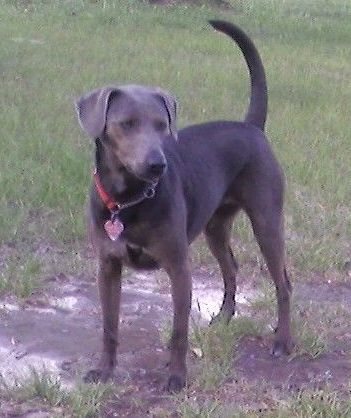
These dogs have a short, smooth, and sleek coat that is very easy to maintain. Grooming requirements are minimal, so owners should only expect to do weekly brushing and occasional bathing as needed. While they do go through seasonal shedding cycles, their short fur and lack of undercoat mean it isn’t a huge hassle.

Training

Ease of training is a hallmark characteristic of Lacy Dogs and is something every owner should focus on, even if they aren’t using them for game, herding, or other work activities. These dogs respond very well to verbal commands given with a stern and soft voice. Harsh words, loud commands, and other types of negative reinforcement are not recommended since they can be very discouraging to these dogs.

Exercise

Their limber frame, athletic build, and short fur make the Blue Lacy an ideal pick for outdoor activity in warmer climates. Complex, demanding, and prolonged exercise sessions are ideal, since the breed was originally meant for day-long work activities. Running, chasing, and fetching are all important components of a fitness regimen. They are great companion dogs for sportsmen, ranchers, and farmers.
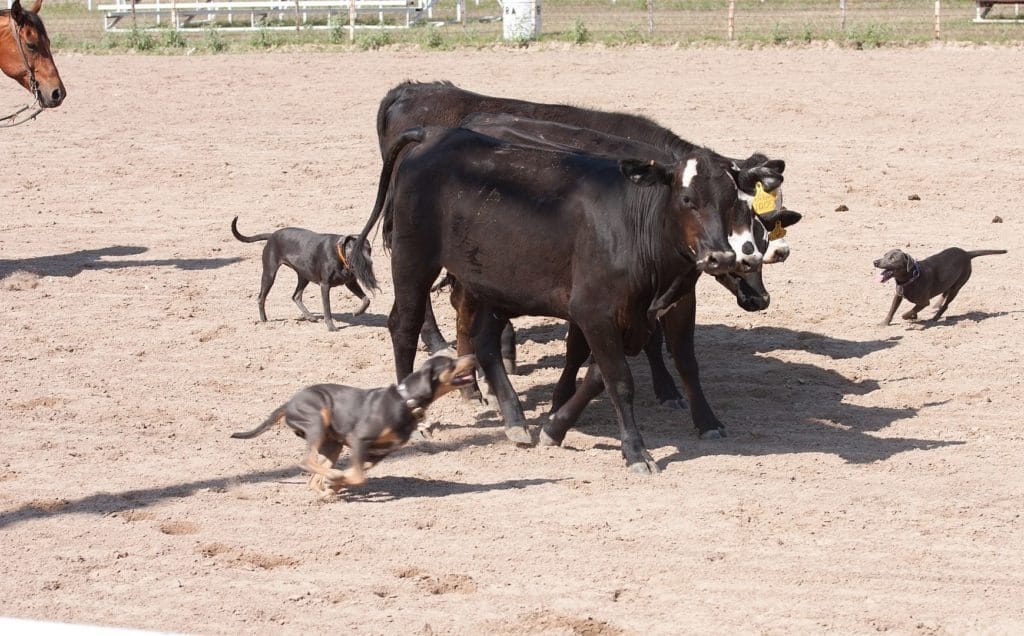
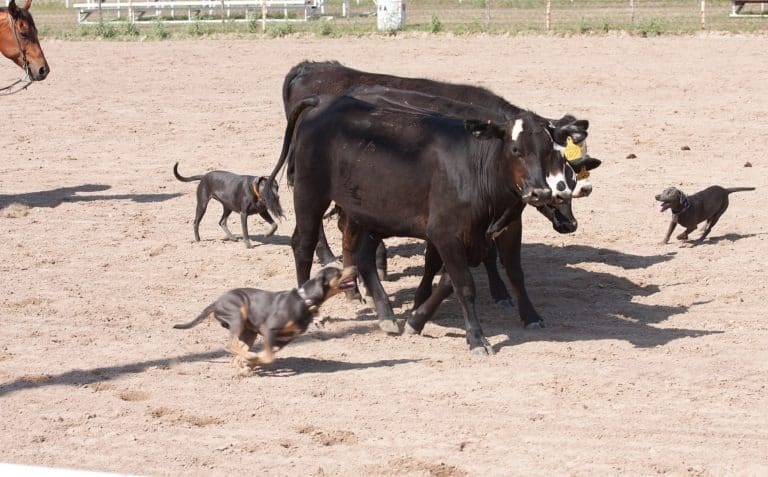
Blue Lacy Working dogs practicing their herding at the 2011 Burnet Play Day for TLGDA.

Blue Lacy dogs are excellent herders.

Puppies

Blue Lacy Dogs don’t have any special health concerns as puppies. Owners should take care to socialize them early and often to prepare them for life alongside children or other pets. Socializing around other dogs can be particularly important since the breed can struggle to adapt to unfamiliar animals as adults.

Blue Lacy puppy lying on ground

Socialize your Blue Lacy early.

With Children

Despite their reputation as fantastic family dogs, the Blue Lacy does need some special attention when it comes to young kids. They are very energetic and are used to structure, so they may not understand how to react to children unless trained. They are usually loyal and protective of their family, though.

Dogs similar to a Blue Lacy Dog

  • German Shepherd: German Shepherds share many key characteristics with the Blue Lacy. Both breeds are smart, active, and ideal for working alongside humans. They also share a hesitancy to trust strangers and are fiercely loyal to their owners.
  • Australian Cattle Dog: Cattle dogs find their origins as a working dog, much like the Lacy. Both are adapted to working environments where they have an active and participatory role in the day’s work.
  • English Shepherd: These dogs, hailing from the British Isles, are another working breed with a similar size and temperament to the Blue Lacy. They are smart and can be trained quickly, but are a bit more assertive and confident around people than Lacy Dogs. They make great companion animals and are also a bit more tolerant of cold weather.
Blue Lacy dog running

Blue Lacy dogs need to be trained in how to behave around young children.

View all 453 animals that start with B

Sources

  1. David Burnie, Dorling Kindersley Animal, The Definitive Visual Guide To The World's Wildlife / Accessed November 10, 2008
  2. Tom Jackson, Lorenz Books (2007) The World Encyclopedia Of Animals / Accessed November 10, 2008
  3. David Burnie, Kingfisher The Kingfisher Animal Encyclopedia / Accessed November 10, 2008
  4. David Burnie, Dorling Kindersley (2008) Illustrated Encyclopedia Of Animals / Accessed November 10, 2008
  5. Dorling Kindersley (2006) Dorling Kindersley Encyclopedia Of Animals / Accessed November 10, 2008
  6. National Kennel Club / Accessed November 19, 2020
  7. Rover / Accessed November 19, 2020
  8. Easy Pet MD / Accessed November 19, 2020
  9. Wikipedia / Accessed November 19, 2020
Heather Hall

About the Author

Heather Hall

Heather Hall is a writer at A-Z Animals, where her primary focus is on plants and animals. Heather has been writing and editing since 2012 and holds a Bachelor of Science in Horticulture. As a resident of the Pacific Northwest, Heather enjoys hiking, gardening, and trail running through the mountains with her dogs.

Thank you for reading! Have some feedback for us?


Blue Lacy Dog FAQs (Frequently Asked Questions)

The Blue Lacy is a versatile and energetic breed that was first developed in the southern US state of Texas. While it’s far from the most popular, it has few health problems and plenty of great qualities that make it a solid choice for owners who don’t mind investing time in frequent activity and training exercises.