
B
Species Profile

Blue Whale

Balaenoptera musculus

Planet's biggest krill-powered giant
tane-mahuta/iStock / Getty Images Plus via Getty Images

Blue Whale Ocean Range

Marine Species

Blue Whale (Balaenoptera musculus) is circumglobal and oceanic, found in all major oceans. They migrate seasonally from tropical and subtropical breeding areas to temperate and polar feeding grounds to eat krill, often traveling thousands of kilometers. Major populations are in the North Atlantic, North Pacific, Indian Ocean, and Southern Ocean (including B. m. intermedia).

Loading ocean map...

Ocean Regions 13

atlantic_ocean north_atlantic south_atlantic pacific_ocean north_pacific south_pacific indian_ocean southern_ocean arctic_ocean bering_sea tasman_sea coral_sea mediterranean_sea
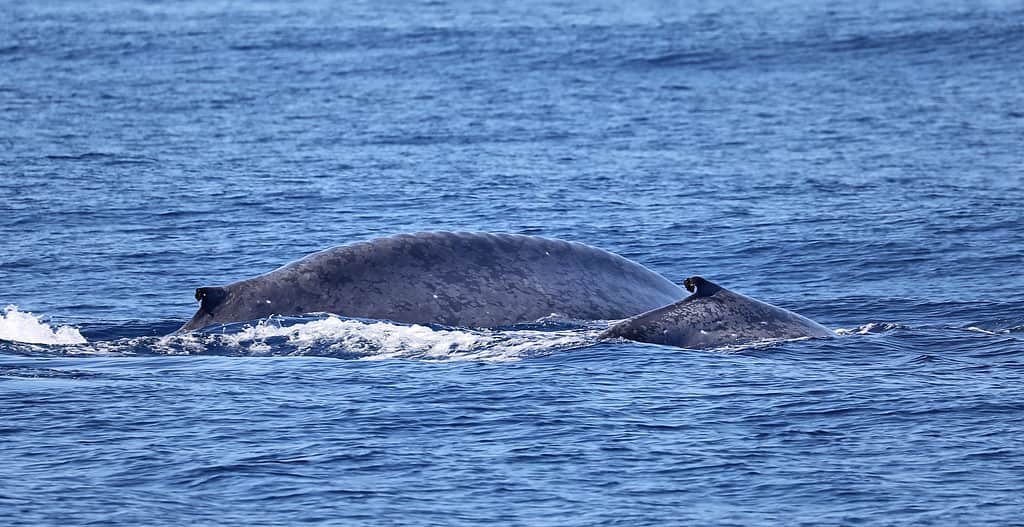
A blue whale calf with its mother near the coast of island Pico (Azores)

At a Glance

Ocean Species
Also Known As Sibbald's rorqual, sulphur-bottom whale, giant rorqual
Diet Filter Feeder
Activity Cathemeral+
Lifespan 85 years
Weight 180000 lbs
Status Endangered
Did You Know?

Record size: up to 29.9 m long (females), with typical adults ~24-27 m (NOAA Fisheries; Jefferson et al.).

Scientific Classification

The blue whale is the largest animal known to have ever lived. It is a baleen whale (rorqual) that filter-feeds primarily on krill and undertakes long seasonal migrations between feeding and breeding areas.

Kingdom
Animalia
Phylum
Chordata
Class
Mammalia
Order
Cetacea
Family
Balaenopteridae
Genus
Balaenoptera
Species
Balaenoptera musculus

Distinguishing Features

  • Enormous size; long, streamlined rorqual body
  • Bluish-gray mottled coloration (often appears blue underwater)
  • Baleen plates used to filter krill during lunge-feeding
  • Broad, flat head with a prominent central ridge and paired blowholes
  • Tall, columnar blow; small dorsal fin set far back on the body

Physical Measurements

Males and females differ in size

Length
82 ft (68 ft 11 in – 95 ft 2 in)
86 ft 11 in (75 ft 6 in – 98 ft 1 in)
Weight
121.3 tons (77.2 tons – 165.3 tons)
132.3 tons (88.2 tons – 190.7 tons)
Top Speed
31 mph
About 50 km/h; typical 5–20

Appearance

Primary Colors
Secondary Colors
Skin Type Blue Whale (Balaenoptera musculus) skin is hairless, smooth, and rubbery over thick blubber. It often shows healed scars and diatom film. Throat pleats on the underside stretch for lunge feeding.
Distinctive Features
  • Largest animal known to have ever lived (species-level superlative widely accepted in zoology).
  • Blue Whale (Balaenoptera musculus) adults are usually 24–27 m long; old records show females up to 29.9 m and males about 27.6 m. Usual weight 110,000–150,000 kg; very large up to ~199,000 kg.
  • Long, streamlined rorqual body with a small, triangular dorsal fin set far back on the body; prominent median ridge on the rostrum.
  • Numerous ventral pleats (throat grooves) extending to/near the umbilicus; these grooves expand during lunge-feeding on krill (defining rorqual adaptation).
  • Baleen (no teeth): hundreds of baleen plates per side (commonly cited ~270-400 each side in reference works) with fringed inner edges used to filter-feed primarily on euphausiid krill.
  • Powerful lunge-feeding behavior: accelerates into dense krill patches with mouth open, expanding the throat pouch, then filters water out through baleen (a key, well-documented Balaenopteridae feeding mode).
  • Tall, columnar blow; commonly reported up to ~9-12 m under good conditions (field observation standard for blue whales).
  • Long seasonal migrations between high-latitude feeding grounds and lower-latitude breeding areas; primarily oceanic/pelagic distribution.
  • Conservation context: listed as Endangered globally (IUCN Red List) with many populations recovering from industrial whaling but still far below pre-whaling abundance (avoid treating as fully recovered).

Sexual Dimorphism

Sexual dimorphism is present but subtle: females are, on average, slightly longer and heavier than males at maturity (a common pattern in baleen whales, including the blue whale). External differences are otherwise minimal aside from genital slit configuration and reproductive state (e.g., lactating females).

  • Slightly smaller average adult body length and mass than females (species-typical pattern; cited broadly in blue whale biology references).
  • Genital slit shape/position consistent with male cetaceans; testes internal (no external scrotum).
  • Slightly larger average adult body length and mass; maximum recorded lengths are typically from females (commonly summarized in authoritative marine mammal references).
  • Mammary slits on either side of the genital slit; lactation can subtly alter ventral contour in nursing females.

Did You Know?

Record size: up to 29.9 m long (females), with typical adults ~24-27 m (NOAA Fisheries; Jefferson et al.).

Mass commonly ~100-150 t; the largest verified individuals are ~170+ t (NOAA/Smithsonian reporting).

A newborn calf is ~7-8 m long and ~2,000-3,000 kg, gaining ~90 kg/day on rich milk (NOAA; field studies).

Feeding season intake can reach ~3-4 metric tons of krill per day, especially in high-latitude hotspots (NOAA).

Their calls are very low-frequency (~10-40 Hz) and can travel hundreds of kilometers in favorable ocean conditions (bioacoustics literature; NOAA).

Tag studies show extreme physiology: heart rate can drop to ~2 beats/min during deep dives and rise to ~30-37 beats/min near the surface (Goldbogen et al., 2019).

Unique Adaptations

  • Baleen filtration system: hundreds of baleen plates per side (commonly ~270-395) plus a bristled tongue to trap krill while expelling seawater (anatomical studies; field guides).
  • Ventral throat pleats (rorqual hallmark): expandable grooves allow the mouth and throat to balloon dramatically during a gulp, enabling extremely efficient bulk feeding on tiny prey.
  • Extreme oxygen management: large blood volume and high myoglobin in muscles support long dives; oxygen is preferentially routed to brain/heart while peripheral tissues tolerate lower oxygen.
  • Ultra-low-frequency hearing/communication: anatomy and signal design are tuned to the ocean's "sound channel," enabling long-range signaling where visibility is limited.
  • Streamlined body + powerful tail stock: optimized for efficient cruising over migration-scale distances with minimal drag despite enormous size.
  • Thick blubber layer: insulation in cold feeding grounds and energy storage to fuel migration and reproduction when prey is scarce.
  • Cardiovascular scaling: enormous heart and elastic arteries support big swings in heart rate during dives (bradycardia at depth, higher rates at the surface; Goldbogen et al., 2019).

Interesting Behaviors

  • Lunge-feeding (rorqual gulping): accelerates into dense krill patches, opens the mouth, and engulfs a huge volume of water and prey; baleen then filters krill as water exits.
  • Seasonal long-distance migration: generally feeds at high latitudes in summer (krill-rich) and shifts toward lower-latitude breeding/calving areas in winter (patterns vary by population).
  • Low-frequency "song" and call sequences: males (and sometimes both sexes) produce stereotyped, repeating phrases that can change over years-useful for communication over vast ranges.
  • Deep, repetitive foraging dives: commonly ~10-20 minutes during feeding bouts, with documented dives exceeding ~30 minutes in some contexts (tag studies).
  • Loose social structure: often solitary or in pairs, but forms temporary feeding aggregations where krill is concentrated; coordinated spacing reduces interference while foraging.
  • Mother-calf behavior: calves draft beside or behind the mother; nursing is brief but frequent, supporting rapid growth before weaning (~6-7 months).
  • Surface behaviors: powerful tail flukes propel short bursts; some individuals breach or perform partial breaches, especially juveniles.

Cultural Significance

Blue Whale (Balaenoptera musculus) is a global symbol of ocean life and the whaling era. Endangered on the IUCN Red List, it declined from whaling but shows some recovery after the 1966 IWC ban. It drives ocean education, whale-watching, and policies to reduce ship strikes, fishing-gear entanglement, and underwater noise.

Myths & Legends

A medieval Scandinavian legend in the 13th-century King's Mirror tells of a giant sea creature mistaken for an island; later writers say such "island whale" tales may come from sightings of very large baleen whales.

In the medieval Irish tale The Voyage of Saint Brendan, monks land on what looks like an island that is really a giant sea creature, later told as a whale (Balaenoptera musculus).

Arctic Indigenous sea-woman traditions: stories portray a powerful sea-mother who controls marine animals, including whales, releasing them to respectful hunters and withholding them when taboos are broken.

New Zealand Indigenous traditions of whale guidance and guardianship: whales are often treated as guardians; the "Whale Rider" story tells of an ancestor carried to safety on a whale.

Northwest Coast Indigenous narratives (Pacific Northwest): many communities tell of whales as powerful beings tied to lineage crests, ocean law, and transformation-respected for their strength and as providers when treated properly.

Stories like Jonah and the great fish (later pictured as a whale) linked huge sea creatures—like the blue whale (Balaenoptera musculus)—to ideas of God's power, warnings, or rescue.

Conservation Status

EN Endangered

Facing a very high risk of extinction in the wild.

Population Increasing

Protected Under

  • International Whaling Commission (IWC) commercial whaling moratorium (global protection from commercial whaling)
  • CITES Appendix I (international trade generally prohibited)
  • Convention on Migratory Species (CMS) Appendices I and II (migratory species protection/cooperation)
  • United States: Endangered Species Act (ESA) and Marine Mammal Protection Act (MMPA)
  • Canada: Species at Risk Act (SARA)
  • Australia: Environment Protection and Biodiversity Conservation Act (EPBC Act)

Life Cycle

Birth 1 calf
Lifespan 85 years

Lifespan

In the Wild
70–110 years
In Captivity
0 years

Reproduction

Mating System Polygynandry
Social Structure Transient
Breeding Pattern Transient
Fertilization Internal Fertilization
Birth Type Internal_fertilization

Behavior & Ecology

Social Pod Group: 2
Activity Cathemeral, Crepuscular
Diet Filter Feeder Antarctic krill (Euphausia superba)
Seasonal Migratory 5,157 mi

Temperament

Generally non-aggressive toward conspecifics and humans; low levels of overt social aggression reported
Largely avoidant or tolerant of vessels depending on context; behavioral responses can include course changes, prolonged dives, or reduced surfacing near disturbance
Social interactions typically limited and subtle; most associations appear prey- or reproduction-driven rather than affiliative
Mother-calf pairs show strong cohesion; calves track maternal movement closely and may be more sensitive to disturbance

Communication

powerful low-frequency Often infrasonic) calls used for long-range communication; dominant energy commonly reported in the ~10-40 Hz band (e.g., McDonald et al. 2001; Stafford et al. 2001
population-specific, stereotyped call types 'songs'); structure and repetition patterns vary by ocean basin and can shift over years/decades (e.g., McDonald et al. 2006; Oleson et al. 2007
amplitude-modulated tonal and pulsed call sequences (commonly categorized as A/B-type units in several populations) associated with seasonal presence and likely reproductive advertisement
tactile communication between mother and calf Close positioning, rubbing/contact during surfacing
surface-generated signals (breaches, tail slaps, flipper slaps) that can function as short-range acoustic/visual cues
coordinated spacing and movement during paired travel/feeding Behavioral synchronization rather than complex group displays

Habitat

Open Ocean Coastal Deep Sea
Biomes:
Elevation: Up to 1033 ft 6 in

Ecological Role

Dominant pelagic consumer of euphausiids (krill) and major nutrient recycler in open-ocean ecosystems; links lower trophic levels (krill/plankton) to higher trophic levels and biogeochemical cycles.

Regulates krill biomass through intense seasonal predation on dense swarms Recycles limiting nutrients (notably nitrogen and iron) via fecal plumes ("whale pump"), which can stimulate phytoplankton productivity Contributes to carbon cycling by enhancing primary production and by storing carbon in biomass over long lifespans, with potential export at death (whale-fall) Creates habitat/food subsidies via carcasses (whale-fall communities) and supports scavenger/detrital food webs

Diet Details

Main Prey:
Antarctic krill Northern krill Pacific krill Thysanoessa Copepods

Human Interaction

Domestication Status

Wild

Blue whale (Balaenoptera musculus) has no history of domestication and cannot be domesticated. People have mostly seen them through past whaling, current research (tagging, photo ID, sound study), and whale-watching. Huge size, long migrations, deep dives, and krill feeding make captivity impossible. Protections include the IWC moratorium and CITES Appendix I.

Danger Level

Low
  • Injury risk to nearby swimmers/boaters from accidental contact (tail/fluke or body) when approached too closely
  • Capsize/impact risk for small vessels if operators violate approach rules
  • Indirect human risk via navigation hazards associated with whale presence (e.g., collision avoidance maneuvers); conversely, ship strikes are a major risk to whales

As a Pet

Not Suitable as Pet

Legality: Blue Whale (Balaenoptera musculus) are not legal or possible pets. In the United States the MMPA forbids taking or keeping except by strict permits; CITES Appendix I and IWC protections prevent private ownership.

Care Level: Expert Only

Purchase Cost:
Lifetime Cost: $1,000,000,000 - $5,000,000,000

Economic Value

Uses:
Ecotourism (whale watching where populations/seasonal presence allow) Scientific research value (oceanography, acoustics, population monitoring) Cultural/non-use value (existence value, heritage) Ecosystem services (nutrient cycling/"whale pump"; carbon pathway via biomass and fecal plumes) Historical extractive value (commercial whaling)
Products:
  • Historically: blubber oil
  • Historically: meat
  • Historically: other processed products from carcasses (varied by era/region; largely ended by modern protections)

Relationships

Related Species 8

Fin Whale
Fin Whale Balaenoptera physalus Shared Genus
Sei Whale
Sei Whale Balaenoptera borealis Shared Genus
Bryde's Whale Balaenoptera Shared Genus
Eden's Whale Balaenoptera edeni Shared Genus
Omura's Whale Balaenoptera omurai Shared Genus
Common Minke Whale
Common Minke Whale Balaenoptera acutorostrata Shared Genus
Antarctic minke whale Balaenoptera bonaerensis Shared Genus
Humpback Whale
Humpback Whale Megaptera novaeangliae Shared Family

“The blue whale is the largest and loudest animal on Earth.”

The blue whale is the largest animal on Earth and likely the largest animal ever to have lived. While this ocean mammoth is dubbed “blue,” its color is more a reflection of the water it swims in — its skin is actually gray.
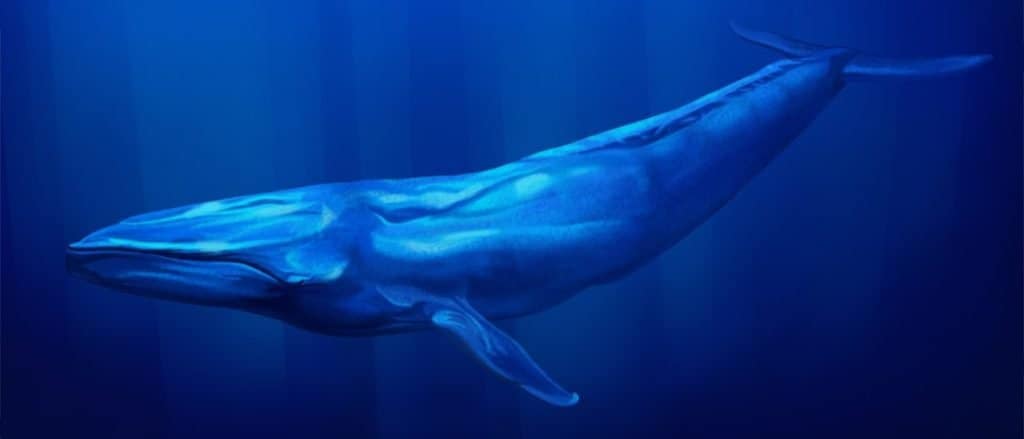
Biggest Whale the Blue Whale

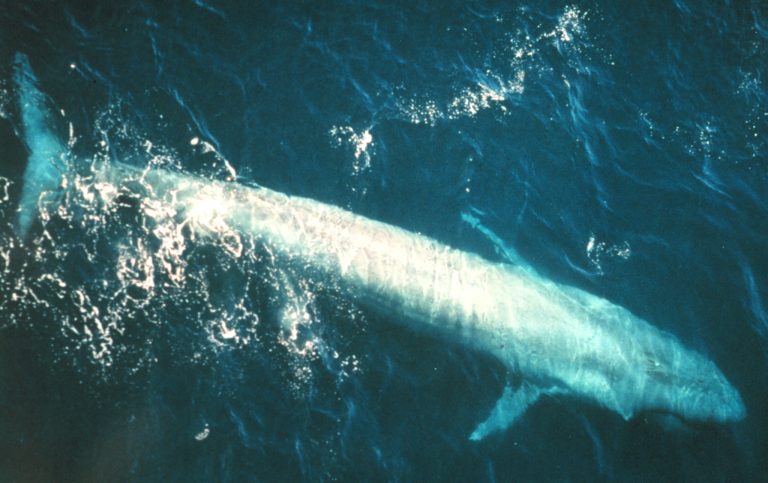
The blue whale is the largest on Earth.

Classification

The blue whale is a type of baleen whale that, depending on the time of year, is found in oceans worldwide. Its scientific name is Balaenoptera musculus. Translated, Balaenoptera means “winged whale,” while musculus means “muscle.”

Anatomy and Appearance

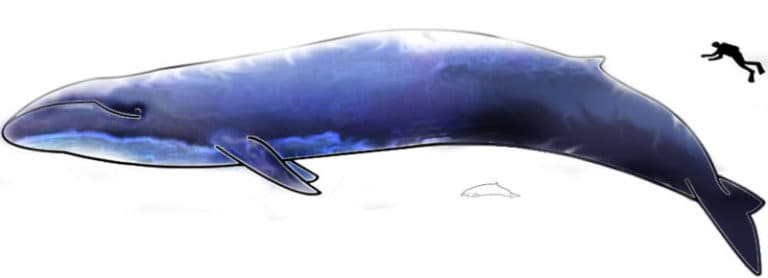
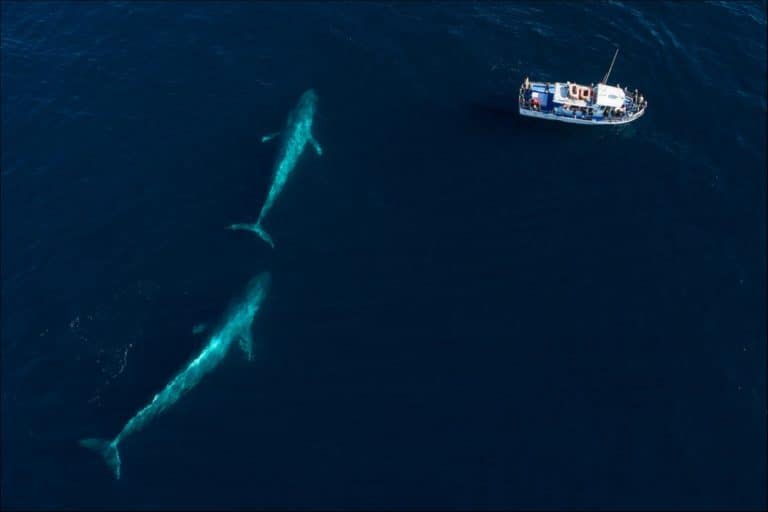
In terms of length, blue whales have often been compared to three school buses lined up back to back. These whales measure 90-100 feet long and are estimated to weigh from 200,000-352,000 pounds (100-150 tons). Even their inner organs are weighty. The heart of a blue whale can weigh up to 1,300 pounds, while its tongue can weigh 5,400 pounds, which is the average weight of an adult female elephant.

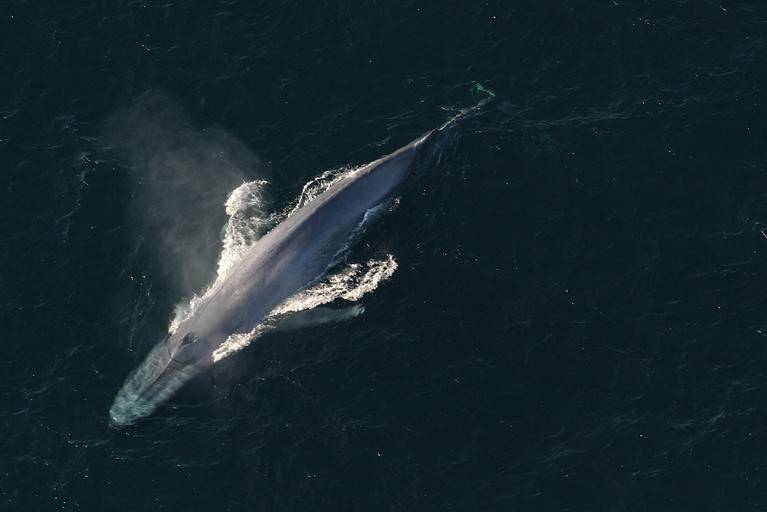
Blue whales have sleek, streamlined bodies to aid in their navigation through the ocean. Their smooth skin is a mottled grey-blue color, while their underbellies can have a yellowish tint due to microorganisms living on their skin, giving them a “sulfur bottom” appearance. They have two blowholes on top of their heads used to expel air and water vapor in a powerful, visible spout when they come to the surface to breathe. Water shooting from the spout can reach as high as 30 feet in the air! Watch a blue whale blow water in the video below:

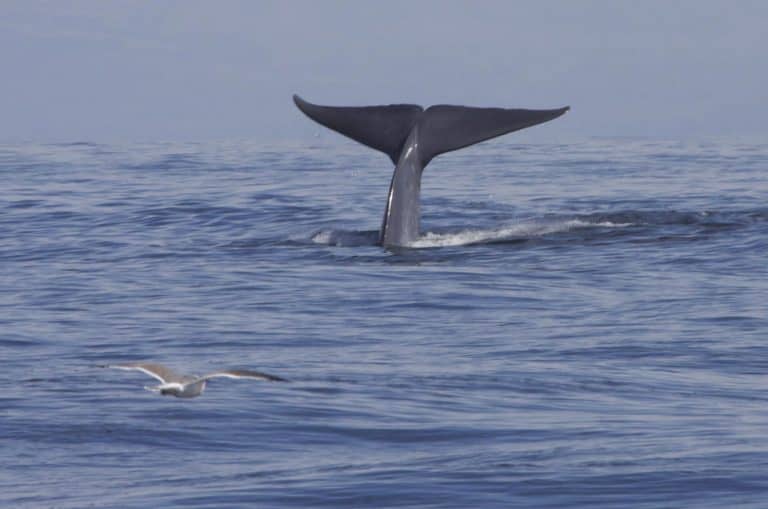
The blue whale possesses a small dorsal fin near the rear of its body and pectoral flippers (up to 20 feet long) to aid its maneuvering. It relies heavily on its enormous rubbery tail, or fluke, which provides it with power and stability and helps to propel the massive creature through the ocean. Blue whales also use their flukes to make powerful dives to depths of up to 656 feet.

Evolution and History

The blue whale is found throughout the world’s oceans, except for the Arctic. It is thought to be the most enormous creature to have ever existed. It is the largest alive today.

The blue whale diverged from other Balaenopteridae (including fin and northern minke whales) between 5 and 10 million years ago, and the oldest fossil representing something similar to today’s blue whale dates back almost 2 million years ago.

Distribution and Habitat
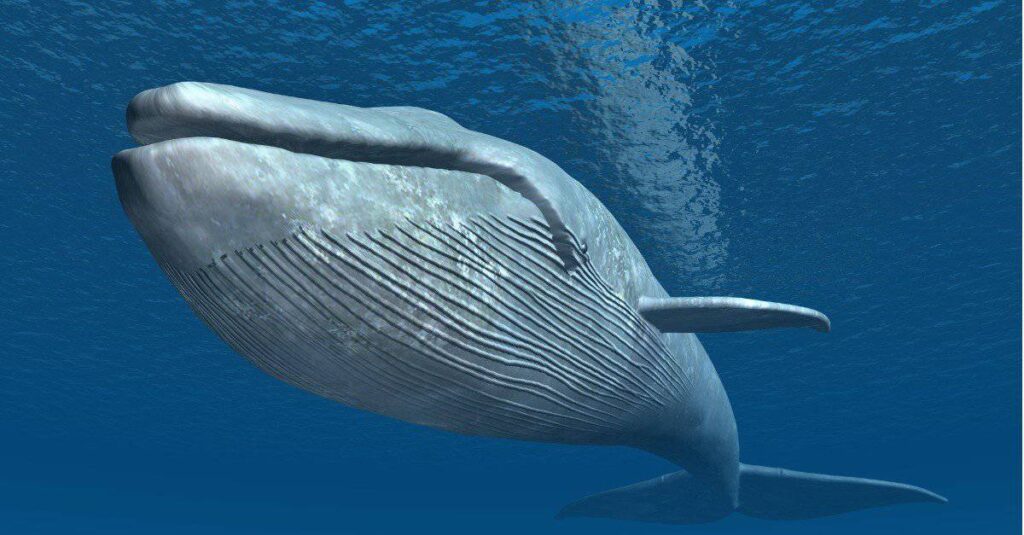
What do blue whales eat

The blue whale has an enormously long body that is slim and narrow, helping it easily cut through the water.

Found in oceans worldwide, blue whales are migratory creatures that spend their summers in more frigid waters where food is plentiful. They relocate to warmer oceanic areas to breed. The migratory patterns of blue whales are generally less well understood and seem more unpredictable than other baleen whales, even skipping migration some years.

Behavior and Lifestyle

Blue whales are primarily solitary animals. They sometimes gather to feed in groups, when they are breeding, or when mothers are with young.

Blue whales are known for their use of a variety of sounds (known as songs) including hums, squeaks, and rumbles to communicate with one another, particularly during the breeding season in winter. Amazingly, these gigantic mammals also make some enormous noises! In fact, by reaching volumes of over 180 decibels, they make the loudest sound of any animal on Earth.
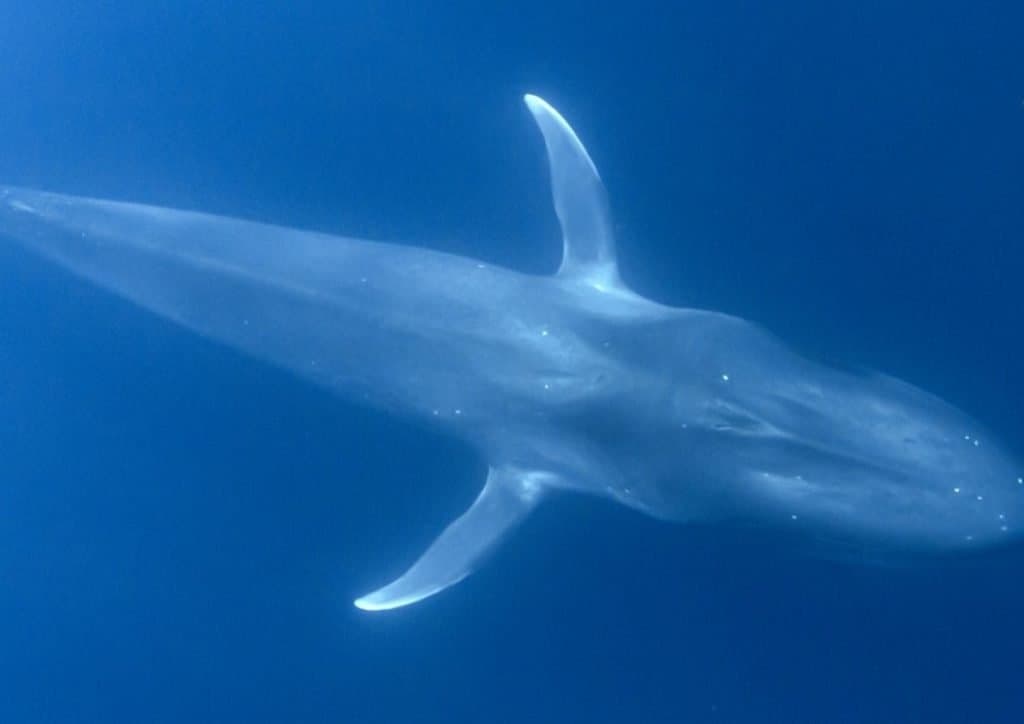
Biggest Animals Ever to Walk the Earth: Blue Whale

Blue whales feed in frigid waters and migrate to warmer areas to reproduce.

Reproduction and Life Cycles

Blue whales breed in the warmer, tropical waters during the winter or early spring. After a gestation period that lasts nearly a year, the female blue whale gives birth to a single calf on her return to the region. Female blue whales feed heavily in the summer because they largely refrain from eating when nursing their young.

Newborn blue whales are born measuring over 22 feet in length and weighing around 2.75 tons. They remain by their mother’s side for at least their first year. Up to the time they are weaned at 8 months old, blue whale calves are known to consume up to 198 pounds of milk daily. Blue whales can start reproducing when they are between 10 and 15 years old, with females giving birth every 2-3 years. Blue whales can live for up to 40 years.
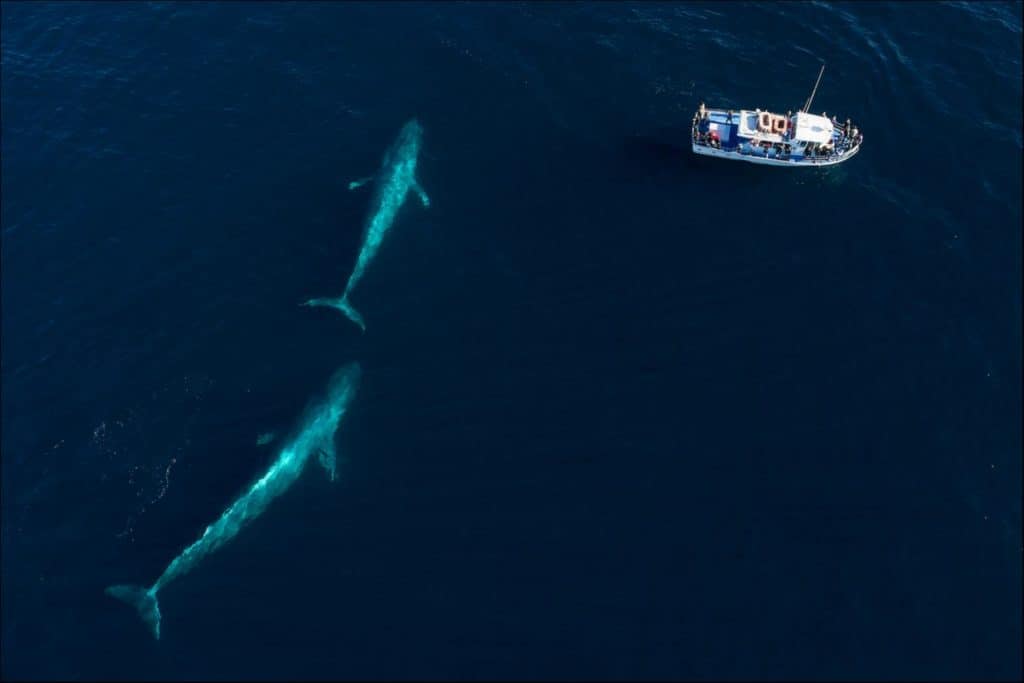
Blue whales can start reproducing between 10 and 15 years old, with females giving birth every 2 or 3 years.

Diet and Prey

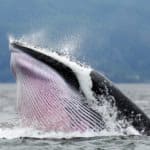
The blue whale is a carnivorous animal that doesn’t have proper teeth. Instead, it has baleen plates in its mouth to help it filter and feed on small prey. Its diet is mainly comprised of krill and small crustaceans, along with the occasional small fish. To feed, a blue whale will swim up towards a shoal of prey as the pleats in its neck allow its throat to expand. It will take an enormous gulp of water into the sac created in its lower jaw and shut its mouth. Then, the whale expels the water while retaining thousands of tiny creatures in its fine baleen plates. It finally swallows to consume the krill.

Blue whales can consume over six tons of prey daily near the poles in their summer feeding grounds. Although they eat a lot during the summer, they barely eat anything when they migrate to warmer waters for winter breeding.

Predators and Threats

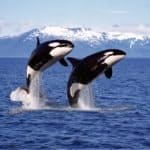
While you may imagine that blue whales have no real ocean predators due to their enormous size, they are at risk from killer whales (orcas). While juvenile blue whales are at high risk of attacks, killer whales have also been documented as having killed full-grown blue whales. Orcas hunt in groups, and are capable of launching coordinated attacks on blue whales where they will bite their body parts and ram them mercilessly. Once the attack is successful, killer whales will devour the carcass among them.

Another serious threat to blue whales has been humans. In the ages preceding the rise of the whaling industry, humans could only obtain blue whale meat and blubber when a beaching occurred. As whaling technology improved, hunters were able to pursue blue whales in the open oceans. Up until the 1960s, blue whales were commercially hunted into scarcity for products refined from their meat and blubber.

Conservation

In the last 80 years, the relationship between humans and the blue whale has changed drastically, as 1978 saw the end of intentional blue whale hunting. Because of overhunting, the blue whale population has dropped from what biologists estimate was 200,000 in the 1800s to approximately 20,000 today. They are listed as endangered by the IUCN. Their greatest threat today is global warming.

View all 453 animals that start with B
How to say Blue Whale in ...
Bulgarian
Син кит
Catalan
Balena blava
Czech
Plejtvák obrovský
Danish
Blåhval
German
Blauwal
English
Blue Whale
Esperanto
Blua baleno
Spanish
Balaenoptera musculus
Estonian
Sinivaal
Finnish
Sinivalas
French
Baleine bleue
Galician
Balea azul
Hebrew
לווייתן כחול
Croatian
Plavi kit
Hungarian
Kék bálna
Indonesian
Paus Biru
Italian
Balaenoptera musculus
Japanese
シロナガスクジラ
English
Blawwe vinvès
Dutch
Blauwe vinvis
English
Blåhval
Polish
Płetwal błękitny
Portuguese
Baleia-azul
English
Balenă albastră
Slovenian
Sinji kit
Swedish
Blåval
Turkish
Gök balina
Vietnamese
Cá voi xanh
Chinese
蓝鲸

Sources

  1. David Burnie, Dorling Kindersley (2011) Animal, The Definitive Visual Guide To The World's Wildlife / Accessed November 10, 2008
  2. Tom Jackson, Lorenz Books (2007) The World Encyclopedia Of Animals / Accessed November 10, 2008
  3. David Burnie, Kingfisher (2011) The Kingfisher Animal Encyclopedia / Accessed November 10, 2008
  4. Richard Mackay, University of California Press (2009) The Atlas Of Endangered Species / Accessed November 10, 2008
  5. David Burnie, Dorling Kindersley (2008) Illustrated Encyclopedia Of Animals / Accessed November 10, 2008
  6. Dorling Kindersley (2006) Dorling Kindersley Encyclopedia Of Animals / Accessed November 10, 2008
  7. David W. Macdonald, Oxford University Press (2010) The Encyclopedia Of Mammals / Accessed November 10, 2008
  8. Blue Whale Facts / Accessed November 10, 2008
  9. Blue Whale Information / Accessed November 10, 2008
Abby Parks

About the Author

Abby Parks

Abby Parks has authored a fiction novel, theatrical plays, short stories, poems, and song lyrics. She's recorded two albums of her original songs, and is a multi-instrumentalist. She has managed a website for folk music and written articles on singer-songwriters, folk bands, and other things music-oriented. She's also a radio DJ for a folk music show. As well as having been a pet parent to rabbits, birds, dogs, and cats, Abby loves seeking sightings of animals in the wild and has witnessed some more exotic ones such as Puffins in the Farne Islands, Southern Pudu on the island of Chiloe (Chile), Penguins in the wild, and countless wild animals in the Rocky Mountains (Big Horn Sheep, Mountain Goats, Moose, Elk, Marmots, Beavers).
Connect:

Thank you for reading! Have some feedback for us?


Blue Whale FAQs (Frequently Asked Questions)

Blue whales are carnivores, meaning they eat other animals.