


B
Species Profile

Bluetick Coonhound

Canis lupus familiaris

Blue coat, big nose, bigger bay
Mary Swift/Shutterstock.com

Bluetick Coonhound Distribution

Click a location to explore more animals from that region

Origin Location

This map shows the native origin of the Bluetick Coonhound. As a domesticated species, they are now found worldwide.

Loading map...

Size Comparison

Human 5'8"
Bluetick Coonhound 2 ft

Bluetick Coonhound stands at 35% of average human height.

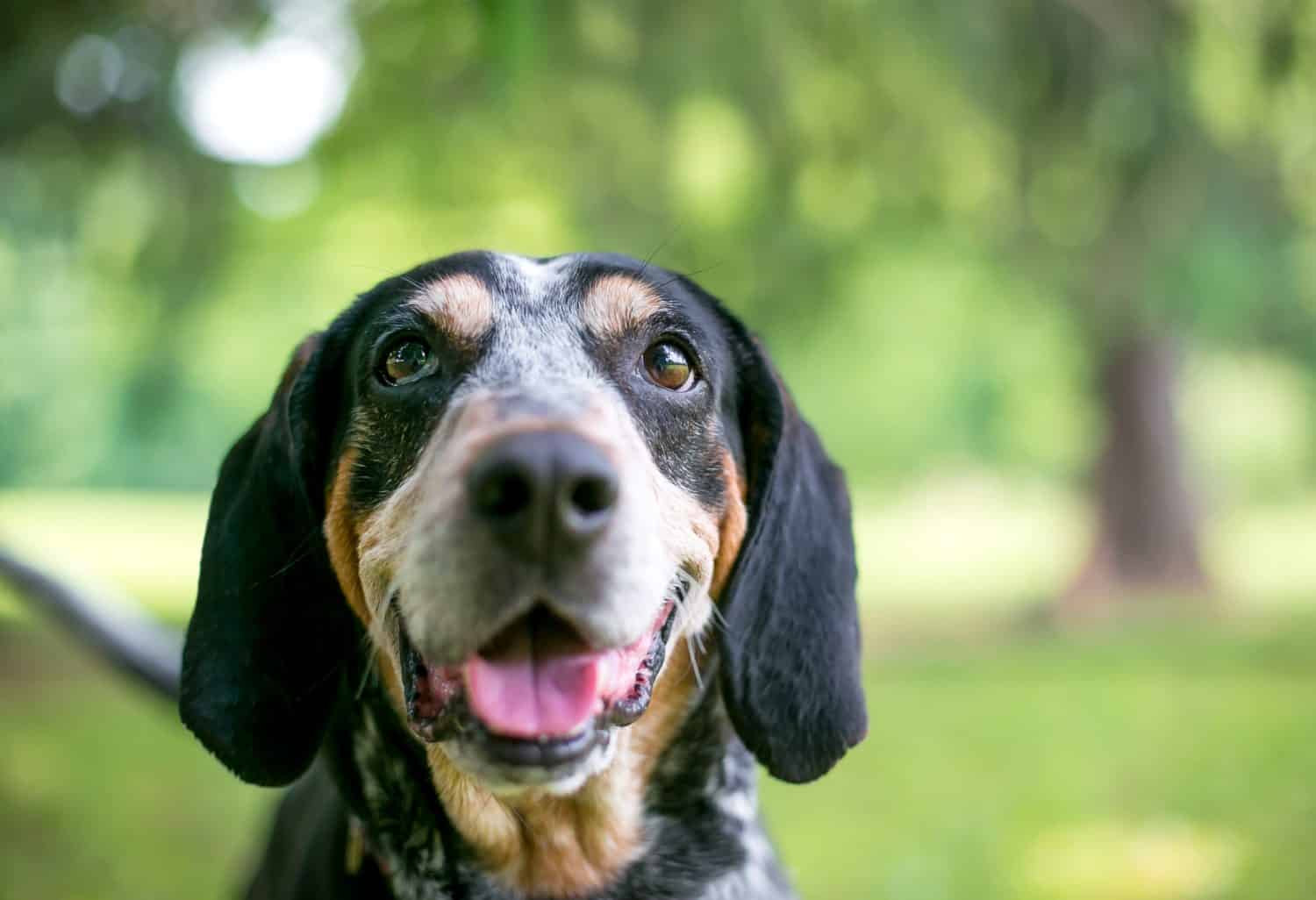
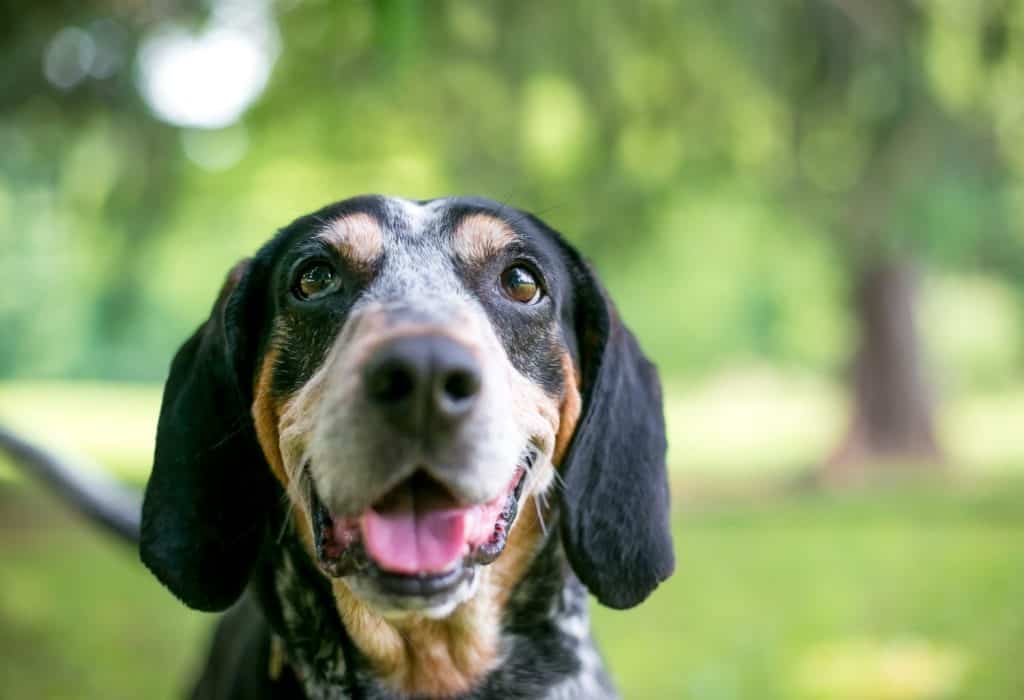
A Bluetick Coonhound dog with a happy expression outdoors

At a Glance

Domesticated
Also Known As Bluetick, Bluetick Hound, Blueticks, Blue Tick Hound, Blue Tick
Diet Omnivore
Activity Cathemeral+
Lifespan 12 years
Weight 36 lbs
Status Not Evaluated
Did You Know?

"Bluetick" isn't a solid blue-it's a speckled (ticked) coat of black on white that reads bluish at a distance.

Scientific Classification

The Bluetick Coonhound is an American scenthound breed developed for tracking and treeing game—especially raccoons—using strong scenting ability and a distinctive “blue-ticked” coat pattern.

Kingdom
Animalia
Phylum
Chordata
Class
Mammalia
Order
Carnivora
Family
Canidae
Genus
Canis
Species
Canis lupus

Distinguishing Features

  • Blue-ticked (mottled) coat pattern often with black saddle and tan points
  • Long, pendulous ears typical of scenthounds
  • Strong nose and trailing ability; traditionally used for night hunting of raccoon
  • Medium-large, athletic hound build; deep voice/baying typical of coonhounds

Physical Measurements

Males and females differ in size

Height
2 ft 1 in (1 ft 10 in – 2 ft 3 in)
1 ft 10 in (1 ft 9 in – 1 ft 11 in)
Length
3 ft 7 in (3 ft 3 in – 3 ft 10 in)
Weight
66 lbs (55 lbs – 79 lbs)
53 lbs (44 lbs – 64 lbs)
Tail Length
1 ft 3 in (1 ft 1 in – 1 ft 5 in)
1 ft 1 in (12 in – 1 ft 3 in)
Top Speed
28 mph
Fast long-distance runner

Appearance

Primary Colors
Secondary Colors
Skin Type Domestic dog (Canis lupus familiaris) skin with a short-to-medium, dense, tight hound coat; skin is moderately loose (especially at neck/throat) aiding scent work; long ear leather requires routine inspection/cleaning.
Distinctive Features
  • Domestic dog breed (not a separate wild species): selectively developed American scenthound type distinguished from the base species by consistent bluetick patterning, strong scent-trailing drive, and classic coonhound conformation.
  • Athletic, rangy hound build with deep chest and strong shoulders/loin for endurance tracking; built more for stamina and nose-work than sprinting.
  • Long, low-set, pendulous ears and slightly loose flews; ear length and loose skin help funnel scent but predispose to ear moisture/yeast-regular ear care is a practical requirement.
  • Large, open nostrils and long muzzle typical of scenthounds; bred for persistent trailing and 'treeing' behavior (especially raccoon).
  • Distinctive loud, carrying baying voice; typical of coonhounds and often noted as a behavioral/management trait in home settings.
  • Coat is relatively low-maintenance but benefits from weekly brushing to remove dead hair and field debris; check for ticks/burrs after outdoor scent work.
  • Common breed-linked health concerns to monitor: hip dysplasia (orthopedic screening), ear infections (due to long ears), hypothyroidism (weight/coat changes), bloat/GDV risk in deep-chested dogs (feeding management), and exercise-related injuries from field work.
  • Care requirements aligned to working heritage: substantial daily exercise plus scent-based enrichment; secure fencing/leash reliability important due to strong tracking drive.

Sexual Dimorphism

Typical for domestic dogs: males are generally larger and more robust than females, though overall appearance remains the same bluetick pattern and hound outline.

  • Slightly larger frame with heavier bone and broader head/neck.
  • Often deeper chest and more pronounced musculature in shoulders/forequarters.
  • Slightly smaller, finer-boned build with a narrower head and lighter neck.
  • Often a more streamlined outline while retaining the same coat patterning and ear length.

Did You Know?

"Bluetick" isn't a solid blue-it's a speckled (ticked) coat of black on white that reads bluish at a distance.

Their signature voice is a long, musical "bay," useful for hunters to locate a dog deep in the woods.

Blueticks are "cold-nosed" trailers-many can follow older scent trails that other dogs miss.

The breed is strongly associated with night hunting and "treeing" raccoons, holding game at a tree while baying.

They were developed in the U.S. from French hounds (notably Great Blue Gascony Hound types) and English Foxhound lines adapted to American terrain.

A Bluetick's long ears and loose skin help funnel and hold scent near the nose while tracking.

They tend to be affectionate at home but can switch into intense, single-minded trail focus outdoors.

Unique Adaptations

  • High-density olfactory equipment typical of scenthounds, selected specifically for trailing raccoon and other game in forests and swamps.
  • Long, pendulous ears and slightly loose facial skin that can help concentrate scent toward the nostrils during tracking.
  • Athletic, endurance-oriented build for long hunts: deep chest for aerobic capacity, strong shoulders/hips for rugged terrain.
  • Weather-tolerant coat: short and fairly dense, with ticking that often camouflages well in brush and dappled woodland light.
  • A loud, carrying bay engineered by tradition and selection-effective "long-distance communication" between dog and hunter.

Interesting Behaviors

  • Baying on trail: a sustained, ringing vocalization that changes in rhythm when the scent strengthens or the game is treed.
  • Scent-casting: sweeping side-to-side to reacquire a lost track, then locking in and pulling forward once the line is found.
  • Treeing behavior: circling the base of a tree and vocalizing persistently to "announce" quarry above.
  • Independent problem-solving: bred to work at distance from handlers; may choose the best route rather than watch for cues.
  • Nose-to-ground "toggle": in stimulating areas they may ignore distractions, prioritizing odor information over sights/sounds.
  • Pack social signaling: comfortable working in groups; may check in briefly then return to the track with renewed focus.

Cultural Significance

Bluetick Coonhound (Canis lupus familiaris) grew with Southern and Midwest frontier life for nighttime raccoon hunting for fur, food, and sport. Celebrated in rural songs and stories, it was bred from gray wolves (Canis lupus) to track game and hold it at trees while being close to people.

Myths & Legends

Old Southern hound stories say a good Bluetick Coonhound's bay is so unique neighbors could name the dog in the dark by its voice, and the sound could guide a lost hunter home.

Stories say Bluetick Coonhounds came from French "blue" hounds brought by colonists, later mixed into American packs in forests. Their coat color and loud voice are said to come from those Old World hounds.

In Appalachian and Ozark hunting stories, a legendary hound is sometimes credited with holding a raccoon treed all night through storms, becoming a symbol of endurance and loyalty in local oral tradition.

In hunting camp stories, the long-eared scenthound (like the Bluetick Coonhound) is seen as lucky if a pup barks early and clearly; people say it was 'born knowing the woods.'

American hunting anecdotes frequently elevate a standout Bluetick to near-mythic status-"the dog that never missed a track"-reflecting a broader folk tradition of heroic hounds in rural storytelling rather than formal written mythology.

Conservation Status

NE Not Evaluated

Has not yet been evaluated against the criteria.

Population Stable

Life Cycle

Birth 7 pups
Lifespan 12 years

Lifespan

In the Wild
11–12 years
In Captivity
10–14 years

Reproduction

Mating System Polygynandry
Social Structure Managed Domestic
Breeding Pattern Serial
Fertilization Managed Selective
Birth Type Internal_fertilization

Bluetick Coonhound (Canis lupus familiaris) breeding is managed by people and selective: planned pairings, health checks, and changing mates over cycles. They do not form lasting pack pairs. Strong scent drive and independence need care during heat; exercise and vet care are important.

Behavior & Ecology

Social Pack Group: 4
Activity Cathemeral, Crepuscular, Nocturnal
Diet Omnivore High-protein meat with strong odor (e.g., cooked beef, chicken, turkey, or organ meats like liver)-highly motivating for scent-work rewards.

Temperament

Scent-driven and persistent: tends to prioritize odor trails over visual cues or handler prompts; distinguishing breed trait is intense, sustained tracking focus compared with many pet lines of domestic dogs.
Social and people-attached but not clingy; generally friendly with familiar humans and can be good with other dogs, especially when raised with them.
Independent problem-solver: bred to trail at distance, so recall can be challenging; benefits from reward-based training, long-line work, and controlled off-leash opportunities.
Vocal and expressive: strong baying/"music" is typical, especially when excited or on scent-an asset for hunting but a noise-management consideration in suburban settings.
High exercise and enrichment needs: thrives with daily aerobic activity plus scent work (tracking games, nosework, puzzle feeders); insufficient outlets can lead to roaming attempts, barking, and destructive behavior.
Prey drive and chase tendency: may pursue raccoons, cats, and small wildlife; secure fencing and leash management are important.
Bluetick Coonhounds: long floppy ears get infections—clean them regularly to reduce pain and grumpiness. Watch weight and conditioning for hip/joint issues. Deep chest raises bloat risk—manage meals and exercise. Obesity makes them more easily frustrated.

Communication

Baying Long, carrying, track-associated call; hallmark of the breed
Howling Contact or excitement
Barking Alerting, demand, or arousal
Whining Attention-seeking or frustration
Growling Boundary-setting, discomfort, or resource tension
Scent marking Urine/fecal marking; heightened interest in novel odors
Air-scenting and ground-scenting posture changes Head-down trailing vs. head-up casting
Body language: tail carriage, ear position, freezing/forward lean when catching scent
Pawing/nosing Social solicitation, investigation
Trail-following feedback loops: increased pace + repeated baying to signal direction/progress to humans and other dogs

Habitat

Biomes:
Temperate Forest Temperate Grassland Mediterranean Boreal Forest (Taiga) Tundra Alpine Desert Hot Desert Cold Freshwater Wetland Savanna Tropical Rainforest Tropical Dry Forest Marine +8
Terrain:
Mountainous Hilly Plains Valley Riverine Rocky Muddy +1
Elevation: Up to 14763 ft 9 in

Ecological Role

Human-associated mesopredator and scent-tracking hunting partner; opportunistic omnivore in domestic settings.

assists humans in locating and managing game species (especially raccoons) via scent trailing and treeing can help reduce nuisance wildlife conflicts through targeted hunting/harassment deterrence/guard alert behavior around homes and camps companionship and working utility (tracking, search-style scent tasks)

Diet Details

Main Prey:
Raccoon Virginia opossum Cottontail rabbit Squirrel Fox Rodents Ground-dwelling birds +1
Other Foods:
Wild berries and fallen fruit Grasses Roots and tubers Human-provided plant foods Grains and starches

Human Interaction

Domestication Status

Domesticated

Bluetick Coonhound (Canis lupus familiaris) is a modern U.S. scenthound breed made in the South and Midwest from older French and English hounds and local coonhounds. Humans bred it for a cold nose, endurance, loud baying, and the skill to trail and tree raccoons at night. It has a blue-ticked coat and strong voice for hunters.

Danger Level

Low
  • Accidental bites during rough play, pain, or fear handling (as with any dog)
  • Knock-down risk from a strong, excited dog
  • Hearing nuisance complaints due to loud baying; conflicts with neighbors
  • Zoonotic risks are low but include parasites/ticks (especially in hunting dogs) and rare rabies risk if unvaccinated/exposed to wildlife

As a Pet

Suitable as Pet

Legality: Generally legal as a domestic dog breed in most jurisdictions. Some housing/insurance policies may restrict 'hound' types or impose nuisance-barking rules; local leash and hunting-dog regulations may apply. Not typically subject to wolf-dog or exotic animal laws.

Care Level: Experienced

Purchase Cost: $300 - $1,200
Lifetime Cost: $15,000 - $35,000

Economic Value

Uses:
Companion animal (pet) Working/hunting dog Sport and recreation (field trials, tracking sports) Breeding and showing
Products:
  • hunting and guide services involving coonhounds
  • breeding stock and puppy sales
  • training services (tracking, recall, night-hunting)
  • equipment market: GPS collars, tracking systems, leashes, crates, scent-training aids
  • veterinary services (preventive care, orthopedics, ear/skin management)

Relationships

The Bluetick Coonhound has a sweet temperament and an affectionate nature. This makes it a great choice for a family with children. However, when these dogs are tracking down a scent, they don’t let anything get in their way. Their ability to find and stay with a scent is remarkable. This is why Bluetick Coonhounds, aka Blueticks, were used by American frontiersmen to hunt raccoons, boar, cougar, and even bears. Blueticks are also known for their remarkable coat.

Blueticks are playful, friendly, and thrive on activity, but they can be stubborn and vocal, reflecting their strong hunting instincts. These energetic canines are devoted to their families and love to run around looking for the newest scent in the neighborhood!

History and Origins

Hounds, such as Whippets and Greyhounds, use their sight to locate their prey, while others, like Bluetick Coonhounds and their relatives, rely on an exceptional sense of smell. These scent hounds were bred to track down warm-blooded animals.

The Bluetick Coonhound is a breed of American origin with historical roots said to go back before the founding of the United States. It is believed that the Bluetick is descended from French staghounds that were gifted to George Washington by his close friend, the Marquis de Lafayette. To develop the breed into an efficient hunter, English foxhounds and other hound breeds were crossed in. This resulted in a hardy and detail-oriented hunter with an impressive ability to track scents even after hours or days.

The Bluetick Coonhound is a breed of dog that was originally used by frontiersmen to hunt raccoons. However, they were often employed as large-game hunters, hunting animals such as wild boar, bear, lynx, and cougar. Fred Gipson, author of “Old Yeller,” wrote about the breed’s remarkable abilities, describing them as having the ability to detect a week-old trail and run it for 30 hours, as well as possessing the courage to tackle any animal.

The Bluetick Coonhound has not experienced many transformations since the time of Gipson. They remain a favorite of coon hunters and are still valued in Southern culture. Since 1953, the Bluetick Coonhound has been the mascot of the University of Tennessee’s athletics program.
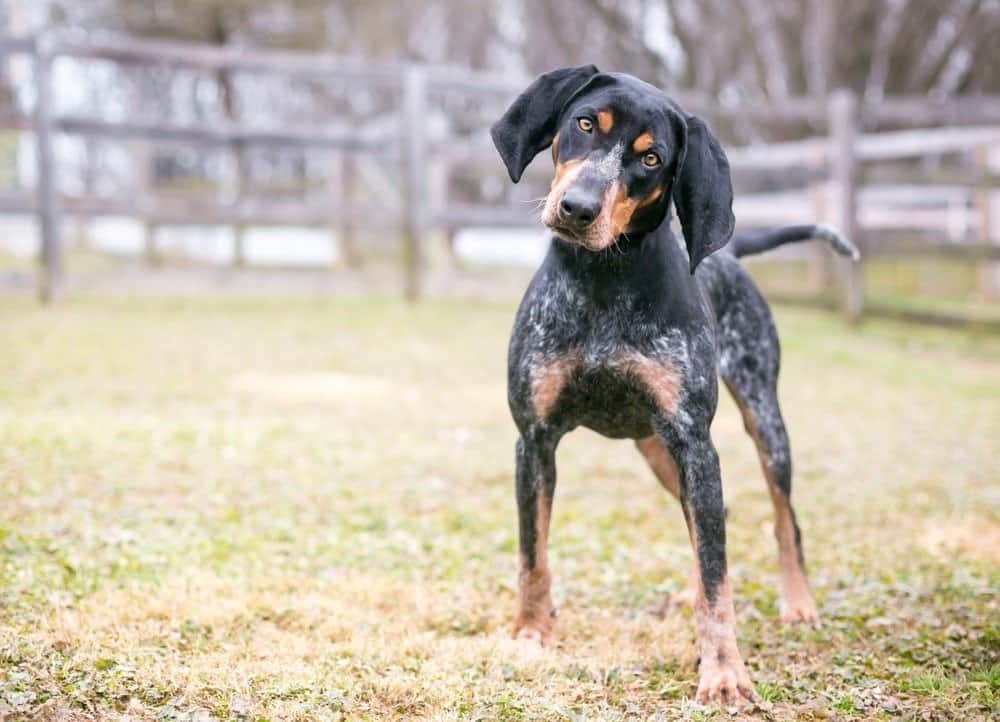
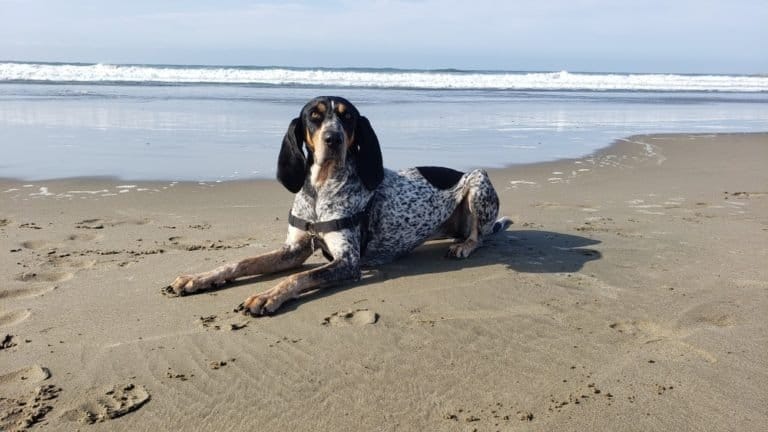
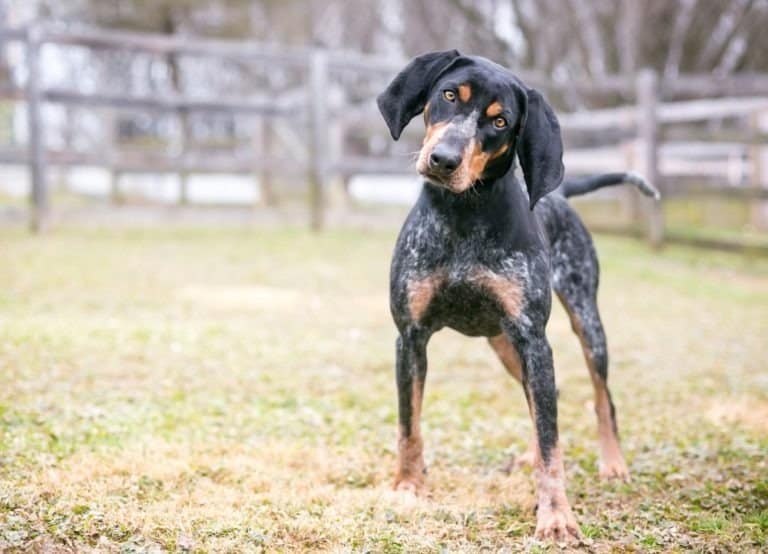
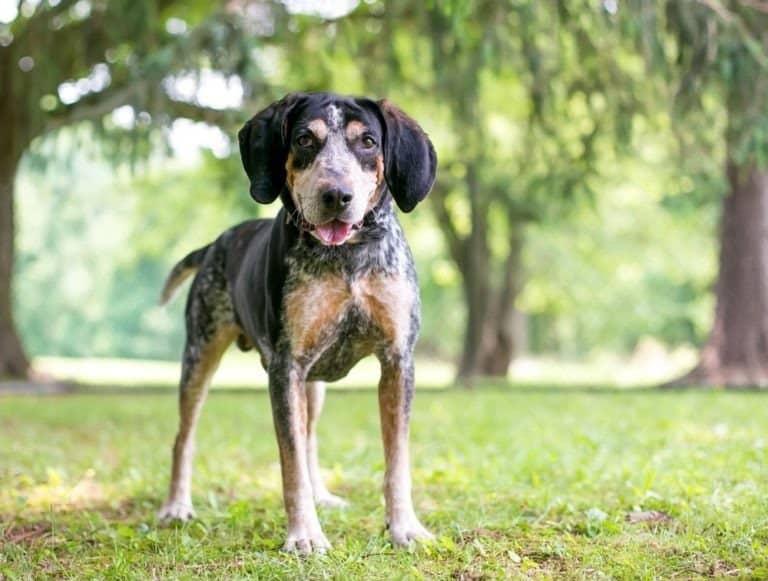
Bluetick Coonhound standing in field

Bluetick coonhounds can run very long distances.

Appearance & Size

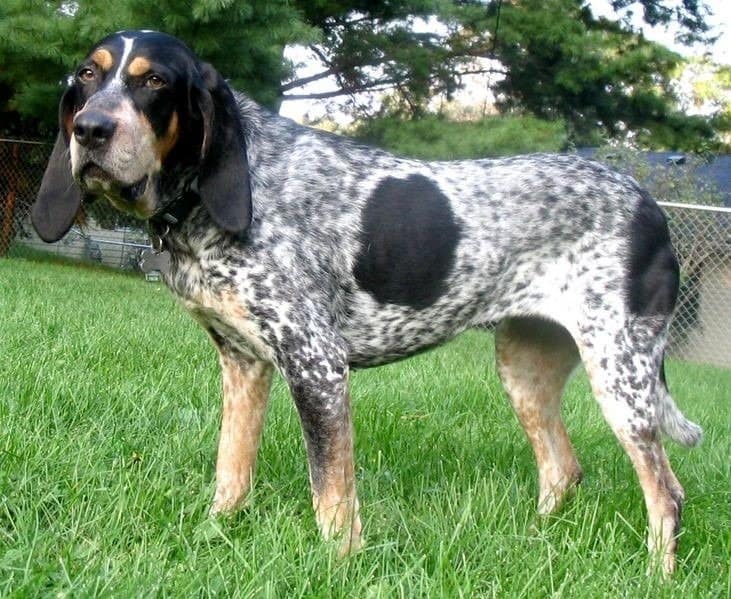
A Bluetick is a large dog with a short, shiny coat and a unique, bluish, mottled pattern. The Bluetick Coonhound is built for endurance and speed, which are essential traits for a hunting dog.

TraitMaleFemale
Height27 inches (69 cm)25 inches (64 cm)
WeightUp to 80 lbs (36 kg)Up to 65 lbs (29 kg)
CoatShort, dense, bluish mottledShort, dense, bluish mottled
Lifespan11–12 years11–12 years

Blueticks are fully grown at around 15 to 18 months. Puppies typically weigh about 10 lbs (4.5 kg) at 8 weeks.

Temperament & Behavior

These dogs have friendly personalities. Their tail always seems to be wagging! Loyalty is one of the main traits of this dog. Whether it’s on a run in the woods or napping on the sofa, this dog likes to be with the family. Blueticks are known for their energetic behavior. Chasing a scent down in the woods takes speed!

One of the many facts a family should know about this dog is that it has an unmistakable voice. This hunting dog was bred to bark, howl, and bay when tracking down the scent of an animal. So, its natural inclination is to bark. Socialization helps this dog to learn when to bark. On the flip side, its big voice makes for an effective watchdog!

Blueticks are great with children when properly socialized. They should, however, be closely supervised when around other pets. Blueticks have a strong prey drive.
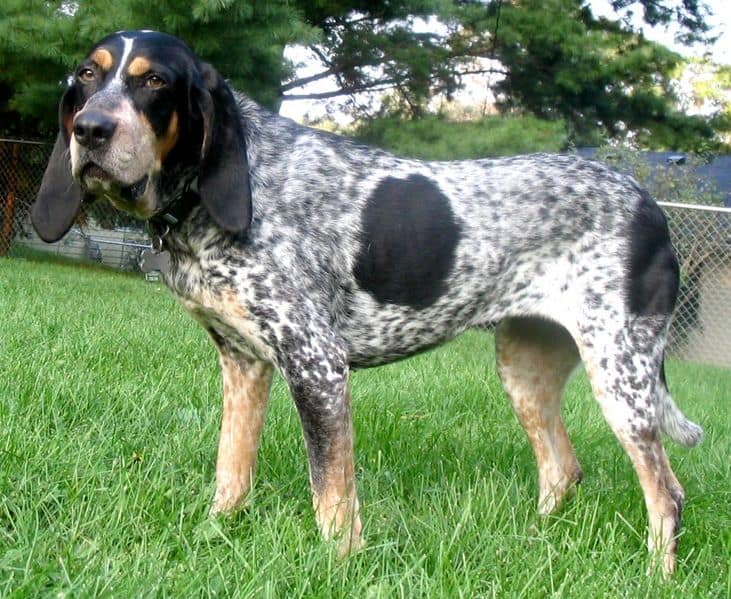
Bluetick Coonhounds are barkers. If you don’t like a loud dog, this isn’t the breed for you.

Pros and Cons of Owning a Bluetick Coonhound

Pros:

  • Playful and family-friendly
  • Moderate shedding
  • Excellent watchdog
  • Loyal and affectionate

Cons:

  • Prone to separation anxiety
  • Stubborn during training
  • High energy requires daily exercise
  • May chase smaller animals

Health & Common Issues

These coonhounds are prone to a few health issues. Hip dysplasia is one of them. This issue is caused when joints don’t develop properly. It causes limping and sometimes permanent lameness. Bloat is another health issue of these dogs. Bloat occurs when the dog’s stomach fills with gas and becomes twisted, cutting off the blood supply to that organ. A distended abdomen and vomiting are signs of bloat. These dogs are also prone to cataracts. Cloudy eyes are a sign of cataracts.

Adequate exercise and a quality grooming routine all contribute to keeping a pet healthy. Regular vet visits are also important, as well as a balanced diet with adequate portion control to prevent obesity and bloat.

    Care & Grooming

    Diet:

    An adult dog of this size needs the proper nutrition to stay healthy. Furthermore, Bluetick puppies need the right diet to develop into healthy adults. Consider these nutritional recommendations:

    Bluetick Coonhound puppy food: Calcium is essential in a puppy’s diet. Calcium strengthens bones and helps prevent hip dysplasia. Protein contributes to healthy tissue and muscle development. Fat gives puppies energy so they can burn off any excess calories to avoid excess weight. Vitamin A supports healthy vision in puppies, which can prevent cataracts later on in life.

    Bluetick Coonhound adult dog food: One of the most important facts to remember is that an adult dog needs many of the same nutrients as a puppy, but in different amounts. Protein supports continued healthy tissue and muscle growth. This helps avoid hip dysplasia. A limited amount of carbohydrates in an adult Bluetick’s diet provides this high-energy dog with the fuel to run around. Calcium continues to strengthen bones as this dog grows older. Vitamin E supports the health of organs, which can be useful in preventing bloat.

    Also, note that this breed, like any other dog prone to bloat, needs its owners to monitor meals carefully to ensure sensible portions and adequate time between exercise and eating.

    Grooming

    How much do Bluetick Coonhounds shed? These dogs shed a moderate amount of hair. Brushing a Bluetick once per week can get rid of loose and dead hair.

    A grooming glove is an excellent grooming tool to use on a Bluetick. This glove is soft on its skin and coat while removing dead hair. A glove can be used on the dog’s legs and face as well. A soft boar’s hair bristle brush can be used on its short-haired coat to give it some shine. Start brushing this dog at its head and move toward its tail.

    The dog’s nails need to be trimmed once per month or so because long nails can interfere with its energetic running and jumping. Also, regularly check its ears to prevent infections.
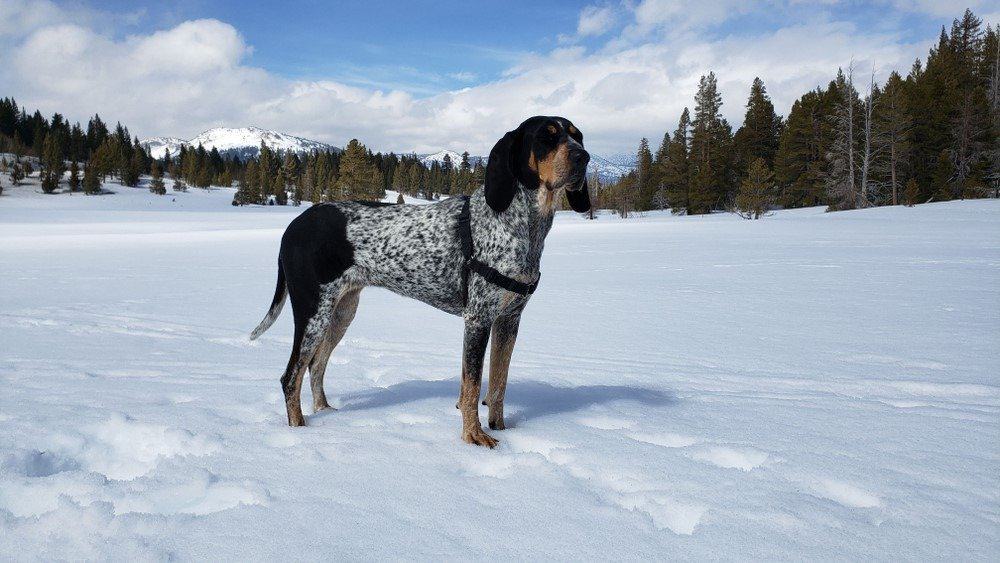
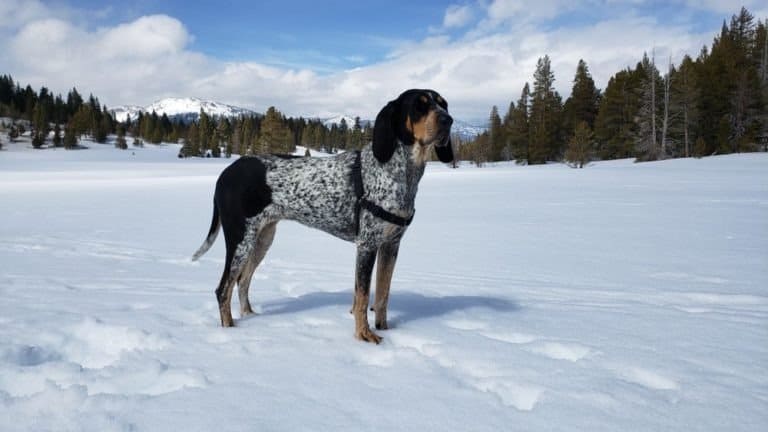
    Bluetick Coonhound standing in the snow

    Bluetick coonhounds shed a moderate amount of hair. Frequent brushing is required.

    Training & Exercise

    These dogs are intelligent but can be stubborn during obedience training. It’s best to conduct short obedience training sessions with lots of treats and praise for learned lessons. Remember, a Bluetick Coonhound is easily distracted by other animals. So, conducting obedience training in a quiet area is a good idea. Early socialization is key to family-friendly behavior.
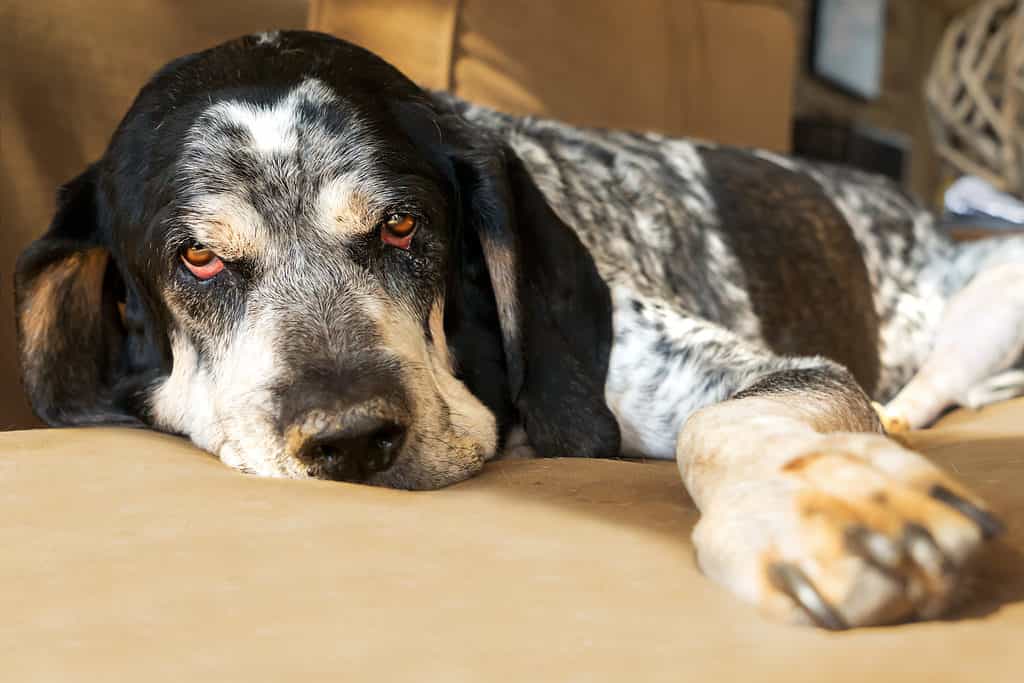
    Bluetick Coonhound

    Bluetick coonhounds are high-energy dogs and make great running companions.

    Exercise

    Since the Bluetick Coonhound is an energetic dog, it needs a moderate to high amount of exercise. An hour of exercise daily is ideal for keeping this breed in a healthy condition.

    These dogs love exploring the woods and fields. Of course, an owner should be sure their Bluetick will respond to the call to come back when exercise time is over. Playing chase with a ball, fetching items, and running around a backyard are all great activities for this dog.

    A Bluetick Coonhound is not a good choice for a person who lives in an apartment. In terms of size, this is a large breed of dog. It needs space to move around without bumping into things and people. A home with a spacious, fenced-in yard is a more suitable option for this hunting dog.

    Family Compatibility

    This dog has a gentle, friendly temperament that makes it a good match for a family with children. A socialized Bluetick Coonhound is a fun, playful addition to a household with kids of all ages. However, due to their size and energy, supervision around young children and small pets is recommended.

    Bluetick Coonhound Puppies
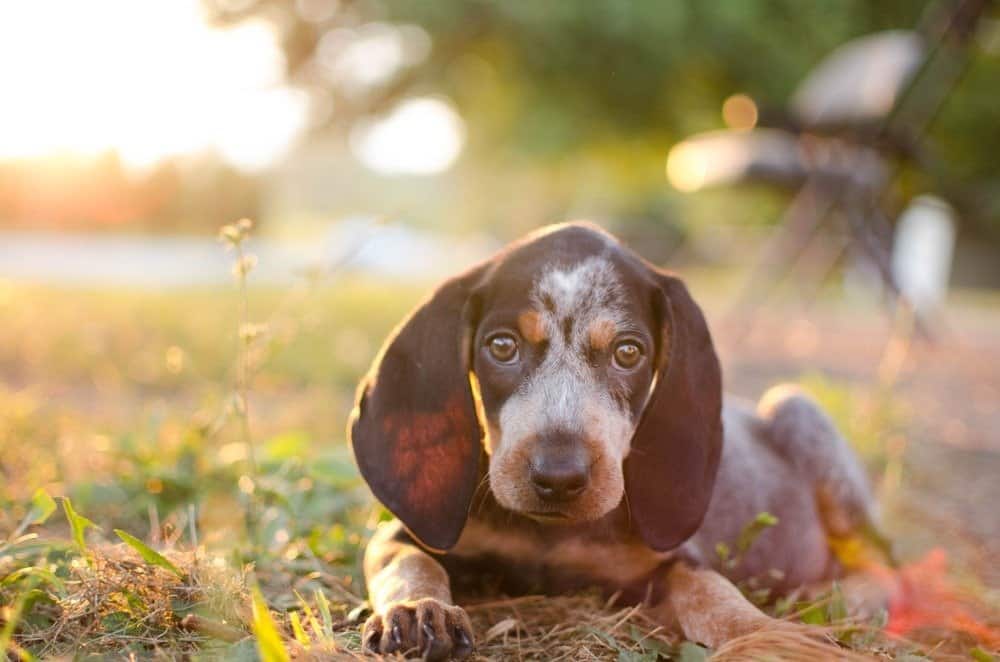
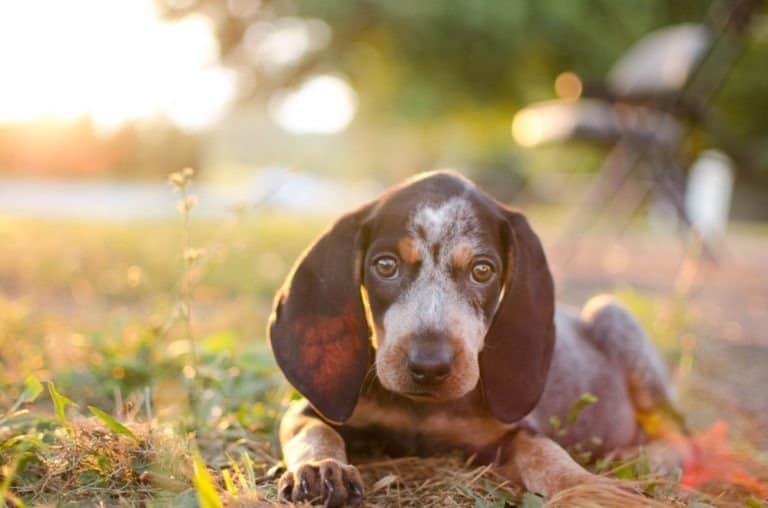
    Bluetick Coonhound puppy lying in the grass

    Bluetick puppies are playful and energetic, but should get socialized early to prevent bad behavior later in life.

    As puppies, Bluetick Coonhounds should get daily exercise in an enclosed area outdoors to build their muscles, stretch their legs, and explore the environment for scents. Early training, socialization, and exposure to family life help build a well-behaved adult dog.

    Similar Breeds

    Other breeds of dogs similar to Bluetick Coonhounds include the American English Coonhound, Bassett Hound, and the Bavarian Mountain Hound.

    • American English Coonhound: The American English Coonhound is similar in appearance to the Bluetick and is categorized in the hound group as well. However, an adult male Bluetick Coonhound weighs more than a male American English Coonhound.
    • Bassett Hound: Though the Bassett Hound and Bluetick are in the hound group, a Bassett Hound is smaller and shorter. Also, while a Bluetick needs to get out and take a run every day, a Bassett Hound simply requires a walk through the neighborhood.
    • Bavarian Mountain Hound: This is another hunting dog that is similar in size and appearance to a Bluetick Coonhound, but the Bavarian Mountain Hound and small children do not mix very well.

    Famous Bluetick Coonhounds

    There are some notable examples of Bluetick Coonhounds in the entertainment world and other places in our society. Some examples include:

    • A Bluetick Coonhound named Smokey is the mascot of the University of Tennessee
    • The cartoon character Huckleberry Hound is a Bluetick Coonhound
    • Bando in the movie Homeward Bound II was a Bluetick

    Fun Facts

    • “Bluetick” refers to the bluish mottled pattern of the coat.
    • They have a “cold nose,” meaning they can track scents that are hours or even days old.
    • A Bluetick can run long distances, making them endurance hunters.

    View all 453 animals that start with B

    Sources

    1. American Kennel Club / Accessed December 15, 2020
    2. The Spruce Pets / Accessed December 15, 2020
    3. Wisdom Panel / Accessed December 15, 2020
    Heather Hall

    About the Author

    Heather Hall

    Heather Hall is a writer at A-Z Animals, where her primary focus is on plants and animals. Heather has been writing and editing since 2012 and holds a Bachelor of Science in Horticulture. As a resident of the Pacific Northwest, Heather enjoys hiking, gardening, and trail running through the mountains with her dogs.

    Thank you for reading! Have some feedback for us?


    Bluetick Coonhound FAQs (Frequently Asked Questions)

    A Bluetick Coonhound is a large hunting dog that was also bred to be a companion to its owner. The ‘Bluetick’ in its name refers to this dog’s mottled or spotted coat.

    This is a friendly, gentle dog with an excellent sense of smell, a loyal heart, and lots of energy!