










Quick Take
- To reach the 1200 recording milestone, the breed survived the Renaissance era collapse.
- A specific 4-month window marks the onset of critical thigh bone vascular issues.
- Surprisingly, this hypoallergenic breed requires more grooming than its shedding cousins.
- The scouting and importation by Liz Stannard was required for the 2002 Crufts debut.
Bolognese is part of the Bichon group, meaning they are cousins to Bichon Frises, Maltese, Lowchens, Havanese, and Coton de Tulear. Bolognese dogs get their name from Bologna, a city in Italy. It is believed that the breed was created in Bologna. The first recording of this breed was in the year 1200.
Bolognese were bred in Italy to be companion dogs and truly do make great companions. These dogs are loving, sensitive, and playful. They make great family dogs for households with older children.

Owning a Bolognese: 3 Pros and Cons
| Pros | Cons |
|---|---|
| Low Exercise Needs: The exercise needs for a Bolognese dog are lower than those of many other dog breeds. | Not Great for Homes with Small Children: As a toy breed, a Bolognese dog could be easily injured by a young child pulling or grabbing. |
| Loving: These fluffy white dogs enjoy their family and love spending time together. | Expensive: A pure-bred Bolognese typically costs between $1,200 and $3,100 from reputable breeders, making them more expensive than many common breeds but similar in price to other rare toy breeds. |
| Low Exercise Needs: The exercise needs for a Bolognese dog are lower than many other dog breeds. | Barking: Bolognese barks more than many other breeds. |
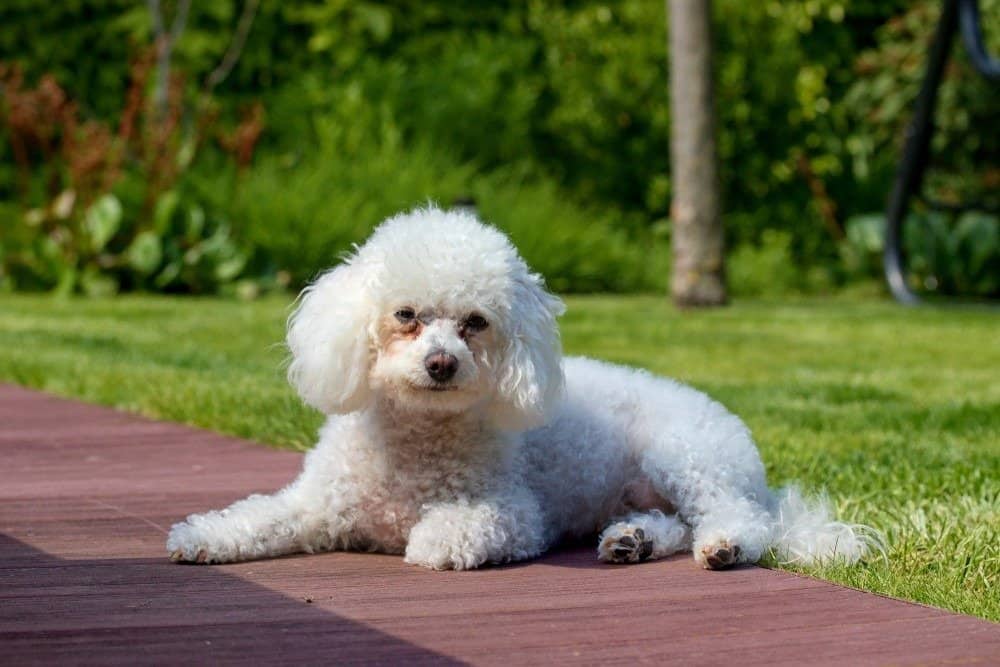
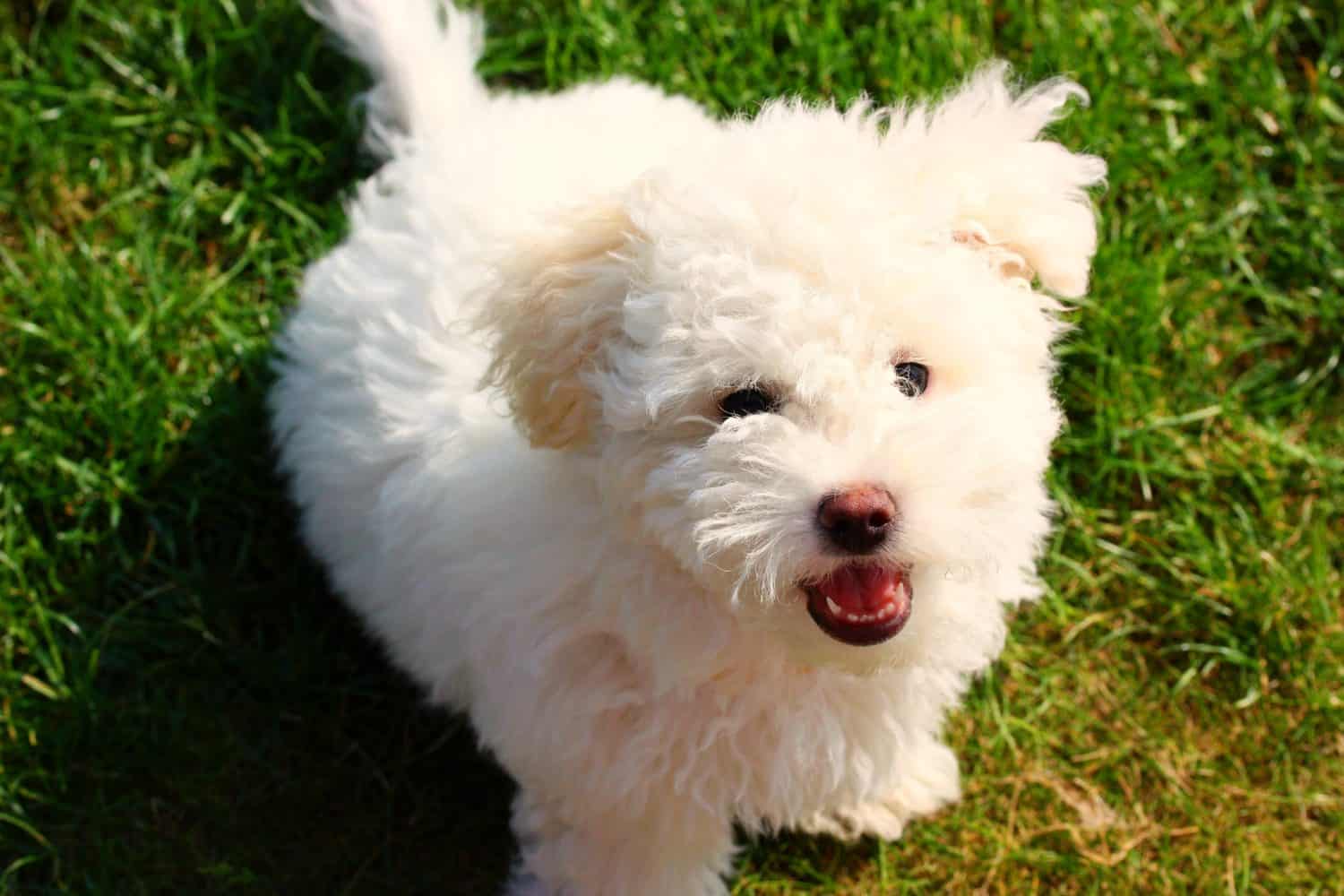
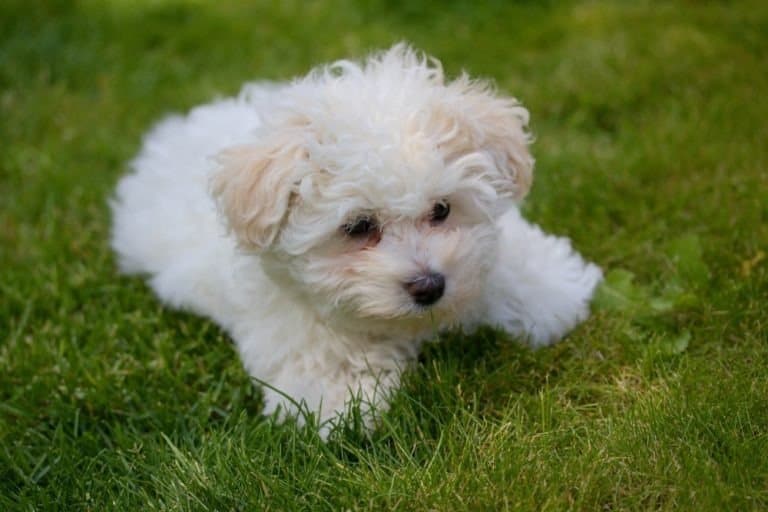
Bolognese dogs are smart, sensitive, and playful.
©islavicek/Shutterstock.com
History and Origins
The Bolognese breed of dog has a long history that dates back to the 11th and 12th centuries in Bologna, Italy. It grew in popularity among the nobility during the Renaissance era, and King Umberto gave one as a birthday present to Princess Jose of Belgium. Additionally, in 1668, Cosimo de Medici sent eight Bolognese to Brussels as gifts to several wealthy and influential families.
As the nobility fell away, the Bolognese dog breed almost disappeared. Fortunately, some breeders in Europe, particularly Gian Franco Giannelli from Italy, worked to preserve the breed, and it began to regain its popularity. Liz Stannard imported the breed to England in 1990, and it was first exhibited at shows in Imported Register classes. By 2001, it had its own classes at all shows and made its debut at Crufts Dog Show in 2002.
Size and Weight
The Bolognese is a toy dog breed. Males and females are roughly the same size. They are generally between 10 and 12 inches tall and weigh between 5.5 and 9 pounds. At three months old, puppies typically weigh between 3 and 5 pounds. When they are six months old, puppies weigh between 4.5 and 8.8 pounds. Most Bolognese dogs are fully grown by the time they are nine months old.
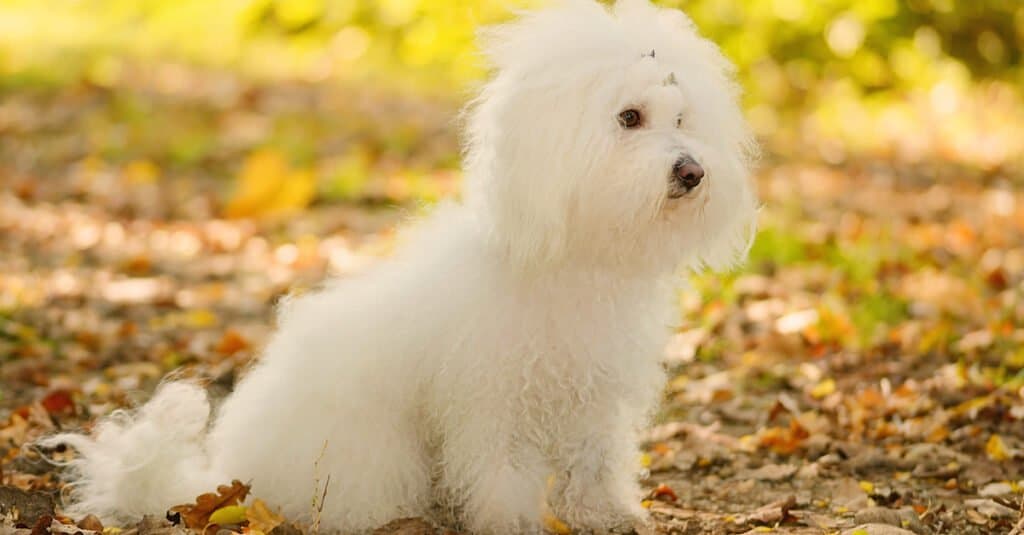
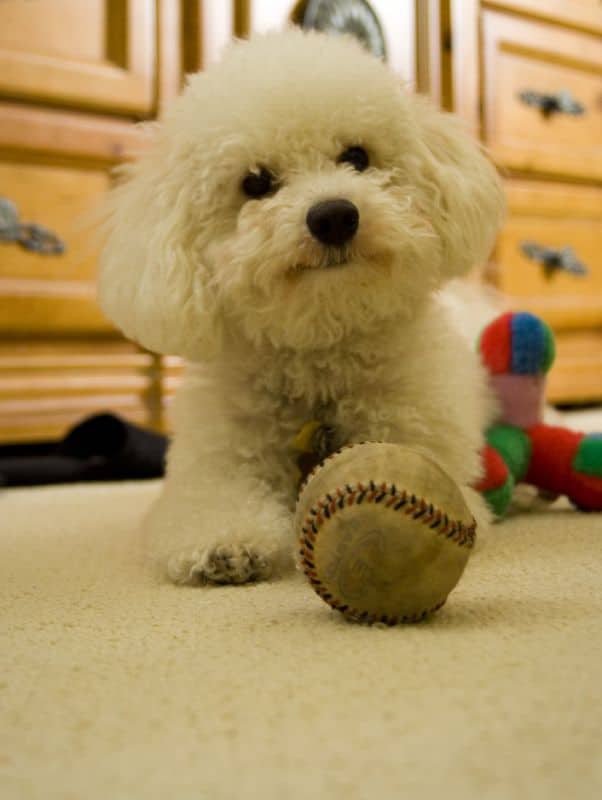
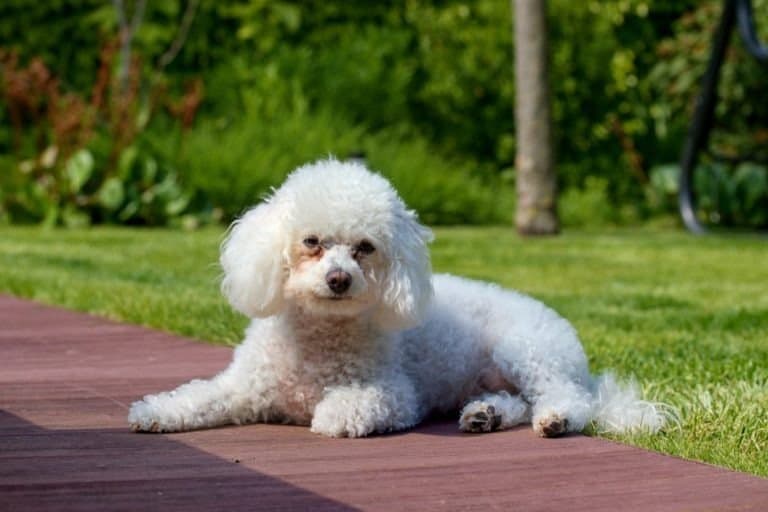
The Bolognese is more intelligent than its closely related breeds.
©SasaStock/Shutterstock.com
Common Health Issues
Overall, these are healthy dogs. However, there are a few common health concerns that you should be on the lookout for in your dog.
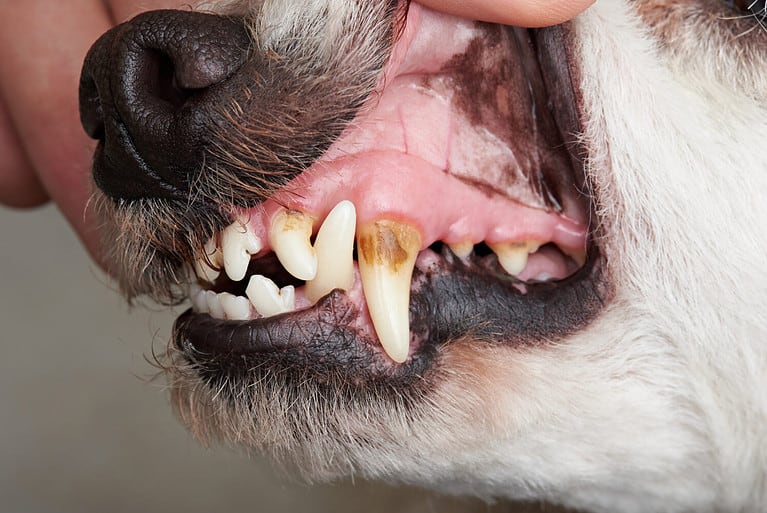
Like other small dogs, dental issues are a common problem. Scheduling regular cleanings and brushing your dog’s teeth a few times a week will be important to prevent too much tartar buildup, diseases, or the need for tooth extractions.
Another common disease among these dogs is Legg-Calve-Perthes disease. In this condition, the amount of blood that is able to reach the thigh bone is less than it should be. This causes the thigh bone to shrink, which can cause a Bolognese to limp. Typically, you’ll begin seeing signs of this when a puppy is between the ages of 4 and 6 months old. This condition can be treated by surgery.
Hip dysplasia also affects some Bolognese dogs. This is a genetic condition in which the dog’s thigh bone doesn’t connect with its hip bone correctly. The two bones rub together, which can become painful and may cause a dog to start to limp.
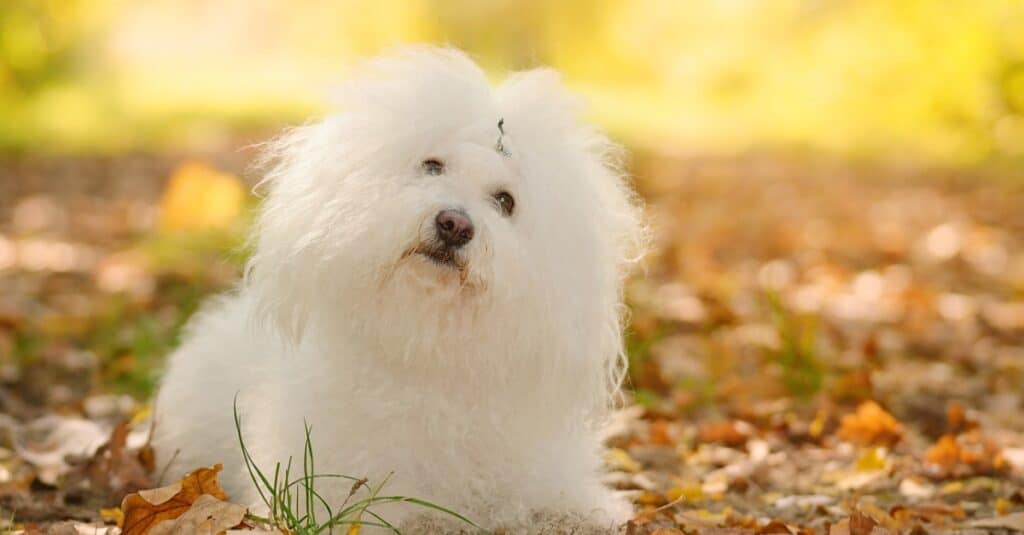
Bolognese dogs are prone to dental cavities.
©iStock.com/sssss1gmel
Temperament and Behavior
These dogs have very devoted and sensitive personalities. They are relatively easy-going and are happiest when they are with their family; they make great companion dogs. If left alone, a Bolognese can develop separation anxiety and engage in destructive behavior.
While they are very loving, these dogs can also exhibit stubborn traits, which can make training them a bit of a challenge. They are good with children but will do best in a home with older children who are able to appropriately interact with dogs, so they don’t accidentally injure the small Bolognese.
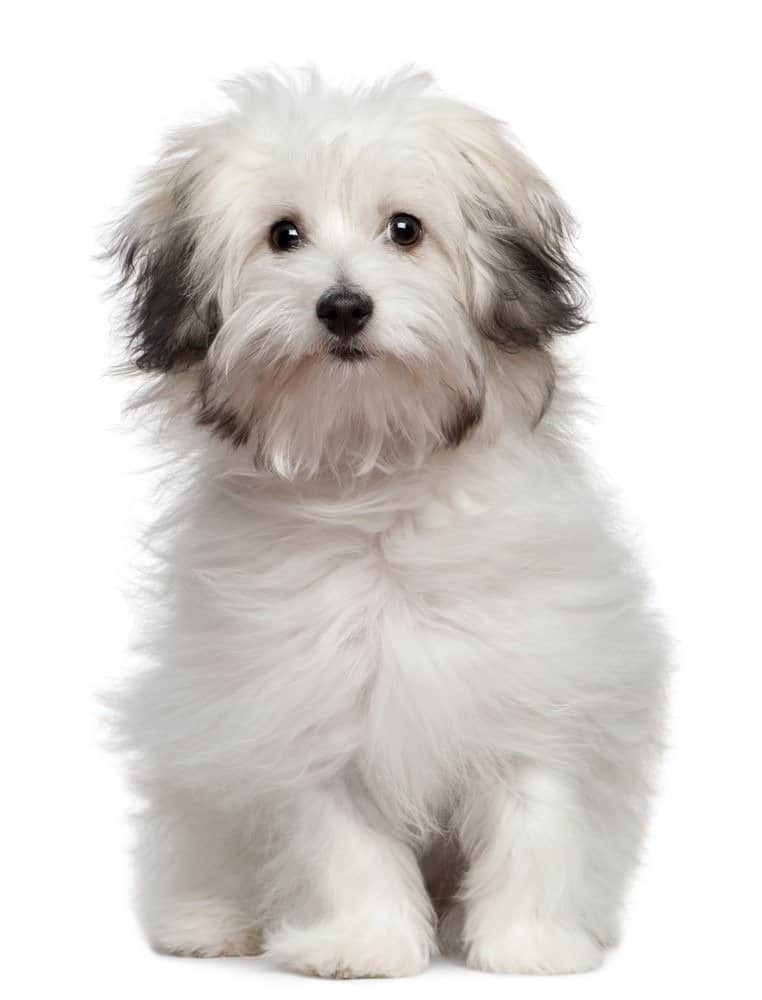
Bolognese dogs were bred to be companions. They get anxious when left alone.
©Eric Isselee/Shutterstock.com
How to Take Care of a Bolognese
There is a lot that makes the Bolognese a very unique dog breed. The care you will need to provide a Bolognese will be different from what dogs of different breeds require. Keeping the nutritional needs, health concerns, and other factors in mind when thinking about how you’ll care for your Bolognese dog is important.
The Best Dog Food
Since this is a toy dog breed, they will not need large amounts of food. However, they do have a fast metabolism, so it will be important to choose foods that are specially formulated for toy breeds. Always choose high-quality food from a reputable company to protect your dog’s health. If you decide you want to provide your dog with homemade meals, be sure to consult with your vet to make sure you are including all the nutrients your dog needs.
Some owners also choose to feed their dogs a raw diet. Raw diets include fish and meat. If you choose to go this route, be prepared to put in a little more work when preparing and planning your dog’s meals. Or, try a freeze-dried kibble infused with raw protein. Especially for small dogs that can get dental issues, crunchy, dry kibble is best.
The food a Bolognese eats should be high in both fat and protein. When looking for puppy food, you should also look for a special Omega-3 called Docosahexanoic Acid (DHA). This will help make sure the puppy develops properly.
Maintenance and Grooming
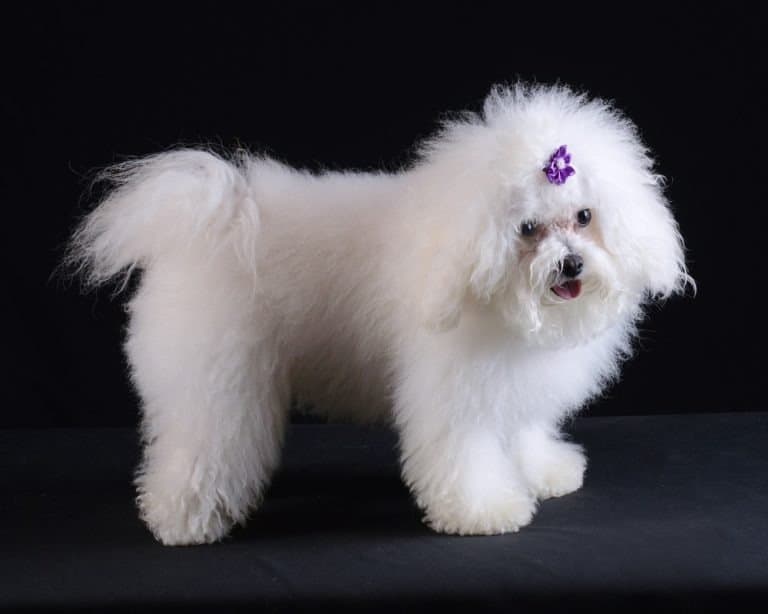
These dogs are known for their fluffy white coat. While their hair doesn’t shed, and they are a hypoallergenic dog breed, they are a pretty high-maintenance dog. Their white curly hair will require frequent brushing and bathing to keep it clean and well-maintained. Ideally, you will want to brush your dog three or more times every week. You may also want to take them to a groomer to keep their coat shorter for easier maintenance, or consider trimming them yourself.
Their nails should be trimmed once every month. You should also regularly check their ears to look for dirt or buildup. As a toy dog breed, Bolognese may be more prone to dental issues, so be sure to brush their teeth on a regular basis, too.
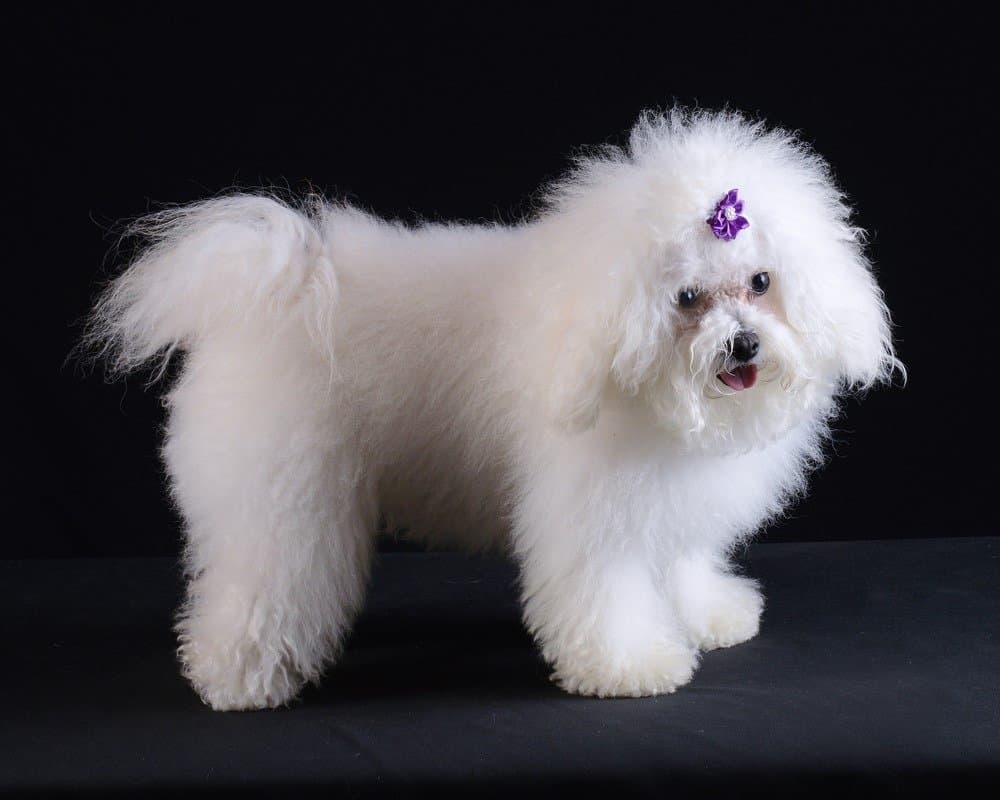
Bolognese dogs do not shed, but their coat does mat. They require frequent grooming.
©cherry williams/Shutterstock.com
Training
Bolognese is an intelligent dog breed, which makes them relatively easy to train. Positive reinforcement training methods will be most successful with this breed. However, they may become easily bored if you are too repetitive. Adding some variety to your training can help it to be more successful.
Exercise
Bolognese dogs do not require nearly the amount of exercise that some other breeds need. Most times, they will be content hanging out with their owners in the house. However, it is important to take them out for a walk every day for about 20 to 25 minutes.
Puppies
Because of their small size, you will want to be especially careful with your Bolognese puppy to avoid accidentally injuring them. It will also be important to begin training your new puppy as soon as you bring them home.
Puppies have very small stomachs, so they will need to eat smaller meals more frequently throughout the day. Puppies between the ages of 8 and 12 weeks should eat four meals each day, and puppies between the ages of 3 and 6 months should eat three meals each day. By the time your dog is 6 months old, you should be able to switch to feeding them twice a day.
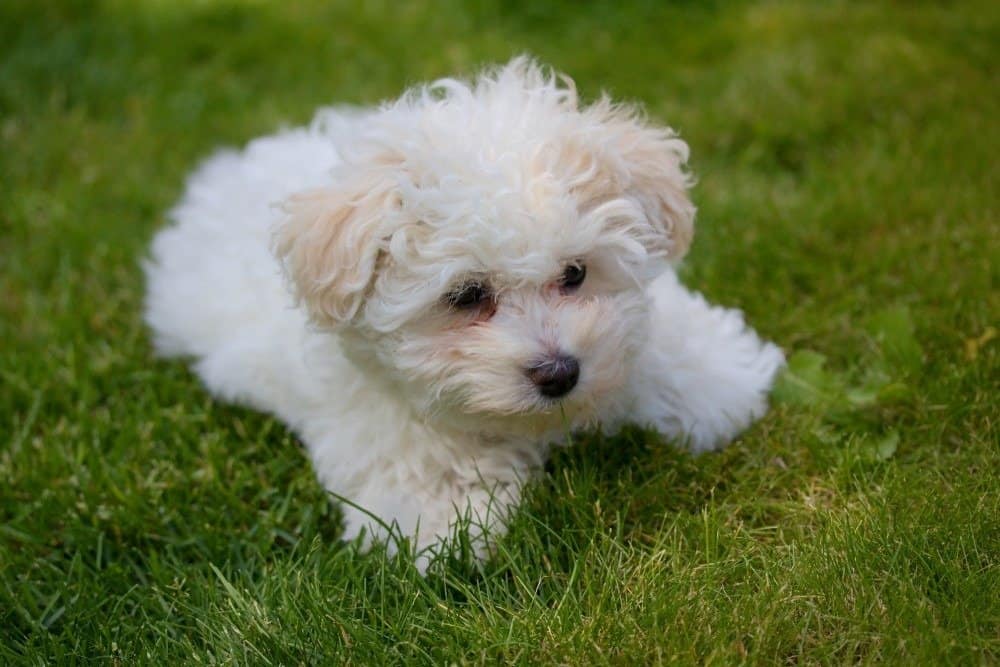
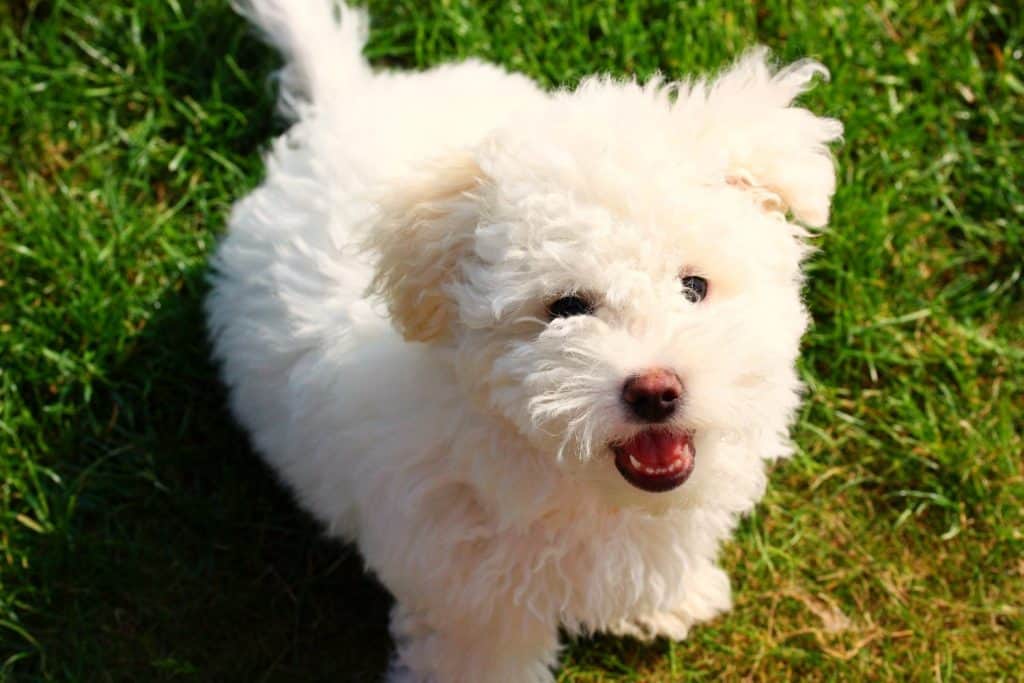
Bolognese puppies have tiny stomachs. It is best to feed them frequently in small amounts.
©islavicek/Shutterstock.com
With Children
A Bolognese can make an excellent family pet. Bolognese are loving and enjoy spending time with the people in their family. However, they are best suited for families that no longer have toddlers around the home. Young children who haven’t yet learned how to appropriately interact with a dog could injure a small dog like a Bolognese. It is always important to supervise children when they are around a Bolognese to prevent an accidental injury to either the child or the dog.
It is necessary to supervise young children around dogs until they learn to be gentle with their furry family member.
©islavicek/Shutterstock.com
Dogs similar to the Bolognese
Bichon Frises, Maltese, and Havanese are three dog breeds that are similar to these dogs.
- Bichon Frise: Bichon Frises and Bolognese dogs are both small, white, fluffy dogs. Both breeds are affectionate and may develop separation anxiety if left alone for too long. A Bichon Frise is larger than a Bolognese, though. The average weight of a Bichon Frise is 12-18 pounds, while the average weight of a Bolognese is 6-10 pounds.
- Maltese: Maltese and Bolognese dogs both originated in Italy. They both have white coats that do not shed. Both Maltese and Bolognese are intelligent and highly trainable breeds. Both breeds are very social and affectionate.
- Havanese: A Havanese is a companion dog breed, like a Bolognese. Bolognese are all white in color, but Havanese dogs may be white, black, reddish-brown, or other colors. Both breeds are easy to train and have a pretty strong impulse to protect their territory.
Bolognese Dog Pictures
View all of our Bolognese Dog pictures in the gallery.

Sources
- David Burnie, Dorling Kindersley Animal, The Definitive Visual Guide To The World's Wildlife / Accessed November 10, 2008
- Tom Jackson, Lorenz Books The World Encyclopedia Of Animals / Accessed November 10, 2008
- David Burnie, Kingfisher The Kingfisher Animal Encyclopedia / Accessed November 10, 2008
- David Burnie, Dorling Kindersley Illustrated Encyclopedia Of Animals / Accessed November 10, 2008
- Dorling Kindersley Dorling Kindersley Encyclopedia Of Animals / Accessed November 10, 2008
- Wikipedia / Accessed November 23, 2020
- Vetstreet / Accessed November 23, 2020
- American Kennel Club / Accessed November 23, 2020
- American Bolognese Club / Accessed November 23, 2020
- Animal Care Tips / Accessed November 23, 2020