







B
Species Profile

Bombay

Felis catus

The mini panther with a golden gaze
Viktor Sergeevich/Shutterstock.com

Bombay Distribution

Click a location to explore more animals from that region

Origin Location

This map shows the native origin of the Bombay. As a domesticated species, they are now found worldwide.

Loading map...

Size Comparison

Human 5'8"
Bombay 10 in

Bombay stands at 15% of average human height.

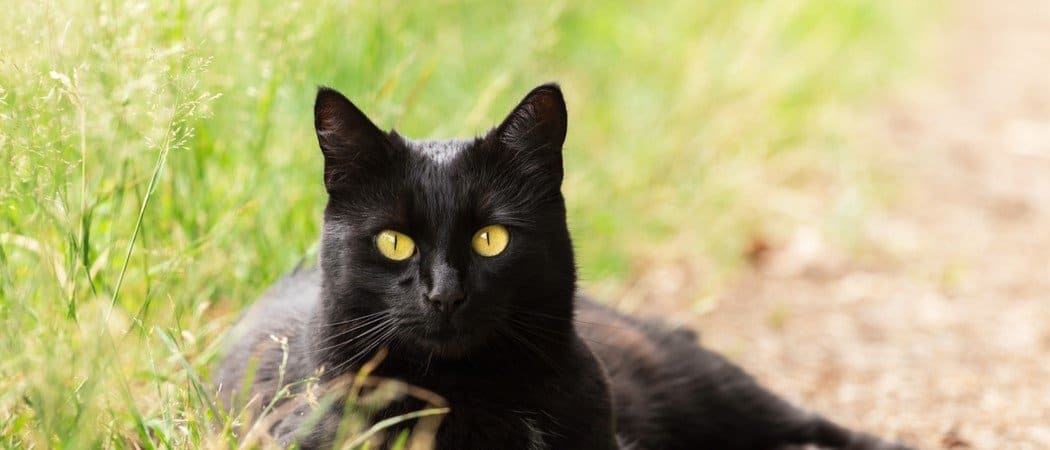
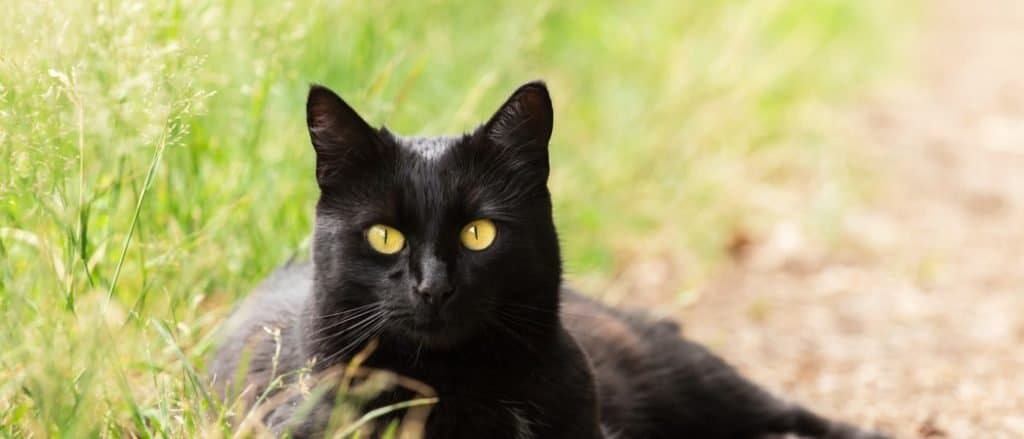
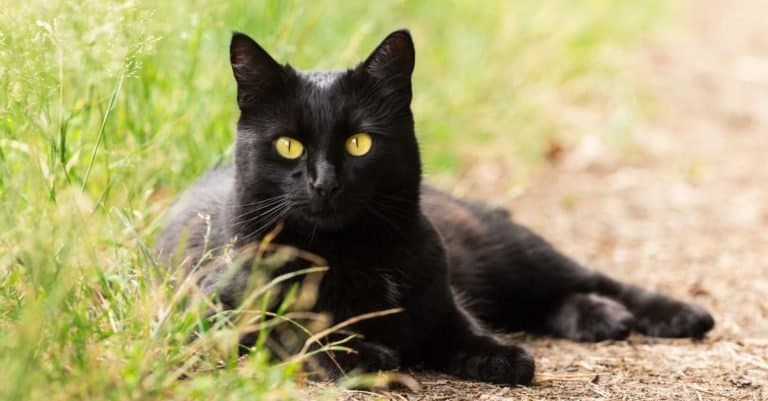
Beautiful Bombay black cat with yellow eyes and attentive look lie outdoors.

At a Glance

Domesticated
Diet Carnivore
Activity Crepuscular+
Lifespan 4 years
Weight 6 lbs
Status Not Evaluated
Did You Know?

The Bombay was purpose-bred in the U.S. (1950s-60s) to look like a small black panther while remaining fully domestic (Felis catus).

Scientific Classification

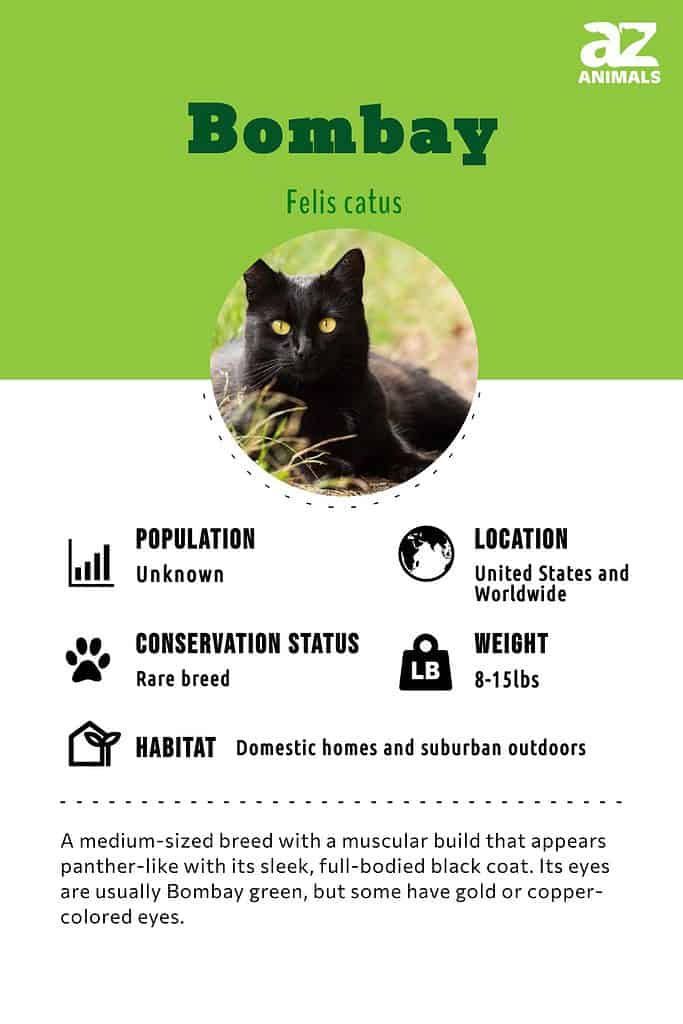
The Bombay is a domestic cat breed developed to resemble a small black panther: sleek, solid-black coat, copper/gold eyes, and a muscular yet medium build. It is a breed within the domestic cat species (Felis catus).

Kingdom
Animalia
Phylum
Chordata
Class
Mammalia
Order
Carnivora
Family
Felidae
Genus
Felis
Species
Felis catus

Distinguishing Features

  • Short, glossy, solid-black coat (including nose leather and paw pads commonly black)
  • Round head and large, rounded copper to gold eyes
  • Medium size with a muscular, ‘panther-like’ appearance
  • Affectionate, people-oriented temperament commonly reported for the breed

Physical Measurements

Males and females differ in size

Height
♂ 10 in (9 in – 11 in)
♀ 9 in (8 in – 10 in)
Length
♂ 2 ft 6 in (2 ft 4 in – 2 ft 9 in)
♀ 2 ft 1 in (1 ft 10 in – 2 ft 4 in)
Weight
♂ 11 lbs (9 lbs – 14 lbs)
♀ 8 lbs (6 lbs – 11 lbs)
Tail Length
♂ 11 in (10 in – 12 in)
♀ 11 in (9 in – 1 ft 1 in)
Top Speed
30 mph
Short fast sprints

Appearance

Primary Colors
Secondary Colors
Skin Type Short-haired domestic cat with a very short, close-lying, glossy coat (often described as 'patent-leather' sheen); low undercoat and a sleek, smooth skin/coat feel.
Distinctive Features
  • Domestic cat breed (Felis catus) selectively developed to resemble a small black panther-this intentional 'panther mimic' look distinguishes it from the typical mixed-trait domestic cat.
  • Highly glossy, tight coat that lies close to the body; the shine is a key breed hallmark.
  • Rounded head with a short, broad muzzle and full face; large, round, expressive eyes (copper/gold).
  • Medium size but notably muscular and substantial for its frame; compact, athletic silhouette rather than a long, lanky type.
  • Uniform black pigmentation commonly includes paw pads and nose (supporting an all-black presentation).
  • Breed-typical temperament traits often reported: people-oriented, affectionate, playful, and relatively vocal (influenced by Burmese ancestry).
  • Some lines may have higher risk of hypertrophic cardiomyopathy (HCM). Shorter muzzle can cause tearing, eye discharge and mild upper respiratory noise. Watch for dental/gum disease and weight gain.
  • Easy care: weekly brushing or wiping to keep coat shiny; clean eyes if watery; dental care (brushing or dental treats); regular vet checks, including heart checks if needed; keep indoors and give play and toys.

Sexual Dimorphism

Sexual dimorphism is present but subtle; males are typically larger/heavier and more muscular, while females tend to be slightly smaller and finer-boned, with the same solid-black, copper/gold-eyed breed look in both sexes.

♂
  • Often heavier body weight and broader chest/shoulders
  • Slightly broader head and thicker neck/jowls possible in mature males
♀
  • Typically a bit smaller and lighter with a slightly finer overall build
  • Facial features may appear a touch more refined while maintaining the breed's rounded head and large eyes

Did You Know?

The Bombay was purpose-bred in the U.S. (1950s-60s) to look like a small black panther while remaining fully domestic (Felis catus).

Breed standard calls for a jet-black coat (including nose leather and paw pads) and striking copper-to-gold eyes.

Its coat is short, fine, and often described as "patent-leather" glossy when in good condition.

Bombays typically inherit a people-oriented temperament-often following family members from room to room.

Most Bombays trace to Burmese and black American Shorthair ancestry, blending sleek looks with a sturdy, muscular build.

Despite the "panther" nickname, it's the same species as all domestic cats (Felis catus); the look is selective breeding, not wild ancestry.

They're often notably tolerant of indoor life and can do well in apartments with enough play and companionship.

Unique Adaptations

  • Panther-like phenotype within Felis catus: uniform black pigmentation and tight, glossy coat create the "mini panther" illusion without any wild-cat genetics.
  • Short, low-shedding coat (relative to many longhaired breeds) reduces matting and usually simplifies grooming.
  • Muscular, medium build: often heavier than they look, supporting athletic bursts of sprinting and jumping typical of a cat's ambush-hunting body plan.
  • Large, expressive copper/gold eyes: a breed hallmark produced by selective breeding rather than a survival adaptation, but it strongly distinguishes the Bombay visually from the general domestic cat population.

Interesting Behaviors

  • "Shadowing" their favorite person-Bombays are often described as velcro-like and may trail you through the house.
  • High social engagement: many seek lap time, greet at the door, and prefer being in the middle of household activity.
  • Playful, retriever-leaning games: some enjoy fetching small toys and interactive wand play more than solitary play.
  • Talkative tendencies (variable by line), with soft chirps/meows used to solicit attention or routine activities.
  • Warmth-seeking: commonly found in sunbeams, on blankets, or curled close to people-typical Felis catus thermoregulation behavior amplified by strong social bonding.
  • Routine sensitivity: many thrive on predictable feeding and play schedules, showing increased attention-seeking when routines shift.

Cultural Significance

Bombay (cat) (Felis catus) is a modern American breed made in the mid-1900s to look like a small panther. As a sleek black indoor pet, it links to black cat ideas (luck, magic, omen, protection) and has copper eyes.

Myths & Legends

In Scottish, British, and Irish folktales, black cats are seen as lucky. The Cat Sith, a fairy cat of the Highlands, may reward homes with milk but can also be dangerous.

In Japanese tradition, black cats are widely viewed as auspicious; they're often associated with protective luck and, in some tellings, improved romantic fortune for their owners.

European medieval and early modern superstition frequently cast black cats as familiars or shape-shifted witches-stories that contributed to their aura of mystery for centuries.

Sailors' lore in parts of Britain held that a black cat aboard a ship could bring good weather and safe passage, and a black cat at home might help ensure a sailor's safe return.

Story says Bombay cat breeder Nikki Horner (U.S., mid-1900s) wanted a 'parlor panther', a small black panther-like pet that is loving, tame, and stays indoors.

Conservation Status

NE Not Evaluated

Has not yet been evaluated against the criteria.

Population Stable

Life Cycle

Birth 4 kittens
Lifespan 4 years

Lifespan

In the Wild
1–10 years
In Captivity
12–16 years

Reproduction

Mating System Polygynandry
Social Structure Managed Domestic
Breeding Pattern Transient
Fertilization Internal Fertilization
Birth Type Internal_fertilization

As Felis catus, Bombays are polygynandrous: both sexes may mate with many partners; no stable pair bonds. Breeding is often managed with planned pairings; queens are induced ovulators, gestation ~63–65 days, litters 2–6. Queens give most care; genetic health screening advised.

Behavior & Ecology

Social Colony Group: 2
Activity Crepuscular, Cathemeral
Diet Carnivore High-protein, meat-based wet food (poultry such as chicken/turkey is commonly preferred)

Temperament

Highly social and people-attached compared with the base species; often follows family members room-to-room and seeks lap time.
Playful, interactive, and persistent about engagement (fetch-like games and wand play are common); benefits from daily structured play to prevent boredom.
Generally tolerant and adaptable with respectful children and cat-friendly dogs when properly introduced; can be "host-like" with visitors after socialization.
Attention-seeking/"velcro" tendency: may vocalize or paw for attention; some individuals show separation-related stress if left without enrichment.
Moderate-to-high intelligence and food motivation; puzzle feeders and training (targeting, harness, tricks) often work well.
Sleek coat needs little grooming, but regular nail and dental care is needed. Watch weight. Breed risks include hypertrophic cardiomyopathy, dental and gum disease, and mild brachycephalic tearing and noisy breathing; vet checks are important.

Communication

purr
meow
chirp
trill
mew Kitten
yowl
growl
hiss
slow blink and soft eye contact Affiliative signals; Bombays often use sustained gaze with relaxed posture when seeking attention
head-butting/bunting and cheek rubbing Scent marking/social bonding
tail carriage and tail-tip twitching Arousal/interest; faster lashing can signal overstimulation
kneading and lap settling Comfort-seeking, common in this breed's "cuddly" profile
pawing/tapping humans or objects to solicit play/interaction
body blocking/"shadowing" to maintain proximity to preferred person
scratching and scent deposition Territory marking; provide multiple scratching options to reduce conflict in mixed groups
ear orientation, whisker set, and posture changes Subtle cues of fear, play, or irritation

Habitat

Biomes:
Temperate Forest Temperate Grassland Mediterranean Tropical Rainforest Tropical Dry Forest Savanna Desert Hot Desert Cold Boreal Forest (Taiga) Tundra Alpine Wetland Freshwater Marine +8
Terrain:
Plains Coastal Hilly Mountainous Island
Elevation: Up to 18044 ft 8 in

Ecological Role

Domestic mesopredator closely associated with humans; primarily a companion animal but retains strong predatory capacity.

Rodent suppression around homes/structures when allowed to hunt Acts as a predator of small wildlife; in many regions can negatively impact native birds/reptiles if allowed outdoors (management via indoor housing/leash runs mitigates this) Transfers human-provided energy (pet food) into local food webs via predation or scavenging of prey remains

Diet Details

Main Prey:
House mouse Rats Voles and other small rodents Small birds Lizards Frogs Large insects Rabbit +2

Human Interaction

Domestication Status

Domesticated

Felis catus is a fully domesticated species from Near Eastern/North African wildcats, tied to people for thousands of years. The Bombay (cat) is a modern U.S. breed made in the 1950s–1960s (breeder Nikki Horner) by crossing sable Burmese and black American Shorthairs to make a small black panther-like cat with copper eyes. It's selective breeding, not a new domestication.

Danger Level

Low
  • scratches and minor bites (often during overstimulation or rough play)
  • allergic reactions to dander/saliva (can be significant for sensitive individuals)
  • zoonotic risks typical of domestic cats if hygiene/vet care is poor (e.g., ringworm; toxoplasmosis exposure via litter handling)
  • rare infection risk from bites/scratches (e.g., bacterial infection requiring medical care)

As a Pet

Suitable as Pet

Legality: Bombay (Felis catus) cats are legal in most places where pet cats are allowed. Owners must follow local rules like licensing, shots (like rabies), microchipping, leash/carrier rules, and limits on cats per home.

Care Level: Easy

Purchase Cost: $500 - $2,000
Lifetime Cost: $12,000 - $30,000

Economic Value

Uses:
Companion animal (pet industry) Pedigree breeding and sales Cat shows and associations Veterinary services and insurance Pet products (food, litter, enrichment, grooming) Animal-assisted therapy/education (occasionally)
Products:
  • pedigree kittens (Bombay)
  • stud services (where practiced/regulated)
  • registration/show participation fees
  • pet insurance policies
  • specialty diets and treats
  • enrichment items (interactive toys, climbing trees, puzzle feeders)

Relationships

Ecological Equivalents 5

Animals that fill a similar ecological role in their ecosystem

Domestic cat
Domestic cat Felis catus Bombay (Felis catus) is bred for a solid, glossy black coat, copper-gold eyes, and a compact, muscular build. Individuals are generally friendly and playful. Some lines exhibit brachycephaly (short muzzle), increased eye-watering, and predisposition to weight gain; they require simple grooming and indoor enrichment.
Burmese
Burmese Felis catus Ecological/functional relative as a closely related companion-cat type and a primary foundation influence for the Bombay; shares selection for a social, people-focused temperament and a sleek short coat, though Burmese typically have different accepted coat colors and a different head type compared with the Bombay's jet-black 'panther' look.
American Shorthair Felis catus Ecological/functional relative with documented outcross influence in the Bombay's development. Represents a robust, adaptable house-cat type with a short coat and generally sturdy build, contributing to the Bombay's medium, muscular body while the Bombay retains its distinctive solid-black coat and copper/gold eyes.
Black-footed cat Felis nigripes Occupies a similar niche as a small, solitary felid that specializes in stalking and pouncing on small vertebrate prey; often cited as an ecological analogue for 'small cat' predatory behavior, though the Bombay is domesticated and typically fed by humans.
Jungle cat Felis chaus A small-to-medium felid that occupies edge habitats and preys on rodents and birds; shares the general felid hunting strategy and body plan, providing a wild ecological comparison to domestic cats' predatory instincts.

The Bombay is a hybrid cat with a distinctive jet-black appearance.

The Bombay cat may look like the miniature version of a wild black panther, but don’t let its appearance scare you. Bombay cats are among the most energetic, playful, sociable and affectionate domestic cats you’ll find. Descended from the sable-colored Burmese and the black American shorthair, these cats make wonderful pets.
Breed History

Despite the name, this crossbreed did not originate from the Indian city of Bombay (now known as Mumbai). Instead, it was developed in the United States from a cross between a sable Burmese and a black American Shorthair. The American Burmese itself was only developed a few decades earlier from a Siamese-like cat.

A breeder by the name of Nikki Horner from Louisville, Kentucky was responsible for creating the Bombay developing the breed from 1958 to 1965. Her intention was to create a hybrid breed that resembled a small black panther, which is native to India (hence her choice of name). Decades after Nikki Horner succeeded, the Bombay (also referred to as Black Mamba) gained full recognition from the Cat Fanciers’ Association in the 1970s.

Traits: What to Know before You Buy

  • The Bombay is a highly sociable breed. It craves constant attention from its owner.
  • The Bombay loves playing games or fetching balls. Sometimes they will even accept being walked around on a leash. This should give it plenty of exercise and fresh air.
  • The Bombay loves to hide under warm blankets or in sunlit corners. Be careful when getting into bed.
  • Despite being a light shedder, the Bombay is not completely hypoallergenic. With that said, individual reactions will always vary, even with supposedly hypoallergenic cats. There’s no way to know how you will react until you’ve already had experience with a particular cat breed.
  • The short and shiny coat of hair should be groomed about once a week with a rubbery curry brush. Owners will also need to provide frequent ear checks, nail trimmings, and teeth brushing with an acceptable, vet-approved toothpaste.
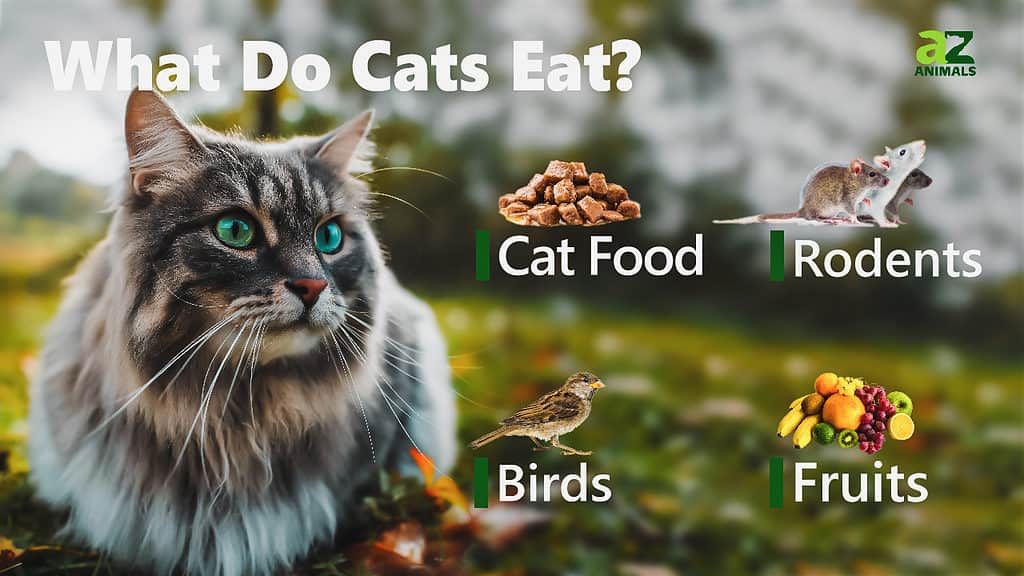
Domestic cats live on a diet of cat food, rodents, birds, and fruits.

Personality

The Bombay, like the closely related Burmese from which it originated, is one of the more affectionate and people-oriented breeds of cat you can find. These calm and laid-back cats are very friendly with children, strangers, and even other animals. They have been nicknamed the Velcro cats for their tendency to follow people around the home and insinuate their way into your activities, even when you want to be left alone. There may be one specific person with whom they show the most affection and bond.

Owners should be aware, however, that the Bombay cannot be left alone for long periods of time. A high-strung cat suffering from separation anxiety will start to engage in destructive behavior around the home. If you plan to leave them alone for hours at a time, then you should provide them with plenty of toys, a scratching post, and other activities. It’s also a good idea to have someone check in on them from time to time. This is one reason they do well with families.
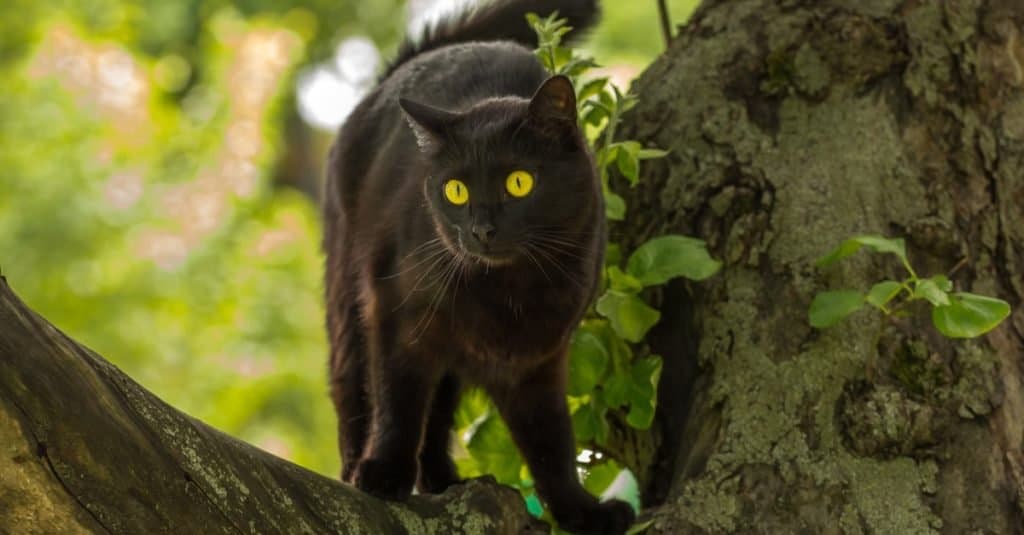
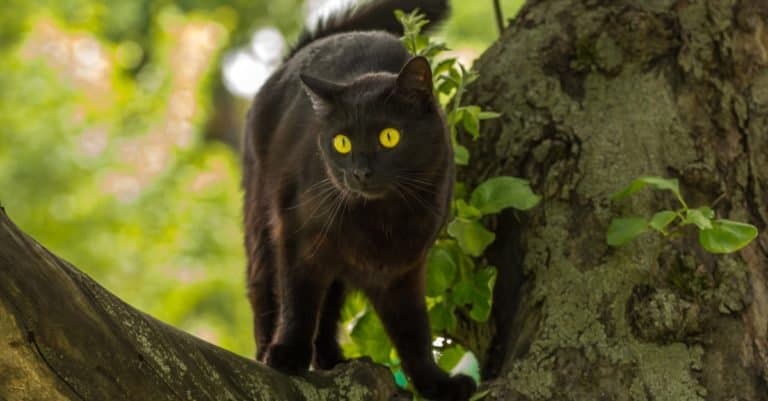
Beautiful black Bombay cat in a tree in the summer.

The beautiful black Bombay is one of the friendliest and most affectionate breeds you can find.

Size and Weight

The Bombay is a medium-sized cat, measuring between 13 and 20 inches long, with a muscular frame and a long tail. It usually weighs somewhere in the range of 8 to 15 pounds, but males are generally larger than females on average.

Price

The price of a new Bombay kitten will probably be somewhere in the range of $400 to $1,000. For a cat with an exceptional pedigree, you may end up spending well over a thousand dollars. If you’re just interested in adopting an older cat, however, then you probably won’t pay more than a few hundred dollars. From the right rescue shelter, these cats should be well cared for and up to date on their health checkups.
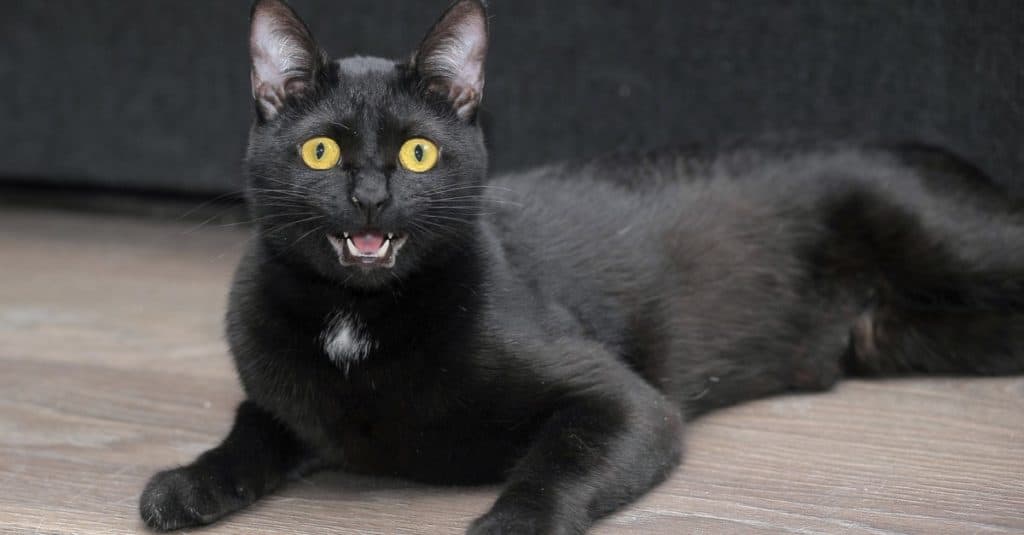
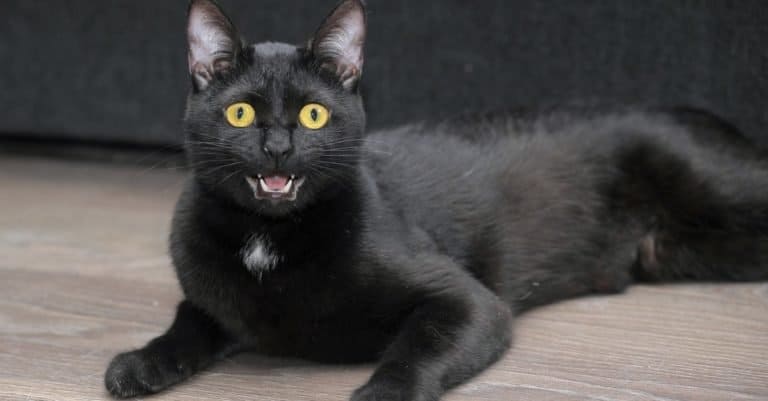
Cute black Bombay cat with bright yellow eyes lying on a table.

A well-bred Bombay cat can cost from 0 to 00, or more for competition cats.

Kittens

Bombay kittens are very energetic and playful pets. They are an enormous source of joy but also responsibility. Beginning within the first one to three months of age, kittens will benefit from early socialization and training in order to become well-behaved adults. Introduce your cat to new people slowly and patiently, with a calm voice and deliberate movements, so that it can set the pace of interactions as it pleases. These cats are also fairly responsive to a few basic commands and may even accept leash training.

Bombay kittens will reach sexual maturity quickly, perhaps as early as five months old. If you plan to spay or neuter them, this should be done by the six to nine-month mark. Spaying or neutering, which has numerous benefits for the cat’s health (including its risk of developing cancer) and behavior, is usually the preferred option unless you plan to deliberately breed your cats.
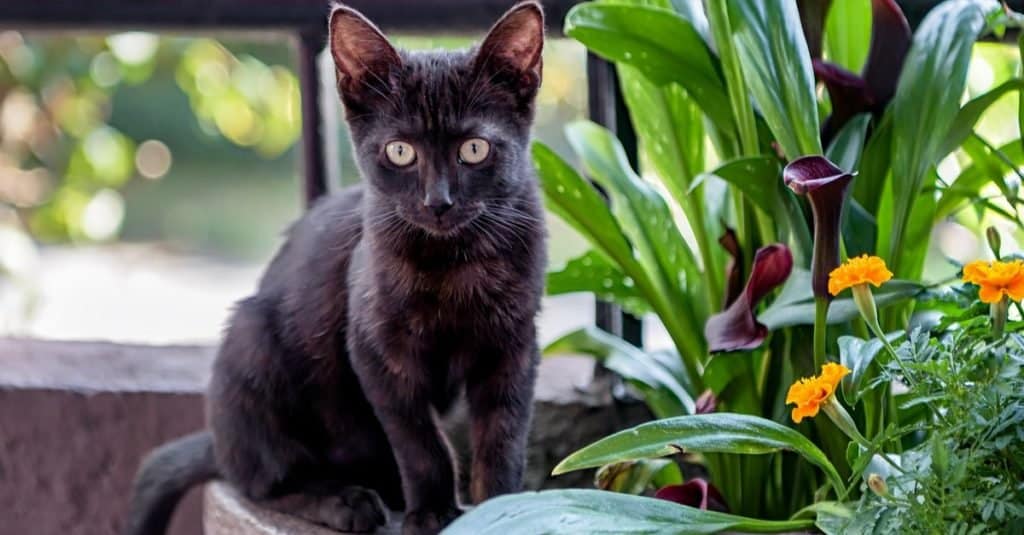
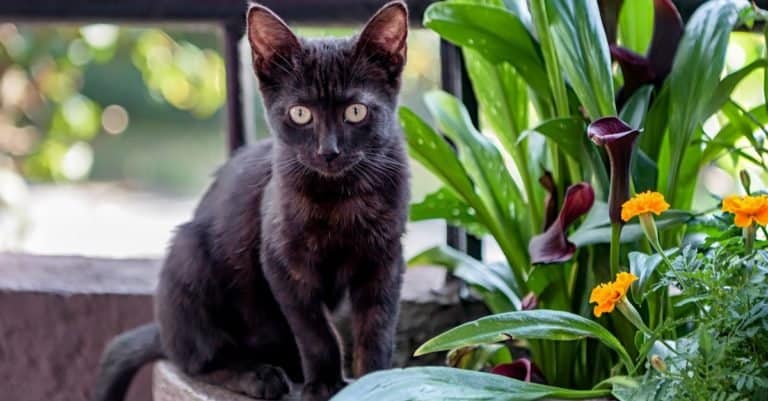
Cute black Bombay kitten sitting in a flower pot.

Bombay kittens reach sexual maturity as early as 5 months old.

Lifespan

The Bombay has a typical lifespan of 12 to 18 years. It’s very uncommon, though not impossible, that the cat may exceed 18 years of age. While generally healthy, they can suffer from gingivitis, sinus problems, head defects, and a potentially fatal heart condition called hypertrophic cardiomyopathy in which the heart grows too large and the walls thicken. Cardiomyopathy is so serious that you should never buy a kitten if its parents have not been tested for this condition. While no breeder can entirely prevent all health problems from ever developing, they can ensure that your cat has a better chance at living a long and healthy life. Regular health checkups at the vet are also a necessity to maintain good health.
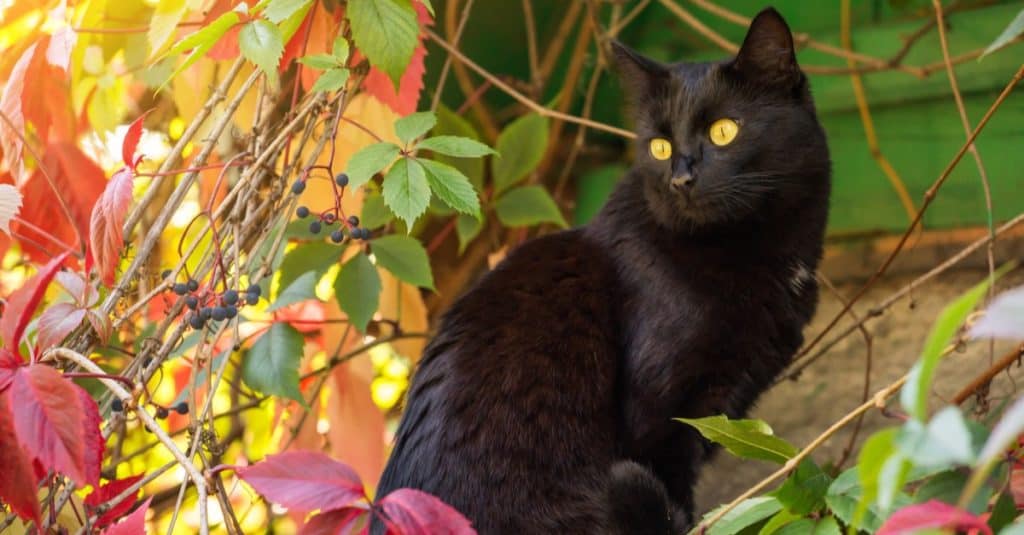
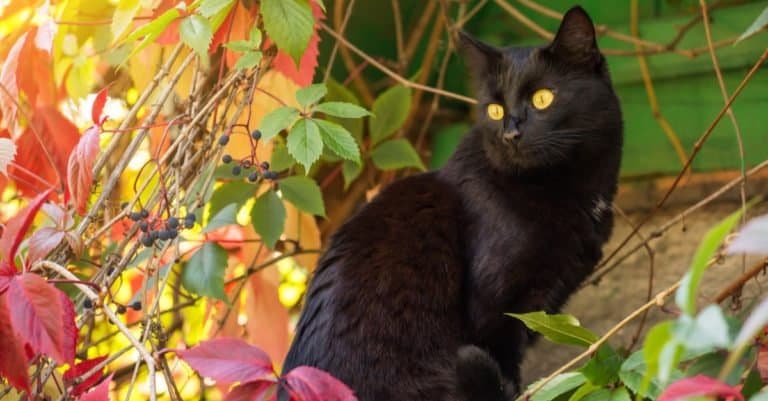
Black Bombay cat in autumn, with colorful leaves.

The average lifespan of a Bombay cat is anywhere from 12-18 years, with some living for 20 years or more.

Breed vs. Mixed

A typical Bombay will have a short glossy black coat, rounded head, medium-sized ears, long body and legs, and gold or copper eyes. Besides the black coat, it looks quite similar to the Burmese. This is no surprise, given that the Bombay was originally developed from the Burmese breed in the 1950s and 1960s. The Bombay can be mixed with any other breed of cat to produce some truly interesting results. However, by far the most common cross is with the sable Burmese. This is done on occasion in order to maintain the Bombay’s physical characteristics, which might otherwise drift from the accepted standard. It is not usually crossed again with the black American Shorthair, its other parent breed, due to a difference in body type.
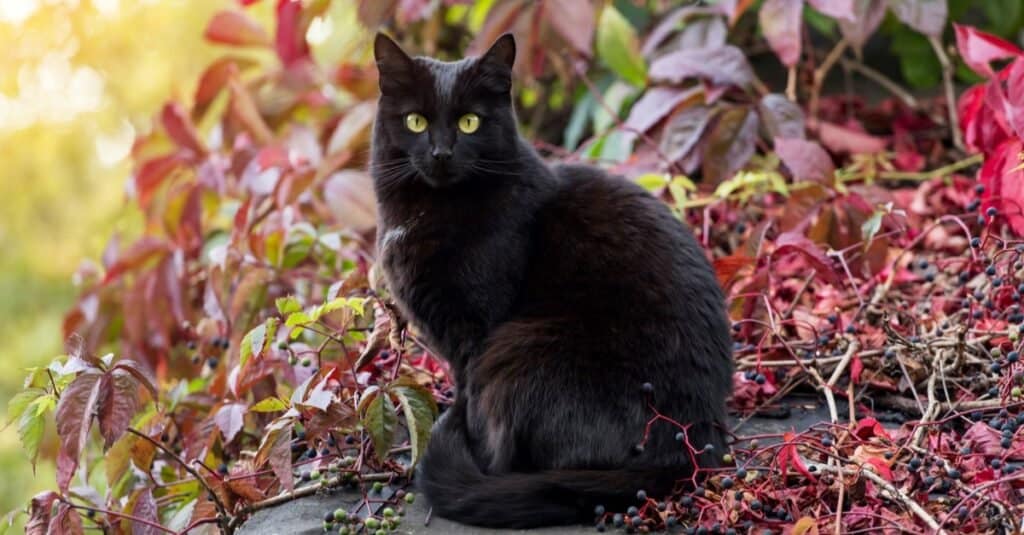
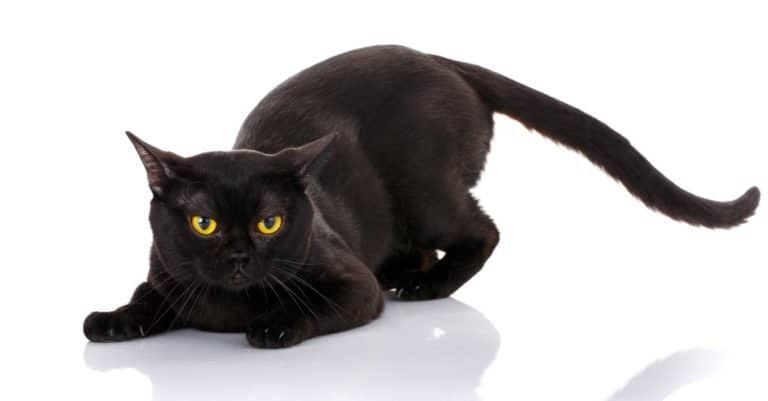
Maddest Angriest Cats - Bombay

The Bombay cat shares many physical attributes with the Burmese cat, which is not surprising as it was developed from the Burmese.

Types of Bombay Cats and Colors

There are generally two types of Bombay cats: American and British. Functionally, there are few differences between them, except the British variety may include more crosses with domestic black shorthair cats. The Cat Fanciers’ Association recognizes only a single color: black. This color covers almost everything besides the eyes and ears, including the entire coat, the soles, the nose, and the mouth. The black color goes all the way down to the roots with no other colors mixed in.

View all 453 animals that start with B

Sources

  1. Cat Fanciers Association / Accessed July 9, 2021
  2. Cat Time / Accessed July 9, 2021
  3. Vet Street / Accessed July 9, 2021
Abby Parks

About the Author

Abby Parks

Abby Parks has authored a fiction novel, theatrical plays, short stories, poems, and song lyrics. She's recorded two albums of her original songs, and is a multi-instrumentalist. She has managed a website for folk music and written articles on singer-songwriters, folk bands, and other things music-oriented. She's also a radio DJ for a folk music show. As well as having been a pet parent to rabbits, birds, dogs, and cats, Abby loves seeking sightings of animals in the wild and has witnessed some more exotic ones such as Puffins in the Farne Islands, Southern Pudu on the island of Chiloe (Chile), Penguins in the wild, and countless wild animals in the Rocky Mountains (Big Horn Sheep, Mountain Goats, Moose, Elk, Marmots, Beavers).
Connect:

Thank you for reading! Have some feedback for us?


Bombay FAQs (Frequently Asked Questions)

Bombays are Omnivores, meaning they eat both plants and other animals.