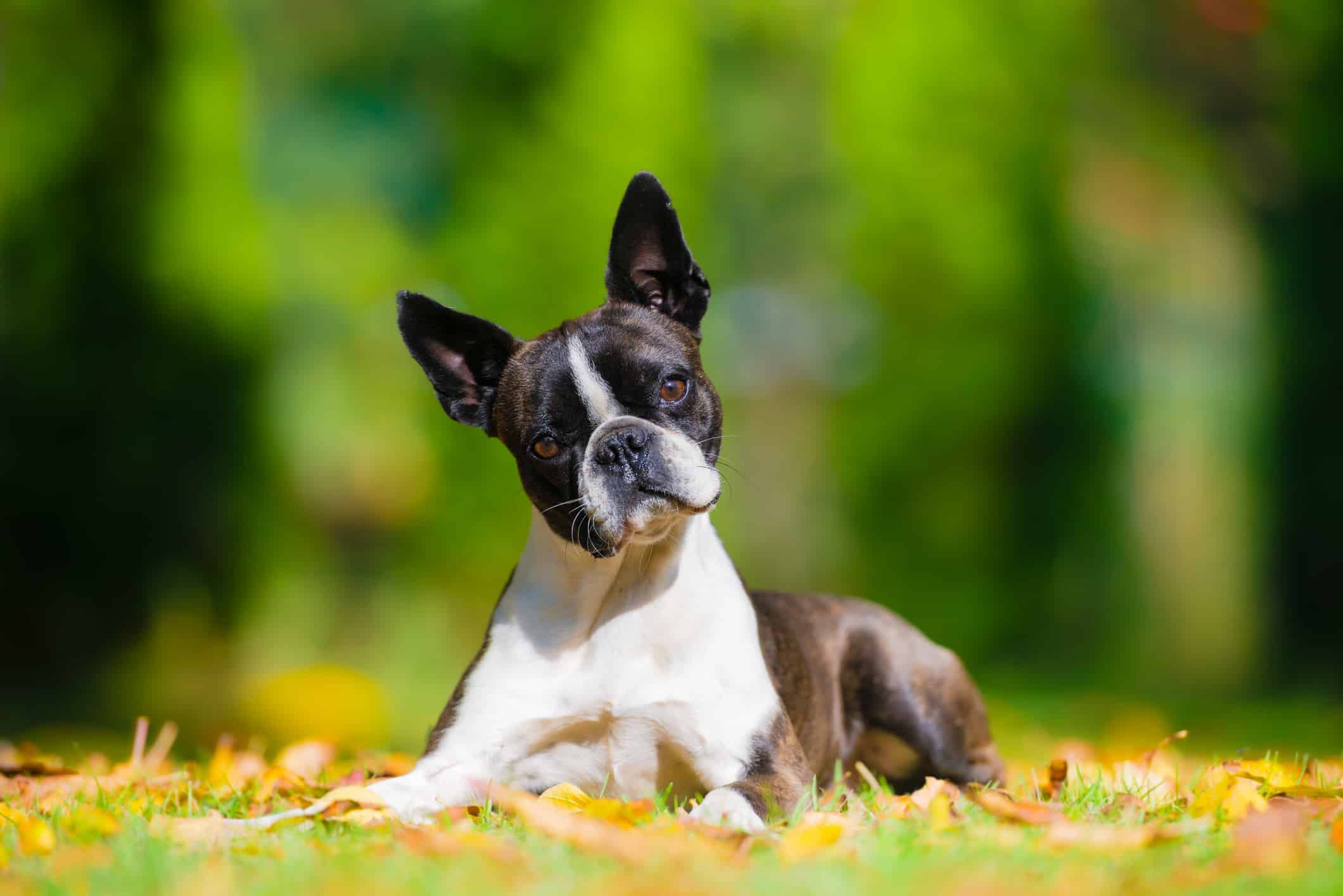
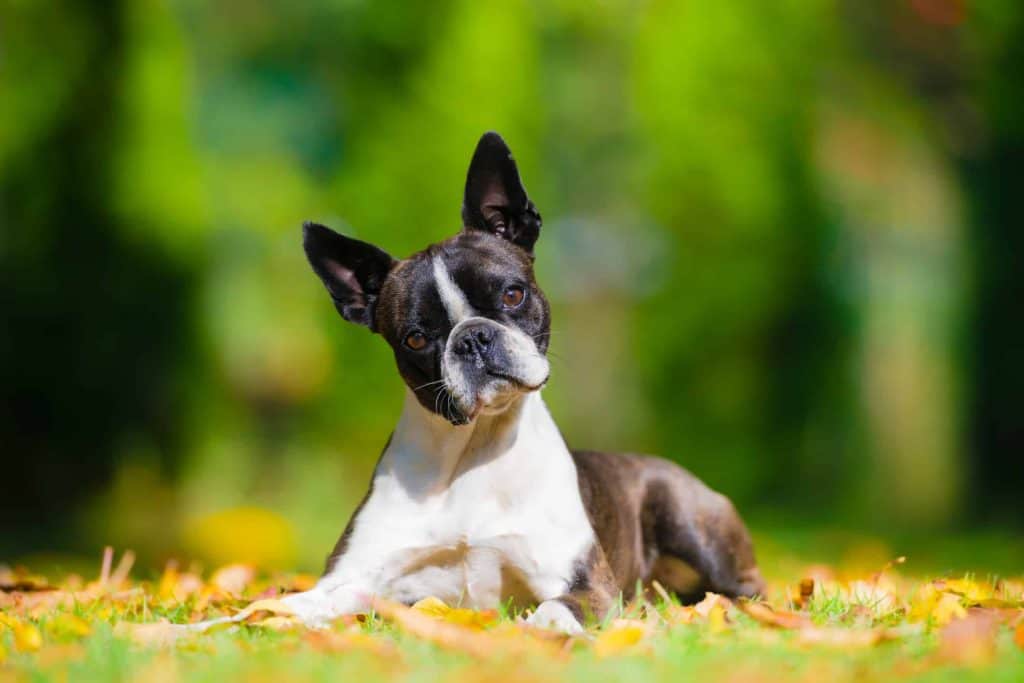
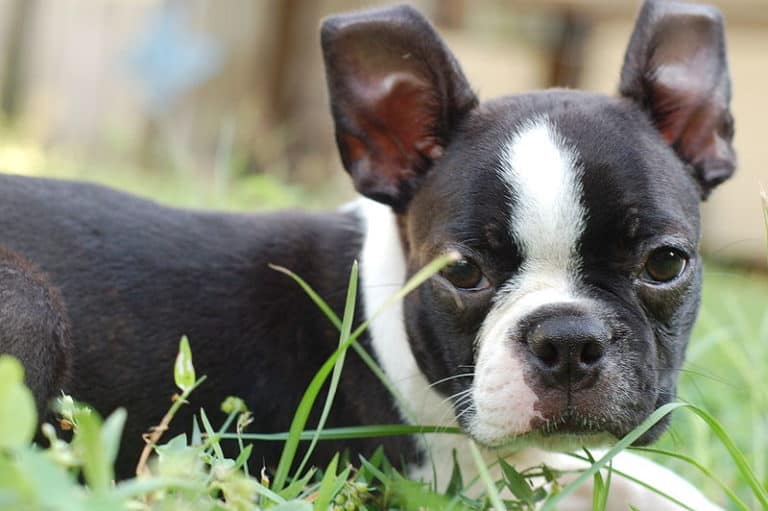
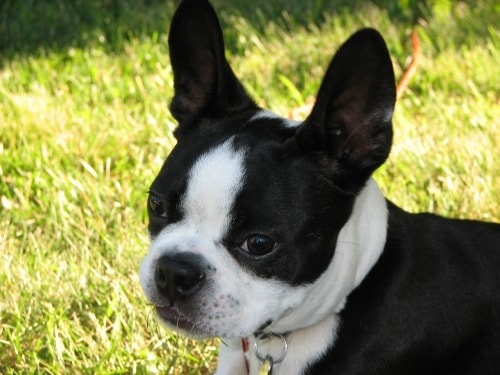







In the 1870s, English Bulldogs and English White Terriers (now extinct) were crossbred, making a dog known as a Hooper’s Judge. In the years following, these dogs were crossbred with English Bull Terriers, Pit Bull Terriers, Boxers, and French Bulldogs. This crossbreeding gave us the animal we now know as the Boston Terrier.
Boston Terriers have a pretty even temperament. They are friendly and affectionate terriers that make a great family pet. They are very active, love to play, and can be easily trained.
Owning a Boston Terrier: 3 Pros and Cons
| Pros | Cons |
|---|---|
| Great family dogs Boston terriers are affectionate with families and generally do very well with kids! | Stresses to the climate Boston terriers have short coats, which aren’t suited to very cold climates. In addition, they struggle in environments with extremely warm weather. |
| Less shedding! Boston terriers are relatively low-shedding dogs. | Short nose problems In addition to difficulties with warm weather (short-nosed dogs struggle to cool warm air coming into their lungs), the Boston Terrier’s short nose can lead to snoring and drooling. |
| A quiet breed Another reason that Boston Terriers make great apartment dogs is that they tend to be quieter than other breeds. While all dogs bark, Boston Terriers mostly save their barks for direct interactions. | A gassy situation Another byproduct of having a short nose is that Boston Terriers tend to be very gassy dogs. To cut down on a Terrier’s gas, monitor their diet and remove low-quality foods. |
History and Origins
In the 19th century, there was an enthusiasm in England for blood sports, which caused breeders to mix terriers and bull-type dogs with the purpose of creating canines that could compete well in pits and rat-catching contests. Judge, a muscular and strong dog, was the result of a mating between a Bulldog and a now-vanished white English Terrier, which happened in Liverpool in the late 1860s.
In 1870, William O’Brien sold his Boston Terrier, Judge, to another Bostonian, Robert C. Hooper. This pup has gone down in history as ‘Hooper’s Judge’ and is the ancestor of almost all modern-day Boston Terriers.
A breed historian described Judge, the ancestor of the current Boston Terrier, as a well-built dog with a weight of about 32 pounds. His coat was dark brindle with a white stripe across his face, and he had a square head with a nearly even muzzle — much like that of the modern Boston Terrier.
Hooper bred Judge with a white female, Burnett’s Gyp, belonging to Edward Burnett from Southboro, Massachusetts. This genealogy is well-known among Boston Terrier fanciers, and Judge and Gyp gave rise to Well’s Eph, who then begot Tobin’s Kate and so on. During the early years of the breed’s development, selective breeding changed the large fighter of Judge’s era into a smaller, gentler, and more appealing pet dog, which was initially named the Round Head by its supporters.
In recognition of the city where these cheerful canines were carefully bred, their name was altered to Boston Terrier. Established in 1891 the Boston Terrier Club of America was established, and two years later, the AKC enrolled its first pup of the breed.
Boston Terriers have long been a source of pride for the city of Boston. For almost a century, they have been Boston University’s mascot, and in 1979, the state legislature declared the breed to be the official dog of Massachusetts, calling it the “American Gentleman.”
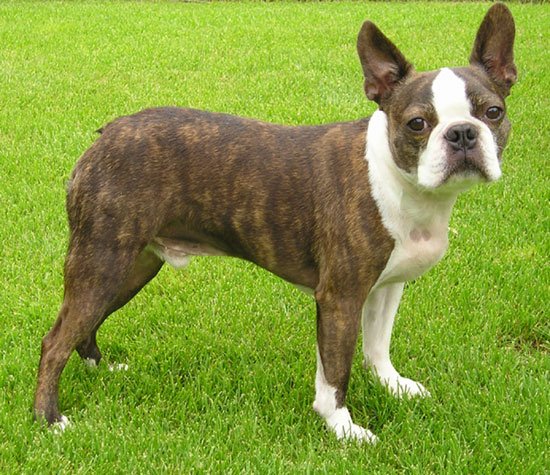
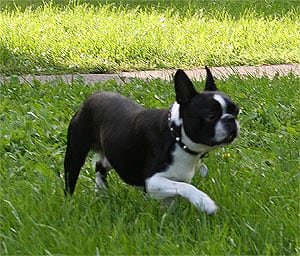
For almost a century, Boston Terriers have been Boston University’s mascot
©Elf / Creative Commons – Original
Size and Weight
Boston Terriers are small dogs. Males have an average height of 17 inches, and females are just a touch shorter, with an average height of 16 inches. There are three different weight categories that Boston Terriers may fall into. They are: under 15 pounds, between 15 and 20 pounds, and between 20 and 25 pounds. Adult males typically weigh between 15 and 25 pounds, while adult females typically weigh between 10 and 20 pounds.
A Boston Terrier puppy only weighs about half a pound when it is first born. However, they grow pretty quickly, reaching an average of nearly 9 pounds at the age of 4 months and nearly 20 pounds at 8 months. By the time they are 1 year old, Boston Terriers are fully grown.
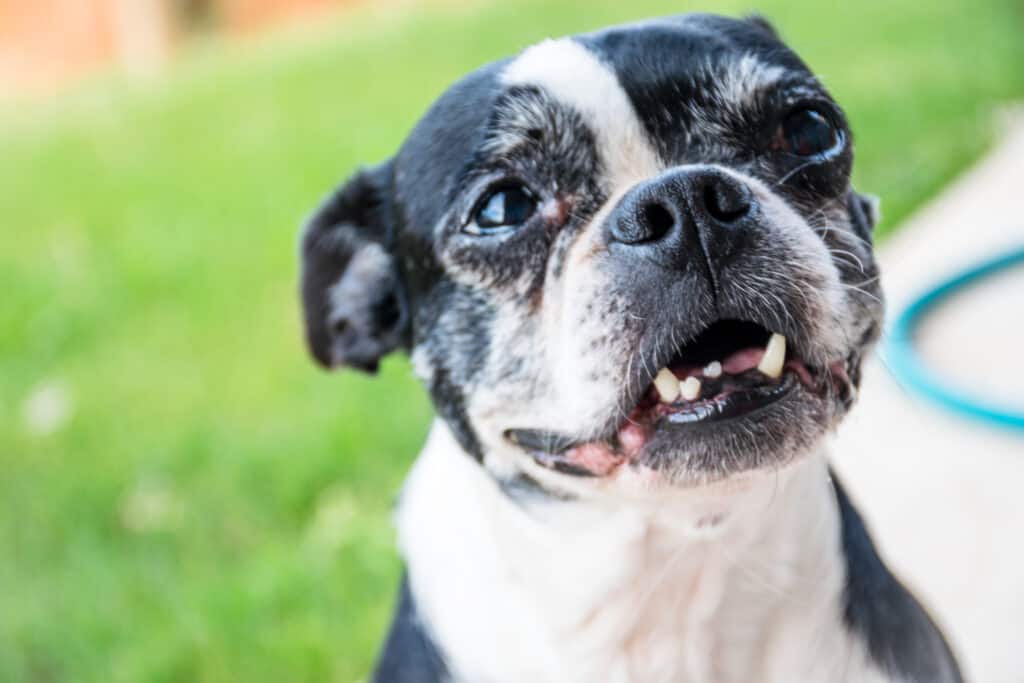
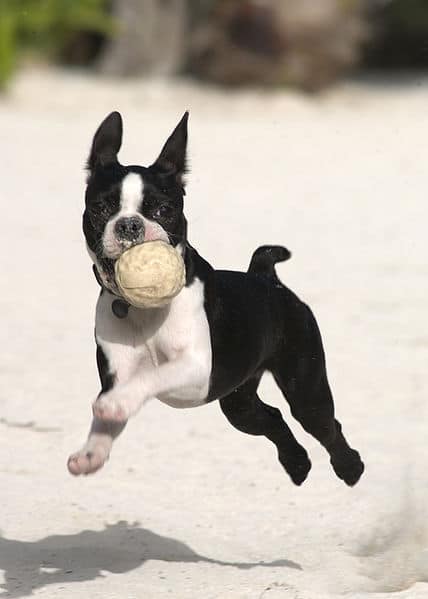
Boston Terriers are usually between 10 and 25 pounds.
©Roschetzky Photography/Shutterstock.com
Common Health Issues
There are some common health issues you’ll want to be on the lookout for if you have a Boston Terrier. One ailment that some Boston Terriers suffer from is Brachycephalic Syndrome. Brachycephalic refers to the short and flat face of a Boston Terrier. Dogs with Brachycephalic Syndrome have too much soft tissue in their airways, which can make it challenging for them to breathe. Boston Terriers with this syndrome may have stenotic nares, everted laryngeal saccules, or an elongated soft palate. Brachycephalic Syndrome is the most common health concern that Boston Terriers face.
Another possible health concern is Patellar Luxation. This is a slipped kneecap that makes it difficult for Boston Terriers to walk. At first, dogs won’t be in pain when they walk, but if left untreated, the knee cap will become inflamed, which might cause your Boston Terrier to experience pain. This is a genetic condition that sometimes requires surgery to treat.
Boston Terriers also suffer from eye injuries since their eyes protrude from their head. They may scratch their eyes or come down with pink eye or conjunctivitis. In addition to eye injuries, Boston Terriers may get cataracts. This is another genetic trait that sometimes shows up in puppies as young as eight weeks old.
Some Boston Terriers also get Keratoconjunctivitis Sicca, which is dry eye. If your Boston Terrier has this condition, it won’t be able to make enough of its own tears to keep its eyes moist, which can lead to sores, itchiness, or even infections. Another potential eye problem to watch out for is glaucoma. Boston Terriers with glaucoma have a blockage in their eyeball, which prevents them from draining. This can lead to too much pressure, which can damage their optic nerve.
Hemivertebrae is a condition in which Boston Terriers have improperly shaped vertebrae in different sections of their spinal column. A corkscrew-shaped tail is often a sign of this condition.
Boston Terriers can also have allergies, most commonly skin allergies. This can cause them to lick, scratch, or chew themselves. Sometimes Boston Terriers may be allergic to specific foods or other items in their home or environment, such as pollen or cleaning products.
Unfortunately, some Boston Terriers also suffer from epilepsy or regular seizures. The seizures are caused by their rounded head shape and may cause dogs to shake, twitch, or foam at the mouth. In most cases, if a dog is going to suffer from epilepsy, the seizures will start by the age of three.
A final health concern in some Boston Terriers is deafness. This is another genetic condition that may be passed down to your dog. You’ll want to consult with your veterinarian if you think your dog is having trouble hearing you.
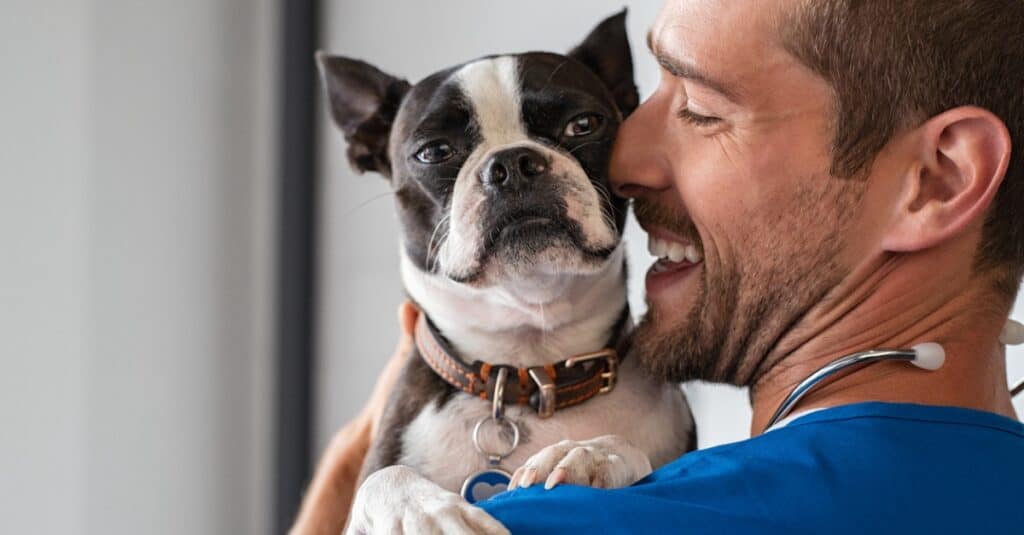
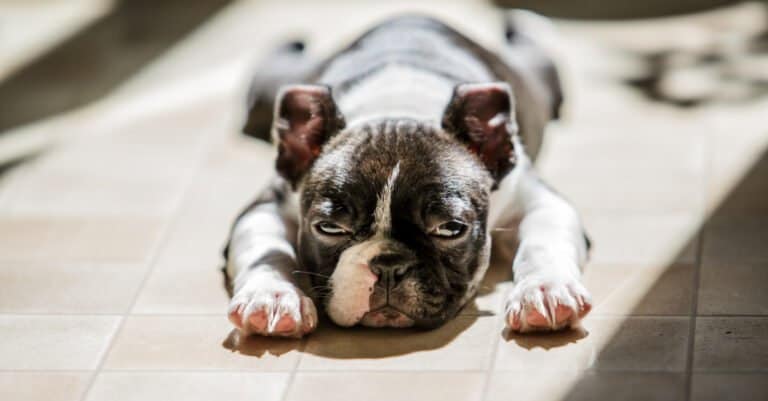
Boston terriers are prone to many health conditions and can be expensive to own in terms of veterinary care.
©iStock.com/Ridofranz
Temperament and Behavior
Boston Terriers have a very friendly and social personality. They are loving and affectionate towards their owners. At times, Boston Terriers can be territorial and may display mildly aggressive behavior if they feel they or someone in their family is being threatened.
Boston Terriers also display playful traits. They are high-energy and enjoy playing with their owners. A Boston Terrier’s traits and personality make them a good dog to have with children, particularly older children. Boston Terriers are often good around other dogs and cats. When possible, introducing them to other animals at a younger age is best.
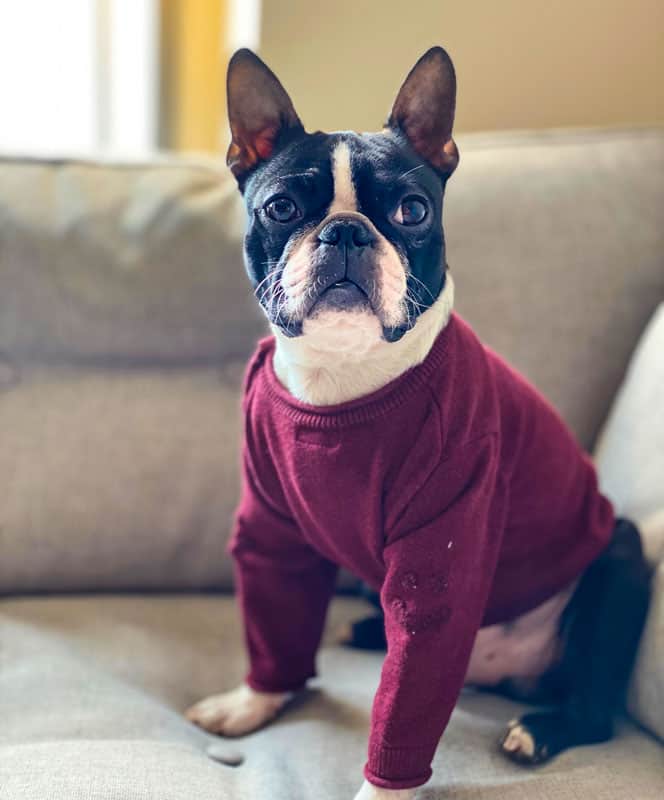
Boston terriers are friendly and social dogs.
©iStock.com/Karetyna Varhanova
How to Take Care of Boston Terriers
If you are thinking about adding a Boston Terrier to your family, there are a few important considerations you’ll want to keep in mind as you are planning how you’ll care for them. Boston Terriers and Boston Terrier puppies make great pets, but will have some special needs you’ll want to keep in mind.
Puppy Food
Boston Terrier puppies have a faster metabolism and require enough energy to help them grow. Because of this, puppies need to eat more times throughout the day than adult dogs do. Very young puppies (under 3 months) should eat between 4 and 5 times a day, puppies between the ages of 3 and 5 months should eat about three times a day, and once puppies get to be at least 6 months, they should be fine eating twice a day.
The food you choose for your puppy should be high in protein and should not have many grains (and only high-quality grains if you choose a food that is not grain-free). There are no specific allergens that are more likely to be a problem for Boston Terriers, but be sure to check your puppy for any signs of an allergic reaction when starting a new food. Also, avoid any foods that are too salty or sugary since these can cause Boston Terriers to develop heart or weight issues.
Adult Food
The age of your dog, how much he or she weighs, and how active he or she is will impact the amount of food they should be eating each day. It is important to regulate how much food you feed your Boston Terrier. Boston Terriers can suffer from gastritis, flatulence, and even obesity, so making sure they do not overeat is important. Typically, adult Boston Terriers eat one to two times a day.
Like puppies, adult Boston Terriers should be fed foods that have a good mix of proteins, fats, and carbohydrates. Look for foods that are rich in vitamins and minerals that will contribute to the overall health of your dog.
Maintenance and Grooming
Boston Terriers do shed, but not as much as some other dog breeds. Weekly brushing can help you remove your dog’s loose hair and minimize the amount they shed. When grooming your Boston Terrier, you can use a grooming mitt, a soft-bristled brush, or other grooming tools.
Training
Because of their very eager-to-please personality, Boston Terriers can be easier to train than many other breeds. Ideally, you’ll want to start training your Boston Terrier from an early age and make sure they get exposed to different people, places, and situations while they are still young. Signing them up for an obedience class when they are still a puppy is also a good idea.
Exercise
Boston Terriers need regular exercise, but not as much as some larger dogs. For most Boston Terriers, a few walks with you and some play time each day are sufficient. Some higher-energy Boston Terriers may require a little more activity than this. Since Boston Terriers are very playful, a good way to help your dog get some exercise is to play with them by throwing a ball or other toy for them to retrieve.
Puppies
The average litter size for Boston Terriers is between three and five puppies. If you’re planning to adopt a Boston Terrier puppy, there are a few things you should do to get ready for the dog.
First, make sure you have an experienced and trustworthy vet you can bring your puppy to shortly after you bring them home. You’ll also want to have a conversation with your breeder about the health of the Boston Terrier puppy, and if there are any specific health concerns you should be aware of. Find out as much as you can about the medical history of the puppy’s parents.
Next, puppy-proof your home. Move any shoes or other items that might be appealing for a puppy to chew up high so they won’t get ruined. Make sure there are no hazardous plants or toxic chemical anywhere the puppy will be able to get at them and look for anything else that could potentially endanger a young pup.
Finally, make sure you have everything you’ll need to welcome your new puppy home. This should include puppy food, food and water bowls, a leash and collar, dog beds, and toys. Plan to take at least a few days off work to stay home when your new puppy arrives. Taking care of a puppy is a lot like taking care of a baby; they need a lot of attention and care.
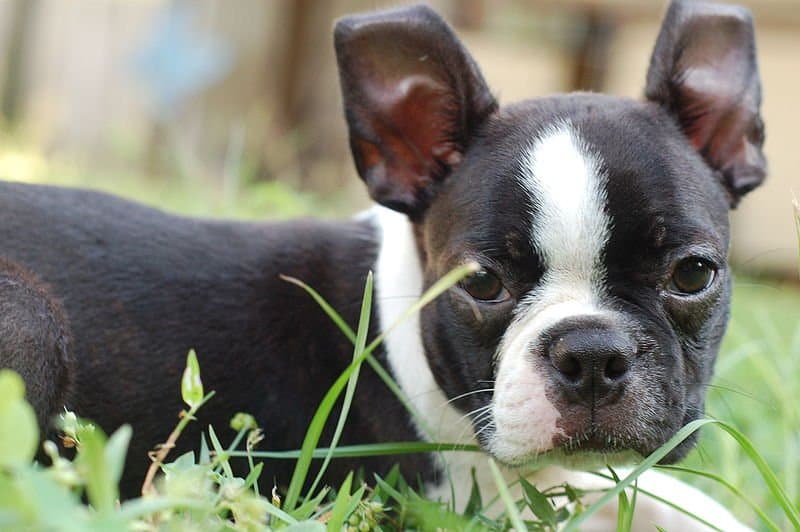
Be sure to puppy-proof your home before bringing home your Boston Terrier puppy.
©Tricia / Creative Commons – Original
With Children
Boston Terriers are good family pets. They enjoy playing and can be very friendly and affectionate. Boston Terriers are also accepting of other people coming into the house, which means they should be fine with children having their friends over to the house.
Since Boston Terriers are smaller dogs, they typically do better with older children who are able to be a little more respectful of their needs and know how to be gentle. This doesn’t mean you can’t have a Boston Terrier if you have a toddler, but you will just want to work with your toddler to make sure they know how to be gentle with the dog.
Dogs Similar to Boston Terriers
French Bulldogs, Pugs, and Mastiffs are other dog breeds that are similar to the Boston Terrier.
- French Bulldog: French Bulldogs and Boston Terriers both are similar in appearance. They have smaller, wrinkly faces and are both descendants of English Bulldogs. French Bulldogs have more rounded ears and a more squared head than Boston Terriers. Both French Bulldogs and Boston Terriers a very friendly and will make a great family pets.
- Pug: Pugs are similar to Boston Terriers in that they are both very loving and social. They are both good dogs for owners who are not as active and won’t be able to take their dogs out for long walks on a regular basis. Like Boston Terriers, Pugs are also Brachycephalic dogs.
- Mastiff: While Mastiffs are much larger dogs than Boston Terriers, both breeds are intelligent, easy to train, and very loyal to their owners. One big difference between Mastiffs and Boston Terriers is the litter size. While Boston Terriers typically have a litter size of three to five puppies, mastiffs have an average litter size of eight puppies.
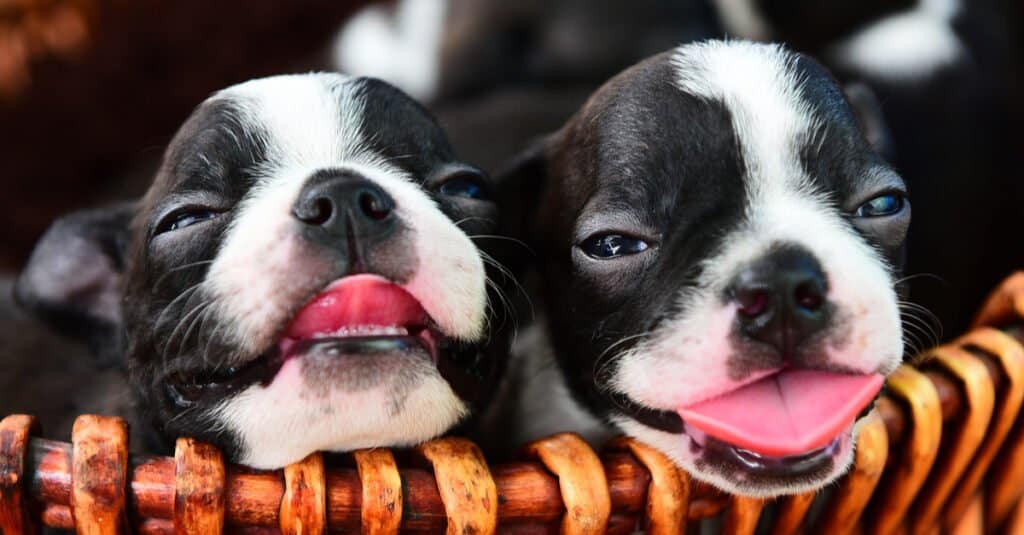
An enclosed space is crucial to help maintain and protect newborn Boston terrier puppies.
©Various photo/Shutterstock.com
Famous Boston Terriers
There are many “famous” Boston Terriers that can be found across the media and the entertainment industry.
- Rhett: Is a cartoon Boston Terrier that’s the mascot of Boston University. His name, “Rhett”, comes from a Gone with the Wind character!
- Verna Pearl: The beloved Boston Terrier of actor Robin Williams. Mr. Williams had many pets and acted on behalf of many conservationist issues.
- Lulu: Joan Rivers has been pictured in everything from “Got Milk” ads to Vanity Fair cover spreads with her dogs. One of her favorites was her Boston Terrier, Lulu, who passed away in 2016.
Boston Terrier Pictures
View all of our Boston Terrier pictures in the gallery.

Sources
- David Burnie, Dorling Kindersley Animal, The Definitive Visual Guide To The World's Wildlife / Accessed November 10, 2008
- Tom Jackson, Lorenz Books The World Encyclopedia Of Animals / Accessed November 10, 2008
- David Burnie, Kingfisher The Kingfisher Animal Encyclopedia / Accessed November 10, 2008
- Richard Mackay, University of California Press The Atlas Of Endangered Species / Accessed November 10, 2008
- David Burnie, Dorling Kindersley Illustrated Encyclopedia Of Animals / Accessed November 10, 2008
- Dorling Kindersley Dorling Kindersley Encyclopedia Of Animals / Accessed November 10, 2008
- Hills Pet / Accessed November 8, 2019
- Boston Terrier Society / Accessed November 8, 2019
- Boston Terrier Society / Accessed November 8, 2019
- Pets 4 Homes / Accessed November 8, 2019
- Dogbreeds 911 / Accessed November 8, 2019
- Rover / Accessed November 8, 2019
- Dogell / Accessed November 8, 2019
- Petcentral / Accessed November 8, 2019
- Boston Terrier Society / Accessed November 8, 2019
- Boston Terrier Society / Accessed November 8, 2019
- Your Purebred Puppy / Accessed November 8, 2019