B
Species Profile

Boykin Spaniel

Canis lupus familiaris

The Little Brown Dog That Works
Cynthia Davison/Shutterstock.com

Boykin Spaniel Distribution

Click a location to explore more animals from that region

Origin Location

This map shows the native origin of the Boykin Spaniel. As a domesticated species, they are now found worldwide.

Loading map...

Found in 1 state/province

Size Comparison

Human 5'8"
Boykin Spaniel 1 ft 4 in

Boykin Spaniel stands at 24% of average human height.

Boykin Spaniel Happy Face

At a Glance

Domesticated
Also Known As Boykin
Diet Omnivore
Activity Diurnal+
Lifespan 4 years
Weight 18 lbs
Status Not Evaluated
Did You Know?

The Boykin Spaniel is the official state dog of South Carolina (designated in 1985).

Scientific Classification

The Boykin Spaniel is an American gun dog breed developed in South Carolina, known for compact size, solid liver/brown coat, and versatile work in both upland and waterfowl hunting.

Kingdom
Animalia
Phylum
Chordata
Class
Mammalia
Order
Carnivora
Family
Canidae
Genus
Canis
Species
Canis lupus

Distinguishing Features

  • Medium-sized, compact spaniel with solid liver/brown coat (often with slight wave/feathering)
  • Floppy ears; expressive spaniel face
  • Bred for retrieving and flushing; strong affinity for water
  • Energetic, biddable temperament typical of sporting dogs

Physical Measurements

Males and females differ in size

Height
1 ft 5 in (1 ft 3 in – 1 ft 6 in)
1 ft 4 in (1 ft 2 in – 1 ft 5 in)
Length
2 ft (1 ft 10 in – 2 ft 2 in)
Weight
35 lbs (31 lbs – 40 lbs)
30 lbs (24 lbs – 35 lbs)
Tail Length
4 in (3 in – 5 in)
Top Speed
28 mph
Not bred for speed

Appearance

Primary Colors
Secondary Colors
Skin Type Furred mammalian skin with a medium-length, wavy-to-curly, water-resistant double coat; feathering on ears, chest, belly, legs, and tail. Skin and coat require routine grooming and drying after swims to prevent irritation/ear issues.
Distinctive Features
  • Domestic dog (Canis lupus familiaris) breed: a compact American gun dog developed in South Carolina for flushing and retrieving in both upland cover and water.
  • Medium-compact, athletic build with good endurance; typically more compact than many larger retrievers, aiding maneuverability in dense cover and small boats.
  • Coat is characteristically solid liver/chocolate brown with moderate wave/curl; functional water-repellent texture suited to marsh and river work.
  • Head and expression: spaniel-like with moderately broad skull, medium-length muzzle, and long pendant ears that contribute to the breed's classic outline.
  • Tail commonly docked in some regions/lines (where legal); natural tail is medium length and carried level to slightly up when working.
  • Feet often slightly webbed with strong pads-useful for swimming and muddy terrain; strong hindquarters for repeated water entries/exits.
  • Care requirements: frequent ear checks/cleaning (pendant ears + water work predispose to otitis), regular brushing/comb-out of feathering to prevent mats, and thorough drying after swimming.
  • Exercise/mental needs: high activity drive typical of sporting dogs-benefits from daily vigorous exercise, retrieving games, field work, and structured training to prevent boredom-related behaviors.
  • Common health concerns to watch in the breed: hip dysplasia; patellar luxation; ear infections; eye disorders (e.g., progressive retinal atrophy); and exercise-related collapse syndromes reported in some lines-responsible breeding and screening are important.

Sexual Dimorphism

Males and females are similarly proportioned as sporting dogs, but males are typically slightly larger and more robust; dimorphism is moderate rather than dramatic.

  • Slightly taller/heavier on average with a broader chest and more blocky head.
  • May show heavier bone and more pronounced musculature, especially in working/field-conditioned individuals.
  • Slightly smaller/lighter build with a more refined head and chest.
  • Often appears a bit more streamlined while maintaining the same athletic, compact working outline.

Did You Know?

The Boykin Spaniel is the official state dog of South Carolina (designated in 1985).

The breed's hallmark coat color is solid liver/brown-so common that "little brown dog" became a nickname in its home region.

It was developed as an all-around "boat dog," small enough to fit in canoes and small hunting boats used in South Carolina's swamps and rivers.

Boykins are versatile gun dogs: they can both flush upland birds and retrieve waterfowl, including from cold water when properly conditioned.

The breed traces back to a stray-type spaniel named "Dumpy," found in the early 1900s and bred into a line of working dogs in South Carolina.

Compared with many retrievers, Boykins are notably compact, making them agile in thick cover and easier to lift into boats.

Their ears and coat feathering can pick up burrs and seeds-an everyday "field souvenir" that owners learn to manage with regular grooming.

Unique Adaptations

  • Medium-compact, muscular build: distinguishes the Boykin from the base species (wild-type canids) by human-directed selection for a portable yet powerful gun dog suited to small boats and dense Southern cover.
  • Solid liver coat with protective feathering: selected for field utility and breed type; feathering offers some protection from brush, though it increases grooming needs.
  • Spaniel-style pendulous ears: help funnel scent but also reduce airflow, predisposing to ear moisture/yeast after water work-an adaptation with a care tradeoff.
  • Retrieving drive plus flushing pattern: a specialized behavioral "toolkit" shaped by selective breeding, differing from the generalized hunting strategies of wolves (Canis lupus).
  • Webbing between toes (typical in many sporting dogs): supports swimming and muddy footing; not unique to Boykins but important to their water-work niche.

Interesting Behaviors

  • Close-working "quartering": in the field many Boykins naturally sweep back and forth within gun range, checking in frequently with the handler.
  • Dual-purpose instincts: many show both a strong flush (to put birds up) and a strong retrieve (to bring game back to hand).
  • Water confidence: when introduced well, they often enter water eagerly and keep hunting in reeds, mud, and flooded timber.
  • Soft mouth tendency: like many spaniels, well-bred individuals often carry game gently-useful for retrieving birds without damage.
  • High "please-the-handler" drive: many respond strongly to praise and teamwork, thriving on structured training sessions.
  • Expressive vocal/whine communication: some individuals "talk" when excited, anticipating a retrieve or hunt.
  • Scent-focused indoor habits: at home, they may track interesting scents around yards and along fence lines, reflecting their field nose.

Cultural Significance

The Boykin Spaniel (Canis lupus familiaris) was bred in South Carolina's Lowcountry. Small and versatile, it works in canoes, flooded timber, and uplands. As South Carolina’s state dog, it is a symbol of waterfowl, turkey and dove hunting and family hunting tradition.

Myths & Legends

The Boykin Spaniel (Canis lupus familiaris) story starts with Dumpy, a small brown stray taken in and trained in the early 1900s; his good work led hunters to breed a compact swamp-and-river hunting spaniel.

Lowcountry lore says the Boykin Spaniel is the 'boat dog,' bred so hunters could keep a retriever in a small skiff without losing space or balance, a tale told in South Carolina.

A common Southern saying calls the Boykin Spaniel (Canis lupus familiaris) the "little brown dog that does it all." Hunting-camp stories make it a symbol of Southern toughness and ability to do many jobs.

Conservation Status

NE Not Evaluated

Has not yet been evaluated against the criteria.

Population Stable

Life Cycle

Birth 6 pups
Lifespan 4 years

Lifespan

In the Wild
2–8 years
In Captivity
10–15 years

Reproduction

Mating System Polygynandry
Social Structure Managed Domestic
Breeding Pattern Not Applicable
Fertilization Internal Fertilization
Birth Type Internal_fertilization

Boykin Spaniel (Canis lupus familiaris): breeding is polygynandry—multiple males may father litters with multiple females. It's managed_domestic: humans plan pairings and timing. Fertilization is internal (copulatory tie); artificial insemination may be used.

Behavior & Ecology

Social Pack Group: 2
Activity Diurnal, Crepuscular, Cathemeral
Diet Omnivore High-protein meat-based diets (e.g., poultry or fish formulas), often strongly motivated by game-bird scent and meat-rich treats

Temperament

Affiliative and human-focused; typically bonds tightly to family/handler (breed-selected cooperation vs. base species' broader, more self-directed foraging).
Energetic, athletic, and work-driven; needs daily aerobic exercise plus retrieval/scent/obedience work to prevent frustration behaviors (excess barking, destructiveness).
Biddable and eager to please; generally responds well to positive reinforcement and clear routines; can be sensitive to harsh correction.
Confident in the field with notable prey/flush-and-retrieve drive; may chase birds/squirrels-reliable recall and impulse control training are key care requirements.
Usually friendly with other dogs and strangers when well socialized; some individuals show shyness or cautiousness-early, structured social exposure reduces fear-based reactions.
Strong water affinity and stamina; excels in cooperative hunting tasks (quartering, flushing, retrieving) and often enjoys swim-based exercise.
Hip dysplasia or patellar luxation makes Boykin Spaniels less willing to run or jump; chronic ear infections make them irritable; EIC causes collapse after exercise; PRA or cataracts cause startle in low light.
Care requirements commonly influencing social behavior: consistent training, sufficient daily activity, mental enrichment, ear drying/cleaning after swimming, weight management to protect joints, and predictable rest periods to support an 'off switch.'

Communication

Alert barking Stranger/novel sound
Excitement barking during play/retrieving
Whining/whimpering for attention or anticipation Leash, training, mealtime
Low growl as a distance-increasing signal around discomfort or resource guarding
Occasional howl/bay-like vocalization Less common than in hounds
Sighs/grumbles during settling or mild frustration
Tail carriage and wag patterns Broad wag = affiliative; stiff/high tail = arousal
Ear position and facial tension Soft eyes/relaxed muzzle vs. hard stare/closed mouth
Body posture and approach/avoidance Curved approach when friendly; freezing as a warning
Mouth use in work/play: carrying, delivering to hand; can become grabby when over-aroused-channel into trained retrieve
Scent investigation and scent marking Especially in novel areas
Pawing/nudging to solicit interaction
Field/work-specific signals: quartering pattern changes, sudden head snap/air-scenting, and increased intensity indicating game presence; returns and 'check-ins' with handler reflecting high cooperative tendency

Habitat

Biomes:
Wetland Freshwater Temperate Forest Temperate Grassland Marine Boreal Forest (Taiga) Tundra Alpine Desert Hot Desert Cold Mediterranean Savanna Tropical Dry Forest Tropical Rainforest +8
Terrain:
Plains Riverine Coastal
Elevation: Up to 16404 ft 3 in

Ecological Role

Human-associated mesopredator/working retriever (gun dog) with limited direct predation impact under management

Assists regulated hunting by locating and retrieving harvested waterfowl/upland birds, reducing wounding loss Can contribute to small-varmint deterrence around farms/homes (opportunistic) Acts as a companion animal, indirectly shaping human-wildlife interactions and land-use practices Can serve as an early warning/alert presence, influencing local wildlife behavior near human settlements

Diet Details

Main Prey:
Waterfowl Upland game birds Rabbits and other small mammals Squirrel
Other Foods:
Grasses Berries and fallen fruit Vegetable matter Cooked grains and starches

Human Interaction

Domestication Status

Domesticated

Canis lupus familiaris (domestic dogs) descend from gray wolves and were shaped by humans for friendliness and trainability. The Boykin Spaniel, a gun dog from early 1900s South Carolina, was bred for turkey and waterfowl hunting in swamps: compact size, strong retrieving, eager to please, liver coat, dense curly fur, strong water drive. Dogs are companions and workers; training helps.

Danger Level

Low
  • Bite/scratch risk typical of domestic dogs, elevated if poorly socialized, frightened, in pain, or mishandled (especially around food/toys).
  • High prey drive can lead to chasing and accidental collisions/knocks in active environments.
  • Zoonotic risks are low with routine veterinary care, but include parasites or infections if not regularly dewormed/vaccinated.

As a Pet

Suitable as Pet

Legality: Boykin Spaniel (Canis lupus familiaris) is generally legal as a pet where dogs are allowed. Owners must follow local rules (license, leash, vaccinations (rabies)) and any limits usually come from landlords, HOAs, or city laws.

Care Level: Moderate

Purchase Cost: $800 - $2,000
Lifetime Cost: $18,000 - $45,000

Economic Value

Uses:
Companion animal Sporting and hunting dog Breeding and kennel services Training services Veterinary and preventive care Pet supplies and retail
Products:
  • hunting/retrieving services (upland and waterfowl)
  • trained gun dog sales and handling
  • field trials/hunt tests participation
  • pet companionship and family dog roles
  • training (obedience, recall, gun conditioning)
  • grooming services for wavy/curly coat maintenance

Relationships

The Boykin Spaniel was bred in the early 1900s in South Carolina. Boykin Spaniels are gun dogs that are used for flushing out or retrieving waterfowl and wild turkeys from the state’s swampy terrain. They are very strong swimmers. In addition to making a great companion as a hunting dog, the Boykin Spaniel can also make an excellent family pet. They are very eager to please and loving. Their coat is typically one of two colors: dark chocolate brown or reddish brown. Boykin Spaniels are also the official state dog of South Carolina.

Quick Facts

TraitDetails
Breed GroupSporting (AKC)
OriginSouth Carolina, USA
HeightMales: 15.5 – 18 in; Females: 14 – 16.5 in
WeightMales: 30 – 40 lbs; Females: 25 – 35 lbs
CoatMedium-length, wavy, water-resistant
ColorsDark chocolate brown or reddish brown
Lifespan10 – 15 years
TemperamentFriendly, eager to please, energetic
Best Suited ForActive families, hunters, and outdoor enthusiasts

Origin and History

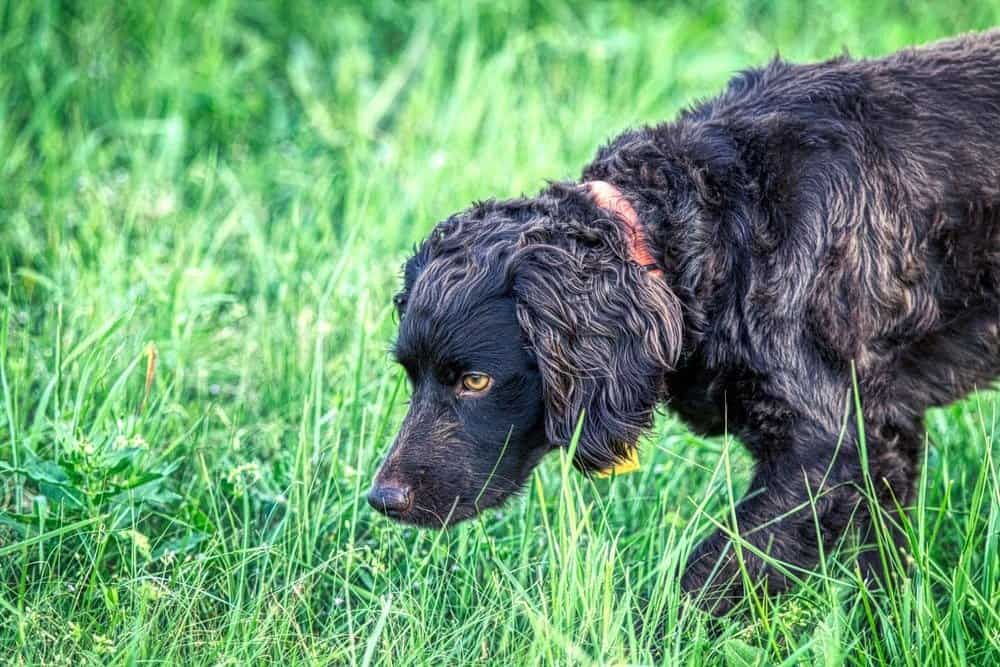
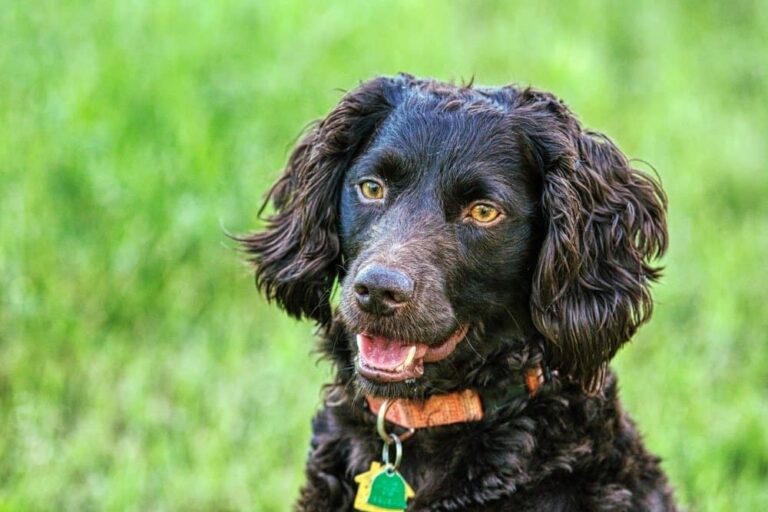
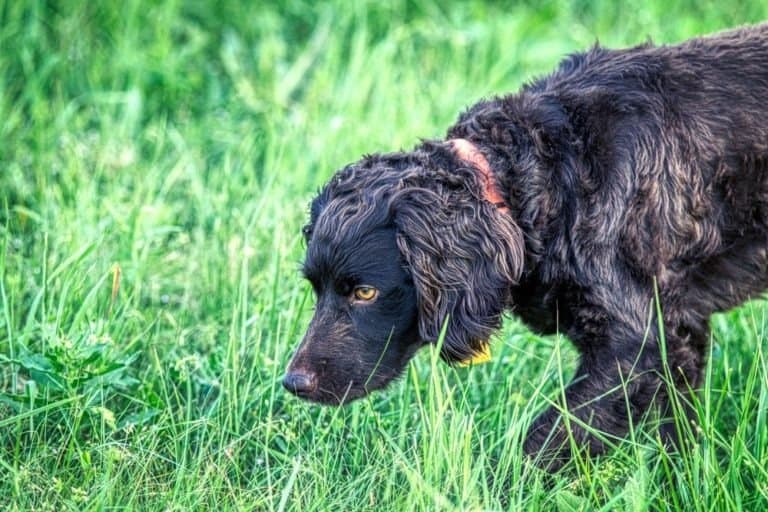
Boykin Spaniel Looking in Green Grass

The Boykin spaniel was bred in South Carolina and is the official state dog of the state.

The Boykin Spaniel is a breed of dog that was developed during the 20th century. It is named after the small community of Boykin in South Carolina, which was named after the Boykin family, early settlers in the area. Whit Boykin, a member of this family, played a key role in developing the breed. According to the origin story of the Boykin Spaniel, around 1900, a man named Alexander White found a small brown spaniel outside a church in Spartanburg, South Carolina, and named him Dumpy. White took Dumpy hunting with his other retrievers and was pleased to find that Dumpy had excellent instincts for water retrieves and was able to compete with the pedigreed bird dogs.

White took Dumpy to be trained by local expert Whit Boykin, who was well-renowned for his work with dogs. Dumpy proved to be a competent hunter for both ducks and turkeys. Boykin then used Dumpy as the foundation of his breeding program, reportedly crossing him with other retrievers and spaniels such as American Water Spaniels, Chesapeake Bay Retrievers, English Springer Spaniels, and Cocker Spaniels, though the exact breeds used are not definitively documented. The result was the Boykin Spaniel, a compact retriever with webbed feet, stamina in water, and a gentle disposition at home.

Sportsmen in the swampy areas of Carolina were captivated by the breed’s enthusiasm, adaptability, and smooth movement. For a long time, the Boykin was only known in the area in which it was bred. Finally, however, bird hunters across the nation began to recognize the breed’s potential, particularly in East Coast locations. This success was due to the breed’s high energy when hunting, its capacity to operate on land or water, and its gentle and loving temperament at home.

South Carolinians proudly recognize the Boykin Spaniel as their official state dog, and they celebrate September 1st as Boykin Spaniel Day. The AKC officially recognized this breed in 2009, making it one of the few “all-American” dog breeds.

Size and Appearance

Boykin Spaniels are a medium-sized, athletic dog breed with a sturdy build. Males typically weigh between 30 and 40 pounds and are between 15.5 and 18 inches tall. Females are just a little smaller than males. They weigh between 25 and 35 pounds and are between 14 and 16.5 inches tall.

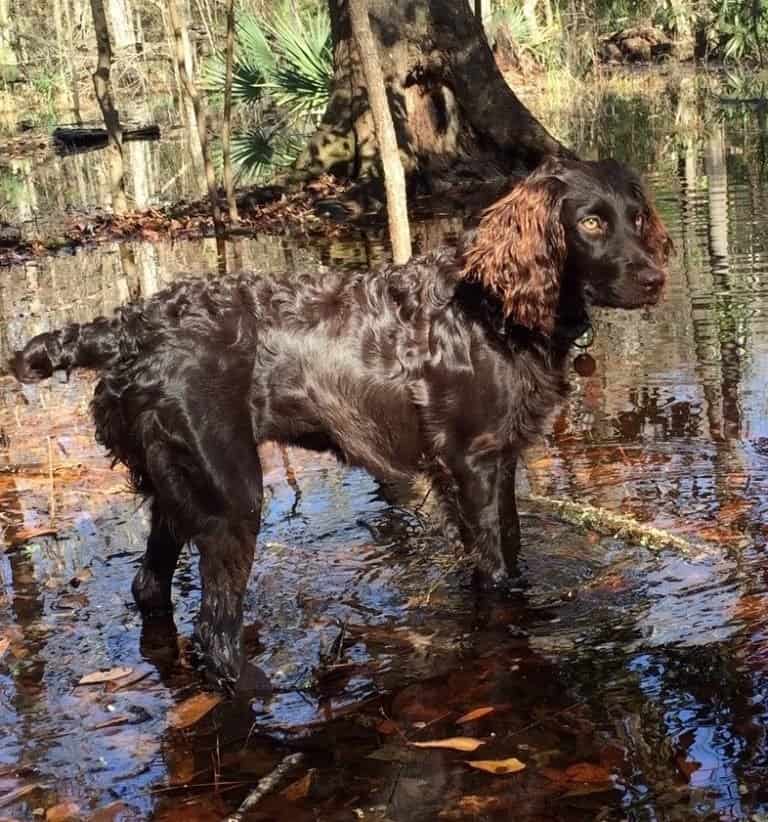
They excel in wet environments, with their wavy, medium-length double coat that is water-resistant. The coat are typically dark chocolate brown or reddish brown. Furthermore, they have a distinctly spaniel-like charm with their floppy ears, feathered legs, and soulful eyes.
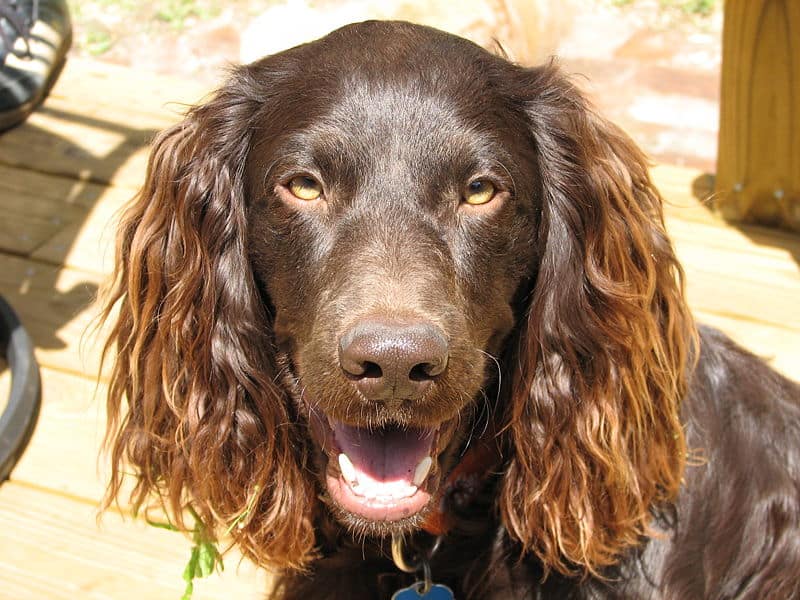
Mature Boykin Spaniel

Boykin spaniels weigh between 25 and 40 pounds.

Temperament and Behavior

These Spaniels were bred for hunting, so they are very active dogs. However, in addition to making a great companion out in the field for a hunt, this breed has many personality traits that can also make it a great family dog. They are very friendly, affectionate, and have a social nature. They are also very easy to please. They love being part of the family and typically do well with children, strangers, and other dogs

However, these Spaniels have a high need for activity, mental stimulation and strong prey drive. If you aren’t able to meet these needs, they may engage in less-than-desirable behaviors. Boykin Spaniels are not ideal watchdogs — they are too friendly with strangers to be intimidating.

Lifespan and Health

On average, Boykin Spaniels live for 10 to 15 years. Many of the health conditions that affect these Spaniels are inherited, so it is important to purchase a Boykin Spaniel from a reputable breeder that test for these issues before breeding.

Common Health Issues

ConditionDescription
Hip DysplasiaMalformation of the hip joint causing pain and mobility issues
Degenerative MyelopathyA progressive spinal cord disease, similar to ALS in humans
Exercise-Induced Collapse (EIC)Rare condition causing collapse after strenuous activity
Ear InfectionsCommon due to floppy ears and time spent in water
Eye ConditionsCataracts and progressive retinal atrophy (PRA) may occur
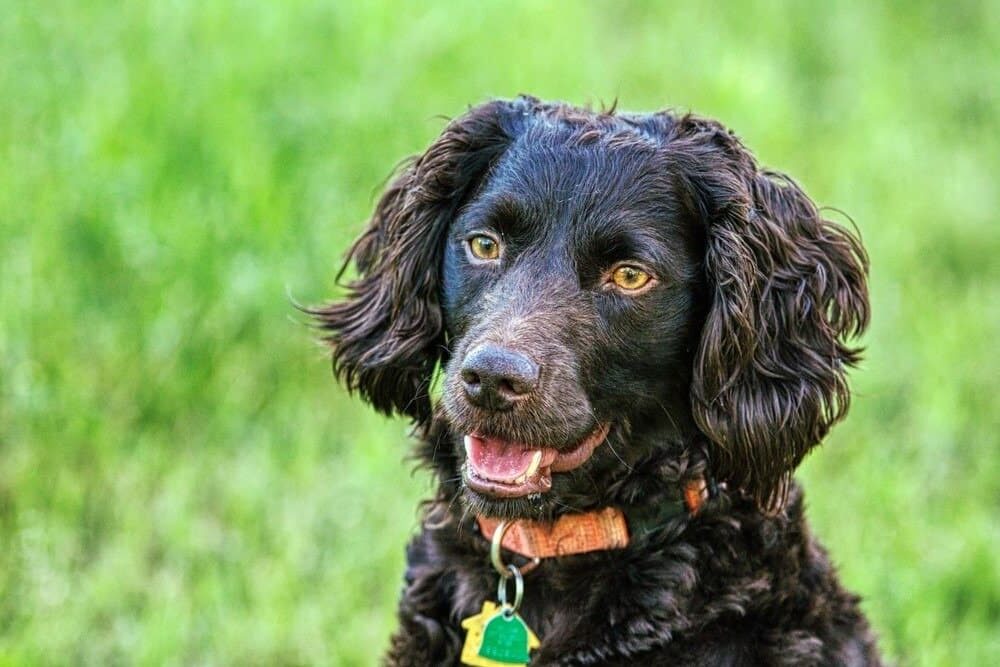
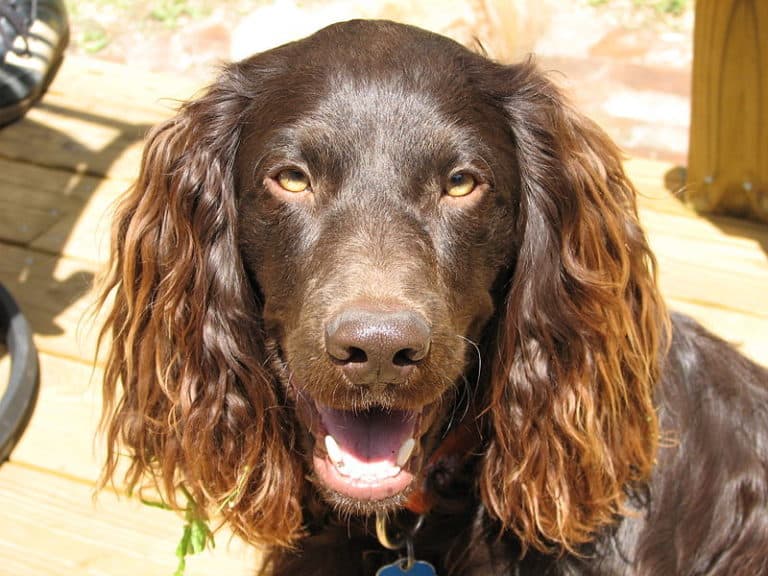
Boykin Spaniel Happy Face

Boykin spaniels suffer from very few health problems but can develop hip dysplasia.

Care and Maintenance

Keep in mind that every dog breed is unique, so caring for these Spaniels will be different from caring for another breed. When planning to care for this breed, keep in mind their health concerns, temperament, nutritional needs, and other unique and important characteristics.

Grooming

These Spaniels are relatively easy to groom and maintain. They have wavy coats with medium-length hairs that are reddish brown or dark brown colors. If you keep up with brushing their coat about once a week, it will keep the shedding at bay and reduce the amount of hair that they leave around your home. Brushing your Spaniel regularly will also help keep him cleaner by removing dirt from his coat.

In addition to brushing a Boykin Spaniel to control their shedding, you will also need to brush his teeth to prevent plaque and tartar from building up. This dog’s nails should also be trimmed regularly to keep them from getting too long and hurting the dog when he walks.

Exercise Needs

These Spaniels are best suited for active owners. They were bred as hunting dogs but also enjoy activities such as running or hiking. They need at least 1–2 hours of daily exercise. Boykin Spaniels will also enjoy playing in a large fenced-in backyard with their family. They also need some mental stimulation through training, hunting, agility, or tracking activities. They may become bored and destructive without enough activity.

Training

These Spaniels are easy to train. They are an eager-to-please dog breed and are very intelligent. These two traits will help you teach your dog to follow commands and act appropriately. It is best to begin training them as early as possible. Socializing them from an early age can also help them learn how to interact with other dogs and people. Since they are active and so easy to train, this breed also does well in tracking, agility, and field events.
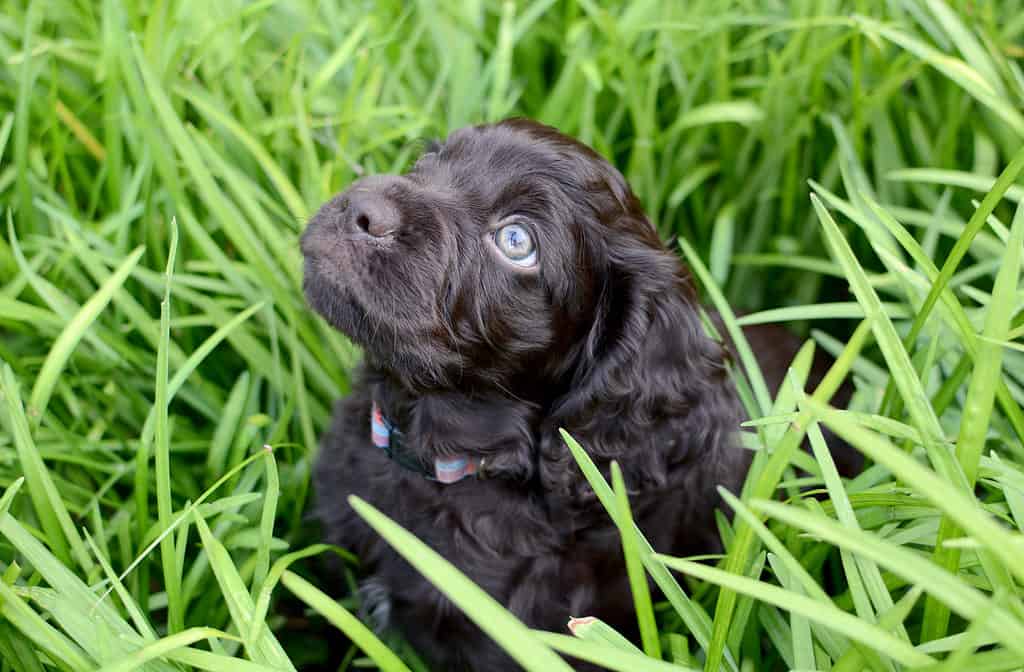
boykin spaniel puppy

Boykin spaniel puppies are a joy to train and can learn many tricks.

Diet and Nutrition

Whether you are selecting food for an adult Spaniel or a puppy, you should always look for a high-quality and nutritious option from a reputable manufacturer. Making sure your Spaniel receives the nutrients he needs is essential for long-term health. These Spaniels should eat food that contains sufficient quantities of fat and protein. Opt for foods that have higher percentages of meat protein rather than plant proteins since these will be easier to digest.

When choosing a food for a puppy, look for options that include DHA or Docosahexaenoic acid. This can help foster healthy brain and eye development in the puppies.

Most Boykin Spaniels do best when they are fed about two times each day. You should portion the total recommended amount of food into two equal portions. Puppies have a smaller stomach and should eat smaller, more frequent meals throughout the day. If you are unsure how much food your dog should be eating, you can look at the feeding guidelines on the bag or check with their veterinarian. The correct amount of food will be different for each dog based on their age, health, activity level, and other factors.

Boykin Spaniels and Families

Overall, these Spaniels can make excellent family dogs. This breed is very friendly and loving. They also can adapt well to different environments. For best results, socializing them and training them from an early age will help ensure they engage in appropriate interactions with children.

Even though these Spaniels are good with kids, it is always a good idea to supervise any dog around children to prevent anything from happening to the dog or child. Their friendly nature means they are not protective guard dogs, but they make excellent playmates and loyal family pets.

Puppies

Before buying a Boykin Spaniel from a breeder, it will be important to talk to the breeder to learn more about the puppy. You should ask to see the health histories of the parents to make sure they didn’t have any inheritable conditions that could be passed onto your dog.

Different Boykin Spaniels can have very different personalities. If possible, try to spend some time with some different puppies to see which one seems like the best fit for your family.

Before bringing home your new puppy, be sure to puppy-proof your home. You will also want to purchase puppy food, a crate, a dog bed, a leash and collar, toys, and other supplies your new dog will need. This will make sure you’re completely prepared for their arrival and will help you enjoy your time together.
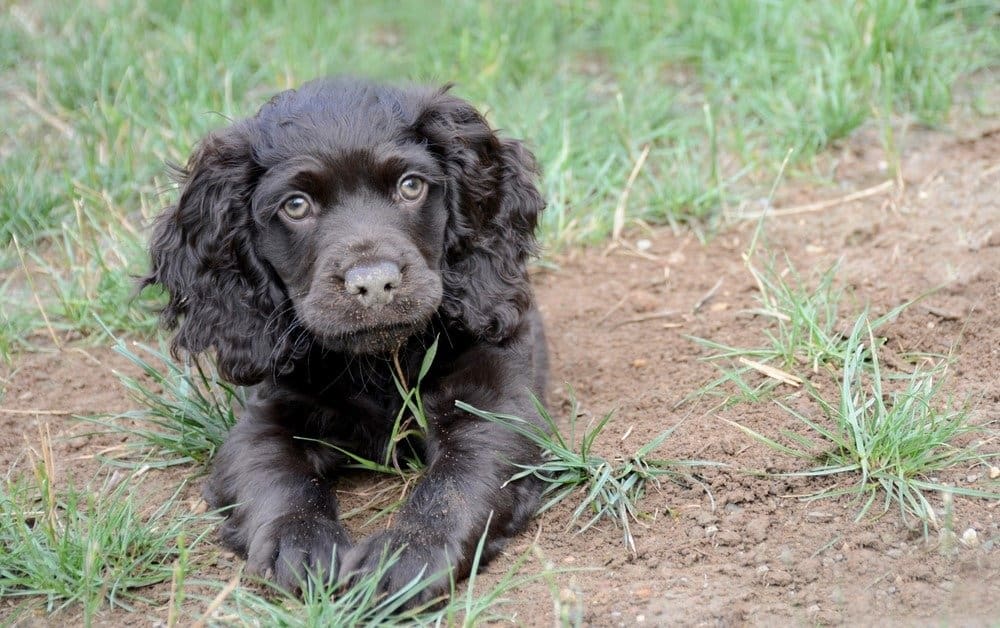
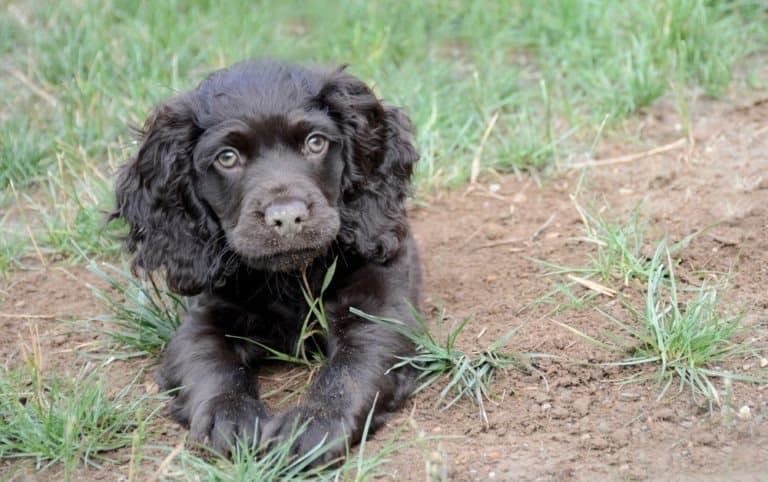
Boykin Spaniel puppy lying in grass

Boykin spaniel puppies are easy to train and eager to please.

Similar Breeds

English Cocker Spaniels, Chesapeake Bay Retrievers, and American Water Spaniels are three dog breeds that are similar to these Spaniels.

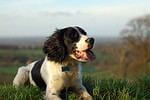
  • English Cocker Spaniel: English Cocker Spaniels are one of the breeds that were mixed to create these Spaniels. Both of these dogs are gun dogs with feathered coats. They are both around the same size, too, with the average weight of a male English Cocker Spaniel being 31 pounds and the average weight of a male Boykin being 32.5 pounds. An English Cocker Spaniel’s coat can be a variety of colors, including roan, tan, black, or golden. Boykin Spaniels have coats that are solid liver (dark brown) or rich chocolate, though some may have small white markings on the chest or toes.
  • Chesapeake Bay Retriever: Chesapeake Bay Retrievers and Boykin Spaniels are both known for their swimming abilities and for being able to flush out waterfowl when hunting. Chesapeake Bay Retrievers are larger than Boykin Spaniels, though. The average weight of a male Chesapeake Bay Retriever is 72.5 pounds compared to the 32.5 pounds that male Boykin weighs on average.
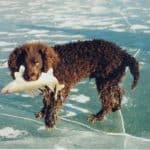
  • American Water Spaniel: American Water Spaniels and Boykin Spaniels are both affectionate and social dogs. They both are friendly, even with strangers. Both dogs have a brown coat, but an American Water Spaniel’s coat is curly, whereas a Boykin has a feathered coat.

Famous Boykin Spaniels

The breed remains most famous for being South Carolina’s state dog and its role as a beloved hunting companion.

View all 453 animals that start with B

Sources

  1. American kennel Club / Accessed November 29, 2020
  2. The Boykin Spaniel Society / Accessed November 29, 2020
  3. Wikipedia / Accessed November 29, 2020
  4. Animal Care Tips / Accessed November 29, 2020
  5. Adopt A Pet / Accessed November 29, 2020
  6. The Happy Puppy Site / Accessed November 29, 2020
Heather Hall

About the Author

Heather Hall

Heather Hall is a writer at A-Z Animals, where her primary focus is on plants and animals. Heather has been writing and editing since 2012 and holds a Bachelor of Science in Horticulture. As a resident of the Pacific Northwest, Heather enjoys hiking, gardening, and trail running through the mountains with her dogs.

Thank you for reading! Have some feedback for us?


Boykin Spaniel FAQs (Frequently Asked Questions)

Boykin spaniels are a relatively new dog breed that was bred in the early 1900s in South Carolina. Whit Boykin crossed Chesapeake Bay Retrievers, Cocker Spaniels, English Springer Spaniels, and American Water Spaniels to create this breed. They were bred to flush out and retrieve ducks, turkeys, and other birds. Boykin Spaniels are a medium-sized dog breed. Boykin Spaniels are typically one of two colors: reddish-brown or dark chocolate brown. They also have a white spot on their chest.