





Sharks that can live in freshwater
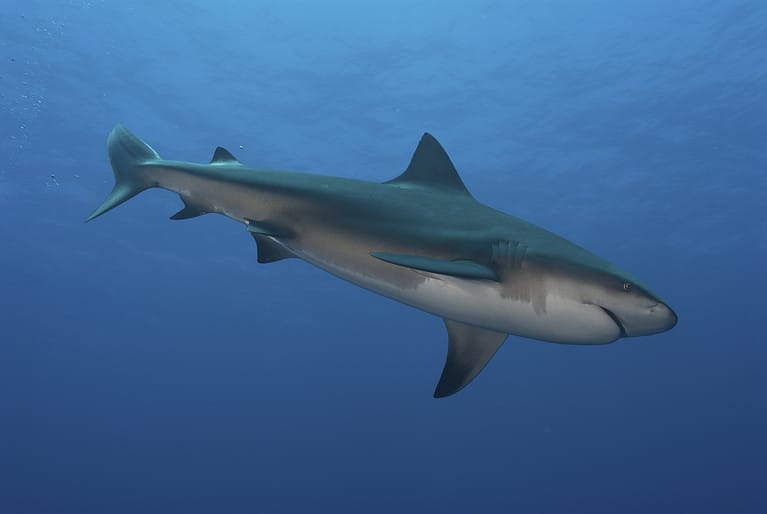
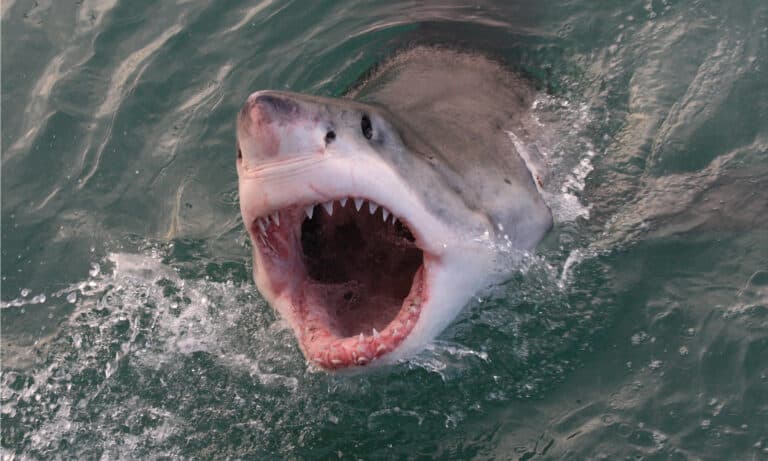
Bull sharks get their name from the short, blunt shape of their snouts and their aggressive behavior. They also usually butt prey with their heads before attacking. These sharks are found in warm coastal waters less than 100 feet (30 m) deep, but they can swim far up freshwater rivers and live in freshwater lakes if they choose.
They are the third most dangerous sharks to people, just behind the great white shark and the tiger shark. Their overall shape is large and stocky, with heavy, rounded bodies.
Amazing Bull Shark Facts!
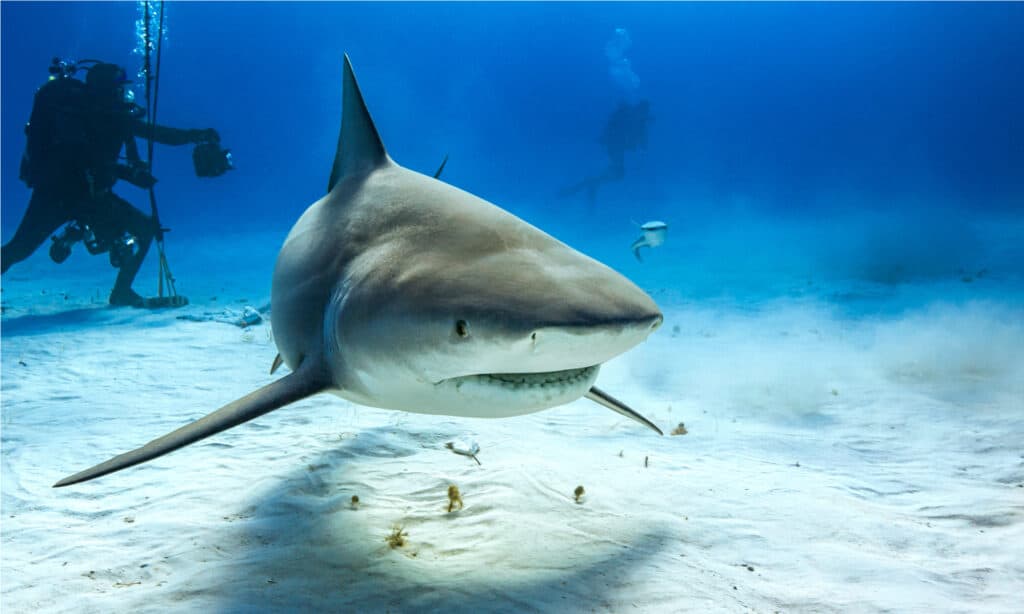
Bull sharks are migratory animals and swim all over the world.
©Carlos Grillo/Shutterstock.com
• They turn up in unexpected places: In 2010 they were seen swimming in the flooded streets of Brisbane, Australia.
• They are athletic: They have been seen leaping up waterfalls like salmon to reach inland lakes.
• Some are migratory: In the Amazon, bull sharks migrate seasonally up and down the Amazon River.
• Strongest bite pressure: The highest shark bite pressure ever recorded for any shark of their size.
For our full list of facts, check out our ’13 Incredible Bull Shark Facts’ article that details the most amazing facts on this unique shark species!
Scientific Name
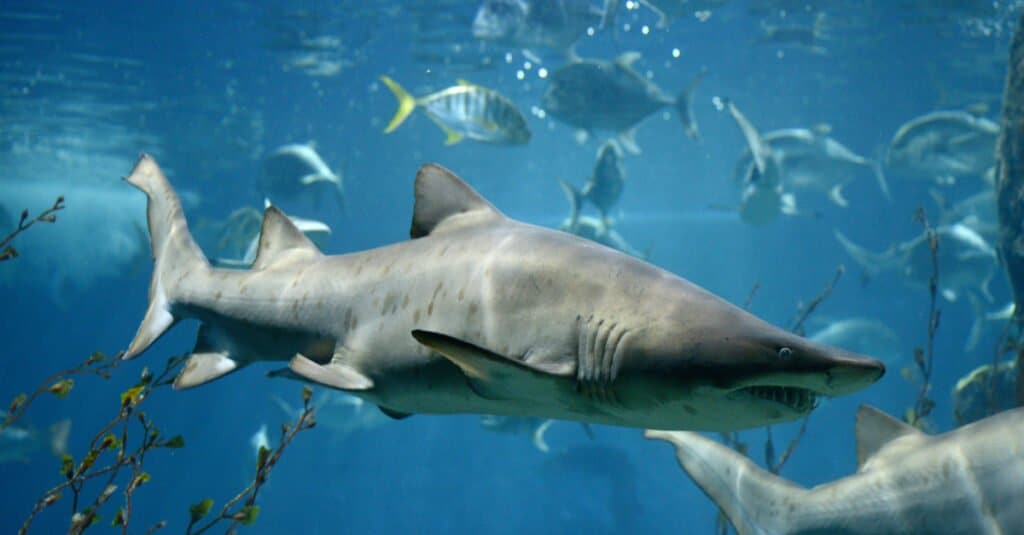
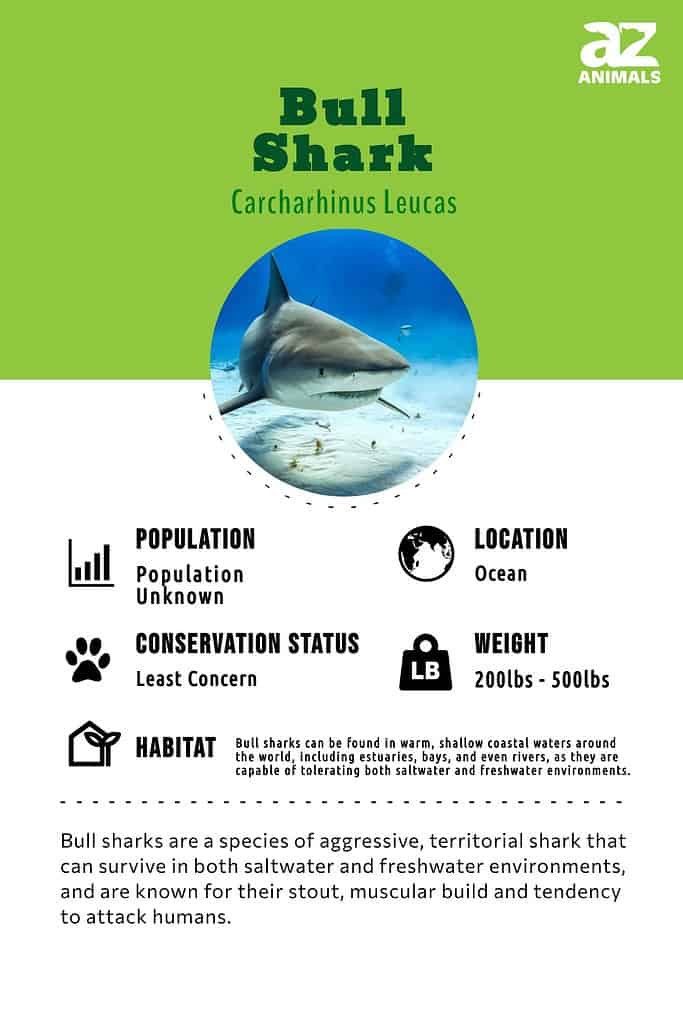
The bull shark’s scientific name is Carcharhinus leucas.
©bluehand/Shutterstock.com
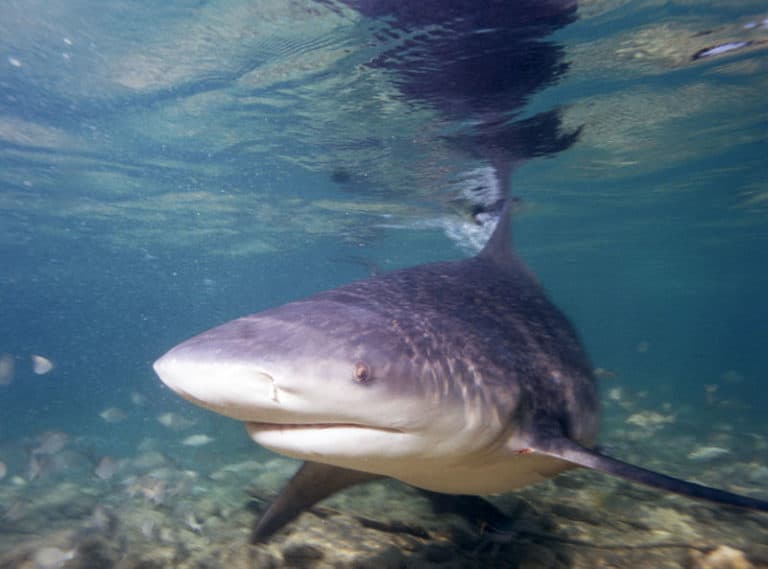
The bull shark’s scientific name is Carcharhinus leucas. The word “Carcharhinus” means sharp-nosed, because most sharks in this family, like the tiger shark, have very pointed noses. Bull sharks are an exception to this, as they have short, rounded, blunt noses.
The word “leucas” is derived from the Greek word “leucos,” which means white, and describes the bull shark’s underside.
Evolution and Origins
Shark-like scales found in Colorado that date to the Ordovician Period, 455 million years ago, are the earliest fossilized proof of prehistoric sharks.
The majority of scientists think sharks first appeared 400 million years ago. Before the dinosaurs, by 200 million years! It’s thought that they descended from a small leaf-shaped fish that had no eyes, fins, or bones. Eventually, these fish evolved into the two major families of fish that exist today.
Bull sharks, however, have evolved unique adaptations that allow them to retain salt in their bodies even when they are in freshwater, including the way their kidneys work and specific glands near their tails. Researchers continue to investigate these sharks to determine how and why they acquired this peculiar skill.
Different Types of Bullshark
Here is a list of different types of bull sharks:
- Ganges River shark
- Fitzroy Creek whaler
- Van Rooyen’s shark
- Lake Nicaragua shark
- River shark
- Freshwater whaler
- Estuary whaler
- Swan River whaler
- Cub shark
- Shovelnose shark
Appearance and Behavior
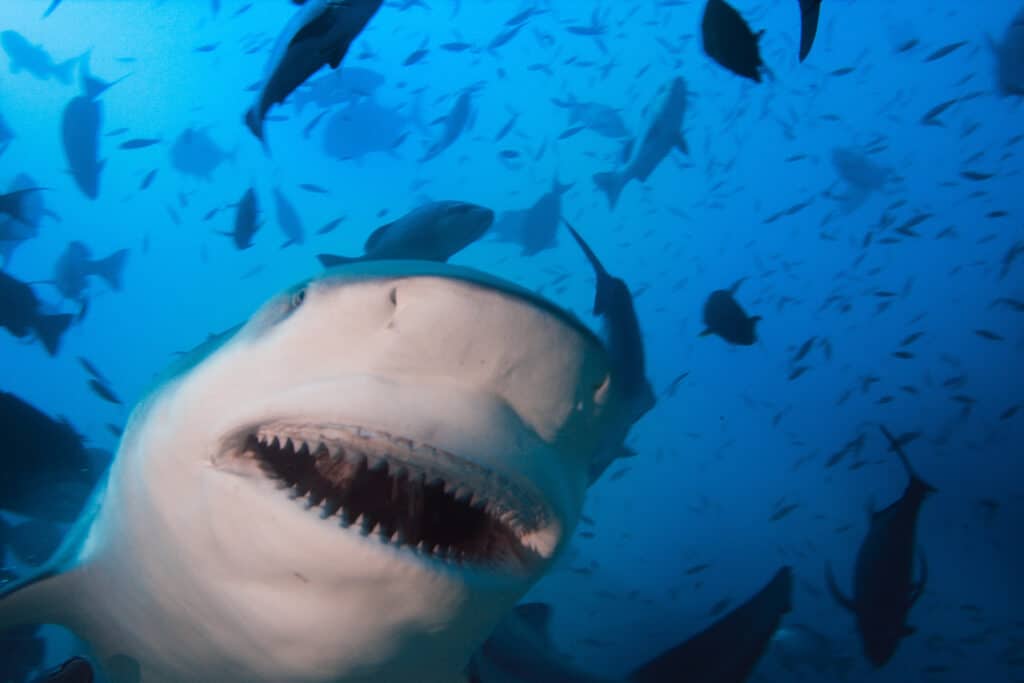
Bull sharks have exceptionally rounded, massive, and big bodies. They have short, blunt snouts.
©Willyam Bradberry/Shutterstock.com
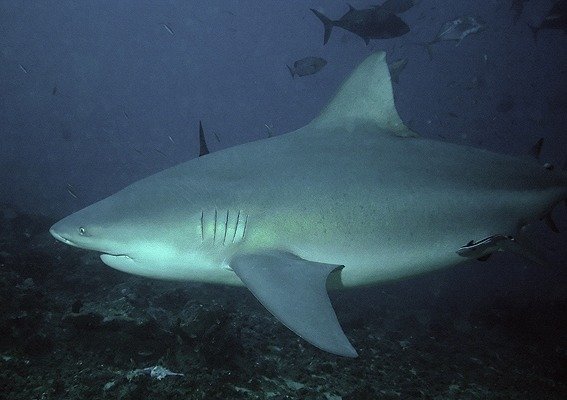
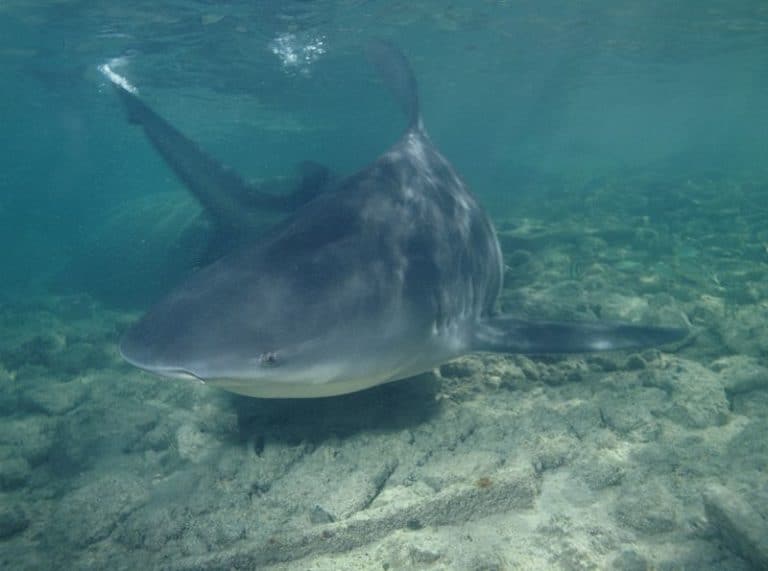
Bull sharks have large, heavy bodies that appear very round. Their snouts are short and blunt. They have large dorsal fins on their backs, but they do not have an inter-dorsal ridge running down their backs as other sharks do. They are grey on top with white undersides. Young bull sharks often have dark tips on their fins. Bull shark teeth are big and triangular, with serrated edges similar to the cutting edge of a saw.
Bull shark size is typically up to 11 feet (3.5m) long, which is about the same as two large refrigerators stacked one on top of the other. They weigh between 500 pounds (230kg), about half the weight of the average horse. They can get bigger, though. The largest bull shark ever recorded was 13 feet (4.0m), and the heaviest on record was 694 pounds (315kg). Females are bigger than males of the same age.
The top swimming speed of a bull shark is 25 miles per hour (40 km/h). For comparison, the fastest swimmer on record, with 28 Olympic medals to his credit, is Michael Phelps. Even in a special outfit that allowed him to beat his Olympic records, he was only able to swim at 8.8 MPH (14.16 km/h), far slower than a shark.
Bull sharks are solitary hunters most of the time, though they do sometimes team up with other bull sharks to make hunting easier. A group of sharks is usually called a school, but may also be called a shoal. These sharks are known to be very aggressive and have been known to attack people and other sharks without any provocation.
Habitat
The bull shark can be found around the world, anywhere where there are warm, shallow, coastal waters. They also live in many rivers around the world at least part-time.
They’ve been found in the Amazon River in South America, the Mississippi River in the United States, the Brisbane River in Australia, the Tigris River in the Middle East, and the Ganges River in India. They also live at least part-time in various freshwater lakes, including Lake Nicaragua in Nicaragua and Lake Pontchartrain in Louisiana.
Some bull sharks migrate each year, such as those in the Amazon River that swim seasonally over 2300 miles (3701 km) each way up and down the river. Since bull sharks give birth to their babies in freshwater rivers, it is common for females to migrate when they are ready to have their babies.
Diet
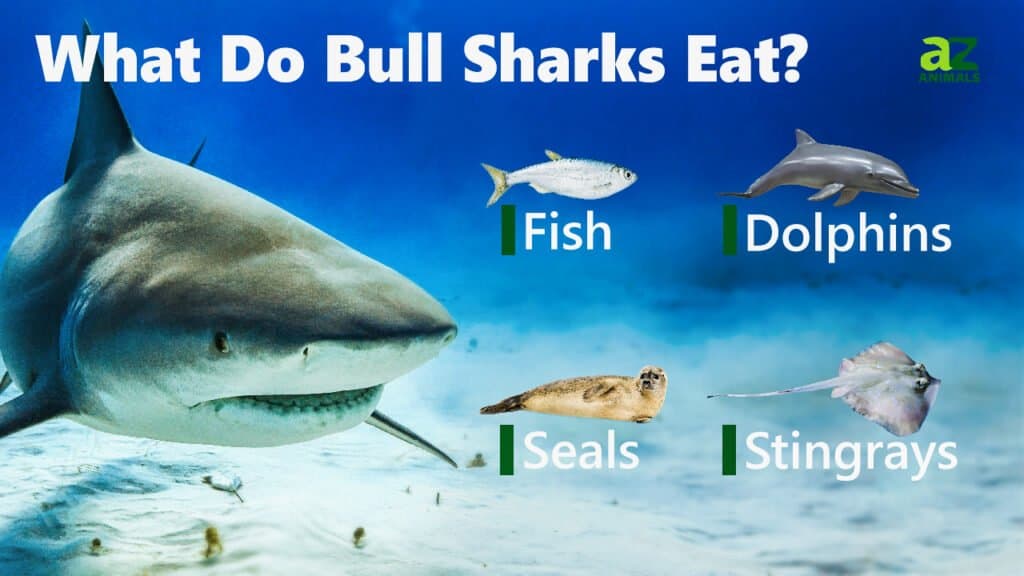
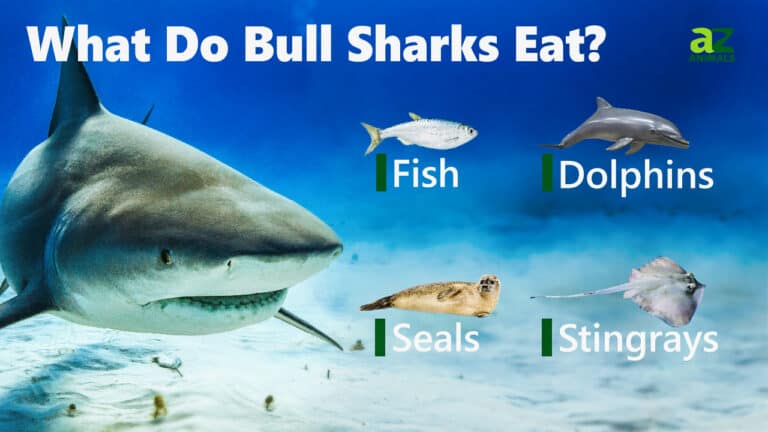
Bull sharks are carnivores, meaning their diet is made up of meat, including fish. They are opportunistic feeders, which means that they eat just about anything they find, and they aren’t picky about their food. Their main diet consists of fish, dolphins, sea turtles, rays, birds, and other sharks, including other bull sharks.
How much they eat depends on what is available. If food is plentiful, they will eat as much as they can. If food is scarce, bull sharks can go long periods without eating. When this happens, their digestion slows down to make the food last longer and allow them to avoid starvation. It is not known just how much a bull shark needs to eat.
A full analysis of the bull shark’s diet can be found on our “What Do Bull Sharks Eat?” page!
Predators and Threats
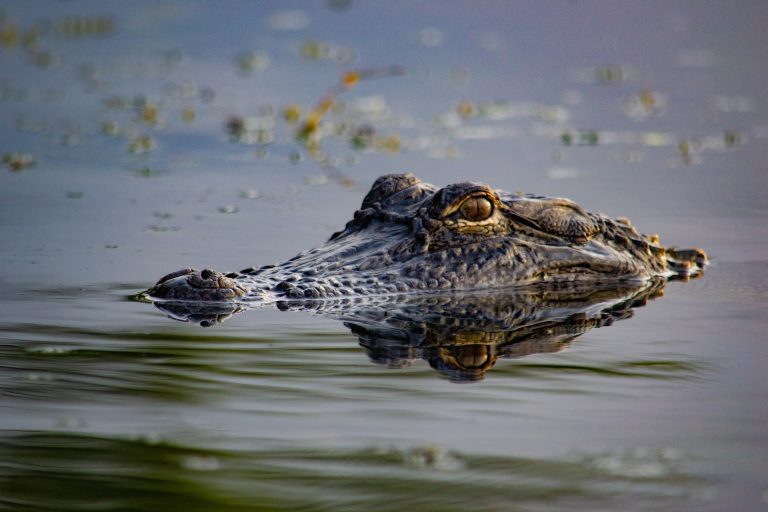
Adult bull sharks are not generally preyed upon by anything that lives in the ocean. That makes them what is called an “apex predator,” which is an animal that is at the top of the food chain. Juvenile bull sharks are sometimes eaten by other sharks, including adult bull sharks. Bull sharks have been seen being attacked and killed by crocodiles in rivers in both Australia and South Africa.
The main threat to bull sharks is humans. They are hunted by people for their oil, hide, and meat. The numbers of bull sharks appear to be shrinking, and at least one study has found that bull sharks are not growing as large as they used to, most likely due to the bigger ones being killed.
Bull sharks are not currently considered an endangered species, but their status is listed as near threatened (NT) by the International Union for Conservation of Nature. This means that they could soon become a threatened species if steps aren’t taken to protect and preserve them.
Reproduction, Babies, and Lifespan
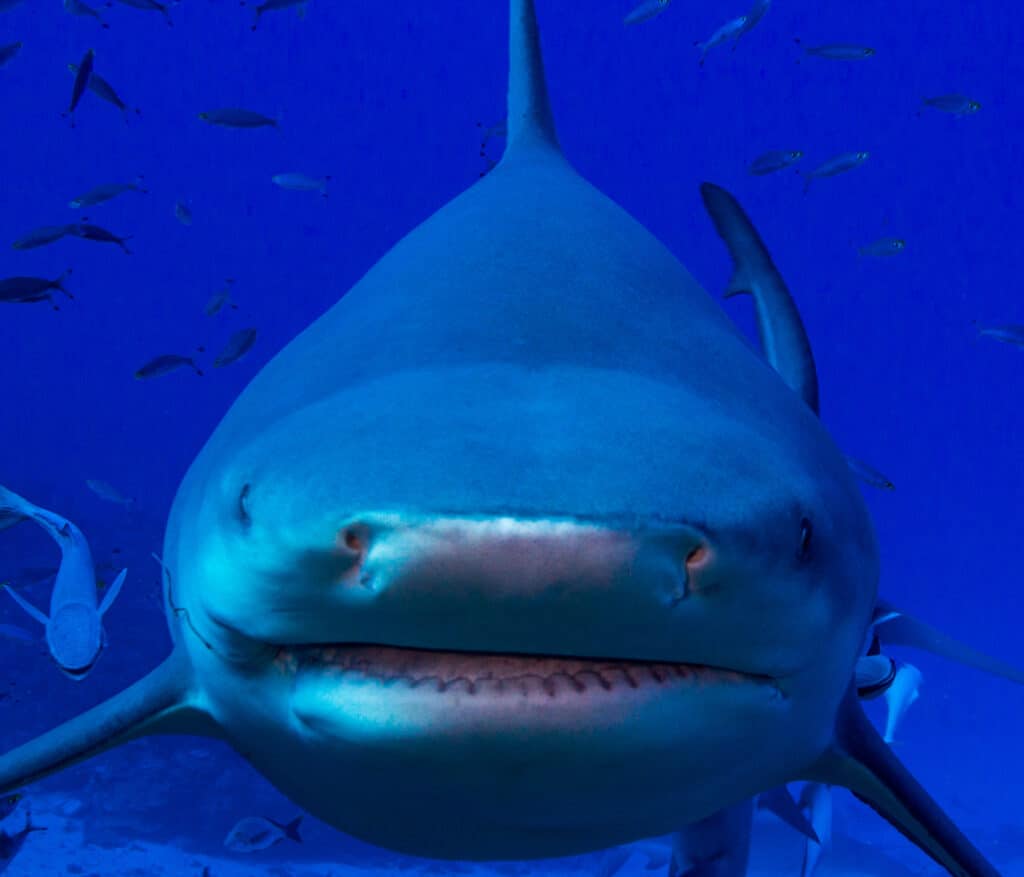
Little is known about mating in the wild. Scientists think that the male grabs the female by the tail and holds her until she rolls over, at which time mating can take place.
©Michael Gomes/Shutterstock.com
Not much is known about bull shark reproductive behavior. Scientists think that the male grabs the female by the tail and holds her until she rolls over, at which time mating can take place. Females often have scars and sores thought to be the result of such actions. This behavior is similar to reproductive behavior seen in other sharks.
Bull sharks become sexually mature at about 8 to 10 years of age. They come together for mating, but then they go their separate ways rather than remaining together for any length of time. They breed from late summer to early fall, often coming together in rivers or in the estuaries that lie between rivers and the ocean. Gestation lasts 10 to 11 months.
Babies, called pups, are born in freshwater, providing them protection from the many predators that live in the sea. The mother gives birth to anywhere from 1 to 13 live pups measuring about 2.5 feet (80 cm) in length.
Once born these babies are on their own. The mother does not provide any care for them after birth. The babies begin hunting for themselves immediately, eating small fish and crustaceans and anything else they can catch and swallow.
Bull sharks live an average of 16 years in the wild. It is possible for them to live longer, especially in an aquarium. The oldest bull shark known was 32 years old.
Population
No exact count of the bull shark population exists. They are seen frequently throughout their habitat and appear to be plentiful. Despite this, it is important to have a plan for conserving them so that they don’t disappear. Currently, no plan exists for their protection.
Bull Shark Pictures
View all of our Bull Shark pictures in the gallery.

How to say Bull Shark in ...
Sources
- David Burnie, Dorling Kindersley (2011) Animal, The Definitive Visual Guide To The World's Wildlife / Accessed December 1, 2008
- Tom Jackson, Lorenz Books (2007) The World Encyclopedia Of Animals / Accessed December 1, 2008
- David Burnie, Kingfisher (2011) The Kingfisher Animal Encyclopedia / Accessed December 1, 2008
- Richard Mackay, University of California Press (2009) The Atlas Of Endangered Species / Accessed December 1, 2008
- David Burnie, Dorling Kindersley (2008) Illustrated Encyclopedia Of Animals / Accessed December 1, 2008
- Dorling Kindersley (2006) Dorling Kindersley Encyclopedia Of Animals / Accessed December 1, 2008