



B
Species Profile

Bull Terrier

Canis lupus familiaris

Egg-shaped head, big-hearted clown
Eudyptula/Shutterstock.com

Bull Terrier Distribution

Click a location to explore more animals from that region

Origin Location

This map shows the native origin of the Bull Terrier. As a domesticated species, they are now found worldwide.

Loading map...

Found in 1 country

Size Comparison

Human 5'8"
Bull Terrier 1 ft 8 in

Bull Terrier stands at 29% of average human height.

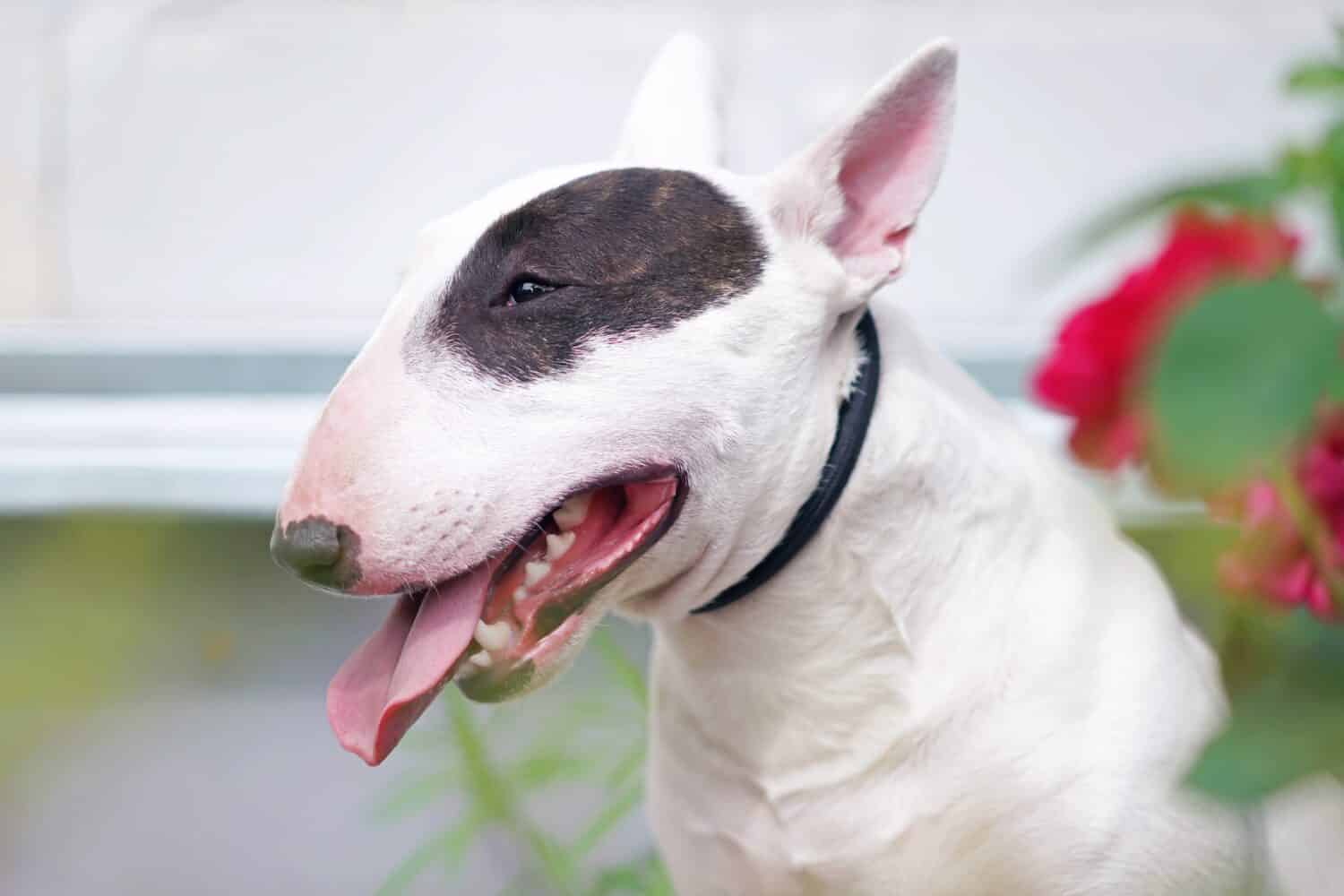
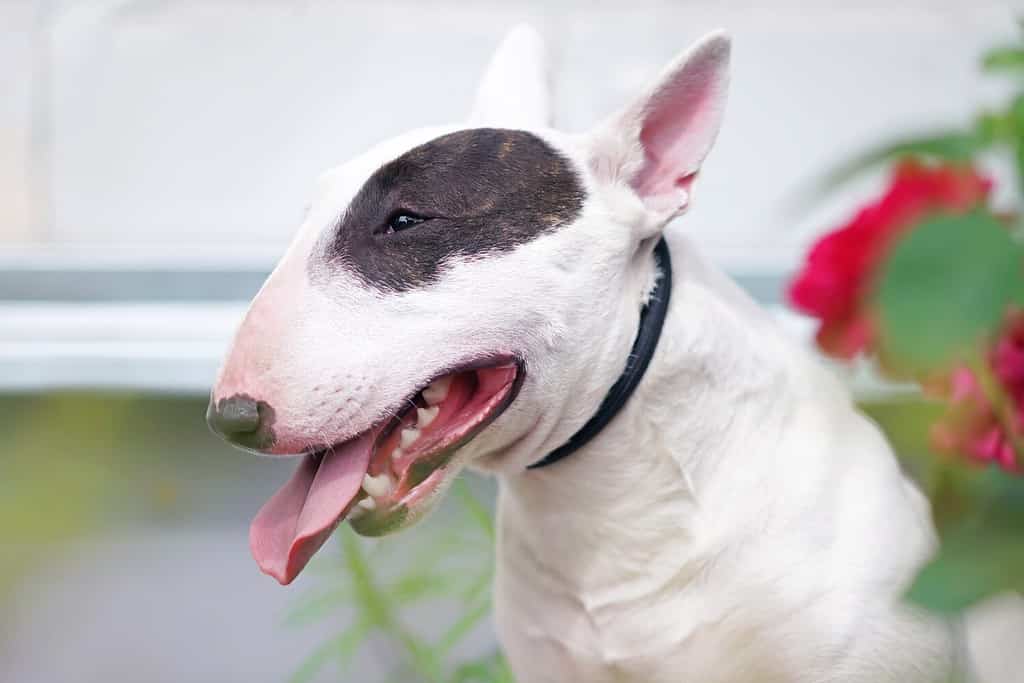
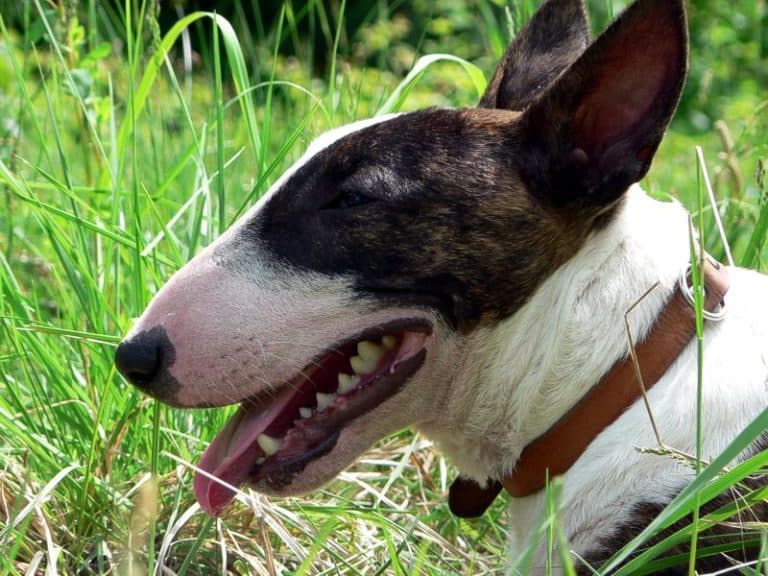
The portrait of a white with a brown patch Miniature Bull Terrier dog with a black collar posing outdoors in summer

At a Glance

Domesticated
Diet Omnivore
Activity Diurnal+
Lifespan 12 years
Weight 38 lbs
Status Not Evaluated
Did You Know?

The Bull Terrier's signature "egg-shaped" head and small, triangular eyes are unusual among domestic dogs and are a defining show trait.

Scientific Classification

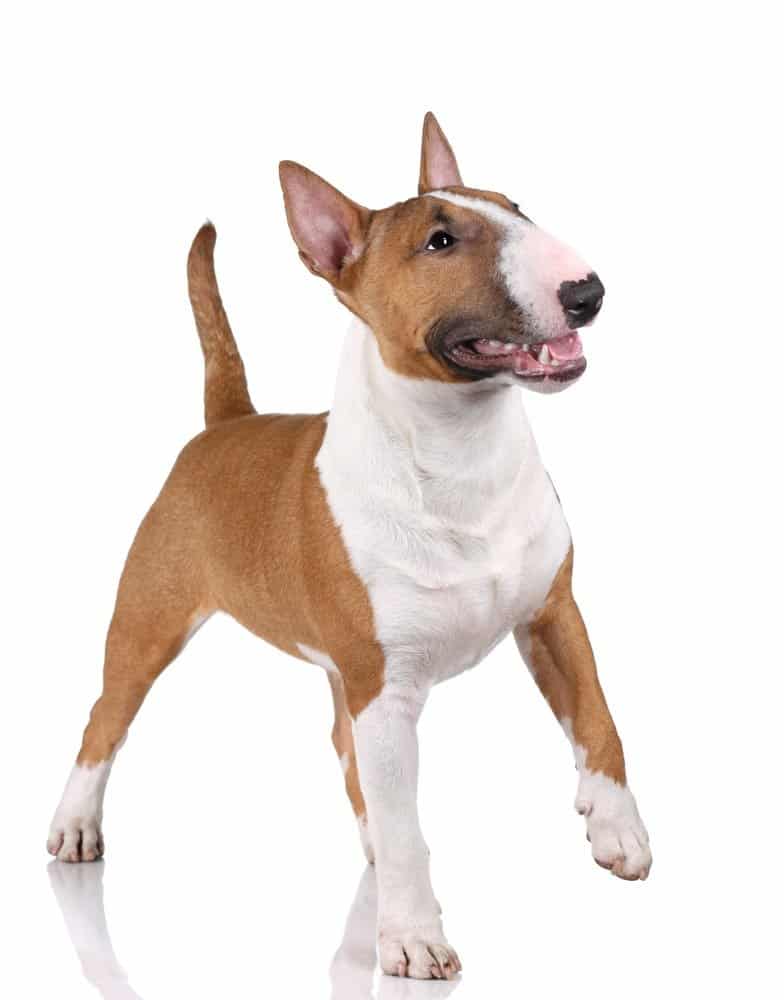
The Bull Terrier is a domesticated dog breed characterized by a muscular build and a distinctive long, “egg-shaped” head profile. It is a companion breed derived from historical bull-and-terrier types and is known for bold, playful behavior and strong attachment to people.

Kingdom
Animalia
Phylum
Chordata
Class
Mammalia
Order
Carnivora
Family
Canidae
Genus
Canis
Species
Canis lupus

Distinguishing Features

  • Distinctive egg-shaped head with a Roman-nose profile
  • Small, triangular, close-set eyes
  • Muscular, compact body with strong shoulders
  • Short, dense coat; often white or colored patterns
  • Erect ears (naturally or as breed standard depending on registry)

Physical Measurements

Males and females differ in size

Height
1 ft 8 in (1 ft 6 in – 1 ft 10 in)
1 ft 7 in (1 ft 5 in – 1 ft 8 in)
Length
2 ft 6 in (2 ft 2 in – 2 ft 9 in)
Weight
62 lbs (53 lbs – 71 lbs)
53 lbs (44 lbs – 64 lbs)
Tail Length
8 in (6 in – 10 in)
10 in (9 in – 12 in)
Top Speed
25 mph

Appearance

Primary Colors
Secondary Colors
Skin Type Mammalian skin with a very short, smooth, tight-lying single coat; skin pigmentation varies (notably in white dogs), with common sensitivity to irritants/allergens and potential sun sensitivity on lightly pigmented areas.
Distinctive Features
  • Domestic dog breed (companion animal) selectively bred from bull-and-terrier types; not a wild canid-distinguished from the base species by extreme breed-specific head shape, proportions, and standardized coat/ear/eye traits.
  • Signature long, 'egg-shaped' head profile with a convex 'roman nose' (downfaced profile) and minimal stop; this head type is a key identifier compared with typical domestic dog head shapes.
  • Small, triangular, deep-set eyes that give a distinctive expression; eyes are not round like many other breeds.
  • Muscular, compact, terrier-like build: strong neck and shoulders, deep chest, sturdy bone, and a short back; overall powerful but not tall or rangy.
  • Ears are small, thin, and carried erect; tail is short, set low, and carried horizontally.
  • Coat is very short, smooth, and glossy; grooming needs are low, but the breed can be prone to skin issues requiring routine monitoring.
  • Breed-typical behavior context: bold, playful, people-attached companion temperament; requires early socialization and consistent, reward-based training to manage exuberance and strength.
  • Watch for breed health issues: congenital deafness (often in mostly white dogs), skin allergies and dermatitis, inherited kidney disease (hereditary nephritis), heart murmurs, kneecap (patellar) luxation, eye lens problems, and weight gain if not exercised.
  • Bull Terriers need daily exercise and mental games, firm training for impulse control, regular nail, ear, and tooth care, sun protection for pale or thin skin, and watch for itching, red ears, or coat changes.

Sexual Dimorphism

Sexual dimorphism is present but moderate; both sexes share the breed's hallmark head shape and compact muscular silhouette, with males typically heavier and more powerfully built.

  • Generally larger, heavier, and more muscular with broader head/neck and more pronounced bone.
  • Often a more substantial chest and thicker forequarters.
  • Generally smaller and lighter with a slightly finer frame while maintaining the same egg-shaped head profile.
  • Often a more streamlined outline and less mass through neck/shoulders compared to males.

Did You Know?

The Bull Terrier's signature "egg-shaped" head and small, triangular eyes are unusual among domestic dogs and are a defining show trait.

Early Bull Terriers descended from 19th-century bull-and-terrier types; modern lines were standardized as companions rather than working fighters.

The all-white variety was once nicknamed the "White Cavalier" for its gentlemanly, people-focused reputation in Victorian-era Britain.

The breed's tight, short coat sheds but is easy to groom-weekly brushing often suffices for many pets.

Some Bull Terriers are prone to "spins" or tail-chasing episodes; this breed is one of several where canine compulsive behaviors have been described.

Bull Terriers commonly thrive on interactive play and training games-many are famously "mouthy" as youngsters and benefit from appropriate chew outlets.

Unique Adaptations

  • Domestication shift (vs. gray wolf): selected for human companionship and bold, people-centered behavior rather than cooperative hunting.
  • Head and jaw conformation: the breed's distinctive convex "roman" profile and robust jaw musculature are products of selective breeding (not a wild-type canid trait).
  • Compact, muscular build: dense, athletic body suited to short bursts of power and vigorous play rather than endurance travel typical of wild canids.
  • Short, close coat: low-maintenance insulation suited to household life; many individuals need weather considerations in cold/heat compared with double-coated breeds.
  • High pain tolerance/tenacity (breed tendency): can mask minor injuries-owners often benefit from routine body checks and proactive vet care.

Interesting Behaviors

  • People-shadowing: many prefer to be near their person from room to room, reflecting strong companion-breed bonding.
  • "Clowning": playful bouncing, head tilts, and comedic body language used to solicit attention and play.
  • Power-play tugging: strong neck and shoulders often show up in enthusiastic tug games-best paired with rules (drop/leave it).
  • Terrier-style persistence: once engaged, they may keep trying a puzzle or toy far longer than expected; short, upbeat sessions work well.
  • Mouthy play in adolescence: nibbling or grabbing during excitement is common and improves with impulse-control training and chew toys.
  • Dog-selective tendencies: some individuals can be choosy with other dogs; early socialization and careful introductions help.

Cultural Significance

Bull Terrier (Canis lupus familiaris), from Britain, became a city pet in the late 1800s and early 1900s through dog shows and media. Its egg-shaped head made it a bold, funny, people-loving icon (e.g., Target's Bullseye).

Myths & Legends

"The White Cavalier" tale: Victorian-era fanciers popularized the image of the white Bull Terrier as a chivalrous, gentlemanly dog-spirited yet devoted and mannerly with people-an enduring nickname that functions like a breed legend.

Show-ring stories said early breeders picked for the Bull Terrier (Canis lupus familiaris) head shape, making a dog that looked like no other and a living symbol of design made by people.

Modern mascot mythology: the "Bullseye" store-dog persona in advertising has become a pop-culture story of the friendly, spot-faced Bull Terrier who 'guides' shoppers-an urban legend-like character recognized beyond dog circles.

Bull-and-terrier ancestry anecdotes: 19th-century accounts describe courageous 'bull-and-terrier' dogs in rough sports, later recast in breed histories as a narrative of transformation-from gritty roots to affectionate household companion.

Conservation Status

NE Not Evaluated

Has not yet been evaluated against the criteria.

Population Stable

Life Cycle

Birth 5 pups
Lifespan 12 years

Lifespan

In the Wild
10–14 years
In Captivity
8–14 years

Reproduction

Mating System Polygynandry
Social Structure Managed Domestic
Breeding Pattern Serial
Fertilization Managed Selective
Birth Type Managed_selective

Bull Terrier (Canis lupus familiaris): Breeding is human-managed, often polygynandry (multiple mates) with no lasting pair bonds. Humans plan matings and do health checks on parents. Fertilization is internal; pregnancy about 63 days. No group care by other dogs; pups need human care.

Behavior & Ecology

Social Household pack Group: 3
Activity Diurnal, Cathemeral
Diet Omnivore Meat-forward foods (commonly chicken or beef-based diets/treats)

Temperament

Bold, confident, persistent; less 'pack-cooperative hunting' oriented than the wolf base species and more companion/interaction-driven
Playful 'clownish' demeanor; high engagement and novelty-seeking, can become mischievous if under-stimulated
Strong attachment to people; can be prone to separation-related distress if left without training and gradual habituation
Dog-selective in some individuals; potential for same-sex intolerance or conflict escalation if arousal is high
Moderate-to-high prey/chase drive; may pursue small animals-reliable recall and leash management often needed
High pain tolerance and tenacity; requires consistent, reward-based training with clear boundaries (harsh handling can increase resistance/reactivity)
Care requirements: daily exercise plus structured mental work (obedience, scent games, puzzle feeding); early socialization and ongoing impulse-control training are key
Common health concerns influencing behavior/care: congenital deafness (notably in white-coated individuals), skin allergies/atopy causing irritability/itch-driven restlessness, and orthopedic issues (e.g., patellar luxation) that may limit activity; monitor for overexertion and keep nails/skin/ears maintained
Housing/handling: thrives indoors with family; not ideal as a yard-only dog-can become bored, destructive, or vocal when isolated

Communication

Barking Alerting and attention-seeking
Growling Boundary-setting; can occur during rough play if over-aroused
Whining/whimpering Frustration, separation, anticipation
'Talking' grumbles/snorts during play or solicitation
Full-body physical contact: leaning, bumping, pawing, nudging Breed-typical affiliative solicitation
Mouthing during play; requires early bite-inhibition training and redirection
Play bows, bouncing, exaggerated head/shoulder movements ('clowning') to initiate play
Staring/focused fixation when aroused or targeting Manage with disengagement cues
Tail carriage and whole-body wagging; stiff posture and closed mouth can signal escalation
Scent marking and investigative sniffing typical of domestic dogs; may use urine marking on walks
Ear and head position changes; note that deaf individuals may rely more on visual cues and touch-use hand signals and gentle tactile cues
Pacing, shadowing family members, door-watching as proximity-seeking or separation-related signaling

Habitat

Biomes:
Temperate Forest Temperate Grassland Mediterranean Boreal Forest (Taiga) Tundra Alpine Desert Hot Desert Cold Tropical Dry Forest Tropical Rainforest Wetland Freshwater Marine +7
Terrain:
Plains Hilly Coastal Valley Mountainous Island
Elevation: Up to 16404 ft 3 in

Ecological Role

Domesticated, human-associated omnivore; primarily a companion animal with limited ecological predation in managed environments, but capable of opportunistic predation/scavenging if loose.

Companionship and human social support Deterrence/alerting (watchdog function) Incidental pest control (discouraging or occasionally catching small rodents) Participation in animal-assisted activities (where temperament/training suitable)

Diet Details

Main Prey:
Small mammals Lagomorph Birds Carrion and discarded animal tissue
Other Foods:
Cooked starches and grains Vegetables Fruits Grasses/plant material

Human Interaction

Domestication Status

Domesticated

Domestic dogs (Canis lupus familiaris) were shaped by humans over thousands of years for work and companionship. The Bull Terrier was developed in 19th-century Britain from bull-and-terrier types once used in blood sports, then bred into a companion and show dog. It is muscular with an egg-shaped head, people-oriented, playful, bold, and needs firm training and daily activity.

Danger Level

Moderate
  • Injury risk from jumping, body-slamming, or rough play due to strength and exuberance (especially with children/elderly).
  • Bite risk increases with poor socialization, inadequate supervision, pain/medical issues, or coercive handling; early training and positive reinforcement reduce risk.
  • Potential dog-directed reactivity or intolerance in some individuals can create human injury risk during dog fights or break-ups; leash management and controlled introductions are important.
  • Strong prey/play drive may lead to chasing small animals; accidental nips can occur during over-aroused play without impulse-control training.
  • Health-related behavior changes (e.g., pain from orthopedic issues) can increase irritability; routine veterinary screening is important.

As a Pet

Suitable as Pet

Legality: Bull Terrier (Canis lupus familiaris) is usually allowed as a pet in many places, but some areas ban or limit "bull-type" dogs; landlords, HOAs, or insurers may also restrict them. Check local laws and housing/insurance rules.

Care Level: Experienced

Purchase Cost: $800 - $3,000
Lifetime Cost: $20,000 - $70,000

Economic Value

Uses:
Companion animal Conformation/show dog Sport and recreation Breeding and kennel industry Pet services (training, grooming, boarding) Veterinary and preventive healthcare
Products:
  • purchase/adoption and responsible breeding services
  • training (obedience, behavior modification, dog sports foundations)
  • veterinary care (vaccination, parasite control, dentistry, surgery)
  • specialized diets and treats (including allergy/skin-support diets when needed)
  • equipment (sturdy collars/harnesses, chew-resistant toys, crates, fencing)
  • grooming products/services (coat care, nail trims, skin/ear care)
  • pet insurance and liability coverage (often emphasized for powerful breeds)

Relationships

Ecological Equivalents 5

Animals that fill a similar ecological role in their ecosystem

Staffordshire Bull Terrier
Staffordshire Bull Terrier Canis lupus familiaris Shares bull-and-terrier heritage, muscular build, and a people-focused guardian and companion role. The Bull Terrier has an egg-shaped head, clownish playfulness, common deafness (often in white dogs), and skin allergies; both need social time, training, and daily exercise.
American Pit Bull Terrier
American Pit Bull Terrier Canis lupus familiaris Bred for strength, toughness, and athleticism. Often shows a strong prey drive and requires structured training and regular activity. Has a distinctive head shape and tends toward sudden playful bursts; early socialization helps prevent rough play or dog fights.
Boxer
Boxer Canis lupus familiaris Comparable role as an active companion with a sturdy, muscular build and a strong attachment to people. Similar care needs (exercise, training, social contact). The Bull Terrier differs in head morphology and has some breed-typical health concerns (deafness risk and dermatologic issues).
Gray Wolf
Gray Wolf Canis lupus Bull Terriers share canid social and hunting behaviors but were bred for strong human focus and companionship. They require supervised exercise, mental stimulation, and close human contact, and they do poorly with long periods of isolation.
Domestic Dog
Domestic Dog Canis lupus familiaris Bull Terrier (Canis lupus familiaris): egg-shaped head, strong forequarters, and a bold, people-loving temperament. Requires early impulse control, daily exercise, training, and care. Monitor for deafness, skin allergies, joint, heart, and kidney problems, and for compulsive behavior.

Bull terriers have an independent streak, which can make them challenging to train. This dog has a sad history that dates back to 13th-century Britain. A group of dogs would participate in a sporting or blood sports competition known as bullbaiting. The dogs were released to attack a bull while observers bet on the winning dog. Later in the early 1800s, this dog was put into fierce dogfighting competitions held in a pit or cellar below a tavern. These dogs are sometimes referred to as pit bulls.

Despite its violent history in these sporting activities, the bull terrier is a friendly dog with a playful nature. It’s loyal and serves as an excellent companion and guard dog.

Another type of bull terrier, called the White Cavalier, was a favorite with royalty in the 1860s. It’s notable for its all-white coat of fur.

3 Pros and Cons of Owning a Bull Terrier

Pros!Cons!
An easy grooming routine
This dog has a coat of flat, short hair that requires weekly brushing.
Not good with children
Unless it is socialized to deal with children, this breed is not a good choice for a family with small kids.
An excellent guard dog
These dogs are always alert and aware of their environment.
It needs a lot of exercise
These are high-energy canines that need at least 40 minutes of exercise per day.
Easy to train with the right program
Though they have an independent streak, these dogs can be trained with words of praise and treats. They are intelligent and pick up lessons quickly with a positive approach.
Not good with other pets
These dogs have an independent nature and don’t normally mix well with other dogs or cats in a household.
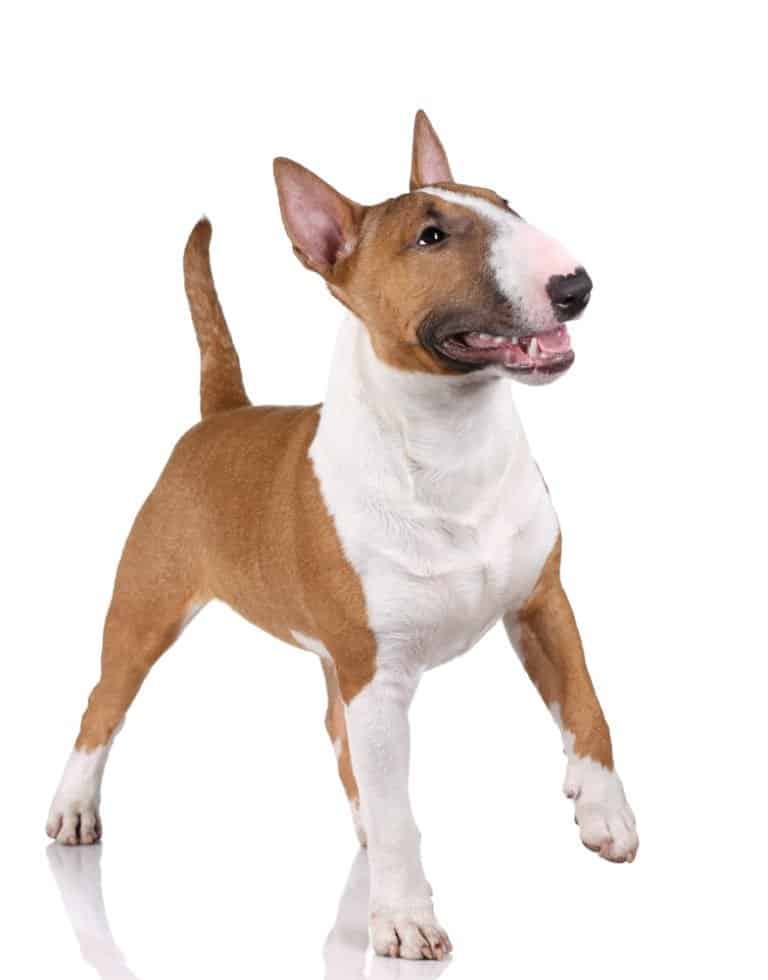
Bull terrier isolated on a white background

Bull Terriers are independent dogs, but take to training well.

History and Origins

It is quite ironic that some of the friendliest dog breeds today were initially bred and used for a much less pleasant purpose. This is the case with Bull Terriers, which were originally used in a barbaric sport known as bull-baiting. This practice, which involved Bulldogs attacking a staked bull while onlookers bet on the outcome, was popular in Britain from the 13th century onward. Fortunately, blood sports with animals were outlawed in the 1830s, but these cruel events still continued to take place in secret. Dogfighting then became the new preferred blood sport, with dogs being made to fight each other in indoor pits, often in the cellars of pubs.

In order to make the cruel sport of dog fighting more entertaining, Bulldogs were mixed with Terriers to bring together the strength of a Bulldog and the energy and enthusiasm of a Terrier. This led to the creation of the Bull Terrier.

In the mid-1800s, when pit fighting was outlawed in Britain, Bull Terriers found themselves out of a job. But breeders saw the opportunity and quickly worked to refine their appearance and demeanor, making them ideally suited to be the perfect pet for the upper class.

In the 1860s, James Hinks, an Englishman, took an old breed of fighting dogs, which was a cross between a Bulldog and a Terrier, and improved it to become the Bull Terrier of today. Initially, the breed was only white, but in the early 1900s, versions with colors began to appear. This breed was accepted into the American Kennel Club in 1885 and quickly became popular in the United States. Some famous Bull Terriers include General George Patton’s Willy, Rufus, who won Westminster in 2006, and Bullseye, who is the mascot for Target.
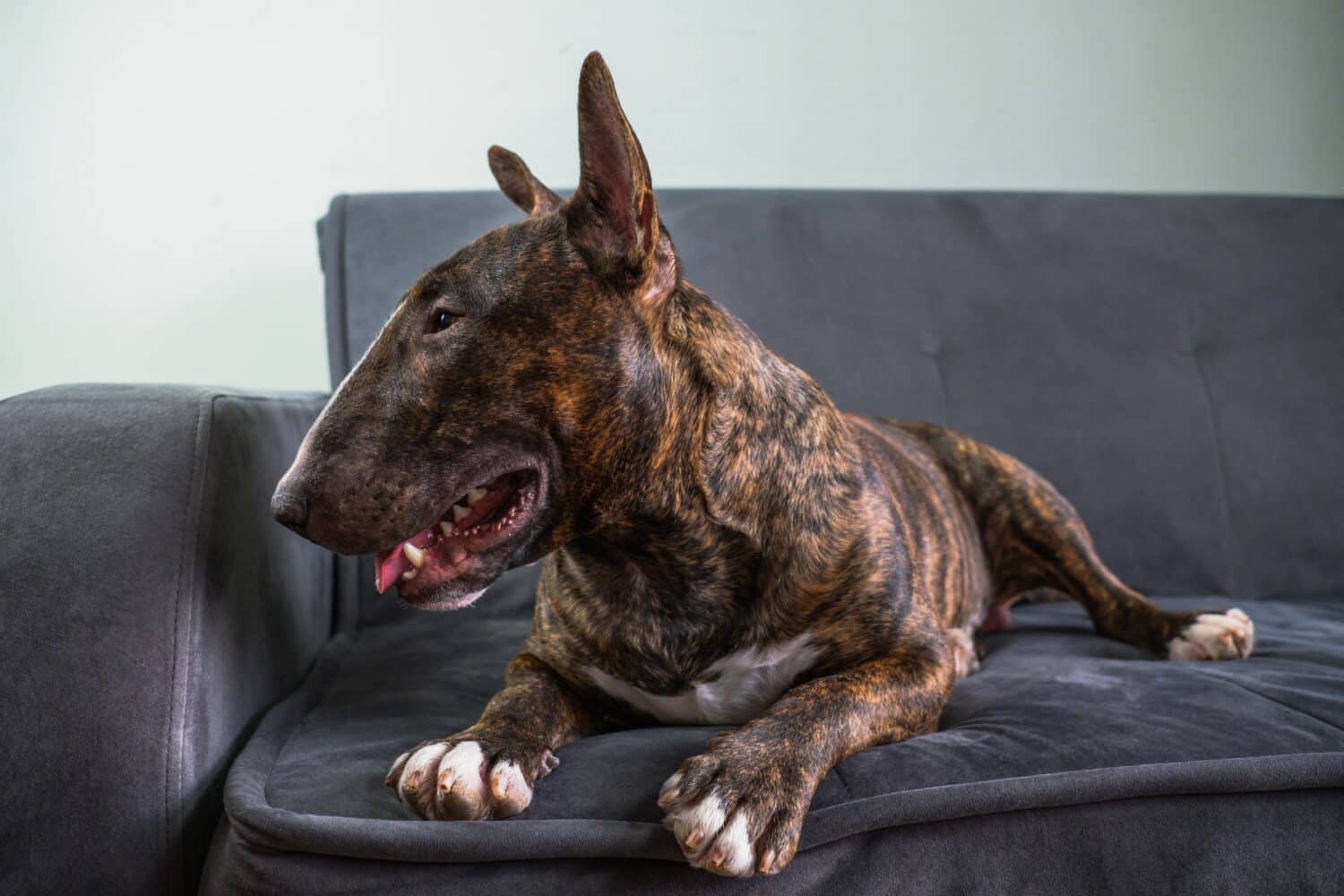
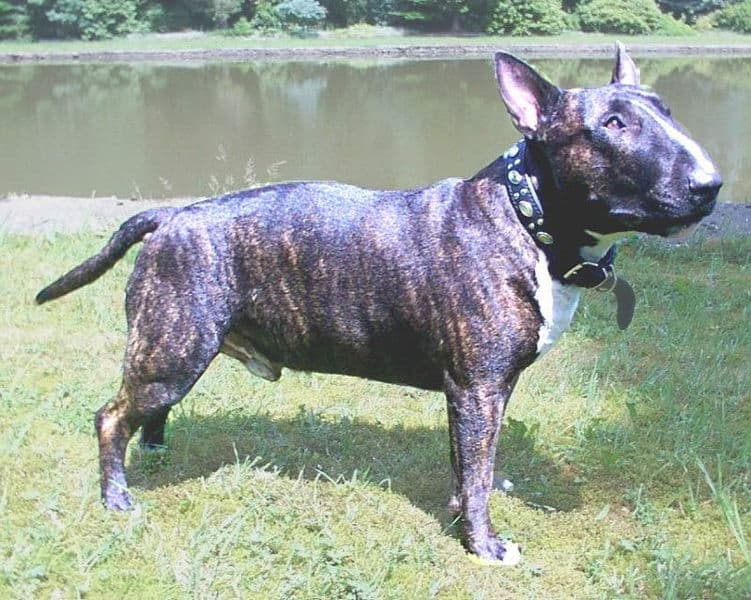
The English Bull Terrier portrait in a brindle color lies on the couch

Bull terriers are a mixture of bulldogs and terriers and originated in England.

Size and Weight

This is a short-haired breed that’s medium in size. Males grow to be 22 inches tall while females are 21 inches tall at the withers. A fully grown male weighs up to 65 pounds, whereas a fully grown female weighs as much as 55 pounds. A seven-week-old puppy weighs around 20 pounds. A standard bull terrier is fully grown at 19 months, while a miniature is fully grown at 16 months old. The biggest bull terrier on record weighed 110 pounds.

Common Health Issues

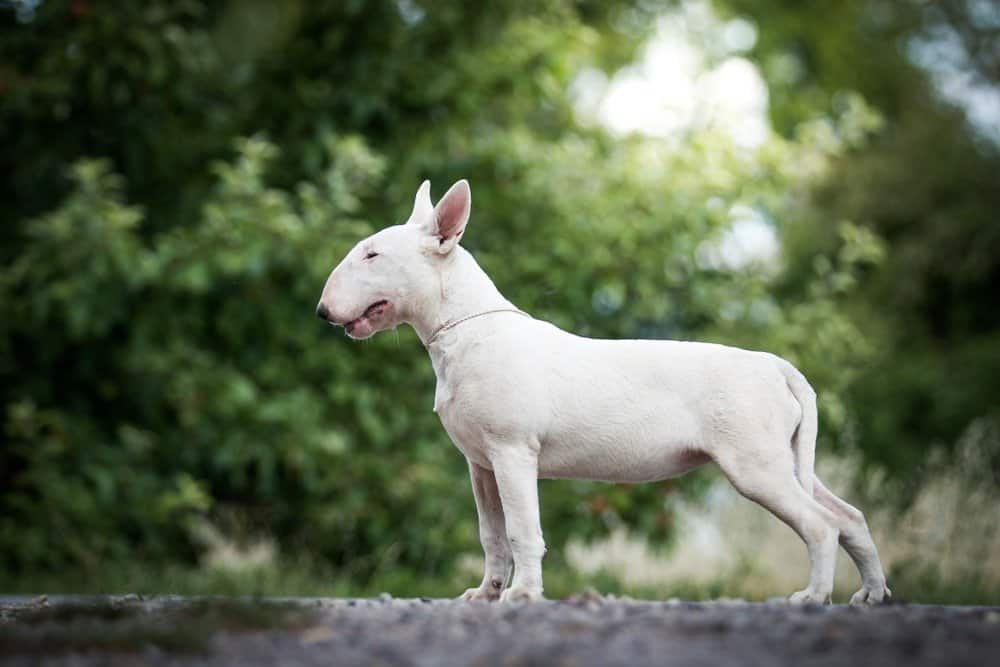
As with all dog breeds, bull terriers have some common health issues. Heart disease is one example. It takes the form of a weakened heart valve. Kidney disease is another common health issue in this breed. Kidney disease happens when protein leaks from a dog’s kidneys. A special diet can help with this condition. Some bull terriers also deal with patellar luxation. This is when a dog’s kneecap moves out of place, causing the dog to limp. Sometimes the kneecap can pop back into the proper position on its own. Other times, the dog may need surgery.
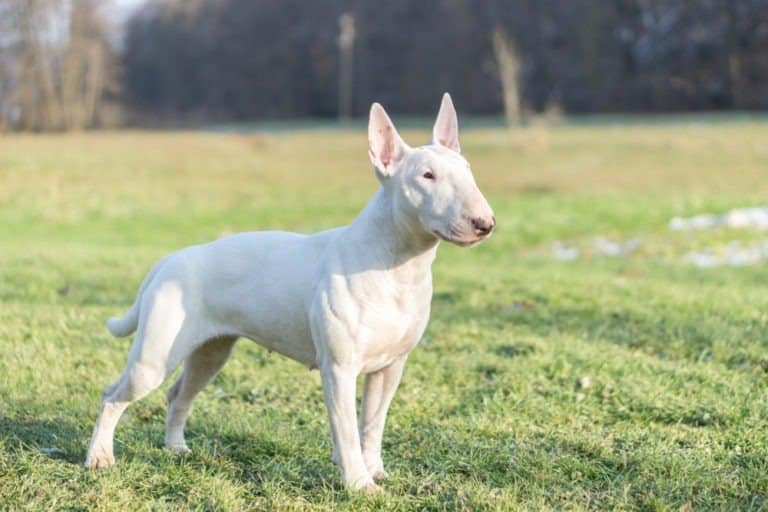
White bull terrier side shot

Bull terriers are prone to heart disease.

Temperament

Standard bull terriers, as well as miniature bull terriers, are known for their playful personality. They are strong dogs that like to play frisbee, fetch, and chase. These dogs are known for high-energy behavior, such as running, jumping, digging, and more. This makes them ideal for dog sporting and agility events where they are being timed.

One thing to keep in mind about bull terriers is that they can be aggressive if not socialized and provided with thorough obedience training. This dog has a strong personality and needs to know what type of behavior is expected of it. One of its most impressive traits is loyalty. They make great companions for adults or older children.

How to Take Care of a Bull Terrier

Learning about the specific dietary needs, exercise requirements, and grooming routine of bull terriers can help an owner take the best possible care of their pet. Plus, choosing the right type of food for a puppy or adult bull terrier can help to prevent some of their most common health issues.

The Best Dog Food

Of course, puppies need a different type of diet than grown bull terriers. For puppies, protein is the first nutrient to look for in their food. Amino acids in protein contribute to strengthening the dog’s muscular body. This can promote healthy growth of the knees to prevent patellar luxation. Also, protein supports healthy skin and hair. Calcium supports the growth of healthy bones and teeth. Vitamins E and C contribute to healthy kidney growth in a puppy.

Protein plays an important part in the diet of an adult bull terrier as well. Protein, along with a controlled amount of fat, gives this dog energy to support its various activities. Controlling the fat in an adult dog’s diet can help prevent heart disease. Calcium contributes to healthy bones and teeth in adult dogs. This can prevent dental issues. Vitamins E and C can help guard against kidney disease. Vitamin A supports the healthy vision of this dog.

Some vets will point owners towards low-phosphorus dog foods if their companion suffers from kidney disease. Stay in contact with your vet about your Bull Terrier’s health and follow their food recommendations.

Maintenance and Grooming

How much does a bull terrier shed? A bull terrier sheds a moderate amount. It may shed a little more at the change of seasons.

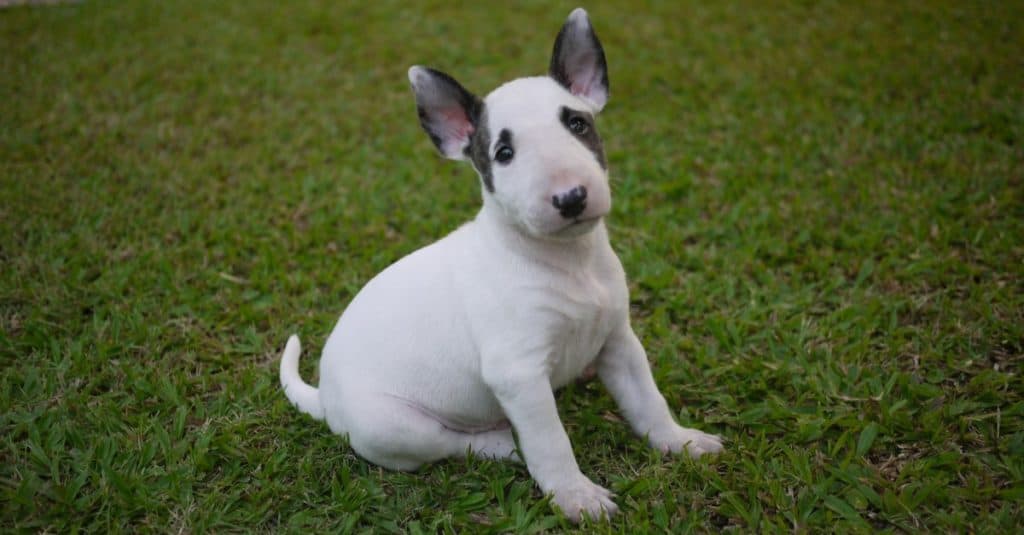
This dog requires weekly brushing. A soft brush with boar’s hair bristles is a quality grooming tool for a bull terrier’s coat. A grooming glove can be used to groom the dog’s legs and face to remove loose or dead hair. It’s most effective to start at the dog’s head and move toward its tail. This routine is appropriate for both standard bull terriers and miniature bull terriers. A good grooming routine keeps a bull terrier’s coat glossy and gives an owner the chance to bond with this dog.

Bull terriers can develop red, itchy patches of skin due to food or seasonal allergies. Asking a veterinarian about the dog’s diet and testing for seasonal allergies can help to clear up this condition.
Miniature bull terrier puppy sitting on grass

Bull terriers require minimal grooming.

Training

Bull terriers are intelligent dogs, but they have an independent nature. This can make training challenging if an owner doesn’t go about it the right way. Words of praise help keep this dog focused. Making the lessons fun with delicious treats is also very effective with this breed.

Exercise

Whether an owner has a miniature or standard bull terrier, this dog needs exercise every day. This pup has a lot of energy that it needs to burn off in order to stay healthy. It needs at least 40 minutes of exercise each day. Running, jumping, fetching a ball, playing chase, or catching a frisbee are all activities that provide a bull terrier with great exercise. It’s not a good idea to take this dog to a dog park. Generally, bull terriers don’t get along with other dogs.

Bull terriers are muscular dogs that are fast and like to keep moving. They need a large living space. So they are not recommended for apartment living. A medium to large fenced-in backyard is a great place for a bull terrier to stretch its legs.

Puppies

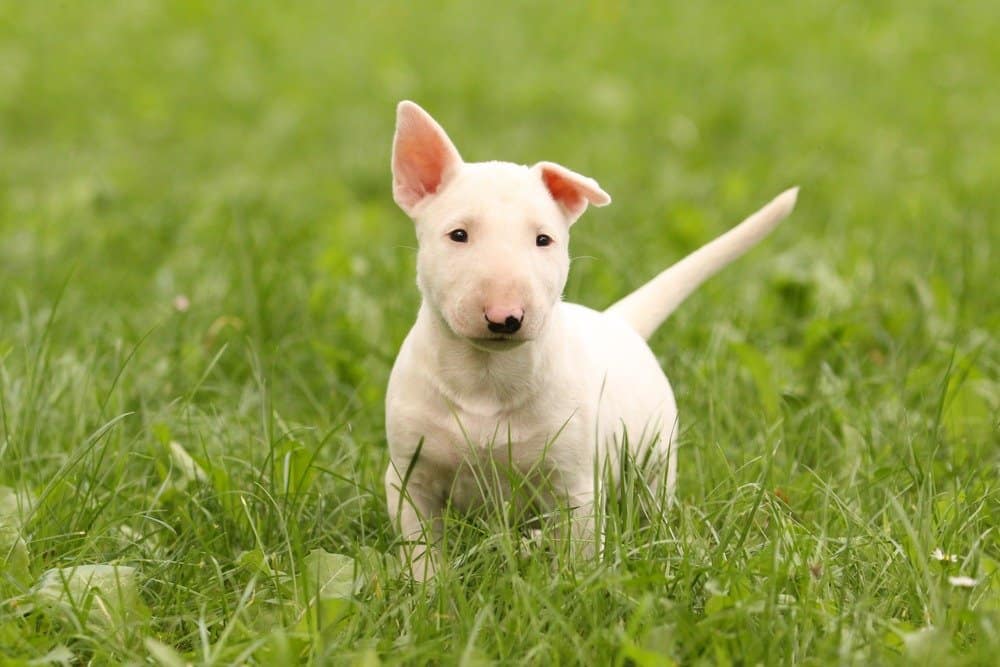
One of the most important things to remember about raising a bull terrier puppy has to do with diet. These dogs can overeat and become obese. This can lead to a lot of health problems. So, feeding a puppy the right amount of food is just as crucial as feeding it a nutritional diet.
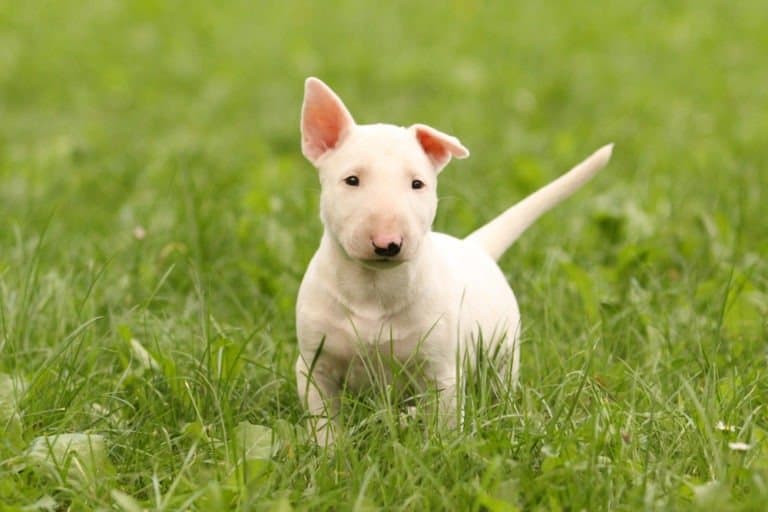
White bull terrier puppy

Bull terrier puppies need a lot of early socialization to ensure they adapt well later in life.

With Children

Bull terriers aren’t an advisable choice for families with small children. These dogs can be aggressive if they aren’t socialized. They are very strong and could inadvertently injure small children while playing or running in the yard.

Similar Dogs

Other breeds similar to bull terriers include the American Staffordshire terrier, the Airedale terrier, and the Bedlington terrier.

  • American Staffordshire Terrier: This dog has a lot in common with bull terriers, including a friendly personality, an easy grooming routine, and a loyal nature. But while these dogs have a lot of energy, they are not as energetic as bull terriers. American Pit Bull terriers are similar to the American Staffordshire terrier.
  • Airedale Terrier: Like a bull terrier, an Airedale is playful, intelligent, and an excellent guard dog. But its grooming routine is a little more complicated due to its wiry coat.
  • Bedlington Terrier: Bedlington terriers are affectionate, friendly, and active. They do require more grooming than bull terriers because of their long, curly coat.

Famous Bull Terriers

A few celebrities count the bull terrier as a favorite pooch.

  • Singer Taylor Swift owns a bull terrier
  • Singer Eric Clapton has a pet bull terrier
  • English singer Lily Allen has a beloved bull terrier
View all 453 animals that start with B

Sources

  1. American Kennel Club / Accessed November 8, 2019
  2. Animal Health Center / Accessed November 8, 2019
  3. Rover / Accessed November 8, 2019
Heather Hall

About the Author

Heather Hall

Heather Hall is a writer at A-Z Animals, where her primary focus is on plants and animals. Heather has been writing and editing since 2012 and holds a Bachelor of Science in Horticulture. As a resident of the Pacific Northwest, Heather enjoys hiking, gardening, and trail running through the mountains with her dogs.

Thank you for reading! Have some feedback for us?


Bull Terrier FAQs (Frequently Asked Questions)

A bull terrier is a muscular dog with an egg-shaped head with ears that stand up. They are highly active dogs with a friendly, loyal nature. Miniature bull terriers, the American Staffordshire terrier, White Cavalier terrier, and American pit bull terriers are all part of the terrier group.