B
Species Profile

Bullfrog

Lithobates catesbeianus

Big frog. Bigger boom.
Tau5/Shutterstock.com

Bullfrog Distribution

Click a location to explore more animals from that region

Invasive Species
Loading map...
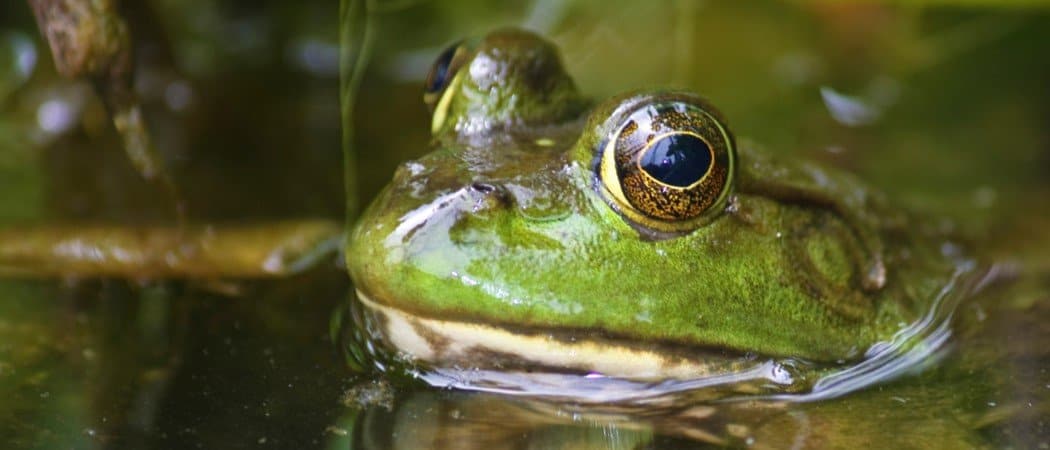
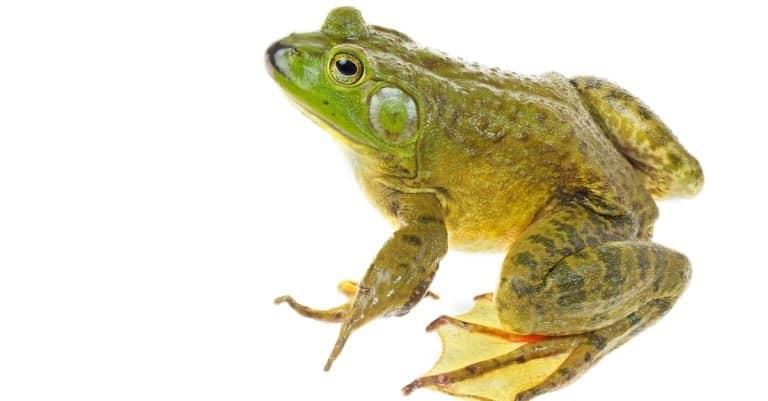
American bullfrog close up portrait

At a Glance

Wild Species
Also Known As Bullfrog, North American bullfrog
Diet Omnivore
Activity Crepuscular+
Lifespan 9 years
Weight 0.6 lbs
Status Least Concern
Did You Know?

Adults can reach ~203 mm snout-vent length (about 20 cm), making it one of North America's largest frogs.

Scientific Classification

The American bullfrog is a large, mostly aquatic true frog known for a deep, booming call and strong hind legs. It is native to eastern North America and has been widely introduced elsewhere.

Kingdom
Animalia
Phylum
Chordata
Class
Amphibia
Order
Anura
Family
Ranidae
Genus
Lithobates
Species
Lithobates catesbeianus

Distinguishing Features

  • Very large size for a frog; robust body and powerful hind legs
  • Deep, resonant “jug-o-rum” call (males)
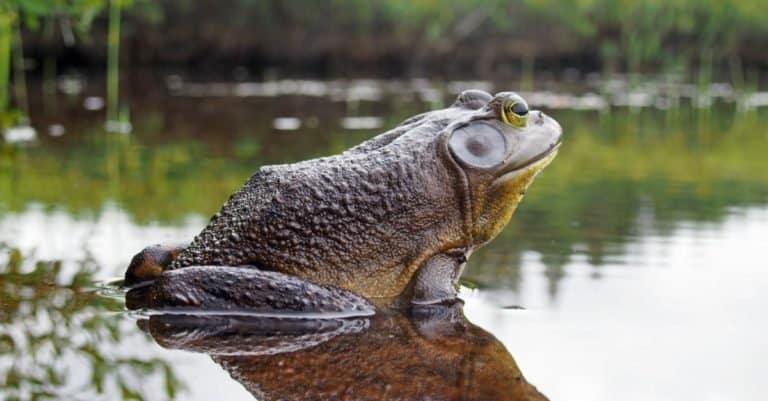
  • Large tympanum (eardrum), often larger than the eye in adult males
  • Prominent dorsolateral fold typically wraps around the tympanum rather than continuing down the back
  • Green to brown coloration, often with mottling; pale underside

Physical Measurements

Males and females differ in size

Weight
1 lbs (0 lbs – 1 lbs)
1 lbs (0 lbs – 2 lbs)
Top Speed
7 mph

Appearance

Primary Colors
Secondary Colors
Skin Type Moist, mostly smooth skin with slight granulation; dorsolateral folds are absent (a key ranid trait for this species). Adapted to an aquatic lifestyle with frequent shoreline basking and rapid water-entry escape.
Distinctive Features
  • Large true frog (Ranidae) with adult snout-vent length (SVL) commonly ~9-15.2 cm; reported maximum SVL about ~20.3 cm in very large individuals.
  • Robust body with powerful, elongated hind legs and extensive toe webbing-well suited for swimming in permanent waters (lakes, ponds, slow rivers).
  • Tympanum (external eardrum) conspicuous; in males it is typically larger than the eye diameter, aiding field identification.
  • No dorsolateral folds running down the back (distinguishes it from many similar North American ranid frogs).
  • Deep, booming advertisement call ("jug-o-rum" / bull-like bellow) produced from water edges or floating positions during breeding in permanent waters.
  • Often invasive where introduced outside its native eastern North American range; shoreline ambush posture and large gape contribute to predatory impact on native amphibians, fish, and invertebrates.
  • Longevity: commonly ~7-9 years in the wild; up to ~16 years recorded in captivity (reported in herpetological life-history summaries).

Sexual Dimorphism

Sexes are similar in overall coloration/pattern, but males typically show a proportionally larger tympanum and develop a yellow throat during the breeding season; females often average slightly larger in body size in many populations.

  • Tympanum typically larger than the eye diameter (useful diagnostic sex cue in adults).
  • Throat commonly yellow (especially during breeding season).
  • Breeding-season forelimbs may appear more muscular; males develop nuptial pads on thumbs for amplexus (not always obvious at a distance).
  • Tympanum typically about equal to (or only slightly larger than) the eye diameter in adults.
  • Throat usually pale/cream rather than bright yellow.
  • Often slightly larger average SVL than males within the same population (size overlap is substantial).

Did You Know?

Adults can reach ~203 mm snout-vent length (about 20 cm), making it one of North America's largest frogs.

Females can lay roughly 1,000-20,000 eggs per clutch in a single surface film on still water.

Tadpoles often take 1-3 years to metamorphose (commonly ~2 years in colder northern climates).

The deep call is produced by males using paired vocal sacs; the classic mnemonic is "jug-o-rum."

Bullfrogs are highly aquatic: they commonly overwinter underwater, relying heavily on cutaneous (skin) respiration while inactive.

They are opportunistic predators that will eat other frogs (including their own species), fish, crayfish, birds, and small mammals.

Widely introduced beyond eastern North America, they are among the best-known invasive amphibians globally.

Unique Adaptations

  • Powerful hind limbs and extensive webbing enable strong propulsion for swimming and long escape jumps from shorelines.
  • Large tympanum (external eardrum): in males it is typically larger than the eye, aiding reception/production of low-frequency advertisement calls.
  • Paired vocal sacs act as resonators, generating the species' characteristic low, booming call that carries over water.
  • Aquatic respiration flexibility: capable of substantial oxygen uptake through skin, supporting long periods of stillness underwater.
  • Generalist gape-limited predation: a very wide mouth and robust head allow consumption of unusually large prey items for a frog.
  • High reproductive output (large clutches) increases establishment success, especially in newly invaded habitats.

Interesting Behaviors

  • Shoreline sit-and-wait hunting: adults float or crouch at the water's edge and strike rapidly at moving prey.
  • Male territoriality in breeding season: males call from fixed stations and defend small calling areas; disputes can include lunging and wrestling.
  • Aquatic breeding in permanent waters: mating and egg-laying typically occur in still, warm ponds, lakes, and slow backwaters rather than ephemeral pools.
  • Nocturnal peak activity: feeding and calling often intensify at dusk and night, especially in warm, humid weather.
  • Seasonal overwintering: in cold regions, they remain submerged in pond bottoms or mud, minimizing movement through winter.
  • High dispersal via waterways: juveniles and adults readily colonize connected wetlands, canals, and shorelines, aiding rapid spread in introduced ranges.

Cultural Significance

The American Bullfrog (Lithobates catesbeianus) is a familiar summer wetland sound in North America. Eaten as frog legs and used in research, it is also a well-known invasive species that eats native animals, competes for shoreline habitat, and can carry amphibian diseases.

Myths & Legends

In parts of the rural eastern U.S., the deep "jug-o-rum" call is traditional "pond-lore" for summer: hearing bullfrogs at night is taken as a sign of settled warm weather and thriving water in the landscape.

Multiple Native American oral traditions feature Frogs as rain-bringers or water-spirits; in regions where bullfrogs dominate large permanent waters, their loud night calling is commonly folded into local rain-and-water associations.

Mark Twain's 1865 story made the 'big jumping frog' a popular image, often shown as a bullfrog (American Bullfrog, Lithobates catesbeianus), even though the real species is debated.

In Southern U.S. folk tales, booming calls of the American bullfrog (Lithobates catesbeianus) near ponds are seen as the water's "voice" and set the mood for ghost and campfire stories.

Conservation Status

LC Least Concern

Widespread and abundant in the wild.

Population Stable

Life Cycle

Birth 20000 tadpoles
Lifespan 9 years

Lifespan

In the Wild
8–10 years
In Captivity
10–16 years

Reproduction

Mating System Polygynandry
Social Structure Aggregation Group
Breeding Pattern Transient
Fertilization Broadcast Spawning
Birth Type Broadcast_spawning

American Bullfrog (Lithobates catesbeianus) is polygynandrous (multiple males and females mate) in warm months; males call and hold pond edges while females choose mates. Fertilization is external via axillary amplexus; females lay ~10,000–20,000 floating eggs. No parental care.

Behavior & Ecology

Social Breeding chorus Group: 8
Activity Crepuscular, Nocturnal
Diet Omnivore Crayfish (when available)
Seasonal Hibernates

Temperament

Territorial and aggressive at breeding sites: calling males defend shoreline stations and may attack/drive off rival males; combat includes lunging, wrestling, and prolonged grappling (Howard 1978; Howard 1983).
Generally sedentary and wary: adults often remain motionless at water's edge and retreat to water when approached; outside breeding they are more tolerant of nearby conspecifics when basking/foraging sites are limited.
Opportunistic, strongly predatory and sometimes cannibalistic: adults readily take vertebrate prey (including other frogs) and can consume conspecifics; this can intensify at high densities (frequently noted in ecological/species accounts such as AmphibiaWeb).

Communication

Advertisement call Male): the characteristic deep "jug-o-rum" call produced from shoreline stations; used for mate attraction and spacing/territorial advertisement (well documented across anuran bioacoustics references and bullfrog behavioral studies
Territorial/encounter calls: shorter or more aggressive calls given during close-range male-male interactions around calling sites Reported in behavioral descriptions of bullfrog breeding interactions; e.g., Howard 1978
Release call (typically by males when clasped): brief vocalization to signal an inappropriate amplexus attempt.
Distress scream: loud call given when seized by a predator or handled.
Visual signaling: inflation of the vocal sac during calling serves as a conspicuous visual cue at close range in low light, reinforcing the acoustic signal.
Physical aggression and contact: pushing, wrestling, and body-to-body displacement are used to resolve territorial disputes at breeding sites Howard 1978; Howard 1983
Tactile communication during reproduction: amplexus and contact-mediated positioning during mating and oviposition.
Startle/escape cues: sudden splashing dives and rapid jumps can function as short-range signals that flush nearby animals (conspecifics or predators) from the immediate area.

Habitat

Biomes:
Freshwater Wetland Temperate Forest Temperate Grassland Mediterranean Temperate Rainforest Tropical Dry Forest Tropical Rainforest +2
Terrain:
Coastal Island Plains Valley Riverine Muddy
Elevation: Up to 6561 ft 8 in

Ecological Role

Generalist aquatic/shoreline mesopredator to top predator (depending on community), with strong impacts on food webs; in introduced ranges it often functions as an invasive apex/mesopredator that can depress native amphibians, fishes, and invertebrates.

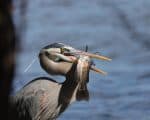
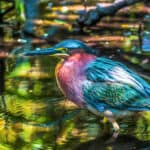
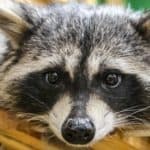
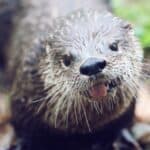
Predation that can reduce abundances of some insect and crayfish populations (trophic regulation) Energy and nutrient transfer between aquatic and terrestrial systems (aquatic larvae; semi-aquatic adults) Prey resource for higher predators (e.g., herons/egrets, water snakes, raccoons, otters) In invaded habitats, can restructure local communities via predation and competition, influencing biodiversity and food-web composition

Diet Details

Main Prey:
Aquatic and terrestrial insects Spiders and other arachnids Earthworms and other annelids Snails and slugs Crayfish Fish Tadpoles Frog Salamanders and other small amphibians Small snakes Nestling Small mammals +6
Other Foods:
Algae and periphyton Aquatic macrophyte material Detritus

Human Interaction

Domestication Status

Wild

The American bullfrog (Lithobates catesbeianus) is not domesticated. Native to eastern North America, people moved it widely—for food (frog legs), farms, pets, and labs—creating many introduced, often invasive populations. Bullfrogs eat native wildlife and can spread amphibian diseases like chytrid fungus (Bd) and ranaviruses.

Danger Level

Low
  • Bite/scratch risk: large adults can bite hard enough to break skin; secondary infection is possible if wounds aren't cleaned.
  • Zoonotic bacteria: as with many amphibians, handling and contaminated water can expose people to pathogens (notably Salmonella spp.); risk is highest for children, older adults, and immunocompromised people-handwashing and avoiding mouth/food contact are key.
  • Allergic/irritant reactions: some people develop skin/eye irritation from amphibian mucus or from tank water contaminants.
  • Indirect ecological risk to humans: where introduced, impacts to native biodiversity and amphibian disease dynamics can drive management actions/restrictions that affect recreation and wetland use.

As a Pet

Not Suitable as Pet

Legality: Laws vary by place. Because American bullfrogs (Lithobates catesbeianus) are invasive and can spread disease, many areas limit or ban keeping, moving, selling, or releasing them. Check local wildlife rules.

Care Level: Experienced

Purchase Cost: Up to $50
Lifetime Cost: $500 - $3,000

Economic Value

Uses:
Food (frog legs; wild harvest and some farming) Research/education (physiology, anatomy, developmental biology, ecotoxicology teaching specimens) Pet/display trade (limited; more common as display animals than 'handling' pets) Invasive-species management (control/eradication costs; biodiversity impacts) Fisheries/aquaculture interactions (predation/competition in ponds; sometimes used as bait in some places where legal)
Products:
  • frog legs/meat (human consumption)
  • live or preserved specimens for teaching/research (where legally sourced)
  • display animals for nature centers/zoos (permit-dependent)
  • ecosystem disservices where introduced: predation on native fauna and associated control program expenditures

Relationships

Related Species 8

Green Frog
Green Frog Lithobates clamitans Shared Genus
Pig Frog Lithobates grylio Shared Genus
Northern Leopard Frog
Northern Leopard Frog Lithobates pipiens Shared Genus
Southern Leopard Frog Lithobates sphenocephalus Shared Genus
Mink Frog Lithobates septentrionalis Shared Genus
Pickerel Frog Lithobates palustris Shared Genus
Common Frog
Common Frog Rana temporaria Shared Family
Marsh Frog
Marsh Frog Pelophylax ridibundus Shared Family

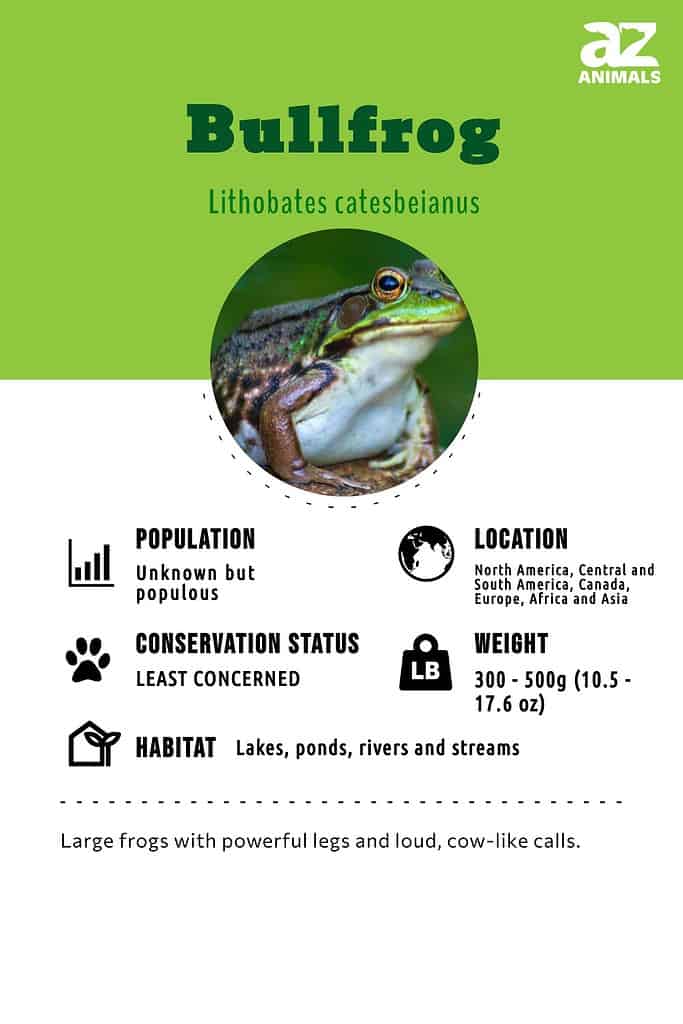
A Bullfrog is a semi-aquatic frog, primarily known for the loud call sounds it makes.

Found in both Canada and the US, they are the largest frogs that naturally exist in North America. Thanks to the human migration of these frogs, bullfrogs can now be found in South America.

The definition of a bullfrog has expanded through the last few decades, and the term is now used for the giant frogs found in India, Asia, Europe, and Africa.
5 Incredible Bullfrog Facts!

  • American Bullfrogs are found in swamps, lakes, and ponds, despite being an artificially introduced species.
  • In general, the average bullfrog will jump a stretch of about 3 feet. However, they can reach distances of up to 6 feet with little effort.
  • A group of bullfrogs is known as an Army.
  • Though bullfrogs inhabit most of the United States, they don’t ordinarily live in Minnesota, Florida, Nebraska, Colorado, and South Dakota.
  • Male Bullfrogs usually make loud sound calls to attract female bullfrogs and scare off their competition.
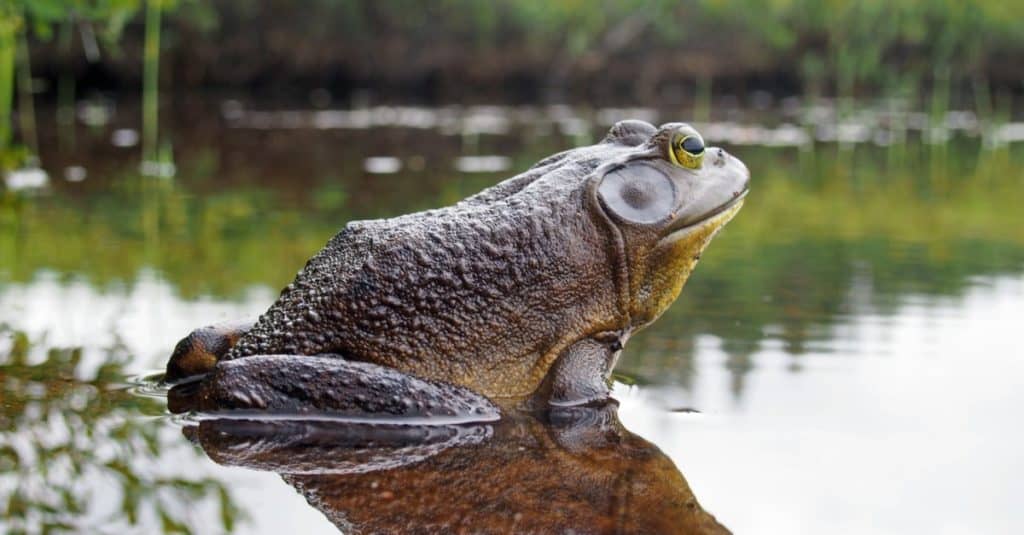
North american bull frog

The Bullfrog’s scientific name, Lithobates, means “one that treads on rocks”

Scientific Name

American Bullfrogs commonly go by the scientific name Lithobates catesbeianus. They belong to the kingdom Animalia and Phylum Chordata. Their order is Anura under the class Amphibia. The family is Ranidae, falling under the Lithobates genus.

The word “lithobates” comes from the Greek words “litho-“ (“stone”) and βάτης (“one that treads”), though their combined meaning essentially is “one that treads on rock” or “rock climber.” Catesbeianus, on the other hand, is a way to honor Mark Catesby. Catesby was a naturalist in the 1700s who is responsible for the first published record of the environment and animals in North America.

Evolution
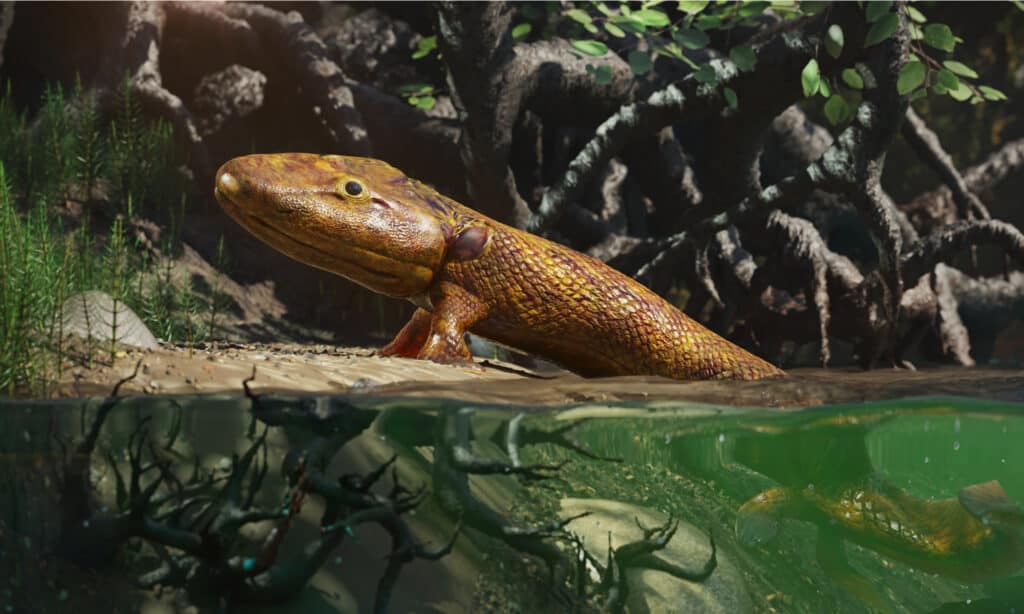
Tiktaalik, extinct walking fish.

Tiktaalik, extinct walking fish.

Some Lungfish evolved into frogs around 375 million years ago, during the Devonian period. It was much hotter and drier on Earth during that period – with most of the land consisting of one giant continent, called Gondwana. Some fish in the drying seas evolved to live on land in order to survive. Tiktaalik was one of the first fish with legs and spinal cords and an ancestor to the frog.

Species
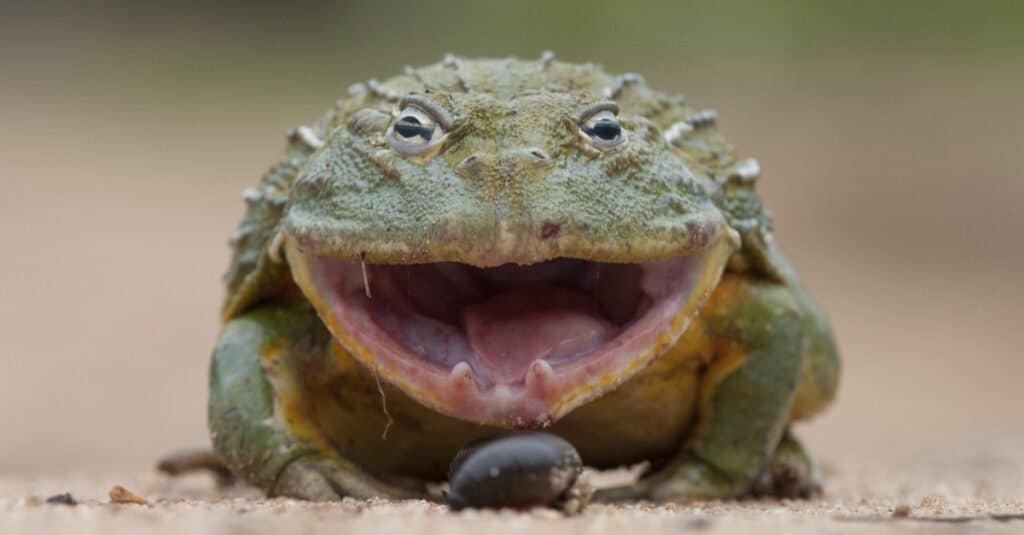
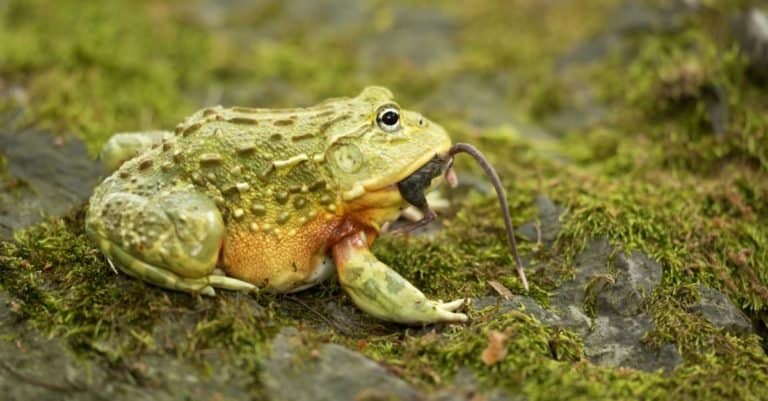
African Bullfrog Teeth - Bullfrog with open mouth

African bullfrogs are one of the biggest frogs in the world.

The definition of a bullfrog has expanded to include frogs from all over the world including:

  • Helmeted water toad (Calyptocephalella gayi), is found in Chile.
  • American bullfrog (Lithobates catesbeianus), indigenous to North America.
  • Cane toad (Rhinella marina), is a toad that is referred to as a bullfrog in Central and South America and the Philippines.
  • African bullfrog (Pyxicephalus adspersus), is found in central and southern Africa.
  • Calabresi’s bullfrog (Pyxicephalus obbianus), is found in Somalia.
  • Crowned bullfrog (Hoplobatrachus occipitalis), is found throughout Africa.
  • Edible bullfrog (Pyxicephalus edulis), is found throughout Africa.
  • Banded bullfrog (Kaloula pulchra), is found in Southeast Asia.
  • Chinese edible frog or East Asian bullfrog, (Hoplobatrachus rugulosus), is found in China and Southeast Asia.
  • Jerdon’s bullfrog (Hoplobatrachus crassus), is found in India.
  • Indus Valley bullfrog (Hoplobatrachus tigerinus), is found in Pakistan and North India.

Appearance
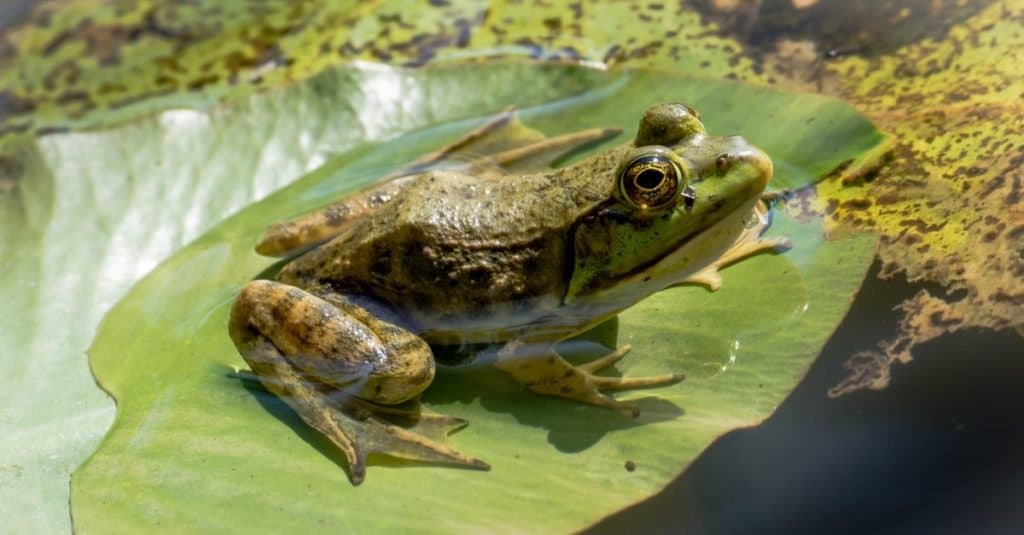
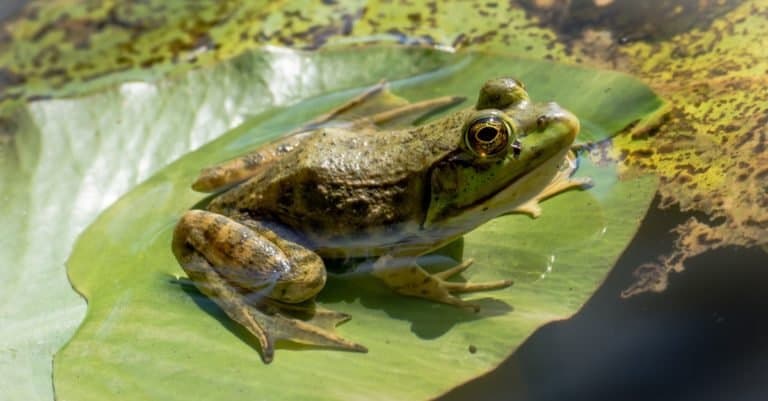
American Bullfrog on a lily pad

Bullfrogs, which go by the scientific name Lithobates catesbeianus, come in a variety of colors including green to olive brown. Often, they feature a white to yellowish belly, though their legs are usually darker. Their loud calls can sound like a bullhorn, which is how they get their name.

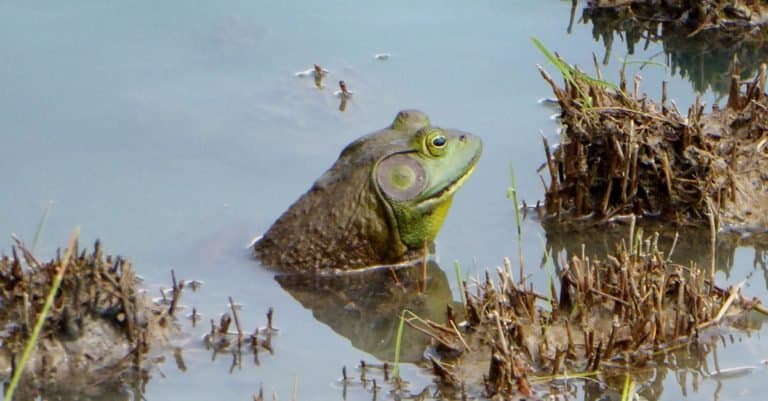
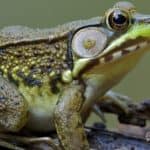
If you aren’t sure if you’re looking at a bullfrog, check the ears – their tympanum (circular eardrums) is found on either side of the head, though the size will vary from male to female. Generally, the eardrum of a female is about the same size as its eye, though the eardrum of a male is much larger than its eye.

That’s not the only difference between them – female bullfrogs are slightly larger than male bullfrogs overall, but their coloring is another indication of their gender. While females have white throats, males have yellow throats, paired with a much narrower head.

When they reach their adult size, most bullfrogs are about 8 inches long, weighing approximately one pound. However, certain species can be even bigger, including the African bullfrog at 9.5 inches long. As adults, they develop webbed feet on their hind legs, giving them a solid platform from which to jump.

Behavior
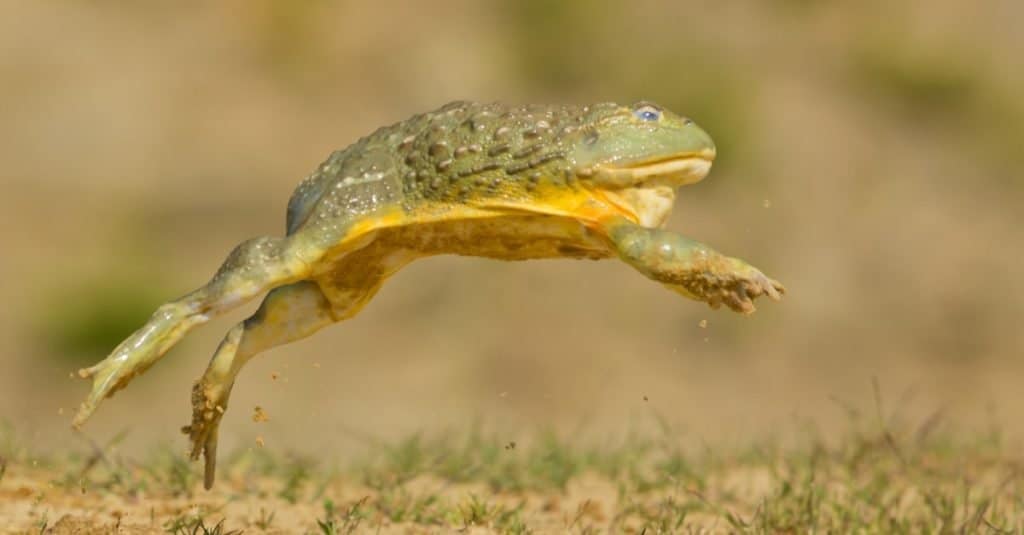
African bullfrog jumping

Bullfrogs use their powerful back legs to lunge toward prey.

Bullfrogs can eat just about anything that fits their mouths. To catch their prey, they just have to quietly wait for their potential prey to pass by. Due to their alertness, they are sometimes referred to as living creatures that never sleep. Once they spot their prey, they quickly lunge with their hind legs with all their power, capturing the prey in their wide-open mouths before snapping it shut.

Male bullfrogs are known to be very territorial and are often found guarding their land. They’ll even mark their territory with their scent to prevent other animals from taking it over. Bullfrogs are good swimmers and make powerful use of their hind legs.

Bullfrogs hibernate in winter by burying themselves in huge piles of mud. They are more active during the night when they can be spotted hopping in green areas, though they prefer wet environments with permanent water like lakes or swamps. During the day, they stay near the edge of the water.

While they can bite insects and other small prey, they do not have enough jaw strength to harm a human. They can still grab hold of any extremity near their mouth with their quick reactions but aren’t generally considered dangerous.

Habitat
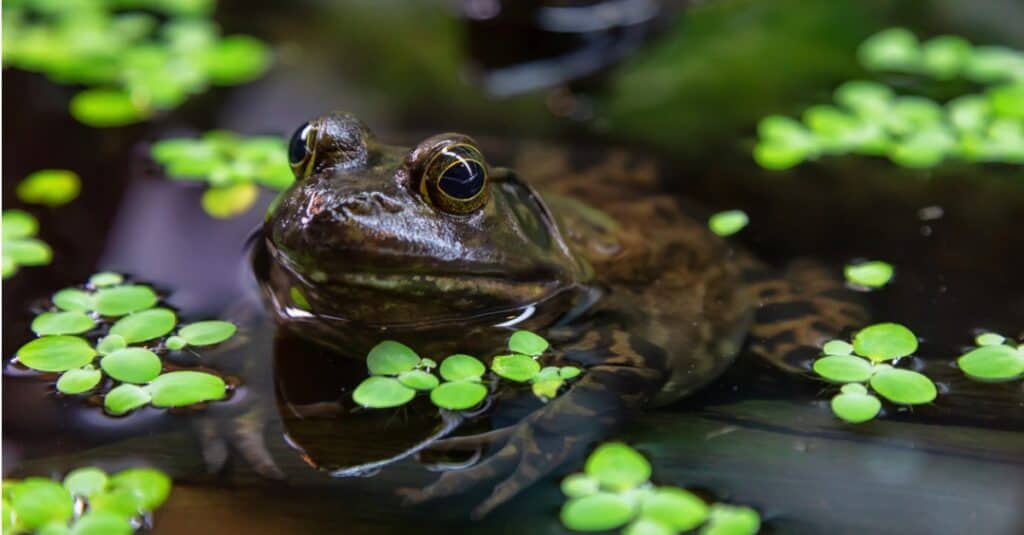
What Do Bullfrogs Eat?

Bullfrogs can be found at the borders of lakes, swamps, and ponds.

Naturally, bullfrogs are native to North America, but humans have moved them to other areas around the world as their habitat. They are also found in Central America, Canada, Mexico, and Nova Scotia.

In the 1920s, bullfrogs were introduced to the Pacific Northwest, providing them with new habitats. Though they were meant to be used as a food source for local wildlife, their reproduction eventually helped them expand their home.

These frogs are usually found in several lakes in Washington. They are found in several sloughs and reservoirs as well. Usually, bullfrogs are found comfortably situated at the borders of lakes, swamps, and ponds.

Diet
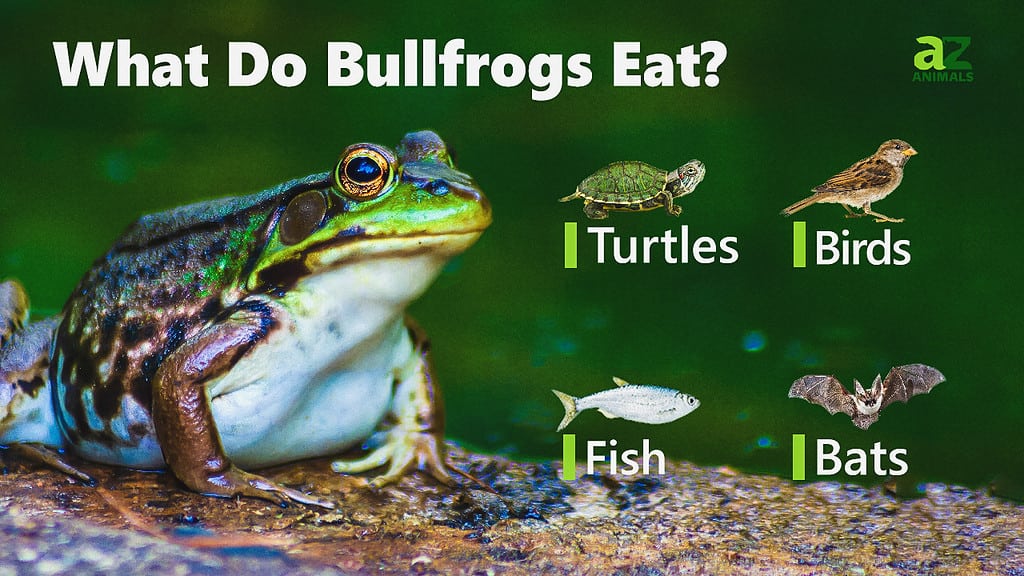
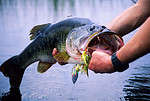
Bullfrogs feed on a variety of living creatures. Their diet is primarily made of crayfish, snails, water beetles, and small turtles. Sometimes, they will also feed on dragonfly larvae, fish, other frogs, and young water birds.
Some bullfrogs have teeth on the roof of their mouth. They have a powerful tongue that helps them catch their prey and slip it into their mouths.

Predators & Threats
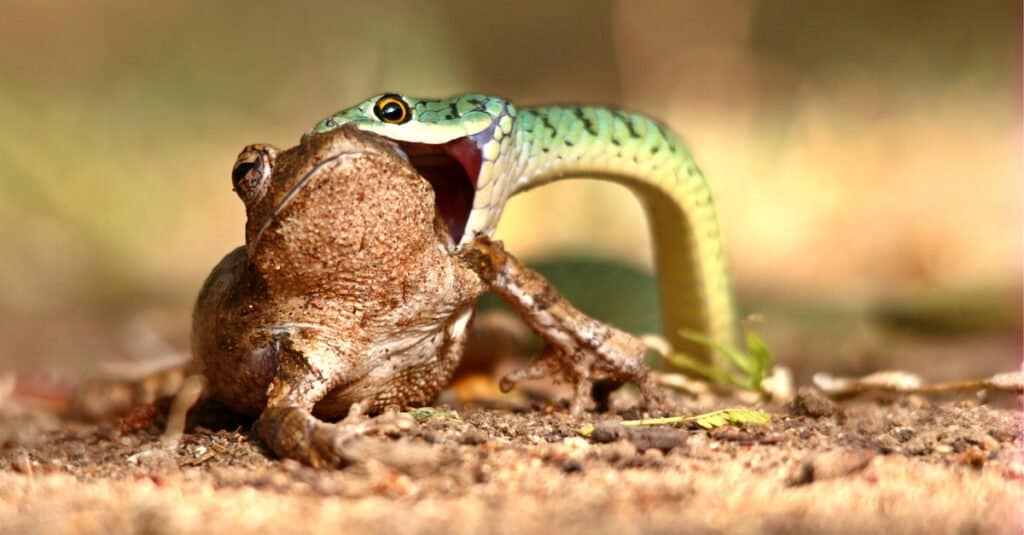
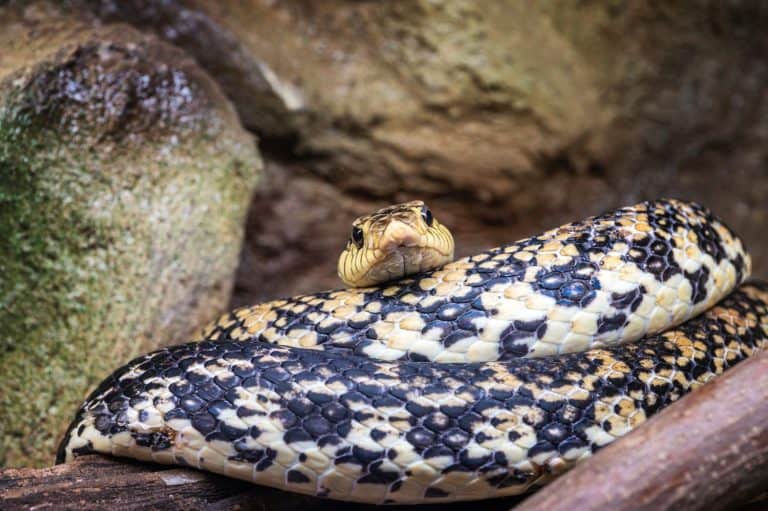
What do snakes eat - snake eating a frog

Large snakes prey on bullfrogs.

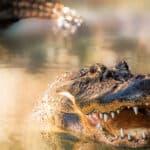
Being an important part of the up-and-running ecosystem, bullfrogs are a source of nutrients that are fed on by a host of animals. Their major predators include large snakes, snapping turtles, and alligators. While these predators usually feed on adult bullfrogs, the tadpoles of these bullfrogs are usually eaten by several fishes in the sea.

What Eats Bullfrogs?

Due to their size, bullfrogs are easy prey for large water snakes, alligators, and snapping turtles. Adult bullfrogs are often the prey of choice for these predators, but their tadpoles are at risk of being eaten as well.
Many fish will also digest the tadpoles as their source of nutrients.

Reproduction, Babies, and Lifespan

Bullfrogs are usually solitary animals and do not like being in groups. The only time that they are found in groups is during the breeding season when they need to find their mating partner and reproduce.

The breeding season in these frogs usually runs from May to July. During this time, males mark their territories in areas where they think eggs could be laid safely to eventually hatch. They even start guarding the area, eventually protecting the eggs when they are laid.
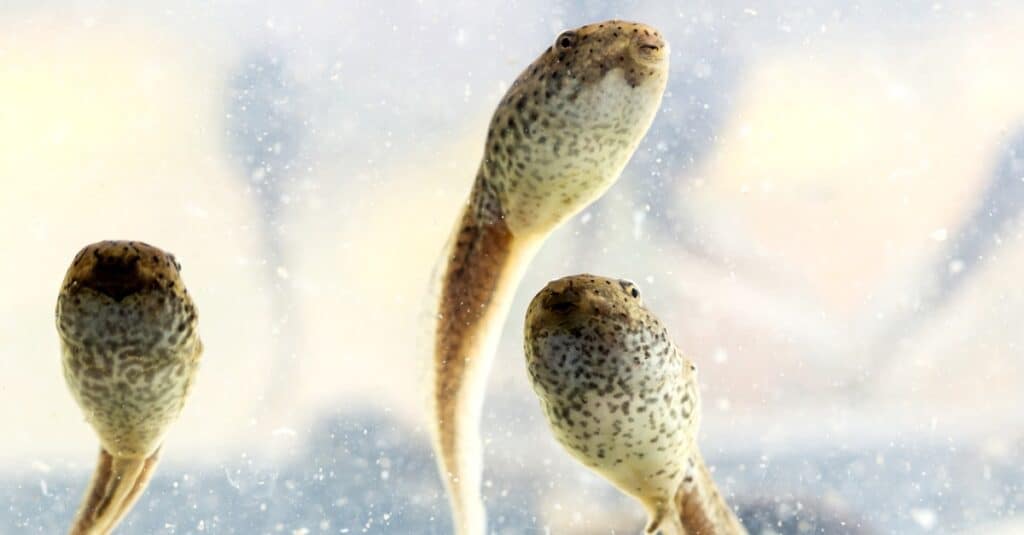
What Do Bullfrogs Eat?

Baby bullfrogs eat tiny insects and algae.

As a way to attract a partner, the male starts making loud calls that females can hear. The calls also serve as a way to warn other rival males that they are on the hunt for their partner, deterring them from competing for the same females.

After mating, females lay masses of eggs, releasing clusters of up to 20,000 eggs at a time. These eggs are usually laid on the surface of the water, but they don’t remain eggs for long. Within four to five days, they hatch.

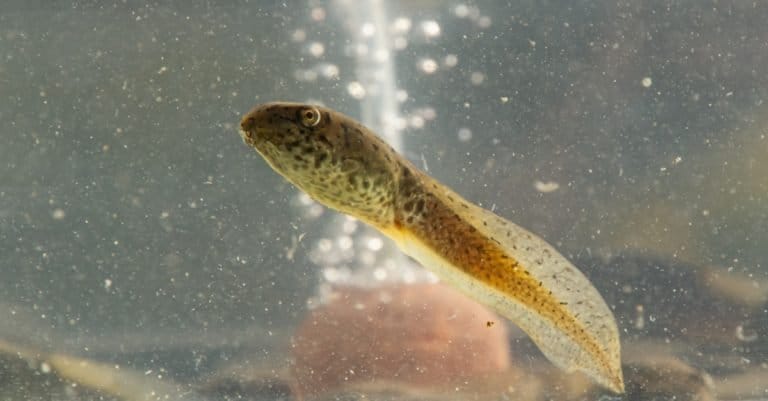
The babies of these frogs are called tadpoles, swimming around in the water as they mature. When they are first born, they are approximately four inches long. Since they are amphibians, they slowly grow legs that allow them to walk on land (which occurs at approximately 14 months old). However, they do not reach their adult size until they are 2 or 3 years old.
The usual lifespan of bullfrogs is about 8 to 10 years. While in captivity, some of these bullfrogs have lived to be over 16 years old.

Population

The population of these frogs is not exactly known. However, the number seems to be steady because their conservation status falls under the least concerned category.

Currently, there are no conservation efforts to preserve the population.
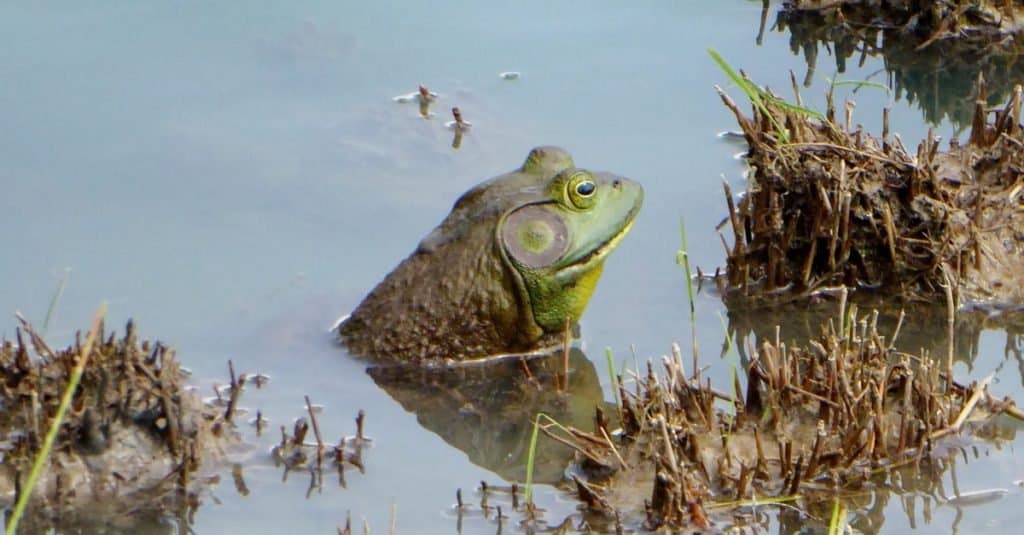
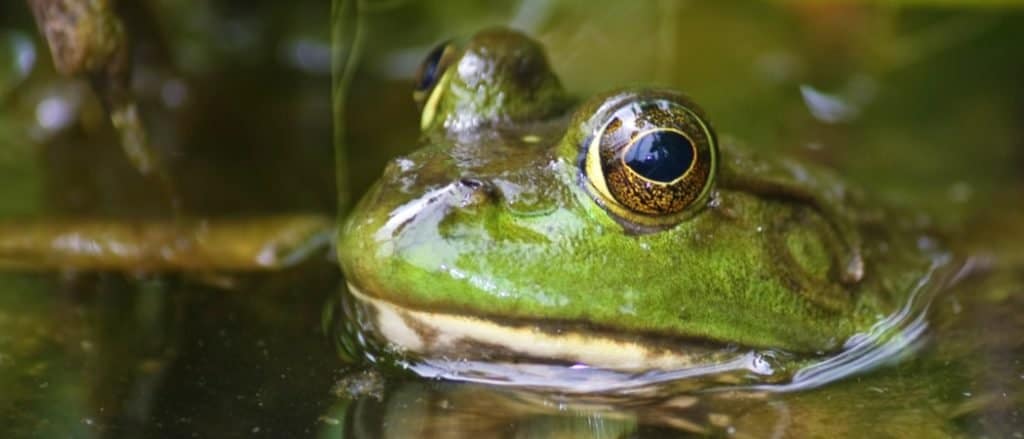
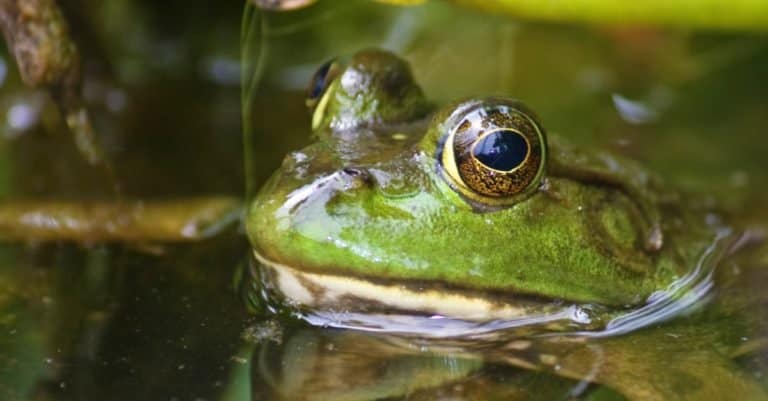
American Bullfrog in a pond

Bullfrogs are plentiful and enjoy a Least Concerned conservation status.

In the Zoo

Most zoos in the United States keep these frogs in their exhibits. While they are kept in captivity, zookeepers and even pet owners will provide them with a variety of insects. While their lifespan in the wild is usually only 8 to 10 years, being kept in captivity could help them survive for up to 16 years.
Realistically, they aren’t ideal pets for several reasons. They need certain specific conditions to survive in captivity and cannot be released into a random water body to rehome them.

The giant African bullfrogs are often kept in captivity and are known to eat the tadpoles that they guard. When provoked, African bullfrogs can also sometimes attack humans.

View all 453 animals that start with B
How to say Bullfrog in ...
Danish
Amerikansk oksefrø
German
Amerikanischer Ochsenfrosch
English
Bullfrog
Esperanto
Taŭra rano
Spanish
Rana catesbeiana
Finnish
Härkäsammakko
French
Ouaouaron
Hungarian
Ökörbéka
Italian
Lithobates catesbeianus
Japanese
ウシガエル
Dutch
Brulkikker
English
Amerikansk oksefrosk
Polish
Żaba rycząca
Portuguese
Rana catesbeiana
Swedish
Oxgroda
Chinese
美国牛蛙

Sources

  1. Britannica / Accessed February 6, 2021
  2. Nature Mapping / Accessed February 6, 2021
  3. National Geographic / Accessed February 6, 2021
  4. National Aquarium / Accessed February 6, 2021
  5. Wikipedia / Accessed February 6, 2021
Lisha Pace

About the Author

Lisha Pace

After a career of working to provide opportunities for local communities to experience and create art, I am enjoying having time to write about two of my favorite things - nature and animals. Half of my life is spent outdoors, usually with my husband and sweet little fourteen year old dog. We love to take walks by the lake and take photos of the animals we meet including: otters, ospreys, Canadian geese, ducks and nesting bald eagles. I also enjoy reading, discovering books to add to my library, collecting and playing vinyl, and listening to my son's music.

Thank you for reading! Have some feedback for us?


Bullfrog FAQs (Frequently Asked Questions)

Bullfrogs are carnivorous and usually feed on crayfish, snails, water beetles, and small turtles. They also feed on dragonfly larvae, fish, other frogs, and young water birds. They also often eat the eggs of other bullfrogs if need be.