






C
Species Profile

Caracal

Caracal caracal

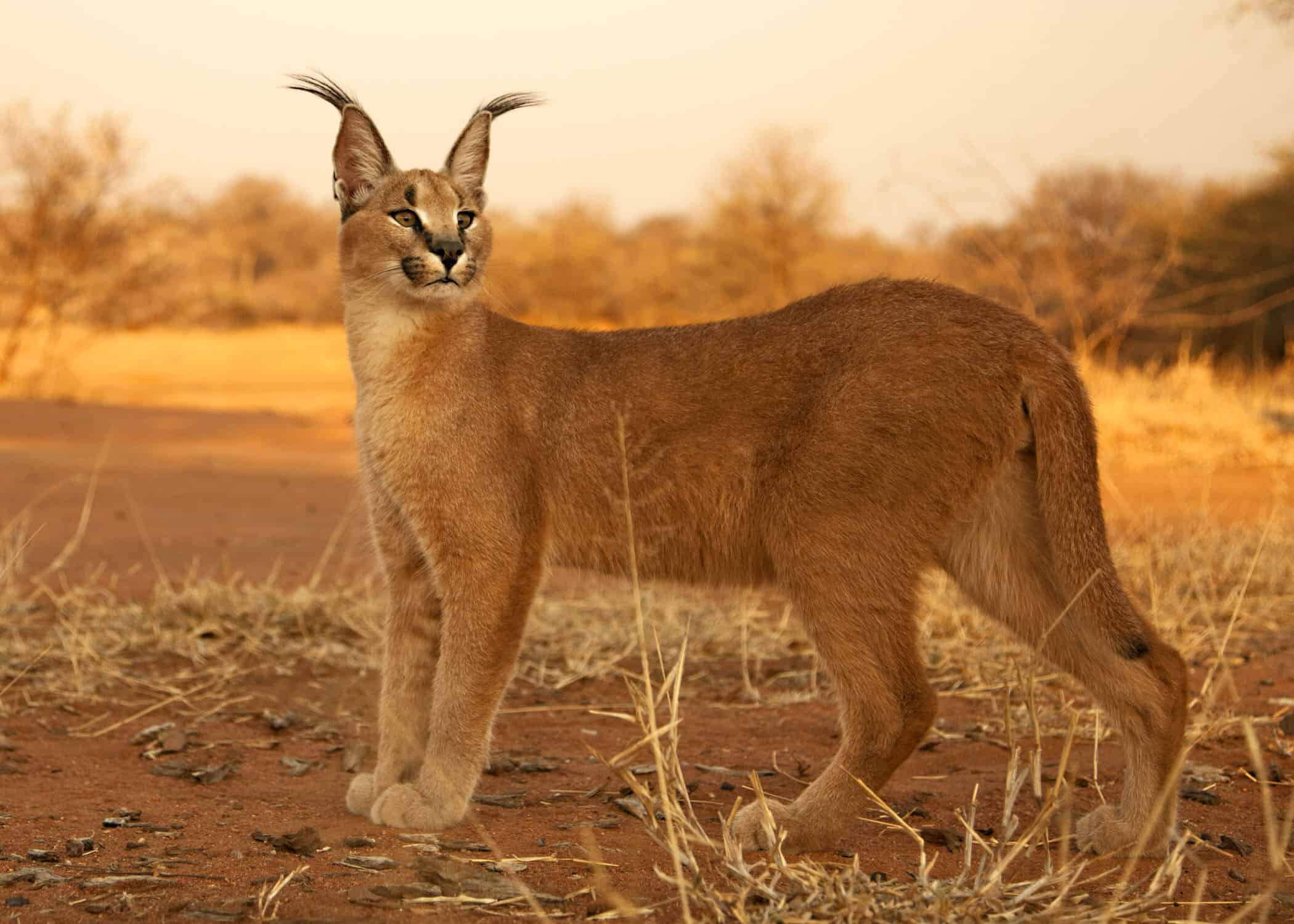
Black ears. Big leap. Silent hunter.
iStock.com/MarieHolding

Caracal Distribution

Click a location to explore more animals from that region

Loading map...

Size Comparison

Human 5'8"
Caracal 1 ft 6 in

Caracal stands at 26% of average human height.

At a Glance

Wild Species
Also Known As Desert lynx, African lynx, Persian lynx, Karakal
Diet Carnivore
Activity Nocturnal+
Lifespan 10 years
Weight 19 lbs
Status Least Concern
Did You Know?

Ear tufts can reach ~4-5 cm long and are used in signaling and camouflage (species descriptions in field guides).

Scientific Classification

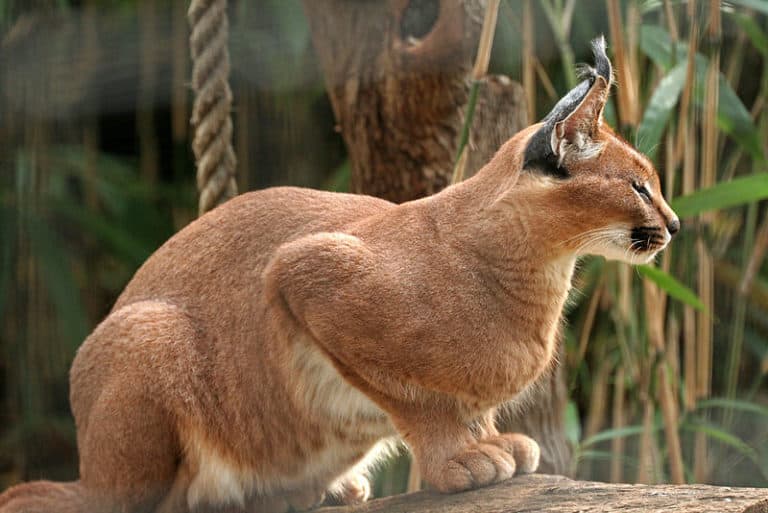
The caracal is a medium-sized wild cat native to Africa, the Middle East, and parts of Central/Southwest Asia, known for its powerful build, reddish-tan coat, and long black ear tufts.

Kingdom
Animalia
Phylum
Chordata
Class
Mammalia
Order
Carnivora
Family
Felidae
Genus
Caracal
Species
caracal

Distinguishing Features

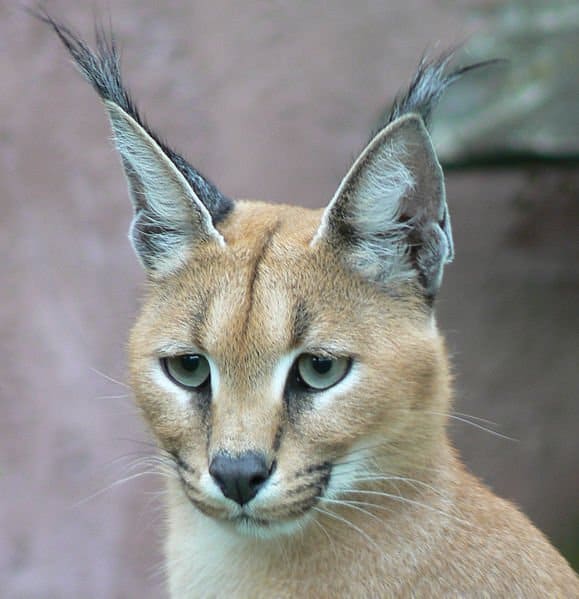
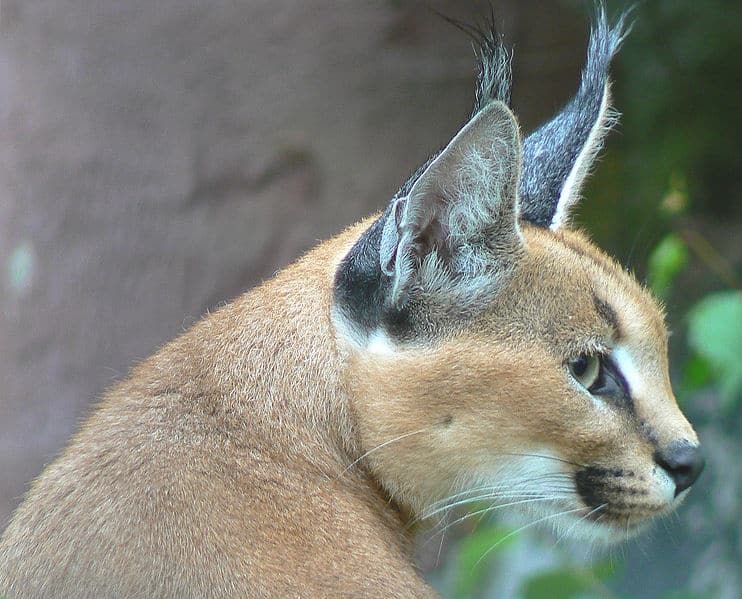
  • Long, black ear tufts and black-backed ears
  • Reddish-tan to sandy coat with paler underside; minimal spotting in most adults
  • Powerful hindquarters; notable leaping ability for catching birds
  • Dark facial markings around the eyes and muzzle; relatively short tail for a cat its size

Physical Measurements

Males and females differ in size

Height
1 ft 6 in (1 ft 4 in – 1 ft 8 in)
Length
3 ft 7 in (2 ft 11 in – 4 ft 1 in)
3 ft 3 in (2 ft 8 in – 3 ft 11 in)
Weight
31 lbs (18 lbs – 44 lbs)
23 lbs (14 lbs – 35 lbs)
Tail Length
11 in (9 in – 1 ft 1 in)
Top Speed
50 mph
Caracal caracal reported ~80 km/h

Appearance

Primary Colors
Secondary Colors
Skin Type Mammalian fur: short, dense coat over skin; texture typically sleek rather than shaggy, suited to hot, dry environments.
Distinctive Features
  • Long, conspicuous black ear tufts (often ~4-5 cm) on tall, pointed ears; ear backs largely black, a key field mark emphasized in species accounts (e.g., IUCN Red List; Sunquist & Sunquist).
  • Crisp facial markings: dark lines from the inner eye area toward the nose (tear lines) and dark edging around eyes/muzzle, contrasting with pale facial areas.
  • Medium-sized, powerfully built felid with relatively long hind limbs and strong hindquarters for pouncing and vertical leaps during hunting; widely reported to take birds with high jumps of roughly 2-3 m.
  • Typical adult measurements reported across the species: head-body length ~61-106 cm; tail length ~23-34 cm; shoulder height ~40-50 cm (values commonly summarized in major felid references and IUCN/field guides; ranges vary by region/sex).
  • Body mass commonly reported: females ~6-16 kg; males ~8-20 kg, reflecting consistent male-larger sexual size dimorphism.
  • Ecology/behavior tied to appearance: generally solitary and often crepuscular/nocturnal; coat color and low body patterning provide camouflage in savanna, scrub, and semi-desert habitats across Africa to Southwest/Central Asia (IUCN range summaries).
  • Longevity reported: ~10-12 years in the wild; up to ~17 years (sometimes higher) in captivity, consistent with large felid husbandry records and species accounts (values vary by source).

Sexual Dimorphism

Primarily size-based sexual dimorphism: males average larger/heavier than females; coat pattern and coloration are broadly similar between sexes.

  • Larger average body mass and more robust build; commonly cited male weight range ~8-20 kg.
  • Proportionally broader head/neck and heavier musculature (especially shoulders/hindquarters) in many populations.
  • Smaller, lighter build; commonly cited female weight range ~6-16 kg.
  • Overall coloration and facial markings typically comparable to males, with differences mainly in size rather than pattern.

Did You Know?

Ear tufts can reach ~4-5 cm long and are used in signaling and camouflage (species descriptions in field guides).

Head-body length: 61-106 cm; tail: 23-34 cm; shoulder height: ~40-50 cm (commonly reported in mammal references).

Adults typically weigh 7-19 kg; males average larger than females (IUCN/standard felid references).

Can leap about 3 m vertically to intercept birds in flight-one reason it's nicknamed the "desert lynx" (widely documented in behavioral accounts).

Gestation lasts ~68-81 days; litters are 1-6 kittens (often 2-3) (IUCN and reproductive biology summaries).

Lifespan is commonly ~10-12 years in the wild and can reach ~16-19 years in captivity (zoo longevity records).

Despite the "lynx" nickname, it is not a lynx; it belongs to genus Caracal, which also includes the African golden cat (Caracal aurata).

Unique Adaptations

  • Elongated, muscular hind limbs and flexible spine for exceptional vertical jumping and quick directional changes-key for bird-catching and short ambush chases.
  • Highly sensitive hearing aided by large ears; black ear backs and long tufts may enhance visual signaling between individuals in tall grass/shrub.
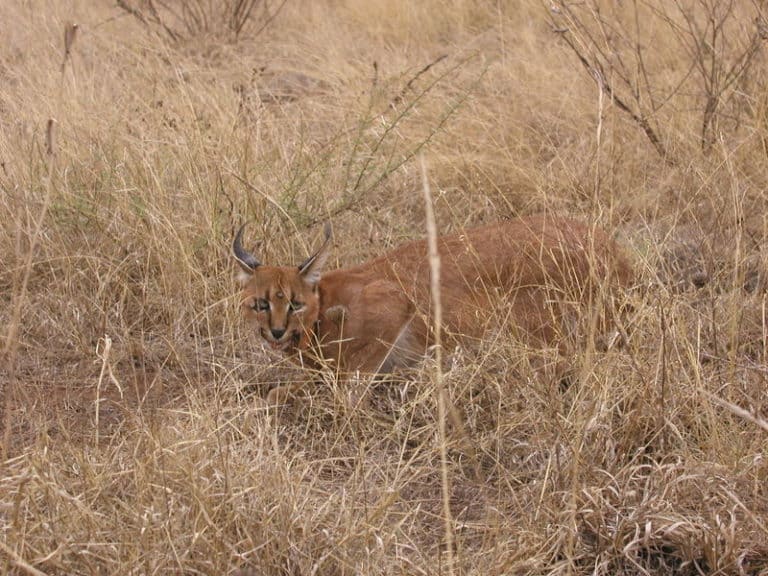
  • Cryptic reddish-tan coat blends with savanna, scrub, and semi-desert substrates; pale underparts reduce contrast in harsh light.
  • Distinct facial markings (dark lines from eye toward nose and bold cheek markings) may help reduce glare and/or support intraspecific recognition.
  • Water-stress tolerance: in arid zones, can meet much of its water needs from prey, allowing persistence far from permanent water (typical of many desert-adapted felids).
  • Powerful bite and forelimb grip for subduing prey quickly; retractile claws improve traction during the final pounce.

Interesting Behaviors

  • Solitary and strongly territorial: adults maintain home ranges and use scent-marking (urine spray, feces, scratching) along travel routes and boundaries.
  • Crepuscular/nocturnal flexibility: often most active at dawn/dusk in hot, open habitats, but may shift activity with prey, season, and human disturbance.
  • "Sit-and-wait" plus burst hunting: stalks close, then accelerates in short, explosive sprints; relies on cover even in semi-arid landscapes.
  • Bird-focused hunting tactic: crouches near flush points and launches upward to swat or seize birds; known to take multiple birds rapidly when a flock erupts.
  • Prey breadth: takes rodents, hares, hyraxes, ground birds, reptiles, and small antelope (e.g., dik-dik/steenbok-sized prey) depending on region and availability.
  • Caching behavior: may drag and hide larger kills in cover (or in trees/shrubs) to return later, reducing scavenger losses in open country.
  • Communication: uses mews, growls, hisses, and purrs; kittens have repeated contact calls to maintain proximity in dense cover.

Cultural Significance

The caracal (Caracal caracal) gets its name from a Turkish word meaning "black ear." In South Asia and Iran it was trained to leap at pigeons and gamebirds in sport hunts. In Africa and the Middle East it is a symbol in lore and conservation for savanna and semi-arid lands.

Myths & Legends

Name-origin tradition: The name is often explained as coming from a Turkish term meaning "black ear"; similar "black ear" explanations are also told in parts of Iran and South Asia.

Royal-hunt lore (India/Iran): historical court anecdotes describe trained caracals released into flocks of pigeons or gamebirds, with wagers placed on how many birds a single cat could knock down in one leap-driven rush.

Called the 'desert lynx' in North African and Middle Eastern travelers' tales, the caracal (Caracal caracal) is a lynx-like ghost with black ears that appears and disappears near camps and caravan routes.

Conservation Status

LC Least Concern

Widespread and abundant in the wild.

Population Decreasing

Protected Under

  • CITES Appendix II (international trade regulated).
  • National legal protection varies by range state; for example, the species is legally protected in some countries/regions and occurs in numerous protected areas, while in others it may be classed as a problem animal and subject to control measures (see country regulations referenced in the IUCN Red List account).
  • HUBS (Felidae) conservation landscape: Felids span the full IUCN spectrum from LC (e.g., many small-medium cats) to CR/EN (e.g., tiger Panthera tigris EN, Amur leopard Panthera pardus orientalis CR). Common cross-cutting threats include habitat loss/fragmentation, depletion of prey, human-wildlife conflict/persecution, wildlife trade, and infrastructure expansion. Notable at-risk small felids include Iberian lynx (Lynx pardinus; improved from historically CR/EN, currently VU) and several Asian wildcats with declining, fragmented populations; many others remain DD/NT due to limited population data in remote regions.

Life Cycle

Birth 2 kittens
Lifespan 10 years

Lifespan

In the Wild
7–12 years
In Captivity
12–19 years

Reproduction

Mating System Polygyny
Social Structure Solitary
Breeding Pattern Transient
Fertilization Internal Fertilization
Birth Type Internal_fertilization

Behavior & Ecology

Social Solitary Group: 1
Activity Nocturnal, Crepuscular, Cathemeral
Diet Carnivore Small mammals-particularly rodents and hares (most frequently recorded prey base across multiple regional diet studies).

Temperament

Elusive
Territorial
Generally avoids conspecific contact outside breeding and maternal care
Bold/defensive when cornered or protecting young
Highly opportunistic predator with flexible prey choice (from small rodents to medium-sized ungulates depending on region)
Range-wide variation: more diurnal/cathemeral activity has been reported where nocturnal disturbance is high or where prey/human activity patterns favor daytime hunting; more strictly nocturnal behavior is common in many arid and heavily persecuted landscapes

Communication

miaow/mew Contact
purr Affiliative/maternal context
hiss/spit Threat
growl/snarl Aggression/defense
chatter/chirp Excitement/frustration; reported in some observations
scent marking: urine spraying and urine marking on vegetation/rocks Territorial and reproductive signaling
fecal marking at latrines or conspicuous sites Reported in several felids including caracal; used for olfactory communication
scraping/raking with hind feet and claw marks on substrates Visual + scent cues from glands
facial rubbing and glandular scent deposition Cheek/chin rubbing
visual signals: ear position (notably long ear tufts), tail and body postures during threat/avoidance
maternal communication: grooming, nose-touching, and close-contact behaviors with kittens

Habitat

Biomes:
Savanna Tropical Dry Forest Desert Hot Desert Cold Mediterranean Temperate Grassland Temperate Forest Alpine +2
Terrain:
Plains Plateau Hilly Mountainous Valley Riverine Rocky Sandy +2
Elevation: Up to 9842 ft 6 in

Ecological Role

Widespread mesopredator (and apex predator in some smaller/arid systems) that links small-mammal, bird, and small-ungulate prey populations to higher trophic dynamics.

Population regulation of rodents and lagomorphs (reducing herbivory pressure and crop/pasture damage in some landscapes) Top-down control on ground-nesting/terrestrial birds and small antelope juveniles, shaping prey behavior and local community structure Carrion provisioning through partially consumed kills that can be utilized by scavengers and decomposers

Diet Details

Main Prey:

Human Interaction

Domestication Status

Wild

Caracal (Caracal caracal) is not domesticated. People long ago in Africa, Persia/India, and the Middle East sometimes tamed and trained caracals to hunt birds and small game, but this did not create a true domestic line. Today they are mainly in zoos, wildlife rehab, research, and rare captive-bred private ownership.

Danger Level

Moderate
  • Injury from bites and deep scratches (powerful forelimbs, long canines; higher risk in captivity/handling situations)
  • Risk to small pets and backyard poultry (predation) leading to conflict during encounters
  • Zoonotic/parasite risks typical of wild carnivores (e.g., rabies exposure risk in endemic areas; ectoparasites; gastrointestinal parasites) without proper veterinary protocols
  • Escape risk from inadequate enclosures (public safety and animal welfare hazard)
  • Retaliatory killing/conflict escalation when caracals take poultry/small stock

As a Pet

Not Suitable as Pet

Legality: Caracal laws vary by place. Many areas ban or treat them as exotic or dangerous pets: allowed only in licensed zoos or sanctuaries, or with permits, cages, and insurance. Check national, state, and local laws.

Care Level: Expert Only

Purchase Cost: $7,000 - $20,000
Lifetime Cost: $30,000 - $100,000

Economic Value

Uses:
Ecotourism and wildlife viewing (native-range reserves) Zoo/exhibit and conservation-education value Research value (ecology, carnivore conflict mitigation) Human-wildlife conflict costs (poultry/small livestock depredation; predator control expenditures) Illegal/regulated wildlife trade (live animals for private ownership; occasional pelts)
Products:
  • non-consumptive tourism experiences (safaris, guided viewing)
  • exhibit/education services (zoos, sanctuaries)
  • conflict-mitigation services and programs (guarding, improved enclosures, compensation schemes)
  • regulated captive-breeding outputs in some jurisdictions (live animals for accredited facilities; not a domesticated product)

Relationships

Ecological Equivalents 5

Animals that fill a similar ecological role in their ecosystem

“A small cat that can run up to 50 miles per hour”

Caracals can be found in many places including Africa, the Middle East and India. The serval and the African golden cat are its closest family members. A caracal’s black, tufted ears give it a look different from most cats in the wild. A caracal’s speed and ability to leap into the air make it an excellent hunter.


Amazing Caracal Facts!

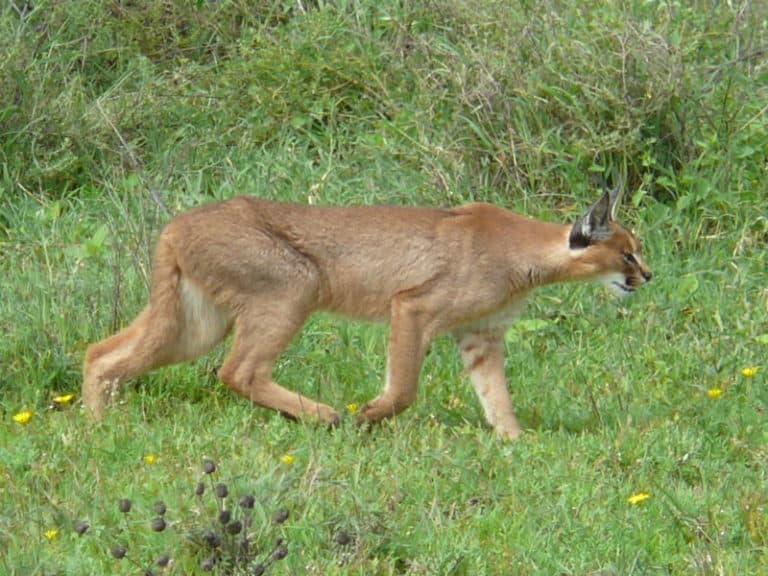
• A cat with speed: A caracal can run at speeds of up to 50mph! No wonder it’s also known as a gazelle cat.

• A skillful hunter: A caracal can leap into the air to catch a bird as it’s taking off.

• Extremely sensitive hearing: A caracal has 20 muscles in each of its ears helping it to track down prey.
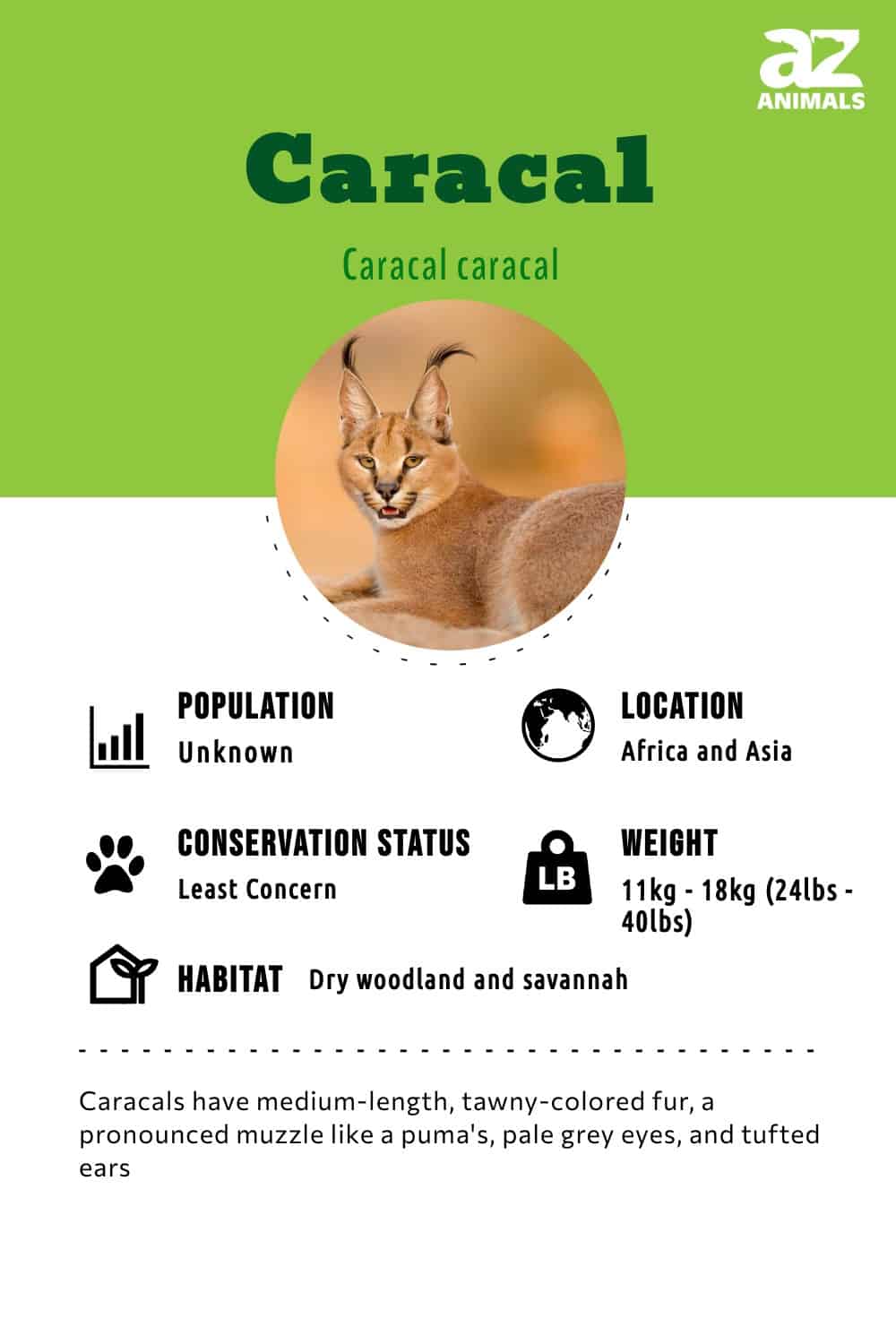
Scientific Name
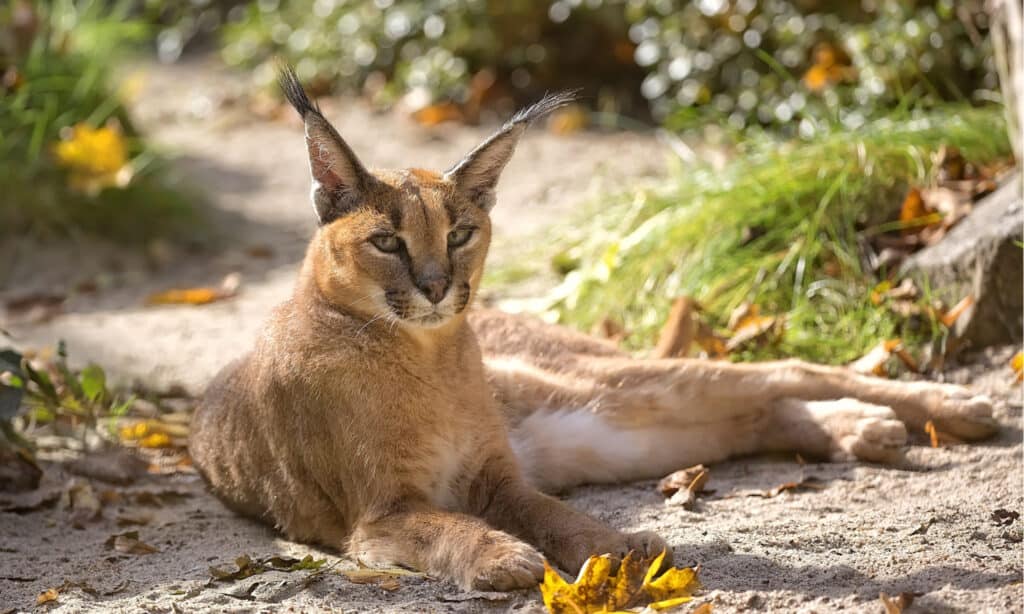
Caracal

The word caracal comes from the Turkish word for ‘black ear’

Caracal is the common name of this cat while Felis caracal is its scientific name. This cat belongs to the Felidae family and is a member of the Mammalia class. The name caracal comes from a Turkish word, karakulak. Karakulak means black ear.

Evolution

Between 7 – 12 million years ago, the evolutionary branch known as the caracal lineage broke away. By about 6 – 9 million years ago, the ancestor of the wild feline had made its way to Africa. Between about 1 – 3 million years ago, the species Caracal caracal and Caracal aurata, or the caracal and the African golden cat had diverged into separate evolutionary pathways.

Appearance & Behavior
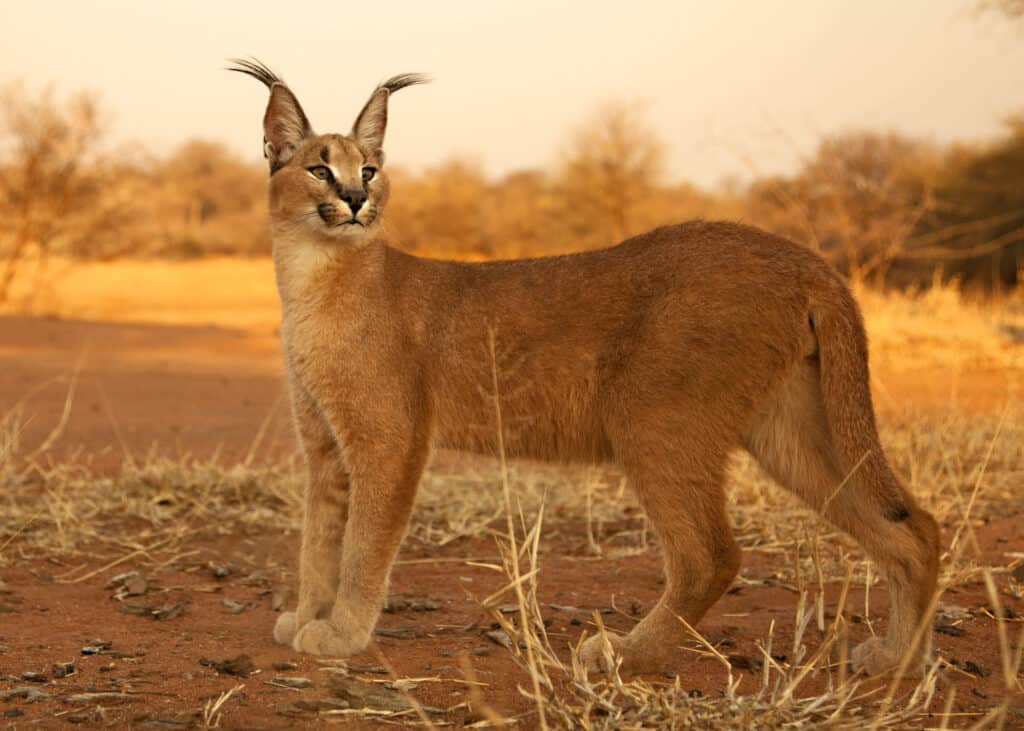
Caracals are about as tall as a border collie and as heavy as two bowling balls

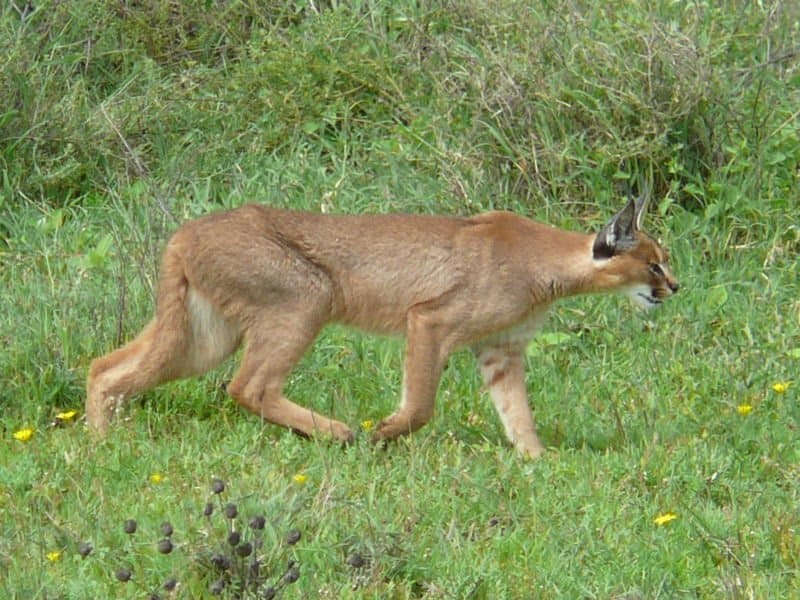
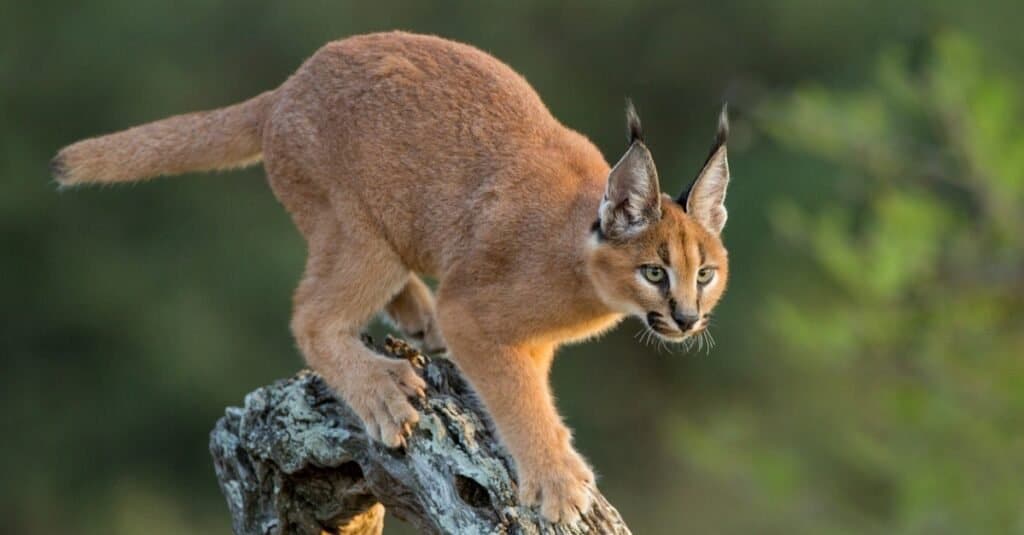
A caracal has a sleek coat of reddish gold short hair and a line of white fur around each of its eyes. This cat’s ears stand straight up and are topped off by long black tufts of hair. No one is sure why caracal ears have tufts of hair on them. But, some scientists believe that caracals communicate with one another by twitching their ears.

A caracal’s tail is about 8 to 13 inches long. In other words, the average caracal’s tail is about as long as the ruler you use in school. A caracal’s tail helps it to turn and stay on course when chasing a bird, rabbit or other prey. Think of a caracal’s tail like a rudder on a boat.

An adult caracal can weigh from 20 to 40 pounds. To give you a better idea, a 30-pound caracal weighs as much as two bowling balls! A caracal is about 24 to 42 inches long and 18 inches tall from its shoulder. That makes it about as tall as a Border Collie.

Caracals are closely related to servals. They are about the same size but live in different types of places. Servals like to hunt in humid, wet areas while caracals stay in dry, desert environments.

A caracal has long, strong legs. When hunting, its legs work like coiled springs as it leaps into the air to grab a bird as it flies away.

Caracals have sharp claws that help them to grab onto trees and climb up into the branches. They also use their claws to hunt and capture prey. Caracals mark their territory by clawing trees and releasing scent from between their toes.

Unlike lions that live in prides, caracals live alone most of the time. They are aggressive cats and are quick to defend their territory from other animals.

Habitat
Caracal Hunting
Caracals get most of the fluid they need from their prey

Most caracals live in sub-Saharan Africa as well as in parts of the Middle East. They make their home in dry environments such as savannas, woodlands, and even in areas with mountains.

There is not much water to be found in savannas. However, caracals don’t need much water to survive. These wild cats have adapted to the lack of water by getting the fluid they need from their prey. Also, caracals have adapted to the hot climate of their environment by sleeping during the day to conserve energy and hunting at night when it’s cooler. They sleep in burrows, rock crevices, dense bush, or even on a branch in a tree. These cats have stiff hairs on the pads of their feet along with other types of hair allowing them to walk comfortably on the sandy ground of a savanna. Sometimes these cats can cover as many as 12 miles as they search their territory for prey.

Because caracals live alone and make very little sound when they move, they remain hidden most of the time. They blend in with their environment making it easy to grab prey as well as spot possible threats.

Diet

Caracals have been known to hunt impala

What does a caracal eat? Like other cats in the wild, a caracal is a carnivore. Its speed allows it to catch and eat many types of animals including rabbits, birds, snakes, lizards and, sometimes, insects. Sometimes a caracal will go onto a farmer’s land to catch sheep, goats or other livestock to eat. Caracals eat whatever they can catch. A caracal can eat a dove one night and a young impala the next. An impala is a type of antelope. A young impala weighs around 80 pounds which equals the weight of about 13 bricks!

Caracals avoid eating the stiff, wiry hair on the animals they catch. They use their claws to remove this hair before eating their meal. They can eat feathers with no problem and can even eat rotten meat if they’re really hungry!

Predators & Threats
Africa, Animal, Animal Wildlife, Animals Hunting, Animals In The Wild

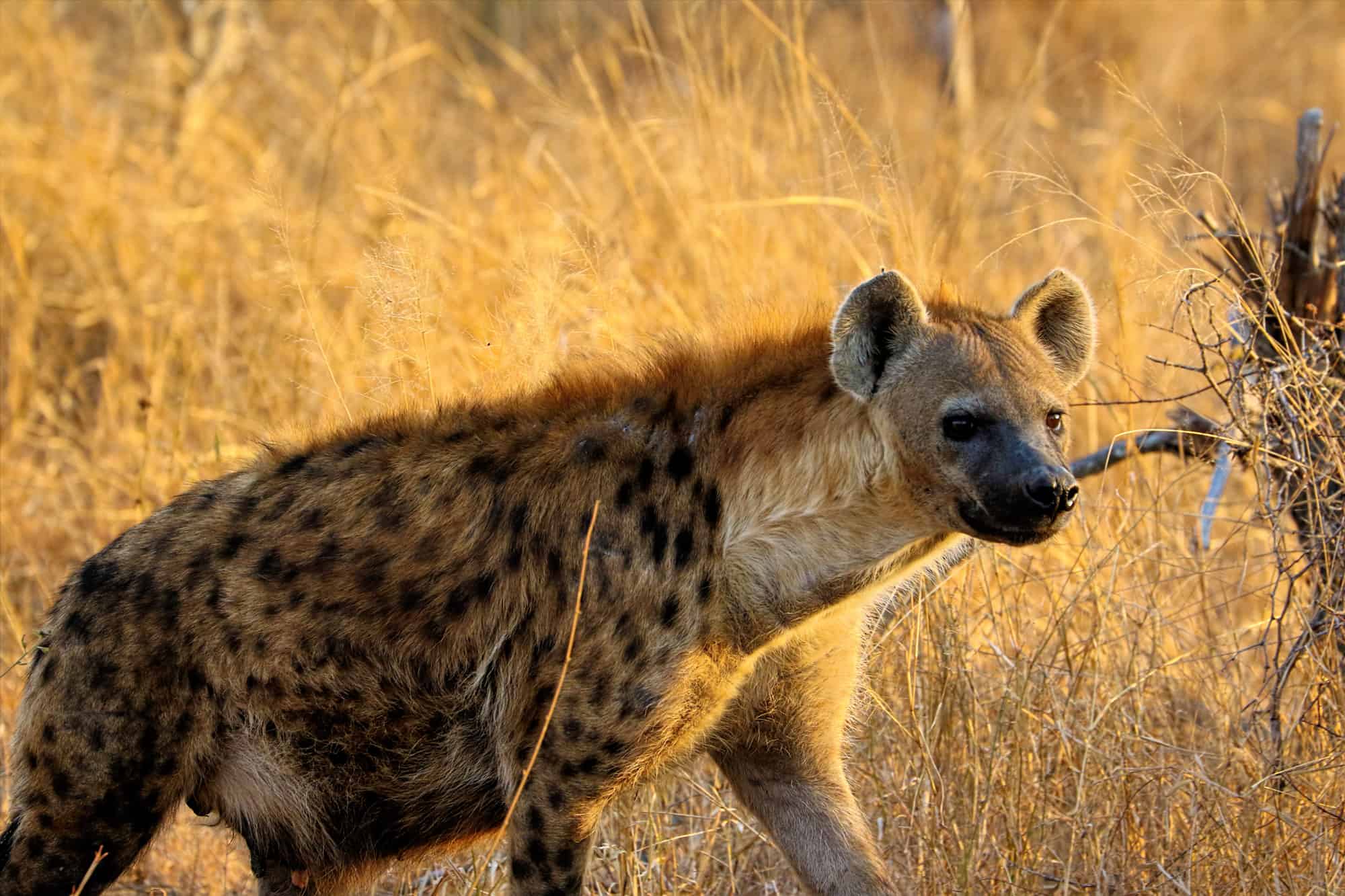
Hyenas occasionally hunt caracals

Lions and hyenas are the two main predators of caracals. These three animals all hunt on the savanna, so they are likely to cross paths at some point. A caracal’s speed is its most valuable defense against these animals. Also, it’s coat can help it to blend in with the colorless vegetation and sand in its environment. Sometimes it will lay on the ground to avoid being seen by predators.

Humans are also a threat to caracals. Many farmers kill caracals when these cats try to steal livestock. Plus, more people are clearing land and moving into their territory forcing out the prey of caracals. This puts these cats at risk for starving. They are also hunted for their skins by individuals who are looking for trophies.

The conservation status of the caracal in South Africa is recorded as: Least Concern. This means the population is not considered to be under threat at this time.

Reproduction, Babies, and Lifespan

Caracals are mostly solitary but seek ot members of the opposite sex when they intend to mate

Reproduction

Caracals keep to themselves until it’s time to mate. One of the most unique caracal sounds is a mating call that sounds sort of like a cough. Several male caracals may fight or compete for the attention of one female caracal. Eventually, the female chooses a male out of the group. After mating, the male leaves the female caracal so she can raise the babies on her own.

Babies

A caracal carries her babies, called kits, for about 69 to 81 days. She finds an old den or burrow where she can give birth away from predators and other threats. Caracals can have from 1 to 6 kits in a litter, but most have just 2. Each kit weighs about 7 to 9 ounces at birth. A caracal kit is about the size of a pet hamster. The serval and the golden cat (close relatives of the caracal) have kits of about the same size.

Kits are born with their eyes closed. This is true with domesticated kittens as well. It takes about 6 to 10 days for a kit’s eyes to completely open. They are able to squirm around but can’t see where they’re going. The kits stop nursing and start to eat meat at 10 weeks old. Kits learn hunting skills from their mother and stay with her until they are about 10 months old. A female caracal only gives birth to one litter per year because it takes most of a year to raise one litter of kits.

Lifespan

The average lifespan for both male and female caracals is 12 years old in the wild. However, caracals kept in the zoo can live up to 17 years. Caracals live longer in a zoo environment because they are not threatened by predators, receive food on a regular basis and get medical care when they need it.

As a caracal ages in the wild, it can become ill from untreated skin infections and infections due to injuries. Also, like domestic cats, a caracal can get rabies from another animal and die. If a caracal happens to wander near a road, it’s at risk for getting hit by a vehicle just as a domesticated cat is at risk if it wanders away from home.

Population
Types of wild cats - Caracal

Caracal populations are on the rise in South Africa, although they are threatened in North Africa

The exact population of caracals in the world is not known. But, there is some data on these small cats:

• Caracal populations are growing in South Africa and Namibia where there is plenty of prey available for them.

• It’s believed that the highest number of caracals live in the mountains of the Eastern Cape in South Africa.

• In North Africa, the caracal population seems to be decreasing possibly due to hunters. The conservation status of caracals in North Africa is: Threatened.

• The caracal population in Asia is decreasing likely due to farmers killing them when they try to hunt their livestock.

View all 392 animals that start with C
How to say Caracal in ...
Bulgarian
Каракал
Catalan
Caracal
Czech
Karakal
Danish
Karakal
German
Karakal
English
Caracal
Esperanto
Karakalo (besto)
Spanish
Caracal caracal
Estonian
Karakal
Finnish
Aavikkoilves
French
Caracal
Hebrew
קרקל
Hungarian
Karakál
Italian
Caracal caracal
Japanese
カラカル
Latin
Caracal
Dutch
Caracal (dier)
English
Karakal
Polish
Karakal
Portuguese
Caracal
English
Caracalus caracal
Swedish
Ökenlo
Turkish
Karakulak
Chinese
獰貓

Sources

  1. David Burnie, Dorling Kindersley (2011) Animal, The Definitive Visual Guide To The World's Wildlife / Accessed December 30, 2008
  2. Tom Jackson, Lorenz Books (2007) The World Encyclopedia Of Animals / Accessed December 30, 2008
  3. David Burnie, Kingfisher (2011) The Kingfisher Animal Encyclopedia / Accessed December 30, 2008
  4. Richard Mackay, University of California Press (2009) The Atlas Of Endangered Species / Accessed December 30, 2008
  5. David Burnie, Dorling Kindersley (2008) Illustrated Encyclopedia Of Animals / Accessed December 30, 2008
  6. Dorling Kindersley (2006) Dorling Kindersley Encyclopedia Of Animals / Accessed December 30, 2008
  7. David W. Macdonald, Oxford University Press (2010) The Encyclopedia Of Mammals / Accessed December 30, 2008
Dana Mayor

About the Author

Dana Mayor

I love good books and the occasional cartoon. I am also endlessly intrigued with the beauty of nature and find hummingbirds, puppies, and marine wildlife to be the most magical creatures of all.
Connect:

Thank you for reading! Have some feedback for us?


Caracal FAQs (Frequently Asked Questions)

Caracals are carnivores that eat a variety of animals of many different sizes from birds to small antelopes. If a caracal catches an animal and doesn’t eat all of it, this cat will drag it into a tree and put it up in the branches to eat it later. This prevents the prey from being stolen by other animals such as lions or hyenas while the caracal is waiting to eat it.