

C
Species Profile

Carolina Dog

Canis lupus familiaris

The Southeast's wild-hearted landrace
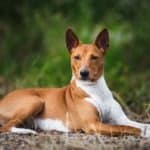
Root Inspirations/Shutterstock.com

Carolina Dog Distribution

Click a location to explore more animals from that region

Origin Location

This map shows the native origin of the Carolina Dog. As a domesticated species, they are now found worldwide.

Loading map...

Size Comparison

Human 5'8"
Carolina Dog 1 ft 7 in

Carolina Dog stands at 27% of average human height.

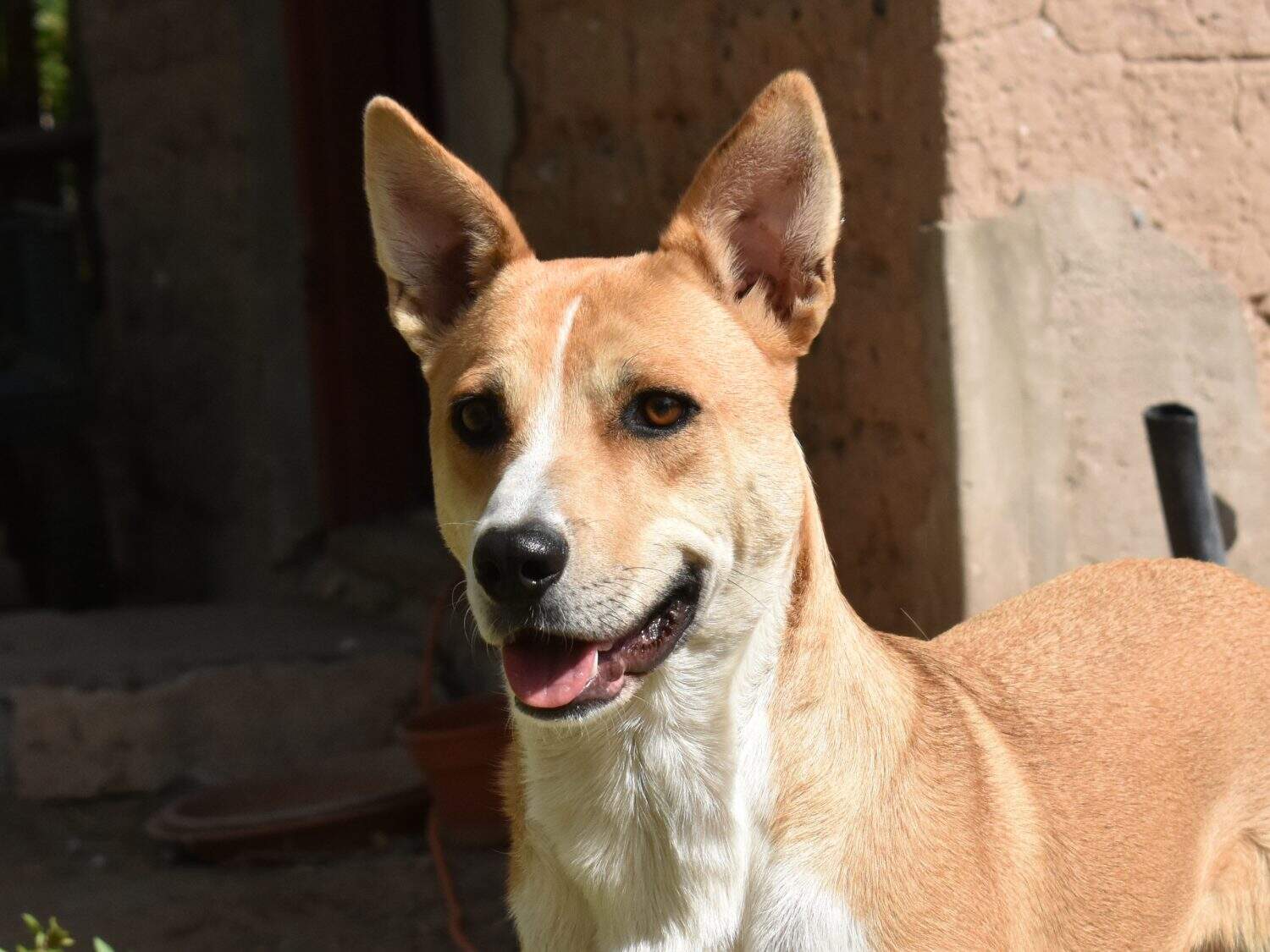
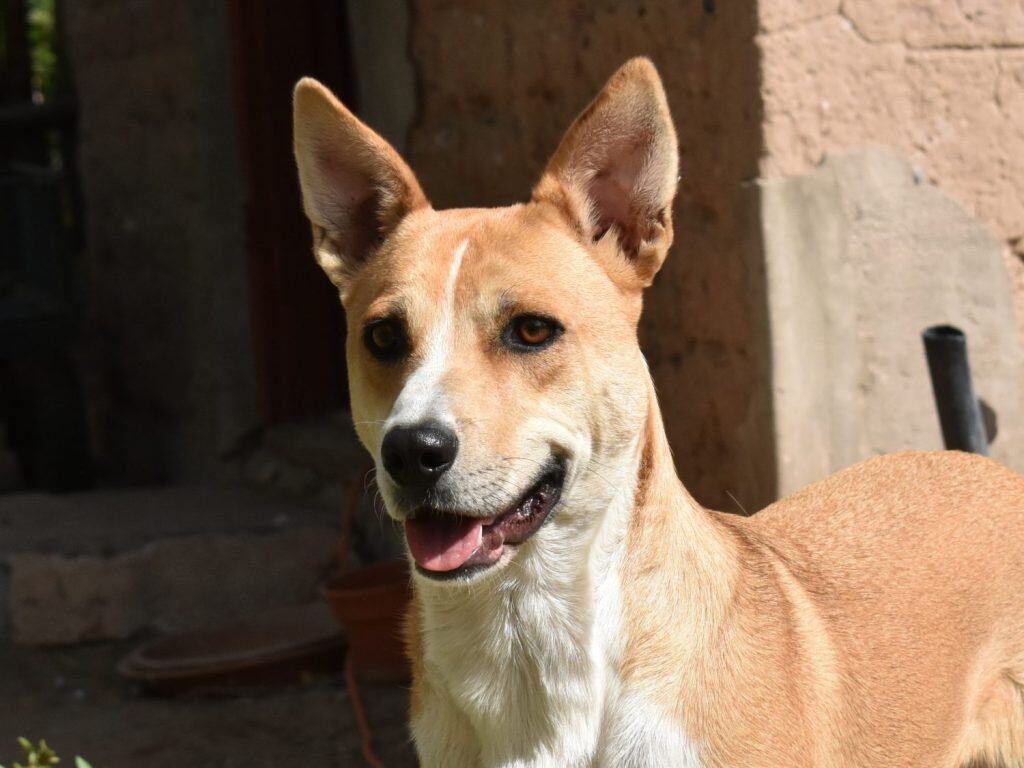
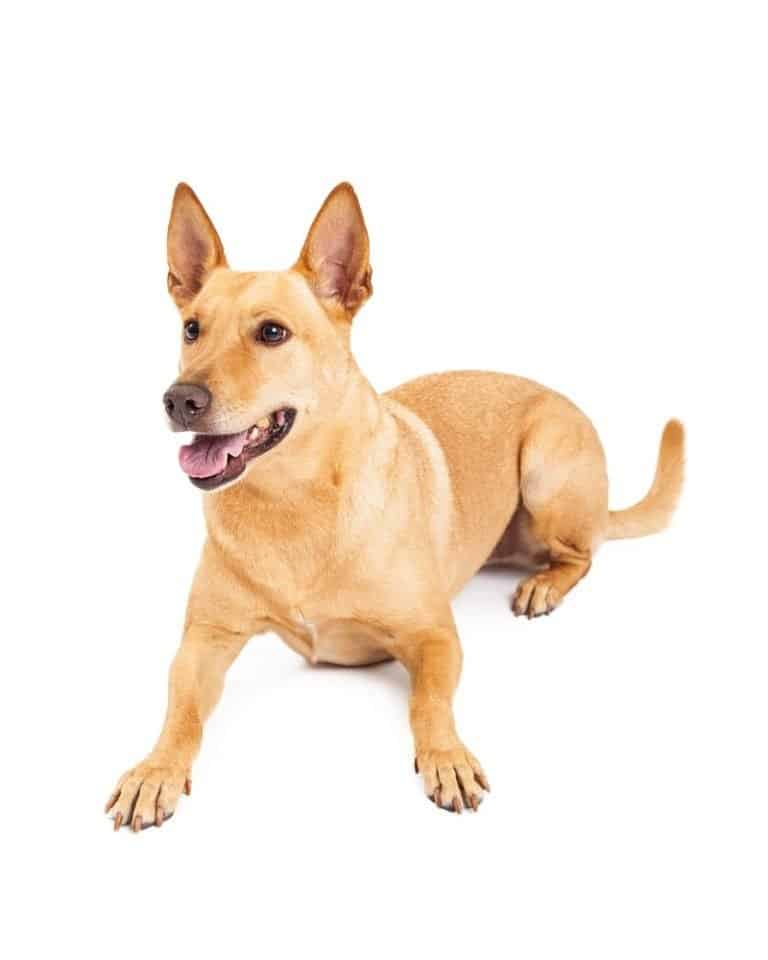
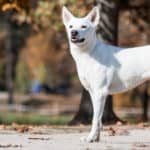
Dog smiling panting with erect pointy ears, cattle carolina dog, white stripe forehead, eye liner, yellow orange white, corner of adobe house in background.

At a Glance

Domesticated
Also Known As American Dingo, Dixie Dingo, Yellow Dog, Yaller Dog, Native American Dog
Diet Omnivore
Activity Crepuscular+
Lifespan 5 years
Weight 20 lbs
Status Not Evaluated
Did You Know?

Often nicknamed the "American Dingo," but it's a domestic dog landrace-not a true dingo and not a wolf.

Scientific Classification

The Carolina Dog is a primitive/landrace domestic dog type historically associated with the southeastern United States. It is often described as a pariah-dog type: medium-sized, typically tan to ginger with erect ears, a fishhook tail, and a wary/independent temperament compared to many modern breeds.

Kingdom
Animalia
Phylum
Chordata
Class
Mammalia
Order
Carnivora
Family
Canidae
Genus
Canis
Species
Canis lupus

Distinguishing Features

  • Medium build; wedge-shaped head with erect ears
  • Short to medium coat, often tan/ginger with lighter underside; minimal markings common
  • Tail often carried in a curved 'fishhook' shape
  • Pariah-dog/landrace traits: alert, cautious with strangers, strong scavenging/foraging tendencies in free-ranging populations

Physical Measurements

Males and females differ in size

Height
♂ 1 ft 7 in (1 ft 5 in – 1 ft 8 in)
♀ 1 ft 7 in (1 ft 5 in – 1 ft 8 in)
Length
♂ 3 ft 1 in (2 ft 9 in – 3 ft 5 in)
♀ 3 ft 3 in (2 ft 10 in – 3 ft 8 in)
Weight
♂ 37 lbs (31 lbs – 44 lbs)
♀ 40 lbs (31 lbs – 49 lbs)
Tail Length
♂ 1 ft 2 in (12 in – 1 ft 4 in)
♀ 1 ft 1 in (11 in – 1 ft 3 in)
Top Speed
30 mph
About 48 km/h top speed

Appearance

Primary Colors
Secondary Colors
Skin Type Domestic dog skin with pigmented nose and lips, and a tight short-to-medium double coat (short guard hairs over a dense undercoat). Skin is sturdy but can get seasonal itch, allergies, or parasite irritation.
Distinctive Features
  • Medium-sized, athletic, primitive/landrace domestic dog associated with the southeastern United States; overall morphology often described as "pariah-dog" type rather than a heavily standardized modern breed.
  • Erect, triangular ears set high; alert expression and typically almond-shaped eyes.
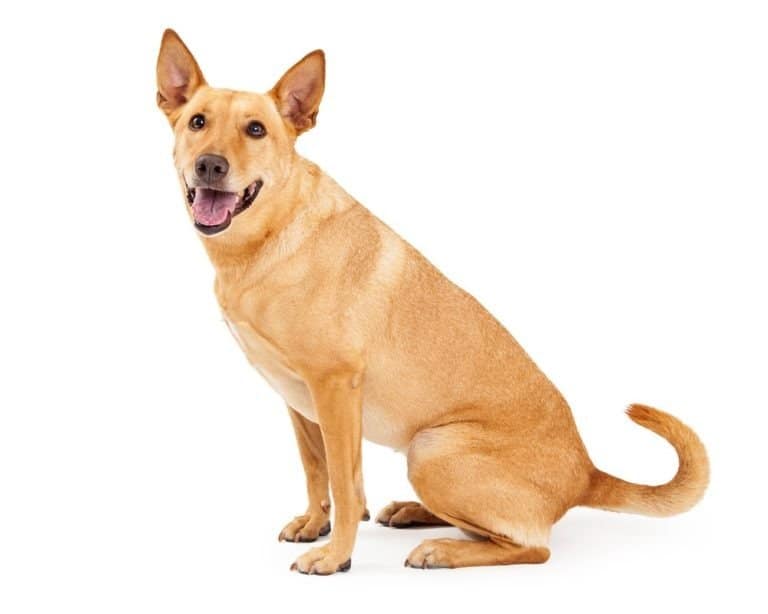
  • Fishhook (J-shaped) tail carriage is characteristic-tail often curves up and hooks at the end, especially when alert or moving.
  • Lean, efficient build with moderate tuck-up and agile, ground-covering gait; tends to look more "wild-type" than many companion breeds while remaining fully domestic (Canis lupus familiaris).
  • Coat is usually short to medium with seasonal shedding; many individuals show sable/darker dorsal shading and lighter ventral areas rather than bold patches.
  • Health profile (breed/landrace-typical): generally hardy with broad genetic diversity, but can still see issues such as hip dysplasia, patellar luxation, dental disease, and skin/allergy problems; parasite prevention is important in humid southeastern climates.
  • Care requirements: secure fencing (prey drive and roaming tendency), daily aerobic exercise plus enrichment (tracking, scent work, problem-solving), and gentle, consistent training; harsh handling can increase avoidance behaviors.

Sexual Dimorphism

As in many domestic dogs and relative to the base species context, males are typically larger with more robust head/neck musculature, while females are slightly smaller and more refined. Differences are usually moderate rather than extreme, consistent with a landrace type.

♂
  • Generally taller/heavier with broader skull and thicker neck/shoulders.
  • May present a slightly more pronounced ruff/coat thickness around the neck in winter coat.
♀
  • Typically lighter build with a narrower head and finer bone structure.
  • Often appears more streamlined through chest and neck while maintaining the same erect-ear, fishhook-tail silhouette.

Did You Know?

Often nicknamed the "American Dingo," but it's a domestic dog landrace-not a true dingo and not a wolf.

Many show a classic "fishhook" tail: carried in a loose curve with a hook-like tip when alert.

Common coat colors are tan/ginger with lighter undersides; some have a darker "sable" overlay.

Frequently described as a pariah-dog type: self-reliant, observant, and less socially pushy than many modern breeds.

The type was documented living semi-feral around the southeastern U.S., especially in and near longleaf pine and swamp habitats.

Compared with many modern breeds, they tend to have a lean, efficient build suited to endurance rather than bulk strength.

Their alert, upright ears and cautious demeanor can make them excellent "early warning" household dogs.

Unique Adaptations

  • Landrace "primitive" conformation: medium size, long legs, deep chest, and efficient gait-traits that favor endurance and heat tolerance in the Southeast.
  • Seasonal coat flexibility: typically a short-to-medium double coat that sheds heavily but suits warm, humid climates while still insulating in cooler months.
  • Erect ears and narrow muzzle: improve hearing and airflow, aiding scenting and thermoregulation compared with heavier-coated, brachycephalic breeds.
  • Behavioral thriftiness: often conservative with energy-resting quietly, then moving decisively-useful for free-ranging survival.
  • Natural wariness: a common pariah-dog trait that can reduce risky encounters in unfamiliar environments; in pets, it benefits from early socialization.

Interesting Behaviors

  • Cautious greeting style: often hangs back to observe before choosing to engage, especially with strangers.
  • High environmental awareness: scanning, listening, and scent-checking are common, reflecting survival-style decision making.
  • Strong roaming/foraging tendency: may explore widely if off-leash, especially in new areas-recall can be inconsistent without training.
  • Selective sociability: bonds deeply with its household but may be reserved with unfamiliar dogs and people.
  • Problem-solving and opportunistic scavenging: can learn routines quickly (including how to open simple latches or find weak fence spots).
  • Prey-chase interest: may pursue small wildlife; careful introductions and secure containment help in mixed-pet homes.
  • Quiet-to-moderate vocalization: some are not constant barkers but will alert when something feels "off."

Cultural Significance

The Carolina Dog (Canis lupus familiaris), found in the southeastern United States, is seen as a North American pariah-dog landrace shaped by nature and rural people, nicknamed the 'American Dingo.' It stands for resilience, adaptability, and long links between people and free-roaming dogs.

Myths & Legends

"American Dingo" nickname: local stories and media called the Carolina Dog a New World match to Australia's dingo. That nickname stuck, though the dog is still a domestic landrace.

A popular origin story says Dr. I. Lehr Brisbin Jr. in the 1970s and 1980s found semi-feral dogs living in the Southeast. His reports helped make the Carolina Dog (Canis lupus familiaris) a named type.

In rural Southern towns, stories tell of sandy, upright-eared yard dogs that could take care of themselves, follow hunters, and always come home—old stories of tough dogs, not kennel breeds.

Naming tradition as legend: the idea that these dogs represent an ancient, unchanged American type is a recurring narrative in popular writing about the breed-more a cultural origin story than a single documented myth.

Conservation Status

NE Not Evaluated

Has not yet been evaluated against the criteria.

Population Stable

Life Cycle

Birth 4 pups
Lifespan 5 years

Lifespan

In the Wild
3–10 years
In Captivity
12–15 years

Reproduction

Mating System Polygynandry
Social Structure Managed Domestic
Breeding Pattern Transient
Fertilization Internal Fertilization
Birth Type Internal_fertilization

In natural free-ranging conditions Carolina Dogs are polygynandrous (many males and females mate) with short mate-guarding; pair bonds are temporary. In pets humans control breeding. Reproduction is internal fertilization with a copulatory tie; cooperative care is rare.

Behavior & Ecology

Social Pack Group: 5
Activity Crepuscular, Diurnal, Cathemeral
Diet Omnivore animal-protein-forward foods (meat/organ-based diets; high-value meat treats)

Temperament

Wary/alert with strangers; tends toward cautious investigation rather than immediate friendliness (more pronounced than many modern companion breeds).
Strong bonding and loyalty to household 'in-group'; can be reserved or aloof outside the family.
Independent problem-solver; may show lower handler-pleasing drive and higher environmental focus than many breeds-benefits from consistent, reward-based training and choice-based handling.
High prey drive and strong chase interest are common; management around small animals and reliable recall training are important.
Often quiet-to-moderate vocal; may rely more on body language and distance management than frequent barking.
Can be dog-selective (especially same-sex or pushy unfamiliar dogs); best outcomes with early controlled socialization and ongoing positive exposures.
Athletic and roaming-inclined; care requirement: secure fencing, leash reliability, enrichment (scentwork, tracking-style games), and daily exercise to reduce escape/foraging behavior.
Generally hardy landrace type; breed-relevant health watch-outs: hip dysplasia (screening recommended), allergies/skin irritation, dental tartar/periodontal disease, and regionally common parasite/vector risks (ticks, heartworm)-preventives and regular checks advised.

Communication

Alarm bark Typically context-dependent rather than constant
Whines/whimpers for attention, frustration, or appeasement
Howl or howl-bark Occasionally, especially in response to sirens or other dogs
Growl Distance-increasing warning; often paired with stiff posture
Highly expressive body language: ear position (erect/forward vs pinned), weight shift, and freezing/stiffening as early stress signals
Tail carriage signals; breed-typical 'fishhook' tail can accentuate confident vs uncertain carriage changes
Scent marking (urine marking, ground sniffing) and investigative sniffing as primary social information gathering
Facial expressions and gaze: direct stare as pressure; averted head/soft eyes as appeasement
Play signals: play bow, bouncy approaches; may prefer brief, chase-based play over prolonged wrestling with unfamiliar dogs
Territorial/alert behaviors: perimeter checking, elevated vigilance at property boundaries; mitigated by structured routines and controlled exposure to visitors

Habitat

Biomes:
Temperate Forest Wetland Temperate Grassland Mediterranean Desert Hot Desert Cold Boreal Forest (Taiga) Tundra Alpine Freshwater Marine Tropical Rainforest Tropical Dry Forest Savanna +8
Terrain:
Coastal Plains Hilly Riverine Sandy Muddy
Elevation: Up to 16404 ft 3 in

Ecological Role

Human-associated omnivorous mesopredator/scavenger (domestic dog landrace) that can hunt small animals opportunistically but primarily relies on human-provided food resources.

companionship and social bonding with humans pest control via deterrence/predation on rodents (when unmanaged) sentinel/alerting behavior around homes and camps scavenging of organic waste (historically), though this can increase disease transmission risk if uncontrolled potential negative ecological impact if free-roaming (predation on wildlife, disturbance of ground-nesting species), mitigated by responsible ownership

Diet Details

Main Prey:
small mammals Squirrel Opossum Ground-nesting birds and eggs Reptiles and amphibians Insects and other invertebrates Carrion +1
Other Foods:
Berries and wild fruits Fallen fruit and plant matter Grasses Roots and tubers Human-provided starches Mushrooms

Human Interaction

Domestication Status

Domesticated

Carolina Dog (Canis lupus familiaris) is a primitive landrace from the southeastern United States, sometimes called the American Dingo. Closer to free-breeding pariah dogs, they show erect ears, wedge head, lean build and sickle tail. They are wary, independent, need early socialization, can scavenge or roam, and serve as pets, working dogs, or study subjects.

Danger Level

Low
  • Fear-based biting or defensive aggression if under-socialized, cornered, or handled harshly (wary/independent temperament can elevate this risk vs. very gregarious breeds).
  • Prey drive/chase behavior that can cause incidental injury (knocking over children/elderly, leash dragging) if poorly trained.
  • Zoonotic and public-health risks typical of domestic dogs when preventive care is lacking (rabies exposure risk in unvaccinated populations, intestinal parasites, ectoparasites).
  • Roaming/feral-adjacent behavior in some lines can increase conflict risk (resource guarding, nuisance encounters).

As a Pet

Suitable as Pet

Legality: Generally legal as a domestic dog where dogs are permitted. Subject to standard local animal-control rules (licensing, rabies vaccination, leash laws, limits on roaming). Not typically restricted by breed-specific legislation, but any local 'dangerous dog' ordinances apply based on behavior.

Care Level: Experienced

Purchase Cost: Up to $1,500
Lifetime Cost: $15,000 - $40,000

Economic Value

Uses:
Companion animal ownership Breeding (limited/rare-breed market) Rescue and adoption services Pet services (training, boarding, veterinary care, grooming) Outdoor/recreation partner
Products:
  • adoption and placement fees
  • purchase from breeders (where available)
  • training services (notably early socialization, fear-reduction, recall/impulse control)
  • standard veterinary prevention (vaccines, parasite control, spay/neuter)
  • pet supplies (secure fencing, enrichment toys, harness/leash systems)

Relationships

Not only is it a good guard dog, but the Carolina Dog is also strong, quiet, brave, and resourceful. It can adapt to any lifestyle and climate, as it has lived in the wilderness for many years.

The quiet, gentle dog can be traced back to Asia, from where the breed traveled to North America over 11,000 years ago. It slowly migrated to the Southern United States, living in the wilderness for hundreds of years before it was domesticated. As strong as the bond may be, Carolina Dogs are very reserved and won’t offer much physical attention to show their love.

Origin of the Breed

Carolina dogs descend from canines who traveled with humans across the Bering land bridge approximately 15,000 to 11,000 years ago. These canine companions were believed to have been bred from domesticated Asian wolves thousands of years earlier. The skeletal remains of these dogs have been found in ceremonial burials in the American Southwest and down into Central and South America. They were prized companions and helpers of Native Americans long before the Europeans arrived. Recent studies of free-range dogs of the Southeast suggest that these “wild” dogs are directly related to the first domesticated dogs from the Paleolithic period. They are called Carolina dogs because packs still roam wild in the Carolinas today.
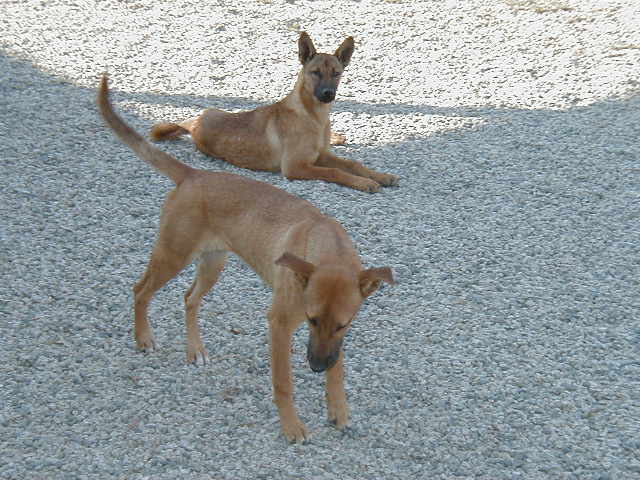
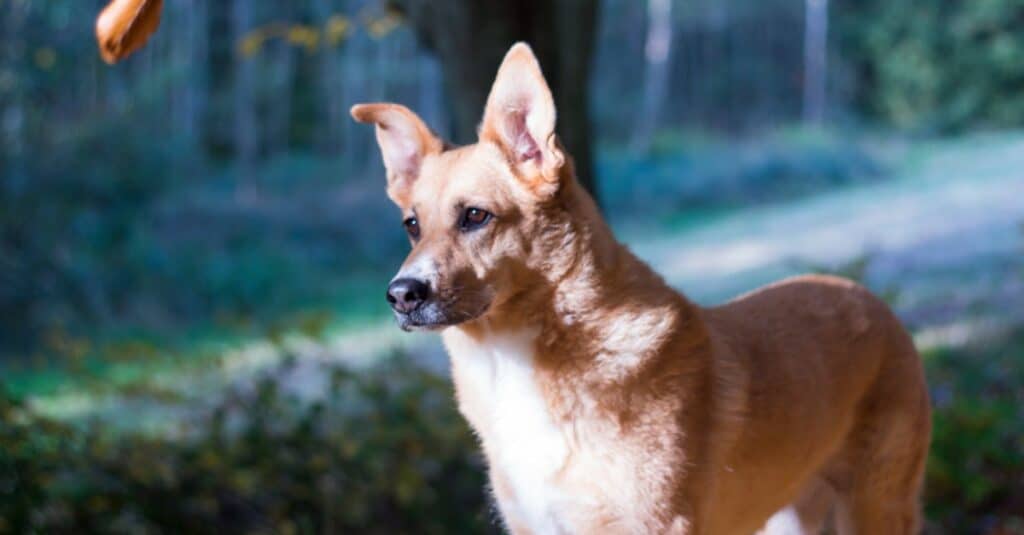
Two Carolina Dogs standing outside

Wild Carolina dogs can still be found in the Carolinas.

Owning a Carolina Dog: 3 pros and cons

Pros!Cons!
Easy to groom
These dogs clean themselves as cats do, but they require regular grooming sessions and will need their nails trimmed no less than twice monthly.
Needs exercise!
This breed was used to running around in the wild, so domestic life needs to include about an hour of exercise every day. Without this exercise, many dogs start to feel restless and cause unnecessary damage to their surroundings.
Bonds quickly
The Carolina Dog is a pack animal. So, it will easily and quickly form a close bond with family members.
Not friendly with smaller animals
Unless socialized early to live with smaller animals like cats, they could attack. After all, they are natural hunters.
Quiet
The dog will only bark when there is a valid reason. Considering how protective they can be of their family, pet owners that hear this bark can rest assured that they are acting out of this desire.
Not a lap dog!
This dog is not overly affectionate. Don’t expect to be licked and smothered all the time, but that doesn’t mean that they aren’t loyal and loving. They just show affection differently, like in the way that they guard their owner.
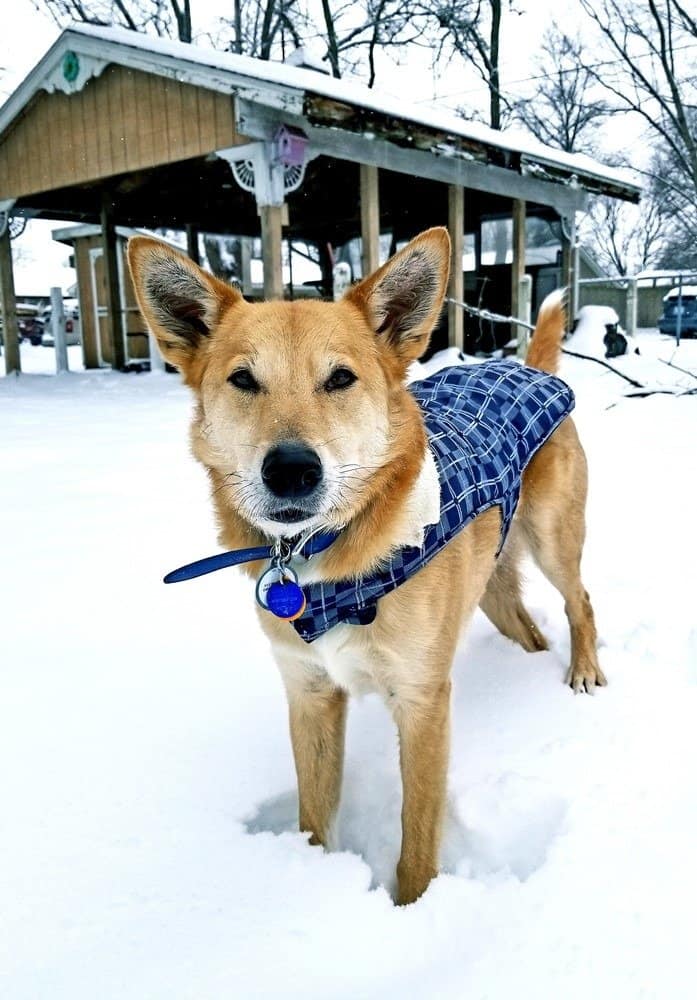
Carolina dog in snow

Medium-sized Carolina dogs can adapt to many environments.

Size and Weight

The Carolina Dog is medium-sized, with an average height of 17–19 inches for males and 16–18 inches for females. Fully grown males weigh 30-45 lbs, while fully grown females weigh 25-35 lbs.

Common Health Issues

Carolina dogs are healthy and can live up to 15 years. Some studies have shown that the breed is sensitive to ivermectin, an ingredient found in medication to treat mites and parasites. Consult a vet before administering it.

The breed is also prone to Hip Dysplasia, a condition that leads to misalignment of the leg bone, hip bone, and hip socket. Most of the time, a dog with hip dysplasia will start favoring their other legs that are less painful to walk on.

The dog could also suffer from Elbow Dysplasia, which is a growth of tissue outside the elbow. This can result in stiffness and discomfort for your dog. Your veterinarian needs to check for this condition during examinations.

In summary, the common health issues for the Carolina Dog are:

  • Sensitivity to ivermectin
  • Hip Dysplasia
  • Elbow Dysplasia
Carolina Dog

Known as the “yellow dog,” Carolina dogs are friendly and pack-oriented.

Temperament and Behavior

Carolina dogs have reserved personalities. When they are socialized as puppies, their behavior is friendly and pack-oriented. They are good with other dogs, children, and cats, but their natural desire to hunt means that smaller pets (such as snakes and mice) would not likely be safe around them. Make sure to spend a lot of time with them, as they will exhibit pack behavior; isolation will not suit them well.

The breed is intelligent and eager to please, but has a stubborn personality. Offer the dog treats and use positive reinforcement to encourage certain traits. With a little patience, Carolina dogs have the potential to excel in hunting games and competitive activities.

These dogs are gentle and have a quiet demeanor. They can adapt to a lot of environments as long as they have company and get plenty of physical activity, and engage in regular exercise. Without it, destructive behavior may result.

How to Take Care of a Carolina Dog

For anyone who wants to own a Carolina Dog, there are several factors to consider. Whether it is the sensitivity to certain anti-parasitic medications, consistent grooming, or the abundance of exercise, the Carolina dog has breed-specific needs that will need to be accommodated for a healthy and full life.

The Best Dog Food for Carolina Dogs

Carolina dogs, including puppies, have different health needs from other dogs. For a puppy, the main difference is the amount of protein in the food. A puppy’s food should have more protein than adult food to facilitate its growth. Check the dog food package to ensure that it meets the AAFCO standards of growth.

As for adults, seek out high-quality dog food, whether you prepare it at home with your vet’s approval or if it is commercially manufactured. Dog food should be primarily meat-based to provide them with the necessary amino acids.

At all ages, the dog will require fresh water every day. Though some treats are acceptable, overindulgence can lead to obesity.

Maintenance and Grooming

Carolina dogs do not require much grooming to remain clean. Just like cats, they regularly clean themselves. However, they will need the occasional bath. No special techniques or tools are needed — simply brushing the dog’s coat and trimming its nails is enough.

The breed generally has a short to medium coat length and is not prone to fur problems. This dog does not shed much.
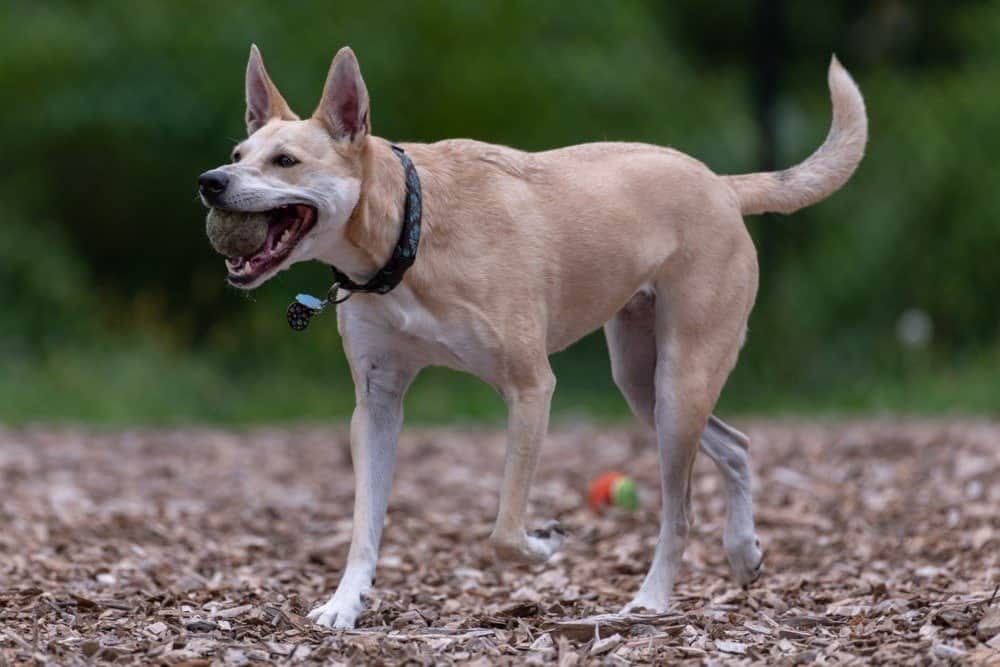
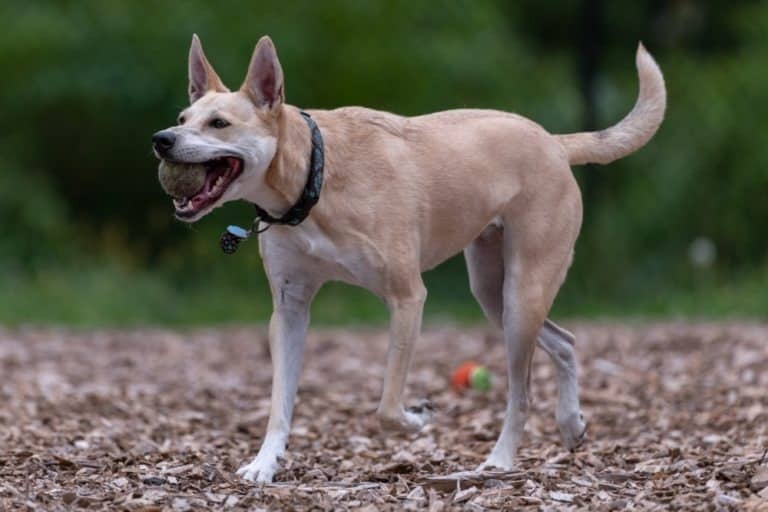
Carolina dog, playing with a ball

Carolina dogs are eager to please and easy to train.

Training

A Carolina Dog is eager to please, so you can easily train it. Compared to other breeds, these dogs can be stubborn, so consistency is important during training.

When training them, focus on hunting games and competitive activities because that is what they are naturally good at. Many Carolina Dogs respond well to treats, so use them as rewards during training

Exercise

To keep your Carolina Dog healthy, daily exercise is a must. The dog needs a lot of space, so an ideal environment for it would be a fenced backyard or regular walks. Encourage playtime with different activities, such as retrieving flying disks or balls. Outdoor activities such as hiking and swimming would be a good way for your dog to exercise.

Puppies

Feed a puppy of 3 to 6 months three times a day. When they are 6 to 12 months old, feed them twice a day. After these puppies reach adulthood, one meal is enough.
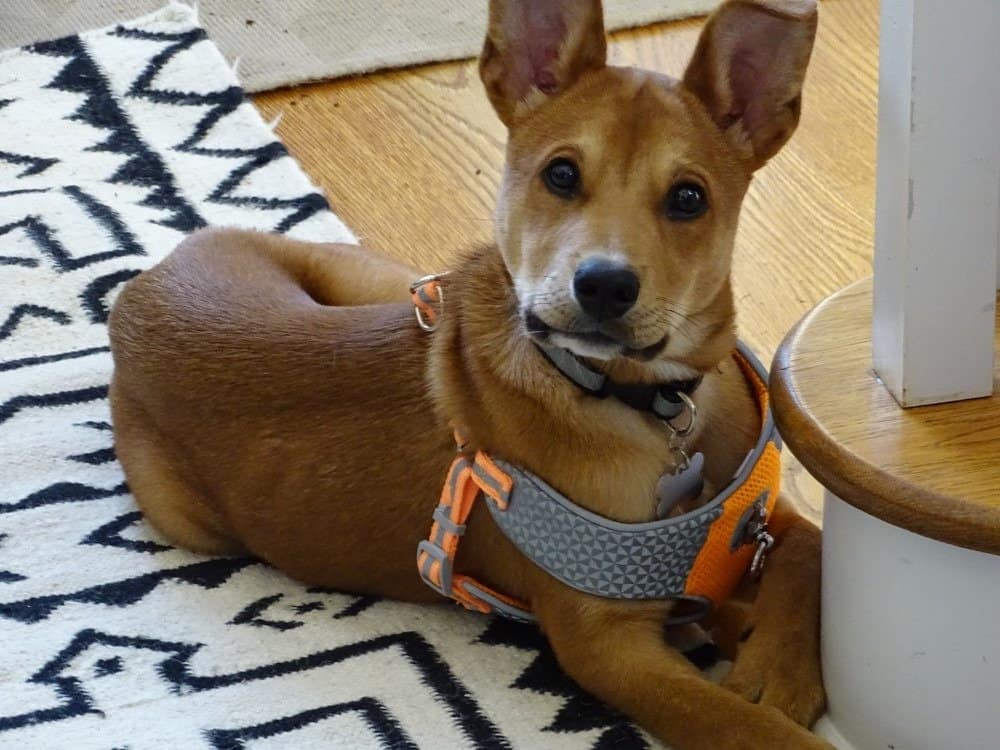
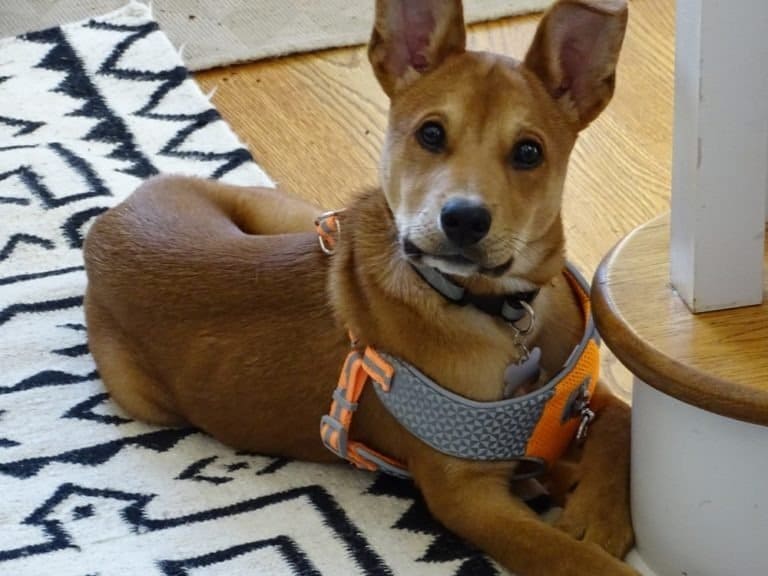
Carolina dog puppy

Carolina dogs do well with children and bond with their families easily.

Carolina Dog and Children

This breed of dog is very friendly and good with children. As a pack animal, it is used to company so children might be this dog’s best companions. It also has a lot of energy to spend playing with them.

Dogs similar to the Carolina Dog

Other similar dogs to the Carolina Dog are the Basenji, Working Kelpie, and Canaan dogs.

  • Basenji: Shares several similarities with the Carolina Dog, including grooming themselves, being quiet, and being 16 to 17 inches at the shoulder. They also have short hair and do not require a lot of grooming.
  • Working Kelpie: This medium-sized, active dog works a lot. It needs a companion and regular exercise, games, and walks. Much like the Carolina dog, this breed is also very good with children.
  • Canaan Dog: This is an excellent guard dog as it is wary of strangers, so it will alert you when one is around. They are intelligent, not aggressive, and good with children.

Famous Carolina Dogs

The best-known Carolina dog is Horace, the first modern domesticated dog of this breed. A family found Horace at a dump in South Carolina and brought him home.

View all 392 animals that start with C

Sources

  1. American Kennel Club / Accessed October 23, 2020
  2. Dogtime / Accessed October 23, 2020
  3. Dogzone / Accessed October 23, 2020
Lisha Pace

About the Author

Lisha Pace

After a career of working to provide opportunities for local communities to experience and create art, I am enjoying having time to write about two of my favorite things - nature and animals. Half of my life is spent outdoors, usually with my husband and sweet little fourteen year old dog. We love to take walks by the lake and take photos of the animals we meet including: otters, ospreys, Canadian geese, ducks and nesting bald eagles. I also enjoy reading, discovering books to add to my library, collecting and playing vinyl, and listening to my son's music.

Thank you for reading! Have some feedback for us?


Carolina Dog FAQs (Frequently Asked Questions)

Most Carolina puppies are priced at $300-$500. Veterinarian costs are $1000+, while professional grooming (including teeth-training) can cost about $250 annually. Treats, toys, and other accessories will vary, based on how often the pet owner purchases them.