
C
Species Profile

Cassowary

Casuarius

Casque on. Forests grow on.
RonnyDesign/Shutterstock.com

Cassowary Distribution

Click a location to explore more animals from that region

Loading map...

Size Comparison

Human 5'8"
Cassowary 4 ft 7 in

Cassowary stands at 81% of average human height.

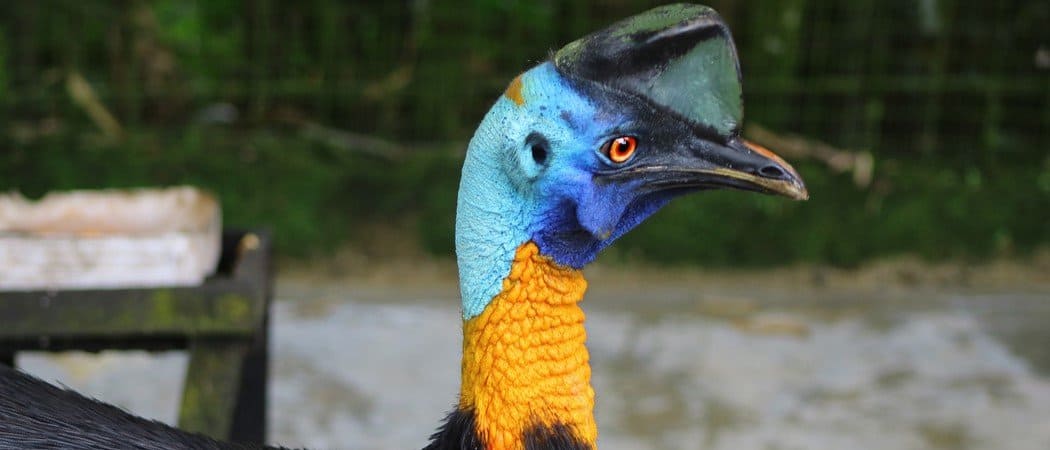
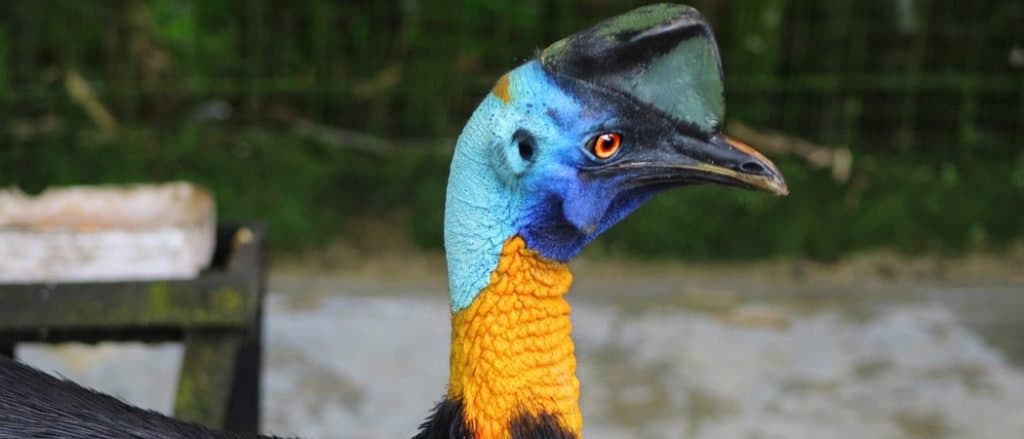
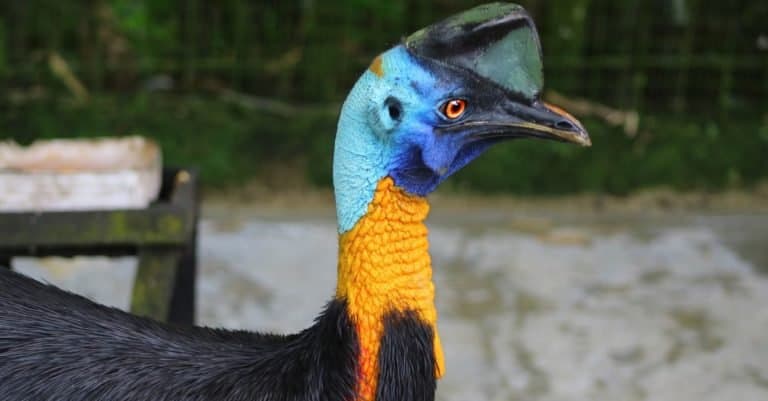
Southern Cassowary, double-wattled cassowary bird Close-up

At a Glance

Genus Overview This page covers the Cassowary genus as a group. Stats below are general traits shared across the genus.
Also Known As Kasuari, Kasuar, Kasuary
Diet Omnivore
Activity Diurnal+
Lifespan 18 years
Weight 70 lbs
Status Not Evaluated
Did You Know?

Genus size range: ~1.0-1.9 m tall and ~17-76 kg, from the dwarf to the southern cassowary; females are often larger.

Scientific Classification

Genus Overview "Cassowary" is not a single species but represents an entire genus containing multiple species.

Cassowaries (genus Casuarius) are large, flightless birds (ratites) known for their helmet-like casque, powerful legs, and ecological role as major rainforest seed dispersers.

Kingdom
Animalia
Phylum
Chordata
Class
Aves
Order
Casuariiformes
Family
Casuariidae
Genus
Casuarius

Distinguishing Features

  • Large flightless ratite with reduced wings and coarse, hair-like plumage
  • Prominent casque atop the head (shape/size varies)
  • Brightly colored bare skin on neck/head; wattles present in some species
  • Very strong legs with a large dagger-like inner toe claw
  • Primarily frugivorous; important long-distance seed disperser

Physical Measurements

Males and females differ in size

Height
1 in (0 in – 1 in)
5 ft 5 in (3 ft 11 in – 6 ft 3 in)
Length
4 ft 7 in (3 ft 1 in – 5 ft 7 in)
Weight
77 lbs (37 lbs – 128 lbs)
110 lbs (37 lbs – 187 lbs)
Tail Length
4 in (2 in – 6 in)
Top Speed
31 mph

Appearance

Primary Colors
Secondary Colors
Skin Type Feathered body with hair-like contour feathers; head and upper neck mostly bare skin, often brightly colored. Legs scaly and strong; casque is hard keratin on skull. Inner toe has large claw for kicking or defense.
Distinctive Features
  • Genus-level size range (across the three species): roughly ~1.0-1.8 m tall; ~17-70+ kg in mass (largest females at the upper end).
  • Lifespan range across the genus: commonly ~15-30 years in the wild when not heavily impacted; can reach ~30-40+ years in captivity under favorable care (figures vary by species and sources).
  • A helmet-like casque, covered by a hard material called keratin. It helps with display and maybe pushing through thick plants. Shape and size vary by species and grow with age.
  • Bare, vividly colored head/neck skin and (in some species) fleshy wattles; wattle number/size and overall neck coloration pattern are key identification differences among the three species.
  • Powerful legs with three forward toes; the inner toe has a long, dagger-like claw (notably dangerous if used in a defensive kick).
  • Flightless ratites adapted for rainforest ground travel; wings highly reduced and not used for flight.
  • Ecology shared across the genus: primarily frugivorous/omnivorous with strong reliance on fallen fruit; major long-distance seed dispersers in rainforest systems (swallowing fruits whole and passing large seeds intact).
  • Behavior/ecology generalization with variation: typically solitary and shy/avoidant in intact habitat; aggression is not constant but can occur defensively when cornered, during breeding/territorial contexts, or around chicks; individual temperament and human habituation strongly influence risk.
  • Reproduction broadly consistent: males commonly incubate eggs and rear chicks; females are generally larger and may mate with multiple males, though local patterns can vary.
  • Cassowaries live across New Guinea (many regions and heights) and northeastern Australia. They mostly live in tropical rainforests and nearby forests; some prefer lowlands, others higher montane areas.

Sexual Dimorphism

Sexual dimorphism is generally moderate across Casuarius: females are typically larger/heavier and may show more prominent casque and brighter bare-skin coloration in some populations, but overlap is common and age/individual condition can blur differences. Behaviorally, males are notable for egg incubation and chick-rearing.

  • On average smaller/lighter than females across the genus (with substantial overlap).
  • Primary parental role: incubates eggs and guards/raises chicks (a consistent genus-level trait).
  • Casque and neck ornamentation can be less prominent on average than in females, but varies by species, age, and individual.
  • On average larger/heavier and taller across the genus; largest individuals in the genus are typically females.
  • May exhibit a more prominent casque and/or more vivid bare-skin coloration on average in some populations (not universal; overlap occurs).
  • Can be more dominant in mating interactions; may range more widely during breeding periods compared to incubating males.

Did You Know?

Genus size range: ~1.0-1.9 m tall and ~17-76 kg, from the dwarf to the southern cassowary; females are often larger.

All cassowaries carry a "dagger" on the inner toe-an enlarged claw that can reach ~10-12 cm.

Their helmet-like casque varies by species and age (often ~10-18 cm tall in adults) and is used in visual signaling; it may also help in dense understory.

They're among the most important long-distance seed dispersers in Australasian rainforests, swallowing many fruits whole and passing seeds intact.

The genus includes three species with different ranges: southern cassowary also occurs in northeastern Australia; all three occur on New Guinea, with the dwarf generally more montane.

Parenting is mostly a male job: after mating, the male incubates the eggs and raises the striped chicks for months.

Despite being flightless, cassowaries can sprint quickly and are strong swimmers-river crossings don't stop them.

Unique Adaptations

  • Powerful hindlimbs built for rapid acceleration and kicking; the inner-toe claw is a specialized weapon-like structure shared across Casuarius.
  • Casque (keratin-covered bony core) that grows with age and differs in shape/size among the three species; functions strongly in display/recognition, and may confer some protection in dense habitat.
  • Coarse, hair-like body feathers that shed water and resist tangling in wet rainforest understory; reduced wings with stiff quills reflect flightlessness.
  • Large gape and throat allowing whole-fruit swallowing-key to dispersing large-seeded rainforest plants that fewer animals can handle.
  • Bright bare neck skin and (in some species) prominent wattles-high-contrast visual signals in dim forest; wattle configuration is a key genus-level ID point (southern typically two, northern typically one, dwarf typically none).
  • Robust digestive passage that can move seeds without destroying them, enabling dispersal away from parent trees and into new germination sites.

Interesting Behaviors

  • Solitary, wide-ranging rainforest foragers that often follow habitual paths and move quietly through dense vegetation; tolerance of others increases around rich fruiting trees (varies by season).
  • Frugivory-dominated feeding, but opportunistic omnivory occurs across the genus (fungi, invertebrates, small vertebrates, carrion), with diet shifting by habitat and fruit availability.
  • Low-frequency "booming" vocalizations used for long-distance communication in thick forest; call structure and usage vary among species and contexts.
  • Male-only (or male-dominant) incubation and chick-rearing: males sit on the clutch, then lead chicks and defend them; clutch size and breeding timing vary with local conditions.
  • Threat and defense displays: upright posture, head/neck pumping, hissing or rumbling, and forward kicks; the intensity varies with individual temperament, breeding status, and habituation to humans.
  • Use of wallows and water for cooling/cleaning; bathing and mud-wallowing are common in humid rainforest settings.
  • Seasonal movements tracking fruiting events; in some areas individuals shift between lowlands and foothills depending on food and disturbance.

Cultural Significance

In New Guinea, the Torres Strait, and northeastern Australia, cassowaries (Casuarius) are valued for meat, eggs, and feathers for ceremonies. Bones were made into tools. They appear in clan totems and help people read fruit seasons and forest health. 'Cassowary' entered English from Malay/Indonesian.

Myths & Legends

In multiple New Guinea folktale traditions, cassowaries appear as powerful forest figures whose actions shape the landscape and whose presence signals the deep authority of the rainforest.

Recorded Papuan and Island Melanesian story cycles include transformation motifs in which a person (often a woman) becomes a cassowary, linking the bird to human kinship, exchange, and the moral rules of sharing and respect.

Etiological (origin) tales found across New Guinea explain hallmark traits-such as flightlessness, the bare colorful neck, or the casque-as consequences of ancient events, quarrels, or punishments in the time of ancestors.

In parts of northeastern Australia's rainforest cultural traditions, cassowaries feature in Dreaming-era narratives that connect animals, places, and law, reinforcing caution and respect toward dangerous or powerful beings of the forest.

Cassowary (Casuarius) is seen as a symbol of the wild rainforest interior, a creature of awe that shaped outsiders' stories about New Guinea and northern Australia as much as local people's tales.

Conservation Status

NE Not Evaluated (genus-level taxa are typically not assessed by the IUCN; within Casuarius, currently assessed species range from Least Concern (LC) to Vulnerable (VU))

Has not yet been evaluated against the criteria.

Population Decreasing

Protected Under

  • Australia (federal): Environment Protection and Biodiversity Conservation Act 1999 (relevant to cassowary conservation planning/management; some populations/subspecies receive heightened protection)
  • Australia (Queensland): Nature Conservation Act 1992 (state-level protection and management for cassowaries and habitat)
  • Indonesia: Wildlife conservation framework (e.g., Law No. 5/1990 on Conservation of Living Natural Resources and Ecosystems; implementing regulations for protected wildlife)
  • Protected areas: All Casuarius species occur in or near networks of national parks/reserves in parts of their ranges, but coverage, connectivity, and enforcement effectiveness vary substantially

You might be looking for:

Southern Cassowary

60%

Casuarius casuarius

Largest and most well-known cassowary; found in New Guinea and northeastern Australia (Queensland rainforests).

Northern Cassowary

22%

Casuarius unappendiculatus

Also called the Single-wattled Cassowary; native to northern New Guinea.

Dwarf Cassowary

18%

Casuarius bennetti

Smallest cassowary species; montane forests of New Guinea and nearby islands.

Life Cycle

Birth 5 chicks
Lifespan 18 years

Lifespan

In the Wild
12–30 years
In Captivity
20–50 years

Reproduction

Mating System Polyandry
Social Structure Solitary
Breeding Pattern Transient
Fertilization Internal Fertilization
Birth Type Internal_fertilization

Cassowaries (Casuarius) are mostly solitary rainforest birds. Females often mate with several males (polyandry); bonds are short. Males sit on about 3–5 eggs and raise chicks alone; the system is non-monogamous.

Behavior & Ecology

Social Family Group: 1
Activity Diurnal, Crepuscular, Cathemeral
Diet Omnivore Fallen fleshy rainforest fruits-commonly including figs and palm fruits (varies by species, locality, and season).

Temperament

Generally wary and cryptic in dense forest; tends to avoid humans and other large animals when given space
Strongly territorial or site-attached in many contexts; aggression risk increases near nests/chicks, when cornered, or during close-range encounters
Capable of rapid escalation to defensive aggression using powerful kicks; individual temperament varies (age, sex, breeding status, habituation)
Opportunistic and persistent at concentrated food sources (e.g., heavy fruiting), sometimes tolerating nearer conspecific presence without true sociality

Communication

Low-frequency booming calls (infrasound/very low notes) used for long-distance signaling through forest; prominence and usage can vary by species, sex, and context
Hisses, grunts, and growls used at close range for threat/defense
Contact calls between attending male and chicks; chick peeps/whistles and distress calls
Visual displays: posture changes, neck/head movements, feather raising, and directed orientation as threat or courtship signals
Physical cues and sound production via footfalls/charging and bill snapping/clacking at close range Often part of threat sequences
Chemical/marking behaviors are not well characterized compared with birds that use strong scent marking; spatial communication is more strongly mediated by movement patterns, repeated route use, and vocal/visual signaling

Habitat

Biomes:
Tropical Rainforest Tropical Dry Forest Wetland Freshwater Savanna
Terrain:
Plains Hilly Mountainous Riverine Island Valley Muddy +1
Elevation: Up to 10498 ft 8 in

Ecological Role

Keystone frugivore-omnivore of Australasian rainforests; among the most important long-distance dispersers of many large-seeded plants, while also functioning as an opportunistic predator/scavenger and nutrient redistributor on the forest floor.

Long-distance seed dispersal for a wide diversity of rainforest plants (including large-seeded species) Enhancement of seed germination and recruitment via gut passage and deposition in nutrient-rich dung Maintenance of plant community diversity and forest regeneration dynamics Redistribution of nutrients and organic matter across the forest floor Incidental control of some invertebrate populations through opportunistic predation

Diet Details

Main Prey:
Insects and other arthropods Earthworms and soil invertebrates Snails and other mollusks Small vertebrates Bird eggs and nestlings Carrion
Other Foods:
Fallen rainforest fruits Palm fruits and other large-seeded fruits Berries and drupes Seeds Fungi Tender leaves, shoots, and herbaceous plant matter Flowers and plant parts +1

Human Interaction

Domestication Status

Wild

Cassowaries (genus Casuarius) have no history of true domestication; they are wild ratites kept only with heavy management in zoos, sanctuaries, and conservation breeding programs. People interact through Indigenous cultural use, occasional hunting or egg collecting, conservation work, and ecotourism. Males incubate eggs and raise chicks; conflicts rise where habitat loss brings birds into yards and roads.

Danger Level

High
  • powerful forward kicks with long, dagger-like inner claw causing severe lacerations or puncture wounds
  • defensive aggression when surprised, approached too closely, fed, or when protecting chicks/food resources
  • injuries to people and pets in habitat-edge settings (yards, orchards, trails) where birds become habituated
  • secondary risks from road crossings/vehicle collisions and subsequent human rescue/handling attempts
  • handling and enclosure-entry risk for keepers due to speed, strength, and unpredictable reactions

As a Pet

Not Suitable as Pet

Legality: Cassowary (Casuarius) are usually illegal or not practical as pets in many places. They are kept only by licensed zoos, parks, sanctuaries, or permitted keepers, and where allowed need strict permits, special enclosures, insurance, and rules.

Care Level: Expert Only

Purchase Cost: Up to $20,000
Lifetime Cost: $50,000 - $300,000

Economic Value

Uses:
Ecotourism and wildlife viewing Zoo and conservation education exhibits Cultural significance (Indigenous traditions) Ecosystem services (seed dispersal supporting forest regeneration) Conservation flagship species (funding and habitat protection)
Products:
  • non-consumptive tourism/park revenue (permits, guided tours, education programs)
  • conservation and research value (monitoring, captive management expertise)
  • historical/limited local uses (meat, eggs, feathers/bones) in some regions

Relationships

Related Species 4

Southern cassowary Casuarius casuarius Shared Genus
Northern cassowary Casuarius unappendiculatus Shared Genus
Dwarf cassowary Casuarius bennetti Shared Genus
Emu
Emu Dromaius novaehollandiae Shared Order

Types of Cassowary

3

Explore 3 recognized types of cassowary

Southern cassowary Casuarius casuarius
Northern cassowary Casuarius unappendiculatus
Dwarf cassowary Casuarius bennetti

Quick Take

  • Reaching 187 pounds requires wielding 4.7-inch inner claws as lethal as any bird of prey.
  • The 5-inch dagger-like claws create a lethal threat for humans who fall during a defensive encounter.
  • Unexpectedly, Corythoraptor jacobsi remains unrelated despite sharing the exact casque morphology as modern ratites.
  • Identifying egg fragments from 18,000 years ago was vital to prove Late Pleistocene humans managed these ratites.

Though it’s true these birds will attack humans, they seem to only do so when they’re provoked, frightened, defending eggs or chicks, or under attack themselves.

The cassowary is a type of ratite, which is a long-legged, usually large, flightless bird. Its wings are nearly vestigial and only have a few quills. The feathers of the cassowary are coarse, and some of them contain hair-like filaments. Because of this, the cassowary was hunted and raised for its feathers. Females are bigger than males, and the bright colors of their heads and necks are more vivid. Even more striking is the knifelike claw on the inner toe of each foot, which is at least as formidable as the talons of the most powerful bird of prey.

AI-generated image
© A-Z Animals

5 Amazing Cassowary Facts

  • The male bird raises the chicks, and he is especially dangerous in parent mode. He won’t hesitate to use his claws on predators and other threats.
  • The female mates with two or three males in a season. She lays her eggs in their nest after mating, then moves on.
  • Biologists once believed cassowaries used the hard casques located on the top of their heads to push through the undergrowth in their rainforest habitat, but now they’re not so sure of the casques’ function.
  • The bird has a wide range of vocalizations, including booms, hisses, rumbles, and roars.
  • A dinosaur closely resembling a cassowary was recently discovered! The two species aren’t directly related, although as cassowary relatives first evolved 60 million years ago, they have ancient traits found in few animals today.
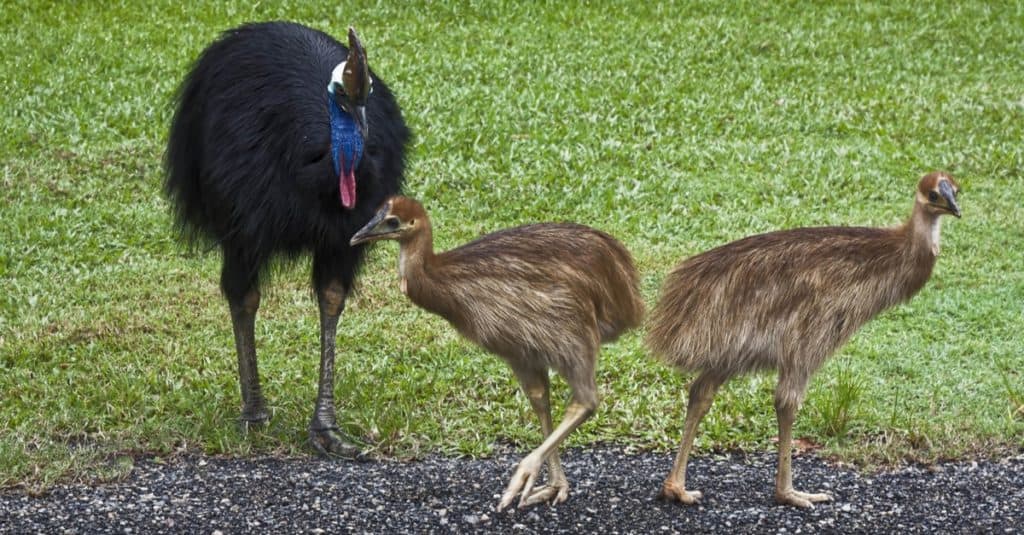
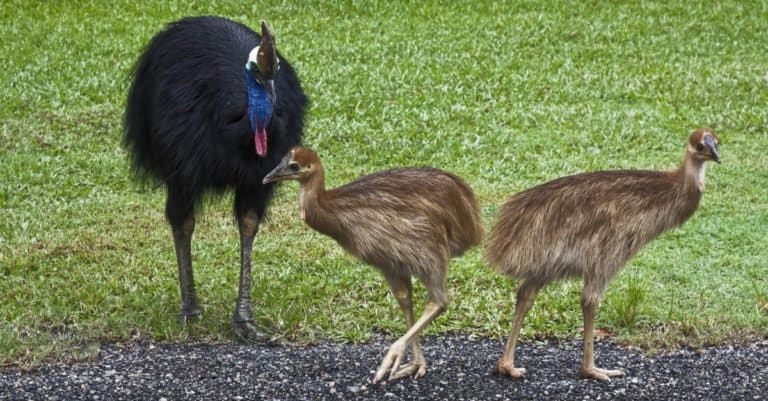
Two cassowary chicks and their dad who looks after them for 9 months.

The male cassowary raises the chicks and won’t hesitate to protect them from predators.

Classification and Scientific Name

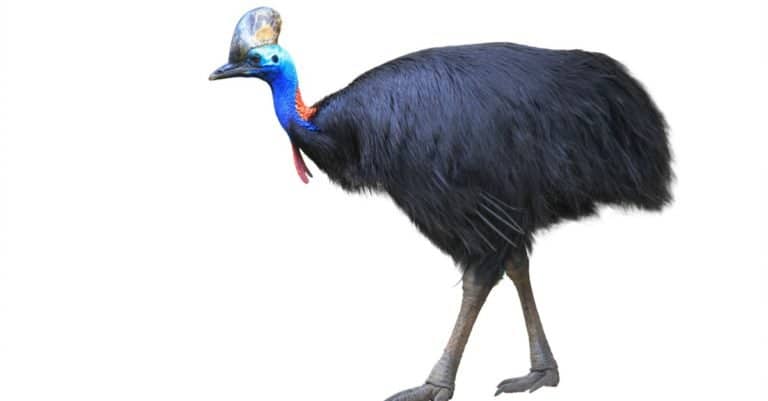
Cassowaries belong to the genus Casuarius. Casuarius is from two Papuan words, with “kasu” meaning horned and “weri” translating to head. This refers to the bird’s casque, a hollow, horn-shaped structure made of keratin affixed to the top of its head. While scientists initially thought the casque was used to help them move through their dense habitat, it’s now believed it serves other functions, such as for defensive purposes in territory disputes, a secondary sexual characteristic, a way to regulate their temperature, or to amplify the low-frequency sounds that cassowaries use to communicate.
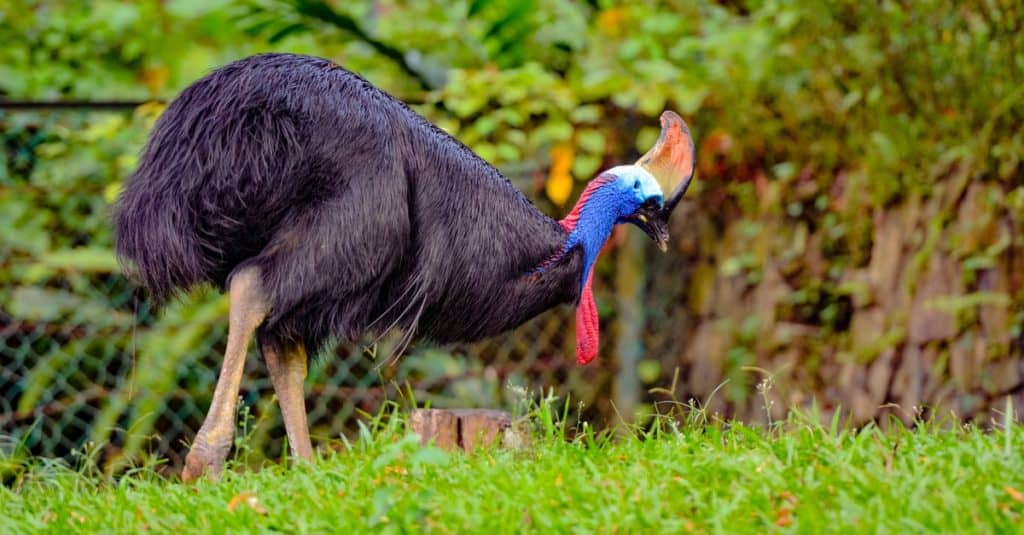
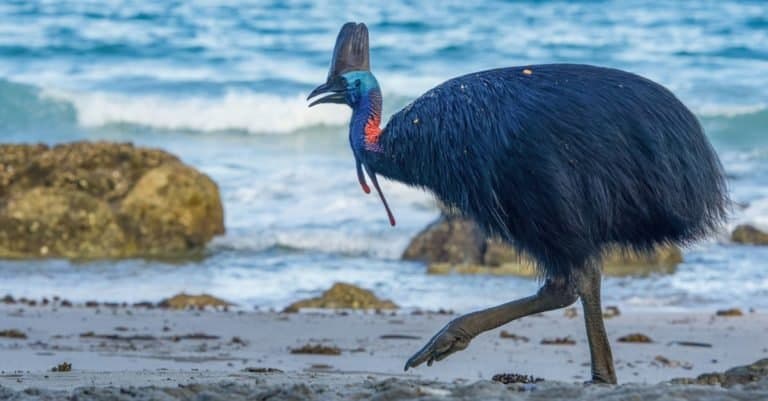
Cassowary in the tropical forest

The cassowary belongs to the genus Casuarius.

3 Types of Cassowaries

There are three species of cassowaries. They are:

  • Southern cassowary (Casuarius casuarius): The southern cassowary, or double-wattled cassowary. is the largest of the species and the third-largest bird in the world after its cousin, the emu, and the ostrich. It can be found in southern New Guinea, Australia’s northeastern regions, and the lowlands of the Aru Islands.
  • Northern cassowary (Casuarius unappendiculatus): Also called the single-wattled cassowary because it has only one wattle as compared to the southern cassowary’s two. It lives in northern New Guinea’s coastal swamplands and lowland rainforests. Populations are also found on the islands of Waigeo, Batanta, Yapen, and Salawati.
  • Dwarf cassowary (Casuarius bennetti): This smaller species is also known as Bennett’s cassowary after the scientist George Bennett, who examined the bird and realized it was a new species of cassowary. It is present in New Guinea, Yapen Island, and New Britain in higher elevations than the northern or southern cassowaries.

There was a fourth species, the pygmy cassowary or small cassowary (Casuarius lydekkeri), but it is extinct. Some subspecies of the extant birds have been suggested, but none have been confirmed.
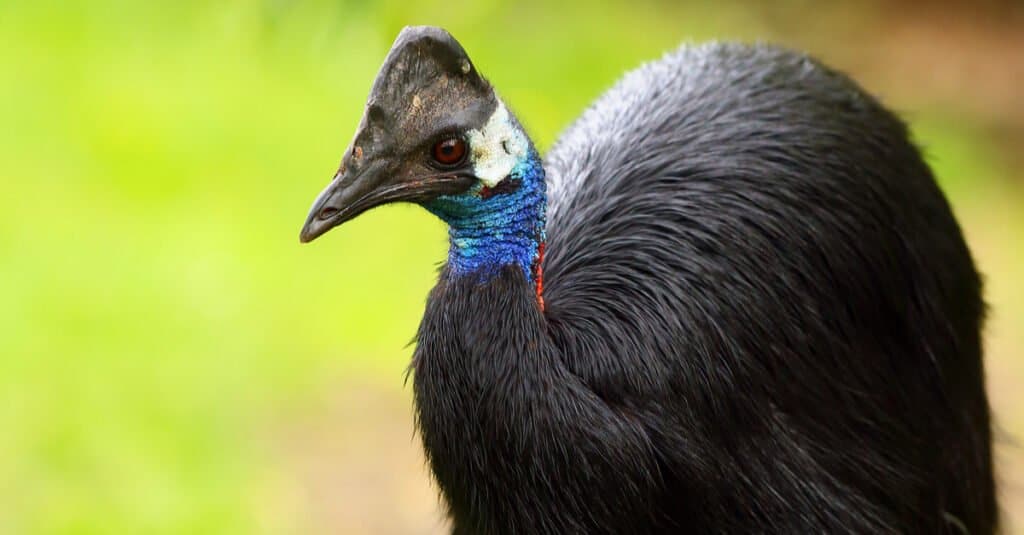
Where do cassowaries live - Dwarf Cassowary

The dwarf cassowary is one of three species of cassowary.

Evolution and Origins

The cassowary is one of the closest extant relatives of dinosaurs, and its descendants are believed to have evolved following the dinosaurs’ extinction around 60 million years ago. Scientific research published in 2017 revealed that a new dinosaur species named Corythoraptor jacobsi looked very much like the cassowary due to the crest on its skull.

Cassowaries are ratites and one of 60 flightless bird species, which includes the emu, kiwi, the extinct moa, and the extinct elephant bird that lived in Madagascar during the Pleistocene (2.58 million years to 11,700 years ago) and Holocene (11,650 years ago to the present).

Fossil evidence of the extinct pygmy cassowary species found in the Australian state of New South Wales and in Papua New Guinea dates to the Pleistocene.

Researchers determined in a 2021 study that early humans in the Late Pleistocene epoch (between 129,000 and 11,700 years ago) harvested and ate the cassowary’s eggs. Examining egg fragments from 6,000 to 18,000 years old found in the rainforests of New Guinea, they realized that many fragments had been burned and broken before the birds’ natural hatching stages, suggesting that humans were disrupting the maturity process, likely to use the eggs as a food source. Scientists believe it could be possible that these people kept cassowaries as pets and raised them for their eggs, much like we do chickens.
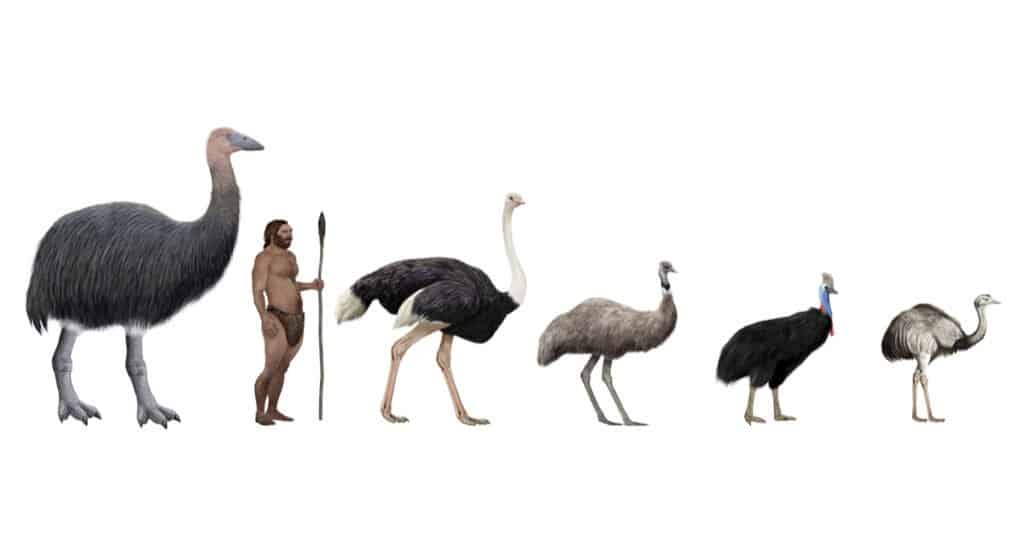
Cassowary Speed - Flightless Birds

The cassowary is one flightless bird species, ranging from the elephant bird to the emu.

Appearance

The southern cassowary can grow between 40 and 72 inches in length, 75 inches in height, and 187 pounds in weight. Its head is topped with a horny casque that grows to between 5 and 7 inches tall and grows with the bird. It is possible to estimate the age of a grown bird by the size of its casque. The bird has a bright blue head and a red neck that bears two red wattles. Each long, scaly leg ends in a three-toed foot whose inner toe bears that lethal claw, which can be 4.7 inches long.

The northern cassowary is known for its orange-gold or red neck and single wattle. It is built along the same lines as the southern cassowary, but is a bit smaller in height and lighter in weight, with the females weighing about 128 pounds.

As its name suggests, the dwarf cassowary is the smallest species, but it is not small. Physical features include a body that’s 3 to 5 feet long and 39 to 53 inches in height. It weighs between 39 and 57 pounds. Its triangular casque is smaller than those of the northern and southern cassowaries in proportion to its body. It has a bright blue and red neck and pink cheeks.
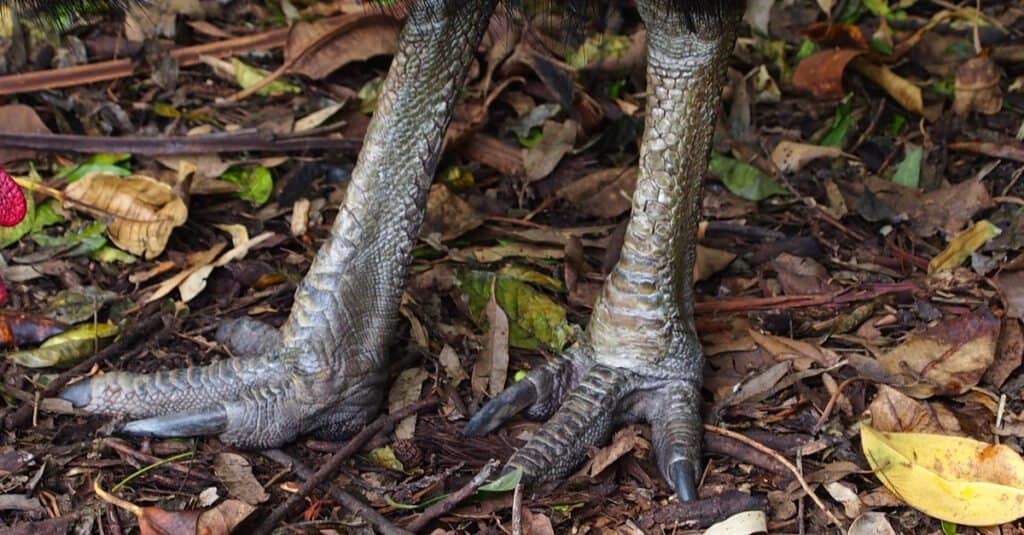
Cassowary Claw - Two Feet

The cassowary has three-toed feet with the inner toe bearing a lethal claw.

Behavior

Cassowaries can jump 7 feet in the air from a standstill and run up to 31 mph.

The southern cassowary is shy and solitary and will chase other cassowaries away except during the mating season.

Despite that famous claw, it is not used to grab prey the way raptors use their talons.

Though these birds will indeed attack humans, they seem to only do so when they’re provoked, frightened, defending eggs or chicks, or under attack themselves. Some cassowaries associate humans with food and will simply jump at a human in expectation of a meal.

Cassowaries have been called “the most dangerous birds in the world” by publications such as The Guinness Book of World Records. That claim comes in part because there have been two recorded human fatalities and more than 200 incidents with cassowaries.

Overall, cassowary attacks are rare. Most have come because people tried feeding cassowaries, and most incidents involve the birds charging. However, if a person falls to the ground, cassowaries can be quite dangerous. Their dagger-like claws can grow up to 5 inches and cause severe wounds or even death.
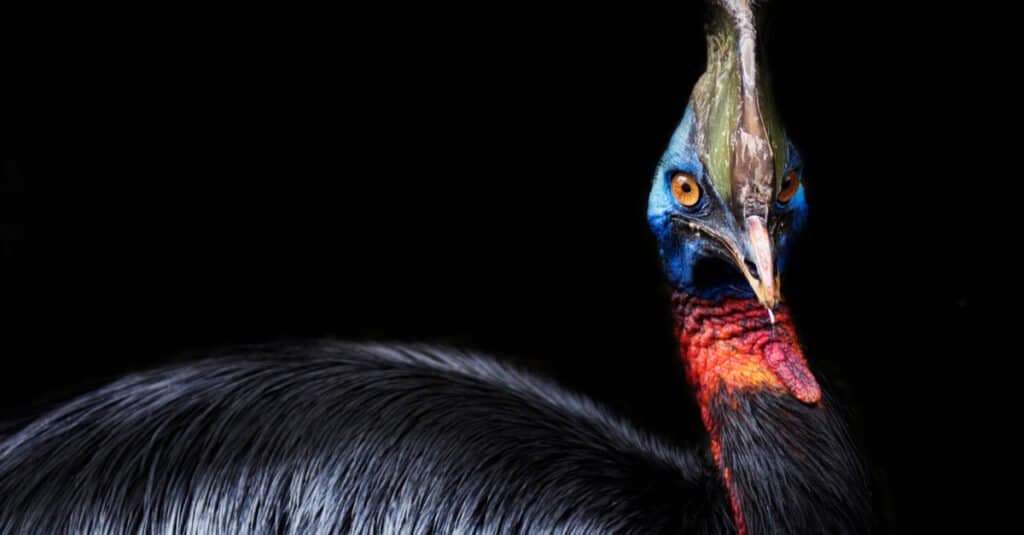
Cassowary Size - Cassowary on black background

Cassowaries have been called the most dangerous birds in the world.

Habitat

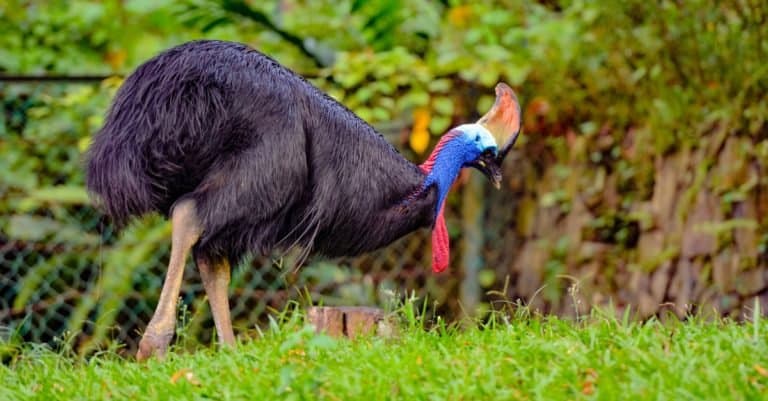
These birds are found in New Guinea — which includes Papua New Guinea, Indonesia, and Seram, an island that is part of Indonesia — as well as the northeastern part of Australia, and the Aru Islands that lie between New Guinea and Australia.

Though they are large birds, they are secretive and hard to find in their tropical rainforest habitats. They are known to live in the Paluma Range National Park, the McIlwraith Range National Park, and the Jardine River National Park in Australia.

Fortunately, there are a number of zoos around the world that exhibit cassowaries. Among them are:
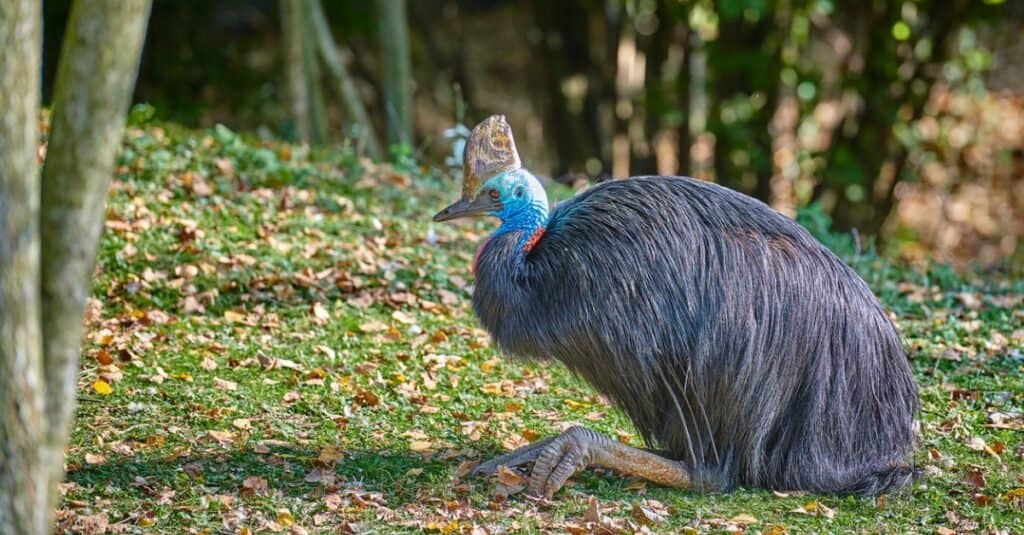
southern cassowary laying on the ground

Cassowaries make their homes in tropical rainforests.

Diet

The cassowary eats fruit that has fallen to the ground, berries, mushrooms and other fungi, plant materials, and small vertebrates like lizards. It is capable of eating plant matter that will poison other animals because the food goes through their digestive system very quickly. They’ll also eat small reptiles and amphibians, rats and mice, snails, and insects.

They will also eat carrion, and babies eat the feces of their fathers and siblings. Indeed, grown birds are known to eat their own feces if they still have undigested fruit.
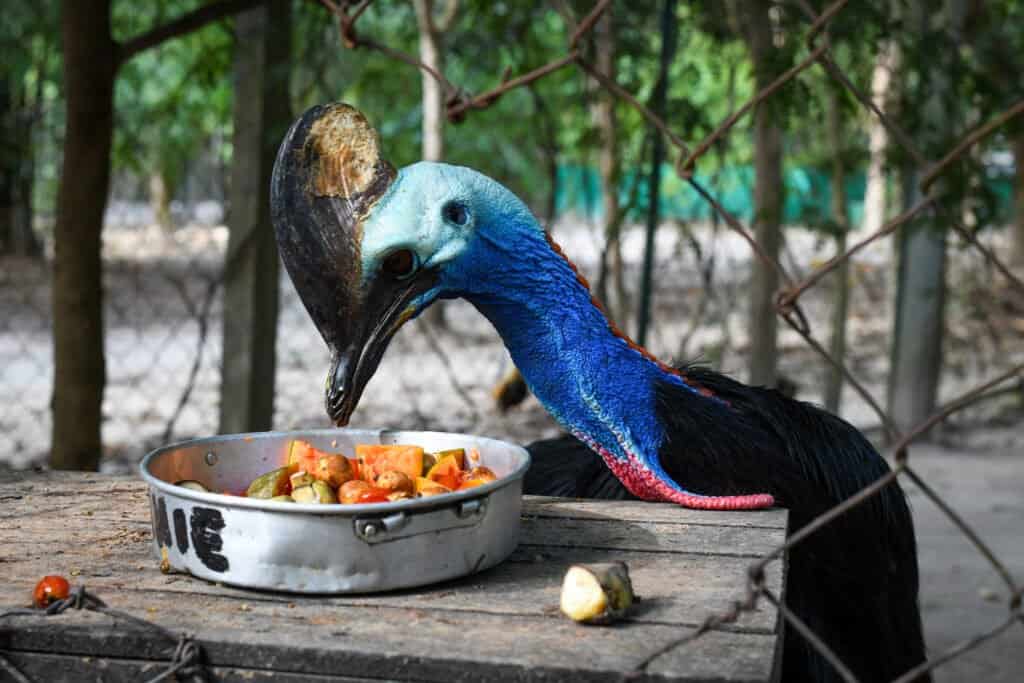
What Do Cassowaries Eat - Cassowary Eating

The cassowary’s diet includes fruits, berries, and plant material.

Predators and Threats

The biggest threat to these birds is humans. Humans kill them for their meat and their feathers, and inadvertently kill them on the highways.

Their chicks, which drop at any sign of danger, are eaten by dogs and pigs. Pigs also eat their eggs, and the cassowary’s habitat has been fragmented and destroyed by logging and development.

Other things that threaten cassowaries are diseases and natural disasters such as typhoons.
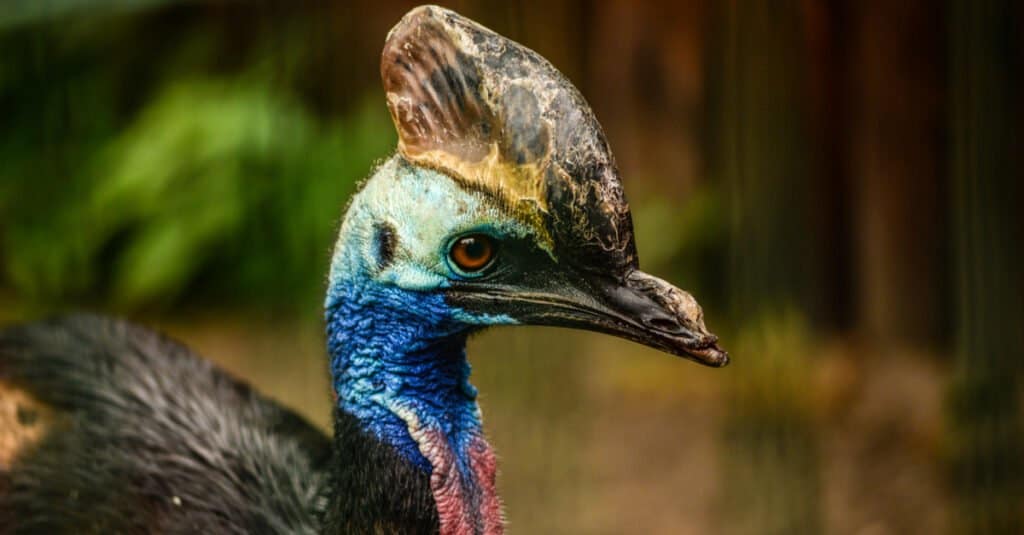
southern cassowary with blurred background

The cassowary is at risk from humans, diseases, and environmental damage.

Reproduction, Babies, and Lifespan

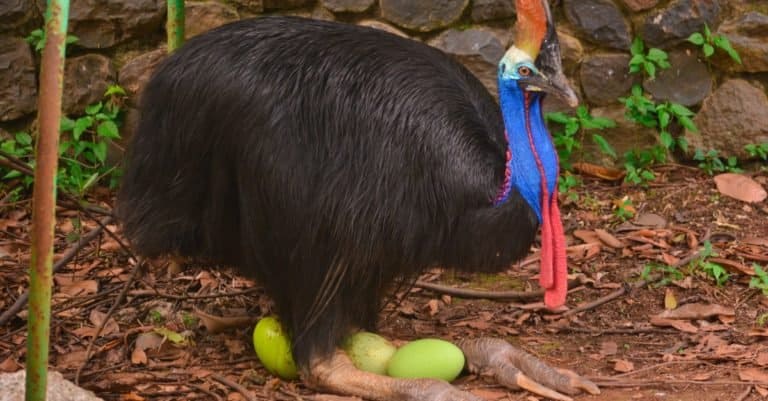
The breeding season for cassowaries occurs in winter and spring. Males will claim a territory and build a nest upon fallen leaves on the ground that is shallow but sometimes lined with leaves or grass. The male will court a female by vocalizing and inflating his throat and dancing while she watches. If she accepts him and doesn’t drive him off, she’ll sit on the ground, and they’ll mate. She will then lay four to six green eggs in his nest, with the color due to a pigment called biliverdin found in the shells, providing camouflage. When she’s done, he’ll chase her off and incubate the eggs himself for about 47 to 56 days. In the meantime, the female will find another male. She’ll lay as many as 20 eggs before she’s through.

Baby cassowaries stay with their fathers for nine months or until their first molt, though they will be three years old before they have grown-up plumage. Some chicks stay with their fathers for as long as 18 months. The baby cassowaries are covered with brown down with black streaks. The father becomes very aggressive if he feels the chicks are under threat from predators.

Female cassowaries are sexually mature when they are two, and males are mature when they are three. After that, they can reproduce for decades. Females can breed until they’re about 40, and males until they’re about 35. The oldest cassowary known lived to be at least 61 years old.
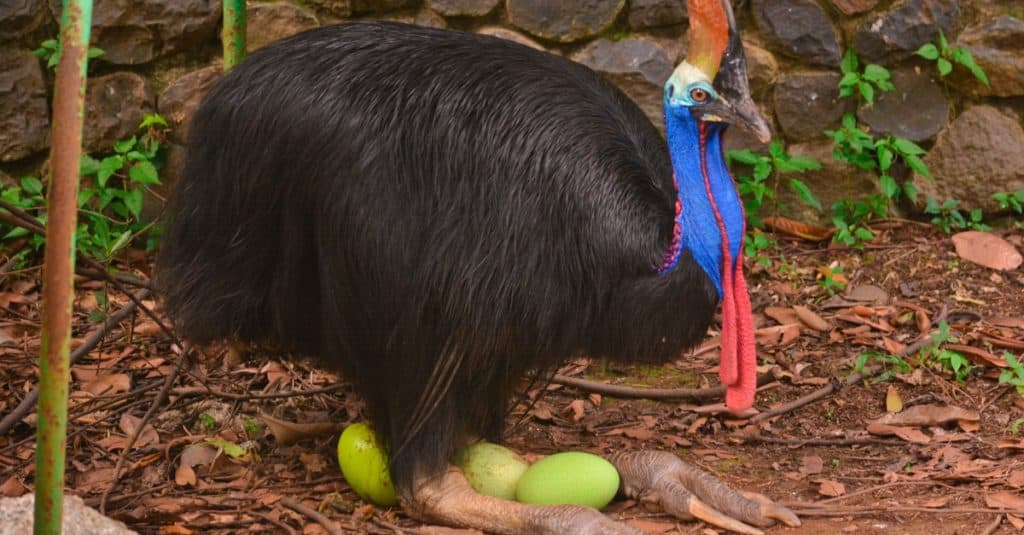
Cassowary bird incubating the eggs.

Once the female lays 4-6 green eggs, the male will chase her off and incubate the eggs.

Population and Conservation

Scientists aren’t completely sure how many cassowaries are in the wild, but the status of all species according to the IUCN Red List of Threatened Species is of Least Concern.

There are an estimated 20,000 to 50,000 southern cassowaries and up to 20,000 northern cassowaries. The population of the dwarf cassowary is unknown. The populations of all three species are declining.
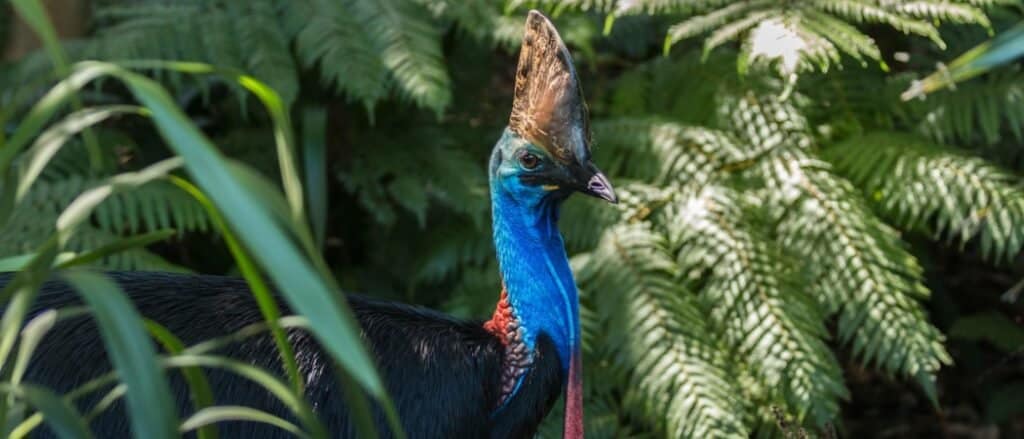
cassowary walking in the woods

The cassowary’s conservation status is classified as Least Concern.

View all 392 animals that start with C
How to say Cassowary in ...
Czech
Kasuár přilbový
German
Helmkasuar
English
Southern Cassowary
Spanish
Casuarius casuarius
Finnish
Kypäräkasuaari
French
Casoar à casque
Hungarian
Sisakos kazuár
Indonesian
Kasuari Gelambir-ganda
Italian
Casuarius casuarius
Japanese
ヒクイドリ
Latin
Casuarius casuarius
Dutch
Helmkasuaris
Polish
Kazuar hełmiasty

Sources

  1. Nature / Accessed May 31, 2021
  2. Queensland Government Department of Environment and Science / Accessed May 31, 2021
  3. Wikipedia / Accessed May 31, 2021
  4. Animal Diversity Web / Accessed May 31, 2021
Catherine Gin

About the Author

Catherine Gin

Catherine Gin has more than 15 years of experience working as an editor for digital, print and social media. She grew up in Australia with an alphabet of interesting animals, from echidnas and funnel-web spiders to kookaburras and quokkas, as well as beautiful native plants including bottlebrushes and gum trees. Being based in the U.S. for a decade has expanded Catherine's knowledge of flora and fauna, and she and her husband hope to have a hobby farm and vegetable garden in future.

Thank you for reading! Have some feedback for us?


Cassowary FAQs (Frequently Asked Questions)

Predators of cassowaries include dingos, crocodiles, and humans.