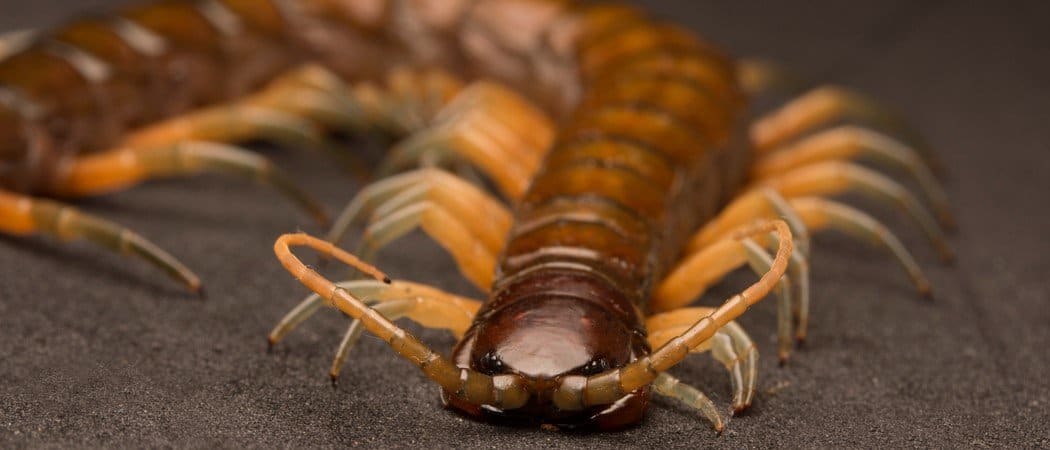


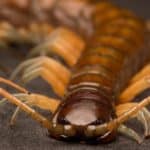
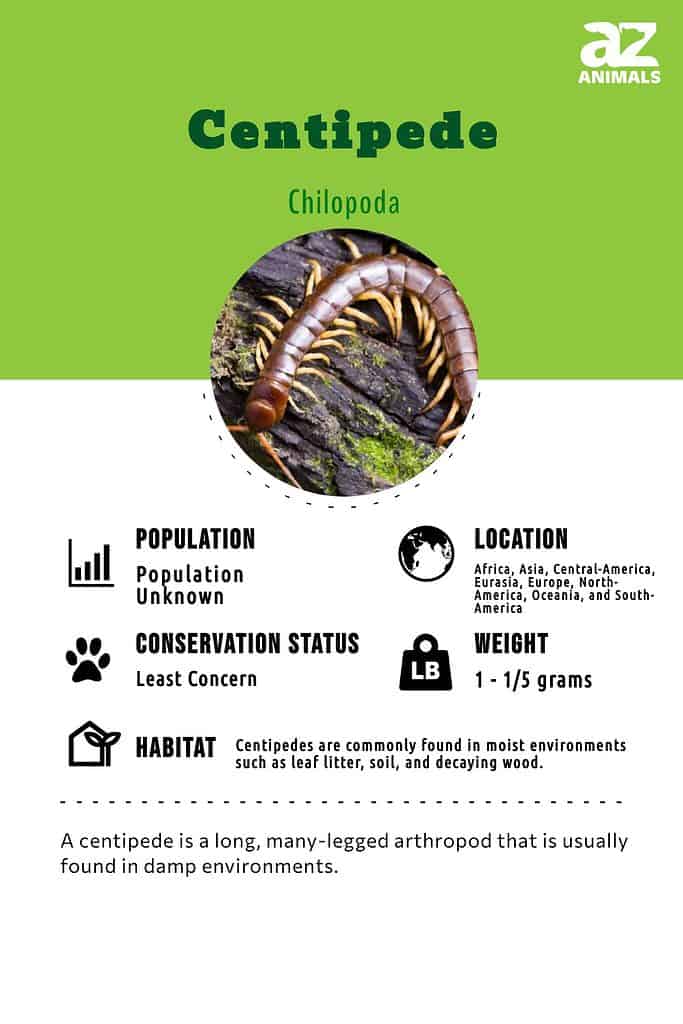
Centipedes are predatory arthropods with flat, segmented bodies.
These multi-legged creatures can range in size from two inches to over a foot. Because they lack a hard outer skeleton, centipedes must spend most of their time near water.
This is why these animals prefer a damp habitat. You can find them hiding under mulch or in bathroom and kitchen drains. It’s also why they are more active at night.
6 Incredible Centipede Facts!
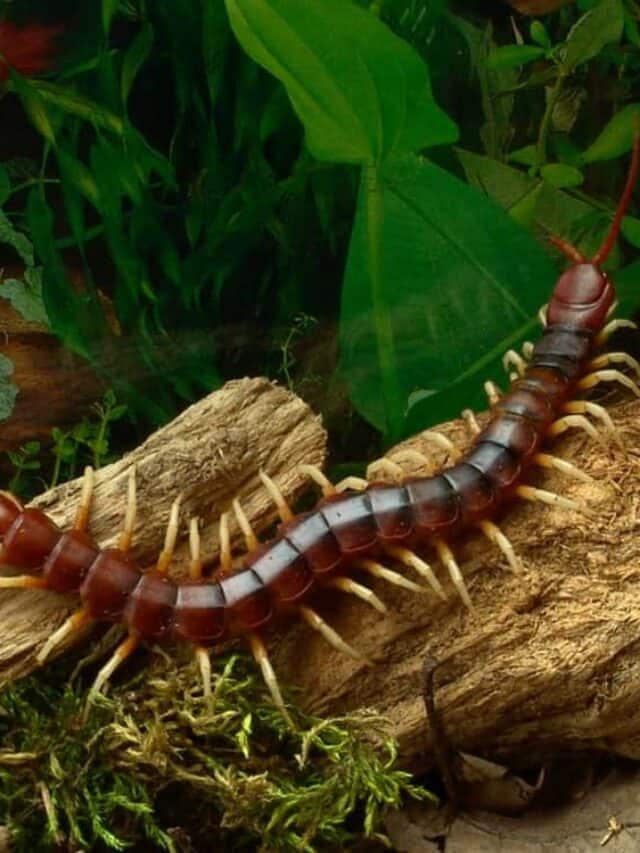
- Even though their name means “100 legs,” no centipede has 100 legs. That’s because everyone has an odd number of pairs of legs.
- Babies are born with four sets of legs. As they mature, they develop more legs.
- A female can have 150 babies in her lifetime.
- The one-inch house centipede of Europe and North America is the only one common in homes.
- The biggest centipede species in the world is Scolopendra gigantea, a tropical bug that can grow over a foot long!
- Scolopendra galapagoensis, also known as Darwin’s Goliath Centipede, is a large, poisonous species that only live on the island of Galapagos.
Species, Type, and Scientific Name
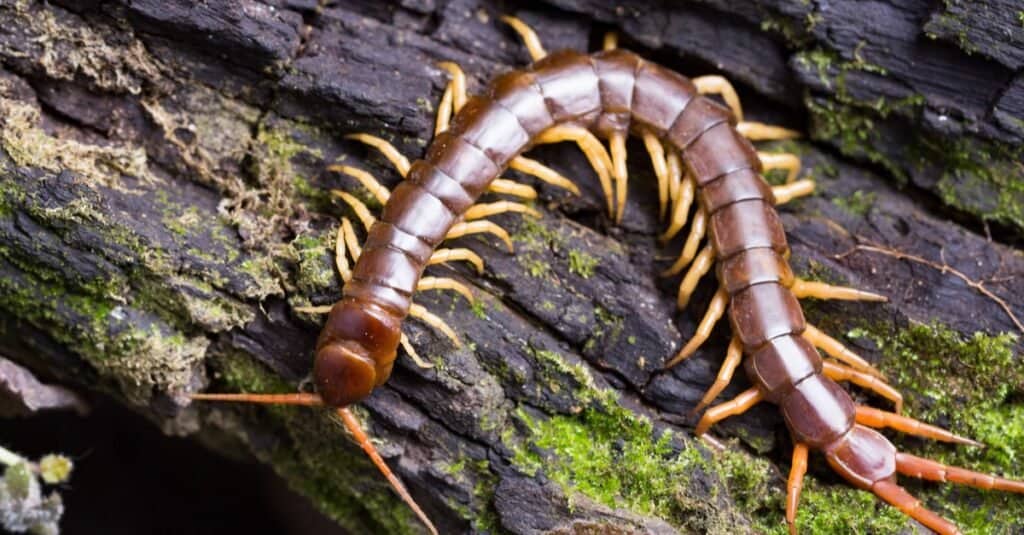
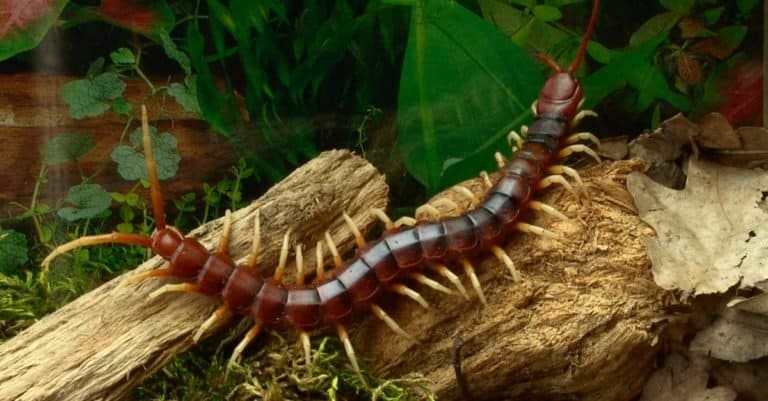
A centipede (Scolopendra sp.) sleeping on a mossy tree in a tropical rainforest.
©frank60/Shutterstock.com
These animals belong to the phylum Arthropoda and class Chilopoda. They are part of the phylum Arthropoda and subphylum Atelocerata.
Their scientific name comes from the Greek words cheilos, meaning lip, and pod meaning foot.
Millipedes and centipedes belong to the same order but are not in the same class. Millipedes belong to the class Diplopoda.
There are approximately 3000 species. They range in size and color from the huge Scolopendra gigantea to the one-inch house centipede found in most homes.
Tropical species are brightly colored and may have multicolored red, yellow, blue, and green segments. Smaller centipedes who live in temperate climates are more likely to be brown or gray in color.
All of them are instantly recognizable by their segmented body and many pairs of legs. The number of legs can vary from 15 to 170 pairs.
Most of these animals belong to the order on the following list:
- Scutigeromorpha
- Lithobiomorpha
- Craterostigmomorpha
- Scolopendromorpha
- Geophilomorpha
- House Centipede
- Scolopendridae
- Scolopendra
- Scolopendromor
- Geophilomorpha
- Stone centipedes
Evolution and Origins
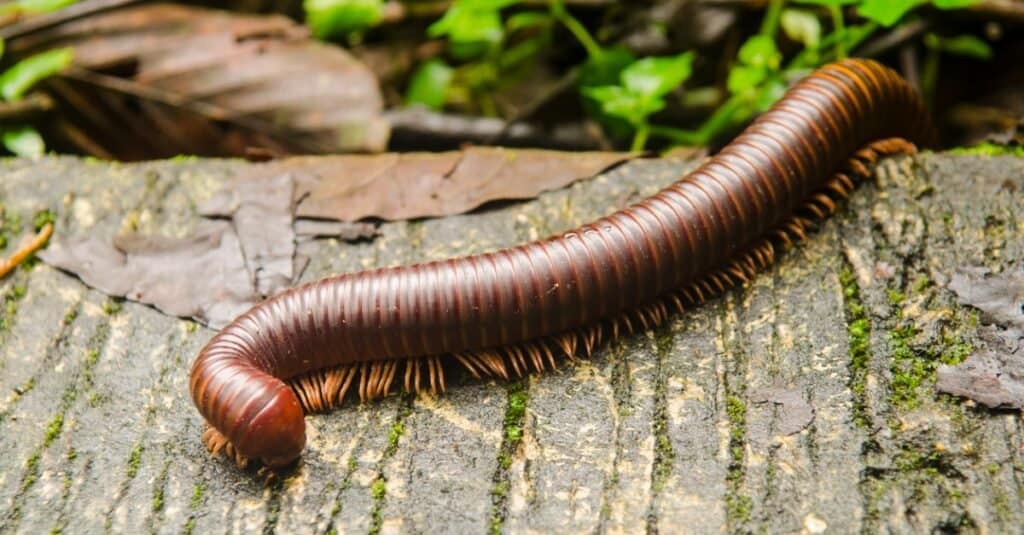
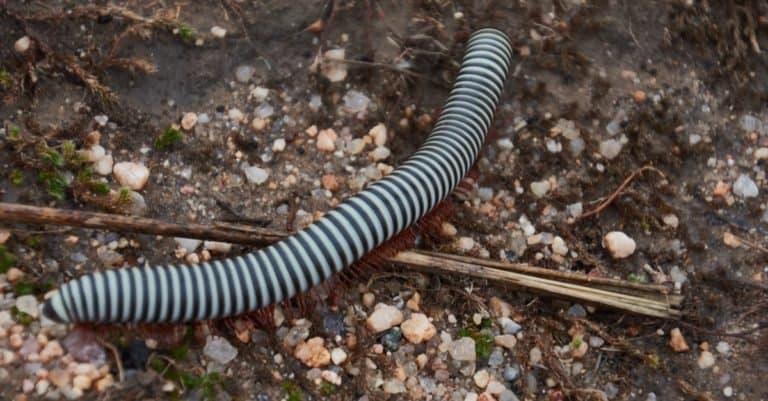
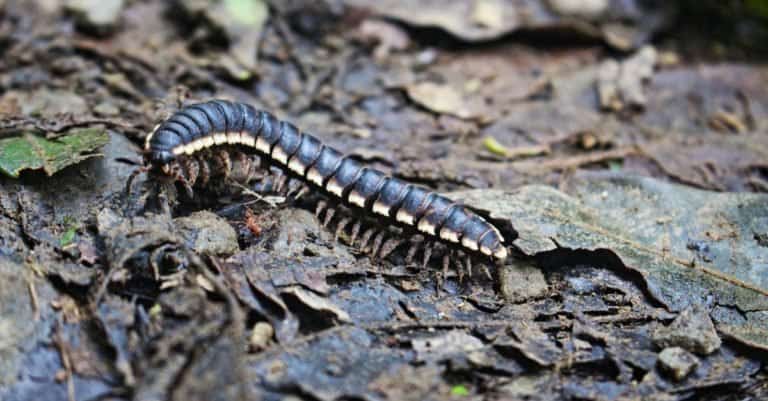
Millipedes are different from centipedes bc they feed on dead matter rather than insects.
©iStock.com/greenleaf123
Centipedes belong to the class Chilopoda and have a rich evolutionary history that dates back to the Late Silurian period, over 430 million years ago. Fossil evidence indicates that the earliest centipedes were similar in size and shape to modern species, with long, segmented bodies and numerous legs.
Over the course of their evolution, centipedes have diversified into several different groups, each adapted to a specific habitat and way of life. Some species have become adapted to living in forests, while others have evolved to live in caves, deserts, or grasslands.
Despite their long history, centipedes have undergone relatively little change over time. This is due in part to the fact that they are well-adapted to their environments and have been successful in colonizing a variety of habitats.
Appearance
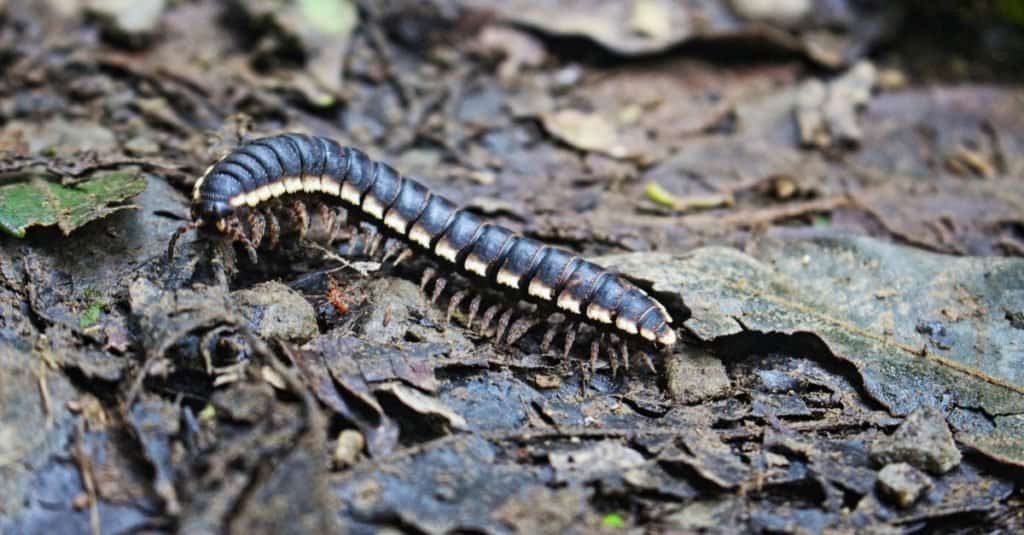
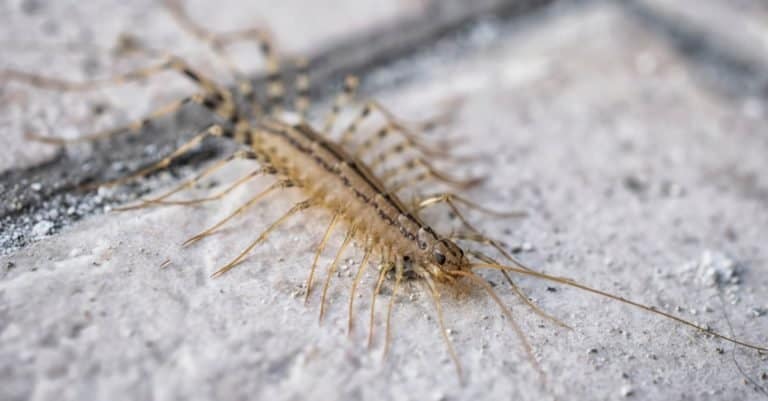
House centipedes range in size from one to six inches. They move extremely fast on their long legs, but you can easily identify them when you see them.
©Christian Giaffrey/Shutterstock.com
House centipedes range in size from one to six inches. They move extremely fast on their long legs, but you can easily identify them when you see them.
How do you tell millipedes and centipedes apart? Millipedes have a lot of legs, but their legs are short and stubby. They move slowly and carefully. Centipedes, on the other hand, have long legs that let them move quickly.
Another difference is that millipedes don’t bite, but centipedes do. However, the bites of all kinds of centipedes, including house centipedes, although venomous are generally harmless to humans.
Tropical species are large and colorful. The largest known species is the Scolopendra gigantea, which is also known as the Peruvian giant centipede. This tropical beast is brightly colored and can reach more than a foot in length. You are not likely to see tropical centipedes inside homes.
Learn about the house centipede here.
Habitat
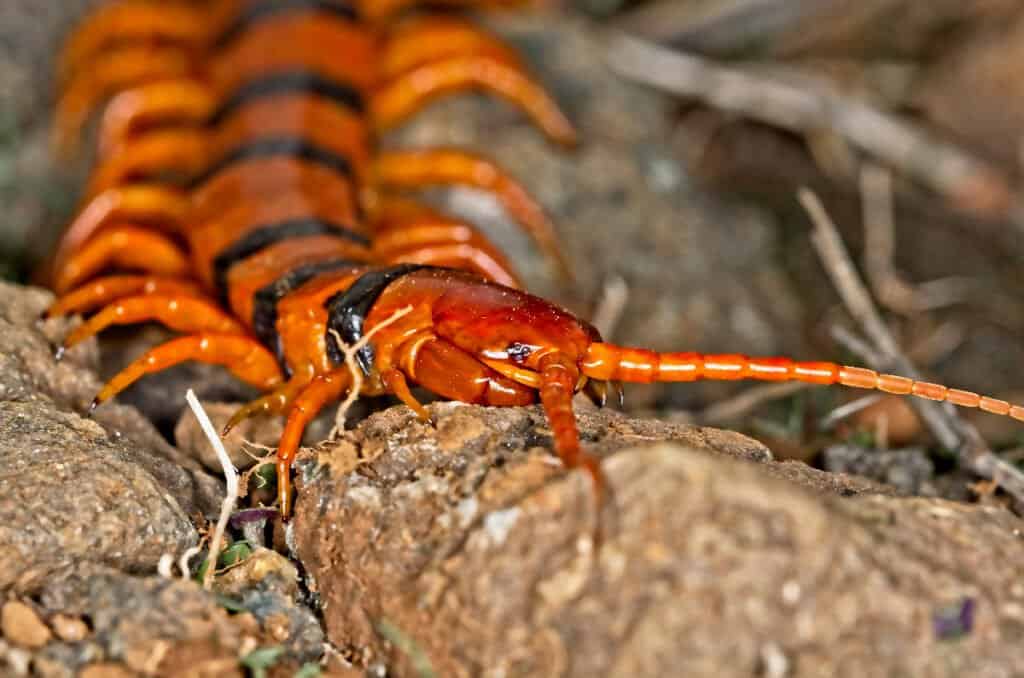
The species Scutigera Coleoptrata is also known as the house centipede.
©ananth-tp/Shutterstock.com
They live in both temperate and tropical regions, where you are likely to find them living under fallen logs, bark, mulch, and stones.
Most of them are active on the ground, but others can burrow into soft soil. Tropical species usually live in trees and inside caves.
The species Scutigera Coleoptrata is also known as the house centipede. You often find house centipedes indoors, where they like to live in bathrooms because of the damp conditions.
Diet
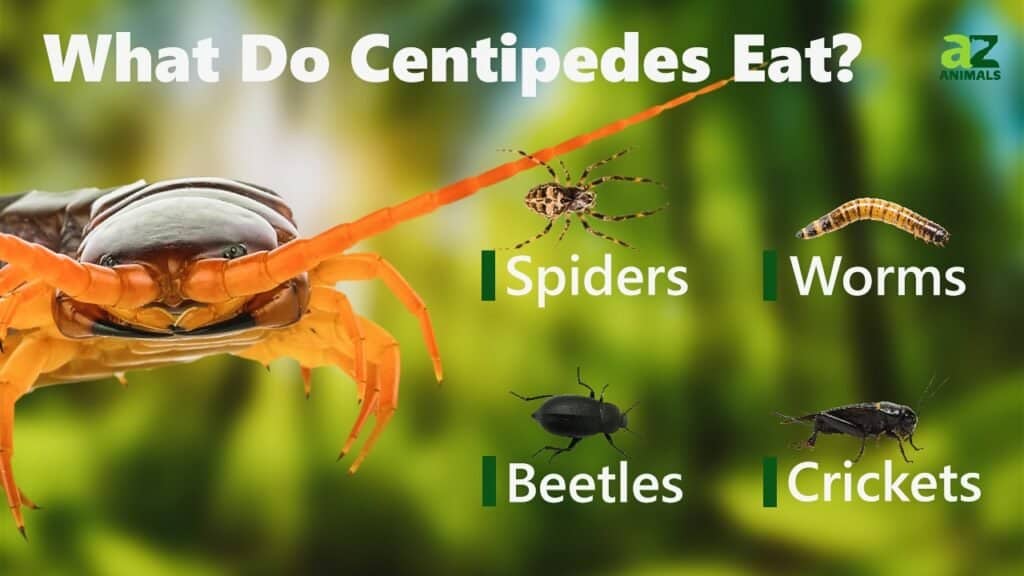
These animals are predatory and carnivorous. Their favorite prey is small insects, including beetles, termites, beetle larvae, and earthworms.
Large tropical centipedes feed on lizards, birds, bats, frogs, snakes, and mice.
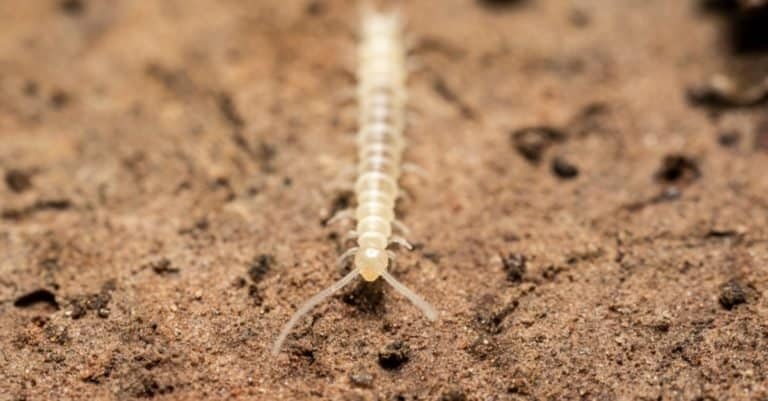
These animals are almost blind, and burrowing centipedes have no eyes. Despite this inability to see, they are excellent hunters.
They have long antennae that can sense the availability of food. When they find prey, they use their front legs to grab the prey. Their front legs have sharp pincers that contain venom. Their venom can paralyze the prey or kill it instantly.
Burrowing centipedes use their pincers to dig into the earth. They feed on earthworms, snails, and nematodes.
For a complete analysis of their diet, give our ‘What Do Centipedes Eat’ page a read!”
Centipede Pictures
View all of our Centipede pictures in the gallery.

Vince Adam/Shutterstock.com
How to say Centipede in ...
Sources
- Thought Co / Accessed February 18, 2021
- Britannica / Accessed February 18, 2021
- Hyperaxion / Accessed February 18, 2021