
C
Species Profile

Chameleon

Chamaeleonidae

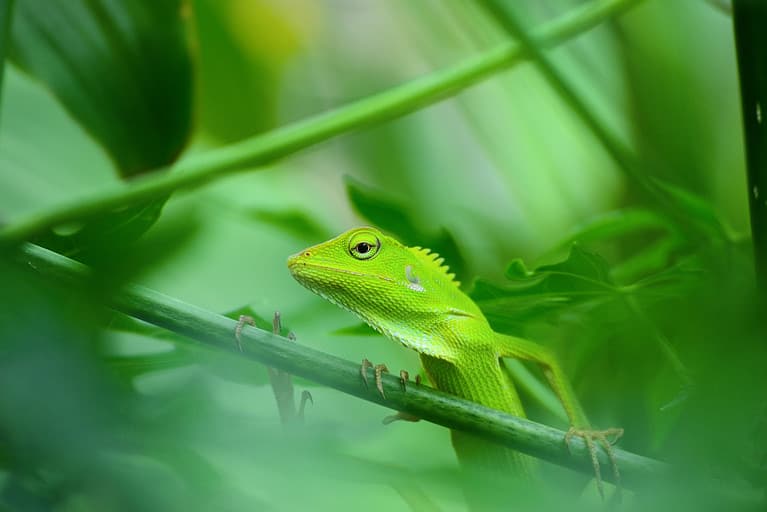
Eyes apart. Tongue like lightning.
Kinemator / Creative Commons

Chameleon Distribution

Click a location to explore more animals from that region

Invasive Species
Loading map...
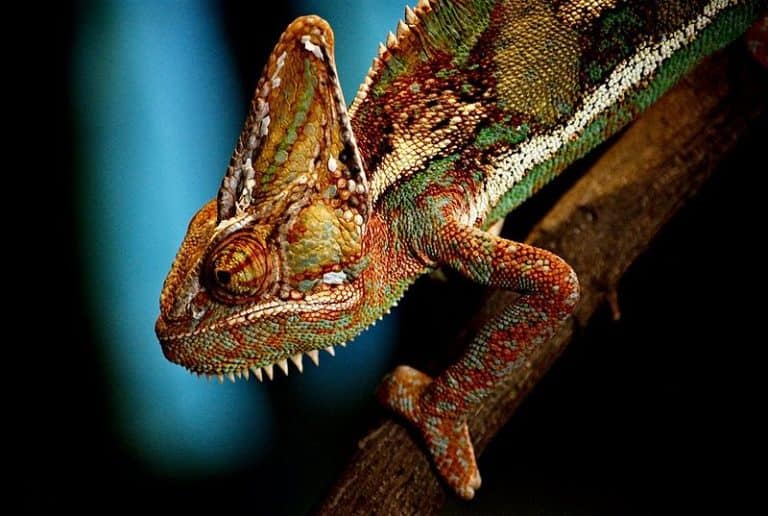
Chameleon (Chamaeleo calyptratus) in Wroclaw Zoo

At a Glance

Family Overview This page covers the Chameleon family as a group. Stats below are general traits shared across the family.
Also Known As Cham, Chamy, Color-changing lizard, Caméléon, Camaleón, Camaleonte
Activity Diurnal+
Lifespan 5 years
Weight 1 lbs
Status Not Evaluated
Did You Know?

Family size spans from tiny leaf chameleons (~3 cm total length) to giants nearing ~70 cm.

Scientific Classification

Family Overview "Chameleon" is not a single species but represents an entire family containing multiple species.

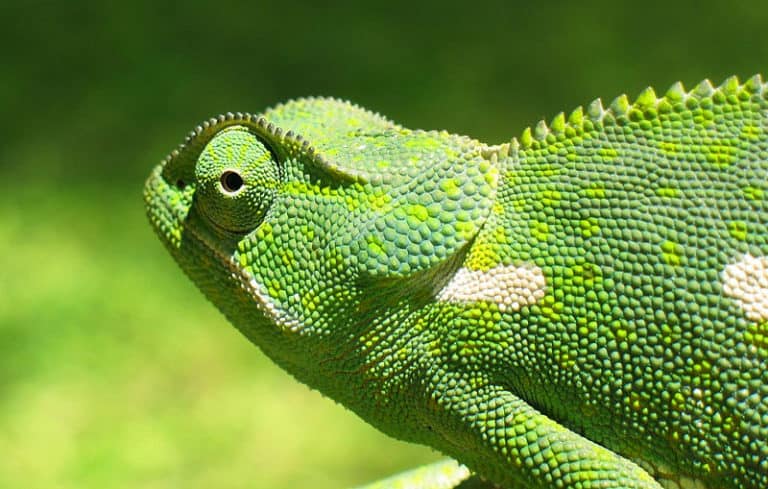
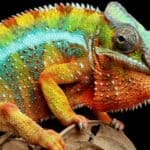
Chameleons (family Chamaeleonidae) are specialized squamate reptiles best known for independently movable eyes, a projectile tongue for capturing prey, grasping “zygodactyl” feet, and (in many species) a prehensile tail. Many can change coloration for communication, thermoregulation, and camouflage, though not all species are brightly colored.

Kingdom
Animalia
Phylum
Chordata
Class
Reptilia
Order
Squamata
Family
Chamaeleonidae

Distinguishing Features

  • Independently mobile eyes with near-360° scanning
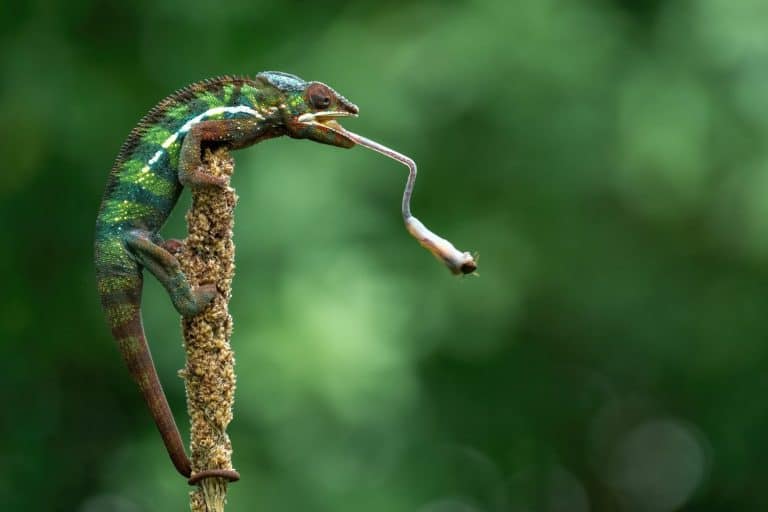
  • Ballistic, sticky-tipped tongue for rapid prey capture
  • Zygodactyl feet (two toes forward, two back) for gripping branches
  • Laterally compressed body; many species have crests/casques/horns
  • Color change used largely for signaling, stress, and temperature control (not just camouflage)

Physical Measurements

Males and females differ in size

Length
12 in (1 in – 2 ft 4 in)
10 in (1 in – 1 ft 10 in)
Weight
0 lbs (0 lbs – 2 lbs)
Tail Length
6 in (0 in – 1 ft 4 in)
5 in (0 in – 12 in)
Top Speed
3 mph
Slow; bursts about 3–5 km/h

Appearance

Skin Type Dry, tough skin with small grainy scales, bumps, crests, and ridges. Some have casques, horns, or gular crests. Feet are zygodactyl with claws; tail often prehensile in tree species.
Distinctive Features
  • Chameleons range from about 3 cm in tiny pygmy leaf litter species, Brookesia, to about 60 to 70 cm in large species, Furcifer and Trioceros; body size and shape match their habitats.
  • Lifespan range across species: commonly ~1-3 years in many small/miniaturized species; ~3-8+ years in many medium-to-large species; up to ~10-12+ years reported in some larger taxa (often in captivity; wild lifespan may be shorter).
  • Geographic diversity centers: Africa and especially Madagascar contain the greatest species richness and morphological diversity; additional lineages occur in parts of southern Europe, the Middle East, and South Asia (distribution varies by genus).
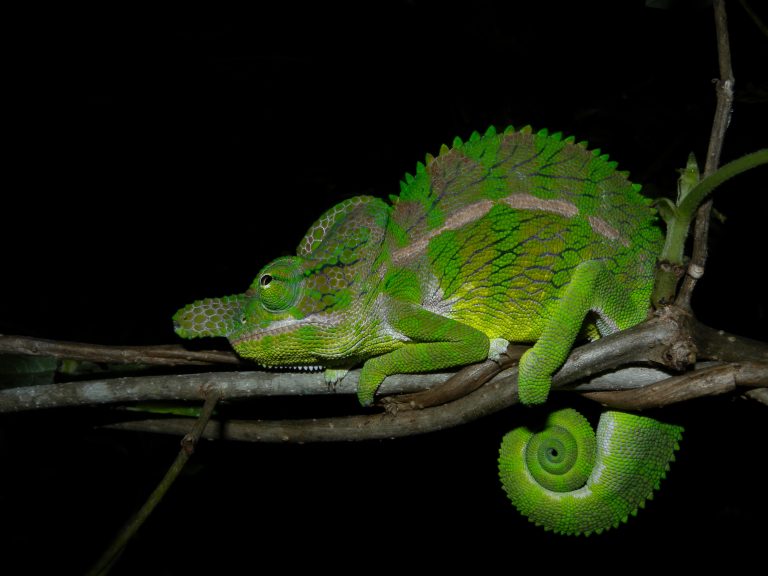
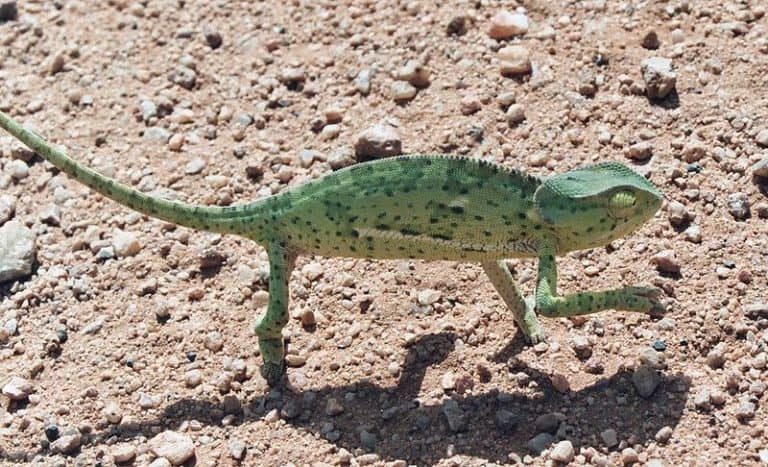
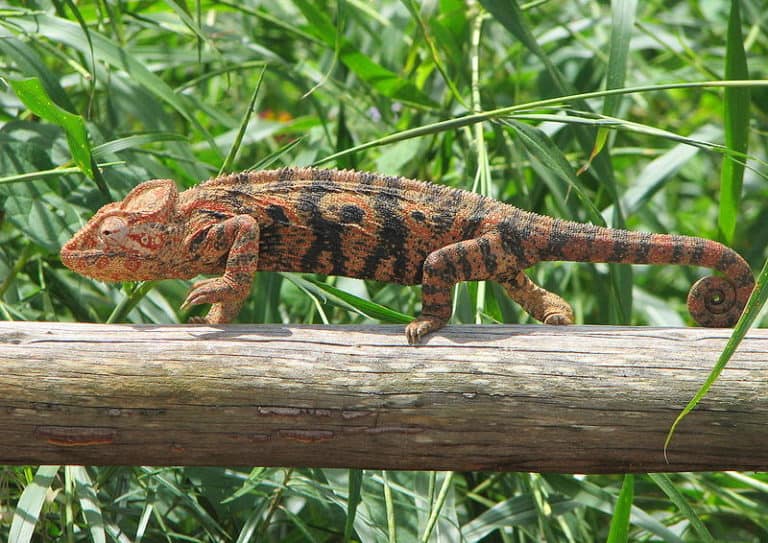
  • Most chameleons have tree adaptations: a flattened, laterally compressed body, grasping zygodactyl feet (two toes opposing three), and often prehensile tail for climbing. Some are ground or leaf-litter dwellers with less-prehensile tails and duller color.
  • Visual hunting specializations: independently mobile turreted eyes provide near-360° scanning; many species rely heavily on vision for detecting prey and rivals, with short bursts of precise head/eye alignment before striking.
  • Chameleons (Chamaeleonidae) have a very long, fast tongue with special muscles and a sticky, club-like tip. Range and speed differ by species and size.
  • Many are mainly insect-eating, sit-and-wait predators; some take other bugs or small animals, and some eat leaves, fruit, or nectar. They live in rainforests, montane forests, dry woodlands, savannas, and semi-arid scrub.
  • Chameleons are active by day and often solitary, keeping small home ranges and using visual displays—posture, body inflation, and color change—for territory fights and courtship; display level varies by species and habitat.
  • Reproduction variation: many species are oviparous (egg-laying), while some (notably several montane lineages) are viviparous (live-bearing). Clutch/litter size, breeding seasonality, and incubation/gestation length vary widely with climate and elevation.

Sexual Dimorphism

Sexual dimorphism is common but not universal across Chamaeleonidae. Many species show male-biased size and ornamentation and stronger, more contrasting display coloration; other species (especially some miniaturized/leaf-litter taxa) exhibit subtler differences. Females of many species display distinct receptive vs non-receptive/gravid signaling colors (often higher contrast or darker patterning when unreceptive).

  • Often larger body size and proportionally larger head in many species (degree varies by genus/species).
  • More prominent cranial ornamentation in many taxa (casques/helms, crests, rostral/nasal horns or knobs, occipital lobes).
  • More vivid or higher-contrast display coloration and patterning during courtship/territorial interactions in many species.
  • More pronounced hemipenal bulges at the tail base (external indicator in many individuals).
  • In some species, more developed dorsal/ventral crests or enlarged scalation (tubercles/spines).
  • Often smaller and less ornamented in many species, though exceptions occur and some females have modest casques/crests.
  • Gravid/unreceptive signaling coloration is common in many species (often darker backgrounds with contrasting spots/bands), used to deter mating attempts.
  • Generally subtler pattern contrast outside reproductive signaling in many taxa, especially in species where crypsis is prioritized; however, coloration varies widely among lineages and habitats.
  • Body shape may become noticeably distended when carrying eggs/embryos (oviparous/viviparous species respectively).

Did You Know?

Family size spans from tiny leaf chameleons (~3 cm total length) to giants nearing ~70 cm.

Many species aim each eye independently, giving a wide field of view while staying nearly motionless.

Their tongues can launch in a fraction of a second and extend roughly to (or beyond) body length in many species.

Color change is often about communication, mood, and temperature control-not just camouflage.

Madagascar and mainland Africa hold the greatest diversity of chameleons on Earth.

Feet work like living tongs: two toes oppose three for a strong grip on twigs and vines.

Some lineages give live birth in colder mountain habitats, while many others lay eggs in soil or leaf litter.

Unique Adaptations

  • Independently movable, turreted eyes with high visual acuity-well suited for detecting small prey and predators from cover.
  • Ballistic tongue apparatus: elastic tissues and specialized anatomy store and release energy for rapid projection and sticky prey capture.
  • Zygodactyl feet (two toes vs. three) for strong grasping on narrow branches; grip function differs slightly across genera and habitats.
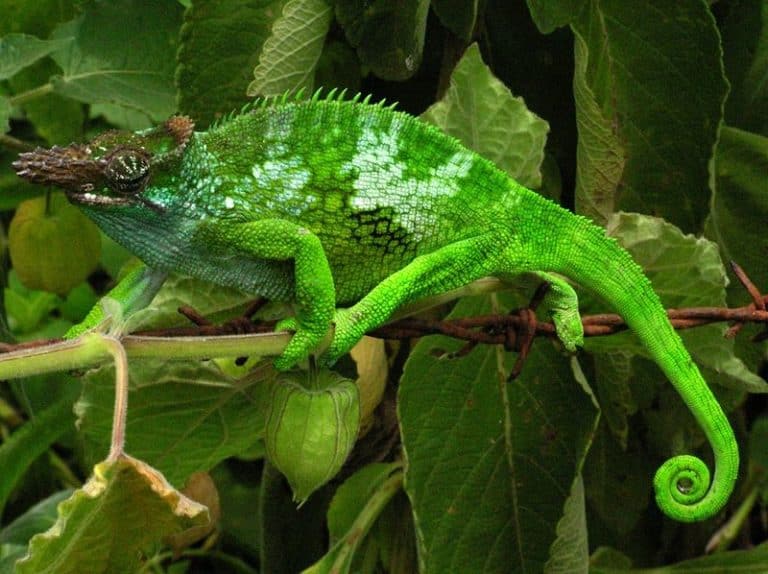
  • Prehensile tail in many species acts as a fifth limb for stability; some groups (notably several dwarf/leaf chameleons) have reduced or non-prehensile tails.
  • Color change via specialized skin layers containing chromatophores and (in many species) structural "iridophore" cells that shift reflected light-used for signaling and thermoregulation.
  • Laterally compressed bodies and helmeted crests/casques in some species aid display, species recognition, and potentially thermoregulation; others are cryptically shaped for leaf litter.
  • Projectile feeding and a highly mobile head/neck allow precise strikes while the body stays anchored to branches.

Interesting Behaviors

  • Sit-and-wait visual hunting: many remain still, then strike rapidly with the tongue; others actively stalk through foliage-strategy varies by habitat and prey.
  • Color signaling: individuals may brighten, darken, or show contrasting patterns during courtship, rivalry, stress, or thermal regulation; intensity and palettes vary widely among species.
  • Mostly solitary lifestyles: many species defend personal space or display to avoid fights, especially among males; social tolerance differs by species and season.
  • Arboreal locomotion: careful, slow "rocking" steps and branch-testing grips reduce detection and improve stability; some dwarf/leaf chameleons are more terrestrial in leaf litter.
  • Thermoregulation by behavior: basking, shade-seeking, and body orientation are common; darker colors often help absorb heat, lighter colors can reduce overheating.
  • Seasonal breeding: many species time reproduction to rainfall and insect abundance; nesting (egg layers) often involves digging holes in soil, while live-bearing species carry embryos longer in cooler climates.
  • Anti-predator tactics: freezing, swaying like a leaf, flattening the body, gaping/hissing, and sometimes biting; some drop from branches to escape.

Cultural Significance

Chameleons (Chamaeleonidae) appear in African stories as symbols of patience, careful thought, and change. Their eyes and color shifts are used in teaching and media about how they adapt, see, and hide. Madagascar and Africa's chameleon diversity makes them key species for protecting threatened forests.

Myths & Legends

In Zulu and Xhosa tales, the creator sent a chameleon (Chamaeleonidae) to tell people they would not die. A faster messenger (often a lizard) arrived first, so death came to humans.

In several southern African oral traditions, the chameleon's slow, deliberate journey is used to explain why mortality entered the world-its unhurried pace becomes a moral about delay and consequence.

Across parts of Africa, chameleons appear in folktales as creatures of change and trickery, their shifting colors interpreted as the ability to alter appearance or intentions.

The English name and many European references trace to the ancient Greek "chamaileōn" ("ground lion"), reflecting classical-era awe at its gripping feet and fierce, dragon-like head shapes rather than actual lion-like behavior.

In Madagascar, chameleons are woven into local taboos (fady) and beliefs that vary by region; some communities treat them with caution or special respect, linking encounters to omens or social rules.

Conservation Status

NE Not Evaluated (family-level hub). Member species in Chamaeleonidae span the full range from Least Concern (LC) to Critically Endangered (CR), with a substantial number also listed as Data Deficient (DD), especially among micro-endemic Malagasy and African taxa. Family-wide ranges & generalizations (explicitly variable across species): - Geographic range: Primarily sub-Saharan Africa and Madagascar, with additional species in North Africa, the Middle East, and into South Asia; one species occurs in southern Europe (Mediterranean). - Size: ~2 cm to ~70 cm total length (from the tiniest Brookesia leaf chameleons to the largest Furcifer species). - Lifespan: roughly ~1-12+ years across species (often shorter in small, fast-lived species; longer in larger species and frequently longer in captivity). - Ecology/behavior: Most are solitary, visually oriented, sit-and-wait predators feeding mainly on invertebrates; many are arboreal with grasping feet and (often) prehensile tails. However, there is major variation-some are terrestrial/leaf-litter specialists (e.g., Brookesia), reproductive mode varies (egg-laying is common but live-bearing occurs in some lineages), habitat specialization ranges from generalists to extremely range-restricted montane/forest endemics, and color change intensity/function varies among species. Conservation landscape across the family: - Status range: LC-CR plus many DD; declines are most pronounced in habitat-specialist, small-range species. - Common risk pattern: micro-endemism + forest loss (especially in Madagascar and parts of East/Southern Africa) correlates strongly with higher threat categories. - Notable highly threatened examples include some Malagasy endemics such as Brookesia perarmata (CR) and Calumma tarzan (CR) (examples; many others are EN/CR or DD).

Has not yet been evaluated against the criteria.

Population Unknown

Protected Under

  • CITES: Chamaeleonidae spp. are generally covered under CITES controls (commonly Appendix II at the family level), regulating international trade; some taxa may have stricter measures depending on jurisdiction.
  • National/Local protections vary widely by country; many species occur in protected areas, but coverage and enforcement are inconsistent, and not all species' ranges overlap effectively managed reserves.

You might be looking for:

Veiled chameleon

22%

Chamaeleo calyptratus

Popular pet species from the Arabian Peninsula; notable for the tall casque on its head.

Panther chameleon

20%

Furcifer pardalis

Madagascar species famous for bright, variable coloration (often kept in captivity).

Jackson’s chameleon

16%

Trioceros jacksonii

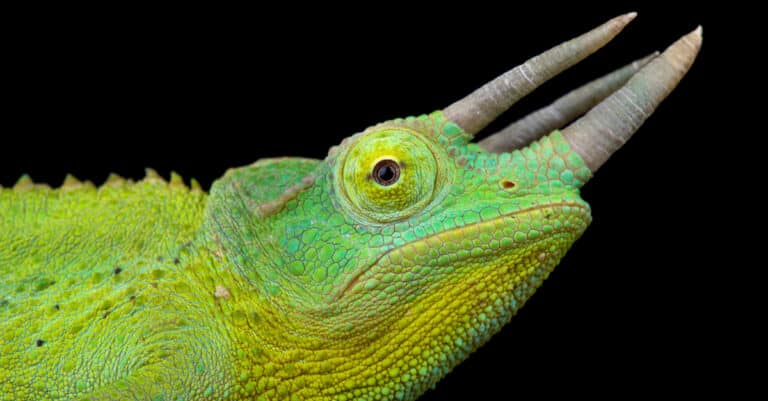
East African species; males typically have three horns.

View Profile

Common chameleon

12%

Chamaeleo chamaeleon

Mediterranean/North African species; the type species for the classic European concept of a chameleon.

Pygmy leaf chameleons (group)

10%

Brookesia

Tiny, often brown, leaf-litter chameleons from Madagascar; many are miniature specialists.

Life Cycle

Birth 20 hatchlings
Lifespan 5 years

Lifespan

In the Wild
1–15 years
In Captivity
2–15 years

Reproduction

Mating System Polygynandry
Social Structure Solitary
Breeding Pattern Transient
Fertilization Internal Fertilization
Birth Type Internal_fertilization

Polygynandry: both sexes often mate with multiple partners. Chameleons are mostly solitary; internal fertilization occurs during mating. Courtship and mating are brief. Males use color and displays to compete; females accept or reject. No parental care.

Behavior & Ecology

Social Solitary (no stable group name) Group: 1
Activity Diurnal, Crepuscular
Diet Insectivore Large, moving insects-especially crickets/grasshoppers/locusts
Seasonal Hibernates

Temperament

Highly variable across the family, but commonly cautious/avoidant and reliant on crypsis and slow movement to reduce detection
Often strongly territorial or space-defending in adults (especially males), with disputes mediated by displays that can escalate to chasing/biting in some species
Stress-prone when handled; many respond with freezing, gaping, inflation, swaying, or threat coloration; tolerance of disturbance varies widely among species and individuals
Seasonally and hormonally modulated aggression and boldness: increased display intensity during breeding; females in some species show strong rejection/avoidance signals outside receptivity
Intraspecific tolerance can be higher in juveniles and in high-resource microhabitats, but prolonged close contact typically increases stress and conflict

Communication

Hissing/exhalation used in threat and distress contexts Common across many species
Occasional squeaks/chirps/croaks reported in some species, typically during high arousal (handling, combat, mating), but overall vocal communication is limited compared with many other reptiles
Rapid and graded color change for signaling (dominance/submission, courtship, receptivity vs rejection, stress) as well as thermoregulation/camouflage; brightness and patterning vary greatly among species
Postural displays: lateral body compression to appear larger, gaping, head elevation, crest inflation, and body rocking/swaying Which can also function as camouflage
Ritualized movement signals: head bobbing, slow approaches, limb/torso positioning; escalation can include lunging, chasing, and biting
Morphology-assisted signaling in some lineages (e.g., horns/casques/crests) via presentation angles and display postures
Tactile communication primarily during mating and combat Grappling/biting/physical displacement
Likely use of close-range chemical cues (e.g., scent trails/secretions) for individual or reproductive context in some species, though reliance and documentation vary across the family

Habitat

Biomes:
Tropical Rainforest Tropical Dry Forest Savanna Desert Hot Mediterranean Temperate Forest Temperate Rainforest Alpine +2
Terrain:
Mountainous Hilly Plateau Plains Valley Coastal Island Riverine Volcanic Karst Rocky Sandy +6
Elevation: Up to 11482 ft 11 in

Ecological Role

Arboreal (and occasionally terrestrial) mesopredators specializing on arthropods, with some larger members acting as opportunistic small-vertebrate predators.

regulation of insect and other arthropod populations (including some pest species) energy transfer from invertebrate prey to higher trophic levels (they are prey for birds, snakes, and mammals) minor contribution to plant interactions in species that consume fruit/flowers (limited seed dispersal/pollen contact)

Diet Details

Main Prey:
Flies Moths and butterflies Crickets, grasshoppers, and locusts Beetles Mantises True bugs Ants and termites Spiders and other arachnids Soft-bodied invertebrates Snails Small vertebrates +5
Other Foods:
Leaves and tender shoots Flowers Soft fruits and berries

Human Interaction

Domestication Status

Wild

Chameleons (family Chamaeleonidae) have no true domestication history. Humans mainly watch or study them, collect them for the live-animal trade (once common, now more regulated), and work to protect them because many only live in small areas. Habitat loss, over-collection, road kills, and CITES rules affect them, especially in Madagascar and parts of Africa.

Danger Level

Low
  • Minor bites or scratches when stressed/handled
  • Salmonella and other reptile-associated pathogens if hygiene is poor (handwashing after contact with animals/enclosures)
  • Allergic reactions/asthma triggers from feeder insects or enclosure substrates in some keepers
  • Indirect ecological risk where released/escaped pets establish non-native populations (localized, not typical across the whole family)

As a Pet

Suitable as Pet

Legality: Laws for chameleons vary by country and region. Many are controlled by CITES and national laws. Captive-bred pets are often legal; wild-caught imports face stricter controls and may need permits. Always check local rules and CITES paperwork.

Care Level: Expert Only

Purchase Cost: $50 - $2,500
Lifetime Cost: $1,500 - $15,000

Economic Value

Uses:
Pet trade (captive breeding and regulated sales) Conservation funding/NGO projects Ecotourism and wildlife viewing (especially in biodiversity hotspots) Education and research (vision biomechanics, coloration/signaling, ecology)
Products:
  • live captive-bred specimens (where legal)
  • zoo/educational display animals
  • breeding services/offspring (commercial captive-breeding in a limited subset of species)

Relationships

Predators 6

Predatory birds Accipitriformes, Falconiformes, Passeriformes
Snakes
Snakes Serpentes
Small carnivorous mammals Viverridae and Herpestidae
Primates and other opportunistic predators
Primates and other opportunistic predators Primates
Cat
Cat Felis catus
Large predatory lizards
Large predatory lizards Varanidae

Ecological Equivalents 5

Animals that fill a similar ecological role in their ecosystem

Anoles
Anoles Anolis spp. Often occupy similar arboreal insect-eating niches and exhibit convergent traits such as behavioral color signaling (including limited physiological color change in some lineages), territoriality, and perch-based ambush foraging.
Dragon lizards
Dragon lizards Agamidae Many are diurnal, visually oriented perch hunters in shrubs and trees; they overlap in prey (insects and other arthropods) and exhibit display-driven social behavior.
Day geckos Phelsuma spp. Small-to-medium arboreal, diurnal lizards that hunt similar arthropod prey on vegetation. They rely on visual cues and microhabitat partitioning, though they use adhesive toe pads rather than zygodactyl grasping.
Tree skinks Scincidae Arboreal (scanorial) insectivores that overlap in habitat use (branches and trunks) and in prey base; generally more active foragers compared with many sit-and-wait chameleons.
Treefrogs Hylidae Convergent use of vertical vegetation structure to ambush insects; overlap in nocturnal/diurnal activity patterns depending on species and locality (chameleons are mostly diurnal, but niche overlap can still be strong in prey and microhabitat).

Types of Chameleon

29

Explore 29 recognized types of chameleon

Veiled chameleon Chamaeleo calyptratus
Common chameleon Chamaeleo chamaeleon
African chameleon (Senegal chameleon complex; common in trade varies by locality) Chamaeleo senegalensis
Panther chameleon Furcifer pardalis
Oustalet's chameleon Furcifer oustaleti
Carpet chameleon Furcifer lateralis
Labord's chameleon Furcifer labordi
Warty chameleon Furcifer verrucosus
Parson's chameleon Calumma parsonii
O'Shaughnessy's chameleon Calumma oshaughnessyi
Jackson's chameleon Trioceros jacksonii
Meller's chameleon Trioceros melleri
Ruwenzori/rough chameleon (complex) Trioceros rudis
Fischer's chameleon Kinyongia fischeri
Multituberculate chameleon Kinyongia multituberculata
Cape dwarf chameleon Bradypodion pumilum
Namaqua dwarf chameleon Bradypodion damaranum
Seychelles tiger chameleon Archaius tigris
Malawi chameleon (Bayliss' chameleon) Nadzikambia baylissi
Spectral pygmy chameleon Rhampholeon spectrum
Bearded pygmy chameleon Rhampholeon brevicaudatus
Usambara pygmy chameleon Rhampholeon temporalis
Micra leaf chameleon Brookesia micra
Armored leaf chameleon Brookesia perarmata
Superciliary leaf chameleon Brookesia superciliaris
Stumpff's leaf chameleon Brookesia stumpffi
Comoro chameleon Furcifer cephalolepis
Nosy Be panther chameleon (locale form; still Furcifer pardalis) Furcifer pardalis
Parson's chameleon (green form; still Calumma parsonii) Calumma parsonii

Can change color to pink, red, green, yellow, turquoise, and other colors!

The chameleon, scientific name Chamaeleonidae, is a species of lizard known for their ability to change colors and degrees of brightness. There are over 160 species of chameleon spread across Madagascar, Spain, Africa, Asia, and Portugal. They have large eyes and curled tails, and some species can change the color of their skin to blend in with their surroundings as a defense mechanism from predators. These lizards can change their skin to pink, blue, red, orange, green, black, brown, light blue, yellow, and turquoise.
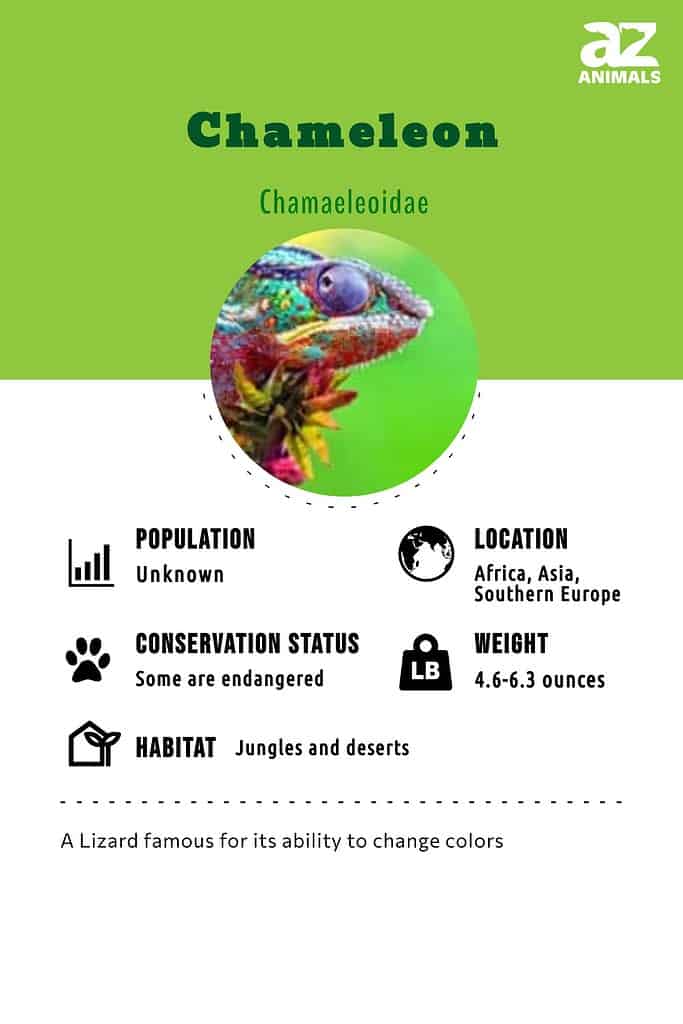
Chameleon infographic

Fun Facts

  1. The word chameleon comes from the Greek words chamai, which means on the earth, and leon, which means lion. So, the word means earth lion.
  2. A chameleon can see up to 32 feet in front of them. This makes it even easier to spot crickets, snails, and other types of prey. They also have complete 360-degree vision around their body! This special adaptation allows them to hunt prey and spot predators more effectively.
  3. Though chameleons have excellent eyesight, they can’t hear very well. Like snakes, they can hear sounds at certain frequencies but depend on their eyesight to catch insects.

Scientific Name
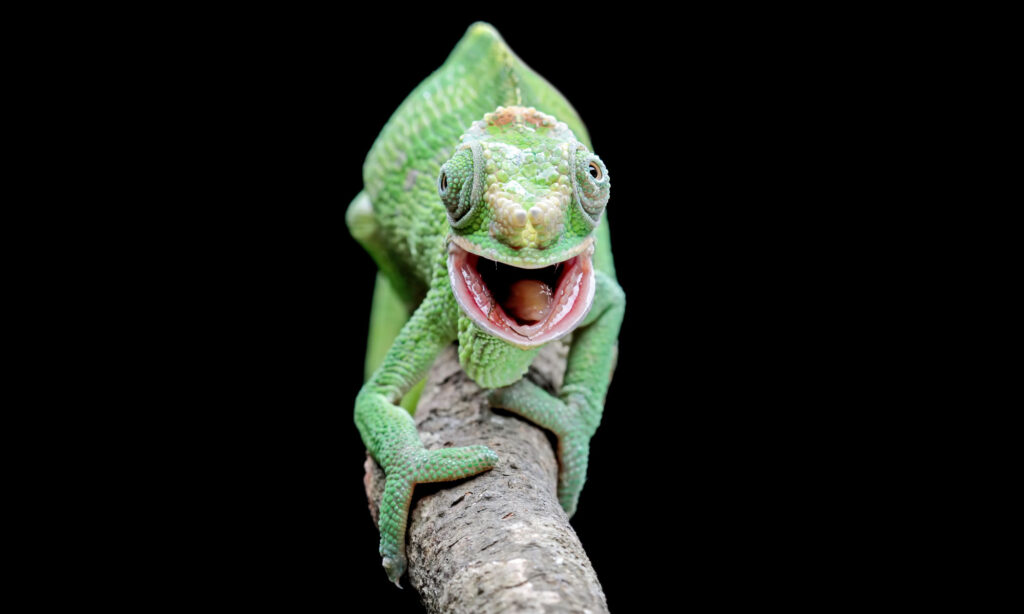
chameleon

The word chameleon means earth lion!

The scientific name for a chameleon is Chamaeleo, which is derived from the Greek word “chamai” meaning on the ground and “leōn” meaning lion. This genus of lizards contains over 160 species that are native to Africa, Madagascar, Southern Europe, and Asia. They are known for their ability to change colors with their environment, allowing them to blend in perfectly with trees or rocks. Furthermore, they can also move each eye independently of one another to have a larger field of vision.

Appearance
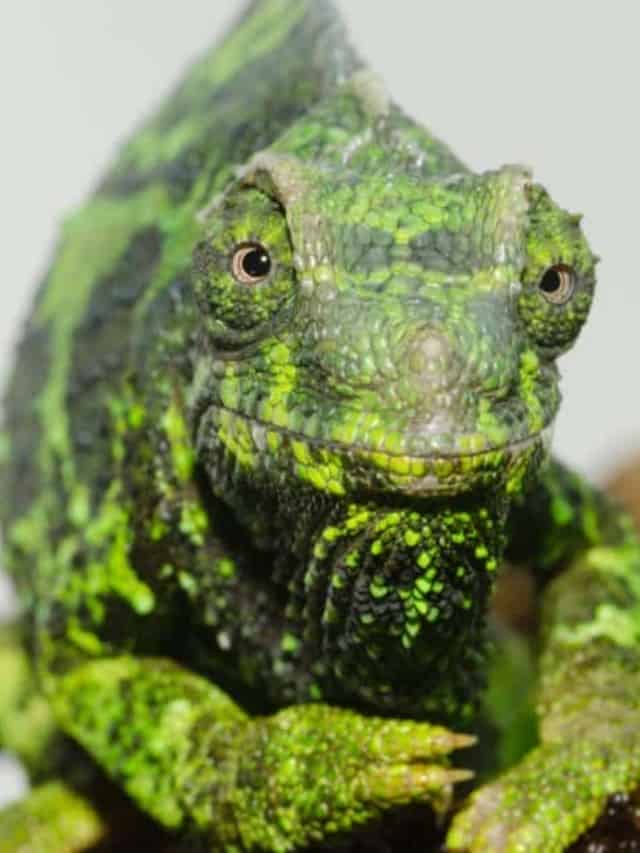
How Big Do Chameleons Get Poster Image
Chameleons can have tongues up to 24 inches long!

A chameleon is an incredible animal with a unique ability to change its colors and blend into its environment. They come in many shapes, sizes, and colors depending on the species. Generally speaking, most chameleons have flattened bodies and long tails with five digits on each foot that are adapted for gripping branches or other surfaces. Their eyes can move independently of one another which helps them scan their surroundings more efficiently. Chameleons also possess a protruding tongue which they use to capture prey such as insects or small lizards. On average, they range in size from 2 inches up to 24 inches in length! Depending on the species, they usually feature bright hues of green and yellow with various patterns of spots throughout their body making them quite eye-catching reptiles!

Habitat
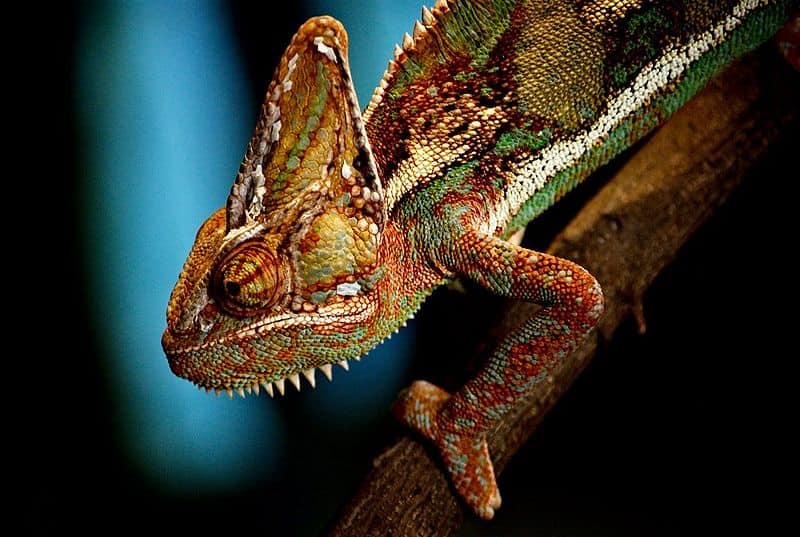
Chameleon (Chamaeleo calyptratus) in Wroclaw Zoo

Chameleon (Chamaeleo calyptratus) in Wroclaw Zoo

Chameleons are animals that are found throughout the jungle and desert alike, in Africa, Asia, and parts of Southern Europe, and chameleons have also been introduced to parts of North America. Most of these lizards live in trees or in bushes. Only a few species of chameleon live on the ground under piles of leaves.

Predators
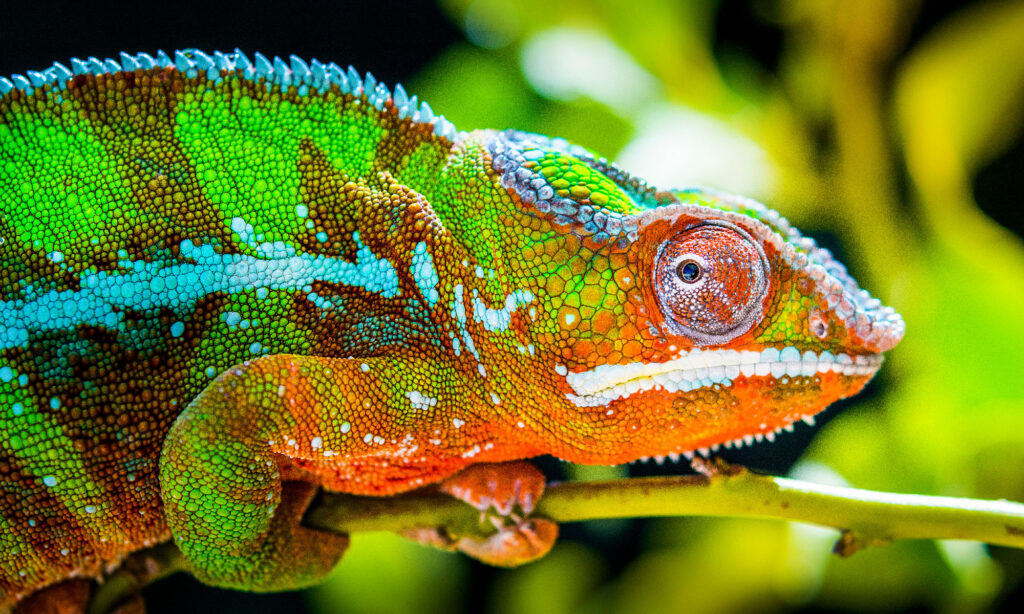
chameleon

Chameleons use their beautiful colors as a defense mechanism.

There are many animals that eat these lizards. In fact, the smaller a chameleon is, the more likely it is to be eaten by a larger animal. Some of the predators include snakes, birds, and sometimes monkeys. Though they can blend in with their environment, they are near the bottom of the food chain. This means there are many animals above them on the food chain that can eat them.

Defense Against Predators

A chameleon’s ability to change color to match its environment is its way of protecting itself when a predator is nearby. If this lizard is on a branch, its skin can turn a color that is very close to the color of the branch. Many predators may pass by without ever seeing the chameleon sitting quietly on the tree branch.

Evolution
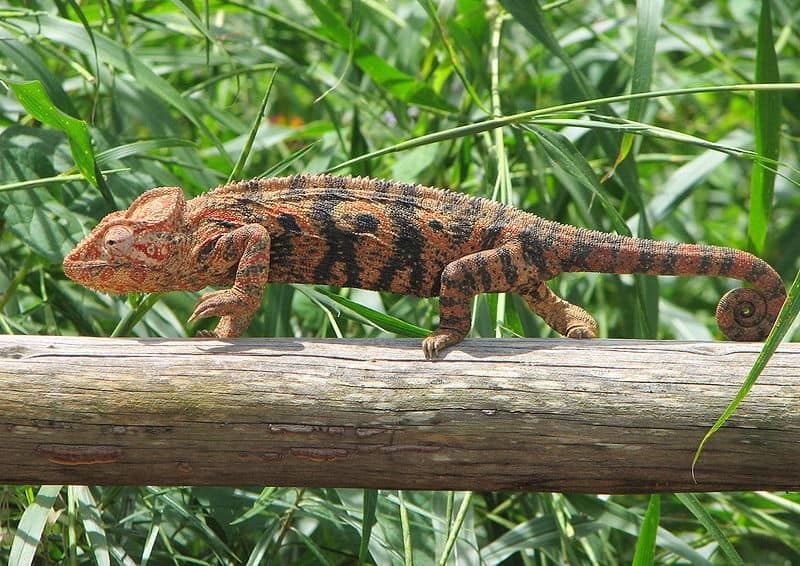
Oustalets Chameleon Ambalavao, Madagascar

Oustalets Chameleon, Ambalavao, Madagascar

The chameleon is a very unique species of lizard, known for its ability to change color in order to adapt to their environment. It has been around for millions of years and is believed to have descended from the iguanid family. Chameleons are found throughout Africa, Madagascar, parts of southern Europe and Asia, as well as some islands in the Indian Ocean.

The evolution of the chameleon has also enabled it to develop several interesting characteristics that make it uniquely suited to its habitat. They have specialized eyes with 360-degree vision which allows them to see predators from any direction, long tongues so they can catch prey quickly, prehensile tails which help them climb trees more easily, and claws that enable them to grip branches firmly. Additionally, their skin pigmentation allows them to blend into their surroundings almost instantly when threatened by a predator or other animals.

Overall, the incredible evolutionary process behind the chameleon’s remarkable adaptation capabilities is truly amazing!

Behavior
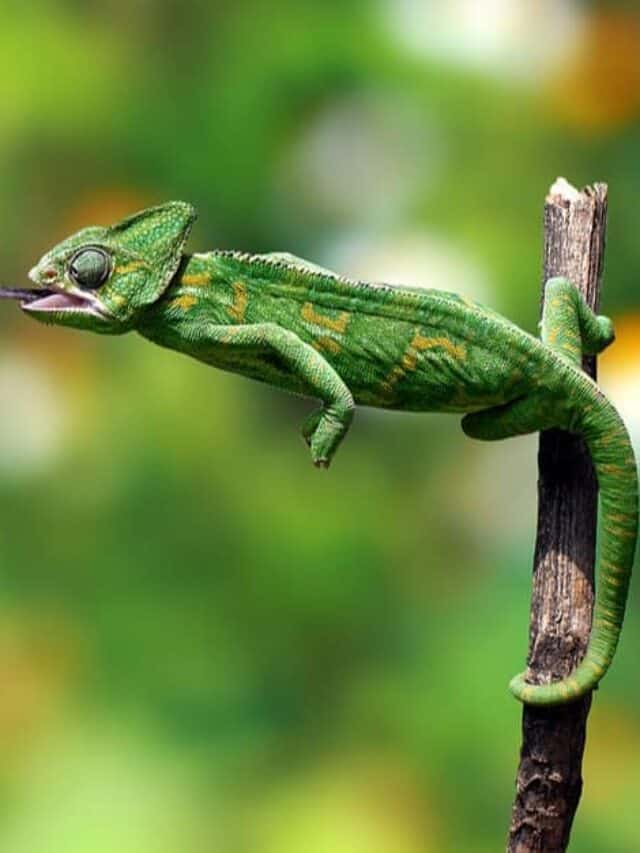
What Do Veiled Chameleons Eat - Veiled Chameleon Eating
When threatened, Chameleons turn sideways to appear larger.

Chameleons are known for their ability to change color, but they also possess many other interesting behaviors. Chameleons are known to be solitary creatures, spending most of their time alone or in pairs. They can often be seen basking in the sun on branches or leaves, and when disturbed they will normally take cover among the foliage. Their long tongues help them catch prey such as insects and small reptiles; they have excellent vision which helps them spot potential food sources from a distance. When threatened by predators, chameleons may puff themselves up to appear larger than normal and give off a hissing sound as a warning sign. In addition to this defensive behavior, some species of chameleon may even fight each other using their tails!

Chameleons are animals that communicate with one another by using their body language. For instance, a chameleon trying to protect its territory from an intruder is likely to turn sideways. This makes the lizard look bigger and more threatening. A chameleon that feels threatened may open its mouth to try to scare another one away.

Reproduction
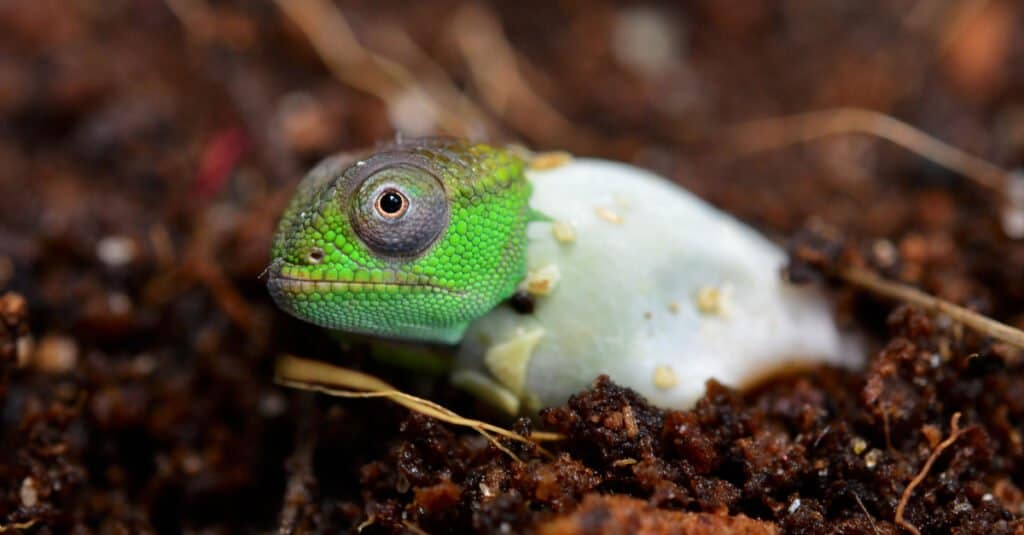
baby chameleon hatching

Some chameleons lay eggs, while others have live babies.

Most species of these lizards lay eggs, while a few have live babies. The female digs a hole in the ground and lays her eggs inside it to keep them warm. Usually, they lay around 20 eggs, but it can be more or fewer depending on the species. It can take four months to a year for the eggs to hatch. Jackson’s chameleon is one example of a species that have live babies. This lizard can have from 8 to 30 live babies after being pregnant for about six months.

Chameleons, like most other reptiles, reproduce sexually. During courtship and mating rituals, male chameleons will display their bright colors to attract mates. Male chameleons also use head bobbing as a way of flirting and competing with rivals for the attention of females. If a male is successful in both displaying his colors and winning the battle using body language instead of physical contact, he may be chosen by the female for mating purposes.

The gestation period for chameleon eggs ranges anywhere from one month to several months depending on species and environmental factors such as temperature or humidity levels. After hatching from eggs laid in nests underground or in trees or bushes, baby chameleons are born without parental care; they must fend for themselves after birth.

The lifespan of a chameleon depends on its species but generally ranges from five to fifteen years when kept in captivity with optimal conditions such as proper diet and environment being met regularly. Wild-living chameleons tend to have shorter lifespans due to a lack of food sources, predators, disease exposure, etc., which can drastically reduce their life expectancy if not addressed properly.

Diet
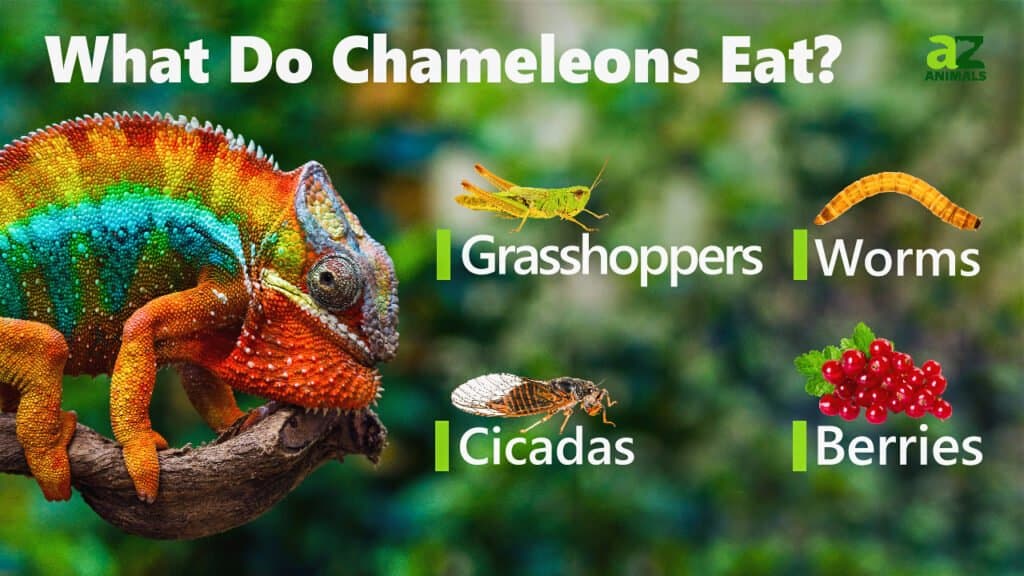
What Do Chameleons Eat
Chameleons eat many types of food, such as fruit, insects, and plants.

Chameleons eat a diet that’s mostly focused on insects. While chameleons are omnivores that will feed on vegetation such as dandelions and other vegetation, most of their prey is insects such as grasshoppers, crickets, and dragonflies.

For a full list of chameleon diets, give our ‘What Do Chameleons Eat? 16 Foods in their Diet’ page a read!

Conservation Status
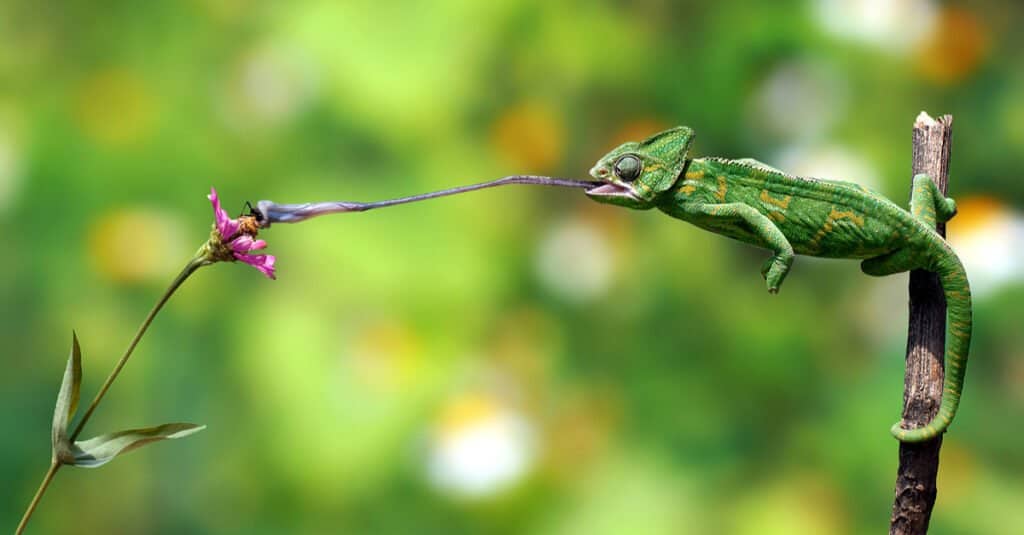
What Do Veiled Chameleons Eat - Veiled Chameleon Eating

Some chameleon species are endangered due to habitat loss.

Chameleons are fascinating creatures that come in a variety of shapes and sizes. Unfortunately, their numbers have been steadily declining due to a number of factors, including habitat destruction and hunting for the pet trade. As a result, several species of chameleon have been listed as endangered or critically endangered on the IUCN Red List. For example, Parson’s Chameleon is classified as Endangered due to its restricted range and continued decline in population size from ongoing habitat loss, poaching for pets, and over-collection by scientists. Another species at risk is the Panther Chameleon which has seen significant declines in Madagascar due to deforestation activities such as burning woodlands for agriculture. Conservation efforts must focus on protecting suitable habitats so these amazing animals can continue to thrive around the world.

120 Types of Chameleons

120 Species of Chameleons
African Chameleon – Species: Chamaeleo africanus Laurenti
Amber Chameleon – Species: Calumma amber
Antsingy Leaf Chameleon – Species: Brookesia perarmata
Arabian Chameleon – Species: Chamaeleo arabicus Matschie
Bearded Pygmy Chameleon – Species: Rieppeleon brevicaudatus
Beraducci’s Pygmy Chameleon – Species: Rhampholeon beraduccii
Bizarre-Nosed Chameleon – Species: Calumma hafahafa
Black-headed Dwarf Chameleon – Species: Bradypodion melanocephalum
Blunt-Nosed Chameleon – Species: Calumma tsycorne
Bocage’s Chameleon – Subspecies: Chamaeleo dilepis quilensis
Boulenger’s Pygmy Chameleon – Species: Rhampholeon boulengeri
Brown Leaf Chameleon – Species: Brookesia superciliaris
Cameroon Sailfin Chameleon – Species: Trioceros montium
Cameroon Stumptail Chameleon – Species: Rhampholeon spectrum
Cape Dwarf Chameleon – Species: Bradypodion pumilum
Carpenter’s Chameleon – Species: Kinyongia carpenteri
Carpet Chameleon – Species: Furcifer lateralis
Carpet Chameleon – Species: Furcifer major
Chameleon Dragon – Species: Chelosania brunnea
Chameleon Forest Dragon – Species: Gonocephalus chamaeleontinus
Chapmans’ Pygmy Chameleon – Species: Rhampholeon chapmanorum
Circular-scaled Chameleon – Species: Kinyongia gyrolepis
Coarse Chameleon – Species: Trioceros rudis
Cone-headed Chameleon – Species: Chamaeleo calyptratus
Crested Chameleon – Species: Trioceros cristatus
Cryptic Chameleon – Species: Calumma crypticum
Dhlinza Dwarf Chameleon – Species: Bradypodion caeruleogula
Domergue’s Leaf Chameleon – Species: Brookesia thieli
Double-scaled Chameleon – Species: Chamaeleo anchietae
Drakensberg Dwarf Chameleon – Species: Bradypodion dracomontanum
Eiongate Leaf Chameleon – Species: Palleon nasus
Eisentraut’s Chameleon – Subspecies: Trioceros quadricornis eisentrauti
Eshowe Dwarf Chameleon – Species: Bradypodion caeruleogula
Fito Leaf Chameleon – Species: Brookesia lambertoni
Flap-neck Chameleon – Species: Chamaeleo dilepis
Flapneck Chameleon – Species: Chamaeleo dilepis
Four-horned Chameleon – Species: Trioceros quadricornis
Graceful Chameleon – Species: Chamaeleo gracilis
Gray Chameleon – Species: Trioceros chapini
Green Pygmy Chameleon – Species: Rhampholeon viridis
High-casqued Chameleon – Species: Trioceros hoehnelii
Iaraka River Leaf Chameleon – Species: Brookesia vadoni
Ilolo Chameleon – Species: Trioceros goetzei
Indian Chameleon – Species: Chamaeleo zeylanicus
Ituri Chameleon – Species: Kinyongia adolfifriderici
Jackson’s Chameleon – Species: Chamaeleo jacksonii
Jackson’s Chameleon – Species: Trioceros jacksonii
Johnston’s Chameleon – Species: Trioceros johnstoni
Karoo Dwarf Chameleon – Species: Bradypodion karrooicum
Kentani Dwarf Chameleon – Species: Bradypodion kentanicum
Kenya Stumptail Chameleon – Species: Rieppeleon kerstenii
Knysna Dwarf Chameleon – Species: Bradypodion damaranum
Labord’s Chameleon – Species: Furcifer labordi
Lesser Chameleon – Species: Furcifer minor
Magombera Chameleon – Species: Kinyongia magomberae
Malawi Stumptail Chameleon – Species: Rhampholeon platyceps
Marojejy Leaf Chameleon – Species: Brookesia griveaudi
Marojejy Peak Chameleon – Species: Calumma jejy
Marshall’s Stumptail Chameleon – Species: Rhampholeon marshalli
Matschie’s Dwarf Chameleon – Species: Kinyongia tenuis
Meller’s Chameleon – Species: Trioceros melleri
Minute Leaf Chameleon – Species: Brookesia minima
Montane Side-striped Chameleon – Species: Trioceros ellioti
Mount Chiperone Pygmy Chameleon – Species: Rhampholeon nebulauctor
Mount d’Ambre Leaf Chameleon – Species: Brookesia tuberculata
Mount Inago Pygmy Chameleon – Species: Rhampholeon bruessoworum
Mount Kulal Chameleon – Species: Trioceros narraioca
Mount Lefo Chameleon – Species: Trioceros wiedersheimi
Mount Mabu Pygmy Chameleon – Species: Rhampholeon maspictus
Mount Mulanje Pygmy Chameleon – Species: Rhampholeon platyceps
Mount Namuli Pygmy Chameleon – Species: Rhampholeon tilburyi
Mount-Nyiro Bearded Chameleon – Species: Kinyongia asheorum
Moyer’s Pygmy Chameleon – Species: Rhampholeon moyeri
Mt Kenya Hornless Chameleon – Species: Kinyongia excubitor
Mt Kenya Side-striped Chameleon – Species: Trioceros schubotzi
Mt Nyiru Chameleon – Species: Trioceros ntunte
Namaqua Chameleon – Species: Chamaeleo namaquensis
Natal Midlands Dwarf Chameleon – Species: Bradypodion thamnobates
Ngome Dwarf Chameleon – Species: Bradypodion ngomeense
Ngosi Volcano Chameleon – Species: Trioceros fuelleborni
Nguru Pygmy Chameleon – Species: Rhampholeon acuminatus
Northem Leaf Chameleon – Species: Brookesia ebenaui
Owen’s Chameleon – Species: Trioceros oweni
Parson’s Chameleon – Species: Calumma parsonii
Peltiers’ Chameleon – Species: Calumma peltierorum
Permet Leaf Chameleon – Species: Brookesia therezieni
Perret’s Chameleon – Species: Trioceros perreti
Pfeffer’s Chameleon – Species: Trioceros pfefferi
Plated Leaf Chameleon – Species: Brookesia stumpffi
Qudeni Dwarf Chameleon – Species: Bradypodion nemorale
Rednose Dwarf Chameleon – Species: Kinyongia oxyrhina
Robertson’s Dwarf Chameleon – Species: Bradypodion gutturale
Rosette-nosed Pygmy Chameleon – Species: Rhampholeon spinosus
Ruppell’s Desert Chameleon – Species: Trioceros affinis
Ruwenzori Side-striped Chameleon – Species: Trioceros rudis
Senegal Chameleon – Species: Chamaeleo senegalensis
Setaro’s Dwarf Chameleon – Species: Bradypodion setaroi
Smith’s Dwarf Chameleon – Species: Bradypodion taeniabronchum
Smooth Chameleon – Species: Chamaeleo laevigatus
Socotra Chameleon – Species: Chamaeleo monachus
South African Stumptail Chameleon – Species: Rhampholeon nchisiensis
Southern Dwarf Chameleon – Species: Bradypodion ventrale
Spiny Leaf Chameleon – Species: Brookesia decaryi
Spiny-flanked Chameleon – Species: Trioceros laterispinis
Strange-horned Chameleon – Species: Kinyongia xenorhina
Tanzania Mountain Chameleon – Species: Trioceros tempeli
Tilbury’s Chameleon – Species: Trioceros marsabitensis
Toothed Leaf Chameleon – Species: Brookesia dentata
Transkei Dwarf Chameleon – Species: Bradypodion caffer
Transvaal Dwarf Chameleon – Species: Bradypodion transvaalense
Two-lined Chameleon – Species: Trioceros bitaeniatus
Ukinga Hornless Chameleon – Species: Trioceros incornutus
Uluguru Pygmy Chameleon – Species: Rhampholeon uluguruensis
Usambara Soft-horned Chameleon – Species: Kinyongia tenuis
Usambara Stumptail Chameleon – Species: Rhampholeon temporalis
Uthmöller’s Chameleon – Species: Kinyongia uthmoelleri
Veiled Chameleon – Species: Chamaeleo calyptratus
Wavy Chameleon – Species: Trioceros deremensis
Wemer’s Chameleon – Species: Trioceros werneri
Yemen Chameleon – Species: Chamaeleo calyptratus
Zululand Dwarf Chameleon – Species: Bradypodion nemorale
View all 392 animals that start with C
How to say Chameleon in ...
Bulgarian
Хамелеони
Czech
Chameleonovití
Danish
Kamæleon
German
Chamäleons
English
Chameleon
Esperanto
Ĥameleono
Spanish
Chamaeleonidae
Finnish
Kameleontit
French
Chamaeleonidae
Hebrew
זיקיות
Croatian
Kameleoni
Hungarian
Kaméleonfélék
Italian
Chamaeleonidae
Japanese
カメレオン科
Dutch
Kameleons
English
Kameleoner
Polish
Kameleonowate
Portuguese
Camaleão
Swedish
Kameleonter
Turkish
Bukalemun
Chinese
變色龍

Sources

  1. David Burnie, Dorling Kindersley (2011) Animal, The Definitive Visual Guide To The World's Wildlife / Accessed December 16, 2009
  2. Tom Jackson, Lorenz Books (2007) The World Encyclopedia Of Animals / Accessed December 16, 2009
  3. David Burnie, Kingfisher (2011) The Kingfisher Animal Encyclopedia / Accessed December 16, 2009
  4. Richard Mackay, University of California Press (2009) The Atlas Of Endangered Species / Accessed December 16, 2009
  5. David Burnie, Dorling Kindersley (2008) Illustrated Encyclopedia Of Animals / Accessed December 16, 2009
  6. Dorling Kindersley (2006) Dorling Kindersley Encyclopedia Of Animals / Accessed December 16, 2009
Heather Hall

About the Author

Heather Hall

Heather Hall is a writer at A-Z Animals, where her primary focus is on plants and animals. Heather has been writing and editing since 2012 and holds a Bachelor of Science in Horticulture. As a resident of the Pacific Northwest, Heather enjoys hiking, gardening, and trail running through the mountains with her dogs.

Thank you for reading! Have some feedback for us?


Chameleon FAQs (Frequently Asked Questions)

Chameleons and iguanas have several key differences. First, they come from different areas of the world. Iguanas are from the Americas while chameleons are from Africa and Asia. Second, they have key anatomical differences like their tails and eyes. Chameleon eyes protrude and can view different directions while iguana eyes are more typical of reptiles.