C
Species Profile

Cheetah

Acinonyx jubatus

Built for the burst.
Kjetil Kolbjornsrud/Shutterstock.com

Cheetah Distribution

Click a location to explore more animals from that region

Loading map...

Size Comparison

Human 5'8"
Cheetah 2 ft 7 in

Cheetah stands at 46% of average human height.

At a Glance

Wild Species
Also Known As Hunting leopard, Guépard, Guepard, Guepardo, Gepard, Jagluiperd
Diet Carnivore
Activity Diurnal+
Lifespan 10 years
Weight 72 lbs
Status Vulnerable
Did You Know?

Fastest land mammal: peak recorded sprint speeds up to about 104 km/h in wild hunting cheetahs (Wilson et al., 2013, Nature).

Scientific Classification

The cheetah is a large African felid (with a small remnant population in Asia) specialized for high-speed pursuit hunting in open habitats. It is the sole extant species in the genus Acinonyx.

Kingdom
Animalia
Phylum
Chordata
Class
Mammalia
Order
Carnivora
Family
Felidae
Genus
Acinonyx
Species
Acinonyx jubatus

Distinguishing Features

  • Slender build with long legs and deep chest adapted for sprinting
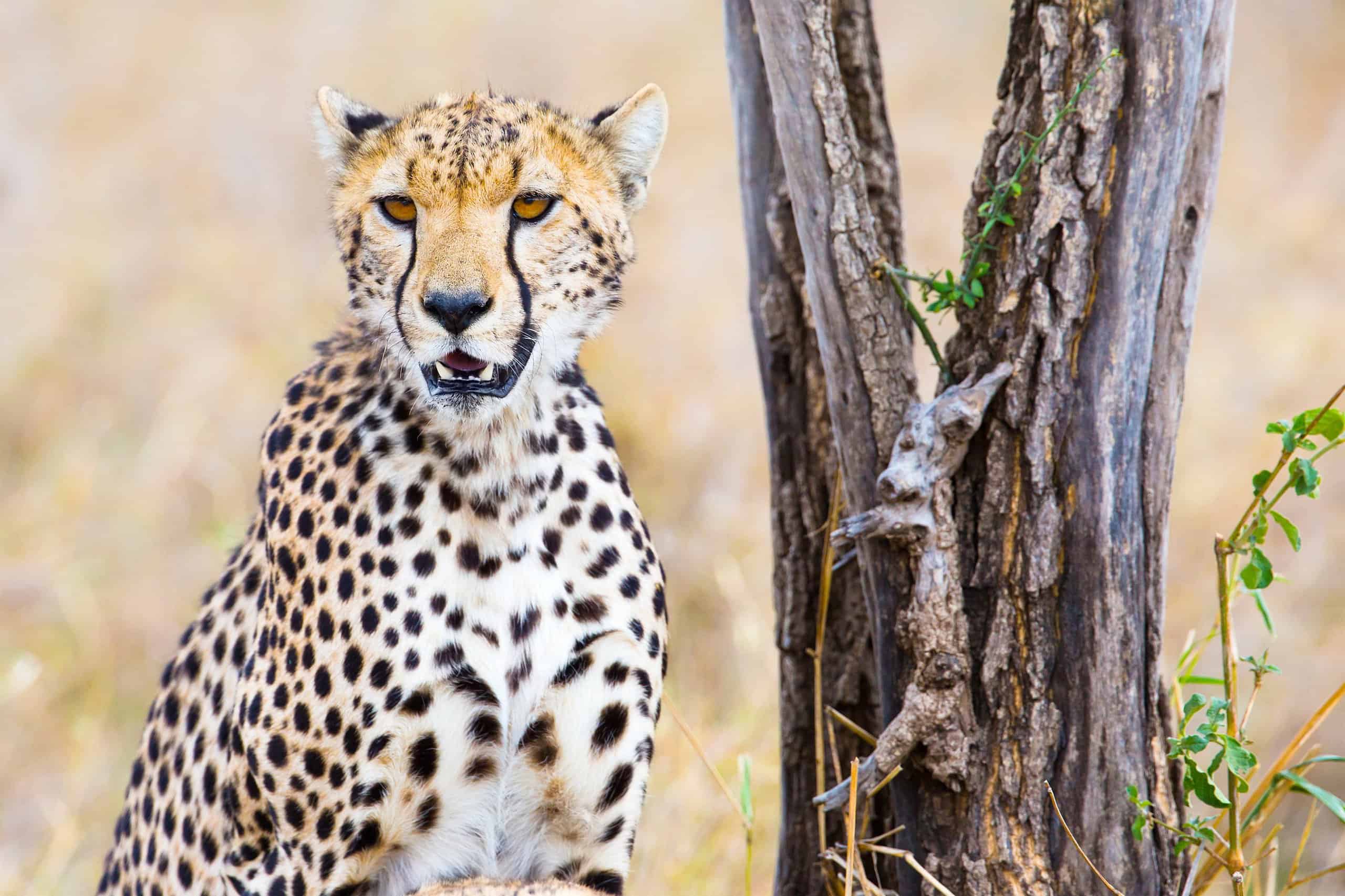
  • Black ‘tear’ stripes from inner eye to mouth corners
  • Semi-retractable claws and enlarged nasal passages for traction and oxygen intake during high-speed chases
  • Spotted coat (distinct from rosettes of leopards/jaguars)
  • Long tail used for balance and steering during pursuit

Physical Measurements

Males and females differ in size

Height
2 ft 7 in (2 ft 2 in – 3 ft 1 in)
Length
6 ft 9 in (5 ft 8 in – 7 ft 8 in)
6 ft 6 in (5 ft 8 in – 7 ft 3 in)
Weight
110 lbs (64 lbs – 143 lbs)
84 lbs (75 lbs – 95 lbs)
Tail Length
2 ft 4 in (1 ft 12 in – 2 ft 9 in)
Top Speed
58 mph
Measured top speed 93 km/h

Appearance

Primary Colors
Secondary Colors
Skin Type Furred mammal skin with short, thick fur. Partly exposed claws give better traction. Enlarged nasal passages. Long, muscular tail helps balance and steer during high-speed turns.
Distinctive Features
  • Taxon identity: the sole extant species of genus Acinonyx (Acinonyx jubatus); African range with a small remnant population in Iran (Asiatic cheetah as a remnant of the species' former Asian range).
  • Facial markings: prominent black 'tear marks' from medial canthus to mouth corners-diagnostic in the field and associated with glare reduction and/or visual signaling (commonly described for A. jubatus).
  • Coat pattern: solid black spots (not rosettes), typically ~2-3 cm across on trunk; spot density often higher on limbs and tail; no rosette formation (key distinction from Panthera pardus).
  • Body size (adults): head-body length typically ~112-150 cm; tail length ~60-84 cm; shoulder height ~67-94 cm (ranges commonly reported across mammal references and field guides).
  • Mass (adults): commonly ~35-55 kg in females and ~40-65 kg in males, with regional and individual variation (sexual size difference modest).
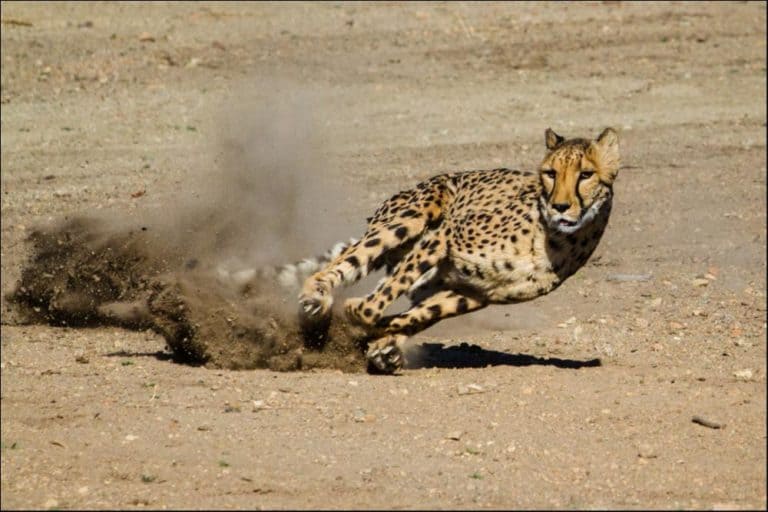
  • Cheetah (Acinonyx jubatus) can run very fast in short bursts; GPS collars measured peak speeds up to about 93 km/h in wild hunts, but most chases are slower and last seconds over hundreds of meters.
  • Skeletal/muscular sprinting adaptations: lightweight frame, long distal limb segments, flexible spine increasing stride length, large lungs/heart relative to body size, and a long tail aiding rapid directional changes.
  • Behaviorally linked appearance: open-habitat cursorial hunter; compared with other big cats, has a relatively small head and reduced canines for its body size, consistent with a lightweight sprinting build.

Sexual Dimorphism

Sexual dimorphism is present but subtle. Adult males are, on average, slightly larger/heavier and may appear more robust; females are typically slightly smaller and lighter. Both sexes share the same spotted coat pattern and tear marks; no mane or strong sex-specific coloration.

  • Slightly higher average body mass and often marginally larger overall size than females (typical adult male mass commonly cited ~40-65 kg).
  • More frequent occurrence of stable male coalitions (a social trait that can influence observed body condition/scarring in adult males).
  • Slightly lower average body mass and smaller average size than males (typical adult female mass commonly cited ~35-55 kg).
  • Females are typically solitary except when raising cubs; lactation can affect coat condition and body condition seasonally.

Did You Know?

Fastest land mammal: peak recorded sprint speeds up to about 104 km/h in wild hunting cheetahs (Wilson et al., 2013, Nature).

Most chases are short: typical pursuit sprints are often only a few hundred meters, followed by heavy panting to shed heat.

Spots, not rosettes: cheetahs have solid round/oval black spots (leopards/jaguars have rosettes), aiding camouflage in grassland.

Signature "tear marks": black malar stripes from eye to mouth reduce glare and may help visually track prey in bright open habitats.

Coalition living: males commonly form stable coalitions (often 2-3, sometimes related brothers) to hold territories; females are usually solitary except with cubs.

Low genetic diversity: cheetahs show unusually low genetic variation due to past population bottlenecks, affecting disease susceptibility and reproduction (classic synthesis in O'Brien et al., 1980s; widely replicated).

Asiatic cheetah remnant: a critically endangered, tiny population persists in Iran; nearly all other cheetahs are in sub-Saharan Africa.

Unique Adaptations

  • Speed-adapted body plan: long legs, lightweight frame, and an exceptionally flexible spine that increases stride length and stride frequency.
  • Semi-retractable claws: function like track spikes for traction during high-speed acceleration and tight turns.
  • Large airway and oxygen delivery: enlarged nasal passages and lungs, and a large heart support rapid oxygen uptake during intense sprints (standard cheetah physiological descriptions; supported by comparative anatomy studies).
  • Steering tail: long tail (commonly ~60-84 cm) acts as a counterbalance and rudder during fast directional changes.
  • High-visibility vision: large eyes and strong daytime vision help detect and track prey at distance in open habitats.
  • Heat-management constraint: sprinting generates extreme heat quickly; the need to stop and recover limits chase duration, shaping cheetah ecology in open systems.

Interesting Behaviors

  • Diurnal hunting: unlike many big cats, cheetahs often hunt in daylight to reduce encounters with lions and spotted hyenas that steal kills.
  • Stalk-then-explode strategy: uses cover and body-low stalking, then commits to a high-speed chase with rapid turns as prey jinks.
  • High turning performance: wild cheetahs can outmaneuver prey with sharp lateral changes; hunts involve frequent decelerations/accelerations, not just straight-line speed (Wilson et al., 2013).
  • Kill technique: typically trips prey with a forepaw strike, then suffocates small-medium antelope with a throat hold.
  • Post-sprint recovery: after a chase, body temperature and respiration spike; cheetahs often pause before feeding, increasing risk of kleptoparasitism.
  • Cub "mantle" camouflage: young cubs have a long greyish mantle along the back/neck, thought to help conceal them in vegetation and possibly mimic a honey badger silhouette to deter predators.

Cultural Significance

Cheetah (Acinonyx jubatus) were trained hunting companions in Ancient Egypt, Persia, and Mughal India, showing speed, nobility, and controlled power. The name "cheetah" comes from Hindi/Urdu for "spotted." The only wild Asian population left is in Iran.

Myths & Legends

Persian and Mughal courts kept trained cheetahs (Acinonyx jubatus) for special hunts. Stories and court art show hunting cheetahs chasing blackbuck and gazelle, making them almost legendary companions of kings.

Ancient Egyptian associations: cheetahs appear in tomb and temple imagery and were kept by elites; their tameability in captivity contributed to stories of the spotted cat as a prestigious guardian and hunting aide.

In South Asia, a Hindi and Urdu word meaning "spotted" became the root of the cheetah's name in many languages; the word still used shows the animal's name is written in its coat.

In Iran, the critically endangered Asiatic cheetah (Acinonyx jubatus) is a symbol of rarity and speed, used in public campaigns and pictures as an almost mythical survivor of Iran's deserts and steppes.

Conservation Status

VU Vulnerable

Facing a high risk of extinction in the wild.

Population Decreasing

Protected Under

  • CITES Appendix I (international trade in wild specimens generally prohibited; limited exceptions under strict regulation).
  • National legal protection across many range states (varies by country; often includes prohibitions on killing/capture and regulated problem-animal control).
  • Protected-area networks and transboundary landscape initiatives are central to conservation because a substantial proportion of cheetahs occur outside formally protected areas.
  • HUBS (Felidae conservation landscape): Felid statuses range from Least Concern to Critically Endangered; common cross-cutting threats include habitat loss/fragmentation, prey depletion, persecution/human-wildlife conflict, and illegal trade. Notable highly threatened felids include species such as tiger (EN) and several small-island endemics (often EN/CR), illustrating that the drivers impacting cheetahs are shared broadly across the cat family.

Life Cycle

Birth 4 cubs
Lifespan 10 years

Lifespan

In the Wild
3–14 years
In Captivity
8–20 years

Reproduction

Mating System Polygynandry
Social Structure Solitary
Breeding Pattern Transient
Fertilization Internal Fertilization
Birth Type Internal_fertilization

Cheetah (Acinonyx jubatus) mating is mostly multi-male/multi-female with no pair bonds. Females are mostly solitary; males may form coalitions and provide no care for cubs. Females are in heat briefly (1–3 days), mate with multiple males. Gestation ~90–95 days; litters 1–8 (often 3–5).

Behavior & Ecology

Social Coalition Group: 2
Activity Diurnal, Crepuscular, Cathemeral
Diet Carnivore Medium-sized gazelles-especially Thomson's gazelle (Eudorcas thomsonii) where available.

Temperament

Generally shy and avoidant of humans; relies on flight rather than confrontation in most contexts
High vigilance in open habitats; risk-sensitive behavior around larger predators (e.g., lions, spotted hyenas) often alters movement timing and habitat use
Males (especially coalitions) can be strongly territorial with conspicuous marking and patrol behavior; females are more wide-ranging and less strictly territorial
Intraspecific aggression is usually limited but can occur among males during territorial disputes and during mating competition
Cheetah (Acinonyx jubatus): females live and raise cubs alone, while males form coalitions. Coalition size and how much they are active at night rise where predators or human disturbance are high.

Communication

Chirp High-pitched contact call used over distance, especially between mother and cubs
Purr Can be produced on both inhale and exhale; used in close social contexts
Growl Agonistic/defensive
Hiss and spit Defensive, close-range threat
Churr/stutter-bark Reported in social and arousal contexts; terminology varies by study and ethogram
Scent marking via urine spraying and defecation at prominent landmarks; males commonly maintain and revisit marking/"calling" sites, especially within territories Caro 1994; IUCN/SSC Cat Specialist Group
Scraping/raking the ground with hind feet after marking to enhance scent deposition
Visual signaling (posture, tail position, facial orientation) during courtship, aggression avoidance, and coalition interactions
Tactile communication within coalitions and between mother and cubs (rubbing, grooming, nose-touching), most evident at resting sites

Habitat

Biomes:
Savanna Tropical Dry Forest Temperate Grassland Desert Hot Desert Cold
Terrain:
Plains Plateau Hilly Valley Rocky Sandy Riverine Coastal +2
Elevation: Up to 9842 ft 6 in

Ecological Role

Cursorial mesopredator (and, locally, a top predator) that selectively removes medium-sized ungulates, especially gazelles, shaping prey demographics and behavior; its kills also subsidize scavengers via kleptoparasitism.

Population regulation of medium-sized ungulates (selective predation) Maintenance of prey herd vigilance/space use (non-consumptive effects) Carrion and feeding opportunities for scavengers when kills are stolen or partially consumed (food-web support) Energy transfer from herbivores to higher trophic levels in savanna ecosystems

Diet Details

Main Prey:
Thomson's gazelle Grant's gazelle Springbok Impala Gerenuk Dik-diks Hares Steenbok Wildebeest Zebra Ground birds +5

Human Interaction

Domestication Status

Wild

Acinonyx jubatus (cheetah) is not domesticated. People tamed individual cheetahs for hunting from at least ancient Egypt and later in Persia and India, but cheetahs were never bred over many generations to become pets. They stress easily, need special care, and have had poor long-term captive breeding success.

Danger Level

Moderate
  • Physical injury from bites and claws if a cheetah is cornered, handled, or habituated/kept in captivity without appropriate barriers (risk rises sharply with direct contact).
  • Zoonotic and reverse-zoonotic disease transmission in captivity or during handling (e.g., gastrointestinal and respiratory pathogens), especially where biosecurity is poor.
  • Public-safety risks linked to escape or improper containment (cheetahs are less likely to attack humans than many other large felids, but still capable of serious injury).
  • Indirect conflict risk: retaliatory killing and armed confrontations can occur when cheetahs depredate small livestock (goats/sheep), creating dangerous situations for both people and animals.

As a Pet

Not Suitable as Pet

Legality: Cheetahs (Acinonyx jubatus) are generally unsuitable as pets and are often illegal or tightly controlled. CITES Appendix I and the U.S. ESA limit trade and ownership; permits usually need zoo-level standards.

Care Level: Expert Only

Purchase Cost: $20,000 - $80,000
Lifetime Cost: $250,000 - $1,000,000

Economic Value

Uses:
Ecotourism and wildlife viewing Conservation funding and NGO programming Research (movement ecology, predator-prey dynamics, genetics, veterinary science) Cultural/heritage value (historical hunting traditions and iconography) Costs from human-wildlife conflict (livestock losses, guarding, mitigation) Illegal wildlife trade risk (live animals and parts; generally illicit)
Products:
  • tourism revenue (safaris, park fees, guiding, hospitality spillover)
  • conservation program outputs (community conservancies, compensation/insurance schemes, guardian dog programs, improved kraaling)
  • educational/display services in accredited zoological facilities
  • scientific data and publications (telemetry datasets, health and genetics baselines)

Relationships

Classification and Evolution

Known for their great speed, cheetahs are large and powerful felines that was once found throughout Africa, Asia, and even in parts of Europe. Due to civilization encroaching into their habit and hunting them for fur, the cheetah is now only found in remote areas in Africa and Iran.

Cheetahs, with the jaguarundi and the puma, descended from the puma lineage of the Felidae family. There is some debate about where and when it evolved because there is evidence of them in the Americas; however, others say they evolved after their ancestors had moved to the “Old World” of Africa and Asia.

Although they are not considered to be part of the ‘big cat’ family as they cannot roar, Cheetahs are one of Africa‘s most powerful predators and are most renowned for their immense speed when in a chase. Capable of reaching speeds of more than 60mph for short periods of time, the Cheetah is the fastest land mammal in the world. Learn about the world’s fastest animals here.
Watch on YouTube

Anatomy and Appearance

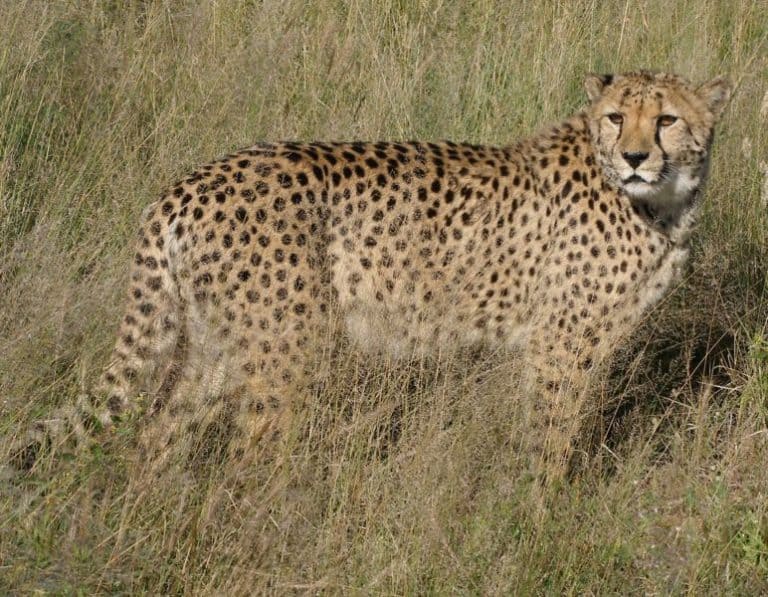
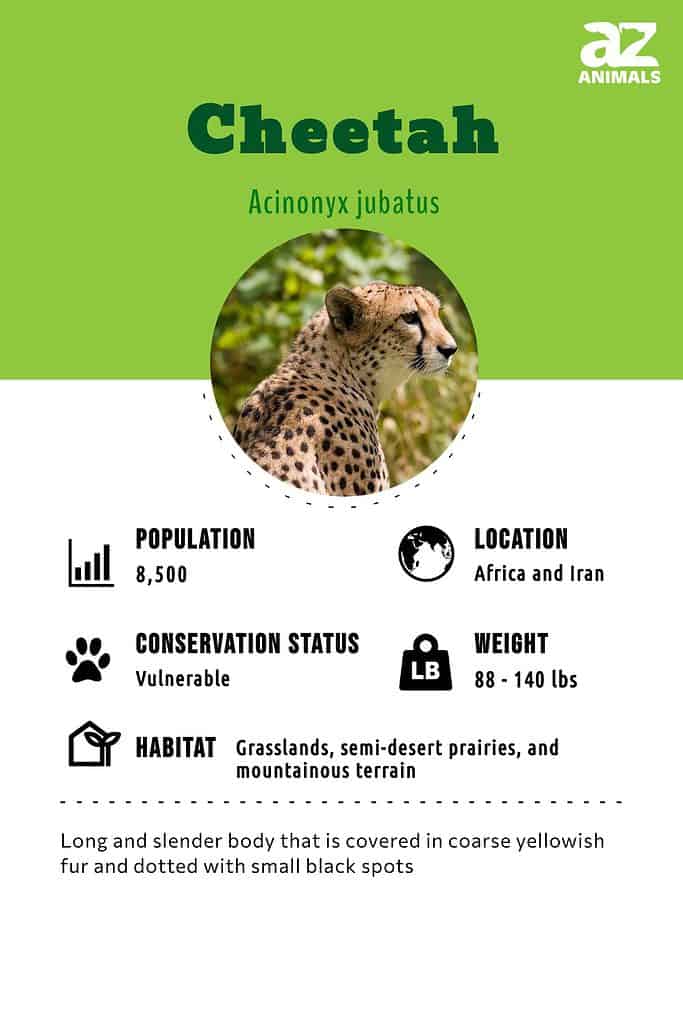
The Cheetah is an animal that has a long and slender body that is covered in coarse yellowish fur and dotted with small black spots. Its long tail helps with balance and changing direction quickly and unlike the rest of the Cheetah’s body, there are ringed markings along the tail which ends in a black tip. Cheetahs have small heads with high-set eyes that aid them when surveying the surrounding grasslands for potential prey. They also have distinctive black “tear marks” that run from the inner eye, along their nose, and down to the outside of their mouths, which are thought to help protect them from being blinded by the bright sun. The exceptional speed of the Cheetah is caused by a number of things including having strong and powerful hind legs, and an incredibly flexible and muscular spine which allows the Cheetah to not only sprint quickly but also makes them very agile. They also have non-retractable claws which dig into the ground, giving the Cheetah a better grip at high speed.
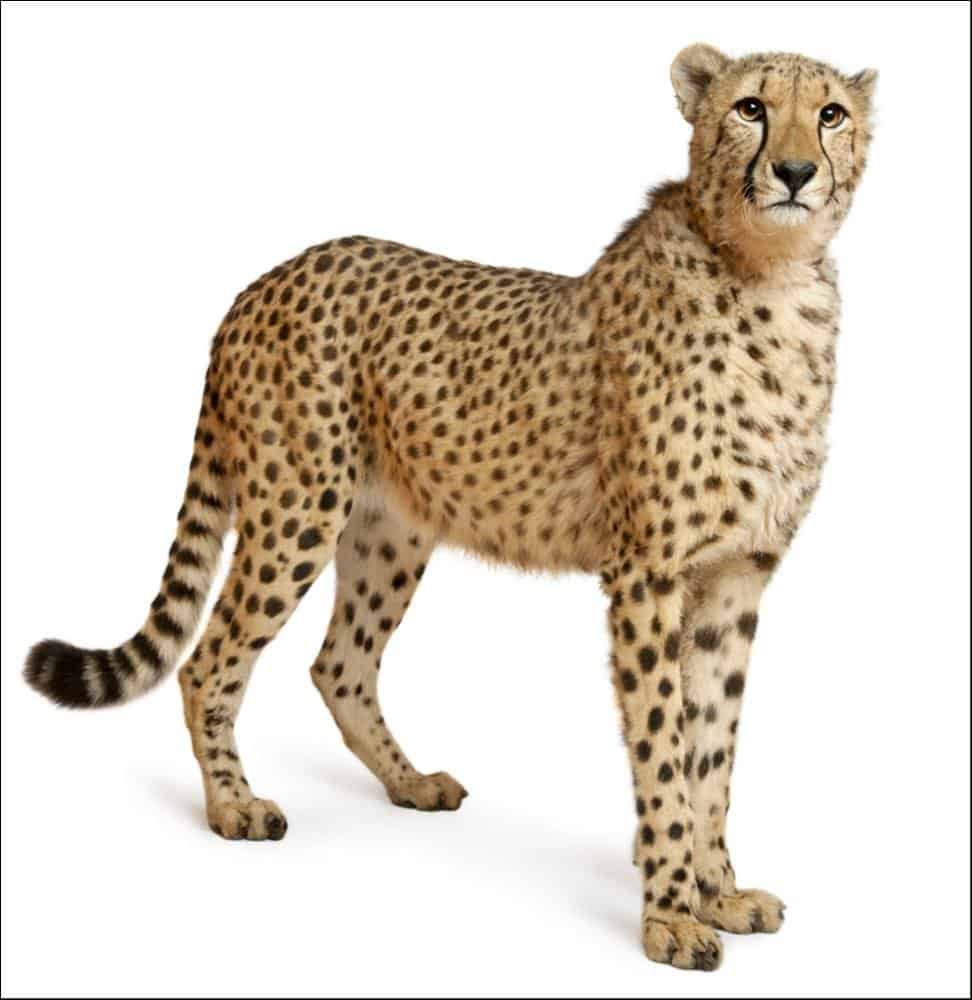
The Cheetah is long, slender, and covered in coarse yellowish fur, dotted with small black spots.

Distribution and Habitat

The Cheetah is an animal that once had a vast historical range that stretched across a number of continents, but their distribution today is much more scattered with a small number found in Iran and the majority found in sub-Saharan Africa. Although Cheetahs are still found in a few different parts of eastern and southern Africa, the highest population of wild Cheetahs is now found in Namibia in southwestern Africa. Cheetahs are most commonly found stalking prey on the vast, open grasslands but they are also found in a variety of other habitats as well including deserts, dense vegetation, and mountainous terrain, providing that there are adequate supplies of food and water. Cheetahs are one of Africa’s most vulnerable felines with population numbers being mainly affected by growing Human settlements that encroach on their native habitats.

5 Types of Cheetahs

  • Northwest African (Saharan) Cheetah – The Northwest African (Saharan) Cheetah is a little bit smaller than its cousins, with a light-colored fur coat. Its spots drift from brown to black going toward the top of its back. The cheetah “tear stripes” are not always present.
  • Northeast African (Somali) Cheetah – The Northeast African (Somali) Cheetah is one of the larger subspecies. It has a more coarse fur coat than some of its relatives and is overall the darkest in color. They also have a distinct white stomach and a thicker tail.
  • Asiatic (Iranian) Cheetah – The Asiatic (Iranian) Cheetah is regrettably the only remaining cheetah in Asia. Their mane and overall coat are not as long as the African cheetahs. The sides of this cheetah are pale and gain color on the back. Their tail tips have black stripes.
  • East African (Tanzanian) Cheetah – The East African (Tanzanian) Cheetah is a little slighter than its cousins. As one of the paler cheetahs, their coat tends to be tan or beige. This cheetah’s “tear stripes” are a little more pronounced than others, and its tail has black rings on its tail that ends with a white tip.
  • South African (Nambian) Cheetah – The South African (Nambian) Cheetah is the nominate subspecies. They have a golden, somewhat thicker coat. This cheetah’s “tear marks” are wider at near the mouth and usually have brown mustache characteristics.

Behavior and Lifestyle

The Cheetah is unique amongst Africa’s felines primarily because they are most active during the day, which avoids competition for food from other large predators like Lions and Hyenas that hunt during the cooler night. They are also one of the more sociable Cat species with males often roaming in small groups, generally with their siblings, and oddly enough, it is the females that are more solitary animals apart from the 18 months or so that they spend looking after their cubs. Cheetahs are fiercely territorial animals that patrol large home ranges and often overlap those of other Cheetahs, and indeed Lions, with females tending to roam across a much larger range than males. They are typically shy and very stealthy animals so they are able to hunt for prey in the hot daylight hours without being spotted so easily.
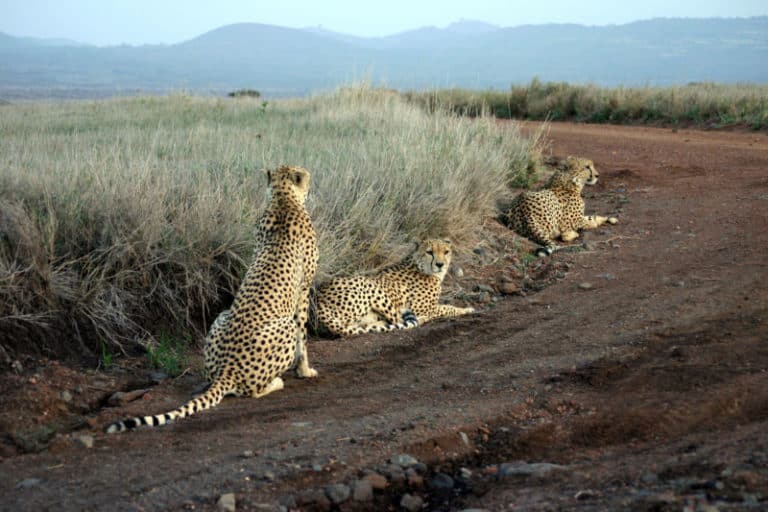
Deadliest Cats - Cheetah

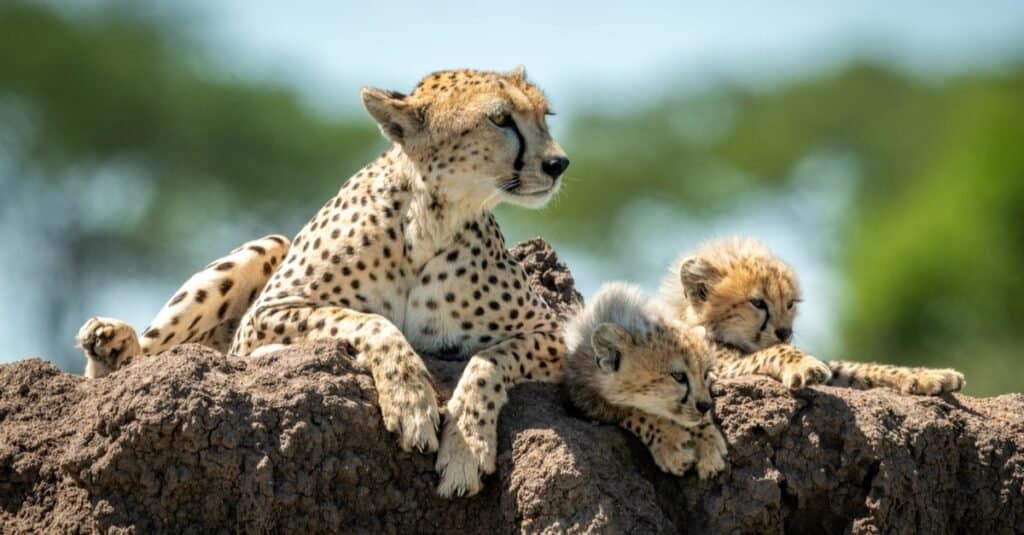
Cheetahs are one of the more sociable cat species.

Reproduction and Life Cycles

After a gestation period that lasts for around 3 months, the female Cheetah gives birth to between two and five baby cheetah cubs that are born blind and incredibly vulnerable in the African wilderness. The cubs suckle from their mother for the first few months when they begin eating meat and start to accompany her on hunting trips as they are able to learn how to hunt from watching her. Cheetah cubs learn the majority of their hunting techniques through playing with their siblings and remain with their mother until they can hunt successfully and leave to find their own territory at between 18 months and 2 years old. Sadly, one of the main reasons for such drastic declines in Cheetah numbers is that up to 75% of Cheetah cubs don’t live to be older than 3 months, as their mother has to leave them every day to find food to feed them, leaving the vulnerable cubs helpless in the face of predators.
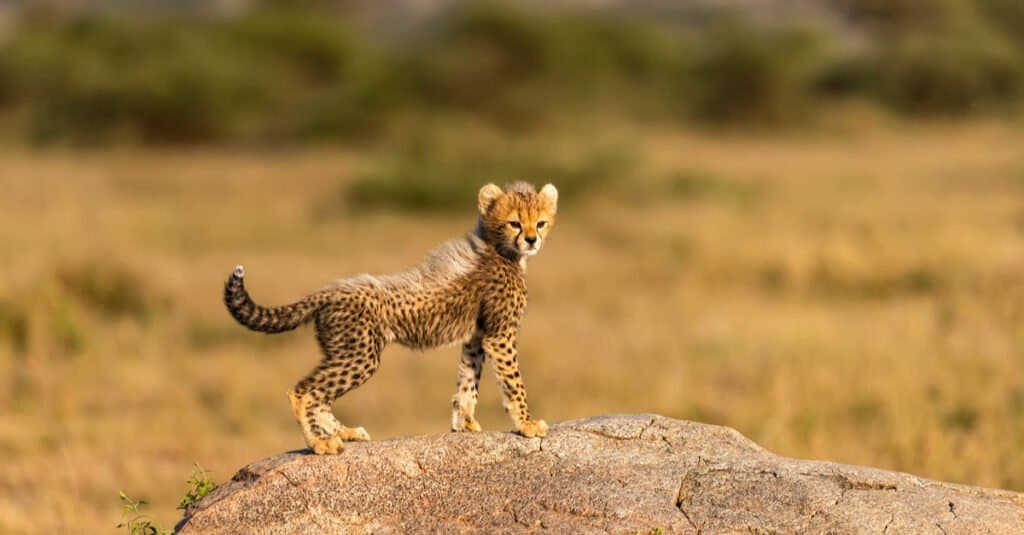
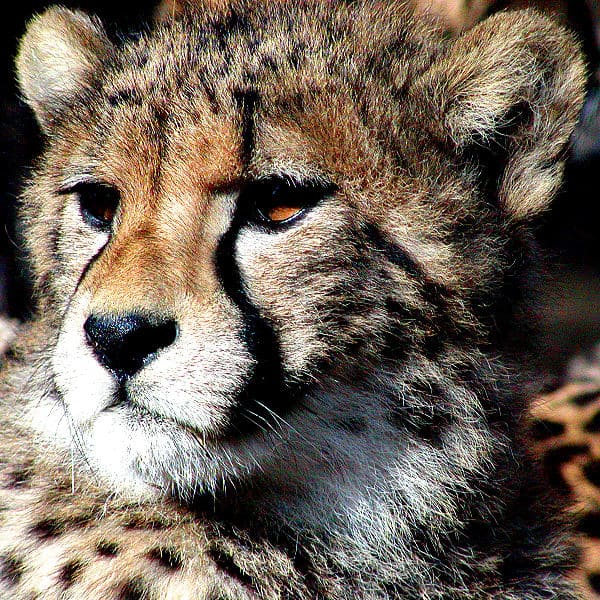
majestic baby cheetah

Cheetahs typically leave their to venture on their own between 18 months and 2 years old.

Diet and Prey

The Cheetah has exceptional eyesight and so hunts using sight by first stalking its prey (from between 10 to 30 meters away), and then chasing it when the time is right. Cheetahs often kill their prey in vast open spaces but tend to drag it into a hiding place to prevent it from being scavenged by other animals. The Cheetah has to do this as it cannot eat its prey straight away, due to the fact that they are immensely hot after the chase and need time to cool down before it can feast. Cheetahs are carnivorous animals meaning that they only hunt and kill other animals in order to get the nutrition that they need to survive. They mainly hunt large herbivores including Gazelle and a number of large Antelope species such as Wildebeest, along with Zebras and smaller mammals like Hares. The exact diet of the Cheetah though tends to depend on its location.

Predators and Threats

The adult Cheetah is a dominant predator in its environment and is therefore not seen as prey (more as competition) by other large predators. The Cheetah cubs however are incredibly vulnerable particularly when their mother is off hunting, and are preyed upon by a number of animals including Lions and Hyenas, but also large avian species such as Eagles and Vultures. The biggest threat to Cheetahs is people, who have not only taken vast areas of its natural habitat for themselves but have also turned large regions of land into National Parks. Although these areas seem to be showing increases in both Lion and Hyena populations, Cheetah numbers are much lower as there is more competition for food with the increasing numbers of these other large predators.
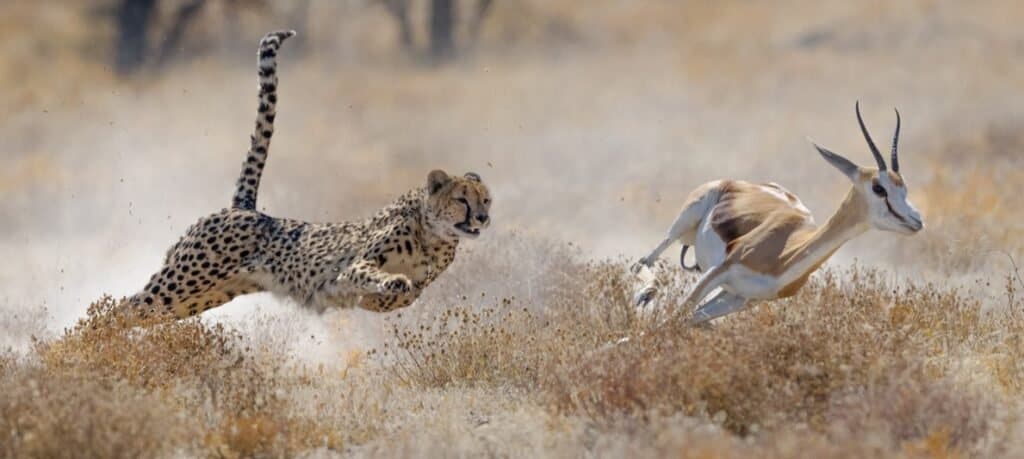
Types of Big Cats - cheetah

The adult Cheetah is a dominant predator in its environment.

Cheetah Interesting Facts and Features

One of the most distinctive differences between the different subspecies is that their fur color changes slightly, depending on their surrounding environment. Those Cheetahs found in the more arid desert regions tend to be lighter and have smaller spots than those that roam the south African grasslands, and are darker, slightly bigger, and have larger spots. Although Cheetahs cannot roar, they do make a variety of different sounds including a high-pitched yelp which can be heard from more than a mile away. The Cheetah is one of the most distinctive of the world’s felines and although it is fairly commonly confused with the Leopard, its name is thought to have come from the Hindu word ‘chita’ which means the ‘spotted one’.
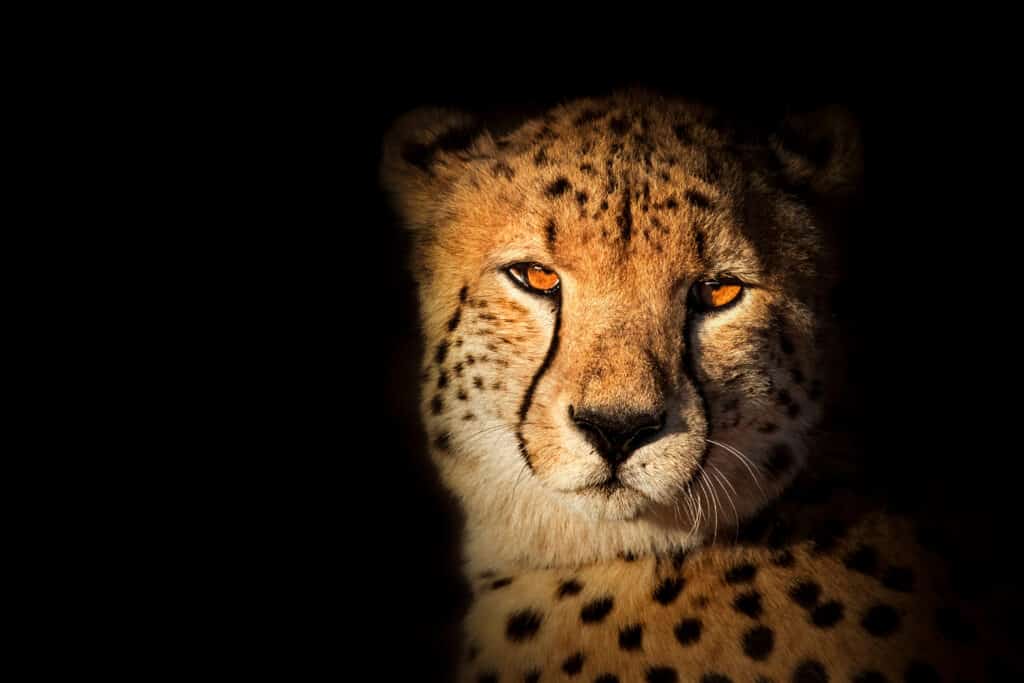
cheetah

The name cheetah is thought to have come from the Hindu word ‘chita’ which means the ‘spotted one’.

Relationship with Humans

Despite their fierce appearance, Cheetahs have actually been domesticated by local people for thousands of years, as they were used to help with hunting for food for the villagers. They have also been kept in captivity for a long time, but as they do not seem to produce particularly healthy individuals, wild Cheetahs were regularly caught to restore the bloodline. Hunted by people as trophies throughout much of their natural range, Cheetahs have completely disappeared from numerous places, and along with habitat loss to growing Human settlements and the clearing of land for agriculture, Cheetah numbers are still declining rapidly in many areas today.
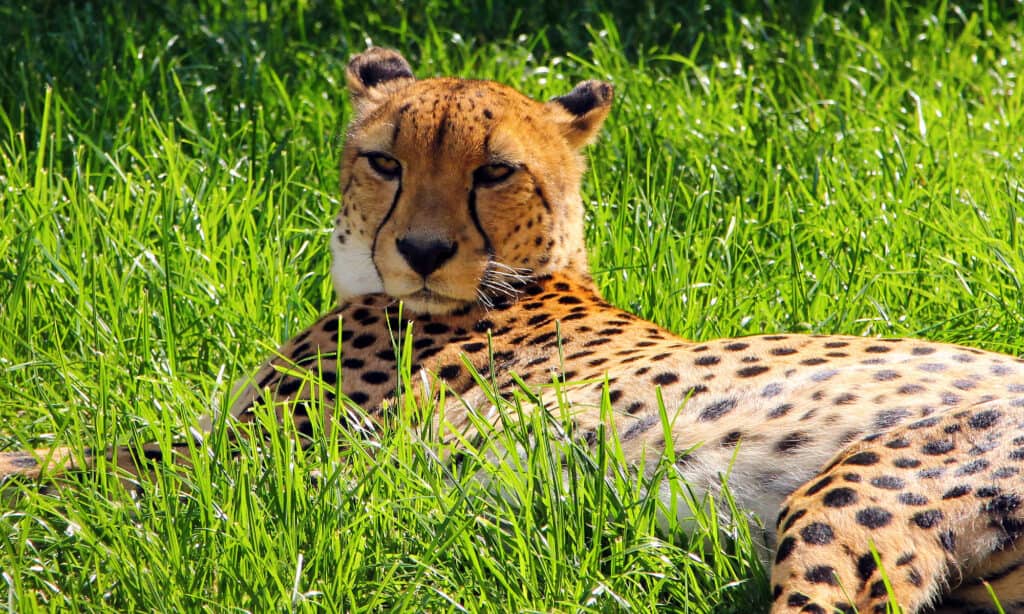
Indian Asiatic Cheetah

The Asiatic cheetah is genetically related, but distinct, from the African cheetah. Historically, these cheetahs were used by Indian royal families to hunt gazelles and antelope.

Conservation Status and Life Today

Today, the Cheetah has been listed by the IUCN as a species that is Vulnerable to extinction in its natural environment in the near future. Habitat loss along with the increase of natural parks that are home to a large number of competing predators has led to drastic declines in the world’s Cheetah population. There are now estimated to be about 7,000 individuals left in the wild, along with a growing number being found in zoos and animal institutes all over the world.
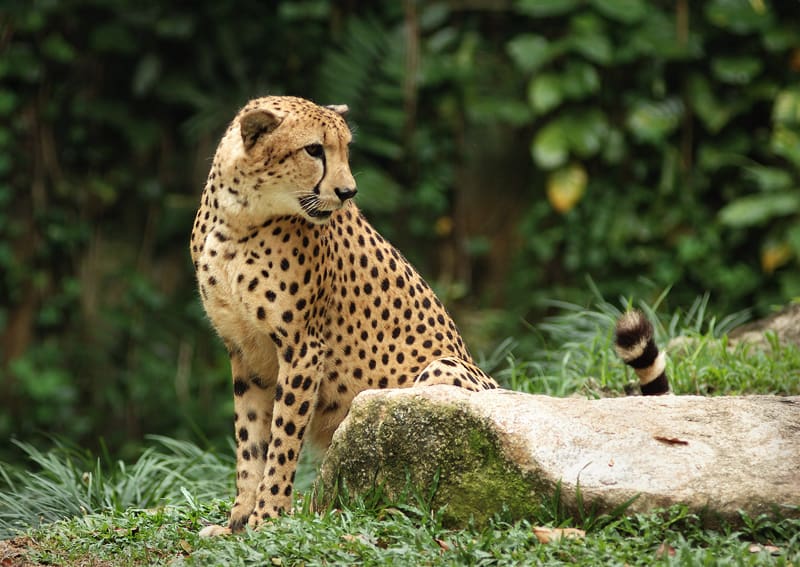
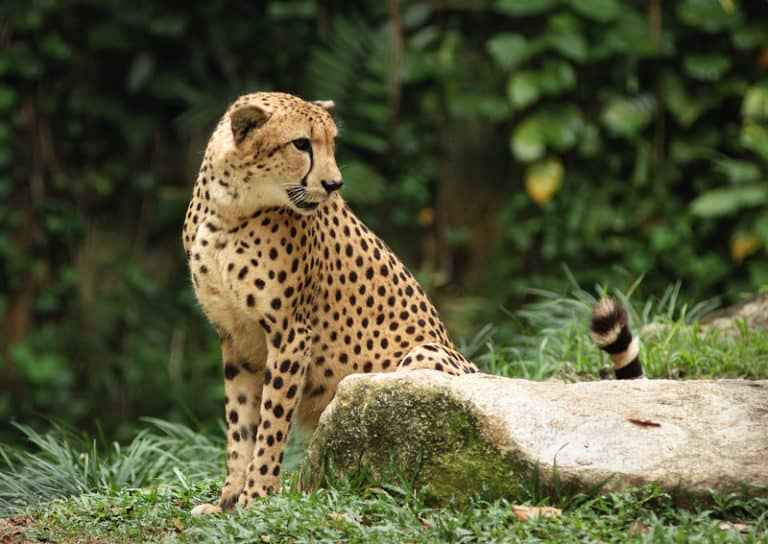
Cheetahs can be found in zoos all across the world.

View all 392 animals that start with C
How to say Cheetah in ...
Bulgarian
Гепард
Catalan
Guepard
Czech
Gepard štíhlý
Danish
Gepard
German
Gepard
English
Cheetah
Esperanto
Gepardo
Spanish
Acinonyx jubatus
Estonian
Gepard
Finnish
Gepardi
French
Guépard
Galician
Guepardo
Hebrew
ברדלס
Croatian
Gepard
Hungarian
Gepárd
Indonesian
Cheetah
Italian
Acinonyx jubatus
Japanese
チーター
Latin
Acinonyx
English
Jachluipeerd
Dutch
Jachtluipaard
English
Gepard
Polish
Gepard
Portuguese
Guepardo
English
Ghepard
Slovenian
Gepard
Swedish
Gepard
Turkish
Çita
Vietnamese
Báo săn
Chinese
猎豹

Sources

  1. David Burnie, Dorling Kindersley (2011) Animal, The Definitive Visual Guide To The World's Wildlife / Accessed November 10, 2008
  2. Tom Jackson, Lorenz Books (2007) The World Encyclopedia Of Animals / Accessed November 10, 2008
  3. David Burnie, Kingfisher (2011) The Kingfisher Animal Encyclopedia / Accessed November 10, 2008
  4. Richard Mackay, University of California Press (2009) The Atlas Of Endangered Species / Accessed November 10, 2008
  5. David Burnie, Dorling Kindersley (2008) Illustrated Encyclopedia Of Animals / Accessed November 10, 2008
  6. Dorling Kindersley (2006) Dorling Kindersley Encyclopedia Of Animals / Accessed November 10, 2008
  7. David W. Macdonald, Oxford University Press (2010) The Encyclopedia Of Mammals / Accessed November 10, 2008
Heather Ross

About the Author

Heather Ross

Heather Ross is a secondary English teacher and mother of 2 humans, 2 tuxedo cats, and a golden doodle. In between taking the kids to soccer practice and grading papers, she enjoys reading and writing about all the animals!

Thank you for reading! Have some feedback for us?


Cheetah FAQs (Frequently Asked Questions)

Yes, cheetahs are faster than greyhounds over short distances. When comparing a cheetah vs. greyhound, cheetahs can attain a maximum speed of more than 60 miles per hour while greyhounds have a maximum speed that’s only slightly above 40 miles per hour. However, greyhounds are long-distance runners that can maintain speed for more than 5 miles while cheetahs run in bursts rarely lasting more than 30 seconds.