






Quick Take
- A Chesapeake Bay Retriever can achieve a 100-duck retrieval total within 1 day.
- A Von Willebrand’s Disease diagnosis between ages 3 and 5 creates blood-clotting constraints.
- On the contrary, Chessies often display aggression toward strangers despite their loving personality.
- Owners must delay swim training until the 6-month mark to ensure safety.
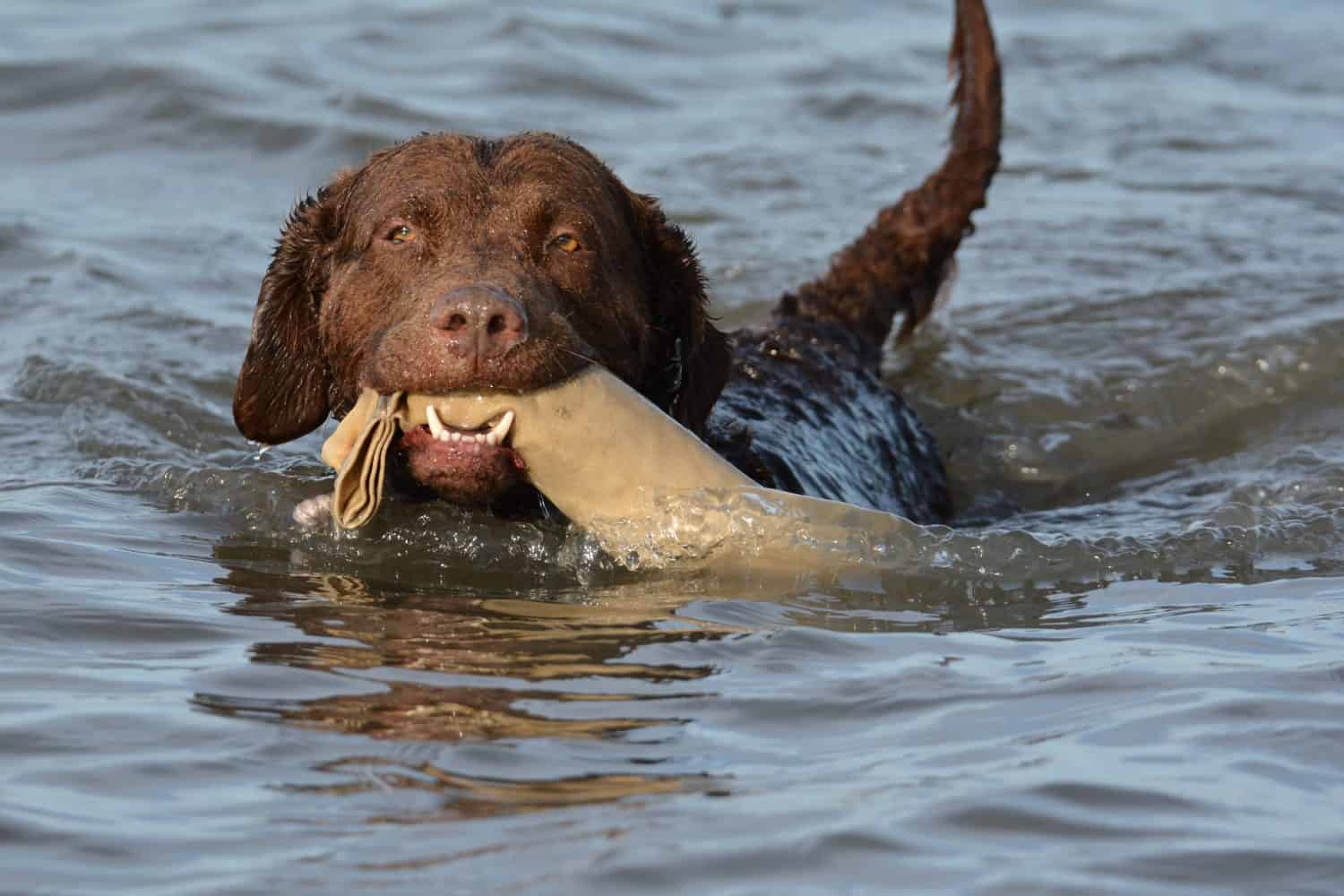
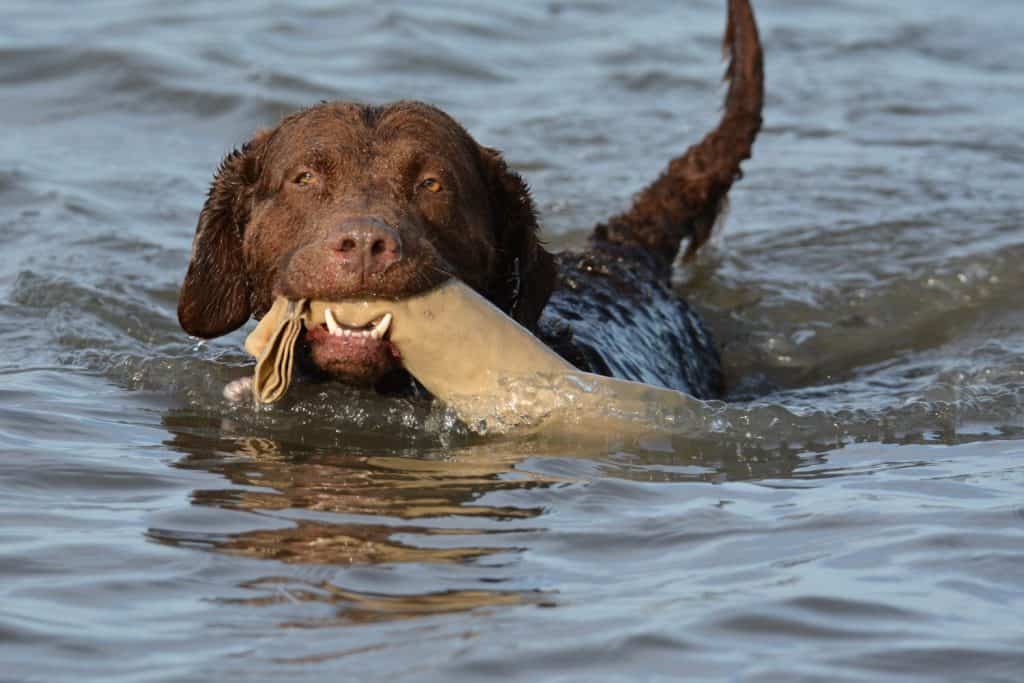
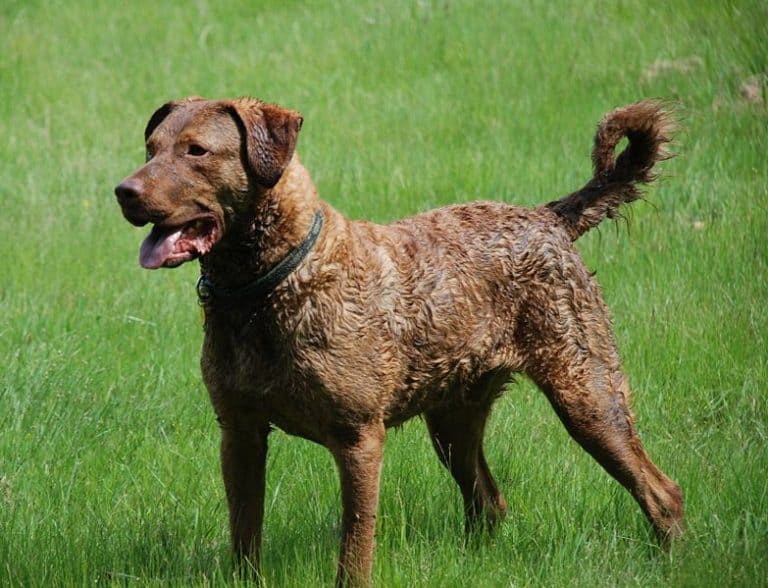
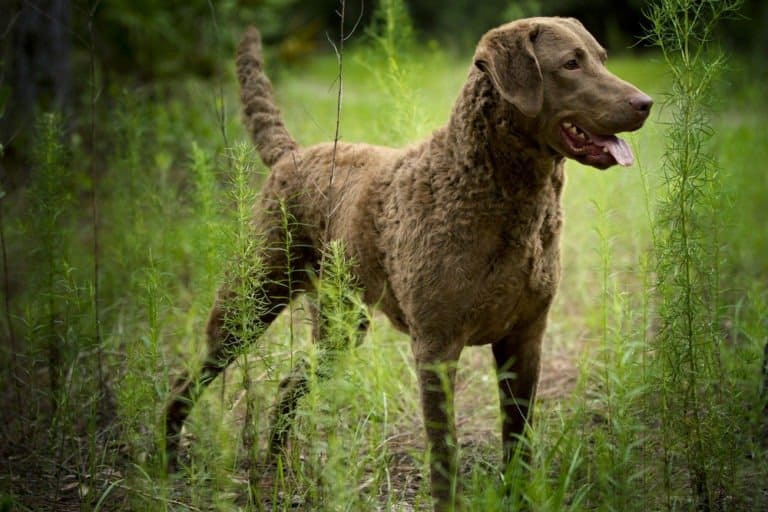
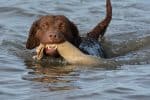
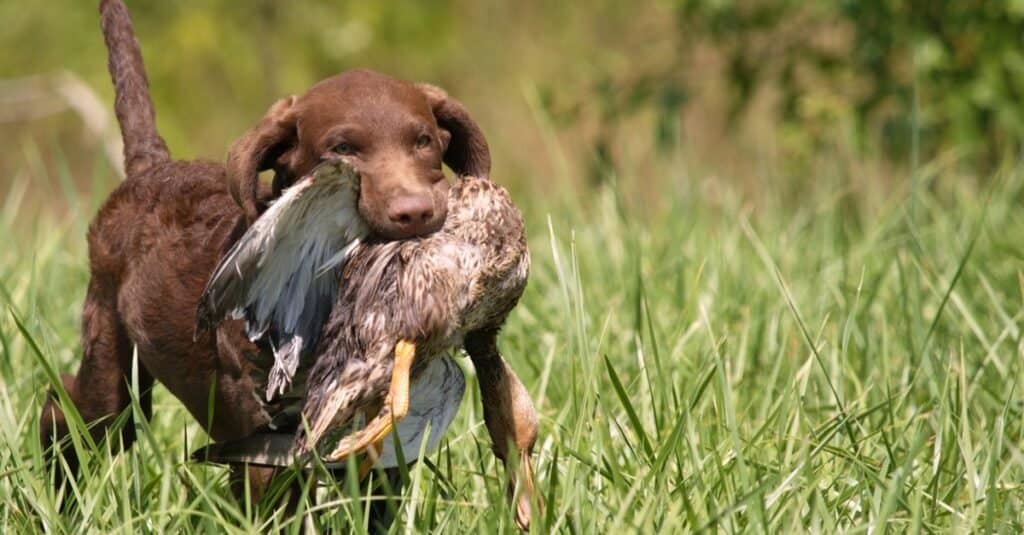
Chesapeake Bay retrievers are a type of gun dog that was bred for duck hunting along the Chesapeake Bay in Maryland and Virginia. This sporting breed is a mix of Newfoundlands, hounds, water spaniels, setters, and some other breeds. Because the Chesapeake Bay gets so cold during the winter months, the dogs were bred to have a thick and waterproof coat to keep them warm and dry as they ran and swam in the icy water. Chesapeake Bay retrievers, or “chessies” as they’re often called, may have been able to retrieve as many as 100 or more ducks in just one day.
In addition to making an excellent hunting companion, Chesapeake Bay retrievers also make great therapy dogs. Some are even used by law enforcement to detect drugs or bombs because they have very acute scenting capabilities.
Chessies can make great family dogs when they are provided with proper socialization and plenty of exercise. They are very sensitive, intelligent, and loving dogs.

Evolution
The Chesapeake Bay retriever descended from two Lesser Newfoundland Dogs named “Sailor” and “Canton”, who were rescued from an impending shipwreck in 1807, off the Maryland coast. The ship was bound for England with a cargo of fish and the two prized retrieving dogs. Lesser Newfoundland dogs were prized by fishermen for their ability to haul lines and nets of fish back to their boats. Their coats were thick and water-resistant and their dispositions were happy and enthusiastic.
The two dogs stayed aboard the Canton (the female dog was named Canton after the ship that rescued her) and journeyed to Maryland with their new owner, George Law. Sailor, the male, was considered to be quite beautiful because of his light-colored eyes. The dogs had been chosen from two different families and meant to be bred, but that never happened. They were sold to two different individuals who bred them with other breeds, such as the coonhound, to improve their scenting ability. The progeny of Sailor and Canton developed into such skilled retrievers that they were able to retrieve hundreds of birds in a day.
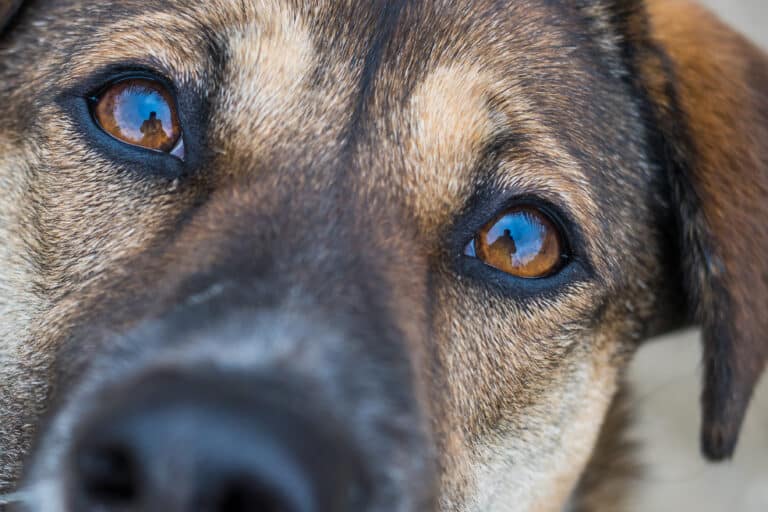
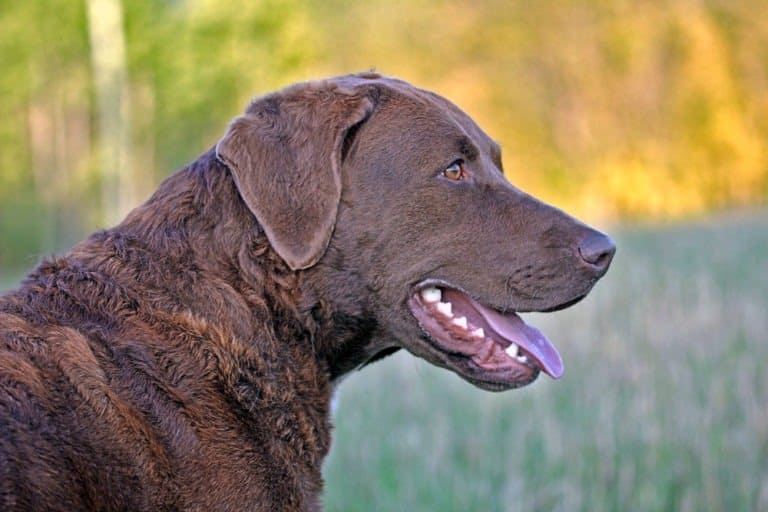
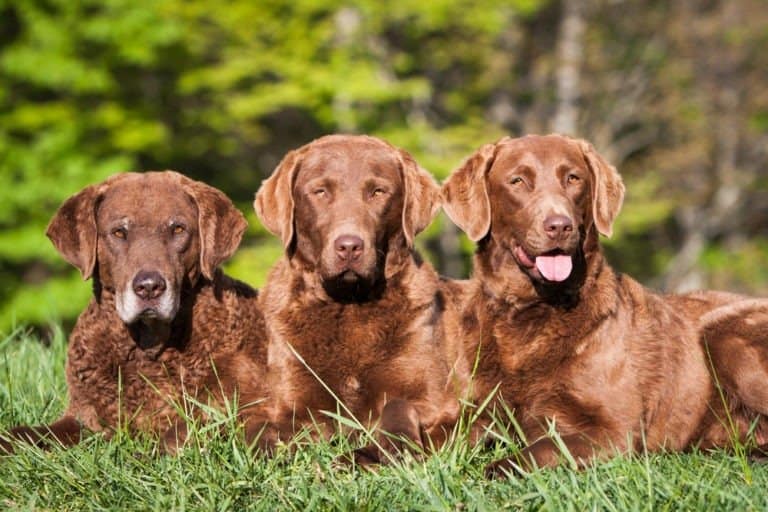
In 1888, the breed, Chesapeake Bay Retriever, was recognized by the American Kennel Club, with the unique yellow and amber eyes of Sailor becoming the breed standard.
3 Pros and Cons of Owning a Chesapeake Bay Retriever
| Pros | Cons |
|---|---|
| Training In general, Chesapeake Bay retrievers are relatively easy to train. You will want to make sure you start training your dog from a very early age and provide them with plenty of socialization for the best results. | Exercise Chesapeake Bay retrievers require a lot of exercise. They do best when they can swim, run, hike, and play regularly. If you won’t be able to provide opportunities for these types of activities, a Chessie may not be the best dog for you. |
| Friendly Chessies are very affectionate and friendly dogs, especially with people they know and trust. | Shedding Chesapeake Bay retrievers shed more than some other dog breeds, so be prepared to have fur around your home. |
| Playful Since they are a high-energy dog breed, Chesapeake Bay retrievers enjoy playing. If you are looking for a playful pup, they’re a good breed to consider. | Need companionship Chessies are not a good breed to get if you will be away from your home for extended periods of time. They do best when someone is home with them and could develop anxiety if left alone for too long. |
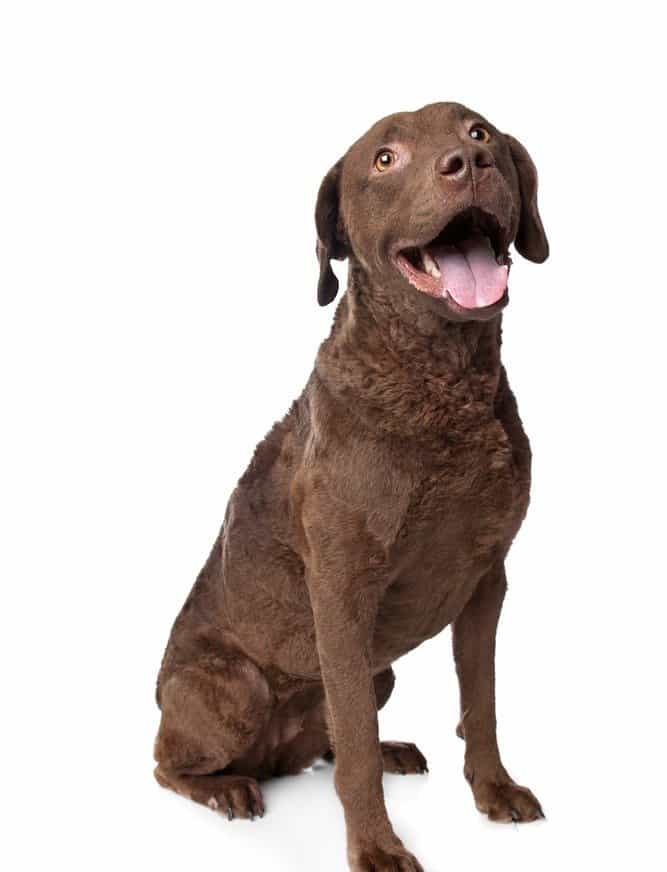
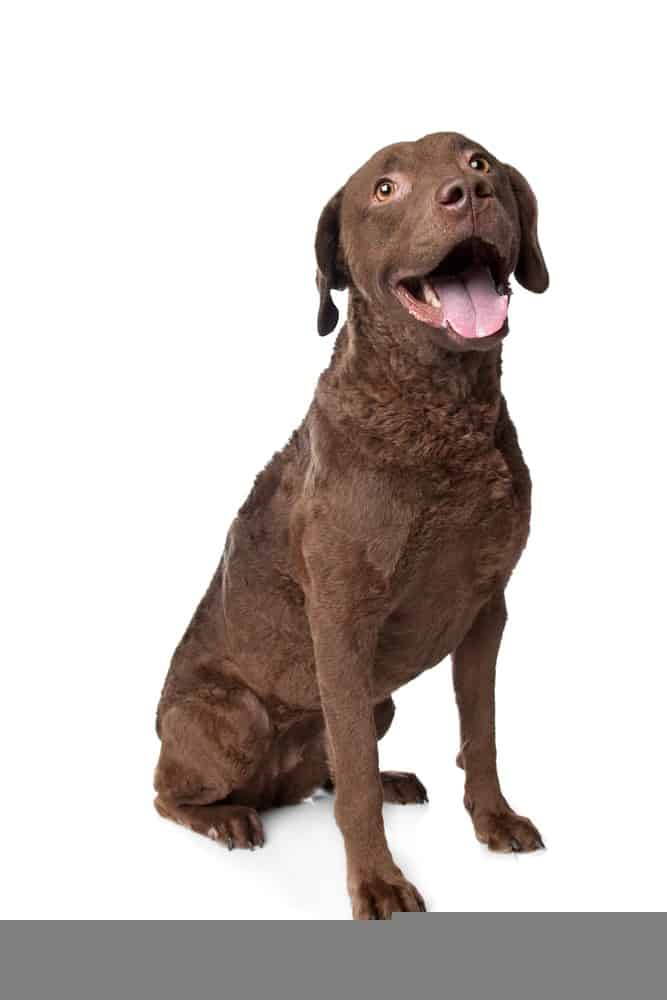
Chesapeake Bay retrievers are very affectionate and friendly dogs.
©Erik Lam/Shutterstock.com
Size and Weight
Chesapeake Bay retrievers are a large-sized dog breed. Males are typically a little larger than females. Male Chesapeake Bay Retrievers are between 23 and 26 inches tall and weigh between 65 and 80 pounds. Females are generally between 21 and 24 inches tall and weigh 55 to 70 pounds.
Common Health Issues
Chesapeake Bay retrievers face a few common health issues. A number of these health issues are hereditary, which is one of the reasons it is important to adopt this breed from a responsible breeder. Breeders will be able to run different tests to check their breeding stock for these more common health concerns.
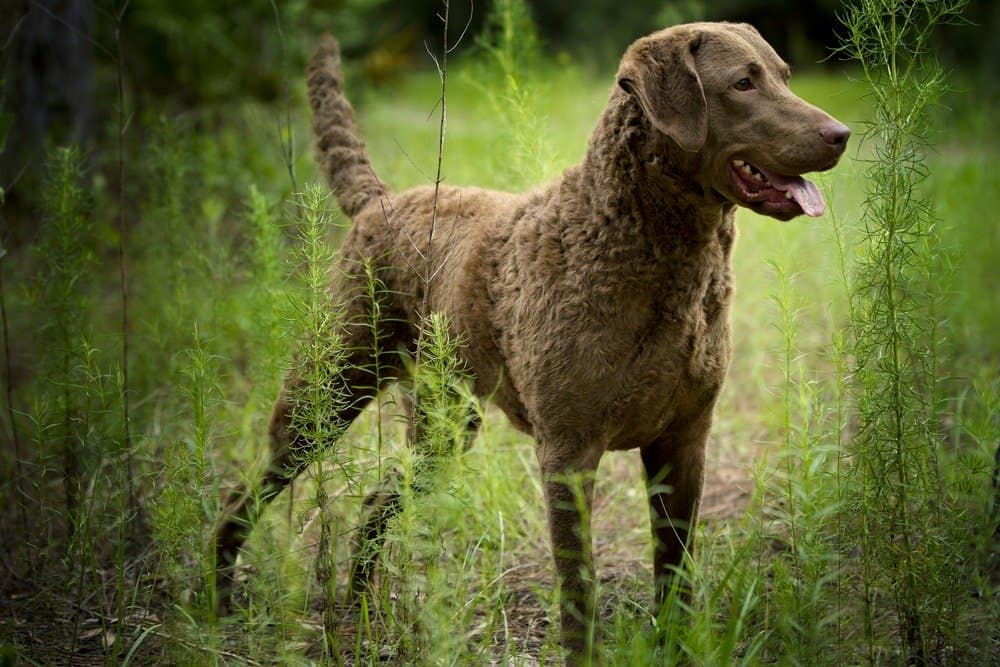
Like most large dog breeds, Chessies may develop hip dysplasia.
©Kerrie T/Shutterstock.com
One ailment that these dogs may face is hip dysplasia. Hip dysplasia is when a dog’s hip joint doesn’t form correctly. The ball and socket of the joint rub against each other and wear one another down. Over time, this becomes very uncomfortable for the dog and may cause them to limp. Check with your breeder to ensure that they completed a hip evaluation on both parents of the puppy you are looking at. You can also ask your veterinarian to evaluate the hips of your puppy before or after you adopt him.
Von Willebrand’s Disease is another health concern for this breed. It is a blood disorder that impedes the dog’s clotting process. Symptoms of this disorder include nose bleeds, prolonged bleeding after surgery or an injury, and bleeding gums. Most times, dogs are diagnosed with this disorder between the ages of 3 and 5 years old. While the disease is not curable, suturing or cauterizing injuries, avoiding some medications, and transfusions can help manage the disease.
Chesapeake Bay retrievers may also suffer from a degenerative eye disorder called progressive retinal atrophy (PRA). PRA causes dogs to lose photoreceptors at the back of their eyes, which, over time, will lead to blindness. If you purchase your Chessie from a reputable breeder, it will be less likely that your dog will suffer from this condition since they do not breed dogs that have PRA.
Chessies can also be affected by gastric dilation-volvulus, also known as bloat. This is a very serious condition that dogs with deep chests suffer from. When dogs eat a large meal followed by lots of vigorous exercise, their stomach may become distended and filled with gas. The stomach also sometimes twists. Your dog will be noticeably bloated and should be rushed to an emergency vet if you notice any of the signs of bloat.
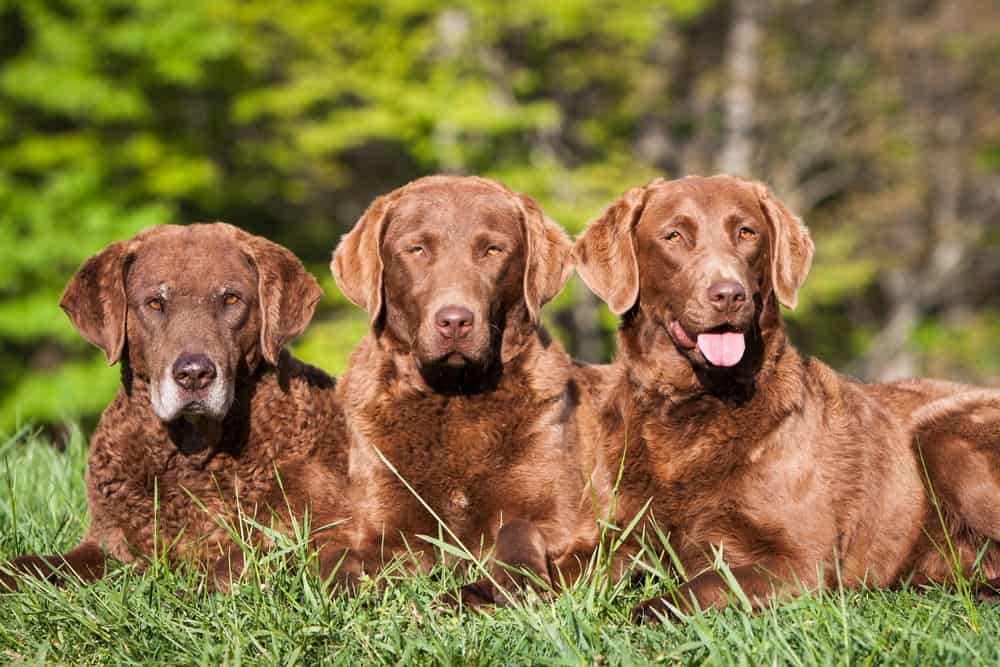
Chessies are affectionate and loving toward their family, but can be aggressive toward strangers.
©Kerrie T/Shutterstock.com
Temperament
While many chessies are hesitant or even aggressive around strangers, they display a very affectionate and loving personality with their family members. They also often display protective traits, which means you could train a Chesapeake Bay retriever to be a good watchdog.
These are very intelligent dogs and can be independent or even stubborn at times, but they can make great family pets. Their very friendly behavior and protective instincts help them watch out for the people they love. When properly trained and socialized, they can also learn how to be very careful with younger children.
How to Take Care of a Chesapeake Bay Retriever
If you’re considering adopting a Chesapeake Bay retriever, there are a few considerations you’ll want to take into account. A care plan for a Chessie will differ from that of other dogs due to the breed’s specific health concerns, dietary needs, and temperament.
The Best Dog Food
It is important to look for high-quality dog food. High-quality foods from trusted brands will contain a better mix of nutrients that help keep your dog healthy and ensure its nutritional needs are met. Cheaper foods often have fillers or animal by-products that won’t offer the same health benefits for your dog.
Since these dogs can suffer from bloat, pay attention to ensure they don’t eat too fast or too close to exercising.
Adult chessies should eat between 2 and 2.5 cups of dry food each day. With most dogs, you’ll want to divide their food into two meals. The exact amount of food your Chesapeake Bay Retriever will need will depend on his metabolism, age, activity level, and other factors. You can always consult with your veterinarian if you’re not sure how much you should be feeding your dog.
Puppies have smaller stomachs, so they will need to eat smaller, more frequent meals. Puppies between the ages of 8 and 12 weeks will need to eat four small meals, and puppies between the ages of 3 and 6 months should eat three small meals. By the time your puppy is 6 months, it should be fine eating just two meals a day.
Maintenance and Grooming
Maintaining and grooming a dog of this breed is relatively easy. They have a softer undercoat with a thicker outer coat. If you brush your Chesapeake Bay retriever one time a week, it will limit the amount of hair that is left around your home. If they aren’t regularly brushed, expect this breed to shed a fair amount.
In addition to regularly brushing your dog, you will also want to be sure to keep their nails trimmed. If their nails get too long, it can make it uncomfortable for them to walk or run.
A Chesapeake Bay Retriever is born to spend time in the water, and like the ducks they often help hunt, they have webbed feet to help them swim in the waters of the bay.
©cindylindowphotography/Shutterstock.com
Training
Chesapeake Bay retrievers are intelligent dogs that are relatively easy to train. You will want to make sure you begin training your puppy from an early age for the best results. Enrolling your dog in obedience classes will also help with the training process and make sure they learn how to act appropriately.
Exercise
If you’re thinking about bringing home a dog of this breed, make sure you’re prepared to give it plenty of exercise. As a sporting breed, Chessies have a lot of energy and need regular exercise. These dogs love hiking, swimming, running, and hunting. You can also train this breed to do well with tracking, agility, or other dog sports. As hunting dogs, they also make a great companion on a hunting trip or when doing work out in the field.
Puppies
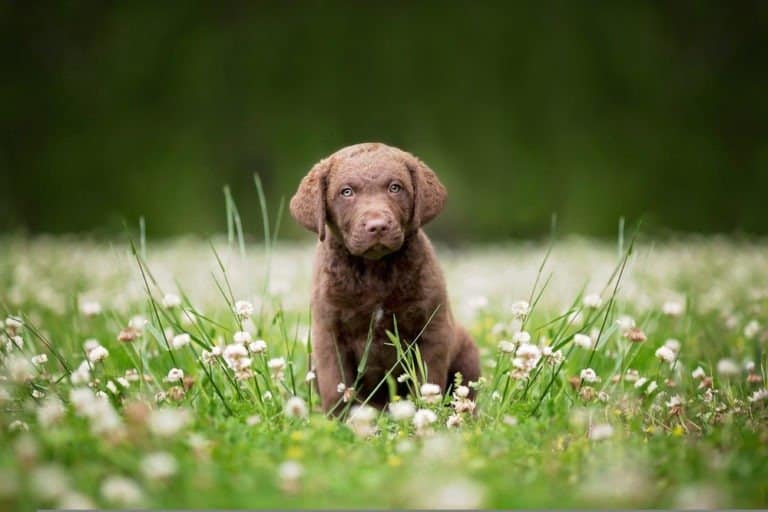
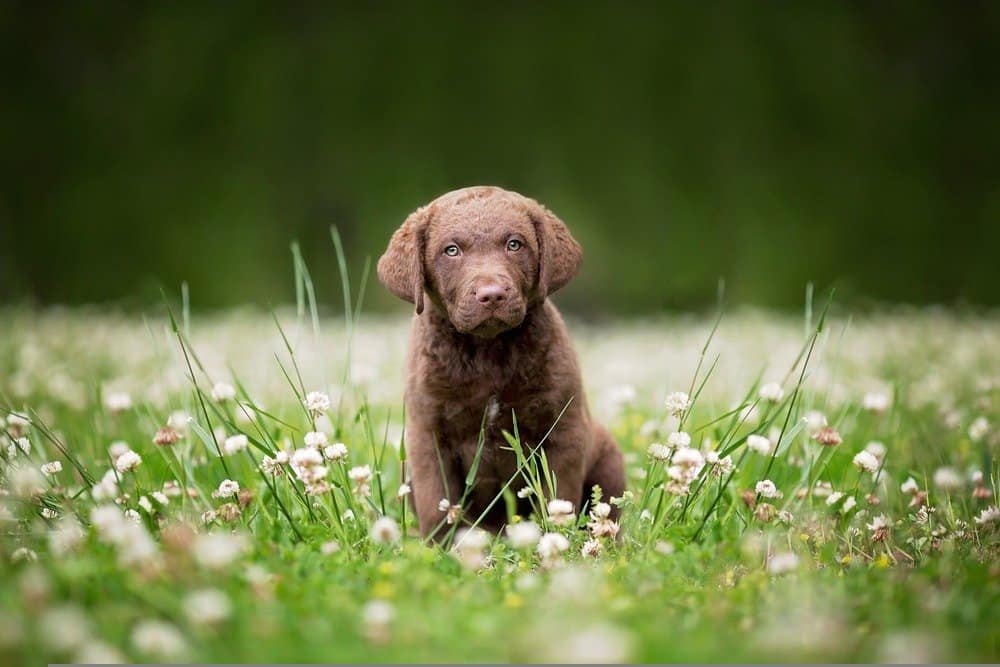
If you’re looking for a Chesapeake Bay retriever puppy to adopt, you should try to schedule a time when you can visit with the puppy or puppies that are available. Look for a puppy that is playful and curious, but not one that seems too aggressive towards the other dogs with him or her.
Before bringing your puppy home, make sure that your home is puppy-proofed. Move anything that could be potentially hazardous to your new dog, as well as anything of value to you. Once your new pup is home, be sure to start training it right away. Early training and socialization will help ensure your puppy learns what is and isn’t acceptable and grows up to be a friendly and well-mannered dog.
You should also make sure that you give the puppy plenty of time to play and exercise. Once your dog is close to 6 months old, you can also start teaching him how to swim.
Chessies enjoy playing with children, but should be closely supervised until trained.
©Kerrie T/Shutterstock.com
Chesapeake Bay Retrievers and Children
Chesapeake Bay retrievers can be a good dog breed to have around children, as long as the dog is properly trained and socialized, and the children are old enough to know how to treat a dog correctly. Chessies enjoy playing with children and can be very careful around them. However, they are less likely to put up with children pulling their tails, grabbing their fur, or annoying them in some other way.
Most likely, if your dog is feeling bothered, he will simply walk away from the child. However, you should always closely supervise your children when they are with this or any dog breed.
Dogs similar to Chesapeake Bay Retrievers
- Labrador retriever: Labrador retrievers and Chesapeake Bay retrievers are both large-sized gun dog breeds. They are of comparable size, with both breeds weighing around 70 pounds and standing 22 to 24 inches tall on average. Additionally, both dogs have above-average intelligence and can be easily trained. One difference is that Labrador retrievers can be more sensitive and social than Chesapeake Bay retrievers.
- Golden retriever: Golden retrievers are another gun dog breed, so like chessies, they were bred to help hunt. As their name implies, Golden Retrievers are golden brown in color, while Chesapeake Bay Retrievers typically have a little darker coloring. Both dogs can be very playful, though a Golden Retriever will need more social interaction than a Chesapeake Bay retriever.
- Curly-coated retriever: Curly-coated retrievers are also large-breed gun dogs. They are typically just a few inches taller than a Chesapeake Bay Retriever, but both breeds weigh around 70 pounds. While their coat is very different in appearance, both dogs are relatively easy to groom and shed, but not a ton. Curly-coated retrievers are not as intelligent or playful as Chesapeake Bay retrievers, but they are often more affectionate.
Famous Chesapeake Bay Retrievers
The Chesapeake Bay retriever is the official dog of Maryland. It is also the University of Maryland, Baltimore County’s mascot. Additionally, chessies have been a favorite pet of many famous individuals. Here are a few examples of famous Chesapeake Bay retrievers:
- Paul Walker’s Chesapeake Bay retriever named Boone
- Tom Felton’s Chesapeake Bay retriever named Timber
- President Theodore Roosevelt’s Chesapeake Bay retriever named Sailor Boy
- John McCain’s Chesapeake Bay retriever named Burma
Chesapeake Bay Retriever Pictures
View all of our Chesapeake Bay Retriever pictures in the gallery.

Sources
- American Kennel Club / Accessed September 10, 2018
- Dogtime / Accessed September 10, 2018
- Wikipedia / Accessed September 10, 2018
- Petfinder / Accessed September 10, 2018
- Vetstreet / Accessed September 10, 2018
- DogNamed.com / Accessed September 10, 2018
- Dogell / Accessed September 10, 2018
- NBC News / Accessed September 10, 2018
- Animal Care Tip / Accessed September 10, 2018
- CBR Rescue / Accessed September 10, 2018