







C
Species Profile

Chihuahua

Canis lupus familiaris

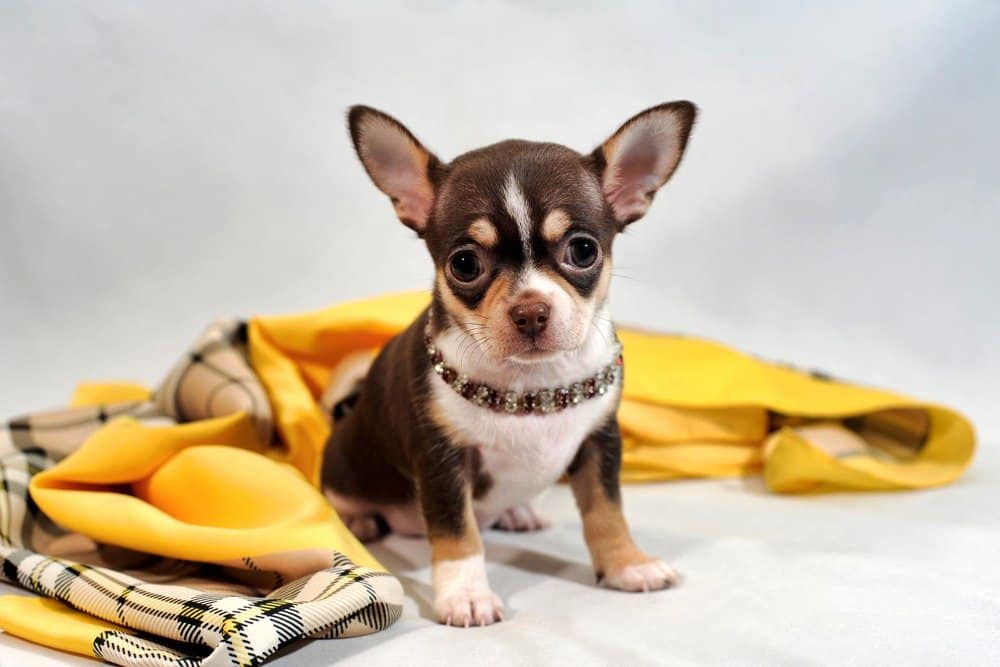
Tiny body, fearless heart.
Arthur Lookyanov/Shutterstock.com

Chihuahua Distribution

Click a location to explore more animals from that region

Origin Location

This map shows the native origin of the Chihuahua. As a domesticated species, they are now found worldwide.

Loading map...

Found in 1 country

Size Comparison

Human 5'8"
Chihuahua 7 in

Chihuahua stands at 11% of average human height.

Chihuahua puppy

At a Glance

Domesticated
Also Known As Chi, Chichi, Chiwawa, Mexican Toy, Pocket dog
Diet Omnivore
Activity Diurnal+
Lifespan 5 years
Weight 3 lbs
Status Not Evaluated
Did You Know?

Chihuahuas are among the smallest dog breeds by height and weight, but they're still the same species as wolves (Canis lupus).

Scientific Classification

The Chihuahua is a very small (toy) domestic dog breed known for its compact body, large ears, and prominent eyes. It is kept primarily as a companion animal and occurs in both smooth-coat and long-coat varieties.

Kingdom
Animalia
Phylum
Chordata
Class
Mammalia
Order
Carnivora
Family
Canidae
Genus
Canis
Species
Canis lupus

Distinguishing Features

  • Toy-sized domestic dog
  • Large, erect ears; rounded ‘apple’ head common
  • Short (smooth) or long coat varieties
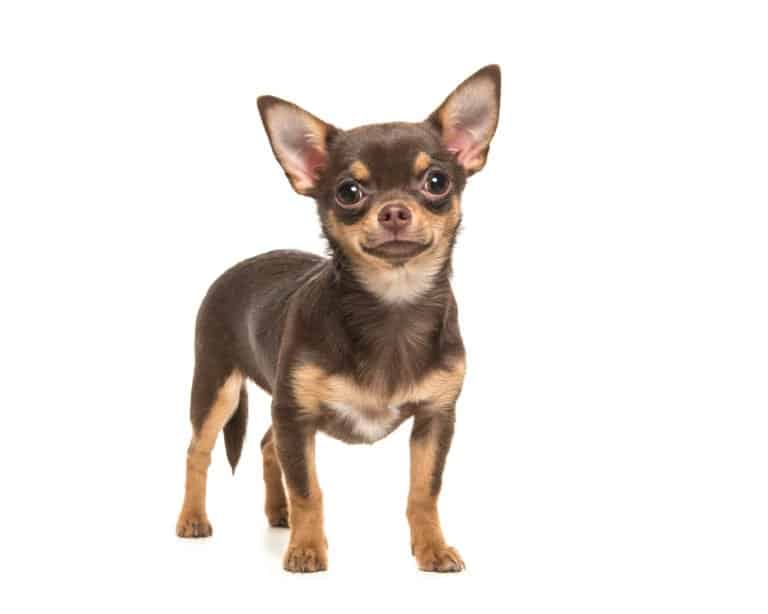
  • Prominent eyes; compact, lightly built body

Physical Measurements

Height
7 in (6 in – 9 in)
Length
1 ft 6 in (1 ft 1 in – 1 ft 11 in)
Weight
5 lbs (3 lbs – 7 lbs)
Tail Length
6 in (4 in – 8 in)
Top Speed
16 mph

Appearance

Primary Colors
Secondary Colors
Skin Type Mammal skin with pigmented epidermis and fur. Chihuahuas come in smooth-coat (short) and long-coat (longer feathering). Coat is single to lightly double; skin can dry or get irritated if bathed too often.
Distinctive Features
  • Domestic dog breed (Canis lupus familiaris) selected for extreme toy size compared with the base species (wolf) and most dog breeds; compact, lightweight companion morphology.
  • Very small, compact body with fine bone; many adults are in the toy range and can be fragile-risk of injury from falls, rough handling, or larger dogs.
  • Characteristic head/face: often an "apple-shaped" skull, short muzzle, pronounced stop; large, round prominent eyes.
  • Large, upright ears relative to head size (a key silhouette trait).
  • Tail carried in a sickle/loop over the back; long-coats often show a plumed tail.
  • Two coat varieties (smooth and long); long-coat displays feathering and an ear fringe that emphasizes ear size.
  • Chihuahuas often have dental crowding and gum disease from small jaws; patellar luxation; tracheal collapse (use a harness); hypoglycemia in tiny pups; mitral valve disease, eye problems, open fontanelle, and obesity risk.
  • Chihuahua care: brush teeth daily and get vet cleanings; use a harness, keep warm in cold, give gentle exercise on safe surfaces; trim nails, check ears/eyes; smooth coat weekly, long coat several times a week.
  • Behavior/handling context: typically strongly bonded companion dog; benefits from early socialization and positive reinforcement training to reduce fearfulness and nuisance barking; supervision around children due to fragility.

Sexual Dimorphism

Sexual dimorphism is subtle in this breed; males may be slightly larger and more muscular, but overlap is high and differences are not strongly expressed compared with many wild canids.

♂
  • May be marginally heavier with a broader head or chest in some individuals; intact males may show more neck/shoulder musculature.
♀
  • Often slightly lighter and finer-boned; intact females may show body shape changes with heat cycles, pregnancy, or lactation.

Did You Know?

Chihuahuas are among the smallest dog breeds by height and weight, but they're still the same species as wolves (Canis lupus).

They come in two coat varieties-smooth-coat and long-coat-within the same breed standard.

The breed name comes from the Mexican state of Chihuahua, where early examples were popularized in the 1800s.

Many Chihuahuas have an "apple head" profile; some also retain a soft spot (molera) on the skull into adulthood.

Their large ears aren't just cute-they help with sound detection and can aid heat release in warm climates.

Because of their tiny mouths, dental crowding and tartar buildup are especially common, making tooth care a big part of Chihuahua ownership.

Despite their size, many are notably alert and vocal-traits that make them effective little watchdogs.

Unique Adaptations

  • Toy-breed miniaturization: extreme size reduction compared with the base species (wolf) shifts the Chihuahua's role from endurance hunter to companion specialist.
  • Neotenous features (large eyes, rounder skull, short muzzle): traits favored in domestication that enhance human caregiving responses.
  • Large pinnae (ears): improve sound localization and can support thermoregulation in warm environments.
  • Low body mass: makes them energy-efficient to keep, but increases risk of chilling and hypoglycemia-especially in puppies or very small adults.
  • Compact frame: suited to indoor living and short bursts of activity, unlike wolves' long-distance traveling build.
  • Coat variety adaptability: smooth coats are low-maintenance; long coats offer more insulation but require regular brushing to prevent tangles.

Interesting Behaviors

  • "Velcro dog" bonding: often chooses one favorite person and stays close, following room to room.
  • Burrowing and nesting: commonly tunnels under blankets to conserve warmth and feel secure.
  • High alertness and watchdog barking: quick to announce visitors, unusual sounds, or movement.
  • "Big-dog" posturing: may challenge larger dogs; early socialization helps prevent overconfidence turning into reactivity.
  • Trembling: frequently seen with excitement, cold, stress, or low blood sugar rather than "fear" alone.
  • Selective social behavior: may be reserved with strangers but affectionate and playful with trusted people.
  • Resource guarding of laps/toys: manageable with reward-based training and clear routines.

Cultural Significance

The Chihuahua, linked to ancient Techichi dogs of the Toltec and Aztec, is tied to Mexico and is a global symbol as a small, lively, loyal pet—often a 'purse dog'—seen in ads like Taco Bell.

Myths & Legends

In Toltec and Aztec stories, small companion dogs linked to the Techichi (a likely Chihuahua ancestor) were thought to guide a person's soul through the underworld after death.

Burial companions: Historical accounts and archaeological finds from parts of Mesoamerica describe dogs being buried with people, reflecting a belief that the dog could accompany or protect the deceased on their journey beyond life.

In parts of Mexico, folk beliefs say Chihuahuas can take on their owner's illness or pain as a way to protect the person by absorbing the sickness.

Origin story: Travelers found tiny dogs in Mexico's state of Chihuahua, bought them from local people, and carried them across the border, turning a regional dog into an international breed.

Modern celebrity-legends: Contemporary pop-culture narratives (from film and fashion circles) cast Chihuahuas as status-symbol companions-stories that helped cement their image as glamorous, always-at-their-person sidekicks.

Conservation Status

NE Not Evaluated

Has not yet been evaluated against the criteria.

Population Stable

Life Cycle

Birth 2 pups
Lifespan 5 years

Lifespan

In the Wild
2–10 years
In Captivity
10–20 years

Reproduction

Mating System Polygyny
Social Structure Managed Domestic
Breeding Pattern Not Applicable
Fertilization Managed Selective
Birth Type Internal_fertilization

Chihuahua (Canis lupus familiaris) breeding is human-managed, often polygyny where one male is used with several females. No lasting pair bonds; mothers raise pups with human help. Gestation ~63 days; small litters (1–3), higher whelping risk.

Behavior & Ecology

Social Pack Group: 3
Activity Diurnal, Cathemeral
Diet Omnivore Highly palatable animal protein (commonly chicken or turkey) in small, energy-dense portions (often as small-breed kibble or moist food).

Temperament

Affectionate companion; frequently forms a strong attachment to a primary caregiver ("one-person" tendency) more pronounced than many larger breeds.
Alert and vigilant; high propensity for alarm barking and environmental monitoring, often exceeding what would be expected from the base species context due to selection for companionship/alertness in close human quarters.
Bold-to-defensive: confident with familiar people but may be wary of strangers; fear-based reactivity is common when under-socialized or mishandled.
Territorial in the home (doorways, laps, beds); may resource-guard preferred people or resting spots if not trained.
Dog-dog sociability is highly variable (HUBS): within the breed, early socialization and size-matched play strongly predict friendliness vs. reactivity; intact males may show more same-sex tension in some settings.
Child tolerance varies (HUBS): many do best with calm, older children due to fragility and lower handling tolerance; startle responses can be sharp.
Trainability: intelligent and food-motivated but can be stubborn; consistent, reward-based training works best; harsh handling increases fear and snapping.
Breed-specific health/comfort influences on behavior: dental pain (common) can increase irritability; patellar luxation and orthopedic discomfort can reduce play and increase touch sensitivity; tracheal collapse may worsen with excitement/pulling.
Chihuahuas need frequent short positive visits with people and other dogs; use a harness instead of a collar; wear warm clothes in cold weather; teach alone time slowly; regular dental care helps comfort and sociability.
Common health concerns to monitor (non-exhaustive): dental crowding/periodontal disease, patellar luxation, tracheal collapse, hypoglycemia (especially puppies), cardiac disease (e.g., mitral valve disease), hydrocephalus in some lines-pain or breathlessness can present as "grumpiness" or avoidance.

Communication

Alarm barking (high-pitched, rapid) commonly used for territorial/novelty alerts.
Growls/snaps as distance-increasing signals when fearful, cornered, or resource-guarding.
Whines/whimpers to solicit attention, access, or comfort; can increase with separation distress.
Play vocalizations (short barks, yips) during social play, often more frequent than in many larger breeds.
Howling is possible but less common; may occur in response to sirens or other dogs.
Body posture: tail carriage, stiffening, freezing, and leaning away/behind handler; small stature can make subtle stress signals easy to miss.
Facial/ear signals: forward ears and wide eyes with vigilance; lip licking and yawning as calming/stress signals.
Proximity seeking: lap-sitting, following, and contact resting as primary affiliative behavior with preferred humans.
Scent marking: urine marking (more common in intact males) to communicate territory/sexual status.
Touch behaviors: pawing, nudging, and climbing onto people to solicit interaction; may "burrow" under blankets for security/thermoregulation.
Play signals: play bow, bouncy approach, and quick darting; safer in size-matched playgroups due to injury risk in mixed-size interactions.

Habitat

Biomes:
Temperate Forest Boreal Forest (Taiga) Tundra Temperate Grassland Desert Hot Desert Cold Mediterranean Tropical Dry Forest Savanna Alpine Freshwater Wetland +6
Elevation: Up to 16404 ft 3 in

Ecological Role

Primarily a companion domestic canid; secondarily a minor mesopredator/scavenger in human-dominated environments.

Companionship and human social/mental-health support Localized rodent deterrence/predation in homes and yards (limited by size and management) Acts as a consumer/scavenger within household food webs (mostly via human-provided diets) Can influence urban wildlife through disturbance and predation on small animals when off-leash

Diet Details

Main Prey:
Small rodents Small birds and eggs Insects Commercial animal proteins
Other Foods:
Starches and grains Starchy vegetables Fruits Fibrous vegetables

Human Interaction

Domestication Status

Domesticated

Domestic dog (Canis lupus familiaris) came from gray wolves and was shaped by long human breeding. The Chihuahua is a toy companion breed bred for very small size, childlike features (big eyes, round skull), a strong bond with people, and being easy to carry. Linked to Mexico (state of Chihuahua) and standardized by kennel-club breeding into smooth and long coats.

Danger Level

Low
  • Defensive biting/nipping, especially with poor socialization or rough handling
  • Falls/tripping risk due to very small size underfoot (indirect hazard)
  • Zoonotic risks common to dogs if not managed (e.g., parasites, rabies exposure in unvaccinated animals)
  • Noise/nuisance conflicts from frequent barking; can escalate human-animal incidents if mishandled

As a Pet

Suitable as Pet

Legality: Chihuahuas are usually legal as pets. Rules are basic care, licenses, leash laws, and housing limits (landlord or HOA). Breed bans rarely target Chihuahuas. Check local rules for shots, registration, and barking.

Care Level: Moderate

Purchase Cost: $300 - $3,000
Lifetime Cost: $12,000 - $30,000

Economic Value

Uses:
Companion/pet industry Breeding and showing Veterinary services Grooming and boarding Pet products (apparel, harnesses, carriers)
Products:
  • companion animal sales/adoptions
  • stud services and registered breeding
  • dog show participation and titles
  • grooming (esp. long-coat), nail/dental services
  • pet carriers, sweaters/coats, small-breed diets, dental chews

Relationships

The Chihuahua is a popular breed that has captured the hearts of millions of owners around the world with its big, charismatic personality and playful behavior.

Evolution and Origin of the Chihuahua

Evidence suggests that this breed descended from the ancient Techichi, which dates back all the way to the 9th century in Mexico. It was so popular at the time that it permeated many aspects of Mesoamerican culture, as seen in paintings and artifacts. After the conquest of the Aztecs, the Techichi retreated to the Mexican countryside. When it was rediscovered by the wider world in the 19th century, the breed had undergone significant change. In fact, ‘the modern Chihuahua has both native Mexican and some Eurasian ancestry, with its primary roots tracing back to the ancient Techichi. It is now a national symbol of Mexico.

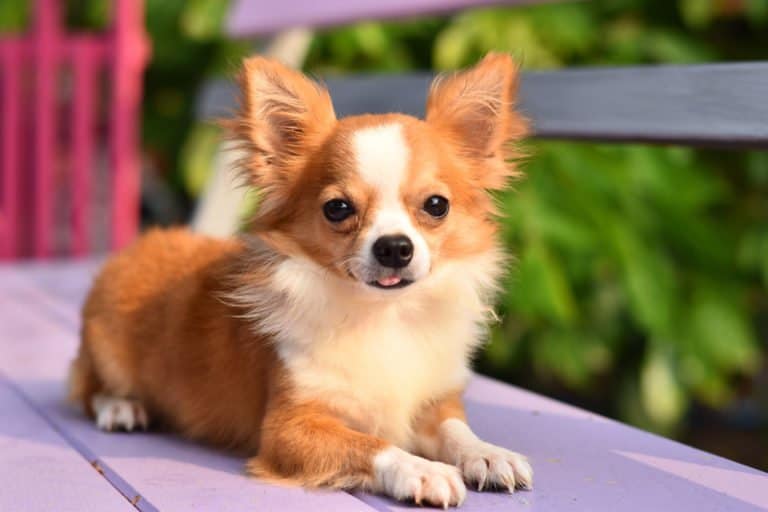
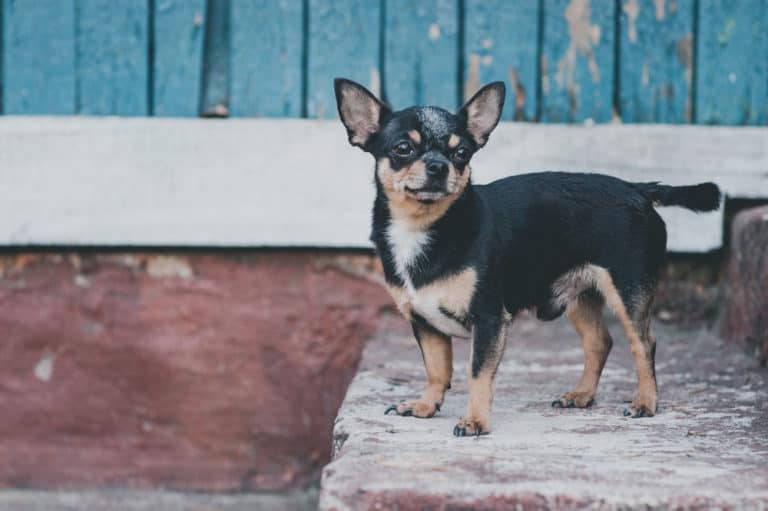
The Chihuahua has a distinctive and unmistakable appearance: a rounded apple head, big bulging eyes, erect ears, and a small body and frame. There are generally two variations of the Chihuahua: long hair and smooth coat. Both types actually have smooth fur around the body. The main difference is that the long-haired Chihuahua has fringed ears, a fan-like tail, and feathering around the legs. The smooth coat has shorter hair around most of its body, but despite the name, part of the fur around the neck is actually rough to the touch. The white, tan, brown, or black coats come in almost any pattern or variation you can think of.
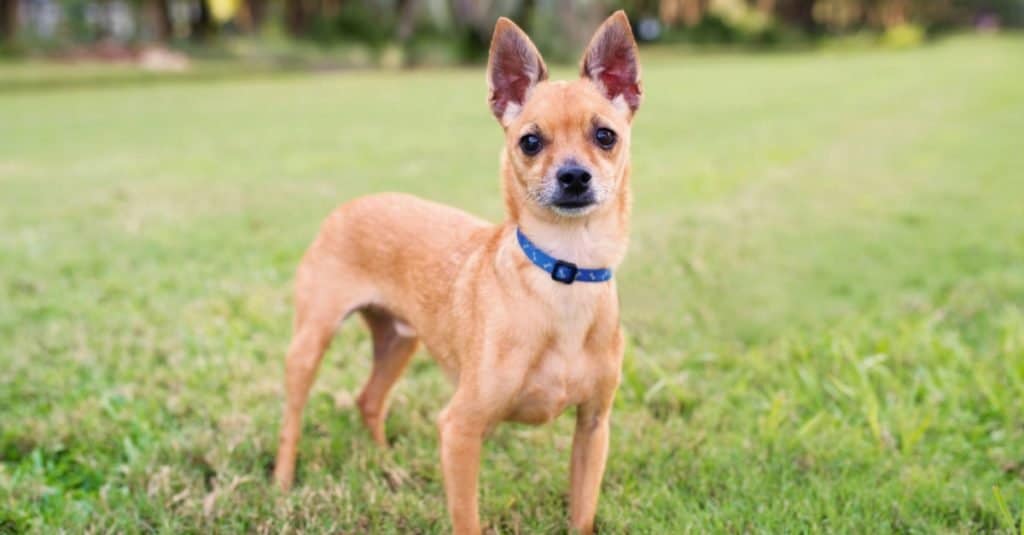
Deer Head Chihuahua outdoors, during evening sunset

Deer Head Chihuahuas are not considered to be the breed standard, so you won’t see them competing in dog shows.

Another type within this dog breed is the deer head chihuahua. These little dogs have narrower heads, longer snouts and jaws, smaller eyes, long legs, and larger bodies. Their faces actually do resemble a deer — and many of them are fawn-colored. Deer head chihuahuas are not considered to be the breed standard, so you won’t see them competing in dog shows, but many people consider this dog to be the perfect pet. They are loyal, great watchdogs, and love their owners with all of their hearts.

3 Pros and Cons of Owning a Chihuahua

Pros!Cons!
Charismatic and friendly
The Chihuahua has a big personality that expresses itself in many different ways.
Sensitive and fragile
The Chihuahua requires a firm but light touch.
Alert
The dog’s rather goofy personality conceals its alert and attentive demeanor.
Dental problems
This breed requires specific attention to the teeth.
A good low-maintenance companion
This breed is happy to just chill out with its owner.
Suspicious of strangers
This breed may not get along well with everyone it meets.

Size and Weight

The Chihuahua is one of the smallest dog breeds in the world. They are so small that they can fit inside a purse or bag. Chihuahuas typically weigh up to 6 pounds and stand up to 8 inches tall. There is a minimal difference in size between the male and female dogs.

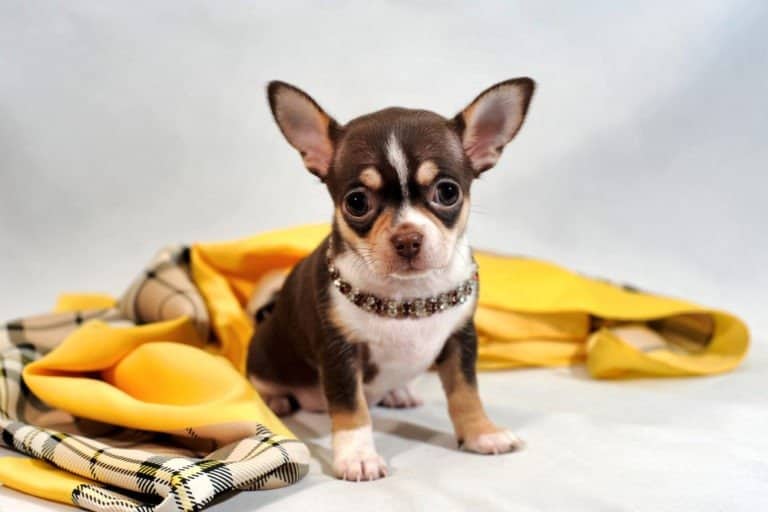
Some dogs measuring less than 6 inches are sometimes called teacup Chihuahuas. This name is given because they can fit inside a teacup. The teacup Chihuahua is not a unique breed or variation, but just a very small individual.
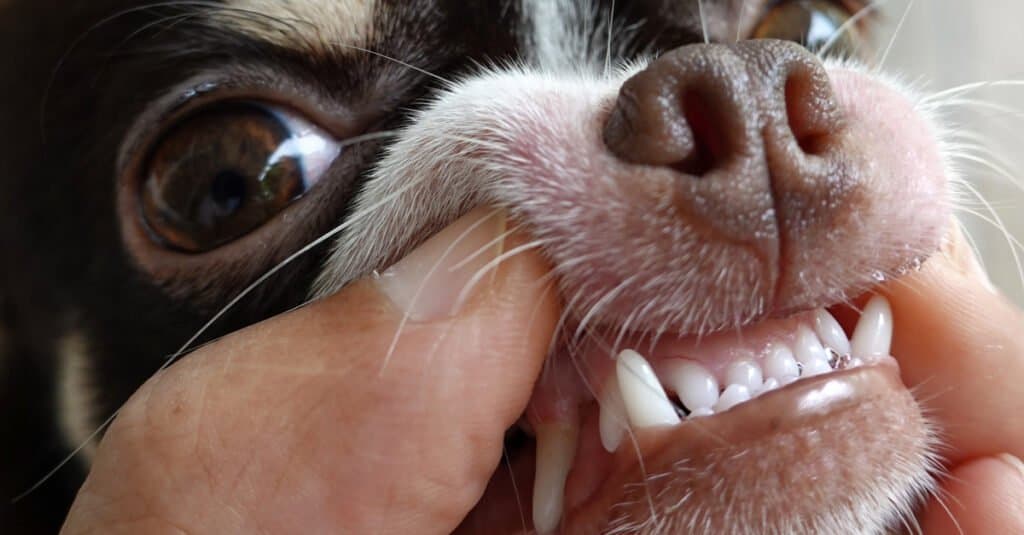
CHIHUAHUA TEETH - A vet showing their teeth

The Chihuahua is actually a healthy breed with a long lifespan of some 14 to 16 years. They are prone to dental issues.

Common Health Issues

Despite the small size and apple head, the Chihuahua is actually a healthy breed with a long lifespan of some 14 to 16 years, but there are some serious health problems you should be aware of. These include heart diseases, eye conditions, epilepsy, low blood sugar, hydrocephalus (caused by the accumulation of fluids in the brain), and patellar luxation (in which the kneecap actually moves out of its normal location). Another potential problem is the open fontanel, in which the puppies’ soft spot on the top of the head doesn’t properly close, making it very vulnerable to accidents. Many of these health conditions are genetic in origin and can be minimized with a reputable breeder who screens for them. Cancer is also something you should look out for, especially in a dog’s old age. To sum up, the most common health problems are:

  • Heart Diseases
  • Eye Conditions
  • Cancer
  • Low Blood Sugar
  • Patellar Luxation

Temperament

The Chihuahua possesses a friendly and loyal personality that wants to please its owner, with whom it forms a very strong bond. Although feisty for its size, this breed exhibits rather goofy and playful behavior. One of its more appealing traits is its adaptability. It can easily relax and chill out with its owner, or it can enjoy some playtime and exercise. And for owners who want to train their dogs, the Chihuahua is actually quite diligent and receptive to commands.

For all of its outgoing behavior around friends and family, though, this breed can be rather wary of strangers. It takes some time to really earn this breed’s trust. That is why the Chihuahua actually makes for a decent guard dog, despite its small size.
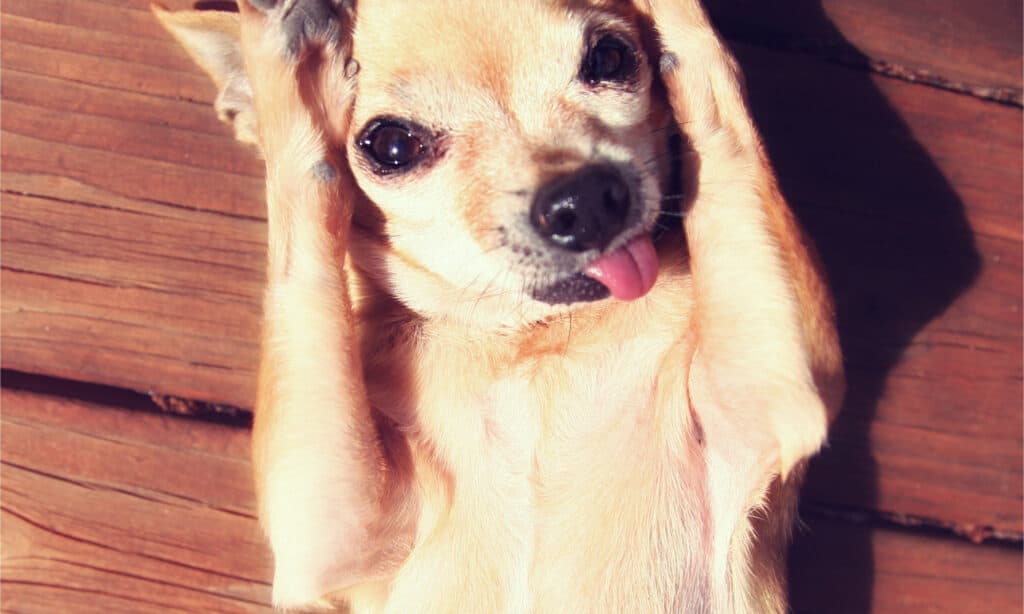
Chihuahua lying on its back in the sun

This chihuahua is definitely enjoying having its belly rubbed.

How to Take Care of a Chihuahua

The Chihuahua requires some special care due to its unusual physiology and behavior. The teeth, in particular, are an area of high concern and may require special attention from the vet. You will also want to socialize the puppy as early as possible to make it less wary of people. As always, you should plan for annual checkups at the vet to catch early health problems as soon as they arise.

The Best Dog Food for Chihuahuas

The Chihuahua’s recommended diet is no more than a half cup of high-quality dry food every single day based on its size, age, and activity level. Dogs susceptible to low blood sugar should eat a hearty meal ninety minutes before exercising to stay balanced.

You can also give it intermittent treats as part of a positive training regimen. If the dog begins to gain weight, then you may want to cut back on the calories. The vet can help you find an appropriate diet regimen for your dog.

blue buffalo small breed

Chihuahuas are fairly light shedders whose grooming care depends on the length of their coats.

Maintenance and Grooming

The Chihuahua is a fairly light-shedder (but not enough to be hypoallergenic). The frequency of grooming care depends on the length of its coat. The smooth coat Chihuahua requires infrequent brushes, perhaps not every week, but enough for any tangles or mats. The long hair requires more frequent brushing, about once a week or so. Regular baths, nail trimmings, and ear cleaning are also necessary to keep both types of dogs healthy. But like many smaller breeds, dental care is by far the most important grooming need. You should brush the dog’s teeth at least two or three times a week, and for best results, it should be done daily. The vet may also recommend specialized treats to keep the teeth clean.

Training

Despite its rather charismatic and silly reputation, the Chihuahua is a smart and alert dog that wants nothing more than to please its owner. Because of its sensitive nature, you should take a firm but gentle approach to this breed. The dog may try to goof off, but don’t let it get away with unacceptable behavior. Positive training works remarkably well to set boundaries. It is even possible to teach this breed an array of different tricks and sports, as long as it’s done within reason.
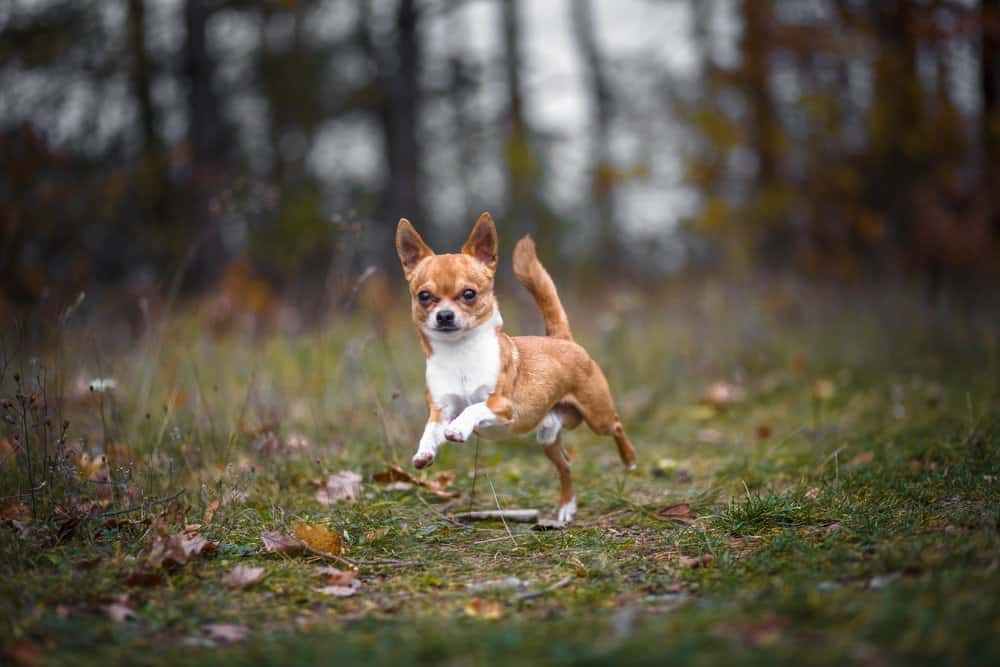
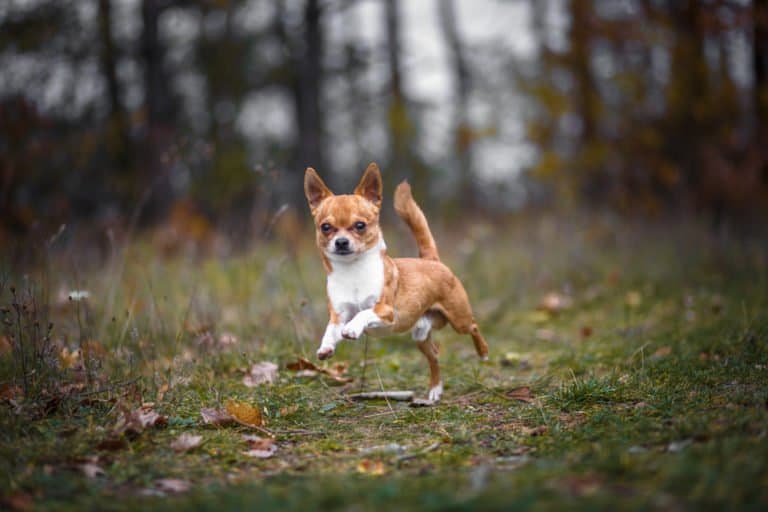
Chihuahua (Canis familiaris) - chihuahua running in forest

Toys or playtime in small indoor or outdoor spaces should be enough to cover a chihuahua’s exercise needs.

Exercise

The Chihuahua is usually satisfied with a low to medium amount of exercise per day. Toys or playtime in small indoor or outdoor spaces should be enough to cover their needs. Daily walks of around 30 minutes are always recommended to burn off excess energy and maintain a good weight, but don’t push the dog too hard. Its small frame isn’t quite built for heavy exercise. If the dog begins panting hard, then it may be a sign to stop. It is also a good idea to prepare your dog for extreme weather situations. Due to its shorter coat, the Chihuahua handles the cold particularly poorly.

Puppies

Because of the Chihuahua’s reserved nature around strangers, it is a good idea to buy your dog as a puppy so you can develop a strong relationship as soon as possible. For best results, make sure puppies have plenty of exposure to different people and situations early in their lives. An early trip to the vet is also necessary to screen for any signs of health problems and get up to date on vaccinations.
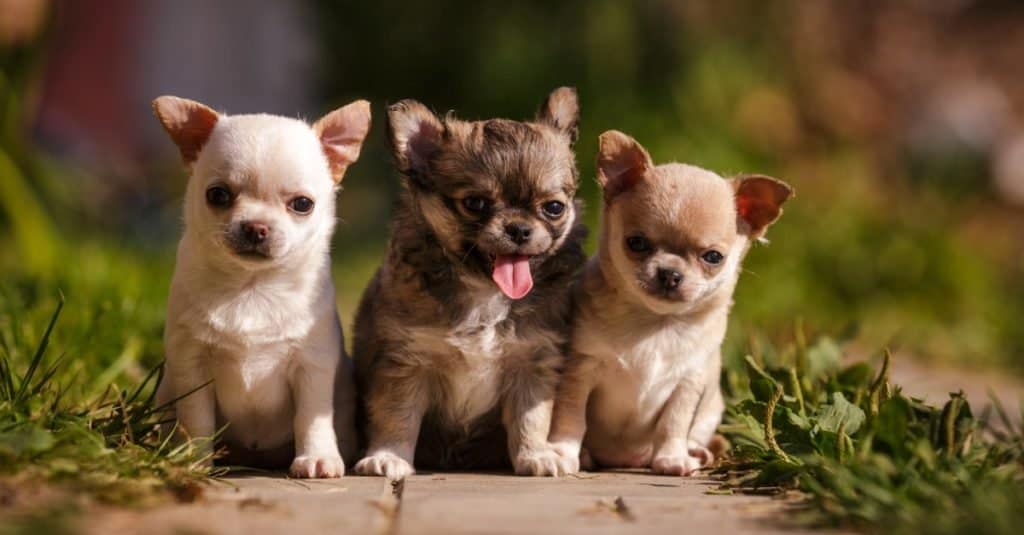
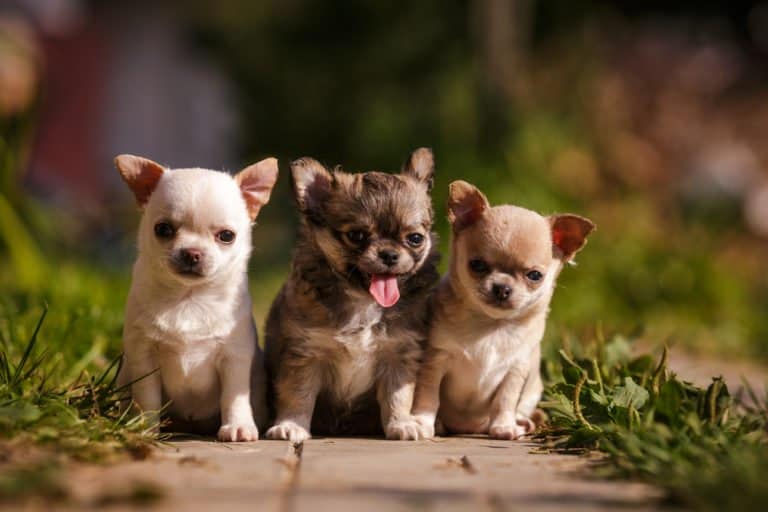
Three little Apple Head Chihuahua puppies walking outdoor on the grass in summer.

Children should be taught to be very gentle and kind toward these tiny dogs.

Chihuahuas and Children

The Chihuahua is friendly with children, but due to its small size and fragile nature, you need to pay special attention to the way your children approach and handle this breed. You should always teach your children to be very gentle and kind toward the Chihuahua. It is a good idea to never leave this breed alone with your children for long periods. Some experts may recommend that a Chihuahua should not be introduced into a house with children younger than eight.

Dogs Similar to the Chihuahua

If you enjoy the company of small toy dogs, then you should also check out the following breeds:

  • Chinese Crested Dog: The Chinese Crested Dog is a small, friendly breed that was bred primarily as a companion for royalty. It comes in two varieties: hairless and powderpuff. Despite the name, the hairless dog still has fur around its face, neck, and feet.
  • Shih Tzu: This Chinese breed has long, elegant fur. Like the Chihuahua, it can stay indoors for most of the day, curled up on its owner’s lap.
  • Boston Terrier: This breed is actually not part of the toy group, but its alert and friendly personality has sometimes been compared to the Chihuahua. It also has a similarly rounded apple head and big eyes.

Famous Chihuahuas

The Chihuahua is a common emblem of pop culture. Here are some of the most famous examples of the breed:

  • The famous Chihuahua that appeared in the Taco Bell commercials was a female named Gidget (who lived from 1994 to 2009).
  • A Chihuahua named Moonie (1998 to 2016) starred in the two Legally Blonde films alongside Reese Witherspoon. He actually lived with Gidget for a time.
  • Paris Hilton owned a Chihuahua named Tinkerbelle, which appeared alongside her in the reality show “The Simple Life.”
View all 392 animals that start with C

Sources

  1. American Kennel Club / Accessed November 8, 2019
  2. Brittanica / Accessed November 8, 2019
  3. Rover / Accessed November 8, 2019
Lisha Pace

About the Author

Lisha Pace

After a career of working to provide opportunities for local communities to experience and create art, I am enjoying having time to write about two of my favorite things - nature and animals. Half of my life is spent outdoors, usually with my husband and sweet little fourteen year old dog. We love to take walks by the lake and take photos of the animals we meet including: otters, ospreys, Canadian geese, ducks and nesting bald eagles. I also enjoy reading, discovering books to add to my library, collecting and playing vinyl, and listening to my son's music.

Thank you for reading! Have some feedback for us?


Chihuahua FAQs (Frequently Asked Questions)

The lifespan for the Chihuahua is some 14 to 16 years. With a bit of luck and good health, this breed may have a lifespan up to 20 years, which is excellent for a dog.