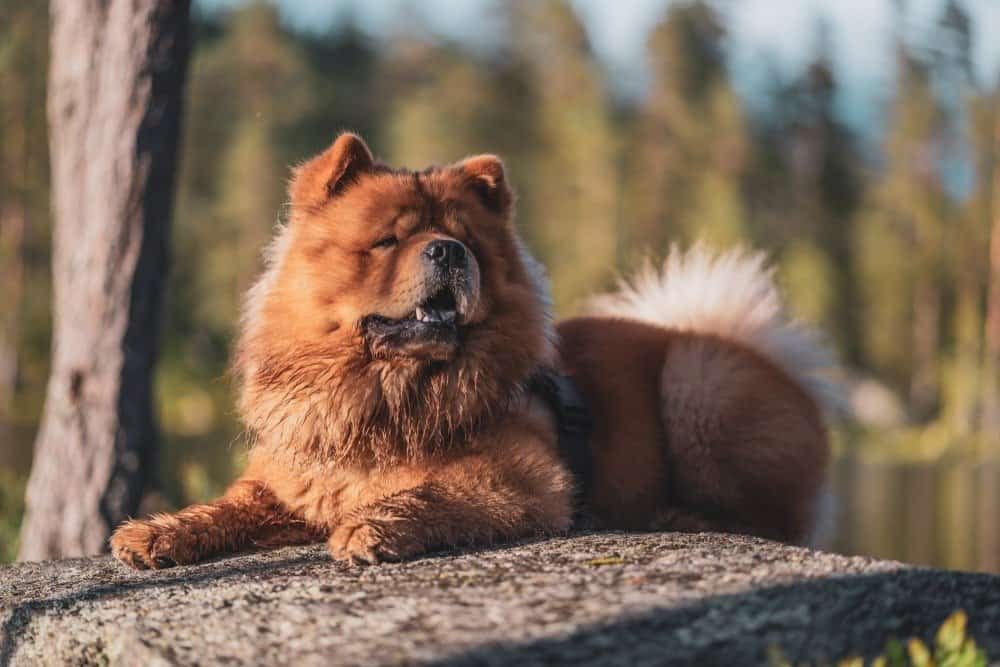
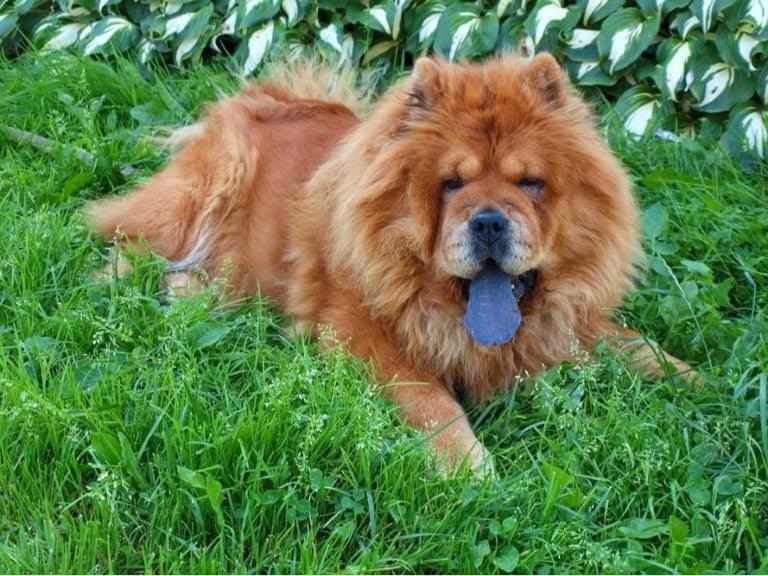
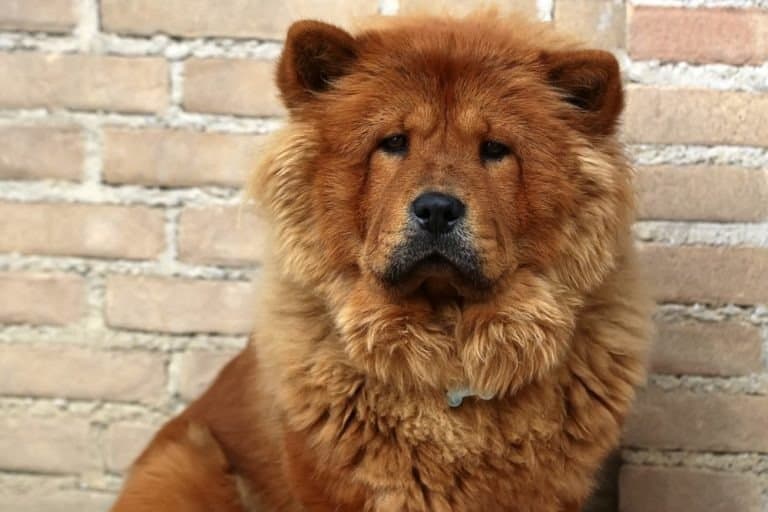
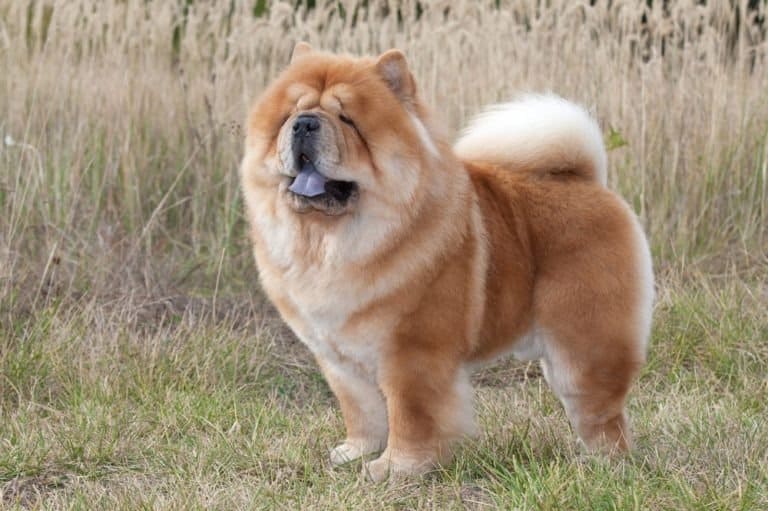
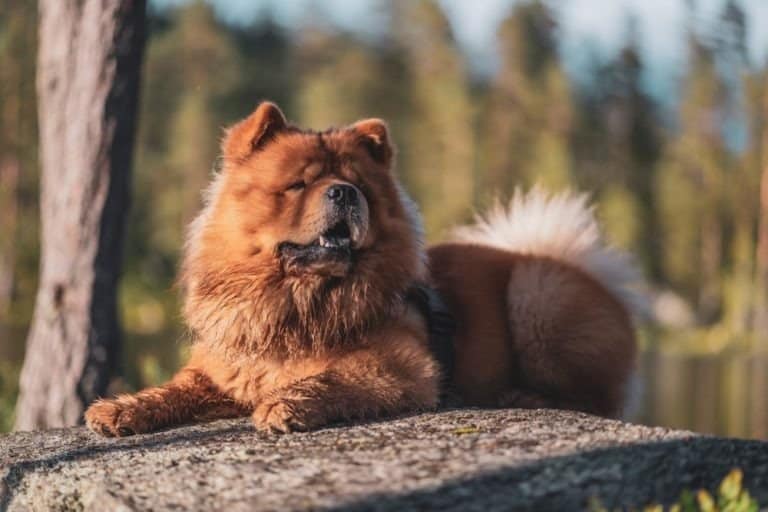
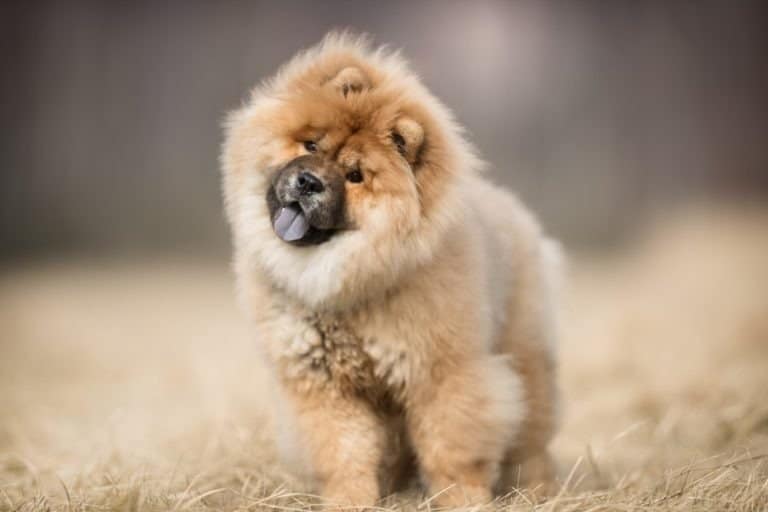
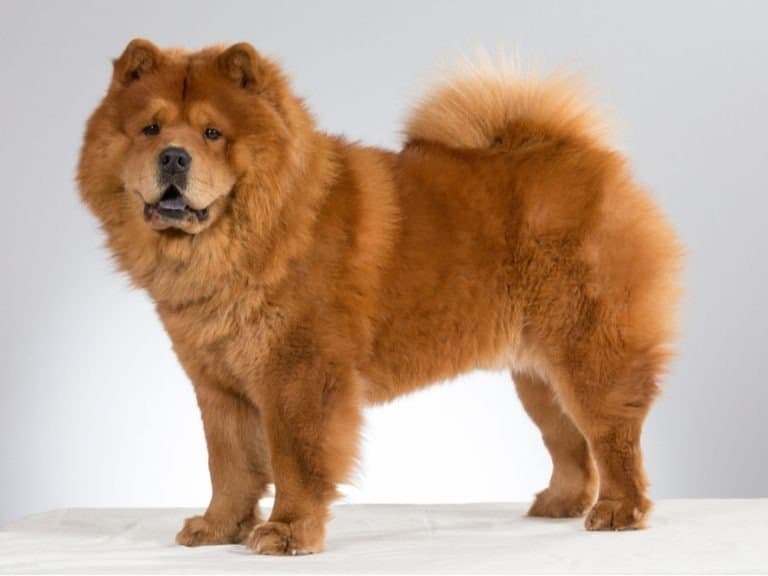



The Chow Chow, with its teddy bear face, lion’s mane, and extra fluffy coat, presents itself with the dignified bearing of a dog comfortable among royalty. It may seem aloof, but this sturdy, muscular breed is loyal to its family and possesses many attributes.
Chow Chows are known to be as fastidious as cats and are among the cleanest of canines. They are so clean that they are a breeze to house train — maybe the easiest of all dogs! Chow Chows have a double coat that comes in different colors like red, blue, black, cream, and fawn. Adults have blue or black tongues.
Evolution
Chow Chows are depicted on artifacts from China’s Han Dynasty, around 206 B.C, but many believe them to be the progenitors of spitz-type dogs that would make them an even more ancient breed. They were popular companions to Chinese nobles — so desirable that one Emperor is said to have owned thousands of the regal canines. Through the years, the Chow Chow has had its ups and downs — from being a pampered royal companion to working as a guard dog to even providing nourishment for their starving countrymen when food was scarce.
During the 1820s, the dogs were actually exhibited at the London Zoo as “Wild Dogs of China.” Their luck changed for the better when they caught the eye of Queen Victoria, who adopted a Chow Chow and made the breed popular.
3 Pros and Cons of Owning a Chow Chow
| Pros | Cons |
|---|---|
| Good watchdogs: Despite their somewhat compact appearance for a sturdy breed, these dogs make great watchdogs. | Aggressive: These dogs can display aggressive behaviors sometimes and can get overly suspicious of strangers. |
| Calm and confident: If you are looking for a stern breed, this might be the perfect choice for you. | Decision-makers: These dogs have minds of their own. Therefore, any interference in their decisions could lead to troublesome behaviors. |
| Mannerly at home: These dogs do not create a lot of fuss at home, so they won’t turn your home into absolute chaos. | Grooming: They need regular grooming, so if you are not looking for a high-maintenance animal, this might not be a good choice for you. |
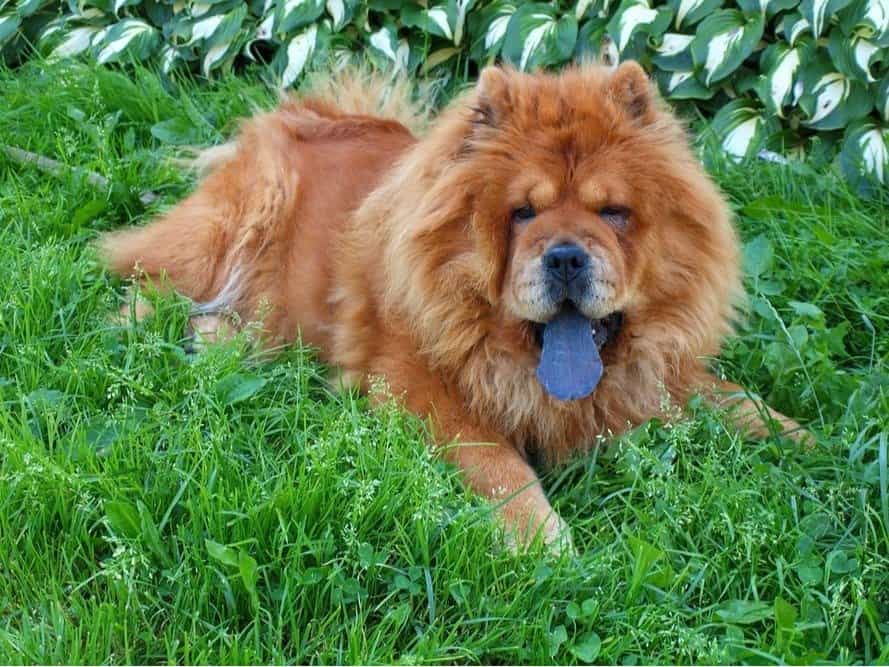
Chow Chows are sturdy underneath their fluffy coats and sport blue or black tongues as adults.
©Bokstaz/Shutterstock.com
Size and Weight
With an AKC classification as a “non-sporting” breed and a UKC classification as a “Northern Breed,” these dogs are medium-sized but sturdy. Don’t let the fluffy fur fool you — they are just as firm and sturdy as they are small. While males are about 17 to 20 inches, females are somewhere in the middle at 18 inches tall. Males are heavier than females, at 45 to 70 lbs. Females, however, only reach a maximum size of 45 to 60 lbs. at their adult size.
Common Health Issues
Like every other dog, the Chow Chow has its own set of problems that are consistent with medium-sized dogs. One of the biggest issues that this dog breed faces is both hip and elbow dysplasia. This condition is a congenital issue for the breed and simply means that the joints of the elbows and hips are not properly aligned.
Cruciate ligament disease is another issue among these dogs. The joint of the knee becomes unstable, leading to twisting and slipping at the joint, which is incredibly painful. This dog will show their pain by walking on only three of their four legs, limping carefully.
There is a bloating condition called gastric dilation volvulus that is common among these dogs as well. Gastric dilation volvulus can be fatal, and it mostly impacts dogs with a deep chest (which is typical of them). As the stomach bloats, some cases never make any progression. However, the bloating can cause it to twist.
Entropion is another eye-related disease that these dogs suffer from. Also common in English bulldogs, it is caused by the eyelid rolling towards the inside of the eye, leading the hairs along the eyelid to rub against the cornea and cause severe pain.
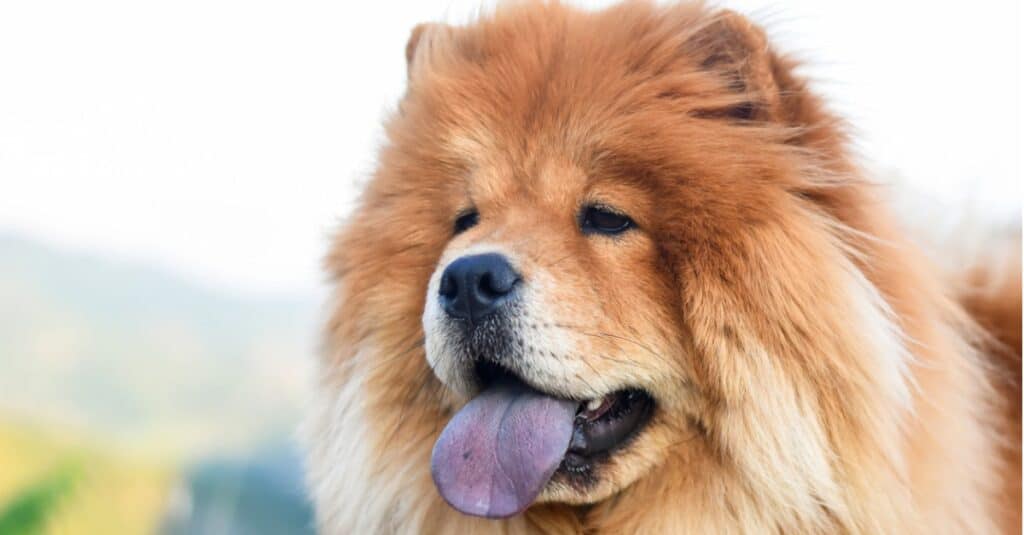
Chows are not very sociable and are serious-minded and suspicious.
©iStock.com/Ivan Marjanovic
Temperament
Whether a purebred or a mix, these dogs are not known to be very social dogs and are also not very outgoing. Their temperament is such that they can get very suspicious of strangers and can often get very aggressive with other dogs.
For them to be comfortable around other dogs, they must be introduced to socializing concepts very early on in life. Though this disposition is what makes them protective watchdogs, families with other pets may need to put in extra work to train them to be civil.
They can also often cause chaos with their alarm barking, which needs to be controlled. These dogs are intelligent but are also headstrong and stubborn. They need a patient and stern owner and trainer. They are known to be very protective of their own families and can often turn dominant if not taught their position in the families. They can sometimes be obedient in the right direction.
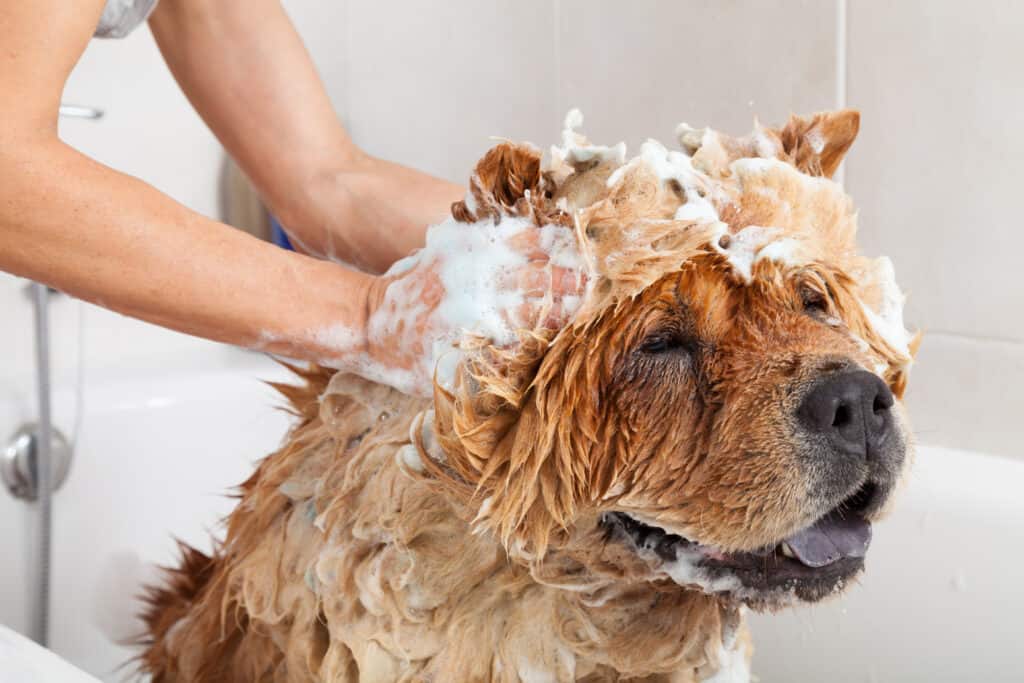
Chow chows should be bathed every six weeks.
©iStock.com/fotoedu
How to Take Care of a Chow Chow
Owning a Chow Chow can take a lot of work in grooming, but their diets are fairly easy to keep up with. Here are a few things that you need to keep in mind about taking care of your dog.
The Best Dog Food
These dogs need to eat a diet full of vegetables. You could occasionally supplement their diets with fish and soy. However, you need to go easy with the levels of protein in their diets, as high protein levels could lead to skin problems in these dogs. Still, they love a mix of dry foods and wet foods alike, so the only concern is that their food has minimal grains, since the breed may have allergies to these foods.
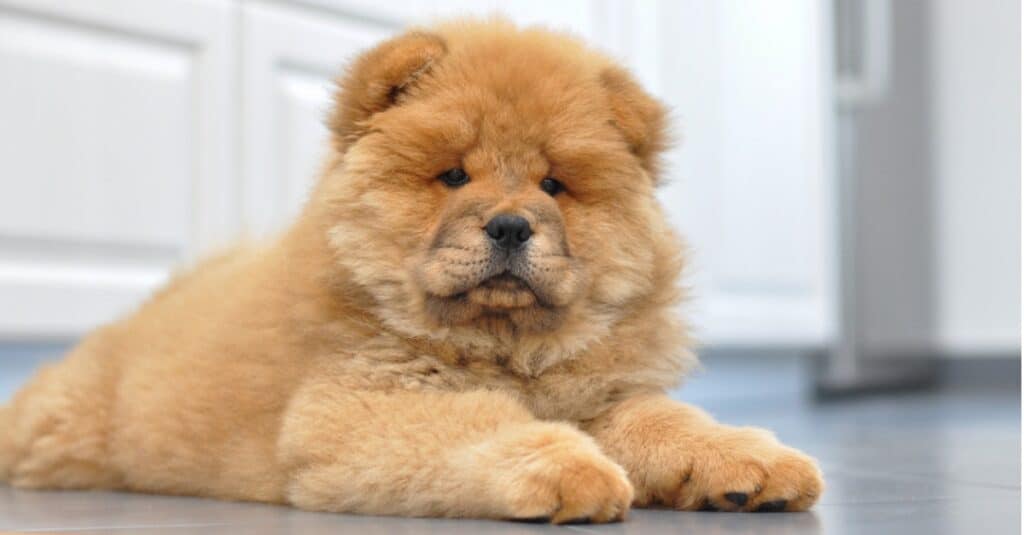
Chow Chow puppies need several small meals a day.
©iStock.com/Ivan Marjanovic
The puppies need to be given the same diet. However, you will have to feed the pups in smaller quantities at shorter intervals as their small stomachs are usually not able to digest too much food at once.
As a dog that’s susceptible to gastric dilation/bloat, use caution while feeding your Chow Chow, and always monitor feeding to ensure small enough portion sizes. Perhaps you’ll want to look for a sensitive stomach dog food that’s easy for Chow Chows to digest.
Maintenance and Grooming
These dogs are known to be fairly high-maintenance and need brushing every day. They have a double coat, and it may take quite a while to remove the hair that they shed. Luckily, most groomers are quite caring and gentle with the breed.
They can be bathed every week, but should definitely get baths every six weeks, minimum.
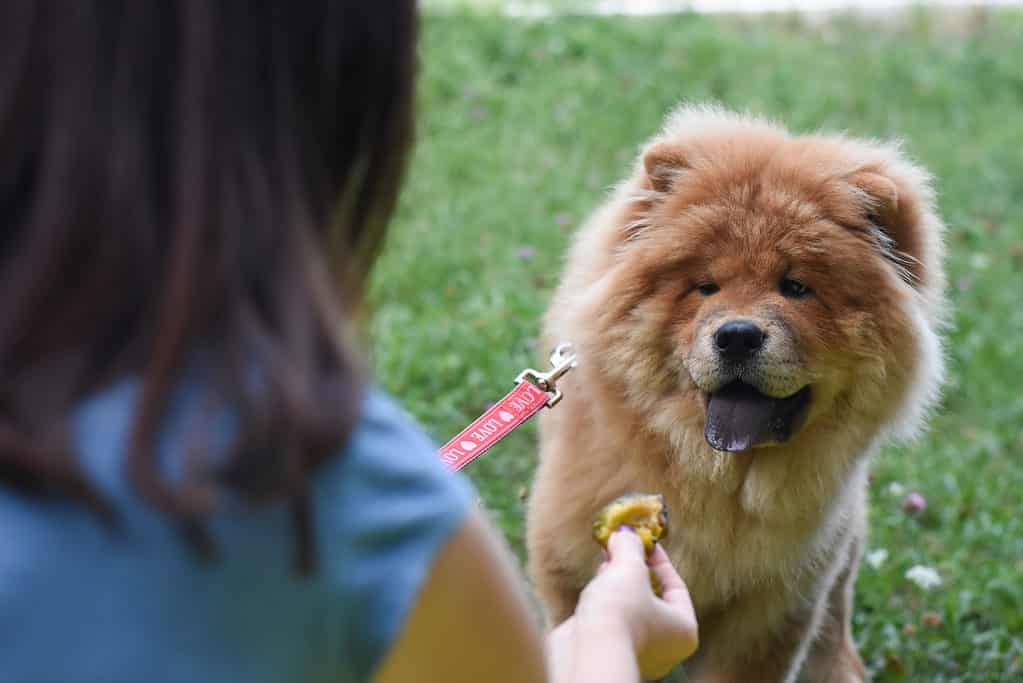
Chow chows are very independent, making them a challenge to train.
©iStock.com/Ivan Marjanovic
Training
Training these dogs is not an easy job, regardless of the mix of breeds. They have hunting traits and can often be aggressive and predatory towards other pets and animals in general, and these inclinations are hard to rid them of.
They are also very independent and are headstrong, which means that these dogs cannot be forced into anything at all. They would either completely shut down or show retaliating behavior if you try to train them under harsh conditions or with punishments. The best training techniques will need to involve encouragement with positive reinforcement.
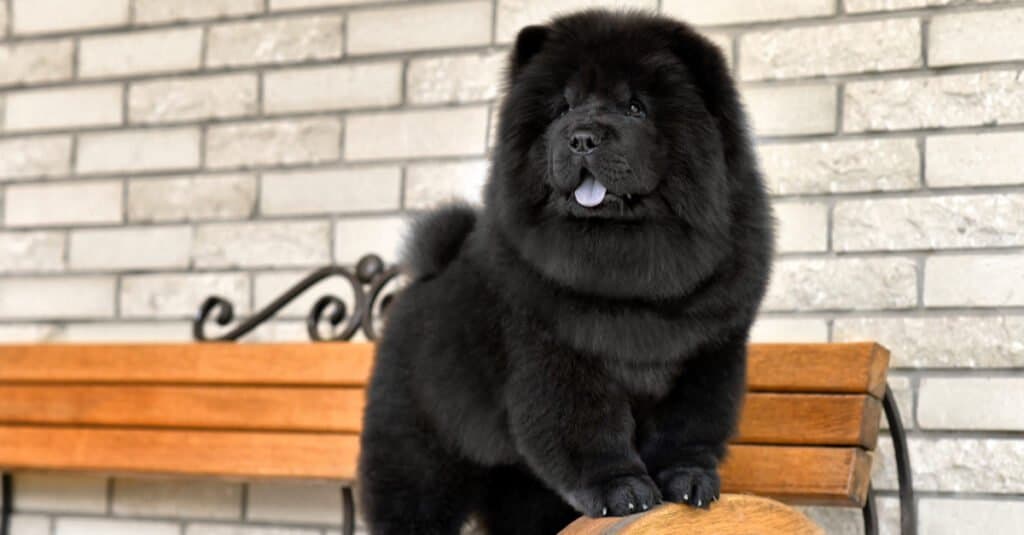
Chow Chows don’t need a lot of exercise.
©Natalia Fesiun/Shutterstock.com
Exercise
Every canine needs to have regular exercise to support a healthy weight and to regulate the release of mood-balancing hormones. This movement prevents them from becoming restless. However, they don’t like to be out too much — just a couple of walks a day might be everything that they need.
Their bodies are meant to be thicker, and most pups are ready to go inside within about 15 minutes. If you can get them to stay out a little longer, it is possible to get away with one walk that lasts a little longer each day.
Puppies
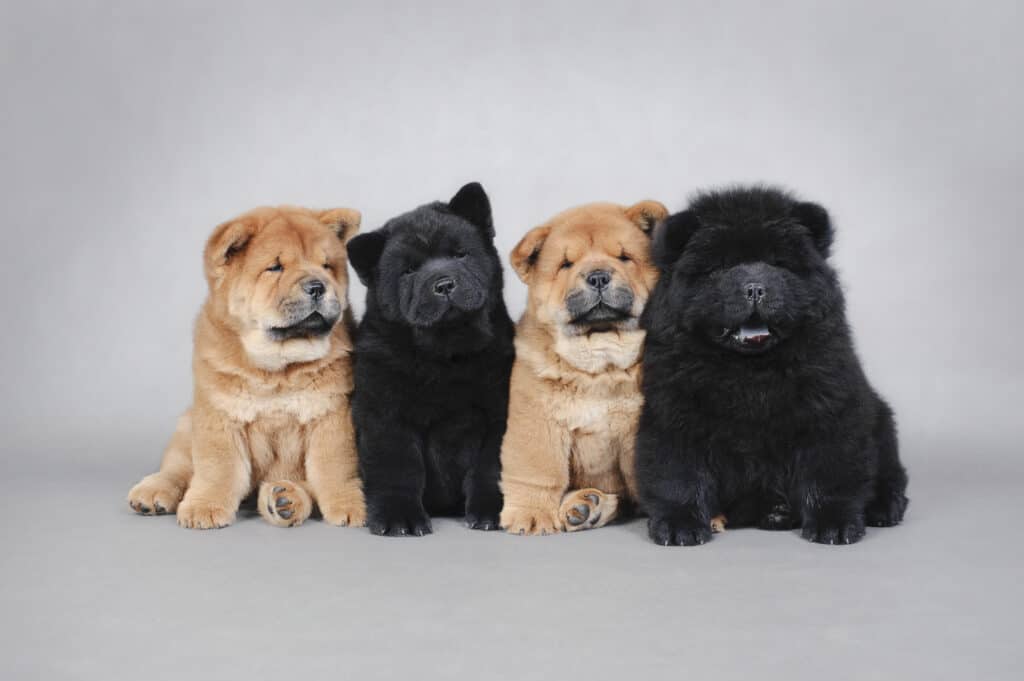
Chow Chow pups need to be socialized with people and other dogs.
©iStock.com/foto-front
The Chow Chow puppy has a double coat early on, so intensive grooming will be necessary after they are a few weeks old. They will need to be trained to socialize very early on in life so that they become sociable adults. Puppies will need to be fed in small amounts after shorter intervals because their small stomachs cannot digest a lot of food at once. These frequent meals will likely last until the puppy reaches a year old.
Children and Chow Chows
If these dogs are taught how to be around children, they would be great with them. However, they are not very patient around children and would not tolerate abuse from young children. They are great with families with children who know how to treat these dogs with respect.
For families that want to adopt one of these dogs, be sure to have a conversation with the children in the household about proper behavior to avoid any unfortunate accidents.
Dogs Similar to Chow Chows
As beautiful and sassy as a Chow Chow might be, this dog isn’t the right pet for every person. Here are some alternative breeds that may suit potential owners well.
- Tibetan Mastiff: Much like the Chow Chow, Tibetan Mastiffs are also aggressive and headstrong. They are much larger than a Chow Chow in weight, but only a little taller.
- Alaskan Malamute: Alaskan Malamutes are intelligent and are also highly social, making them great pets for families that often interact with other people. They are incredible watchdogs but need much more space than an apartment to thrive.
- Keeshond: Keeshonds are known to be very loyal and friendly towards their owners and have a highly affectionate nature. However, they are much more friendly to strangers, so they may not be the right watchdog for someone.
Famous Chow Chows
Several celebrities own these dogs. Some of them include Martha Stewart, President Calvin Coolidge, Elvis Presley, and his girlfriend, Linda Thompson. Famous psychoanalyst Sigmund Freud also owned one of them.
Chow Chow Pictures
View all of our Chow Chow pictures in the gallery.

Bokstaz/Shutterstock.com
Sources
- Wikipedia / Accessed December 17, 2020
- Mental Floss / Accessed December 17, 2020
- Cuteness / Accessed December 17, 2020
- Dogtime / Accessed December 17, 2020
- Your Pure Bred Puppy / Accessed December 17, 2020
- Hill's Pet / Accessed December 17, 2020
- PDSA / Accessed December 17, 2020
- American Kennel Club / Accessed December 17, 2020